

Is Kobe Bryant the Answer to Los Angeles Lakers' Small Forward Problem?
Small forward poses big problems for the Los Angeles Lakers.
Unless Kobe Bryant takes ownership of this situation, too.
Immersed in the hustle and bustle of a very active offseason, the Lakers haven't found a lasting solution to their void at small forward. With the summer winding down, they can't expect that to change.
TOP NEWS
Jokić Pops Out at CU Game 🦬
Watch: LeBron's 1st 76ers highlights

NBA Power Rankings Entering Preseason 🔢
Anything they do now, anyone they plug into that starting 3 spot, will be a temporary stopgap or ill-equipped to perform there. Or both.
But as luck would have it, all hope is not lost.
Turning to Bryant, like they tend to do when facing conflict, might be just the answer—however impermanent—they need.
Underwhelming Alternatives

Assembling almost an entire roster on the fly isn't easy. The Lakers have spent their offseason trying to remain competitive without compromising any long-term financial flexibility.
Options are limited in these situations. The Lakers haven't had their pick of the litter, and it shows in their outcast-overloaded roster.
Lottery busts Xavier Henry and Wesley Johnson are the only two legitimate small forwards the Lakers employ.
Both are mobile enough to defend wings, and Henry proved a valuable source of instant offense for the Lakers last season (10 points in 21.1 minutes per game) while Johnson resembled a competent shooter, banging in nearly 37 percent of his three-pointers.
Johnson has also been working out regularly with Bryant, according to the Orange County Register's Bill Oram. Bryant is the type to pick his workout partners very carefully. If Johnson is someone he's willing to spend extra time with, something's there.
Neither Johnson nor Henry are ideal candidates, though. Henry is slightly undersized at 6'6", and Johnson remains too much of a specialist.
Starting someone else who's a two-way player or allows the Lakers to experiment with various promising combinations—or both—makes more sense if afforded the opportunity.
Julius Randle, for the record, is not the player.
Even though he'll tell you he's that player.
"A lot of the league is going to small ball, but the good thing about me, I'm interchangeable," he said in June, per Lakers.com's Mike Trudell. "I can play small ball because I can guard multiple positions because I can really move. But I think it's going to be an advantage for me to be able to take a smaller guy inside but also take a bigger guy on the outside."

Watching Randle during the NBA's Summer League, it became clear his entire skill set wasn't advertised adequately. He could be seen running point, taking opponents off the dribble and defending—halfheartedly at times—inside and out. There's little doubt he could spend time at small forward...in a pinch.
Oversized lineups aren't common for a reason. Starting Randle alongside, say, Carlos Boozer and Jordan Hill would be a floor-spacing nightmare. Not one of them has three-point range. Same goes for Ed Davis.
Playing Randle at small forward should be a last resort. Ideally it's something the Lakers won't even entertain.
Ryan Kelly saw some time at small forward last year, but it didn't go well. Or even close to well. He notched a 5.8 player efficiency rating there, per 82games.com.
At 6'11", he's more of stretch 4 who relies too much on spot-up shooting to play a small forward's game. That he's not quick enough to keep pace with traditionally athletic wings hurts as well.
Better alternatives aren't found in Wayne Ellington or Nick Young. Ellington is too small at 6'4", and Young doesn't play enough defense to police shooting guards, let alone the deeper, scorer-stuffed small forward slot.
It's not that the Lakers don't have options—they do. It's that the options they do have don't justify not looking for something, anything, better.
Benefits of Bryant

This is the part of the movie when Bryant rides into Staples Center wearing a just-for-show cape ready to save the day.
Assuming health, and also assuming a lottery-doomed roster doesn't drive him into abrupt retirement, Bryant can play small forward. Though he stands at only 6'6", he's a self-sufficient scorer who can double as a point forward at times.
Sliding into the 3 spot isn't anything new for him, either. He's logged at least 18 percent of his minutes there four times since 2000. Nearly a third of his playing time came there during his historical 2012-13 campaign, and he registered a higher PER at small forward (24.5) than shooting guard (23.1).
Most importantly, though, placing Bryant at small forward allows head coach Byron Scott to tinker with his starting five in ways he otherwise couldn't.
Not to mention it prevents him from making a massive mistake.
Speaking with the Los Angeles Daily News' Mark Medina, Scott revealed he already had four of his five starters in mind: Bryant, Boozer, Hill and...Steve Nash.
You read that correctly.
Rolling with the 40-year-old Nash—no matter how healthy he seems now—over the 26-year-old Jeremy Lin reeks of an obsession with yesteryear. It isn't smart. David Murphy of Bleacher Report recently made it his mission to tell us why:
"The issue of who should start and who should come off the bench is not about who should or should not play. It’s a question of what most benefits the team—both now and moving forward.
Everyone who has ever been a fan of basketball wants to see Nash go out on his own terms and go out successfully.
But wouldn’t helping Lin to be a better player and bolstering an already potent bench be preferable to struggling against time and a bad back to hold onto a starter’s role and minutes?
"
As someone who openly wants Nash to end his career on a high note, this is difficult, yet not impossible to accept.
Push come to shove, Lin should start over Nash. He's younger, better fit to defend opposing point men—which is more an insult to Nash than compliment to Lin—and he's the incisive handler neither Bryant nor Nash can be at this stage of their careers.
But let's take this one step further.
Why choose?
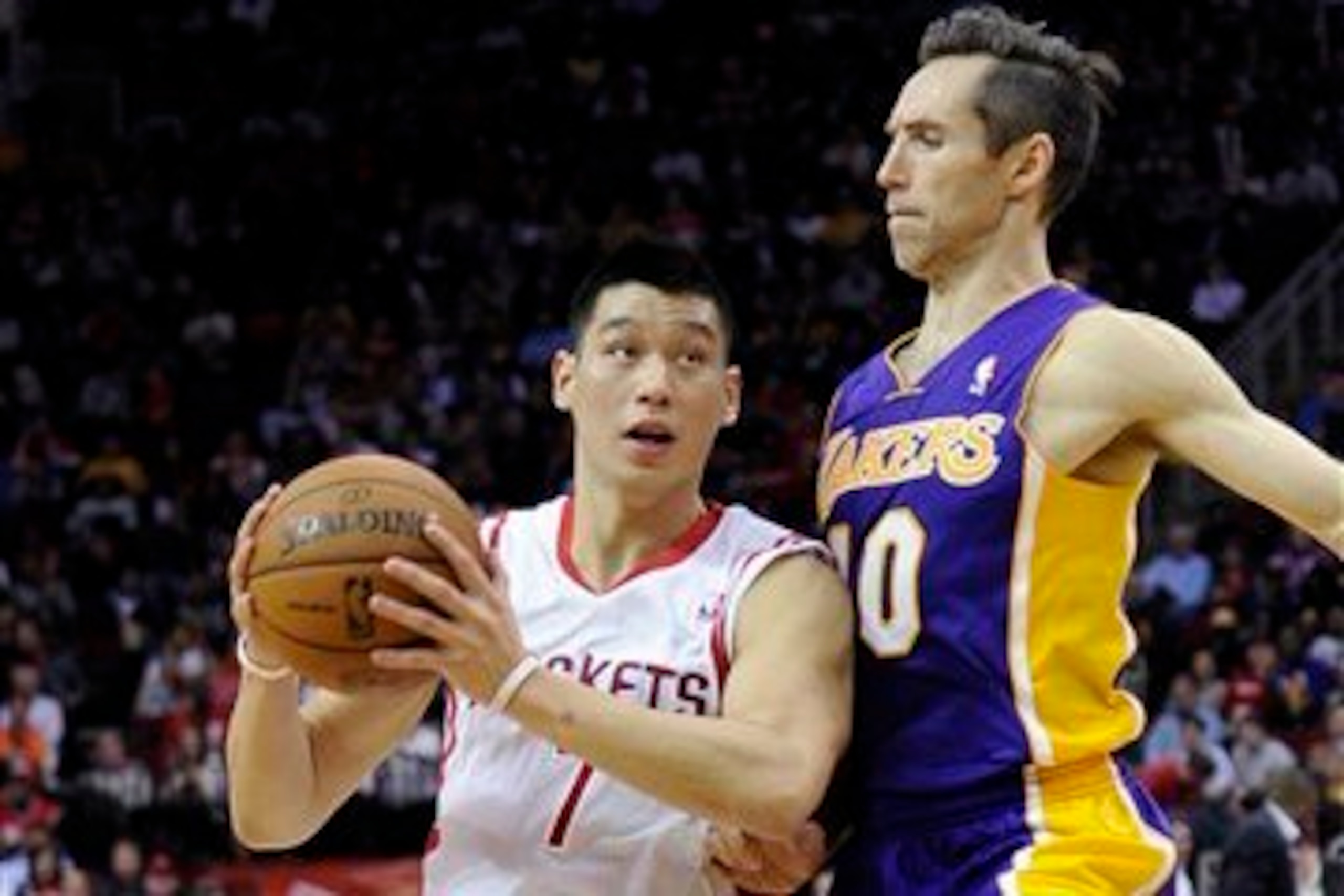
Plugging Bryant at small forward enables Scott to start both Nash and Lin, deepening a tape-thin positional rotation in the process.
Nash shouldn't be charged with primary point guard duties anymore. He can still direct an offense—5.7 assists per game last year—but he can be equally effective off the ball as a spot-up assassin who doesn't move too much. He's only one year removed (2012-13) from ranking in the top 10 of standstill efficiency, according to Synergy Sports (subscription required).
Using Nash as an undersized 2-guard also allows Bryant and Lin to operate with the ball in their hands more, which is how both are accustomed to playing.
Creating these mismatches makes them harder for opposing defenses to guard, ensuring they're running with three established scorers rather than two, plus Johnson or Henry. And with the Lakers built to repeat their defensive performance from last season—28th in efficiency—they'll need to score. A lot.
A whole lot.
Moving Bryant to small forward puts them in position to concoct the strongest, most potent offense possible, diminishing the likelihood they field a below-average product.
Decisions, Decisions
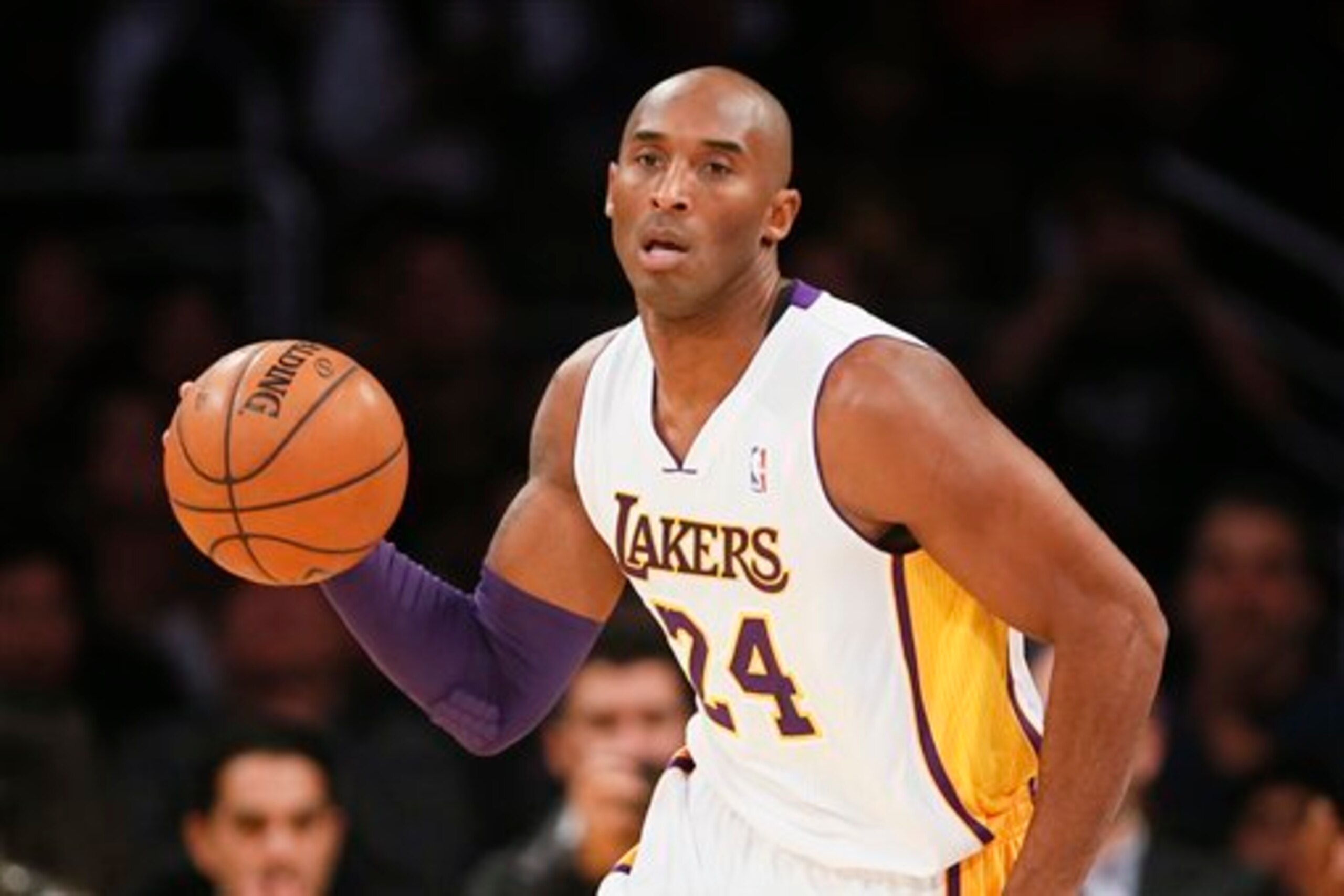
Displacing Bryant from that shooting guard spot isn't all dandelions and offensive euphoria.
There are warts to worry about.
Expecting Bryant to defend opposing small forwards is ambitious.
Regardless of how healthy and spry he's feeling, guarding the Kevin Durants and Carmelo Anthonys of the world pushes the boundaries of logic. Someone his age (36) shouldn't defend the opposition's best wing scorer daily. That, in part, is why Johnson calls Los Angeles home.
Seeing Nash or Lin match up against shooting guards would be just as painful. Neither player is a strong defender, and both stand at 6'3" tall. They'll be at severe size disadvantages nightly, waiting to be exploited off the dribble, their sheer lack of height begging opponents to shoot over them.
Under normal circumstances, teams should try to avoid such defensive detriments.
For the Lakers, this must be viewed as a necessary evil.
Enough concerns and questions plague this team that some must be overlooked, defensive demerits being one of them. It doesn't matter whether they install a dual-point guard lineup. The Lakers don't have the luxury of a true, reliable small forward. If they wish to be competitive immediately, sticking with what they know is the only course of action.
And Bryant, when healthy, is someone they know can create options and offer solutions—no matter where or how he plays—that otherwise wouldn't exist.
*Stats courtesy of Basketball-Reference and NBA.com unless otherwise cited.

.jpg?w=2560 "Rap: Lions, LaPorta End Contract Talks")
.jpg?w=2560 "Commanders May Change Logo 👀")
_0.png?w=2560 "Week 5 Winners & Losers 📊")

.jpg?w=2560 "EVERY Fantasy Football Update")