

Where Miami Dolphins Offense Must Improve to Secure a Week 3 Victory
There weren’t many bright spots for the Miami Dolphins in their Week 2 loss at Buffalo, as the team was outcoached and outplayed in every facet of the game. The lackluster execution culminated to a 29-10 defeat.
We’ve taken a look at the numerous mistakes the Dolphins made and where the defense struggled, but now it is time to see where the ever-important offense needs to improve so the team can claim victory in Week 3.
Miami’s ability to recover from the divisional loss will speak a lot to the character of the team. Free-agent acquisitions such as Branden Albert and Knowshon Moreno were brought in for their leadership as well as their on-field play.

.jpg?w=2560 "Rams Eagles Football")
.jpg?w=2560 "Texans-Mixon Released Football")
"Knowshon Moreno is currently expected to miss four weeks with dislocated elbow, per source.
— ProFootballTalk (@ProFootballTalk) September 14, 2014"
Since Moreno will be out for the foreseeable future, Dolphins offensive coordinator Bill Lazor will have to create a more effective game plan than we saw in Week 2.
To win against the Kansas City Chiefs in Week 3, the Dolphins offense must improve across the board, but the following three areas are the keys to success.
Balanced Play-Calling
The Week 1 game plan used by Lazor and the Dolphins offense worked well, allowing the Dolphins to move up and down the field all game. Miami totaled 360 yards and had a run-to-pass ratio of 38-to-32. That offensive balance eased the pressure on third-year quarterback Ryan Tannehill and the Dolphins defense.
Instead of coming out in Week 2 and establishing the run again, Lazor refused to commit to the run in the first half. Of the first 20 plays called, only four were designed runs. After Moreno’s injury on the first drive, Miami ran the ball twice in a 15-play span.
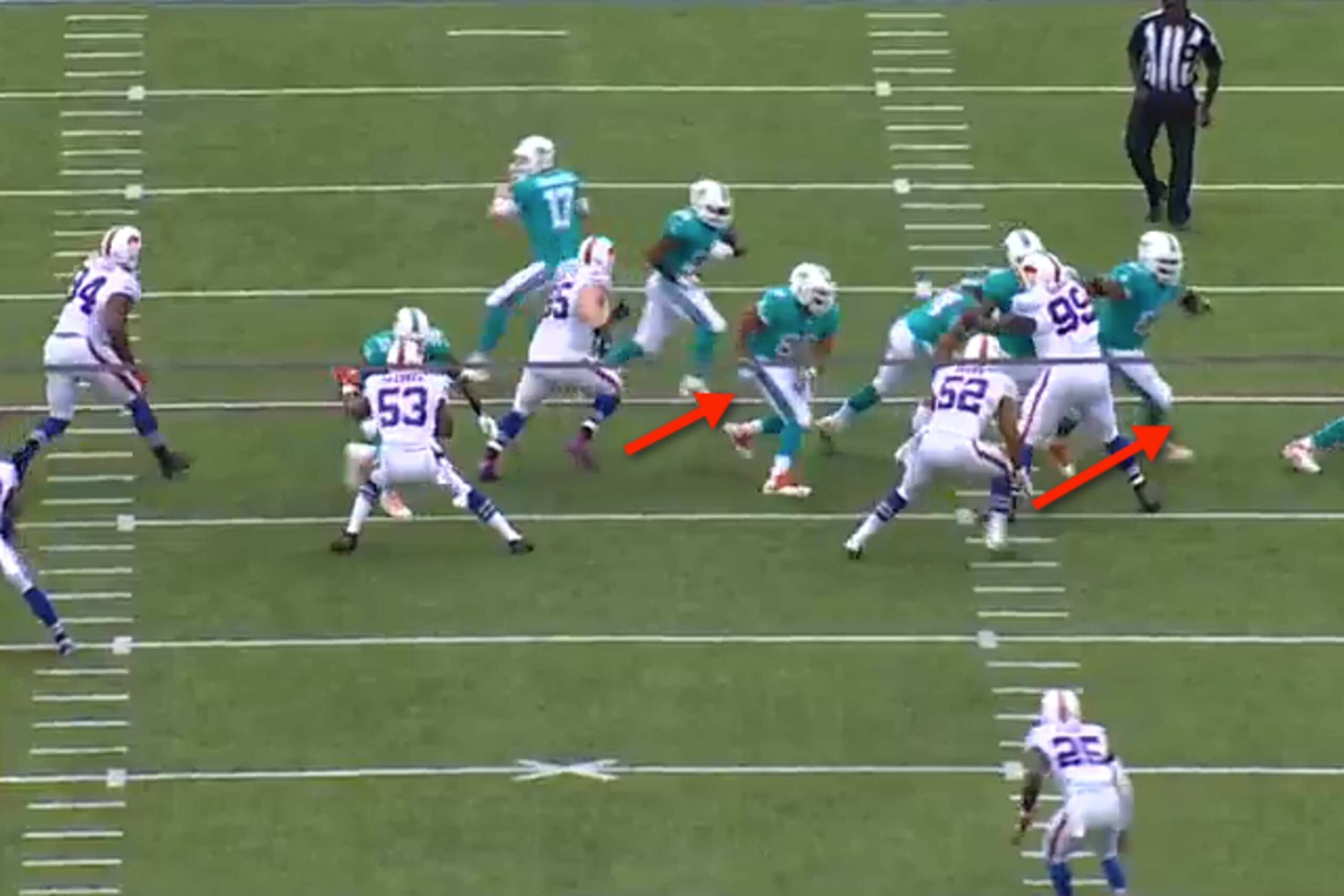
With the Buffalo Bills’ talented defensive line, throwing the ball 49 times was a terrible strategy. Buffalo didn’t have to respect the run because Miami only showed willingness to run on the last drive of the first half, which featured six run plays.
The inconsistent offensive play-calling was magnified at the end of the first half because of the vast change in willingness to run the ball.
Head coach Joe Philbin and Lazor made a head-scratching decision with their game plan, not allowing the offense to try and score before halftime.
"Philbin explained today he feared if he had been aggressive to end 1st half, 9-0 deficit might have become 16-0: http://t.co/PcPvnrRSg0
— Barry Jackson (@flasportsbuzz) September 15, 2014"
The inconsistent approach should remind fans of how bad former offensive coordinator Mike Sherman was at play-calling.
Miami must be balanced to be effective on offense. The threat of the run can affect the entire defense and force it to react to the offense instead of sitting back and playing “its” brand of defense.
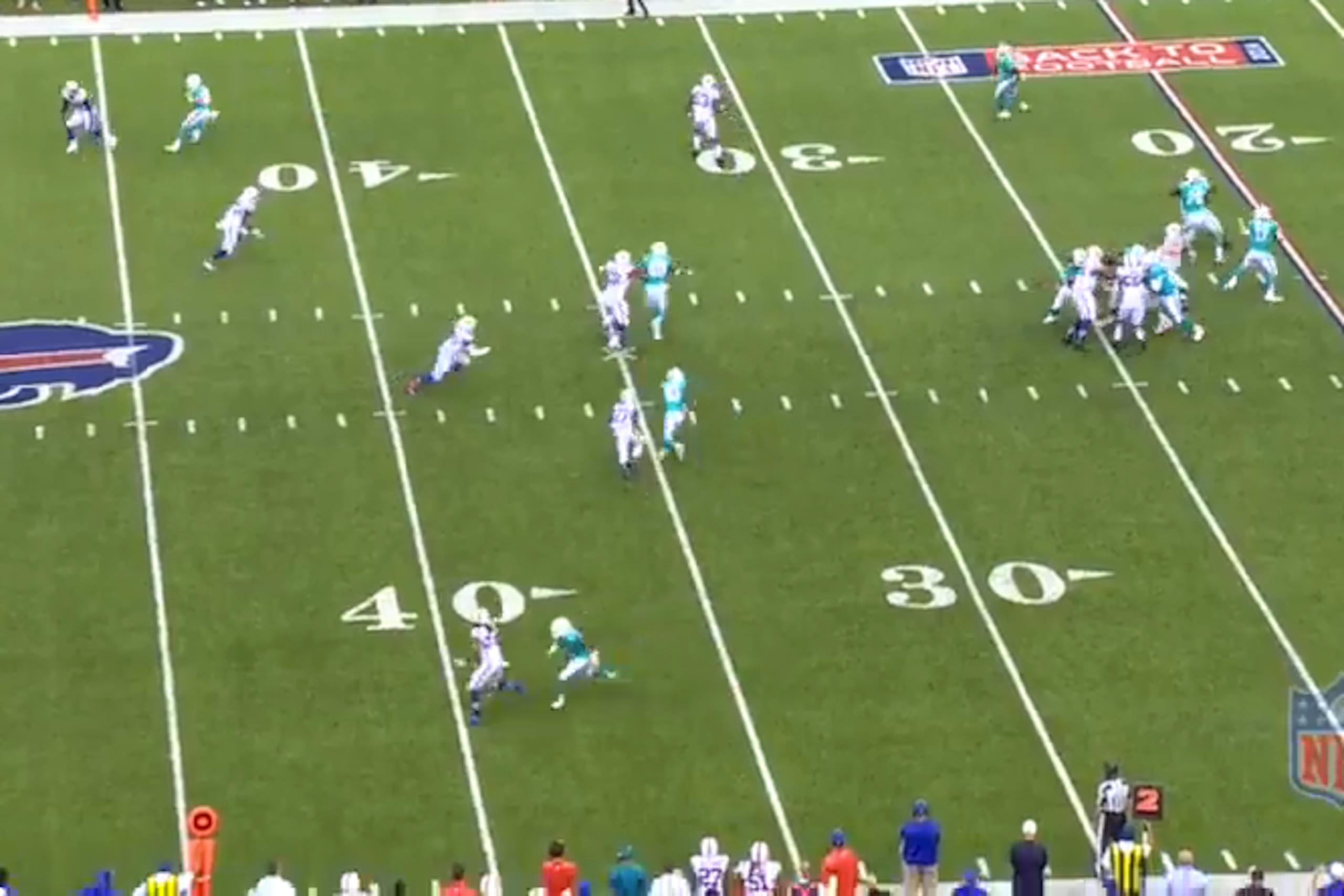
Without establishing the run, Miami had to play how Buffalo wanted it to. The Bills dropped their linebackers in coverage and muddied the middle of the field for Tannehill, which caused him to average just 4.9 yards per pass attempt.
That’s unacceptable, even if Moreno is hurt. Starting running back Lamar Miller averaged 4.2 yards a carry in Week 2, and although he’s struggled dearly catching the ball, he’s been effective running. Rookies Damien Williams and Orleans Darkwa are two capable backs in addition to Miller.
Lazor must be willing to attack the Chiefs defense early, and having the threat of play action will only ease Tannehill’s offensive burden.
Interior Offensive Line
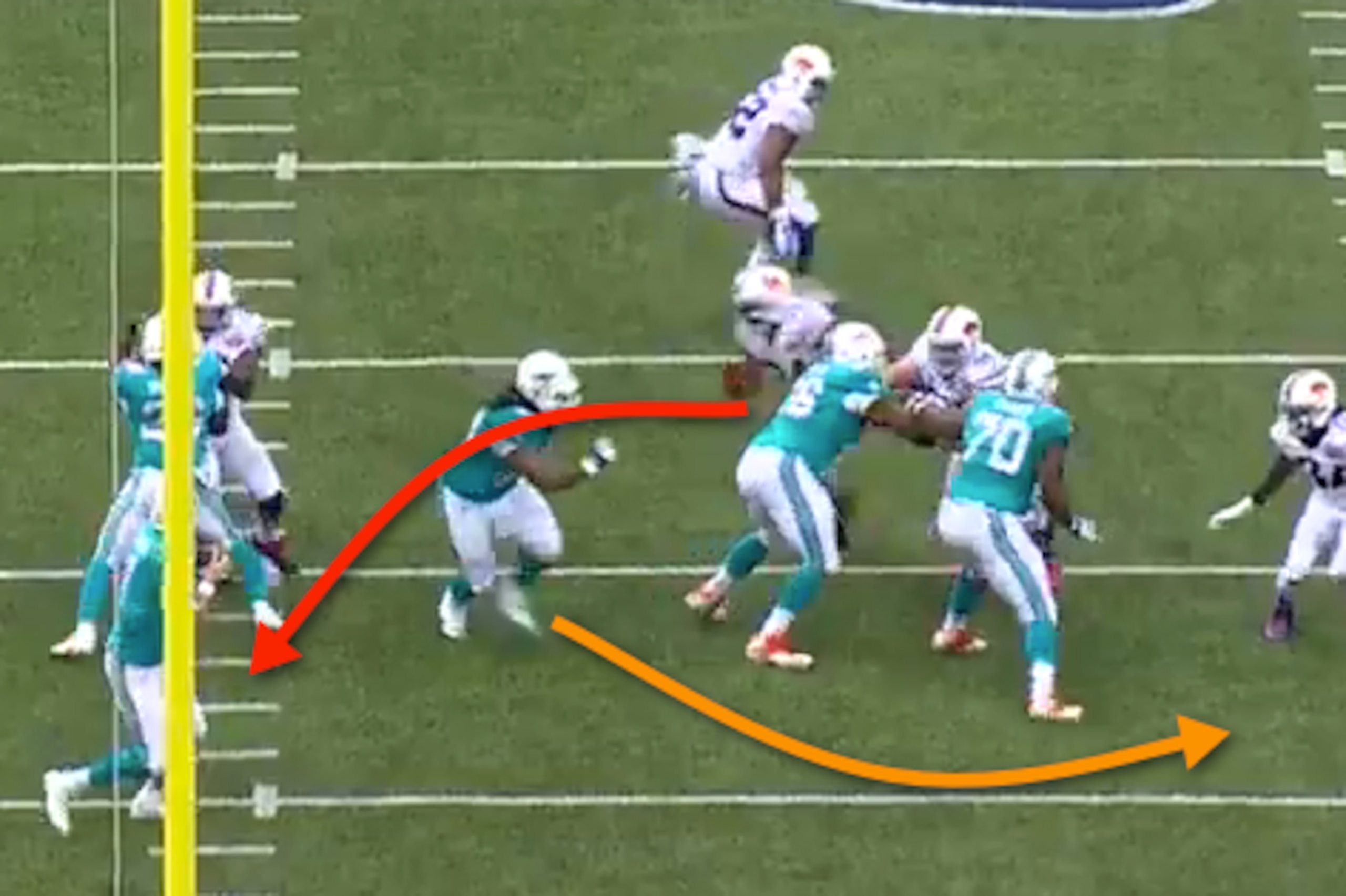
Facing one of the best defensive lines in the NFL will always be a challenge for an offense, but moving forward, the interior offensive line of the Dolphins must play better, regardless of opponent.
Miami was effective pulling its guards in the run game, but with the starting right guard injured, the Dolphins may question backup Dallas Thomas’ ability to win in space.
"More Dolphins injuries: Am told Shelley Smith has Grad 2 knee sprain. Initial timetable given is that he's expected to miss 2 to 4 weeks.
— Barry Jackson (@flasportsbuzz) September 15, 2014"
Thomas had a terrible preseason, allowing far too many pressures as a run- and pass-blocker, so Miami will have to rely on center Samson Satele to double-team defenders.

An easy way to give Miami an advantage blocking is to pull the guards and provide an extra blocker in space. As shown below, Miami was able to create medium-sized runs by putting a “hat” on each strong-side defender.
When pulling a guard from the weak side of the offense (that’s the side opposite of the play direction), the offense will have the advantage because an extra blocker is present.
Miami got away from pulling its guards in the second half, possibly due to the limited abilities of Daryn Colledge and Thomas. With a week to compensate for Smith’s ability as a run-blocker, there are no excuses to why the Dolphins should stop seeking an advantage on run plays.
Where Miami really struggled in Week 2 was in pass protection.
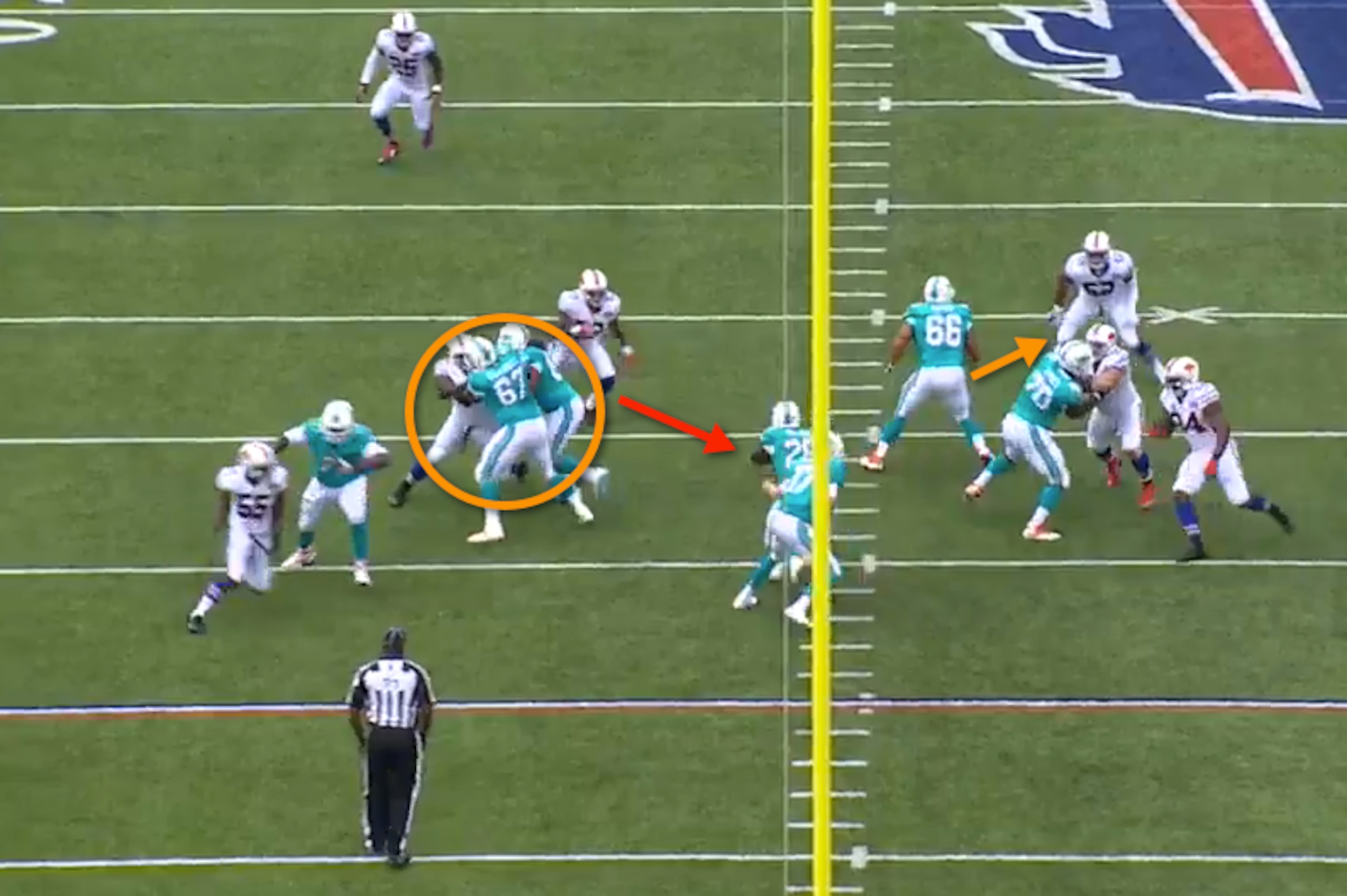
Bookend tackles Branden Albert and Ju’Wuan James weren’t responsible for any of the four sacks the Bills logged on Tannehill. Instead, Kyle Williams and the delayed blitzes by Bills linebackers created each initial pressure.
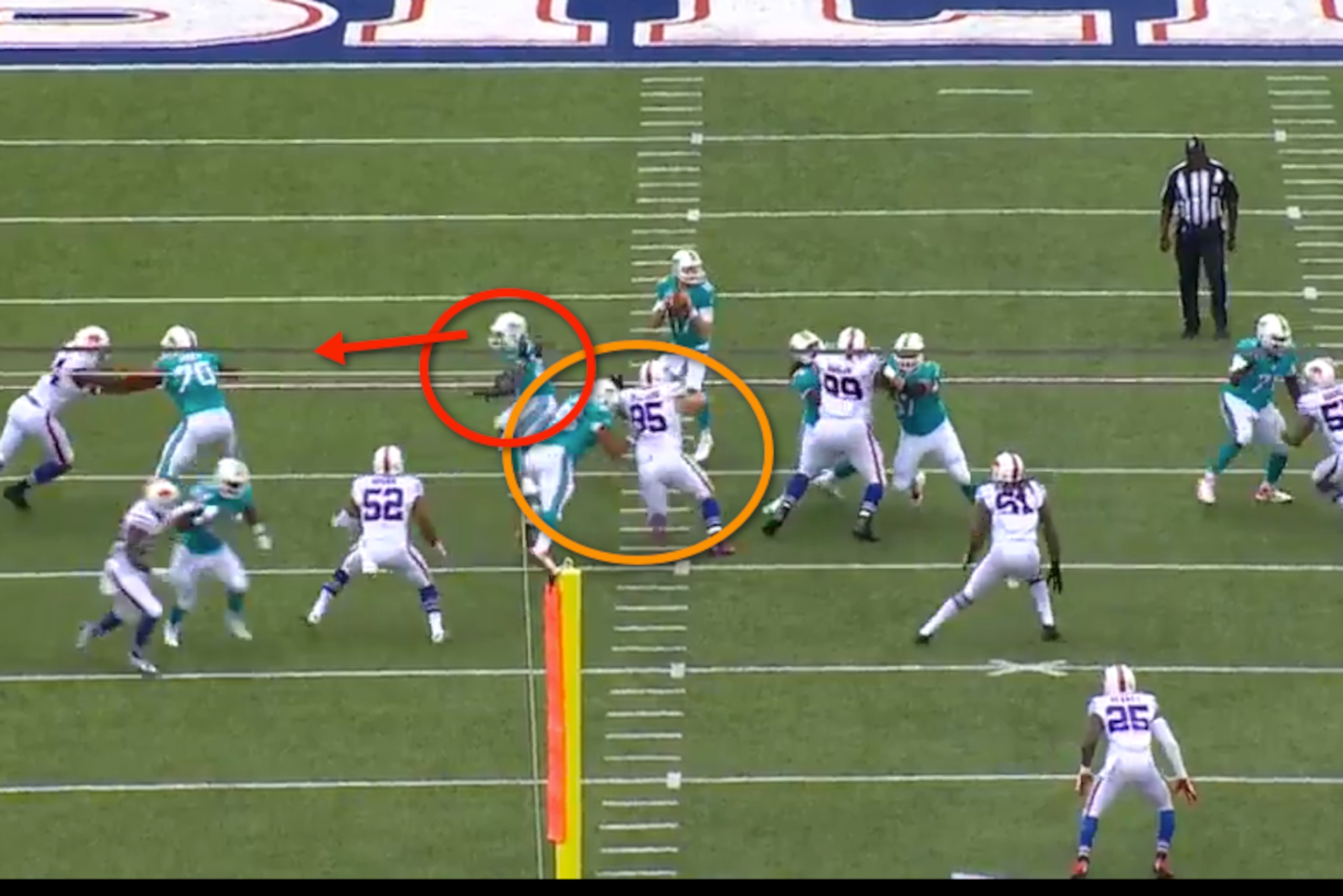
The Dolphins cannot continue allowing instantaneous pressure on Tannehill if growth is expected from the third-year quarterback. To make the proper progression on throws, he needs more than two seconds, especially since Miami’s receiving core is deep with mediocrity.
Between Daryn Colledge, Samson Satele and Dallas Thomas (or Nate Garner if he starts), blocks must be executed at a much higher level for this offense to reach new heights.
Play Pitch and Catch
Through the first two games, Miami has been plagued by mental errors, such as dropped passes, wrong routes or missing open receivers. All of the Dolphins’ playmakers, including quarterback Ryan Tannehill, should receive blame for these mistakes.
Tannehill’s accuracy has been a hot topic among media and fans and for good reason. Tannehill continues to make a few throws a game that make one wonder what he was thinking. Sometimes he airmails a pass over his receiver or stares down a target and allows the defense to jump the route.
"Lazor on QB accuracy/ball placement: It's what separates the great ones from the good ones to the barely there ones.
— Andrew Abramson (@AbramsonPBP) September 15, 2014"
His decision-making must become quicker than it currently is, as he looks stiff and unnatural as a quarterback too often. He doesn’t improvise like some of the league’s elite do throughout a game.

That being said, Tannehill’s accuracy problems have been greatly exaggerated by those who likely don’t watch other quarterbacks with similar scrutiny. Take a look at the accuracy chart I’ve been keeping track of through the first two games. If the ball is catchable, the pass is considered accurate.
This is the same way I, among others, chart collegiate prospects and other NFL quarterbacks, so there is no bias factor.
| 20+ yards | 4/5, INT | 1/1 | 1/1 |
| 11-19 yards | 4/7, INT | 6/7, TD | 3/5 |
| 0-10 yards | 17/18, TD | 10/11 | 11/15, TD |
| Side of Field | Left | Middle | Right |
Tannehill is able to deliver passes in the area of receivers effectively, but his few mistakes during pressure situations have amplified his consistency issues. Tannehill’s ball placement is poor, as he doesn’t lead receivers well. That’s an area that needs improvement.
It’s clear Tannehill is not yet at the levels that some expected, but if we look league-wide, most of the young quarterbacks are struggling in the same way with consistency.
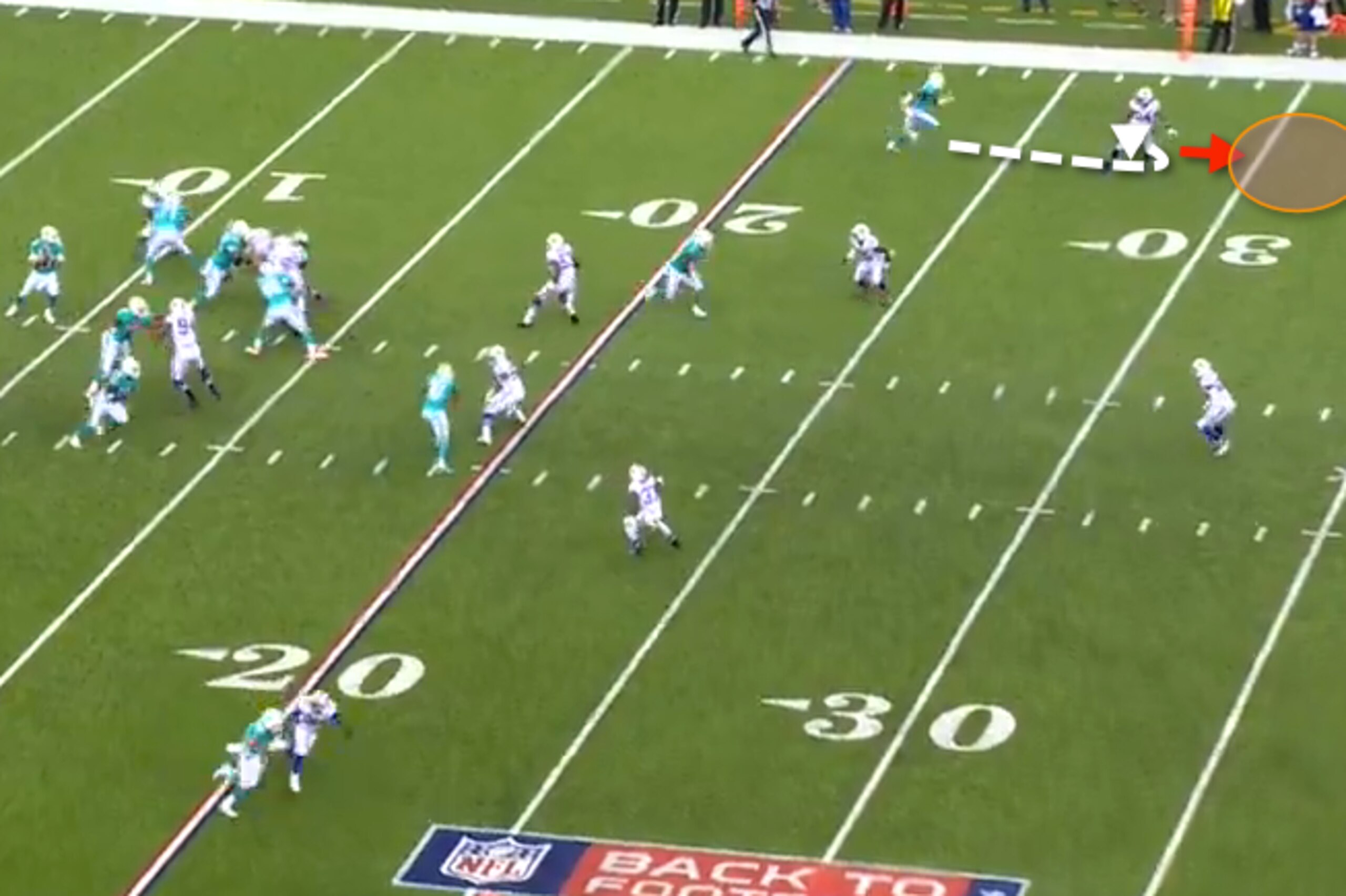
What will help Tannehill’s production greatly is if his receivers can cut down on the number of drops each game. In Week 2, Dolphins receivers dropped four passes, including a deep ball to Brian Hartline at the goal line.
For Miami to convert offensive possessions into points, receivers have to catch well-placed passes, even if the receiver is well-covered. Although mistakes happen, dropping passes for first downs have become a recurring theme for the Dolphins under coach Joe Philbin.
The Dolphins must improve their offense to win Week 3 against the Chiefs, and if they can execute in the three aforementioned areas, Miami should be in position to move to 2-1 on the season. Limiting mistakes has been a problem for this squad, but as the season continues, the excuses must end.
All stats used are from Pro Football Focus' Premium Stats (subscription required) or Sports-Reference.com. All contract information is courtesy of Spotrac.com.
Ian Wharton is a Miami Dolphins Featured Columnist for Bleacher Report, contributor for Optimum Scouting, and analyst for FinDepth.
.jpg?w=2560 "Commanders Eagles Football")



.jpg?w=2560 "Mahomes' Wife Trolls Kubiak 💀")

.jpg?w=2560 "Grading WWE Raw 🔠")