Colin Kaepernick's Decision-Making Still Holding Back 49ers Offense
Colin Kaepernick is uniquely talented when he's in his natural habitat, which is away from the pocket and controlling chaos. You know this because you've watched him swerve around bodies and throw darts deep down the field while off balance.
A strong arm and fast legs make for quite the combination, and Kaepernick frequently uses them to complete throws others wouldn't even consider. But that means he sometimes overestimates his strengths, taking risks others also wouldn't consider.
The complete Kaepernick package leads to a cliff-walking style of quarterback play with decisions that can lead to cringes one second and chest-thumping celebrations the next. He straddles that line skillfully.
.jpg?w=2560 "Chargers Mack")
.jpg?w=2560 "Green Bay Steelers Football")
.jpg?w=2560 "Giants Football")
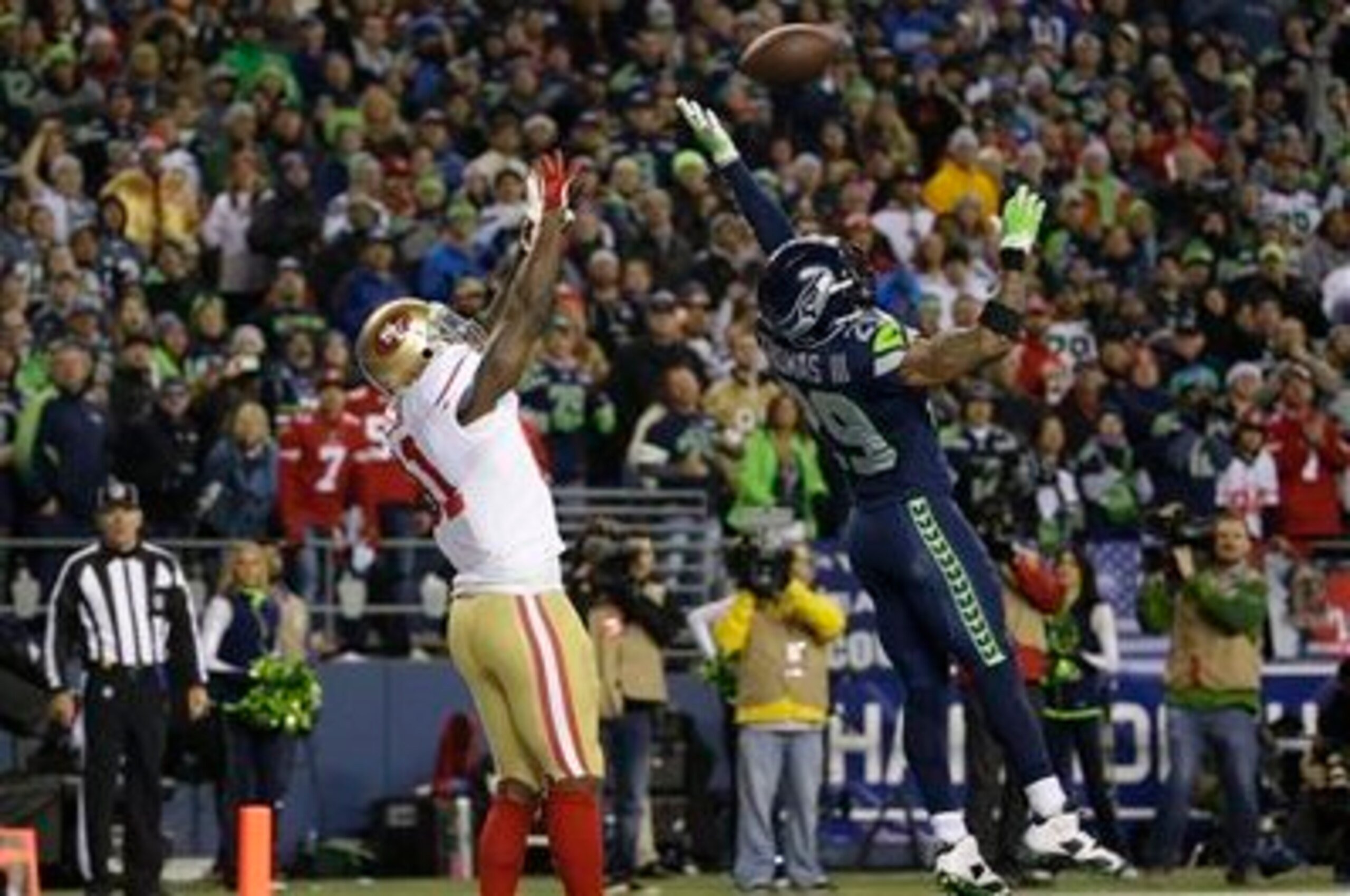
Remember this? Of course you do...
But there are times when his raw ability and creativity during a frantic, broken play can’t overcome poor decision-making. During those times we often need to remind ourselves that we’re watching a still-young, still-developing quarterback who will start his 32nd career game this Sunday (including playoffs).
That means that as he begins his second full year as a starter and his fourth in the league, Kaepernick has only logged enough game experience to say he’s been a starting NFL quarterback for two seasons. During that time we’ve largely watched brilliance, as well as confused defenses trying to stop the read-option.
We’ve also watched a quarterback who’s minimized his mistakes. Which can be deceiving, because as was the case during Sunday night’s loss to the Chicago Bears, Kaepernick can make poor reads at crucial times.
| 696 | 14 | 1/49.7 throws | 7 lost | 1/43.3 drops backs |
Those career numbers don’t reflect what we saw in Week 2, a game when both the excitement and frustration of Kaepernick was on full display.
Excitement? The usual rampant running and taking advantage of wide-open lanes. That led to 66 yards on nine carries (7.3 per carry) and included a key 15-yard run for a first down in the fourth quarter.
Frustration? Three interceptions, and just like that, in one game Kaepernick is already almost halfway to his interception total throughout all of last season. Great defensive plays were made on all three, two from impressive rookie Kyle Fuller. But all three were also avoidable with the right read and vision.
Let’s look at the first one. It came in the second quarter when Kaepernick targeted Anquan Boldin, who lined up in the slot. The central problem here? A focus on one receiver, and only one receiver.
Kaepernick was looking to hit Boldin at about the Bears’ 30 yard-line. Before the snap he surely saw safety Chris Conte in single-high coverage, meaning after play action froze the linebackers for a brief second, there was a space to fit his throw into.
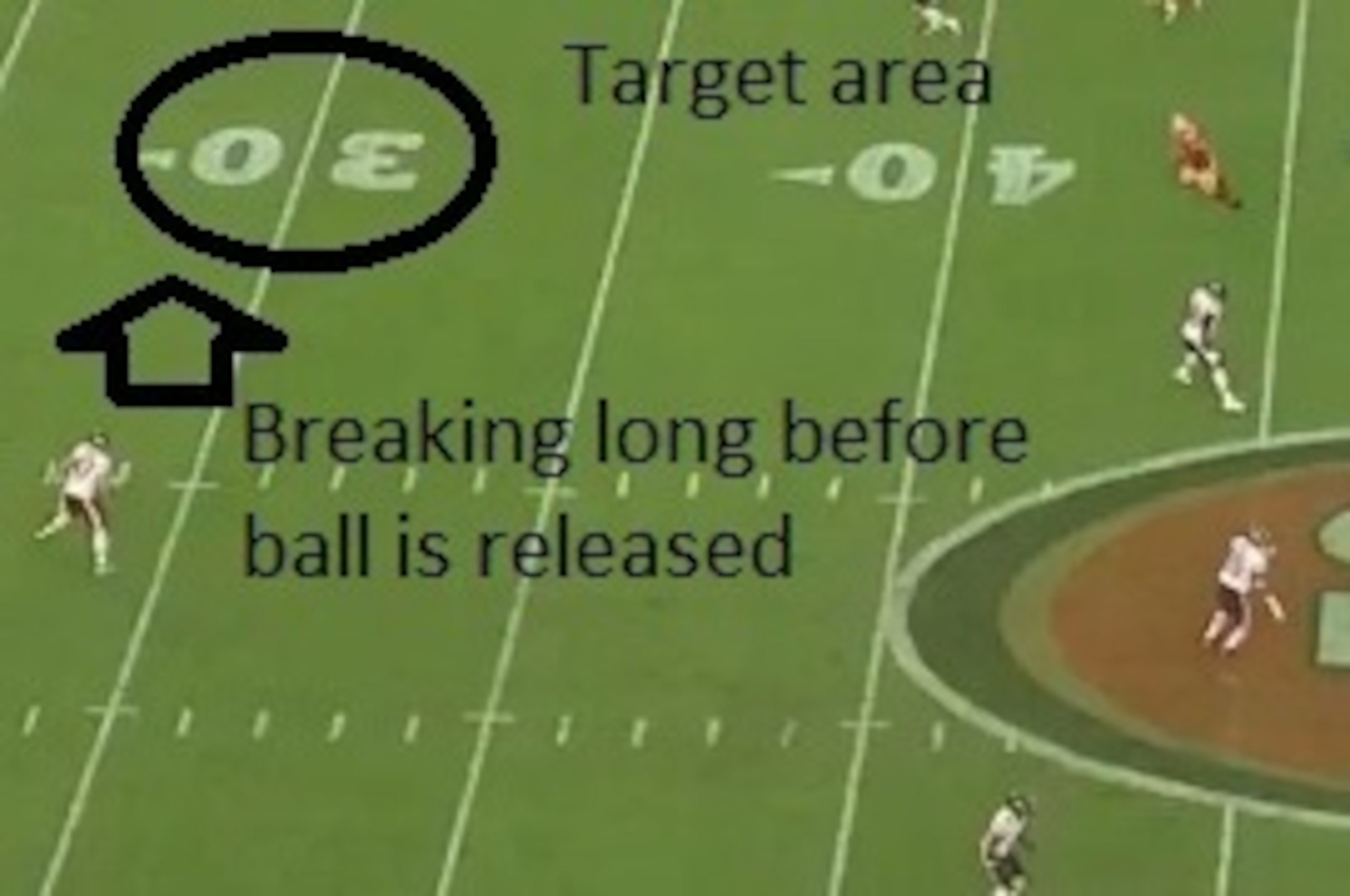
The last and crucial step was quickly glancing elsewhere (“looking off” in true football/announcer guy vernacular) to hold Conte for a split second too. That didn’t happen, and the safety was able to react to Kaepernick's glued eyes right away before the ball was even released, closing off an already tight throwing window.
Yes, a spectacular diving play was required to make the catch. But the perfect timing needed to execute the play—and to break on the ball immediately when Kaepernick started to wind up—should have been disrupted.
Staring down a receiver often ends badly in the NFL, as does simply not seeing a defender. That was Kaepernick’s crime on his third and final interception, this time on a pass intended for tight end Derek Carrier in the fourth quarter.
Though he didn’t have to because there was still comfortable room in the pocket, Kaepernick sensed an opening and rolled to his left. As a quarterback who’s at ease while on the move, he followed his natural instincts.
That’s fine, but the result of movement is a shrinking field. Kaepernick knows this, and so does the defense. As he runs left and has a pass-rusher still in pursuit, Kaepernick has to square his shoulders to his target and maintain his release point while running.
It’s a throw he makes often, and so often we take the difficulty level for granted. He’s throwing after reducing his potential targets to only two after rolling out. Then when he squares, Kaepernick gives away the ball’s intended destination to a defensive back who was facing the play and in zone coverage.
But that only made it an easier play for Kyle Fuller. It was already an easy play because Kaepernick didn’t see him.
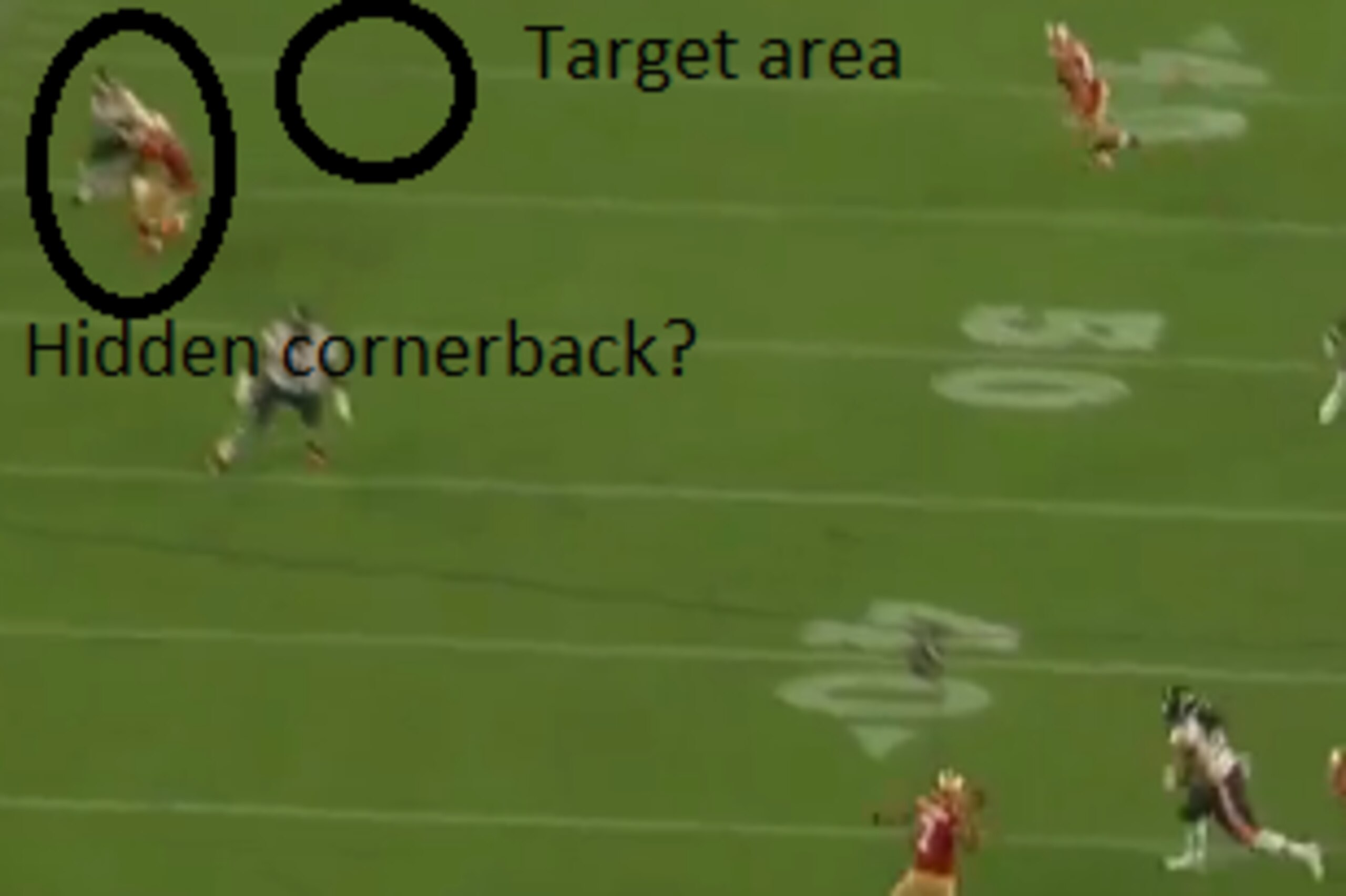
We’ve seen this flaw before, with Kaepernick leaning on his arm strength and risking too much. That happened even on his javelin-style heave in the NFC Championship last January highlighted above, which was inches away from being intercepted by Earl Thomas. Later in that game he tried to loop one over Kam Chancellor’s head after staring down Boldin again and failed miserably.
What’s odd is that Kaepernick typically thrives when pressured.
For example, in Week 1 against the Cowboys he had a passer rating of 149.3 when facing more than four pass-rushers, according to Pro Football Focus (via ESPN.com). That included completing six passes for 89 yards and a touchdown, and last year he finished with a passer rating of 97.7 when blitzed, per The Washington Post's Neil Greenberg.
But when pressure doesn't come—and continually, it won't—he stumbles. Against the Bears his passer rating when a standard rush came fell to only 46.2, according to PFF.
The problem lies in vision that sometimes fails him, an expected hurdle for a still-maturing quarterback. There isn’t an easy, permanent short-term solution aside from the obvious (throw the ball into the fifth row if nothing is there, take a sack, etc.), so mistakes like the Fuller play will remain part of the Kaepernick experience, something 49ers fans will gladly tolerate.
Eventually (hopefully?), fundamental vision will become routine.
.jpg?w=2560 "Seahawks Cardinals Football")
.jpg?w=2560 "Commanders Cowboys Football")