New York Giants Offense Has Too Many Problems for a Quick Fix
Anybody who felt a poor preseason offensive showing wasn't necessarily going to carry over into the regular season for the New York Giants is officially wrong.
After embarrassing themselves for five weeks in August, the Giants were just as disorganized and inefficient during a one-sided Week 1 loss to the Detroit Lions Monday night.
Despite the fact they were facing a defense that was ranked in the middle of the pack in terms of points, yards and takeaways last year, only three offenses scored fewer points than the Giants (14) during the opening weekend of the 2014 NFL schedule.
.jpg?w=2560 "Green Bay Steelers Football")
.jpg?w=2560 "Chargers Mack")
.jpg?w=2560 "Giants Football")
During the preseason, those blaming offensive coordinator Ben McAdoo's new system were making excuses. As we established, quarterback Eli Manning was the chief problem, with poor pass protection and a lack of weapons also playing a role.
What's concerning is that on Monday, there again wasn't a single problem to point a finger at. In fact, new issues have arisen.
It's enough to cause one to wonder if this offense simply has too much to overcome over the next 16 weeks.
Quarterback-Friendly System Not Paying Off
Three- and five-step drops, higher-percentage passes, fewer deep timing routes and more action in the screen game were all supposed to help Manning increase his completion percentage and lower his turnover rate.
We did see big changes in terms of that approach on Monday, as Manning attempted only two passes beyond 20 yards.
"Manning's average pass traveled 6.2 yards downfield, including 5.7 yards in the first half. The past season, Manning led the league with 9.5 air yards per attempt," wrote ESPN Stats & Information.
The hurry-up offense did look good at times on Monday night. The Giants went no-huddle the majority of the time on both of their scoring drives, and they should only get better in that area as they continue to absorb McAdoo's system while also getting key players back from injury.
Yet here we are one game in, and Pro-Football-Reference.com indicates Manning has the league's third-lowest completion percentage and second-lowest passer rating among qualifying quarterbacks.
With his 47th career multi-interception game, he's on pace to throw 32. Anything in that range would surely lead the league, which is something he's already done three times in his 10-year career.
| Completion % | 54.5 | 30th |
| Yards/attempt | 4.9 | 30th |
| Passer rating | 53.0 | 31st |
| QBR | 27.85 | 27th |
It's perplexing that Manning was utilizing more screens, more safe throws to tight ends (particularly Larry Donnell) and more short drops leading to quick reads, and yet the results were still the same.
Manning Still Being Manning, Regardless of the Offense
Even if McAdoo can teach old dog Eli some new tricks, it's almost impossible to somehow compel a 33-year-old veteran to start making better decisions.
Manning has been the league's interception king for a decade running, and that isn't about to change.
According to ESPNNewYork.com's Dan Graziano, he admitted after the game that he made bad decisions on both interceptions. Quarterbacks often take the blame at postgame podiums, but he definitely deserves criticism for both—especially the second one.
Wide receiver Victor Cruz probably should have come back to a scrambling Manning on a third-quarter interception, but it was still the exact type of throw good NFL quarterbacks don't make.
He should have thrown the ball away. Period.
Overall, Manning was just far too inaccurate.
On third down on the opening drive, he just missed a wide-open Jerrel Jernigan:

On the next drive, he was way behind an open Donnell on an easy out route:

Same old Eli.
Not on the Same Page
With that said, interceptions are rarely strictly on the quarterback. More often than not, especially when we're talking about the Giants, pass protection and/or route running factor in.
In this case, a lack of focus in the new offense also played a part.
One thing we noticed Monday night is that Manning's receivers sometimes looked lost when trying to grasp the hand signals the quarterback was flashing them at the line of scrimmage. Sometimes, it felt as though they simply didn't catch the changes at all.
That appeared to be the case on Manning's first interception o a pass intended for Donnell.
Manning did make route changes before the snap, and Donnell was clearly looking at him when that happened.
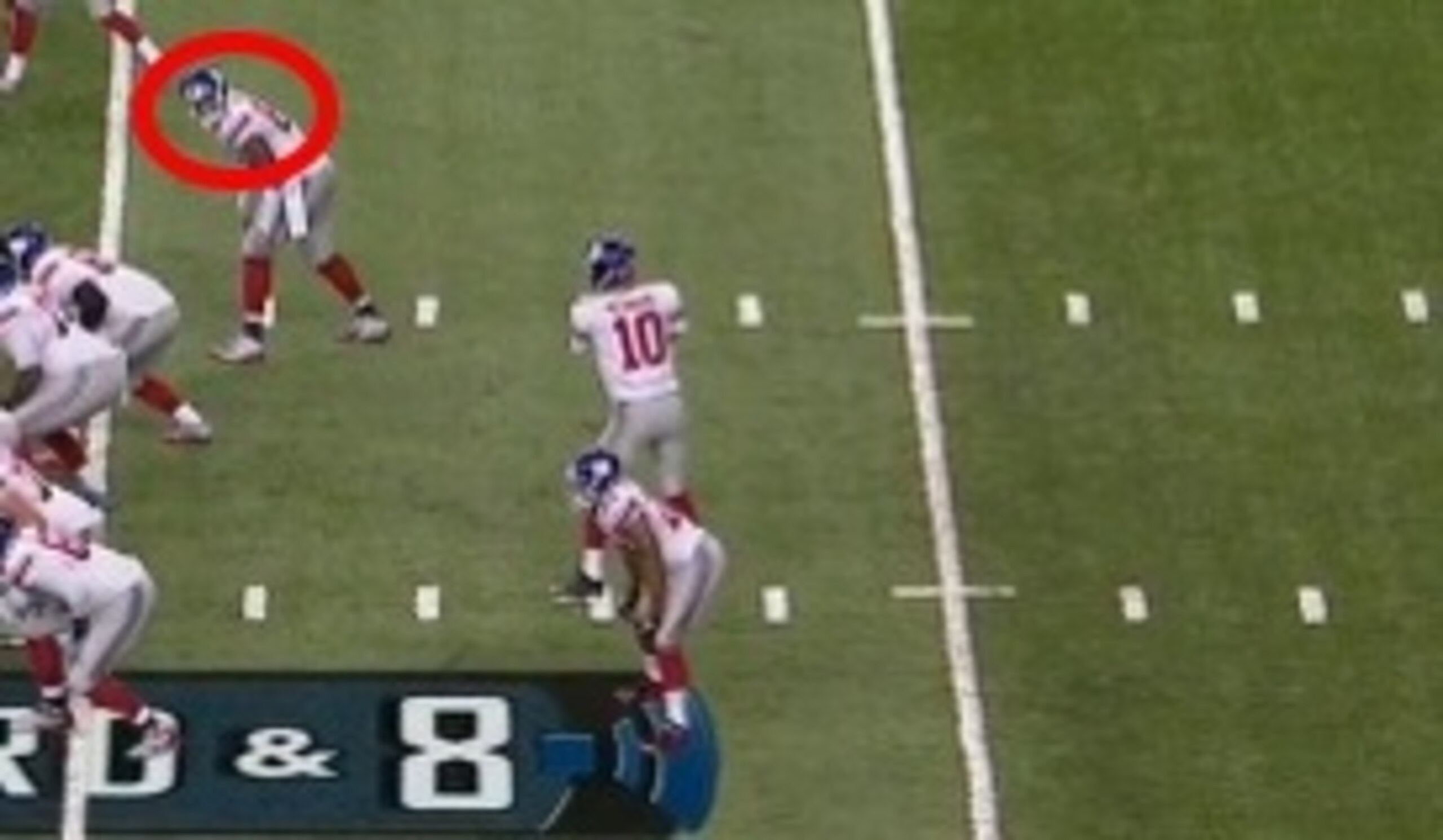
But the way Manning describes it, he was the culprit.
"Larry is doing the right thing. It's really just a bad decision by me," Manning told reporters. "I threw the ball too quick and he had no reason to be looking. So it was a bad decision by me."
Bleacher Report's Ty Schaltersummed it up nicely:
"Worst of all, Manning and the rest of the offense looked like 11 strangers. Manning's audibles and hand signals looked lost on his receivers, and he often appeared to call different plays than the rest of his offense ran. New offensive system or no, these are basic things that have to be ironed out over the summer.
"
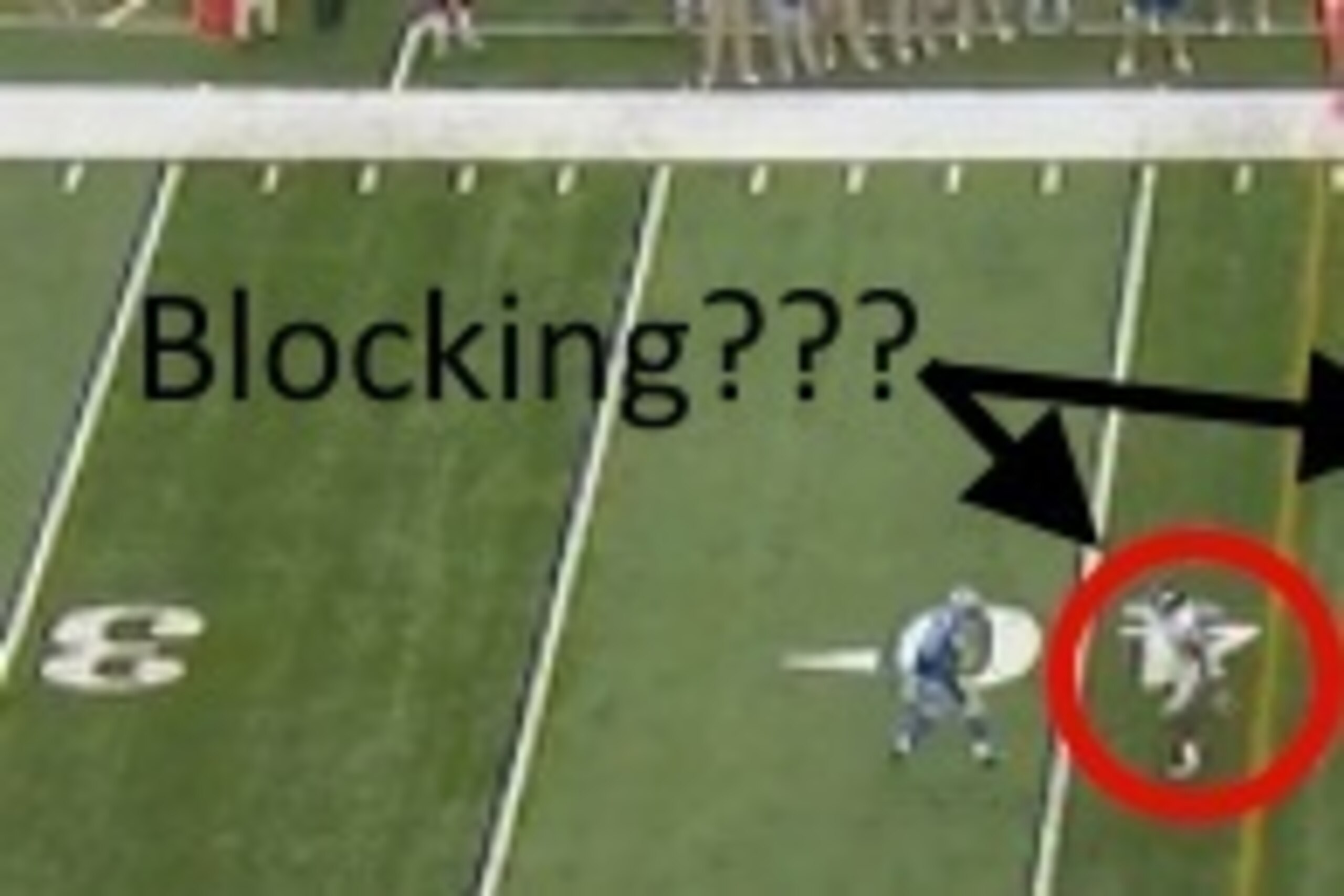
We had another good example later in the third quarter when Manning was running a bootleg while both of the receivers on his side of the field inexplicably blocked rather than running routes:
I know we're so far from Kevin Gilbride's domain that it's a little jarring seeing Manning audible with hand signals on the fly while deciphering packaged plays out of the no-huddle, but these guys have had nearly half a year to nail this thing down.
That they're still screwing up is cause for concern.
A Complete Lack of Support
This is the issue. Sometimes it's poor communication, other times it's poor decision-making. More often than not, it's a simple lack of execution.
That's what brings us to Manning's lack of overall support everywhere on offense.
Pressure was certainly a factor on that second pick—he was under duress less than two seconds after the snap, at the base of his drop—and pass protection was an issue all night.
Manning was hit eight times in total, according to Pro Football Focus (subscription required), taking a pair of sacks.
With left tackle Will Beatty continuing to struggle and the interior offensive line in a carcass-like state, the franchise quarterback is running for his life while the backs whom he needs to keep defenses honest run nowhere.
Rashad Jennings averaged just 2.8 yards per carry on 16 attempts in his Giants debut, while rookie Andre Williams could muster only nine yards on five carries.
Ultimately, against a "D" that wasn't particularly good against the run last year (4.2 yards per carry allowed), the G-Men put up the third-worst rushing total of Week 1.
Jennings and Williams looked great throughout the preseason, but guard Geoff Schwartz is out and the rest of the line has come back to earth a little. Guards Weston Richburg and John Jerry couldn't move a mannequin Monday night, and they won't be receiving much more help in the weeks to come.
Throw in that the receiving corps dropped four passes—including two from Pro Bowler Cruz—and you understand that the problems affecting this offense are widespread. This isn't an overnight fix.
Personnel Won't Save Them
The line is a mess, but Schwartz will be out for half the year at least and shouldn't be viewed as a savior anyway. Hakeem Nicks is gone, increasing the burden on Cruz, who has little support with first-round rookie Odell Beckham dealing with a never-ending hamstring injury.
Talented offenses can overcome sloppiness. They can get past disorganized moments and schematic shortcomings. However, this is an offense that lacks organization, focus and talent.
There's little light at the end of this tunnel.
Brad Gagnon has covered the NFC East for Bleacher Report since 2012.
.jpg?w=2560 "Commanders Cowboys Football")
.jpg?w=2560 "Texans Patriots Football")