Bleacher Report: Philadelphia Edition

powered by Bleacher Report

The 10 Best Tight Ends Not in the Pro Football Hall of Fame

By (Analyst) on June 30, 2009

4,310 reads

24

Previous
1 of 13
Next
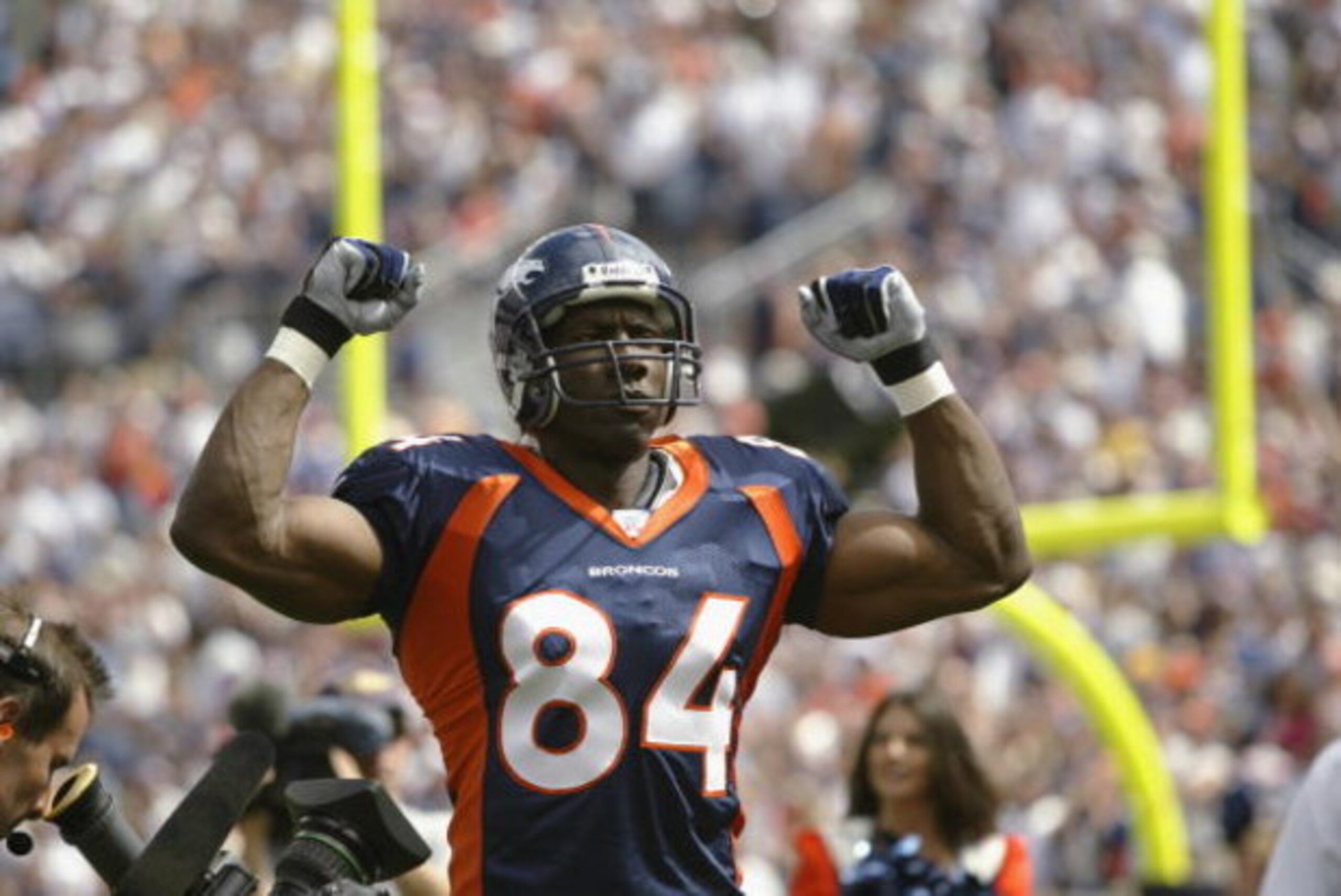
DENVER - SEPTEMBER 8:  Tight end Shannon Sharpe #83 of the Denver Broncos pumps his fists in the air as he is introduced to the crowd before the season opener against the St. Louis Rams on September 8, 2002 at Mile High Stadium in Denver, Colorado.  (Phot

Our position-by-position look at the best eligible players not in the Pro Football Hall of Fame continues with a rundown of the best tight ends that have not earned a trip to Canton.

Choosing which tight ends deserve immortality in the Hall of Fame is a difficult challenge.

In general, you would expect the best tight ends to be exceptional receivers and powerful blockers. However, few tight ends can truly be called “great” in both areas.

Instead, most tight ends either are great blockers and adequate receivers or, as is the case more often in the last couple decades, great receivers and average blockers.

The Hall of Fame voters waited until 1988 to finally induct a tight end, and it remains the least-represented position with a total of seven players honored in the Hall.

The first two tight ends to enter the Hall of Fame were arguably the two that best epitomized the requisite combination of blocking and receiving prowess. Mike Ditka and John Mackey were the dominant tight ends of the 1960s, as they combined for 10 Pro Bowl appearances and five First-Team All-Pro honors.

The next three tight ends inducted into the Hall of Fame: Jackie Smith, Kellen Winslow, and Ozzie Newsome, were all recognized for their receiving prowess.

While few argued the merits of the sixth tight end inducted into the Hall of Fame, Dave Casper, there was some question of his worthiness because his tenure as a premier player in the league was relatively short.

The induction of Charlie Sanders into the HOF in 2007 caught many people off guard. Sanders had been a seven-time Pro Bowl selection and three-time All-Pro for mediocre Detroit Lions teams in the 1970s, but his career stats were considered pedestrian, and he was never a Hall of Fame finalist before being chosen as a Senior Nominee and ultimately inducted in 2007.

Using statistics to validate the worthiness of a tight end for the Hall of Fame is an exercise in futility. Even tight ends from the same era can have very different levels of offensive production.

Some teams, like the Buffalo Bills and Pittsburgh Steelers of the 1970s, have used the tight end predominantly as another blocker.

In 1973, the Buffalo Bills used the seventh overall pick in the draft to select Paul Seymour, an offensive tackle out of Michigan.

They then moved Seymour to tight end, and over the next five years, he caught only 62 passes. But he was a key blocker on the unit that helped O.J. Simpson win three rushing titles between 1973 and 1977.

Other teams have used the tight end as another pass receiver who may sometimes line up in the traditional tight end spot on the line of scrimmage, but often is split out like a flanker.

Don Coryell and the San Diego Chargers forever changed the way tight ends were used when they took the long and lanky Kellen Winslow and made him their receiving tight end. Winslow caught 541 passes in nine seasons while giving Dan Fouts a third dynamic receiving option.

You will see one recurring theme in the players selected as the 10 best not in the Hall of Fame. All of them, regardless of in which era they played, caught more passes in their careers than both John Mackey and Charlie Sanders.

In fact, of the 25 tight ends chosen for this overall list, only six have fewer career receptions than Sanders (336 receptions) or Mackey (331).

As has been the case with all positions, I tried to base my selections first and foremost on how the players compared with others from the same era. How many times was he an All-Pro or Pro Bowl player? How many times was he among the top receiving tight ends in the league? How integral was he to the offensive attack for his team?

Trying to use prowess specifically as a blocker was a challenge, because the actual amount of blocking done by each tight end varies greatly and is difficult to quantify.

So, here is my list of the top 10 eligible tight ends not in the Pro Football Hall of Fame. I look forward to your comments, discussion, and disagreements.

Best of the Rest

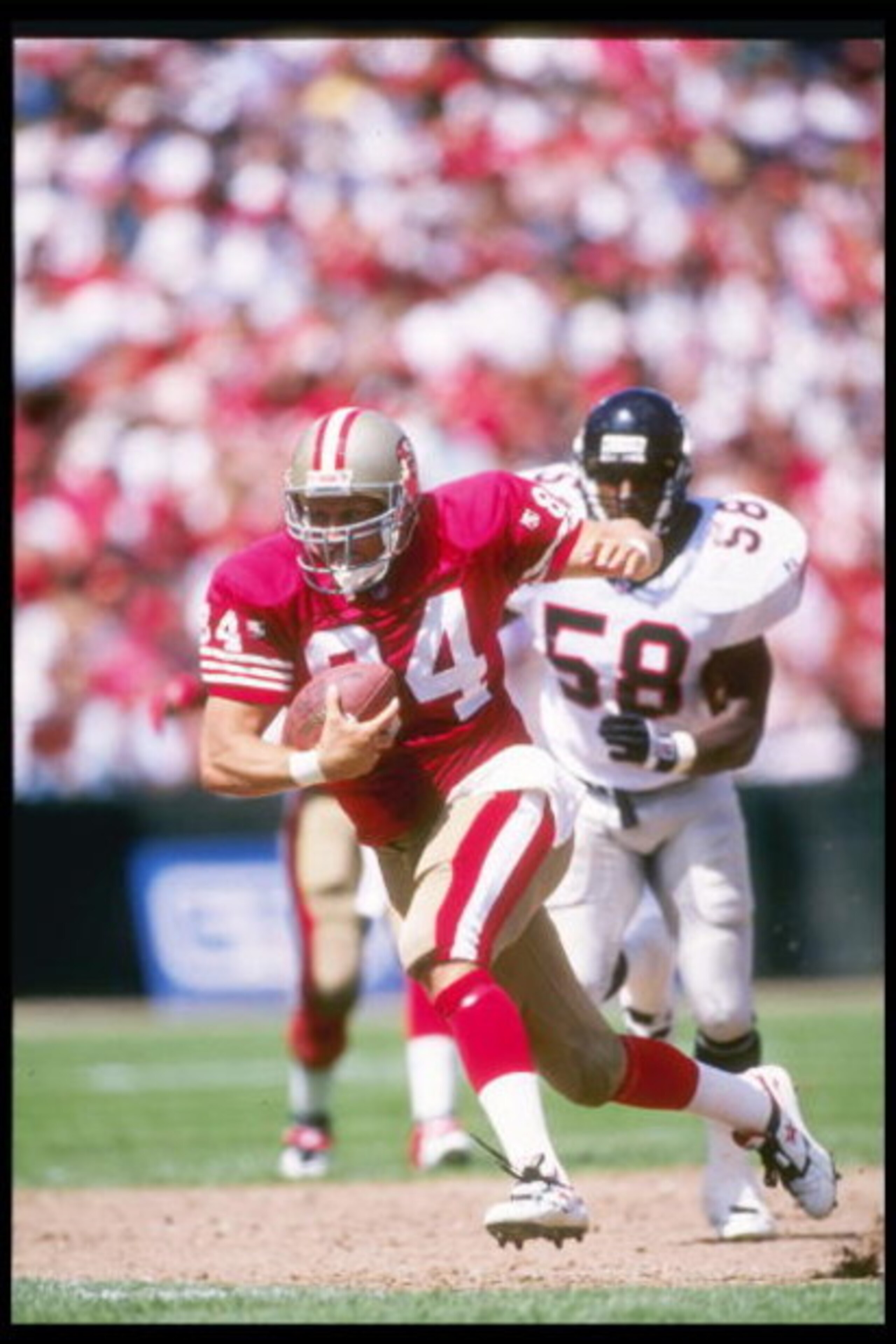
10 Sep 1995:  Tight end Brent Jones of the San Francisco 49ers moves the ball during a game against the Atlanta Falcons during a game at 3Com Park in San Francisco, California.  The 49ers won the game, 41-10. Mandatory Credit: Mike Powell  /Allsport

To help frame the conversation and provide an understanding of which tight ends received significant consideration for this list of the top 10 eligible tight ends not in the Pro Football Hall of Fame, here are the players who earned spots 11-25 on my list.

Only players who are currently eligible for the Hall of Fame were considered.

11. Brent Jones
12. Russ Francis
13. Jerry Smith
14. Raymond Chester
15. Jimmie Giles
16. Wesley Walls
17. Fred Abanas
18. Jim Mitchell
19. Bob Trumpy
20. Mickey Shuler
21. Paul Coffman
22. Frank Wychek
23. Jerome Barkum
24. Rich Caster
25. Billy Joe DuPree

10. Riley Odoms (Denver Broncos, 1972-1983)

Display_image

At 6'4", 230 pounds, Riley Odoms had the prototype size for a tight end. He was the fifth pick in the 1972 NFL Draft out of the University of Houston and spent a decade as a solid blocker and receiver for the Denver Broncos.

A four-time Pro Bowl selection and two-time All-Pro, Odoms caught 396 passes in his career for 5,755 yards (14.5 yards per catch) and 41 touchdowns.

In an era before tight ends (or any receivers) caught a high volume of passes, Odoms caught 40 or more passes five times. He had a career-high 54 catches for 829 yards (15.4 yards per catch) and six touchdowns in 1978.

9. Charle Young (Philadelphia Eagles/Los Angeles Rams/San Francisco 49ers/Seattle Seahawks, 1973-1985)

Display_image

Had he continued the pace of receptions and yards he amassed during the first three years of his career, Charle Young would probably have a bust in Canton.

After being selected by the Philadelphia Eagles with the sixth pick in the 1973 NFL Draft, Young caught 167 passes for 2,209 yards to earn Pro Bowl honors in each of his first three NFL seasons.

He was the NFC Rookie of the Year in 1973 and the next season led the NFC in receptions with a career-high 63.

After four seasons in Philadelphia, Young headed west and spent three seasons with the Los Angeles Rams. However, he was used more as a blocker than a receiver in the “Ground Chuck” offense of head coach Chuck Knox and caught only 36 passes in three seasons with the Rams.

His receiving numbers improved slightly in three seasons with the San Francisco 49ers, but he was used more regularly as a blocker. He did earn a Super Bowl ring as a member of the 1981 champion 49ers.

Young finished his career in Seattle, as he was reunited with Knox and served as an important veteran player on a Seattle team that earned the first playoff appearances in team history and reached the AFC Championship Game in 1983.

He finished his career with 418 receptions for 5,106 yards and 27 touchdowns.

8. Jay Novacek (Arizona Cardinals/Dallas Cowboys, 1985-1995)

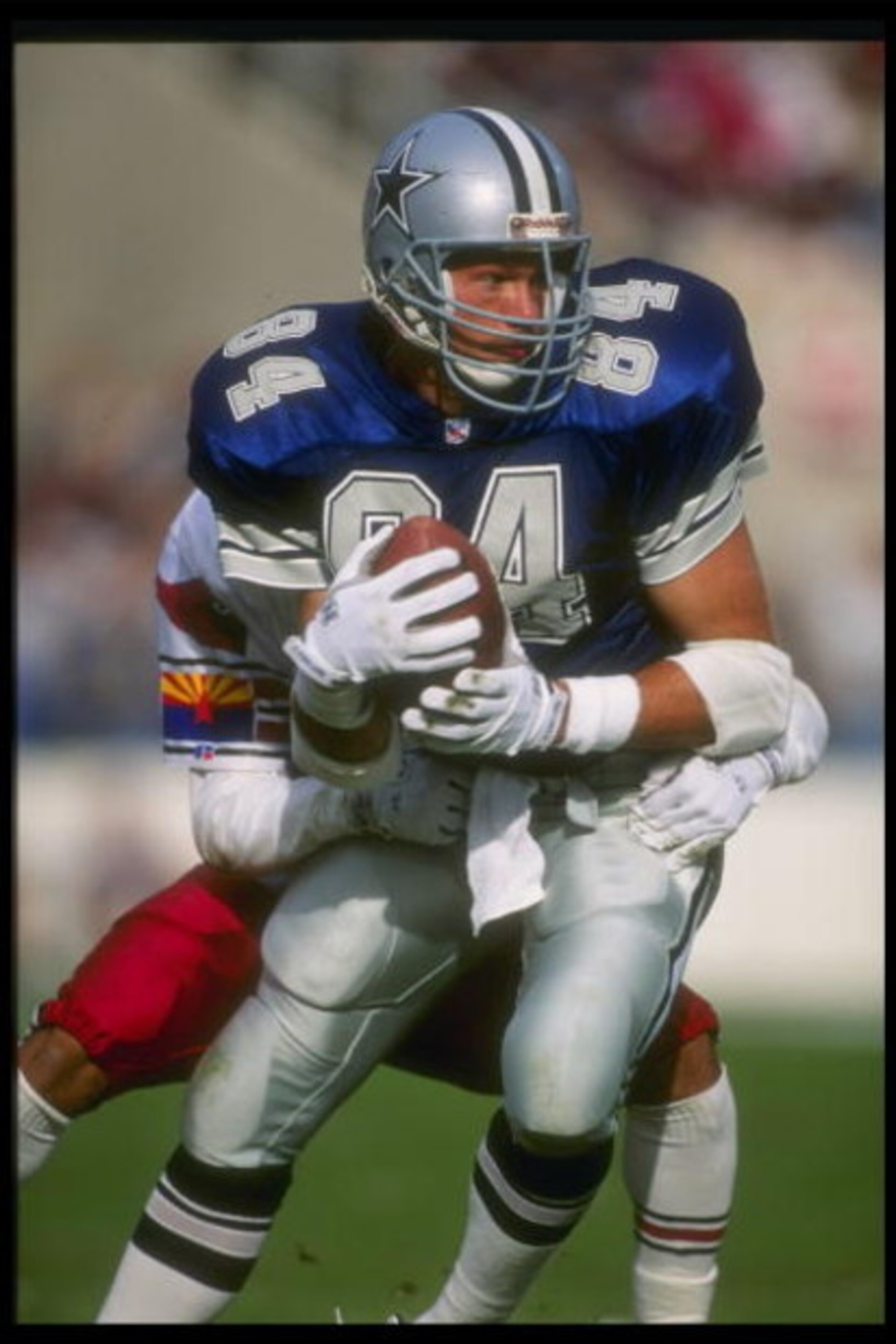
22 Nov 1992:  Tight end Jay Novacek of the Dallas Cowboys moves the ball during a game against the Phoenix Cardinals at Texas Stadium in Irving, Texas.  The Cowboys won the game, 16-10. Mandatory Credit: Mike Powell  /Allsport

If criteria for Hall of Fame induction included the overall value of a player to his team, then Jay Novacek should probably already have a bust in Canton.

His arrival in Dallas in 1990 after five generally forgettable seasons with the Cardinals coincided with the beginning of the success for the Cowboys.

Over the next six seasons, Novacek caught 339 passes for 3,576 yards and 22 touchdowns as the Cowboys won three Super Bowl titles. He earned Pro Bowl honors five straight years and was a first team All-Pro in 1992.

In 13 playoff games, he caught 62 passes for 645 yards and 6 touchdowns.

His retirement following the 1995 season coincided with the beginning of the end for the Dallas dynasty, as the Cowboys lost in the second round of the playoffs in 1996 and haven’t won a playoff game since.

He completed his career with 422 receptions for 4,630 yards and 30 touchdowns.

7. Steve Jordan (Minnesota Vikings,1982-1994)

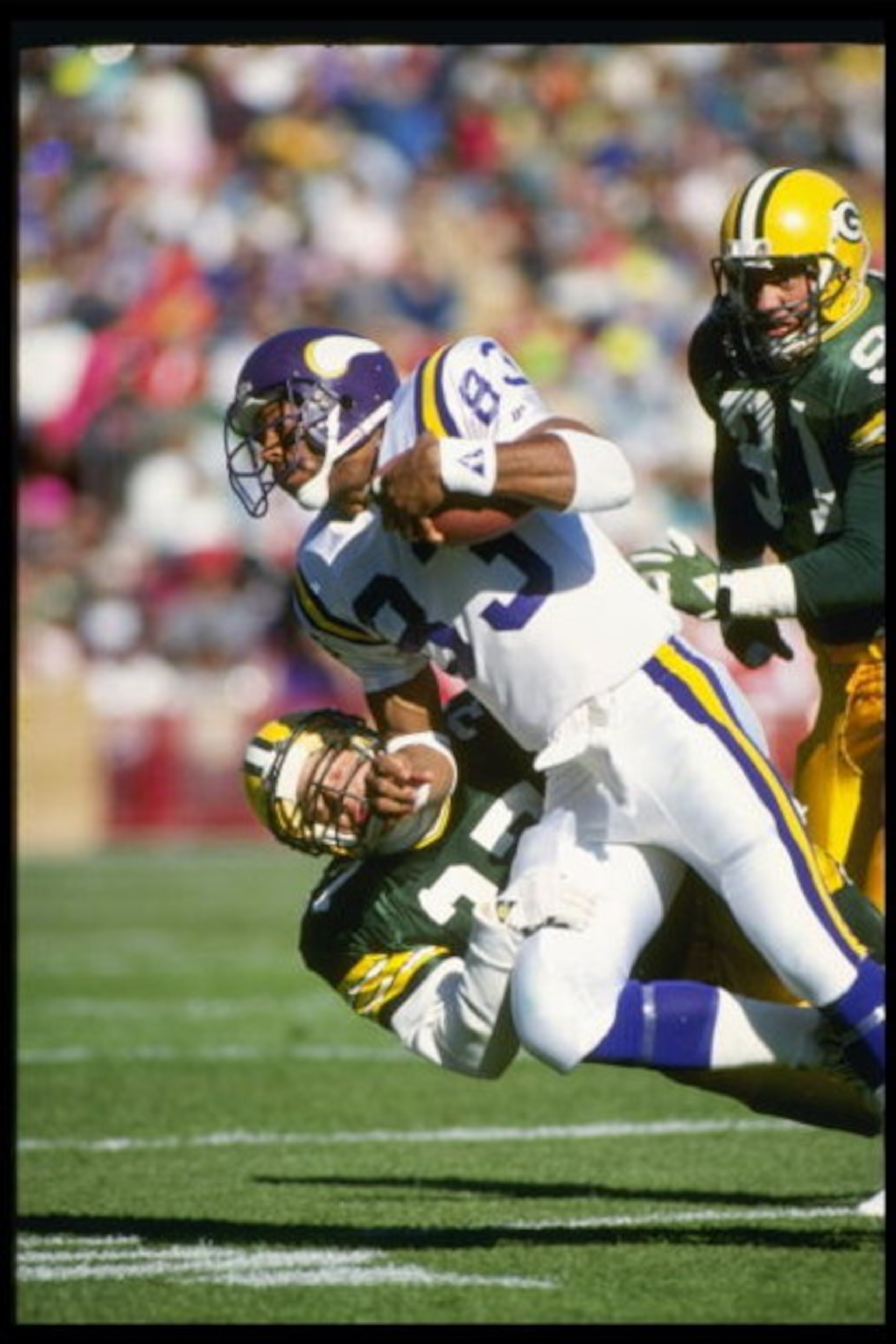
28 Oct 1990: MINNESOTA VIKINGS WIDE RECEIVER STEVE JORDAN #83 CARRIES THE FOOTBALL AND RUNS OVER AN UNIDENTIFIED GREEN BAY PACKERS DEFENDER, DURING THE VIKINGS 24-10 LOSS AT Milwaukee County Stadium in Milwaukee, Wisconsin.

Lightly regarded out of Brown University, Steve Jordan spent 13 years as a solid all-around tight end for the Minnesota Vikings.

Jordan caught a career-high 68 passes for 795 yards in 1985, and the following season he began a streak of six straight trips to the Pro Bowl.

During that 1986 season, Jordan caught 58 passes for 859 yards (14.8 yards per catch) and six touchdowns.

He caught more than 50 passes five times in his career and exceeded an average of 14 yards per catch on six occasions.

Jordan finished his career with 498 receptions for 6,307 yards and 28 touchdowns.

6. Todd Christensen (New York Giants/Oakland-Los Angeles Raiders,1979-1988)

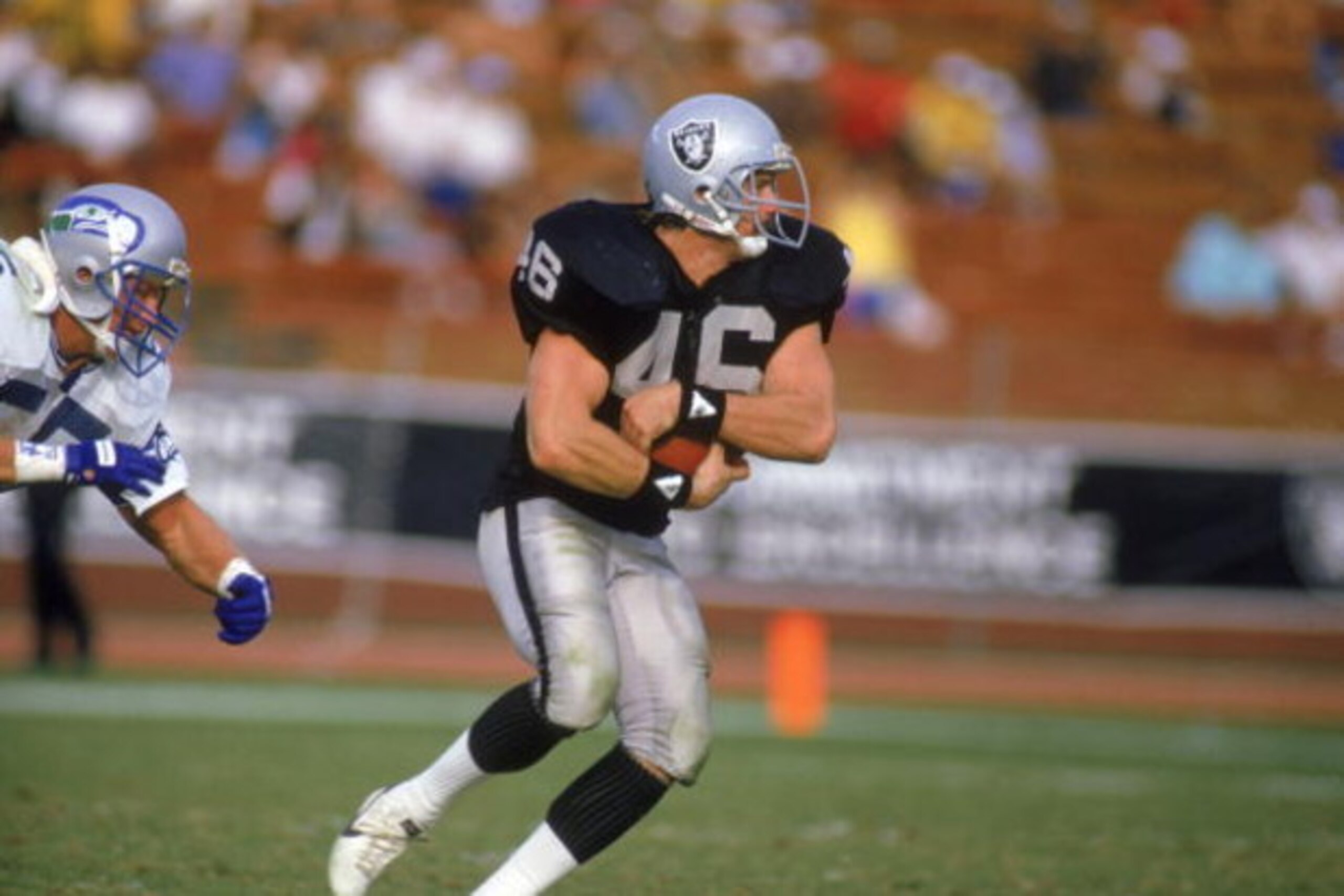
UNDATED: Todd Christensen #46 of the Los Angeles Raiders carries the ball during the game against the Seattle Seahawks at Memorial Coliseum in Los Angeles, California. (Photo by: Stephen Dunn/Getty Images)

Originally selected by the Dallas Cowboys in the second round of the 1978 NFL Draft as a running back, Todd Christensen developed into one of the most prolific receiving tight ends of the 1980s.

In only his second full season as a starting tight end, Christensen led the NFL with a then-tight end record of 92 receptions for 1,247 yards and 12 touchdowns.

A five-time Pro Bowl selection and two-time first team All-Pro, he again led the NFL in receptions with 95 in 1986, but played only two additional seasons before retiring.

Christensen completed his career with 461 receptions for 5,872 yards and 41 touchdowns.

5. Keith Jackson (Philadelphia Eagles/Miami Dolphins/Green Bay Packers,1988-1996)

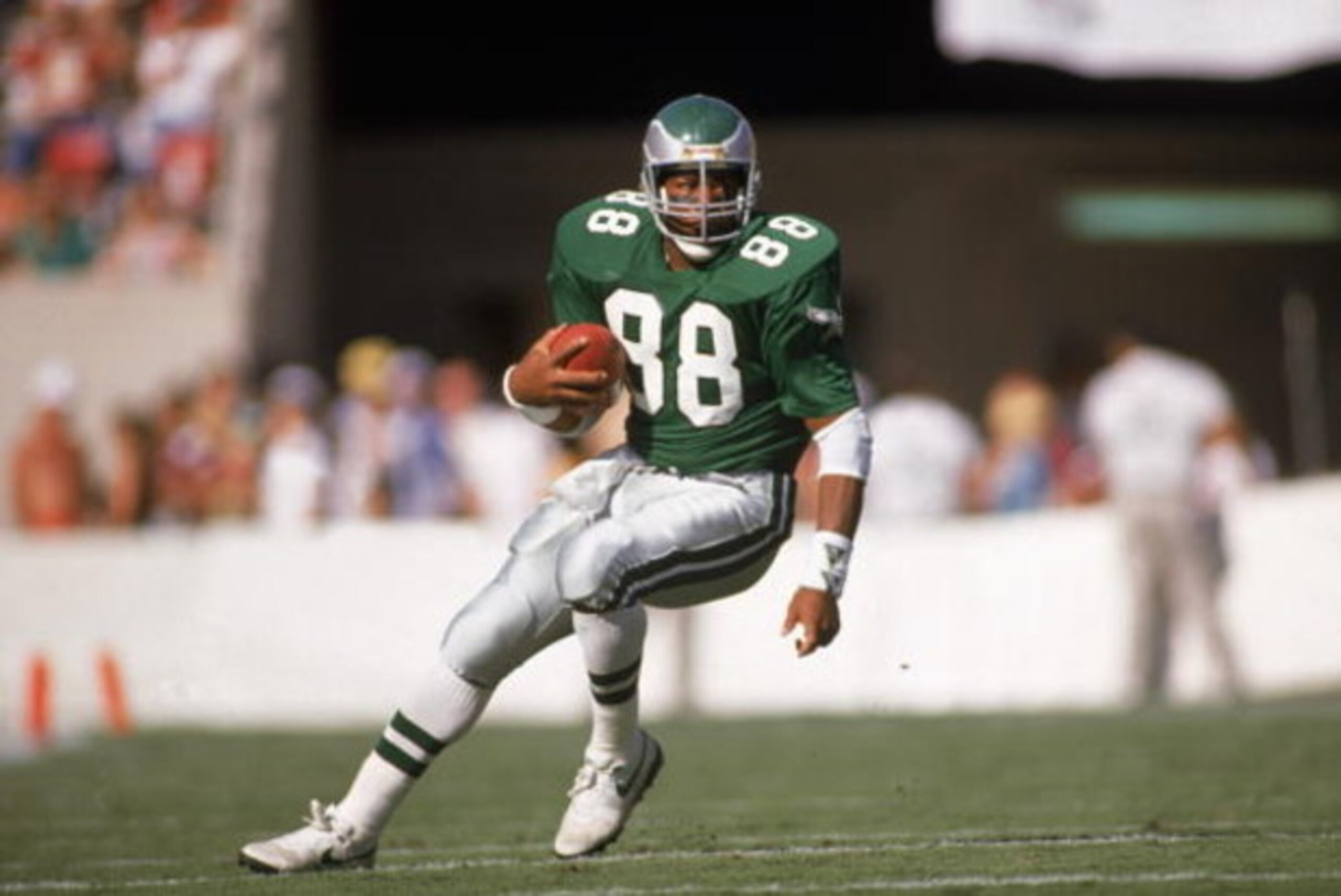
1989:  Tight end Keith Jackson #88 of the Philadelphia Eagles carries the ball during a 1989 NFL game against the Phoenix Cardinals.  (Photo by Mike Powell/Getty Images)

It is interesting how similar the career trajectory was for Keith Jackson when compared to Charlie Young.

Like Young, Jackson exploded on the scene as a pass-catching tight end for the Philadelphia Eagles. Also like Young, Jackson eventually moved to teams where he caught fewer passes, but did win a Super Bowl ring.

Jackson established career-highs with 81 receptions and 869 yards receiving to earn NFC Rookie of the Year honors for the Eagles in 1988.

Jackson was a three-time first-team All-Pro and Pro Bowl selection during his four seasons in Philadelphia. He caught a total of 242 passes for 2,756 yards and 20 touchdowns for the Eagles.

He then spent three seasons in Miami and caught 146 passes for 1,880 yards and 18 touchdowns.

Jackson moved to Green Bay in 1995, and in his final two seasons caught 53 passes for the Packers. He was named to the Pro Bowl in 1996, as he caught 40 passes for 505 yards and 10 touchdowns.

He retired following Green Bay’s victory over New England in Super Bowl XXXI.

A great performer in the clutch, Jackson caught 51 passes for 834 yards and six touchdowns in 13 career playoff games.

Overall, he caught 441 passes for 5,283 yards and 49 career touchdowns.

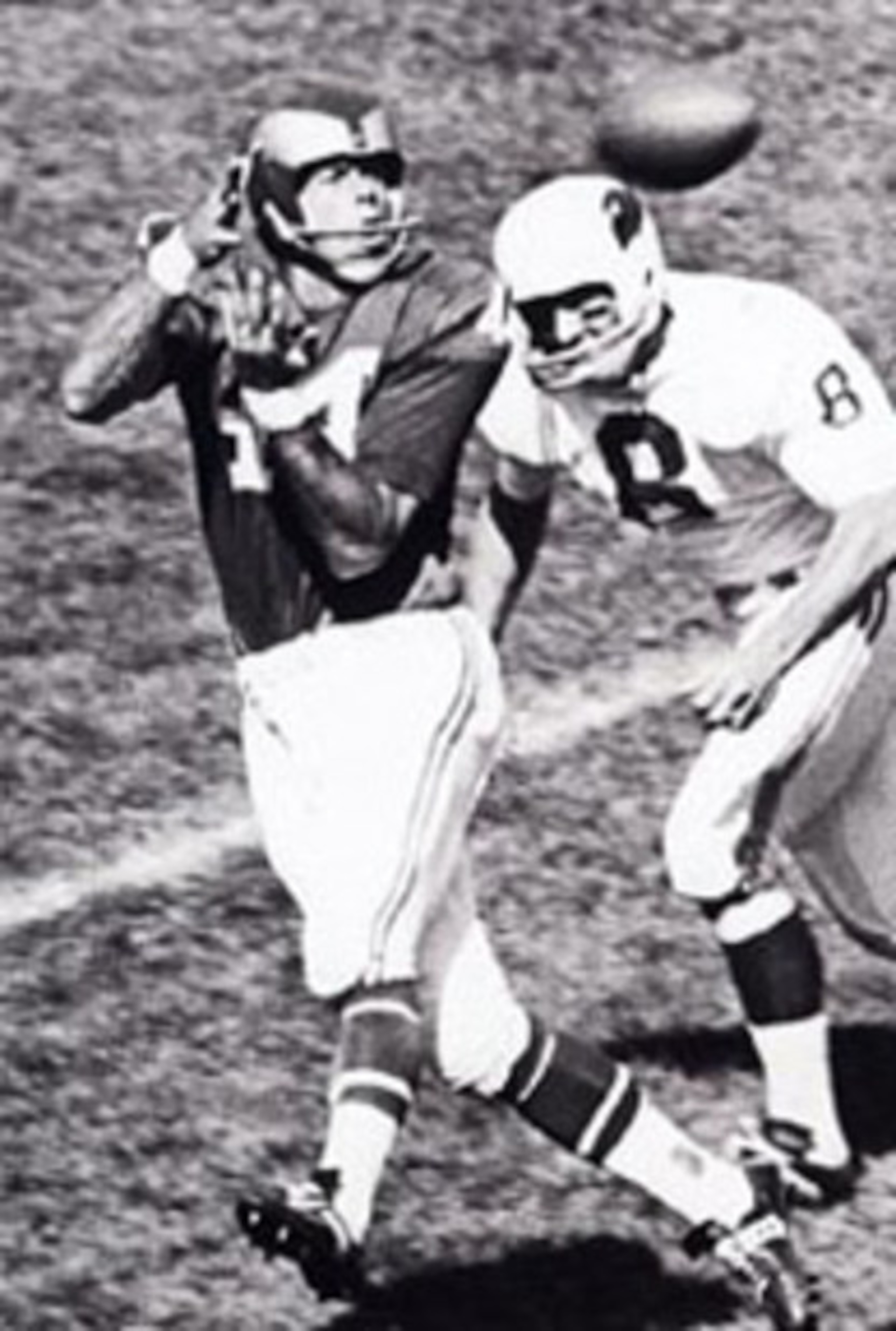
4. Pete Retzlaff (Philadelphia Eagles,1956-1966)

Display_image

Retzlaff spent a portion of his career as a split end, but he earned a spot on this list because he earned three Pro Bowl appearances as a tight end and some of his most productive seasons occurred while he was playing the position.

Retzlaff caught 50 or more passes five times in his career, including a league-leading 58 in 1958.

He moved to tight end permanently in 1963, and in his first three years at the position, he caught 57, 51 and 66 passes, respectively.

In 1965, he earned First-Team All-Pro honors while catching a career-high 66 passes for 1,190 yards (18.0 ypc) and 10 touchdowns.

Until Charlie Sanders was selected to the Hall of Fame, I generally dismissed the occasional cry out of Philadelphia that Retzlaff deserved to be in the Canton.

However, after Sanders' induction, it made me rethink the merits of Retzlaff. He may not have been as strong a blocker as Sanders, but he was a far greater pass receiver while playing in an era when receivers didn’t generally register huge numbers (regardless of whether a split end or tight end).

Retzlaff completed his career with 452 receptions for 7,412 yards and 47 touchdowns.

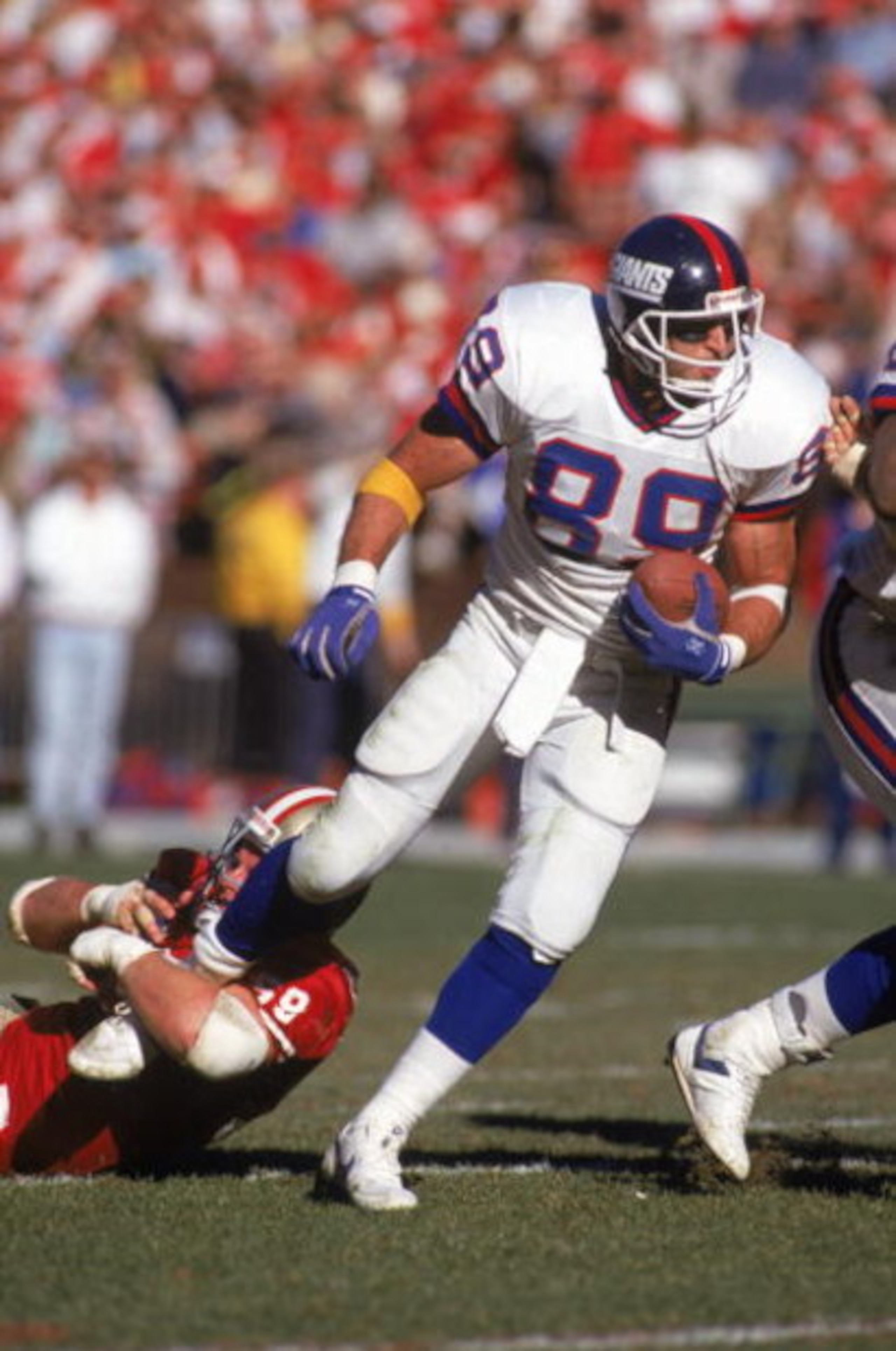
3. Mark Bavaro (New York Giants/Cleveland Browns/Philadelphia Eagles,1985-1994)

SAN FRANCISCO - JANUARY 20:  Tight end Mark Bavaro #89 of the New York Giants tries to get away from the grasps of linebacker Keith DeLong #59 of the San Francisco 49ers in the 1990 NFC Championship game at Candlestick Park on January 20, 1991 in San Fran

There is little argument that Bavaro was the best combination of receiver and blocker at the tight end position during his career. However, his Hall of fame resume is hampered by the fact that his period of dominance was relatively brief.

In just his second season in the league, Bavaro established himself as an All-Pro while helping lead the Giants to victory in Super Bowl XXI.

He caught a career-high 66 passes for 1,001 yards (15.2 yards per catch) and four touchdowns.

He forever endeared himself to fans of the New York Giants when he dragged Ronnie Lott and half of the San Francisco 49ers down the field during a Monday Night Football game.

Bavaro caught 55 passes for 867 yards and eight touchdowns in just 12 games during the 1987 season. He added 53 catches in 1988.

However, he missed much of the 1989 season with injuries and after playing a secondary role during the Giants run to Super Bowl XXV, he left New York after just six seasons.

He played a season in Cleveland before completing his career with two seasons for the Eagles.

In nine NFL seasons, Bavaro caught 351 passes for 4,733 yards and 39 touchdowns.

While his lack of longevity may hamper his chances for induction into the Hall of Fame, it is legitimate to argue that his time as a true superstar was not significantly shorter than that of Hall of Fame member Dave Casper, who crammed most of his greatness into a five-year stretch with the Raiders.

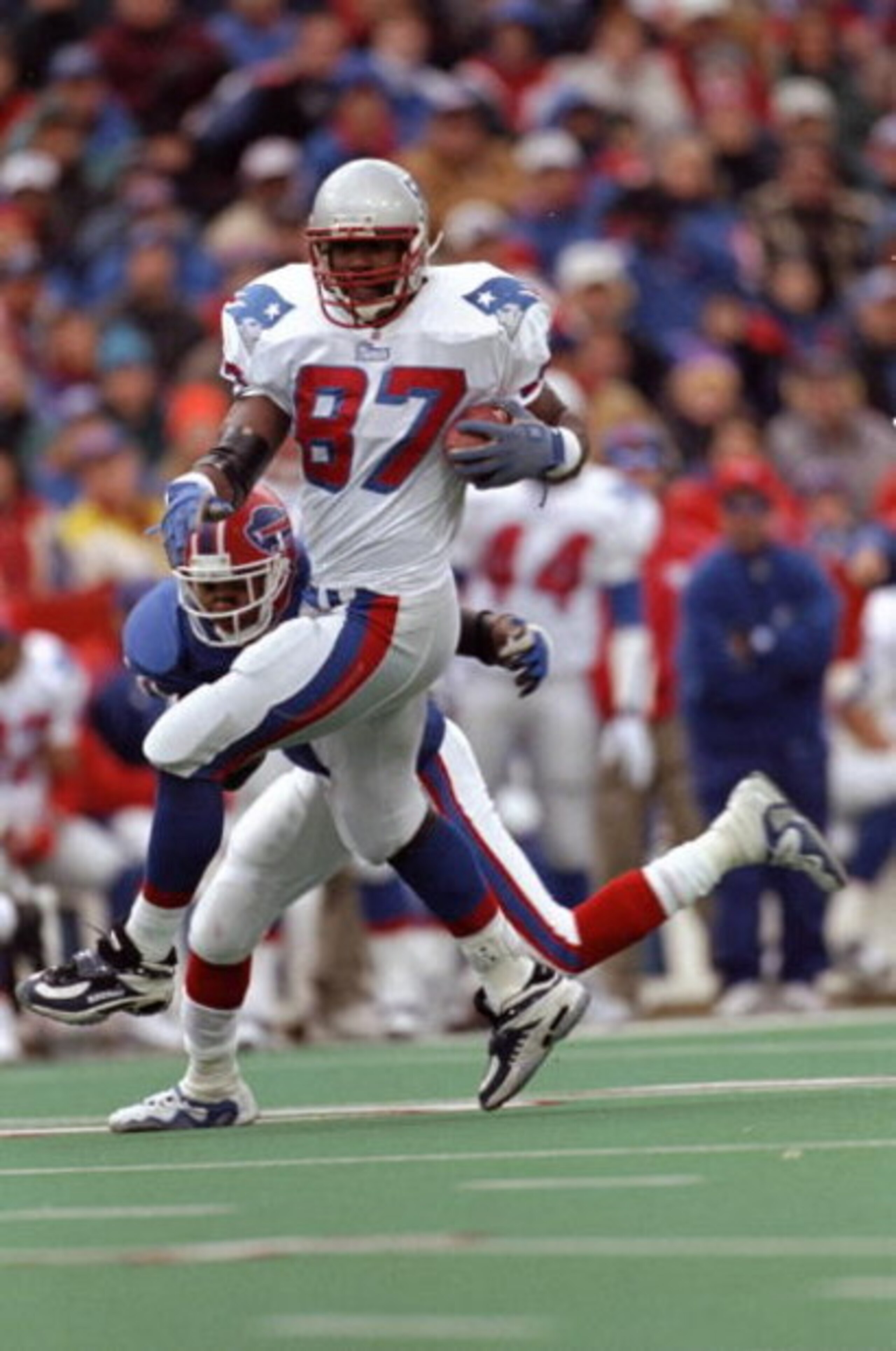
2. Ben Coates (New England Patriots/Baltimore Ravens, 1991-2000)

15 Nov 1998:  Ben Coates #87 of the New England Patriots in action during the game against the Buffalo Bills at the Rich Stadium in Orchard Park, New York. The Bills defeated the Patriots 13-10. Mandatory Credit: Rick Stewart  /Allsport

Along with Shannon Sharpe, Ben Coates was one of the most prolific tight ends of the 1990s. Coates was a five-time Pro Bowl selection and joined Sharpe on the All-Decade team.

Coates earned first-team All-Pro honors in 1994 when he caught 96 passes for 1,174 yards and seven touchdowns. He followed that up with another All-Pro season in 1995 when he caught 84 passes for 915 yards.

He helped lead the Patriots to the Super Bowl in 1996 with 62 receptions for 682 yards.

In total, he caught 60 or more passes in five straight seasons for the Patriots.

Coates completed his career playing alongside Sharpe as a member of the Baltimore Ravens during their run to victory in Super Bowl XXXV.

For his career, Coates caught 499 passes for 5,555 yards and 50 touchdowns.

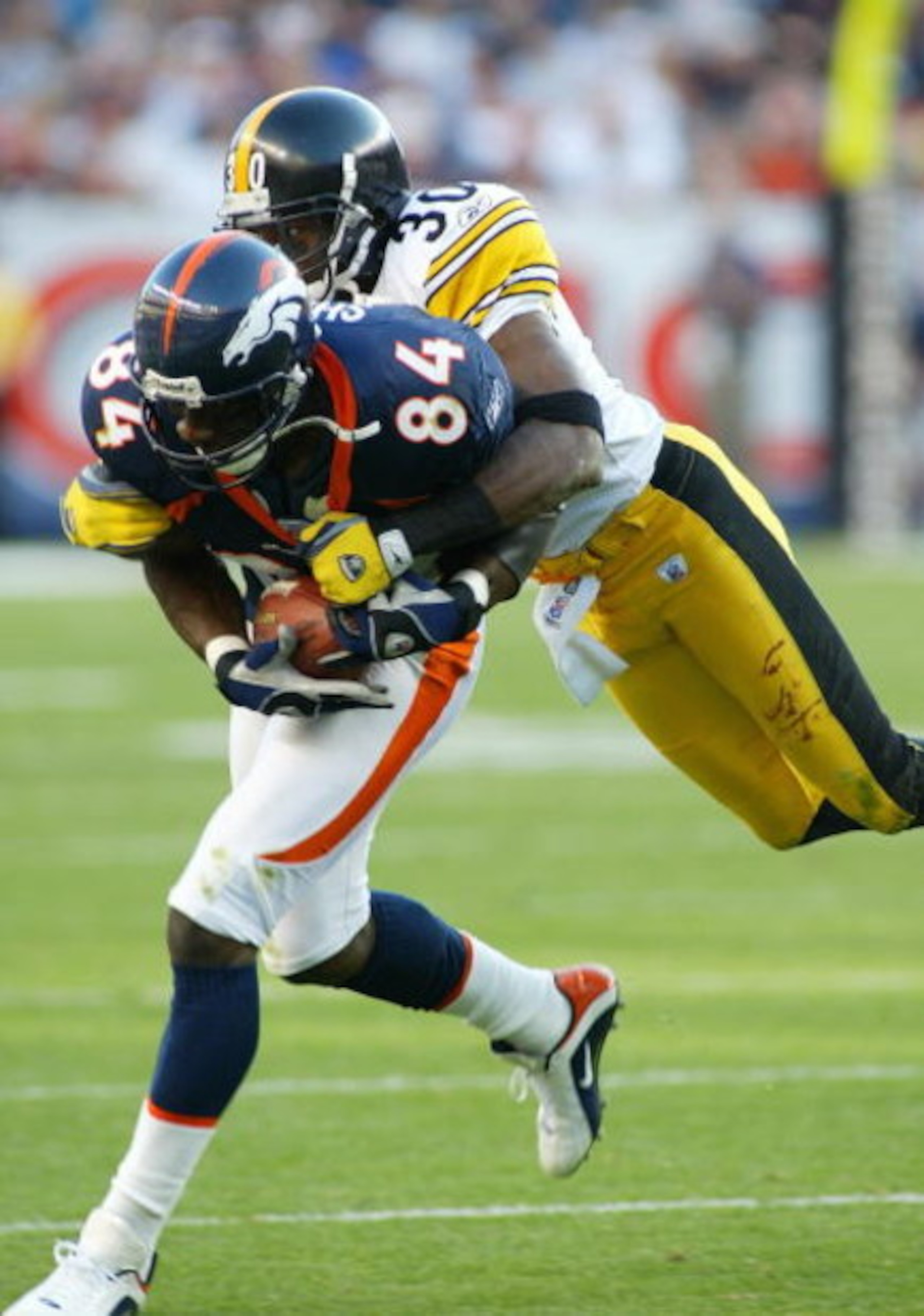
1. Shannon Sharpe (Denver Broncos/Baltimore Ravens, 1990-2003)

DENVER - OCTOBER 12: Shannon Sharpe #84 tight end for the Denver Broncos runs after a catch while Chad Scott #30 of the Pittsburgh Steelers tries to bring him down on October 12, 2003 at Invesco Field at Mile High in Denver, Colorado. (Photo by Michael Ma

Unlike every other player on this list, Shannon Sharpe is a lock to eventually earn a place in the Pro Football Hall of Fame.

He was the most prolific tight end of his era and a key member of three Super Bowl Championship squads.

An eight-time Pro Bowl selection and four-time first team All-Pro, Sharpe caught 80 or more passes in a season three times during his career and had 60 or more catches in 10 seasons.

He eclipsed the 1,000-yard receiving mark three times, including a career-high 1,107 yards in 1997.

Sharpe finished his career as the all-time leading receiver among tight ends and still ranks second to Tony Gonzalez.

His career totals of 815 receptions and 10,060 yards rank 18th and 31st, respectively all-time among receivers.

Begin Slideshow
Keep Reading
Flag
Props (1)
This article is

What is the duplicate article?

Why is this article offensive?

Where is this article plagiarized from?

Why is this article poorly edited?

Flag This Article
Crop_45x45
or to post a comment

24 Comments

There are no comments yet. Get the conversation started by leaving the first comment

Loading comments...
just now posted just now
  • Loading...
  • Nobody has liked this comment yet
Cancel

This comment and all replies have been deleted This comment has been deleted Undo delete

NFL

Subscribe Now

We will never share your email address

Thanks for signing up.

Fresh NFL Mock Draft Hint: you can use arrow keys to navigate through this channel.