Data Analysis: Does Jules Bianchi's Monaco Finish Show Marussia's True Pace?
At the 2014 Monaco Grand Prix, Marussia's Jules Bianchi finished in the top 10 for the first time in the team's history, securing their first world championship points.
Bianchi finished ahead of Ferrari's Kimi Raikkonen and McLaren's Kevin Magnussen (assisted by the Finn's ill-advised passing manoeuvre at the hairpin), as well as Lotus' Romain Grosjean, although a five-second penalty bumped Bianchi behind his countryman in the official classification.
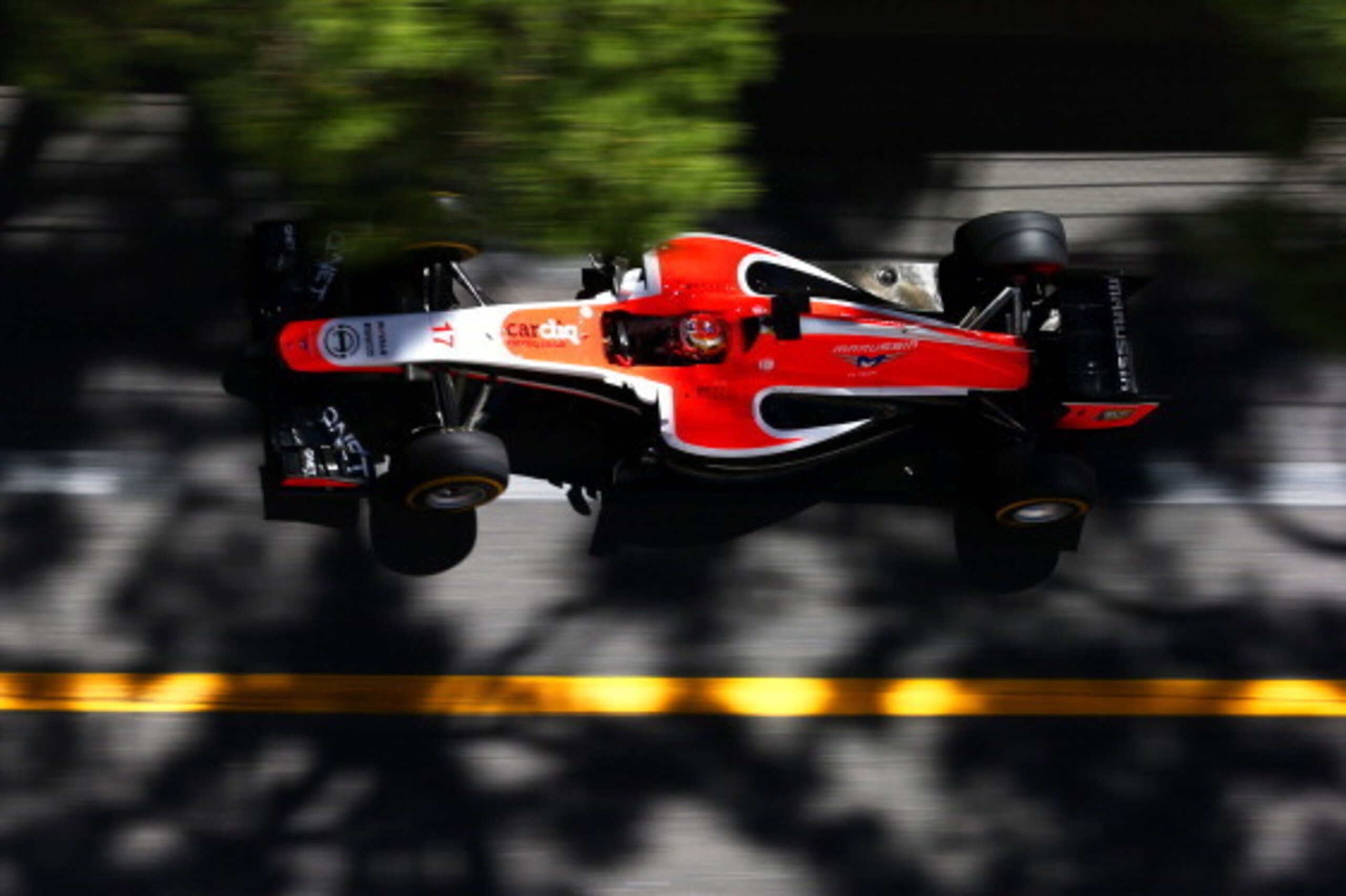



The question is: Was Marussia's performance just a fluke, assisted by several DNFs and the nature of the Circuit de Monaco, where passing is very difficult (though not impossible—cf. Bianchi and Nico Hulkenberg), or was it the culmination of a series of incremental improvements over the last four-and-a-half years?
Before the season, I examined whether Marussia and their fellow 2010 newcomer, Caterham, had been making any discernible progress up the grid despite not having any points to show for their efforts. The answer was yes, and I wrote that "it is not a stretch to imagine a race early in the 2014 season where a few engine failures, perhaps a collision leading to a couple retirements, and Caterham and Marussia's increased pace combine to allow one of those teams to finally sneak into the top 10."
Now that it has happened, let's look at one of the trends identified in that article and see if they have continued into this season.
Here are the average Q1 gaps between the highest-ranked Marussia car and the lowest-ranked car of the more established teams:
| Marussia | +1.353s | +2.037s | +1.859s | +0.918s | +0.048s |
As you can see, Marussia has reduced the average gap every year since 2011, continuing that trend through the first six races this season.
The number for 2014 is skewed by the qualifying results from Australia, where Lotus barely made it onto the track and Bianchi's teammate Max Chilton out-qualified Grosjean by 2.700 seconds. Without that result, the average gap from Marussia to the more established teams is a less impressive, but still improved, 0.598 seconds.

Bianchi believes the gap has closed to the back of the midfield, although Marussia still has lots of work to do. "I don't want to say that we are able to score points every race because it's not real," he told Autosport's Jonathan Noble. "I would say that now we are able to fight with Sauber."
In certain circumstances that is true, but some of the data provided by the FIA demonstrate that there is still a gap between Marussia (and Caterham) and the bigger teams—even Sauber.
Of the drivers that finished the race in Monaco, only Kamui Kobayashi had a slower fastest lap than Bianchi, and that can partially be explained by the fact that Kobayashi's car was damaged when Bianchi barged past him at La Rascasse on Lap 35.
In the key laps following the safety car and at the end of the race, though, Bianchi's lap times were not out of place with the drivers around him.
| 31 | 1m 24.044s | 1m 23.788s | 1m 23.578s | 1m 25.005s |
| 32 | 1m 23.586 | 1m 23.285s | 1m 22.224s | 1m 23.126s |
| 33 | 1m 24.599s | 1m 24.516s | 1m 21.606s | 1m 23.663s |
| 34 | 1m 22.638s | 1m 22.899s | 1m 21.470s | 1m 23.112s |
| 35 | 1m 24.147s | 1m 24.245s | 1m 21.175s | 1m 23.797s |
Still, it should be noted that the lack of passing opportunities in Monaco can artificially inflate lap times for drivers stuck behind slower cars. On a circuit with longer straights, they might easily pass the car in front using DRS and then demonstrate their true pace.
Bianchi was only 13th fastest through the speed trap in Monaco, and of the cars that finished the race, Grosjean was the only driver who was slower, aside from Chilton and the Caterhams.
For the following table, which shows the final five laps of the race, remember that Bianchi was on supersoft tyres, while the other drivers were using the soft compound, which presumably showed much less wear.
| 73 | 1m 23.979s | 1m 22.814s | 1m 22.188s | 1m 21.932s |
| 74 | 1m 23.822s | 1m 23.242s | 1m 21.537s | 1m 21.380s |
| 75 | 1m 22.895s | 1m 23.033s | 1m 21.861s | 1m 21.422s |
| 76 | 1m 22.848s | 1m 22.746s | 1m 23.122s | 1m 21.679s |
| 77 | 1m 22.849s | 1m 23.003s | 1m 24.091s | 1m 21.823s |
That Bianchi was still able to put in these times at the end of the race is somewhat shocking. Hulkenberg, who also switched to super soft tyres for his second stint, struggled to the finish with a train of cars behind him.
So, Marussia's ongoing improvements put them in a position to challenge the teams at the back of the midfield. However, it still took the unique circumstances of Monaco to give Marussia an opportunity to sneak into the top 10.
When the opportunity arrived, though, Bianchi seized it and refused to let go.
Follow me on Twitter for updates when I publish a new article and for other (mostly) F1-related news and banter:

.jpg?w=2560 "Report: Darnold Could Miss 3-6 Weeks")
.jpg?w=2560 "Week 2 Start 'Em, Sit 'Em Decisions")