The 10 Best Wide Receivers Not in the Pro Football Hall of Fame
Our position-by-position look at the best eligible players not in the Pro Football Hall of Fame continues with a spotlight on the position where HOF voters have arguably displayed the most inconsistency in their choices: wide receiver.
Perhaps more than any other position, the role and statistics associated with wide receiver has changed dramatically over the last fifty years as the NFL record books have gone from no players with 500 career receptions in 1960 and only four in 1970 to 106 today, including 85 who have joined the club since 1990.
For that reason, the Hall of Fame selectors seem to be in a constant struggle with history to try and deduce which former pass catchers belong in Canton.
Of the 20 modern era wide receivers in the Hall of Fame, only seven were selected in their first four years of eligibility. In fact, the last wide receiver to be selected to the Hall of Fame in his first season of eligibility was Steve Largent in 1995.
Since Largent’s induction, eight wide receivers have been selected to the Hall of Fame with only Michael Irvin (third year) being chosen in his first five years on the ballot.
While Hall of Fame voters have generally withstood the temptation to select receivers to the Hall of Fame based solely on career statistics, what the explosion of receiving totals has done is overshadow the legitimate candidacy of players who played the position in the era before receivers started averaging 70 or more catches per season.
The selection of Bob Hayes to the Hall of Fame this year is a good step toward recognizing players who excelled at the position before statistics became so bloated.
However, there are still many more worthy Hall of Fame receivers instrumental to their teams and who possessed career resumes equal or better than those of players who are already inducted.
This list includes some recently retired players who will certainly receive the call from the Hall of Fame in the next few years, but it also looks at some all-time greats who were considered legitimate Hall of Fame candidates at the time of their retirements, but have since been lost in the sea of statistics.
In developing this list, each player was evaluated in the context of the time in which he played and for many of the older players, I highlight where they ranked all-time at the time of their retirement.
I also looked at how each compared against other players (Hall of Famers and non-Hall of Famers) from that era and whether, at the time of his retirement, the player was considered a legitimate candidate for the Hall of Fame.
I look forward to comments, discussion and disagreements.
Best of the Rest
To help frame the conversation and provide an understanding of which receivers received significant consideration for this list of the top 10 eligible wide receivers not in the Pro Football Hall of Fame, here are the players who earned spots 11-25 on my list.
There have been so many great wide receivers in NFL history but there were still a lot of quality players who didn’t quite make the cut.
Among the players I seriously considered, but who just fell short, were: Irving Fryar, Roy Green, Charley Hennigan, Gary Collins, Al Toon and Drew Hill.
Only players who are currently eligible for the Hall of Fame were considered.
11. Harold Jackson
12. Stanley Morgan
13. Art Powell
14. Mike Quick
15. Andre Rison
16. Billy Howton
17. Wes Chandler
18. Herman Moore
19. Lionel Taylor
20. Dwight Clark
21. Jimmy Orr
22. Isaac Curtis
23. Mark Duper
24. Del Shofner
25. Mel Gray
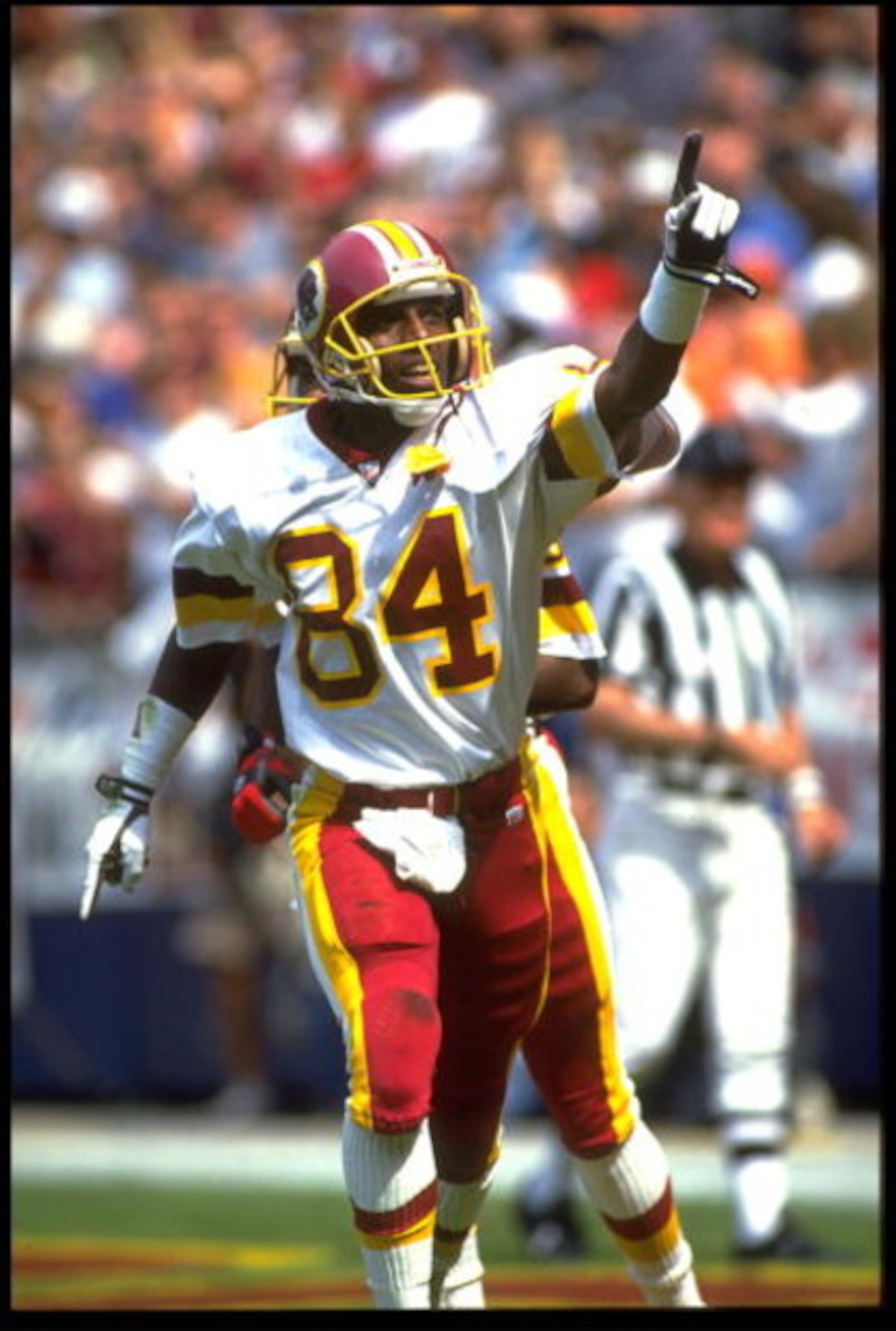
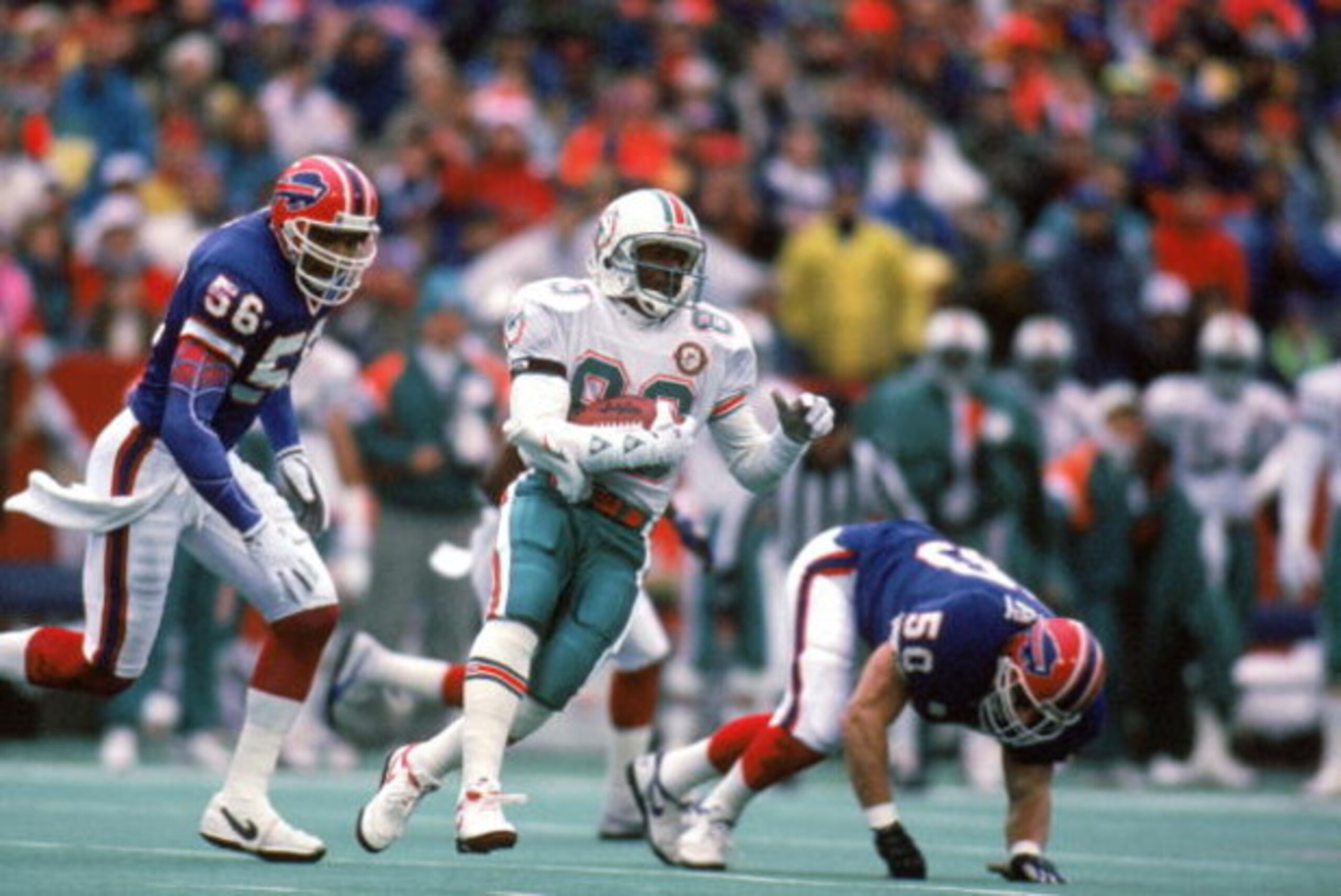
10. Gary Clark – Washington Redskins/Phoenix Cardinals/Miami Dolphins – 1985-1995
For nearly a decade, Gary Clark provided the Washington Redskins with a big-play receiving threat to perfectly compliment the possession receiving of Hall of Famer Art Monk.
Clark topped the 1,000 receiving yard mark five times during his career and twice averaged 19 or more yards per catch.
He earned first team All-NFL honors in 1987 and was a four-time Pro Bowl selection.
A member of two Super Bowl Championship squads, Clark caught a touchdown pass in each victory and had seven receptions for 114 yards in the Super Bowl XXVI win over Buffalo.
Clark caught a career-high 79 passes for 1,229 yards and nine touchdowns in 1989. In 1991 he caught 70 passes for 1,340 yards and 10 touchdowns while averaging a career-high 19.1 yards per catch.
In his 11 year NFL career, Clark caught 699 passes for 10,856 yards and 65 touchdowns.
He ranked sixth all-time in receptions and seventh in receiving yards at the time of his retirement. He still stands 30th in NFL history in receptions and 23rd in receiving yards.
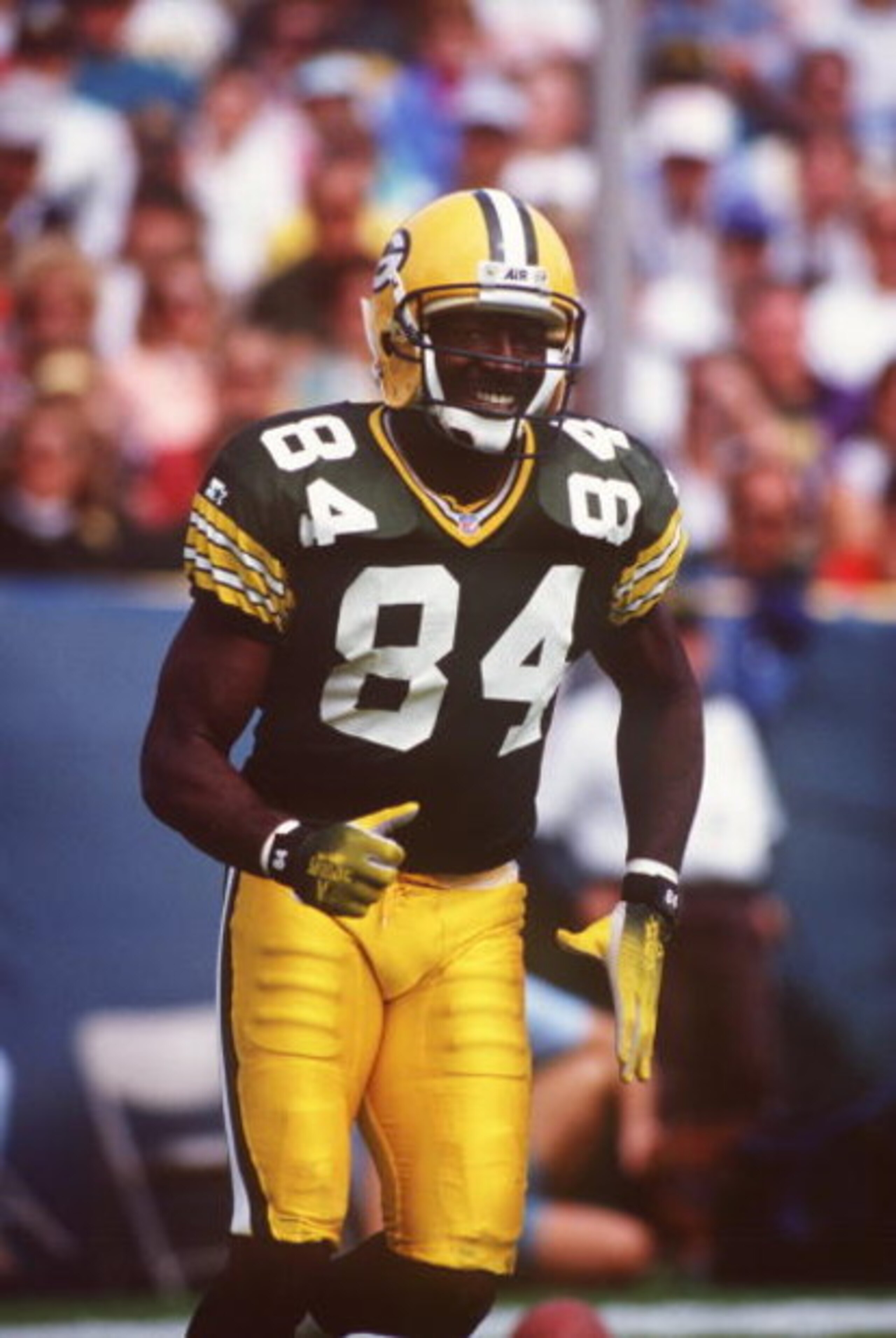
9. Sterling Sharpe – Green Bay Packers – 1988-1994
Had it not been for a neck injury that prematurely ended his career, it is quite possible that Sterling Sharpe would be in the conversation for the best receiver in NFL history not named Jerry Rice.
During his seven seasons with the Green Bay Packers, Sharpe led the NFL in receptions three times, played in five Pro Bowls and was a first team All-Pro selection on three occasions.
After a solid rookie season in 1988, Sharpe emerged as one of the best receivers in the league the following season when he caught a league-best 90 passes for 1,423 yards and 12 touchdowns.
When Brett Favre joined the Packers in 1992, the combination of Favre and Sharpe instantly became the most dangerous in football.
In 1992 Sharpe became only the sixth player in NFL history to win the receiving “triple crown” as he led the league with 108 receptions for a career-best 1,461 yards and 13 touchdowns. The following season, he caught a career-high 112 passes.
In his final season, Sharpe caught 94 passes for 1,119 yards and a career-best 18 touchdowns.
Sharpe finished his career with 595 receptions for 8,134 yards and 65 touchdowns.
8. Mark Clayton – Miami Dolphins/Green Bay Packers – 1983-1993
Few great receivers have had the luxury of playing their entire career catching passes from Hall of Fame quarterbacks.
Mark Clayton is one of those lucky ones as he was a key target for Dan Marino during 10 seasons with the Miami Dolphins before finishing his career catching passes from Brett Favre in a season with the Green Bay Packers.
After seeing very little action during his rookie campaign in 1983, Clayton emerged as Marino’s leading target during the quarterback's record setting 1984 season. Clayton caught 73 passes for 1,389 yards and a then-NFL record 18 touchdowns.
Over the next eight years, Clayton and Mark Duper teamed with Marino to create one of the best passing offenses in NFL history.
Clayton registered four seasons with 70 or more receptions and eclipsed the 1,000 receiving yardage mark on five occasions.
In 1988, Clayton caught a career-best 86 passes for 1,129 yards and a league leading 14 touchdowns.
A five time Pro Bowl selection, Clayton completed his career with 582 receptions for 8,974 yards (15.4 yards per catch) and 84 touchdowns.
When he retired, Clayton was ranked 13th all-time in receptions, tied for 14th in receiving yards and tied for sixth in touchdown receptions. He is currently 58th all-time in receptions, tied for 43rd in receiving yards and tied for 14th in touchdown receptions.
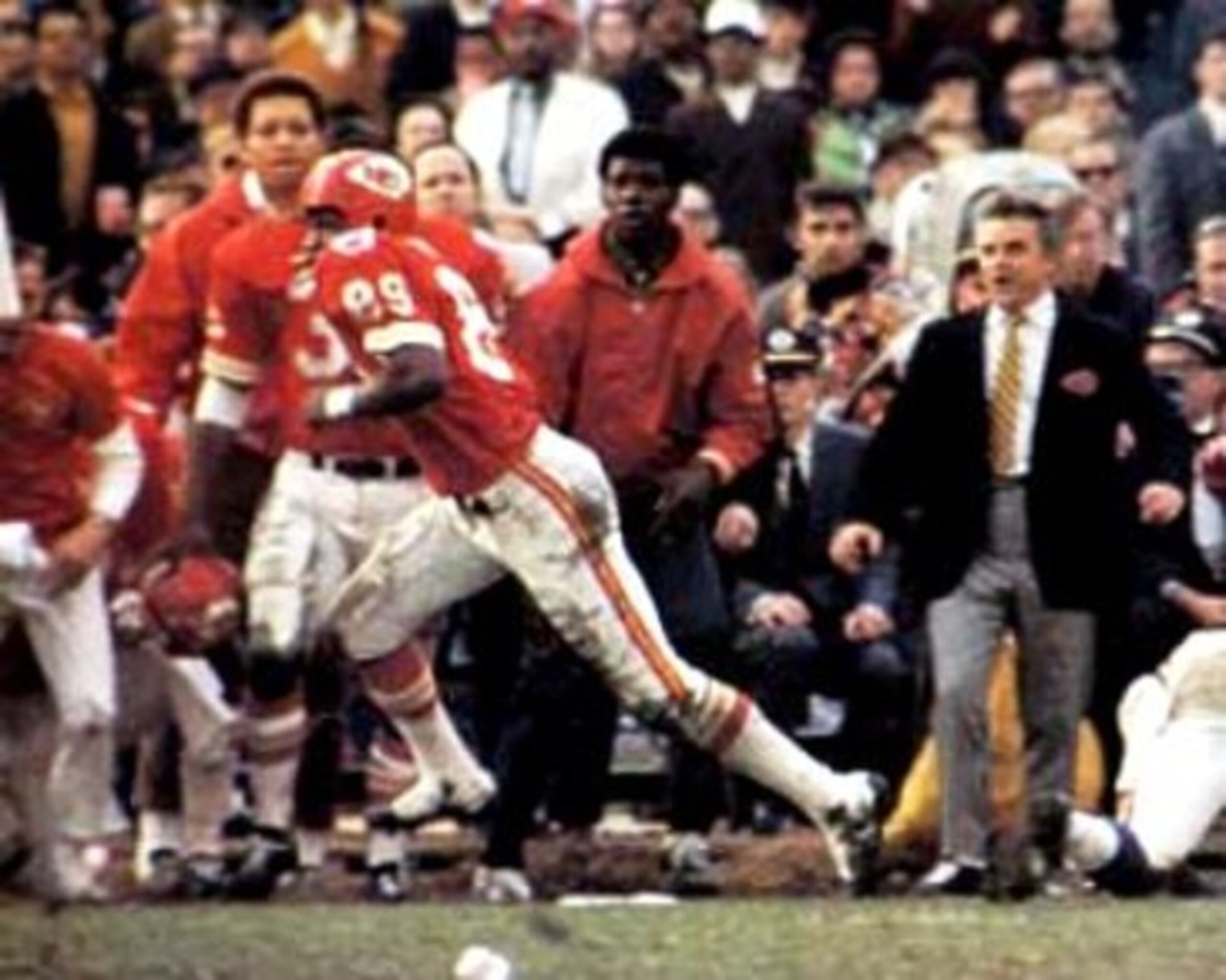
7. Otis Taylor – Kansas City Chiefs – 1965-1975
A powerful receiver with big play capabilities, Otis Taylor was one of the offensive leaders on a Kansas City squad that made two Super Bowl appearances and claimed victory in Super Bowl IV.
In just his second season, Taylor earned first team All-AFL honors and helped the Chiefs to an appearance in Super Bowl I by catching 58 passes for 1,297 yards, eight touchdowns and a league leading 22.4 yards per catch.
Taylor ranked in the top 4 in receptions four times and led the NFL in receiving yards with 1,110 in 1971.
Always a big play threat, Taylor averaged 17.8 yards per reception for his career and had 10 catches of 50 yards or more during his career.
Taylor made one of the biggest plays of Super Bowl IV when he broke a tackle on a short pass and turned it into a game-clinching 46-yard touchdown.
In 10 seasons, Taylor caught 410 passes for 7,306 yards and 57 touchdowns. At the time of his retirement, he ranked 17th all-time in receiving yards and 18th in receptions.
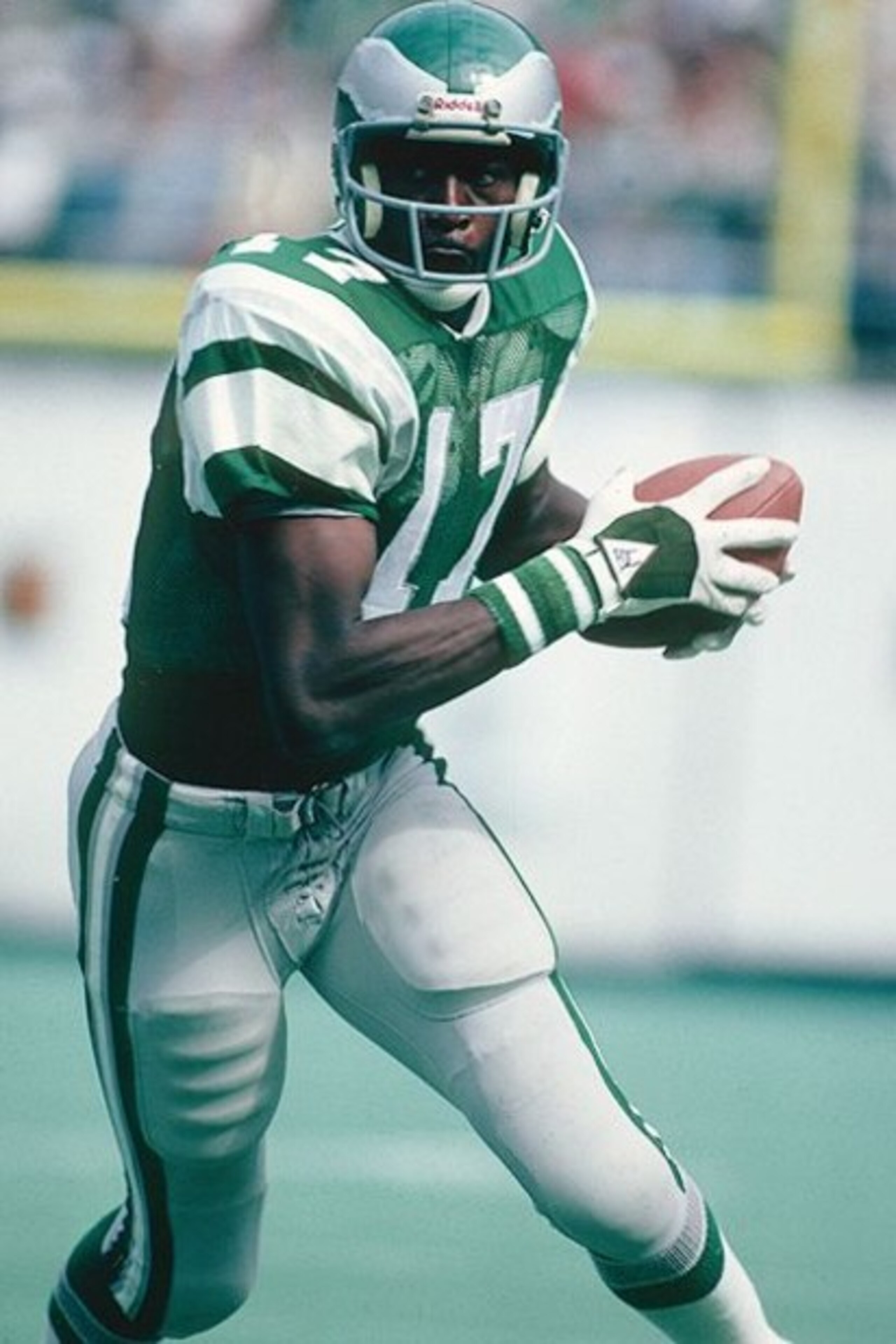
6. Harold Carmichael –Philadelphia Eagles/Dallas Cowboys – 1971-1984
One of the tallest receivers in NFL history, the 6-foot-8-inch Carmichael was the “go-to” receiver for the Philadelphia Eagles for more than a decade.
He caught at least one pass in a then-record 127 consecutive games and caught at least 50 passes in a season five times in his career.
In 1973 he led the NFL with 67 receptions and 1,116 yards receiving. He also eclipsed the 1,000-yard receiving mark in 1978 and 1981.
A member of the NFL All-Decade team for the 1970s, Carmichael finished his career with 590 receptions for 8,985 yards receiving and 79 touchdowns.
At the time of his retirement, Carmichael ranked fifth in NFL history in receptions, sixth in touchdown receptions and seventh in receiving yard.
Comparing Carmichael with some of his contemporaries who are in the Hall of Fame, Carmichael’s stats are almost identical to Fred Biletnikoff (589 catches, 8,974 yards, 76 touchdowns) though he played in eight fewer games.
Surprisingly, Carmichael has never been a finalist for the Hall of Fame, while Biletnikoff was a finalist five times before being inducted in 1988.
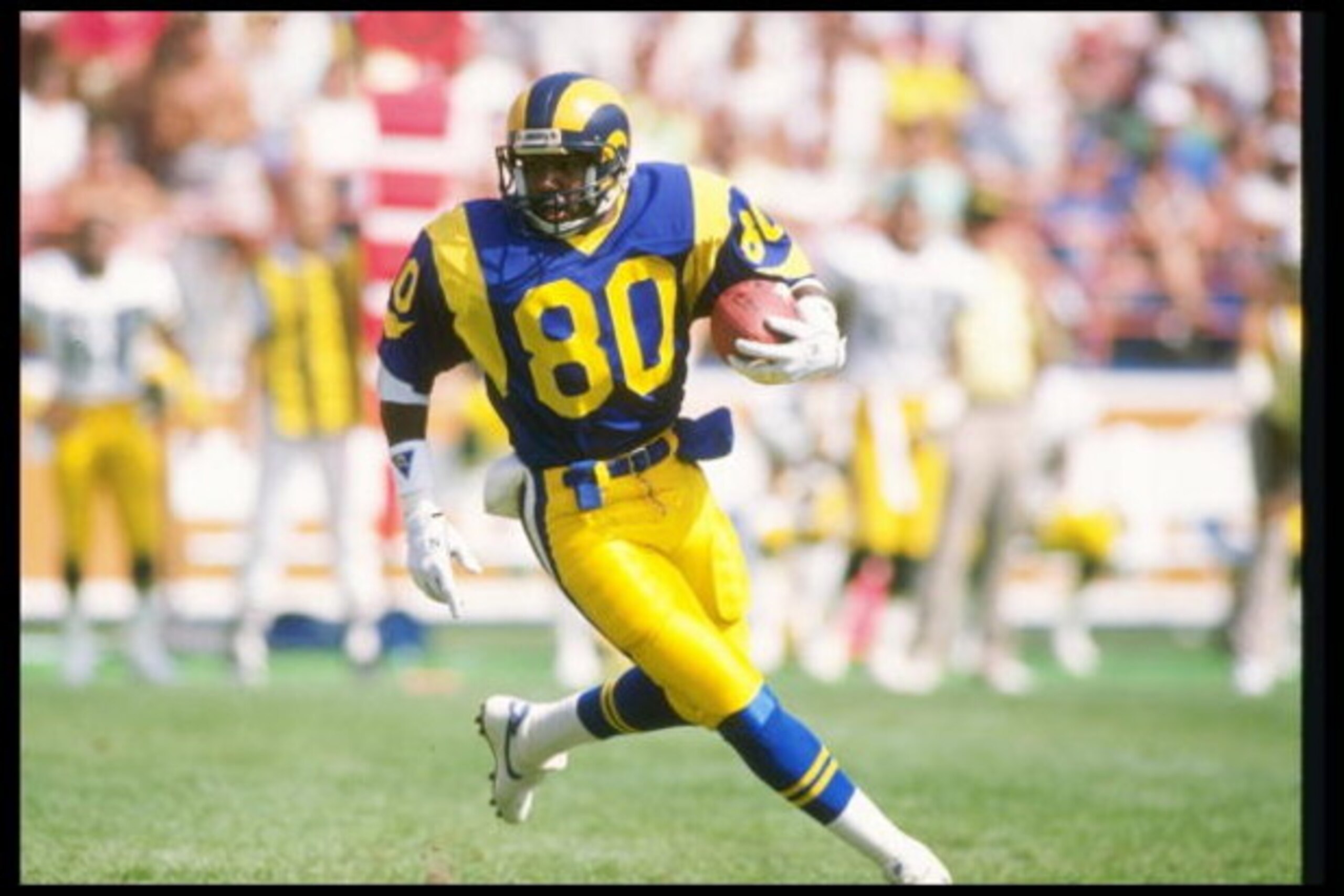
5. Henry Ellard – Los Angeles Rams/Washington Redskins/New England Patriots– 1983-1998
Henry Ellard was one of those players who got better with age.
After averaging 38 receptions and 589 yards receiving in his first five seasons, Ellard took his game to the next level for the next nine seasons.
Ellard eclipsed 1,000-yards receiving seven times while averaging 65 catches and 1,136 yards per season.
In 1988, he registered career-highs with 86 receptions and a league-leading 1,414 yards with 10 touchdowns to earn first team All-Pro honors. The following season, he caught 70 passes for 1,382 yards as the Rams reached the NFC Championship Game.
After becoming a Washington Redskin in 1994, he caught 74 passes for 1,397 yards in his first season with the Skins. He followed that up with two additional 1,000-yard seasons before retiring in 1998.
For the first six years of his career, Ellard was one of the top punt returners in the league as he led the NFL in return average in 1983 and finished second in 1984 and 1985. He ranks 20th in NFL history with a career average of 11.3 yards per return.
Ellard finished his career with 814 receptions for 13,777 yards and 65 touchdowns.
At the time of his retirement, Ellard was third in NFL history in receiving yards and fourth in receptions. He still ranks eighth all-time in receiving yards and 19th in receptions.
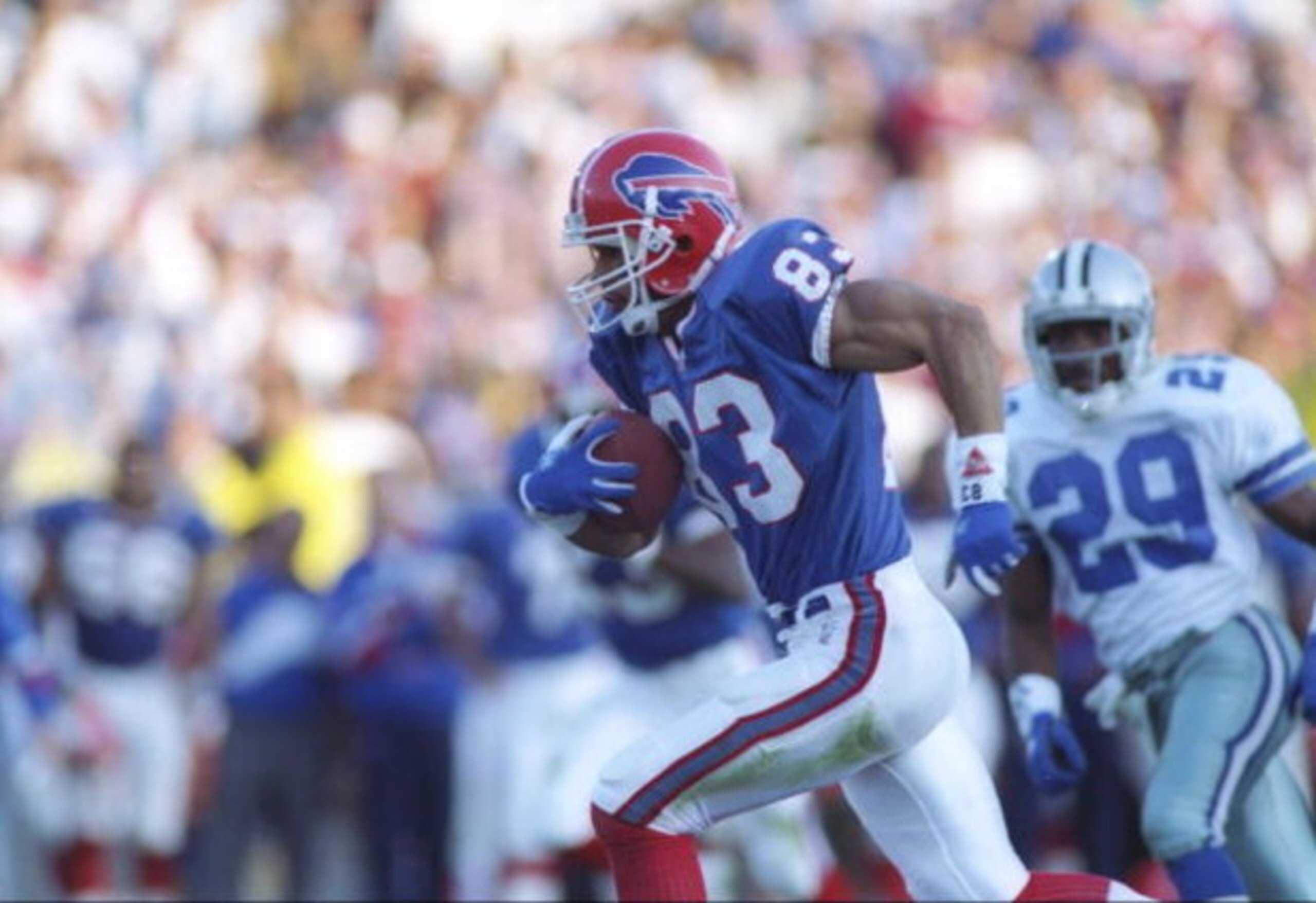
4. Andre Reed – Buffalo Bills/Washington Redskins – 1985-2000
Given his career numbers and key role on the great Buffalo Bills teams of the early 1990s, it isn’t a question of whether Andre Reed will be inducted into the Pro Football Hall of Fame, just when.
He is simply the latest in a long line of future Hall of Fame receivers who have had to wait before eventually earning a spot in Canton.
During 15 seasons with the Bills and a final season in Washington, Reed was one of the top receivers in the NFL and a key part of the only team to appear in four straight Super Bowls.
A seven-time Pro Bowl selection, Reed eclipsed the 70-reception mark five times, including a career-high 90 catches in 1994. He also exceeded the 1,000 receiving yard plateau four times.
One of the best post-season receivers in NFL history, Reed caught 85 passes for 1,229 yards and 9 touchdowns in 19 career playoff appearances. He exceeded the 100-yard mark five times, including 152 yards receiving in Super Bowl XXVII.
Reed currently ranks sixth in NFL history with 951 career receptions, 10th in receiving yards with 13,198 and 11th in touchdown receptions with 87.
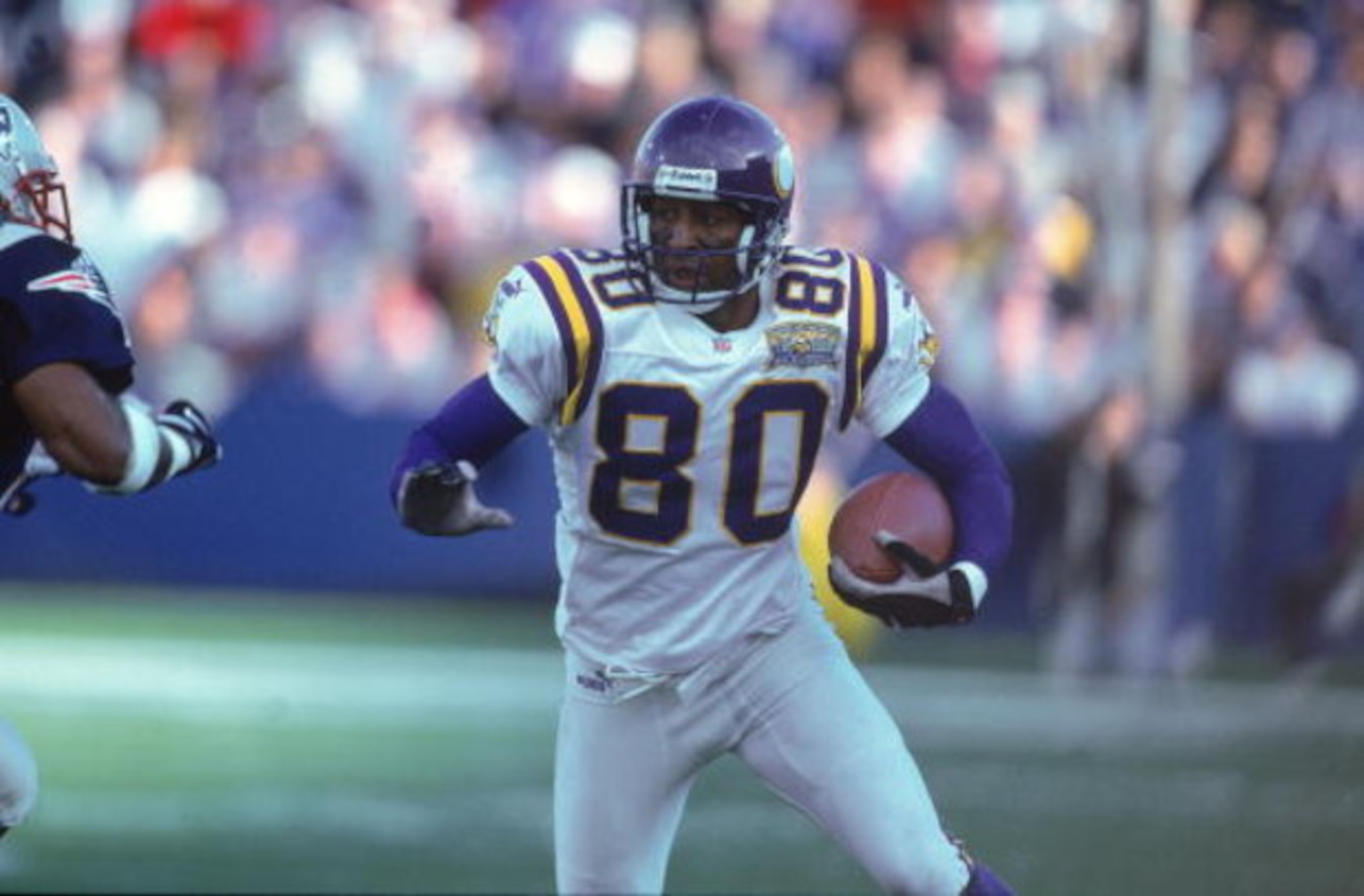
3. Cris Carter – Philadelphia Eagles/Minnesota Vikings/Miami Dolphins – 1987-2002
Similar to the case of Andre Reed, it is only a matter of time until Cris Carter will be inducted into the Hall of Fame.
A member of the NFL’s All-Decade team for the 1990s, Carter caught 835 passes in the decade to rank behind only all-time great Jerry Rice.
Originally drafted in the supplemental draft by the Philadelphia Eagles, he spent three seasons in Philadelphia and became known for his ability to get into the end zone.
Of his 89 catches as a member of the Eagles, 19 were for touchdowns, leading Buddy Ryan to quip that “All he does is catch touchdowns.”
Released by Philadelphia because of concerns about substance abuse, he was signed as a free agent by the Minnesota Vikings prior to the 1990 season.
After earning his first Pro Bowl appearance in 1993, Carter led the NFL with 122 catches for 1,256 yards to earn first team All-Pro honors in 1994.
The following season he again caught 122 passes and established career-highs with 1,371 yards and 17 touchdowns.
From 1993 to 2000, Carter averaged 97 catches, 1,182 receptions and 11 touchdowns, while being selected to eight straight Pro Bowls.
He ranks third all-time with 1101 career receptions, fourth with 130 receiving touchdowns and seventh with 13,899 yards receiving.
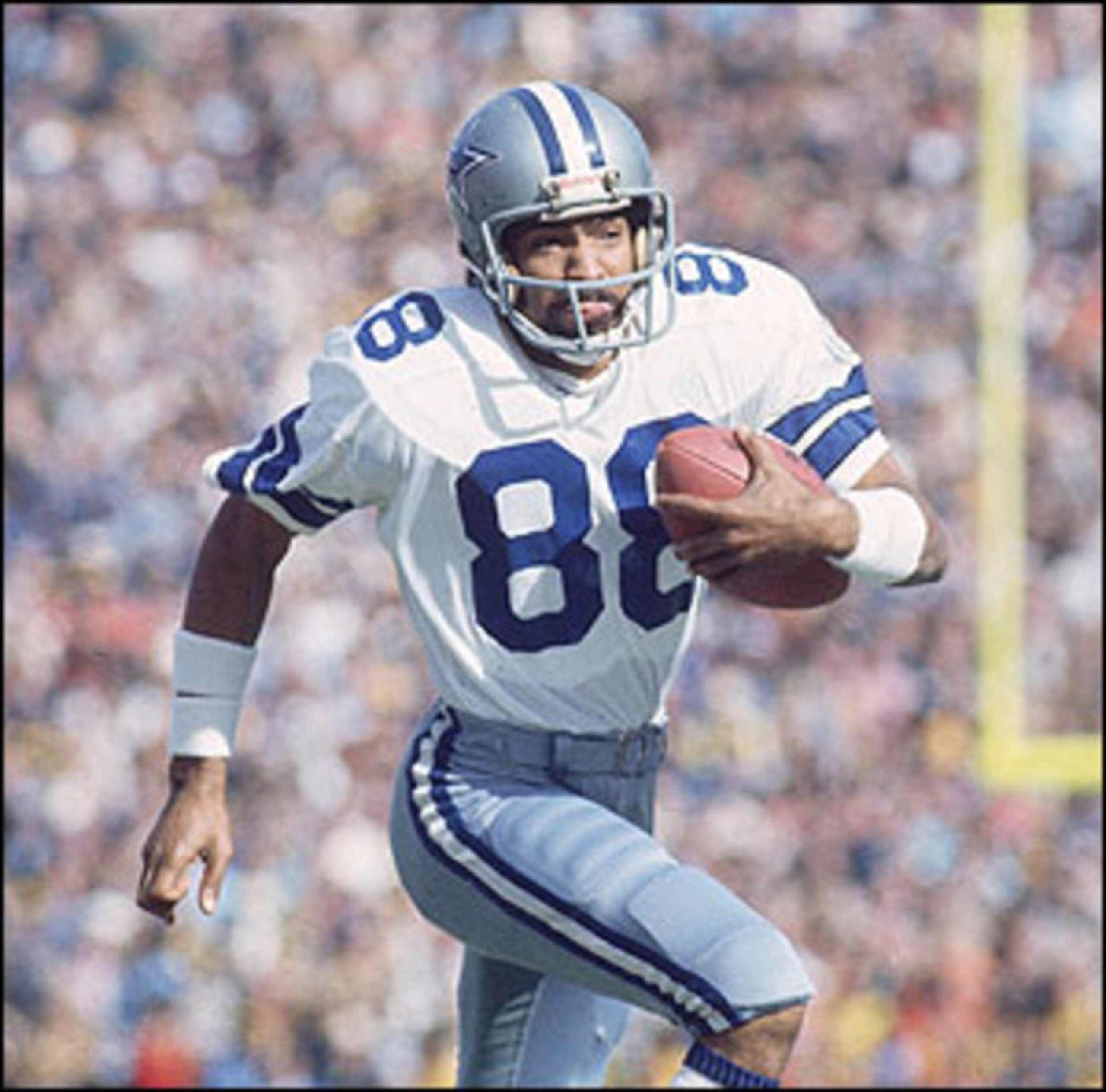
2. Drew Pearson – Dallas Cowboys – 1973-1983
Perhaps more than any other player on this list, the explosion of receiving statistics over the last three decades has negatively impacted the Hall of Fame candidacy of Drew Pearson.
Known as “Mr. Clutch” for his uncanny ability to make the big play in game-winning situations, Pearson was a member of the NFL All-Decade team for the 1970s. At the time of his retirement in 1983, Pearson was generally considered a strong candidate for Hall of Fame immortality.
However, that has changed over time as the influx of receivers with huge career statistics has overshadowed the exploits of Pearson and other receivers from his era.
Playing primarily at a time when wide receivers weren’t judged by the number of catches they had, but instead by the productivity associated with those receptions, Pearson ranked in the top 10 in receiving yards five times, including a league leading 870 yards in 1977, and eclipsed the 1,000-yard mark twice in his career.
He was generally considered the best receiver in the NFC for most of his career as he earned first team All-NFC honors four times and was a first team All-NFL selection on three occasions.
But where Pearson truly distinguished himself was in the postseason.
In 22 career playoff games, Pearson caught 67 passes for 1,105 yards and eight touchdowns. His “Hail Mary” reception to defeat Minnesota in the final minute of a 1975 NFC Playoff Game is one of the most famous catches in NFL history.
He also caught a pair of touchdown passes in the final minutes of a come-from-behind playoff win over the Atlanta Falcons in 1980.
At the time of his retirement, Pearson ranked 13th in NFL history in receptions (489) and 19th in receiving yardage (7,822).
It is hard not to compare Pearson to a member of the Hall of Fame who wore the same number as Pearson, number 88, for another prominent NFL squad of the 1970s.
Both Pearson and Lynn Swann were widely recognized for their postseason greatness. However, when it came to regular season success, Pearson far out-shined Swann.
Pearson’s career statistics are far greater than those of Swann (336 receptions, 5,462 yards).
Swann spent his entire career playing alongside fellow Hall of Fame receiver John Stallworth, while Pearson was always the featured receiver for the Cowboys. That might have meant that Pearson received a few more passes thrown his way than Swann, but it also meant that Pearson often faced defenses specifically geared to stop him, something Swann rarely had to face.
Regardless, it is a mystery how Pearson has never been a finalist for the Hall of Fame while Lynn Swann was a finalist for the Hall of Fame 14 times and was inducted in 2001.
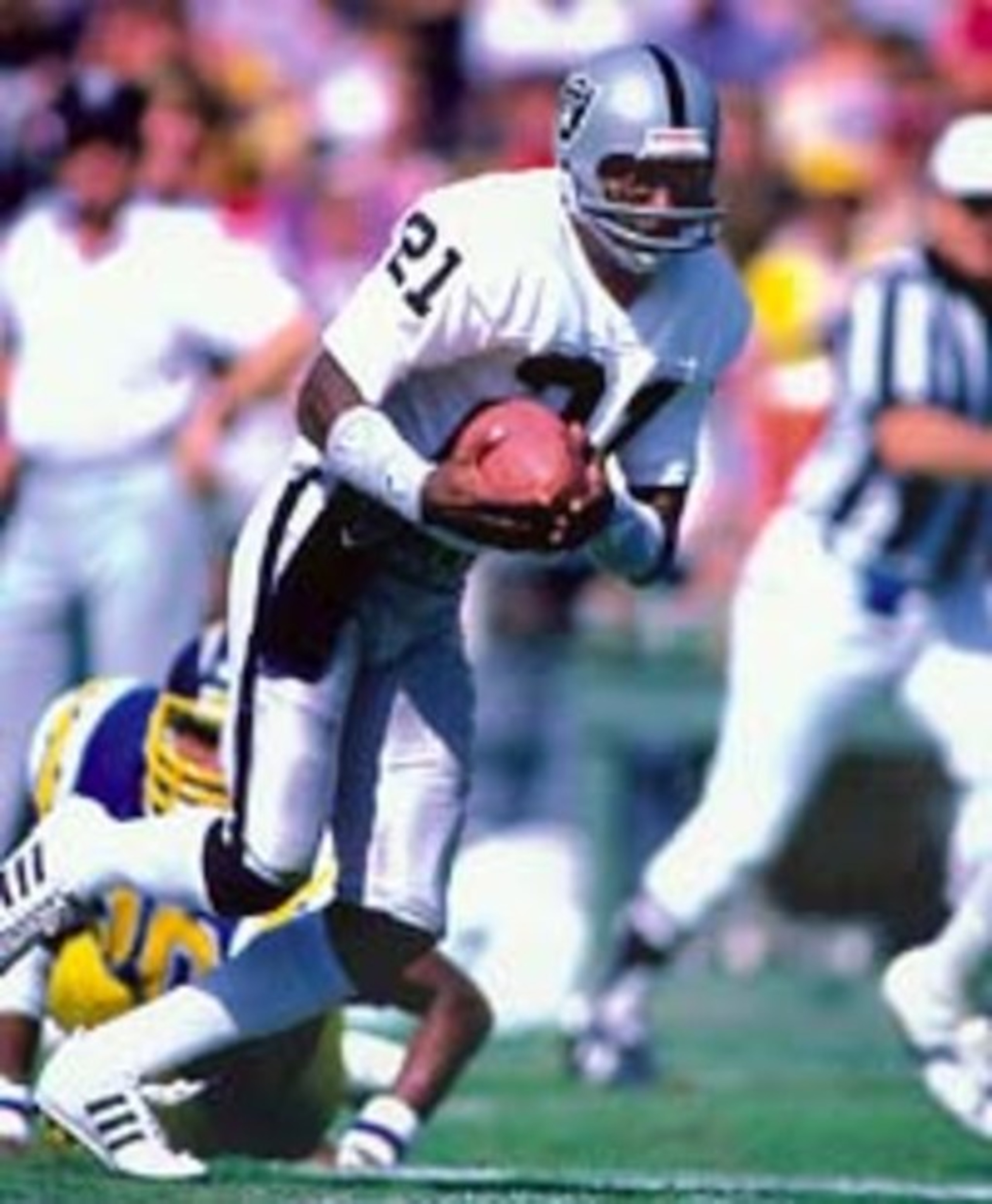
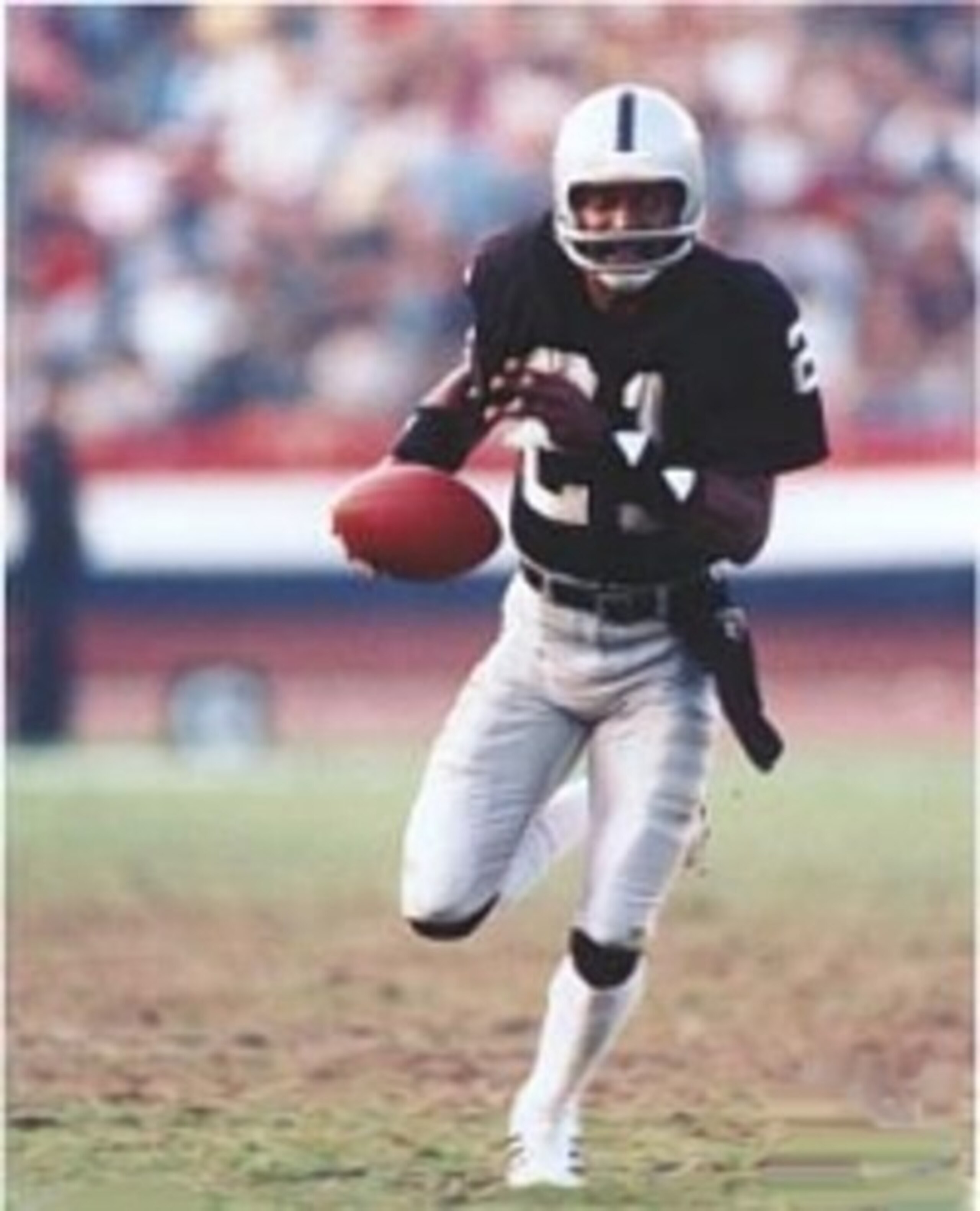
1. Cliff Branch – Oakland Raiders – 1973-1985
Many of the same arguments for why Drew Pearson should be in the Hall of Fame also apply to Cliff Branch.
Branch was one of the elite game-breakers of the 1970s and was a key component of an Oakland/Los Angeles Raiders team that won three Super Bowls during his career.
During his 14-year career, Branch earned Pro Bowl recognition four times and was a first team All-Pro on three occasions.
Complementing the possession receiving of Hall of Famers Fred Biletnikoff and Dave Casper, Branch was the deep threat that made the Raiders offense dangerous.
His average of 24.2 yards per catch in 1976 ranks as the 21st highest single season average in NFL history and he averaged 17.3 yards per reception for his career.
Branch led the NFL with 1,092 receiving yards and 13 touchdown receptions in 1974 and also caught a league-leading 12 touchdowns in 1976.
In 19 career playoff games, Branch caught 73 passes for 1,289 yards (17.7 ypc) and four touchdowns.
Branch finished his career with 501 receptions for 8,685 yards and 67 touchdowns.
At the time of his retirement, Branch ranked 8th in career receiving yards, 11th in receptions and 15th in touchdown catches. He now ranks 56th all-time in receiving yards, 106th in receptions and 36th in touchdown catches.
What is the duplicate article?
Why is this article offensive?
Where is this article plagiarized from?
Why is this article poorly edited?
Flag This Article


22 Comments
Loading comments...
This comment and all replies have been deleted This comment has been deleted Undo delete