How the Dallas Cowboys Can Fill Their Need at Free Safety
The Dallas Cowboys have had a gaping hole at free safety for years. Although free safety isn’t considered as important a position as one like defensive end, a weak safety can cripple your pass coverage. We saw that last year with Jeff Heath, who Pro Football Focus (subscription required) tracked as allowing a 71.9 percent completion rate, 11.0 yards per target, and a touchdown on one in every eight passes thrown his way.
It’s difficult to determine how the Cowboys will address the position in 2014. Realistically, we could see them do anything from drafting a safety in the first round, all the way to forgoing an addition at the position entirely via both the draft and free agency.

So what should the ‘Boys do? Can they really rely on the three free safeties on the roster—J.J. Wilcox, Matt Johnson and Jeff Heath? Is one of the first-round safeties worth a look? Let’s break down the quality of the Cowboys’ possible paths to a free safety solution.
Using Measurables/Analytics in the Draft
One of the reasons we should be so high on assessing measurables and using analytics is because they’re undervalued by the market. Every NFL team employs a myriad of scouts and personnel guys to break down tape and rate players based on what they see on film.
That might have some intrinsic worth, but it’s going to be really difficult to acquire practical value through film study alone because it’s already a strong component of market price. That is, every team has a bunch of professional tape-watchers doing the exact same thing, so it’s a challenge to continually beat out the competition via that route.
You might argue that a data-driven approach to scouting isn’t as of much intrinsic value as film grinding (which is for another discussion), but there’s little doubt that it isn’t as strong a factor in player assessments as it should be. If it were, we wouldn’t see fast running backs and big wide receivers continually undervalued.
For that reason, we should consider film study results—which can easily be tabulated and aggregated—and then adjust them based on the numbers.
The First-Round Route
There are two safeties projected to go in the first round of the 2014 NFL draft—Alabama’s Ha Ha Clinton-Dix and Louisville’s Calvin Pryor. On tape, most analysts are rating the two players similarly, with Clinton-Dix perhaps leading by the narrowest of margins.
Athletically, the players are extremely similar.
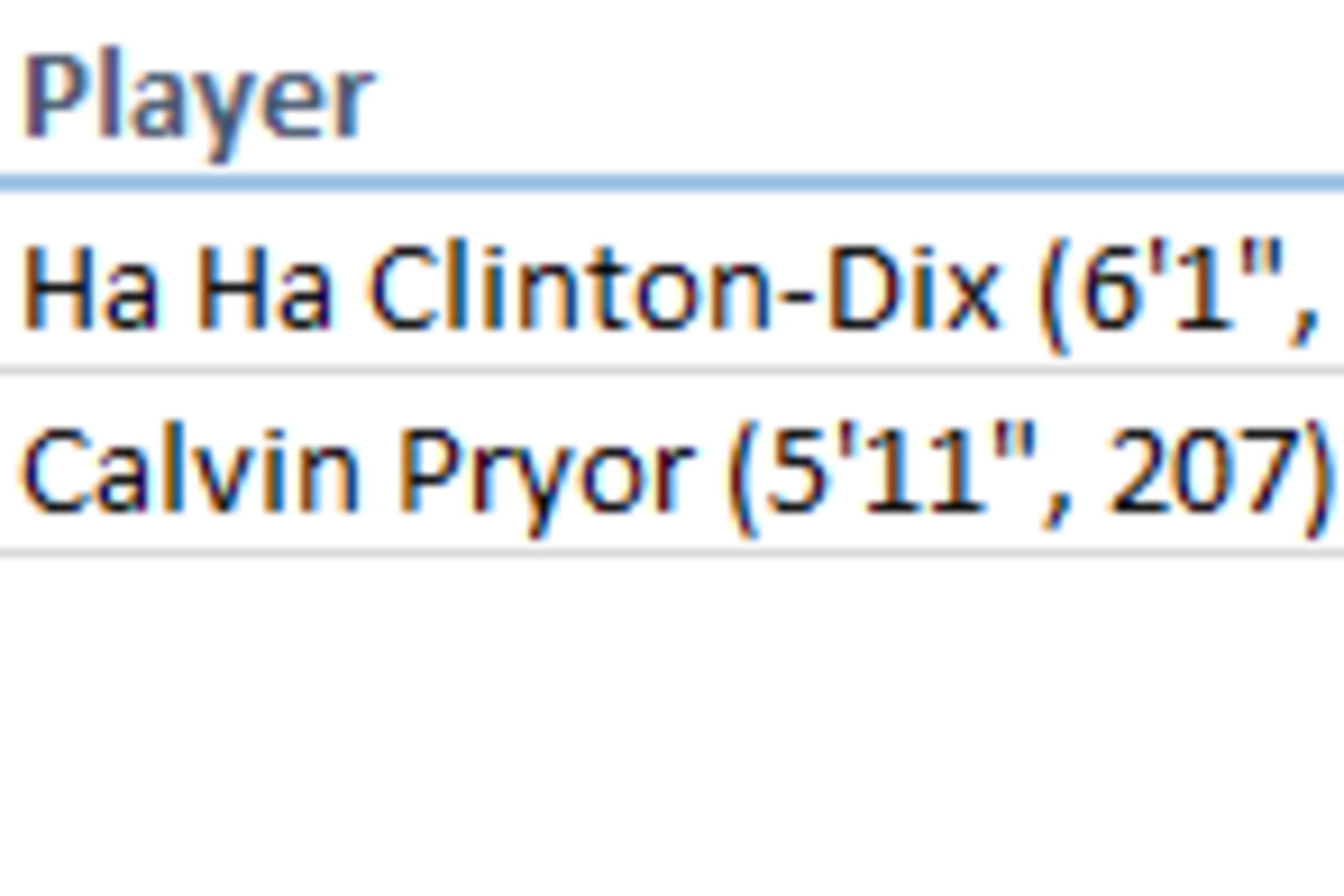
Clinton-Dix is quicker than Pryor, at least in terms of the short shuttle, but the two possess extremely similar explosiveness. Now, let’s compare the duo to two other recent first-round safety selections.

Both Clinton-Dix and Pryor are faster than 2013 first-round safety Kenny Vaccaro (Texas), but Vaccaro is quicker. None of the three players matches up with former LSU safety Eric Reid—the player the Cowboys could have drafted before they traded down and nabbed center Travis Frederick. Reid is bigger, faster and more explosive than the two safeties projected to be selected in the first 32 picks this year.
Again, we need to consider the tape—especially at a position like safety that’s hard to assess in terms of on-field stats. All other things being equal, we should side with the more athletic players, who typically find the most NFL success. We can talk about heart and other intangibles all day long, but there’s a reason you and I aren’t getting drafted this year. I have all the determination in the world, but it’s this pesky 5.50 40-yard dash that’s holding me back.
Because neither Clinton-Dix and Pryor have the film of a high first-round pick and since their measurables are substandard for how high they’ll be drafted, they’re unlikely to offer much value.
The Mid-Round Route
One of the ways NFL teams should be drafting is to assess position scarcity, i.e. how easily can we replace a player/position in later rounds? That’s one reason why a “best player available” draft strategy isn’t optimal. It’s shortsighted in that it doesn’t account for position depth.
In regard to free safeties, the Cowboys should ask themselves how scarce the early-round safeties are and how easily their talent could be replaced at a cheaper price. All other things being equal, it makes sense to pay as cheap a price as possible. When a player or position isn’t scarce, that’s easier to do.
There are multiple safety arbitrage opportunities in this year’s draft. Let’s take a look at the athletic profiles for Clinton-Dix and Pryor versus two safeties projected to get drafted in the middle/late rounds: Wyoming’s Marqueston Huff and North Carolina State’s Dontae Johnson.
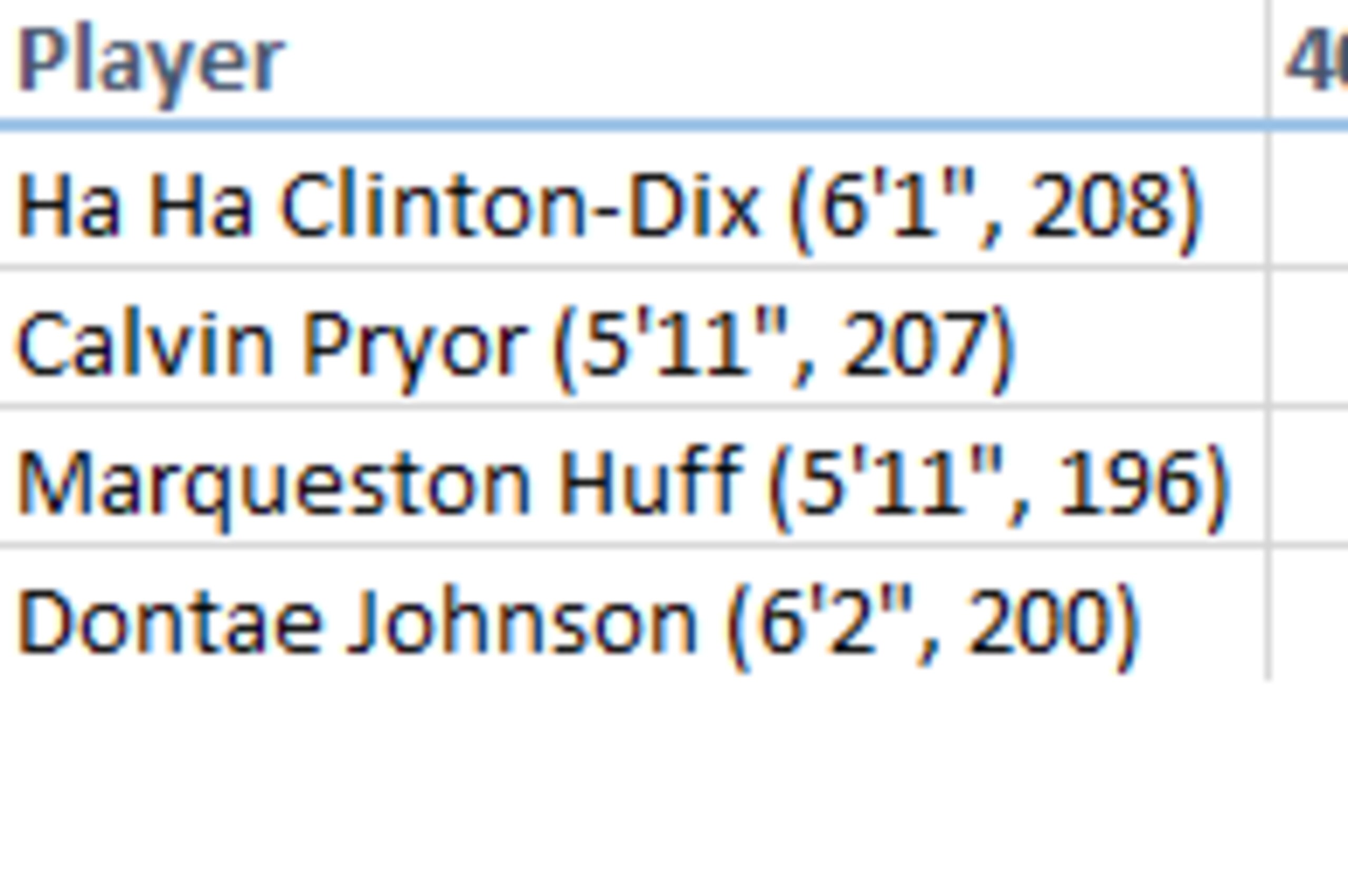
I gave each safety a raw athleticism score simply by ranking them in each category. The top performer got four points, the next-best received three points, and so on.
You can see that not only are Huff and Johnson going to be much cheaper than Clinton-Dix and Johnson, but they’re also more athletic. Again, yes, we need to consider their film and college backgrounds, but that should already be priced into their draft slot. We’re concerned not only with talent, but also talent relative to cost. Relative to their draft slots, Huff and Johnson are more likely than Clinton-Dix and Pryor to offer value.
The Don't-Draft-a-Safety-at-All Route
The Cowboys' final option is to forgo the safety position entirely. Wilcox, Johnson and Heath might not sound like the greatest of options, but let’s compare them to the four aforementioned rookies in terms of measurables.
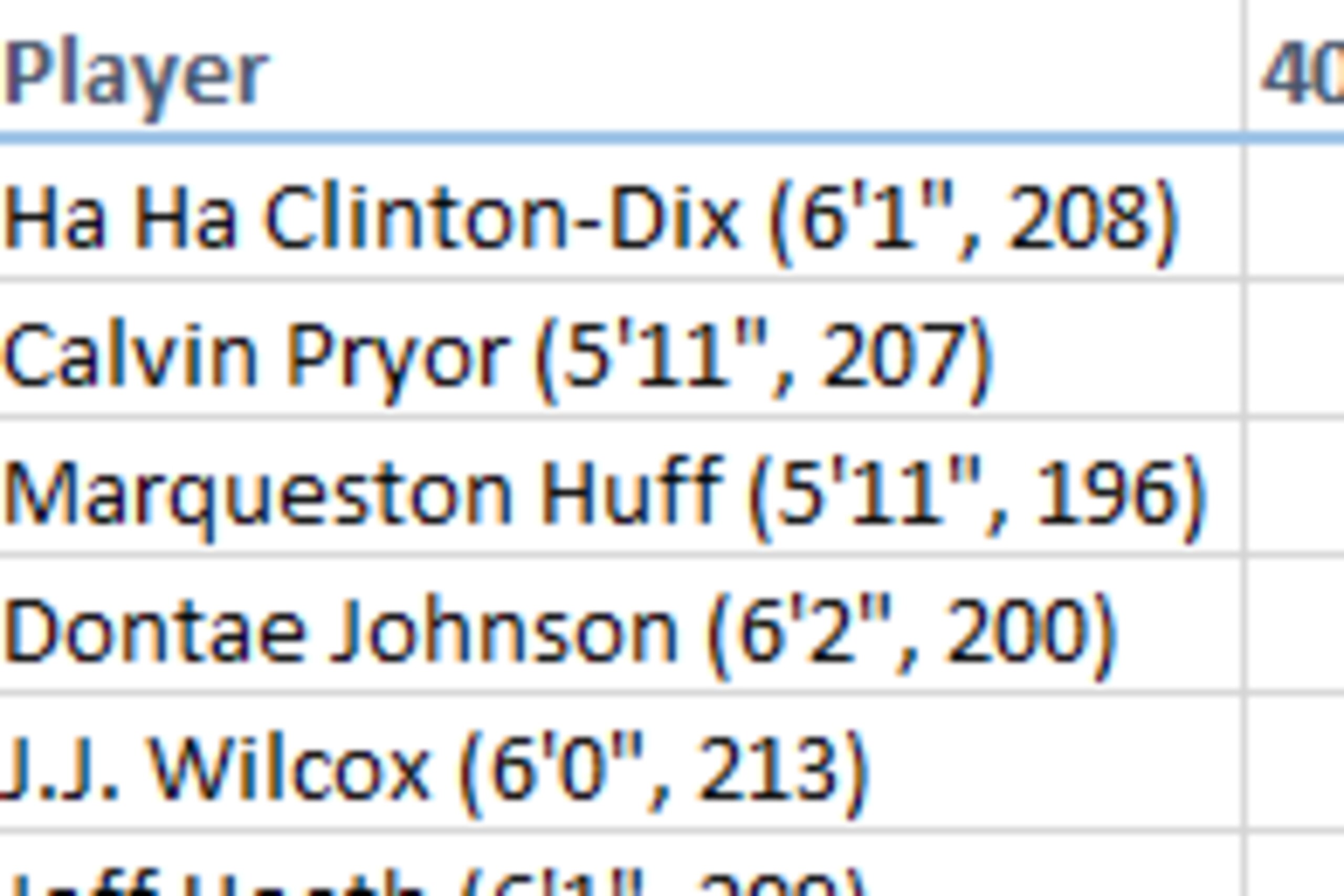
One of the things the Cowboys have done really well is emphasize athleticism in the middle and late rounds (and with their undrafted free agents). That’s led to quality additions like running back DeMarco Murray and wide receiver Miles Austin.
Well, their safety trio is more athletic than the majority of 2014 prospects. Wilcox doesn’t have great top-end speed, but his quality vertical, broad jump and short shuttle suggests he’s an explosive player.
Heath struggled last year and there are some concerns there, but he’s still only 22 years old, has an awesome size/speed combination, and turned in the best broad jump of the group.
Johnson—the player I believe will start and excel for Dallas in 2014—has elite size, good speed and ridiculous explosiveness. In terms of raw athleticism, he scores the highest out of all seven of these safeties.
The Cowboys don’t have experience at free safety on their roster, but they have upside.
The Final Verdict
If the Cowboys can acquire value on a player like Dontae Johnson, there’s no reason they shouldn’t bring him in to compete. However, reaching on a safety in the early rounds seems like a losing proposition in this year’s draft because their talent can probably be acquired later, accompanied by a cheaper price tag.
Otherwise, there’s no reason for Dallas to force drafting a safety this year. The main reason for that is that they have power in numbers. With three highly athletic free safeties currently on the roster, the Cowboys actually have safety. The odds of each individual player breaking out might not be outstanding, but the probability of one of them turning into a capable starter is pretty good.
The Cowboys have a lot of weaknesses they need to address via the draft, but free safety isn’t as big of one as you might think.
.jpg?w=2560 "Steelers Football")
_0.jpg?w=2560 "2017 NBA Re-Draft Gives Teams the Ultimate Do-Overs 🏀")