The 10 Best Quarterbacks Not in the Pro Football Hall of Fame
Continuing the position-by-position look at the best eligible players not in the Pro Football Hall of Fame, we now turn our attention to the most visible and scrutinized position on the field: quarterback.
Many would argue that quarterbacks receive too much credit in victory and too much blame in defeat, but the reality is that more than any other position, quarterbacks are evaluated and judged based on the success of their team.
Quarterbacks including Dan Marino, Y.A. Tittle, and Fran Tarkenton are graded down slightly because they never won a championship despite posting huge statistics.
At the same time, the lack of dominant statistics are overlooked in quarterbacks like Bob Griese, Troy Aikman, and Terry Bradshaw because they led teams to multiple championships.
Of the 23 modern era quarterbacks that have earned induction in the Pro Football Hall of Fame, only Warren Moon and Sonny Jurgensen never quarterbacked in a conference or league championship game.
In recent years, Hall of Fame voters have inducted a number of players at other positions who were never part of championship caliber teams, but that pattern has rarely extended to quarterback.
Of the 17 modern era players who didn’t participate in a Super Bowl that have been inducted into the Hall of Fame since 1995, Moon is the only quarterback.
The list of top quarterbacks not in the Hall of Fame further illustrates the inconsistencies displayed by Hall of Fame voters, as several seem to possess very similar resumes to some of the quarterbacks that have gained enshrinement.
It is an interesting mix that includes several quarterbacks who were recognized among the best in the game during their careers, but were never able to lead teams to championship heights.
However, it also includes a number of quarterbacks who did play in Super Bowls while also earning individual recognition, but for some reason have never been deemed worthy of Hall of Fame induction.
Statistics can be helpful in identifying greatness and were among the criteria evaluated in selecting this list.
However, because stats, especially career numbers, can be misleading and have become inflated over the last 30 years, they were just one of several factors used to create the list.
Each player was also evaluated in the context of the time in which he played and for many of the older players, I highlight where they ranked all-time at the time of their retirement.
I looked at how each compared against other players Hall of Famers and non-Hall of Famers) from that era and whether, at the time of his retirement, the player was considered a legitimate candidate for the Hall of Fame.
Because the Hall of Fame voters give championship success such high priority in selecting quarterbacks, I did look at team success as a measure of consideration.
However, I believe that the Hall of Fame voters have placed too much emphasis on that element for quarterbacks, so I did not make it as high a consideration as the voters have.
I look forward to comments, discussion and disagreements.
Best of the Rest
To help frame the conversation and provide an understanding of which quarterbacks received significant consideration for this list of the top 10 eligible quarterbacks not in the Pro Football Hall of Fame, here are the players who earned spots 11-25 on my list.
Only players who are currently eligible for the Hall of Fame were considered.
11. Jim Plunkett
12. Jim Everett
13. Joe Theismann
14. Earl Morrall
15. Jack Kemp
16. Ron Jaworski
17. Archie Manning
18. Brian Sipe
19. Steve DeBerg
20. Charley Conerly
21. Daryle Lamonica
22. Steve Grogan
23. Dave Krieg
24. Steve Bartkowski
25. Norm Snead
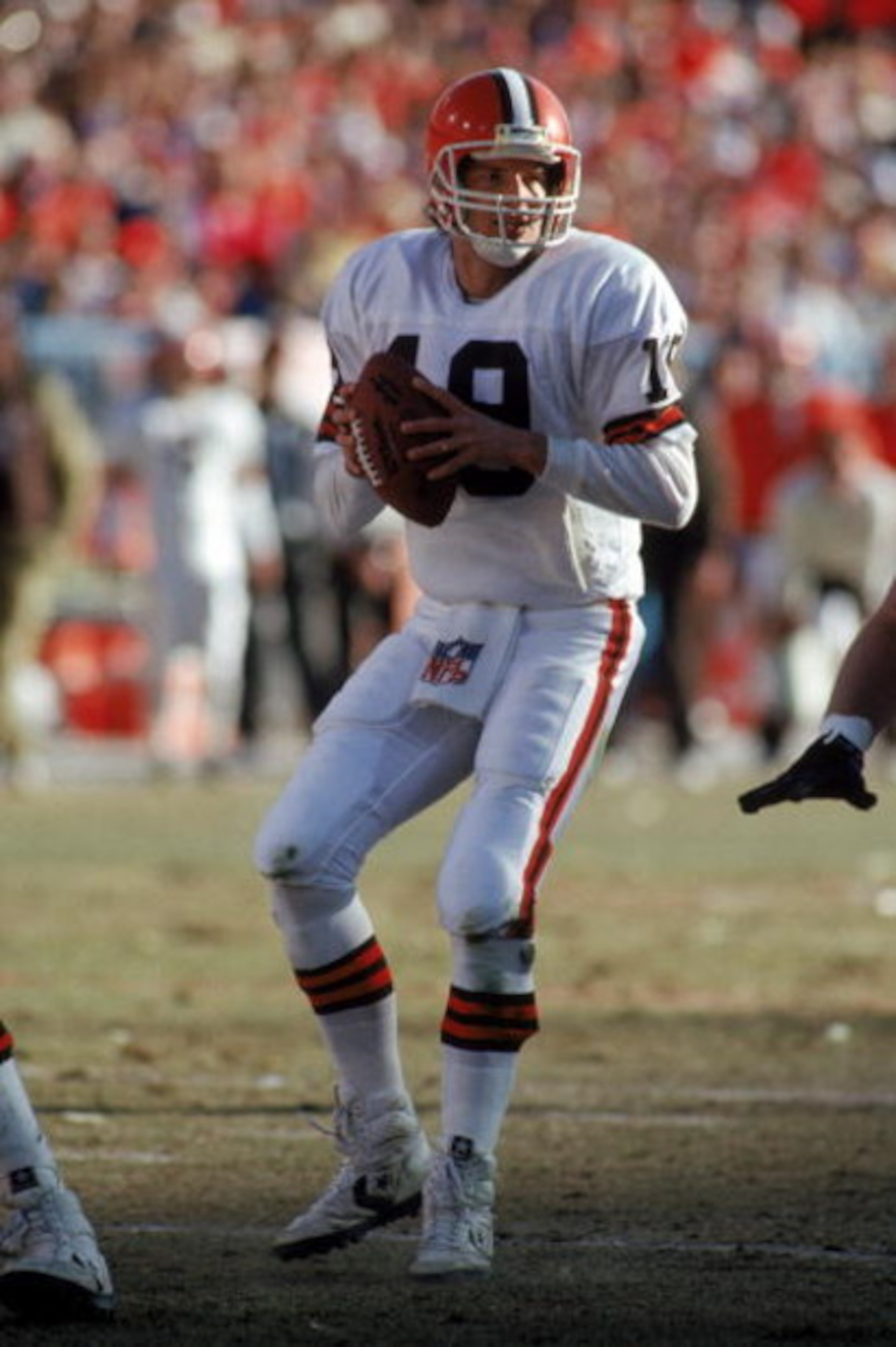
10. Bernie Kosar – Cleveland Browns/Dallas Cowboys/Miami Dolphins – 1985-1996
After leading the University of Miami to an improbable National Championship in 1983, Bernie Kosar was a key reason the Cleveland Browns reached three AFC Championship Games during the 1980s.
With an unorthodox sidearm throwing style that wasn’t always pretty to watch, Kosar wasn’t your prototype NFL quarterback. However, what he lacked in style, he made up for in substance.
Kosar was a hard-nosed competitor and great team leader. He perfectly personified the workmanlike style of the Browns of the 1980s.
During most of his time in Cleveland, the Browns had a balanced offensive attack, so Kosar wasn’t expected to carry the entire offensive load. However, he did post some outstanding statistical seasons.
In just his second NFL season, Kosar passed for 3,854 yards and 17 touchdowns to lead Cleveland to a 12-4 record and their first trip to a conference championship game in 17 years.
It looked like Kosar would be taking the Browns to their first Super Bowl appearance after he threw a 48-yard touchdown pass to Brian Brennan in the fourth quarter.
Unfortunately, Kosar’s touchdown was soon forgotten as John Elway maneuvered “The Drive” to tie the game and Denver won in overtime.
Kosar spent nine seasons with the Browns before finally earning a Super Bowl ring as the backup quarterback for the Dallas Cowboys in 1993. He finished his career with three seasons with the Miami Dolphins.
For his career, Kosar completed 59.3 percent of his passes for 23,301 yards. He threw 124 career touchdowns while being intercepted only 87 times.
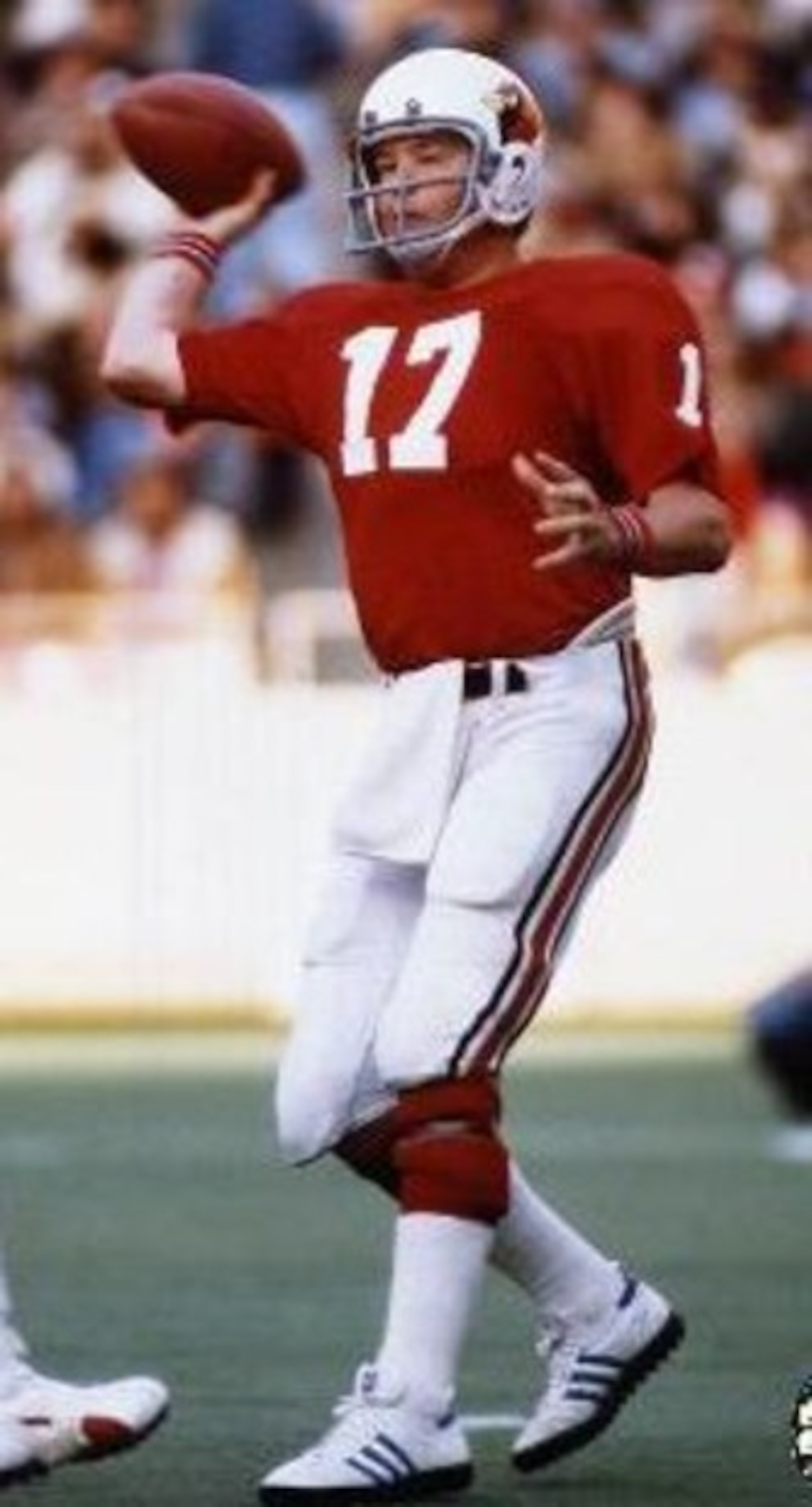
9. Jim Hart – St. Louis Cardinals/Washington Redskins – 1966-1984
Jim Hart is the poster boy for quarterbacks who posted huge career statistics playing primarily for mediocre teams.
In 18 years with the St. Louis Cardinals, Hart led the Cardinals to five winning seasons and two playoff appearances.
However, despite never playing on a championship team, Hart was well respected in the league and earned four trips to the Pro Bowl.
He threw for 3,008 yards during his first season as a starting quarterback in 1967, but also led the league that season with 30 interceptions. He didn’t eclipse the 3,000-yard mark again until he threw for 3,121 yards in 1978.
Hart ranked third in NFL history in passing yards (34,665) at the time of his retirement and now ranks 17th in league history.
His 209 touchdown passes were 10th in league history when he retired and currently rank 23rd.
In one respect, it is kind of surprising that Hart hasn't already earned a spot in the Hall of Fame only because the voters seem to love selecting former Cardinals for the Hall of Fame.
Four of Hart's teammates with the Cardinals, Dan Dierdorf, Larry Wilson, Jackie Smith and Roger Wehrli have already been inducted in the Hall of Fame.
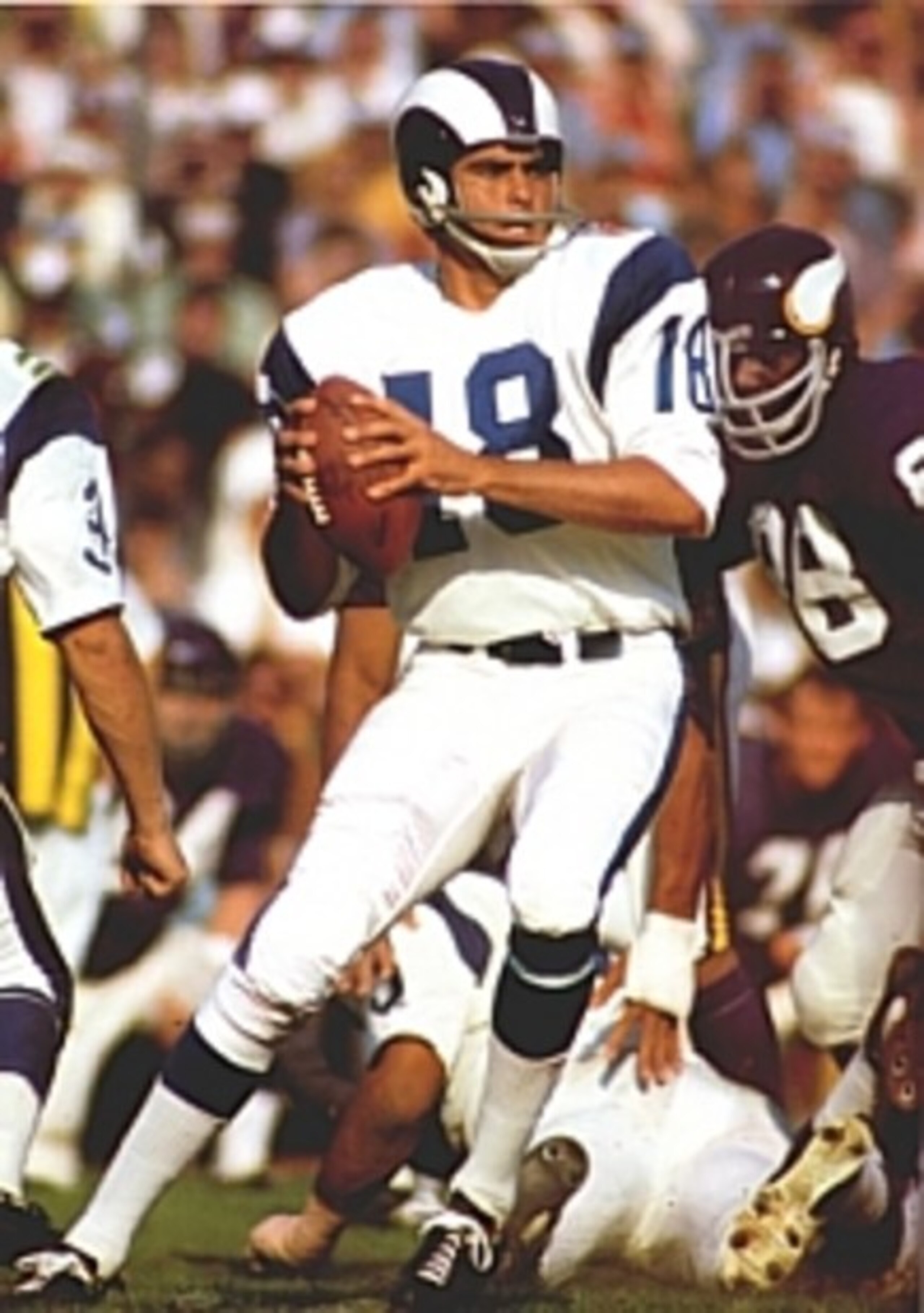
8. Roman Gabriel – Los Angeles Rams/Philadelphia Eagles – 1962-1977
From the time he was picked by the Los Angeles Rams as the first pick in the 1962 NFL draft and by the Oakland Raiders as the second pick in the AFL draft, there was little question that Roman Gabriel would be a great pro quarterback.
However, for some reason, despite being unquestionably one of the best quarterbacks of his generation, Roman Gabriel is rarely mentioned as a Hall of Fame candidate or as one of the top quarterbacks in NFL history.
There are two factors likely damaging Gabriel’s chances at Hall of Fame immortality.
The first one is that while Gabriel led the Los Angeles Rams to six straight winning seasons, the team could never get over the top and win a championship.
The second factor hurting Gabriel is the explosion of quarterback statistics over the last three decades.
At the time of his retirement, Gabriel ranked eighth all-time in passing yardage (29,944) and touchdown passes (201) and was 13th in passer rating (74.3). He is now 26th in touchdown passes, 32nd in passing yards and 101st in passer rating.
Gabriel was named the NFL MVP in 1969 after leading the Rams to an 11-3 record. He passed for 2,549 yards that season while completing 54.4 percent of his passes and throwing a league-high 24 touchdowns with only seven interceptions.
After being traded to the Philadelphia Eagles in 1973, the four-time Pro Bowl selection passed for a career-high 3,219 yards and 23 touchdowns while leading the league in completions, pass attempts, yards passing and touchdown passes.
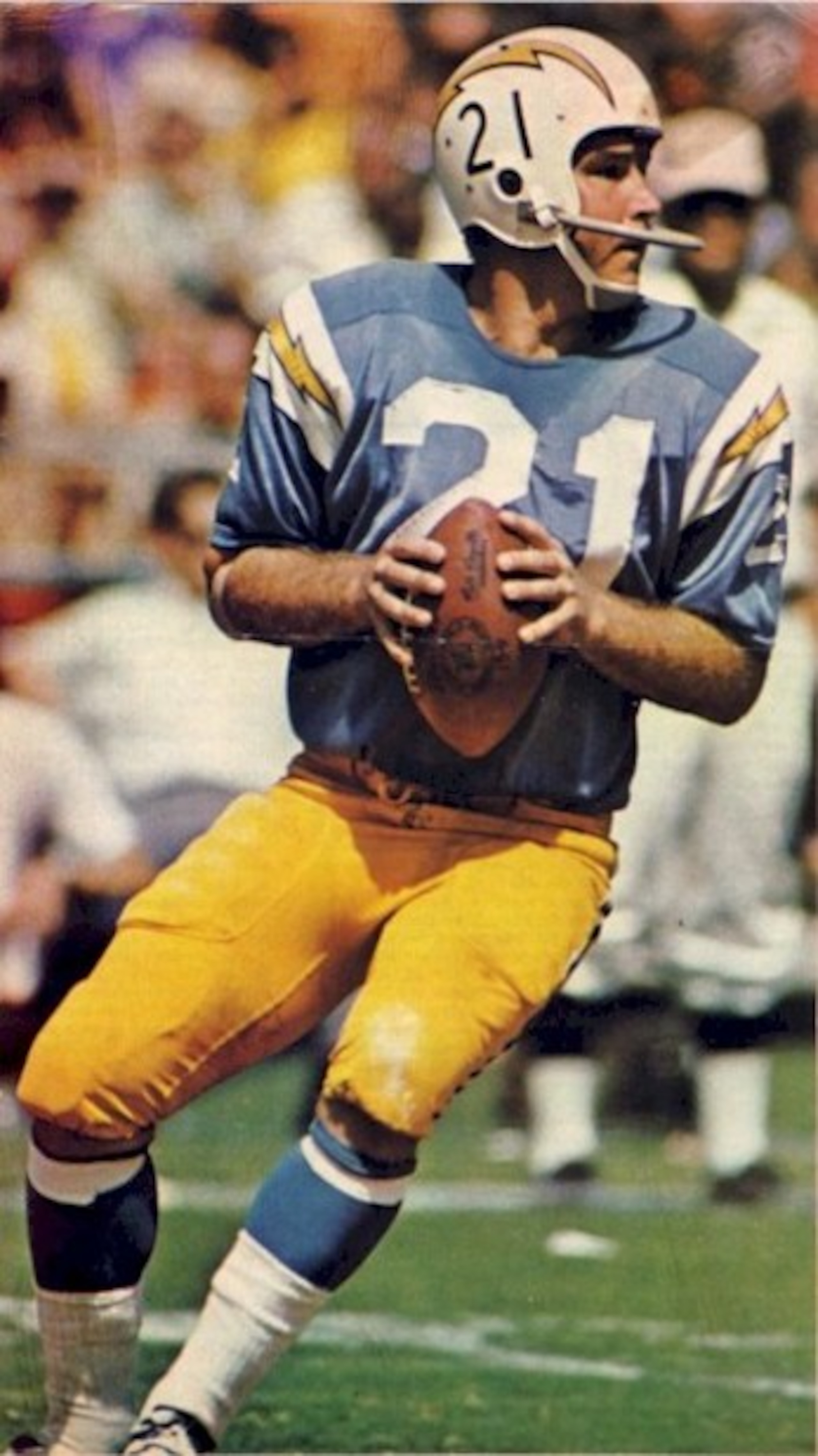
7. John Hadl – San Diego Chargers/Los Angeles Rams/Green Bay Packers/Houston Oilers – 1962-1977
As the quarterback for Sid Gillman’s innovative offensive attack with the San Diego Chargers of the 1960s, John Hadl was the “stat monster” of his era.
During a time when quarterbacks didn’t typically post huge statistics, Hadl eclipsed 3,000-yards passing three times and totaled 20 or more touchdown passes seven times.
His 3,473 passing yards in 1968 were, at the time, the fifth highest single season total in football history (now ranked 217th).
He led the league in passing yards three times and touchdown passes twice while ranking in the top 10 in each category 11 times.
The Chargers reached three straight AFL Championships between 1963-1965, but Hadl was the starter only in 1965 when they lost to the Buffalo Bills.
After 11 seasons in San Diego, Hadl spent the 1973 season with the Los Angeles Rams and earned first team All-Pro honors while leading the Rams to a 12-2 record.
They lost to Dallas in the first round of the playoffs and Hadl was traded to Green Bay midway through the 1974 season. He completed his career with two seasons in Houston.
At the time of his retirement, Hadl ranked third in NFL history with 33,503 career passing yards and fourth with 244 touchdown passes. He also ranked second with 268 career passes intercepted.
He still ranks 15th in touchdown passes, 19th in passing yardage and 3rd in total passes intercepted.
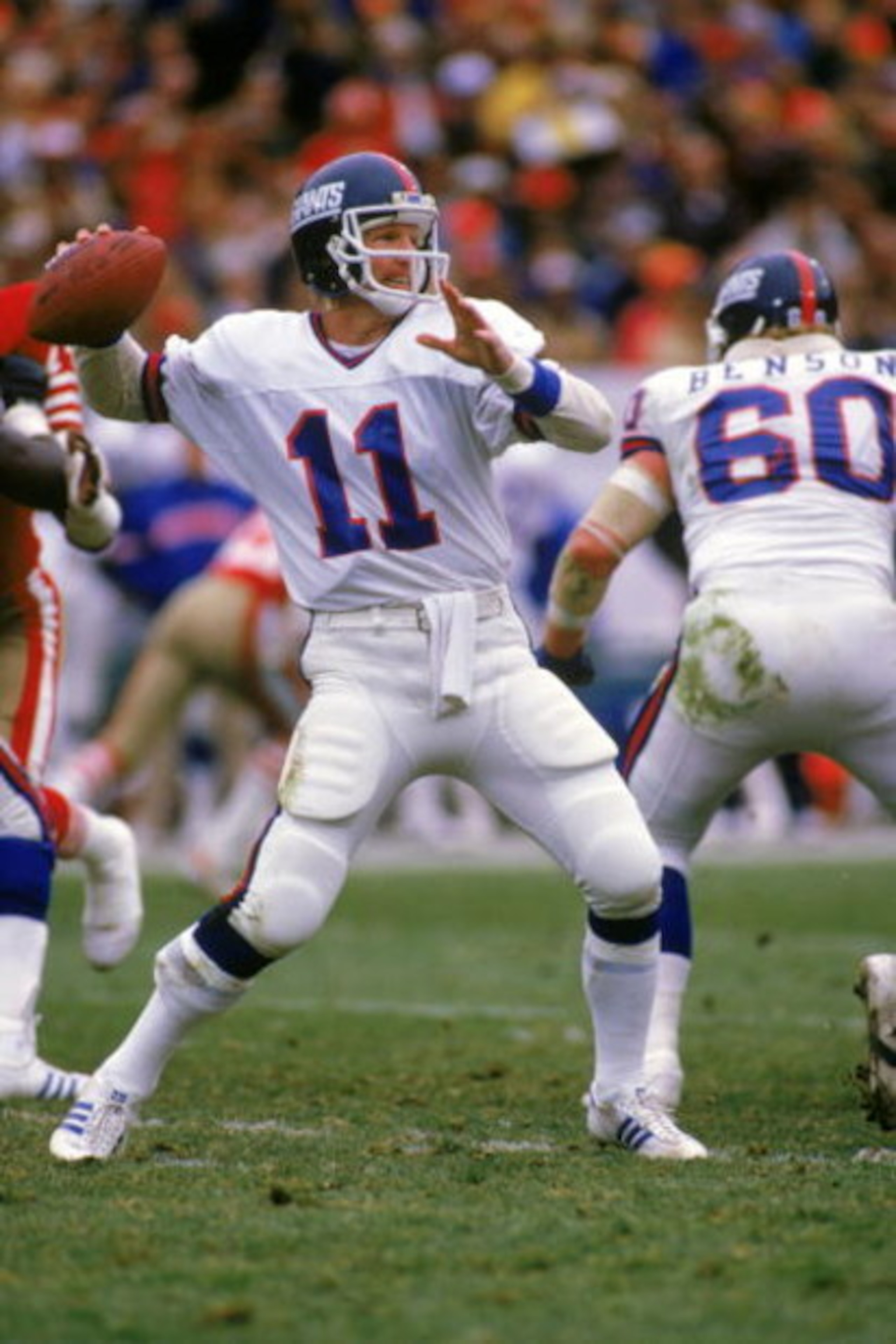
6. Phil Simms – New York Giants – 1979-1993
A tough competitor and two-time Pro Bowl selection, Phil Simms was the leader of the great New York Giants teams of the 1980s.
Most have generally considered Simms to be a borderline Hall of Famer, but his direct comparison with one Hall of Famer suggest that maybe he deserves a spot in Canton.
When evaluating statistics and team success, Simms seems to favorably compare to Hall of Fame member Bob Griese.
Both quarterbacks played 14 seasons for a team that was regularly contending for a playoff spot and championship.
Griese led the Dolphins to two Super Bowl wins while Simms led the Giants to one title and positioned the squad for a second before missing the playoff run due to injuries.
In 151 career starts, Griese led the Dolphins to a 92-56-3 record (61.9%). Simms posted a 95-64 record (59.7) in 159 career starts.
While the Miami offense never relied on Griese to carry the offensive load, Simms was given much greater responsibilities for much of his career leading the Giants.
Just looking at their Super Bowl stats illustrates their different roles.
In three Super Bowls, Griese completed 26 of 41 passes for 295 yards, one touchdown and two interceptions. In their two Super Bowl wins, he attempted only 18 total passes.
In his one Super Bowl appearance for the Giants, Simms was named the MVP while setting a record for completion percentage as he connected on 22 of 25 passes for 268 yards and three touchdowns.
Looking at regular season stats, Simms passed for a career-high 4,044 yards in 1984 and eclipsed the 3,000-yard passing mark six times. Conversely, Griese never passed for more than 2,473 yards in a season.
Simms career totals of 33,462 yards and 199 touchdowns exceed Griese’s totals of 25,092 passing yards and 192 touchdowns.
Griese’s career completion percentage of 56.2 is slightly higher than Simms' 55.4, while Simms had a higher career passer rating (78.5 to 77.1).
These comparisons don’t necessarily suggest that Griese doesn’t deserve a spot in the Hall of Fame, but instead question why Simms has never been seriously considered.
Griese was a finalist in all five years in which he was eligible before being selected for the Hall of Fame in 1990.
Conversely, Simms has never been a finalist despite being eligible for more than a decade.
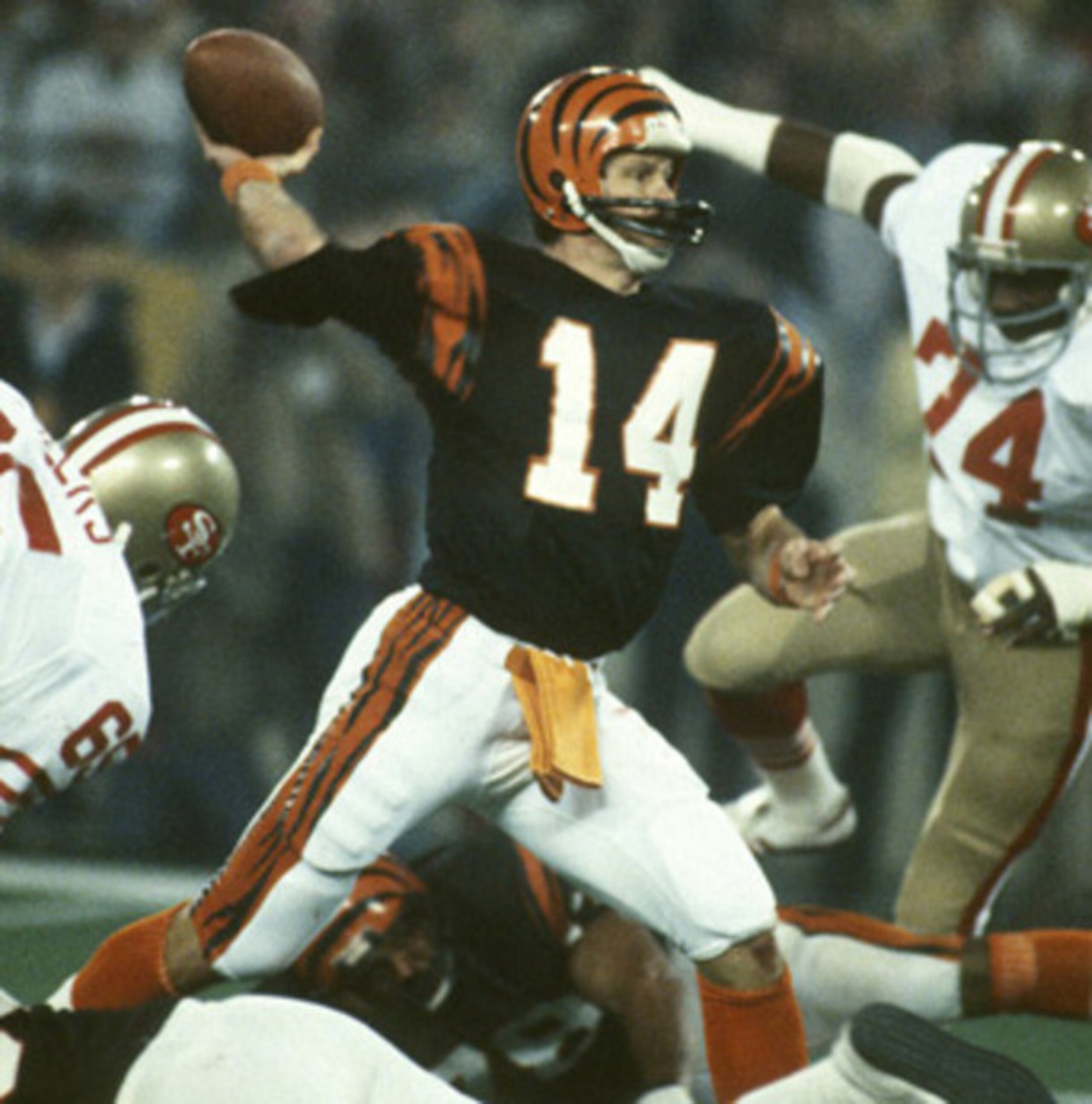
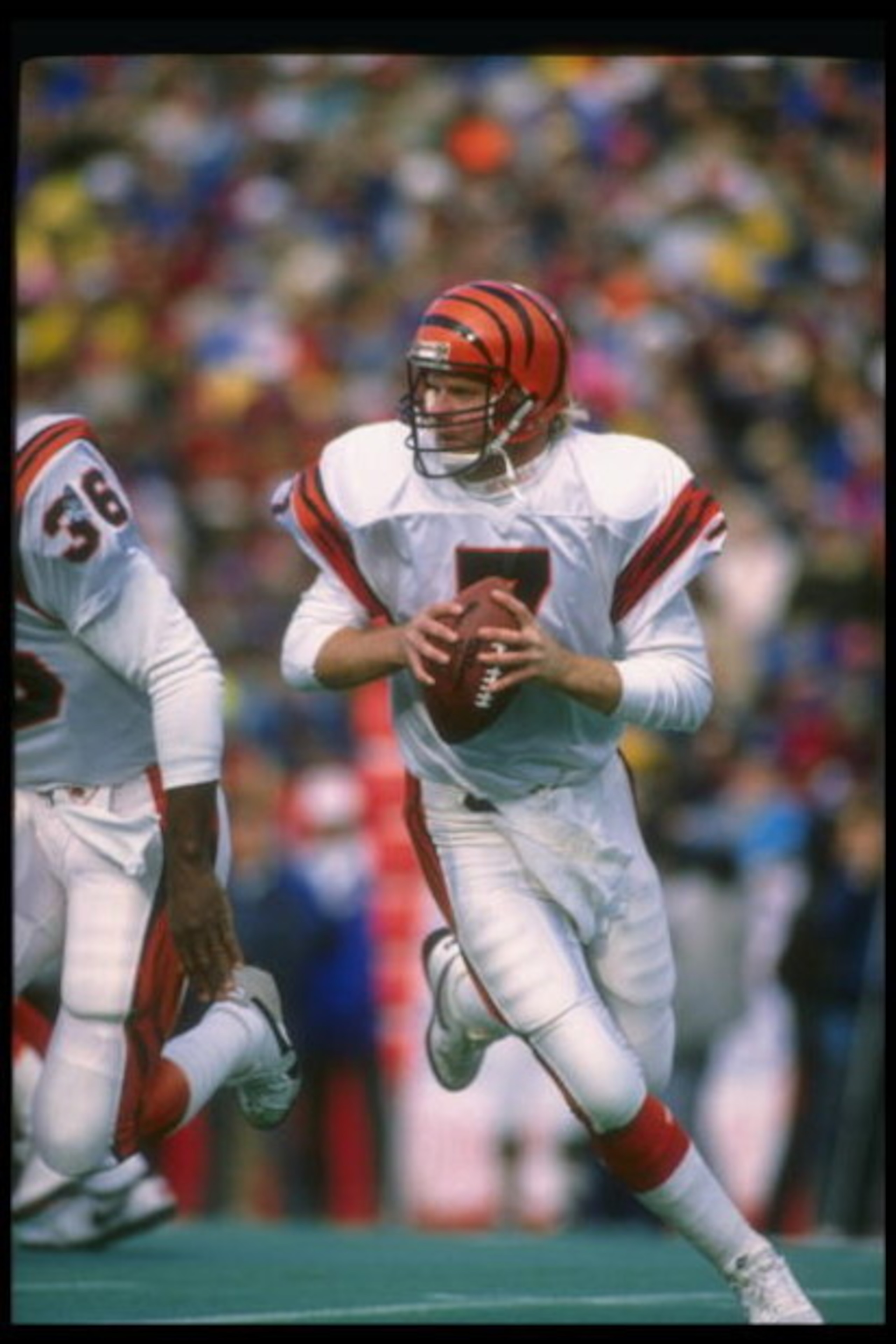
5. Boomer Esiason – Cincinnati Bengals/New York Jets/Arizona Cardinals – 1984-1997
Few quarterbacks in NFL history have enjoyed longer periods of consistency than Boomer Esiason.
After becoming the starting quarterback for the Cincinnati Bengals in 1985, Esiason registered at least 2,200 yards passing in 11 of the next 12 seasons.
Running the Bengals fast-paced offense, he passed for a career-high 3,959 yards in 1986 and eclipsed the 3,000-yard mark seven times in his career.
Between 1985 and 1991, Esiason averaged 3,390 yards passing and 23 touchdowns while completing 56.8 percent of his pass attempts.
He led the Bengals to the playoffs twice, including a spot in Super Bowl XXIII where they were defeated in the last minute by the San Francisco 49ers 20-16.
After nine seasons in Cincinnati, Esiason spent three years as the starting quarterback for the New York Jets and one with the Arizona Cardinals before returning to Cincinnati to complete his career.
He ranks 13th in NFL history with 37,920 career passing yards and his 247 career touchdown passes are the 14th best in league history.
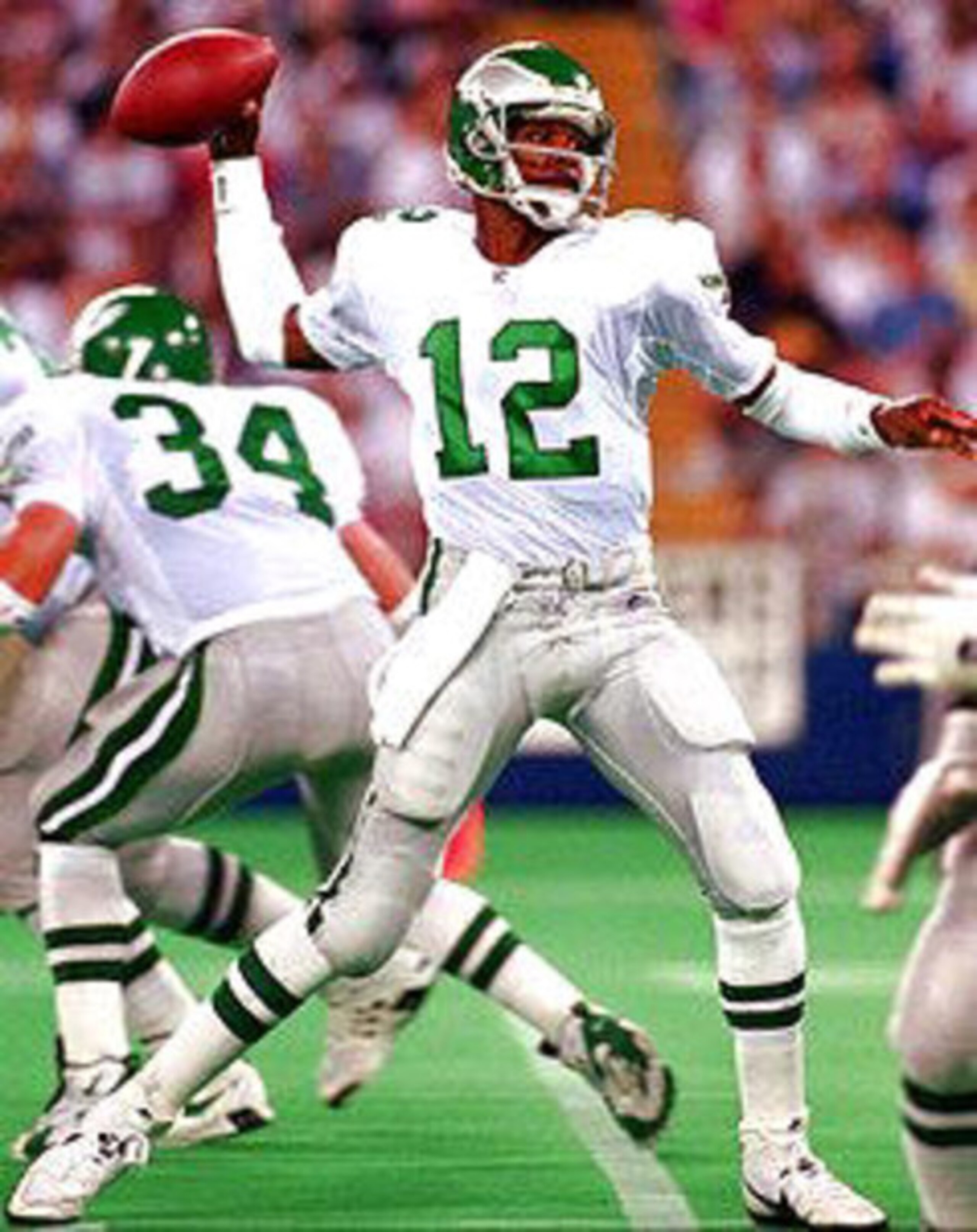
4. Randall Cunningham – Philadelphia Eagles/Minnesota Vikings/Dallas Cowboys/Baltimore Ravens – 1985-2001
One of the most exciting players to watch in NFL history, Randall Cunningham’s combination of athleticism and passing ability often gets overlooked when evaluating the best quarterbacks of all-time.
For the first six years of his career (until a knee injury in 1991 slightly reduced his mobility), Cunningham was a “human highlight reel” using both his arm and legs to lead the Philadelphia Eagles to victory.
Cunningham is the all-time leader in rushing yards by a quarterback with 4,928 yards and averaged 6.4 yards per attempt.
However, what is most impressive is that Cunningham didn’t just run every time he got a little pressure, he used his running and athletic ability to create opportunities to throw the ball.
Honored three-times as the NFL Player of the Year and selected to four Pro Bowls, Cunningham eclipsed 3,000 yards passing five times in his career, including a career-high 3,808 in 1988.
He led Philadelphia to the playoffs four times, but they managed only one playoff victory.
After taking a year away from football and then returning with the Minnesota Vikings, he led the Vikings to a 15-1 record in 1998.
They finished within a whisker of the Super Bowl as they lost the NFC Championship Game to the Atlanta Falcons 30-27.
In 1998, Cunningham led the NFL with a 106.0 passer rating while connecting on 60.9 percent of his passes for 3,704 yards and 34 touchdowns (with only 10 interceptions).
An All-American punter while in college at UNLV, Cunningham occasionally was called upon to punt for the Eagles and actually has the third longest punt in NFL history with a 91-yard punt in 1989 at Giants Stadium.
He ranks 30th in NFL history with 29,979 career passing yards and 24th with 207 career touchdown passes.
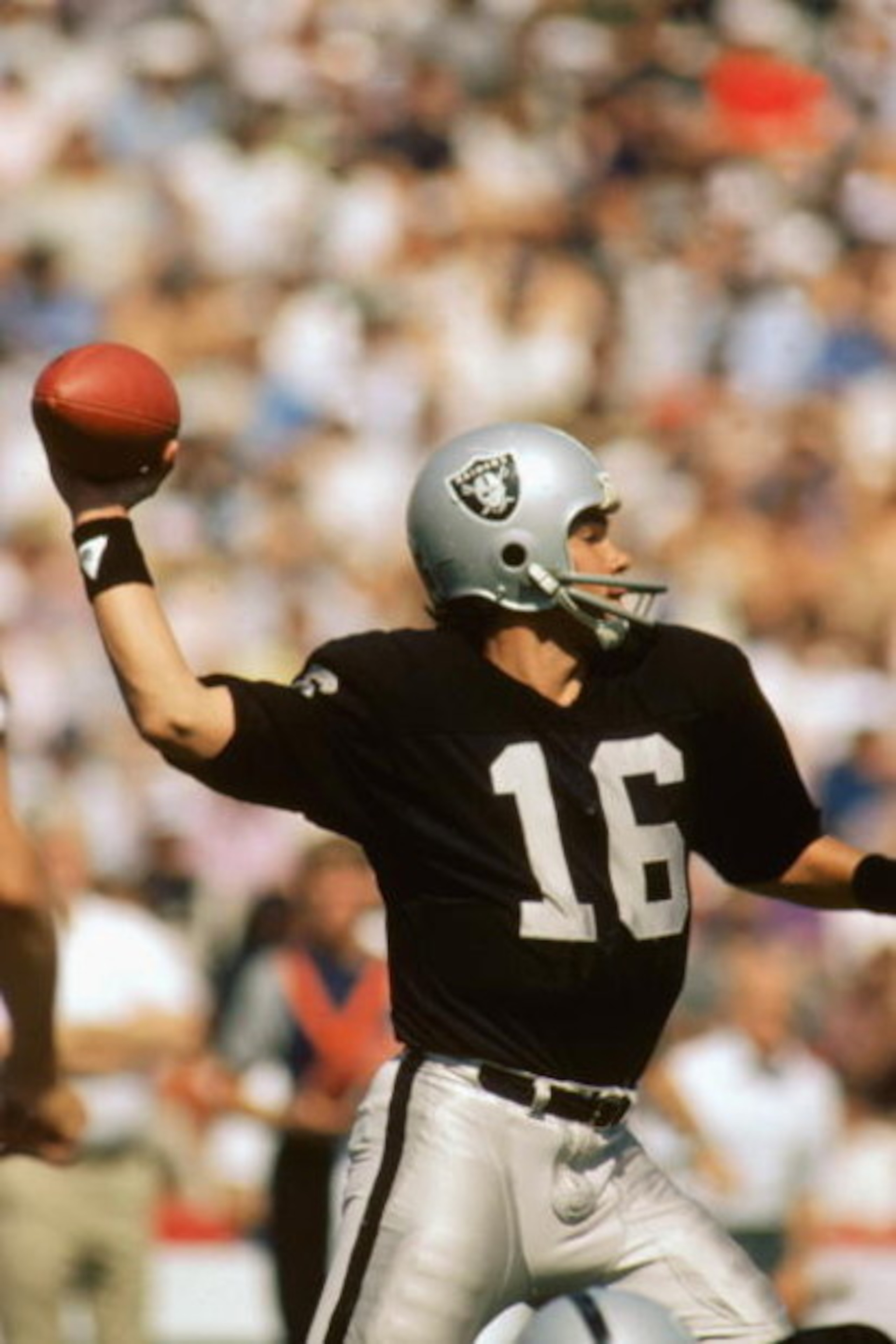
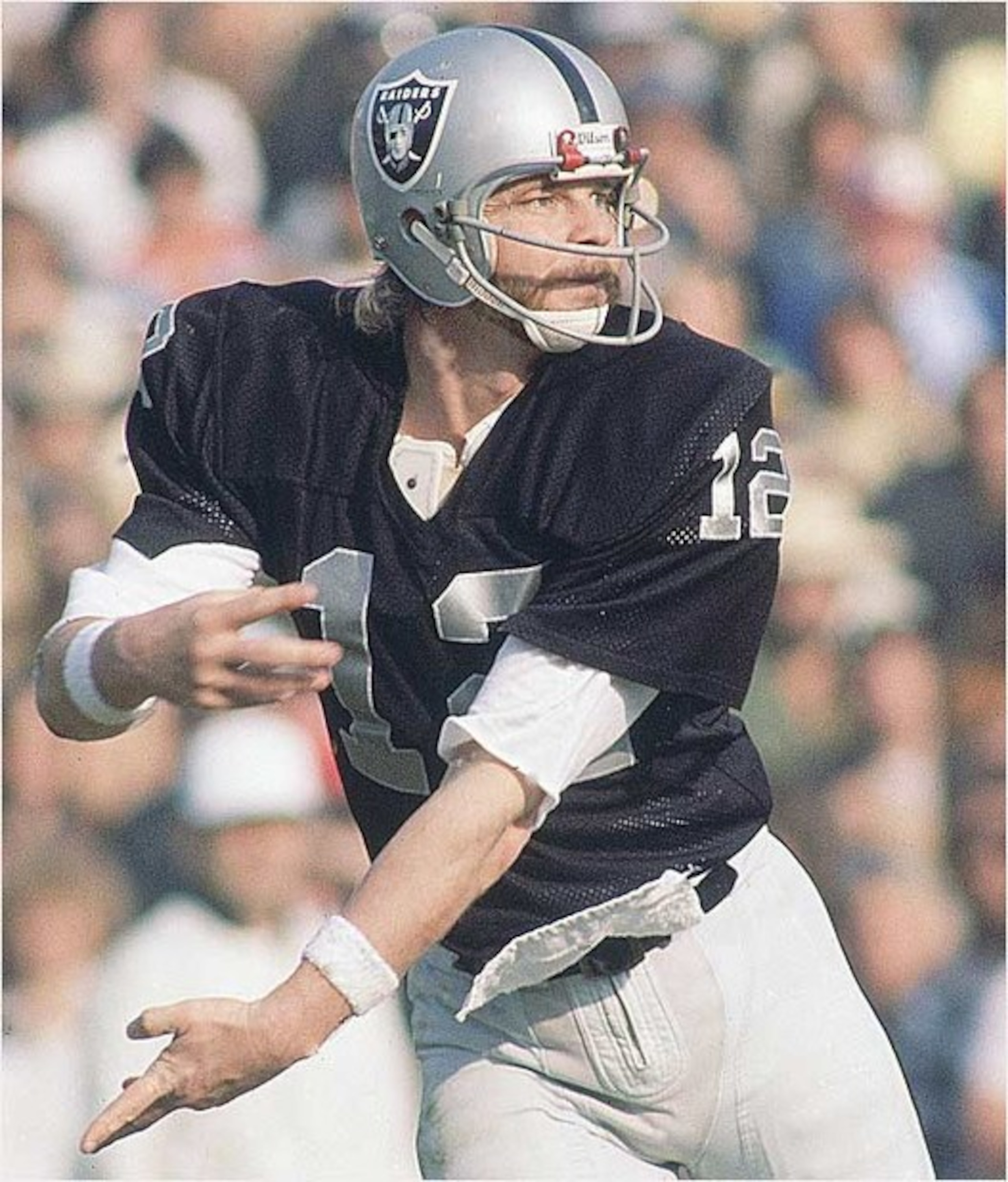
3. Ken Stabler – Oakland Raiders/Houston Oilers/New Orleans Saints – 1970-1984
It is likely that if it weren’t for the rebel attitude that Ken Stabler and the Oakland Raiders personified in the 1970s the talented left-hander would already be in the Pro Football Hall of Fame.
His three times as a finalist for the Hall of Fame are the second most of any quarterback not in the Hall (Charley Conerly has been a finalist seven times).
Stabler was a talented quarterback, but first and foremost, he was a winner. In 146 career starts, he led his teams to a 96-49-1 record (66%) and seven trips to the playoffs.
He led the Oakland Raiders to victory in Super Bowl XI and to the conference championship game five times.
As an aging quarterback with the perennial basement dwelling New Orleans Saints, he very nearly led them to the playoffs as they finished the 1983 season with an 8-8 record.
Leading the vertical passing attack of the Raiders, he twice led the league in touchdown passes and completion percentage.
In 1976, Stabler passed for a career-high 27 touchdown passes while completing 66.7 percent of his passes. He led the league with a passer rating of 103.4 and an average of 9.4 yards per attempt while throwing for 2,737 yards.
A four-time Pro Bowl selection, Stabler was a member of the NFL All-Decade team for the 1970s.
At the time of his retirement, Stabler ranked first all-time with a 59.8 career completion percentage, 10th in total passes intercepted (222) and 14th in both touchdown passes (194) and yards passing (27,938).
He now ranks 16th in passes intercepted, 28th in completion percentage, 34th in touchdown passes and 43rd in passing yards.
2. John Brodie – San Francisco 49ers – 1957-1973
John Brodie is perhaps the greatest example of how the lack of a championship pedigree can impale the chances of a quarterback getting into the Hall of Fame.
For more than a decade, Brodie was among the top quarterbacks in the NFL. He was a two-time Pro Bowl selection and NFL MVP in 1970.
He led the NFL in passing yardage and completion percentage three times, touchdown passes twice and quarterback rating once while finishing in the top 10 in completion percentage 11 times and the other three categories on 10 occasions.
His season and career statistics compare favorably to many of the quarterbacks from his era that have earned a spot in the Hall of Fame including Len Dawson, Roger Staubach, Bob Griese, Bart Starr, and Terry Bradshaw.
However, all of those quarterbacks possess the championships that Brodie never earned during his 17 seasons with the San Francisco 49ers.
After a decade of piloting a primarily losing team, he led the 49ers to the playoffs three consecutive seasons from 1970-1972.
However, each season the Dallas Cowboys ended his championship quest; the first two times in the NFC Championship Game and the third time in the Divisional Playoffs.
At the time of his retirement following the 1973 season, Brodie ranked fourth in career passing yards (31,548), eighth in touchdown passes (214) and eighth in passes intercepted (224).
He still ranks 15th in passes intercepted, 21st in touchdown passes and 27th in passing yards in NFL history.
1. Ken Anderson – Cincinnati Bengals – 1971-1986
Occasionally overshadowed during his outstanding playing career by other more flamboyant quarterbacks, former Cincinnati Bengals superstar Ken Anderson has also been overlooked in retirement as he has yet to take his rightful place among the all-time greats in the Pro Football Hall of Fame.
One of the most consistent quarterbacks of his generation, Anderson spent much of his career playing in the Bill Walsh system that would eventually evolve into the famous West Coast Offense.
He was a four-time Pro Bowl selection and one-time first team All-NFL selection.
He led the NFL in passer rating four times and ranked in the top 10 on 10 occasions.
He also led the NFL in passing yardage twice and completion percentage three times.
His 70.6 completion percentage during the 1982 season still ranks as the highest single season completion percentage in NFL history.
Anderson also had the misfortune of playing in the same division as the Pittsburgh Steelers, which made it tough to earn a playoff bid in an era when only four teams made the playoffs in each conference.
He led the Bengals to seven winning seasons, but they made the playoffs only four times during his 13 seasons as the starting quarterback.
In 1981, Anderson was named the NFL Player of the Year and the Comeback Player of the Year after passing for a career-high 3,754 yards and 29 touchdowns during the 1981 season.
The Bengals posted a 12-4 record and earned the first Super Bowl appearance in team history.
Anderson completed 73.5 percent of his passes during Super Bowl XVI for 300 yards and two touchdowns, but the Bengals fell to San Francisco 26-21.
At the time of his retirement, Anderson ranked third in NFL history in completion percentage (59.3%), fifth in passer rating (81.9), seventh in passing yards (32,838), and 12th in touchdown passes (197).
He now stands 37th in completion percentage, 34th in passer rating, 24th in passing yards and 28th in touchdown passes.
What is the duplicate article?
Why is this article offensive?
Where is this article plagiarized from?
Why is this article poorly edited?
Flag This Article


20 Comments
Loading comments...
This comment and all replies have been deleted This comment has been deleted Undo delete