The Top 10 Third Basemen in Baseball's Hall of Fame
By (Featured Columnist) on June 9, 2009
2,294 reads
Installment No. 5 takes us over to third base, if you are scoring. Unfortunately, the Hall of Fame currently has only 13 third basemen, three of whom are from the Negro League.
So, I am rating the top to the bottom.
You don’t really have the competition at this position that I am used to working with. These names hardly wreak fear in the heart of readers: “Home Run” Baker, Wade Boggs, George Brett, Jimmy Collins, George Kell, Freddie Lindstrom, Eddie Mathews, Brooks Robinson, Mike Schmidt, and Pie Traynor.
All you sports fans who hate the guys from the dark ages, take heed! There is only one player (Jimmy Collins) who has dipped his foot into the murky waters of the 1800s.
I must tell you, as a baseball fan, this bunch is sickening. The Veterans Committee needs to put some people in here who should be: Ron Santo, Ken Boyer, “Mad Dog” Bill Madlock, and Bob Elliott, among others.
I did the math on Santo. If he were in the Hall of Fame right now, he would be No. 5 on our list. I didn’t check the others. I have a series to finish here.
Maybe the list sucks so badly because there are no Pilgrims on it, huh?
On with the show—slideshow, that is.
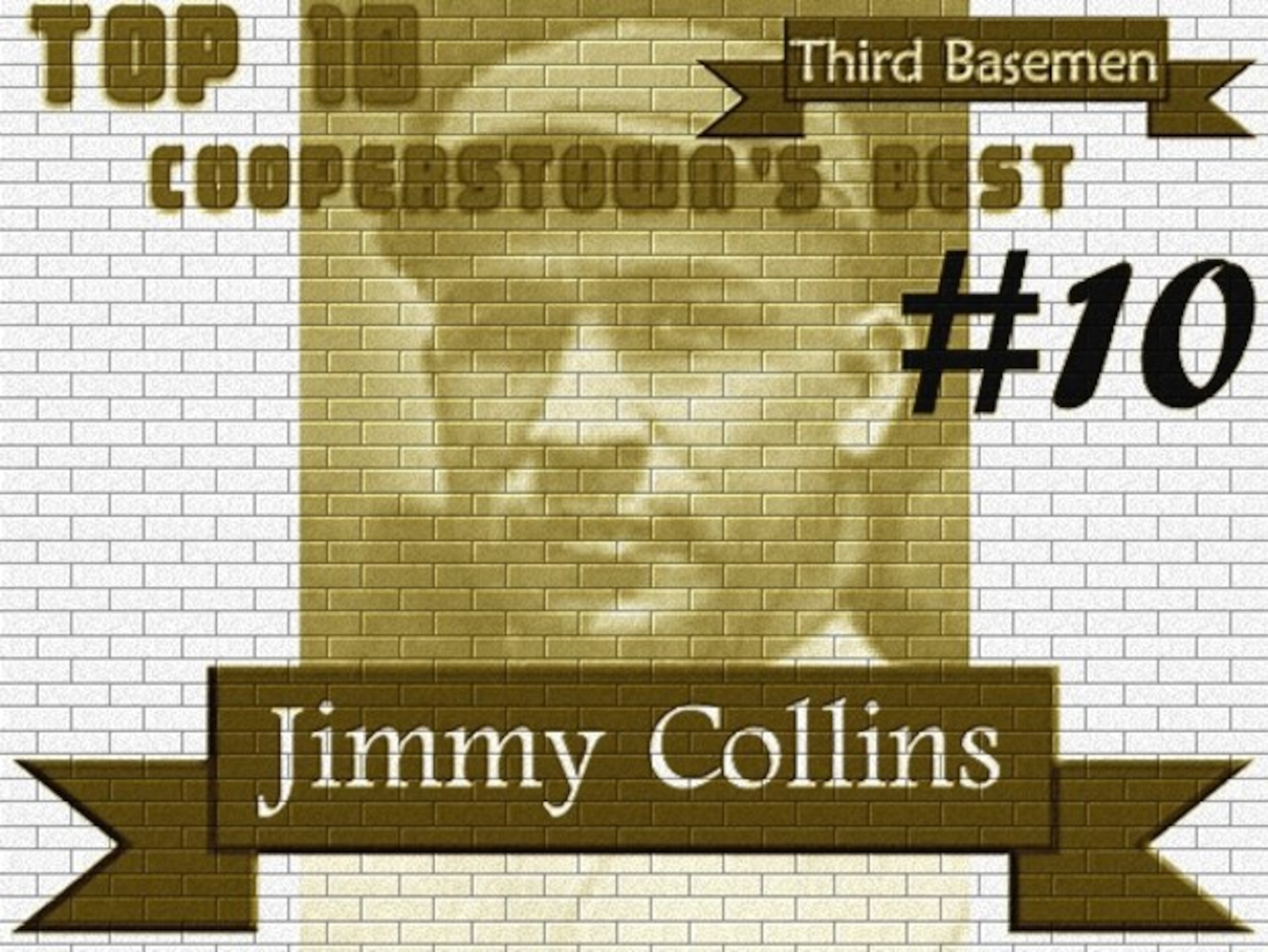
10. James Joseph Collins
Jimmy Collins played his career with one foot in the 19th century and one in the 20th.
In the 1800s, he averaged .306 with 9 HR, 113 RBI, 193 H, 111 R, and an OPS+ of 112.
His averages during the 1900s were .287, 5 HR, 81 RBI, 185 H, 92 R, and an OPS+ of 113.
Collins began his career in 1895 with the Louisville Colonels. He played part of that season there and then went to the Boston Beaneaters of the National League.
In 1901 he went to the Boston Americans of the American League. During the 1907 season, he went to the Philadelphia Athletics, where he remained until he retired in 1908.
Until Pie Traynor came along in the 1920s, Collins was universally considered baseball's greatest third baseman.
Playing at the turn of the century, when the bunt was a big part of the game, Collins was the best at fielding them. His 601 chances accepted at third base in 1899 remain a National League record.
He led his league's third basemen in putouts five times, assists four times, double plays twice, and still stands second all time in career putouts at third base.
He led the National League in 1898 with 15 HR. That was his best overall season as he batted .328, had 111 RBI, compiled 196 H, and scored 107 runs.
Collins was player-manager of the Red Sox in the American League's first six seasons, leading Boston to a victory over Pittsburgh in the inaugural World Series in 1903. In eight (not a typo) games, he hit .250 with one RBI.
The Red Sox repeated in 1904, but inter-league feuding canceled the World Series. Relieved of the managerial reins in 1907, Collins was traded to the Athletics, and he left the majors after batting .217 in 1908.
He played and managed in the minors through 1911 before retiring to his native Buffalo, N.Y.
Wiped out by the Depression, he became a Buffalo Parks employee. His 1945 election to the Hall of Fame preceded Traynor's by three years, though Traynor had been eligible before Collins's induction.
His career statistics are:
AB: 6795
AVG: .294
HR: 65
HR/YR: 6
RBI: 983
RBI/YR: 92
OBP: .343
SLG: .409
OPS+: 113
TB: 2778
TB/YR: 261
HITS: 1999
HITS/YR: 188
RUNS: 1055
RUNS/YR: 99
RC/YR: 89
FLD PCT: .929
SB: 194
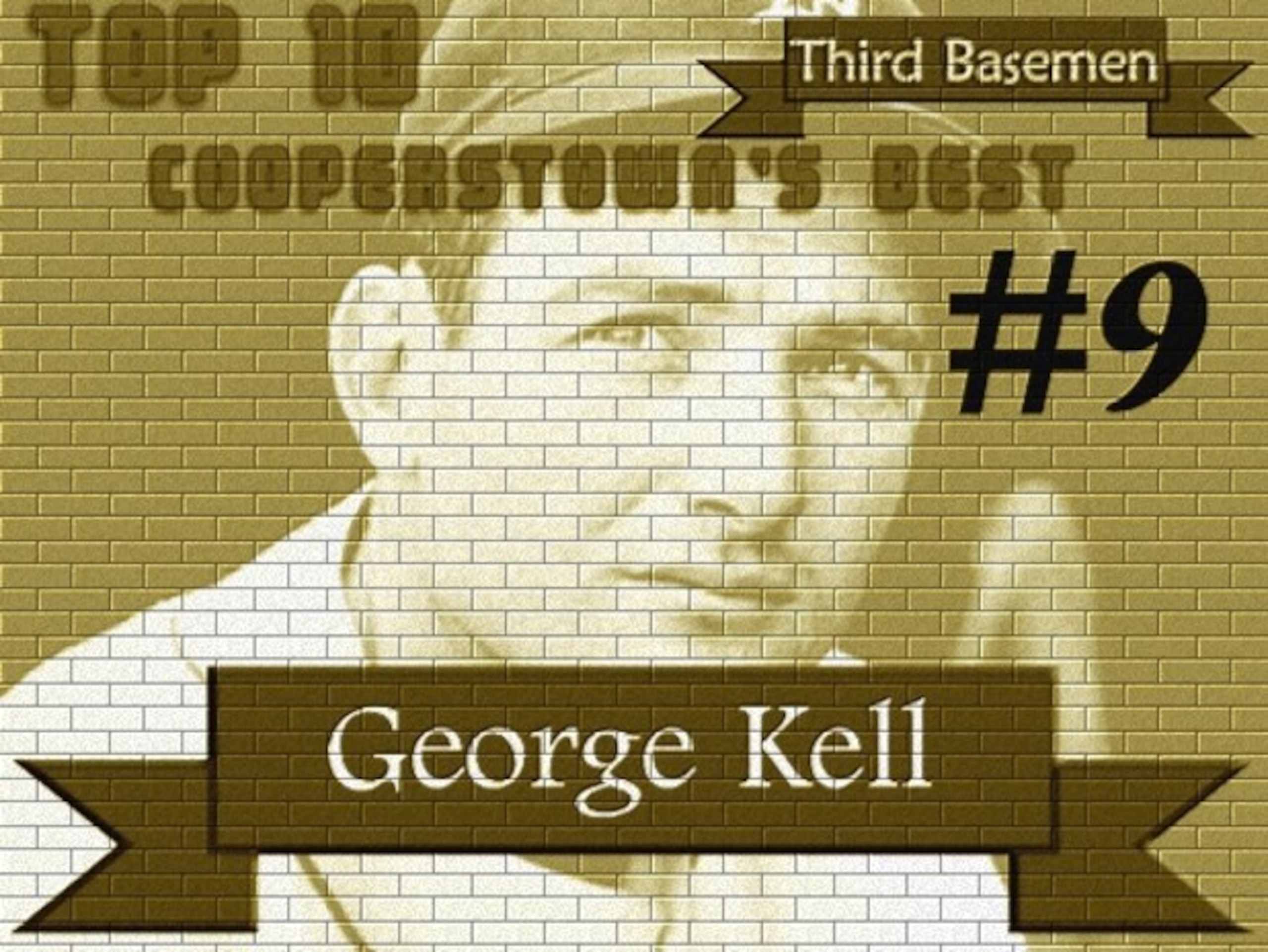
9. George Clyde Kell
George Kell began his 15-year major league career with the Philadelphia Athletics.
He was traded to Detroit for Barney McCosky in May 1946 and became a perennial All-Star. He finished the 1946 season at .322, his first of eight consecutive .300 seasons.
He missed 57 games in 1948 due to injuries. First, he suffered a broken wrist when hit by a Vic Raschi pitch. Then, several weeks later, a Joe DiMaggio line drive fractured his jaw.
In 1949, Kell won his only batting title, and in the process denied Ted Williams his third Triple Crown. When Williams went hitless in the season finale, Kell snatched the title, .3429 to .3428.
In 1950, Kell enjoyed his best season overall, batting .340 and hitting eight HR with 101 RBI. He also led the league in hits with 218 and scored 114 runs.
After leading the league in hits and doubles once again in 1951, Kell was sent to Boston in June 1952 as part of a nine-man deal that included Dizzy Trout, Hoot Evers, Walt Dropo, and Johnny Pesky.
His brother, Skeeter, played for the Athletics that season.
George Kell was as gifted in the field as he was at the plate, leading American League third baseman seven times in fielding and four times each in assists and total chances per game.
After concluding his career as Baltimore's third baseman, he was succeeded there by Brooks Robinson.
Kell was inducted into the Hall of Fame in 1983 by the Veterans Committee.
His career statistics are:
AB: 6702
AVG: .306
HR: 78
HR/YR: 7
RBI: 870
RBI/YR: 79
OBP: .367
SLG: .414
OPS+: 111
TB: 2773
TB/YR: 250
HITS: 2054
HITS/YR: 185
RUNS: 881
RUNS/YR: 80
RC/YR: 92
FLD PCT: .969
SB: 51
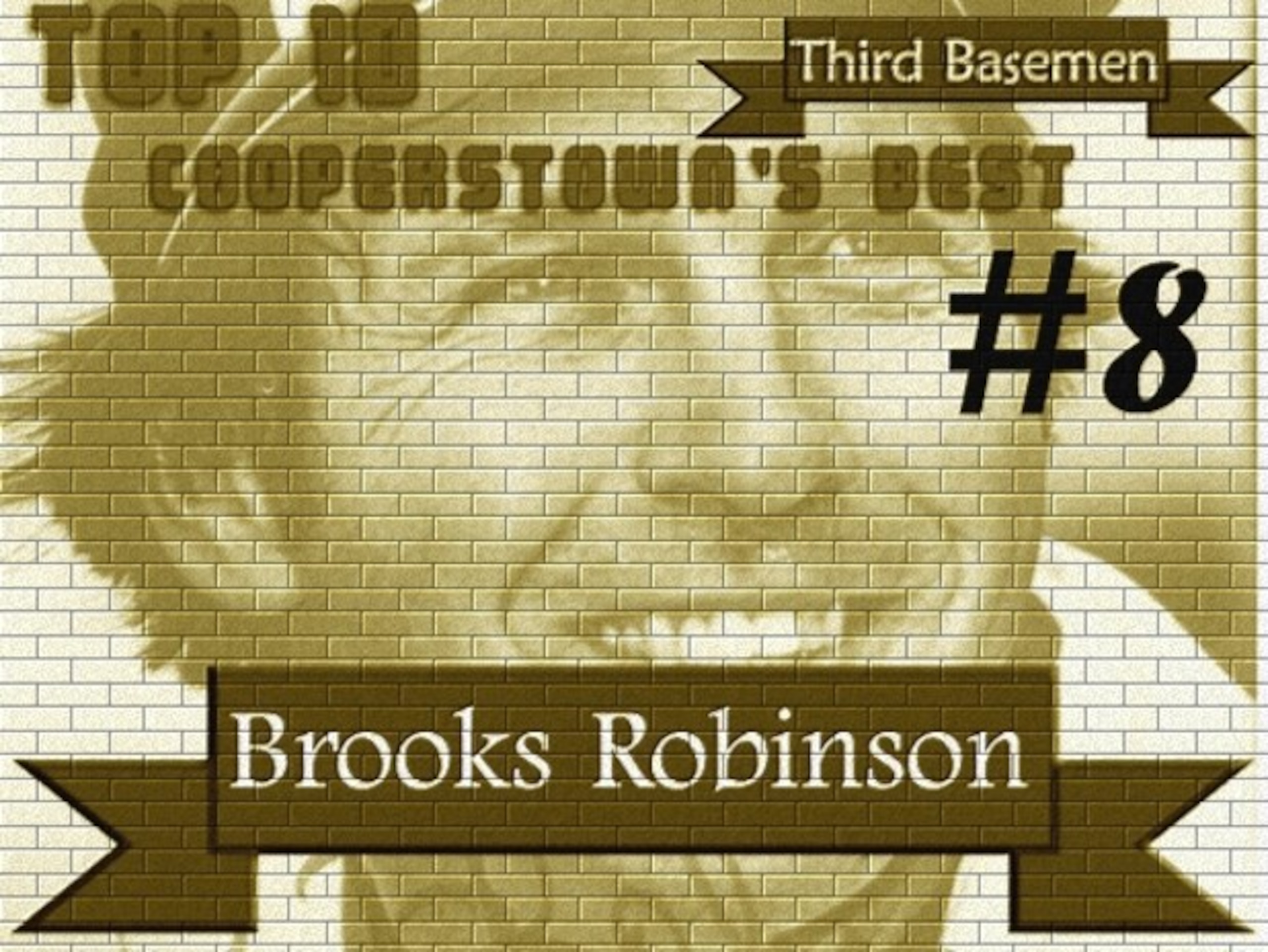
8. Brooks Calbert “Vacuum Cleaner” Robinson Jr.
Brooks Robinson played all 23 years of his career with the Baltimore Orioles.
Robinson played third base with style, class, and an uncanny ability to turn in spectacular plays with startling regularity for 23 seasons. In 16 of those seasons, he was the Gold Glove Award winner.
Robinson didn't play high school ball and was playing second base in a church league when he was discovered.
He worked in slowly as a replacement for Hall of Famer George Kell, who was finishing his career at third base for the Orioles.
He was a fair hitter with some power, winning the 1964 MVP award on the strength of his only .300 season—.317—with 28 HR and a league-best 118 RBI.
He was runner-up in the 1966 voting for the Most Valuable Player. But it was his glove that regularly won games.
In the 1966 World Series, his presence at third discouraged the heavily favored Dodgers from employing their bunting game. The Orioles won four straight close games.
After Robinson won the 1970 World Series MVP award with a .429 average, two home runs, and a slew of dazzling defensive plays, Reds catcher Johnny Bench noted, "if he wanted a car that badly, we'd have given him one."
He won Game One with a seventh-inning solo homer and homered again in Game Four.
He played in a total of four World Series, winning two and losing two, batting .303 with three HR and 14 RBI in 21 games.
Robinson also holds the dubious distinction of playing on the most All-Star losers, 15 in all, including both 1960 games.
Robinson also finished third in MVP voting twice in his career.
He batted .300-plus twice, hit 20 or more HR six times, and knocked in over 100 runs twice.
Robinson was inducted into the Hall of Fame in 1983.
His career statistics are:
AB: 10,654
AVG: .267
HR: 268
HR/YR: 15
RBI: 1357
RBI/YR: 76
OBP: .322
SLG: .401
OPS+: 104
TB: 4270
TB/YR: 239
HITS: 2848
HITS/YR: 159
RUNS: 1232
RUNS/YR: 69
RC/YR: 76
FLD PCT: .971*
SB: 28
* = Leads all Third Basemen in the Hall of Fame.
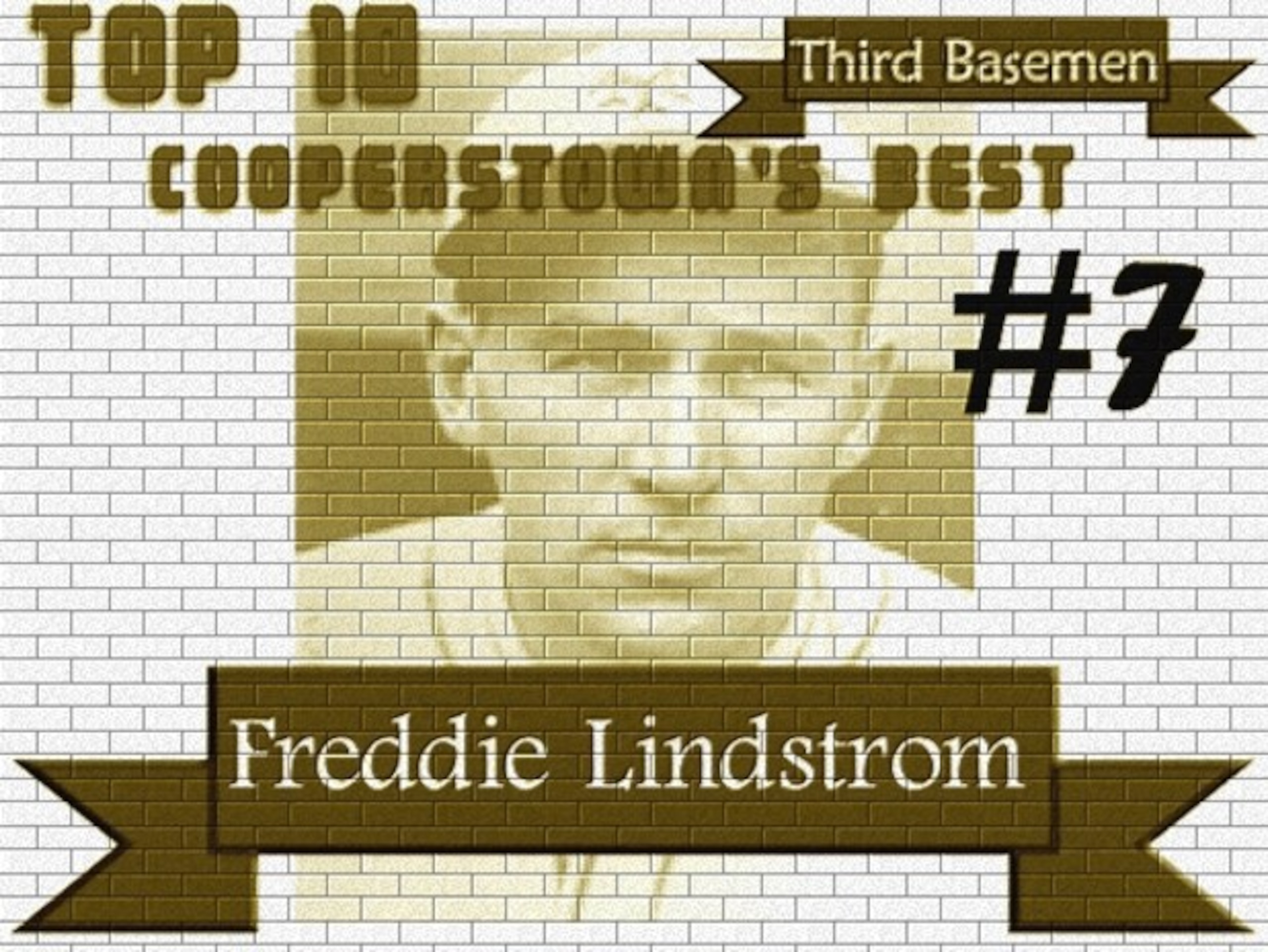
7. Frederick Charles Lindstrom
Freddie Lindstrom joined the New York Baseball Giants in 1924 and that fall became the youngest player—18 years, 10 months, and 13 days—to appear in a World Series.
He was traded to the Pittsburgh Pirates in 1933 and played there for two years. He played in 1935 for the Chicago Cubs and retired from the Brooklyn Dodgers after the 1936 season.
Lindstrom hit .300 or better in seven of his 13 ML seasons. In 1928 he batted .358 with a league-leading 231 hits; he had 231 hits again in 1930, reaching career highs of .379 and 22 home runs. He drove in more than 100 runs in both seasons.
He was inducted into the Hall of Fame in 1976 by the Veterans Committee.
His 13-year career totals are:
AB: 5611
AVG: .311
HR: 103
HR/YR: 12
RBI: 779
RBI/YR: 88
OBP: .351
SLG: .449
OPS+: 109
TB: 2519
TB/YR: 284
HITS: 1747
HITS/YR: 197
RUNS: 895
RUNS/YR: 101
RC/YR: 100
FLD PCT: .959
SB: 84
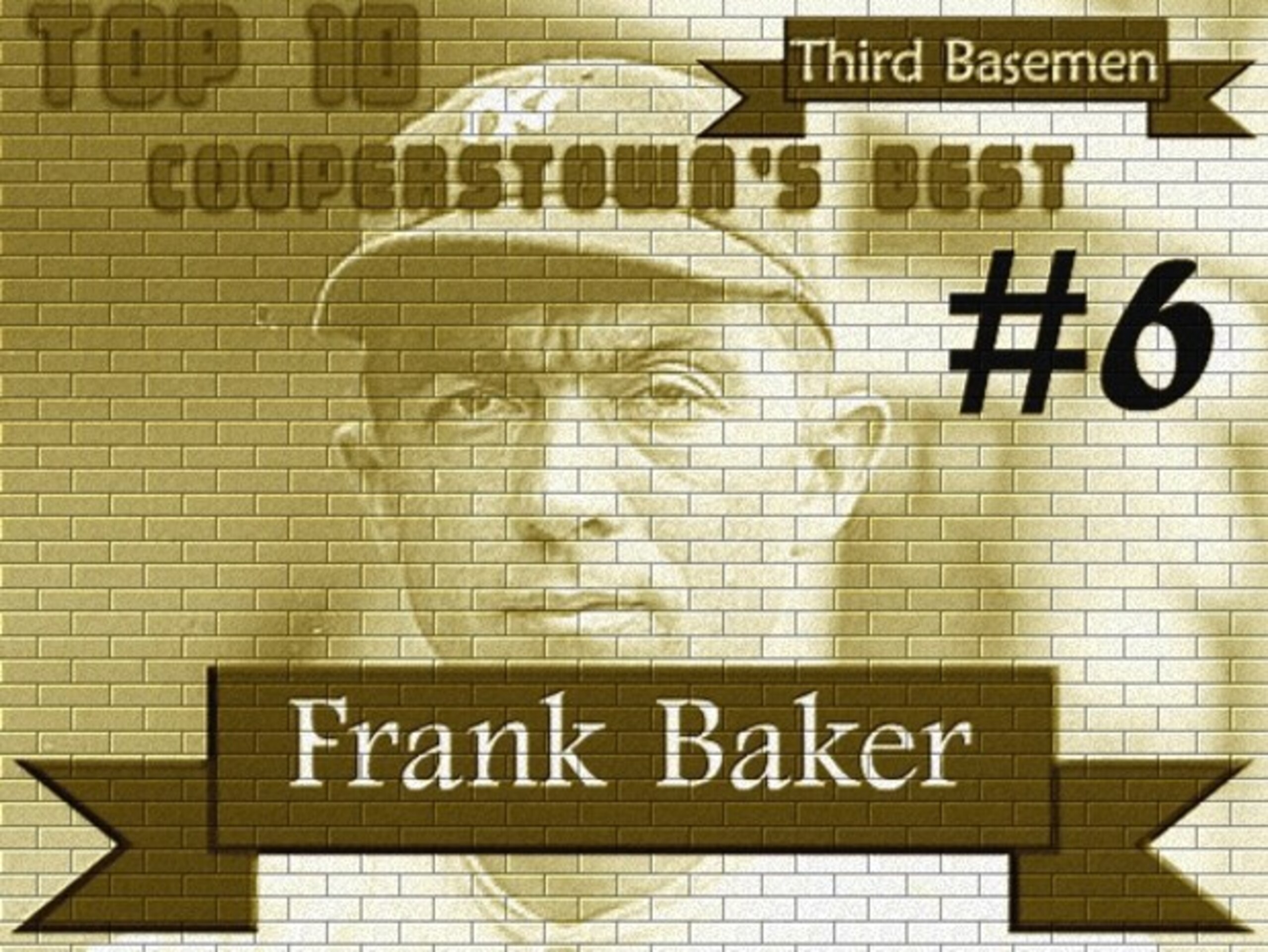
6. John Franklin “Home Run” Baker
Frank Baker’s career spanned 13 years, from 1908 to 1922. He was a rookie with the Philadelphia Athletics and played there until 1916, when he went to the New York Yankees, where he finished his career.
A Maryland farm boy, Baker was a powerful slugger in the dead ball era, leading, or tying for, the league lead in homers four consecutive seasons—from 1911 to 1914—although 12 was his top total.
Baker earned his memorable nickname in the 1911 World Series, when he hit game-winning home runs on successive days against the Giants' future Hall of Fame pitchers Rube Marquard and Christy Mathewson.
The left-handed hitter was the third baseman in Connie Mack's fabled Philadelphia A's "$100,000 Infield," together in the years 1911-14. Teamed with him were Stuffy McInnis, Eddie Collins, and Jack Barry.
Connie Mack broke his team up rather than pay the higher salaries brought on by Federal League competition, and after Baker sat out 1915 in protest, Mack sold him to the Yankees in 1916 for $35,000.
In 1920, Baker was again out of the game, due to the illness and subsequent death of his first wife. He returned to the Yankees as a part-time player and helped the team win its first two World Championships in 1921 and '22. His final at-bat was in the 1922 World Series.
Baker managed in the Eastern Shore League in 1924-25 and discovered Jimmie Foxx, delivering him to Connie Mack after the 1924 season. He lived a quiet life on his farm near Trappe, Maryland, where he was born, making appearances at Old Timers' Games in New York and Philadelphia until his death in 1963.
Along with his four home run titles, Baker also won two crowns for his runs batted in. He batted over .300 five times, hit 10 or more home runs five times, drove in over 100 RBI three times, had 200 hits once, and scored 100 runs twice.
He played in a total of six World Series, winning three, batting .363 with three home runs and 18 RBI in 25 games.
He was inducted into the Hall of Fame in 1955 by the Veterans Committee.
His career statistics are:
AB: 6660
AVG: .307
HR: 96
HR/YR: 10
RBI: 987
RBI/YR: 102
OBP: .363
SLG: .442
OPS+: 135
TB: 2647
TB/YR: 272
HITS: 1838
HITS/YR: 189
RUNS: 887
RUNS/YR: 91
RC/YR: 97
FLD PCT: .943
SB: 235*
* = Leads all Third Basemen in the Hall of Fame.
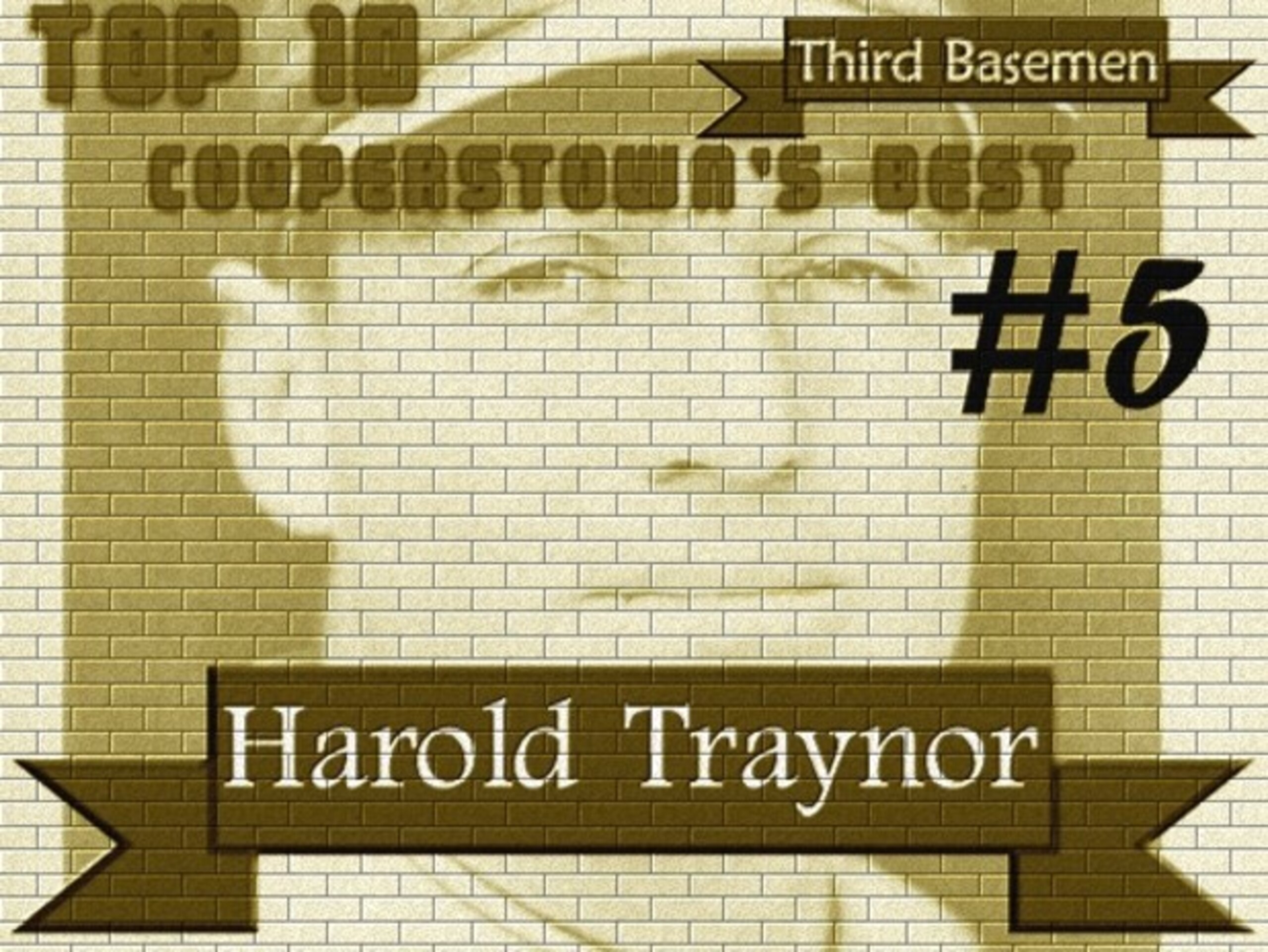
5. Harold Joseph “Pie” Traynor
He came up as a shortstop but was moved to third base by Pittsburgh manager Bill McKechnie in 1922—the first of 12 straight seasons in which he played 130 or more games.
Traynor topped the .300 mark 10 times and from 1925 through 1930 batted .342. Traynor usually made contact, striking out only 278 times in his career. He fanned only seven times in 540 at-bats in 1930.
Teamed with defensive whiz Glenn Wright at shortstop, and in a lineup with hitting stars Max Carey and Kiki Cuyler, in 1925 Traynor helped Pittsburgh to its first pennant since 1909. He hit .346 in their seven-game World Series victory over Washington and homered off Walter Johnson in the opener. He handled 24 chances without an error.
Traynor hit .342 in 1927 and led National League third basemen in double plays for the fourth straight year.
Widely regarded for years as baseball's greatest third baseman, Traynor was elected to the Hall of Fame in 1948 and was honored as a member of the all-time team selected in 1969 for baseball's centennial.
He was one of Pittsburgh's most popular players, eagerly adopted by the community though he never lost his New England accent. The Giants' John McGraw, himself a third baseman, called Traynor the greatest team player in the game.
Though there are several stories about his nickname, it seems to have come from Traynor's childhood taste for pies.
Traynor was named to two All-Star teams and batted .500, going 3-for-6 in two games. He appeared in two World Series. In 1925 the Pirates beat the Washington Senators in seven games, and in 1927 they played the New York Yankees, losing a four-game sweep. His World Series totals are .293, one home run, and four RBI in 11 games.
His career statistics are:
AB: 7559
AVG: .320
HR: 58
HR/YR: 5
RBI: 1273
RBI/YR: 106
OBP: .362
SLG: .435
OPS+: 107
TB: 3289
TB/YR: 275
HITS: 2416
HITS/YR: 202*
RUNS: 1183
RUNS/YR: 99
RC/YR: 99
FLD PCT: .947
SB: 158
* = Leads all Third Basemen in the Hall of Fame
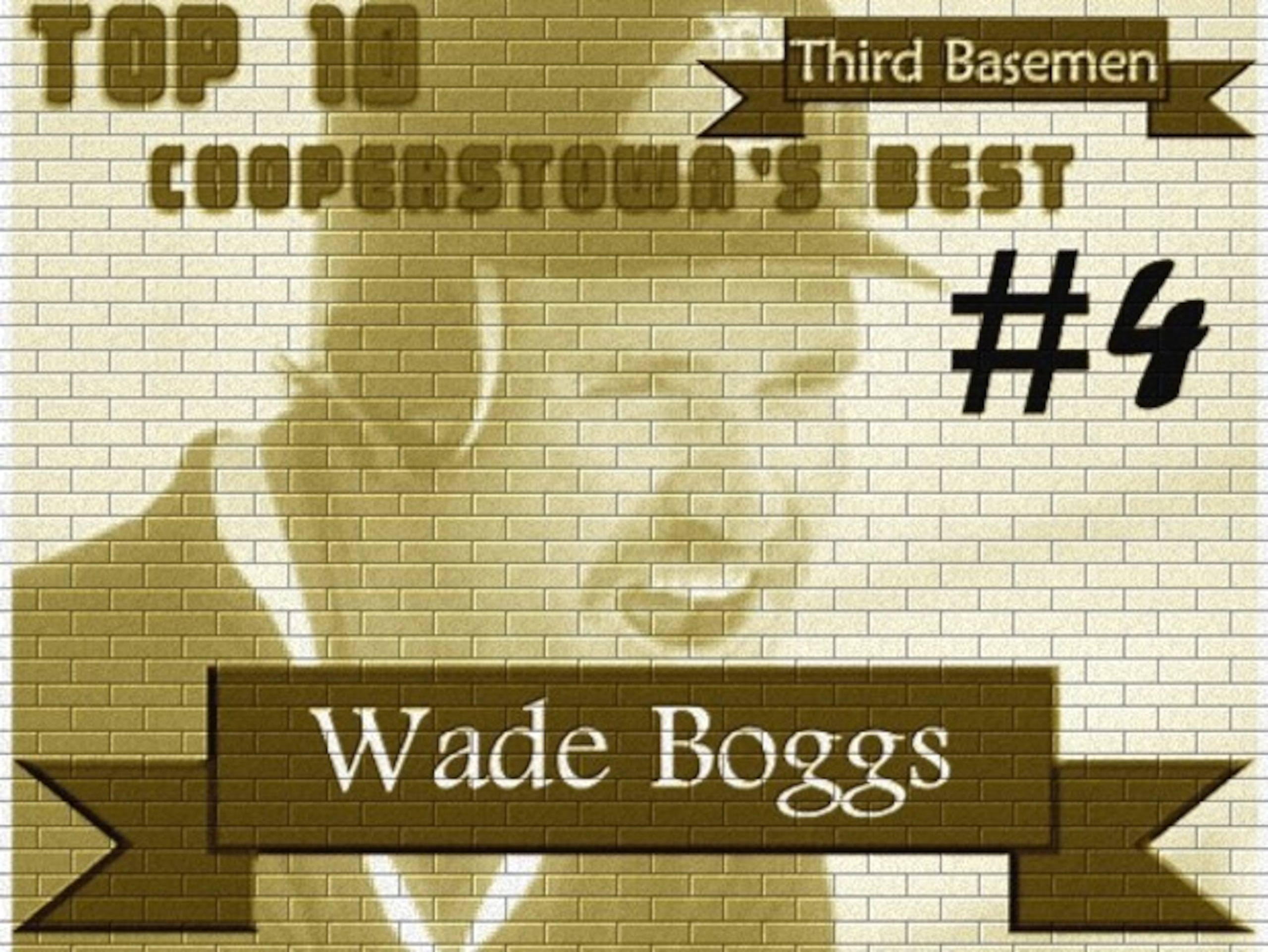
4. Wade Anthony Boggs
Wade Boggs' career began in 1982 with the Boston Red Sox, where he played until he was sent to the New York Yankees in 1993. In 1998 he went to the Tampa Bay Devil Rays, where he finished his career in 1999.
In his 18-year career, Boggs reached base safely in an incredible 80 percent of his games and was the only batter in the 20th century to have seven consecutive 200-hit seasons.
Wee Willie Keeler pulled off eight straight from 1894 to 1901.
In the seven years between 1982 and 1988, he batted .349 or higher six times. In his off year he hit .325.
The quirky Boggs was one of the most superstitious players baseball has ever seen: He woke up at the same time every morning, ate chicken before every game—Jim Rice nicknamed him "Chicken Man"—and took exactly 150 ground balls during infield practice.
For night games, Boggs stepped into the batting cage at 5:17 p.m. and ran wind sprints at 7:17 p.m. Trying to hex him, a scoreboard operator in Toronto once flipped the stadium clock directly from 7:16 to 7:18.
Before each at-bat, Boggs would draw the Hebrew word "Chai" in the batter's box, and his route to and from the playing field was so precise that by late summer his footprints were often clearly visible in the grass in front of his home dugouts.
Talk about OCD!
The embarrassing furor that arose after Boggs admitted in 1988 that he had committed adultery never seemed to distract him at the plate—even when thousands of cutout masks of his mistress were distributed at Royals Stadium in Kansas City.
In 1999, Boggs became the first major leaguer to have his 3,000th hit be a home run.
Although he had an illustrious career as a hitter, he never finished higher than fourth in MVP voting. He batted .300-plus 15 times, had over 200 hits seven times consecutively, and scored over 100 runs seven times in a row.
Twice, he led the American League in walks, getting over 100 four times in a row. He led the league in on-base percentage six times, five in a row, and in OPS twice.
He was a 12-time All-Star, batting .321 with one HR and one RBI in 28 AB. He also won two Gold Gloves and eight Silver Sluggers.
He was in two World Series. In 1986, his Red Sox lost to the New York Mets in seven games. In 1996, he helped the Yankees defeat the Atlanta Braves in six games.
His World Series statistics are: .286 BA, 0 HR, and five RBI in 11 games.
He was inducted into the Hall of Fame in 2005.
His career statistics are:
AB: 9180
AVG: .328*
HR: 118
HR/YR: 8
RBI: 1014
RBI/YR: 67
OBP: .415*
SLG: .443
OPS+: 130
TB: 4064
TB/YR: 270
HITS: 3010
HITS/YR: 200
RUNS: 1513
RUNS/YR: 100
RC/YR: 116
FLD PCT: .962
SB: 24
* = Leads all Third Basemen in the Hall of Fame.
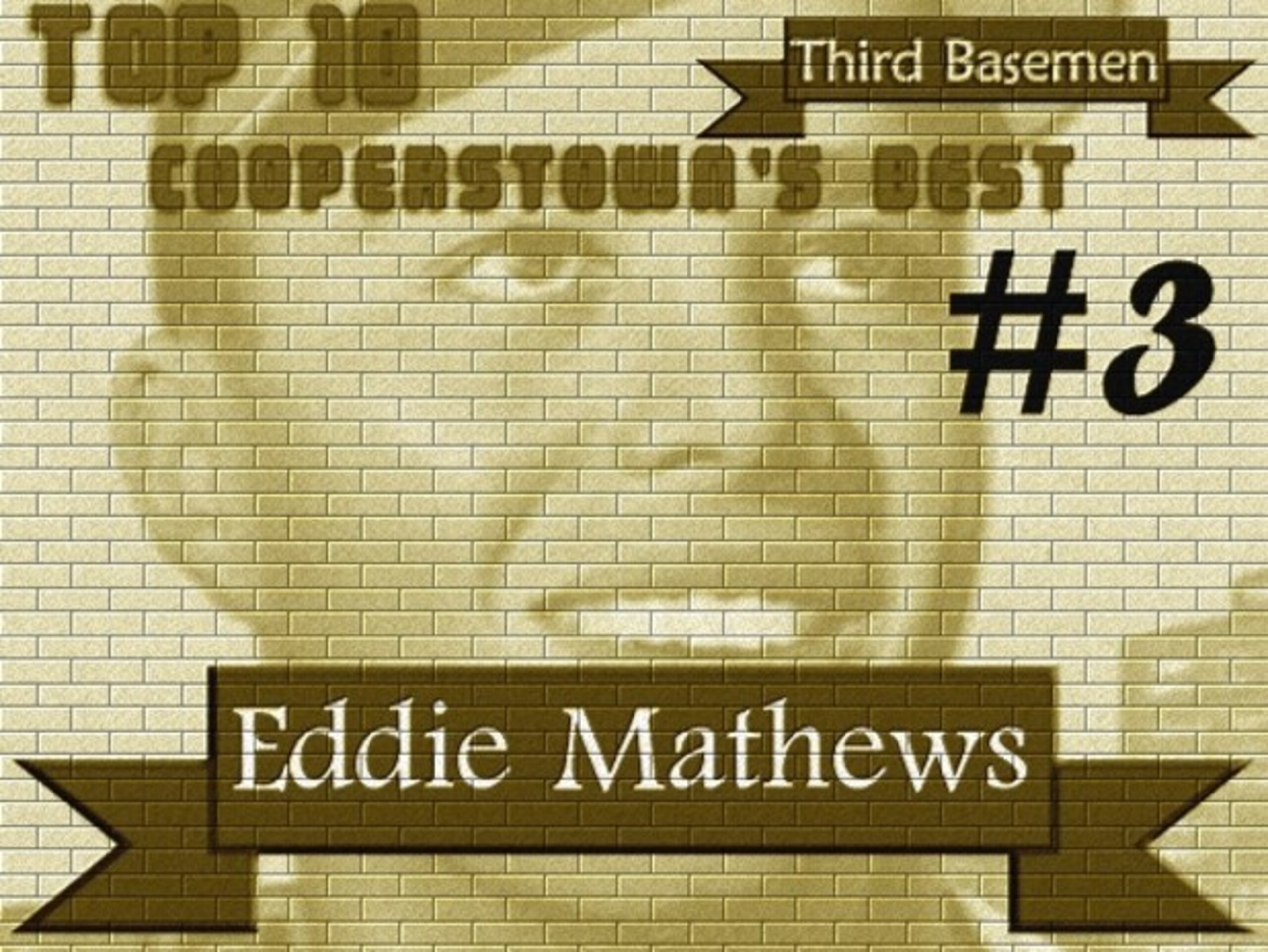
3. Edwin Lee Mathews, Jr.
Eddie Mathews began his 17-year career with the Boston Braves. He tagged along when they moved to Milwaukee and then Atlanta. In 1967, after one year in Atlanta, he was sent to the Houston Astros. He was sent in midseason to the Detroit Tigers, where he retired in 1968.
A natural athlete blessed with tremendous power, a rifle arm, and a durable body, Mathews was the premier third baseman of his era, overshadowing Clete Boyer, the young Brooks Robinson, and Al Rosen.
Heavily scouted in high school, Mathews signed with the Boston Braves in 1949 on the night of his high school graduation. In less than three years Mathews was starting at third for the Braves; he kept the job for 15 years and two franchise shifts.
Ironically, Mathews played for minor league teams in Atlanta and Milwaukee on his way up.
In 1953, the depressed Boston franchise was uprooted to Milwaukee in spring training. The Braves quickly became the darlings not only of the city but the entire upper Midwest region in a brief but intense romance unparalleled in baseball history.
Coinciding with the deliverance from Boston was a dramatic improvement in talent as Joe Adcock, Bill Bruton, and Gene Conley, and later Hank Aaron, Bob Buhl, and Wes Covington joined the roster.
Mathews had a remarkable physique, and his powerful stroke and bat speed were marveled at by opponents. Even Ty Cobb, not known for his appreciation of the modern ballplayer, was impressed: "I've only known three or four perfect swings in my time. This lad has one of them."
He has the distinction of being the only player to have played for the Braves in Boston, Milwaukee, and Atlanta.
Mathews was runner-up in MVP voting twice in the National League. He hit 30 or more home runs 10 times, drove in 100-plus five times, and scored over 100 runs eight times.
He was named to 12 All-Star teams, batting a dismal .080 with two HR and three RBI in 25 at-bats.
He played in three World Series: two with the Braves and one with the Tigers. In the first one, in 1957, the Braves beat the New York Yankees in seven games. The next year they lost to the Yankees in seven games. In his last World Series in 1968, the Tigers beat the St. Louis Cardinals in seven games.
His World Series totals are .200 BA, one HR, and seven RBI in 16 games.
He was inducted into the Hall of Fame in 1978.
His career statistics are:
AB: 8537
AVG: .271
HR: 512
HR/YR: 35
RBI: 1453
RBI/YR: 98
OBP: .376
SLG: .509
OPS+: 143
TB: 4349
TB/YR: 295
HITS: 2315
HITS/YR: 157
RUNS: 1509
RUNS/YR: 102*
RC/YR: 116
FLD PCT: .956
SB: 68
* = Leads all Third Basemen in the Hall of Fame.
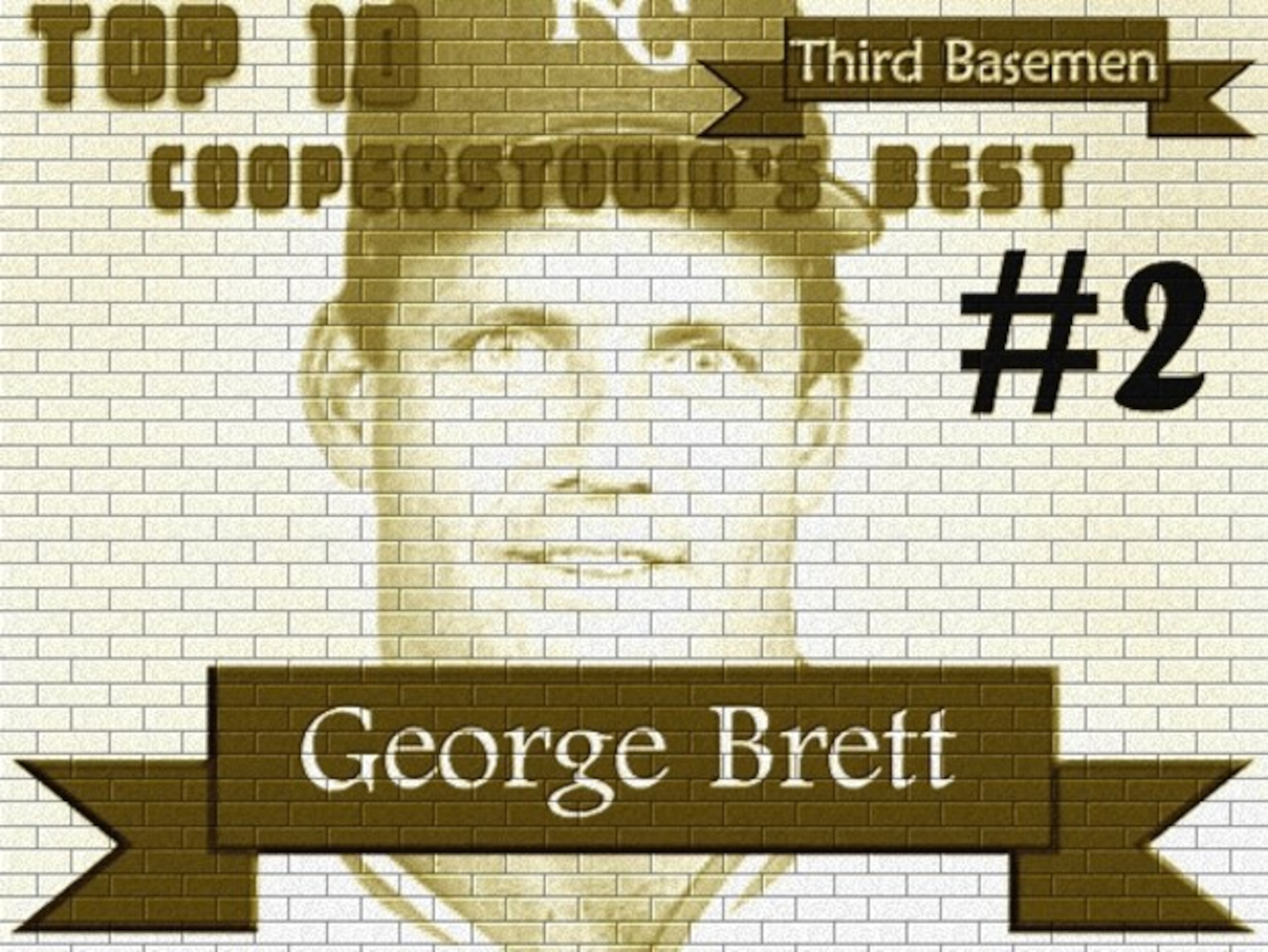
2. George Howard “Mullet” Brett
George Brett played his entire 21-year career for the Kansas City Royals, leading them to six American League Championships and two World Series in their heyday of the late '70s and early '80s. His big league career began in 1973, and he retired in 1993.
Brett came from a baseball family. His older brother, Ken, pitched 13 years in the majors, while two other brothers played minor-league ball.
He batted only .281 over three-plus years in the minor leagues. He hit only .125 in his first major league call-up in 1973 and hit but two home runs with 47 RBI in his first full season with Kansas City in 1974.
Star-studded batting statistics would soon become the norm for Brett. He captured his first batting title in 1976 with a .333 mark, the first of 10 .300-plus seasons.
Brett flirted with the .400 batting mark throughout the summer of 1980. He eventually wound up with a .390 average, at that time the highest since Ted Williams hit .406 in 1941. His incredible season included a 37-game hitting streak, the batting crown, and the American League MVP award.
In 1987 he moved to first base to make room for rookie phenom Kevin Seitzer. Despite the shift, his bat continued to terrify AL pitching. On Oct. 1, 1992, Brett singled the 3,000th hit of his career against California's Tim Fortugno at Anaheim Stadium.
Brett was runner-up in MVP voting twice and once came in third in the voting. He won three batting titles, led the American League in hits three times, doubles once, triples three times, OBP once, SLG three times, OPS three times, OPS+ three times, and once in total bases.
He hit over 20 HR eight times, knocked in 100-plus four times, had 200-plus hits twice, and scored over 100 runs four times.
He was named to 13 All-Star teams and batted .292 with one home run and five RBI and a slugging percentage of .583 in 31 plate appearances.
He also won one Gold Glove, three Silver Sluggers, the Hutch Award, and the ALCS MVP in 1985, and in 1986 he won the Lou Gehrig Memorial Award.
Brett was in two World Series. In 1980 the Royals lost to the Philadelphia Phillies in six games, and in 1985 they beat the St. Louis Cardinals in seven games. His World Series statistics are .373 BA, one HR, and four RBI in 13 games.
He was inducted into the Hall of Fame in 1999.
His career statistics are:
AB: 10,349
AVG: .305
HR: 317
HR/YR: 19
RBI: 1595*
RBI/YR: 95
OBP: .369
SLG: .487
OPS+: 135
TB: 5044*
TB/YR: 302
HITS: 3154*
HITS/YR: 189
RUNS: 1583*
RUNS/YR: 95
RC/YR: 112
FLD PCT: .951
SB: 201
* = Leads all Third Basemen in the Hall of Fame.
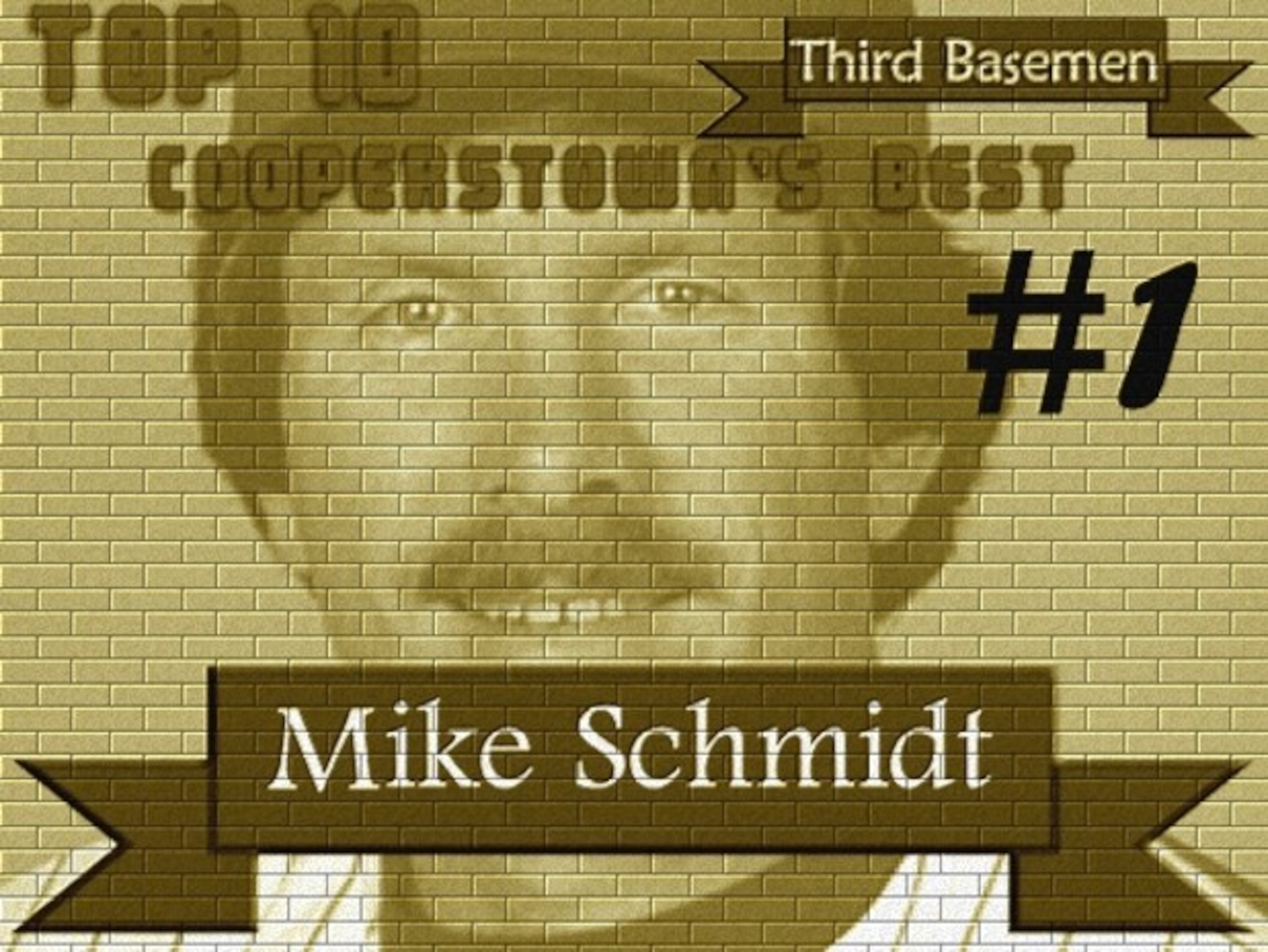
1. Michael Jack Schmidt
Mike Schmidt played all 18 years of his career with the Philadelphia Phillies.
By the time he retired early in the 1989 season, Schmidt had established himself as the best all-around third baseman of all time.
Strikeouts were particularly troublesome to Schmidt early in his career, and he retired with the third-highest strikeout total in history.
The Phillies drafted Schmidt from Ohio University in the second round of the 1971 draft, and he spent two seasons in the minors before being called up in September 1972.
On July 17, 1976, Schmidt hit four HR in one game at Wrigley Field, as the Phillies rallied from a 13-2 deficit to beat the Cubs 18-16 in 10 innings.
Schmidt won three Most Valuable Player Awards in the National League, and twice he came in third in MVP voting.
He won a National League-record eight HR titles, four RBI crowns, led the league in walks four times, intentional walks twice, OBP three times, SLG five times, OPS six times, OPS+ six times, and in total bases three times.
He was a 12-time All-Star, batting .278 with one HR and three RBI in 21 plate appearances. He also won 10 Gold Gloves, six Silver Sluggers, the 1980 World Series MVP, and the 1983 Lou Gehrig Memorial Award.
Schmidt played in two World Series. In 1980 the Phillies beat the Kansas City Royals in six games, and in 1983 they lost to the Baltimore Orioles in five games. His World Series statistics are .220 BA, two HR, seven RBI in 11 games.
One last thing; If they ever make a movie about the life of Mike Schmidt, Chuck Norris has to play him.
He was inducted into the Hall of Fame in 1995.
His career statistics are:
AB: 8352
AVG: .267
HR: 548*
HR/YR: 37*
RBI: 1595*
RBI/YR: 107*
OBP: .380
SLG: .527*
OPS+: 147*
TB: 4404
TB/YR: 297
HITS: 2234
HITS/YR: 151
RUNS: 1506
RUNS/YR: 101
RC/YR: 118*
FLD PCT: .955
SB: 174
* = Leads all Third Basemen in the Hall of Fame.
The Leaders in the various categories are:
AB: Brooks Robinson 10,654
AVG: Wade Boggs .328
HR: Mike Schmidt 548
HR/YR: Mike Schmidt 37
RBI: Mike Schmidt, George Brett 1595
RBI/YR Mike Schmidt 107
OBP: Wade Boggs .415
SLG: Mike Schmidt .527
OPS+: Mike Schmidt 147
TB: George Brett 5044
TB/YR: George Brett 302
HITS: George Brett 3154
HITS/YR: Pie Traynor 202
RUNS: George Brett 1583
RUNS/YR: Eddie Mathews 102
RC/YR: Mike Schmidt 118
FLD %: Brooks Robinson .971
SB: Frank Baker 235
What is the duplicate article?
Why is this article offensive?
Where is this article plagiarized from?
Why is this article poorly edited?
Flag This Article
44 Comments
Loading comments...
This comment and all replies have been deleted This comment has been deleted Undo delete