The Top 10 Second Basemen in Baseball's Hall of Fame

Cliff Eastham by Senior Analyst Written on June 05, 2009

Slide 1 of 12

Display_image

Here we are at installment four of my “Cooperstown’s Best” series. We are going to talk second basemen today—stereotypical fireplugs like Nellie Fox.

The tendency for some, even those who grace Bleacher Report, is to just give a guy a pass if he is a middle infielder and can play decent defense and steal a sack or two.

Not in my way of thinking. If I have to make a choice between a defensive guy and an offensive one, it is a no-brainer. I take the man who doesn’t have to bunt his way on every time.

Having said all that, look at who our candidates are: Carew, Collins, Doerr, Evers, Fox, Frisch, Gehringer, Herman, Hornsby, Lajoie, Lazzeri, Mazeroski, McPhee, Morgan, Robinson, Sandberg, and Schoendienst. Pretty impressive list, wouldn’t you say?

This is like sifting through a pan of gold, seeing which nugget will be the biggest.

I think it is important that I go over a few ground rules before allowing you to continue. My friend, Sully, had to call a bunch of you down for not reading the introductions to these slide shows.

If you don’t read them, you don’t know what I am basing my information on, whom I am considering, and so forth.

There are no players from the Negro Leagues, even though they are now members of the National Baseball Hall of Fame, on any of these lists in this series.

No, I am not a racist. No, I am not a bigot. I am a statistics freak, and I use them to death.

Give me some statistics, and I will furnish you with an exhaustive report. On the other hand, if you have no numbers for me, I am forced to shut the door on you. Sorry.

Only current members of the National Baseball Hall of Fame—you know, the one in Cooperstown, N.Y.—are to be included on this list.

I will be mentioning awards such as MVP, Gold Glove, Silver Slugger, All-Star, and their World Series experience, but it will not count on their totals for this listing.

The reason is simply that the Mayflower Boys would be at a complete disadvantage, as most of the awards weren’t presented in that era.

The Gold Gloves were not presented until the 1957 season; the Silver Sluggers didn’t start until 1980. The MVP award wasn’t handed out until 1911.

I am weighting this evaluation on the following categories:

BA — HR — HR/YR – RBI – RBI/YR — OBP — SLG — OPS+ — Total Bases — TB/YR — Hits – Hits/YR – Runs – Runs/YR — Runs Created/YR — Fld Pct — SB

When a “yearly average” is cited, it is based on a 162-game season, making it equal for the dead-ballers, the pre-1961 guys, and today. Those figures are readily available at Baseball-Reference.

At the request of my friend Jonathan, I am including the team names and the career ABs of each individual in the Top 10.

Prepare yourselves for the upcoming rush. Go!

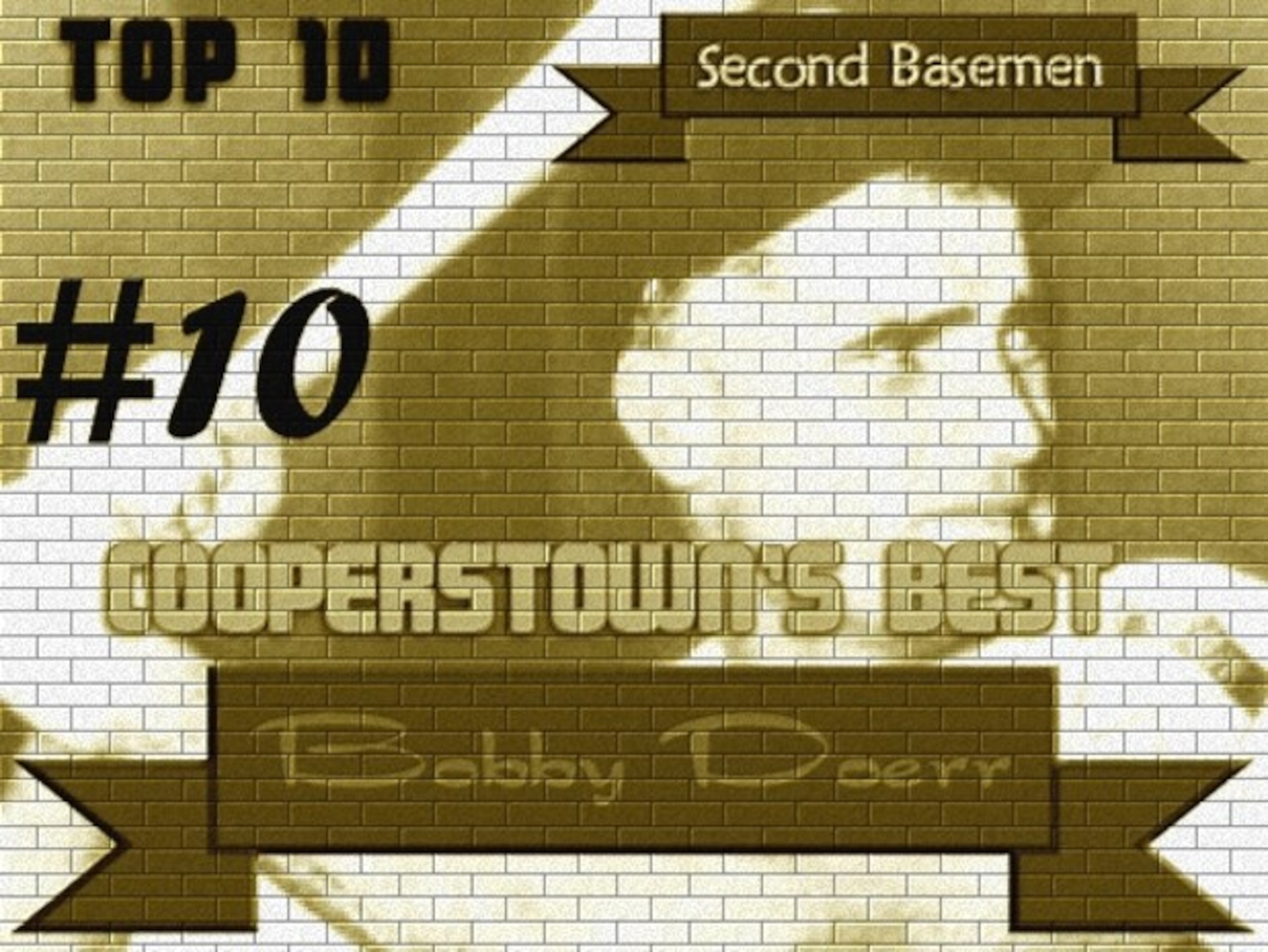
10. Robert Pershing “Bobby” Doerr

Display_image

Bobby Doerr played 14 years in his major league career, all with the Boston Red Sox.

He played from 1937-1951. He led the American League in slugging percentage in 1944 at .528.

Owner Tom Yawkey had recently spent thousands of dollars to purchase established stars like Joe Cronin, Jimmie Foxx, and Lefty Grove in an effort to rebuild the forlorn Red Sox.

But Doerr arrived as a 19-year-old rookie in 1937, having played pro ball since 1934. He was signed by Eddie Collins on the same scouting trip that netted Ted Williams.

As the team's established second baseman in 1938, Doerr batted .289 and never hit below .270 in his next 13 seasons with the Red Sox, his only major league team.

Doerr played in eight All-Star games. During his career, his chief rivals in all-around second base play were the fading Charlie Gehringer of the Tigers and Joe Gordon of the Yankees.

Doerr batted over .300 three times, hit over 20 HR three times, and knocked in over 100 six times. He also scored over 100 runs one time.

Although generally ineffective at bat in All-Star play, Doerr was a tower of strength in his only World Series appearance.

Returning from military service, Doerr helped the Red Sox land the 1946 pennant by batting .271 with 18 homers and 116 RBI.

In the World Series that year, Doerr batted .406 with a homer and three RBI to pace the Red Sox in their losing seven-game struggle with the Cardinals.

Doerr was inducted into the Hall of Fame in 1986 by the Veterans Committee.

Here are his career statistics:

AB: 7093
AVG: .288
HR: 223
HR/YR: 19
RBI: 1247
RBI/YR: 108
OBP: .362
SLG: .461
OPS+: 115
TB: 3270
TB/YR: 284
HITS: 2042
HITS/YR: 177
RUNS: 1094
RUNS/YR: 95
RC/YR: 102
FLD %: .980
SB: 54

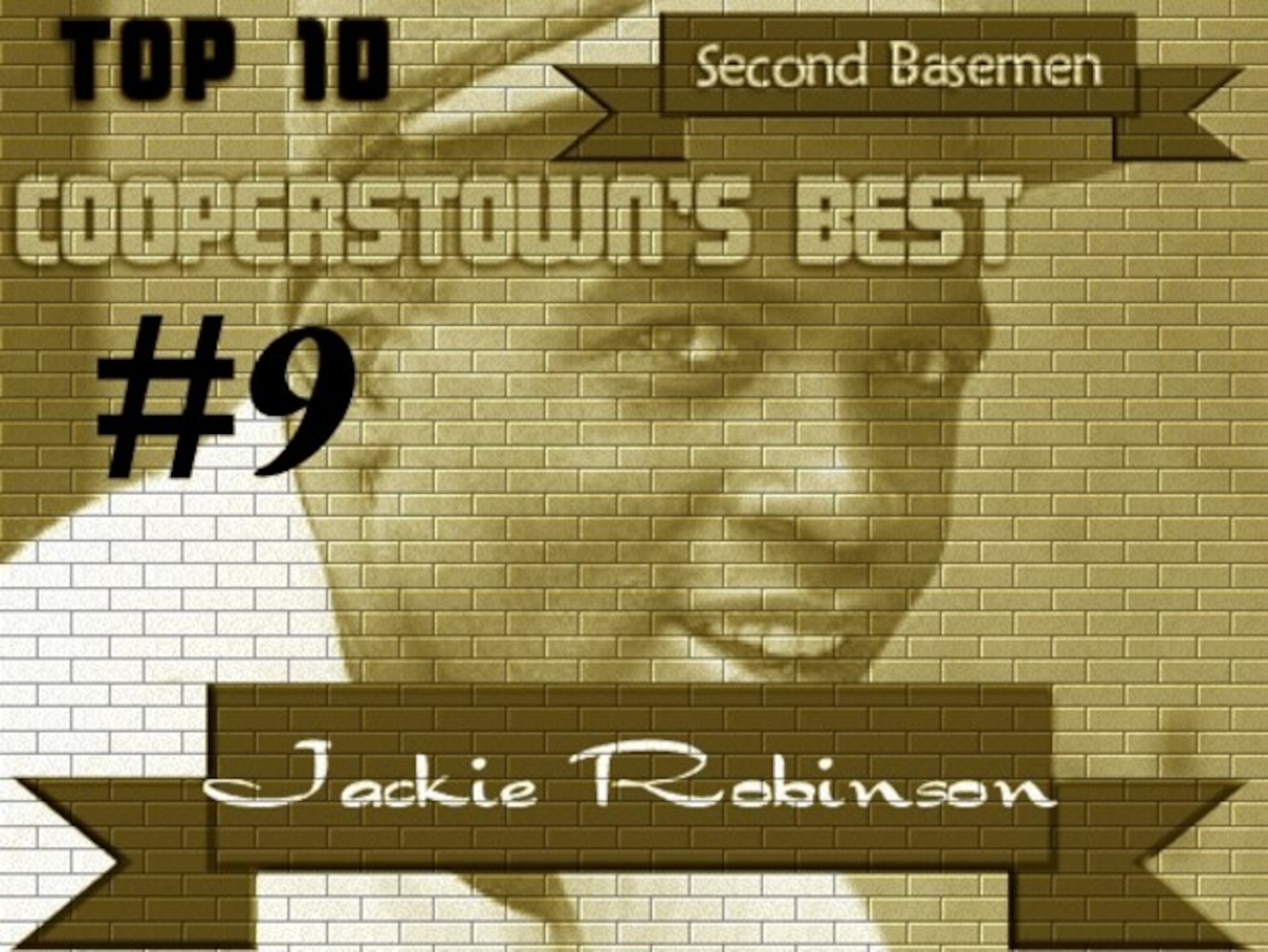
9. Jack Roosevelt “Jackie” Robinson

Display_image

Jackie Robinson played for 10 seasons, all with the Brooklyn Dodgers, from 1947-1956.

He was the first black man to play in the majors in the 20th century, to win the MVP award, and to be elected to the Hall of Fame. He was also the first Rookie of the Year and the first baseball player, black or white, on an American postage stamp.

The 28-year-old rookie broke in at first base because veteran Ed Stanky was at second.

He stole home 19 times in his career, the most since WWI, and in 1955 (at age 36) became one of only 12 to steal home in the World Series.

In 1954, he was the first National Leaguer to steal his way around the bases in 26 years.

Branch Rickey considered Robinson the "most competitive" man he'd known since Ty Cobb.

In 1962 Robinson and Bob Feller were the first elected to the Hall of Fame in their first year of eligibility since Lou Gehrig in 1939.

He was named Rookie of the Year in 1947 and won a batting title in 1949 with a .342 average.

He was the National League’s Most Valuable Player that year with 16 HR, 124 RBI, 203 hits, and 122 runs. He also led the league in stolen bases with 37.

Robinson batted .300-plus six consecutive years and scored 100-plus runs six times.

He was named to six All-Star teams and hit .333 with one HR and four RBI in 20 plate appearances.

He was also in six World Series, each time against the New York Yankees. In the Fall Classic he batted .234 with two HR and 12 RBI in 38 games.

He was inducted into the Hall of Fame in 1962.

Here are his career statistics:

AB: 4877
AVG: .311
HR: 137
HR/YR: 16
RBI: 734
RBI/YR: 86
OBP: .409
SLG: .474
OPS+: 132
TB: 2310
TB/YR: 271
HITS: 1518
HITS/YR: 178
RUNS: 947
RUNS/YR: 111
RC/YR: 111
FLD %: .983
SB: 197

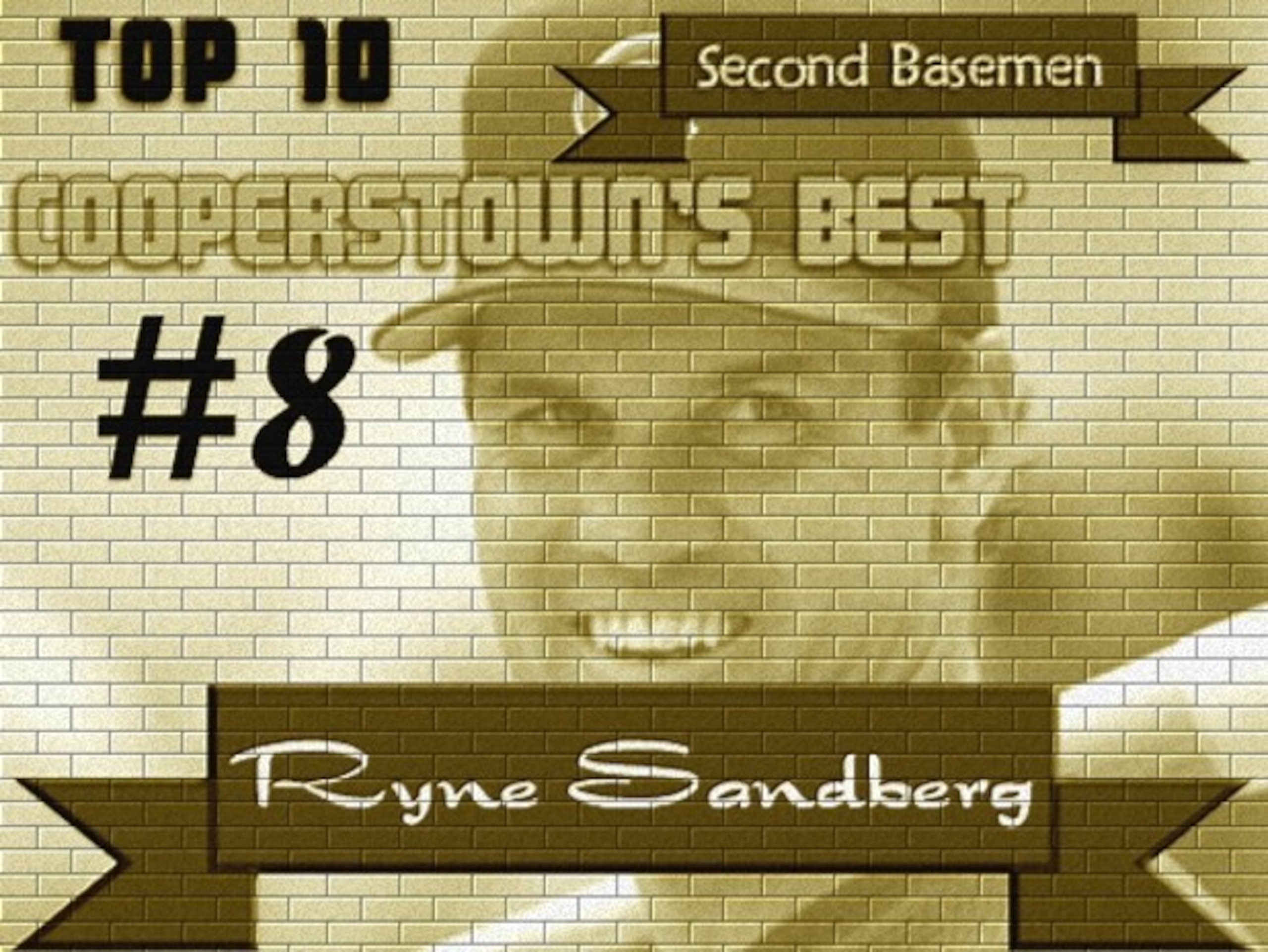
8. Ryne Dee “Ryno” Sandberg

Display_image

Ryne Sandberg played 16 seasons in the major leagues, all with the Chicago Cubs, from 1981-1997.

Chicago Cub fans knew Sandberg as "Kid Natural" before the name "Ryno" caught on. Unfortunately, like Ernie Banks and Billy Williams before him, he was a future Hall of Famer unlucky enough to play with the Cubs.

He once had a streak of 123 errorless games (an NL record) and went four years without a single throwing error.

At the end of 1989 he broke Manny Trillo's second base record of 89 consecutive errorless games, with manager Don Zimmer playing him for only one inning in each of the last three games of the season.

He was named after relief pitcher Ryne Duren, who was on the mound for the Yankees as Sandberg's parents tried to pick a name for their son.

In 1989 Sandberg hit 30 home runs for the first time in his career. The following year, he hit 40 (the first time a second baseman had reached the 40-homer mark since Rogers Hornsby did it in 1922) and drove in a career-high 116.

He became the first player to have both a 40-homer season and a 50-stolen base season over the course of his career and one of a select few to reach 25 homers and 50 stolen bases in the same year.

In 1984 Sandberg was the National League’s Most Valuable Player, hitting .314 with 19 HR and 84 RBI. He also had 200 hits and a league-best 114 runs scored. He led the league in triples with 19 that year as well.

He was the National League Home Run Champ in 1990, when he hit 40. He also led the league two more times in runs scored and once in total bases.

He was a .300 hitter five times, hit over 20 HR six times, and knocked in 100 runs twice. In seven different seasons, Sandberg scored over 100 runs.

Sandberg was named to seven All-Star teams, where he batted a weak .115 with only three hits in 26 at-bats. He won nine Gold Glove Awards, all consecutive, and seven Silver Slugger Awards.

He appeared in the postseason twice and batted .385 with one HR and six RBI in 10 games.

Here are his career statistics:

AB: 8355
AVG: .285
HR: 282
HR/YR: 21
RBI: 1064
RBI/YR: 79
OBP: .344
SLG: .452
OPS+: 114
TB: 3787
TB/YR: 284
HITS: 2386
HITS/YR: 179
RUNS: 1318
RUNS/YR: 99
RC/YR: 100
FLD %: .989
SB: 344

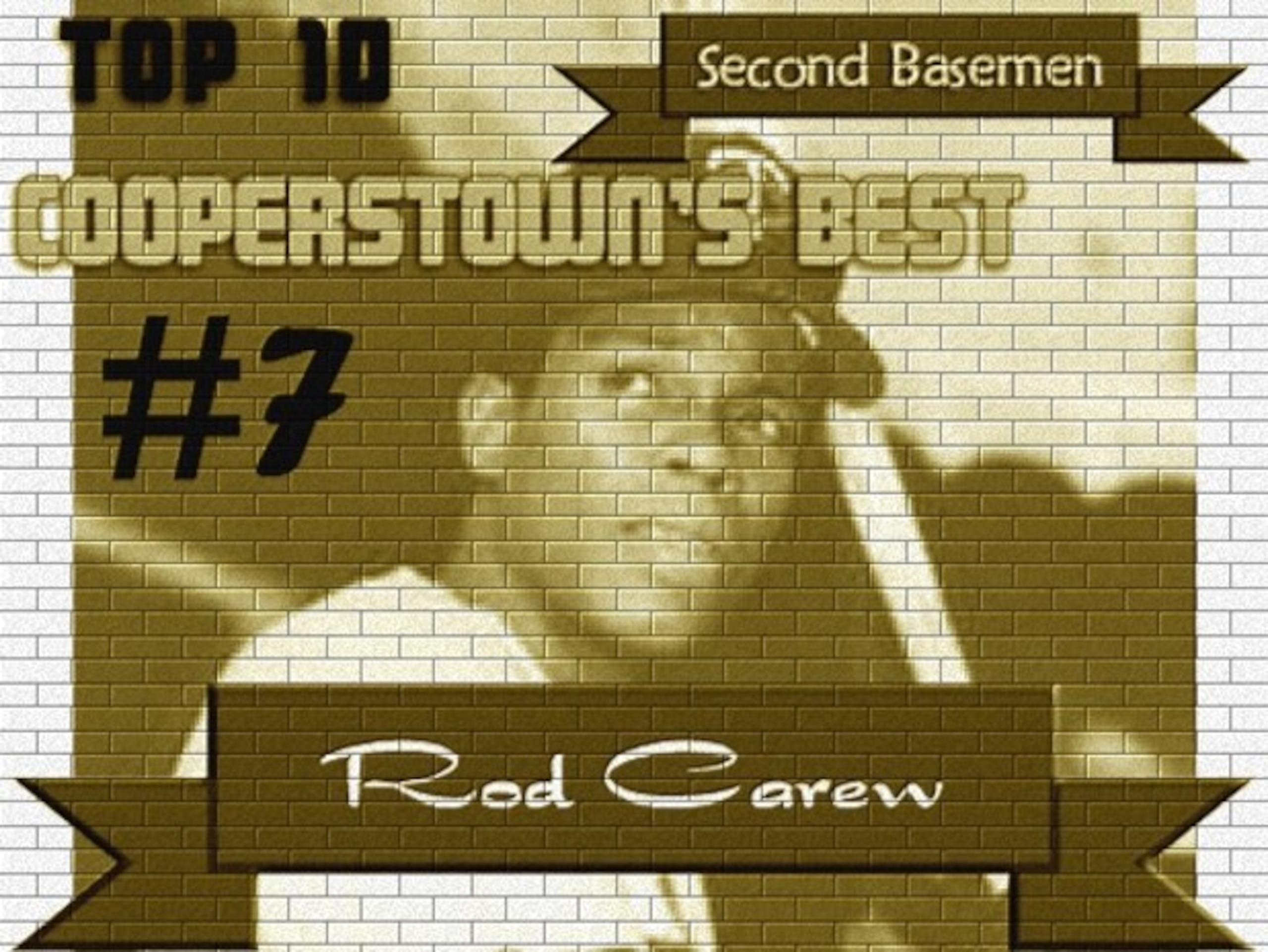
7. Rodney Cline “Rod” Carew

Display_image

Rod Carew’s major league career spanned 19 years, from 1967-1985. He came up with the Minnesota Twins and was traded to the California Angels in 1979.

Born on a train in the Panama Canal Zone, Carew moved with his mother to New York at age 17.

After signing with the Twins a day out of high school in 1964, he played three minor league seasons before jumping from Class C to the majors in 1967.

He got his first ML hit on Opening Day off Baltimore's Dave McNally; 18 years later, on Aug. 4, 1985, with California, Carew singled off Minnesota's Frank Viola to become the 16th player to attain 3,000 hits.

"Carew had great hand action, probably as good as anyone who ever swung a bat. He always used the entire field. Because he could bunt so well, he brought the third baseman in close," said Bill Rigney, one of Carew's managers.

"He made the defense come to him instead of the other way around. He had a great sense of the strike zone, never chasing a bad ball, and had no fear at the plate."

Carew batted .292 in 1967 and was named AL Rookie of the Year. He hit .273 in 1968 but followed with 15 consecutive seasons over .300. Only Ty Cobb, Stan Musial, and Honus Wagner have exceeded that achievement.

Carew won seven AL batting championships and won them by consistently larger margins than anyone except Rogers Hornsby.

In his MVP 1977 season, Carew's .388 was 50 points higher than the next best average in ML baseball, Dave Parker's NL-leading .338. This was the largest margin in ML history.

Carew was the league leader in hits three times, in triples twice, and in runs scored once. He also led the league in OBP four times and in OPS and OPS+ once. He had 200-plus hits four times.

He was named to 18 All-Star teams consecutively and batted .244 with 10 hits, including a double and two triples.

Carew never made it to the World Series. However, in four postseasons he batted .220 with 11 hits, including four doubles.

He was inducted into the Hall of Fame in 1991.

Here are his career statistics:

AB: 9315
AVG: .328
HR: 92
HR/YR: 6
RBI: 1015
RBI/YR: 67
OBP: .393
SLG: .429
OPS+: 131
TB: 3998
TB/YR: 262
HITS: 3053
HITS/YR: 200
RUNS: 1424
RUNS/YR: 93
RC/YR: 105
FLD %: .973
SB: 353

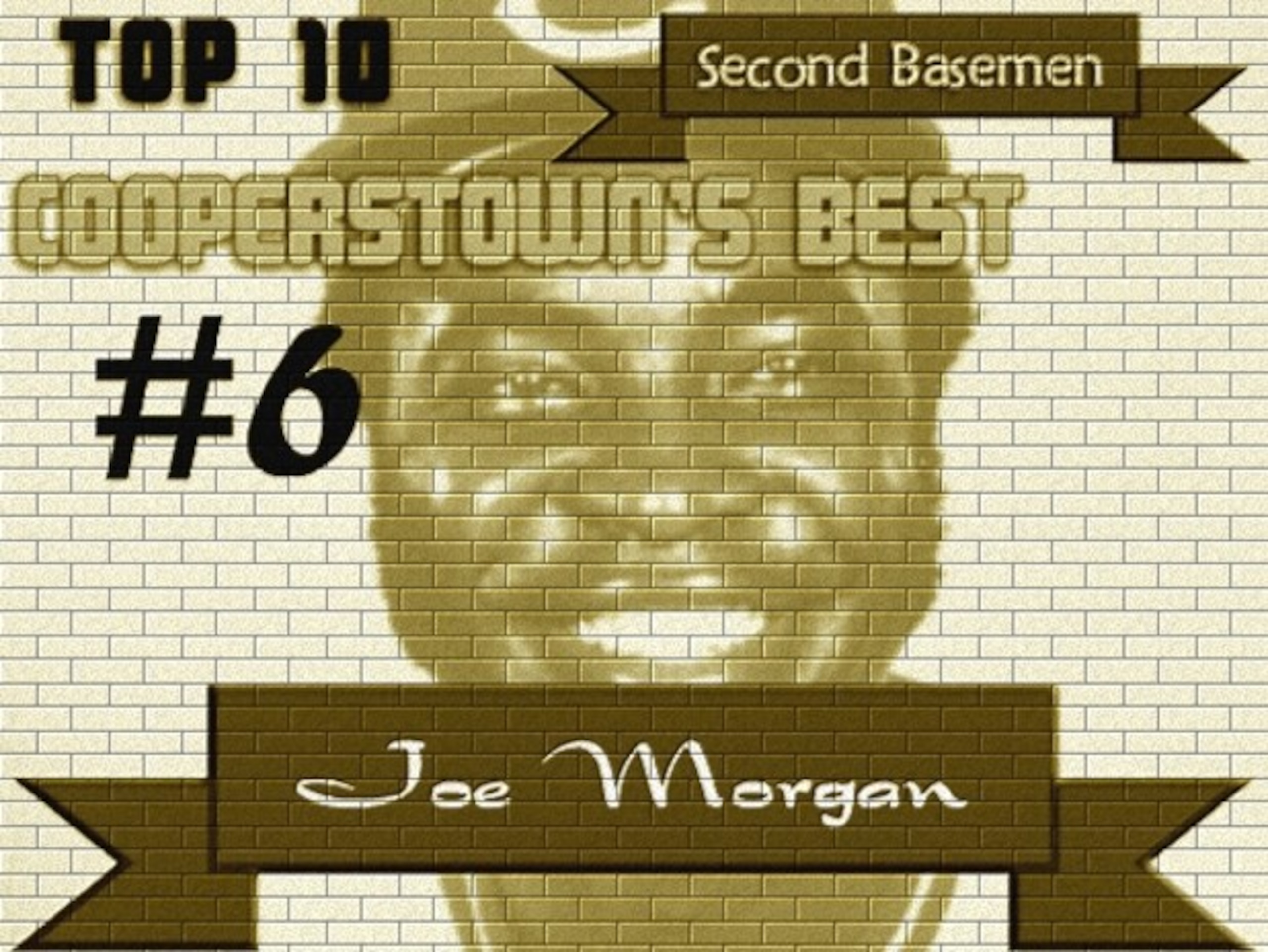
6. Joe Leonard Morgan

Display_image

Joe Morgan played 22 years in the major leagues, from 1963-1984. He came up with the Houston Colt .45s (ancestor of the Astros) and went to the Cincinnati Reds in 1972, becoming an integral part of the “Big Red Machine.”

In 1980, he was traded back to Houston, where he played one season, and then was traded to the San Francisco Giants in 1981.

He stayed there two years and played for the Philadelphia Phillies in 1983 before finishing his career with a one-year stop with the Oakland Athletics.

The 5'7", 150-pound Little Joe was also one of the smallest No. 3 hitters in recent baseball history.

Morgan ranks third all-time in walks behind Babe Ruth and Ted Williams. He is also the only second baseman to win consecutive MVP awards, in 1975 and 1976.

He led the National League in walks four times, triples once, and in runs scored once. He was the league leader in OBP four times, slugging once, and OPS and OPS+ twice.

He was named to 10 All-Star teams and batted .269 with one HR and three RBI in 31 plate appearances.

Morgan played in four World Series, three with the Reds and one with the Phillies, and batted .235 with three HR and eight RBI in 23 games.

Morgan was inducted into the Hall of Fame in 1990.

Here are his career statistics:

AB: 9277
AVG: .271
HR: 268
HR/YR: 16
RBI: 1133
RBI/YR: 69
OBP: .392
SLG: .427
OPS+: 132
TB: 3962
TB/YR: 242
HITS: 2517
HITS/YR: 154
RUNS: 1650
RUNS/YR: 101
RC/YR: 110
FLD %: .981
SB: 689

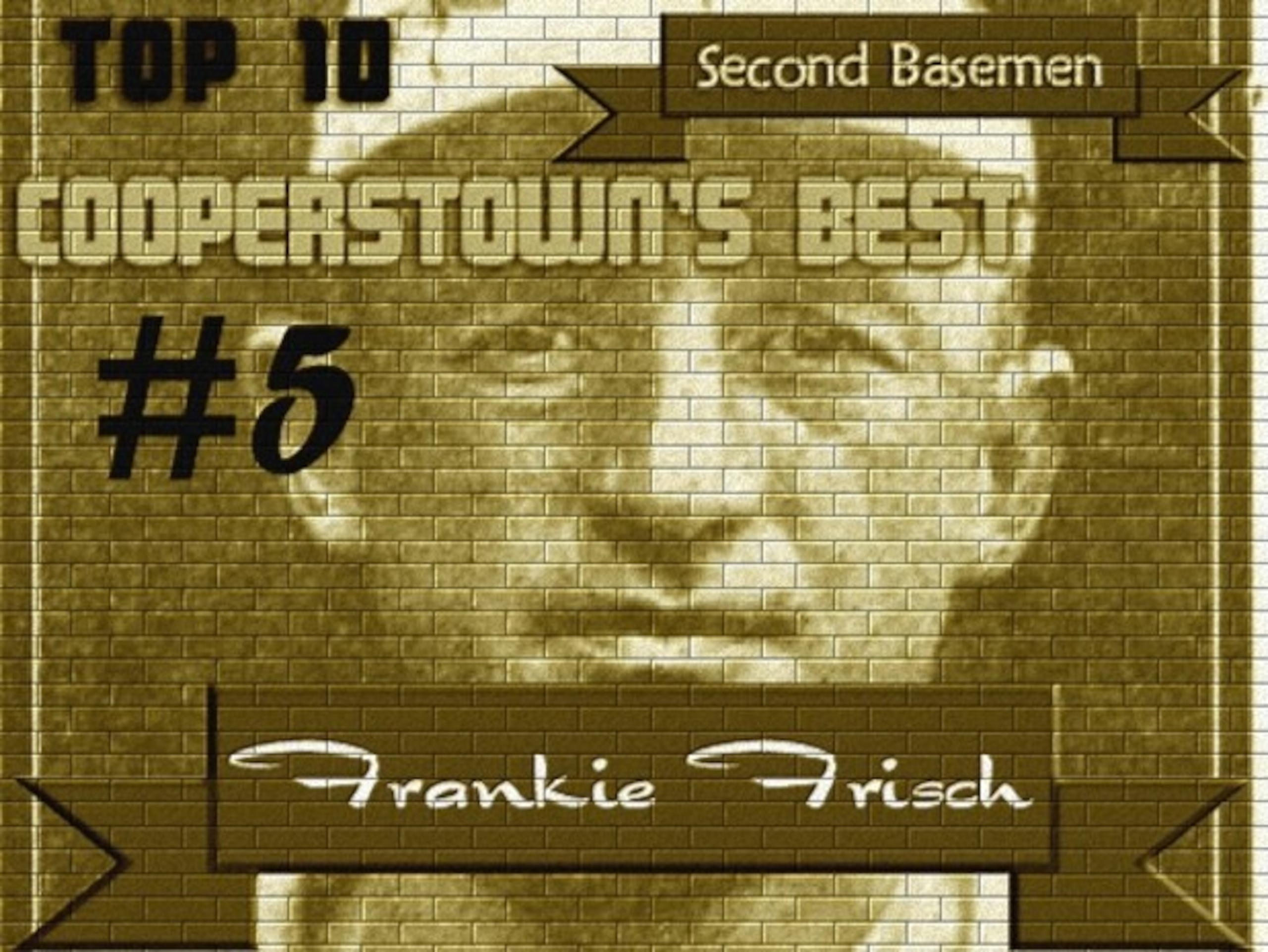
5. Frank Francis Frisch

Display_image

Frankie Frisch played 19 seasons, all in the National League. He began his career in 1919 with the New York Giants and stayed there until 1927, when he went to the St. Louis Cardinals, and finished his career in 1937.

A natural athlete with great speed and dexterity, Frisch was tutored long and hard by manager John McGraw on batting and sliding technique.

He also rarely struck out, an ability that made Frisch legendary. In 17 full seasons, only twice did he fan more than 18 times.

When the Giants faded in 1925 and 1926, McGraw vented much of his frustration on Frisch.

After exactly 1,000 games as a Giant, Frankie was dealt to the Cardinals with pitcher Jimmy Ring for the dominant NL hitter of the 1920s, second baseman and manager Rogers Hornsby, who had had a falling-out with St. Louis owner Sam Breadon

Frisch was saddled with the almost impossible task of making fans in St. Louis forget Hornsby, a man who had just won six straight batting titles with a six-season average of .397.

As longtime St. Louis Post-Dispatch sportswriter Bob Broeg said, "Frisch didn't make them forget the Rajah, but he made them remember the Flash."

From 1933 to 1938, he managed the Cardinals. Ironically, Frisch was united with Rogers Hornsby in 1933 when Hornsby served as a pinch hitter and backup second baseman.

He directed the 1934 Cardinals, one of the most raucous conglomerations of baseball characters, including the Dean brothers, Pepper Martin, Leo Durocher, Joe Medwick, and Ripper Collins, to a World Championship.

Frisch was the National League’s Most Valuable Player in 1931, batting .311 with four HR and 82 RBI. He was also runner-up in MVP voting once and came in third one time.

He led the league in hits once, runs scored once, stolen bases three times, and in total bases once.

He batted .300-plus 13 times, 11 consecutively, knocked in 100-plus runs three times, had 200-plus hits three times, and scored over 100 runs seven times.

Frisch was named to three All-Star teams and batted an incredible .571 with two HR and two RBI in only seven AB in the Midsummer Classic.

He was a regular fixture in the World Series, appearing in eight of them, batting .294 with 58 hits and 10 RBI in 50 games.

Frisch was inducted into the Hall of Fame in 1947.

Here are his career statistics:

AB: 9112
AVG: .316
HR: 105
HR/YR: 7
RBI: 1244
RBI/YR: 87
OBP: .369
SLG: .432
OPS+: 111
TB: 3937
TB/YR: 276
HITS: 2880
HITS/YR: 202
RUNS: 1532
RUNS/YR: 107
RC/YR: 102
FLD %: .974
SB: 419

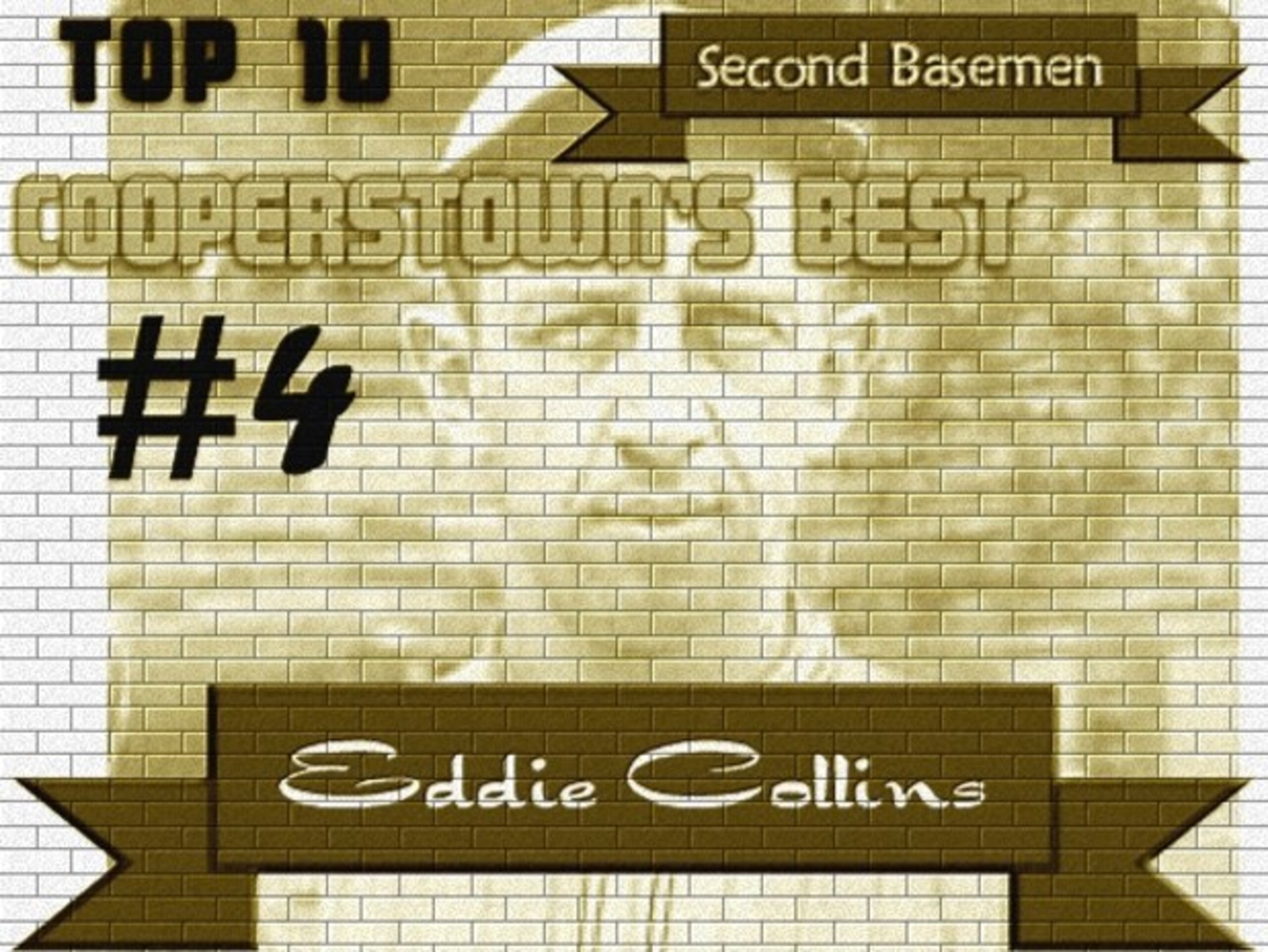
4. Edward Trowbridge Collins Sr.

Display_image

Eddie Collins played a quarter of a century in the American League. He came up with the Philadelphia Athletics in 1906 and was sold to the Chicago White Sox in 1915.

In 1927, he was traded back to the Athletics, where he finished his career.

They called Collins "Cocky," not because he was arrogant, but because he was filled with confidence based on sheer ability.

In 1918 Collins joined the Marines but was back the next season on another pennant winner, the infamous 1919 Chicago "Black Sox."

As one of the "honest players," he was unforgiving of the eight who had sold out, yet described the team as the greatest on which he had played, winning despite hostility, feuds, and outright crookedness.

Collins continued to play season after season of superlative second base, always batting over .300.

After the White Sox finished last in 1924, Collins was named manager. He led them for two seasons, winning more than he lost, but finished fifth both years.

The White Sox judged that his days as an everyday infielder were ending and released the $40,000-a-year player-manager.

He was the American League’s Most Valuable Player in 1914 when he batted .344 and led the league in runs scored with 122. He was runner-up in voting twice and placed third on two occasions.

Collins led the league in stolen bases four times and in walks once time.

He bated over .300 19 times, had over 200 hits once, and scored 100-plus runs seven times.

Collins batted .348 in a seven-year run from 1920-26. He was in the World Series six times, four with the Athletics and two with the White Sox, batting .328 with 11 RBI in 34 games.

Eddie Collins was elected to the Hall of Fame in 1939, the year Eddie Jr. debuted with the Athletics as an outfielder.

Here are his career statistics:

AB: 9949
AVG: .333
HR: 47
HR/YR: 3
RBI: 1300
RBI/YR: 75
OBP: .424
SLG: .429
OPS+: 141
TB: 4268
TB/YR: 265
HITS: 3315*
HITS/YR: 190
RUNS: 1821*
RUNS/YR: 104
RC/YR: 103
FLD %: .970
SB: 744*

* = Leads all Second Basemen in the Hall of Fame

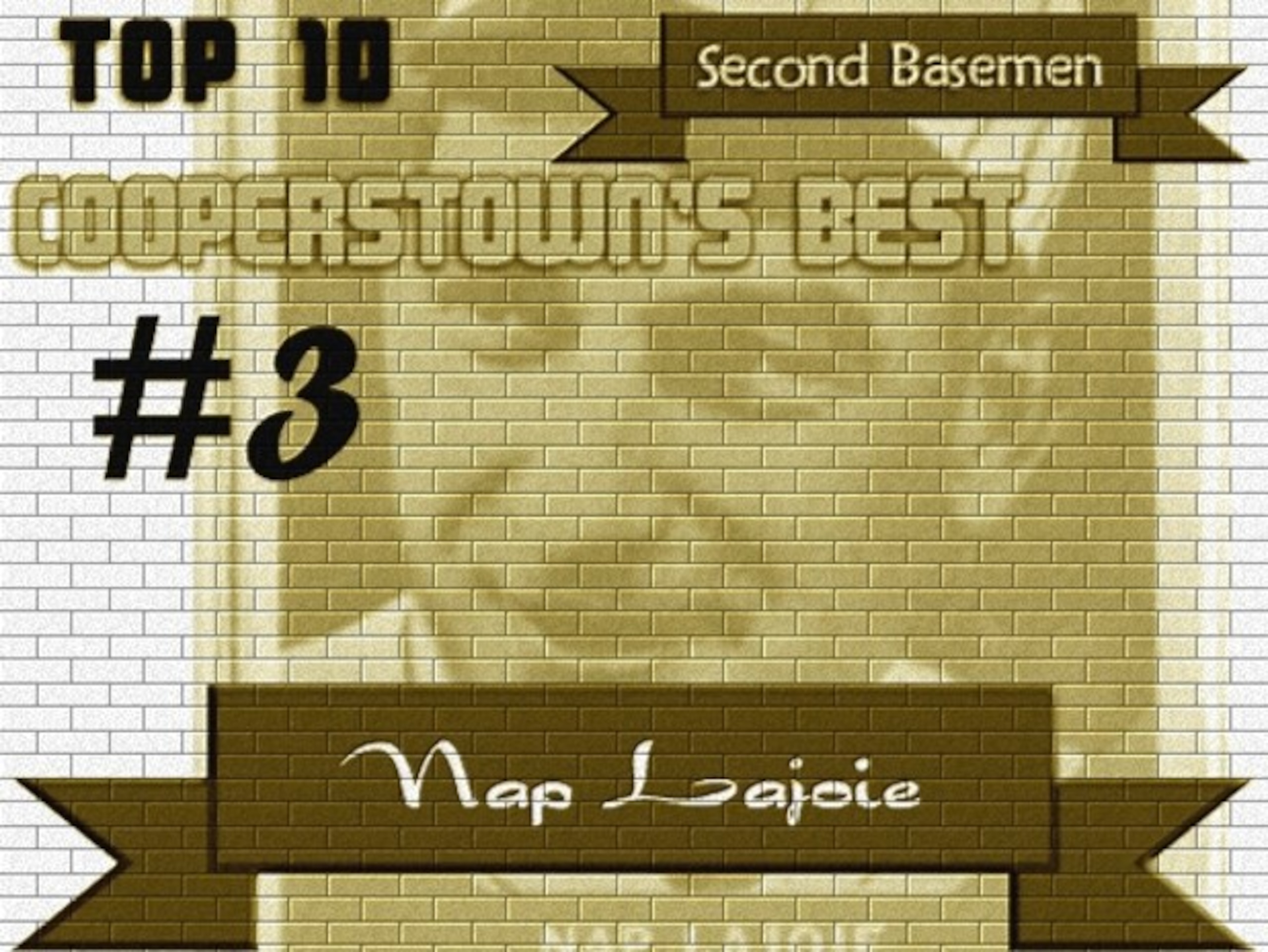
3. Napoleon Lajoie

Display_image

Nap Lajoie enjoyed a 21-year career in the major leagues. He began in 1896 with the Philadelphia Phillies and was sent across town to the Athletics in 1901.

He finished the season, and in a move caused by legal proceedings, he went to the Cleveland Naps (ancestors of the Indians), named after Lajoie, where he played until 1914. In 1915 he was traded back to the Athletics, where he finished his career in 1916.

Lajoie joined the NL Phillies during the 1896 season and played first base in 39 games.

The following year he became a regular, hit .363, and led the NL in slugging percentage (.578). He moved to second base in 1898 and led the league in RBI (127) and doubles (40).

In 1901 he jumped across town to the new AL Athletics of Connie Mack, giving the fledgling league instant credibility.

Although the young AL was not yet on a par with the established NL, Lajoie's batting marks were nevertheless exceptional.

The next year the Phillies obtained an injunction forbidding Lajoie from playing in Pennsylvania.

As a defense against unpredictable court proceedings, AL president Ban Johnson transferred Lajoie's contract to Cleveland, where his arrival instantly invigorated a moribund franchise.

The 1910 batting title was hotly contested, with a Chalmers automobile to go to the leading batter.

Most of the baseball world rooted for the popular Lajoie and against the hotheaded Ty Cobb, who had won the three previous titles. Lajoie finished second by a point but received a car anyway.

Later historical research by The Sporting News revealed Lajoie 's .384 average actually should have won the title. Cobb's official average of .385 was inflated because one of his games was inadvertently counted twice.

In a dispute that rose to the highest baseball levels, Commissioner Bowie Kuhn ruled in 1981 that the mistake would not be corrected.

In 1901 Lajoie won the unofficial Triple Crown. His .422 batting average still stands as a league record. He hit 14 HR, which was excellent in the dead-ball era, and drove in 125 runs.

He had league bests in hits with 232, runs with 148, and in doubles with 48. Had the MVP been awarded at this time, he would have undoubtedly got it.

In a five-year run from 1900-04, Lajoie averaged .374, 11 HR, 132 RBI, 247 H, 139 R, and OPS+ 179.

He won five batting titles and batted over .300 17 times during his illustrious career.

He knocked in 100-plus runs on four occasions, had over 200 hits four times, and scored over 100 runs three times. He hit over 40 doubles seven times and at least 10 triples six times.

Lajoie was inducted into the Hall of Fame in 1937.

Here are his career statistics:

AB: 9589
AVG: .338
HR: 83
HR/YR: 5
RBI: 1599*
RBI/YR: 104
OBP: .380
SLG: .467
OPS+: 150
TB: 4474
TB/YR: 292
HITS: 3242
HITS/YR: 212*
RUNS: 1504
RUNS/YR: 98
RC/YR: 110
FLD %: .963
SB: 380

* = Leads all Second Basemen in the Hall of Fame

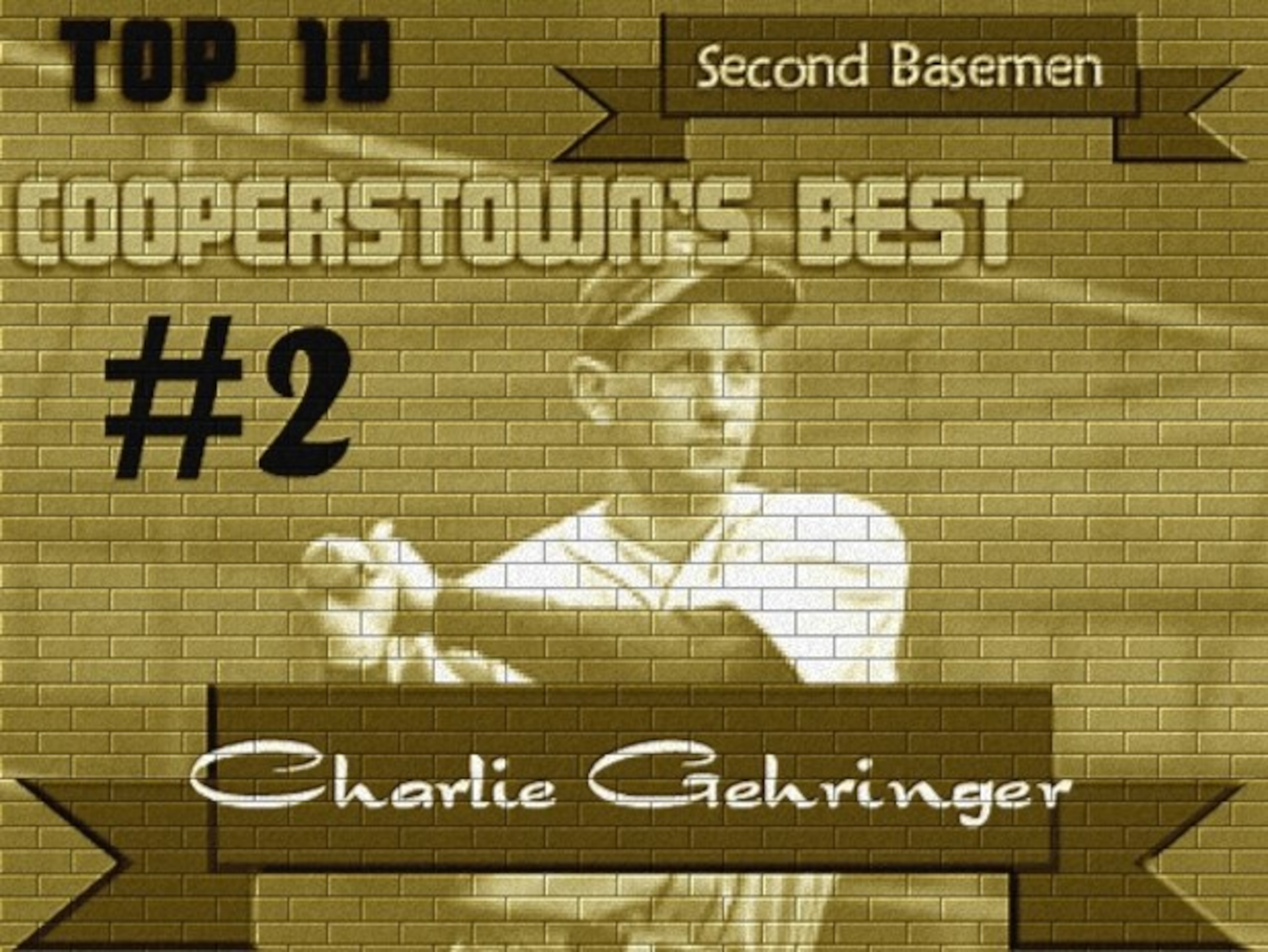
2. Charles Leonard Gehringer

Display_image

Charlie Gehringer played all 19 years of his career with the Detroit Tigers. "You wind him up Opening Day and forget him," teammate Doc Cramer said. Detroit manager Mickey Cochrane explained, "Charlie says 'hello' on Opening Day, 'goodbye' on closing day, and in between hits .350."

He covered second base in a smooth, seemingly effortless style. He had quick hands and rarely lost a ball he got his glove on.

Gehringer led all AL second basemen in fielding percentage nine times, led or tied for the lead in assists seven times, and had the most putouts three times.

Baseball authority H.G. Salsinger wrote: "He lacks showmanship, but he has polish that no other second baseman, with the exception of the great Napoleon Lajoie, ever had."

He was the American League’s Most Valuable Player in 1937, batting a league-best .371 with 14 HR and 96 RBI. He also had 209 hits and scored 133 runs. He was runner-up in MVP voting in 1934.

In 1929 Gehringer led the league in runs with 131, hits with 215, 45 doubles, 19 triples, and 27 stolen bases. In 1934 he led the league in both runs scored and in hits.

Gehringer batted .300-plus 14 times, knocked in over 100 runs seven times, had 200-plus hits seven times, scored 100-plus runs 12 times, and hit over 40 doubles six times.

In a seven-year stretch from 1932-38, Gehringer averaged .334 with 17 HR, 117 RBI, 216 H, 135 R, and averaged only 25 strikeouts in 647 AB.

Gehringer was named to six consecutive All-Star games and batted .500 with 10 hits in only 20 AB.

He played in three World Series, where he batted .321 with one HR and seven RBI in 20 games.

Gehringer was inducted into the Hall of Fame in 1949.

Here are his career statistics:

AB: 8860
AVG: .320
HR: 184
HR/YR: 13
RBI: 1427
RBI/YR: 100
OBP: .404
SLG: .480
OPS+: 124
TB: 4257
TB/YR: 297
HITS: 2839
HITS/YR: 198
RUNS: 1774
RUNS/YR: 124*
RC/YR: 120
FLD %: .976
SB: 181

* = Leads all Second Basemen in the Hall of Fame

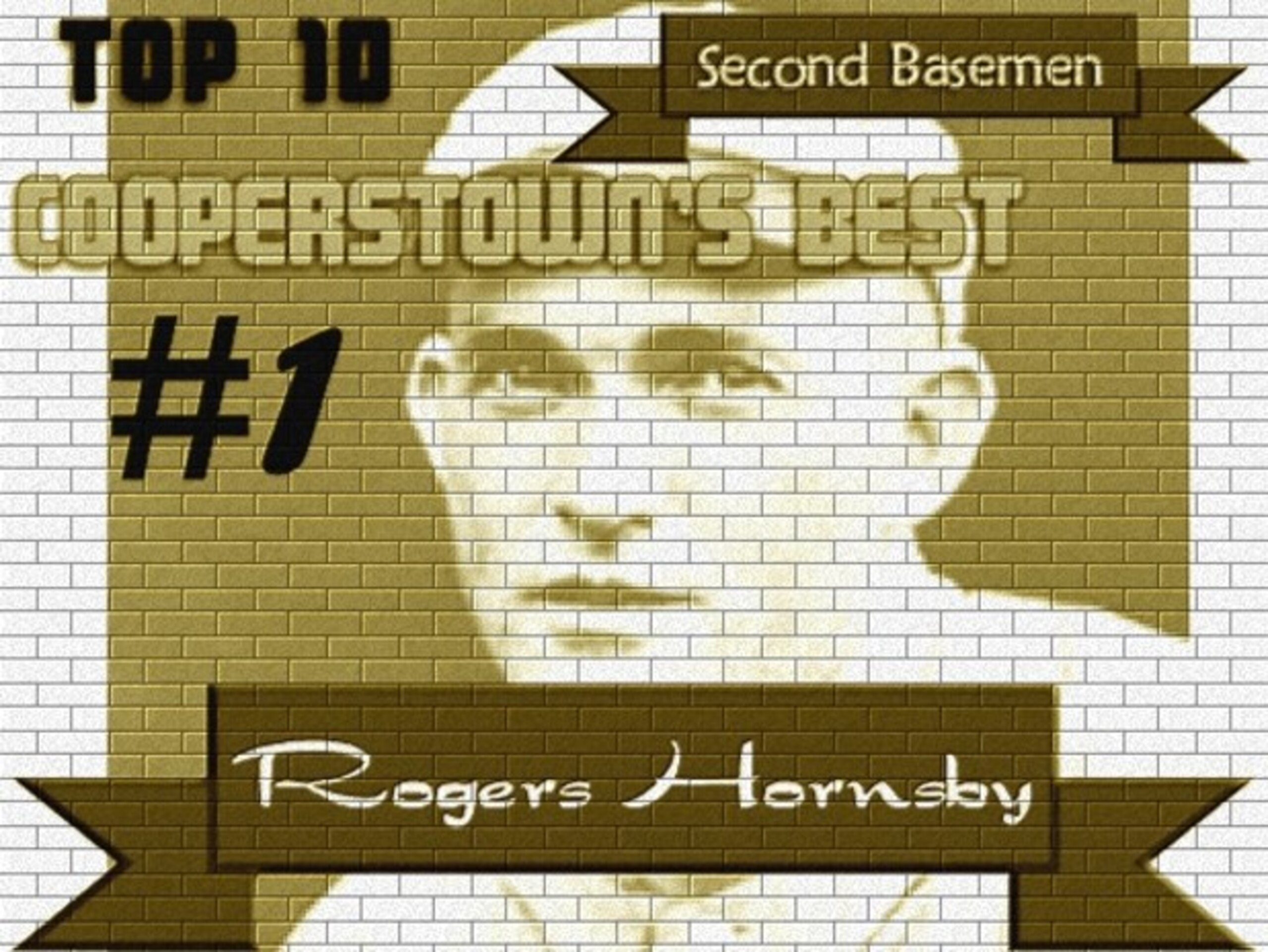
1. Rogers Hornsby

Display_image

Rogers Hornsby played 23 years in the major leagues. His career started with the St. Louis Cardinals in 1915, and he played there until he was traded to the New York Giants in 1927.

He played there one year and then went to the Boston Braves for a year before going to the Chicago Cubs in 1929. In 1933 he went back to the Cardinals for 46 games and then was sent to the crosstown St. Louis Browns, where he finished his career in 1927.

In many people’s opinion, Hornsby is the greatest right-handed hitter of all times.

He never argued with umpires and was never thrown out of a game. He hit line drives to all fields and was swift down to first and going for extra bases.

Hornsby came to the Cardinals as a shortstop, but was tried at third and even in the outfield. By 1920 he was settled at second.

When Sam Breadon traded him to the Giants in 1926, following his first MVP year and at the height of his popularity as a player-manager, St. Louis rocked in a hurricane of protest.

But Breadon had had a bellyful of Hornsby. The other side of the man was a barbed-wire personality, cold, contentious, and brutally frank.

He had a big problem dealing with authority. Owners and front office men invariably saw him at his most belligerent.

Boston liked him and his .387 average, but they could not refuse the Cubs' offer of $200,000 and five players in a trade after the 1928 season.

Hornsby won Most Valuable Player Awards in the National League in 1925 and 1929. He was also runner-up in voting once and finished third once.

He won seven batting titles, six consecutively. He won Triple Crowns in 1922 and in 1925, making him the only two-time Triple Crown winner until Ted Williams won his second in 1947.

Hornsby won two HR crowns, four RBI titles, led the league in hits four times, and in runs scored five times. He led the league in doubles four times and in triples twice.

In six consecutive years he won the batting title, led the league in OBP, SLG, and OPS, and led seven consecutive times in OPS+ (12 times total).

In a five-year period from 1921-25, Hornsby averaged .402, 34 HR, 134 RBI, 251 H, 143 R, a 204 OPS+, and struck out only 46 times in 725 plate appearances.

Hornsby batted .400-plus four times and over .300 15 more times. He hit 20 or more HR seven times, knocked in over 100 five times, had over 200 hits seven times, and scored over 100 runs six times.

He played most of his career prior to the All-Star games being played, so he was never named to an All-Star team.

He did play in two World Series, where he batted .245 with 12 hits and five RBI in 12 games.

Hornsby was inducted into the Hall of Fame in 1942.

Here are his career statistics:

AB: 8173
AVG: .358*
HR: 301*
HR/YR: 22*
RBI: 1584
RBI/YR: 114*
OBP: .434*
SLG: .577*
OPS+: 175*
TB: 4712*
TB/YR: 338*
HITS: 2930
HITS/YR: 210
RUNS: 1579
RUNS/YR: 113*
RC/YR: 147*
FLD %: .965
SB: 135

* = Leads all Second Basemen in the Hall of Fame

The leaders in each category are as follows:

AVG = Rogers Hornsby .358
HR = Rogers Hornsby 301
HR/YR = Rogers Hornsby 22
RBI = Nap Lajoie 1599
RBI/YR = Rogers Hornsby 114
OBP = Rogers Hornsby .434
SLG = Rogers Hornsby .577
OPS+ = Rogers Hornsby 175
TOTAL BASES = Rogers Hornsby 4712
TOTAL BASES/YR = Rogers Hornsby 338
HITS = Eddie Collins 3315
HITS/YR = Nap Lajoie 212
RUNS = Eddie Collins 1821
RUNS/YR = Charlie Gehringer 124
RUNS CREATED/YR = Rogers Hornsby 147
FLD PCT = Ryne Sandberg .989
SB = Eddie Collins 744

(2)
...
Share This  
Crop_45x45
or to post this comment

74 Comments

There are no comments yet. Get the conversation started by leaving the first comment

Loading more comments...
posted just now
  • Loading...
  • Nobody has liked this comment yet
Cancel

This comment and all replies have been deleted This comment has been deleted Undo delete

598
reads

74
comments

written on June 05, 2009 Rankings/List

The best newsletter on the web

Subscribe Now

We will never share your email address


CBS Sports Official Partner
Certain photos copyright © 2009 by Getty Images.
Any commercial use or distribution without the express written consent of Getty Images is strictly prohibited.