The Blueprint to Fix Boxing's PED Problem
The worst part about boxing’s ever-persistent performance-enhancing drugs (PEDs) problem is how egregiously simple it seems to fix.
Thomas Hauser’s award-winning piece on boxing’s PED mess captured the essence of the issue: Nobody wants to take responsibility for cleaning things up.
By the end of his exhaustive research—which was heavily supplemented by groundwork laid previously by Maxboxing’s Gabriel Montoya—Hauser concludes that it’s going to take a uniform approach by state athletic commissions:
TOP NEWS

Live Ryan Garcia vs. Conor Benn 🍿
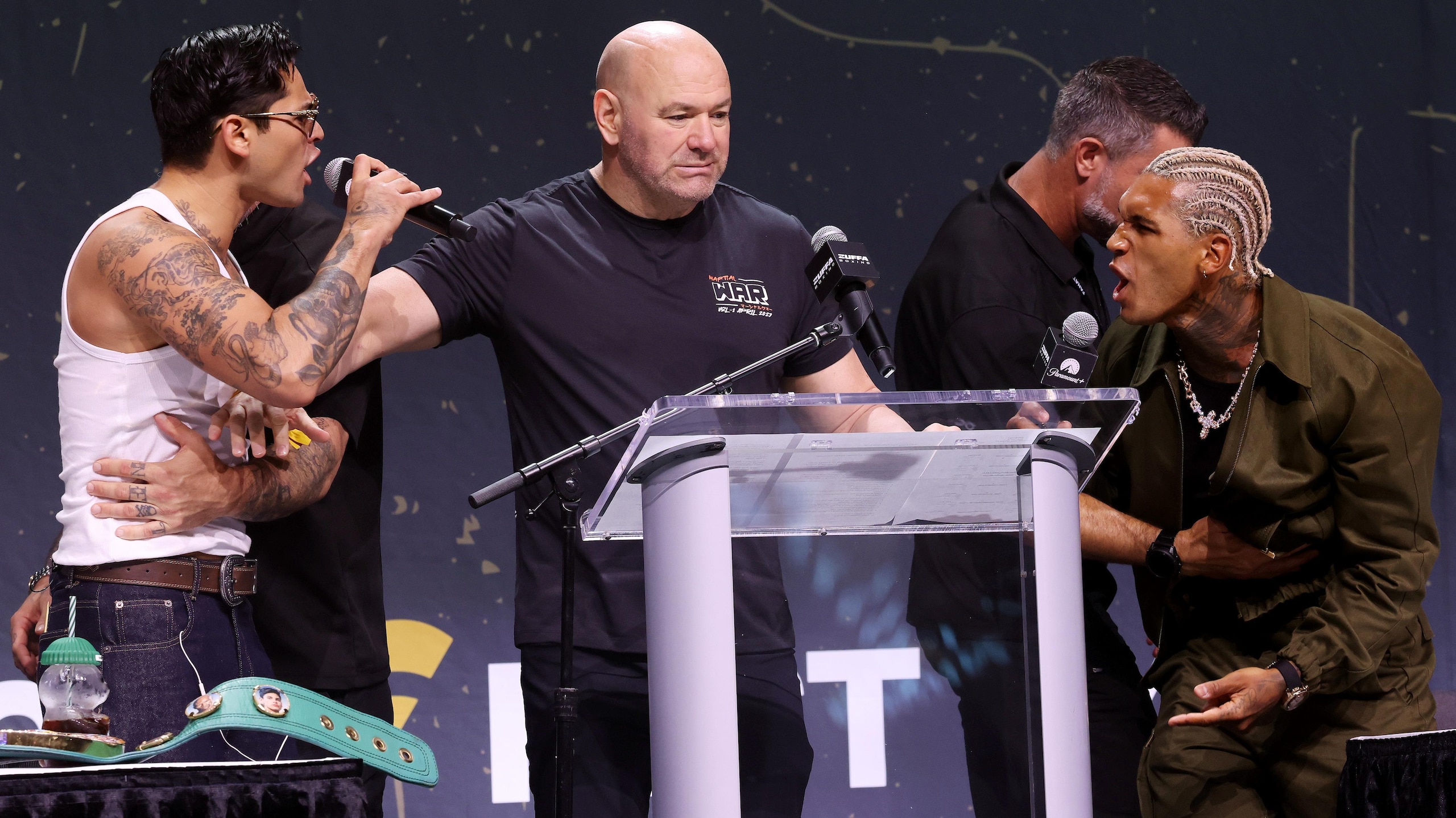
Staff Predictions for Garcia vs. Benn 🔮

Garcia-Benn Weigh-In Results⚖️
"In boxing at present, the users are way ahead of the testers and the distance between them is growing. The only thing that can possibly close the gap is a national approach with uniform national standards and a uniform national enforcement mechanism. If additional federal legislation is necessary to achieve that end, so be it. The notion that boxing can clean itself up one state athletic commission at a time is frivolous.
"
No kidding.
To borrow from Keenan Thompson’s Saturday Night Live character, now that the problem has been identified, it seems there’s only one more thing to do: Fix it.
But both the federal government as well as the state athletic commissions charged with the task appear reluctant to do so.
Case in point: Texas. Just three months ago, in an article I wrote for The Sweet Science, I learned the state’s combative sports program—which licenses all professional boxing, kickboxing and MMA events in Texas—almost never tests athletes for PEDs:
"Texas implemented an updated drug testing protocol in the fall of 2011. It has widely been assumed that the process, which includes a random selection of four to six fighters from any given fight card, incorporated testing for performance enhancing drugs such as anabolic steroids. However, information provided to TSS confirms the current random testing protocol is almost exclusively geared towards illicit and recreational .
"
Other states fair a bit better, I learned, but none of them would be considered standard-bearers for real reform:
"In comparison, the New York State Athletic Commission conducts urinalysis tests before or after every fight. In addition, Nevada’s Keith Kizer told TSS his state tests every fighter on every card. Information posted at the Nevada State Athletic Commission website indicates the state also reserves the right to randomly test fighters any other time during the year. While no one would laud either of these commissions for being beyond reproach when it comes to protocols (neither fully comply with guidelines set forth by the World Anti-Doping Agency), it would seem reasonable to set drug testing every fighter on a fight card as the absolute minimum standard.
"
There is simply no minimum standard for PED testing in boxing. It’s a mixed bag in every single jurisdiction. Where some only test on fight night, some might not test at all. Some only collect urine, others blood, etc.
But who could help establish such a standard?
Where our more liberally minded friends might look to the federal government to enforce such an effort, it’s important to note that any sort of attempt to establish federal oversight beyond the important but non-comprehensive frameworks set forth by the Professional Boxing Safety Act of 1996 and the Muhammad Ali Boxing Reform Act of 2000 has failed miserably.
The last such effort, an attempt to establish a federal boxing commission put forth by U.S. Senators Harry Reid (D-Nev.) and John McCain (R-Ariz.) in 2012 after the Manny Pacquiao-Timothy Bradley judging scandal, has never even come close to making it out of committee.
There is, however, another way.
The Association of Boxing Commissions (ABC) would seem in prime position to establish some sort of minimum testing standards. ABC President Tim Lueckenhoff described the history and purpose of the organization for Seconds Out back in 2009:
"This group was formed over fifteen years ago when a small group of executive directors of boxing commissions and commission members themselves decided to get together to just talk about how they handled boxing in their jurisdictions. Eventually, the original small group developed into each state commission, as well as four Indian boxing commissions becoming members of the ABC. Furthermore, some of the Canadian Boxing Commission provinces are associate members.
"
According to its very own constitution, the ABC’s mission includes things like promoting the “continued improvement” of the sport through helping “promote the uniformity of health and safety standards.”
Moreover, the ABC aims to “encourage communication, cooperation and uniformity in the supervision and regulation of combat sports among the members of the ABC.”
For example, if you watch boxing on HBO or Showtime, you frequently hear references to the ABC’s unified boxing rules. It’s the de facto standard for many televised championship bouts.
There is no reason, then, why the ABC could not help establish minimum standards in regards to PED testing.
In fact, if it isn’t already, shouldn’t the ABC be utilizing its unique position in the world of boxing to help leverage advancements in the testing protocols administered by state athletic commissions as well as helping to establish uniformity in the suspensions and/or fines handed out to those caught using PEDs?
Ah, but this is boxing, where nothing comes easy.
The ABC has no comment regarding whether or not there are any efforts underway to do such a thing. In fact, once it became apparent my interview request was aimed at asking exactly these types of questions, Lueckenhoff and Medical Chair Sherry Wulkan went from being “happy to assist me” to completely unresponsive.
Boxing needs state athletic commissions who are committed to cleaning up boxing’s PED mess. It’s their job and these governmental bodies—whether by federal mandate, joint efforts with other commissions through the ABC or independent action by each state—have to start doing it.
Boxing’s PED problem is apparent.
Fix it.
Unless otherwise noted, all quotes were obtained firsthand.
.jpg?w=2560 "Patriots Seahawks Football")
.jpg?w=2560 "Lions Clear $35.6M Cap Space")

.jpg?w=2560 "Report: Lamar, Ravens Don't Reach Deal")