Interview with Sam Sheridan, Author of “A Fighter's Heart”
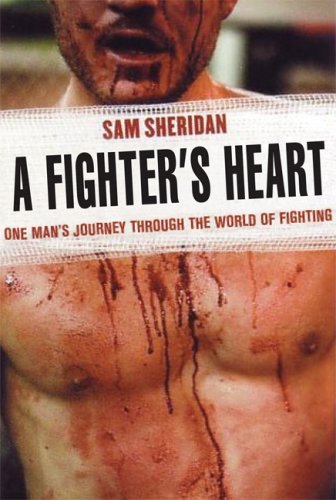 As part of a continuing series of interviews with top MMA writers & fighters, Gary Wimsett, Jr., attorney, agent, and president of the MMA Fight Council, LLC, recently engaged Sam Sheridan, author of A Fighter’s Heart and an upcoming book about the mental aspects of fighting, on his personal journey.
The following is a short but interesting glimpse into the mind of the man who’s traveled the globe in search of "the fighter’s heart."
Gary Wimsett:In your book, A Fighter’s Heart, you stated we have a specific responsibility to experience as much life as we can. What haven’t you yet done that you need to do to fulfill this obligation?
TOP NEWS

McGregor's Custom Shorts 🍀

Re-Grading Offseason's Biggest Moves 🔠

Shams: Wizards Sign Middleton
Sam Sheridan: A lot of things. A million things. In particular, I need to do some work in Africa or India—relief work. I always wanted to spend a month or six at Mother Theresa’s hospice for the Sick and Dying Destitute, the Sisters of Mercy, or do some writing about the international refugee culture—these huge camps that become permanent institutions and what that means.
Wimsett: Out of the many things you’ve experienced in your life, particularly with respect to your immersion into fighting, what stands out as the one transcendental experience you’d wish for everyone?
Sheridan: I think spending a week at a silent meditation retreat in northern Thailand with no technology, no connections, nothing to do but meditate and think about your own life is a good one. Fighting once in a ring is a good one. Maybe both of those together. Fight first, then go meditate.
Wimsett: Have you made it to [Mount] Everest yet? Do you still plan to go? One of my dreams is to climb Everest, and I get puzzled looks from friends when I mention this. What is it about the “ordeal” that appeals to some of us and not to others?
Sheridan: I’m actually over Everest, at this point. I’d rather do something else—it’s the idea of crowds that kills it for me, waiting in a line at the summit. I’d still go if somebody paid me to, but it’s not on my list anymore. I hate crowds, I hate lines. I’m turning into one of those weird writers who hides in his house and doesn’t talk to people.
Wimsett: I saw you on the Daily Show when you were promoting A Fighter’s Heart. The interview went fine but it made me think that the opposite of fighting is satire.
Sheridan: I’m not sure I agree…although certainly they’re different. They both are about the truth. I guess satire is non-confrontational. It’s a sideways attack, an attack through humor, and fighting is, well, pretty confrontational.
Wimsett: If you weren’t writing for a living, what would you be doing?
Sheridan: At this point, I’d probably be running guns in Africa, or FARC (Revolutionary Armed Forces of Colombia) would have killed me because they thought I was CIA when really I was just through hiking Colombia.
Wimsett: What does the sport of MMA look like in five years? Do you anticipate any substantive rule changes?
Sheridan: Nothing major. We’re seeing less groundwork all the time, but that trend may reverse. But there may be, in 10 years, some changes. I think there may be a return to fighting without gloves. Hear me out. I know the gloves make the sport better for strikers, more fan-friendly with more KOs.
But the punishment is brutal and intense. Guys are getting pounded on, because the level and sophistication of the striking has increased tenfold. It’s not like the old days with wrestlers throwing a few haymakers. These guys can hit as hard as pro boxers now, and they can throw combinations.
In 10 years you may see so many banged up older fighters, so many careers screwed up by the damage, that there may be a push to remove the gloves. Because you can’t punch the way Chuck Liddell or some of these guys punch with a bare fist—you’ll bust your hands up.
How are the MMA fans going to react when Wanderlei Silva and Chuck Liddell go the way of Muhammad Ali?
Wimsett: Which current MMA fighter do you most admire and why?
Sheridan: Kenny Florian has made some incredible changes, remarkable growth and improvement. Rashad Evans is having a heck of a year.
Wimsett: Monte Cox has been in the press recently, bemoaning the arrival of agents and lawyers. Should we feel sorry for him?
Sheridan: No. Just for instance—Monte has made more money than Pat Miletich in managing Pat’s guys. I’m all for Monte making money, but shouldn’t the trainer make more than the manager?
Wimsett: What’s the best fight school in the world right now?
Sheridan: There is no best. It depends on the fighter and what he needs, and where he’s comfortable…but either ATT or Greg Jackson’s are the deepest at the moment.
Training partners is sort of the only real clue to MMA performance—but also in big gyms you can get lost in the shuffle. Xtreme Couture is great for some people, a lot of big name fighters come through. But then you have smaller, more isolated "family" type gyms like Sityodtong Boston or MFS.
Wimsett: My company, the MMA Fight Council, thinks that fighters need a strong advocate on their side in the fight business. What are the five most important things the MMA Fight Council could do for fighters in the next two years?
Sheridan: Organize a union, and start laying away money for retirement, because if you think these guys aren’t going to end up punchy you’re crazy. There’s a lot of damage being dished out right now by four-ounce gloves.
Wimsett: Who would you most like to punch, or who do you think would benefit the most from being punched?
Sheridan: I would have liked to seen George Bush fight Saddam Hussein instead of having a war. That would have been cool…of course, Putin (being an ex-Sambo champ, and who’s worked out with Fedor Emelianenko) would have torn them both up.
Wimsett: What’s the best thing Dana White and the UFC have done for MMA? [What's the] worst?
Sheridan: Dana is a huge fan and dearly loves the sport, and of course his passion has been a boon. The UFC has done a lot for MMA, although when they take credit for everything I think they’re stretching it. They also cashed in on an idea whose time had come.
Pancrase started in 1993, too. The worst thing they do is monopolize—trying to retain control when the sport has grown so exponentially. You can’t have it both ways. If the sport is going to be as big as boxing or bigger, you have to have transparency, rankings, a logical progression of contenders. Not just whatever fights Dana and Joe Silva and the Ferttitas feel like watching.
Fighters need at least a 30 [to] 40 percent share of the profits. Isn’t that fair?


.png?w=600 "Top NBA Free Agents Left 📊")