

B/R CFB 250: Top 21 Cornerbacks
Bleacher Report's CFB 250 is an annual ranking of the best players in college football, regardless of NFL potential. Brian Leigh and Kynon Codrington have studied, ranked and graded the top athletes in the country, narrowed that list to 250 and sorted by position. Today, we present the Top 21 Cornerbacks.
Other CFB 250 Positions
We knew coming into the season that some fresh faces would have to emerge at cornerback.
Thorpe Award winner Darqueze Dennard was no longer with us. Neither were fellow finalists Justin Gilbert and LaMarcus Joyner. In total, eight of the nine best cornerbacks from last year's CFB 250 left school this offseason, more than any other position on this list.
Fortunately, the cupboard was well-stocked with underclassmen, highlighted by an impressive sophomore class. Five defensive backs were shoehorned onto last year's FWAA Freshman All-America team, and four of those defensive backs play cornerback.
All four ended up on this list.
The future is in good hands.
Before we start, please take note that these players were graded as college cornerbacks, not on how they project as NFL cornerbacks.
Targeted skills such as run defense are important at both levels, but there is a difference between college run defense and professional run defense. If a cornerback can set the edge and make plays in the SEC or the Big 12, it doesn't matter if he can't set the edge and make plays in the NFC North. At least not here, it doesn't.
This is all about college performance.
Note: If two players finished with the same grade, a subjective call was made based on whom we would rather have on our team right now.
21-17. Walker, Johnson, Doss, Hilton, White
1 of 12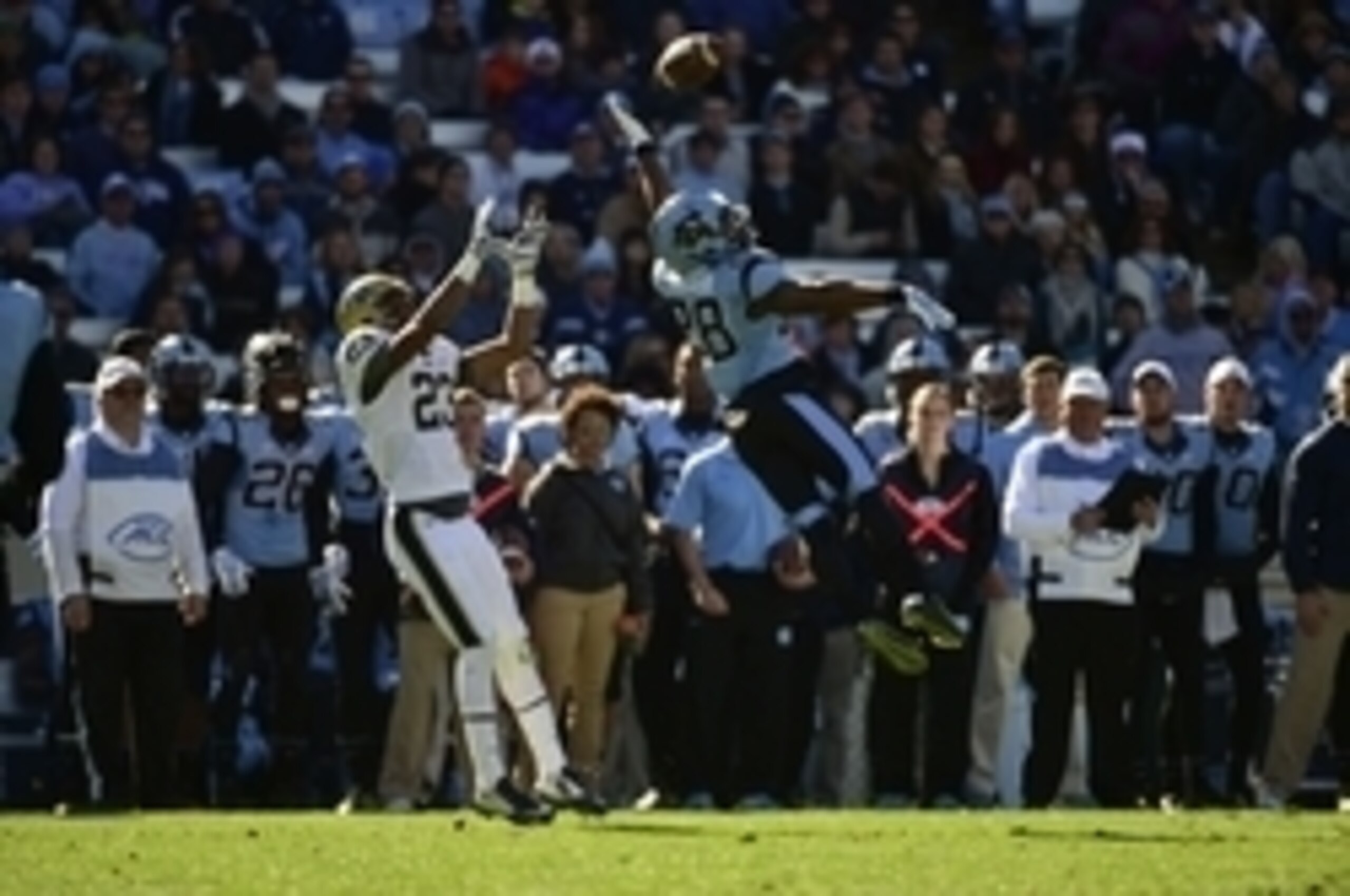
21. Brian Walker, North Carolina
Speed: 16/20; Ball Skills: 16/20; Run Defense: 13/20; Coverage: 33/40
Brian Walker did all he could to keep North Carolina afloat during another slow start to the season. The 5’11” sophomore is one of the biggest reasons UNC reached a bowl game, and he might have helped his coach, Larry Fedora, avoid a summer filled with hot-seat whispers.
20. Kevin Johnson, Wake Forest
Speed: 14/20; Ball Skills: 16/20; Run Defense: 16/20; Coverage: 34/40
Kevin Johnson is an underrated player with the size (6’1”, 175 lbs), fluidity and toughness that defensive coaches love. He doesn’t have the matching speed or quickness, but physical cornerbacks such as Johnson are en vogue right now.
19. Lorenzo Doss, Tulane
Speed: 16/20; Ball Skills: 17/20; Run Defense: 14/20; Coverage: 35/40
Lorenzo Doss lacks ideal size (5’11”, 187 lbs) and speed, but he does not lack for coverage instincts. He always happens to be around the ball, which is no coincidence. And he knows what to do once he gets his hands on it.
18. Mike Hilton, Ole Miss
Speed: 16/20; Ball Skills: 16/20; Run Defense: 17/20; Coverage: 35/40
Mike Hilton began the year at cornerback before injuries forced him to oscillate between cornerback and safety. Either way, the 5’9” junior is a menace against the run and plays an integral role in the “Landsharks” defense.
17. Tre'Davious White, LSU
Speed: 18/20; Ball Skills: 16/20; Run Defense: 15/20; Coverage: 36/40
Tre’Davious White is the latest in a long line of great LSU cornerbacks, having already accomplished much in his two years with the program. He does not pose the physical presence of his teammate, Jalen Collins, but he’s an explosive athlete with freaky speed who is way ahead of the curve in terms of coverage.
16-11. Swann, Carter, Jones, Williams, Adams, Glenn
2 of 12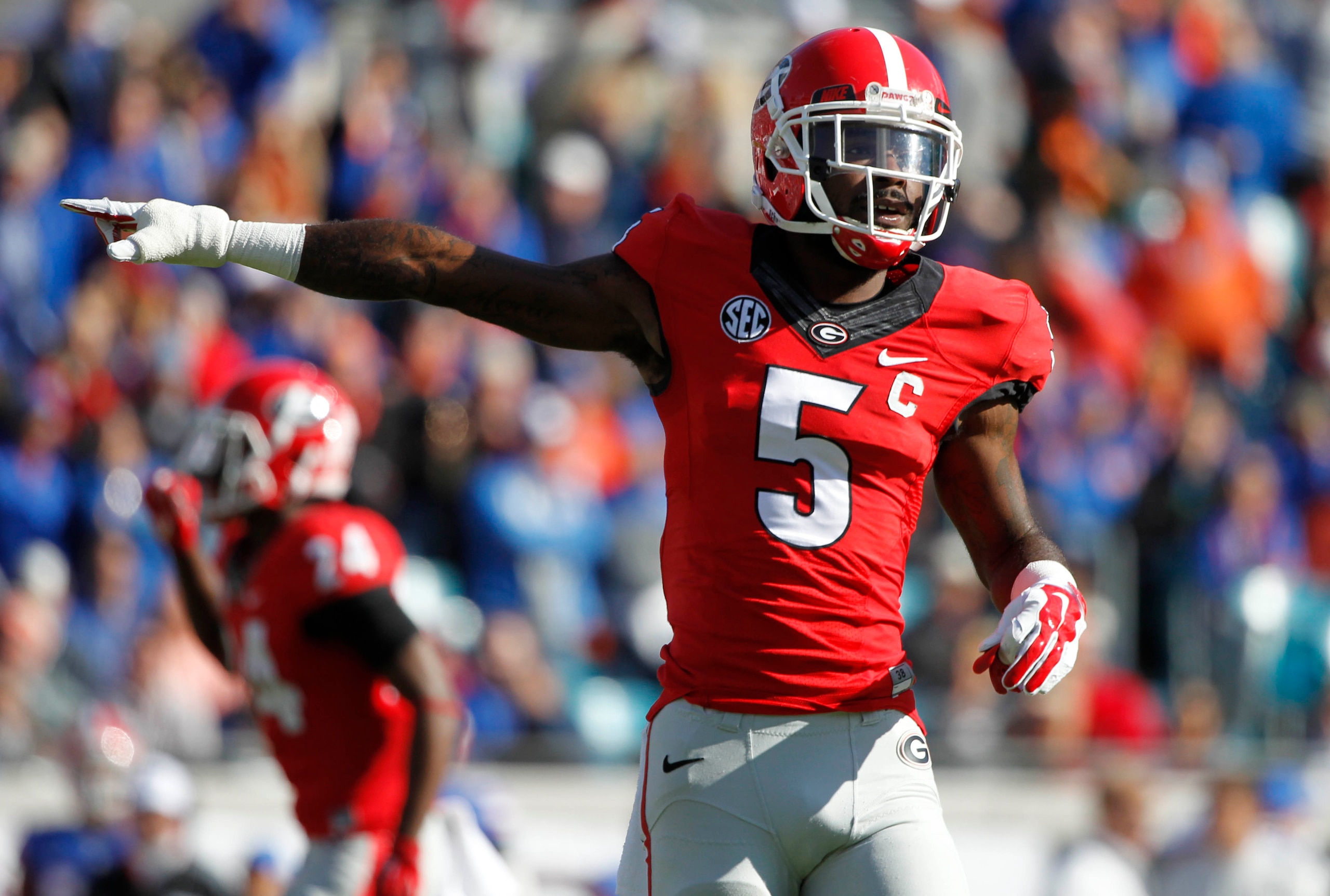
16. Damian Swann, Georgia
Speed: 16/20; Ball Skills: 17/20; Run Defense: 16/20; Coverage: 36/40
Damian Swann was picked on in 2013 after breaking out as a sophomore one year prior. No one was quite sure what to expect from him this season, but new defensive coordinator Jeremy Pruitt got the most out of his fallen star, turning him back into an All-SEC-type player.
15. Alex Carter, Stanford
Speed: 15/20; Ball Skills: 16/20; Run Defense: 17/20; Coverage: 37/40
Alex Carter is a microcosm of the entire Stanford defense: physical, disciplined, relentless. He refuses to give an inch off the line of scrimmage, compensating for average speed with the best press-coverage technique in the country.
14. Jonathan Jones, Auburn
Speed: 17/20; Ball Skills: 18/20; Run Defense: 15/20; Coverage: 35/40
Jonathan Jones is one of the few (only?) Auburn defenders who did not disappoint this season. Despite his size (5’10”), he played lockdown coverage on the outside and finished No. 2 in the SEC with six interceptions.
13. P.J. Williams, Florida State
Speed: 17/20; Ball Skills: 17/20; Run Defense: 16/20; Coverage: 36/40
P.J. Williams is a pure man-coverage corner with fluid hips, good speed and enough size (6’0”) to blanket most receivers on an island. He wasn’t as consistent in 2014 as he was last season, and his tackling technique still has a long way to improve. However, few cornerbacks can lock up a side of the field as well as Williams.
12. Ishmael Adams, UCLA
Speed: 18/20; Ball Skills: 17/20; Run Defense: 16/20; Coverage: 35/40
Ishmael Adams is the best player in a polarizing UCLA secondary. He, like his teammates, must work on playing with more consistency from week to week; but when he’s on, the 5’8” Adams can be a game-breaker in the defensive backfield and as a kick returner.
11. Jacoby Glenn, Central Florida
Speed: 17/20; Ball Skills: 18/20; Run Defense: 16/20; Coverage: 35/40
Jacoby Glenn has made a name for himself as one of the best big-play cornerbacks in America. The 6’0” sophomore played a big role in taking UCF to the Fiesta Bowl last season and continued making strides despite his team's regression in 2014.
10. Richard Leonard, Florida International
3 of 12
Speed
Speed and quickness are the lynchpins of Richard Leonard’s game. He gains ground on receivers in coverage and makes lightning-fast breaks on the ball. He is also one of the top returners in the country and scored three touchdowns of 60-plus yards this season (three defensive, one punt return). FIU head coach Ron Turner, who coached Devin Hester in his prime with the Chicago Bears, told the Miami Herald that he’s "never seen anything like it" with regard to Leonard’s game-breaking tendencies. Woah.
Ball Skills
Leonard gets a knock for his height (5'9"), which impedes him from extending to break up well-placed throws to taller receivers. But that’s about the only fault one can find with his ball skills. And even that is mitigated by his explosive vertical leap and his timing when he lunges at a pass.
Run Defense
Leonard is a physical defensive back who plays with an edge but doesn’t stand out in run support. You can tell that he wants to be better than he is, but he doesn’t have the strength to consistently shed blocks on the perimeter. He also needs to shore up his tackling.
Coverage
On a down-to-down basis, Leonard displays good coverage instincts and technique. He has rare quick-twitch agility, which allows him to mirror receivers and execute step-and-go breaks on comeback routes. The only problem with his coverage is consistency, as lapses in awareness or technique will lead to occasional (but not infrequent) breakdowns.
Overall
Leonard missed 2013 for academic reasons after a solid year in 2012. Suffice it to say that rust was not an issue. Most fans have never heard of him, but the do-it-all corner showed up play after play after play in his return to the field this season.


9. Zack Sanchez, Oklahoma
4 of 12
Speed
Zack Sanchez has functional speed but not ideal speed. He can tag most receivers down the field, but he doesn’t accelerate as fast as one might like. Kevin White of West Virginia made Sanchez look slow-footed on a deep touchdown in September.
Ball Skills
Quarterbacks have to think twice (and are smart to think a third time) before throwing the ball near Sanchez. He tracks passes like a free safety, especially in zone coverage, and has superlative hands. He intercepted a pass in each of the first four games of the season, a streak that gave him six picks in seven games dating back to 2013.
Run Defense
Sanchez is an OK run defender but a terrible tackler. He knows where he fits into the defense and is willing to mix things up, but he doesn’t finish the job by getting players to the ground. He is better near the line than he is in the open field, but opponents still have him circled as a player to target on the ground.
Coverage
In coverage, Sanchez is good but inconsistent. The freelancing tendencies that define him—the things that make him so valuable—can sometimes backfire and lead to big plays for the offense. Better discretion should come with experience, and once it does, he will have all the technical skills and physical tools needed to be a great cover corner.
Overall
Sanchez has made a name for himself with his aggressive, ball-hawking ways. He is not the safest cornerback to leave on an island without safety help, but he makes more good things happen for his defense than just about anyone.
8. Will Likely, Maryland
5 of 12
Speed
Will Likely is fast. Very fast. It may not show that way in testing, but it shows that way on film. He rarely gets beat with pure speed down the field, and he makes plays whenever he gets the ball in his hands. He scored three touchdowns in 2014 including a 69-yard punt return against West Virginia and an 88-yard interception return against Syracuse.
Ball Skills
In a vacuum, Likely has some of the best ball skills in the country. He tracks passes through the air, gravitates toward the action and catches every ball in his orbit. The only demerit is for…well…his height (5'7"), which prevents him from playing the ball despite perfect coverage against certain big receivers.
Run Defense
Despite his stature, Likely is one of the highest-volume tacklers at his position. There was a six-game stretch between the end of 2013 and the start of 2014 in which he posted seven or more solo tackles four times. He understands his role in the running game, stays home when he needs to, slices into the backfield when he’s supposed to and wraps up opponents’ legs to bring them down in the open field.
Coverage
For everything he has done well this season, Likely’s coverage has been patchy. He is good for long stretches but has not been as consistent as his instincts and technique suggest he should be. The biggest problem is a tendency to play overly aggressive, biting hard and allowing receivers to get over the top.
Overall
Likely was only a 3-star prospect. Despite his speed, his heart, his grit, the fact that he was the 2011 Florida Gatorade Player of the Year, etc., major college programs only saw one thing: his height. But Likely proved in 2014 that height is not the only thing that matters, breaking out on defense and special teams to become one of the best all-around players in the Big Ten.
7. Ifo Ekpre-Olomu, Oregon
6 of 12
Speed
More quick than fast, Ifo Ekpre-Olomu relies on agility more than speed to stay with receivers. He has fluid hips and maintains pace when he changes directions, which helps him compensate for lacking ideal top-end speed.
Ball Skills
Ball skills are another way Ekpre-Olomu compensates for lacking ideal height (5’10”) and speed. He has exceptional timing and coverage instincts. His reaction time allows him to make up ground, and his hands and run-after-catch ability (Ekpre-Olomu also returns punts for the Ducks) make him a dangerous big-play weapon.
Run Defense
Ekpre-Olomu is willing to throw his body around and do anything his defense asks from him in run support. He does not get caught sleeping and is able to shed blocks and become a force player, although his tackling regressed a bit in 2014.
Coverage
Normally a great cover corner, Ekpre-Olomu showed some cracks in the armor this season. He has the athletic ability and ball skills to overcome his height against taller receivers but does not recognize fade patterns as quickly (or defend them as well) as he should. Washington State burned Ekpre-Olomu for three touchdowns when it played the Ducks.
Overall
Ekpre-Olomu gives Oregon a defensive superstar to pair with its offensive talent. The quick-footed cornerback suffered some lapses in coverage this season, but for the most part he helped the Ducks field a playoff-worthy defense.
6. Trae Waynes, Michigan State
7 of 12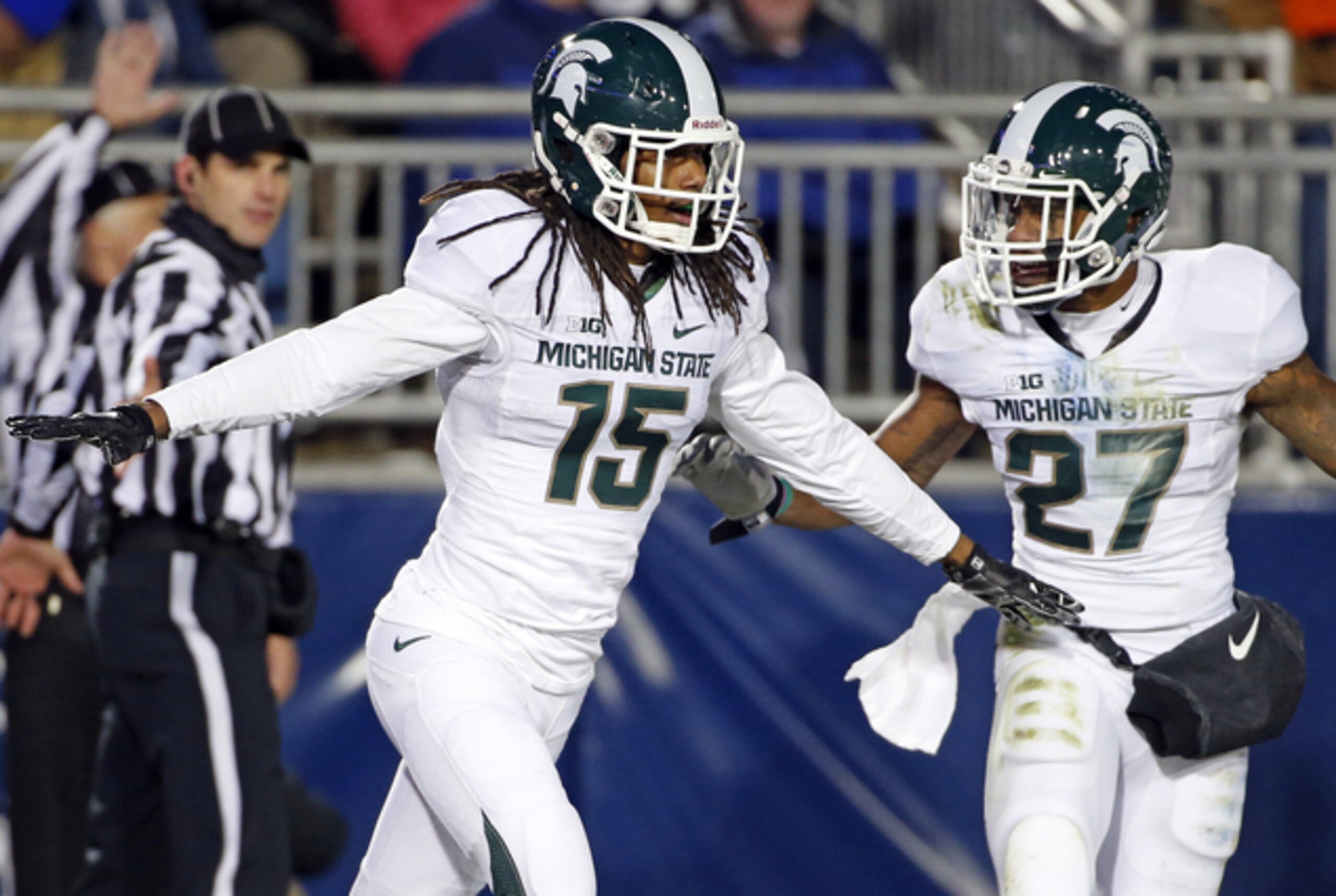
Speed
Speed runs in Trae Waynes’ family. His mother, father and brother all ran track in college, and even though Trae took the football route, the singlet did not fall far from the tree. He has the speed to turn and run with receivers on the rare occasion that they get a clean release.
Ball Skills
Waynes is tall (6’1”) and rangy and uses his length to play the ball in coverage. He is flagged for a fair amount of pass-interference penalties, but that is a welcome side effect of Pat Narduzzi’s scheme. He isn’t a huge ball hawk in terms of interceptions, but he proved he could make plays in traffic against Stanford in last year’s Rose Bowl and snagged two interceptions against Nebraska in 2014.
Run Defense
Waynes is a strong, physical tackler but not a great all-around run defender. He struggles at times to diagnose what he sees, waiting an extra beat before shooting inside or shirking his blocker on the edge.
Coverage
It’s rare to find a cornerback as comfortable as Waynes is on an island. He wins with length, technique and physicality in man coverage, jamming receivers off the line and funneling them to the sideline. He has great coverage instincts, knows when to break on the ball and does a smart job reading quarterbacks’ eyes in the backfield.
Overall
The second half of last year’s “No Fly Zone” secondary, Waynes was every bit as vital to the Spartans’ Rose Bowl run as Thorpe Award winner Darqueze Dennard. He didn’t take the giant leap forward that some expected him to take in 2014, but he was still one of the most reliable shutdown corners in the country.
5. Doran Grant, Ohio State
8 of 12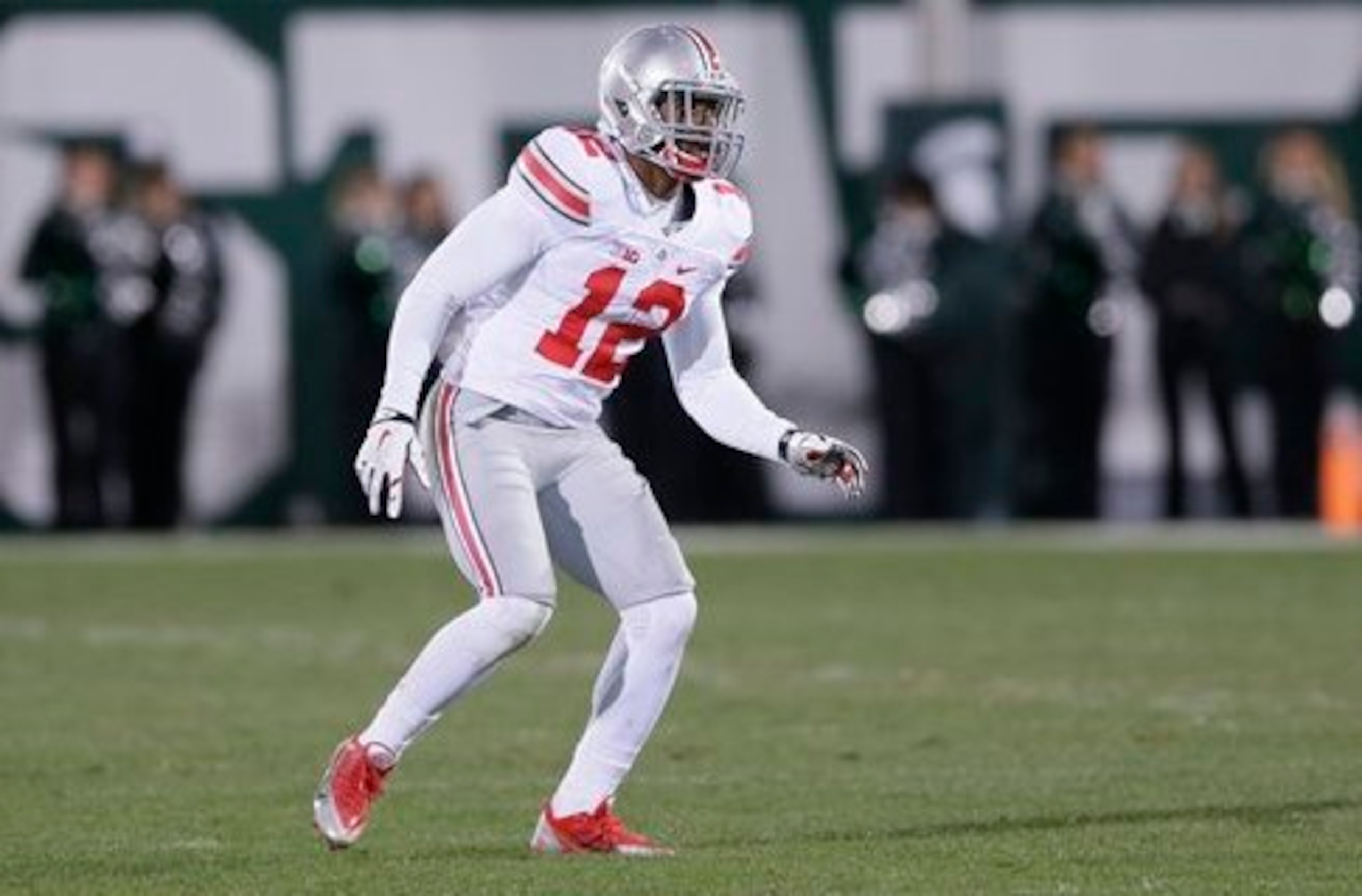
Speed
Doran Grant was named the “Fastest Man on Ohio State’s Campus” after winning a runoff this summer, and he did not failed to live up to that title. He may not ever clock the fastest 40-time, but on tape he has the juice to tag receivers from behind.
Ball Skills
Despite his average height (5’11”), Grant has the athletic ability and ball skills to hang with any receiver in man coverage. He posted a 41.2-inch vertical during SPARQ testing as a high school senior in 2011, and he puts those skills to use on 50-50 throws down the field.
Run Defense
Grant does not defend the run as well as his former teammate, Bradley Roby, but it’s clear that he took notes when he and Roby were playing together. He keeps his eyes in the backfield and is willing to come up and fill space once he recognizes the run.
Coverage
Grant has made drastic improvements in man coverage after getting toasted in the Big Ten Championship Game and Orange Bowl last season. His hips have looked smoother, and his field awareness has been smarter. Tony Lippett dropped some passes when Ohio State beat Michigan State in East Lansing, but for the most part it was Grant who held the Spartans' best player in check.
Overall
Grant was the lone returning starter from an Ohio State secondary that underachieved (to put it lightly) in 2013. His own performance was a big reason for that underachievement, but the addition of co-defensive coordinator Chris Ash and the promotion to a leadership position awakened Grant to have a career season in 2014.
4. Quandre Diggs, Texas
9 of 12
Speed
Quandre Diggs is a terrific athlete but does not have great pure speed. When Texas plays a team with a track star at receiver (e.g., Mario Alford of West Virginia), Diggs will play the opposite man so Duke Thomas can cover the burner. Still, as long as a team does not have two track stars at receiver, Diggs does not have trouble staying with his assigned man.
Ball Skills
Diggs likes to play aggressive and does a good job breaking up passes. His instincts allow him to jump routes and defend a high number of balls. Unfortunately, he also has frying-pan hands that have cost the Longhorns some easy interceptions over the years.
Run Defense
It’s hard to find a college cornerback who defends the run better than Diggs. Whether he’s on the outside or in the slot, his understanding of the finer points of run support—slipping blockers, funneling the ball inside, etc.—make an already stout Texas defense even harder to penetrate.
Coverage
Diggs is not that big, long cornerback du jour who can blanket receivers in press-man coverage, but he finds other ways to contribute. Specifically, he reads the quarterback in zone coverage and has the instincts, closing speed and power to break on open receivers at the last second and separate the ball from the man. His NFL future lies in the slot, but in college he is well-equipped to play wherever his coaches need him.
Overall
Diggs capped a successful four years in Austin with the best season of his career in 2014. The younger brother of former Longhorn Quentin Jammer does not have ideal size (5’10”) or speed but contributes to the defense in myriad ways.
3. Kendall Fuller, Virginia Tech
10 of 12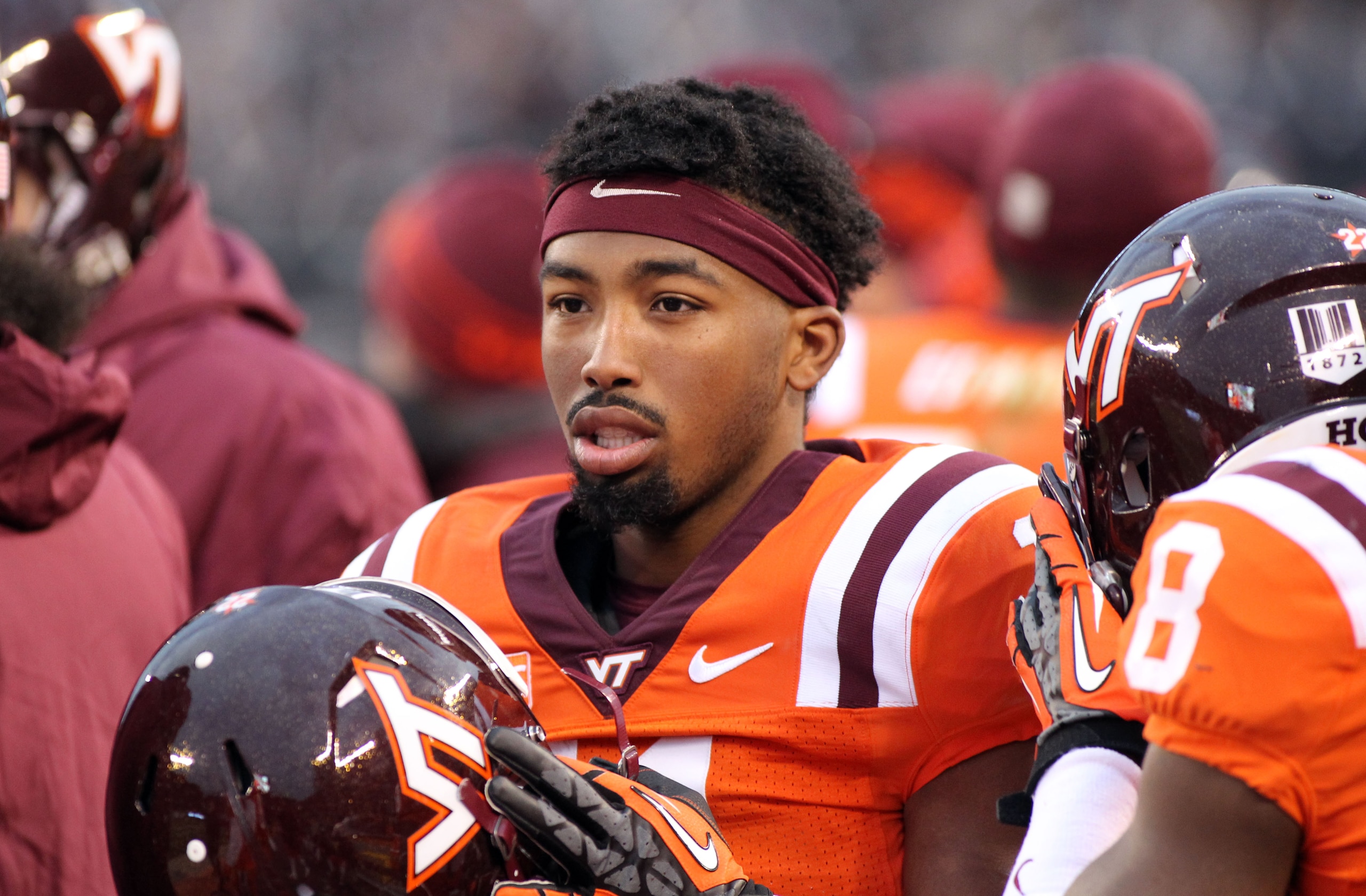
Speed
Kendall Fuller is not the fastest straight-line runner, but he’s not far off. Where he really excels is with closing speed, which helps both in coverage and run support. Coming out of high school, Bleacher Report compared Fuller to Asante Samuel, which seems like an apt description of his speed and raw athleticism.
Ball Skills
Fuller plays the ball well in man and zone coverage, using his length to get between the ball and the man. He led the country with 10 pass breakups in August and September (five games) and jumped a Mitch Trubisky slant for a pick-six against North Carolina in October.
Run Defense
Run support is an underrated aspect of Fuller’s game, and actually one of his strongest. He’s physical, he sheds blocks, and he’s willing to mix things up along the edge, all of which make him a valuable component of the Hokies rush defense. He is also a dangerous run-blitzer who disguises his intentions and does a good job timing his break.
Coverage
In man coverage, Fuller uses length and physicality to knock receivers off their line and harry them down the field. In this respect, he is a lot like former Hokies star Brandon Flowers. But Fuller has also shown great field awareness in zone coverage, picking when and where he’ll take chances based on whether he has help over the top.
Overall
Fuller is the final Fuller progeny to play at Virginia Tech, and there’s a good chance he’ll wind up the best. That is high praise after brother Kyle became a first-round NFL draft pick in 2014, but Kendall is further ahead as a sophomore than almost any cornerback in recent memory. Kyle included.
2. Vernon Hargreaves III, Florida
11 of 12
Speed
Vernon Hargreaves III has easy speed that allows him to cover the fastest receivers in the country on an island. He is a glider who never looks like he’s sprinting as fast as he can but keeps up on vertical routes with long, bounding strides.
Ball Skills
Hargreaves is only 5’11” but plays bigger than his height because he has long arms and a nose for the football. He attacks when the ball is in the air but is careful not to get flagged for pass interference. He had three interceptions in the first four games of his career, and even though the well has dried up since, and despite the fact that opposing teams have tried to avoid him, he continues to rank among the SEC leaders in passes defended.
Run Defense
Tackling has long been a strength of Hargreaves’ game, and nothing about that has changed. There may not be a better tackler at the position in the country. What has changed, though, is the way Hargreaves factors into the other aspects of run support. He has gotten stronger as a help defender and does a better job shedding blocks and sticking his nose into the pile.
Coverage
Hargreaves has all the tools requisite to be a shutdown corner. Beyond the obvious physical gifts, he has the mental acuity, the aggressive temperament and the technical prowess to defend the pass in man and zone coverage. His father, Vernon II, is the linebackers coach at Houston and a 30-year veteran of the coaching industry. It is not hard to tell that Vernon III comes from football stock when you consider how seldom he blunders.
Overall
Hargreaves III was a top-five recruit in the 2013 class and justified that ranking by turning in an All-SEC season. With expectations even higher in 2014, the rangy sophomore improved across the board, locking down receivers despite the distraction of his team’s record and Will Muschamp’s job status.
1. Senquez Golson, Ole Miss
12 of 12
Speed
Senquez Golson can match any receiver stride-for-stride down the field. Even Sammie Coates of Auburn, who allegedly runs a sub-4.25 in the 40-yard dash, could not separate from Golson on deep routes and had to use his size to make highlight-reel catches against Ole Miss. Golson plays at something near a 4.43 40-time himself, per NFLDraftScout.com.
Ball Skills
No cornerback in America plays the ball better than Golson, who led the SEC with nine total interceptions and picked off six passes in five games during the heart of conference play. He is a former outfielder for the Ole Miss baseball team (and draft pick of the Boston Red Sox) with innate tracking instincts and the timing and athleticism needed to compensate for being 5’9”.
Run Defense
Golson is a valuable contributor for an Ole Miss run defense that ranks near the top of the country. He is a four-year starter who understands where he fits against the run, sheds blocks and breaks down to tackle bigger players. He had eight solo tackles against Boise State in Week 1, three of which came against powerful running back Jay Ajayi.
Coverage
Golson has tremendous instincts that show up mostly in zone coverage but also when he’s matched up in man. In zone coverage, he reads the quarterback and has rare quick-twitch agility to break on the ball based on what he sees. In man coverage, he has the technical skills to mirror receivers and match their patterns down the field.
Overall
Interceptions made Golson a household name in 2014, but there is more to what he does than creating turnovers. A lot more. The 5’9” senior has overcome size limitations and blossomed into the nation’s best cornerback.

.jpg?w=2560 "Report: Darnold Could Miss 3-6 Weeks")
.jpg?w=2560 "Grading WWE NXT 🔠")