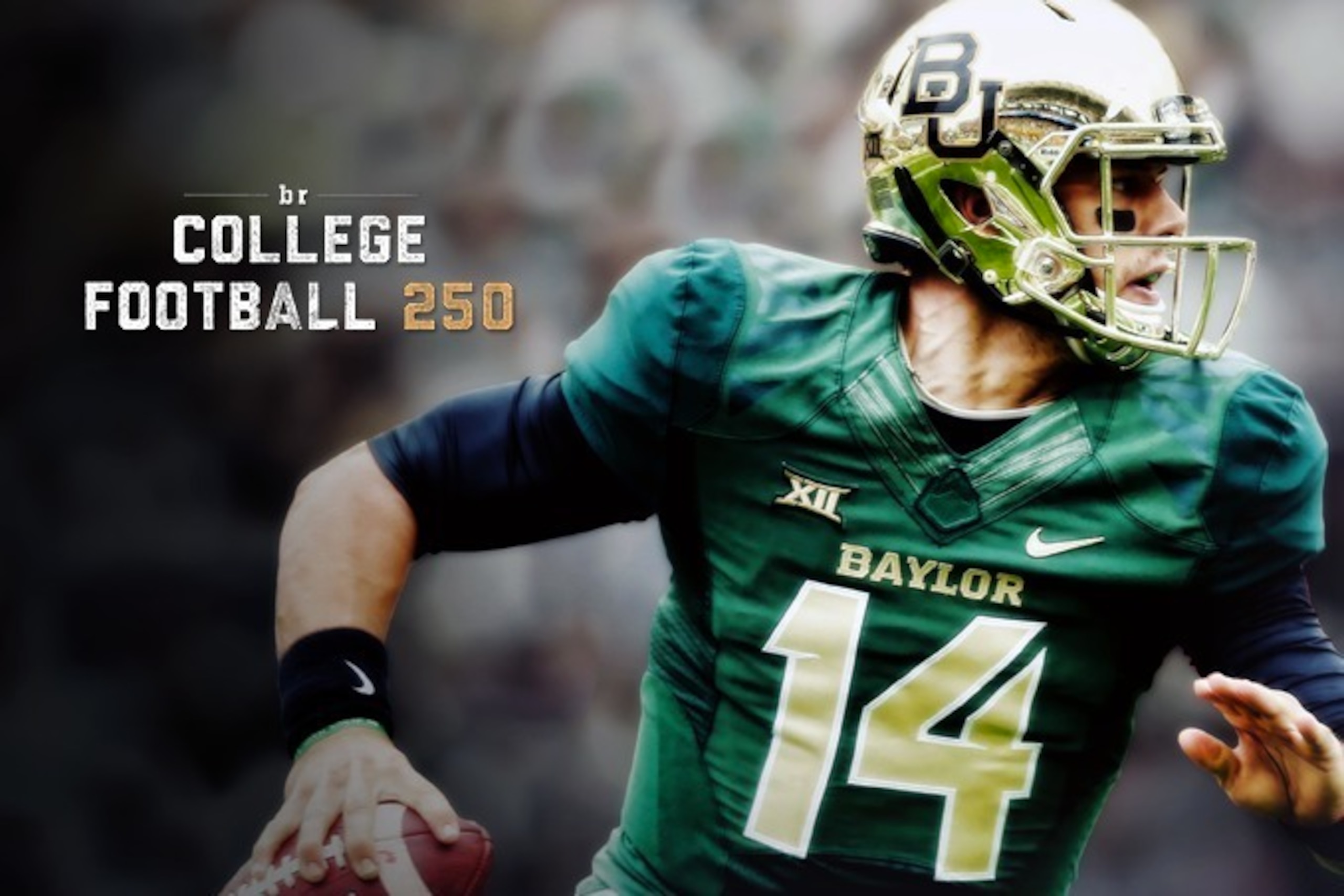

B/R CFB 250: Top 22 Pro-Style Quarterbacks
Bleacher Report's CFB 250 is an annual ranking of the best players in college football, regardless of NFL potential. Brian Leigh and Kynon Codrington have studied, ranked and graded the top athletes in the country, narrowed that list to 250 and sorted by position. Today, we present the Top 22 Pro-Style Quarterbacks.
Are pro-style quarterbacks a dying breed? If not, they're a decaying one. College football values versatility, and with more and more teams adopting uptempo, spread and zone-read principles, the appeal of having a dual-threat quarterback is obvious.
The long-term sustainability of the pocket quarterback depends on those who actively play the position. As long as there are great pro-style players, there will always be pro-style schemes. Only when the last dinosaur dies can the next epoch begin.
Seven of the top nine pocket quarterbacks from last year's CFB 250 are no longer in school, which threw the position into even more flux this season. Would anyone step up to fill the void? Or would the world keep spinning in the direction of dual-threat QBs?
That is what we're here to find out.
Before we start, please note that these players were graded as college quarterbacks, not on how they project as NFL quarterbacks.
Targeted skills such as arm strength are important at both levels, but there is a difference between college arm strength and professional arm strength. If a quarterback slings it well enough to hit his marks in the SEC or the Big 12, it doesn't matter that he can't stretch the field against the NFC North. At least not here, it doesn't.
This is all about his college performance.
Note: If two players finished with the same grade, a subjective call was made based on whom we would rather have on our team right now.
22-17. Nova, Webb, Liufau, Kiel, Doughty, Mason
1 of 12
22. Gary Nova, Rutgers
Accuracy: 19/25; Arm Strength: 16/20; Pocket Presence: 6/10; Mobility: 5/10; Football IQ: 15/20; Leadership: 12/15.
Gary Nova used to be a punchline but earned some fans with a scrappy senior season. He is willing and able to push the ball downfield, but he misses so many easy throws and commits so many boneheaded turnovers that it’s hard to ignore the bad for the good.
21. Davis Webb, Texas Tech
Accuracy: 20/25; Arm Strength: 16/20; Pocket Presence: 6/10; Mobility: 5/10; Football IQ: 16/20; Leadership: 11/15.
Davis Webb has great size (6’5”) and flashed impressive arm strength as a freshman in 2013. Before the season, Texas Tech head coach Kliff Kingsbury called him "one of those top-five pick talents," per Bruce Feldman of FoxSports.com. But as a sophomore Webb regressed in terms of accuracy and confidence and ended the season on the sideline with an injury. He will have to win his job back from freshman Patrick Mahomes next season.
20. Sefo Liufau, Colorado
Accuracy: 20/25; Arm Strength: 15/20; Pocket Presence: 6/10; Mobility: 6/10; Football IQ: 16/20; Leadership: 12/15.
Sefo Liufau showed promise as a freshman in 2013 and improved across the board as a sophomore. He’s an underrated athlete with a good arm, but he doesn’t have a great feel for the pocket, and he commits too many turnovers.
19. Gunner Kiel, Cincinnati
Accuracy: 21/25; Arm Strength: 17/20; Pocket Presence: 6/10; Mobility: 5/10; Football IQ: 16/20; Leadership: 11/15.
Gunner Kiel continues to tantalize. He has a great frame (6’4”) and a big arm, and he proved early in the season that he could manage a high-scoring offense. But he doesn’t always move well in the pocket and had his first real college season derailed by a nagging rib injury.
18. Brandon Doughty, Western Kentucky
Accuracy: 21/25; Arm Strength: 16/20; Pocket Presence: 6/10; Mobility: 5/10; Football IQ: 16/20; Leadership: 12/15.
Brandon Doughty spins an accurate ball and had a great senior season under first-year head coach Jeff Brohm. He has good size (6'3") and will go down as one of the best quarterbacks in Western Kentucky history, as Marshall would surely attest.
17. Hutson Mason, Georgia
Accuracy: 22/25; Arm Strength: 15/20; Pocket Presence: 6/10; Mobility: 5/10; Football IQ: 17/20; Leadership: 12/15.
Hutson Mason is what he is: a game manager. He is accurate enough to make a defense pay for stacking the box against the run, but he doesn’t have the arm to stretch the field or stick the ball into tight windows.
16-11. Heinicke, Brissett, Mannion, Thompson, Trickett, Cook
2 of 12
16. Taylor Heinicke, Old Dominion
Accuracy: 21/25; Arm Strength: 15/20; Pocket Presence: 6/10; Mobility: 6/10; Football IQ: 17/20; Leadership: 13/15.
Taylor Heinicke won the FCS version of the Heisman Trophy (the Walter Payton Award) as a sophomore in 2012 and gave Old Dominion a pulse during its FBS transition. He doesn’t have great size (6’1”) or arm strength, but he knows how to run an offense.
15. Jacoby Brissett, North Carolina State
Accuracy: 20/25; Arm Strength: 18/20; Pocket Presence: 7/10; Mobility: 6/10; Football IQ: 15/20; Leadership: 12/15.
Jacoby Brissett had some great moments during his first season at NC State. The Florida transfer has Ben Roethlisberger tangibles—6’4”, strong arm, sturdy frame, good mobility—but his accuracy cannot be trusted, and neither can his decision-making.
14. Sean Mannion, Oregon State
Accuracy: 21/25; Arm Strength: 17/20; Pocket Presence: 7/10; Mobility: 5/10; Football IQ: 17/20; Leadership: 12/15.
Sean Mannion struggled without Biletnikoff Award winner Brandin Cooks, a first-round NFL draft pick in 2014. Regardless, his mixture of size (6’5”) and arm strength and his resume of production over the past three years is something few active QBs can compete with.
13. Dylan Thompson, South Carolina
Accuracy: 21/25; Arm Strength: 17/20; Pocket Presence: 7/10; Mobility: 5/10; Football IQ: 16/20; Leadership: 13/15.
Dylan Thompson went from solid backup to quality starter in 2014, helping South Carolina stay competitive despite fielding one of the worst defenses in America. He has a thin frame but one of the biggest arms in the SEC.
12. Clint Trickett, West Virginia
Accuracy: 22/25; Arm Strength: 16/20; Pocket Presence: 7/10; Mobility: 5/10; Football IQ: 17/20; Leadership: 13/15.
Clint Trickett bounced back from a rough junior season to salvage his career with a nice year in 2014. He is smart and accurate with the football and might have saved head coach Dana Holgorsen’s job by guiding West Virginia to a resurgent season.
11. Connor Cook, Michigan State
Accuracy: 21/25; Arm Strength: 17/20; Pocket Presence: 7/10; Mobility: 6/10; Football IQ: 17/20; Leadership: 13/15.
Connor Cook has turned a stale Michigan State offense into one of the best units in the Big Ten. He has great size (6’4”), a strong arm and all the qualities one looks for in a leader, but misses too many throws he should make.
10. Taylor Kelly, Arizona State
3 of 12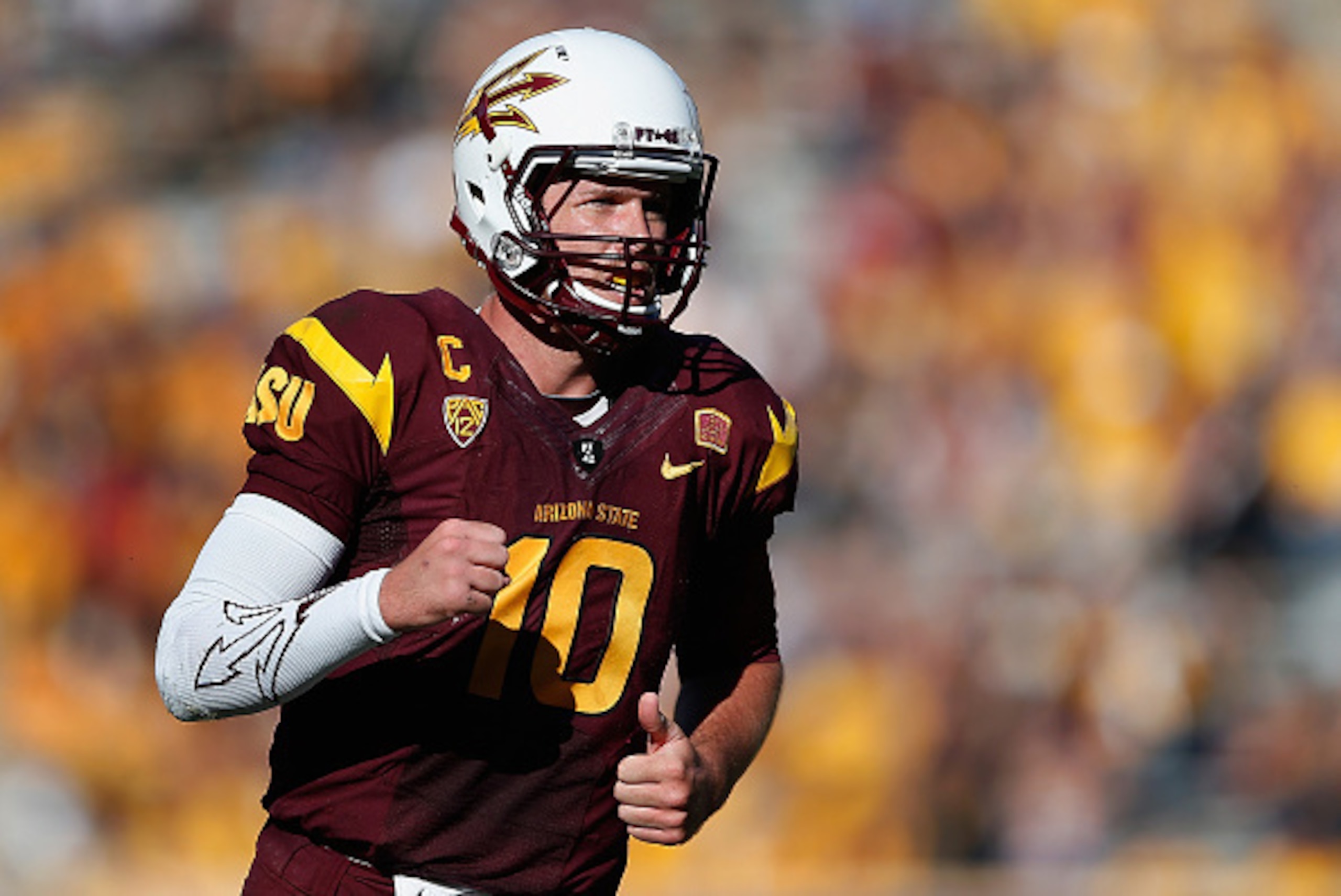
Accuracy
Taylor Kelly throws an accurate ball on short and intermediate passes, which constitute a healthy portion of Arizona State's offense. However, his placement tends to wane on deeper throws. If not for having a 6’4” receiver like Jaelen Strong, his vertical efficiency would drop off a cliff.
Arm Strength
A big reason Kelly struggles with deep accuracy is because he struggles with deep balls in general. When he has a clean pocket and time to get his whole weight into a throw, he can drive it down the field with decent velocity. When he doesn't, the ball tends to flutter.
Pocket Presence
Again, Kelly’s effectiveness relies on having a clean pocket. When his blockers do their job in protection, he employs great footwork and makes confident decisions. When they don’t, his footwork regresses, and he doesn’t step into his throws.
Mobility
Kelly falls in the nebulous middle ground between pro-style and dual-threat quarterbacks. He works mostly from the pocket in ASU's timing-based offense, but he is a great athlete who can extend and make plays with his legs.
Football IQ
Kelly has solid football instincts. He anticipates receivers and consistently makes smart reads. He struggled with a foot injury that cost him three games in 2014, but when he’s healthy and trusts his legs, he knows the exact right moment to tuck the ball and run.
Leadership
It’s hard to argue with Kelly’s results. He led Arizona State to a Pac-12 South championship in 2013 and had it ranked as high as No. 6 in the country during his senior year. Even when he first came back from his injury and didn’t always look right mechanically, he put the Sun Devils in a position to win.
Overall
Kelly is a smart, athletic, instinctive player who has won a lot of games the past three seasons. Nothing about him makes your jaw drop, but the aggregate of his tools makes for a pretty good college quarterback.


9. Christian Hackenberg, Penn State
4 of 12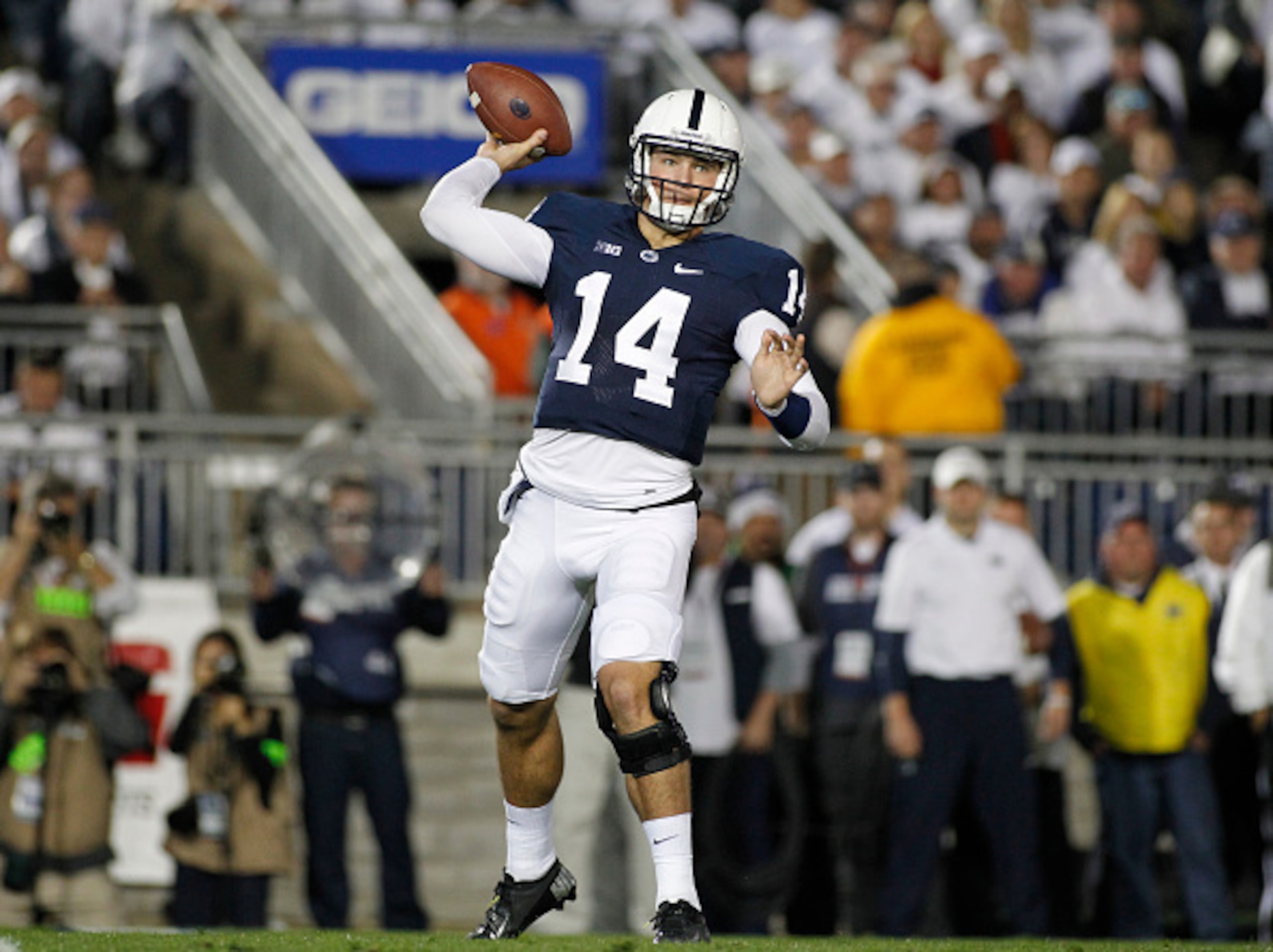
Accuracy
Christian Hackenberg has missed some open receivers this season. Even on the rare occasion where he’s had enough time to throw, he hasn’t placed the ball where it needs to go on short and intermediate routes. He has flashed good accuracy on deep passes, but he must improve the other aspects of his game.
Arm Strength
Hackenberg is right up there with Jameis Winston in terms of arm strength. He still needs some polish, but he makes some throws that nobody else in the country can make. He generates strength from his upper body, which allows him to maintain power outside the pocket when his feet aren’t perfectly set.
Pocket Presence
Penn State’s offensive line has been horrendous this season, which has more to do with Hackenberg’s high sack rate than his pocket presence does. Regardless, the way he handled pressure regressed throughout the year as he tried to force more and more plays.
Mobility
Hackenberg is big-limbed (6’4”, 234 lbs) and clunky as a runner. He throws well on designed rollouts but isn’t a threat to improvise or tuck and run.
Football IQ
Hackenberg learned Bill O’Brien’s system fast enough to start and play well as a true freshman. It hasn’t been as easy to learn James Franklin’s system, but one mustn't ignore how hard it is to start in two systems in two years. That will earn some—but not all—of his decision-making and turnover issues a free pass.
Leadership
When the going got tough in 2014, Hackenberg became visibly frustrated, at times berating teammates on the sideline. Still, he gets credit for holding true to Penn State after the Freeh Report, at which point it would have been easy for him to defect to a safer program. He held his recruiting class, and the future of his program, together.
Overall
Hackenberg was being talked about as a future No. 1 overall draft pick after starting as a true freshman and finishing the season strong. A new coaching staff and a porous offensive line led to drastic regression in 2014, but Hackenberg still cuts the figure of an All-American quarterback if he can work out some of the kinks. All eyes will be on him this offseason.
8. Brad Kaaya, Miami
5 of 12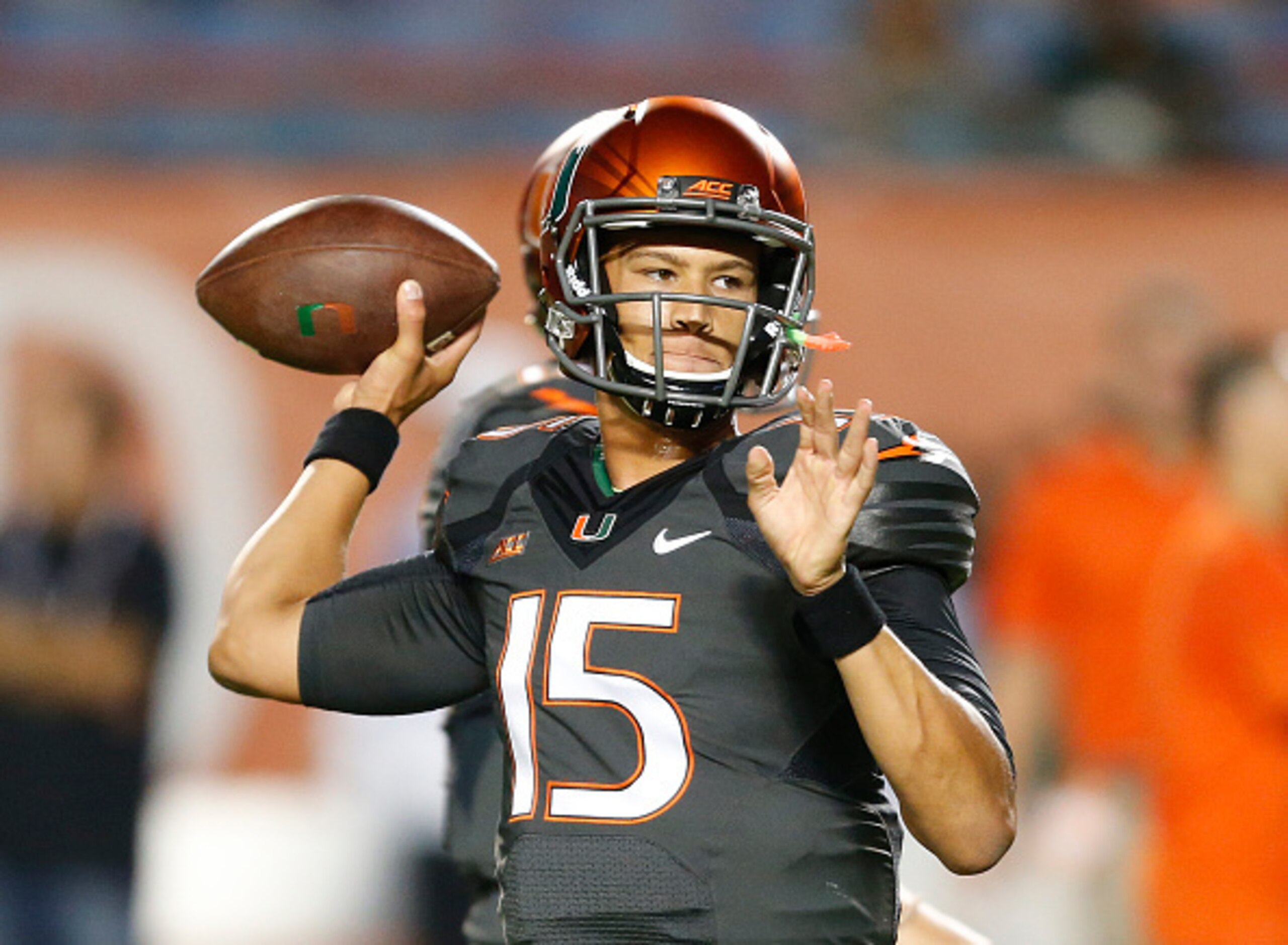
Accuracy
Brad Kaaya has impressed with his accuracy, in many ways serving as an upgrade over Stephen Morris. He throws a catchable ball that hits receivers in stride, allowing speedy playmakers such as Duke Johnson and Phillip Dorsett to rack up yards after the catch. With bigger targets such as tight end Clive Walford, he makes sure to keep the ball high, where only his man can catch it.
Arm Strength
Kaaya wasn’t known as a huge-armed prospect coming out of high school, but he has been able to get the ball where it needs to go. He has good size (6’4”) but is still growing into his frame (209 lbs) and should continue to improve his velocity the next two or three years.
Pocket Presence
No area of Kaaya’s game has been more impressive than his pocket presence. He is a cool customer when things start to break down, and he’s tough against an incoming rush. His footwork is solid and should also improve with experience.
Mobility
Kaaya is a functional athlete, but he is not all that mobile. He is effective on rollouts but does not make a difference beyond the line of scrimmage.
Football IQ
Kaaya struggled with interceptions at the start of the year, throwing nine in his first six games. Four of those, however, came in treacherous road environments (at Louisville and Nebraska), and he appeared to have learned from that baptism by fire, improving as the year went on.
Leadership
It is difficult for a true freshman to earn the respect of a veteran-heavy offense, but that is precisely what Kaaya did. "Are we still considering him a freshman QB?" Duke Johnson asked Matt Porter of the Palm Beach Post in mid-November. "Can we just call him Brad? Freshman QB doesn’t say much for him." He's right, you know.
Overall
Miami was forced to play Kaaya as a true freshman after injuries, dismissals and slumps wiped out the middling group of players in front of him. In the process, it found more than just a quarterback of the future; it found a quarterback of the present too.
7. Shane Carden, East Carolina
6 of 12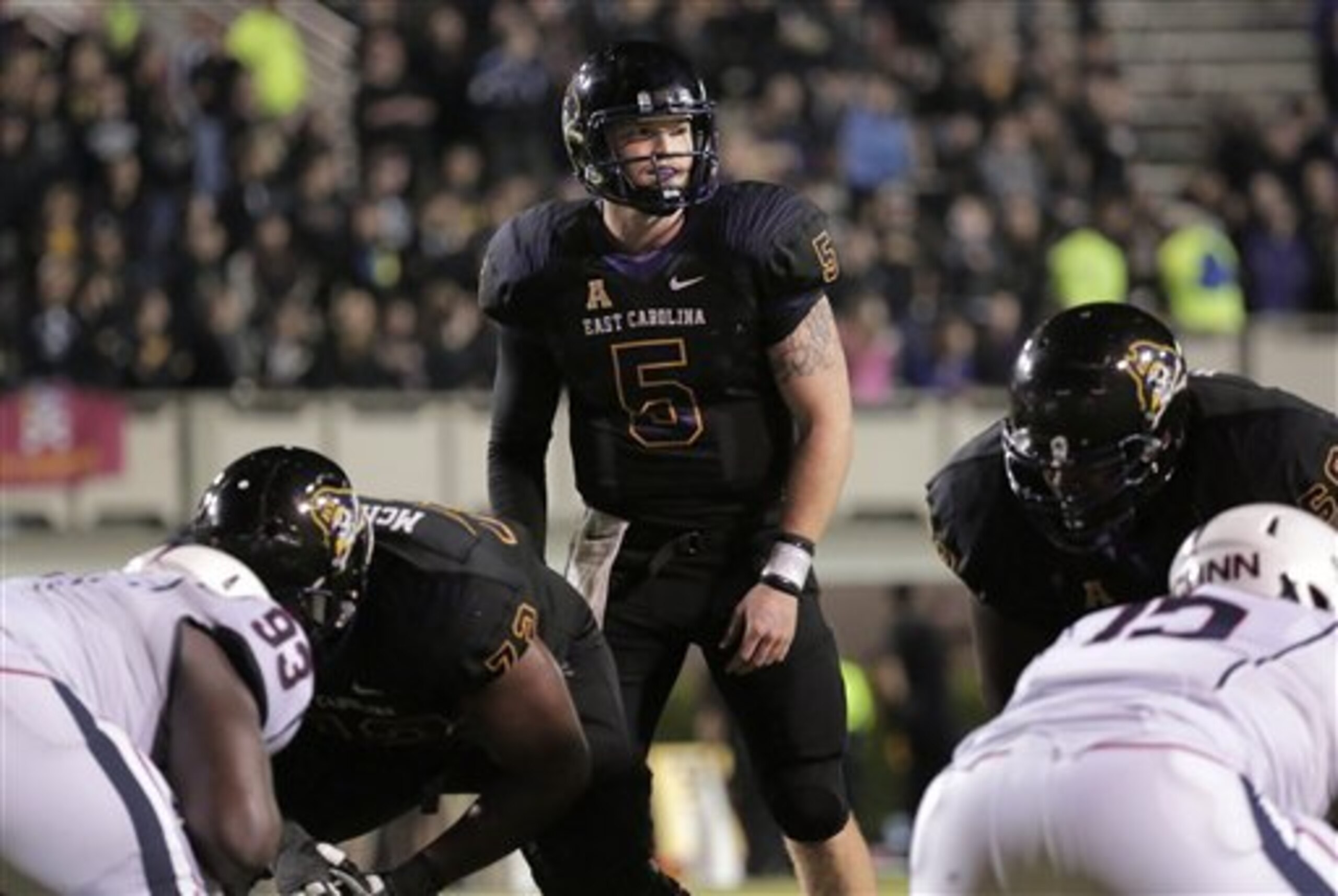
Accuracy
The mechanics are ugly—real ugly—but Shane Carden gets the ball where it needs to go. He leads the ball in front of receivers so they can run after the catch, which is crucial in a spread scheme such as East Carolina’s. It says a lot about a quarterback’s accuracy when his favorite receiver breaks the all-time FBS receptions record.
Arm Strength
Carden does not have a rocket arm, but he gets enough juice on his throws that he can thread it into pretty tight windows. Most of that is a product of ball placement, but his velocity helps more than it hurts.
Pocket Presence
Carden’s pocket presence is exactly what you’d expect from a third-year senior starter. He feels the rush well, doesn’t panic under pressure, adjusts his feet with poise and always keeps his eyes downfield.
Mobility
Carden is more of an athlete than a runner. He is coordinated and smooth but not overly fast, limiting what he can do outside the tackles. He showed a nose for the end zone with three short touchdown runs in two games against ACC competition (Virginia Tech and North Carolina) but is otherwise a strict pocket passer.
Football IQ
Carden is a difficult player to outsmart. He solved Bud Foster’s Virginia Tech defense in an early-season upset of the Hokies, finishing with 427 passing yards, three touchdowns and no interceptions. That and other attack-minded schemes have paid the price against ECU these past three years.
Leadership
ECU players love playing with—and for—their senior quarterback. He has been around for a long time and helped restore the Pirates as one of the best Group of Five programs in the country. “When [Carden] speaks, guys listen,” former teammate Vintavious Cooper told R. Cory Smith of the Raleigh News & Observer last season. “It’s as simple as that.”
Overall
Carden had East Carolina ranked and flirting with a New Year’s Day bowl for most of the season. Things spiraled out of control in the final month, but that is not enough to make us forget how good he was in getting the Pirates to that position in the first place.
6. Connor Halliday, Washington State
7 of 12
Accuracy
Accuracy is the key tenet of Mike Leach’s offense, and Connor Halliday has it to spare. He throws with great timing and ball placement, delivering passes in front of his receivers at the precise moment they break from their routes. Interceptions are (and always have been) an issue, but that is a product of volume and scheme more than accuracy.
Arm Strength
Halliday has a strong arm that allows him to test the deep third. He gets good air under the ball in an offense that relies on vertical concepts. He has a tall, lean frame (6’4”, 201 lbs) and a quick release that does not require a windup to generate power.
Pocket Presence
Halliday has nimble feet and a good feel for the rush. He manipulates the pocket and steps into throws despite oncoming defender(s). With so many reps under his belt, he is inured to the feeling of pressure and stays cool when his protection starts to crack.
Mobility
Halliday is not necessarily slow, but he is a clunky, awkward runner who does not pose a threat outside the pocket. He is not one to make defenders miss and struggles to set his feet and throw on the run.
Football IQ
Leach’s offense requires a high football IQ to run. There’s a reason so many of his proteges become successful coaches. Halliday is one of the most successful Leach quarterbacks ever, in large part because he can gauge the weak spot in a defense and attack. But he also makes a few too many boneheaded throws that result in interceptions.
Leadership
Halliday is a fiery leader who shows great poise and always wears his heart on his sleeve. He led Washington State to an unexpected bowl game in 2013, although it must be added that the team was a mess this season.
Overall
Halliday ended an up-and-down career with a decidedly “up” senior season. His 2014 campaign was cut short by a gruesome leg injury, but before that he was posting some historic passing numbers.
5. Bryce Petty, Baylor
8 of 12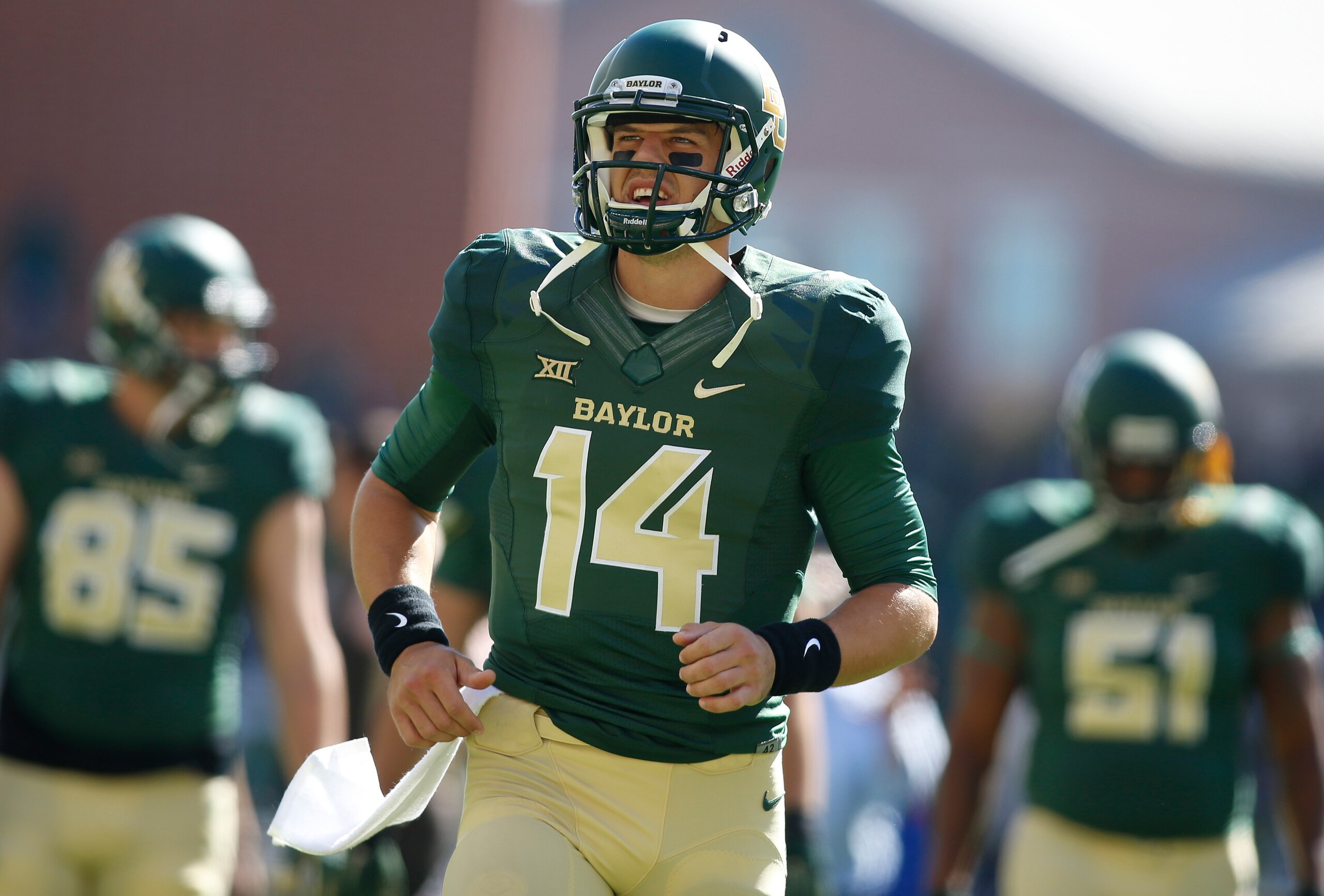
Accuracy
When he’s on, Bryce Petty is one of the most accurate passers in the country. The deep throws he made in the fourth quarter against TCU were phenomenal. However, he was not "on" as often in 2014 as he was as a junior, missing open targets with semi-regularity. The result was a sharp decline in yards per attempt (10.8 to 8.4).
Arm Strength
Petty is a physical freak with a strong, sturdy frame and a powerful arm. He throws the slant especially well, zipping the ball into his receivers’ hands before opposing defensive backs have time to react. He is built like a linebacker (6’3”, 230 lbs) and might have the strongest lower body of any QB on this list. And he knows how to parlay that into arm strength.
Pocket Presence
West Virginia rattled Petty in Baylor’s only loss of the season by forcing him out of his comfort zone with the pass rush. He is typically much better than that, however, using good footwork and athleticism to keep plays alive. He is not afraid to stand in and take a hit.
Mobility
Petty is a great runner for someone who works so well from the pocket. He had 14 rushing touchdowns as a junior, although his workload has been truncated in 2014 (most likely because of the back injury he suffered in Week 1). According to Bruce Feldman of FoxSports.com, Petty runs a 4.62 in the 40-yard dash, making him a dangerous blend of size and speed.
Football IQ
Petty has a sophisticated understanding of Art Briles’ offense but doesn’t always make the right read. He is aggressive taking shots down the field—something that should be applauded—but sometimes locks his eyes on the deep third when a safer, shorter completion might have been best. Despite this, Petty does well not to force the ball into coverage and has a sterling interception rate.
Leadership
Petty has taken Baylor to new heights, leading it to the most successful two-year stretch in program history. His “ready for OU” stunt was playful but risky; it easily could have backfired had Baylor laid an egg against the Sooners. Instead, Petty led the Bears to their first-ever win in Norman, 48-14.
Overall
Petty did not attain the personal success of Robert Griffin III at Baylor, but he led the team to heights even RGIII never flirted with. He will go down as one of the better—if not most underrated—quarterbacks in Big 12 history.
4. Garrett Grayson, Colorado State
9 of 12
Accuracy
Garrett Grayson is an accurate thrower who hits his spots at all levels of the field. His accuracy in Colorado State’s offense is similar to that of AJ McCarron, who ran the same scheme under Jim McElwain at Alabama. Most of his work is done in the middle third, but he places the ball well on vertical throws outside the numbers too.
Arm Strength
Grayson does not have a huge arm, but neither does he have a small one. At 6’2”, 220 pounds, his velocity and zip are squarely above-average. There is nothing in Colorado State’s playbook that his arm is too weak to run—i.e., his arm is not a hindrance to the offense—but he relies on placement more than power when throwing into tight spaces.
Pocket Presence
Grayson’s comfort in the pocket and feel for the game took a big step forward this season. He does not allow himself to get flustered when things are breaking down. His footwork and athleticism help a lot in this regard.
Mobility
The system Grayson plays in asks the quarterback to work from the pocket, but that doesn’t mean he can’t run. He posted a SPARQ rating of 109.77 at the Nike combine tour in high school, anchoring that score with a 4.63 40-yard dash and a 4.13 shuttle. He is a smooth athlete who extends plays with his legs but doesn’t take his eyes off the action.
Football IQ
Grayson's football IQ is evident on tape and translates to paper. He finished the regular season with a QB rating of 171.26, first among players not named Marcus Mariota. An anonymous professional scout praised Grayson for his decision-making in early November, saying he has "really emerged" during his senior year, per NFL.com.
Leadership
Colorado State was 13-35 in the four seasons before Grayson took over as the full-time starter. He took the Rams to the postseason as a junior and led them to 10 wins in 2014. Even if he struggles—as he did in the first half at Boston College—he never lets his team feel like it’s out of the game.
Overall
In 2009, Grayson was a 2-star recruit with limited college offers, despite having showed well on the high school camp circuit. Five years later, he’s a redshirt senior leading one of the most efficient offenses in the country. He never let that chip off his shoulder and morphed into a top-five pocket QB.
3. Cody Kessler, USC
10 of 12
Accuracy
Cody Kessler ranks No. 2 in the country in completion percentage (70.7) despite playing in a pro-style system that does not rely on short, high-percentage routes. He is especially good down the middle of the field, where he places the ball high enough to mitigate risky throws.
Arm Strength
Kessler’s accuracy needs to be up there with the best in the country because he doesn’t have a big arm. He is undersized for the position (6’1”, 210 lbs) but doesn't generate torque a la Drew Brees or Russell Wilson. Even intermediate-length passes tend to float on him.
Pocket Presence
Here is where Kessler has made the biggest improvement. He was antsy when he first won the job as a sophomore in 2013, but now he has a strong command of the pocket. He feels the rush well and is shifty enough to avoid pressure and throw from difficult angles.
Mobility
Kessler has good footwork in the pocket but isn’t what anyone would call “mobile.” He’s a decent athlete (in terms of coordination); he’s just not very fast or smooth.
Football IQ
Timing is one of the most difficult things for a quarterback to master, and Kessler has it down cold. He gets the ball where it needs to be (see: accuracy), when it needs to be there. He anticipates where his receivers are going and knows how to throw them open.
Leadership
Kessler has been through a fair amount of schematic upturn the past two seasons, but he has never looked any worse for it. Former head coach Lane Kiffin and current head coach Steve Sarkisian were assistants together under Pete Carroll, but it still takes a dependable leader to bridge the gap between two coaching regimes. A few small breaks are all that separated USC (8-4) from a nine- or 10-win season.
Overall
Kessler struggled to gain his footing at the start of 2013 but improved under interim head coach Ed Orgeron and took off when the new regime came down from Washington this season. He’s a departure from the strapping, huge-armed template of most USC quarterbacks but brings his own set of unique abilities to the position.
2. Jared Goff, California
11 of 12
Accuracy
Jared Goff has been a quick study in Sonny Dykes’ spread offense, hitting his marks at all levels of the field. He doesn’t play overly conservative but still ranks toward the top of the country in interception rate, having thrown just seven picks on 509 attempts this season. When his receivers get a step, he sprinkles enough touch on the ball to get it over the defensive back but not too far for his intended target.
Arm Strength
Goff his a wiry arm that isn’t overpowering but gets the job done. He is 6’4”, 210 pounds and should continue getting stronger as he spends more time in a college weight program. He can stretch the field vertically or to the sidelines, powering the ball with a tight spiral and good zip.
Pocket Presence
Cal does not allow many sacks despite dropping back to pass with regularity. A big part of the credit there goes to Goff, who has a great feel for the position and knows when to get the ball out of his hands. He isn’t perfect, but he’s far ahead of the learning curve for a player his age.
Mobility
Goff can move the pocket but isn’t a threat as a runner. He has long, skinny legs and is not difficult for defenders to tackle. Backup Luke Rubenzer relieves Goff in select packages, when the Bears want to use a more mobile QB.
Football IQ
Underclassmen have succeeded in Dykes’ offense (and other variants from the Mike Leach coaching tree), but few have done so in more impressive fashion than Goff. He was the less-touted QB from his recruiting class but beat Zach Kline for the job as a true freshman because he picked up the system so quickly. That Cal commits so few turnovers despite playing an attacking brand of offense is a testament to Goff's football IQ.
Leadership
Goff engineered a nice turnaround in his sophomore season. The Bears went 1-11 in 2013 but did not for a second look dispirited this following year. Goff inspires confidence in his teammates and nearly led Cal to a bowl game when doing so seemed impossible. He did enough to win on the road against a good Arizona team before a last-second Hail Mary by the Wildcats.
Overall
Goff has an arm with raving about and plays in the ideal offense for his skill set. Only a true sophomore, he is on pace to compete for some of the FBS career passing records as an upperclassman—but only if the NFL doesn’t snatch him up first.
1. Jameis Winston, Florida State
12 of 12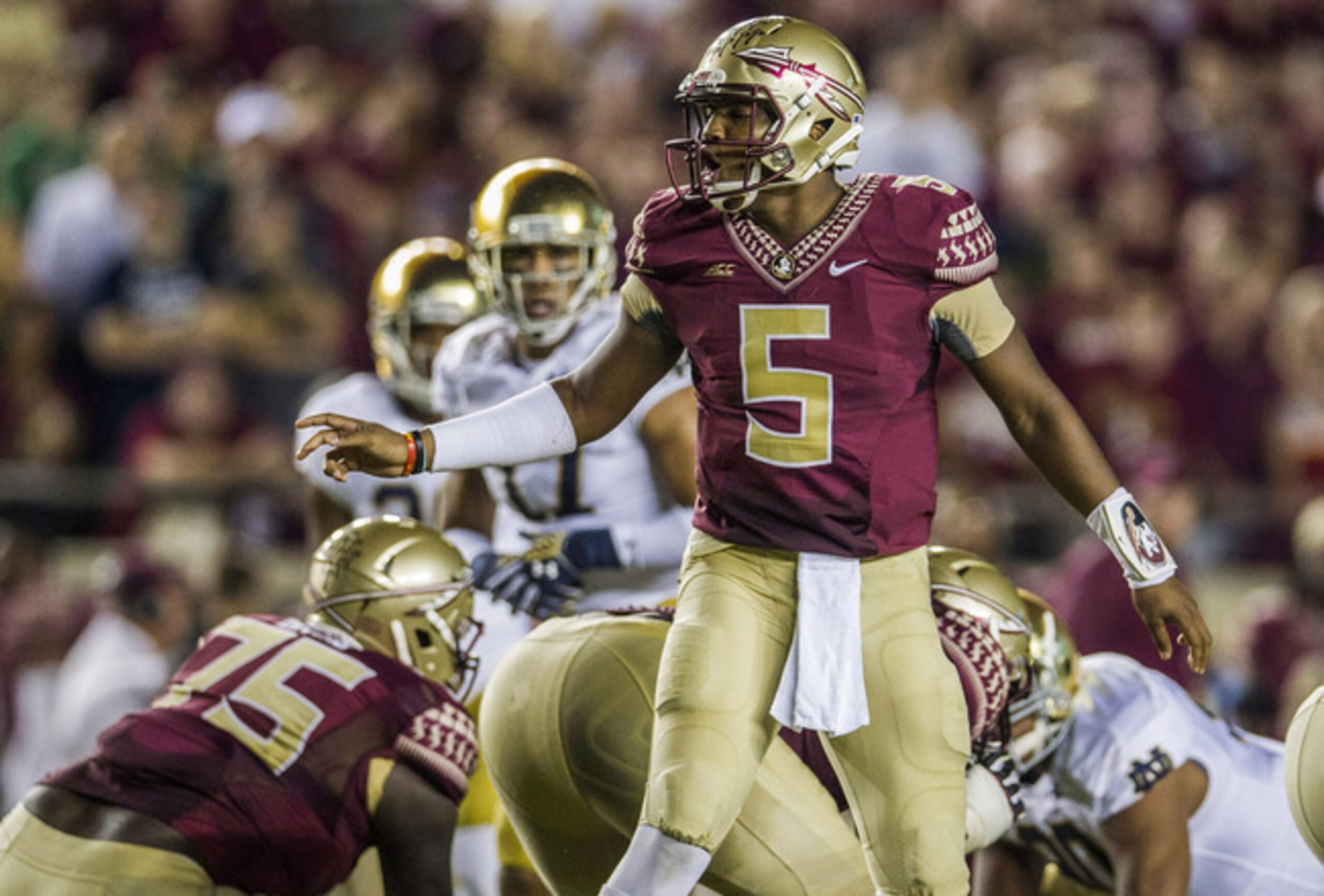
Accuracy
Jameis Winston has not been as accurate in 2014 as he was in 2013, but he’s made enough good throws to score well. He leads receivers down the field on vertical routes, dropping the ball where they and only they can catch it. He trusts his arm enough to attack small windows in big moments, which has helped Florida State engineer some memorable comebacks.
Arm Strength
Winston has a cannon, plain and simple. He is 6’4”, 230 pounds and gets every square inch of that frame behind his throws. Scouts will say his motion is elongated—that he has a “baseball release”—but he doesn’t have a problem getting velocity against pressure. He clocks a 97 mph fastball for the Seminoles baseball team.
Pocket Presence
Good luck trying to blitz FSU. Winston has the rare, innate ability to stand in the pocket until the last possible second and deliver an accurate throw. He is willing to take a hit when necessary, and he sets his shoulders well on designed rollouts.
Mobility
247Sports classified Winston as a dual-threat QB coming out of high school, but he hasn’t run with frequency at Florida State. His running style is awkward and clunky but serviceable, not unlike that of Ben Roethlisberger. He isn’t what one would call “fast,” but he’s an athlete capable of making defenders miss in space.
Football IQ
Winston has thrown (a lot) more interceptions as a sophomore than he did as a freshman. The difference has been a slight regression in his decision-making; too often he tries to make something happen instead of opting for a safer throw. Still, he sees the field as well as any college quarterback, especially in the deep third. He learns from mistakes and adjusts to what a defense gives him, which has led to some huge second halves.
Leadership
Florida State has won the first 26 starts of Winston’s career. Before him, the most consecutive wins by a QB at the start of his career was 19. His off-field antics landed him a suspension against Clemson, but even though he wasn’t allowed to play, he was vocal and supportive on the sideline. The father of Winston’s backup, Sean Maguire, credited Winston for the role he played in prepping his son to start, per Natalie Pierre of AL.com.
Overall
Winston is one of the most successful players in college football history. What else do you want us to say? His off-field issues are myriad, but between the stripes he is a proven winner with a firm place in the mythology of the sport.

.jpg?w=2560 "Report: Darnold Could Miss 3-6 Weeks")
.jpg?w=2560 "Grading WWE NXT 🔠")