College Football: One Player on Every BCS Team That Drives the Fanbase Nuts
The old adage goes, "You're only as good as your weakest player."
You can try to hide him, and you can play to other strengths, but eventually, no matter how good you are, your weaknesses will get exploited.
This list represents not only college football teams' weaknesses, but also players that have gotten under the skin of their fanbases. You will see that some teams had no irritable standouts, while others were chock-full of them.
Basically, when watching, which player causes fans to yell "noooooo!" as the ball gravitates towards him? Which players, when hearing about them during the week, cause a fan to sigh deeply? Here's the list.
Alabama: Jeremy Shelley/Cade Foster
1 of 68Alabama did me no favors by being the first team listed alphabetically. Picking a player off one of the top two teams is no easy task, but here goes.
A quick scan through the Alabama message boards offered no help. All the topics revolved around the starting time of the LSU game, whether there was a BCS conspiracy against Alabama and how Florida said Alabama was better than LSU.
So this choice is on me.
Shelley (pictured) is 11-of-13 on field goal attempts this season. While that isn't a glaring weakness, he hasn't made a field goal longer than 37 yards.
Both of his misses came against North Texas. While he made his season long against the Mean Green, he also missed 36- and 42-yard attempts. He was 1-of-2 from 40-plus last season.
As a result, Cade Foster has been called on to attempt longer field goals. He has missed one from 50-plus but hit one from 45 last week. If Foster is the better kicker, why not use him all the time?
This weakness hasn't shown itself yet. Alabama hasn't been in a game that was decided by less than 16 points this season.
But there will be games coming up where one of these kickers will need to make a big kick, most likely from 40 yards or more. I'm thinking of a game on Nov. 5th.
Arizona: Juron Criner
2 of 68Criner came in as one of the top-rated receivers in the nation. While he was set back for a while with an injury, he has failed to produce in every game except for UCLA and Northern Arizona.
He was held to two catches against Oregon State, a game the Wildcats desperately needed to win. As well, while Arizona scored 41 against USC, Criner only caught three passes for 29 yards.
We certainly can't blame Arizona's disappointing season on Criner, but his absence has affected the team. Rated so highly, he's been a disappointment. No one remembers what you do against UCLA; unfortunately, people remember the game for an idiot streaker and a fight. People remember what you do against USC, Stanford and Oregon.
Arizona State: Brock Osweiler
3 of 68Coming down hard on Osweiler, who has been good for the Sun Devils, may be unfair. Still, I don't see any difference between the Sun Devils of last season and this season. They still turn the ball over too many times and still commit the most penalties in the nation.
Osweiler needs to be more consistent behind center. He played well against Mizzou and USC but didn't play well against Illinois or Oregon State.
In addition to his seven interceptions, Osweiler has fumbled twice. One fumble came while ASU was leading late in the game against Illinois. The fumble set up the game-winning drive for the Illini.
The inconsistency is what has to be most frustrating to ASU fans. When Osweiler clicks and the offense doesn't turn the ball over, ASU can be very good, like it was against Utah. Otherwise, it is average and can lose to equivalent teams such as Illinois and struggle against inferior teams such as Oregon State.
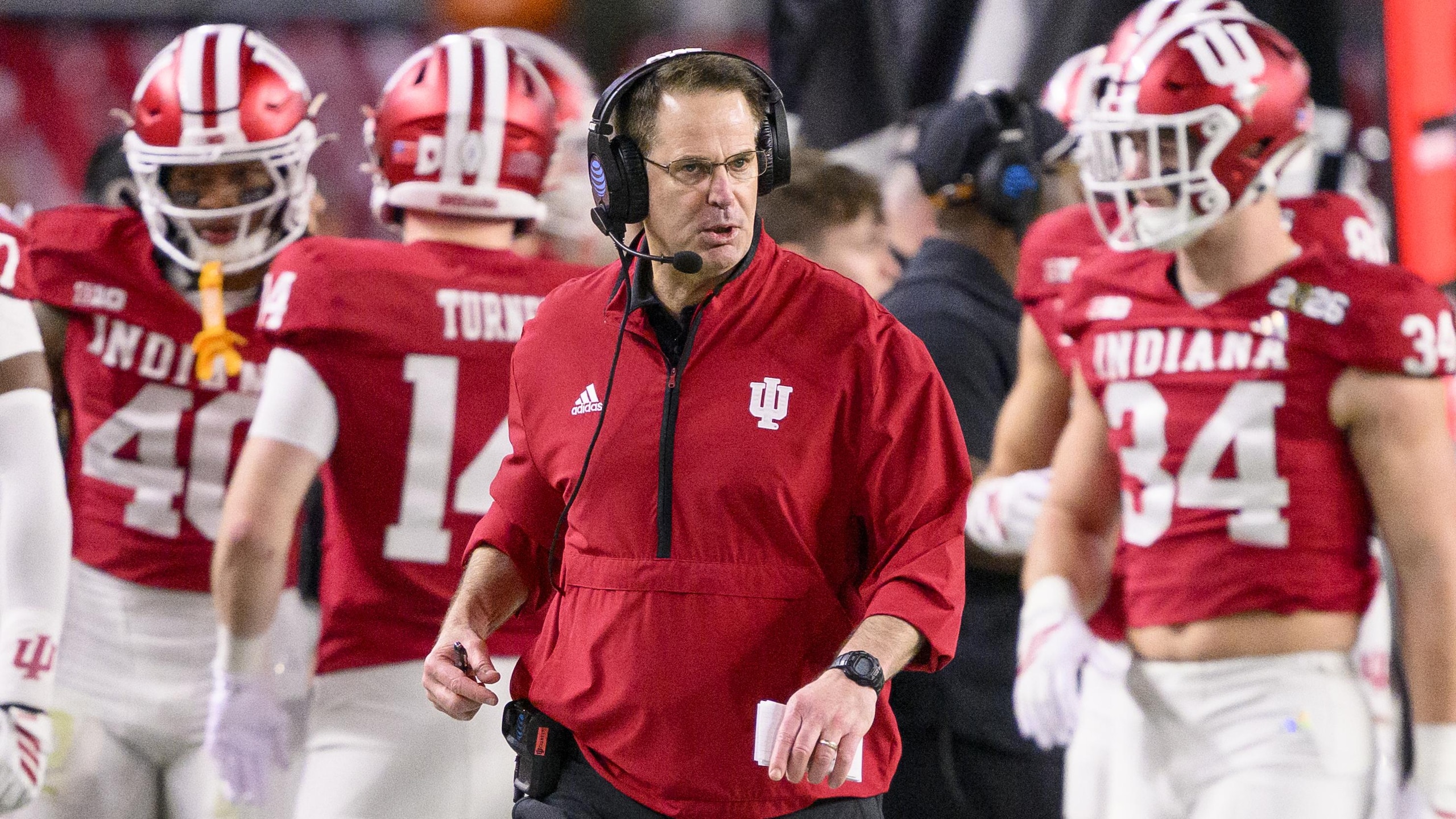
Arkansas: Ronnie Wingo Jr.
4 of 68Arkansas was bitten by the injury bug before the season even began when RB Knile Davis went down with a season-ending knee injury.
His initial replacement was Ronnie Wingo Jr. Wingo was only able to total 284 yards in the first five Razorback games, fizzling out with a six-carry performance against Texas A&M.
Fans called for a replacement—namely, Dennis Johnson. Johnson was given the start against Ole Miss and cashed in, rushing for 160 yards and a touchdown.
If you disagree that fans have been furious with Wingo's performance, just type "Ronnie Wingo" into the Twitter search feed. You'll see some colorful tweets regarding Wingo's performance.
Auburn: Barrett Trotter
5 of 68Barrett Trotter isn't Cam Newton. End of discussion.
Trotter inherited the unenviable position of replacing the Heisman Trophy winner and defending Auburn's national championship. Any expectations to duplicate the performance of Newton were unfair.
Things haven't gone very smoothly. Trotter struggled the first six games, culminating in a 6-of-19, 81-yard performance against Arkansas.
Following the game against the Hogs, coach Gene Chizik insisted that he was sticking with Trotter at QB. The following week against Florida, Trotter was benched after starting 2-of-8. He was replaced by Clint Moseley, and the Tigers won.
Chizik then said he had a decision to make for the game against LSU: Trotter or Moseley. He threw Moseley to the wolves (or Tigers, as would be the case), and Auburn lost 45-10.
Every indication points to Trotter being done as the starter in Auburn for now. Moseley hasn't quite reminded fans of Newton either, though, so it may not be long until Trotter is back under center.
Baylor: Aaron Jones
6 of 68Baylor hasn't had to call on Jones that often this season. Usually, the Bears just put the ball in the end zone—they average 44.3 points per game.
But when Jones has come on, he has struggled. The kicker is just 3-of-6 in field goals this season and has missed two extra points as well.
His most significant miss came on the road against Kansas State. Up nine in the fourth quarter, Jones missed a 47-yard attempt (it didn't help that Robert Griffin lost six yards on the previous play).
Baylor went on to lose 36-35.
His struggles aren't limited to 2011 either. Last year, he was just 19-of-27, missing three from less than 30 yards.
Boise State: Dan Goodale
7 of 68This is most likely Boise's best team, which is saying a lot. One of the things it "says" is that it is very difficult to pick out a player that annoys the fanbase.
The distinction unfortunately goes to Dan Goodale, the kicker.
Everyone remembers the Kyle Brotzman kicking fiasco that concluded the Boise-Nevada game last year. If things aren't fixed, Boise could be headed for a repeat.
Goodale has only been called on four times this season. He has looked shaky on all four and missed a 27-yarder against Colorado State.
As was the case with Alabama and its kickers, Boise hasn't needed Goodale yet this season. Things will change eventually, even if they don't in the regular season. You can't compete at the highest level if you don't have a kicker you can trust to make 30-yard field goals.
Boston College: Chase Rettig
8 of 68Rettig isn't making BC fans forget about Matt Ryan. The sophomore is struggling this season after struggling last season.
There hasn't been much improvement. Rettig has a 4-6 TD-INT ratio and a 50.9 completion percentage against FBS opponents. The Eagles are 1-6, their lone win coming against FCS opponent UMass.
It isn't fair to pin all of the Eagles' struggles on Rettig. That said, he hasn't shown improvement from his freshman to sophomore year. He hasn't proven that he can lead the Eagles, and there have been no other QBs in the rotation.
All in all, the future of the QB position looks very bleak in Chestnut Hill.
California: Zach Maynard
9 of 68Maynard has been inconsistent so far this season. More precisely, he's played very well against inferior competition and not so well against equal or stronger competition.
In five games against unranked opponents (including then-unranked USC), Maynard has a 11-3 TD-INT ratio. In two games against ranked opponents, he has a 1-3 TD-INT ratio.
He has some weapons on his offense (Keenan Allen is second in the nation in receiving yards) but has had trouble getting them the ball. Maynard has completed just 54.2 percent of his passes on the season.
Cal is still very much in contention for a bowl berth. If Maynard can improve his accuracy, Cal should have no problem winning two more games.
Cincinnati: Wesley Richardson
10 of 68Cincinnati is in first place in the Big East and has a great chance to finish on top and win its third Big East title in four years. Because of that, it is difficult to pick a player on the team that has been an annoyance to fans.
Cincinnati has the nation's second-best rush defense but has been susceptible to the pass. It is allowing 285.7 yards per game through the air, 112th in the nation.
After reviewing highlights of the Tennessee and South Florida games—games in which the Bearcats gave up an average of 470 yards through the air—it is apparent that safety Wesley Richardson is having trouble in pass support. There were a few blown coverages on his part against Tennessee alone, and on the season Richardson has only broken up one pass.
This isn't to single out Richardson. Richardson was a walk-on in 2008 and was awarded a scholarship in 2009. Additionally, he is a chemistry major, so he is doing quite well for himself.
Overall, Cincy is excelling this year. While it is true that it has allowed only 19 points per game on the season, it allowed 79 points combined against USF and Tennessee. The Bearcats pass defense needs to improve if they want to beat West Virginia and win the Big East.
Clemson: The Front Seven
11 of 68Clemson is one of only three 8-0 teams (Alabama and LSU the others), and it has been solid all around.
Tajh Boyd is playing at a Heisman level. Sammy Watkins has burst onto the scene and is one of the more enjoyable players in the nation to watch. Dwayne Allen may be the best TE/WR hybrid in the nation. Oh, and Andre Branch is an absolute beast.
So where is the weakness? Quite frankly, I can't think of any part of the team that fans would be sour over.
The one thing that stands out as a potential liability is Clemson's rush defense. It got run all over against Maryland, Auburn and Wofford.
The Tigers made adjustments against Auburn in the second half after being susceptible to Michael Dyer getting to the outside on sweep plays in the first half. They were never able to stop Maryland. Only Maryland's offensive coordinator, Gary Crowton, and Maryland's kick coverage stopped Maryland.
This is definitely a cause for concern—particularly because they play Georgia Tech this upcoming week. While GT hasn't been clicking on all cylinders the past few weeks, it remains the biggest threat to upset Clemson (that includes South Carolina).
I'll be interested to see who wins the battle outside in space. Will Clemson set the edge and contain the triple option, or will GT be able to get out into the open?
For example, look at the first play in this highlight package. Defensive end No. 97 Malliciah Goodman gets driven back five yards, for starters.
MLB No. 34 Quandon Christian does a terrible job reading the play. You'll see that both of Auburn's guards pull on the play, yet Christian is coming forward towards the line. As soon as he sees those guards pull, he needs to get going laterally towards the sideline. Then he gets caught flat-footed, and by that time Dyer is gone. Auburn didn't even need to account for Christian on the play! It didn't put a hand on him, and he still wasn't a factor in stopping Dyer.
Finally, safety No. 31 Rashard Hall is totally lost. I don't know what type of pursuit angle that is.
That all needs to improve if they're going to stop GT.
Colorado: The Offensive Line
12 of 68Colorado is finding life is hard in the Pac-12. While Tyler Hansen has played until he couldn't play anymore, his offensive line isn't doing anyone any favors.
Colorado is third to last in the nation in sacks allowed. It is 113th in the nation in rushing yards per game. Somehow, some way, Hansen was able to average 240 yards per game and had a 13-3 TD-INT ratio through his first seven games.
Then, against Oregon, Hansen was sacked several times and suffered a concussion on a slide (the helmet-to-helmet contact was not flagged and is not in the attached video).
Colorado is 1-7 on the season, and it may be headed for a 1-11 season.
Connecticut: Johnny McEntee
13 of 68McEntee has completed only 52.9 percent of his passes and has a 6-4 TD-INT ratio. If not for a great game against Western Michigan, McEntee would have only 909 yards in six games and two touchdowns.
He was unable to move the ball down the field against Iowa State despite being handed three first-quarter turnovers. He completed 37 percent of his passes and threw three interceptions in a three-point loss to Vanderbilt.
UConn is best when it doesn't try to get into a shootout (it lost 38-31 to WMU but beat South Florida 16-10). That means the Huskies are best when the defense is stout and Lyle McCombs is running the ball. McCombs rushed for 130 yards in the win against USF.
All in all, coach Paul Pasqualoni doesn't want to put the game in McEntee's hands. UConn just asks him not to be a liability.
It makes me wonder if he should have spent more time practicing real throws than the ones in this video.
Duke: Sean Renfree
14 of 68Sean Renfree has compiled 1,800 yards passing this season but can't seem to get the ball into the end zone. This has been particularly frustrating to Duke fans, as the team has lost two games by less than three points.
Renfree was unable to get the team going early on against Richmond. He fumbled in the first half and only threw for 201 yards.
He almost led a comeback against Wake Forest. In fact, he did; the Devils took the lead with 14 minutes left. They were unable to significantly add to their lead later, however, as they settled for a field goal to increase the lead to six. The subsequent play from scrimmage for Wake went for a 66-yard touchdown, and Duke lost by one.
The red-zone offense has been particularly haunting for Duke. I don't know if it's play-calling, a lack of trust in Renfree or what, but the ball seems to be taken out of his hands once in the red zone.
Duke had a 1st-and-goal from the 10 in the late stages of the game against Richmond. The Blue Devils ran it twice, then Renfree was sacked and then they missed a 27-yard field goal.
Against Wake, they had a 1st-and-goal from the five up three. They ran it twice and then had backup Anthony Boone attempt a pass, which fell incomplete. Duke settled for a field goal to go up only six. What is going on in the red zone?
Overall, Duke scores a touchdown on just 57.1 percent of its red-zone trips. I just highlighted two instances where if this were improved upon, Duke could be 5-2 instead of 3-4.
Is it all Renfree's fault? Of course not. But there comes a time when a quarterback needs to take control of the team, demand that the ball be in his hands and put the ball in the end zone. He should not be getting taken out for a freshman QB on the most critical plays of the game.
Florida: John Brantley
15 of 68John Brantley was considered a prototype QB and a sufficient successor to Tim Tebow.
That high praise now seems a bit exaggerated.
Brantley struggled mightily last season, at times being unable to handle the snap. Brantley started off OK this season, but injuries might have hampered any progress he was making.
Even before his injury, Brantley had trouble throwing the ball down the field (the opening play against Alabama being the exception). Brantley was 8-of-14 for 115 yards against Kentucky. Many times, it seemed as if offensive coordinator Charlie Weis was keeping the "training wheels" on Brantley.
It remains to be seen how he rebounds from his injury. He is expected to play against Georgia this weekend.
Florida State: Terrance Parks
16 of 68FSU's secondary (along with their entire defense) figured to be one of the tops in the nation. Instead, the secondary has been exploited at least twice, and the Seminoles are a disappointing 4-3.
They gave up just 199 yards to Oklahoma but did nothing to stop underneath routes and gave up a long TD when they had come back to tie the game (it was Greg Reid that bit on the Landry Jones pump fake, though).
Parks could not cover anyone against Clemson. He was out of place, bit on a few Tajh Boyd play-actions and was outrun by Sammy Watkins and even TE Dwayne Allen. Clemson attacked the field over and over again.
Then Wake Forest threw for 263 yards and four touchdowns against FSU. Parks bit on a double-pass trick play for a touchdown and was then late getting over in safety help on another touchdown pass.
Georgia: Blair Walsh
17 of 68Walsh is just 12-of-20 on field goals this season. That's a lot of attempts and, unfortunately, a lot of misses.
Many of his misses have come from long distances. He's 3-of-10 from 40-plus yards, which makes him 9-of-10 from 39 yards or less (the miss came early in the second quarter against South Carolina).
I wonder about his productivity as a whole. On one hand, he's made a 53- and 56-yarder. That is certainly a luxury many teams don't have. Additionally, he made four field goals in a five-point win against Vanderbilt, so he should certainly be commended for that effort.
On the other hand, he's only 30 percent from 40 or longer.
This leads to an interesting dichotomy, catch-22, whatever you want to call it. Some programs have kickers where the coach knows they can't make a 47-yarder under any circumstances. Therefore, they adjust their game plan and play-calling when they are in that area of the field.
Walsh, however, has shown he can make that length. Does this affect play-calling? Should it? While he has shown he can make it, he has missed it more often than not.
Overall, I think Georgia can rely on him to convert from 40 or less but should not be too comfortable with him from 40-plus. Putting too much faith in him to convert from that distance may come back to haunt the Dawgs.
Georgia Tech: Tevin Washington
18 of 68Two weeks ago, Georgia Tech was undefeated, ranked in the Top 10 in the nation and controlled its own destiny in the ACC.
Now, the Yellow Jackets have two losses, are unranked and seemingly can't run the triple option. That isn't a good problem to have, considering they are a triple option team.
It starts with quarterback Tevin Washington. Last week against Miami, he rushed 20 times for 26 yards. The team as a whole rushed for 144 yards, a far cry from its 600-plus-yard performance against Kansas just one month ago.
Washington was credited with his ability to throw the ball early in the season. While he started off with an accurate track record, that has since disappeared.
In his last four games, Washington is 18-of-51 passing, a 35.3 percent completion rate. He has thrown for just 87 yards the past two games and has thrown four interceptions in the past three.
Illinois: Justin DuVernois
19 of 68Illinois ranks fourth to last nationally in punting average. Combined with the average return, Illinois only nets 31 yards per punt.
This loss of field position is crucial with a team such as Illinois, one that figures to be in close, defensive battles in the Big Ten. Against Ohio State, the Buckeyes were able to effectively reverse field position in the second quarter, when the two were locked in a defensive struggle.
DuVernois employs a rugby-style punt. Still, his delivery is slow, and he is susceptible to getting his punts blocked. Last week against Purdue, it finally happened. A second-quarter block set the Boilermakers up at the Illinois 14, and Purdue made it a 21-0 game six plays later. The Illini went on to lose 21-14.
Indiana: Dusty Kiel
20 of 68I'm expecting sordid, tabloid-esque headlines to eventually come out of Bloomington very soon, but more on those later. Let's stick with the facts.
Dusty Kiel was the backup quarterback to Edward Wright-Baker. EWB played all right but went down with an injury. Kiel stepped in and did not play well at all. In 3.5 games, he completed 47.6 percent of his passes and threw for only 427 yards. In the end, coach Kevin Wilson decided to start freshman Tre Roberson last week against Iowa.
That's what we know. What we don't know is why Kiel's brother, Gunner, the highest-rated QB in the nation, de-committed from Indiana this past week. Gunner shocked a lot of people by committing to Indiana in the first place, but his pledge was thought to be due in part to Coach Wilson's offensive history (offensive coordinator of Oklahoma last 10 years, Northwestern before that). Now, Gunner is reopening his recruitment.
I'm not in the business of speculating, so I will let you imagine all the possible scenarios and reasons as to why this happened and what is happening in Bloomington. I will say that the whole situation does not bode well for Indiana as a whole.
Iowa: Greg Castillo
21 of 68It may come as a surprise to many that Iowa is stronger on offense than it is on defense this season. At times, the Hawkeyes have shown they can run and throw the ball and are averaging 34 points per game.
Their defense is struggling, though. They are 68th in the nation in rushing defense and 90th in pass defense. Both are very "un-Iowa-like."
Cornerback Greg Castillo is having trouble covering receivers this season. He gave up a touchdown on fourth down in the first overtime against Iowa State, a play in which he never turned around to find the ball.
The truth is no one in the secondary has played well. They were fooled and subsequently burned a couple of times early against Pitt and made Steele Jantz look like an All-American. (More on him...right now...)
Iowa State: Steele Jantz
22 of 68Credit has to be given to Jantz for the way he played against Iowa. The junior threw for 279 yards and four touchdowns as the Cyclones beat their in-state rivals.
A strong performance such as that has Cyclone fans scratching their heads over the bad performances. Jantz's inconsistency has been a source of frustration for fans.
Jantz threw three interceptions in the first quarter against Connecticut, and only a putrid Connecticut performance let the Cyclones win the game.
Jantz was not a guarantee to start last week against Texas A&M, but he did regardless. Jantz started 0-of-4 with an interception and was replaced immediately.
His future as the starter going forward is in question. Replacement Jared Barnett didn't fare much better against A&M, completing just 44 percent of his passes for 180 yards.
Kansas: The Entire Defense
23 of 68Kansas is second to last in the nation in rush defense, giving up 232 yards per game.
Perhaps that number is slightly skewed, considering it gave up over 600 yards to Georgia Tech. Still, it needs to be held responsible for that effort.
Kansas is also second to last in passing defense.
As you could guess, Kansas is by far the worst defense in the nation. The Jayhawks give up 20 yards more per game than New Mexico, which is widely considered the worst team in the nation. The next BCS team on the list is Arizona, which gives up 90 yards less per game than Kansas.
The Jayhawks don't get any pressure (they have six sacks all season), they don't cover anyone and they don't tackle very well. Watch the clip at 1:11. Oklahoma State goes 40 yards up the middle, untouched. Safety Bradley McDougald, No. 24, takes a bad angle, gets outrun and then falls down.
Kansas State: Anthony Cantele
24 of 68It seems asinine to pick a player off a 7-0 team made up of players who, prior to the season, no one had heard of. But here goes nothing.
Anthony Cantele is averaging only 65 yards per kickoff and has kicked out of bounds twice. Additionally, K-State as a whole is giving up, on average, 20 yards per return. This means that with the out-of-bounds kicks, opponents start around the 30-yard line on average.
Additionally, Cantele is just 9-of-13 in field goals. He's 4-of-6 from 30-39 and 1-of-3 from 40-49.
While we're sort of on the subject, if it is a scientific fact that moving kickoffs up to the 35 prevents head injuries, then why haven't they done this in the NCAA? Aren't we supposed to be even more concerned with player safety in NCAA since, as their commercials remind us, 99 percent of the athletes will be going pro in something other than sports? They're not getting paid millions of dollars to get their brains knocked around like NFL players are.
Kentucky: Morgan Newton
25 of 68Kentucky has had a great string of quarterbacks recently in Tim Couch, Andre' Woodson and the Pillsbury Throwboy (who is commissioner of the Ultimate Indoor Football League; look it up). Unfortunately, Morgan Newton has yet to live up to that impressive lineage.
Newton's QB rating is the third-lowest in the nation amongst starters and the lowest of all the BCS quarterbacks. Against South Carolina, he went 4-of-21 for a total of 17 yards.
Despite Newton's struggles, Joker Phillips has barely played freshman backup Maxwell Smith. Therefore, the job is Newton's, and he shouldn't feel a lack of confidence from his staff.
Right now, Kentucky is 116th in the nation in passing yards with 117 per game. Last year, it averaged 269 per game.
Louisiana State: Jordan Jefferson
26 of 68Jefferson wasn't very effective in 2010. He had a 56.5 completion percentage and a 7-10 TD-INT ratio.
Yet when he was suspended for being in a bar fight and reportedly stomping on someone's face, everyone in the nation panicked over his absence.
It turns out that Jarrett Lee is doing just fine as a replacement. Lee has a 13-1 TD-INT ratio, completes passes when he needs to and is letting the other more talented players on the team do the heavy lifting.
Therefore, the last thing you want to hear as an LSU fan is Jefferson stating he wants to be the starter. To be fair, he isn't complaining or campaigning. He just simply stated that he wants to be the starter, which is what is to be expected out of any football player at any position. Still, the last thing you want if you're LSU and you're dominating the way you are is a QB controversy.
Louisville: Teddy Bridgewater
27 of 68Coach Charlie Strong has done a terrific job implementing his defensive schemes with the Louisville program. As a result, he has recently been rewarded with a contract extension.
On the other side of the ball, the 'Ville is struggling.
Louisville is fifth to last in the nation in scoring. There are plenty of reasons for why they are struggling, but we can start with the quarterback.
Teddy Bridgewater took over the position full-time in the third week. Since then, he has thrown more interceptions than touchdowns.
The defense held UNC and Marshall to a combined 31 points. Louisville lost both games, however, as Bridgewater threw for only 394 yards and added three interceptions.
Again, I want to be fair. The entire Cardinals offense is struggling. They can't run the ball, they can't pass and they can't put it in the end zone.
They are averaging 20 yards per point! To put this into perspective, it means that if they start on their own 30, they drive all the way down, don't score and then do that all over again and do score (which would be 140 yards for seven points = 20/per point). That is bad. (LSU, conversely, averages 9.51 yards per point. That's one of the many reasons why it's No. 1 in the nation.)
Maryland: Danny O'Brien
28 of 68Danny O'Brien has been less than stellar and has actually looked worse than his backup, C.J. Brown. Despite this, coach Randy Edsall may continue to put O'Brien under center.
Edsall waited until the last minute during the offseason to announce a starter. He chose O'Brien. O'Brien struggled against Virginia Tech and Temple, and after starting 1-of-6 against Georgia Tech, he was replaced by Brown.
Brown nearly led the Terps back against GT. Brown brings an extra dimension to the position: He can run the ball. Against Clemson, Brown threw for 177 yards and three touchdowns and added 162 on the ground and another score. All in all, it wasn't his fault that Maryland lost, but giving up 56 points sure was.
In the third quarter last week against Florida State, Brown was injured. O'Brien came back in and went 9-of-18 in a quarter and a half. Faced with obvious passing situations, he had no chance against the aggressive FSU defense. He was sacked numerous times and finished with minus-23 rushing yards (but a rushing TD).
Now, Edsall has stated he's waiting once again to determine who will start against Boston College this weekend. Brown earned the position due to his play, and he shouldn't lose it because of an injury (a cheap one, too, in which the Seminoles defender was penalized).
Miami: Jacory Harris
29 of 68Let me be clear: Harris has played very well at times this season. Against UNC and VT, he combined to complete 64.7 percent of his passes and had a 6-0 TD-INT ratio.
Other times, he has looked less than stellar. He threw two interceptions against Ohio State. He was stopped on the goal line against Kansas State. He went 8-of-23 last week against Georgia Tech.
Miami fans should be upset over his involvement in the off-field issues that led to his one-game suspension. Without Harris, Miami lost to a Maryland team that has yet to win another game against an FBS opponent. It turned out to be a big game too. With a win, the Canes could have been 3-1 in the ACC and still in position to win the Coastal division.
Michigan: Denard Robinson
30 of 68We all know that Robinson can wow you with his legs. He keeps plays alive, scrambles for yards and lives for the big play. All that said, his lackluster throwing performance, and lack of improvement, has Michigan fans upset.
Robinson is completing just 52.3 percent of his passes. He has thrown 10 interceptions on the season. His throwing motion is awful, as he steps backwards with his left foot instead of forward. As a result, all of his throws are off-target (usually high). Even the picture here shows that he holds the ball low by his hip, when it should be up above the "1" on his chest.
The most frustrating aspect of Robinson is that he hasn't gotten better over time, and some would argue he's gotten worse. Last year, he completed 62.5 percent of his passes and threw only 11 interceptions. He will have to improve dramatically in the second half of the season to improve on those numbers.
Michigan State: Edwin Baker
31 of 68If not for a breakout performance against Michigan, Baker would be one of the more disappointing players in the nation. Still, take away the game against Michigan and he has only 267 yards on 73 carries.
He was nonexistent in the Spartans' only loss, to Notre Dame (10 carries for 26 yards). In last week's win he regressed, carrying the ball 11 times for 15 yards.
If the Spartans want to win in Lincoln, Baker will need to come up big. Winning at home and winning on the road at a place such as Nebraska are two entirely different tasks. At home, quarterback Kirk Cousins can fling the ball around more easily. On the road, you need to establish the run game more, control drives and take the crowd out of the game.
MSU found this out on the road against ND. It couldn't get a running game going and fell behind early, and things snowballed from there. MSU needs to get off to a quick start and then maintain its lead. It will need Baker to do that.
Minnesota: The Entire Team
32 of 68Minnesota is allowing 35.9 points per game. In Big Ten play, it's allowing 51.3 points per game.
The Golden Gophers allow 192 yards per game on the ground and 236.4 through the air. Therefore, their yards per point allowed is 11.89, which isn't as bad as you would expect (UGA's, by comparison, is 13.38).
What does this say? For one, Minnesota's offense doesn't help out much either.
The team has a negative-seven turnover margin, which is tied for 109th in the nation. It has the 71st-ranked rush offense and 109th-ranked pass offense.
Mississippi: Brandon Bolden
33 of 68Last year, Bolden totaled 1,340 yards from scrimmage and cashed in on 17 touchdowns. This year, he's totaled only 224 yards and two touchdowns.
True, he has only played five games, and his carries/touches in those games have been limited. The injured ankle in the opener against BYU was unfortunate. His suspension against Alabama for violating team rules was his own doing.
He returned last week and contributed 80 yards, by far his highest total of the season, in a near-upset against Arkansas.
This example just scratches the surface of illustrating how important Bolden is to the Rebels. This season, Ole Miss is 107th in rushing, 107th in passing and 104th in points scored—a dramatic drop from a team that won back-to-back Cotton Bowls in 2009-2010.
Mississippi State: Chris Relf
34 of 68Relf finished 2010 by playing exceptionally well. With his return, along with nine other offensive starters, Mississippi State figured to compete in the SEC West, even with LSU and Alabama in the division.
Instead, the team has been disappointing.
Relf was benched against LSU the third week of the season. While struggling against LSU is not new to quarterbacks, his replacement, Tyler Russell, was able to put together a couple more successful drives.
Relf was still the starter, but he was struggling. He threw for 164 yards and added only 20 more on the ground in an OT win against Louisiana Tech. The next week, Relf was finally benched for good against UAB. Relf started off 6-of-10 against the Blazers before Russell took over. Russell went on to throw for three touchdowns.
Russell started the Bulldogs' last game against South Carolina and is expected to be the starter for the rest of the season.
Relf should be given credit for leading the Bulldogs back to prominence the last couple of years. He just underperformed this season, his final year in Starkville.
Missouri: Grant Ressel
35 of 68Grant Ressel is 9-of-16 on field goals this season. It is a baffling statistic, considering the senior was 43-of-46 the previous two seasons.
Ressel missed a field goal at the end of regulation in Tempe that would have given Missouri the win over Arizona State (coach Gary Pinkel did ice him twice, though).
Ressel is 1-of-7 from 40 yards and longer. One may consider that perhaps Ressel cannot make that length and is unfairly being called on. Upon further examination, however, he was 9-of-11 from that distance the previous two seasons.
Therefore, the reasons for his struggles remain unknown. I can say, however, that kickers are like any other position, and their success is borne out of confidence. Ressel needs to remember when he made the game-winning field goal in 2009 against Kansas, which led to him being carried off the field (pictured), and forget about the miss against ASU, which seems to have set off a bad season for the senior.
Nebraska: Taylor Martinez
36 of 68Martinez exploded onto the scene last year with an impressive first half to his freshman campaign. Down the stretch, however, his passing numbers decreased significantly, and he was involved in off-field issues and sideline arguments with coach Bo Pelini.
As a result, Nebraska lost three of its last four, including a game to Washington, a team it beat by 35 point earlier in the season.
The passing problems have continued into the 2011 season. Martinez is completing just 55 percent of his passes and has already thrown six interceptions. Martinez has completed more than 60 percent of his passes just once this season, against Ohio State, which, not coincidentally, was Martinez's best game by far.
Against Wisconsin—the toughest test of the season—Martinez threw three interceptions and rushed for only 61 yards.
Northwestern: Adonis Smith
37 of 68Northwestern has been ravaged with injuries, most notably Dan Persa at quarterback and Mike Trumpy at running back.
Kain Colter filled in for Persa and played well enough to lead the team to a 2-1 record. Adonis Smith hasn't been as successful filling in for Trumpy.
Smith has only rushed for 195 yards on 47 carries so far this season. He did not play last week against Penn State.
With a constant rotation at QB between an oft-injured Persa and Colter, a more stable, consistent entity needs to develop on the offense. That needs to be Smith. Otherwise, defenses can continue to key in on Persa, and he will continue to get injured.
Northwestern is an awful second-half team. While that certainly isn't all Smith's fault, he can go a long way toward changing that trend by becoming a more reliable back.
North Carolina: Bryn Renner
38 of 68We've seen the good Bryn Renner. That's the Renner that misfired only once against James Madison and finished 22-of-23 or the Renner that threw for four touchdowns against East Carolina.
Unfortunately, we've also seen the bad Renner—the Renner that has nine interceptions and four fumbles on the season. That's close to two turnovers a game.
Renner got away with fumbling the snap in the red zone against Virginia and got away with three interceptions against Rutgers. In fact, UNC lost the turnover battle 5-0 against Rutgers and still won.
Renner wasn't as lucky against Clemson or Georgia Tech. He combined to throw five interceptions in those two games, and UNC dropped both.
He is only a sophomore, so fans should be patient with him, especially since he has shown signs of brilliance. Still, the turnovers hurt this season.
North Carolina State: Mike Glennon
39 of 68At first glance, Glennon has a respectable 19-6 TD-INT ratio. That said, he has nine touchdowns and zero interceptions in games against Liberty, South Alabama and Central Michigan.
Glennon did not play very well in any of the losses the Wolfpack have sustained. With a former N.C. State quarterback enjoying tons of success 1,500 miles northwest of Raleigh, fans will be overly critical of Glennon.
Whether or not such harsh criticism is fair is another story. What is known is that the Wolfpack have gone from a team that beat West Virginia in a bowl game last year to a team that needs three more wins in five games to return to a bowl. Because of the way Tom O'Brien has handled the QB situation, his job may be in jeopardy.
Notre Dame: Tommy Rees
40 of 68Tommy Rees has shown some signs of talent. He combined for seven touchdowns and zero interceptions against Purdue and Air Force. Still, in big games against big opponents, he turns the ball over way too much.
He has seven interceptions and two fumbles on the season. While leading 14-0 early against Michigan, Rees threw interceptions on consecutive drives. Later in the game, inside the Michigan 5-yard line, Rees fumbled despite not being hit. A touchdown would have iced the game for the Irish. Instead, they went on to lose.
Ohio State: Joe Bauserman
41 of 68In all fairness, Joe Bauserman probably shouldn't have started at QB this season. Ideally, Ohio State would have liked to get Braxton Miller under center right away, but it was decided that the freshman would be eased in.
So Bauserman started the season. He didn't play well against Toledo, completing only 53 percent of his throws. The next week against Miami, he started 2-of-14 for 13 yards before he was replaced by Miller.
The biggest set of blunders came against Nebraska, though. Leading 27-13, Miller went down with an injured ankle. Bauserman came in after the momentum had slightly turned, but he did nothing to put out the fire.
Bauserman went 1-of-10 in the final quarter and a half. Many of his passes weren't even close, and he was finally intercepted with the game tied at 27. Nebraska went on to win 34-27.
Miller was able to play against Illinois...sort of. The freshman played the entire game but only attempted four passes. Bauserman did not see the field.
Oklahoma: Michael Hunnicutt
42 of 68Fast-forward the video to 10:25 and then watch it until 10:55. It was funny then, but it isn't funny now.
There's plenty of blame to go around for the Sooners' loss. They turned the ball over. The secondary was atrocious. They couldn't stop the run.
Yet fans will probably ignore those shortcomings and be most upset with their kicker, Michael Hunnicutt. I realize that Jimmy Stevens was the kicker during the FSU game I attached, but the overall laissez-faire, devil-may-care attitude from Oklahoma and Bob Stoops led to the events of last Saturday night.
Hunnicutt missed a 39-yard field goal early in the game and then a 28-yard field goal with three minutes left. Oklahoma ended up losing by three.
Fans should realize that Oklahoma gave up 572 yards, 450 through the air. While Hunnicutt isn't void of all responsibility, fans should realize that you win as a team and lose as a team.
Or they can void all players and coaches of responsibility and continue to blame the loss on a weather delay.
Oklahoma State: The Front Four
43 of 68Oklahoma State is enjoying its most successful season of all time, and it will be interesting to see if it can continue its success.
The Cowboys are great on offense, solid on special teams and underrated on defense.
The defense is much maligned, and while it is true that they give up a great number of yards through the air, we have to remember that they are always winning and score quickly themselves. Both of those factor greatly into those large pass yards allowed numbers.
I am more concerned with the rush defense (even though no one in the Big 12 seems to run the ball).
Okie State is allowing 4.53 yards per carry. Texas A&M and Tulsa were both able to run on the Cowboys very effectively.
Still, OSU made adjustments at halftime against A&M. Texas A&M rushed for 142 yards in the first half and 20 in the second half (it also inexplicably started throwing the ball more).
That's one of the many reasons why Oklahoma State is undefeated and why Mike Gundy is one of the best coaches in the nation. Too bad people only remember him for the "I'm a man" speech.
Oregon: Cliff Harris
44 of 68Cliff Harris is the best defensive player on the Ducks, and many consider him one of the premier defensive backs in the nation.
During the offseason, however, Harris was cited for speeding at 118 MPH. When the policeman questioning Harris asked if there was marijuana in the car, Harris responded, "We smoked it all."
Therefore, Harris was suspended against LSU. The Ducks missed him in the kick/punt return game, as his replacement fumbled twice and was ineffective the entire game.
Harris returned following the LSU game and has been effective since.
Then, earlier this week, Harris was pulled over once again, this time for not wearing a seat belt. Once pulled over, it was discovered he was driving on a suspended license and without insurance.
In a statement released by the school, coach Chip Kelly has suspended Harris pending further review. Until then, Harris cannot take part in any football-related activities.
Oregon State: Johnny Hekker
45 of 68Oregon State has one of the worst punting games in the nation. Johnny Hekker is averaging an impressive 42.81 yards per punt (somehow, even with the negative-yard punt seen here), but the Beavers are allowing 24 yards per return. Arizona State returned a punt for a touchdown against the Beavers when the game was close in the second quarter.
And then there's the aforementioned negative-yard punt.
Penn State: Rob Bolden
46 of 68It is clear that Matt McGloin has performed much better than Bolden so far this season and has seemingly supplanted Bolden as the full-time starter. Nevertheless, Bolden played for a majority of this season and has been ineffective.
Bolden completed only 44.9 percent of his passes and had a 1-4 TD-INT ratio. It isn't surprising that Paterno switched from Bolden to McGloin, but more surprising that it took so long. Bolden still had a few attempts against Purdue and Iowa but did not play last week against Northwestern.
If there's a saving grace for Penn State fans, it is that the Nittany Lions are 7-1, even with the early QB switch. Additionally, both McGloin and Bolden played against Alabama and were ineffective, so it isn't as if Penn State would be undefeated had it gone with McGloin the entire season.
Pittsburgh: Tino Sunseri
47 of 68Sunseri is by far the most-sacked QB in the nation. His 32 sacks are almost 33 percent more than Zac Dysert of Miami-Ohio's 25, which is second place in the nation.
Some of this can be attributed to Pitt's offensive line. The other part can be blamed on Sunseri holding the ball too long.
Additionally, Sunseri has a 5-7 TD-INT ratio. In the last two games against Rutgers and Utah (both losses), Sunseri was a combined 18-of-39 with zero touchdowns and three interceptions.
Sunseri was replaced in the second quarter against Utah but returned in the fourth quarter. Neither he nor backup Trey Anderson were able to get anything going.
Purdue: Robert Marve
48 of 68Purdue has turned a corner in the past few weeks. There is still a long way to go before the Boilermakers compete in the Big Ten, but they beat Minnesota, competed against Penn State and then beat Illinois. That is a drastic improvement over a team that should have lost to Middle Tennessee State and did lose to Rice.
Caleb TerBush has been sufficient. He doesn't turn the ball over and adds an extra dimension with his legs.
Yet Robert Marve's name continues to surface, and he continues to get snaps. Marve has appeared in four games and threw as many as 22 passes against Notre Dame.
The only problem is that Marve isn't playing as well as TerBush. Marve was a highly touted recruit at Miami, and Purdue fans were happy to get him to transfer to West Lafayette, but he just hasn't panned out.
Additionally, he has brought all the baggage of the Miami scandal with him to Purdue.
All things considered, Purdue fans feel that the less they see of Marve, the better.
Rutgers: San San Te
49 of 68Rutgers is enjoying a surprising, successful season thus far. However, one of the weaknesses has been the kicking game.
San San Te is making just 60 percent of his field goals. Last week against Louisville, he missed 25- and 31-yard field goals. The Scarlet Knights ended up losing by two.
To be fair, he did make four field goals (and missed three) against Syracuse. This included a 47-yarder in double overtime, which was eventually the game-winner. Thus, to pin all of Rutgers' failures or successes on Te would be unfair (and the same goes for every player on this list).
Te is a four-year starter. In his career, he is a 65.9 percent kicker.
Southern Cal: Dillon Baxter
50 of 68Baxter arrived on the scene with a bang. The attached clip is taken from one of his first practices and created an unfair comparison to Reggie Bush (his run starts at 0:48).
Since then, he has done more harm than good.
Baxter was suspended multiple times for unnamed disciplinary issues. The self-proclaimed "knucklehead" admitted that he doesn't show up to class on time, if ever.
Baxter also claimed that he was illegally contacted by several coaches across the country after he had made up his mind to go to USC. The claim ended up being erroneous, forcing coach Lane Kiffin and then-athletic director Mike Garrett to issue a formal apology.
Baxter was also in the middle of the latest "scandal" at USC when he accepted a golf cart ride across campus by a student-agent. The whole event turned out to be innocent, and Baxter made up with what officials thought was a fair price—he donated $5 to a local charity.
After multiple in-house incidents, Baxter did not make the trip to South Bend this past week. Finally, he was kicked off the team early in the week. As of now, he is still a student at USC and will still continue to receive academic help that is offered to the team.
In 1.5 seasons as a Trojan, Baxter totaled 281 yards and one touchdown.
South Carolina: Stephen Garcia
51 of 68Garcia is no longer a member of the Gamecocks, but he did play through a majority of this season and caused enough consternation that he earns a place on this list.
Garcia was suspended five times in his career. However, every suspension was subsequently followed with the starting QB role and all the responsibility and hope that came with it. With South Carolina winning the SEC East title last year and being the favorites this year, Garcia's off-field issues were a major disappointment.
Garcia tested positive for alcohol and marijuana a couple of weeks ago, violating a contract he agreed upon with head coach Steve Spurrier. As a result, Garcia was dismissed.
South Florida: B.J. Daniels
52 of 68B.J. Daniels started off the season strong. During USF's 4-0 start, Daniels had 10 total touchdowns and just one turnover.
Since then, Daniels and USF have struggled.
In the last three games, Daniels has completed only 57.7 percent of his throws and has thrown three interceptions.
The numbers tell just part of the story, however.
Daniels played very poorly against Connecticut. He fumbled twice in the first half (recovering one) and added an interception. He came out sharp in the second half, leading a TD drive, but after cutting the lead to six, he couldn't do any more. He struggled to get the offense going, and the Bulls put up only 10 points.
His inconsistency has to be a major source of frustration for Bulls fans. At times, he has shown flashes of brilliance. Other times, he turns the ball over and is erratic with his throws.
Last year, he turned the ball over more than he scored and completed only 58 percent of his passes. While he got off to a better start this year, the downward trend during the last month is concerning.
As the quarterback, the responsibility falls on Daniels' shoulders to remain poised and consistent and manage the offense. His inconsistency is a major reason for South Florida's fast starts and poor finishes the past few years.
Stanford: The Secondary
53 of 68Stanford is probably the most complete team in the nation. It can obviously throw the ball, stop the run, hit field goals and, as we'll see later, run the ball.
If there is one weakness, it is the Cardinal pass defense. They allow 238 yards per game, but this may be slightly skewed since they usually win games by four touchdowns or more. More accurately, they allow 6.7 yards per attempt, which is still "just" 43rd in the nation.
They have faced two average-good passing teams. Duke, which is a pass-first team, averaged 7.8 yards per attempt, and Arizona averaged 7.2 yards per attempt. Still, the Cardinal only allowed one touchdown through the air.
They should face their biggest test this weekend when they travel to the Coliseum to face USC. We could see sophomore vs. sophomore with Barry Browning covering Robert Woods early.
If Browning and the rest of the secondary struggle, it could turn out to be the chink in Stanford's armor. If the Cardinal come out and dominate USC, then they are nearly perfect all around.
Syracuse: Ross Krautman
54 of 68Syracuse has outperformed both expectations and its own statistics in two-plus seasons under Doug Marrone. After winning the Pinstripe Bowl last year, 'Cuse is off to a 5-2 start and looking for more success.
Still, Ross Krautman had one particularly bad game in a Syracuse loss this season.
Against Rutgers, Krautman had an extra point blocked, a 44-yard field goal blocked and missed a 39-yard field goal. Syracuse went on to lose in double overtime.
Oh, and this attached clip was a missed extra point too.
Tennessee: Matt Simms
55 of 68The injury to Tyler Bray may have put unwarranted pressure and frustration on Matt Simms' shoulders. That being said, Simms was a highly touted recruit who never panned out and is struggling now as much as ever.
Simms took over late in the game against Georgia and could not complete a comeback. The next two weeks, he has combined to go 14-of-37 for 186 yards and three interceptions. It should be noted that he has played against LSU and Alabama, so to expect great numbers would be extremely unfair.
Still, Simms lost the job down the stretch last season when he completed only 58 percent of his passes. Overall, he has been a disappointment to Vols fans.
Freshman QB Justin Worley will start this week against South Carolina.
Texas: Every Quarterback
56 of 68Texas fans got spoiled in the 2000s with Vince Young and Colt McCoy. Now, they enter the "teens" with uncertainty at QB.
Garrett Gilbert disappointed in 2010 and at the start of 2011. After suffering an injury, he decided to transfer.
Case McCoy was the first replacement for Gilbert, but after mixed results, Mack Brown decided to incorporate David Ash (pictured) as well. After a couple of games, Ash took over full-time. He alone played against Oklahoma State and went 22-of-40 with two interceptions.
Overall, Texas QBs have completed only 59 percent of their passes and have thrown for just 203.5 yards per game, 85th in the nation.
Texas A&M: The Entire Secondary
57 of 68The A&M secondary was considered by many to be one of the best in the nation entering the season. Last year, the Aggies gave up 234 yards per game and 6.0 yards per attempt, and they were returning every starter from last season.
This season, they've given up 335.4 yards per game and 7.2 yards per attempt. They've allowed 12 touchdowns through the air and only intercepted four passes.
Some of it is schematics; some is the linebackers. Just watch this attached video. Not once did anyone on A&M get a hand on any of the Arkansas receivers. As Chris Spielman talks about at 1:12, A&M never jammed Jarius Wright; it just let him run free. Watch all the plays and count how many times A&M gets a good jam on any of the receivers.
Other times, there would be a safety inexplicably playing 30 yards deep. Look at No. 1 at 1:51 or No. 21 at 2:43.
The Aggies had two second-half collapses this season, both of which led to big leads being lost. They also gave up 510 yards to Arkansas' Tyler Wilson, the most passing yards allowed this season. Whoever is to blame on A&M, it needs to be fixed immediately.
Texas Tech: Adam James
58 of 68In my book, everybody on the team gets an A for starting the season 5-2 and upsetting Oklahoma on the road.
Still, it is obvious that fans still harbor bad feelings towards Adam James. James had the best game of his career by far last Saturday against Oklahoma, catching five passes for 75 yards.
Following the win, Tommy Tuberville said that he thinks people are "starting to understand" that you don't have to win with just offense. Additionally, Mike Leach is still immensely popular on the Texas Tech campus.
Reading between the lines, it appears that fans did not accept Tuberville at first. They didn't accept Tuberville because they liked Leach. They didn't have Leach because of the James fiasco. It got so out of control that Tuberville perhaps had to beat Oklahoma on the road to gain fans' admiration.
Five catches for James is a start but probably doesn't wipe away any memories.
UCLA: Kevin Prince
59 of 68Kevin Prince won the quarterback battle in camp three consecutive years. That being said, he hasn't made it through the entire season once.
He was injured and performed inconsistently in 2009 and 2010. This past offseason, he was in a close QB battle with Richard Brehaut, who performed well as Prince's replacement in 2010.
The winner of the battle was Prince...sort of. While he was tabbed as the starter, coach Rick Neuheisel said that both would play against Houston.
Then Prince was injured again.
He returned to start against Texas. He promptly threw three-first quarter interceptions and was replaced by Brehaut.
Brehaut played well but was then injured against Washington State, forcing Prince back in. To Prince's credit, he did lead the Bruins to a comeback win against the Cougars.
Then, with no distractions and full confidence that he was the starter, Prince and the Bruins laid a massive egg against Arizona on national television.
Overall this season, Prince is completing just 53.4 percent of his passes and has a 3-4 TD-INT ratio. His reign as starting QB may be short-lived once again, as freshman Brett Hundley is reportedly threatening to take over the position.
Utah: Any Running Back Not Named John White IV
60 of 68QB Jordan Wynn played OK while he was healthy. He didn't have any wow moments but wasn't a detriment to his team.
John White IV has rushed for 710 yards on 143 carries. That's 5.0 yards per carry. He's added seven touchdowns.
That doesn't seem to be a problem, but then you realize that Utah is 104th in the nation in rushing yards. How could it be that the team averages 112 yards per game on the ground and the starting back averages 101 yards per game?
Because he is literally the only threat they have. Outside of him, Utes' backs have combined for 79 yards on 89 carries. That is 0.89 yards per carry.
White has been a workhorse too, averaging 20 carries a game. When he needs a rest, someone else needs to step up!
Vanderbilt: Larry Smith
61 of 68If you haven't noticed, Vanderbilt is playing really solid football. It's physical, plays sound defense and forces turnovers (its 15 interceptions are tied for first in the nation).
Still, the passing game has yet to take flight.
In Vanderbilt's three losses, starter Larry Smith has thrown for a combined 113 yards. In none of the games did he throw for more than 50 yards.
In the past couple of weeks, Vanderbilt has made the move from Smith to Jordan Rodgers. Rodgers was more effective last week against Army (whereas Smith had to go against Alabama and Georgia), and it was a breath of fresh air.
Even when the full-time starter, Smith wasn't called on very often to produce much for the offense. That isn't Vanderbilt's M.O. When he was called upon, however, he couldn't deliver.
Vanderbilt has four wins. It'll need to pull one upset along the way to get into a bowl game, but it is possible. The Commodores still have Kentucky, Tennessee and Wake Forest on the schedule. The QB switch seems to have come at the right time. Coach James Franklin has pushed all the right buttons so far this season.
Virginia: Michael Rocco
62 of 68Rocco is one of a few full-time QBs with more interceptions than TDs. He's the only one with twice as many, though, as he has four touchdowns and eight interceptions.
Virginia isn't an awful team, as evidenced by its win against Georgia Tech. The Cavaliers run the ball pretty well and play decent defense. Their passing attack is the major weakness as of right now.
Rocco turned the ball over three times in a six-point home loss to Southern Miss before he was replaced by David Watford. This changed the Cavs' game plan, as a 1st-and-goal from the nine in the third quarter saw three straight runs for five yards.
Last week against N.C. State, Rocco started 7-of-19 for 36 yards before being replaced once again.
Virginia is 4-3 with a pretty manageable schedule. It could have taken the next step this season and been bowl eligible if it beat Southern Miss and N.C. State at home (it was favored in both games). Rocco didn't play well in either. Now, Virginia has to go to FSU and Miami and host Virginia Tech.
Virginia Tech: Scott Demler
63 of 68Scratch the idea of "Beamer Ball," at least as far as the punting game goes.
Demler has averaged just 33.1 yards per punt. While Virginia Tech is allowing negative-one yard per return, the best in the nation, the overall net gained is still amongst the league's worst.
Beamer was adamant at first in keeping Demler as the punter. Despite his faith, he had wide receiver Danny Coale punt twice against Marshall. Then, after averaging 29.4 yards per punt in a blowout loss to Clemson, Demler was booed off the field by the Hokie faithful.
Beamer finally made a change. Freshman Michael Branthover has taken over full-time punt duties. He did better in his first two games, averaging over 42 yards per punt.
Wake Forest: Brandon Pendergrass
64 of 68Wake is one win away from becoming bowl eligible. Along the way, it has racked up plenty of passing yards but struggled on the ground.
The rushing attack seemed like it was in the process of picking up, and then starter Josh Harris went down with an injured hamstring. After rushing for 136 yards against the Seminoles, Harris has missed the past two games.
In stepped Pendergrass, who had his fair share of carries even when Harris was healthy.
Pendergrass is averaging only 3.6 yards per carry. Last week against Duke, he carried the ball 15 times for only 43 yards. In a crucial drive with the team self-destructing against Syracuse, Pendergrass somehow managed to rush for negative-five yards on a 3rd-and-3.
Pendergrass' inability to help in the running game has put more of a strain on Tanner Price and the Wake defense. Last week, Wake was up 17-3 at the half and had to hold on for a 24-23 win. It held the ball for only 21:53.
Washington: The Front Seven
65 of 68I was a believer in Washington's rush defense at the beginning of the season. At times, it looked good (holding Utah to 17 yards on 23 carries). When it's looked bad, however, it's looked really bad.
The Huskies allowed 310 rushing yards to Nebraska and 446 to Stanford, the latter of which was a school record. Additionally, those two teams combined for nine rushing touchdowns against Washington; not coincidentally, those are the only two losses for UW this season.
Let's break down the play that occurs at 0:52.
First off, Stanford has four linemen to the right of the center. Washington has two linemen, a cornerback and a linebacker. Additionally, the fullback is going to lead, so already Washington is outnumbered.
The lineman furthest to the right, No. 77 Tyler Mabry, blocks down on the middle linebacker. There is no way he's getting by Mabry.
The player next to Mabry (unfortunately, I can't make out his number) hooks the defensive end and puts him on his you-know-what. An excellent block.
The player who lines up in the traditional right tackle spot creates a seal.
The right guard does a great job getting a jam on the lineman and then getting to the next level. He makes a good block on the backside linebacker. This ended up being inconsequential on this particular play, but you never know.
The left guard pulls and absolutely destroys the playside linebacker. He is undersized and gets turned around.
Last but not least, the fullback, Lee Ward, makes the kick-out block. Look at the defensive back on Washington. He doesn't go and meet Ward; he's backing up as Ward comes at him. As a result, he gets knocked back five yards.
So that is how Stanford executed. What could Washington have done differently?
First off, the defensive end cannot get hooked and pancaked like that. He needs to keep his outside arm free and set the edge. He needs to help funnel the run back into the middle. Once he is hooked, it's over.
The DB, No. 6 Desmond Trufant, needs to go meet the fullback.
The weakside linebacker, No. 31 Cort Dennison, needs to do a better job filling the hole. Pause it at 0:54. He's coming up to meet the backside guard, but he hesitates and gets nailed. As a result, guard Kevin Danser has his way with him.
Give credit to Stanford. It had Washington in a favorable alignment and made the proper blocks. It does illustrate, however, how Washington got out-physicaled and outclassed by a team like Stanford and a team like Nebraska. The Huskies may be a bit undersized up front after all.
Washington State: Carl Winston
66 of 68I can't say enough about the fight and resurgence Wazzu has displayed so far this season. No one expected much out of the Cougars, and when starting QB Jeff Tuel was injured at the start of the season, people expected less. They could have rolled over and died and stayed the perennial one-win team they have been in years past.
Instead, QB Marshall Lobbestael stepped in and has excelled, and the Cougars are competitive in every single game.
There is one problem with the team as of now: It is the running game. While the Cougars don't run it as much as they throw, they have a low average of 3.7 yards per carry.
Winston has rushed for just 265 yards on 69 carries and has been supplanted as the feature back by freshman Rickey Galvin.
Wazzu's inability to run the ball may have cost it some games. The Cougars led in the fourth quarter against both UCLA and SDSU and were unable to hold leads.
West Virginia: Andrew Buie/Vernard Roberts
67 of 68West Virginia didn't figure to have a strong running game this season, and it doesn't.
Buie (pictured) and Roberts were given first crack at being the featured back and did not impress coaches or fans. Combined, they've carried the ball 72 times for just 239 yards.
Instead, it's been Dustin Garrison who has emerged from nowhere to take over the starting role. Garrison has rushed for 494 yards on 74 carries; 291 of those yards came against Bowling Green, still a season high for single-game rushing.
Still, Garrison is not going to be the only running back who plays. Either Roberts or Buie (or both) needs to start producing when he is called upon. Otherwise, the running game will continue to struggle, and West Virginia won't win the Big East.
Wisconsin: The Hail Mary Defense
68 of 68There wasn't much to complain about in Madison up until this past weekend (and there still shouldn't be). Russell Wilson is playing great, and the Badgers are running the ball as well as ever and playing great defense.
If not for the Hail Mary, Wisconsin could still be undefeated and on its way to a national championship.
Badger fans shouldn't blame the refs for overturning a call that looked like a touchdown but was inconclusive. Instead, they should blame their own coverage team.
No. 4, Jared Abbrederis, is a wide receiver and should not be on the unit—period. He mistimes his jump and then fails to make the tackle after the ricochet (he doesn't get his hand on it either, like Kirk Herbstreit would like you to believe).
No. 14 is lying on the ground, and No. 53 and No. 26 stand around as they watch Keith Nichol come up with the catch.
On such a play, you are taught to knock the ball down. Wisconsin didn't do that. It got over Abbrederis' head and should have easily been caught by B.J. Cunningham. Then there wouldn't have been any controversy over the finish.