
Big Ten Power Rankings: What We Learned in Week 5
Week 1 of the Big Ten season has come and gone, and the football gods delivered a little bit of everything.*
Do you like devastating blowouts against overmatched teams? Michigan annihilated Minnesota so badly that only Bret Bielema could smile at the result.
Do you like shootouts and comebacks? Dan Persa and Nathan Scheelhaase combined for eight touchdowns in a game that saw two go-ahead touchdowns in the final minute and a half.
Do you like schadenfreude? Ohio State put up one of the all-time worst offensive performances against a Michigan State team that struggled to put the Buckeyes out of their misery.
Do you like to see Purdue lose? That's great, just keep kicking Danny Hope and the boys while they're down.
And finally, do you like Top-10 conference matchups? Wisconsin and Nebraska have you covered.
Now that one week of games is in the books, it is time to take a step back and figure out what we can learn from a real live opponent.**
On with the show...
*There are rumors swirling that a game took place in Bloomington, Indiana over the weekend. My source within the Big Ten offices assures me that this is false. No football was played, especially not between Penn State and Indiana. The buses used to transport the teams to the stadium showed up empty, and no fans were in attendance (you know, like every other Indiana game).
**Not applicable in Minnesota.
12. Minnesota 1-4 (0-1) (NR)
1 of 12Last Week: Lost to Michigan, 58-0
What we learned: Minnesota's team is a raging tire fire.
This started out as a joke on the Michigan-centric blog, Mgoblog. But, by the end of the first quarter, it was apparent that there was a great deal of truth to the joke.
Michigan's first three drives—all touchdowns—averaged seven plays and 80 yards. If you combined Minnesota's first two drives of each half, you would get just four positive yards. The Wolverines weren't forced to punt until the third quarter and only punted twice all game.
Minnesota punted all game (10 times) and fumbled as many times as the Wolverines punted. Michigan failed to enter Gopher territory just twice. Had Minnesota gotten points for entering Michigan territory, the Gophers only would have scored once in the first three quarters.
Minnesota gained just 177 yards all day, and it was done with just under three yards per carry and five yards per pass attempt. Those two averages combined doesn't match Michigan's 8.7 yards per carry average.
Minnesota lost the game in every way possible. The Gophers gave up two turnovers without forcing a single one, were outgained by 403 yards and were penalized three times as much as the Wolverines for three times the yards.
It is hard to overstate just how much is wrong with this team.
Michigan is by no means a dominant defense, and yet quarterback Max Shortell gained just over 100 yards on 50 percent passing. Minnesota had just one running back break the 50-yard mark, and Minnesota went three-and-out six times with a long drive of six plays for 36 yards.
At this point, every analysis of Minnesota just devolves into listing the ridiculous statistical disparity between the two teams on Saturday. There is no insight to be gained, because what Minnesota did on Saturday can only nominally be called football.
Minnesota, at no point Saturday did you do anything that could reasonably be considered Big Ten-caliber football. We are all worse for having watched. I award you no points, and may God have mercy on your soul. If God can't find any mercy, maybe Danny Hope can.
Next Week: at Purdue, 12 p.m. (ESPN)
11. Indiana 1-4 (0-1) (11)
2 of 12Last Week: Lost to Penn State, 16-10
What we learned: The Hoosiers need a run game.
The first week of the Big Ten season went about as poorly for Indiana as it could have.
Matched up in a winnable game against a floundering Penn State team, Indiana couldn't take advantage of three Nittany Lion turnovers, and Penn State didn't score a touchdown until just over one minute remaining in the third quarter.
Indiana was both good and lucky to hold Penn State to 16 points. While the Hoosiers made plays—especially in holding the Nittany Lions under 50 percent on third down—it is hard to argue that fortune was on the side of the derogatory term for people from Indiana (i.e. Hoosiers).
Twice, Indiana got turnovers inside its own five yard line: one, an interception of a Rob Bolden pass on the one-yard line, and another, a fumble recovery on the two-yard line.
However, all the luck in the world doesn't help if you don't do the one or two little things to take advantage. The Hoosiers were outgained by over 200 yards—120 of those yards on the ground—and therein lies the story of Indiana's downfall.
The Hoosiers had just one running back break 50 yards and finished the day with a team total 72 yards on 2.3 yards per rush. The inability to move the ball on the ground hurt any chance the Hoosiers had for offensive consistency. Without a rushing threat to keep the defense honest, Dusty Kiel was focused on almost exclusively for all 45 of his attempts, and he completed just under half of them for 184 yards and a flat-out bad 4.1 ypa.
The lack of consistency on the ground also hurt the Hoosiers' ability to keep the chains moving on third down. Indiana only converted on five of its 20 third-down attempts.
Despite winning the turnover battle and holding Penn State out of the end zone for almost a full three quarters, Indiana was helpless to build any offensive momentum without a consistent running threat out of the backfield.
If the Hoosiers can't find someone to pick up yards on the ground, the passing game will be too overwhelmed and the offense too one-dimensional.
You don't win games in the Big Ten if you can't run the ball. If anyone would know that well, it would be Kevin Wilson.
Next Week: vs. Illinois, 2:30 p.m.
10. Purdue 2-2 (0-0) (10)
3 of 12Last Week: Lost to Notre Dame, 38-10
What we learned: The running game could hurt Purdue in big games.
Purdue's bread and butter the past year-and-a-half has been the run game. Sustaining injuries to Robert Marve last year and Robert Henry this year has severely limited the way the Boilermakers were able to approach games. Thankfully, Purdue has been average to good at moving the ball despite the one-dimensional nature of the offense.
Saturday's game against Notre Dame could be a bad omen for the future.
Purdue struggled to pick up yards consistently on the ground. For the game, the Boilermakers did not have one running back break 20 yards, and the four that rushed for better than 10 yards did so to varying degrees of success. Akeem Hunk and Antavian Edison both used long runs of 16 and 12 yards respectively to edge their ypc average up.
The nine Purdue players that combined for the team's 27 carries only picked up 3.1 yards per carry.
On the other side of the ball, Purdue was gashed for 287 yards rushing, the majority of which came from Notre Dame's backfield tandem of Cierre Wood and Jonas Gray. Wood led the way with 192 yards on 19 carries—good for over 10 yards per carry on average—while adding a touchdown and a 20-yard reception. When he wasn't flying through the Purdue front seven, Jonas Gray was pounding his way to 93 yards on 15 carries (6.2 ypc) and a touchdown.
This is the first BCS conference team* that Purdue has played, and the early returns are not positive.
Purdue did a decent job holding the Notre Dame passing game in check. Outside of 137 yards and a touchdown given up to Michael Floyd (or as he likes to call it, "an off day"), Notre Dame quarterback Tommy Rees threw for just 262 yards and 6.7 yards per attempt.
This isn't a shutdown day, but it is a manageable total for a team that doesn't get outgained on the ground by 200 yards.
Drew Brees isn't walking through that door, Purdue. If the Boilermakers want to stay competitive in a handful of Big Ten games this year, the rushing numbers on both sides are going to have to be a whole lot more even.
Next Week: vs. Minnesota, 12 p.m. (ESPN)
*You know what I mean. First non-MAC/Sun Belt/FCS team.
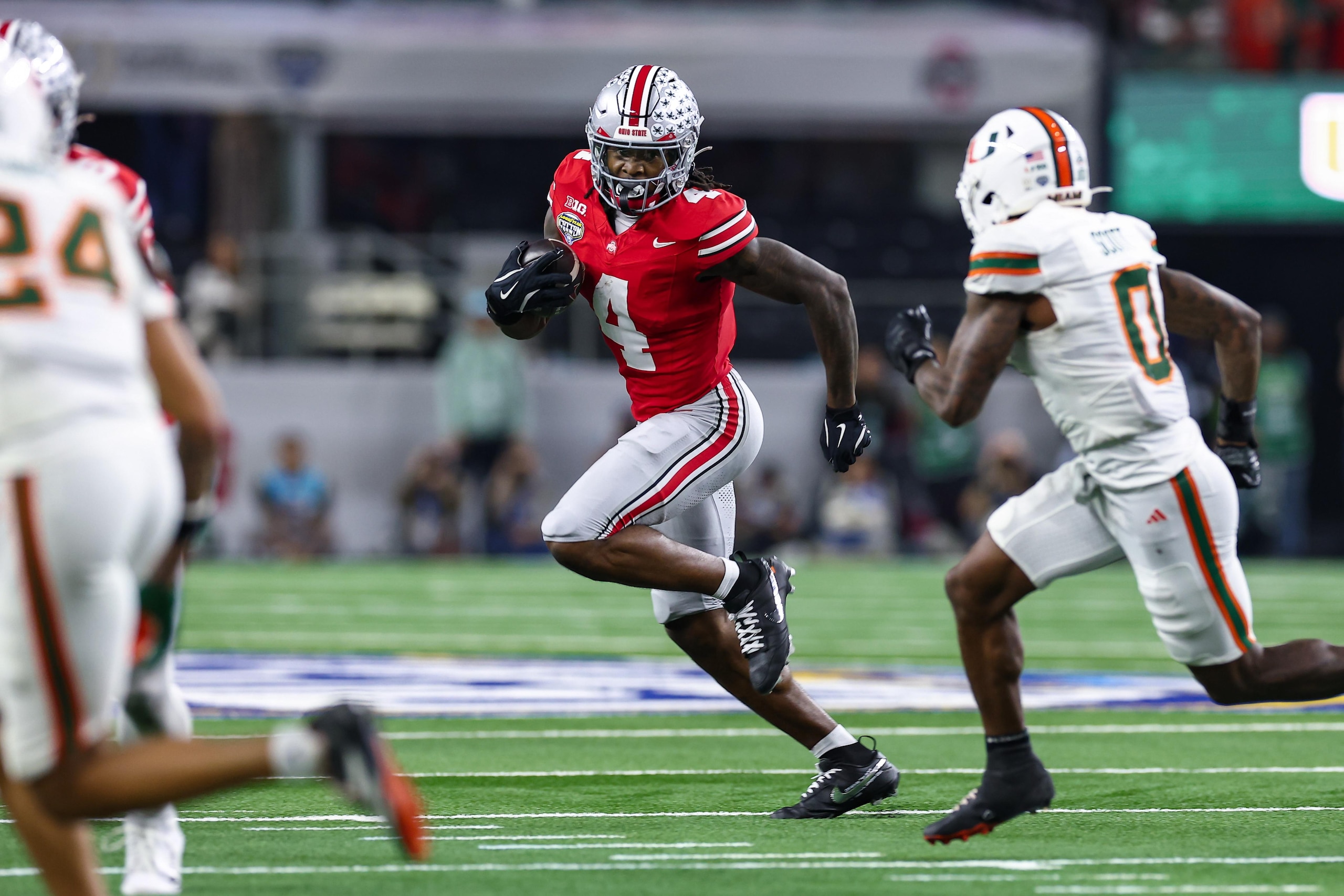
9. Ohio State 3-2 (0-1) (7)
4 of 12Last Week: Lost to Michigan State, 10-7
What we learned: This is the worst Buckeye offense in a long, long time.
Ohio State's 178 yards of offense is bad enough to look at, but consider this: Ohio State gained more than half of those yards on its last two drives, the first one ending in a fumble after 33 yards, and the second, a 62-yard touchdown drive with 10 seconds left against MSU's soft prevent defense.
The three drives before that combined for negative 32 yards, which actually pushed the Buckeyes into negative offensive yardage for over 25 minutes of the second half. On the day, the Buckeyes had five three-and-outs, four negative yardage drives and four more drives that went for under 10 yards.
Including sacks, Ohio State averaged less than one yard per rush.
The fact that Ohio State quarterbacks combined for only one interception says more about just how bad the throws downfield were—swing passes five feet overhead, seams overthrown, out routes five yards short. It quickly became apparent that the Buckeyes would not be able to consistently pass downfield, and with that, the Spartans started to stack the box and dial up pressure, leading to nine sacks.
Most of the sacks came not from an outstanding Spartan pass rush, although there were a few remarkable plays made by the Spartan defense, but instead, because Miller and Bauserman had no feel for the pocket and spent too much time scampering between defenders and looking downfield for an open receiver.
It takes a truly terrible offensive game to take the "worst offensive suck job" of the day from a Minnesota team that managed just 177 yards and no points. The Buckeyes, however, win that title by a landslide.
The offense was predictable and at no point looked like it was turning the tide. Neither quarterback looks like a reliable option going forward, and the offensive line was bullied by the Spartan front seven from start to finish.
A few garbage-time passing yards on the final drive are the only thing that even got OSU much over 100 yards on the game, and are the only reason OSU didn't get shutout for the first time in almost 30 years.
It was such a terrible performance that it is fitting the only good pass Braxton Miller threw all game ended up as an interception, when the Ohio State receiver had the ball ripped from his hands by the Spartan defender.
The lone bright spot for the game is the Ohio State defense, which held the Spartans to 10 points, bottled up the run game and forced two timely turnovers. Had the defense not shown up, the game would have been a lot worse.
This wasn't just a bad performance for Ohio State on offense. This was an all-time bad performance. Unfortunately, it could get worse in the coming weeks, with trips to Nebraska and Illinois and a visit from Wisconsin over the next four weeks.
Next week: at Nebraska, 8:00 p.m. (ABC)
8. Penn State 4-1 (1-0) (8)
5 of 12Last Week: Beat Indiana, 16-10
What we learned: If Penn State is going to win this year, it is going to be ugly.
Some wins you savor, some you just thank God you made it out alive. Beating Indiana by six points is definitely the latter.
The Nittany Lions offense spent most of the game getting itself in good position, only to pee all over itself when time came to convert yards to points. The day began poorly when Rob Bolden marched Penn State 59 yards in 10 plays on the first drive of the game, only to throw an interception at the Indiana one-yard line.
The next three drives would go a combined 83 yards in 17 plays, but they all end in punts. It was around six minutes left in the first half that Penn State would score, driving to Indiana's five-yard line, only to be held to a field goal that tied the score at three.
Rob Bolden would lead the offense to an even uglier third quarter: punt, FG, fumble before being replaced by Matt "Don't Call Me a Walk-On" McGloin. McGloin would immediately throw a long touchdown pass to Derrick Moye, then take the Nittany Lions 63 yards on 13 plays for one more field goal.
It wasn't much, but it was enough to outlast the inefficient Hoosiers.
The word of the day for Penn State was ugly. While the defense did just what it needed to against a struggling Indiana offense—holding the Hoosiers to 4.1 yards per pass attempt and 2.3 yards per carry—the Penn State offense continually failed to push the pedal down and put the game out of reach, eventually giving Indiana one more chance at the win in the final two minutes of the game.
While a 200-yard advantage in total yards looks good, the Nittany Lions negated much of that by giving the ball away twice on the Indiana goal line (once on the Bolden interception and the other a fumble at the Indiana two-yard line).
So far this season, the Penn State offense has only been solid against the very worst competition, and while the Nittany Lion defense has played well and kept games within reach, Penn State's offense needs too much time to put games away, if it is ever even able to put games definitely away.
Penn State's best signal caller on the day, Matt McGloin, was only 10-for-22 passing.
The offensive performance up to this point isn't promising for Penn State. It is looking like a season of too-close-for-comfort games in Happy Valley.
Iowa next week represents the second-best team Penn State has faced this year (depending on your thoughts on Temple), and as it stands, the Nittany Lions won't be able to get away with another day like last Saturday and still win.
Next week, we find out if Penn State is solidly in the middle of the Big Ten, or simply the king of the cellar.
Next Week: vs. Iowa, 3:30 p.m. (ABC)
7. Iowa 3-1 (0-0) (6)
6 of 12Last Week: Bye
What we learned: You can't lose a bye week, but you can drop a spot in the power rankings.
Look for the Hawkeyes to make a statement next week in a trip to Happy Valley. Penn State hasn't played very well yet this year against solid competition, and Iowa is one collapse against Iowa State from being undefeated still.
It could be a good game, or it could be a good game to be an Iowa fan. That depends on Penn State's offensive production. Penn State fans shouldn't like those odds.
Next Week: at Penn State, 3:30 p.m. (ABC)
6. Northwestern 2-2 (0-1)
7 of 12Last Week: Lost to Illinois 38-35
What we learned: Dan Persa might not be enough.
Through two-and-a-half quarters, it was the Dan Persa show. That is, until Nathan Scheelhaase flipped the script.
Persa's return looked like everything Northwestern fans had been waiting for. He threw one touchdown in each of the first and second quarters before leading the Wildcats on two straight scoring drives—capped with two more passing touchdowns—to open up a 28-10 lead on Illinois and all but slam the door on the Fightin' Zooks' undefeated season.
Persa completed 10 of his 14 passes for 123 yards and four touchdowns, but didn't finish the game after aggravating his Achilles injury.
From there, the Wildcats let the game slip away. Coach Pat Fitzgerald said afterward, "[Illinois did] nothing that we didn't work on and nothing that we didn't prepare for, which is probably the most disappointing aspect of the whole day," and presumably was cut off before he could finish with, "They are who we thought they were, and we let 'em off the hook."
Northwestern forced three punts and two turnovers before the half, but from the seven minute mark of the third quarter, Northwestern allowed Illinois to gain 296 yards and score four touchdowns, including a 13-play, 95-yard drive for the go-ahead score with five minutes left, and another touchdown to retake the lead with just seconds remaining.
While the Wildcats played stout rush defense, holding Illinois to just 82 yards on 2.2 ypc, Nathan Scheelhaase was allowed to have a career day through the air, completing 21 of 32 passes for 391 yards and three touchdowns and just one interception.
It was a complete meltdown for Fitzgerald's team, and especially troubling because the Illini bread n' butter—the run game—was held mostly in check. Next week, Northwestern gets a run-heavy Michigan team under the lights in Evanston, and it remains to be seen if Dan Persa will be available or even 100 percent healthy.
If he is unable to go, it will be one more hurdle for a team that just can't seem to find a way to win close games. If the Northwestern front seven doesn't have any luck stopping the run next weekend, the outcome will likely be much the same for the Wildcats.
Next Week: vs. Michigan, 7:00 p.m. (BTN)
5. Nebraska 4-1 (0-1)
8 of 12Last Week: Lost to Wisconsin, 48-17
What we learned: Nebraska's road to the top of the Big Ten won't be easy.
Welcome to the Big Ten.
It felt like Bret Bielema threw a welcoming party Saturday night with all the new faces in attendance, and if Russell Wilson was the guest of honor (about which, more later), then the Huskers were definitely the pinata.
Nebraska did its best to keep up with the Badgers for a quarter and a half, but interceptions on back-to-back possessions late in the second quarter doomed the Huskers. Up to that point, Martinez had thrown the ball well and helped the offense move down the field for two separate first-quarter touchdowns on scoring drives of nine and 10 plays, covering 39 and 74 yards.
The honeymoon didn't last, and Wisconsin baited Martinez into a pair of bad throws, and then turned those turnovers into touchdowns.
If the missed field goal before halftime hurt Nebraska's chances for a comeback, the Martinez interception on the first play of the second half all but sealed the game. Martinez finished the game completing just 50 percent of his 22 passes for 176 yards and three back-breaking interceptions.
He added 61 yards and a touchdown on the ground, but it wasn't nearly enough to make up for the momentum swing before (and after) halftime. Nebraska was only in the game as long as Martinez played lights-out football, and once he broke down mentally, the rest of the game was merely a technicality.
So too, do we mourn for the defense, once thought to be a top ten unit. The Blackshirts gave up 486 yards and after a few early successes, all but ceded to Wisconsin's will. The Badgers gained 12.8 yards per attempt through the air and 4.6 yards per attempt on the ground.
Montee Ball, in particular, was too much for the defense, going for 151 yards on five yards per carry, and Russell Wilson's picture perfect day did nothing less than legitimize his Heisman candidacy on a national stage.
Had this game happened against any other team in the conference, it would be a very bad omen. But, at this point, 48 points on 486 yards is simply an average day for Wisconsin.
Nebraska is still a favorite in the Legends Division when one considers MSU's poor play, how bad Northwestern's collapse was and Michigan's history of hot starts.
It all starts with Taylor Martinez's ability to pick himself up off the mat and carry this offense again. When Martinez is on, the Husker offense is as hard to stop as any in the conference.
As porous as the Ohio State defensive secondary looked against Kirk Cousins and Michigan State, Martinez should be able to bounce back nicely at home under the lights this Saturday.
However, another multiple-turnover night could signal stormy seas ahead and give the Buckeyes a chance to keep things close.
Next Week: vs. Ohio State, 8:00 p.m. (ABC)
4. Michigan State 4-1 (0-1) (3)
9 of 12Last Week: Beat Ohio State, 10-7
What we learned: Michigan State still has a lot of growing to do.
Most years, holding OSU scoreless for 59:50 of game time would be considered an incredible performance. With this Buckeye offense, it seems more like an expected outcome.
Credit first has to go to the Spartan defense, that did its job very well and held OSU scoreless until a meaningless touchdown late in the game against the MSU prevent defense. Against an overmatched and, quite frankly, lost and confused Ohio State offense, Michigan State clogged running lanes, covered receivers and got after both quarterbacks on a regular basis.
Anything Ohio State's offense didn't do to itself, the Spartan defense was glad to help out with.
It wasn't all fun and games, though. Despite an average starting position of its own 30-yard line and six drives starting at the MSU 40 or better, the Spartans were held to just 10 points and 321 yards.
The bulk of the blame for this has to go to the offensive line, a unit that has been disappointing thus far this season and got utterly pushed around most of the game. Spartan backs Edwin Baker (3.0 yards per carry on 12 carries) and Le'Veon Bell (3.6 yards per carry on 14 carries) were held to 86 yards.
The best option on the day was the Cousins to Cunningham connection. Of Kirk Cousins' 250 passing yards and 20 completions, almost half of them (nine) went to BJ Cunningham, including the only Michigan State touchdown on the day, a 33-yard pass on the second possession of the game.
Cunningham averaged 17.1 yards per reception and finished the day with 154 yards. Cousins was solid on the day, and although he threw two interceptions, one of them wasn't as much his fault as it was a spectacular play on a tipped ball in the corner of the end zone on a poor playcall.*
Michigan State now gets a week off to rest and prepare for the next game at home against Michigan.
The timing of this couldn't be better for the Spartans. This will give the various minor injuries along the offensive line time to heal—hopefully bolstering a little depth—and let the Spartans prepare a little more for what is almost certainly the most important game on MSU's remaining schedule.
Next Week: Bye
*Your bit of Sunday Morning Quarterbacking for the week: Why does a team throw a deep corner fade to the tight end against soft coverage from the opponent's six-yard line when BJ Cunningham had literally dragged defenders for more than six yards at various points in the game, and caught everything remotely close to him? Dance with the one that brought you; throw the man a slant and let him beat up the Buckeye secondary again. Inexcusable.
3. Michigan 5-0 (1-0) (4)
10 of 12Last Week: Beat Minnesota, 58-0
What we learned: Nothing.
At first you're all like, "What a cop out. I came here to learn something about each Big Ten team." Then you remember what you saw Saturday, look in my direction, and nod your head knowingly.
Michigan got a huge win on Saturday. Not huge in the program-defining sense, or the "we just beat our rival and are high on life" sense. No, huge as in "we would make t-shirts celebrating our statistical dominance if Georgia Tech hadn't already show that to be in bad taste."
By midway through the second quarter on Saturday, the game ceased to be entertaining in even the most sinful ways. It was like watching a snuff film—riveting, violent and disturbing, and something you can't get out of your head afterward.
The worst part for Michigan fans, after the whole thing was over, is there is literally nothing to take away either positive or negative. The Michigan offense put up a dominant performance, but it was against what has already proven to be a fundamentally bad defense.
The Michigan defense, on the other hand, pitched a shutout for the first time since Lloyd Carr roamed the sidelines—2007's 38-0 win vs. Notre Dame—and the first Big Ten shutout since 2001.
Does any of this mean anything? Read into it at your own risk.
It would be easy to claim that the Wolverines have turned the corner. That this game represents a positive step back to Michigan football after two years of October collapses. That this is a positive sign for the future that is the polar opposite of a "nail-biter against Indiana that leaves Michigan fans with a bad feeling in the pit of their stomach."
Me, I'm not so sure. Call it buyer's remorse after two years of getting burned by the Wolverines come the heart of the Big Ten season.
With two challenging road trips upcoming, real answers are on the way. Last Saturday just left everyone searching for something real and feeling a little dirty.
Next Week: at Northwestern, 7:00 p.m. (BTN)
2. Illinois 5-0 (1-0) (5)
11 of 12Last Week: Beat Northwestern 38-35
With its back against the wall on Saturday, Illinois proved that it doesn't just live and die by the run. Nathan Scheelhaase can throw too.
And throw he did, for 391 yards and three touchdowns, while completing more than two-thirds of his passes. AJ Jenkins was the main beneficiary of this focus on passing, as he hauled in 12 receptions for 268 yards and all three of Scheelhaase's touchdowns.
Illinois added two touchdowns on the ground (Scheelhaase and Young), but Scheelhaase was the team's leading rusher with just 35 yards, while Young ran for a team best 3.6 yards per carry on his way to 29 yards.
That the Illini were thrown so far off the normal game plan against Northwestern is troubling. While the Wildcats played stout rush defense against Boston College in Week 1 (which is less and less meaningful each week), the exact opposite was true against Army, which rushed for 381 yards and over five yards per carry.
That kind of success for Army seemed to foreshadow productive games on the ground for teams like Illinois, Nebraska and Michigan, but Northwestern might prove a stiffer test than previously thought. Either that, or Fitzgerald used the bye week to drill his team on stopping the Illini rushing attack to the detriment of everything else.
If that was the case, he should have set aside a few minutes for pass defense.
The Illini defense gave up 28 points, but kept the yardage totals low (332 total yards, 10.2 ypa, 3.3 ypc), because only two Northwestern scoring drives were over 36 yards, and the defense forced five three-and-outs.
It wasn't a shutout, but the Illini got stops when it needed them.
Next week's game at Indiana should, in all likelihood, be nothing more than a scrimmage for Zook's boys. And with a home game against the struggling Buckeyes followed by road trips to play Purdue and Penn State, Illinois could very well be 9-0 heading into the bye week.
"Did someone say something about a hot seat?" Ron Zook says cackling with knowing glee, as one more sign of the apocalypse is checked off the devil's big board in hell.
Next Week: at Indiana, 2:30 p.m.
1. Wisconsin 5-0 (1-0) (1)
12 of 12Last Week: Beat Nebraska 48-17
Allow me to break into the first person for a little bit here:
I'll admit, after watching the entire Wisconsin vs. UNLV game on TV, I fell hard for the Badgers. It didn't matter how bad the Runnin' Rebels were. What I had seen was an offense that was in tune, a group of players executing at such a high level that there were only a handful of teams in the country that could step in and reasonably hope to slow down the beast.
I was so head over heels for Wisconsin's offense—including my burgeoning man-crush on Russell Wilson—that I started to try to find ways to talk myself out of it. I wanted to convince myself that they weren't that good, and that the other shoe was going to drop soon.
I wanted to be ready. If I just found some flaw or weakness in my argument, I could better prepare for the eventual off day, say I saw it coming, the seeds of Wisconsin's downfall sewn weeks before in a meaningless game against (insert patsy).
Then this happened, and I am right back where I started: believing with every bit of my being that this team is special.
What we learned this week? Wisconsin is as good as we thought they were. Maybe better.
The Badgers started slow against Nebraska. The offense lined up to do the same thing it always does: hit you in the mouth. Nebraska is the first team all year that hit back.
But once the Wisconsin offense got some momentum, once the offensive line began re-establishing the line of scrimmage two or three yards downfield every play, once Montee Ball began to feel out the creases in the defense, it was all over.
Wisconsin's offense has, for years, looked almost the same from year to year, the only change being a variation in quality. This time, there was something new.
Russell Wilson was a part of what was happening, and the ease with which he moved in the pocket, eluded pressure and found receivers downfield time after time just looked different.
Watching Scott Tolzien last year was impressive. He was a tactician, placing the ball in the right spot and letting the machine do the work. Watching Wilson operate within this offense is different.
He is a savant, his moves effortless and always one step ahead. This offense may not have been built for a player like him, but it seems increasingly clear that he was built for this specific version of the Wisconsin offense, and it is terrifying.
Lost in the beauty of the offense is the ruthless efficiency of the defense. Outside of the three huge interceptions that allowed the offense to put the game away with most of the third quarter remaining, the defense made Nebraska's powerful rushing attack work for every yard on the ground—to the tune of a 3.7 ypc average.
The most impressive stat? Once Nebraska scored to go up 14 to 7, the Badger defense held them scoreless, while the offense ran up 34 unanswered points. Even that last score was just a field goal.
This was the most complete game we have seen a Big Ten team play all year, and it was against arguably the second best team in the conference.
There is no more argument about who is first.
Next Week: Bye


.jpg?w=2560 "Falcons LB May Have Torn ACL")
.jpg?w=2560 "Beck Getting HOF Game Start")
.jpg?w=2560 "Bears to Give All-Pro OT $116M")