

College Football: USC's 2004 Championship and the 10 Worst National Title Claims
When the Bowl Championship Series began in 1998, it was supposed to end controversy surrounding the mythical "National Championship" in the top division of college football.
After all, prior to the BCS, there was no single method of determining the national champion. Prior to 1998, there was a consensus national champion only 23 times, and since 1900, there have been just 10.
The BCS was supposed to clarify things, but there have been seven years since 1998 in which the team that did not win the BCS Championship was named a national champion by a poll or major mathematical system.
Of course, these individual schools usually claim these seasons as "National Championships," and they're frequently even listed at the stadium or other facilities on campus. But should they be listed?
There are certainly some national championships that are, to put it bluntly, frauds. Going all the way back to the beginning, we'll rank the biggest frauds in our power ranking of the worst title claims in college football history.
10. Notre Dame, 1924
1 of 10
There really isn't much debate about the actual 1924 Irish team. They finished 10-0 under head coach Knute Rockne, and capped off the season with a 1925 Rose Bowl win thanks to the on-field exploits of the famed "Four Horsemen."
What makes this selection suspect is the manner in which it was obtained.
Rockne heard through the grapevine about a professor at the University of Illinois who had proposed a mathematical system of selecting a Big Ten trophy recipient each season. Rockne convinced the professor, Frank Dickinson, to make the system national so Notre Dame could compete. He also convinced Dickinson to work backwards a few years and retroactively award national championships.
What year did Rockne suggest as a starting point? Why, 1924, of course!
Today, Notre Dame claims the 1924 season as their first National Championship season, even though they weren't actually awarded the title until 1926.
9. Maryland, 1953
2 of 10
Since we've talked about Notre Dame, it's only fair to talk about Maryland and their 1953 claim.
In the murky National Championship era of college football, there were, at times, no fewer than 45 different selectors of national champions. Therefore, in theory, you could have 45 different national champions each season. Of course, in practice, most of the selectors agreed on at least the top few teams, and you rarely had more than two or three national champions at season's end.
In 1953, Maryland finished the year 10-1 and was only named national champion by two major polls. Luckily for Maryland, those two polls were the AP Poll and Coaches' Poll (then administered by UPI).
In every other major National Championship system, Notre Dame was named the national champion after finishing 9-0-1. In fact, Notre Dame was selected by no fewer than 10 polls or systems for determining the national champion, compared to Maryland's two.
It's also worth noting that the National Championship selections for Maryland were granted prior to Maryland playing in the Orange Bowl—their lone loss of the season.
Oklahoma, which beat Maryland in the Orange Bowl, finished 9-1-1 and was also selected by some minor polls as the national champion in 1953.
8. USC, 2004
3 of 10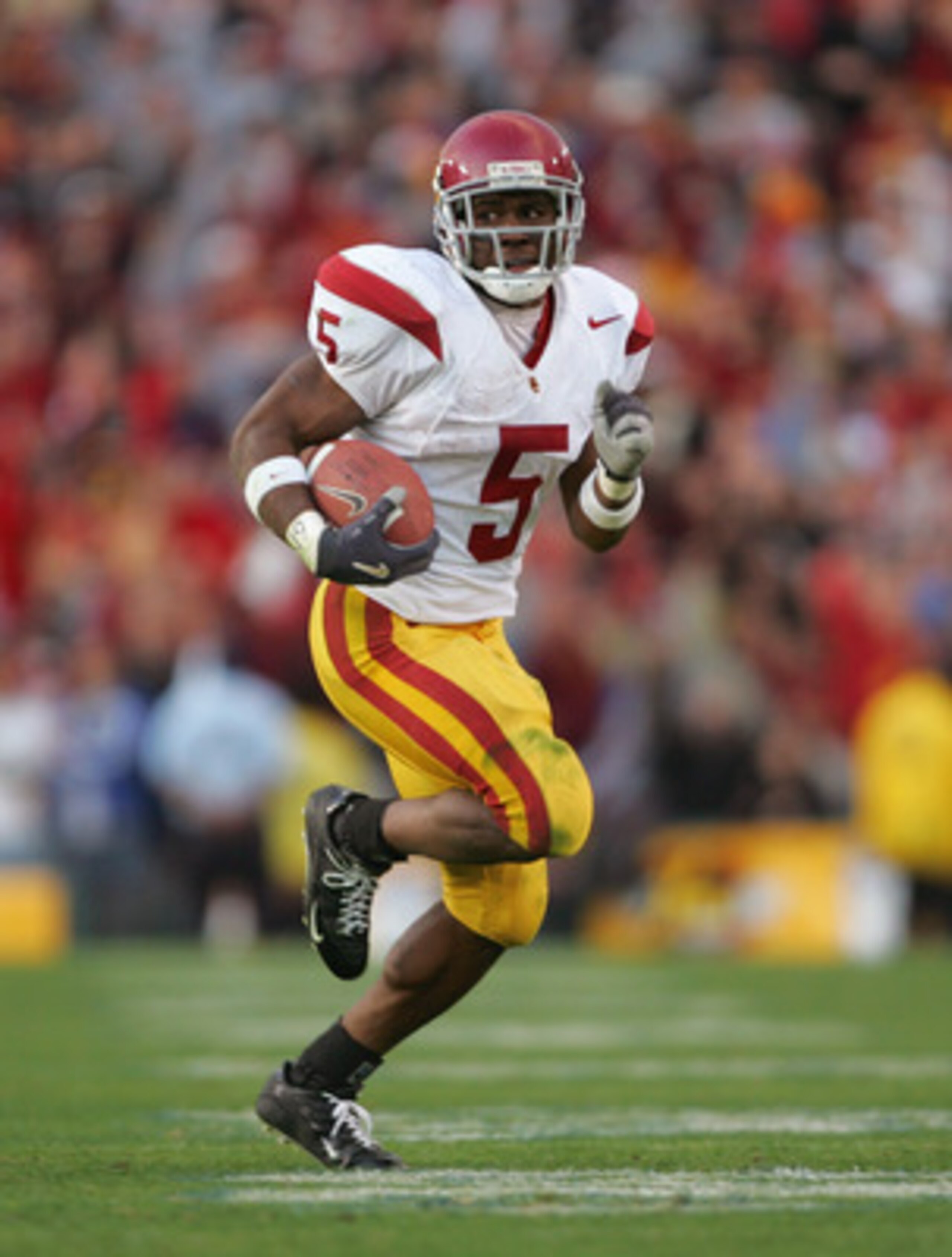
While plenty of people think this National Championship should rank much higher on any list of worst National Championship claims, it's important to remember the simple fact that at the time of the championship, it was a perfectly legit claim.
It wasn't until much later it was determined that USC, well, cheated.
The Reggie Bush scandal at USC will have lasting repercussions, and the Trojans won't be the same USC team for at least several more years.
USC has been stripped of its 2004 BCS National Championship, and one would think that would be the end of the story.
And ordinarily, it would be the end.
But the AP, which in 2004 had just left the BCS formula, decided not to strip USC of the AP National Championship, and you can bet USC will continue to claim the National Championship because of the AP's decision.
If USC were truly interested in putting the whole Reggie Bush era to bed, they'd do what they did with Bush's Heisman Trophy—return it without being asked or forced to do so.


7. Oklahoma, 1950
4 of 10
Oklahoma finished the season 10-0 and earned a berth in the Sugar Bowl.
Before playing that game, the AP and UPI named the Sooners the national champions.
Oklahoma then went ahead and lost to Kentucky in the Sugar Bowl.
Kentucky finished the year 11-1, as did Tennessee. If head-to-head games mean anything to anyone, this game should prove that Oklahoma was not the best team in the nation in 1950.
6. Tennessee, 1951
5 of 10
Tennessee followed up their 11-1 performance in 1950 with a 10-0 season in 1951 and gleefully claimed a National Championship before being trounced by Maryland 28-13 in the Sugar Bowl.
Maryland finished a perfect 10-0, including said win over Tennessee. Additionally, Michigan State finished with a perfect record, and Illinois and Georgia Tech finished unbeaten (but with a tie).
Of the five teams named a national champion by at least one selector after the 1951 season, Tennessee is the only team with a loss on their record.
5. Alabama, 1930
6 of 10
The Crimson Tide's only claim to the 1930 title stems from retroactively-applied selections.
However, Notre Dame was selected as national champions years later, as well as at the time, by several selectors. Additionally, Notre Dame was also chosen by the same selector as Alabama as "co-national champion."
While both schools had identical 10-0 records, when one of the teams was selected as a national champion at the time, one has to wonder why any school would claim to have won said national championship years later.
As we'll see, this isn't Alabama's only brush with dubious claims.
4. Alabama/Michigan/Notre Dame, 1964
7 of 10
While these three teams can be lumped together, all claiming a 1964 National Championship, its lofty ranking in our power ranking has more to do with the changes the four national champions (adding in Arkansas—the only undefeated team of the group) brought to the college football world.
After the convoluted 1964 season in which Alabama, Michigan and Notre Dame all ended with one loss, the AP undertook a bold new experiment.
Instead of releasing their final poll and naming their national champion immediately after the last game of the regular season, they decided to actually wait until after the bowl games had been played to name a national champion.
Today, that decision seems like a no-brainer, but back in the day, it was so controversial that the AP only did it for the 1965 season before returning to the pre-bowl selection process in 1966. Of course, the change back to pre-bowl selection only resurrected the problem, and after 1968, the AP released its final poll after all of the bowl games had been played—and continues to do so today.
For that reason, Alabama, Michigan and Notre Dame place fourth in our rankings of worst National Championship claims because of the positive changes those claims brought to college football.
3. Alabama, 1973
8 of 10
This wasn't supposed to be all about Alabama.
The Crimson Tide just seem to have a penchant for claiming anything under the sun as a National Championship.
From the last slide, you'll remember that after the 1968 season, the AP moved their selection of a national champion to after the bowl games. The other major selector of the day, UPI, had yet to follow suit (but would not long after the 1973 season).
Amazingly, the Sugar Bowl was able to get the top two teams in the nation—Notre Dame and Alabama—to play in the 1973 (Dec. 31) Sugar Bowl, in what amounted to a National Championship game.
Notre Dame beat Alabama, 24-23, and to this day every national championship selector—except UPI—lists Notre Dame as national champions.
And why not? Notre Dame and Alabama actually played in the last game of the year, and Notre Dame won. Every National Championship selection released after the Sugar Bowl lists the Irish as national champions. The only one released beforehand—UPI—lists Alabama.
So why does Alabama pathologically cling to the 1973 National Championship when it's absolutely clear they don't deserve it?
2. Michigan/Notre Dame, 1947
9 of 10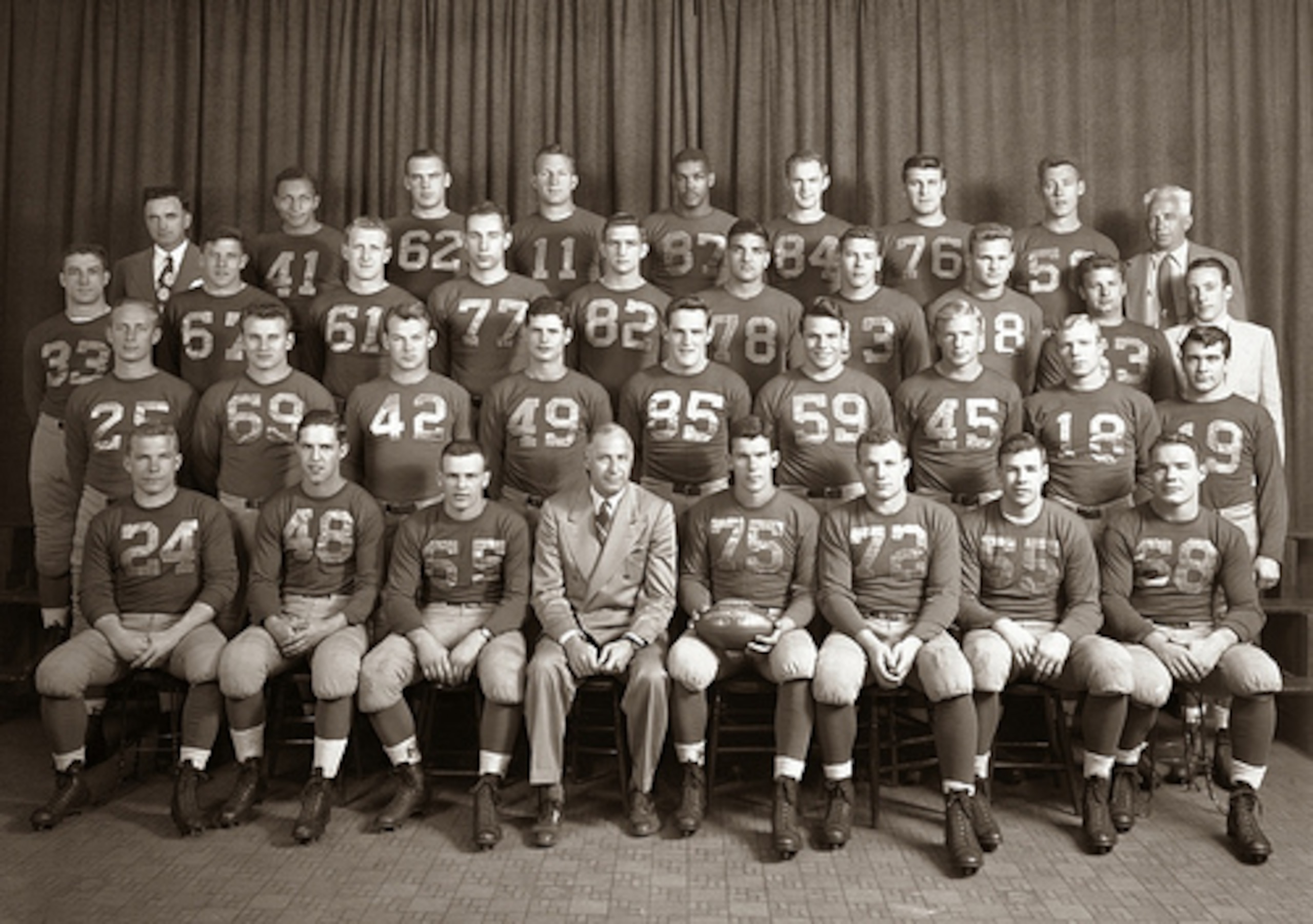
In what is perhaps the best (and worst) example of two teams claiming a National Championship that could have—and should have—been decided on the field, both the Wolverines and Fighting Irish claim the 1947 National Championship.
This was in Michigan's era of refusing to play Notre Dame—an era that began with Notre Dame's first victory over Michigan in 1909. In today's era of the annual rivalry game, it's hard to imagine that Michigan and Notre Dame met just twice between 1909 and 1978.
When Michigan finally decided to play the Irish again in 1942 and 1943, the No. 2 Wolverines saw their hopes of a 1943 National Championship disappear after losing to the No. 1 Irish. Michigan refused to play the Irish again until 1978.
In 1947, as the season progressed, Michigan and Notre Dame frequently switched positions in the AP poll between No. 1 and No. 2. In the week before the final game, Michigan held the top spot, but in the poll released after the final regular-season game, Notre Dame jumped Michigan and took over the No. 1 spot, despite both teams having won their respective games.
Michigan went on to the Rose Bowl and beat USC with ease, 49-0. The 49-point victory topped Notre Dame's 38-7 drubbing of the Trojans.
The Irish did not play in a bowl game at the conclusion of the season and clung to the final AP Poll as proof that the Irish were the better team.
A writer for the Detroit Free Press pointed out that in the three common opponents for the two teams, Michigan beat the three opponents by a greater margin in each meeting. Michigan's opponents also had a better win-loss record than that of Notre Dame.
Reporter (and later NFL commissioner) Pete Rozelle did nothing to settle the controversy when he wrote in his post-Rose Bowl account, "The consensus of the scribes [national press writers in the press box] was that the offensive-minded Ann Arbor squad deserved no less than a co-rating with the Irish as America's Number One Collegiate eleven."
The debate grew until the AP finally decided to hold a previously unplanned post-bowl poll.
In the final poll, Michigan won 226 first-place votes, Notre Dame won 119 first-place votes. There were also 12 votes listing both teams as No. 1. Additionally, 54 voters saw both teams play during the season. Their votes were 33 for Michigan, 17 for Notre Dame and four for a tie.
The dispute, which still exists today, can best be summed up by Michigan legend and All-American Dan Dworsky, who in a 1988 interview plainly said, "Notre Dame still claims that National Championship, and so do we."
1. Alabama, 1941
10 of 10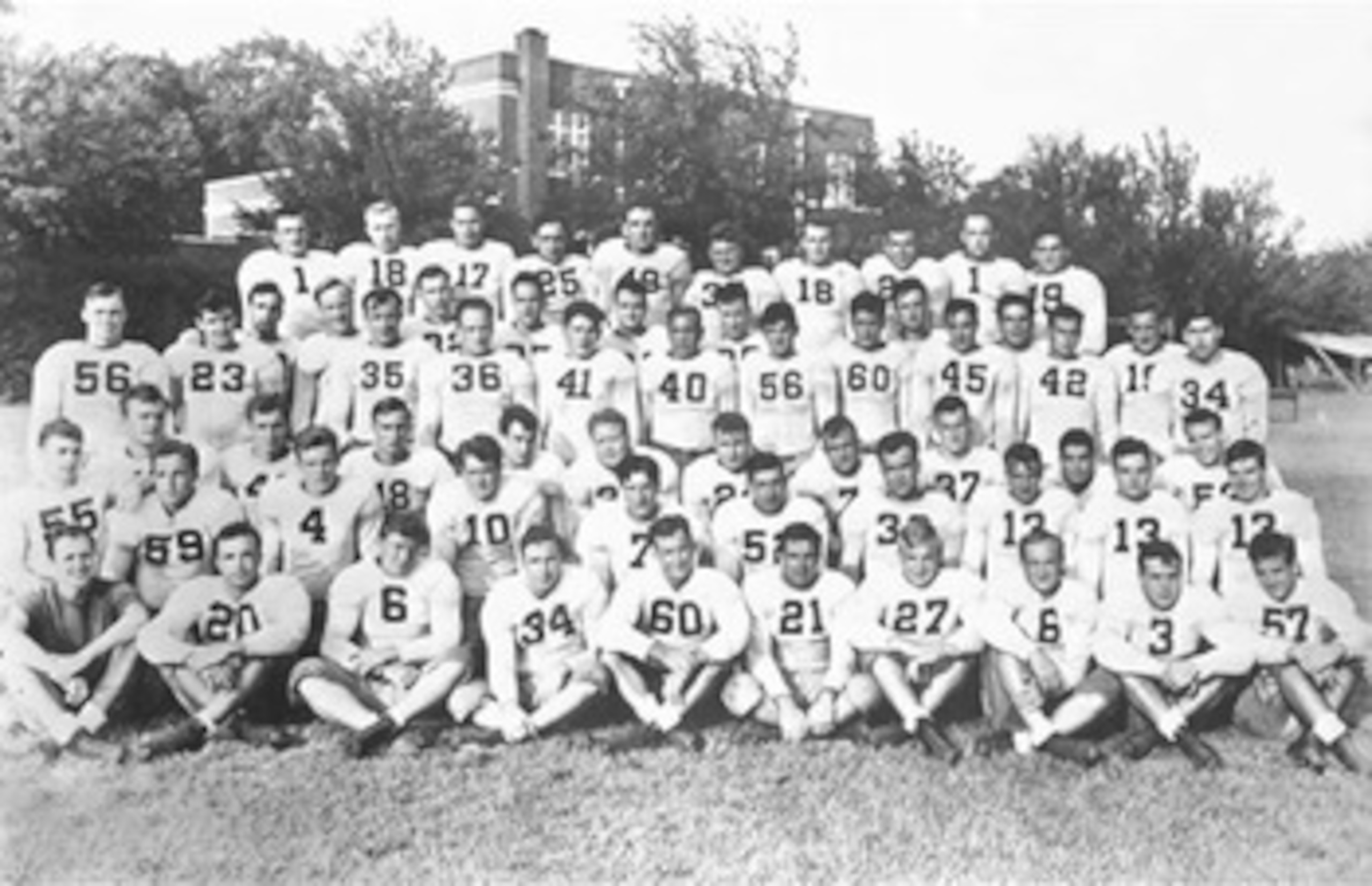
This claimed National Championship for Alabama can basically be filed under the, "You Can't Be Serious" heading.
Quite frankly, Alabama ought to be ashamed of itself for claiming 1941 as a National Championship year.
Any Alabama fan who defends this claim should likewise be shamed.
There is no way a 9-2 Alabama team could even conceivably be considered a national champion over 8-0 Minnesota and 8-1-1 Texas, both of whom also claim 1941 National Championships.
In fact, in the multitude of selectors picking national champions, only one dared select Alabama—The Football Thesaurus.
The pick was so bad that shortly afterward, The Football Thesaurus and their Houlgate System of selecting a champion became increasingly irrelevant to the point that by 1950, it was no longer recognized as even a minor selector of National Championships (even though the system itself survived until 1958).
If all of that wasn't bad enough, Alabama finished third in the SEC in 1941. Third!
What a joke.
Alabama claims 13 National Championships. Of those 13, only seven could be classified as "solid" or "reasonable" claims. The other six are highly questionable at best, and a couple listed herein probably don't even rank that well.
_0.png?w=2560)


.jpg?w=2560 "NFL investigating 2 referees for separate viral exchanges")
.jpg?w=2560 "OBJ Calls Out Giants 😳")


.jpg?w=2560 "Ward Nearly Walks Out of Presser 😳")
.jpg?w=2560 "Tyreek makes another cryptic post amid Chiefs rumors")