
College Football: 120 FBS Teams, 12 Conferences—How We'd Divide Up the Leagues
With all of the conference realignment currently sweeping college football and constant talk of a need for an FBS playoff system, it's only natural to look at things as they are now and wonder “what if...”
What if we could rearrange the conferences to our liking?
What if we could institute a playoff system?
What would those new conferences look like, and how would they figure into the new playoff system?
Since summer is now unofficially under way for much of the country, let's kick off the summertime fun with a little college football world remodeling.
Where We Stand Today
1 of 15
There are currently 11 conferences with FBS programs. Six of those conferences are BCS Automatic Qualifying conferences.
Most conferences are aligned by roughly geographical boundaries, with neighboring conferences overlapping.
Because of the money involved with the BCS, and the size of the biggest programs at the top of the six major conferences, it's pretty difficult for the non-AQ programs to compete nationally in the BCS era.
Of course, programs like Boise State, TCU, Utah and to a lesser extent Fresno State and in the past Ball State, Central Michigan, Troy and a few others have made inroads into the Top 25 rankings. But year in and year out, these programs are shut out of the BCS formula for a complex and interconnected series of circumstances.
Regardless of one's opinion of polls, the theory is that the 2011 polls should be about 2011—not 2010 or 2009 or any other year.
To put it another way, does anyone outside of Auburn really believe that Auburn is going to be a Top-15 team in 2011? All of the early polls seem to suggest it will. But that, of course, has nothing to do with 2011. It's all a product of the massive success of the 2010 Auburn Tigers—a team that, for the most part, no longer exists in any sense of the word.
When a “small” program comes out of nowhere to post a 12-0 or 11-1 season, by late fall, it usually gets rewarded with a spot in the Top 25. But it's never anywhere near the top six or so teams and is still usually shut out of the BCS system (unless it happens to be the aforementioned Boise State, TCU or Utah). Ball State in 2008 is a prime example. After winning its first 12 games of the season, Ball State was still a program on the outside of the BCS.
What about Boise State in 2010? Was it less deserving of a BCS selection than one-loss Wisconsin? How about two-loss Virginia Tech? Say what you will about Boise's schedule, but it didn't lose to a team from a lower division—like Virginia Tech.
What about Central Michigan in 2009? A 12-2 team that only lost to Arizona and Boston College was relegated to the GMAC Bowl.
Clearly the system could use some tweaking.
A Good Place to Start
2 of 15
Conference realignment is as good a place as any to get started. But it helps nothing if the BCS AQ conferences simply swap programs.
Sure, Utah and TCU have or will soon join BCS AQ conferences, but where does that leave programs like Boise State, Troy or Central Michigan?
One possible solution is to completely reconfigure the conference landscape.
A pipe dream? Perhaps. But again, it's as good a place to start as any.
While shuffling the current non-AQ programs into the fold, it's important to keep a few things in mind.
First, current conference alignments and rivalries should be maintained if at all possible.
Second, regional television broadcasts and the money they generate are the grease that keeps this train moving and must be a top consideration.
Thirdly, in-state and neighboring state competition should be place at a premium, as they decrease costs for everyone, which is especially important to the “smaller” programs that don't turn massive profits. Plus, backyard brawls are a lot of fun.
With all of this in mind, let's get started.
Finally, beginning in 2011, the NCAA has lifted its moratorium on programs transitioning to the FBS. Consequently, there will be four new provisional FBS programs this season that will attain full FBS status in 2013. They are UMass (MAC), Texas State (WAC), South Alabama (Sun Belt) and Texas-San Antonio (WAC).
Thus, each conference will have either 10 or 12 teams.
Here we go...
The Northeast Conference
3 of 15
Boston College
Rutgers
North Carolina
Duke
Maryland
Navy
Massachusetts
North Carolina State
East Carolina
Virginia Tech
Virginia
Wake Forest
This new alignment would preserve some of the most important rivalries in the conference, such as Duke-UNC and Virginia-Virginia Tech, and would add UMass, giving rise to a new annual BC-UMass series.
It also doesn't severely weaken the conference to the point of not being able to compete with the nation at large.
.jpg?w=2560)

The Eastern Conference
4 of 15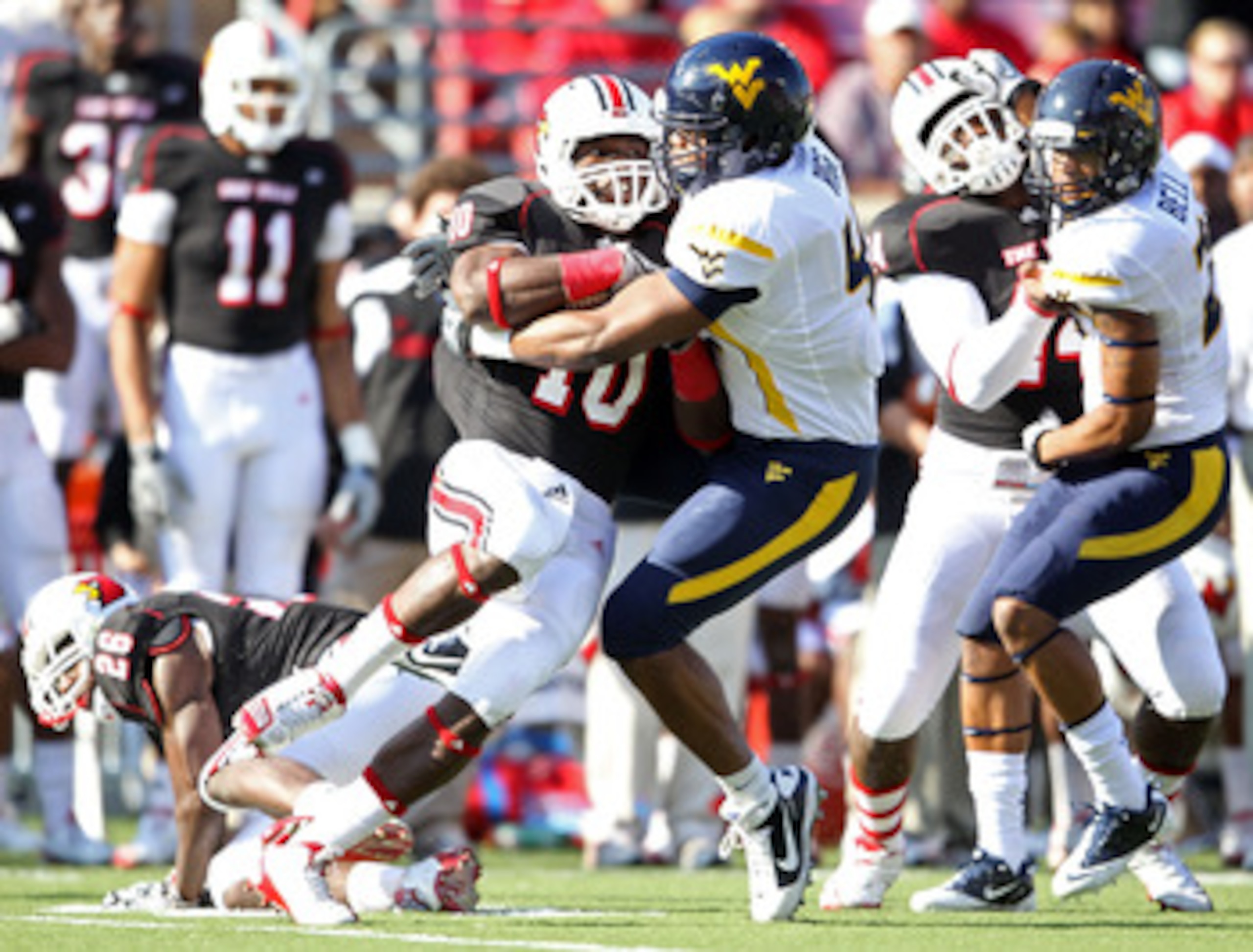
Cincinnati
UConn
Army
Louisville
Pittsburgh
Syracuse
West Virginia
Penn State
Ohio
Marshall
Miami U
Temple
The new Eastern Conference would add Penn State, Ohio, Marshall and Miami University while losing Rutgers from the old Big East. This has the advantage of creating a very strong, tightly bound conference. The Big East is currently considered the weakest of the BCS AQ conferences. It's also the smallest FBS conference (in terms of football-playing members), meaning it has some room to grow.
The addition of Penn State would be an instant boost and would create an instant annual grudge match between PSU and Pitt. Cincy would also benefit from the addition of three other Ohio programs in Marshall, Miami and Ohio.
The Great Lakes Conference
5 of 15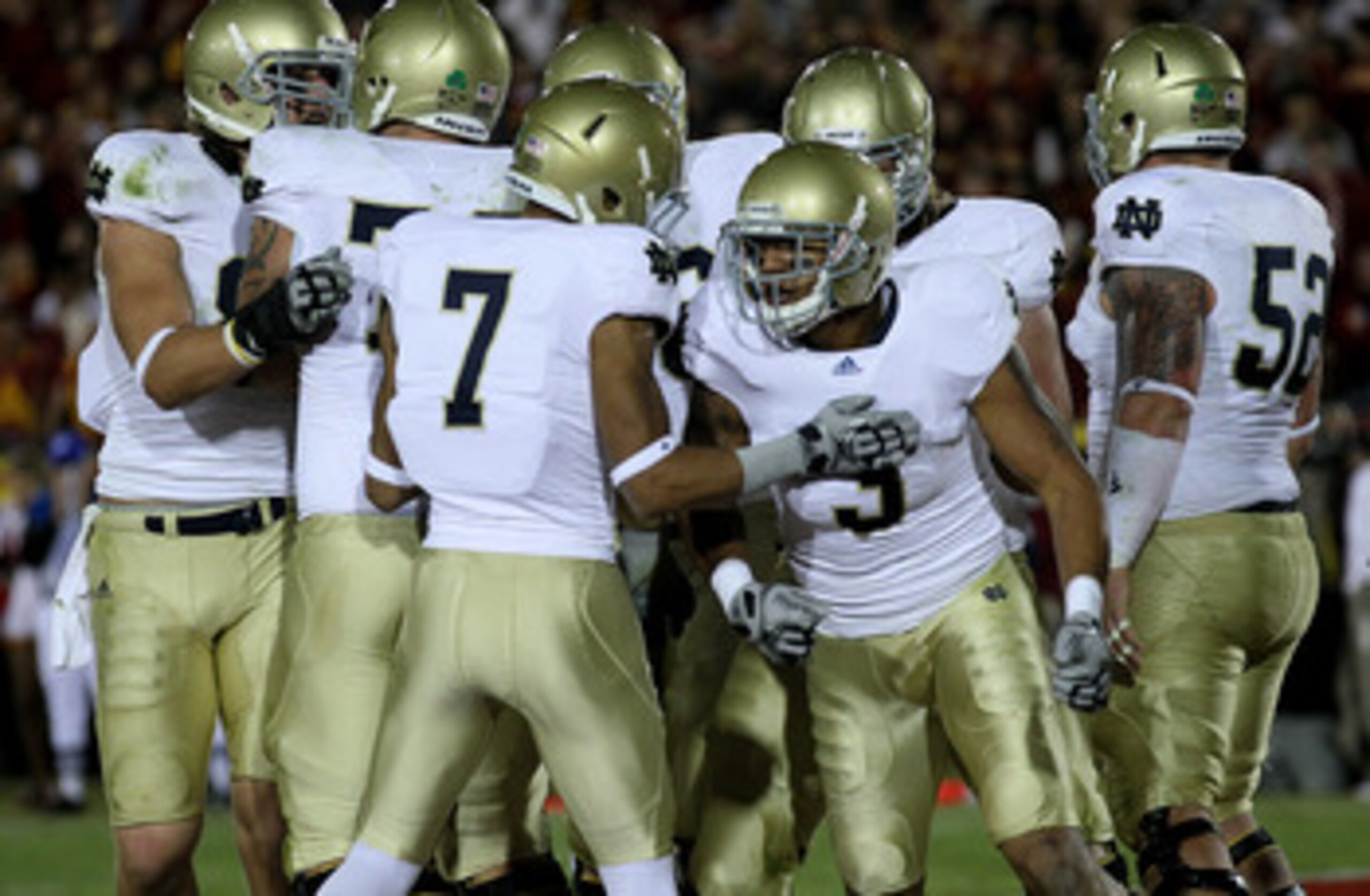
Michigan
Michigan State
Western Michigan
Central Michigan
Eastern Michigan
Ohio State
Wisconsin
Minnesota
Indiana
Purdue
Notre Dame
The Big Ten would see some major changes, losing not only Penn State to the Big East, but also excising Northwestern, Iowa, Nebraska, Illinois and Minnesota.
Those seemingly major losses would be made up with the addition of Notre Dame and the instant in-state rivalry that already exists between EMU, CMU and WMU. Plus, let's not forget that it was just a couple seasons ago that CMU walked into Spartan Stadium in East Lansing and walked out with a big “W” over Michigan State.
There are a lot of people who would like to see MSU, WMU and CMU play more often—including MSU and CMU, as they recently signed a three-way contract.
A new name would probably be in order, as there is already a “Great Lakes Intercollegiate Athletic Conference” in existence. The GLIAC plays in Division II.
The Midwest Conference
6 of 15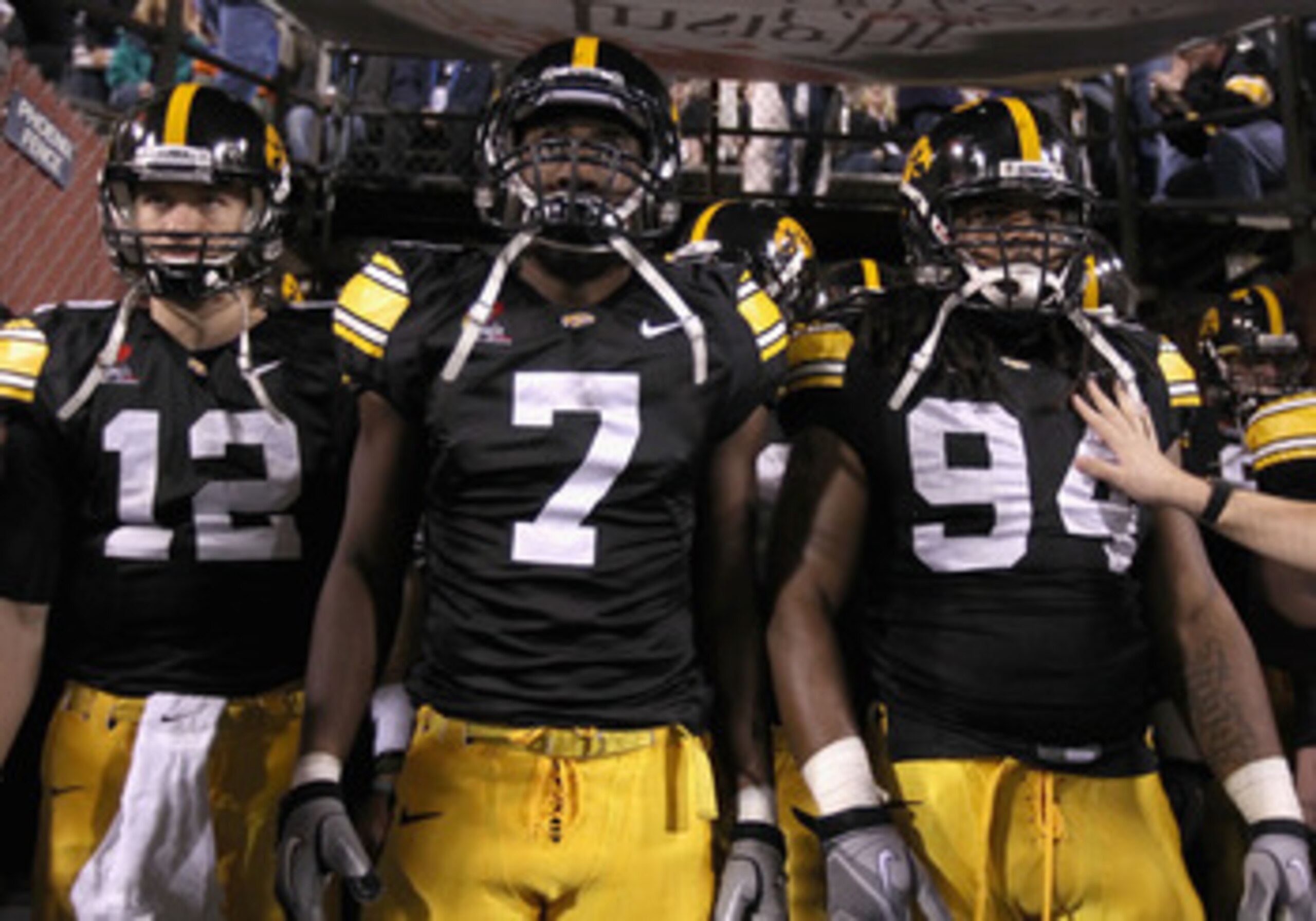
Northwestern
Ball State
Northern Illinois
Illinois
Iowa
Iowa State
Toledo
Akron
Kent State
Buffalo
Bowling Green
One of today's weakest conferences, the MAC could certainly use some muscle. They'd get it with the influx of current Big Ten members Northwestern, Illinois and Iowa into a new Midwestern conference.
Hopefully, these additions would spur the rest of the remaining MAC members to pick up the slack a little bit.
A new Illinois-only series would be created with the three FBS schools from that state all in the same conference.
The Southern Coastal Conference
7 of 15
Florida
Florida State
Miami
Central Florida
Florida International
South Florida
Florida Atlantic
Georgia
Georgia Tech
South Carolina
Clemson
This one is sure to really tick off all of those people who suffer from the superiority psychosis known as being an SEC fan.
Ask anyone from Tennessee on south, and they'll tell you that the SEC is God's gift to the world of football. Ask anyone else, and they'll give you some version of how the SEC has been lucky, there's an SEC poll bias or some other reason to excuse the SEC's recent successes away.
Regardless, if everyone else is going through this fictional change, the SEC has to go through it too.
Remember, just because the members of the conference change doesn't mean that the individual members themselves would instantly become better or worse.
The SEC would be the current AQ conference that would undergo the greatest amount of change. First off, all of the Florida programs would be in one conference. Secondly, the entire western part of the current SEC (plus the Tennessee schools and Kentucky) would move to other conferences.
The Gulf Coast Conference
8 of 15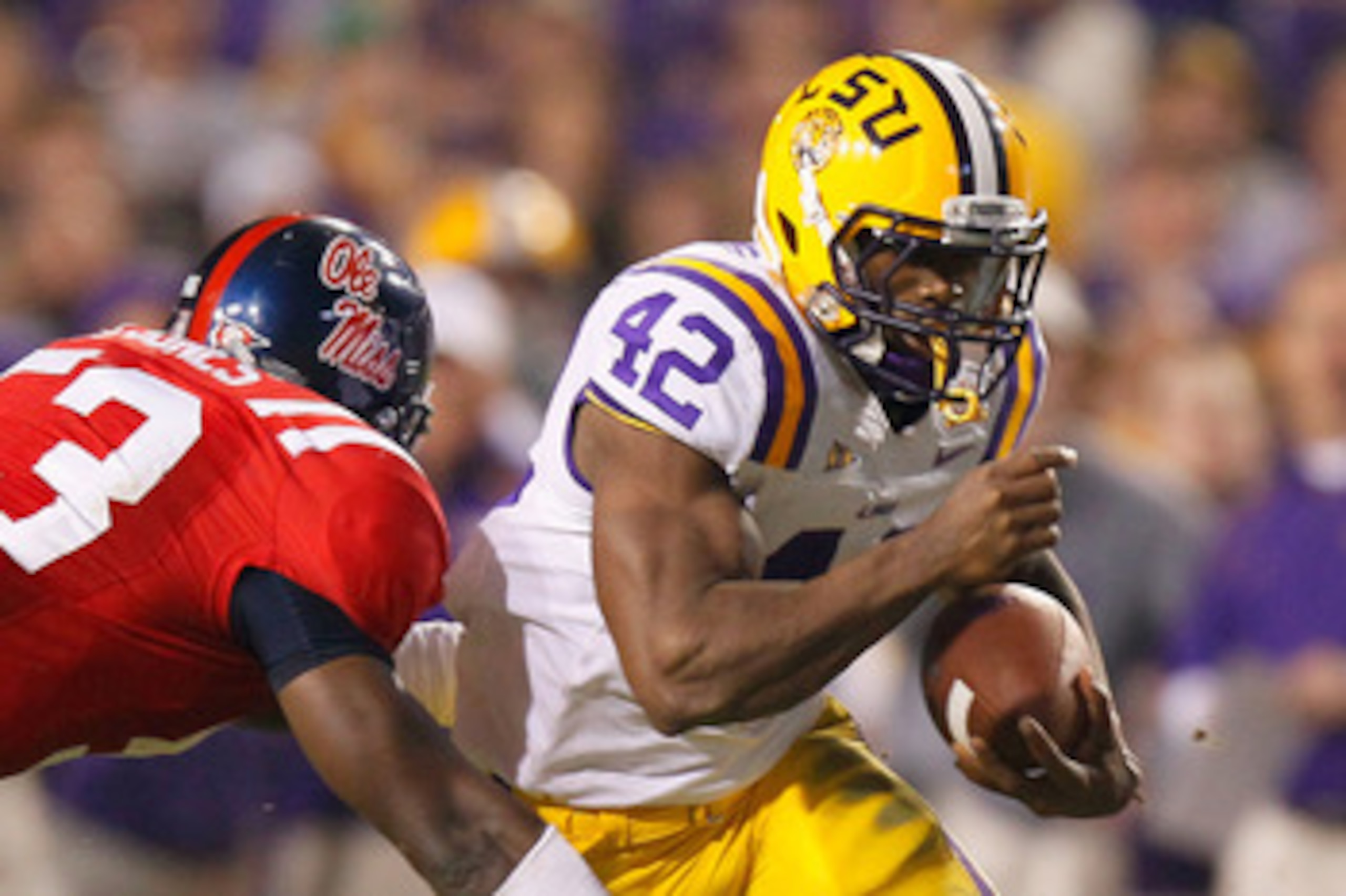
LSU
Tulane
Louisiana Tech
Louisiana-Lafayette
Louisiana-Monroe
Arkansas
Arkansas State
Mississippi State
Mississippi
Southern Mississippi
Troy
This new conference would obviously be a very Louisiana-heavy conference, with all five programs appearing in the same conference for the first time. This would certainly help the smaller Louisiana programs, as LSU couldn't possibly fit the entire population of Louisiana high school talent on its roster.
This new conference would also have all of the Mississippi and Arkansas schools together, making for a very tight-knit conference.
The Dixieland Conference
9 of 15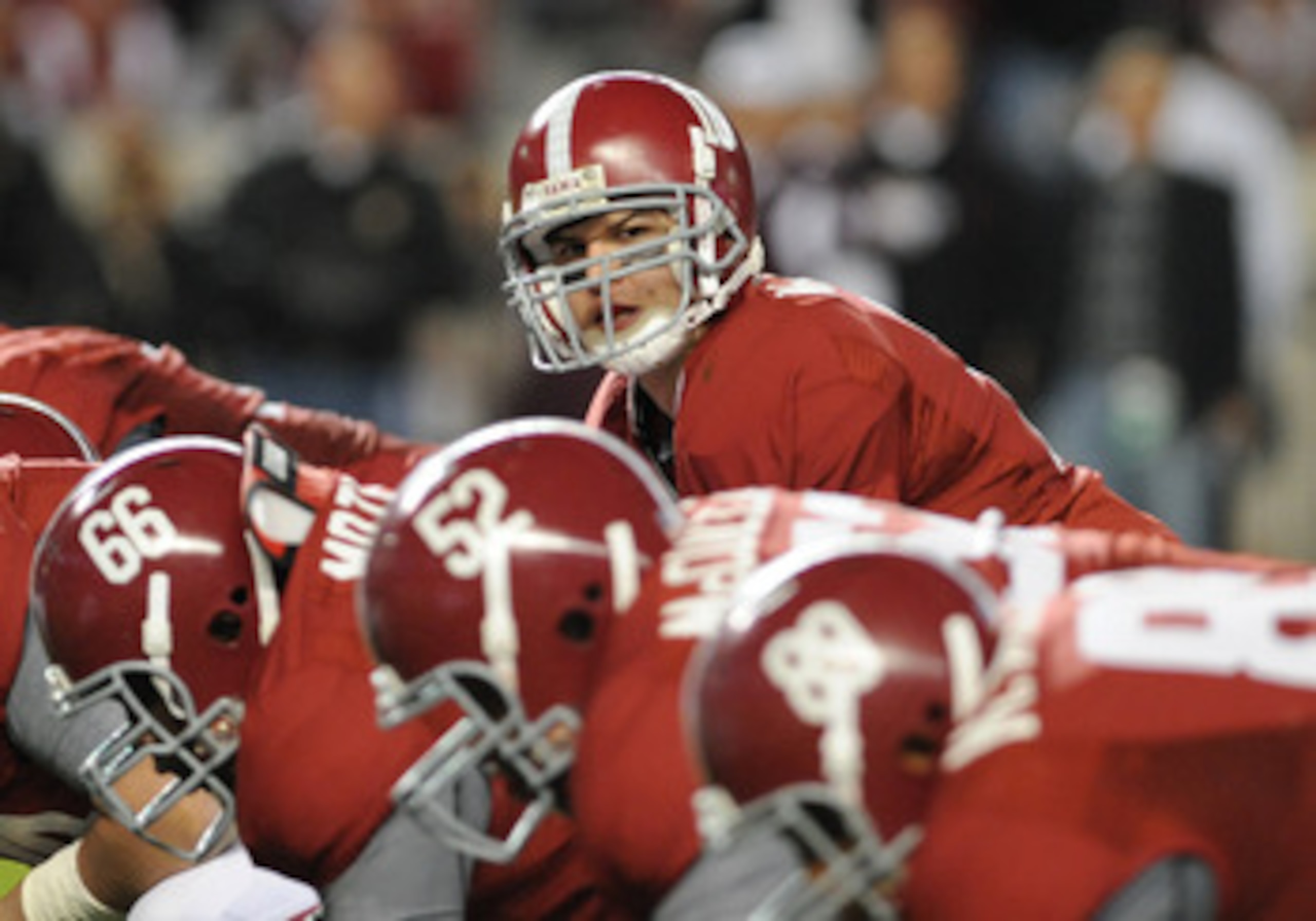
Alabama
Auburn
UAB
South Alabama
Kentucky
Western Kentucky
Vanderbilt
Tennessee
Missouri
Middle Tennessee State
Memphis
This new conference would have a wide swath of old and new, AQ and non-AQ programs. It also lends itself to several new rivalries while preserving some of the great rivalries of today.
You can't very well have any new conference with Alabama that doesn't include Auburn. All of the Tennessee schools are also lumped together as well.
Add UAB and soon-to-be new FBS program South Alabama, and you have a nice conference in the center of the country's South.
The Lone Star Conference
10 of 15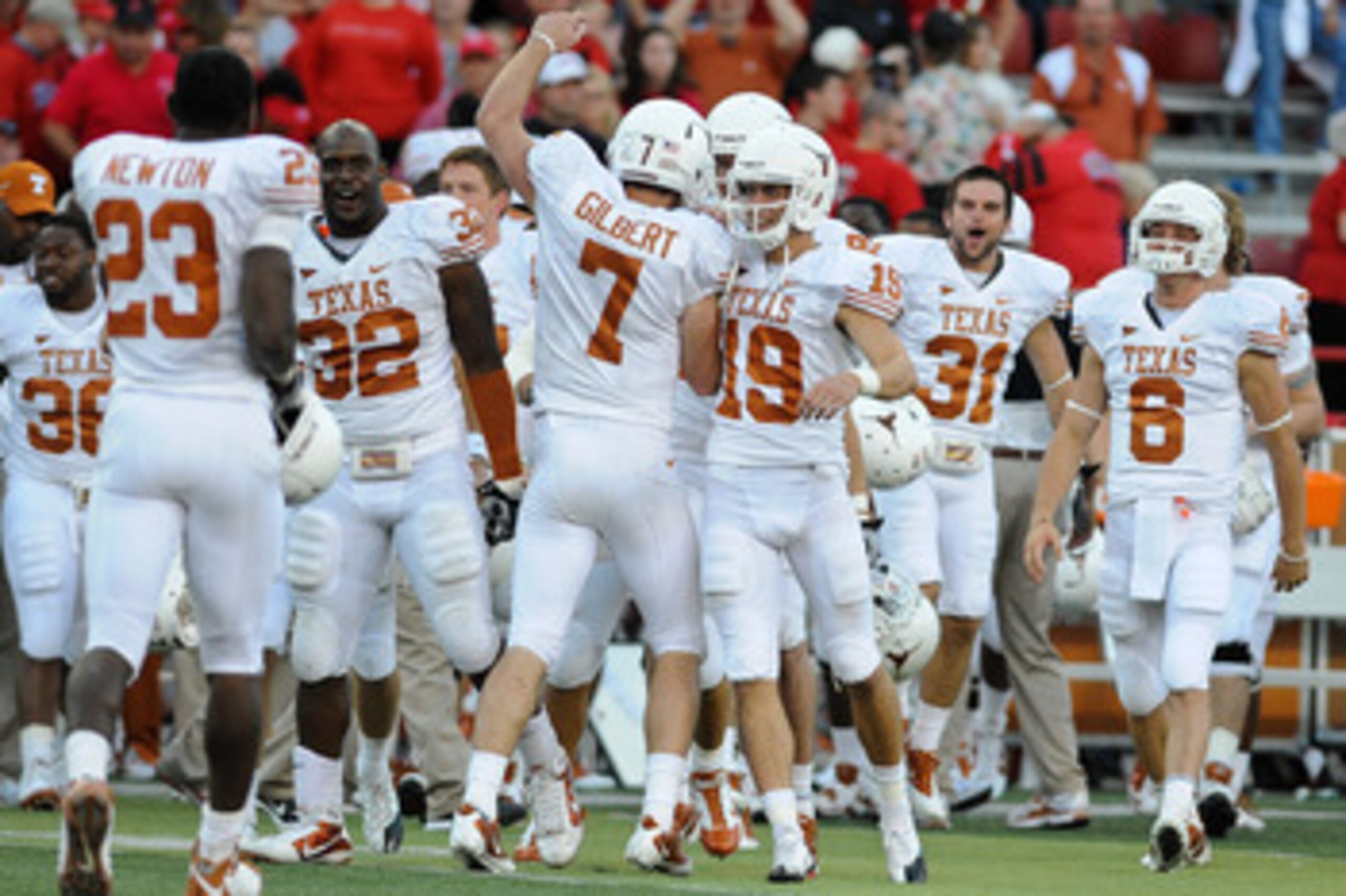
Texas
Texas A&M
Texas Tech
North Texas
TCU
Texas State
Texas-San Antonio
Rice
Houston
SMU
Baylor
A conference unto itself, the state of Texas is soon to be home to 12 FBS programs (with the addition of UTSA and Texas State). The only Texas school left out of this fictional new conference would be UTEP—the Texas school most geographically isolated from the rest of the programs in the Lone Star State.
There isn't much need for elaboration on this conference, as its rivalry potential is obvious. Unfortunately, the name “Lone Star Conference” is already taken by a Division II conference. But there's no doubt Texans could put their heads together and come up with something equally Texan in nature to describe this new conference.
The Great Plains Conference
11 of 15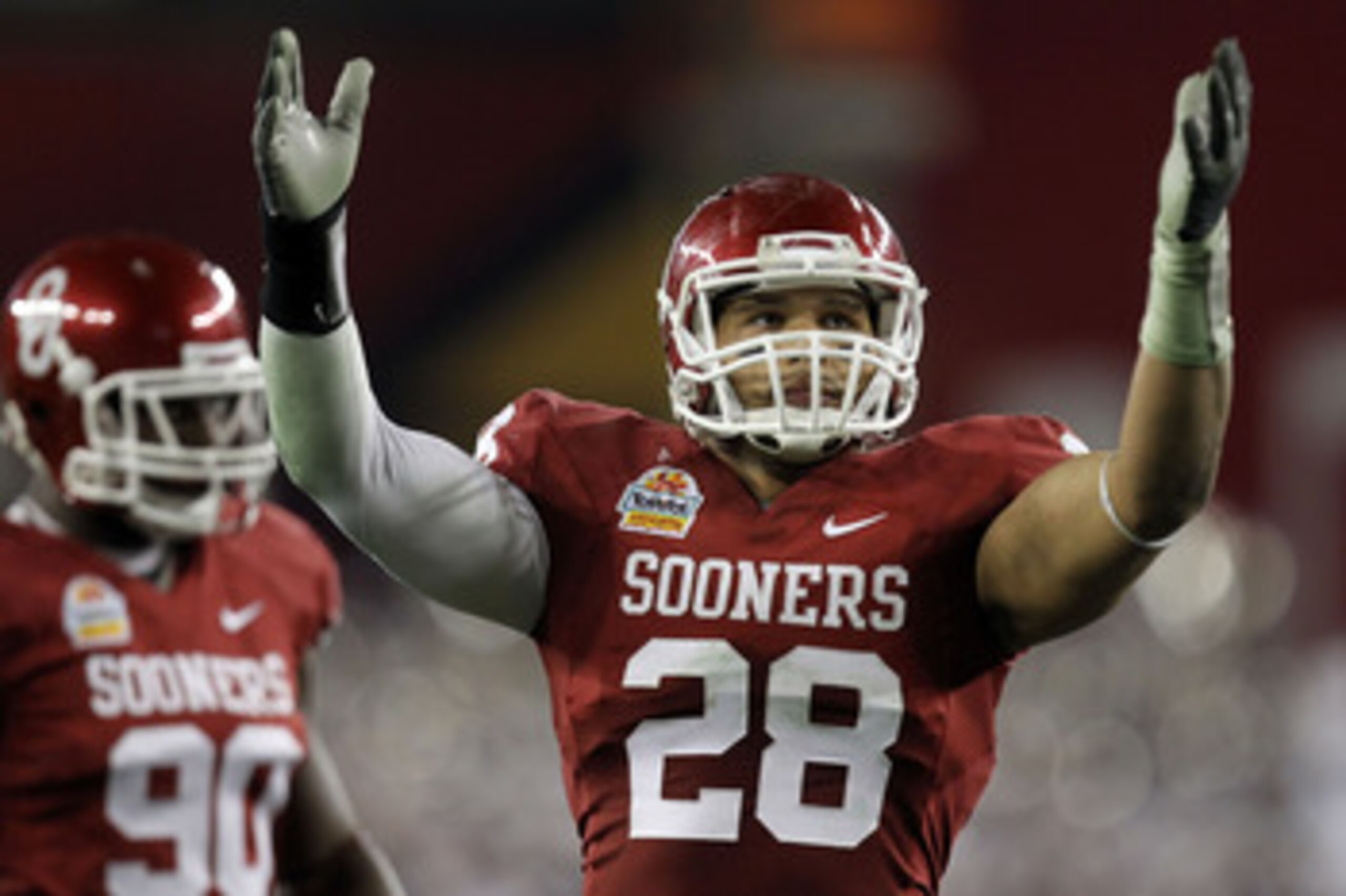
Oklahoma
Oklahoma State
Tulsa
Nebraska
Kansas
Kansas State
UTEP
New Mexico
New Mexico State
Air Force
Colorado
Colorado State
Here we have another conference of relative geographic snugness. Of course, when you're talking about western states, being close together means something entirely different from what it does on the East Coast.
Still, all of the Colorado programs, Oklahoma programs, Kansas programs and New Mexico programs are together, and we've added in UTEP for good measure (as UTEP is closer to NMSU than it is to any other FBS program in Texas).
The Northwest Conference
12 of 15
Idaho
Boise State
Washington
Washington State
Oregon
Oregon State
Utah
Utah State
Nevada
UNLV
Wyoming
BYU
This new conference would definitely have some intriguing new rivalries emerge, as the entire Pacific Northwest bands together to battle it out for a postseason berth.
Idaho could definitely use some of the prestige that playing Boise State would bring. Boise, in turn, would be helped out by the addition of Oregon, Oregon State and Utah to the conference schedule, and vice versa for all of those teams as well. We're also preserving the budding new western rivalry between Boise and Nevada.
The Southwest Conference
13 of 15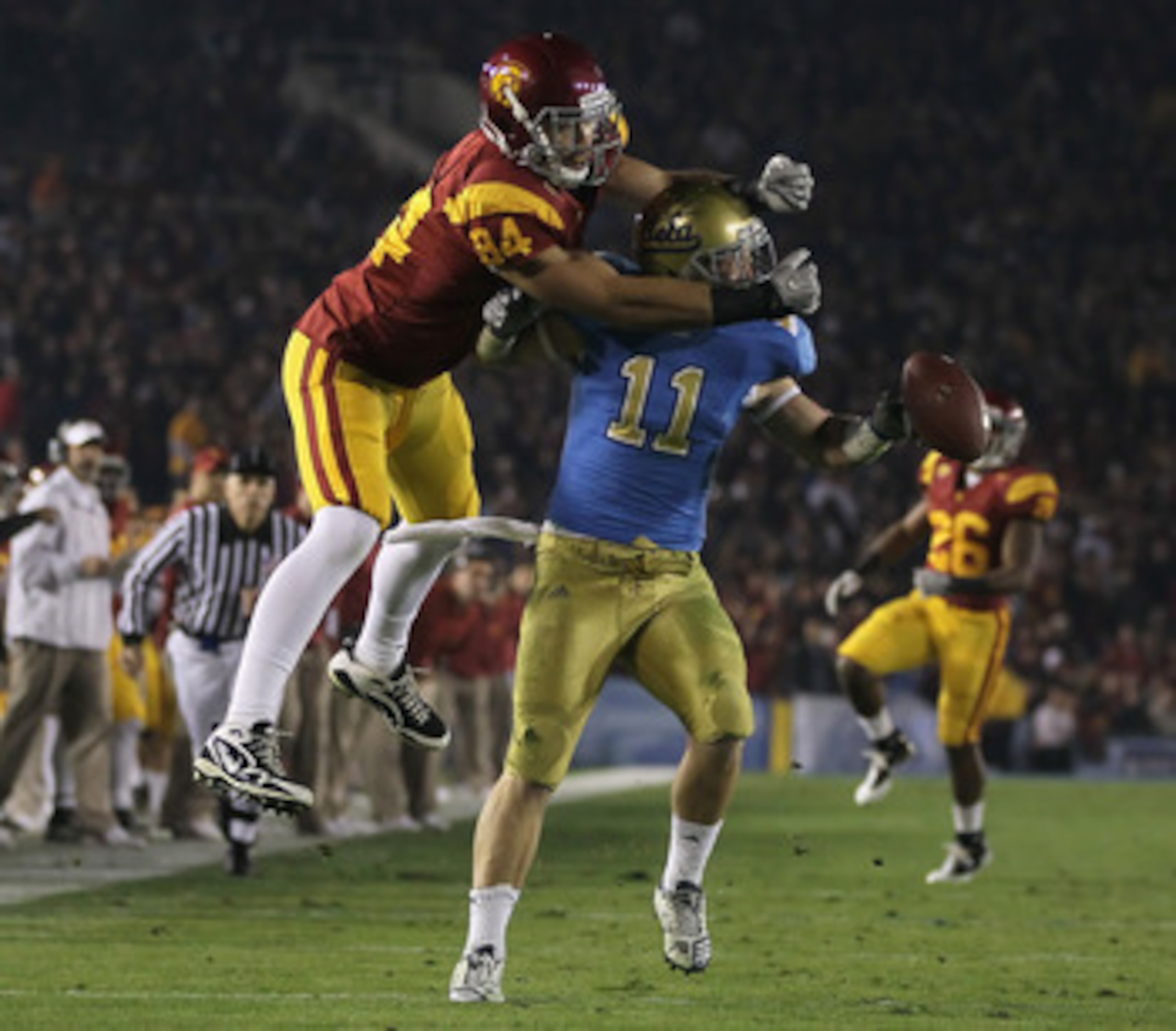
California
Stanford
San Jose State
San Diego State
USC
UCLA
Fresno State
Hawai'i
Arizona
Arizona State
Lumping in all of the California schools, with the addition of Arizona, ASU, and Hawai'i, would definitely give this fictional conference a distinctive Southwestern feel.
This conference would have a great recruiting pool to pick from across the Southwestern United States, and the combination of some traditionally strong programs and some not-so-strong programs would be a boon for those “smaller” programs looking for more exposure.
Next, the Playoffs!
14 of 15
We'll work on the assumption that each of the new conferences would operate under the divisional model, and each conference would have a championship game.
That leaves us with 12 winners at the end of the season.
Now, everyone loves to talk about the polls. Love 'em or hate 'em, it gives everyone something to discuss during the season. So let's not simply make the polls meaningless (as they mostly are in the FCS, Division II and Division III).
After all of the conference championship games, the BCS (yes, we'll assume it's still around) rankings will cull the bottom four conference champions, leaving us with the eight highest-ranked conference champions in the nation.
Those programs would meet in the Rose Bowl, Fiesta Bowl, Sugar Bowl and Orange Bowl, with each conference having a “preferred” bowl (for instance, the Rose Bowl would have first shot at the Southwest and Great Lakes conferences, and so on).
After the BCS bowl games, we now have four winners. Time for the semifinals.
The two winners from those games meet up a couple of weeks later in the BCS national championship game.
Sounds simple enough, right?
A Conclusion
15 of 15
This is all, obviously, not going to happen.
There is simply too much money plugged into the current conference system. There's also the problem of programs being married to their conference, regardless of how archaic and unintelligent that marriage has become. The best examples are the SEC and Big Ten. Those conferences would never change their names or allow a major split of their current membership.
Why not? After all, the SEC is merely a collection of programs that have little in common other than their scheduling. Geographic location doesn't even play that much of a role these days; otherwise South Florida and Troy would be members of the SEC.
Most of the other BCS AQ conferences are the same say.
There's also one other little issue with our experiment. We only took into consideration football. While football is easily the most popular of college sports, that's not necessarily true at every school. Even at institutions where it is, there are usually around 20 other sports teams that need to be considered. A move that works out well for football may not be the best idea for the basketball, volleyball, baseball, softball, swimming and track teams.
There's always the possibility of creating football-only conferences—the way it's done in Division I hockey (CCHA instead of the Big Ten and MAC, for example). But that's unrealistic, considering the current conferences make the bulk of their money off football (except for the Big East, the “Division I-AAA” conferences and maybe one or two others).
In conclusion, this fantasy outlined here isn't necessarily meant to show the college football world as it should be. It's merely meant to show that a makeover of the entire system is possible and could work out better than the system in place today.
.jpg?w=2560)




.jpg?w=2560 "Reported Details of Seahawks-K9 Split ⛓️💥")
.jpg?w=2560 "Buzz: Bears TE Likely Out for Season")