
College Football Rankings 2011: Projecting Next Year's Preseason Top 25
With one more game left on the 2010 college football schedule, it’s time to begin turning our attention to next season and taking a look at what teams will likely fill out 2011 preseason ballots.
By all means, feel free to disagree and/or comment, as I’m sure some teams will be seen as completely deserving or undeserving of their spots on this list.
Without further ado…
No. 25 Tulsa Golden Hurricane (2010 Record: 10-3)
1 of 24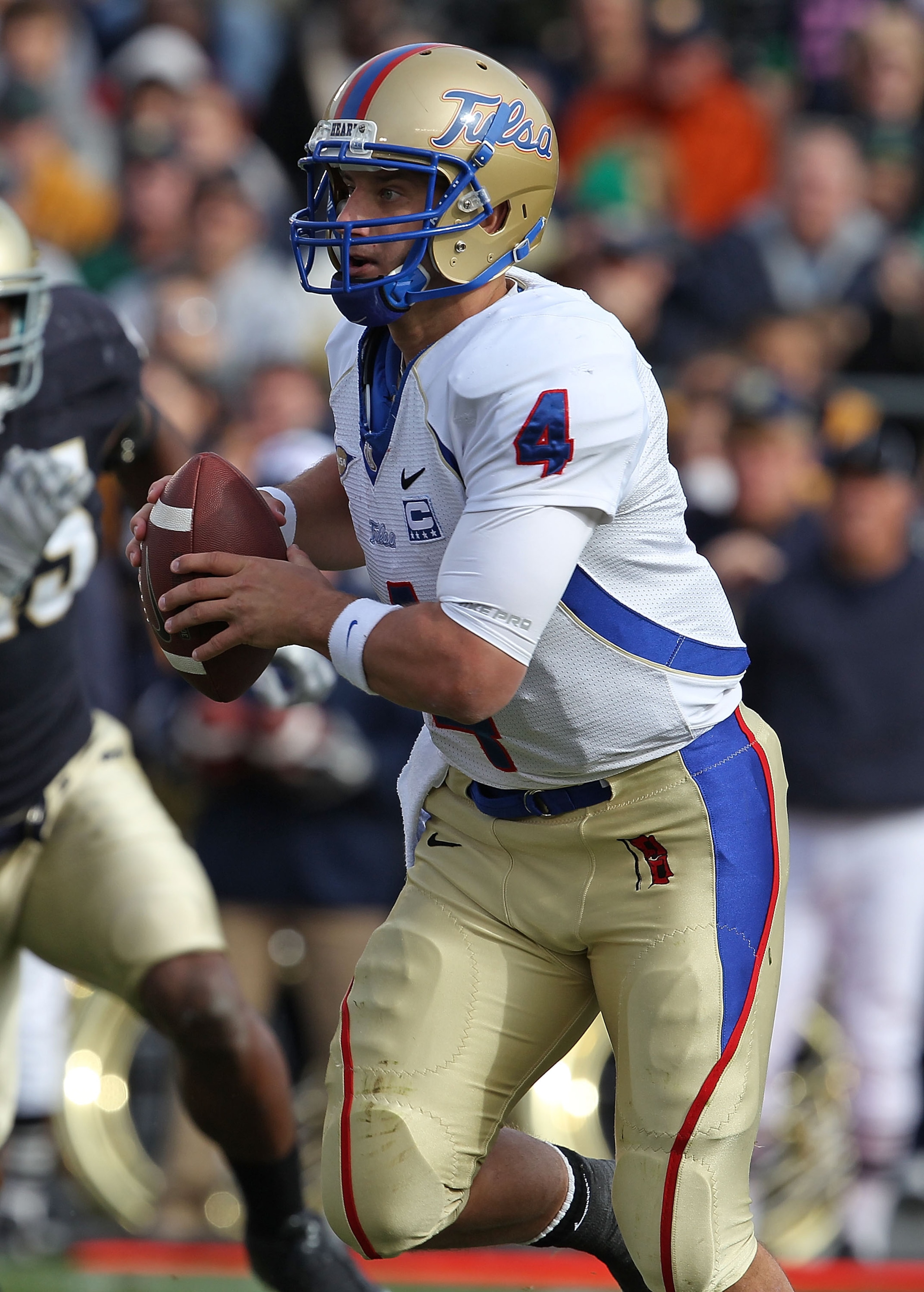
The Golden Hurricane welcome back 19 starters next season. The noise will be made on offense, where all-conference quarterback G.J. Kinne and NCAA record-holding return man Damarius Johnson are but a pair of 10 players who return to anchor a unit that finished fifth nationally in 2010.
Tulsa narrowly missed out on a trip to the Conference USA title game, losing a tiebreaker to SMU, but expectations for Todd Graham’s team in 2011 could extend beyond the league crown.
No. 24 Connecticut Huksies (2010 record: 8-5)
2 of 24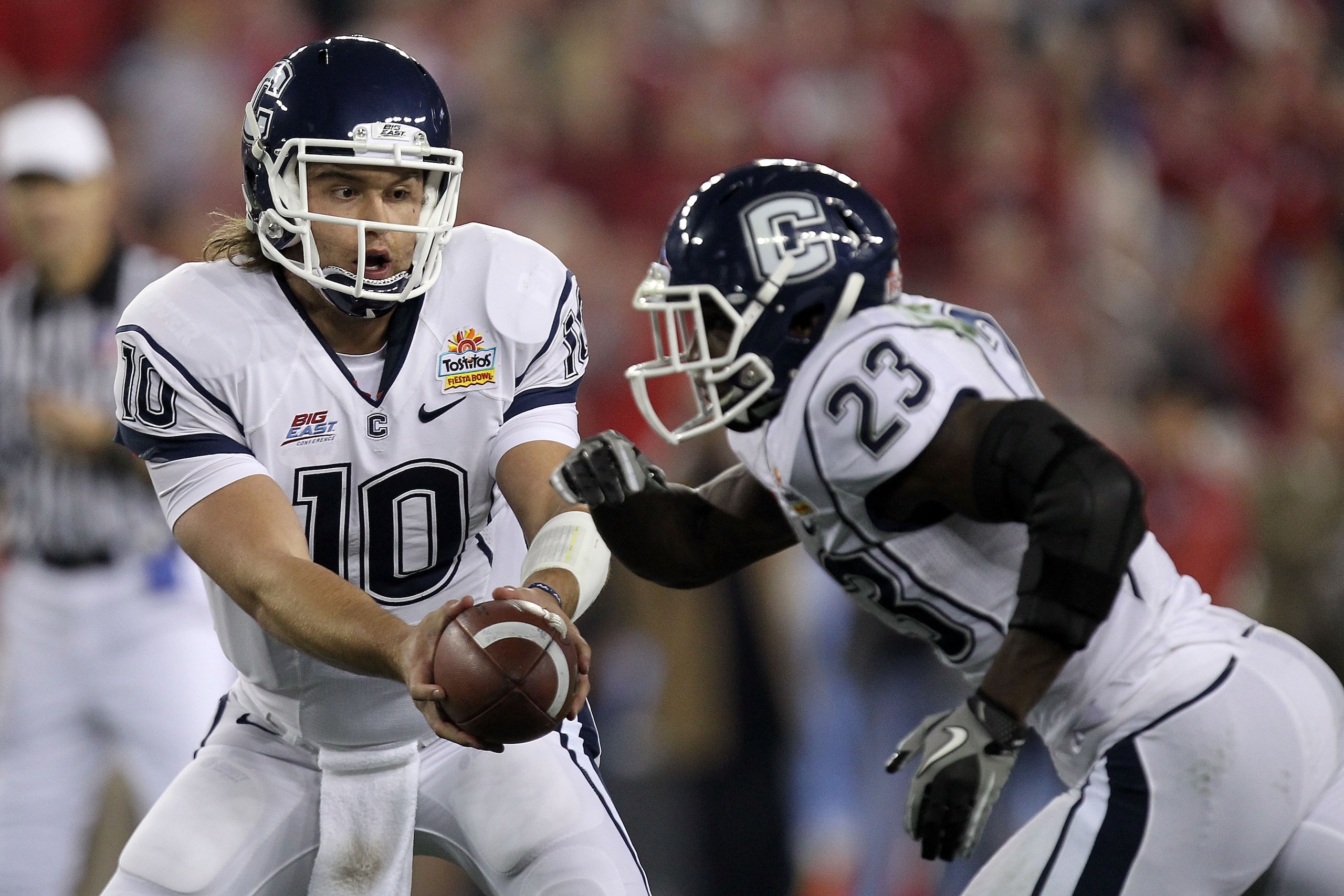
The Huskies ended 2010 on a sour note in the Fiesta Bowl, but there’s little shame in losing to Oklahoma. The question facing this team in 2011 will be whether it can sustain the momentum generated by the program’s architect, Randy Edsall, who bolted for Maryland shortly after the 2010 season.
Beyond that, UConn has to adequately fill the void at quarterback with Zach Fraser graduating and also find a replacement for Jordan Todman, who will skip his senior season to enter the NFL draft.
No. 23 Michigan Wolverines (2010 Record: 7-6)
3 of 24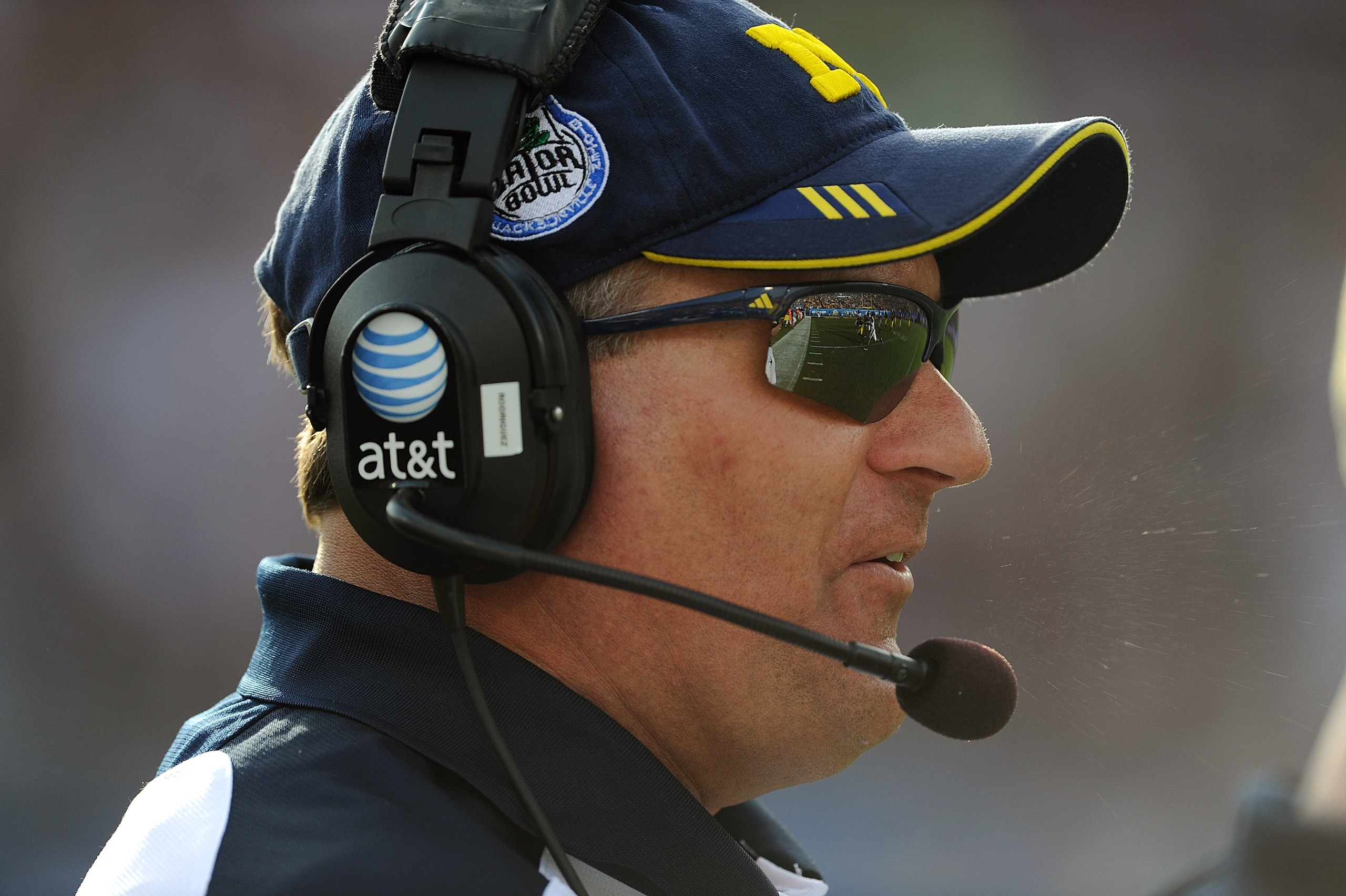
Doing away with Rich Rodriguez had to be done, but now the major reconstruction job awaits whoever is hired in his place. The first order of business will be to calm the nerves of those recruits who have been taken aback by the instability in Ann Arbor.
Next, will be addressing the defense, which was a clear and present issue all season long. Michigan ranked 108th nationally defense in 2010 and allowed 30 or more points nine times, including 137 over their final three games.


_0.png?w=2560)
No. 22 Georgia Bulldogs (2010 record: 6-7)
4 of 24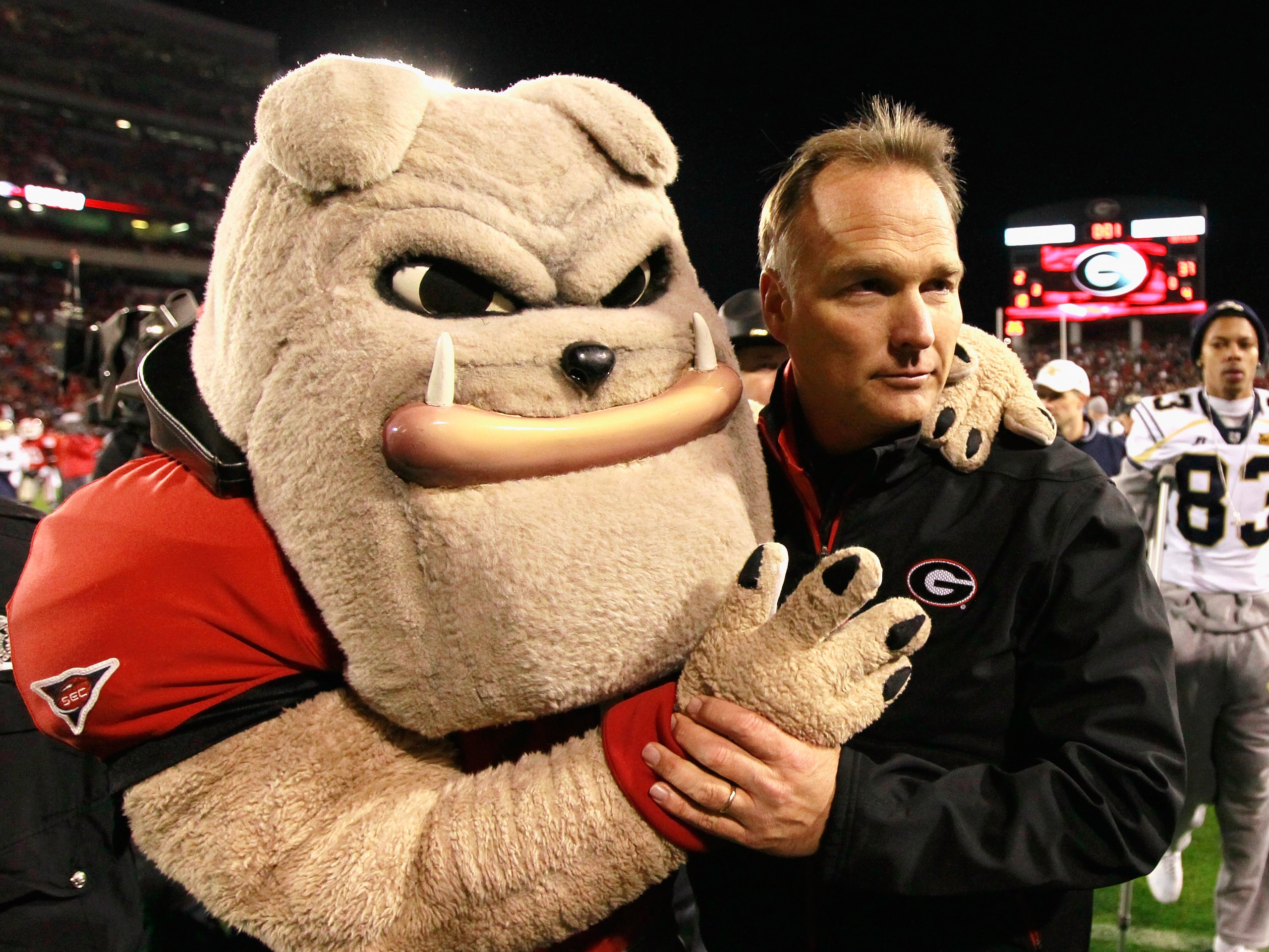
If Georgia tanks for a third consecutive season in 2011, Mark Richt won’t have any excuses.
Applauding the recent internal adjustments made by athletic director Greg McGarity, who attempted to streamline things by freeing the head coach of some of his administrative obligations, Richt said he’ll now have more time to, “study the game and be an expert and be on the cutting edge.”
Time will tell if a decreased workload will benefit Richt, who already is in hot water after the Bulldogs finished 2009 7-5 and posted the program’s first losing record in 14 years this season.
No. 21 Notre Dame Fighting Irish (2010 record: 8-5)
5 of 24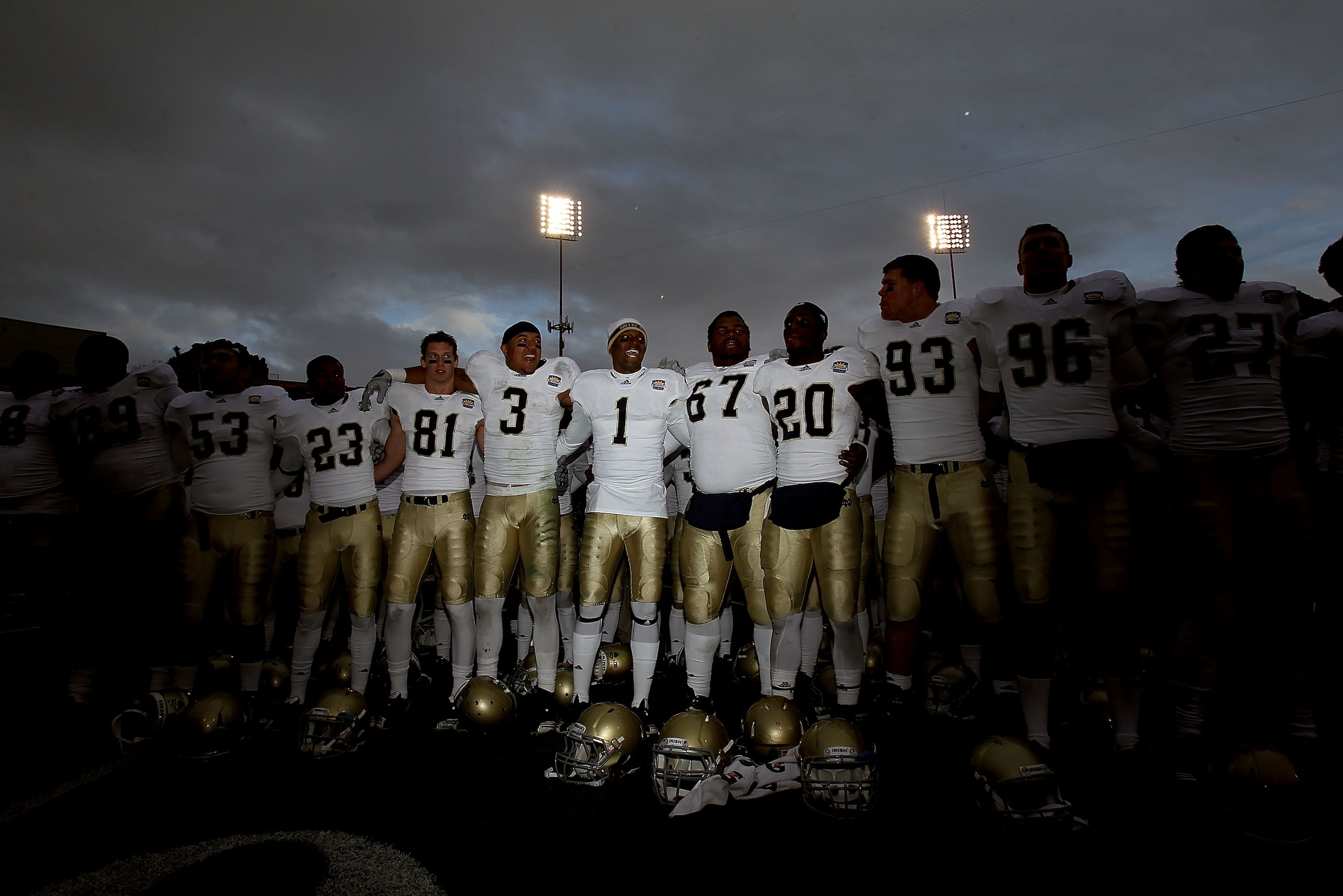
I’m certain the annual bloated preseason expectations will blow through South Bend beginning in mid-April, like they do every season, but 2011 won’t be without its challenges for Brian Kelly.
Other than having to replace Kyle Rudolph and possibly Michael Floyd, the Irish face questions at running back. There’s always the schedule too, which features home games against Navy, USC, Michigan State and road dates at Michigan, Pittsburgh and Stanford.
No. 20 Mississippi State Bulldogs (2010 record: 9-4)
6 of 24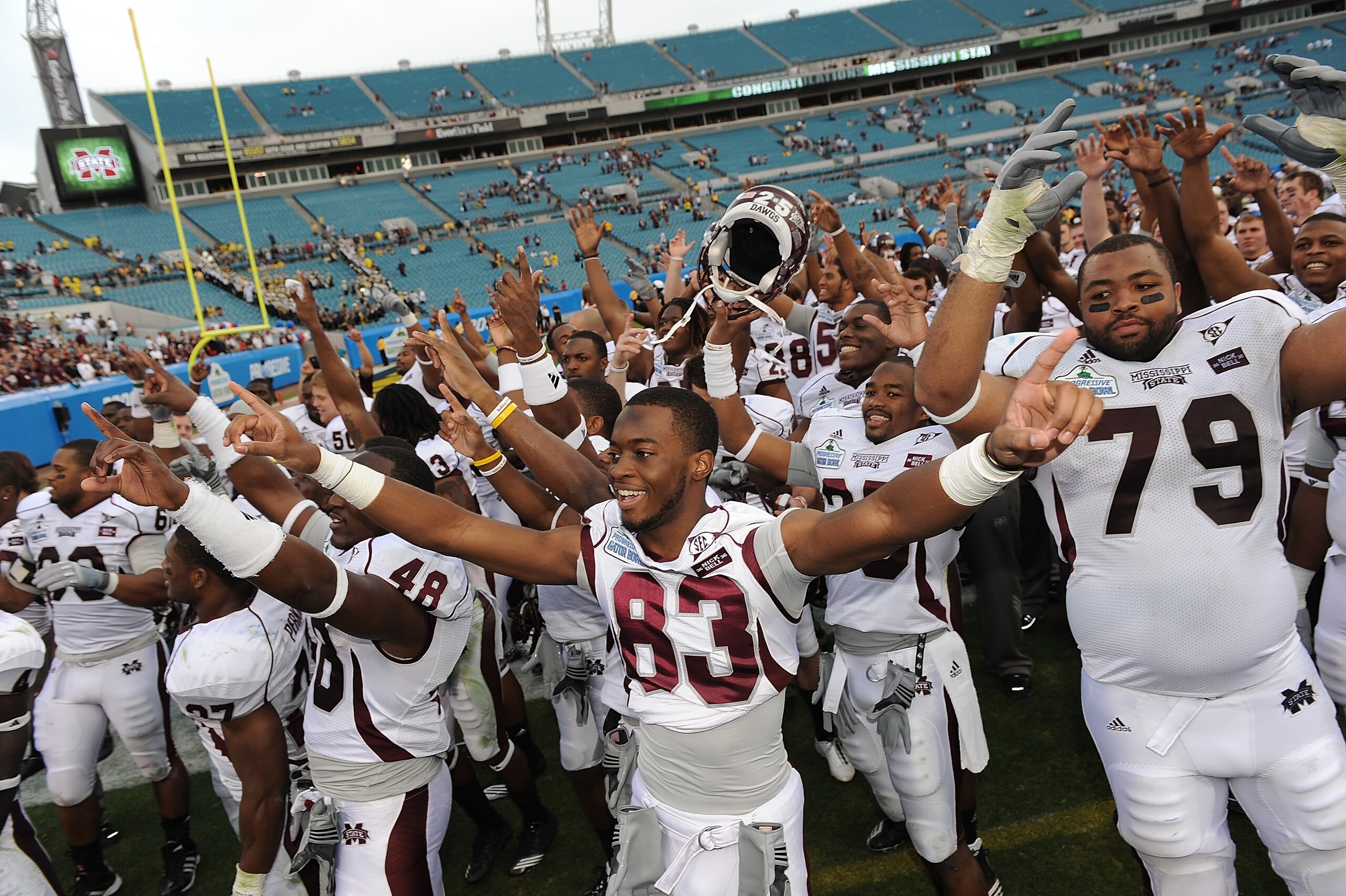
Dan Mullen wasn’t lying when he said he had no interest in the job at Florida, and he appears to be on a mission of finishing what he started in Starksville, reviving what was traditionally known as the SEC's doormat.
The Bulldogs, which ranked second in the conference with 215 rushing yards per game, return eight starters on offense, including dual-threat quarterback Chris Relf, who was the team's second-leading rusher.
No. 19 South Carolina Gamecocks (2010 Record: 9-5)
7 of 24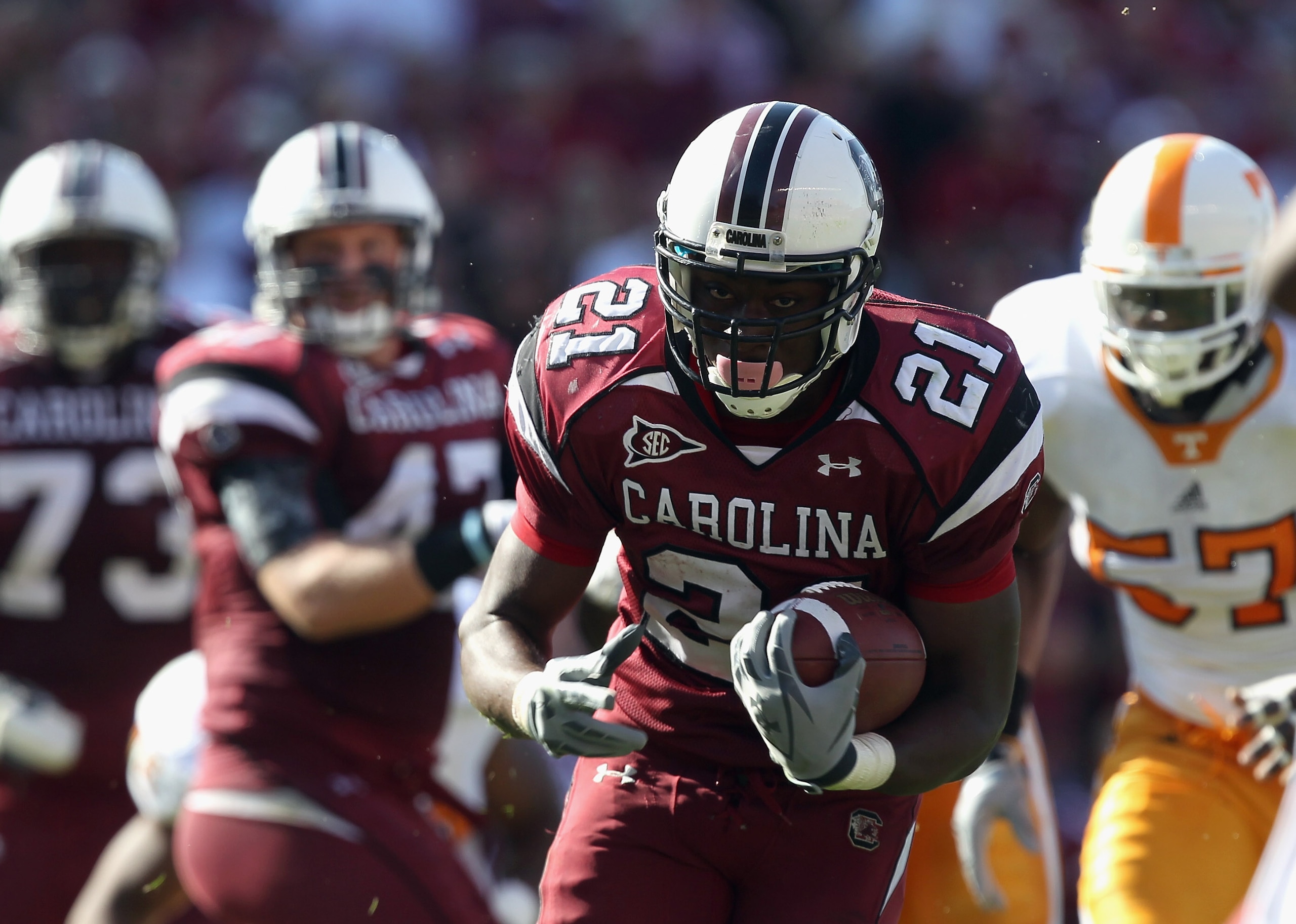
All-world running back Marcus Lattimore returns to headline the Gamecocks’ offense, but is Stephen Garcia—uncharacteristically solid for much of 2010—really the answer at quarterback? If Spurrier does not think so, Connor Shaw could be South Carolina's 2011 starter.
Questions also abound in the front seven where South Carolina was so stout this season, leading the SEC in run defense. Among those who will depart include linebackers Tony Straughter and Josh Dickerson, defensive tackle Ladi Ajiboye and All-SEC defensive end Cliff Matthews.
No. 18 Virginia Tech Hokies (2010 record: 11-3)
8 of 24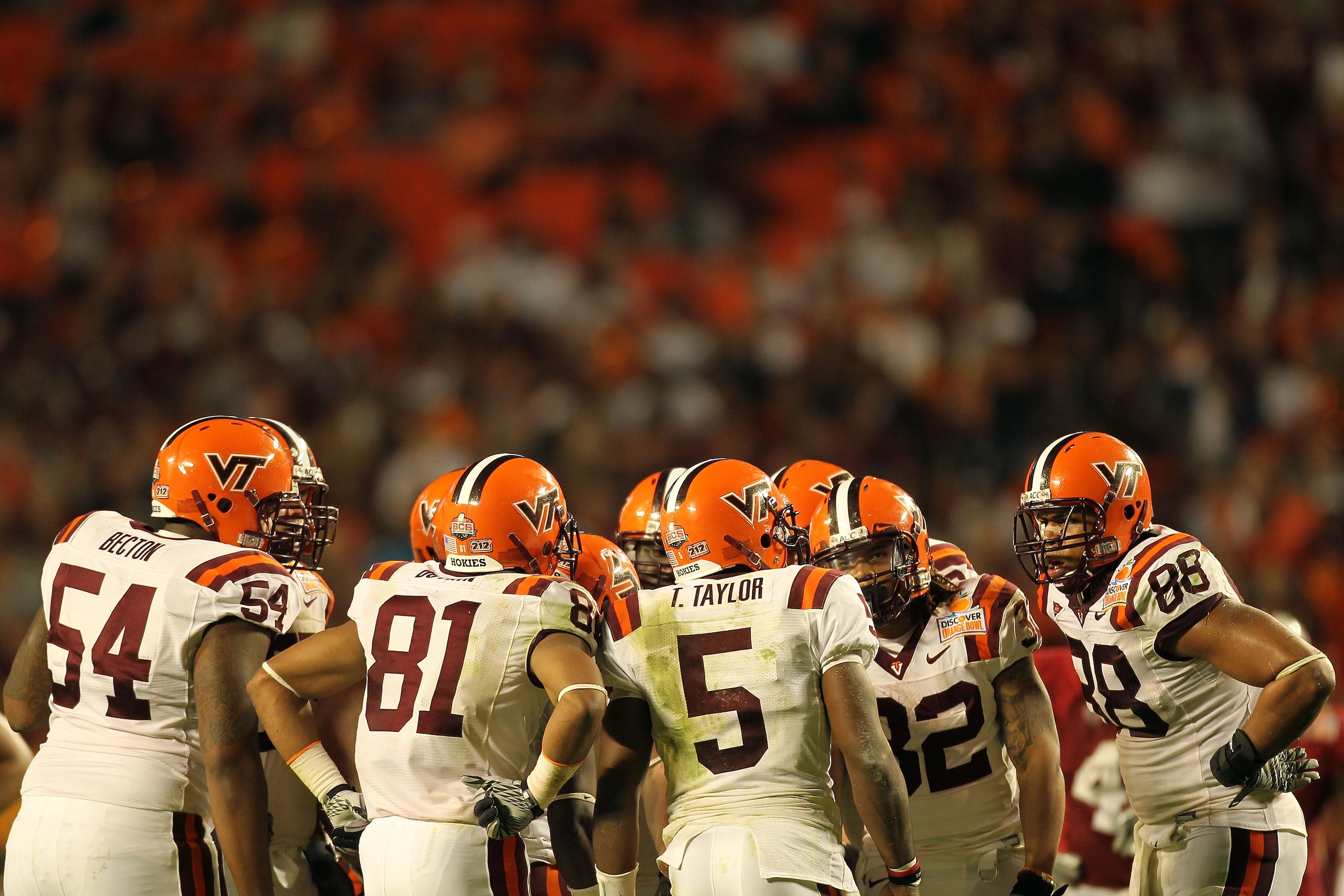
As long as Bud Foster is in Blacksburg, the Hokies will be salty on defense. That’s good, because Frank Beamer has some issues to deal with on offense, and they extend beyond having to replace Tyrod Taylor at quarterback.
Running backs Ryan Williams and Darren Evans, who combined with Taylor for 1,990 of Virginia Tech’s 2,782 yards on the ground in 2010, have both decided to enter the draft, leaving the primary back duties to junior David Wilson.
No. 17 Florida State Seminoles (2010 record: 10-4)
9 of 24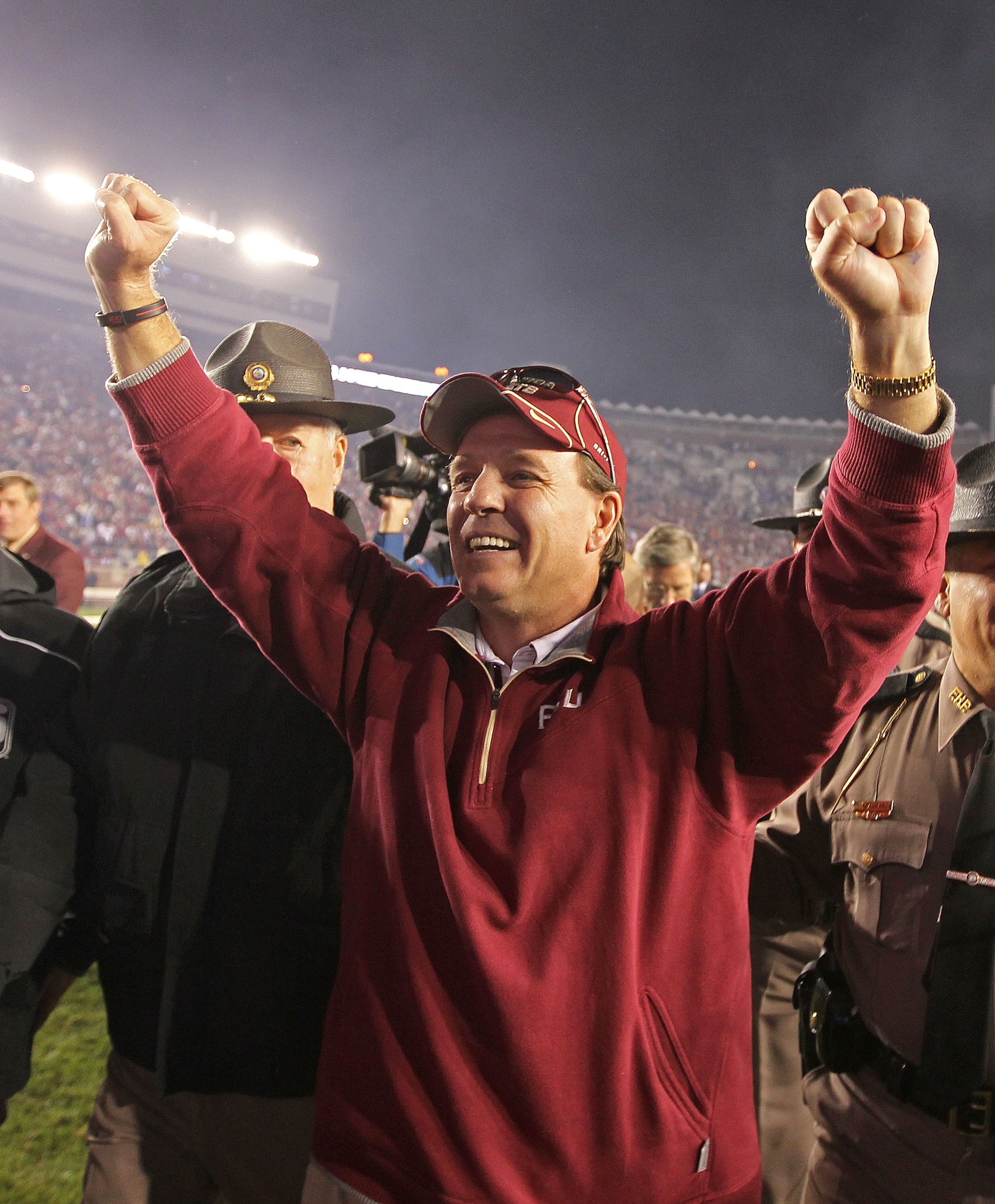
A bulk of the starters are back—eight a piece on offense and defense, to be exact—but the one key loss is quarterback Christian Ponder, who was good (but not great) in his senior season. His likely replacement will be E.J. Manuel, a coveted recruit from the 2009 class who has struggled at times in limited action.
Jimbo Fisher can recruit though.
His 2011 haul, which is currently ranked No. 3 in the country, includes several playmakers capable of stepping in immediately and adding depth to an already loaded corps of backs and receivers.
The best of the bunch will undoubtedly be James Wilder Jr., one of the nation's top prospects who can play either linebacker or running back.
No. 16 TCU Horned Frogs (2010 record: 13-0)
10 of 24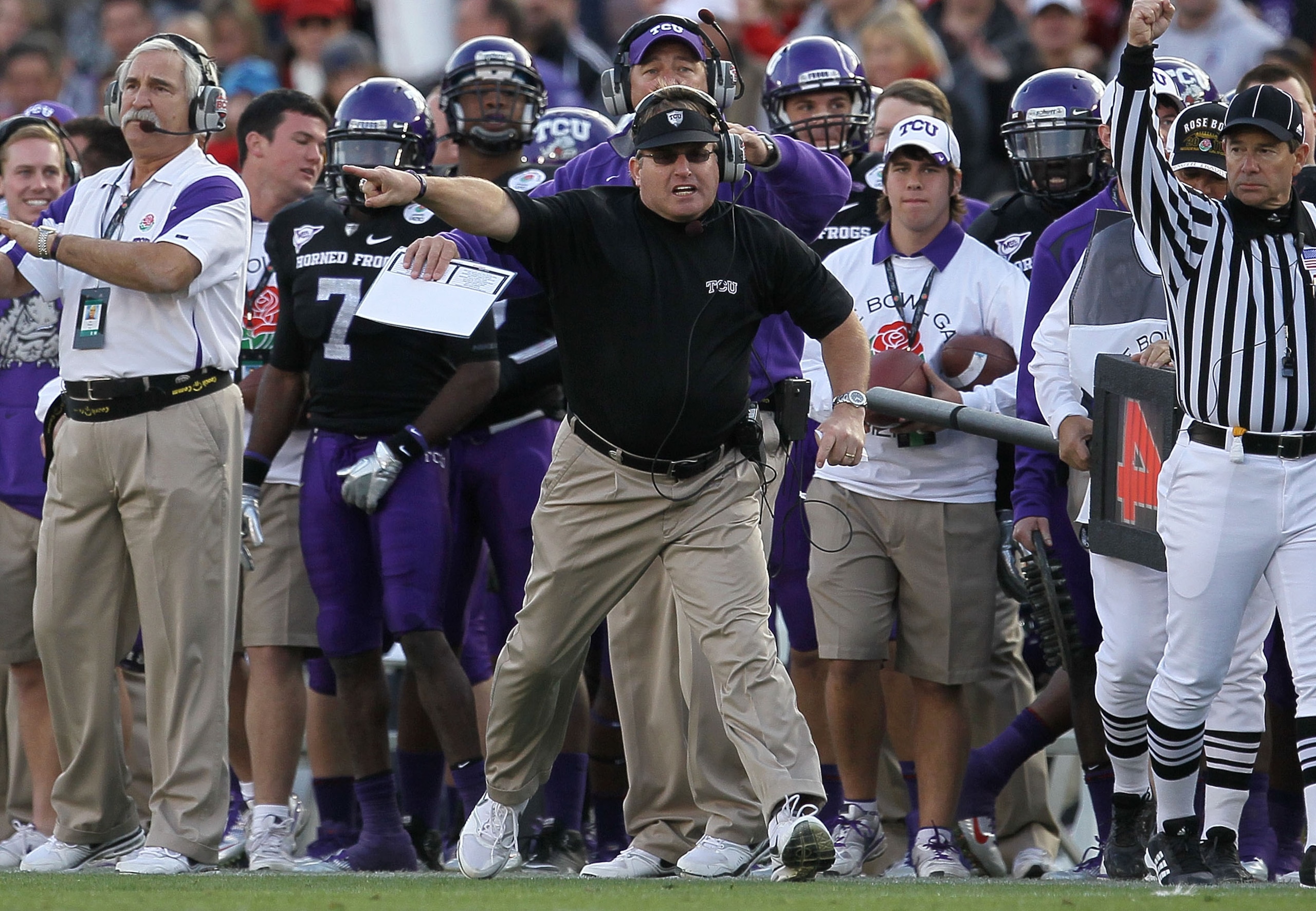
Gary Patterson has proven his program is no fly-by-night operation, but he faces the unenviable task of reconstructing a roster that will be hit hard by graduation.
The Horned Frogs return only 10 total starters and lose seven valuable contributors on offense, including quarterback Andy Dalton, wide receivers Jimmy Young, Jeremy Kerley and Bart Johnson, tight end Evan Frosch and offensive tackle Marcus Cannon.
The task appears less arduous on defense, where tackling machines Tank Carder and Tanner Brock return at linebacker, along with defensive end Stansly Maponga.
No. 15 Missouri Tigers (2010 record: 10-3)
11 of 24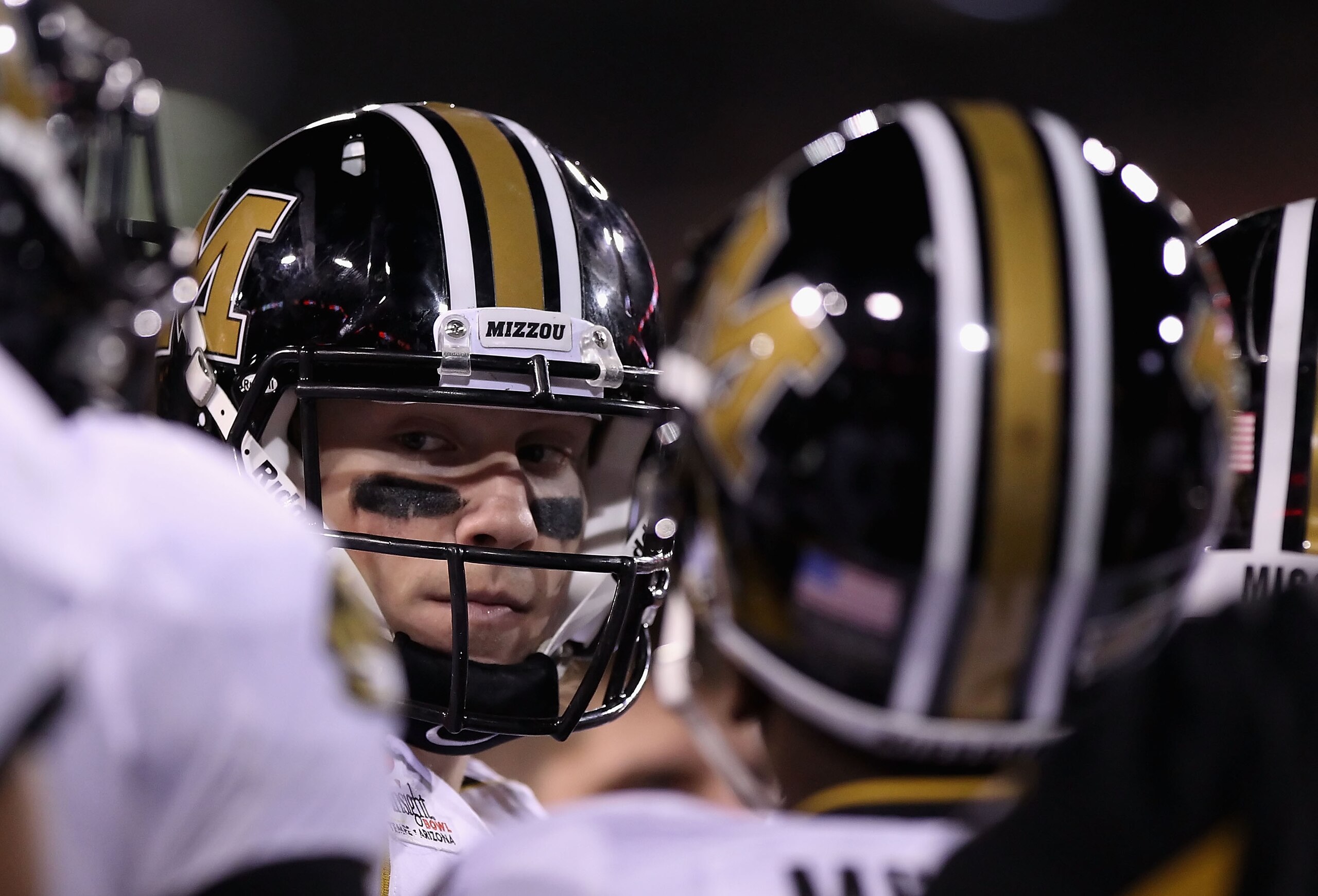
Had Blaine Gabbert returned for his senior season and third as Mizzou’s starting quarterback, this ranking would be much more favorable.
As it stands, not only do the Tigers lose their best offensive weapon, they also lose their most intimidating and talented defender, defensive end Aldon Smith, who has decided to forgo his final two seasons of eligibility for the NFL.
Still, there is a lot to like about Missouri, which will surround a new quarterback with nine returning starters on offense. Plus, the defense has plenty of experienced depth to compensate for the loss of four seniors.
No. 14 Boise State Broncos (2010 Record: 12-1)
12 of 24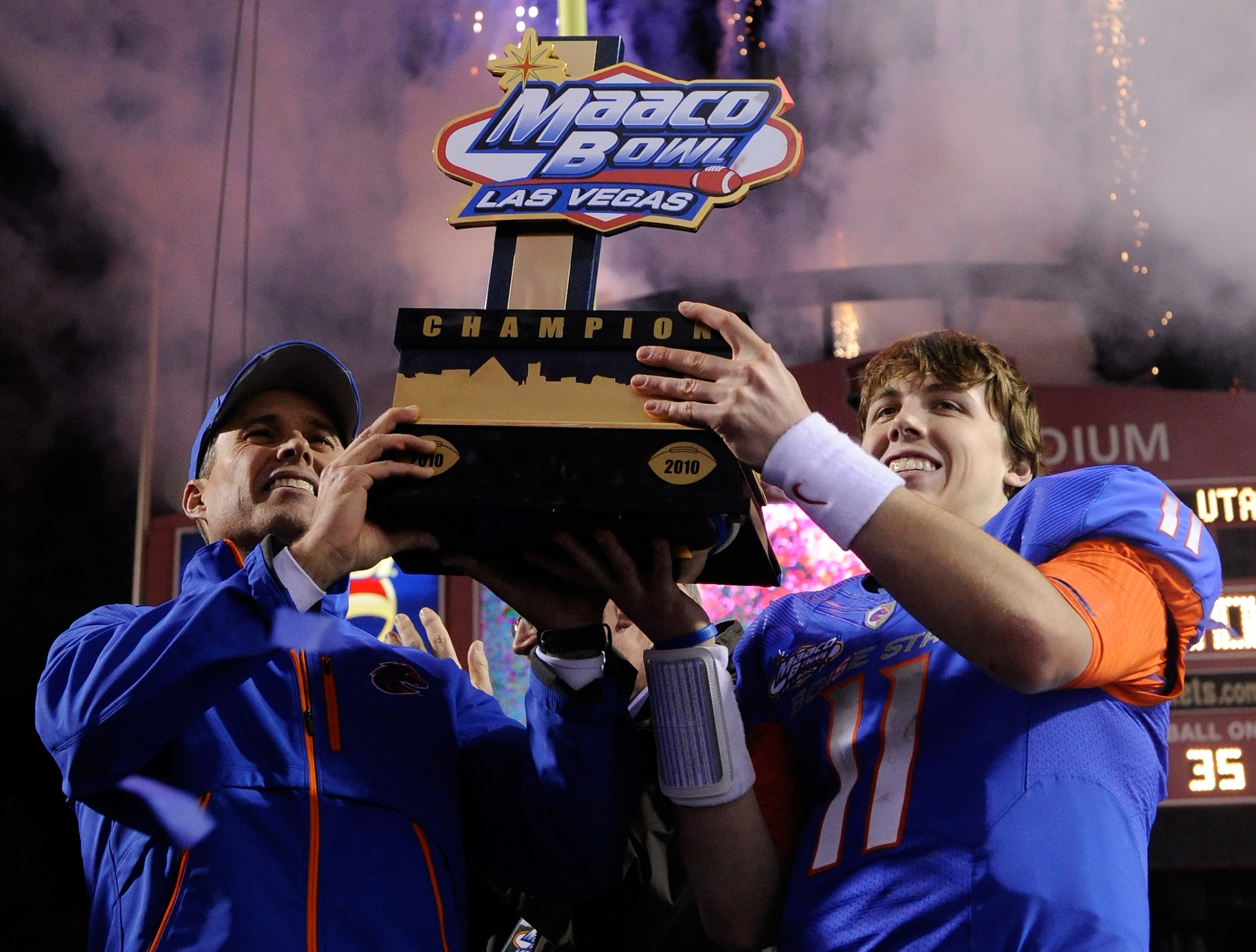
Chris Peterson has amassed 71 wins as head coach at Boise State, but he has his work cut out for him in 2011, when the Broncos enter the stingier Mountain West.
Kellen Moore is back, but his two favorite targets, Titus Young and Austin Pettis, are both gone, placing much of the offensive onus on backs Doug Martin and D.J. Harper.
No. 13 Ohio State Buckeyes (2010 record: 12-1)
13 of 24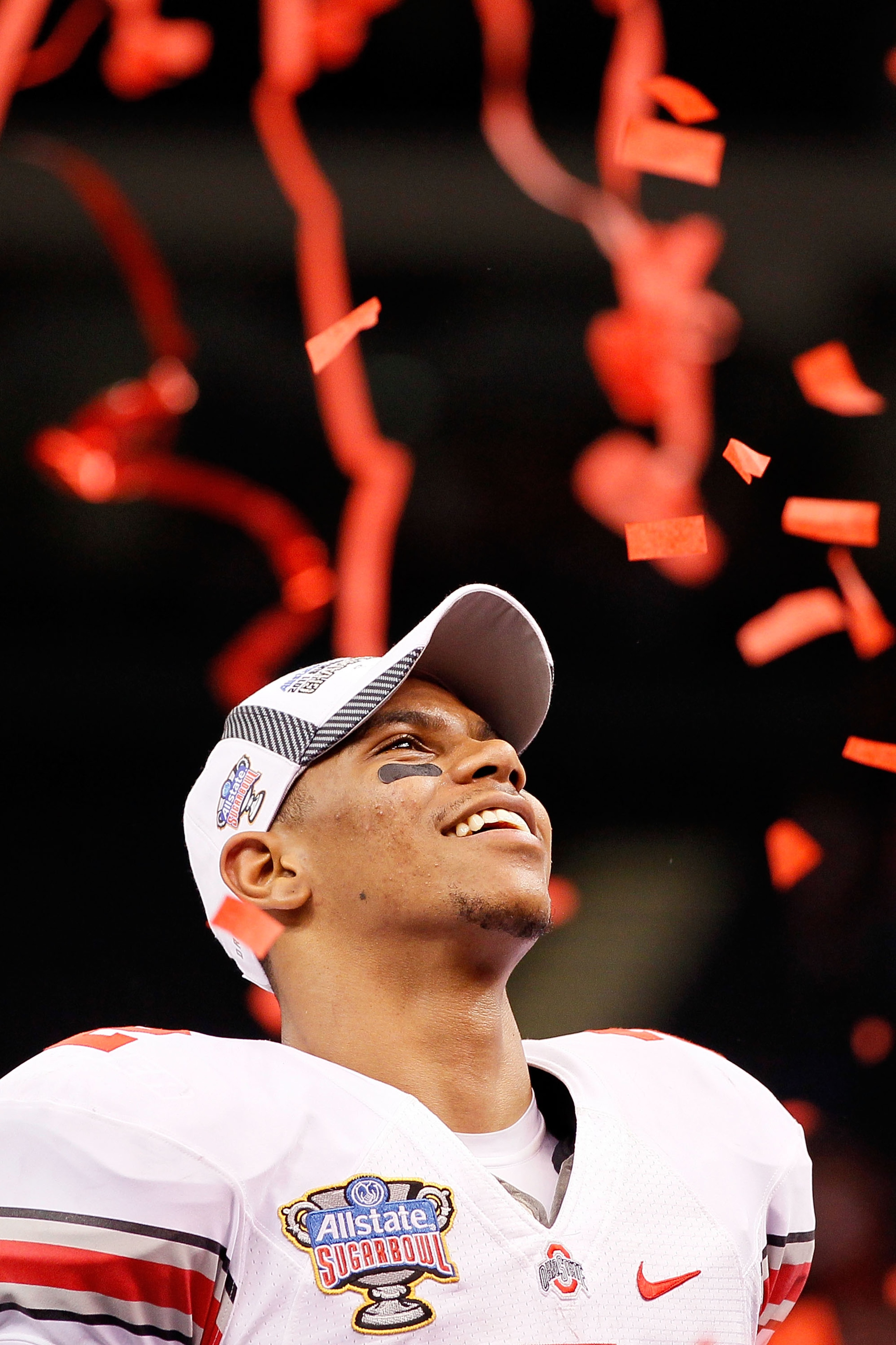
Foot surgery just may have kept Terrelle Pryor in an Ohio State uniform for another season.
If so, the Buckeyes should be in good shape for another run at a Big Ten title, despite high-profile suspensions and heavy losses on defense, particularly on the back end. Chimdi Chekwa is one of four starters in the secondary to leave.
No. 12 Wisconsin Badgers (2010 record: 11-2)
14 of 24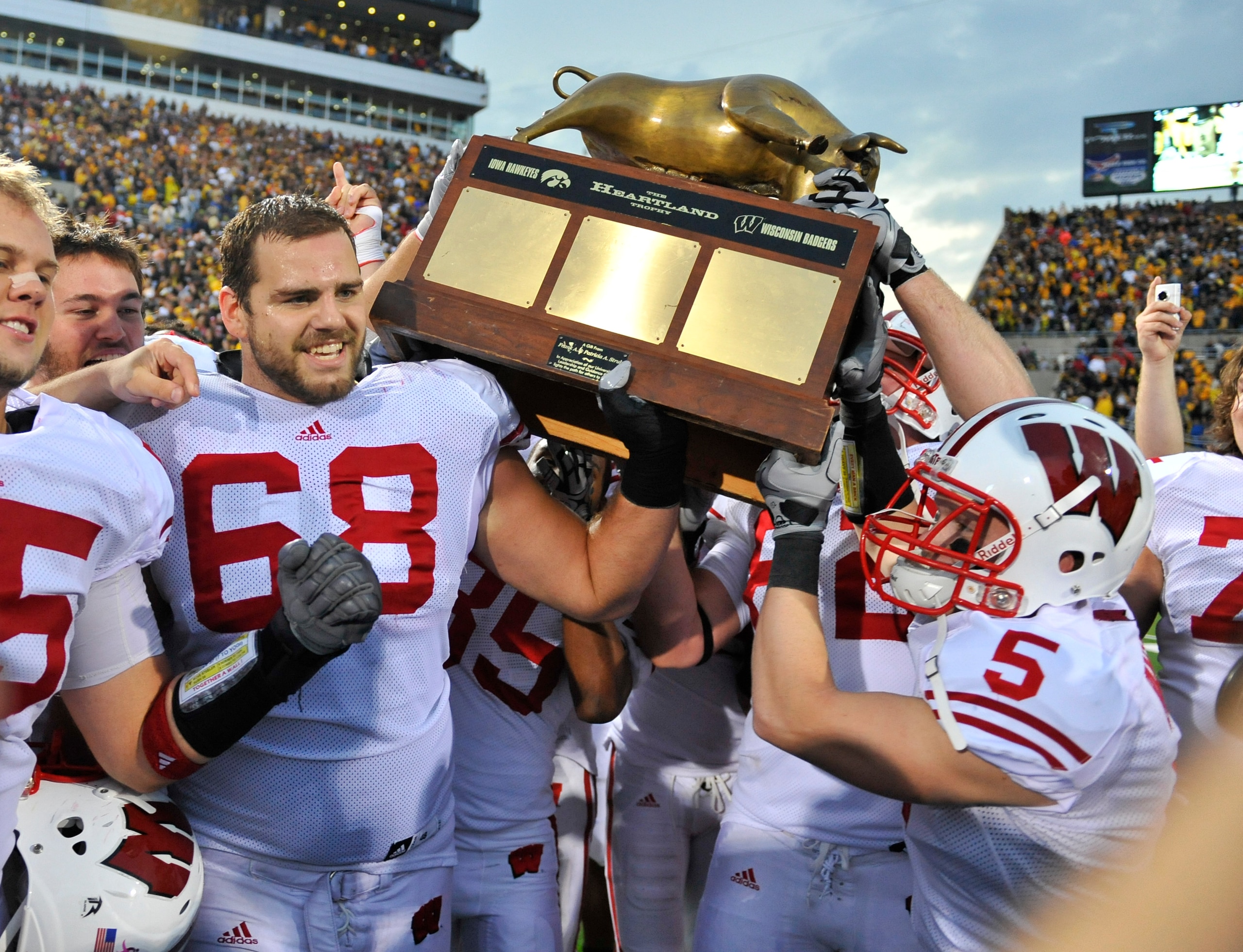
The Badgers’ offensive line was arguably the nation’s best in 2010, but two of the five starters on offense who need replacing include All-Big Ten performers John Moffitt and Gabe Carimi.
Same goes for John Clay, for whom Wisconsin has ample talent to replace and defensive end J.J. Watt, who will come out early after finishing second in the conference with seven sacks.
No. 11 Nebraska Cornhuskers (2010 Record: 10-4)
15 of 24
The Huskers will soon find out if life, indeed, is better in the Big Ten. It couldn’t have ended much worse in the Big 12, as Nebraska stumbled down the stretch and lost its second consecutive title game. Let’s not even touch on the abysmal bowl loss to Washington.
Looking ahead, it remains to be seen if Bo Pelini values Taylor Martinez’s production in the run game more than he despises the quarterback's antics off the field. If Martinez gets the boot, Nebraska may favor a pair of talented incoming freshman in Bubba Starling and Jamal Turner over Cody Green.
With a strong run game, the Huskers are equipped to handle the rigors of the Big Ten, but at some point the offense has to identify one or two capable receivers.
No. 10 Michigan State Spartans (2010 Record: 11-2)
16 of 24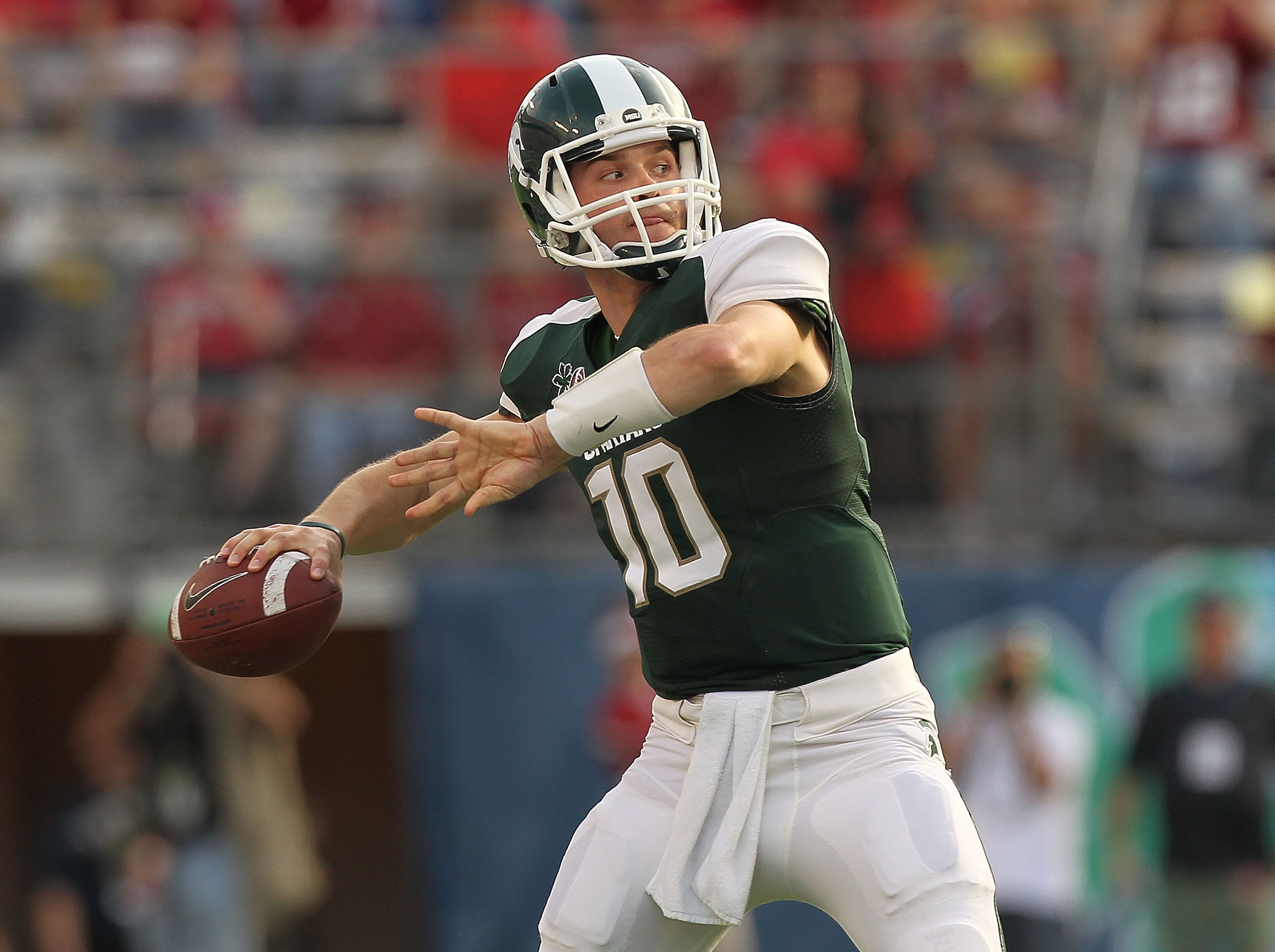
The Spartans suffered an embarrassing end to an otherwise dream season, but brighter days may lie ahead. Michigan State’s two defensive anchors, linebacker Greg Jones and corner Chris L. Rucker, both depart, but the losses on that side of the ball are minimal.
Offensively, Kirk Cousins and Edwin Baker form one of the more solid backfields in the Big Ten. It’s possible the Spartans could be more talented in 2011, but the schedule isn’t as forgiving as it was this season with road games at Notre Dame, Ohio State, Nebraska and Iowa.
No. 9 Oklahoma State Cowboys (2010 Record: 11-2)
17 of 24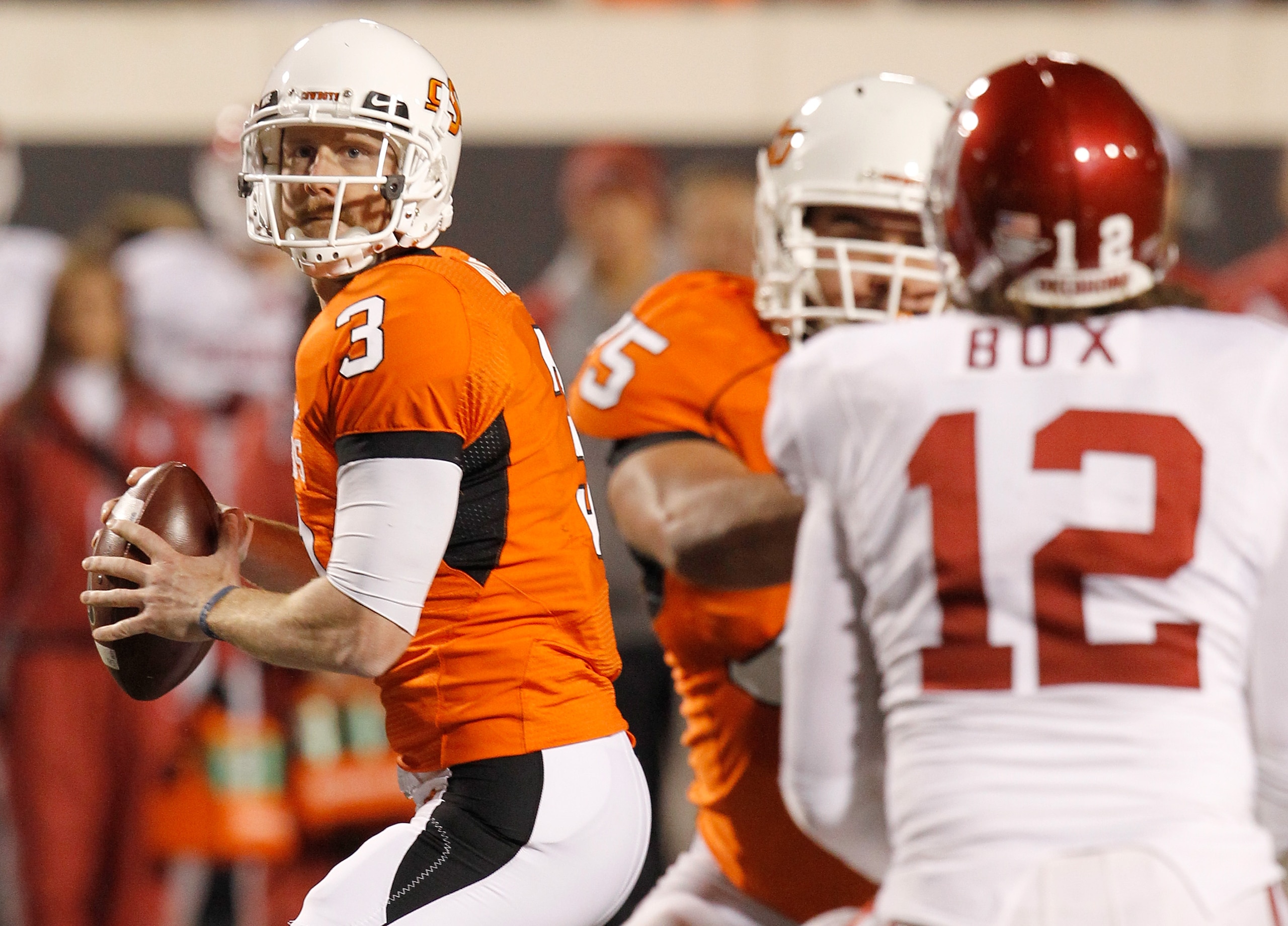
Losing Justin Blackmon early to the NFL is a big blow. The nation’s leading receiver, with more than 148 yards per game, Blackmon was the main reason the Cowboys ranked third nationally in total offense in 2010.
Through Mike Gundy’s deft recruiting efforts, OSU still has a well-stocked cupboard, but a slight drop-off in production has to be expected.
You also have to wonder whether Oklahoma State will be able to withstand losing five defensive starters, although a No. 88 ranking in total defense indicates addition by subtraction is a real possibility.
No. 8 Arkansas Razorbacks (2010 Record: 10-3)
18 of 24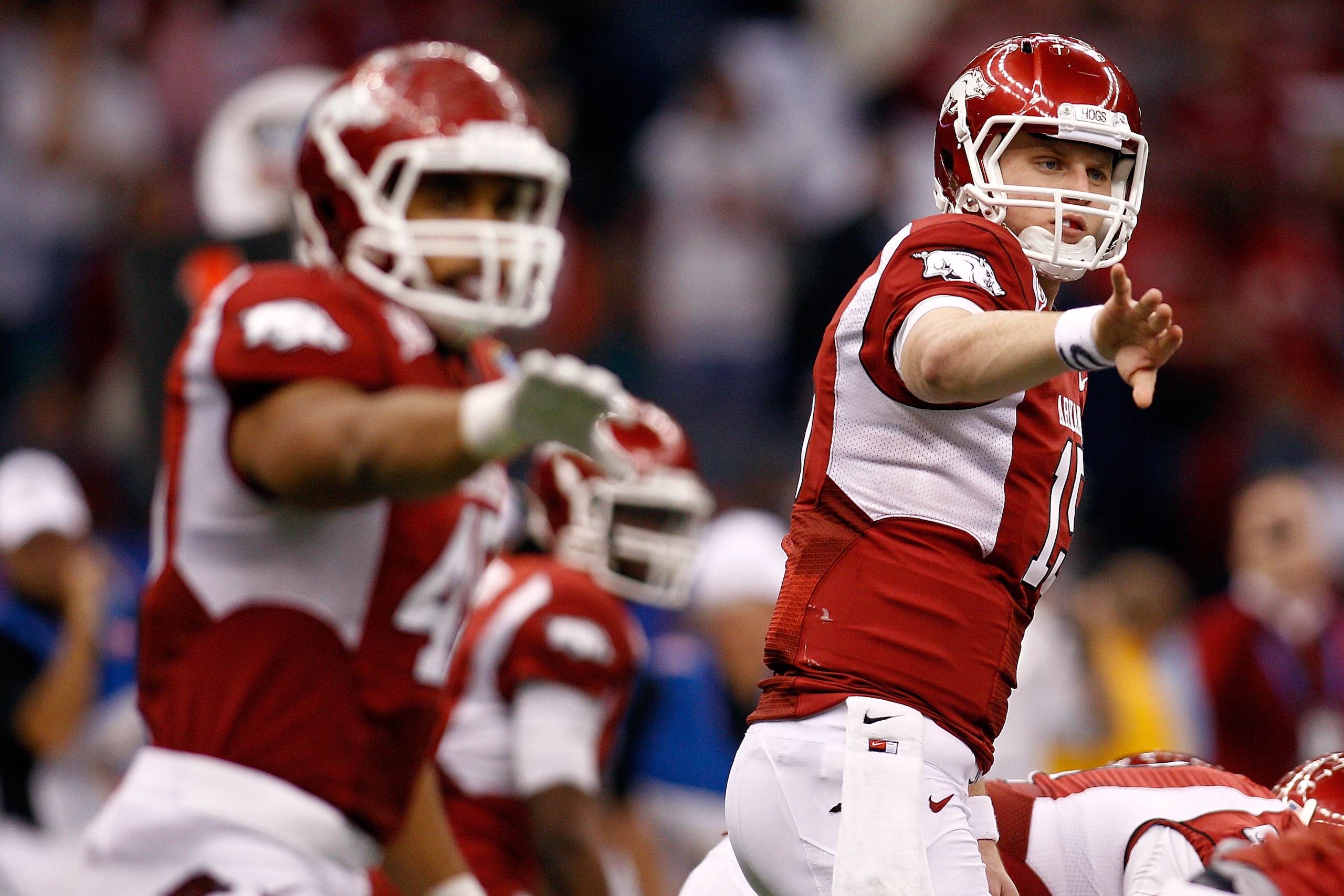
I realize Ryan Mallett won’t be engineering the offense next season, but if the Hogs can effectively replace three starters along the offensive line, Tyler Wilson should be just fine as his successor.
It won’t hurt being surrounded by a group of receivers that includes Jarius Wright, Greg Childs, Cobi Hamilton and Joe Adams, not to mention Knile Davis and Ronnie Wingo in the backfield.
No. 7 Texas A&M Aggies (2010 Record: 9-4)
19 of 24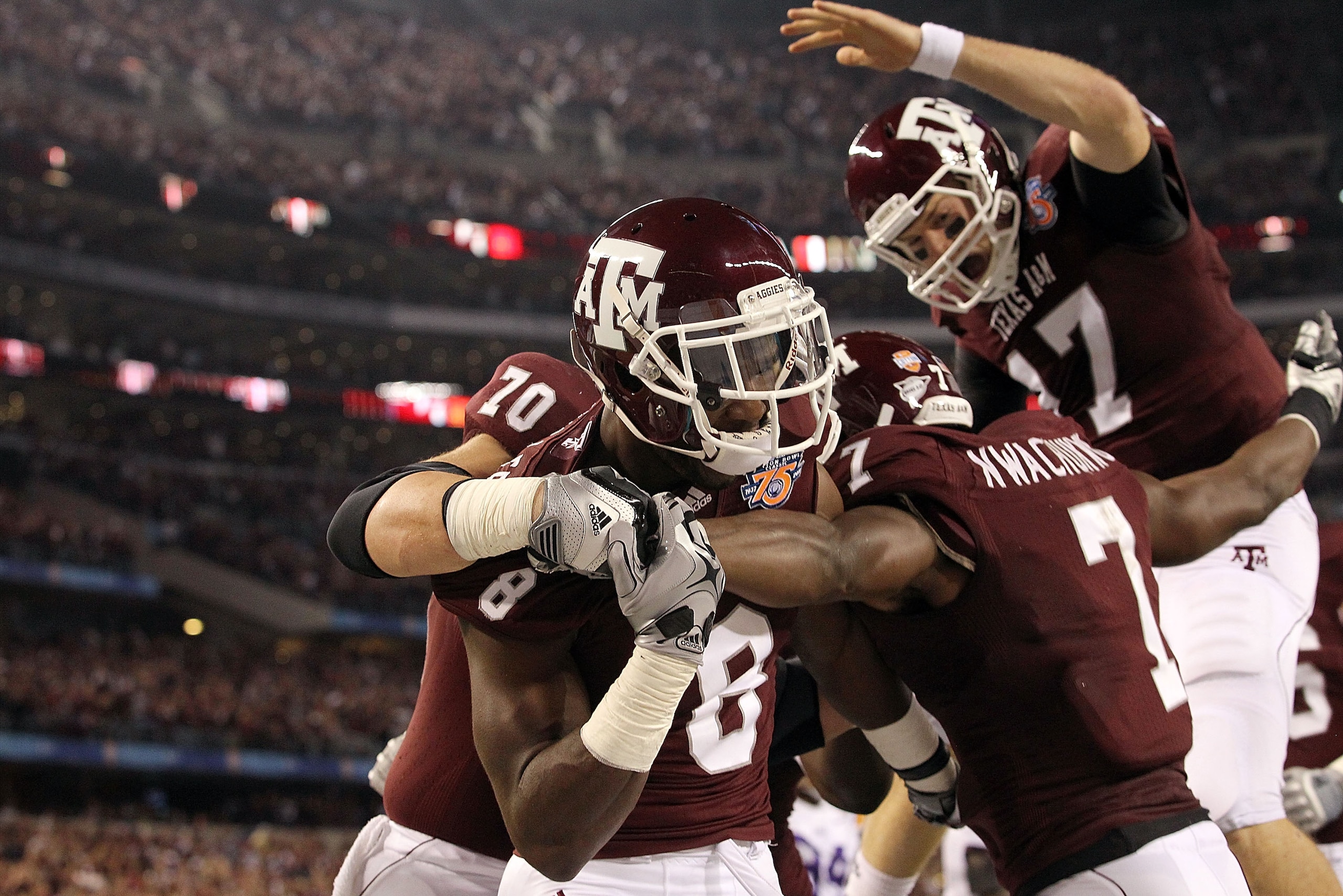
There’s always that one team in the preseason polls that stands out, and not for a particularly good reason. Consider that team in 2011 to be Texas A&M, which is sure to register high on most ballots despite ending 2010 with a rather unflattering loss to LSU in the Cotton Bowl.
Why the lofty ranking, then? Well, 17 total starters return, and make it 18 if standout wide receiver Jeff Fuller comes back for his senior season. The offensive line is young, but excellent. Ryan Tannehill will man the quarterback position and Cyrus Gray and Christine Michael give the Aggies a potent combination with which to work in the running game.
Defensively, Texas A&M should only continue to improve under coordinator Tim DeRuyter, who resurrected the unit from 105th nationally in 2009 to 56th this season.
No. 6 Auburn Tigers (2010 Record: 14-0)
20 of 24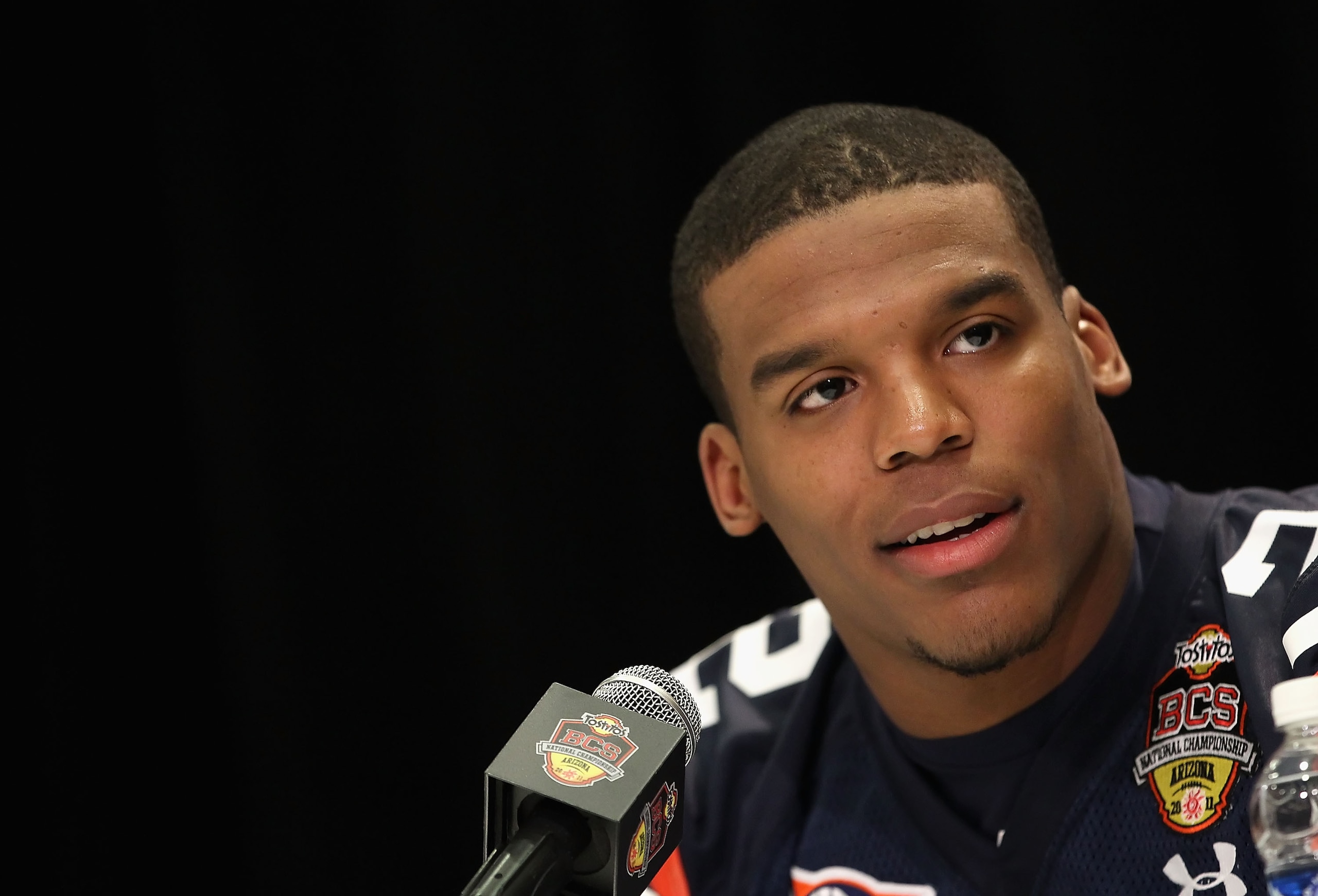
For all the talent Auburn has, its preseason fate lies solely in the hands of Cam Newton, who must decide before Saturday whether he will enter the NFL draft. If he goes, which seems all but inevitable following Auburn's national title run, the Tigers are a top 15 team with only aspirations of hanging with LSU and Alabama in the SEC West.
If Newton stays, the Tigers’ hopes of returning to the national title game exponentially improve. For now, while Newton weighs his options, Auburn gets put somewhere in the middle.
No. 5 LSU Tigers (2010 Record: 11-2)
21 of 24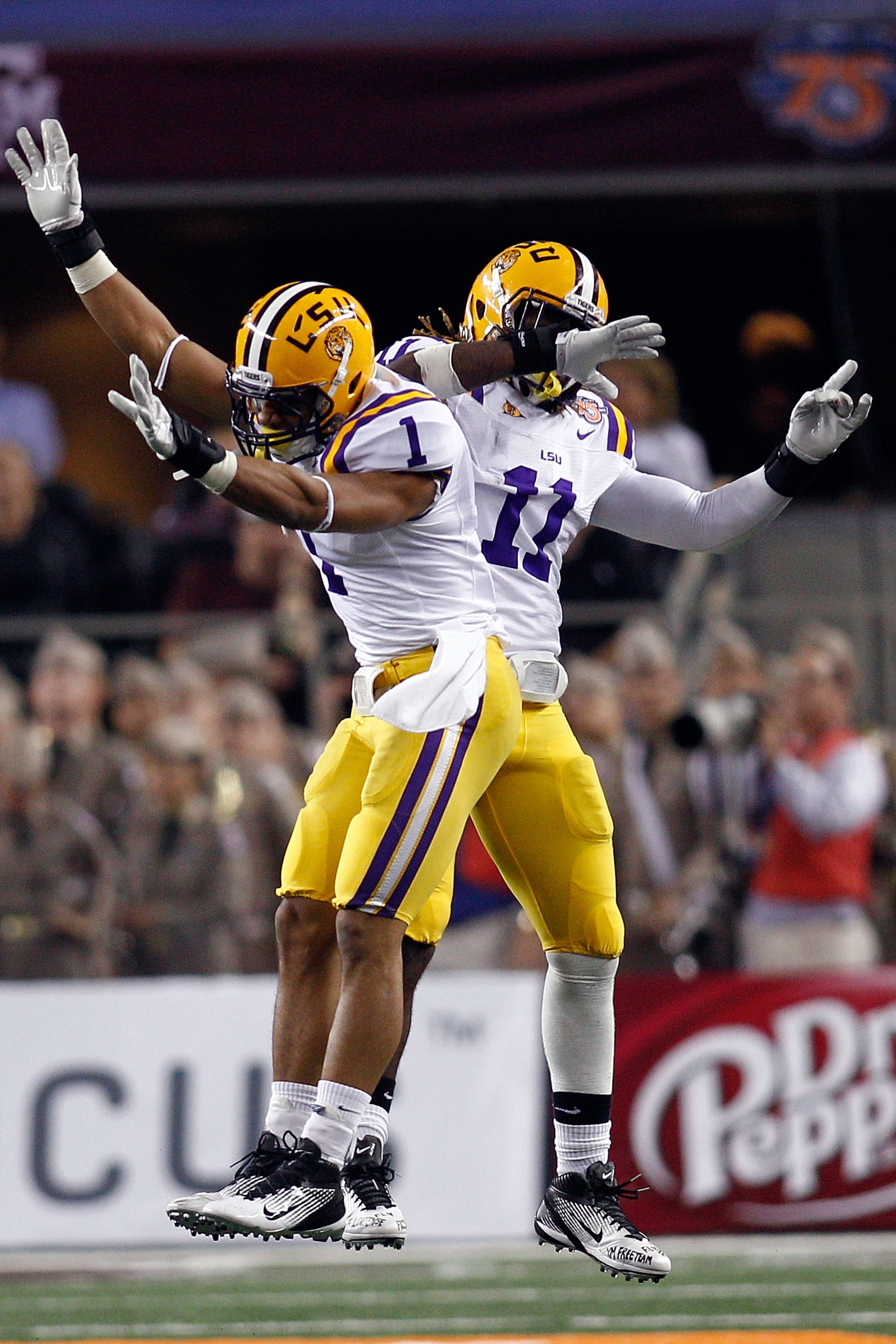
Drake Nevis and Patrick Peterson will be playing on Sundays in 2011, but they’re the only two notable losses—on either side of the ball—other than receiver Terrence Tolliver.
That leaves a loaded roster primed for overtaking Auburn and holding off Alabama for an SEC West title.
To get the job done though, the Tigers must find some semblance of a passing offense behind quarterback Jordan Jefferson, which is something the staff—whether it will belong to Les Miles or someone else—will have to feverishly address during the spring and preseason workouts.
No. 3 Oregon Ducks (2010 Record: 12-1)
22 of 24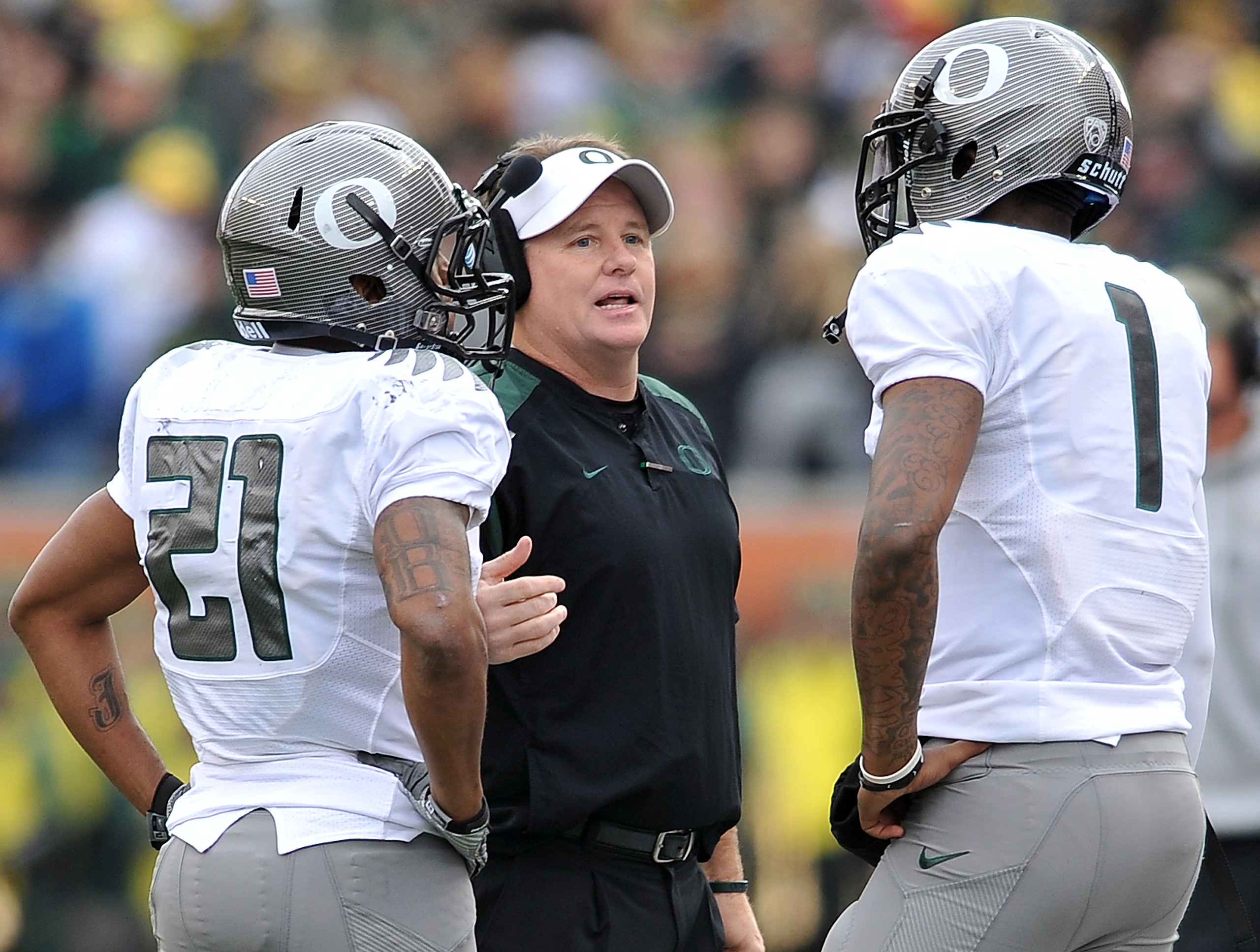
Chip Kelly has things humming in Eugene, where Oregon has ridden its Nike-funded success to become one of college football’s new-wave powers. In just two short years, Kelly has won 22 games, is the only head coach in Pac-10 history to win the conference his first season, and has a national championship appearance on his résumé.
There’s no reason to expect a drop-off any time soon either. Though the Ducks lose several key performers on defense next season, a significant portion of the nation’s leading offense returns to wreak more havoc. The schedule away from Autzen, outside of a neutral-site game against LSU, is favorable.
No. 2 Alabama Crimson Tide (2010 Record: 10-3)
23 of 24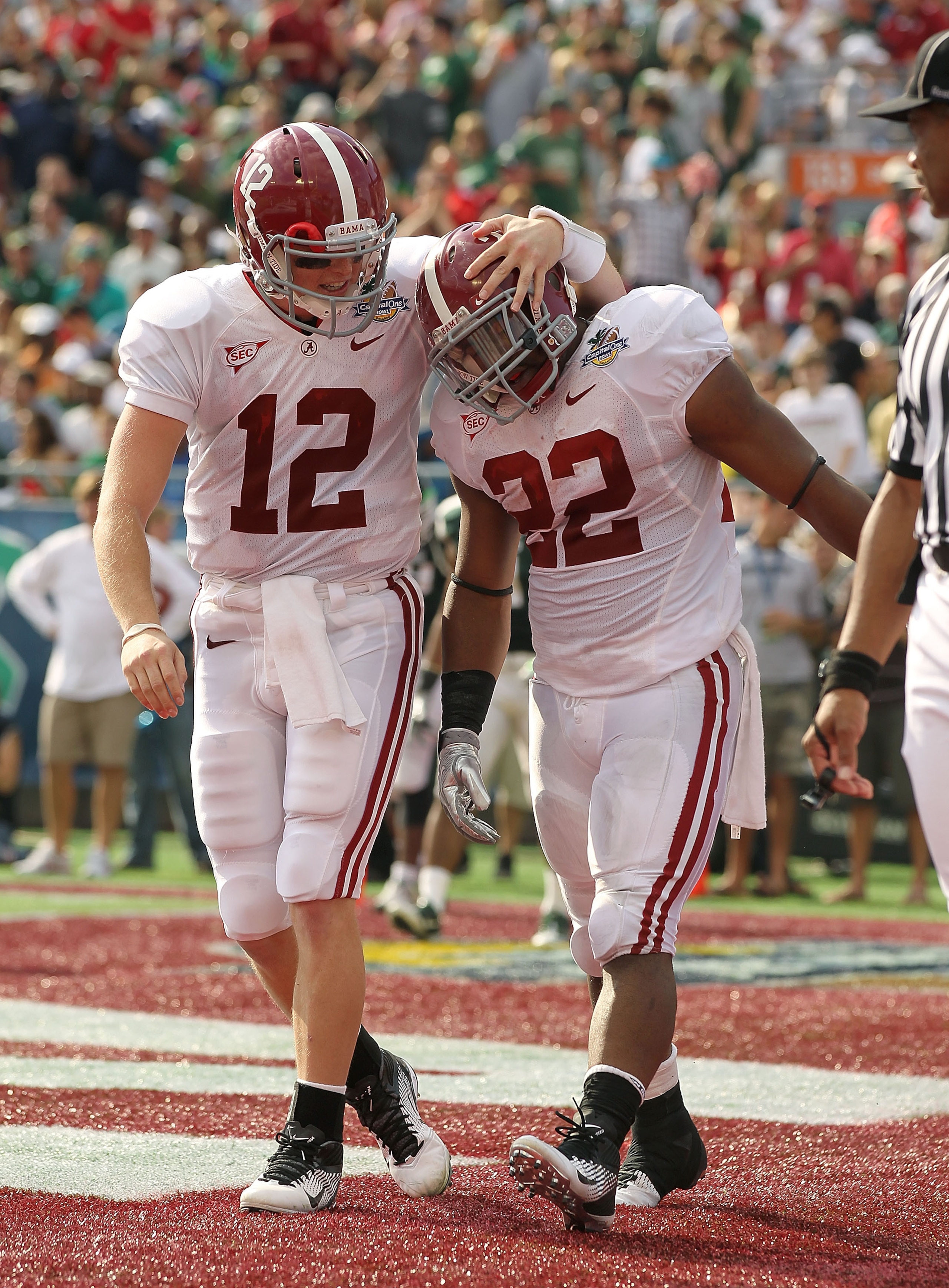
Unless you include having to choose which 5-star recruit will replace Marcell Dareus, the Tide’s only real concern for 2011 will be whether A.J. McCarron can ably serve as a worthy successor to Greg McElroy.
Ravaged by the 2010 NFL Draft on defense, Alabama endured somewhat of a transitional season, but 2011 could set up nicely for another national title run. Dareus is the only starter gone on defense, and while Trent Richardson will ensure the Tide won't miss a beat without Mark Ingram, finding someone to fill the shoes of Julio Jones could be troublesome.
Overall, there’s not much to dislike about ‘Bama, which may as well be interchangeable with the No. 1 team.
No. 1 Oklahoma Sooners (2010 record: 12-2)
24 of 24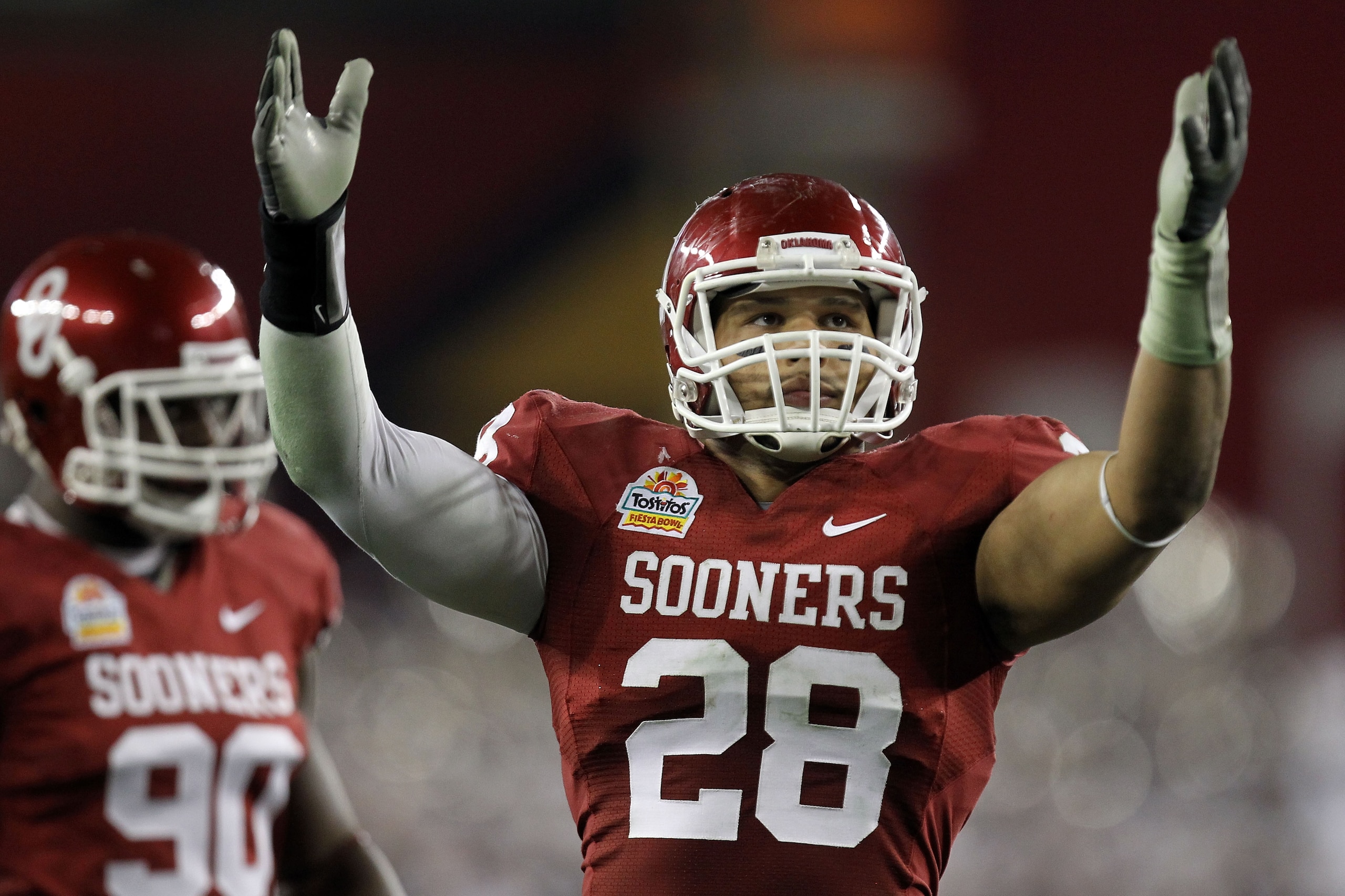
With receiver Ryan Broyles and linebacker Travis Lewis both deciding to return to school, the Sooners will have 18 total starters back for 2011, more than will be needed to compensate for the losses of DeMarco Murray, Jeremy Beal and Quinton Carter.
Oklahoma has little proven depth behind Murray, but sophomore-to-be Roy Finch showed promising flashes this season, carrying the ball 85 times for 398 yards and two scores. He’ll be joined by incumbent quarterback Landry Jones, a solid offensive line and a receiving corps that also returns Kenny Stills, James Hanna and Trey Franks.
Experience reigns supreme on defense, where the 2-deep is littered with players young and old who saw action in 2010. Barring any disastrous injuries or unforeseen upsets, there’s no reason why Bob Stoops and the Sooners shouldn’t contend for their fifth Big 12 title in six seasons and second national championship since 2008.
.jpg?w=2560 "NFL investigating 2 referees for separate viral exchanges")
.jpg?w=2560 "Report: Chiefs Contact Hill's Agent")
.jpg?w=2560 "OBJ Calls Out Giants After Release")
.jpg?w=2560 "Tyreek makes another cryptic post amid Chiefs rumors")