Lovie Smith at Illinois: New Hope for a Failed College Football Program
CHAMPAIGN, Ill. — The slogan is catchy, and on this gorgeous, sun-drenched spring day, it is ubiquitous. It's propped up on billboards, posters and schedules, displayed in all caps, plastered on the back of vibrant orange T-shirts. It's impossible to miss.
Although the relationship between the University of Illinois football program and the city it resides in is somewhat fractured after a stretch of mediocrity, it doesn't feel that way two hours before fans will see head coach Lovie Smith's creation for the first time.
The energy is palpable, and it does not come across as manufactured. It feels genuine. And there are those words again, this time on the back of a DJ's shirt, positioned a few hundred feet from the stadium.
TOP NEWS
.png?w=2560)
Week 1 Winners & Losers 📊
Western Michigan Loss Has Fans Irate
.jpg?w=2560 "Dolphins Commanders Camp Football")
Jayden Daniels Left Off LSU Montage
"We Will Win."
This adopted slogan came from the mouth of Illinois athletic director Josh Whitman at his introductory press conference two months ago. It looks good across the back of one's shoulders and slips right off the tongue—we will win—like an infectious formality.
What this slogan fails to nail down, however, are the most significant parts of any rebuild: how, when and, perhaps most important of all, how much?
In previous attempts to right the ship, this is where the plan and its tangible results peeled off in different directions. Since 2003, Illinois has won just 25 conference games—an average of fewer than two per season in the Big Ten.
It crashed a Rose Bowl in 2007—which serves more as an outlier than anything else—and has delivered a handful of 7-6 seasons. Outside of a few radar blips, success has been difficult to bottle and store.
Football talent in the state has flocked elsewhere; eyeballs have followed.
With increased competition within the conference, with Ohio State inching closer to global domination and with Jim Harbaugh mania seemingly around every corner, Illinois must do something it has failed to do time and time again.
And here's the kicker: It must do this with a head coach who hasn't worked on a college campus in more than two decades. It sounds impossible, yes? It sounds like fabricated optimism that has been delivered before.
But somehow, strangely, a blueprint is in place that leads one to believe this might actually work.
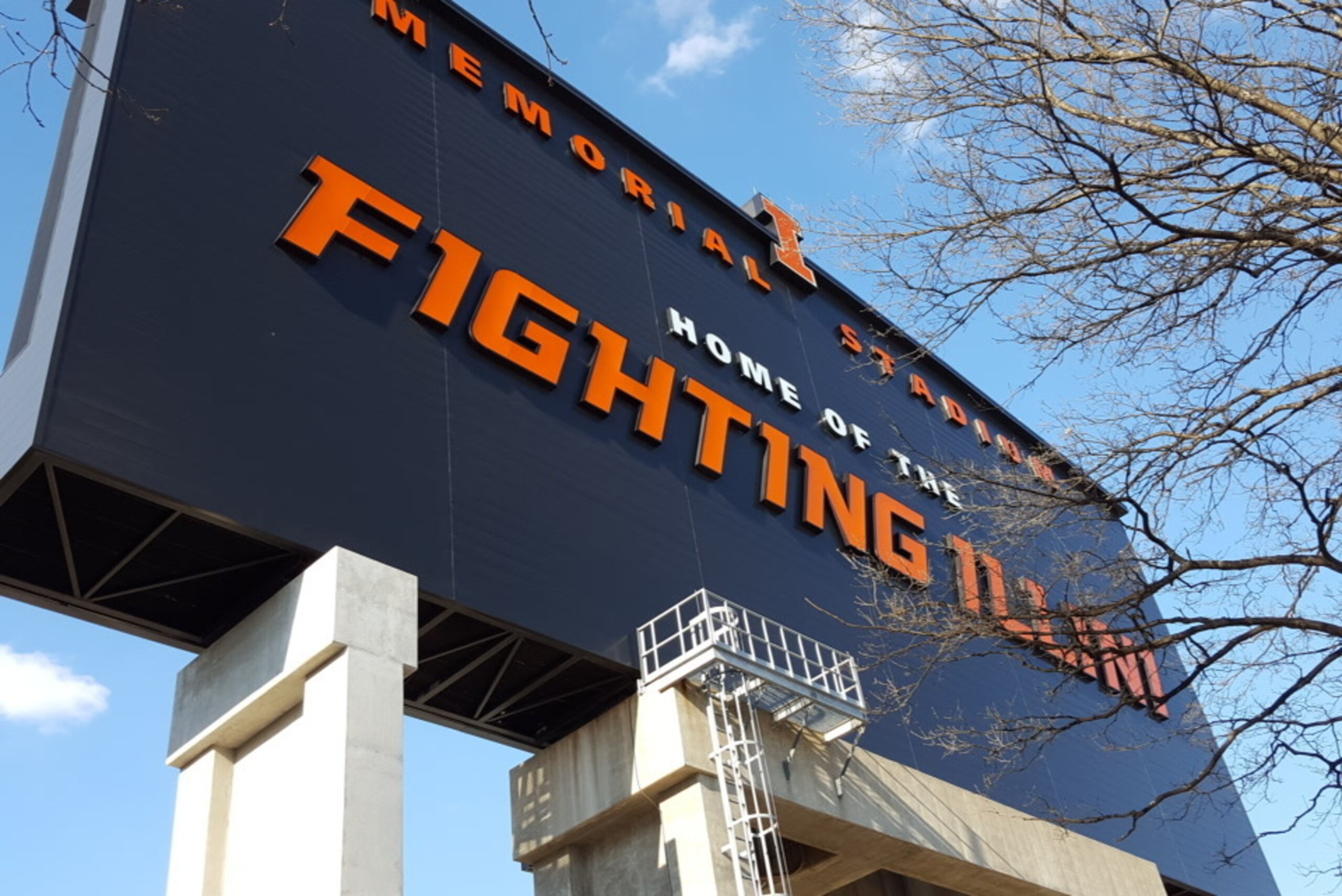
The architect of this renovation looks entirely out of place. With sunglasses perched on top of his head, Whitman watches practice, greeting some of his former teammates who are in for the weekend.
Although he has traded in his shoulder pads for a suit and tie, Whitman still looks more like a tight end than anything else—the position he played at Illinois and in the NFL before he graduated to his new life.
Needing a new voice, the university hired Whitman in February from Division III Washington University in St. Louis to bring positive light during a difficult stretch. Coming off a year in which abuse was alleged in U of I's football and women's basketball programs, Whitman symbolized a fresh start.
Multiple players alleged mistreatment under former head coach Tim Beckman, who was fired following a review of the allegations and the program as a whole. Bill Cubit was then named interim coach.
Toward the end of an eventual 5-7 season, Cubit was given a two-year contract before Whitman arrived. Instead of taking time to evaluate the program as he settled in, however, Whitman relieved the former interim head coach of his duties the first day on the job.
This is where the rebuild begins—right at the moment the C-4 is placed in the rickety foundation and the whole thing is blown to smithereens. In order for a program to truly find itself, it has to lose itself first.
"We have shown we can do it," Whitman told Bleacher Report. "We've been to the Sugar Bowl. We've been to the Rose Bowl. Our challenge has been consistency and developing a championship model that allows us to sustain that level of success. I feel really good about our ceiling. I don't think there really is one."
To help determine if such a ceiling exists, Whitman needed to parlay a bold, unforeseen firing with a hire that was even bolder. To do so, he turned to a man who seemed destined to spend the rest of his life in the NFL.
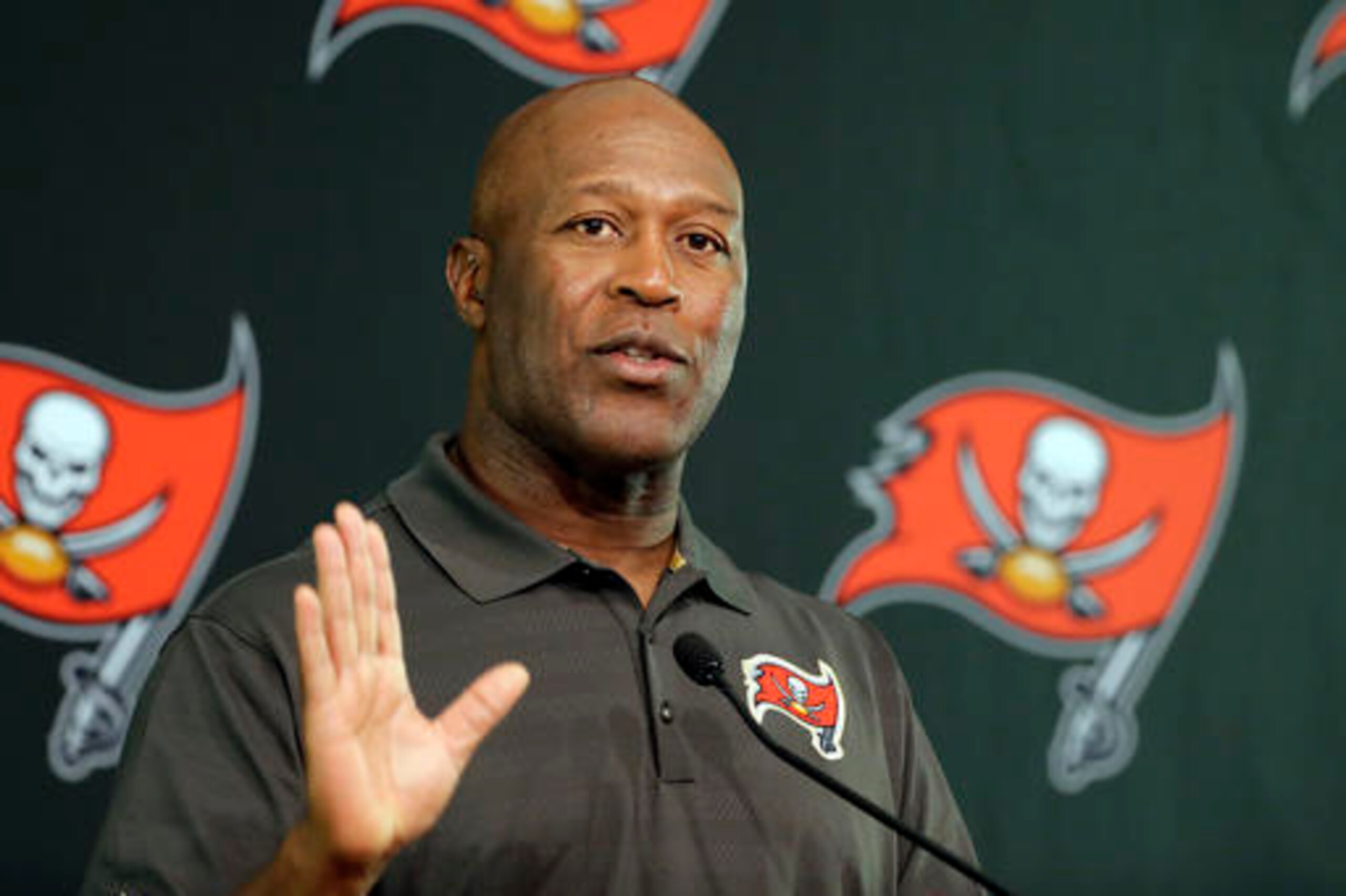
After the Tampa Bay Buccaneers unexpectedly let him go, Lovie Smith was poised to wait a year or two for his next NFL stop. But then he heard a pitch he never expected to hear—and it was an enticing one.
"We didn't view it as a short-term project. This is a long-term commitment from us, and I think he was attracted by it," Whitman said on hiring Smith. "You don't take on a challenge like this for one reason. There are lots of things that I thought would be appealing to him, and I thought with his pedigree and background that a change of pace might be appealing to him at this point in his life."
Empires are not built at press conferences, but Smith's hire has roused a slumbering football program. Credibility, even before Smith introduced himself to the media, was restored. Tickets were gobbled up in mass. Bricks were being laid slowly with care.
As critical as Smith was to this process, the next domino was just as important. Illinois has allocated $4 million for the assistant coaching pool, nearly double what it planned to allocate to Cubit, according to Jeremy Werner of Scout.com.
This allowed Smith to lure offensive coordinator Garrick McGee away from Louisville. It also provided him an opportunity to assemble a staff at one of the most unusual and difficult times of the year—a time when the coaching carousel has reached a standstill and families have already been uprooted.
The truth is, in order to sustain success in an increasingly competitive climate, one must spend to win. One must commit to being good instead of simply saying it out loud. Illinois decided it was time.
At the same time, the state of Illinois is in a budget crisis that's resulted in deep cuts to higher education. University of Illinois President Tim Killeen told the News-Gazette that university officials considered possible negative public reaction to this steep new investment in football.
But, he told the newspaper, the money comes from athletic sources such as Big Ten television revenue and ticket sales, not from state coffers or tuition funds.
"These funds are not intermingled with the support for the academic programs and the operational programs," he told the paper.
To make money, one must spend money. And with the Big Ten reportedly on the verge of a lucrative new media rights agreement with Fox, according to the Sports Business Journal, Illinois will have financial flexibility to commit to its programs for the foreseeable future.

Standing behind the north end zone of Memorial Stadium, a former No. 1 NFL draft pick is watching his son put on a show. Although they may not realize it, those in attendance have just seen a glimpse into the future.
During his junior season at Illinois back in 1989, quarterback Jeff George threw for 22 touchdowns and led Illinois to 10 wins—a threshold it has hit only once since. Now, wearing a backward hat, long-sleeve shirt and sweat pants, George is there to support his son, Jeff George Jr.
"I'm proud as a former player, but I think I'm more proud as a parent to know that my son is in good hands," George said. "We're relevant. Whenever you've talked about Big Ten football, I'm not sure Illinois has been anywhere near the top of the list. And now they're starting to say Illinois."
Smith once coached George for the 2004 Chicago Bears. Now, he's coaching George's son and also leading a program that George still cares deeply for.
Because of the timing of the hire, Illinois decided not to hold an official spring game this year. Instead, it opened up the stadium doors and gave fans a glimpse of the progress being made.
Individual drills eventually gave way to a condensed, full-contact scrimmage as music blasted through the stadium speakers. Given the crash course the players were required to consume, the two hours glided along smoothly.
This was not Alabama's defense or Clemson's offense reincarnated; this was the first public step of a long process.
George Jr. was unquestionably the star of the show. The redshirt freshman, hoping to be the backup to starter Wes Lunt in 2016 and the starter in 2017, connected on a handful of deep throws, including a long touchdown pass that drew a fist pump from his father and a roar from the stands.
His head coach didn't have the same emotional response. In fact, Smith spent the day observing and learning—rarely showing any emotion at all.
"It's definitely different," George Jr. said following the game. "He's laid back and relaxed, but everyone respects him. When he walks into a room, he has a tremendous presence."
Although men with large voices often teach collegiate athletics, with larger personalities and a large assortment of vivid hand gestures and facial expressions, Smith is not cut from this cloth.
He does his work through presence and observation. This philosophy is precisely what the program needs in its current status.

"You don't want to disappoint him," former Chicago Bears All-Pro linebacker Brian Urlacher told Bleacher Report. "He's like your father. That's the kind of respect he demanded. He was such a good guy and such a good coach, you just did everything you could to please him."
The current Illinois roster clearly wanted to do just that. First impressions are important, and the effort during the two-hour scrimmage was evident.
The play wasn't necessarily crisp, but this is a group that has been together for fewer than 10 practices. It will still take some time for the playbook to be fully implemented.
This is still the honeymoon phase. Smith is still trying to learn his roster—what he has and what he doesn't. He's hoping the pieces he has now, the ones that were gifted to him, are enough to carry the momentum he's bottled a little while longer.
"We're making progress each time we're on the football field," Smith said once the day had concluded. "We are able to see a few more things from our guys. We tried to get everybody on video today, so we'll have good video to evaluate. It was as game-like as you can get with where we are at this stage. Nine practices. We don't have all situations in yet."
This is, without question, the most trying aspect of program construction. The future will do you no good here. It's taking a plastic bag, a toothbrush, one unlit match and a spare handkerchief and somehow turning it into a cellphone.
Mike Dudek, one of the nation's most gifted young wideouts, tore his ACL for the second consecutive year not long after practice began. Running back Dre Brown, who was expected to be second string after tearing his right ACL last year, just did the exact same to his other knee. With depth and talent already a concern, Smith has endured two tremendous blows.
Half the battle of starting over is being allowed the freedom to see it all the way through.

The past, future and present have converged on this Saturday. As the open scrimmage continues, a collection of recruits in for the weekend—some from more than a thousand miles away—gauge the progress for themselves.
Different generations, the stars of Illinois from years past, are doing the exact same thing. More than 100 former players have made the trip to Champaign to see Smith's debut. As some of the current players walk off the field, they greet the former players and talk about the road ahead.
Martin O'Donnell, an All-American lineman for Illinois in 2007, now does the color analysis on the radio for all Illini games. He experienced the euphoria of a program breakthrough on that Rose Bowl team.
He has watched it slog through quicksand since then. Now, he hopes to narrate something different.

"It's been a while since Illinois football had an identity. We've gone different ways at different times, and I really believe that in order to recruit the right guys, you have to know who you are and who you're looking for," O'Donnell said. "The football program has shown it can get up there in terms of height. It's just the lack of sustained success that becomes so frustrating. We're aching for consistency."
The reality of college football, with the exception of an outlier here or there, is that talent can lift a program out of the grave and give it life.
This is not an exact science, of course. Supremely gifted football teams stumble into losing seasons all the time. Less talented teams scrap their way to successful runs. But in general, sustaining success over an extended period of time in this sport boils down to the coaching staff, resources and recruiting.
The first two checkboxes have been filled. Now comes the part that won't be answered for quite some time. The wine will be bottled and stored, and we will wait.
To help expedite the fermentation, Lovie Smith, a 57-year-old thrown back into the college game for the first time since 1995, is now using Twitter. He FaceTimes. He is exhausting all the necessary outlets that come with recruiting and appealing to a different generation.
"Each day brings new experiences, and the response has been very positive. While you guys are sleeping," Smith says, cracking a smile, "we are hard at work."
The plan is to start with Chicago, St. Louis and Indianapolis. Then there's Texas, a state Smith knows well. And Florida. And Georgia. These are the places Illinois will compete in, although it will start by learning the surrounding areas that have eluded it for far too long.
It's all a part of a plan that cannot and will not be shaped during a scrimmage in late April.
Illinois does not have to out-recruit Ohio State. Or Michigan. Or even Penn State. Not yet. Before it can take on such lofty goals, it must take on itself and alter the perception of the program.
This part has already begun. Now, in order to put all those tremendous resources to good use, it must take it a step further.
"My son is 10 now," Urlacher said when asked how his former coach would recruit. "If he's still there and he recruits my son, guess what he's doing? He's going to Illinois."

The scrimmage has concluded. Although Illinois has a few more spring practices remaining—critical hours it hopes to maximize—at the moment it can't locate its head coach.
Engulfed by a sea of people hoping to land his signature, Smith is barely seen. For 30 minutes, the crowd doesn't dissipate. People keep exiting the pile with smiles—many with "We Will Win" plastered across their chest—but the holes keep filling in.
No one is quite sure what this excitement will amount to, but the fans know it's real right now. This particular moment, the afterglow from a scrimmage that means little in the grand scheme, feels like something more.
"We need to see the big picture," Smith says as the day nears an end.
In time, that picture will come together. A depth chart will take shape. Recruiting will become the norm rather than a process.
The honeymoon will give way to expectations. Those who have patiently waited for Illinois to win again will demand it start doing so, and soon. It is a daunting, uphill climb, even with all of the pieces in place.
In time, Smith will be asked to do something those before him have failed at. He will have to win.
It's reasonable to have doubts. After all, history tells a tremendous tale. But there's also enough here—a blend of optimism and tactical approach—to believe that things can change.
In time, we will know what this was all building toward. But right now, there are still many autographs to sign.
.jpg?w=2560 "Projecting NFL Win Totals")