
Projecting the Results for a Hypothetical 8-Team College Football Playoff
College football's playoff is all about matchups, but what we came to find out this year is the matchups weren't as close as many thought.
Yes, Alabama was favored to beat Michigan State in the Cotton Bowl, but how many people outside Tuscaloosa actually predicted a 38-0 blanking? And Clemson-Oklahoma seemed so even on paper. For the Tigers to beat the Sooners 37-17 without some of their best players is astonishing.
The rest of the New Year's Six bowls weren't much better. In all, each of the six big bowls was decided by double digits with an average score differential of 24 points.
It brings up some questions: Did the playoff selection committee get it wrong? Should the rankings have been shuffled? Should there have been two different teams in the final four? However you want to stage it, the playoff and postseason as a whole have been a disappointment. As Pat Forde of Yahoo Sports writes, it's up to Alabama-Clemson to save it.
In the meantime, let's have some fun. What would an eight-team playoff look like? It's already been a topic of conversation, but would it yield better matchups and thus better games? Would the results look any different?
Methodology
1 of 8
There are essentially two schools of thought for an eight-team playoff.
One is that the committee would select the top eight teams from the final regular-season rankings instead of the top four. This falls in line with the playoff's theory of choosing the "best" teams rather than the most deserving.
The other revolves around every conference champion from the Power 5 receiving automatic bids and the committee selecting three at-large teams, which may include the highest-ranked Group of 5 team. This places a stronger emphasis on the regular season and winning your conference, which to date has been the ultimate tiebreaker.
For simplicity purposes, we're going with the top eight teams. A one-person selection committee (i.e. me) choosing three at-large teams would end poorly for everyone involved, and it was a New Year's resolution* of mine to stir up less controversy.
(*This resolution isn't realistic.)
With apologies to Houston, Florida State, North Carolina, TCU or any other team with an at-large hope, your hypothetical playoff field is as follows:
- No. 1 Clemson vs. No. 8 Notre Dame (Orange Bowl)
- No. 2 Alabama vs. No. 7 Ohio State (Sugar Bowl)
- No. 3 Michigan State vs. No. 6 Stanford (Rose Bowl)
- No. 4 Oklahoma vs. No. 5 Iowa (Cotton Bowl)
For those wondering, New Year's Six bowl games are still involved, with the higher seeds getting geographical "home-field advantage." The only exception is the Rose Bowl because, well, it's the Rose Bowl. Semifinals and the national championship game will be held at neutral sites.
Keep in mind this playoff is taking place under perfect conditions. No one's been hurt, suspended or declared for the NFL draft. That would be incorporating real life into fantasy. As an extension of this rule, no bowl performances were taken into consideration.
How do the results differ from this year's playoff? Let's take a look.
Quarterfinal: No. 1 Clemson vs. No. 8 Notre Dame
2 of 8
If you're going to have a regular-season rematch, the first round certainly isn't the worst place to have it. In this instance, in fact, it might give you a better feel for each team.
The first edition of Notre Dame-Clemson in Death Valley was close, a 24-22 win by the Tigers. However, it was hindered by driving rain and generally awful conditions. The Irish outgained Clemson in total yards (432-296) but had four turnovers (one in the red zone).
Would the results differ in better conditions and at a neutral location?
It's tough to beat the same team twice, especially one as talented as the Irish, but Clemson is the only undefeated team in the Football Bowl Subdivision for a reason. Even when the Tigers aren't at their best, they're still tough to top.
The rushing combo of quarterback Deshaun Watson and running back Wayne Gallman between the tackles is potent. Without the threat of the pass, Watson and Gallman already rushed for more than 200 yards against the Irish.
On defense, cornerback Mackensie Alexander showed he could shut down Notre Dame's best deep threat, Will Fuller. Perhaps with cleaner conditions Fuller could get loose a time or two, but Alexander has established himself well.
Both teams were playing excellent football at the end of the season, but Watson was especially on fire in November. Clemson comes away with another tough-fought victory.
Score: Clemson 34, Notre Dame 28
Quarterfinal: No. 2 Alabama vs. No. 7 Ohio State
3 of 8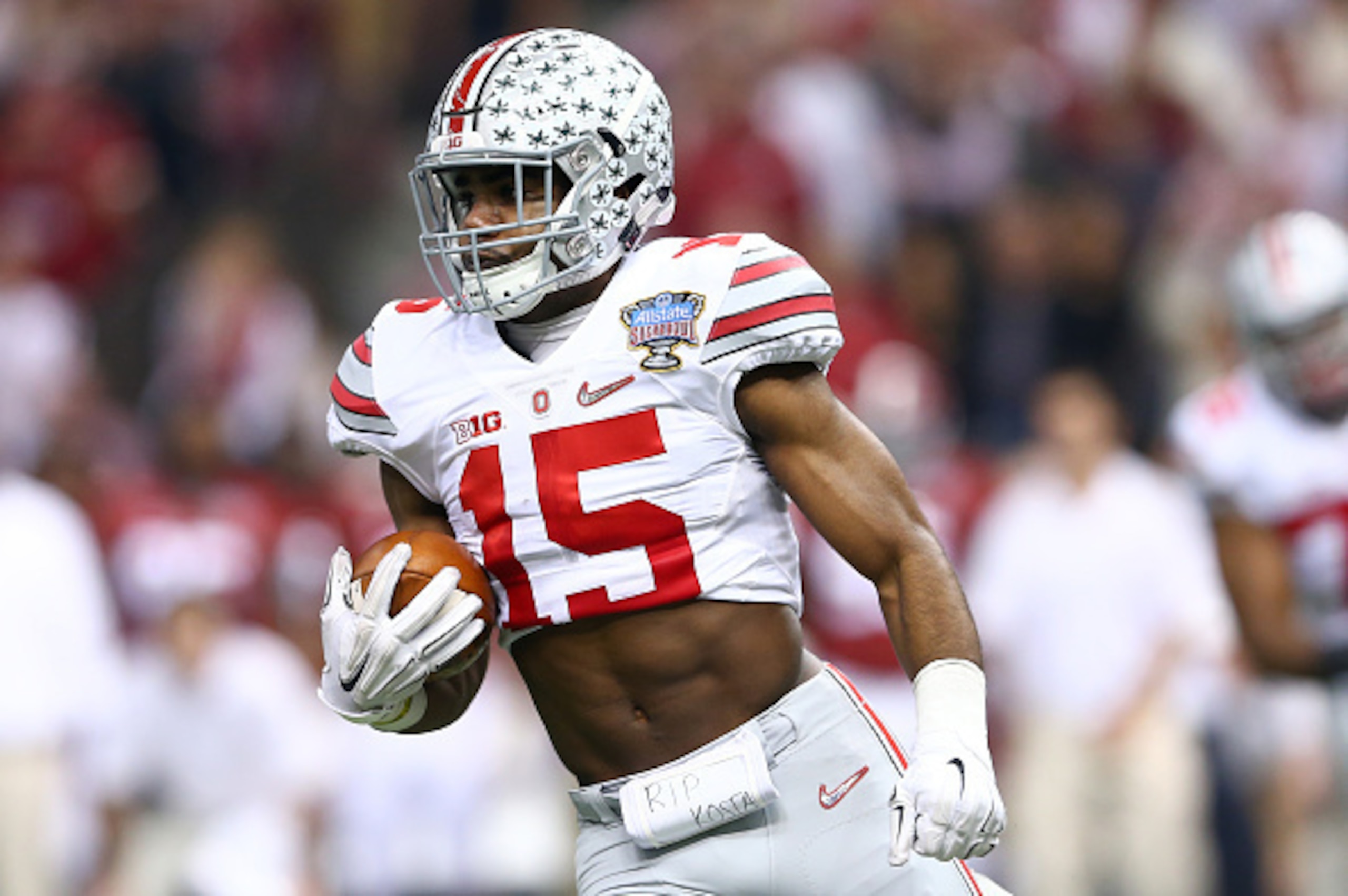
Oh my, yes. Yes.
This is the type of game fans crave. It's a rematch of last year's semifinal, a 42-35 win for Ohio State, but no one's going to mind. The Buckeyes played their best game of the season against Michigan, showing they could resemble the team that won a national championship a season ago. There are NFL-caliber athletes everywhere you look.
However, the Alabama defensive front seven is the stuff of which horror movies are made. Not only do the Tide lead the nation in rushing defense, they're No. 1 in sacks, too. Everybody gets involved—linemen, linebackers, starters and backups. It's the definition of a team effort.
Now imagine that group going up against Ohio State running back Ezekiel Elliott, who is, in the opinion of B/R's draft guru Matt Miller, the most complete running back available for the 2016 NFL draft.
Ultimately, this game comes down to two things: Alabama head coach Nick Saban is exemplary in "revenge games" (per Jon Solomon, CBS Sports), and do not underestimate the loss of Ohio State offensive coordinator Tom Herman, who is now the head coach at Houston. This isn't the same offense, one that hasn't been able to push the ball vertically as well as last year. (In fact, even though J.T. Barrett is a better fit for this offense, he might actually be a worse matchup against Alabama, if that makes sense.)
Ohio State's offense finally found its rhythm, but a lower-scoring affair tips in favor of Alabama.
Score: Alabama 20, Ohio State 16
Quarterfinal: No. 3 Michigan State vs. No. 6 Stanford
4 of 8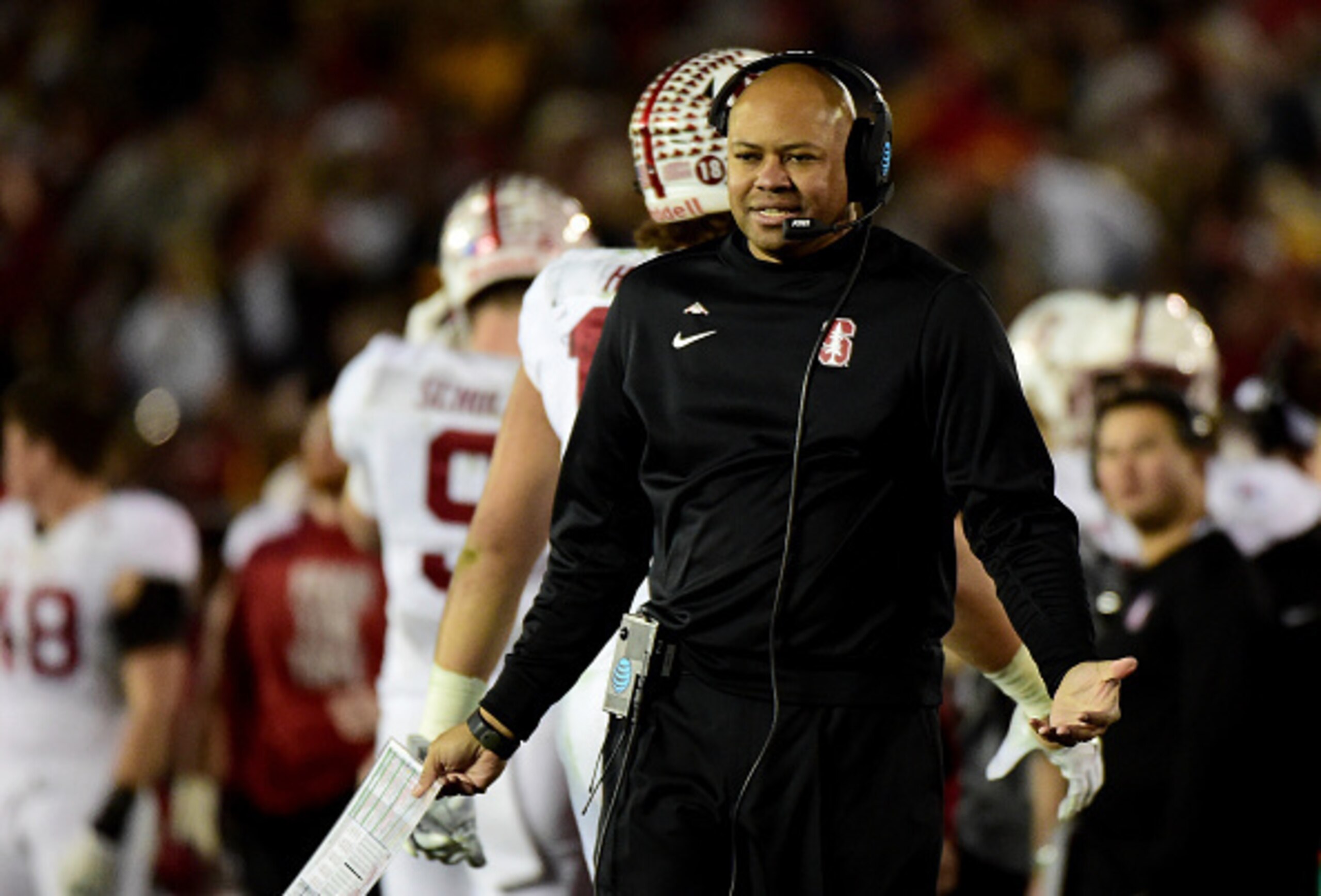
Rematches are aplenty in the hypothetical expanded playoff, though this Rose Bowl rematch dates back two years to when the Spartans beat the Cardinal 24-20 in a classic.
Both of these teams are a little tough to figure out. On one hand, Michigan State won the Big Ten and held Ohio State's offense to 132 yards. On the other, Sparty has made it an adventurous season, with close calls against Purdue, Michigan, Rutgers and a loss (albeit controversially) to Nebraska.
Similarly, there have been times Stanford has looked unstoppable (versus UCLA, USC in the Pac-12 Championship Game). But then there are the losses to Northwestern and Oregon.
When the Cardinal are clicking, though, they're so much fun. All-purpose back Christian McCaffrey is a difference-maker in the purest form of the word. Head coach David Shaw once referred to him as the best player in the country and that it was "not even a debate." McCaffrey may not get a ton of yardage between the tackles versus Michigan State's defensive line, but he's so versatile in other ways. Coupled with a confident Kevin Hogan at quarterback, McCaffrey transforms Stanford's offense into a high-powered, versatile attack.
Stanford doesn't create a ton of explosive plays, but it does so effectively and creatively. The dirty little secret is that neither Michigan State nor Stanford has a super stout defense, so expect a lot of points. Basically, expect the opposite of the Rose Bowl from two seasons ago.
Score: Stanford 44, Michigan State 41 (OT)
Quarterfinal: No. 4 Oklahoma vs. No. 5 Iowa
5 of 8
Remember, it's the end of the regular season. Oklahoma just reeled off seven straight wins and went unblemished in that especially tough month of November in the Big 12. The Sooners are the hot team right now.
Iowa gave Michigan State everything it could handle in the Big Ten Championship Game and put up a valiant effort, coming up just short.
The Hawkeyes have a solid defense, but they never played a quarterback like Baker Mayfield during the season. His ability to extend plays and scramble is something even the best coaches can't fully account for in practice.
Meanwhile, the Sooners defense faces one of the better quarterbacks it has seen this year in C.J. Beathard. (Recall Oklahoma faced backups against Baylor, Oklahoma State and TCU.) However, Oklahoma is especially good against the pass and shouldn't give Beathard large throwing windows.
With Mayfield's big-play ability, a revamped running game and a couple of key turnovers and stops, Oklahoma wins comfortably.
Score: Oklahoma 35, Iowa 20
Semifinal: No. 1 Clemson vs. No. 4 Oklahoma
6 of 8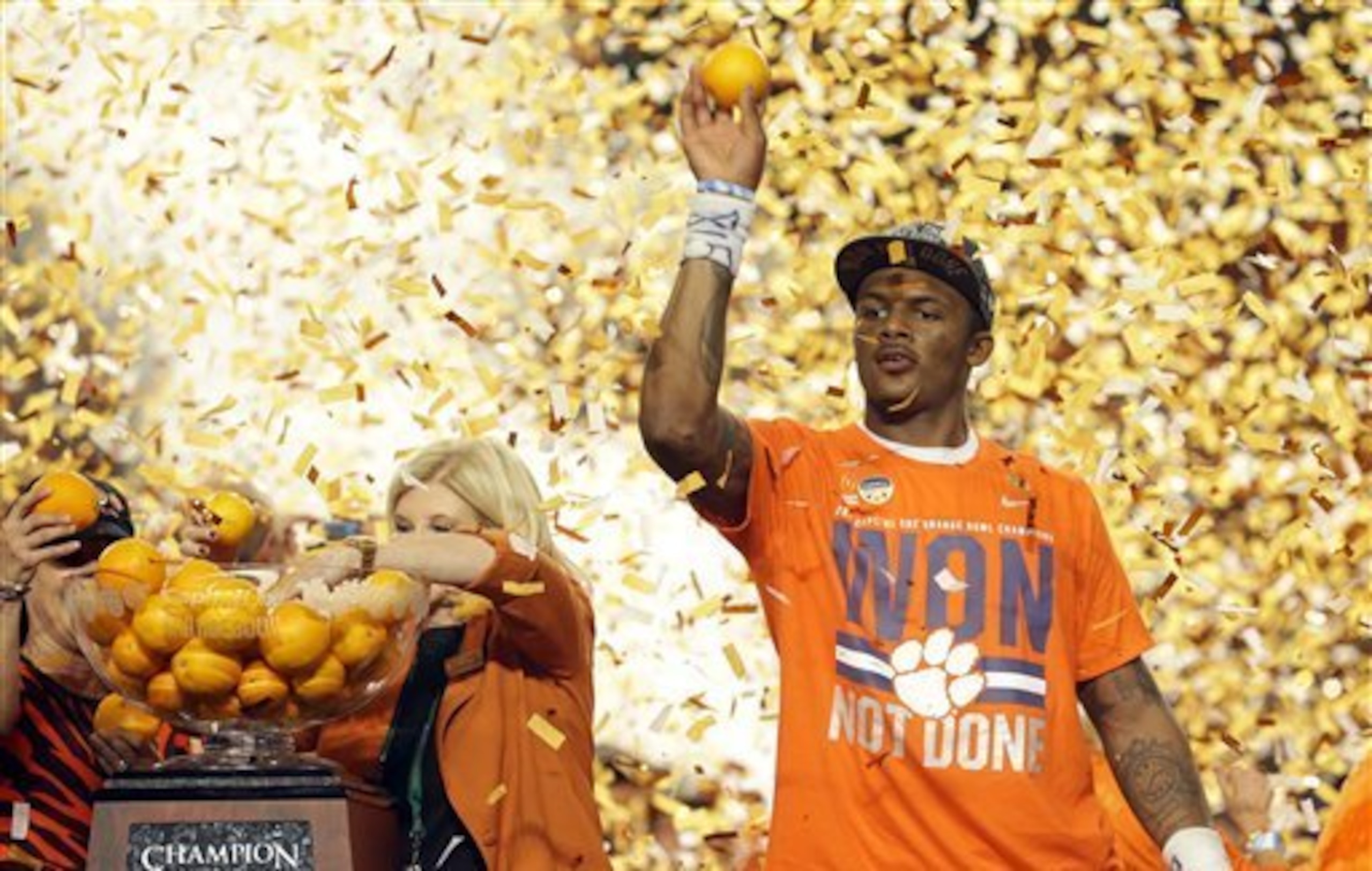
It would be wrong not to at least acknowledge that we know how this game turns out in real life. Clemson beat Oklahoma 37-17, and there's no way to ignore it.
(For the record, I picked Clemson to beat Oklahoma in December.)
Would the outcome have been different if Oklahoma was healthier? Running back Samaje Perine had an ankle injury, defensive tackle Charles Walker never suited up and linebacker Jordan Evans was taken out mid-game. Probably not seeing as it was a 20-point game. Remember, too, Clemson was without receiver Deon Cain (suspension) and defensive end Shaq Lawson (knee injury).
For the sake of discussion, though, let's pretend this game hasn't happened and all things are reset. Many of the subtle advantages still go Clemson's way. The run defense is still sound (a key to beating the Sooners), and Mackensie Alexander is one of the more underrated corners in college football. Defensively, even though Clemson isn't as stingy as it was in 2014, there are athletes. That's a problem for Oklahoma.
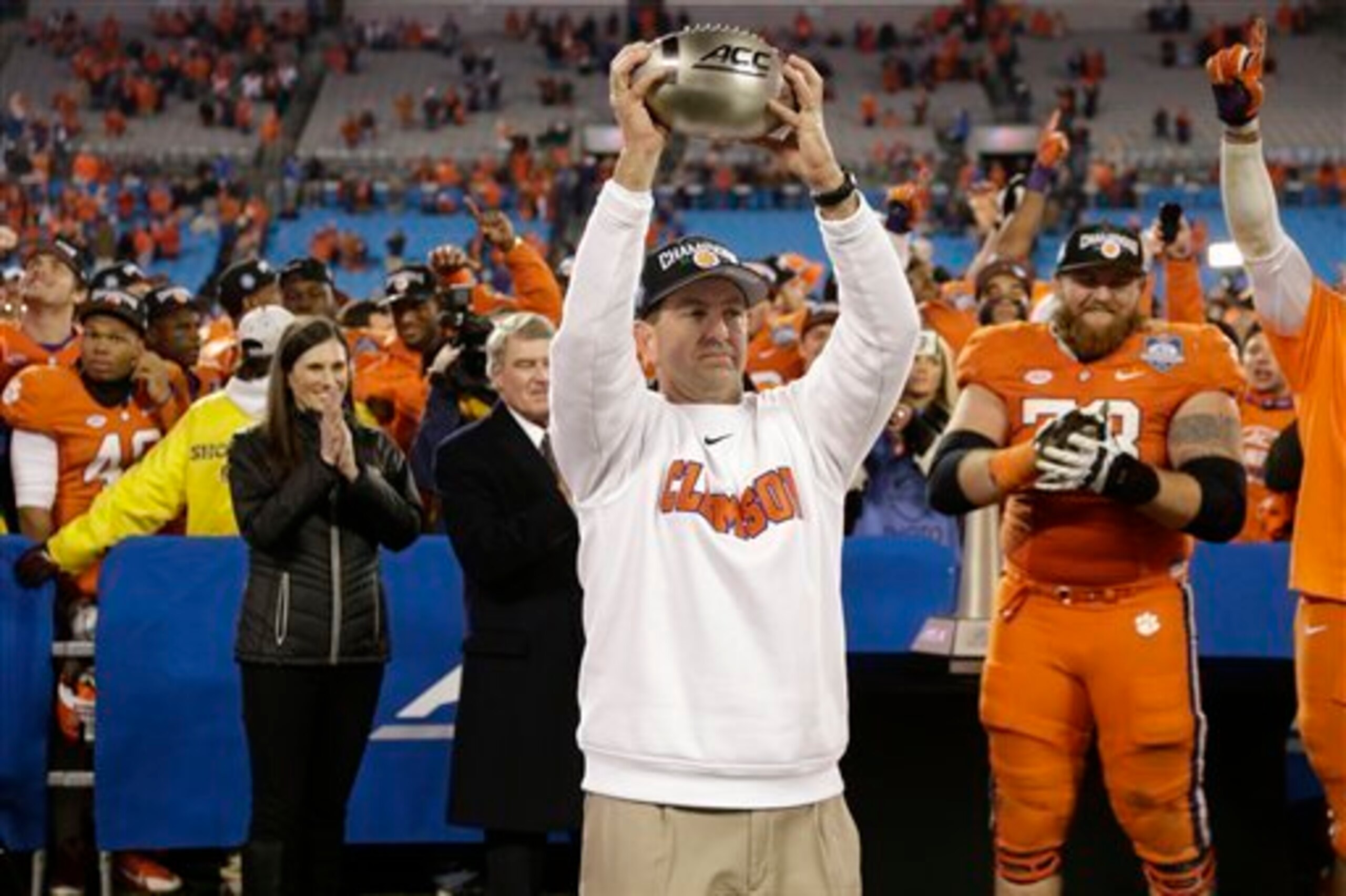
A healthier Oklahoma defense makes a bit of difference, but the Tigers are so good at closing out games late. Head coach Dabo Swinney adds another key victory to his resume.
Score: Clemson 30, Oklahoma 21
Semifinal: No. 2 Alabama vs. No. 6 Stanford
7 of 8
Alabama-Stanford is one of those high-profile SEC-Pac-12 games everyone has been clamoring for but hasn't received.
Wish no more.
If this game had been played a couple of years ago, Alabama's running attack versus Stanford's run defense would have been an epic battle in the trenches. This year, however, the Cardinal aren't as good against the run, and Tide running back Derrick Henry is a work horse.
Stanford's creativity on offense, especially when it comes to using Christian McCaffrey, could pose Alabama some problems. The thing is, however, Stanford doesn't utilize a lot of tempo nor does it hit many downfield passes. Quarterback Kevin Hogan can run, but it's deliberate and not improvisational. These are all areas in which Alabama's outstanding defense could be exploited but aren't.
McCaffrey would best be used as a receiver out of the backfield and on special teams, but he's not fit to run straight into the mouth of that defense.
Score: Alabama 40, Stanford 24
National Championship: No. 1 Clemson vs. No. 2 Alabama
8 of 8
As it turns out, our eight-team playoff produced the same national championship as the actual four-team playoff.
The X-factor, as it has been all along, is Alabama's defense. The pass defense is still prone to some long plays—the Tide rank 13th in the SEC in passing plays of at least 20 yards allowed—but the defensive front seven is unquestionably in the conversation as one of the best units of its kind ever in college football.
With receiver Deon Cain, Clemson's offense has a different gear. Operating in the universe in which he's available, that poses some problems for Alabama. However, running back Wayne Gallman is kept under wraps, putting a ton of pressure on quarterback Deshaun Watson to play the game of his life—and against college football's top pass rush, no less.
The trenches is where this game will be won or lost. Alabama's defensive front gets the attention, but Clemson's is no slouch, either. The Tigers have the quarterback edge and enough defensive pieces to line up well with Alabama. If there's a coaching advantage, it's not wide. Nick Saban is the best, but Dabo Swinney has won big game after big game. At some point, he deserves recognition for what he's done.
It's close. Real close. But Alabama's defense comes up big when it absolutely has to.
Score: Alabama 31, Clemson 27
Ben Kercheval is a lead writer for college football. All stats courtesy of cfbstats.com.
.jpg?w=2560 "Bills Fans RIP New Stadium")
.jpg?w=2560 "Buzz: Dolphins Trading for Pats OL")
.jpg?w=2560 "Report: Cowboys Extending Quinnen")
.jpg?w=2560 "Teddy Bridgewater Retires")
.jpg?w=2560 "NFL to Tweak Challenges")