

Is the Future of the Big 12 in Danger?
The Big 12 model, as it currently operates, is temporary. That's not just any opinion of some columnist, message board poster or realignment rumormonger. That's straight from the mouth of conference commissioner Bob Bowlsby.
And if Bowlsby feels change is not just coming but necessary for survival, then how the Big 12 looks today likely isn't how it will look in the not-too-distant future. Otherwise, there may not be a Big 12 at all.
Speaking to Toby Rowland, the play-by-play broadcaster of Sooner Sports Network, on Saturday during the Red River Shootout, Bowlsby dropped some telling quotes about the future of the Big 12:
.jpg?w=2560)

Before diving into the significance of Bowlsby's comments, a brief history brush-up is required.
In late June, Oklahoma president David Boren kick-started more realignment chatter when he said the Big 12, a 10-team league, should "strive" for expansion while it has the "time, stability, all of that to look and be choosy," per Ryan Aber of the Oklahoman.
"How many years can this go on?" Boren said. "Finally, it just gets to be really debilitating. I worry about that. That’s something I just worry about long term about the conference, not short term."
Boren also referenced Texas' Longhorn Network, calling it the "elephant in the room." Boren's stance on expansion, as well as other pertinent conference issues, is well-documented. While it was a newsworthy conversation, especially since Big 12 media days were right around the corner, it wasn't exactly new material.
For Bowlsby to back up Boren's statements four months later is eye-opening, though.
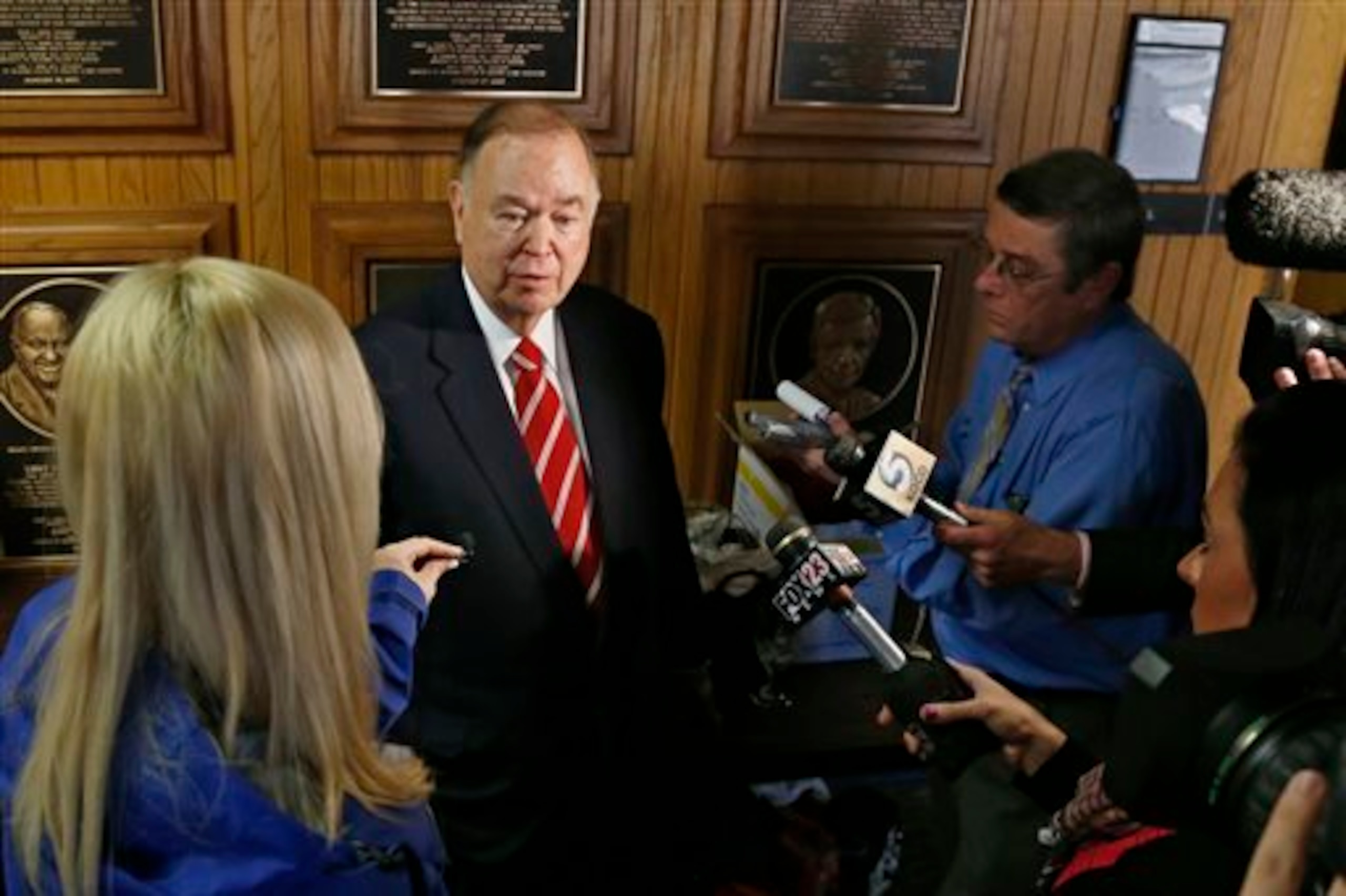
Bowlsby's job, like that of any commissioner, is to speak on behalf of the people he serves and do what's in the best interest of the conference he runs. That's not to say his personal opinion doesn't matter, but Bowlsby's chief responsibility is to look out for the good of his members.
That can be tricky when you have a college athletics titan such as Texas with its own network, The Longhorn Network, on ESPN's family of channels. No other team in college football residing in a Power Five conference has a deal like Texas.
It's fair, then, to label that as the key to the future of the conference. After all, the Big 12's other issues could be minuscule by comparison. The Big 12 could have a deregulated conference championship game as early as 2016, should legislation be passed in January. This would allow the conference to hold a title game without having 12 members and two divisions, the current criteria under NCAA rules.
"It's officially in the system," Bowlsby told Heather Dinich of ESPN.com in June. "We haven't encountered any resistance to it at all. It's really deregulation, is allowing conferences to do what they want to determine their champion. In the end, I expect that it will be approved."
If the Big 12 is once again left out of the College Football Playoff, expect it to have that 13th game by next season.
And though expansion is a hot-button issue, there's no rush to name two more teams if the conference adds a deregulated championship game. There also aren't any great candidates for expansion out there for the Big 12 to pluck that won't be there in 10 years, as Andy Staples of Sports Illustrated tweeted this summer:
There's also the matter of the Big 12's media rights deal with ESPN and Fox. Boren insists the deal could grow proportionally should the conference expand, but Staples noted the following: "The Big 12’s revenue sharing policy means the schools would also have to split bowl and College Football Playoff money 12 ways instead of 10. That would cut into the bottom line by a few million. That’s not a big deal for Oklahoma, but it is for Iowa State or Kansas State."
In all, Staples estimated "the two new additions would really need to bring an additional $65 million per year" to be worth the acquisition. Good luck trying to find that in the current landscape.
The logistics of adding a deregulated title game and/or expanding are complicated, but not nearly as personal as dealing with The Longhorn Network. The most important part of Bowlsby's quote from Saturday referenced the lack of a conference-wide network, such as the Big Ten Network, SEC Network or Pac-12 Network.
How Bowlsby plans to approach this delicate matter is unknown. Texas is in the early stages of its 20-year partnership with ESPN. While articles have been written about the Longhorn Network with a doom-and-gloom undertone, it's too early in the process to proclaim the whole thing a success or failure. In the meantime, Texas is still pocketing some sweet coin from its third-tier media rights deal.
All of this is to say Texas—and ESPN, for that matter—have no reason to hit the self-destruct button on the network yet. Again, that could complicate things if, in five or 10 years, the Big 12 starts kicking around the idea of a conference network.
It's hard to know exactly what the repercussions of this could be. Does the Big 12 disband? Expand? Shuffle its membership and continue to somehow exist? The only thing for certain now is the key to the Big 12's survival rests, in one way or another, with Oklahoma, Texas and their collective happiness.
But it's worth noting the Big 12's footing—which, in a given moment, seems to move from stable to unstable and back again—is rooted in something deeper than finances. What, exactly? Like most dysfunction, it's hard to pinpoint the source.
Nevertheless, there's an uneasiness about the Big 12 that you just don't see in the other Power Five conferences. Rarely does conference brass appear to be on the same page about anything. During Big 12 media days in July, Bowlsby notably said there were "four or five [presidents] in the middle who are persuadable one way or the other" on expansion, according to Max Olson of ESPN.com.
Playing psychologist isn't what you'd initially put down as a requirement for being a conference commissioner. However, that may need to be Bowlsby's biggest strength in the years to come. Otherwise, he may run out of people to counsel.
Ben Kercheval is a lead writer for college football. All quotes cited unless obtained firsthand.


.jpg?w=2560 "Puka Dealing with Calf Injury")