Is 2015 the Year of the Underdog in College Football?
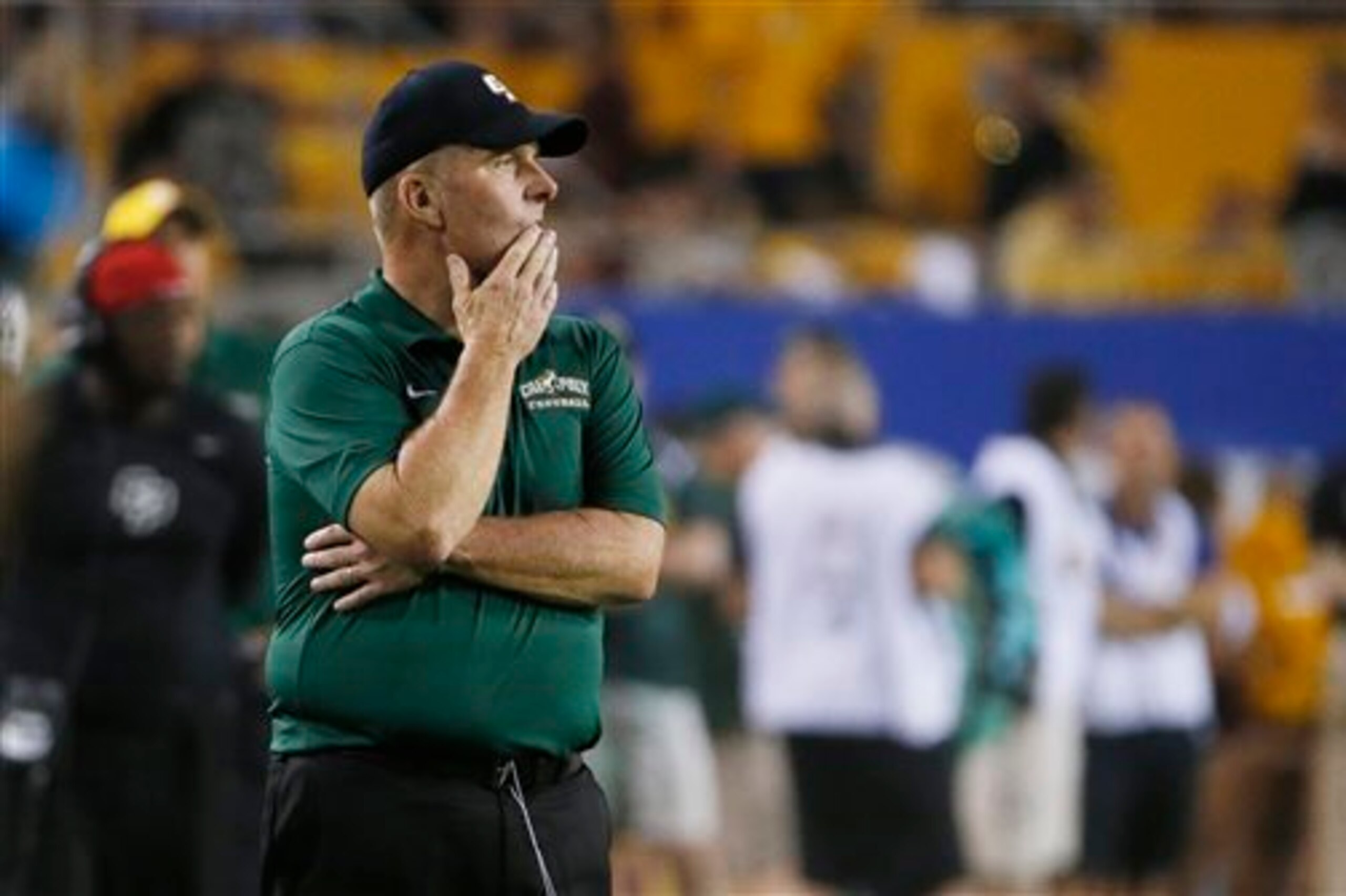
You can understand why Tim Walsh might have sounded a little defensive. He has heard questions like this so many times, questions about the quality of football that teams play at Cal Poly's level. They get a pat on the back for even keeping a game close with one of college football's big boys.
On top of that, Walsh, Cal Poly's coach, was a little tired after he and his team had just spent Sunday cramming into a Southwest Airlines flight from Phoenix to Los Angeles, then taking a three-and-a-half-hour bus ride home.
"We get overlooked at the FCS level," he said. "The reality is, there are a lot of good football players in the United States, and Auburn can't take all of them, and Arizona State can't take all of them, and USC can't take all of them. Our level, at the top level, plays really good football and deserves more respect, probably."
TOP NEWS
CFB Player Dies at 21
.jpg?w=2560 "Illinois Ohio St Football")
NCAA Sues Ohio Governor (AP)

Biggest Disappointments of 2026 CFB Season 😞
They might be about to get it. If the first two weeks of the season are any predictor, this could be the year of the underdog in college football.
Every year, you get an example of one of the little guys (FCS is a sub-level of the major college level) pulling an upset. But already this season we've been introduced to a lot of new little guys. Some are winning and some, like Cal Poly on Saturday at Arizona State, are only coming close.
But the sheer number of them has stood out. And on top of that, some of these games have come not only against major college programs from the Power Five conferences, but also against the nation's elite.
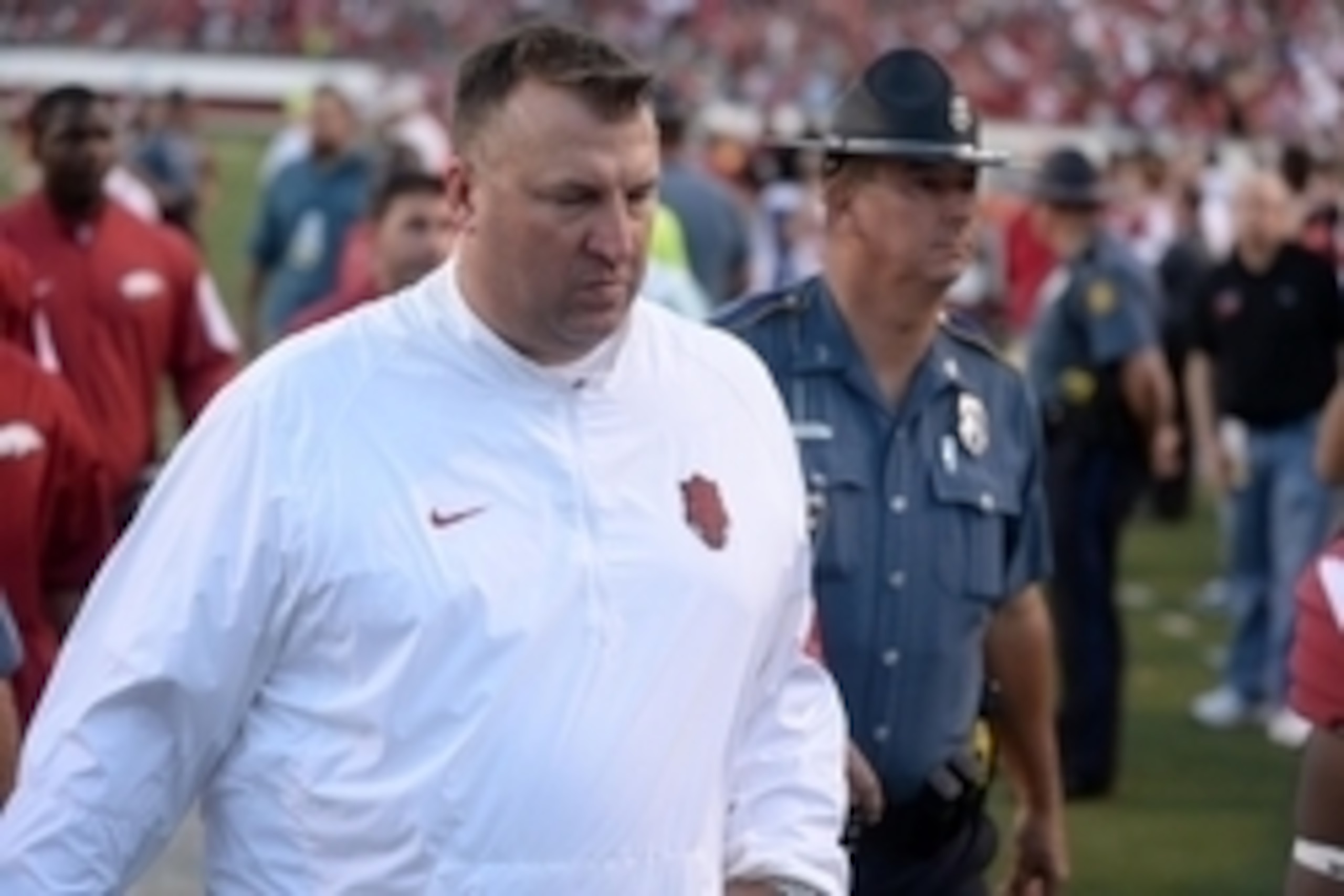
Cal Poly went into the fourth quarter tied with Arizona State but lost in the end, 35-21. But also, Toledo (an underdog at the FBS level) beat Arkansas, Texas-San Antonio almost beat Arizona, Arkansas State scared Missouri, Portland State beat Washington State, South Dakota State beat Kansas, Lamar stuck with Baylor—and most shocking of all: Jacksonville State took Auburn to overtime before losing.
Admit it: You haven't heard of a lot of those schools. The big boys pay them to come to their stadiums so they can get in some practice without the chance of losing.
They might have to rethink that.
Some people think the big boys shouldn't be playing games like that because they aren't competitive. So what on earth is happening?
"There's so many kids that want to play college football, and they want to play right now," Notre Dame coach Brian Kelly told Bleacher Report. "There's not room for all these players at every (big) school. If they can get an opportunity to play early and play as a freshman, they will choose to go to a school that will give them that opportunity.
"So it doesn't surprise me, quite frankly, that teams in non-power conferences can beat those schools. Now, they are committing themselves to putting in the resources and bringing those recruits to their schools."
Yes, but that's a little confusing. The College Football Playoff and the enormous amount of money coming from it through ESPN TV rights has made the playing field even less level, financially. The Power Five conferences (SEC, Big Ten, Big 12, ACC, Pac-12) have basically taken the money.
On top of that, the Power Five schools tend to get first choice of the players. So I asked Walsh: What are the chances you can get a high school recruit to your team when Auburn or Arizona State starts to recruit him?
"Zero," he said. "I'm a realist. If Arizona State starts recruiting someone we are in on, I just say, 'Thanks a lot. Good luck.'"
So his roster is filled with players who couldn't go to Arizona State, yet those guys were tied at Arizona State in the middle of the fourth quarter. Then Cal Poly lost yardage and chose to punt instead of going for a long field goal.
"I wish I had that call back," Walsh said. "We were in control of that game. If you're a ranked FCS school, you can play well against a middle-of-the-pack FBS school. When you start talking about what Jacksonville State did and what we almost did, that's a completely different beast. But if you catch a team on a good night when they're not playing with a high emotional intensity, they can get caught."
What's happening is this: The top underdog college football teams are following the model of the Cinderella basketball teams people fall in love with at the NCAA tournament every year.
They are getting players recruiting services have not labeled as 3-, 4-, or 5-star prospects, but who have talent.
"You can sneak a couple of them," Walsh said.
They come to a place like Cal Poly or Jacksonville State and start to develop. Two, three years of putting on weight, learning the system, playing with teammates, and they get to be good enough.
It's the Gonzaga basketball model.
Cal Poly defensive end Kelly Shepard came to college at 6'5", 200 pounds. No way would the power teams even look at him. Now, he's 252. Quarterback Chris Brown wanted to play QB even though power schools thought he should be a safety. Now, he has developed into a strong quarterback.
On top of that, as Kelly said, the borderline players can feel confident they'll play right away at an FCS school instead of sitting on the bench at the Power Five. But the new spread offenses also can be too athletic to be stopped even by the defenses at the power schools. Meanwhile, this year there's a shortage of great quarterbacks to lead the power schools.
Add it all up, and the underdog has a shot.
Walsh tried to fire up his team before Arizona State by talking about Buster Douglas' upset over Mike Tyson.
Problem: Only one player know who Douglas was. Did they know who Tyson was?
"The Hangover movies," Walsh said, "put him back on the map."
In the end, it probably isn't really going to be the year of the underdog. At the NCAA tournament, Valparaiso and George Mason reached the Final Four. There is no mechanism for that in football. But the underdogs feel like a club now.
And they are starting to have their spots on the map, too, even if it did take Cal Poly all day to find theirs.
Does Arizona State fly commercial and take long bus rides?
"No," Walsh said. "Auburn doesn't, either."
Greg Couch covers college football for Bleacher Report.


.jpg?w=2560 "Report: Eagles to Sign Cowboys QB")