The Kingmaker: How Mike Slive Reshaped the SEC and College Football
BIRMINGHAM, Ala. — The most powerful man in college football of the last decade slides into the back booth at his favorite breakfast spot in Homewood, Alabama. Surrounded by construction workers, off-duty cops and high school coaches, Mike Slive is just one of the guys at Salem's Diner, a place where he's simply called "Mike" by the rest of the regulars.
At just past dawn, Slive, the longtime commissioner of the SEC, orders his go-to dish: scrambled eggs dry, a sliced tomato and an English muffin. And yes, he'd love another cup of coffee, always more coffee, which is the only thing that flows faster than the conversation at Salem's, an old-fashioned greasy spoon where locals love to swap tales—some a little taller than others.
TOP NEWS

Biggest CFB Surprises After Week 2 👀

New CFB Playoff Projections 🔮
-(1).png?w=2560)
CFB Week 2 Winners & Losers 📊
"I've done a lot of thinking and talking in this booth," Slive said. "There are a lot of hard-core college football fans that come in here, all of them with great knowledge, and it's important to listen to what they have to say. I'd like to think I've done that with all of my coffee buddies."
On many mornings at Salem's, Slive spitballed some of his most progressive ideas with his guys, including the concept for a college football playoff, which he first proposed in the summer of 2008. In fact, if you're looking for the birthplace of the playoffs, it's not a stretch to suggest it's here in the cramped confines of Salem's, where the one-time king of college football often held court during his 13-year reign atop the SEC.

But now, the 74-year-old Slive has walked away. On Monday, the SEC media days kick off in Hoover, Alabama—an event that annually marks the unofficial start of the college football season—and Slive won't be at the dais in the second-floor ballroom of the Wynfrey Hotel to welcome the 1,000-plus credentialed media. He retired this spring, handing the reins of the SEC to his longtime lieutenant, Greg Sankey.
So instead of stalking the halls of Wynfrey, Slive will be out on his backyard deck that overlooks a valley in Birmingham, an unlit cigar dangling from his lips, his thoughts free to roam.
There is so much for Slive to reflect on: From 2006 to 2012, he presided over a conference that won seven straight college football national titles, an unprecedented run of domination in the sport's history. He was the key behind-the-scenes actor in getting the first minority coach hired in the SEC. He oversaw the creation of the SEC Network, which launched in August 2014 into more homes (90 million) than any cable channel in history. And Slive turned the conference into the wealthiest in the land. In Slive's first full year, 2003, the SEC issued a payment of $8.49 million to each of its 12 member schools; this spring, the conference cut checks of $31.2 million to its 14 schools.
Here, we pull back the curtain on what has made Slive—a former lacrosse player at Dartmouth who served as a circuit judge in New Hampshire in the 1970s—the most influential figure in college athletics in the 21st century. It's a story told in Slive's own words, with insights from coaches such as Nick Saban and Steve Spurrier and fellow administrators such as Bill Hancock, the executive director of the College Football Playoff, and Larry Scott, the commissioner of the Pac-12.
The discussion begins with Slive's role in the formation of the College Football Playoff.
EDITOR'S NOTE: The following comments have been edited for clarity and length.
Slive: Back in 2004, we didn't award the SEC conference championship trophy on the field after the SEC title game; it was done in the locker room. And so after Auburn had beaten Tennessee at the Georgia Dome, I went and visited the players and coaches.
Auburn had a great team and had gone undefeated. But they were ranked No. 3 at the time and were shut out of the national championship game, so there was disappointment in the locker room. I didn't think that was fair. I started thinking about how we really needed a four-team playoff. I called the concept a "plus-one" at the time, but there really wasn't any interest it.
Bill Hancock, current executive director of the College Football Playoff and former director of the Bowl Championship Series (BCS): When I heard the "plus-one" idea, I didn't think it would work. I thought there would be uncertainty for which two teams should be in the final game.

The "plus-one" Mike was talking about was for someone to pick two teams to play each other after the bowl games and send them off to play. I thought it was a progressive idea, but I didn't agree with it because I thought there would be significant room for debate about who the final two teams should be.
Larry Scott, Pac-12 commissioner: The move to a playoff was filled with a lot of disagreements and vigorous debates. There had to be a lot of give-and-take between all the conference commissioners. But Mike was the leader. He never lost sight of the big prize. He was masterful at getting everyone to make compromises and see the bigger picture.
It was fun to work with him even though we didn't agree on everything because he was always able to get us to see the common ground we shared. We would not have gotten to the playoff as fast as we did if Mike wasn't in the room. And we would not have started the debate when we did if Mike didn't start talking about the "plus-one" concept.
Hancock: The 10 commissioners were at the table together for 100 hours or more of meetings, and Mike knew what he wanted. But Mike also made it his duty to understand what the other commissioners wanted. And then he set about thinking of how compromises could be made.
Mike realized early on in the process that the SEC wasn't going to get everything it wanted, and neither was the Big Ten or the Big 12 or the Pac-12 or the ACC. But the only way to reach a decision on this was to give everyone some of what they wanted. Again, Mike realized that early on. In his own gentle and not-hammering way, he became the bell cow in the process that led us to everyone getting some of what everyone wanted.
Steve Spurrier, South Carolina head coach: When I first heard Mike talk about the "plus-one," I was happy—and I was really happy that it was Mike who was behind it because he can get people to come around to his way of thinking unlike anyone I've ever met. It took some time for Mike to work his magic behind closed doors, but now I think you can say that Mike Slive is the reason we have a playoff.

Slive: I knew getting to the playoffs was going to be a long march, but there were some things I felt we could accomplish sooner in our own conference. One of those things was getting a minority coach hired.
I remember early in my tenure, I was interviewed by ESPN on the subject of minority coaches. We didn't have any in the SEC, but I told the reporter that the SEC would have a minority coach while I was there. He said something, and I repeated, it will happen. He said something again, and I repeated, it will happen. Again he said something, and I repeated, it will happen. I left that interview very frustrated. But I made it be known to everyone in our conference that a minority coach would be welcomed by me.
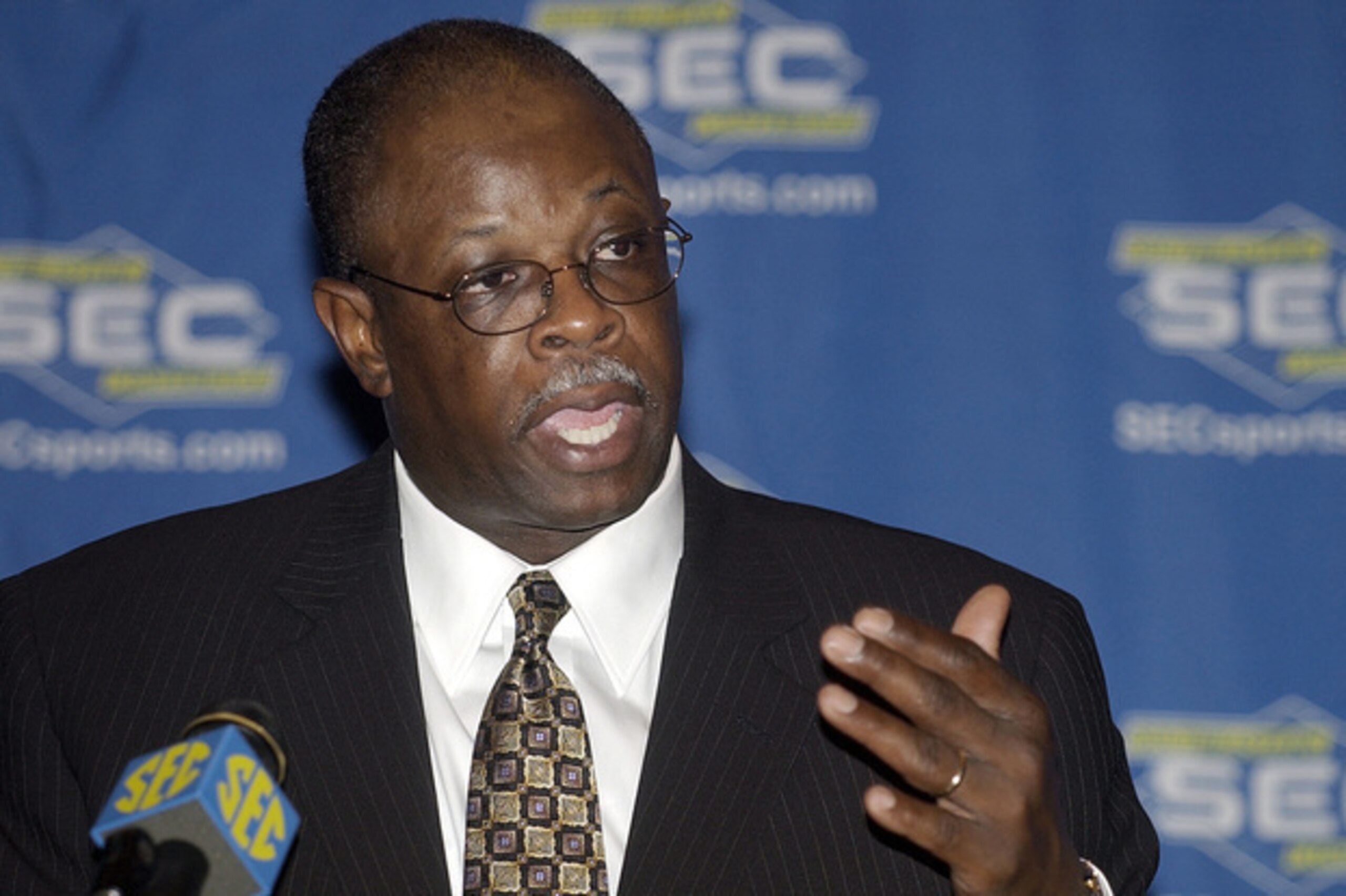
Sylvester Croom, former Mississippi State head coach and current Tennessee Titans running backs coach: When I was hired at Mississippi State [in 2004] and became the first African-American head coach in the SEC, I was extremely proud. I didn't know this at the time, but I found out that Mike was really working behind the scenes on my behalf.
After I was hired, I got a phone call from Mike. He welcomed me to the conference, and he didn't mention race at all. He just wanted me to feel like I belonged. Now the great thing is there's been a bunch of minority coaches hired in the SEC since me, and it's no longer a big deal. That's progress, and Mike played a big role in bringing that about.
I remember in that first conversation, Mike also talked to me about the expectations of head coaches. He mentioned his goal for the conference that none of the schools be on probation.
Nick Saban, Alabama head coach: We had a lot of issues in the league at that time [when Mike was hired]. There were a lot of people on probation, and there were a lot of people out there sort of talking about things that created a negative image for our league. He has done a marvelous job of cleaning that up as well as elevating the image with marketing and TV.

Slive: When I had my introductory press conference on July 2, 2002, I laid out the challenges as I saw them. The first was we had to be diverse and be a league of opportunity in everything we did. The second was that the league had nine schools that were dealing with NCAA infractions. That had to be dealt with and taken care of. At the time, that was all the media was talking about. We needed to address the off-the-field stuff to get the focus back onto the field.
Spurrier: Mike told all of us coaches that we needed to look at the big picture and look at what's best for all of us 10 years from now. He has this amazing ability to come into a room filled with coaches who are only concerned about their own self-interest and get everyone to see common ground and do what's best for the group. I've never been around anyone who can build a consensus like Mike.
Slive: There was this attitude in the conference when I first started that if one school was in trouble, the other schools would celebrate it as if it was a good thing for them. I came out with a manifesto in 2004, which was unanimously adopted by the league, about how we all needed to change our attitudes. When one school was on probation, it adversely affected all the schools.
Well, fast-forward to when I had my 10-year anniversary on the job. I went on Paul Finebaum's radio show here in Birmingham, and at the end of the interview, I mentioned that he didn't ask one single question about NCAA infractions. The reason was he had no cause to ask about NCAA infractions because it was no longer an issue for our conference. Progress never moves in a straight line, but over time, you can see if you've made any or not, and I think we have.
Ross Bjork, Ole Miss athletic director: You really see Mike's leadership at our spring meetings in Destin [Florida] when our football coaches and athletic directors meet. There are a lot of powerful people in that room. But Mike could always bring everyone back to center on whatever the issue was, big or small.
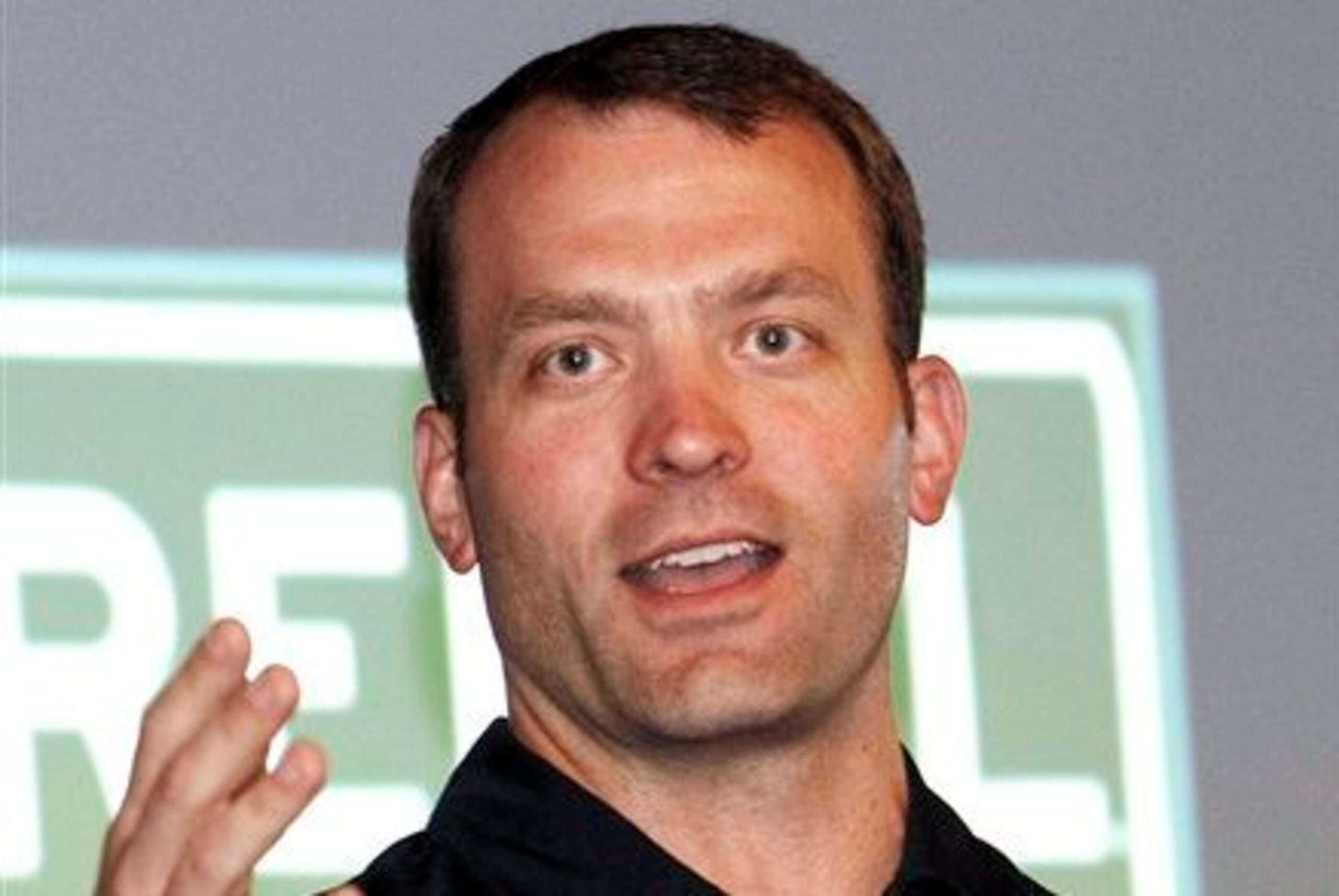
The main thing is that he listens and allows people to have their voices heard in a fair, civil way. And then he makes his points, which almost always make you go, "Oh wow, I didn't think of this that way." He's graceful, but he's also fearless. He knows what the right decision is, and he's not afraid of that decision even if it's not popular at first glance.
Scott: I first met Mike in 2008. I went to a commissioner's meeting that spring and was very impressed with him. It was clear he was a person with a lot of wisdom, a person who was very thoughtful. He would listen very intently and only speak when he had something important to say. So when he spoke at a meeting, it was clear it would shift opinion. Right from the get-go, I knew he would be a person I would have a lot of respect for.
Early on, I told him I wanted to come visit him. So I made a trip to Birmingham and spent a day with him at the SEC headquarters. I got to see him interact with his staff and on his own turf. He was so relaxed in his office. He took so much pride in being the head of the SEC. As a result of that trip, I knew he was someone I could rely on for counsel on things when they would come up in my job. He was always very generous with his time with me.
Bjork: This is the kind of guy Mike Slive is. The first time I met him was at the Final Four in 2012. I had been named the AD at Ole Miss, but I hadn't started yet. I asked him if we could get a coffee together. He responded right away, "Absolutely."
We met at his hotel and spent two hours talking about everything—life, families, the job, challenges, opportunities. We talked about his vision for the SEC Network, which hadn't been discussed publicly yet. For him to give that kind of insight to me showed that he trusted me. It was a neat moment. I felt like I had arrived because I was sitting down with Mike Slive, the best of the best in all of college sports.
It was daunting being a young AD in the SEC. [Bjork was 39 when he became the Ole Miss athletic director and was the youngest AD in the Power Five conferences.] But Mike was very reassuring. He made me feel like I belonged just by the respect he showed me. He was intimidating because it was Mike Slive, but he is so graceful that he made you feel comfortable around him. That has been one of his secrets to success.
Spurrier: Where our conference has gone in Mike's 13 years on the job has just been mind-boggling. If 13 years ago you'd told me that the SEC was going to send $32 million to all 14 schools in the conference, I would have thought you'd flat-out lost your mind.
It was Mike who pushed for and got the addition of Missouri and Texas A&M into the conference in 2012. Getting their fanbases and markets into the SEC was incredibly important to the overall growth of the conference, and that was all him. The SEC Network did way beyond what we all thought it could do.
The early predictions were that we'd break even on this deal in the third year. Well, all of a sudden in the first year of existence, it was very, very profitable, like, off-the-charts profitable. Again, it's just mind-boggling everything he's done.
Scott: Mike's legacy is that he raised the bar not just for the SEC, but all of college sports. His legacy is the College Football Playoff, the success of the SEC and, of course, the SEC Network. No question, Mike Slive left college sports and the SEC in a far better place than when he found it.

Croom: The dominance of the SEC over the course of Mike's tenure isn't an accident. Because of the money he helped generate, the athletic facilities across the conference improved from top to bottom. It's unmatched.
Look at what the Mississippi schools have done. They were at the bottom of revenue in the conference, and now they have some of the best facilities in the country. All of us have good enough facilities to recruit anyone in the country. And it's because of the TV contracts that Mike negotiated and the SEC Network revenue.
But there's something even bigger going on. There is a great deal of SEC pride that did not exist before Mike got to the conference. This may actually be his greatest legacy. In the NFL now, guys come into the league, and they don't boast about being from Alabama or Auburn or Tennessee; they're talking about being from the SEC. Period. That's it. It's the SEC against everyone else. Mike fostered that conference pride more than anyone else.
Because under Mike's leadership, coaches came to understand that what's best for the conference is what's really best for each school.
Saban: I don't know of anybody in college football who has had a greater impact over the last 10 to 15 years than Mike has.
Spurrier: I'm a big believer in people. Commissioner Slive should be the world's commissioner. No, wait a minute. Check that. Mike Slive should be president of the United States. He's got great common sense and can bring people together. That's what our country needs. And he may be the smartest man I've ever met. I know I'm a better person and a smarter person because I got to know Mike Slive.
.jpg?w=2560 "Grading WWE Raw 🔠")


.jpg?w=2560 "Nabers' Recent IG Post 👀")