A Behind-the-Scenes Look at the Meeting That Changed College Football
On December 6, tucked away in the privacy of the Bluebonnet Boardroom at the Gaylord Texan Resort, a group of athletic directors, politicians, NCAA employees, former coaches and one interim bowl coach to be named later watched an unfamiliar quarterback by the name of Cardale Jones lead Ohio State to a decisive 59-0 victory over Wisconsin.
They huddled around flat-screen TVs propped up on makeshift tables. They sat in chairs that were comfortable enough. They enjoyed modest food options. They guzzled coffee and bottled water, fighting off exhaustion.
Before Ohio State could complete the unlikeliest of national championship runs, it first needed a spot at the table. And so, with the college football world immersed in speculation, the College Football Playoff selection committee—a handpicked group of 12 granted incredible power—watched, talked and decided.
TOP NEWS

New CFB Playoff Projections 🔮
Arch Apologizes to Holly Rowe

Top QB Report Card Grades after Week 2 📝
“It certainly wasn’t like being at Buffalo Wild Wings,” committee chairman and Arkansas athletic director Jeff Long told Bleacher Report. “We weren’t watching the games on the big screens, eating and drinking. It was intense, and everybody was focused on the different things happening in those games.”
Unlike the committee’s previous gatherings, this carried much more significance. Each week the committee met in Texas prior to the Tuesday night release of its updated Top 25, it collected another valuable bit of intel.

Prior to meeting, each committee member would review their notes and draft their personal rankings. The group would then collectively achieve a consensus. As committee chairman, it was up to Long to justify the updated rankings for a few minutes on ESPN every Tuesday. Once that was complete, each member would go their separate ways and reboot the process the following week.
A routine had been established, but the December 6 meeting was certainly unique given the timing. Out of games and out of time, the selection committee had approximately 12 hours to craft its final ranking—and more significantly, the top four teams—once the Big Ten Championship Game concluded.
There would be no re-ranking; there would be no more adjustments. The final tweaks were the only ones that mattered.
“It was different. The finality of the season was upon us,” Long said. “We knew at the end of the evening we were going to have all the factors, and all the resumes were going to be complete. We had all the pieces to the puzzle.”
One piece had already fallen into place. Oregon’s win over Arizona in the Pac-12 Championship Game on December 5 made the Ducks a lock for the postseason, meaning there were three vacancies and five teams to fill them.
So that Saturday, December 6, each member of the committee found his or her seat and dug in. The day began with TCU—the No. 3 team at the time—taking on and eventually dismantling Iowa State. For a team granted access to the top four before the day began, it was a compelling final statement to begin the day.
"Early Games are progressing ... View from @CFBPlayoff room pic.twitter.com/uItEWXTbay
— Jeff Long (@jefflongUA) December 6, 2014"
Attention then shifted to the SEC Championship Game, where Alabama eventually pulled away from Missouri and locked up another vacancy. There was no debating the Crimson Tide’s place in the playoff. They were in.
Two down. Two to go.
As more games kicked off, more televisions were put to work. The ACC Championship Game, the Big Ten Championship Game and Baylor’s regular-season finale against Kansas State all overlapped, forcing the committee to focus on a handful of developments.
“There wasn’t a whole lot of conversation,” Long said, recalling the vibe in the room. “We were all pretty much intently watching.”
As the committee members looked on in silence, a flurry of results gave them plenty to eventually discuss. Florida State wrapped up its perfect regular season with another nail-biting victory over Georgia Tech. As the only undefeated team in the nation, the Seminoles—despite the imperfect nature of their perfect regular season—felt like another playoff lock.
With one spot left and three teams remaining, Baylor conquered No. 9 Kansas State by double digits, delivering the most interesting—but not necessarily surprising—development of the day. Another compelling resume was filed.
Then Ohio State and Wisconsin teed up in the Big Ten Championship Game.
A day of unique circumstances took yet another turn, as Barry Alvarez, Wisconsin's athletic director, watched his Badgers take on the Buckeyes with a potential playoff spot on the line. Less than a month later, he would coach Wisconsin to a bowl victory over Auburn. In that moment, however, he wore two hats: school administrator and committee member.
It was unusual, but then again, nothing about this process was usual. Nothing about the game was, either.
Alvarez watched what you watched. He saw his program fall in tremendous fashion to a superior football team with a third-string quarterback who looked nothing like a third-string quarterback. He saw a storied program that spent precisely zero days in the top four leading up to that moment state a persuasive case to crash the playoff after a 59-0 victory.
More significantly, Alvarez and the rest of the selection committee watched the final second of the college football regular season.
“It was decision time,” Long said.

The silence gave way to intense discussion. That night, the group worked “officially” until about 1 a.m. For the next hour, however, many committee members hung around to regurgitate what they had just watched.
“It was a short night,” Long said. “We wanted to rehash some things while the games were fresh, before we went to bed.”
With a decision needed by late morning, the committee reconvened at 7:30 a.m., operating on only a few hours of sleep. The brief time away allowed each committee member to collect and interpret their football thoughts. The passionate conversations from the prior evening—and they were the most “spirited” of the year, according to Long—were centered.
“The committee always found that a night’s sleep helped us get to the final determination,” Long said. "We did that on Monday nights during the season as well. It gave us a fresh look at things.”
Somewhere between 10 and 10:30 a.m.—just a shade over an hour before Long was schedule to make his lengthiest television appearance to date, his least favorite part of the process—the committee finished up its final Top 25 rankings, paired up other bowl games and reached a consensus on the top four teams.
Although Long had grown accustomed to the strong, negative backlash of certain fanbases over the course of the season, this final reveal generated far different emotions. Seemingly equipped to cope with the reasonable and unreasonable responses generated by fans—look no further than his Twitter feed for a spectrum of responses—Long felt the intensity of the finale.
“There was a weight and gravity to this,” Long said. “You knew you were going to make four programs very happy. And in this instance, we had two programs that were very close. That was not easy for the committee.”
At 11:45 a.m., Long appeared on your television screen. The meetings were over. All debates had been decided. The committee’s work was complete.
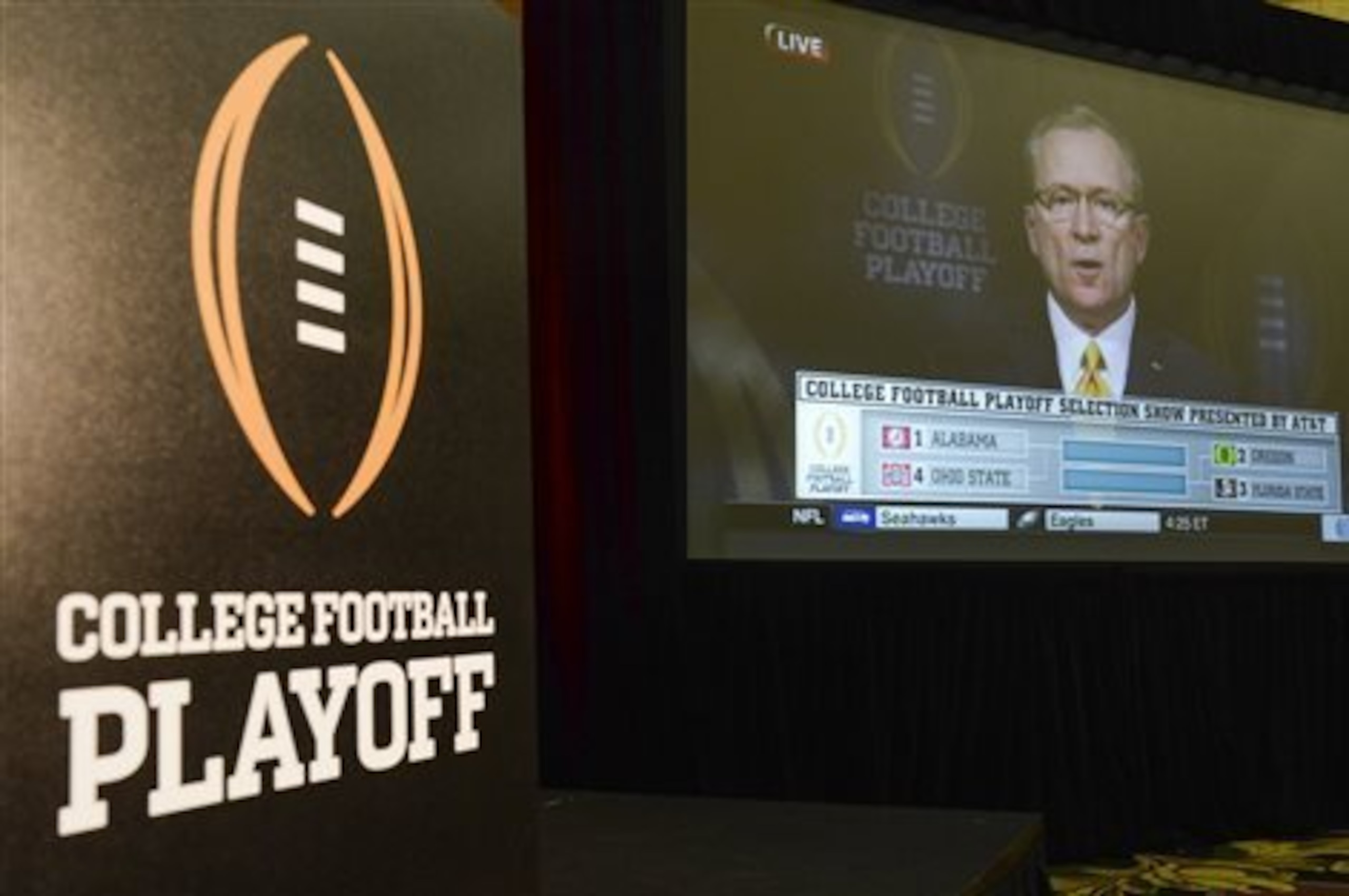
Long had just spent the previous hour finding words to represent the collective thoughts of the group, though not necessarily his own. With the playoff teams revealed, Long justified the four teams with the world tuning in. More specifically, he outlined why Ohio State was tabbed as the No. 4 seed over Baylor and TCU.
“Ohio State was clearly No. 4 by the committee. It wasn’t even that close,” Long said. “That doesn’t mean it was unanimous, and not everyone saw it that way, but Ohio State was a clear selection on Sunday morning.”
Following the final, master reveal, debate ensued as expected. While Baylor and TCU made compelling cases for their inclusion, the backlash was not as loud and boisterous as anticipated. As the Internet discussed the committee’s work, Long met with the media following his final television cameo.
From there, he hopped on a commercial flight and headed back to Arkansas—back to his life as athletic director, husband and father. The first reviews Long heard of the committee’s work—and his television appearance—came from his daughters.
“They’re pretty tough on Dad,” Long said. “They thought I handled it well, so they gave me a good endorsement."
Less than one month later, the work was put into motion. The Rose Bowl and Sugar Bowl took place on New Year’s Day, posting enormous television ratings comparable to national championships from previous years.
The national championship that followed a week later posted the largest television rating in cable history, a number that was aided by a No. 4 seed, Ohio State, capping off a historic stretch with its new star quarterback.
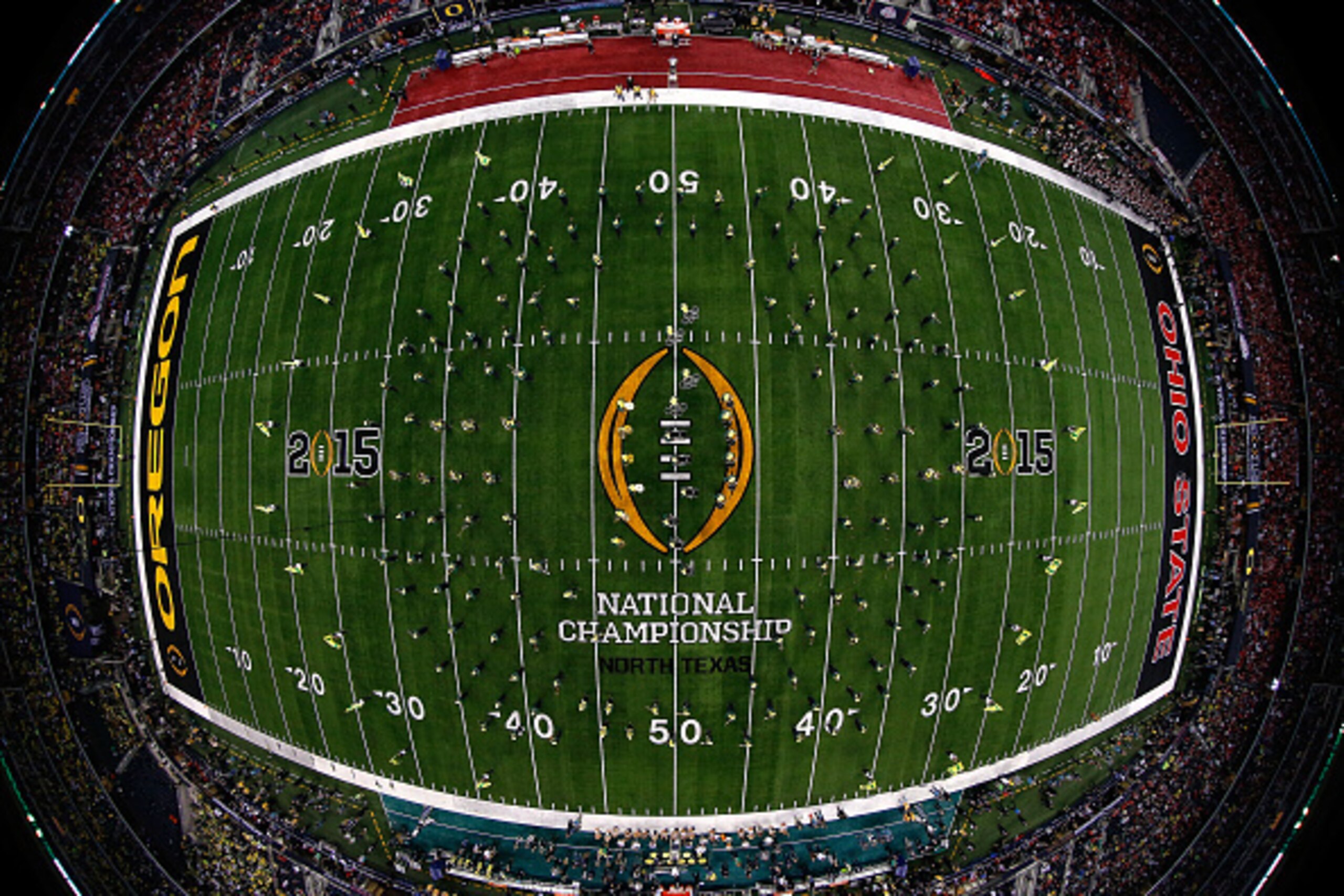
“I think it raised the level of interest, excitement and passion for college football a step further than we thought it could go,” Long said. “I wasn’t sure how it was going to move the needle, but it did. We had a successful first year.”
The tables that propped up the televisions in the Bluebonnet Boardroom have long been put away. All chairs have been repurposed. Each member of this group is back at home and back to their normal lives, whatever such lives entail.
In April, the committee will meet again, at which point tweaks to the process will be suggested and discussed. The management committee will then decide how similar or different the selection process looks moving forward, and the focus will turn to next season.
Even though the selection committee’s work is complete—and December 6 feels like a distant memory of another time—it never truly stops. Not when there’s more history to write.
Unless noted otherwise, all quotes obtained firsthand.

.jpg?w=2560 "Report: Darnold Could Miss 3-6 Weeks")

.jpg?w=2560 "Grading WWE NXT 🔠")