

The Biggest Threat to Each Remaining Undefeated College Football Team
Five weeks ago, there were 128 undefeated teams in college football. But 128 became 89, 89 became 56, 56 became 34, 34 became 25, and last week, 25 became our current total, 17.
That esteemed group of 17 hails from seven of the 11 FBS conferences: all five of the power leagues, the Independents and Conference USA. The American, the MAC, the Mountain West and the Sun Belt are all without a single unbeaten.
With so much season left to play, however, it's safe to assume that most (if not all) of these teams will lose at some point. With four matchups between undefeated teams set to take place this weekend, that "some point" shouldn't be too far down the road.
The list that follows is not a prediction of where each team will lose its first game. It's an assessment of which game is most likely to result in a loss. Georgia Tech, for example, is not likely to win its first 11 games of the season. Someone in the ACC is going to beat it. Regardless, the game we listed was its regular-season finale. In a vacuum, that's the game it is most likely to lose.
Sound off below to let us know where you disagree.
Alabama
1 of 17
Biggest Threat: vs. Texas A&M (Oct. 18)
Alabama's two toughest road games—at Ole Miss and LSU—both come after bye weeks. Its toughest home opponent, Auburn, comes to Tuscaloosa one week after Western Carolina. Nick Saban's team will be rested and mentally prepared for all three games.
The same cannot be said for Oct. 18 against Texas A&M, which comes after road games at Ole Miss and Arkansas. If you believe in Bruce Feldman's "body blow theory"—that teams are more likely to lose the week after playing a physical opponent—the Crimson Tide might be in real trouble. Ole Miss and Arkansas will hit you in the mouth.
What's more, Texas A&M won its last game in Bryant-Denny Stadium two seasons ago. It runs the quintessential uptempo offense that Saban and Kirby Smart allegedly don't know how to stop, and it has already won a road game at South Carolina this season.
Arizona
2 of 17
Biggest Threat: at Oregon (Oct. 2)
We won't have to wait long for this one.
Arizona travels to play Oregon Thursday night and will probably leave the field with its first loss. The Wildcats did beat the Ducks last season, but that game was in Tucson and came before Mark Helfrich's team had the revenge chip on their shoulders. Do not expect the payback angle to be lost on the crowd at Autzen Stadium, either.
Arizona's defense ranks No. 76 in the S&P+ ratings and allowed Cal to gain 573 yards and score 45 points on its home field two weeks ago. Oregon's offense ranks No. 1 in the S&P+ ratings and gained 491 yards and scored 46 points against Michigan State in Week 2.
That seems like a bit of a mismatch.
Auburn
3 of 17
Biggest Threat: at Alabama (Nov. 29)
Auburn has seven games remaining against FBS teams (and one against Samford). All seven are realistic threats to its record.
But—like always—the best has been saved for last. After games against LSU, at Mississippi State, South Carolina, at Ole Miss, Texas A&M and at Georgia, the Tigers end their season at Alabama in a rematch of last year's never-to-be-forgotten Iron Bowl.
Gus Malzahn guided his team to a victory in that game, but it wasn't easy. It took a miraculous broken-play touchdown pass from Nick Marshall to Sammie Coates with 32 seconds on the clock to tie the game and an even-more-miraculous missed field-goal return for a touchdown by Chris Davis with no time on the clock to win it.
Before Auburn's final drive, Alabama had outgained it by more than 130 yards, 462-328. It was the slightly better team for the majority of the game, but Auburn was the much better team for the final minute. It's reductive to say the Tigers got "lucky" but naive to say they didn't get outplayed. They deserved to win. But they got outplayed.
As a result, it will now get an angry version of the team that was good enough to outplay it. And it will get that team on its home field, where it will be surrounded by a crowd that is even angrier. Auburn is good enough to hang close and beat the odds again. It is good enough to beat any team in the country on any field on any given day.
It just might take another miracle of sorts to get there.

Baylor
4 of 17
Biggest Threat: at Oklahoma (Nov. 8)
Baylor beat Oklahoma by 29 points, 41-12, on its home field last season. But the game wasn't as lopsided as the final score indicates.
To wit, Oklahoma held Baylor to 5.74 yards per offensive play, which at that point was its lowest of the season. In the previous seven games, the Bears had averaged 9.61, 9.76, 10.14, 9.09, 7.69, 7.76 and 9.06 yards per offensive play. After the Oklahoma game, they averaged more than 6.5 yards per offensive play only once in five tries.
The Sooners penned the blueprint on how to stop them.
In truth, Baylor won last year's game on defense, holding Oklahoma to just 3.43 yards per offensive play. But this year's Oklahoma offense is different. Blake Bell threw 35 passes in last year's Baylor game. Now he is playing tight end. Trevor Knight threw zero passes and rushed five times for 17 yards in last year's Baylor game. Now he is playing like a Heisman contender.
Throw in the fact that this game will be played in Norman, where Bob Stoops is 88-5 as a head coach, and you have a recipe for a much different outcome than that of last year. Baylor still has plenty of reasons for optimism (more on that in a bit), but this was an easy call.
BYU
5 of 17
Biggest Threat: at California (Nov. 29)
BYU's schedule looks even easier now than it did before the season, when Texas, Houston, Utah State, Central Florida and Boise State all appeared stronger than they do after five weeks.
The two strongest teams on the schedule thus far actually combined to go 3-21 last season: Virginia (2-10) and California (1-11).
The Cougars already beat Virginia, 41-33, on their home field, but they did not look infallible in doing so. The Wahoos' shaky offense ran 102 plays and gained 519 total yards, and their defense shut down Taysom Hill as a runner for the first time this season.
Cal doesn't have the defense to do that second thing, but it does have the offense to move the ball on BYU. Especially on its home field, a unit led by sophomore quarterback Jared Goff and a deep cast of junior receivers should turn the season finale into a shootout.
There's a chance BYU is undefeated at that point and playing for a spot in the "New Year's Six." Ostensibly, those stakes would give it a mental advantage (re: motivation). But Cal is just as likely to be 5-6 and playing for a spot in the postseason—period.
Both teams will be playing hard to win that game.
Florida State
6 of 17
Biggest Threat: at Louisville (Oct. 30)
The obvious choice here is Notre Dame, which is ranked in the Top 10 of the Associated Press Poll, while Louisville is out of the rankings.
But the Seminoles get to play Notre Dame in Tallahassee. They have to play Louisville in Louisville. And that could be a major difference.
Papa John's Cardinal Stadium is a laughable name, but the atmosphere inside is no joke. Central Florida won there last season, but before a second-half comeback, the crowd helped stake Louisville to a 28-7 lead. It also rattled Miami in the 2014 season opener, which Louisville won with ease, 31-13.
Florida State is better than Miami, but the crowd should be better in proportion. This is bar none the biggest game of the Cardinals' first ACC season—something fans have been looking forward to for years. It is also on a Thursday night, when weird things tend to happen.
Louisville's defense ranks No. 4 on the S&P+ ratings and is No. 2 in success rate allowed (22.4 percent). If it can throw Florida State's offense off schedule, then get the crowd involved and rush the passer on third downs, it has a chance to invoke some chaos.
Georgia Tech
7 of 17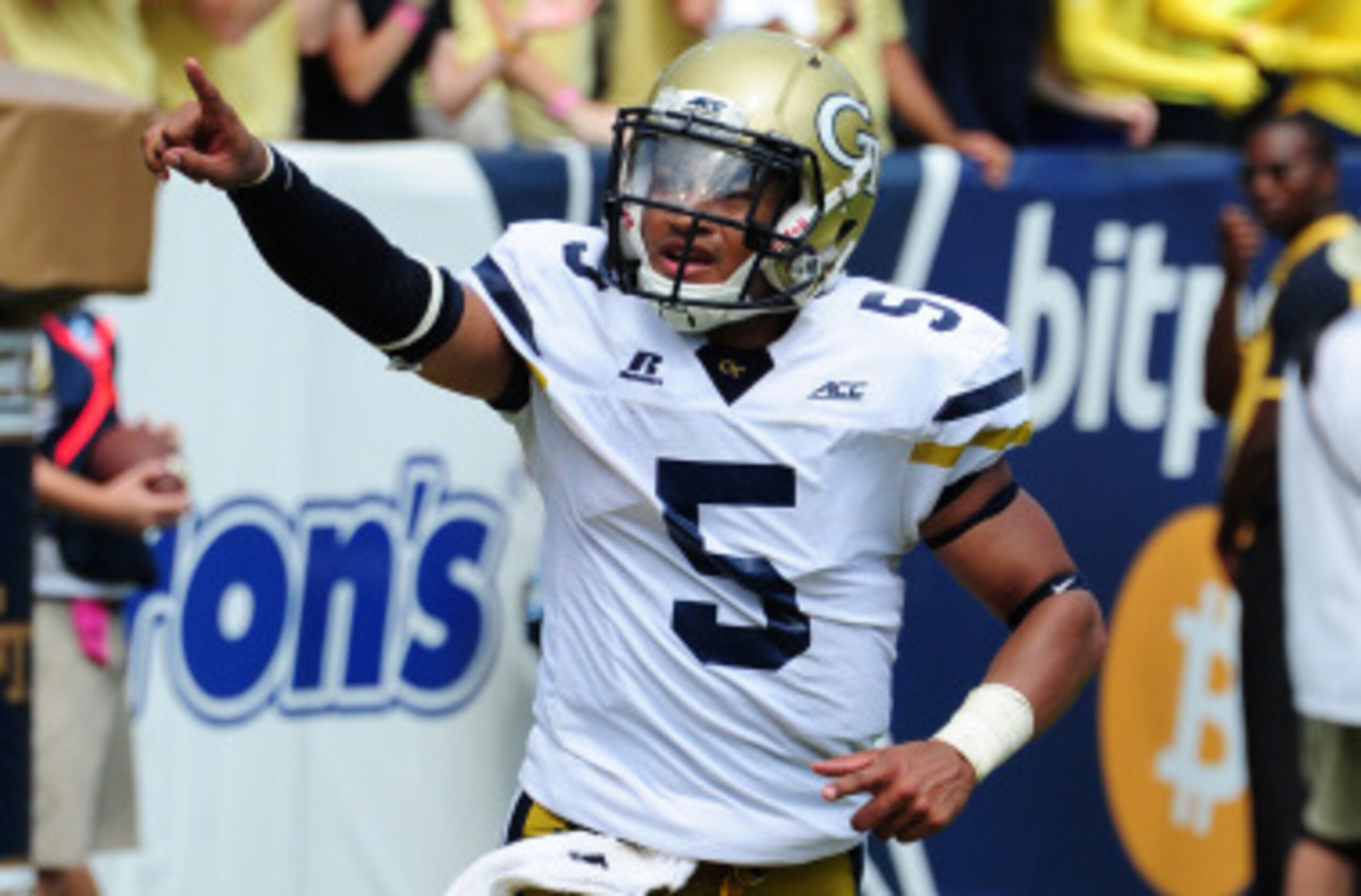
Biggest Threat: at Georgia (Nov. 29)
Georgia Tech will not be undefeated when it plays Georgia Nov. 29.
There, I said it.
Under the framework of this list, however, the Bulldogs were an easy choice. Georgia Tech isn't good enough to beat above-average teams with consistency—hence its No. 41 ranking in the F/+ ratings—but that is basically all it has left in ACC play.
Even if the Jackets find a way to get through Miami, Duke, UNC, Pittsburgh, Virginia, NC State and Clemson with zero losses, they still won't stand a very good chance against Georgia. They've lost 12 of 13 games against the Bulldogs since 2001.
Marshall
8 of 17
Biggest Threat: vs. Western Kentucky (Nov. 28)
According to BCFToys.com—a site operated by statistician Brian Fremeau, whose work has helped develop the formulas at Football Outsiders—Marshall has the easiest schedule in college football.
Not the easiest schedule among undefeated teams.
Not the easiest schedule among "New Year's Six" contenders.
The easiest schedule in all of college football.
Understandably, that made picking a game for this list sort of difficult. A road game this week against Old Dominion was considered, but that will feel more like a neutral-field game than a true road environment. And even though ODU is plucky, it isn't necessarily good.
The only potentially good team left on Marshall's schedule is Western Kentucky, which blew out Bowling Green in Week 1 and just won a road game at Navy. In between, it lost a game it probably should have won at Illinois and another in overtime at Middle Tennessee State (another Marshall opponent that was considered for this spot).
The Hilltoppers offense can—and will—score on anybody, which will give them a shot to win despite having to play Marshall on the road. Their defense isn't good enough to stop Rakeem Cato and Co. for four quarters, but with a well-timed turnover or two, they might be able to spring the upset.
Mississippi State
9 of 17
Biggest Threat: at Alabama (Nov. 15)
Mississippi State cleared its first hurdle in SEC West two weeks ago, beating LSU like a drum in a night game at Tiger Stadium.
(Wow, that still feels weird to type.)
The immediate division schedule shapes up nicely: Texas A&M and Auburn come to Starkville this week and next week. After a bye and a road trip to Kentucky, Arkansas comes to Starkville Nov. 8, after which the Bulldogs get to beat up on UT-Martin.
It's conceivable to think Mississippi State can win all of those games, especially if the city rallies around its team and makes Davis Wade Stadium a difficult place to play. But end-of-season road trips to Alabama and Ole Miss would make it hard to get too excited, too soon. There would still be a lot of football left to play.
The Bulldogs have beaten Ole Miss in four of the last five Egg Bowls, though, which is why we'll skew toward Alabama for this selection. By contrast, head coach Dan Mullen is 0-5 in his career against the Crimson Tide, losing by a combined score of 143-34.
Mississippi State bucked history when it beat LSU for the first time since 1999 (and won in Baton Rouge for the first time since 1991). But can we really expect it to buck history twice in one season?
Nebraska
10 of 17
Biggest Threat: at Michigan State (Oct. 4)
Nebraska is 5-0 but not being taken seriously as a playoff contender. A small part of that has to do with playing in the Big Ten. A medium part has to do with barely beating FCS McNeese State. And a big part has to do with having lost four games in six consecutive seasons.
It needs to make a statement to earn respect.
At no point will it have a better chance to make a statement than this weekend, when it travels to play the consensus class of the Big Ten, Michigan State, in East Lansing. It's by far the biggest threat to end the Huskers' undefeated season, but it's a threat they are happy to face.
"We've had some success (against Michigan State), but they've had success, too," said head coach Bo Pelini, per Joe Rexrode of the Detroit Free Press. But that might be putting it lightly. Since Nebraska joined the Big Ten in 2011, it has averaged more points (26.7) and yards (378.3) than any of MSU's other eight annual opponents.
It's also won two of three games and had a chance to win last season if not for turnovers. It was the only team to average more than six yards per play against Sparty's defense, highlighted by a 123-rushing-yard day from running back Ameer Abdullah.
Despite its success in the matchup, this is still Nebraska's biggest threat because, quite frankly, Michigan State is the better team. But if it fights past the Spartans—watch out. It will quickly become the trendiest national title sleeper in the country.
And no one will be mentioning McNeese State.
Notre Dame
11 of 17
Biggest Threat: at Florida State (Oct. 18)
The luster is wearing off Notre Dame's hot start now that its signature win, a 31-0 blowout of Michigan, looks like par for the course against the Wolverines.
The Irish are short home underdogs against Stanford this weekend, per OddsShark.com, but that is not the most likely loss on their schedule. Stanford might be playing better football than Florida State right now, but traveling to Tallahassee is always a giant task.
The Seminoles have struggled in all three of their games against FBS teams, but they've yet to play at full strength at home. The Oklahoma State game was on a neutral field, the NC State game was in Raleigh and the Clemson game was played without Jameis Winston.
Last season (i.e., with Winston), Florida State's offense averaged 97 more yards per game and 1.52 more yards per play at home than on the road or on a neutral field. It averaged 58.3 points per game.
This year's Florida State is not the same as last year's Florida State, but enough pieces return to expect something similar. Especially if Notre Dame beats Stanford, the Seminoles will show up ready.
Oklahoma
12 of 17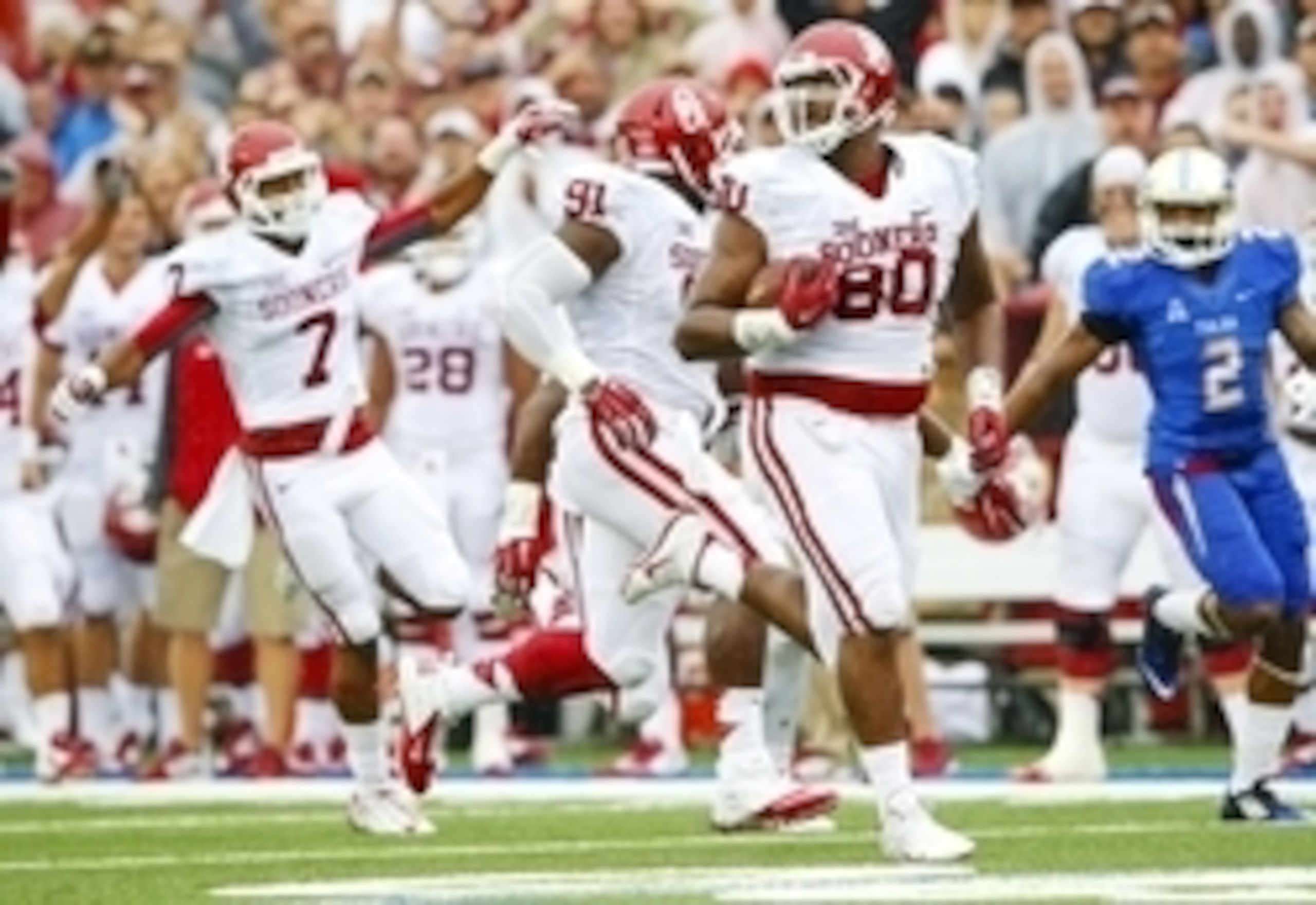
Biggest Threat: vs. Baylor (Nov. 8)
One of only two repeat games on this list, Oklahoma vs. Baylor is the biggest threat to lose on both involved teams' schedules.
Despite everything explained on the Baylor slide, the fact remains that Oklahoma lost by 29 points in Waco last season. And this year's Baylor team looks a whole lot like last year's.
Bryce Petty threw three touchdowns against the Sooners. Shock Linwood rushed for 182 yards against the Sooners. Antwan Goodley caught two touchdowns against Sooners.
All three are back in 2014.
Also back is an improved version of last year's defense—a unit that held Oklahoma to 3.43 yards per offensive play. This year, that group ranks No. 3 in defensive S&P+. The competition has been subpar, but S&P+ is a metric that adjusts for opponent. In many of the unweighted numbers, Baylor's defense would rank No. 1.
It has everything it needs to "upset" the Sooners.
Even in a game played on the Prairie.
Ole Miss
13 of 17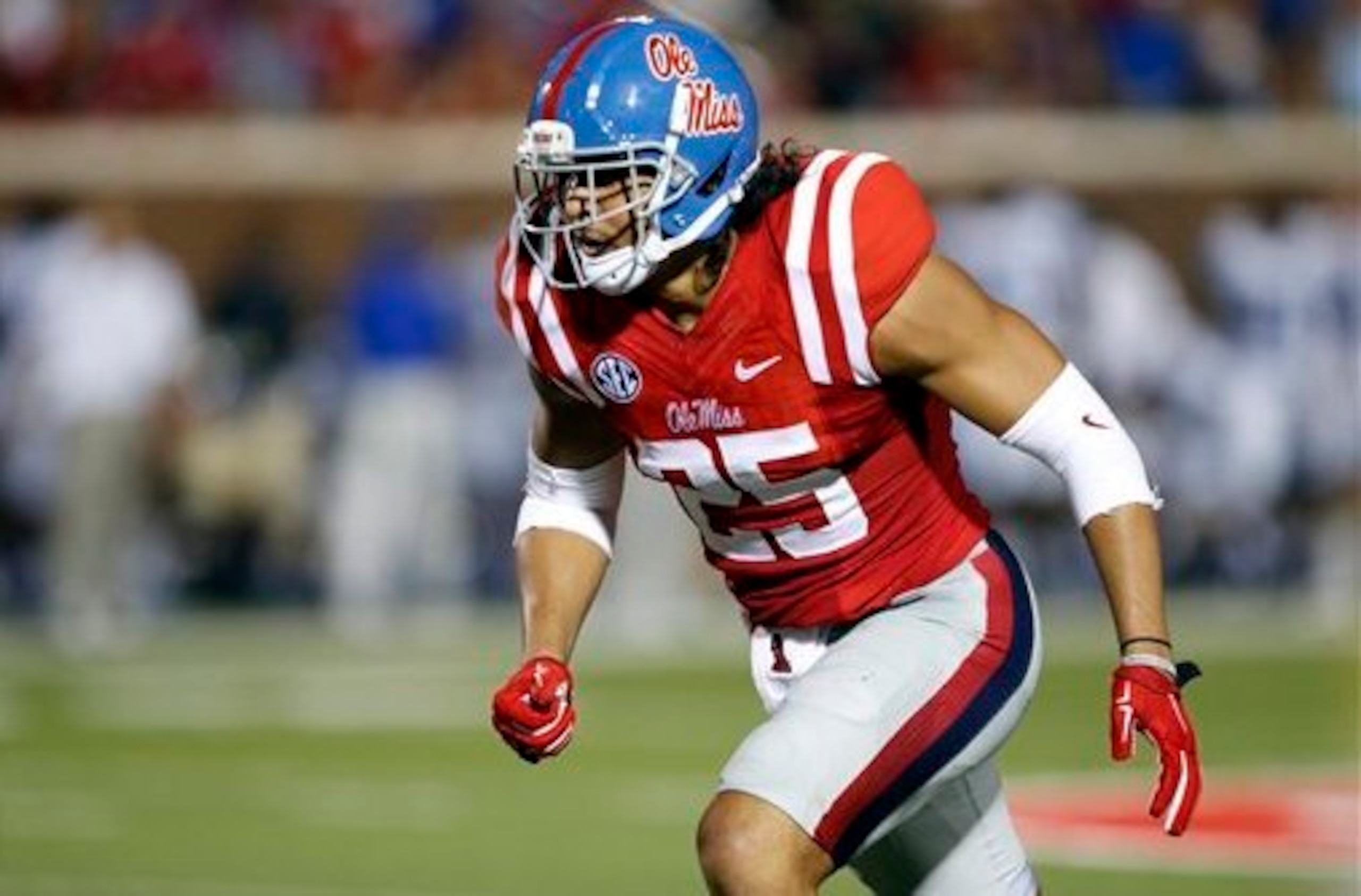
Biggest Threat: at Texas A&M (Oct. 11)
Talk about your letdown spots.
Ole Miss travels to College Station one week after hosting Alabama (and College GameDay) for one of the biggest games in program history. Win or lose, the team will be emotionally depleted. Physically, teams that just played Alabama are much the same way.
The last thing a team needs after such a massively taxing enterprise is a Kevin Sumlin-coached offense—especially one that is playing as well as the Aggies are in 2014. Their overall S&P+ offensive ranking is "down" at No. 15, but they still rank No. 4 in success rate (efficiency) and No. 3 in isolated points per play (explosiveness).
They can beat you in every which way.
Ole Miss will put everything it has into beating Alabama this week, and right it should. How often does it get to play in this type of spot?
But the trouble with putting your everything into one game is you don't know what you'll have for the next. If your next game is against a cupcake, that doesn't matter. If your next game is against someone decent, it might.
But if your next game is on the road against the No. 6 team in the country, there is no way for it to not make a difference.
Oregon
14 of 17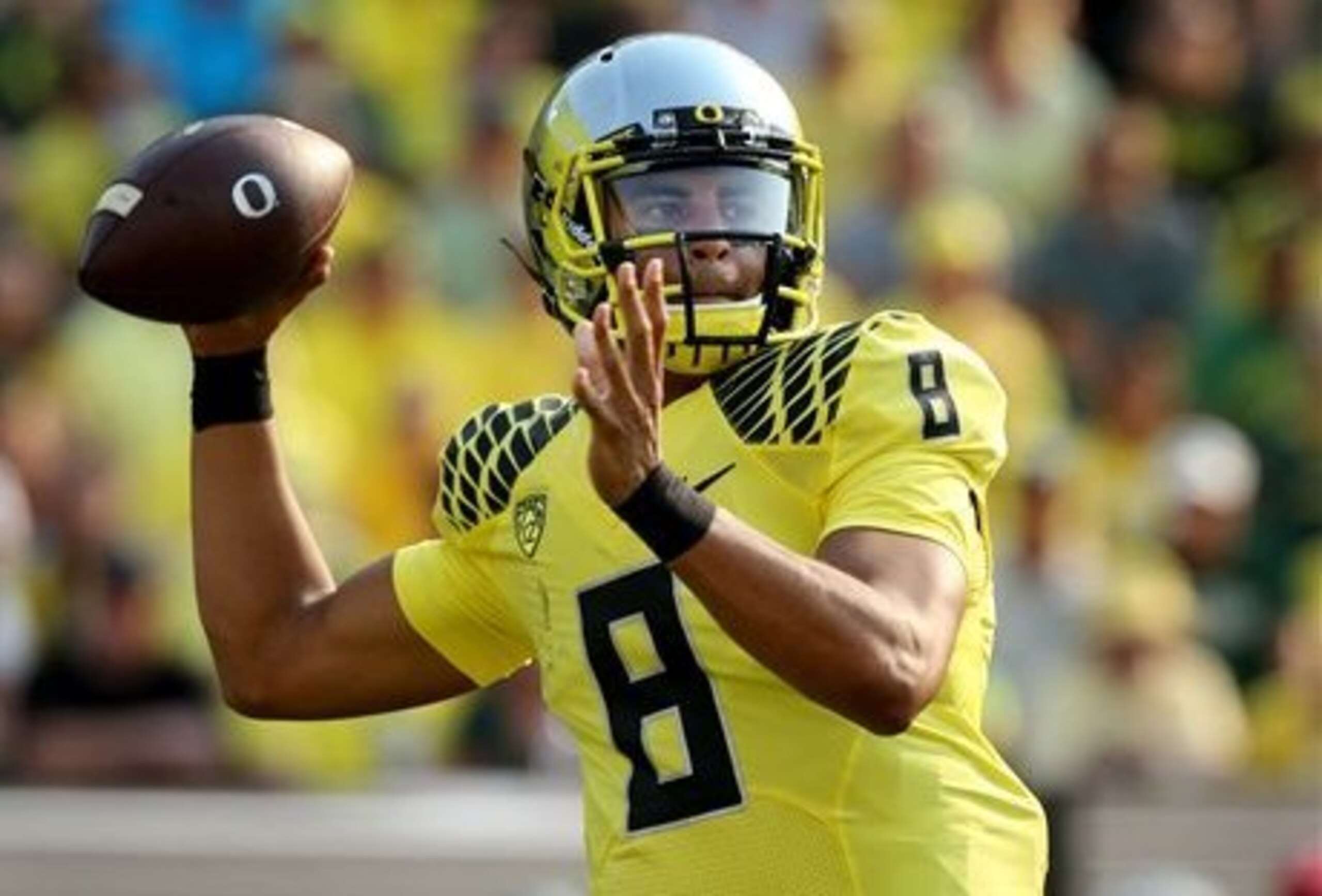
Biggest Threat: vs. Stanford (Nov. 1)
UCLA is ranked higher than Stanford and is probably the better team. It also gets to host Oregon, while Stanford travels to Eugene.
But, come on.
Was there ever any doubt about this pick?
The Ducks have lost to Stanford in each of the last two seasons, both times entering with an undefeated record and leaving with their first blemish. Quarterback Marcus Mariota posted a QBR of 44.9 in 2012 and 46.5 in 2013. Those are the two lowest scores of his career.
Even scarier, Stanford's defense has improbably managed to improve despite massive personnel losses in the front seven this season. It currently ranks No. 1 in defensive S&P+, leading the country in traditional metrics such as total yards (198), passing yards (74!) and points (6.5) allowed per game. And it's done that despite having played USC and Washington—a viable pair of opponents.
Oregon may or may not have solved its "physical defense problem" against Michigan State in Week 2, but it still hasn't solved its "Stanford problem." The Cardinal defense is playing like it might be the best unit in the country. Michigan State's is playing like it's not even the best on its team.
The Ducks still need to prove they can beat Stanford.
Not a team that people say "plays like it."
TCU
15 of 17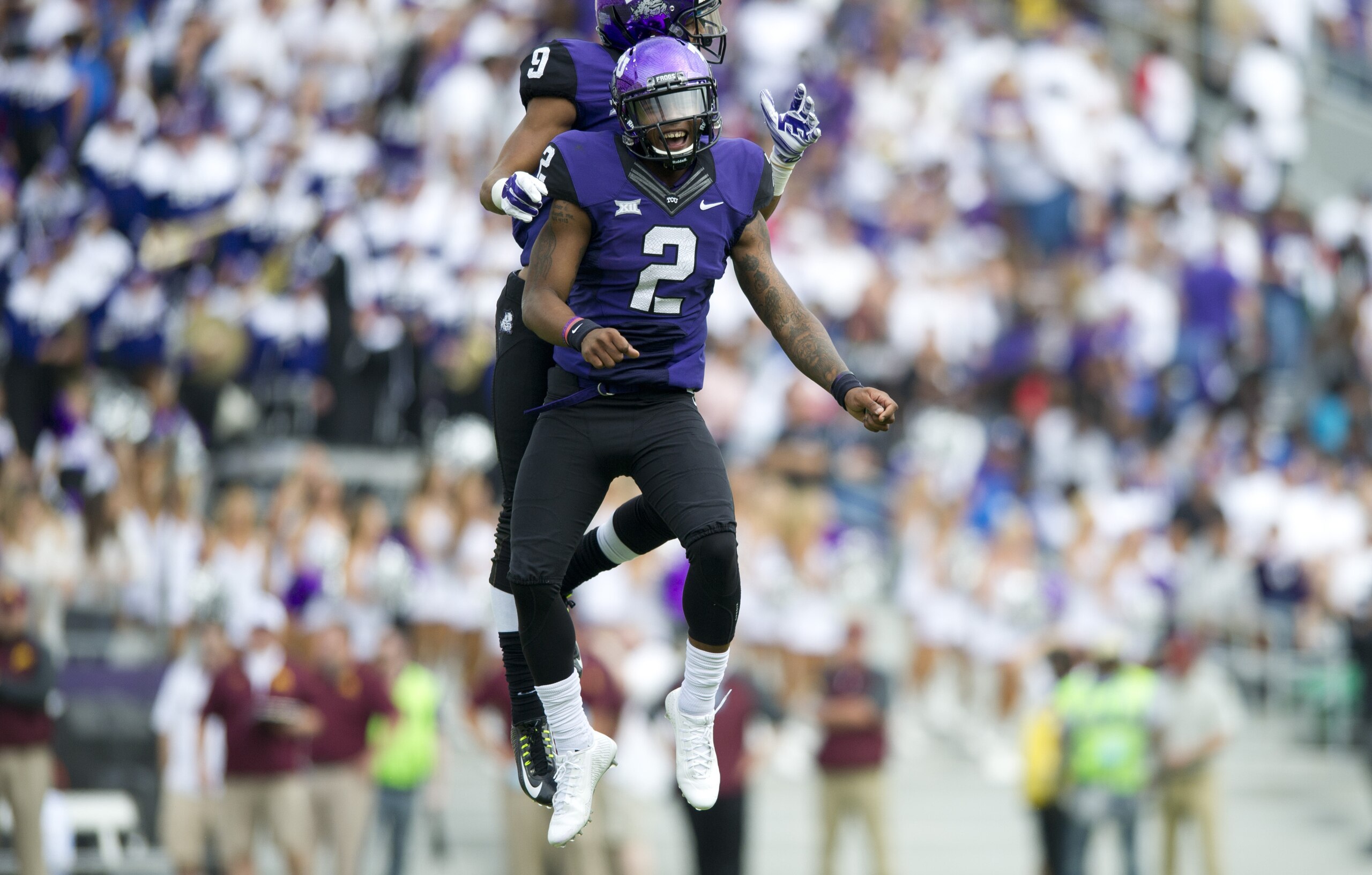
Biggest Threat: at Baylor (Oct. 11)
The soonest threat to TCU's undefeated season comes in Week 6, when it will host Oklahoma in Fort Worth.
But the biggest threat comes one week after.
Obviously, the main reason for that is venue. Granting that Oklahoma and Baylor are pretty much equal teams—or at least that there is no good way to tell which one is better quite yet—the Horned Frogs have a much better chance at home than they do in Waco.
They also have a much better chance coming off a 56-0 win against SMU than they do coming off a game against Oklahoma. The former is the worst team in college football (and maybe the biggest train wreck in a long, long time), and the latter is ranked No. 4. The latter also has one of the biggest, meanest front sevens in the country.
For what it's worth, I expect TCU to lose both of these games—but to play at least one of them close.
Gary Patterson has this defense looking like a classic Gary Patterson defense, and offensive coordinators Sonnie Cumbie and Doug Meachem have been a revelation in their first year. TCU places third in the Big 12 at No. 18 on the F/+ rankings.
Even if it falls to 3-2, it is worth watching closely all year.
Texas A&M
16 of 17
Biggest Threat: at Alabama (Oct. 18)
Alabama is the biggest threat on Texas A&M's schedule for the same reason Texas A&M's is the biggest threat on Alabama's schedule.
The "body blow theory."
Alabama will come into the game having just played Ole Miss and Arkansas in consecutive weeks. But A&M will one-up that, coming into the game having just played Arkansas, Mississippi State and Ole Miss in consecutive weeks. There will be no rest in between.
So, then. Why was A&M listed on the 'Bama slide? For the other reason mentioned before: The style of football it plays. Sumlin's offense has worked against Alabama before, and it's especially effective against a tired, beat-up opponent.
It's the young Texas A&M defense, though, that will struggle against Alabama, especially on the heels of the previous three games. Unlike the future road trip to Auburn—the other game considered for this spot—this trip will not come after a bye and UL-Monroe.
It will come in an unfavorable spot.
UCLA
17 of 17
Biggest Threat: vs. Oregon (Oct. 11)
Just like Oregon needs to solve its "Stanford problem," UCLA needs to solve its "Oregon problem."
Until it does, it can probably never win the Pac-12.
The Ducks have beaten UCLA five consecutive times, most notably in the 2011 Pac-12 Championship Game, 49-31. The meeting before that, they hung 60 points on the Bruins in a 47-point demolition. And last year—Jim Mora Jr.'s first foray into the series—the teams were tied at halftime before Oregon pulled away to win big, 42-14.
Might things be different now that Oregon is coming to Los Angeles? Maybe. Might they be different now that Brett Hundley is another year older? Maybe. Might they be different now that Oregon's offensive line is in shambles (and UCLA's front seven is good enough to capitalize)? Maybe.
But on all of those counts, I'll believe it when I see it.
Note: All F/+ and S&P+ ratings courtesy of Football Outsiders.

.jpg?w=2560 "Clemson LSU Football")
.jpg?w=2560 "NFL head coaching legend has a Minecraft hobby just as impressive")
.jpg?w=2560 "Week 1 Waiver Wire Targets")
.jpg?w=2560 "Week 1 Start 'Em, Sit 'Em Plays")
.jpg?w=2560 "Baker, Bucs Agree to Deal 💰")