
College Football's Quarterback Free Agency Phenomenon
Some of you may remember the old college football tradition of the skydiver parachuting into the stadium to the roar of the crowd to deliver the game ball.
The new college football tradition is the quarterback parachuting into a college program to the roar of the crowd to deliver the goods—touchdowns, in other words.
You may have noticed. There are pillowy chutes open all over college football as quarterback transfers drop into programs from here, there and everywhere. The NFL calls them free agents. Colleges might as well call them that, too.
TOP NEWS
Colorado State DC gets fired mid-game during blowout loss
Massive Shakeup in CFB Top 25 List 🔢
_0.png?w=2560)
Week 5 Winners & Losers 📊
I call it a market correction.
Before they enter the ultra-competitive world of college football, these quarterbacks go through a you're-the-greatest-environment in recruiting. They are sold by college coaches that they are The Man and they will be The Man no matter what. The truth is, some of them were the third, fourth, fifth, sixth guy on a school's quarterback list as a high school senior, and when the school didn't sign their top target or second target, they took No. 3 or No. 4.
The kid ends up transferring…and it's a good thing. They get a second chance and we all benefit.
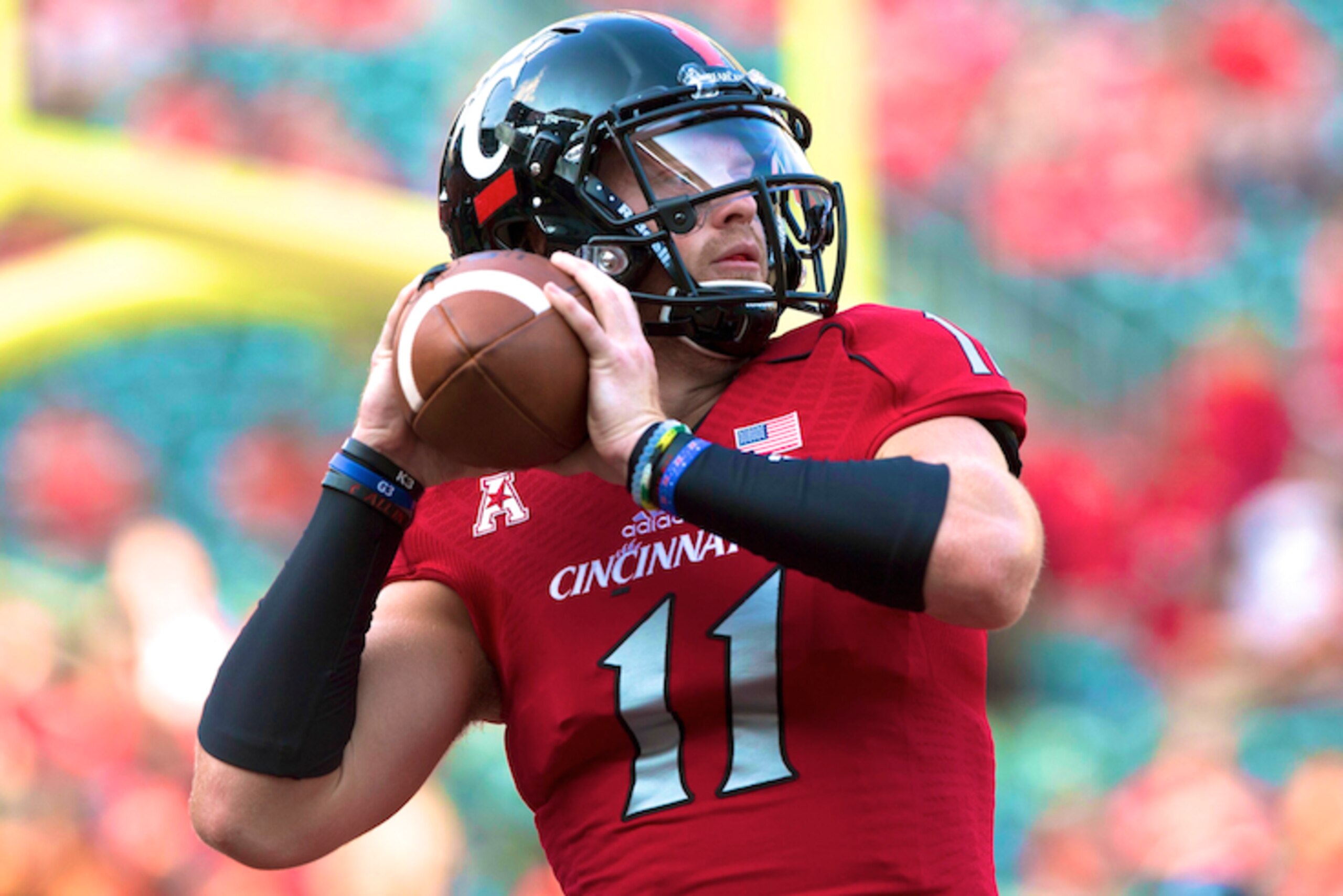
Gunner Kiel left Notre Dame for Cincinnati. Michael Brewer left Texas Tech for Virginia Tech. Wes Lunt left Oklahoma State for Illinois. Jacoby Brissett left Florida for North Carolina State. Jake Coker left Florida State for Alabama. Tyler Murphy left Florida for Boston College. Stephen Rivers, the brother of the Chargers' Philip Rivers, graduated from LSU and left for Vanderbilt…and on and on and on.
Two of the most exciting games this season have been engineered by the guy who was kicked to the curb.
Murphy ran for 191 yards as BC upset No. 9 USC two weeks ago. Brewer threw for 199 yards and two touchdowns as Virginia Tech stunned No. 8 Ohio State in Columbus.
Kiel has 10 touchdown passes in two games for Cincinnati. Brissett leads the ACC in completion percentage, and now he gets a shot at No. 1 Florida State on Saturday. Lunt has completed 65 percent of his passes for the Illini (3-1).
When one of these quarterbacks hits the ground at a new school, he bails out himself, and sometimes his new coach too. The coach didn't develop a quarterback or recruited poorly, and now his job is on the line, so he better find The Man…or hope The Man finds him.
Quarterback transfers have become so routine these days that transfers collide with one another on the same field. Kiel and Cincinnati played Miami (OH), led by Notre Dame transfer Andrew Hendrix last Saturday. UC won 31-24 as Kiel threw for four touchdowns. Hendrix had two.
So this QB roulette is win-win, right? Not always.
The guys hurt most are the second- and third-year players who have toiled in the program and did what they were told and were loyal. They ran the scout teams; they carried clipboards.
Take Mark Leal of Virginia Tech. He spent three years behind Logan Thomas. It looked like his turn. Then a chute opened up over Blacksburg. Here came Brewer dropping in from Lubbock.
Leal did not play well in relief of Thomas in the Sun Bowl last December, so maybe that was the flop that cost him. Still, it doesn't seem fair.
Cameron Coffman had the second-most passing yards in the Big Ten in 2012 for Indiana (2,734) and threw for 15 touchdowns. In 2013 he bumped down the depth chart to QB3 and transferred to Wyoming in spring 2014.
But overall, it's a good thing, right? Yes, it is.
Tommy Tuberville, the Cincinnati coach, says the run of quarterbacks transferring—whether sitting out a year or playing right away as a graduate student—is a good thing because it protects quarterbacks when there is a coaching change.
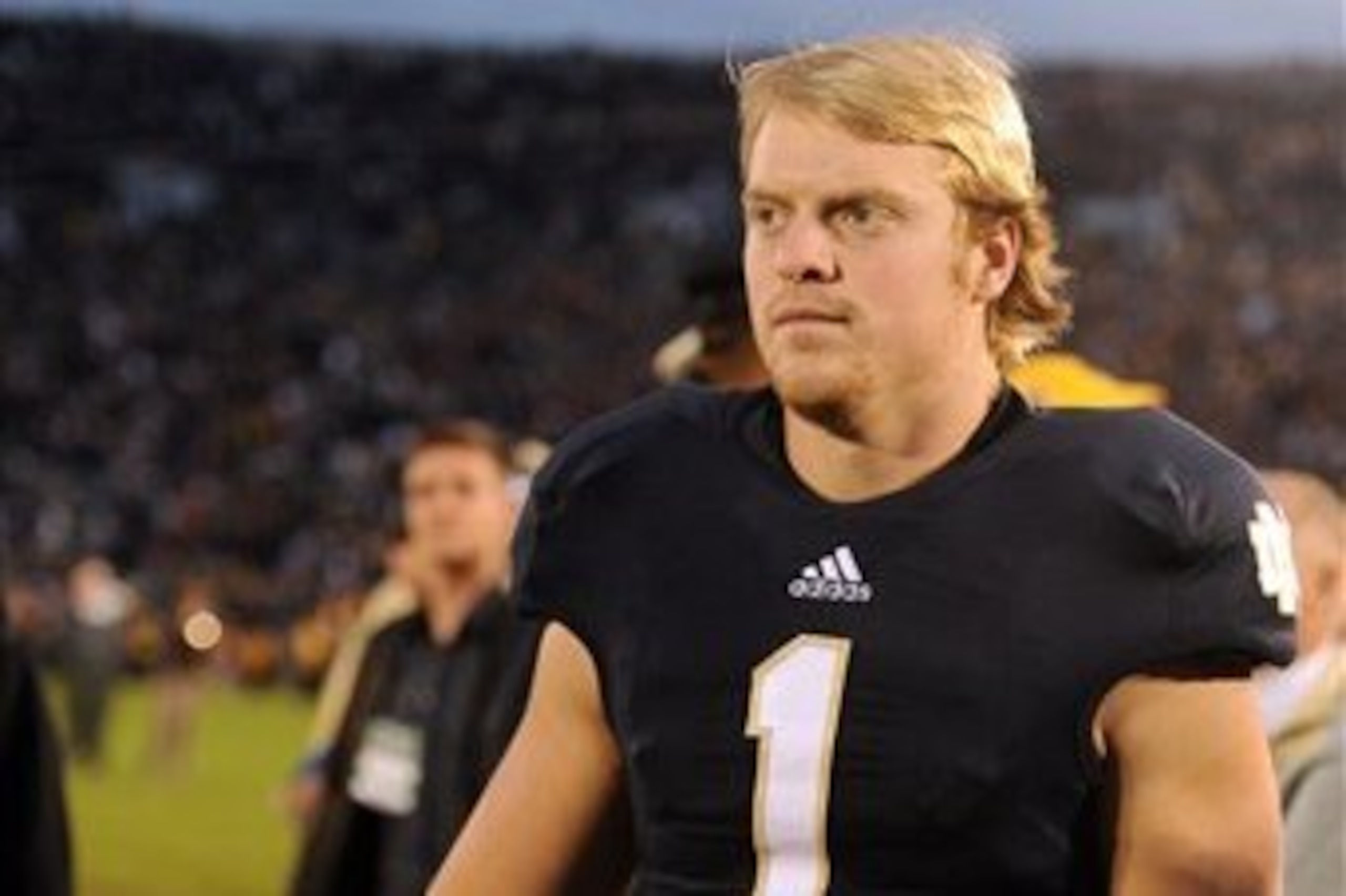
"When a new coach comes in, who is the first guy he is going to look at as far as running his system: the quarterback," Tuberville said. "Gunner got caught up with that at Notre Dame. Brian (Kelly) had been a drop-back passing kind of coach, but with Golson, he went to a more Quarterback Read offense. That didn't suit Gunner's style.
"These kids when they come out of high school have to find a system that suits them. That's the most important thing. A lot of them leave because coaches change and systems change."
Butch Jones, the Tennessee coach, has not had to assimilate a quarterback into his program, but his coaching intuition tells him it can go sweet or sour "depending on the competitive character of the individual."
"Any program you go into you have to earn the respect of your peers, especially at the quarterback position," Jones said. The drift: If a quarterback parachutes in feeling entitled, it could harm a team more than help.
What Tuberville is afraid of is the Power 5 schools trying to push through a rule that eliminates sitting out a season before transferring for undergraduates. Schools like Cincinnati could develop players, and then a Big Ten school could swoop in looking to fill a hole. They promise the spotlight of the 100,000-seat stadium to a UC player and whisk him away.
You think there are a lot of quarterbacks turning in walking papers? Just wait and see what happens if the one-year sit rule is erased. D-linemen, O-line, receivers, safeties, even kickers would be spinning the turnstiles.
"We would be recruiting these kids every day to get them to stay," Tuberville said. "I hope nothing happens to get rid of the one-year rule. It would be a bad thing."
Of course, the kids get rapped as "selfish" for transferring. But coaches over-promise and then fall out of love with their quarterback. When the next big thing shows interest in the school, the coach can't resist.
"Coaches have got to win games, so they have to sell and sell," said Trent Dilfer, the quarterback guru who runs Elite 11 Camps for high school quarterbacks. "I get that. I'm not knocking that. They have to tell kids what they want to hear to get them on campus. I would do the same thing. I just don't like being around it.
"So here is what the kids need to remember. Go to a school where the coach wants to marry you, not date you. When a coach is married to a kid, the leash is long. It gives a kid a chance to fail. Make sure you see that coach trying to find out everything about your DNA, your family, your history. When they have devoted a lot of time to you, they are going to give you a chance to fail."
Jimbo Fisher told Jake Coker 30 minutes after he saw him throw Coker was going to be a first-round pick, and Coker signed with FSU. Not long after that, Fisher found his next first-round pick, Jameis Winston. Since this is the week where everyone is piling on Jimbo, I will just go ahead and say it: Coaches put their best interests, which are those of the program, usually, ahead of the player.

Coker transferred to Alabama. Clint Trickett also left FSU and transferred to West Virginia, and he has played superbly. Both saw clearly that Jimbo treated Winston differently than he treated them.
Coker is now a backup with the Crimson Tide. He has been slow to regain a starter's sharpness, but holdover Blake Sims worked incredibly hard and took the Bama job fair and square in a competition with Coker.
That's life in the big city, right? Well, it didn't use to be that way.
First, the NCAA passed a rule in 2006 that made it legal for players who had graduated from one school with eligibility remaining to transfer to another D-1 school without sitting out a season. That opened the spigot for a lot of these transfers. Russell Wilson fits that profile. He left North Carolina State—he was actually pushed out—and parachuted into Wisconsin and took the Badgers to the Rose Bowl.
Second, quarterbacks hunger for the big game and the game is bigger and more illustrious than ever. They want a chance to shine in the sport that is now second in popularity in the U.S. to the NFL. If they are blocked at one school, well, ego says they can go somewhere else and play. Years ago, the backup knew his place and was content with the degree.
It's changed immensely. Just beware, QBs. Chutes may be opening overhead. It's why Dilfer stresses to his quarterbacks that life is full of hard knocks.
"Life is best when it is full of hard things," Dilfer said. "They have chosen probably the hardest thing in sports to pursue.
"To have a life full and rich there is going to be a ton of hard stuff. They are going to need the tools and ability to work through things like this (transferring). You have to brace them for the hard things. This is a hard thing."
Ray Glier covers college football for Bleacher Report. He has covered college football and various other sports for 20 years. His work has appeared in USA Today, The New York Times, CNN, The Washington Post and Al Jazeera America. He is the author of How the SEC Became Goliath (Howard/Simon & Schuster, 2013).
.jpg?w=2560 "Rap: Lions, LaPorta End Contract Talks")
.jpg?w=2560 "Commanders May Change Logo 👀")

.jpg?w=2560 "EVERY Fantasy Football Update")