College Football: The Big Ten in the Era of the Super Conferece
With Oklahoma prepared to lead the final exodus destined to kill the Big XII, the era of super conferences is on the horizon. The Pac-12 appears be the first to reach 16 by adding the Sooners, Oklahoma State, Texas and Texas Tech.
The Big Ten, SEC and Big East/ACC will likely follow the Pac-12's lead in the coming months. Speculation is that the SEC is targeting the states of North Carolina and Virginia for expansion to add new markets to its media footprint. The fourth major conference will likely be born out of what remains when the Big Ten and SEC are finished picking through the ACC and Big East.
While the other three super conferences appear to have one path to follow, Big Ten Commissioner Jim Delaney appears to have several options going forward.
Things to Remember
1 of 61. I am working on the assumption that Oklahoma, Oklahoma State, Texas, and Texas Tech are going to join the Pac-12 and Texas A&M is headed to the SEC, ushering in the era of super conferences. If these moves don't occur, there is no reason to think the Big Ten will expand beyond its current 12.
2. There are two main factors behind conference expansion, football revenue and television markets. If a school cannot help in these areas, it will likely be left out.
3. The Big Ten bylaws currently require that new members be located either in the conference's footprint or in a neighboring state. I'm sure that these bylaws can be suspended if necessary.
4. Due to the Committee on Institutional Cooperation (aka Academic Big Ten) consisting of the current 12 conference members and The University of Chicago, the Big Ten places a greater premium on academics than the other Division 1 athletic conferences. 11 of the 12 current universities are members of the prestigious Association of American Universities (Nebraska was a member from 1909-April 2011). The Big Ten will likely be looking for an institution that is as strong academically as athletically.
5. The Big Ten is one of the three premier conferences in America and will have its pick of Big East, ACC, and Big XII schools. There is little chance that a MAC, C-USA, or Mountain West school will get an invite.
6. As long as it remains independent, Notre Dame will be the Big Ten's number one target. All moves toward 16 will be made with the intent to make Notre Dame one of the 16.
Option One: Pick Through What Remains of the Big XII
2 of 6Schools: Missouri, Kansas, Kansas State and Iowa State.
Positives: Bringing in these schools (especially Missouri) will solidify the Big Ten's presence in the St. Louis and Kansas City markets. Though Illinois, Nebraska and Iowa already provide some market penetration, the old Big Eight schools will give the Big Ten complete control of the two major midwest markets it doesn't control already. This move would bring Missouri in to the fold and keep the Tigers from taking the major Missouri media markets to the SEC.
Missouri appears to be a program on the rise under Gary Pinkel and Kansas has a recent Orange Bowl championship to its credit as well. Though basketball isn't a key component to conference expansion, Kansas has one of the four historically strong programs (along with North Carolina, Kentucky, and UCLA) that move the needle enough to justify consideration regardless of the strength of their football program.
Many of the old Big Eight rivalries come with this expansion. To go along with all of the conference's current rivalries The Big Ten Network would have the rights to the Missouri-Kansas Border War, Cy-Hawk Trophy game between Iowa and ISU, Missouri-Illinois "Arch Rivalry" and others.
In the event that Notre Dame becomes one of the four teams either Iowa State or Kansas State could be removed from this proposal.
Negatives: None of these programs have historically strong football programs. They have combined for 14 outright and an additional seven shared Big Eight/XII titles in 104 seasons. Kansas State's 2003 Big XII title was the only championship any of the four teams have won since 1969 when Missouri and Nebraska shared the title.
This plan would lead to the Big Ten doubling down in two sparsely populated states (Kansas and Iowa). Though this would secure Kansas City and St. Louis, the conference would pick up lots of dead weight media markets as well.
Lastly, Kansas and Missouri are the only two schools that qualify from both an athletic and academic perspective. K-State lacks the academic pedigree (the only of the 4 schools that does not hold membership in the AAU). On the other hand, Iowa State lacks the on field success the Big Ten would desire. It has gone nearly a century since its last Big Eight football title (1912) and has won two men's basketball tournaments (1996 and 2000) since the competition began in 1977.
Option Two: Raid the Big East and Force Notre Dame's Hand
3 of 6Schools: Notre Dame, Syracuse, Rutgers and ???
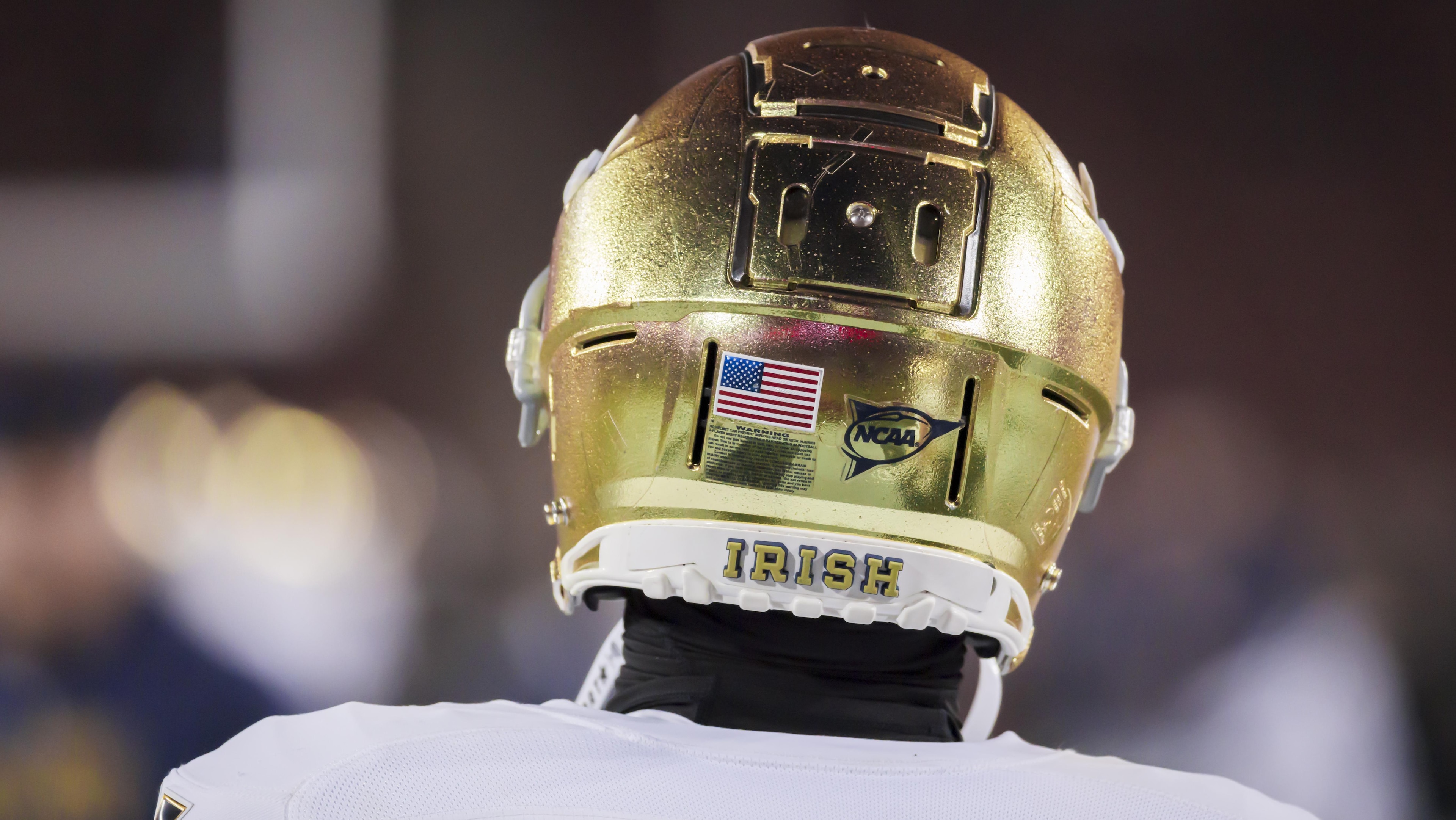
Positives: By adding Syracuse, Rutgers and a third Big East member, the Big Ten will essentially end the Big East as a football playing conference. This is likely the easiest way to force Notre Dame in to joining a conference. No longer having its Big East bowl tie-ins, instability in the conference home for its basketball and non-revenue sports in question, and fear of being left in the cold after the formation of 16-member super conferences may finally convince Notre Dame join a conference. Its longstanding rivalries with Purdue, Michigan and Michigan State make the Big Ten the obvious choice.
Syracuse and Rutgers give the Big Ten access to New York and will force cable providers in the nation's largest media market to put the BTN on their basic cable packages. Both schools are football programs on the rise under Doug Marrone (Syracuse) and Greg Schiano (Rutgers).
Penn State (specifically Joe Paterno) has been begging the Big Ten to expand eastward for quite sometime. JoePa's ideal choices have always been Syracuse, Rutgers, and Pittsburgh.
Rutgers is an AAU member and Syracuse left the organization earlier this year. In the event that a third suitable Big East school cannot be found, Delaney can instead go after Missouri or an ACC school.
Negatives: Collapsing the Big East does not guarantee Notre Dame will join the Big Ten (or a conference at all). In fact, Delaney attempting to manipulate his school may convince Rev. John Jenkins and Jack Swarbrick to take the Irish to the ACC/Big East Remnant instead (I wouldn't expect this to be the result, but it is a possibility).
There is not a third Big East school that fits the Big Ten profile. Though they have all had recent success on the football field, Pittsburgh, Cincinnati and Louisville are urban universities overshadowed by their state's flagship universities (Penn State, Ohio State and Kentucky respectively). West Virginia and Connecticut don't meet the Big Ten's academic standards while South Florida is out of the Big Ten's geographic range.
Though Syracuse has produced some of the most gifted football players in history, the program has been laughable for the better part of a decade. Its last conference championship and major bowl appearance came in 1998-99, a 31-10 Orange Bowl loss to Florida in Donovan McNabb's senior season. Rutgers has never won a Big East championship and seems to have plateaued after their big Thursday night win over then-undefeated Louisville in 2006.

Option Three: The "Mid-Atlantic Plan"
4 of 6Schools: Maryland, Virginia, North Carolina and Duke
Positives: This is the most unique and intriguing idea, as far as I'm concerned; it is also the least likely. Though the ACC seems stable at the moment, if the SEC makes a play at and lands multiple ACC schools, things could change in a hurry. There were Maryland to the Big Ten rumors last summer before Nebraska became team 12.
These are four of the finest schools in the Mid-Atlantic region and are all members of the AAU. They also provide the Big Ten access to some of the largest eastern markets. Maryland and Virginia provide Baltimore and Washington D.C. while Duke and Carolina bring two of the fastest growing markets in the country (Charlotte and Raleigh).
As has already been mentioned with regards to Kansas, the North Carolina basketball program is enough to make it worthy of an invitation in spite of the strength of its football program. Duke and Maryland bring strong basketball programs as well, putting the Big Ten in the argument for the country's best basketball league.
With Mike Slive and the SEC trying to get in to Virginia and North Carolina, is there a better way for the Big Ten to make a statement than by getting there first? Many SEC fans and writers (particularly Clay Travis of outkickthecoverage.com) are very high on bringing in Duke and UNC. Anytime that you can add one of the most storied rivalries in college athletics you need to consider it strongly.
Negatives: There has not been much on-field success for these football programs. They have combined for 16 outright or shared conference championships since the league was founded in 1953, and only one since 1995 (Maryland in 2001). Since the ACC expanded to 12 schools in 2005, none of these teams have ever made the Conference Championship Game.
Unlike the Big XII plan, there is no way to make room for Notre Dame by dropping one school from the proposal. Duke and North Carolina are inseparable, and the Big Ten bylaw requiring its schools to be in contiguous states makes dropping UMD or UVA impossible.
Duke football is a giant price for the Big Ten to pay to make this plan work. My guess is that if Duke and UNC leave the ACC they will be headed to the Southeastern Conference. The depth of the SEC would make absorbing Duke's football program less of a blow. North Carolina's impending football probation may scare off the Big Ten as well.
My Plan to Get to 16
5 of 6As happens many times, the best solution involves taking the best parts of multiple ideas. My solution begins immediately by extending invitations to:
13 - Missouri and 14 - Kansas: Even though the Tigers were clearly not the Big Ten's No. 1 choice last summer, the University of Missouri remains a very attractive piece for the conference going forward. They add depth in both football and men's basketball while not threatening any of the conferences major powers in either sport. Kansas raises the conference's basketball profile in a huge way and has a highly-regarded young football coach (Turner Gill). Most importantly, inviting Missouri's biggest rival gives Jim Delaney another bargaining chip should the SEC start a bidding war for Mizzou.
15 - Notre Dame: The Big Ten will not expand to 16 teams until Notre Dame's conference status has been determined. ND is too valuable of a potential asset for Delaney and the Big Ten to give up on before a final decision is made.
16 - Maryland: With this plan, Maryland and Syracuse are the two finalists for school 16. Rutgers gets eliminated because of its lack of a track record. Syracuse and UMD both have stronger resumes than Rutgers. Both have actually been to major bowls in the BCS era (the Orange Bowl in both cases, each losing to Florida). The deciding factor between the two schools to me is that Maryland is a public school while Syracuse is a private school. UMD has a larger alumni base and will likely deliver the Baltimore and Washington markets better than Syracuse could deliver New York. Small private schools don't have the ability to move the needle in their local markets like large state schools (look at the attendance at Miami, Northwestern and TCU football games).
16 is the number that seems to be the likely stopping point for super conferences. However, once we get to four 16-school conferences and the money starts to role in, do you really expect these conferences to not try to expand and bring in more money?
Questions, Comments, Snide Remarks???
6 of 6Do you think I missed a school deserving to be in the conversation? Do you just think I'm wrong? Feel free to let me know. I try to respond to all comments.


.jpg?w=3840 "Biggest FA Mistakes of the Century 💸")