Boise State Football: Mythbusting the Blue Turf
By (Contributor) on August 2, 2010
13,736 reads
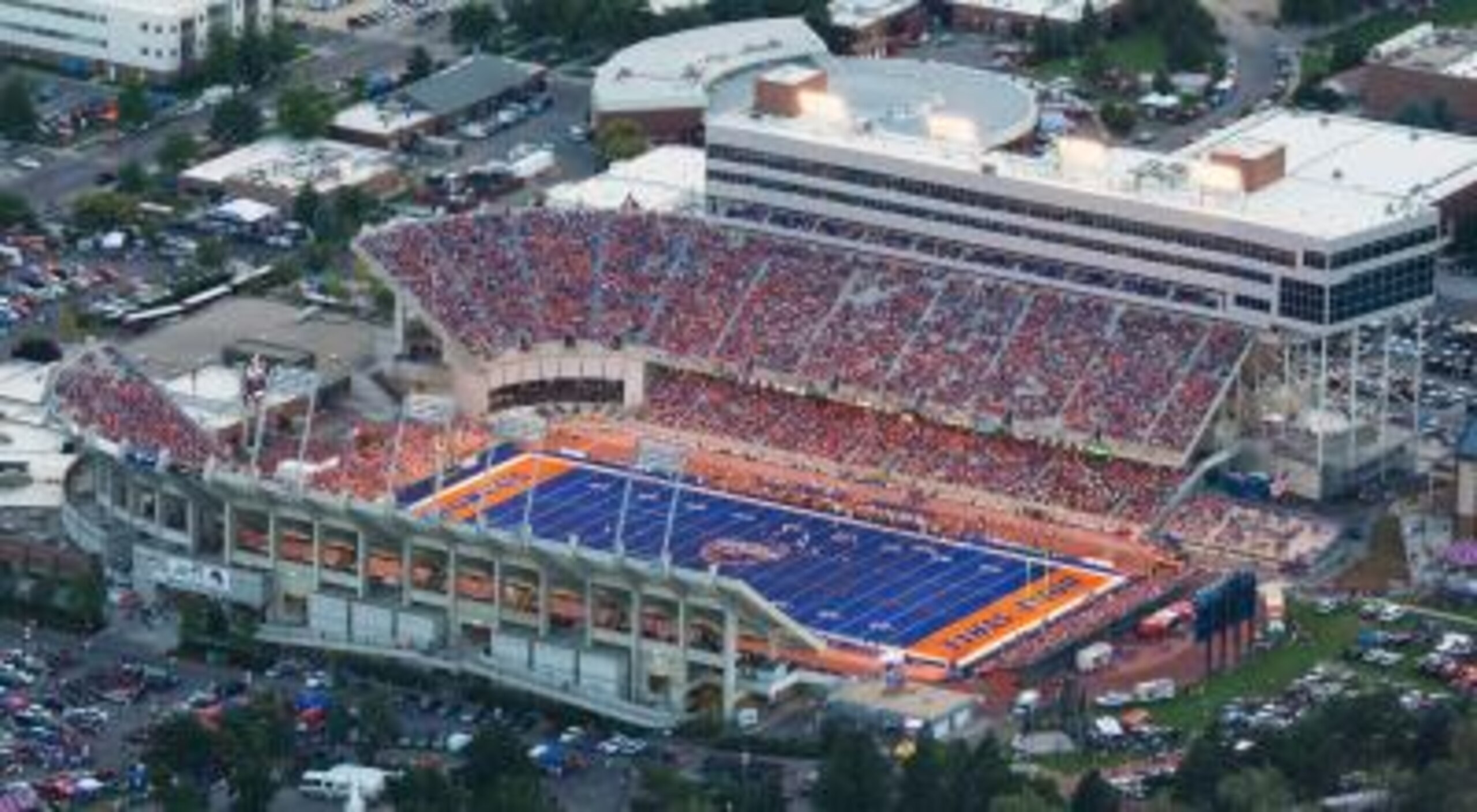
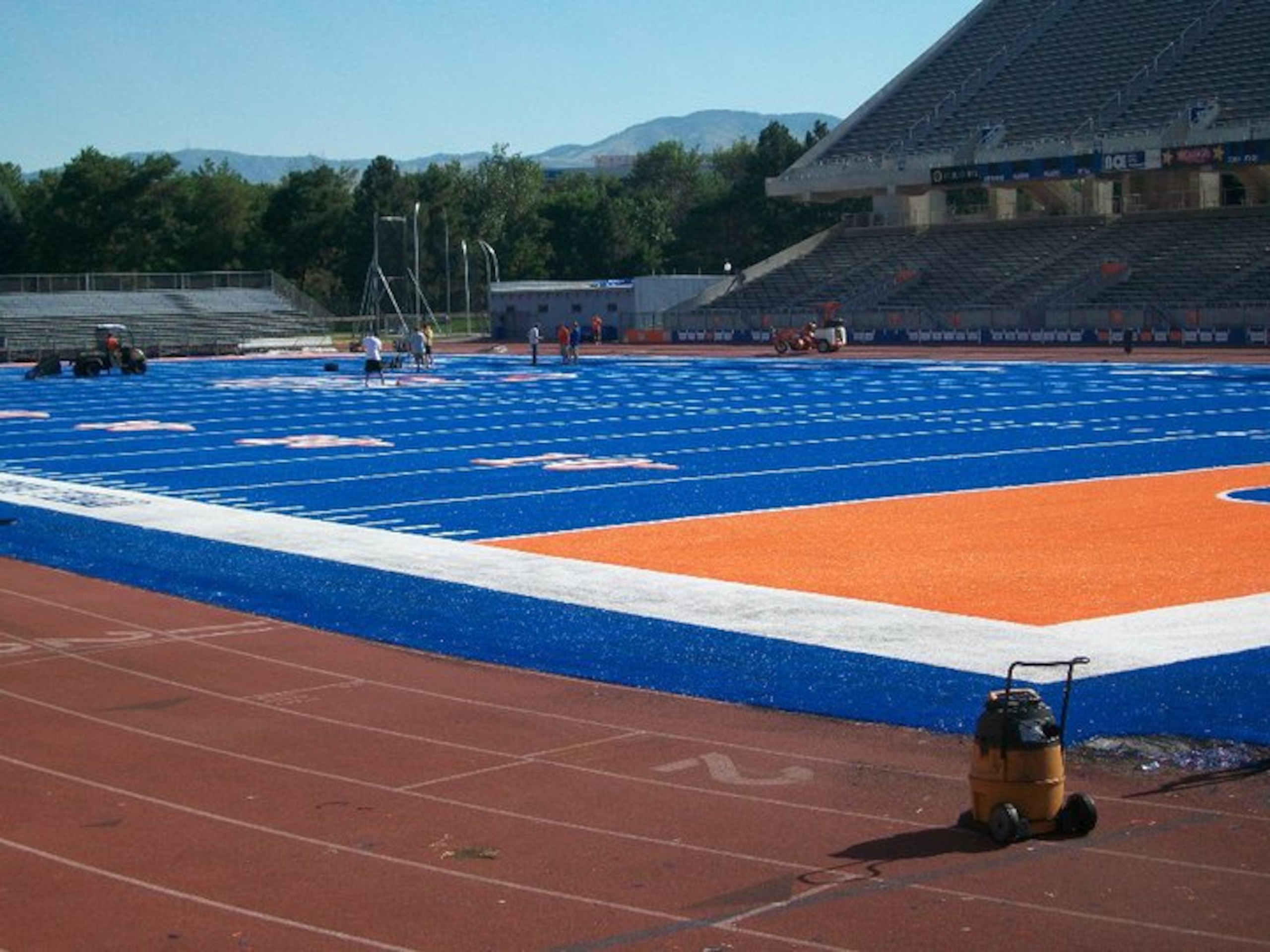
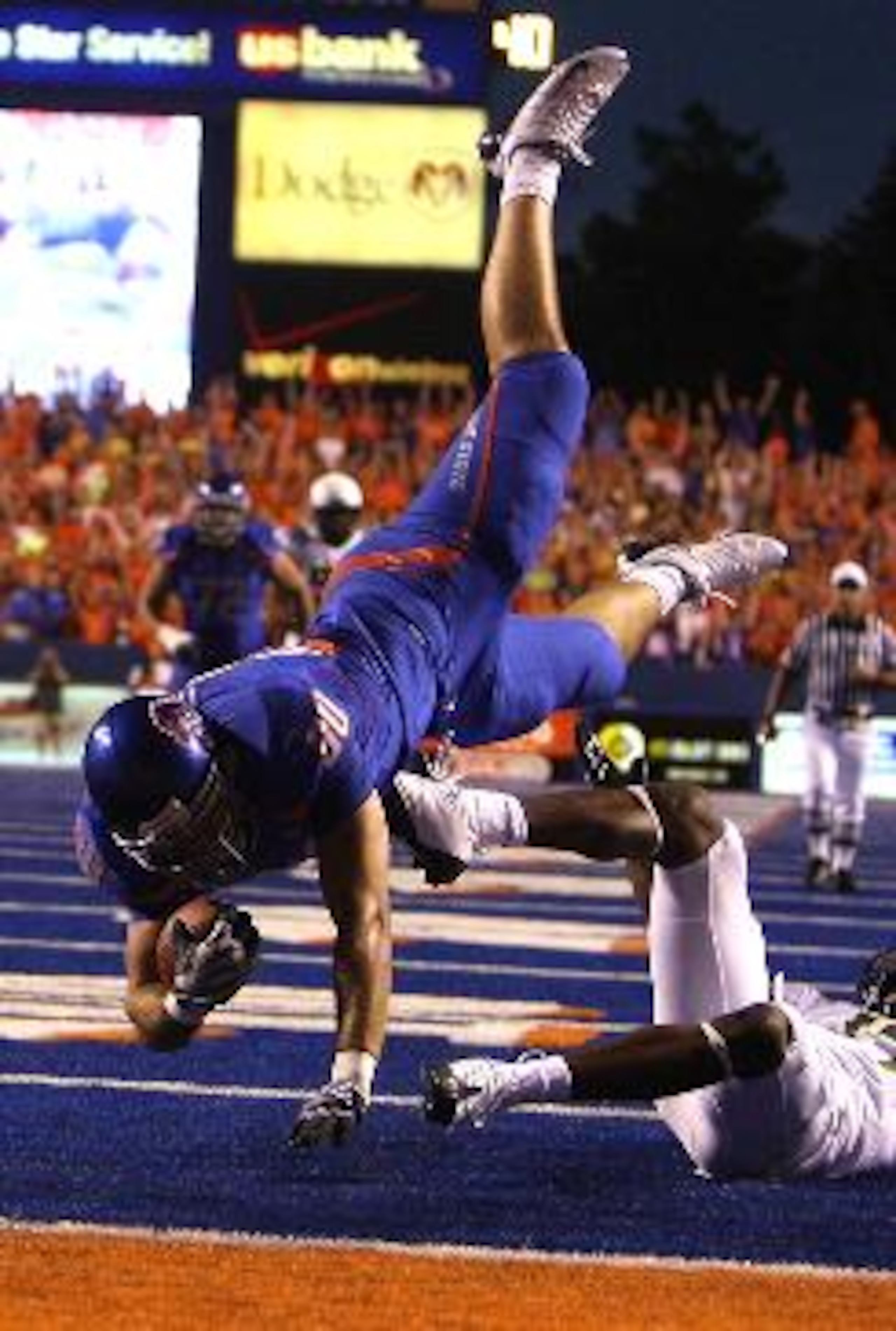
Boise State athletic director Gene Bleymaier decided it would be beneficial for the program to install new turf over the summer after receiving numerous complaints regarding the glare reflecting off Bronco Stadium’s blue field.
Unfortunately for football old-timers and Bronco bashers, it’s still blue.
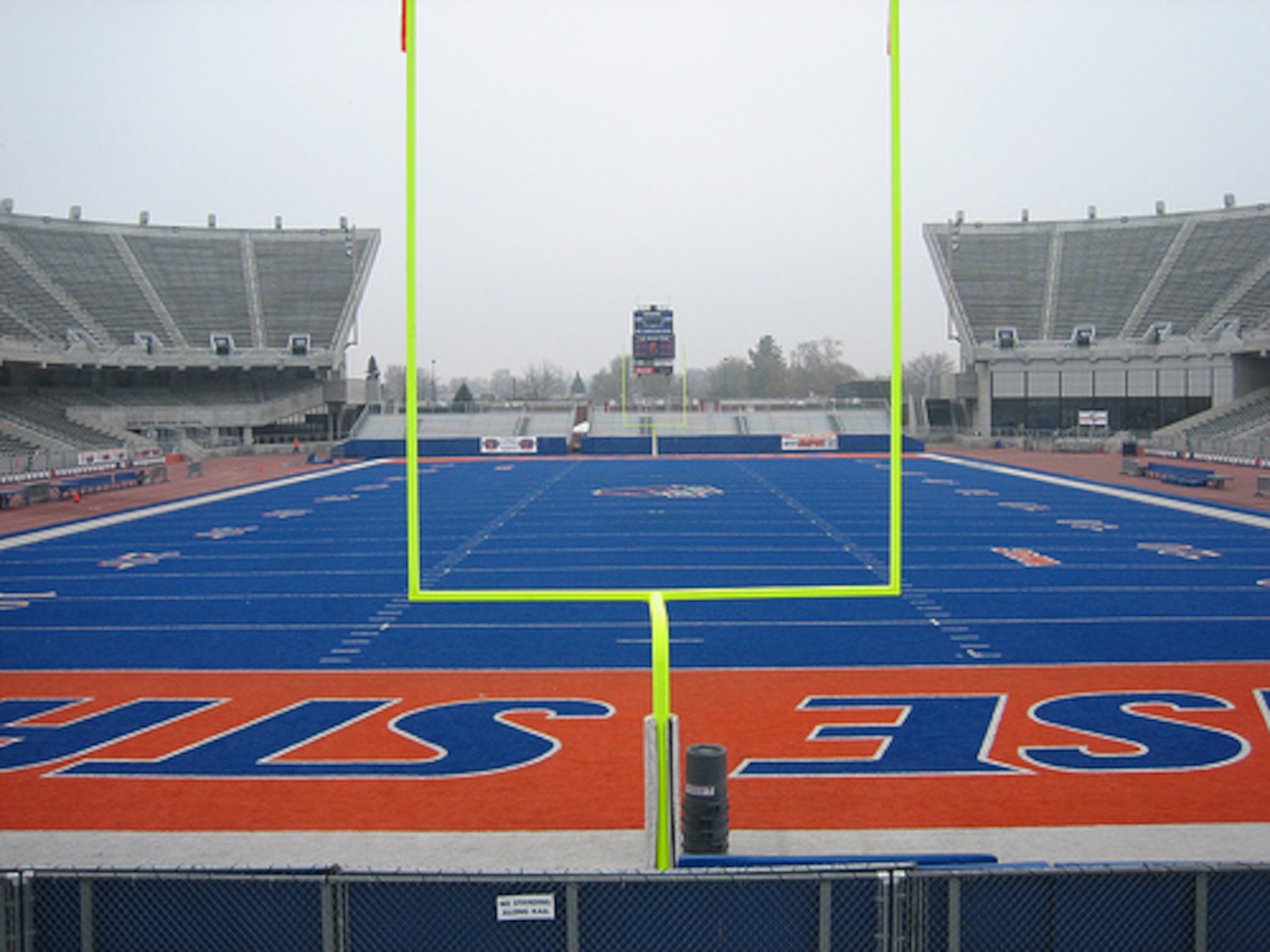
Love it or hate it, you know of the Smurf Turf, which was exactly Bleymaier’s purpose 24 years ago. As a former junior college powerhouse creeping its way to Division I, Boise State hoped their unique playing surface would bring some notoriety to the school.
Not only has it faced much controversy, but also a handful of myths have spawned from the infamous sea of blue.
As the football program continues to grow into a perennial powerhouse, it is time for the rest of the country to learn the truth of “The Blue’ and debunk its 10 greatest myths.
10. It’s the only blue football field in the country
A commonly misused fact, Boise State is actually not the nation’s lone blue football field. While the Broncos were the first team in the country to play on a colored surface, more schools have followed suit with their own version of the Smurf Turf at the high school and college level.
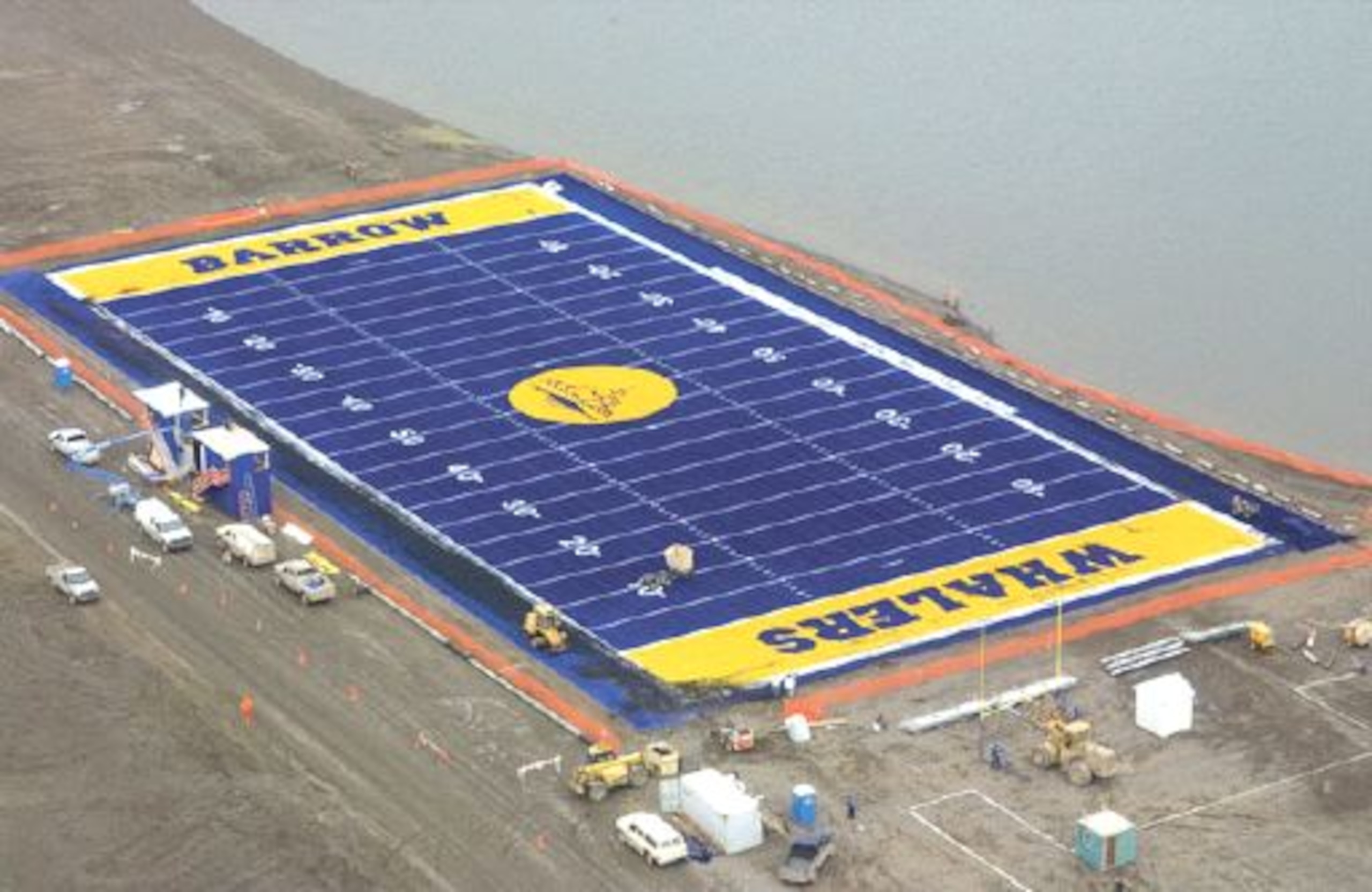
Currently, four high schools play on blue fields. Barrow High School (Alaska) became the first to get it in 2008. The blue turf matches the nearby ocean, and replaced a dirt field the team formerly used.
Hidalgo (Texas) and Lovington (New Mexico) are the two other high schools with similar fields to Boise State. West Hills (California) went a step further with their field, which patterns between light blue and dark blue every five yards.
The University of New Haven, a DII team in Connecticut, installed blue turf in 2009, becoming the second college to have a non-green playing field.
Eastern Washington has plans to install red turf for the 2010 season. The Eagles, who play in DI as an FCS team, hope to bring recognition to its growing football program, just like Boise State did in the 1980’s.
9. It has always been there
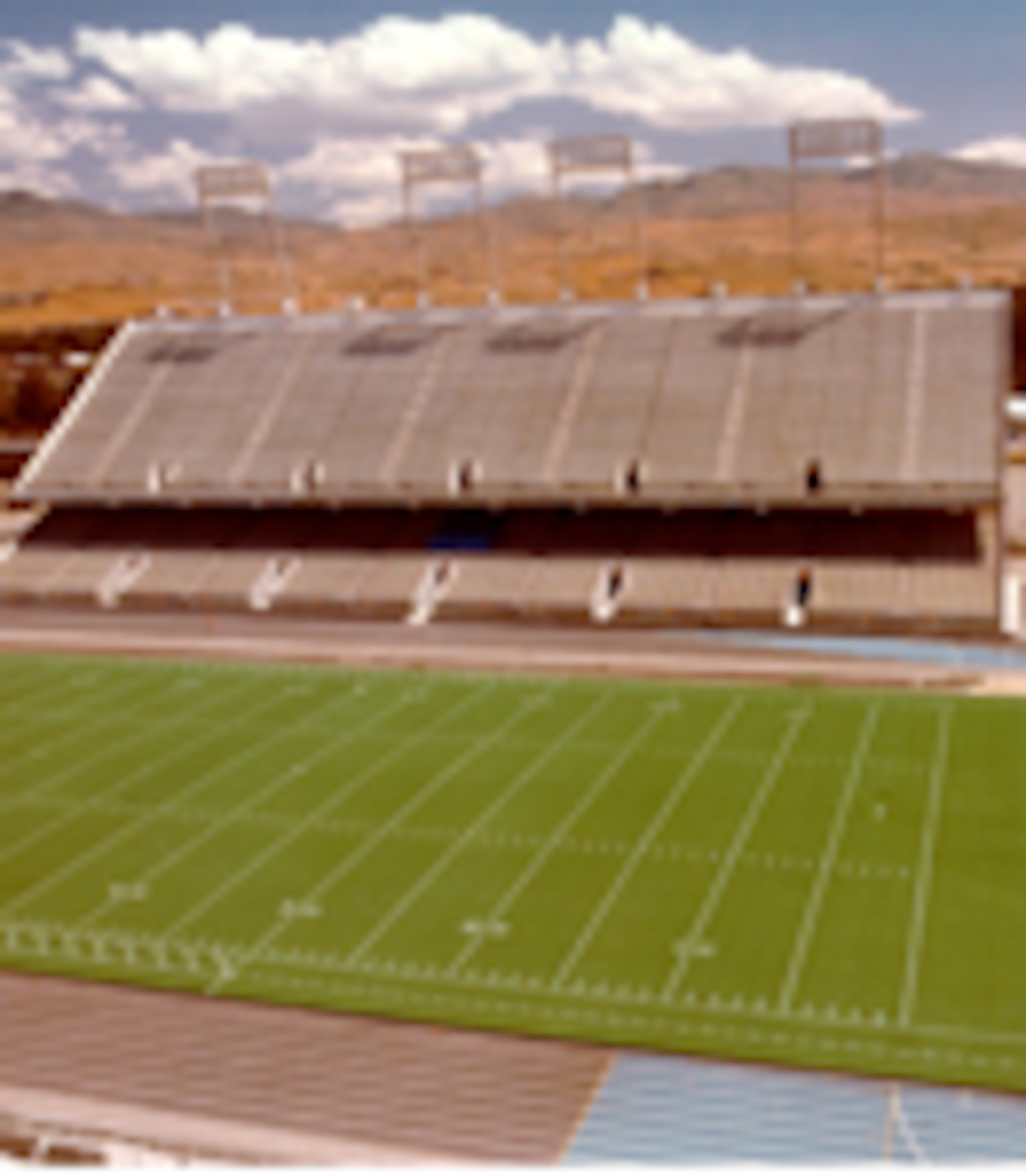
The blue turf was born the same year Joe Flacco, not Johhny Unitas. Boise State has had its football program for 77 years, yet the blue carpet has only been there for 24 of those years.
The Broncos were still dominating teams while playing on a green field, posting two incredible feats. In 1958, the Broncos won the Junior College Championship. Then in 1980, they won the I-AA championship.
This supports the statement that Boise State wins with blue-collared talent, not blue-colored turf.
8. The turf is the only cool thing in Bronco Stadium
There probably isn’t much to see at a 34,000-seat stadium in Idaho, besides maybe a potato farm in the south endzone, right? Wrong. The Stueckle Sky Club, Boise State’s recently added press box, is one of the nicest in college football.
Constructed for the 2008 season, the 80-yard long, six-floor mega-structure added over 1,000 seats to the stadium’s capacity. It replaced a horribly congested press box that belonged in a tree house.
For the first time, the upper-class citizens of Bronco Nation could enjoy WAC-thrashings and Blount-boxing from the comfortable confines of a luxury suite.
7. Joe Albertson donated the money to make it blue
Some reports have circulated that Joe Albertson, founder of grocery store chain Albertsons, donated the money for the original blue turf, using it as a marketing tool for his growing grocery stores.
Although it may have been a brilliant advertising move, there has been no confirmation from the university regarding Albertson’s donation.
In fact, Bleymaier once said that since the athletic department was going to spend $750,000 on new turf, they might as well bring some national recognition to the school.
6. An NCAA grandfather clause allows it to be the only colored field
One of the more prominent myths regarding the blue turf, a grandfather clause granted from the NCAA allows it to be the only college football team to play on a non-green field. There actually is no grandfather clause because no such rule exists, according to the NCAA rules and guidelines.
The NCAA puts strict guidelines on the color of the end zones (must be different from the field), color of the balls (all must be brown) and the color of yard lines (white). However, the university decides the color of the playing field, and the NCAA can’t stop it.
Boise State was the first to play on a colored field, but that doesn’t mean they have to be the only. Texas Tech can play on black, LSU on purple. Even Oregon can change the color of the field every week to match their 400 different jersey styles.
5. It’s ugly
When watching the Broncos play home games on television, it’s quite apparent there is a nasty glare coming off the field. The lights reflecting onto the blue turf cause this to happen, and it looks hideous from home.
Although it may hard to believe, the vibrant blue is actually beautiful in person, a spectacle unparalleled by any football experience. Rather than judging from the couch, the Smurf Turf must be seen in person to fully appreciate it.
Even while attending night games in person, the glare is nonexistent. Perhaps the televisions need to be replaced, not the turf.
Also, by installing the new version of blue Fieldturf, the glare will be minimized and should be easier on the eyes. Even if the glare is still too tough, just look at the orange end zones, because that’s where the Broncos usually are anyway.
4. All of Bronco Nation loves it
Most of the country doesn’t approve of playing on an ocean of artificial turf, and assumes everyone in Idaho adores it and has a blue front lawn. This is not the case, and many citizens of Bronco Nation have hopped on the Al Gore bandwagon and want to go green.
As Boise State football progresses, a growing number of Boise State loyalists believe the blue turf is slowing down the movement towards becoming one of the nation’s elite teams and needs to be removed in order for the program to be taken seriously.
Personally, the blue turf has become a symbol for the rise and success of Boise State’s football program, like the hedges at Georgia or Touchdown Jesus at Notre Dame.
Its uniqueness is a marvel like none other in sports, and there is no need to toil with perfection.
3. Ducks crash onto the field mistaking it for a pond
Yes this happens, because ducks often swim in ponds with floating white numbers and lines from side to side, eat on large islands with Bronco logos and produce their young on orange beaches.
There’s absolutely no reason for the ducks to be over there, because plenty of ponds are sprawled throughout downtown Boise for the ducks to enjoy.
Besides, ducks aren’t fighter jets that dive head first, but instead they glide. So if a duck had mistaken the field for a body of water, it wouldn’t crash land.
Although head coach Chris Petersen claims to have found a dead duck during a practice in 2007, no one has ever witnessed a duck crash into the field. Thus, the only ‘fowls’ on the blue turf are usually caused by holding and pass interference.
2. The clash of blue uniform on blue turf creates a camouflage effect
This is probably the most prevalent myth, but it wouldn’t even exist if actual logical thinking involved. ‘Boise State uses blue jerseys on a blue field, which creates a camouflage effect’ is one of the more popular arguments in the college football world, yet also one of the most ridiculous.
First of all, these judgments come from people watching on television. The cameras are suspended high above the field and looks down towards the action. From this angle, it appears the blue jerseys blend in with the field.
But the players don’t see the game from the same angle; instead, it’s a level playing field. Rather than getting confused with the similar shaded blues, the visiting team sees what is directly behind the players, which is usually the crowd, not a blue field.
A three-dimensional object will always stand out from a flat surface, no matter the color. It’s not like the Broncos are members of “Blue Man Group” that play their home games in a dome with blue walls. The players are visible for the opposing team, regardless of how it appears on television.
What about Kellen Moore? One of the nation’s premier quarterbacks still has to pick out his receivers on the blue field. Based on his career statistics at home (33 touchdowns, four interceptions), it doesn’t appear it’s bothering him too much.
1. The blue turf gives the Broncos an unfair advantage
This directly correlates with the previous myth, because Boise State’s skeptics believe the so-called camouflage effect leads to a home-field advantage.
The blue turf doesn’t add a 12th player to the Broncos’ offense or doesn't make the ball easier to catch. It’s just an aspect of the game the visiting players quickly become accustomed to, such as playing in violent winds or high altitude.
Each visiting opponent has hours on the field to ‘prepare their eyes.’ Plus add in the hours they watch of game tape, it shouldn’t come to be a surprise at opening kickoff. It seems to be the fans that complain about the unfair advantage, never the opposing team.
A Louisiana Tech coach once said the biggest problem about playing the Broncos is their overpowering talent, and firmly stood against the idea the clash of blue on blue causes any disadvantage to the visiting team.
This is true, because in each of its previous 56 home games, two shy from a college record, the Broncos won the game as a result of being the better team, nothing to do with the color of the field.
Critics can cry all they want, but it’s still a normal football game played on an NCAA-approved field, with no advantage to either team.
The Smurf Turf does make a lasting impression, however, because after getting demolished by the Broncos, each visiting player leaves the stadium feeling blue.
What is the duplicate article?
Why is this article offensive?
Where is this article plagiarized from?
Why is this article poorly edited?
Flag This Article


29 Comments
Loading comments...
This comment and all replies have been deleted This comment has been deleted Undo delete