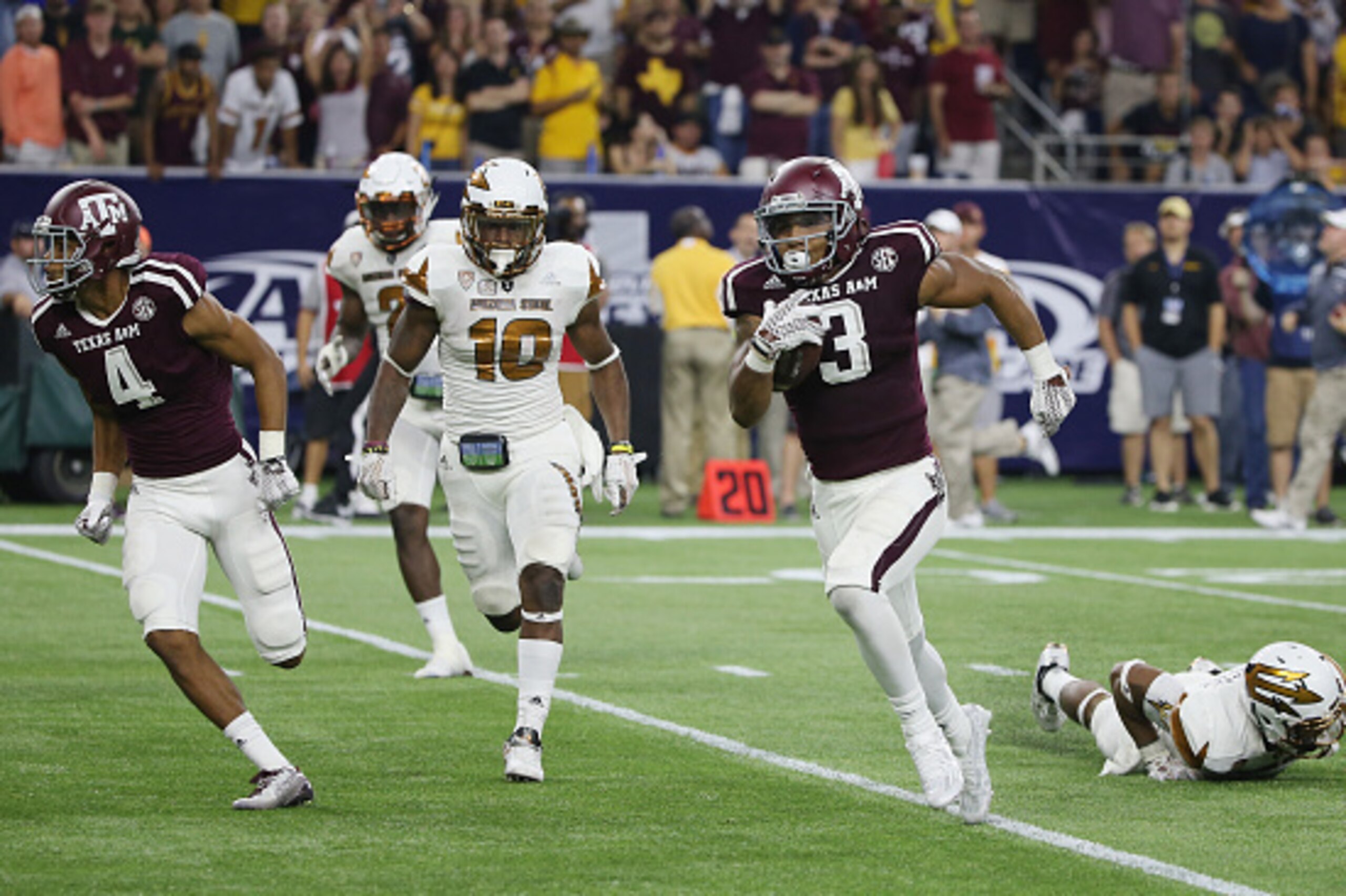

Ranking the Top 25 Sophomores Heading into the 2016 College Football Season
Freshmen are the future, juniors are the next batch of pro stars and seniors are the veterans who know how to get it done. Where do sophomores fit into the equation?
It's like the crossroads class in college football, the purgatory between being a newcomer and an upperclassman. Quite often, sophomores are the most forgotten of any group unless they managed to stand out as freshmen.
That's what we have with our list of the 25 best sophomores heading into the 2016 season. It's a group that began to draw attention last year, but in most cases, that was just the start of their run. We've ranked them based on what they've achieved to this point and what they're in line to do this fall, when their role expands from being a first-time contributor to a go-to asset.
Honorable Mention
1 of 26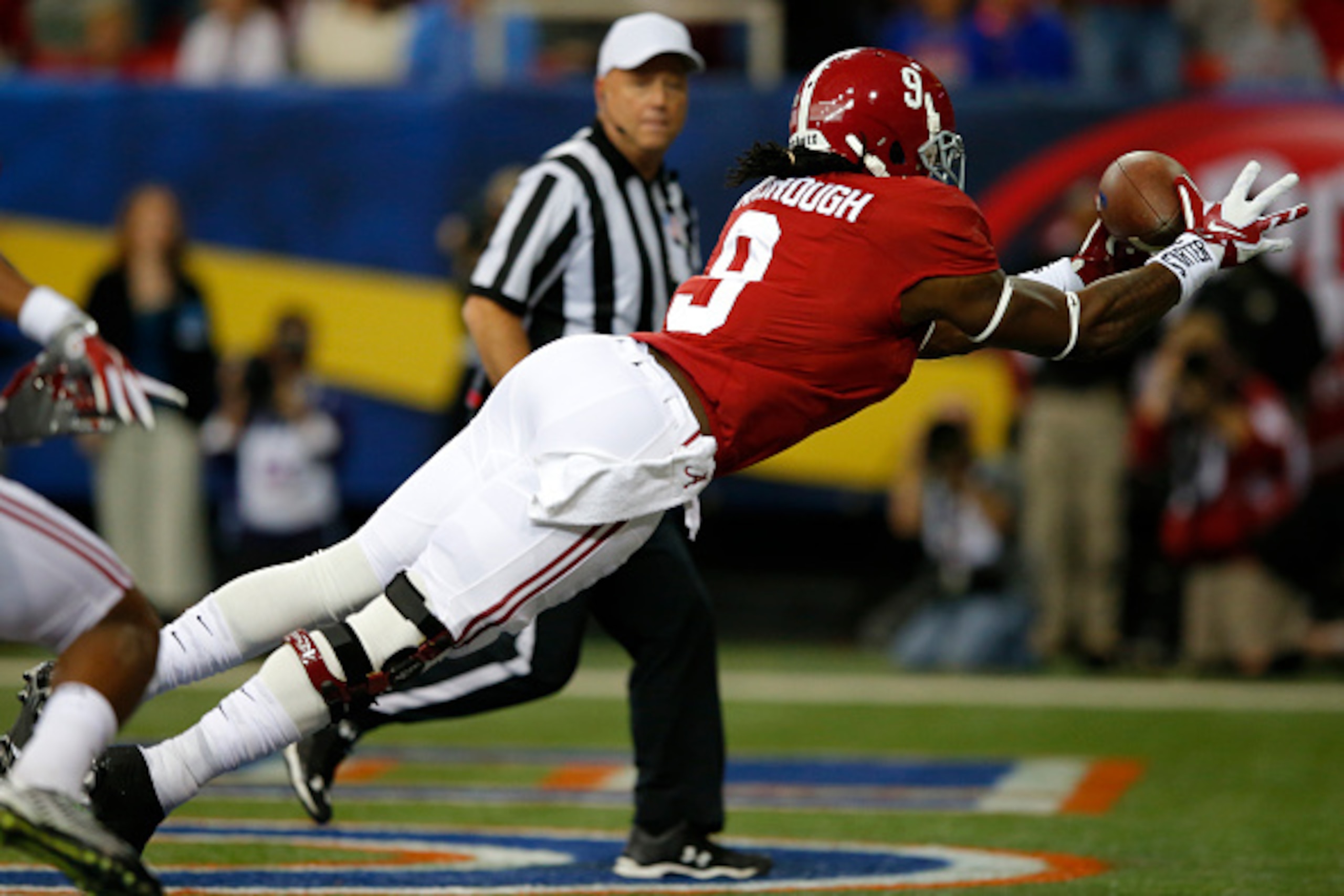
There are way too many standout sophomores to get them all on this list, and with only 25 spots, we had to leave some big names off. It won't be surprising to see many of the following players end up at or near the top of the sophomore rankings by the end of 2016, but for now, they're on the outside looking in.
- Terry Beckner Jr., DL, Missouri
- Walter Brady, DL, Missouri
- Antonio Callaway, WR/PR, Florida
- Jaylon Ferguson, DL, Louisiana Tech
- Soso Jamabo, RB, UCLA
- Richie James, WR, Middle Tennessee
- Iman Marshall, DB, USC
- Hercules Mata'afa, DL, Washington State
- Ross Pierschbacher, OL, Alabama
- Bo Scarbrough, RB, Alabama
- Courtland Sutton, WR, SMU
- Connor Williams, OL, Texas
25. Ronald Jones II, USC
2 of 26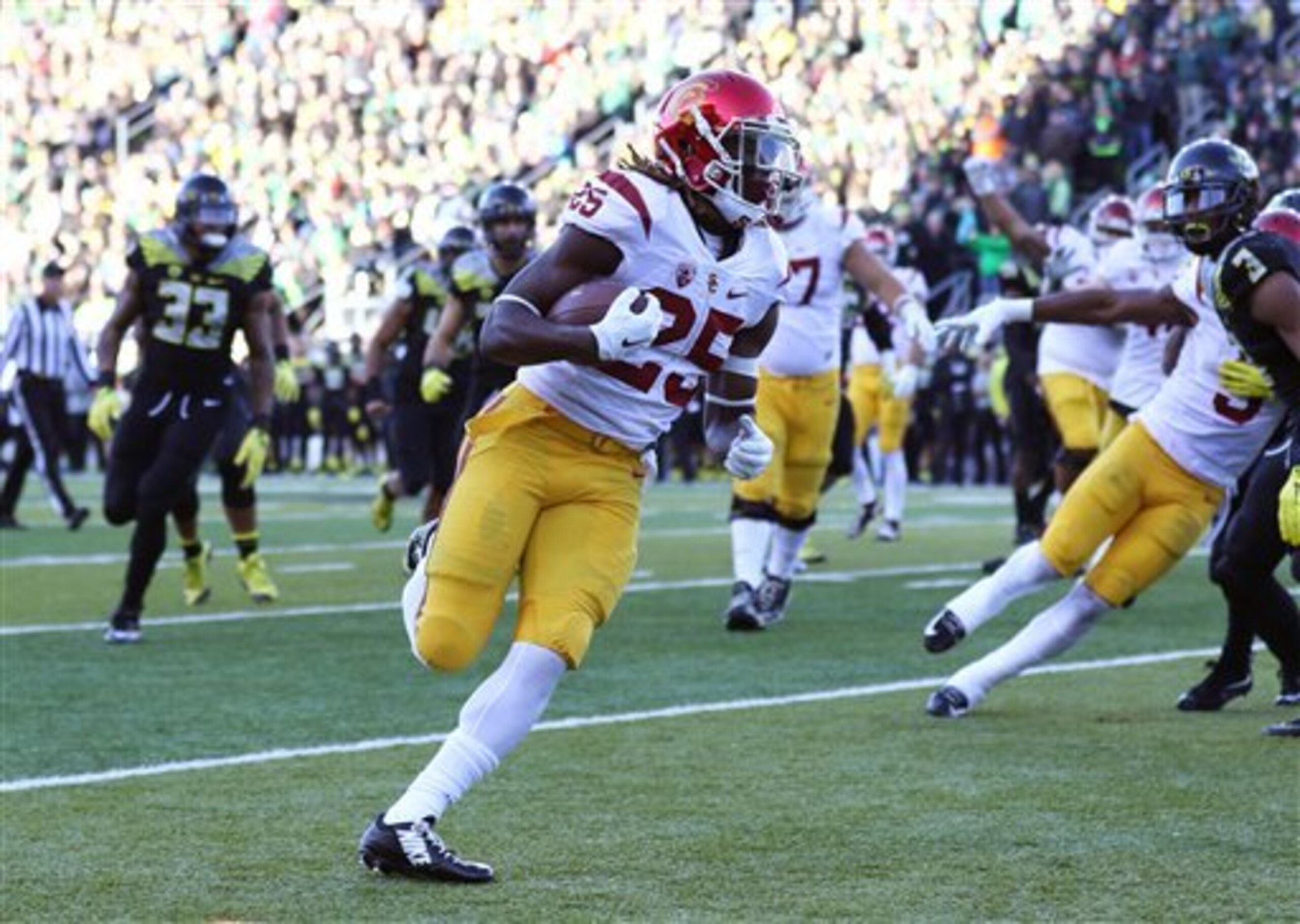
Position: Running back
Height, weight: 6'0”, 185 lbs
What He's Done
A school that used to churn out running backs on an assembly line hasn't had one this good this early in his career in a long time. Ronald Jones II led USC with 987 rushing yards and eight touchdowns, the most ever by a Trojans freshman.
That's saying something, since five of the school's seven Heisman winners—including Reggie Bush and O.J. Simpson—were running backs.
What Can We Expect in 2016?
Look for Jones to get a lot more touches in his second year. Once Clay Helton took over as interim coach midway through last season, the run game became more of a focal point yet still never had more than 19 carries in a game. USC doesn't have to rely on just one ball-carrier, not with Justin Davis and others available, though Jones is the one who should get the first and most important touches.
24. William Clapp, LSU
3 of 26
Position: Offensive lineman
Height, weight: 6'5”, 303 lbs
What He's Done
Projected as a center when he arrived at LSU, William Clapp instead played both guard positions last year as a redshirt freshman. He helped to clear holes for Leonard Fournette to churn out a school-record 1,953 yards.
That versatility makes Clapp, the son of former LSU defensive lineman Tommy Clapp, a valuable asset if injuries require LSU to shuffle its line.
What Can We Expect in 2016?
Clapp could be at either guard spot or see time in the middle. Wherever he ends up, his ability to protect the quarterback and allow for the passing game to be involved will be just as important as creating running lanes for Fournette.
23. Kareem Orr, Arizona State
4 of 26
Position: Safety
Height, weight: 5'11”, 195 lbs
What He's Done
Kareem Orr had six interceptions as a true freshman, tied for seventh-most in the country and tops among first-year players. The rest of Arizona State's roster had nine picks.
Orr returned an interception for a touchdown to seal the Sun Devils' win over rival Arizona in November and had a pick in ASU's Cactus Bowl loss to West Virginia. He added 38 tackles, 31 of the solo variety.
What Can We Expect in 2016?
Orr filled in at safety after Armand Perry was injured last season, but with him returning and ASU graduating both starting cornerbacks, he could be in line for a position change. Wherever he lines up, the ASU coaching staff will ask Orr to balance aggressiveness with caution, as last year the Sun Devils were last in FBS in passing defense and allowed 14 pass plays of at least 50 yards.
22. Cameron Smith, USC
5 of 26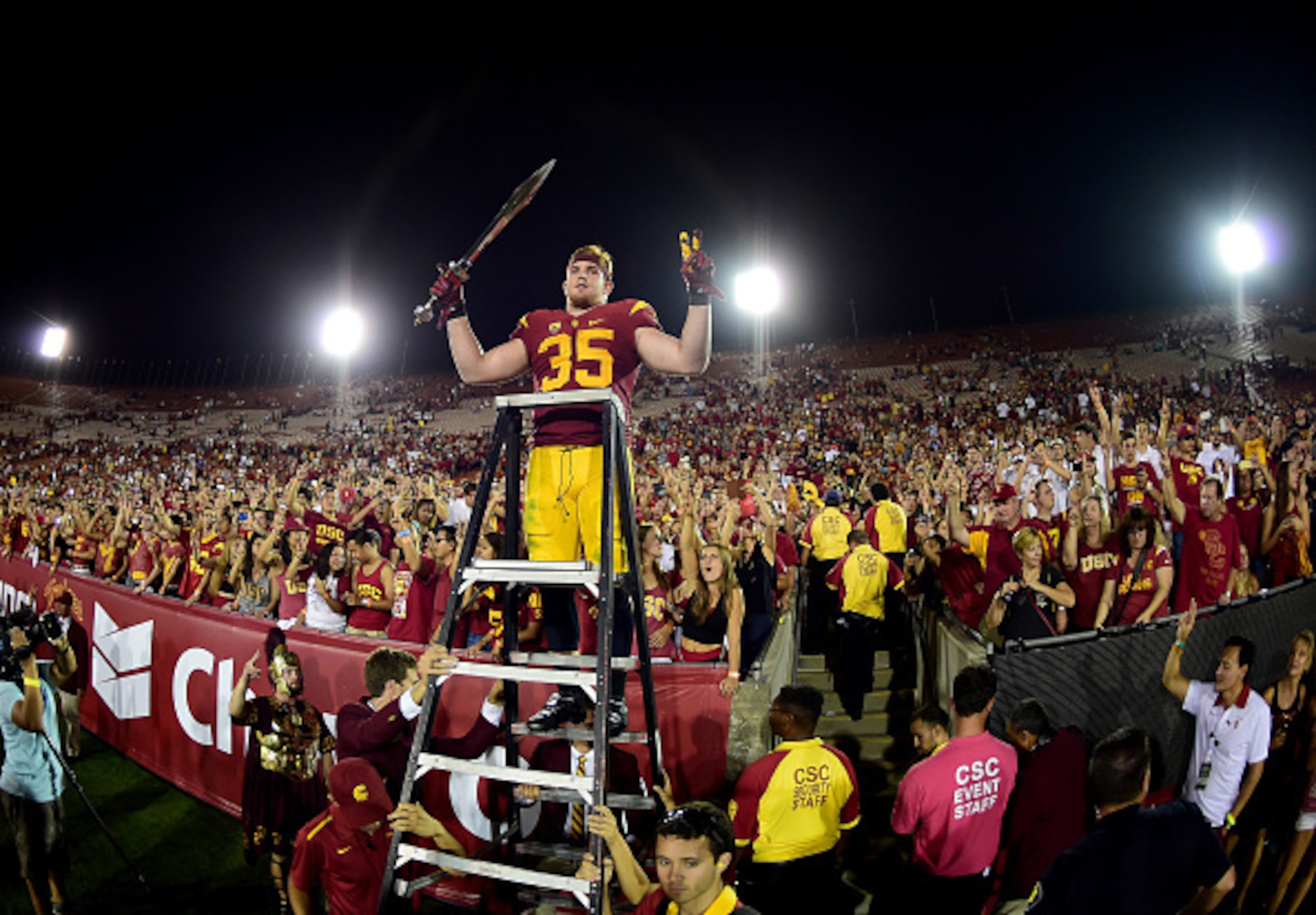
Position: Linebacker
Height, weight: 6'2”, 245 lbs
What He's Done
A knee injury kept Cameron Smith's true freshman season from being among the best in USC history for a linebacker, but even in just 10 games, he had the kind of performance that has him on pace to be an all-time great. Despite missing the final four contests, Smith's 78 tackles were still second only to Su'a Cravens.
Smith was a master in space, particularly in pass coverage, where he registered three interceptions against Utah, including one he returned for a touchdown.
What Can We Expect in 2016?
Knee surgery has kept Smith out of spring practice, but all signs point toward him returning to the starting lineup this fall. With Cravens off to the NFL and USC young and inexperienced on the offensive line, Smith will be among the defensive leaders as a sophomore.
21. Brent Stockstill, Middle Tennessee
6 of 26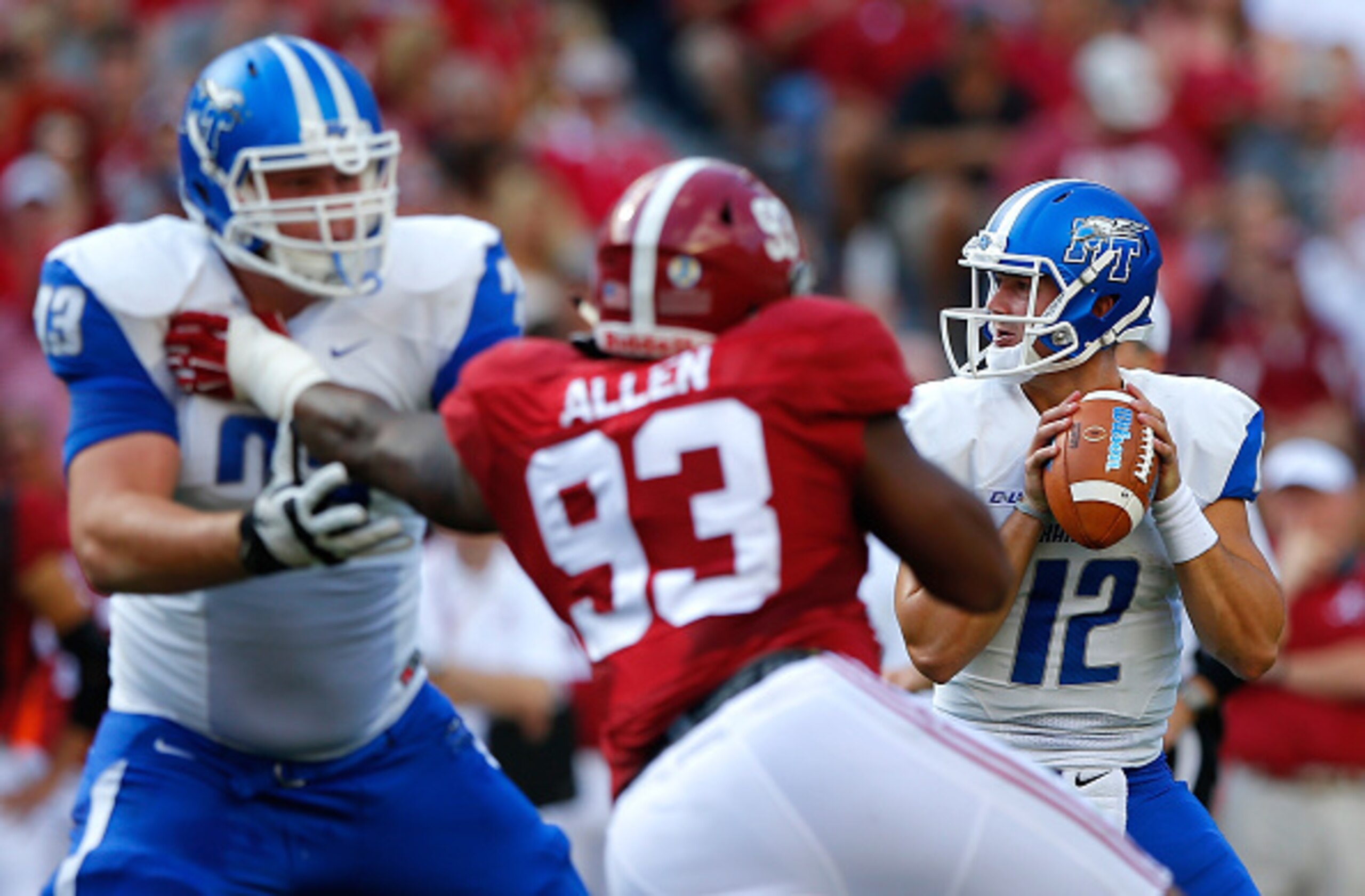
Position: Quarterback
Height, weight: 6'0”, 209 lbs
What He's Done
Brent Stockstill faced more pressure than the normal redshirt quarterback last season, since he was playing for his father (Middle Tennessee coach Rick Stockstill) after beating out incumbent Austin Grammer for the starting job. You wouldn't know it from watching him, though, as Brent Stockstill ended up with one of the most prolific seasons by a freshman ever.
"It had to take a leap of faith for Stockstill to install his redshirt freshman son, Brent, as the starting QB, and he had to know how it would look if Brent struggled," Bill Connelly of SB Nation wrote. "But any sense of unease vanished because the young QB was a revelation."
Stockstill threw for 4,005 yards and 30 touchdowns, both tops in the nation among freshmen, as was his completion rate of 66.7 percent.
What Can We Expect in 2016?
Stockstill had two 1,000-yard receivers to work with last year and still has one this season in sophomore Richie James, who had 108 catches in 2015. With a schedule that includes games at SEC schools Vanderbilt and Missouri, he'll get his shots to show what improvement he's made.
20. Daylon Mack, Texas A&M
7 of 26
Position: Defensive tackle
Height, weight: 6'1”, 335 lbs
What He's Done
Texas A&M's defensive improvement starts with its line, where Daylon Mack joined Myles Garrett and Daeshon Hall last season to form an impressive group of run-stoppers. Mack had 9.5 tackles for loss, third-most on the team, despite not being part of the starting lineup.
A massive specimen who moves like someone half his size, Mack routinely drove offensive lineman into the backfield or simply blew up a play before it could start.
What Can We Expect in 2016?
Mack figures to move into the starting lineup with graduation taking away A&M's starting tackles from a year ago. To ensure that, Mack will need to become better at disrupting on passing downs as much as when he affected the run. Mack did not log a sack last season.
19. Jake Browning, Washington
8 of 26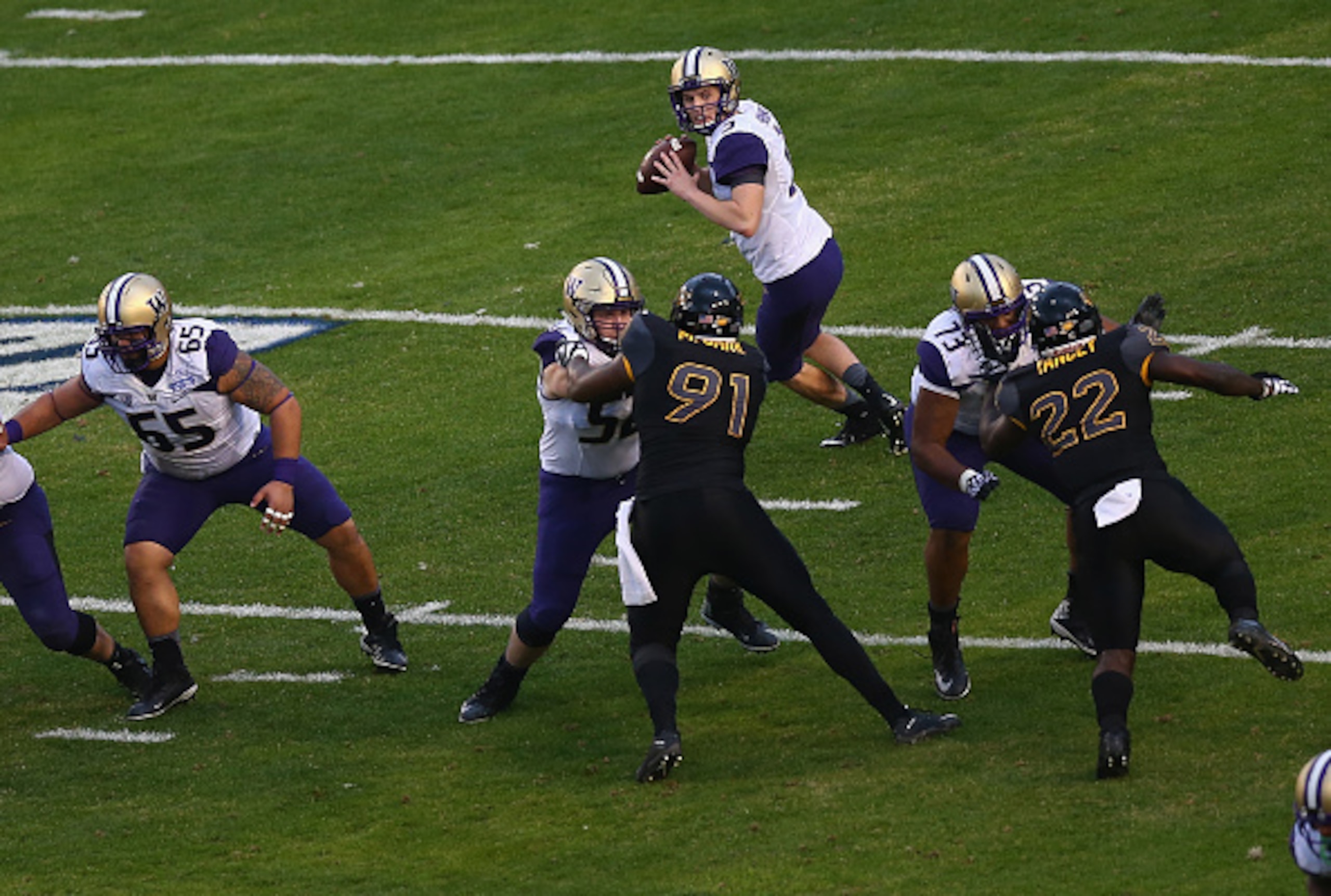
Position: Quarterback
Height, weight: 6'2”, 205 lbs
What He's Done
A high school legend who set national passing records, Jake Browning wasn't anywhere near as prolific as a true freshman for Washington. But he didn't need to be, as the Huskies defense was the dominant side for much of 2015 as Browning was able to learn on the job.
Browning started 12 games, including the opener, and finished with 2,955 yards and 16 touchdowns with 10 interceptions. He had four games where he completed at least 70 percent of his passes, three with 300 or more yards and a pair of four-TD efforts.
What Can We Expect in 2016?
Browning and running back Myles Gaskin, himself a standout freshman from a year ago, could be the top young offensive pairing in the country. They showed this as last season wound down, though Browning will need to take more responsibility by improving his downfield throws.
18. Brett Rypien, Boise State
9 of 26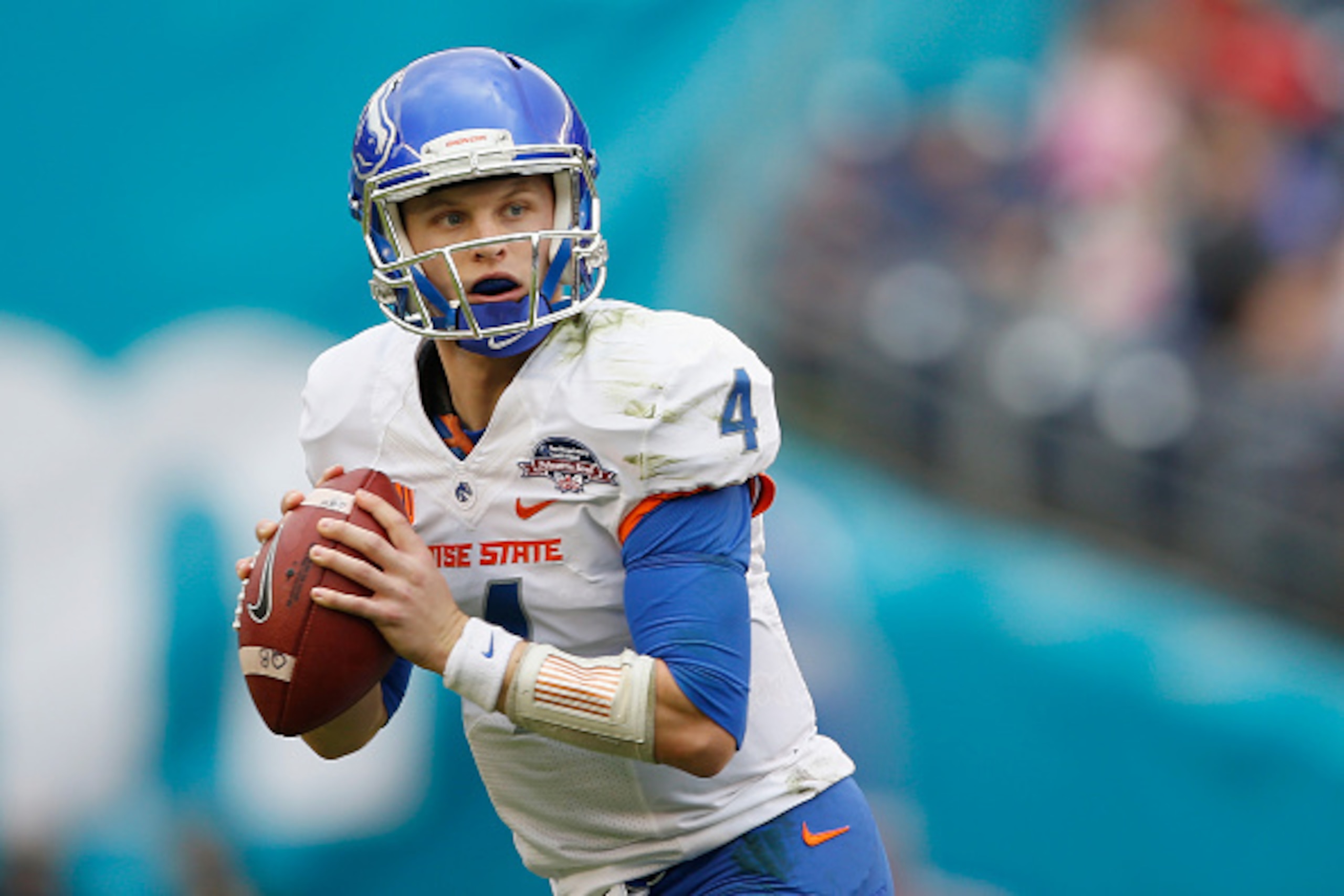
Position: Quarterback
Height, weight: 6'2”, 199 lbs
What He's Done
Boise State regarded the nephew of former NFL quarterback Mark Rypien as its quarterback of the future—it just didn't expect that to come about so soon. An early-season injury to starting QB Ryan Finley opened the door for the true freshman to get his career going, and he flourished.
Brett Rypien threw for 3,350 yards and 20 touchdowns, completing 63.6 percent of his passes. His first start came on the road at Virginia when he was 24-of-35 for 321 yards and three TDs, one of five 300-yard games and four occasions with at least three TD passes.
What Can We Expect in 2016?
Boise State is loaded on offense, with 1,300-yard rusher Jeremy McNichols and 1,400-yard receiver Thomas Sperbeck back for another year. Their presence in 2015 allowed Rypien to get comfortable without having to do it all himself, and this fall he'll continue to improve in a stress-free environment.
17. Josh Sweat, Florida State
10 of 26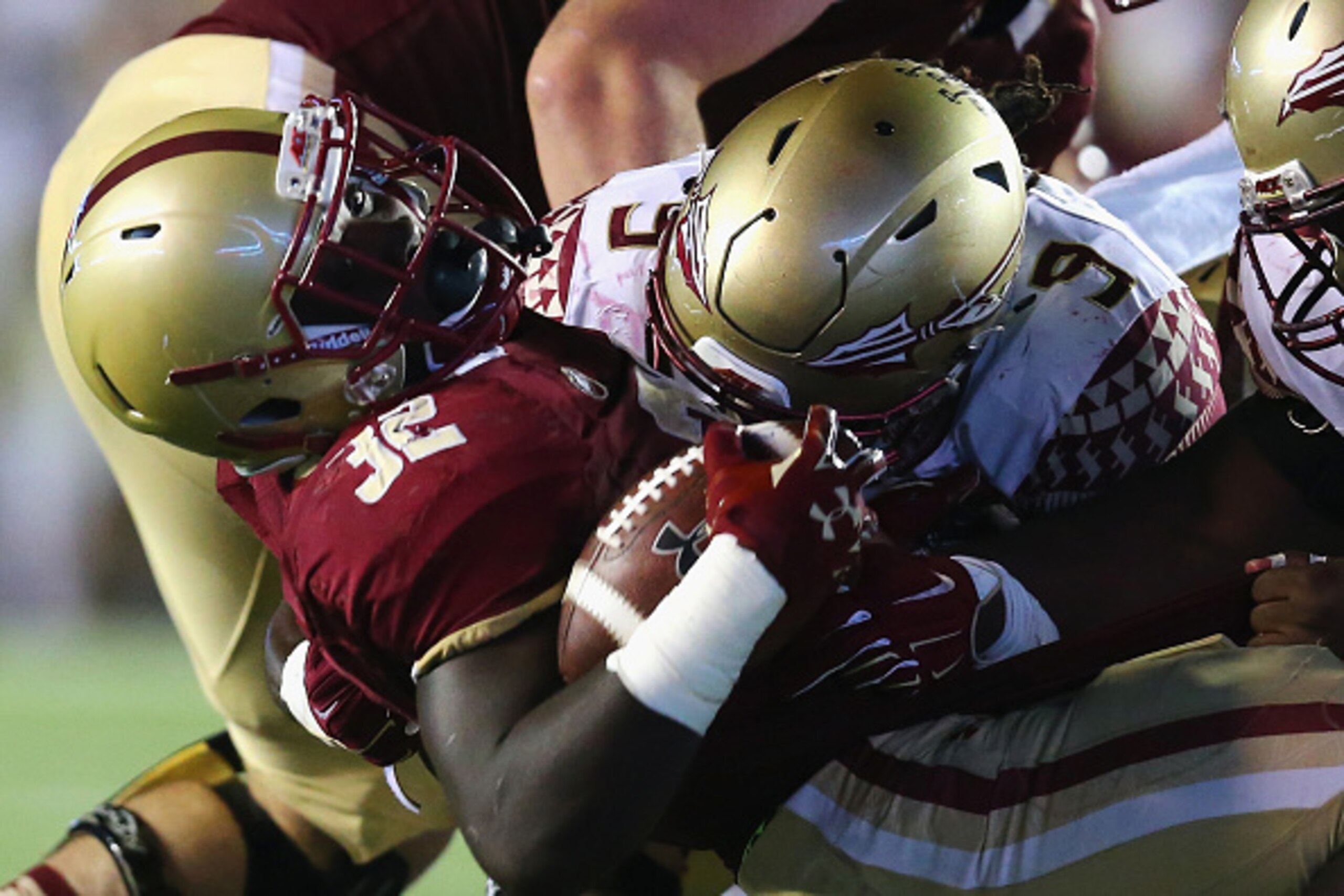
Position: Defensive end
Height, weight: 6'5”, 236 lbs
What He's Done
Josh Sweat wasn't expected to play in 2015, let alone do so in such a meaningful manner. A serious knee injury late in his senior year of high school put the start of his college career in jeopardy, yet he ended up starting nine games and playing in all 13.
Sweat had 41 tackles, five tackles for loss, two sacks, one interception and three fumble recoveries as a true freshman. His pick came in Florida State's loss at Georgia Tech, when he tipped a pass to himself.
What Can We Expect in 2016?
Now fully healthy, Sweat will be asked to become a more complete player up front. He was strong against the run, earning the highest grades of any freshman edge-rusher by Pro Football Focus, but the same wasn't the case when in passing situations.
If he can improve in this area, combined with senior DeMarcus Walker on the other end, FSU will have one of the best edge duos in the country.
16. Mike Warren, Iowa State
11 of 26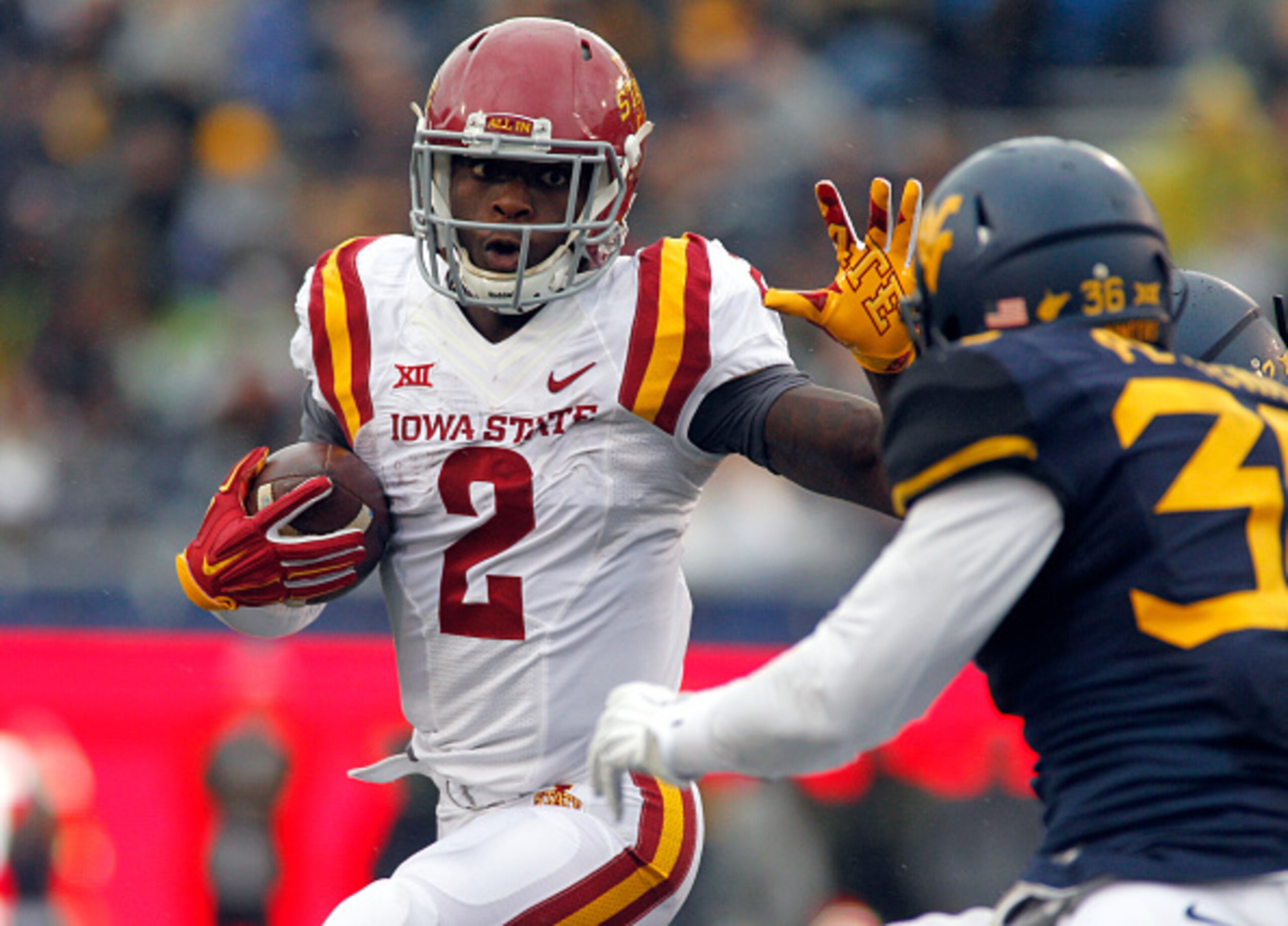
Position: Running back
Height, weight: 6'0”, 200 lbs
What He's Done
Mike Warren led all freshmen in rushing yards last season, gaining 1,339 yards for an Iowa State team that struggled to a 3-9 record and had its coach get fired. Warren's yardage was the third-best by a freshman in Big 12 history and best in school history, and his 5.9 yards per carry set the school single-season mark for any Cyclones player.
With six 100-yard games, including 245 yards against Texas Tech, Warren was ISU's first 1,000-yard rusher since 2009 and the most since Darren Davis ran for 1,388 yards in 1999.
What Can We Expect in 2016?
A redshirt sophomore who sat out his first season, NFLDraftScout.com lists Warren as the 11th-best running back in the 2019 draft class. However, a big year could put him in line to turn pro after this year.
Warren should be a focal point of new coach Matt Campbell's offense, and Campbell had some good running backs at his disposal at Toledo.
15. Christian Wilkins, Clemson
12 of 26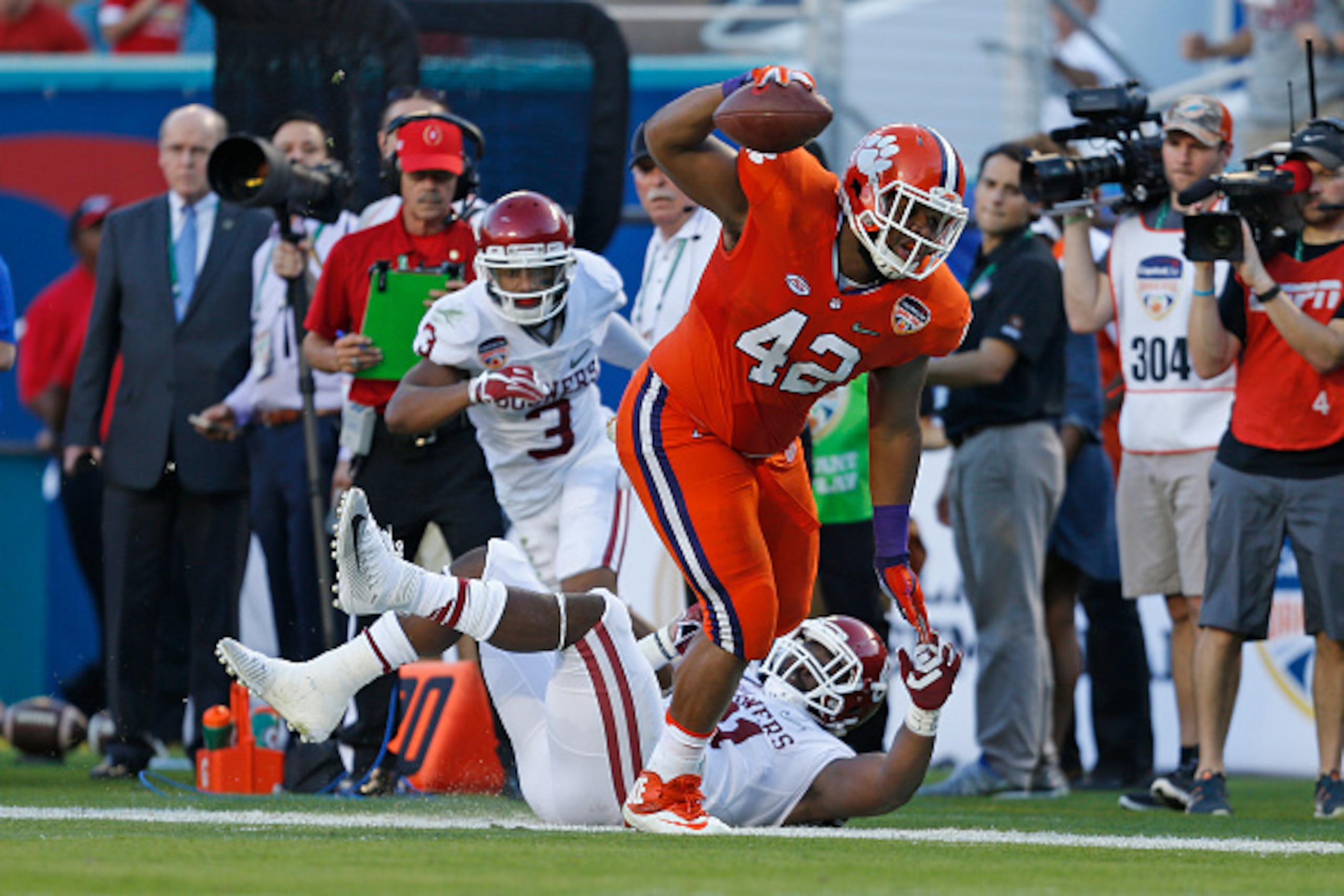
Position: Defensive tackle
Height, weight: 6'4”, 315 lbs
What He's Done
Most will best remember Christian Wilkins' first college season for his surprising athleticism that he showed off in hauling in a 31-yard catch on a fake punt in the Orange Bowl win over Oklahoma. But Wilkins made waves all year long as a part of Clemson's defensive line rotation, where he backed up at nearly every position while making one start.
He had 33 tackles, 4.5 tackles for loss, two sacks and a forced fumble along the way, using some of the same moves that helped him as a receiver.
What Can We Expect in 2016?
Wilkins might not start, but he'll be on the field almost as often as the starters, shifting both inside and out depending on the play and who needs a break.
"He can do it all," Clemson coach Dabo Swinney told ESPN's Adam Rittenberg. "He can play shade, 3-technique, he can play end. He’ll probably play a little end for us. Just a dynamic, dynamic player."
14. Tanner Mangum, BYU
13 of 26
Position: Quarterback
Height, weight: 6'3”, 215 lbs
What He's Done
Tanner Mangum signed with BYU in 2012 but a redshirt year and a two-year Mormon mission delayed the start of his college career to 2015. He wasn't expected to play much that season, but then oft-injured quarterback Taysom Hill got hurt in the season opener, and the job was suddenly Mangum's.
All he did was throw a Hail Mary pass to beat Nebraska in that game, one of several in which his late heroics helped BYU to victory. Mangum finished with 3,377 yards and 23 touchdowns, topping the 300-yard mark five times, including against rival Utah in the Las Vegas Bowl.
What Can We Expect in 2016?
Mangum isn't guaranteed to have his job again this season, since Hill has come back for another year, and the two are competing in spring ball. Assuming he can win the battle and be first out for the Cougars this fall, his big arm will continue to allow BYU to stretch the field.
13. Mitch Hyatt, Clemson
14 of 26
Position: Offensive tackle
Height, weight: 6'5”, 295 lbs
What He's Done
The first true freshman to start the season opener at offensive tackle for Clemson since 1944, per Dan Hope of OrangeAndWhite.com, Mitch Hyatt wasn't just a novelty. He was a rock on the left side of the Tigers offensive line, starting all 15 games as Deshaun Watson's blindside protector.
Clemson's offensive line only allowed 18 sacks in 2015, and Hyatt helped open holes and seal the edge for Wayne Gallman to rush for a school-record 1,527 yards.
What Can We Expect in 2016?
Clemson graduated left guard Eric Mac Lain and right tackle Joe Gore, which means Hyatt will take on more of a leadership role alongside senior center Jay Guillermo and junior right guard Tyrone Crowder.
12. Myles Gaskin, Washington
15 of 26
Position: Running back
Height, weight: 5'10”, 193 lbs
What He's Done
Gaskin ran for 1,302 yards and 14 touchdowns as a true freshman, both figures far and away the best in school history by a first-year player. No other Washington back had ever topped 1,000 yards, and he only had 39 carries in the Huskies' first four games.
Once he became the main rushing option, he ran with it, literally. Gaskin had eight 100-yard games, including four straight to end the season, with six rushing TDs in his final two games boosted by a 181-yard, four-TD performance in the Heart of Dallas Bowl.
What Can We Expect in 2016?
Gaskin had about 48 percent of Washington's carries last year, and that number should rise since Dwayne Washington, the team's No. 2 rusher in 2015, left the program.
Washington will also try to get him more involved in the passing game after he had only six catches last season.
11. Jordan Whitehead, Pittsburgh
16 of 26
Position: Safety
Height, weight: 5'11”, 185 lbs
What He's Done
Pat Narduzzi's reputation for developing defensive backs at Michigan State helped him land the Pittsburgh head-coaching job, and last year he saw his next great back-line player come about in the form of Jordan Whitehead. He only had one interception, but with a team-high 108 tackles, Whitehead was always around the action.
One of only three freshmen in FBS with 100-plus tackles, Whitehead had six tackles for loss and forced a fumble that he returned for a touchdown in the Military Bowl. He also scored twice as a running back against Notre Dame, one of five games he got touches on offense last season.
What Can We Expect in 2016?
Whitehead's versatility made it possible for him to contribute on both sides of the ball last year, though if James Conner is able to return from his knee injury (and cancer treatments) then his need as a rusher is diminished. His best value remains in the secondary.
10. KaVontae Turpin, TCU
17 of 26
Position: Wide receiver
Height, weight: 5'9”, 153 lbs
What He's Done
During a season when injuries wreaked havoc on TCU's starting lineup and kept the team from meeting its full potential, KaVontae Turpin managed to avoid getting hurt and ended up carving out a niche in the Horned Frogs offense. His 128.8 all-purpose yards per game were most on the team, and though most of that came from special teams, he had big performances as a receiver and ball-carrier as well.
Turpin was second on the team with 45 receptions, 649 yards and eight touchdowns, his breakout game coming in the blowout of Texas when four of his six catches went for scores.
What Can We Expect in 2016?
Despite being one of the smallest players in college football, Turpin is likely to be TCU's first option in the receiving game. His speed and elusiveness also makes him valuable as a rusher on sweeps and reverses, doing whatever he can to help move the ball down the field.
And Turpin will again be a factor on special teams, having averaged 27 yards on kickoffs and 10.65 on punts (with a TD) last season.
9. Sam Hubbard, Ohio State
18 of 26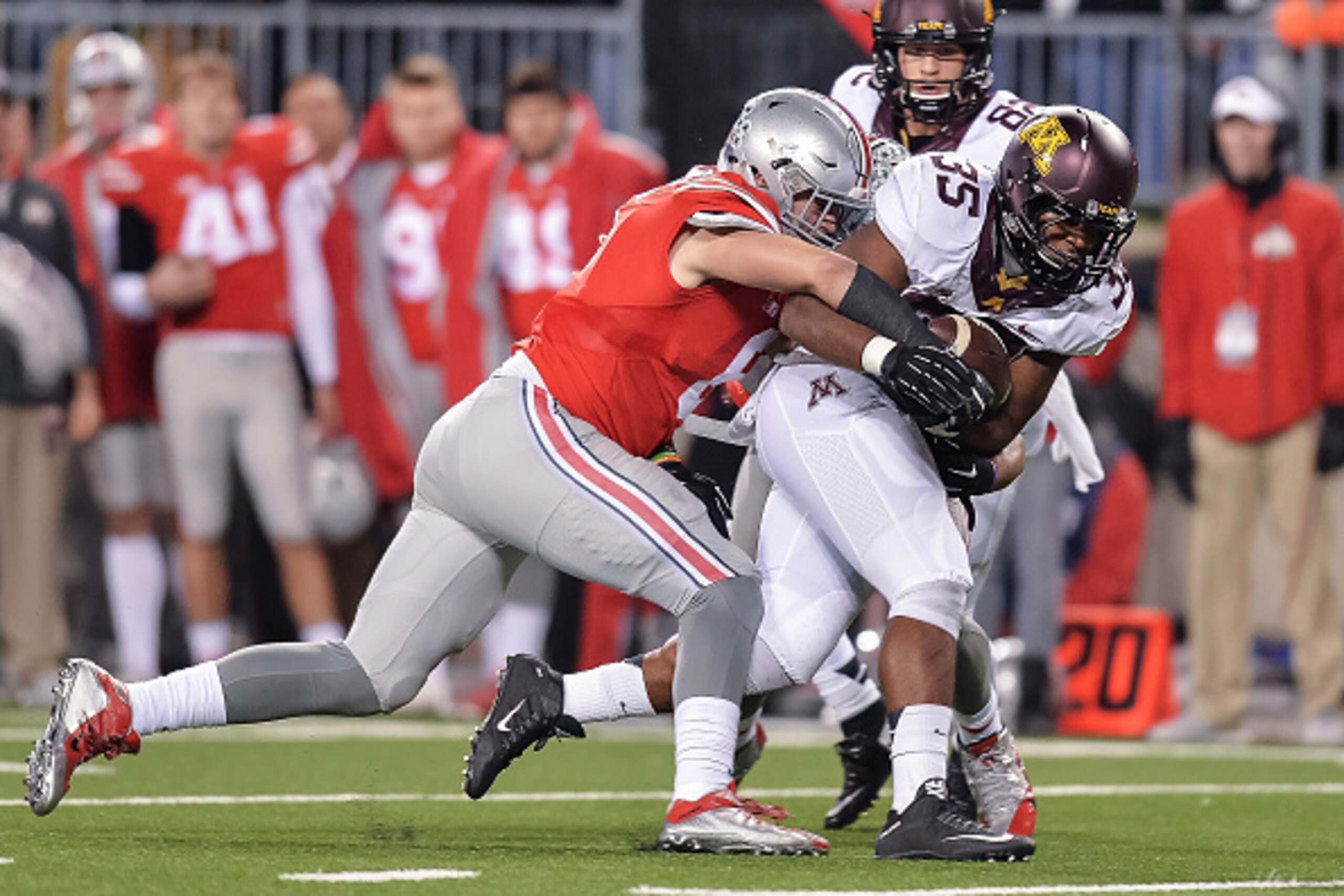
Position: Defensive end
Height, weight: 6'5”, 265 lbs
What He's Done
Most of the attention paid to Ohio State last season went to its 16 starters who either graduated or (in most cases) turned pro early, but the cupboard isn't completely empty. Sam Hubbard's 6.5 sacks were second-most on the team, despite only starting one game as a redshirt freshman.
Originally a linebacker, Hubbard has bulked up since arriving in Columbus and made for a great pass-rushing specialist in his first year of action.
What Can We Expect in 2016?
Hubbard is expected to take on Joey Bosa's role as the main edge-rusher, though junior Tyquan Lewis will be operating from the other side to make for a strong one-two combination.
"Hubbard has been a safety, tight end, linebacker and defensive end," Cleveland.com's Ari Wasserman wrote. "This spring, though, he finally has the body of a dominant defensive lineman."
8. Lamar Jackson, Louisville
19 of 26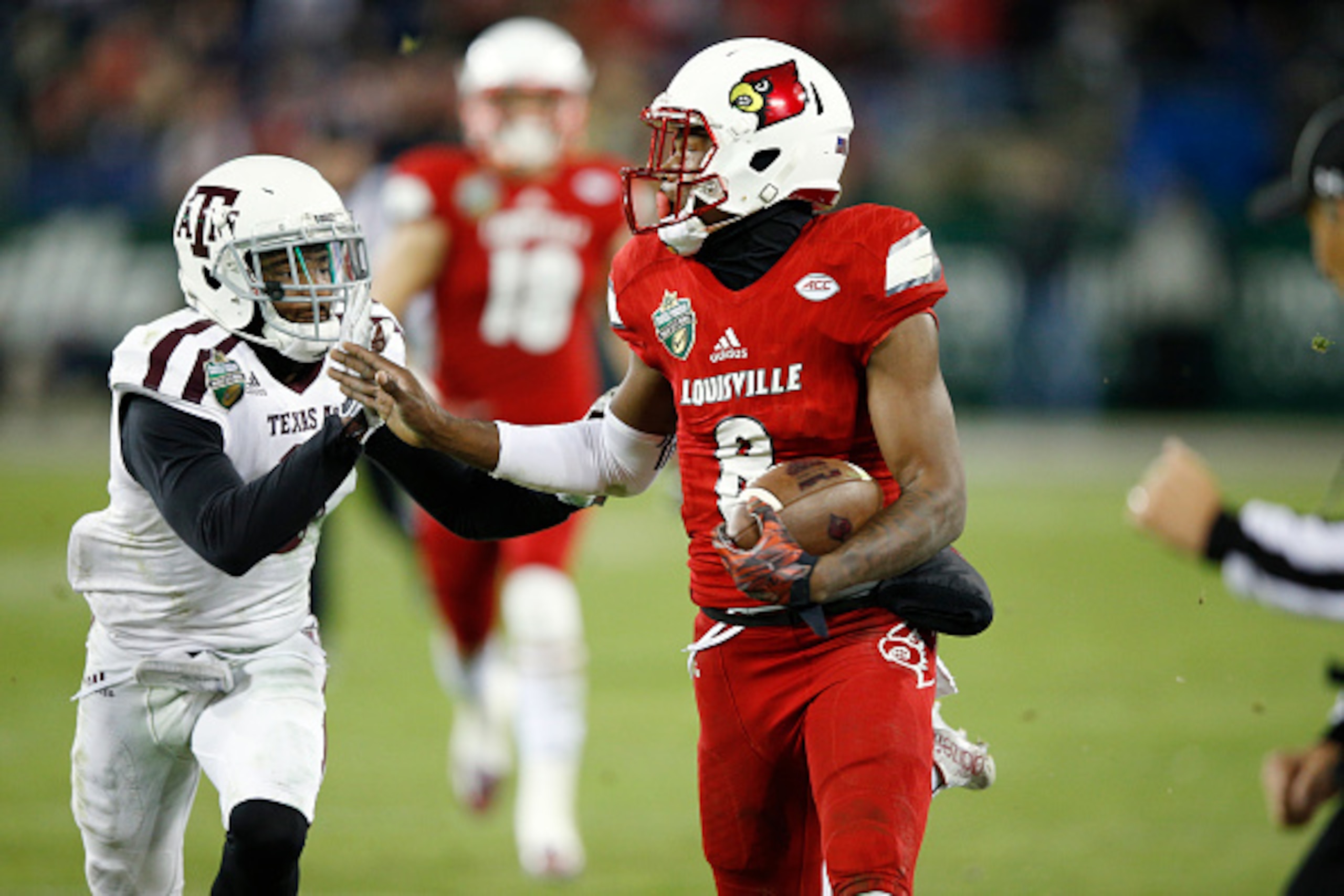
Position: Quarterback
Height, weight: 6'3”, 196 lbs
What He's Done
Lamar Jackson threw an interception on his first career pass, an ill-advised throw in the 2015 opener against Auburn that was among many questionable plays he made last year. But when Jackson put it all together, there were few better and more explosive than him at the quarterback position.
His 960 rushing yards led Louisville despite sitting out one game and logging just one carry in two others, thanks to five 100-yard games, including 226 yards with two of his 11 touchdowns in the Music City Bowl. Jackson also threw for 227 yards and two scores in that contest, finishing with 1,840 passing yards and 12 scores for the year.
What Can We Expect in 2016?
Jackson fluctuated between fill-in, starter and unused backup on a seemingly week-to-week basis last year, but now he's the clear starter. With a full spring to settle into that position, he should be more comfortable (and consistent) the second time around.
Improved accuracy is the biggest key, as he failed to top 50 percent in four games, as well as the ability to elude a pass rush. He was sacked 26 times.
7. Calvin Ridley, Alabama
20 of 26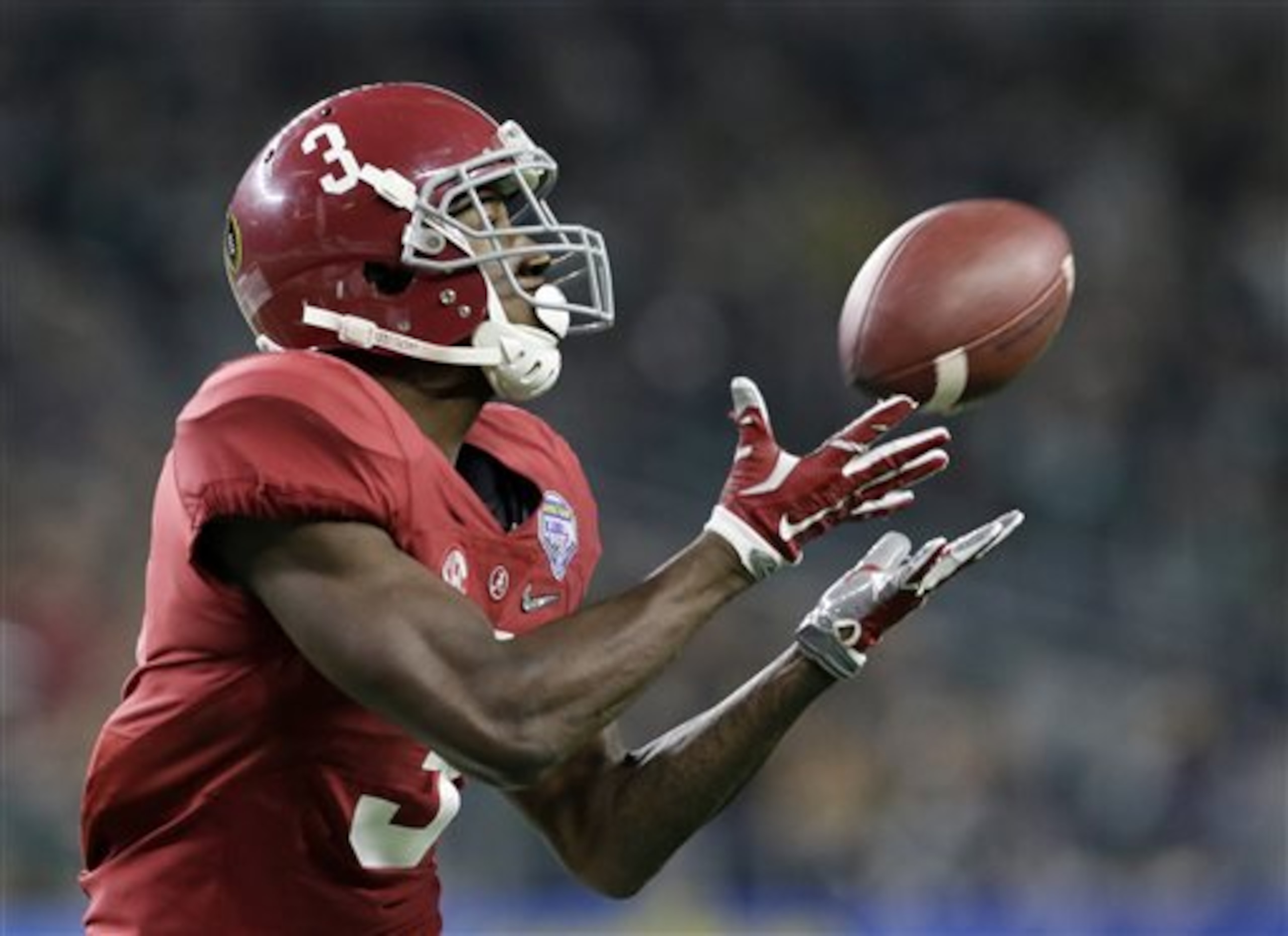
Position: Wide receiver
Height, weight: 6'1”, 188 lbs
What He's Done
It's asking a lot of a true freshman to make people forget about a Heisman finalist, but Calvin Ridley came pretty close to accomplishing this last year. Essentially stepping into Amari Cooper's shoes as Alabama's No. 1 wide receiver, Ridley caught 89 passes for 1,045 yards and seven touchdowns.
To put those numbers into perspective: When Cooper was a freshman in 2012, he had 58 receptions for 999 yards and 11 scores.
Ridley had four 100-yard games and saved his best performance for the playoff, with eight catches, 138 yards and two TDs against Michigan State in the Cotton Bowl.
What Can We Expect in 2016?
The final game of Ridley's freshman year was forgettable, however. He had six catches, but they went for only 14 yards, as he was unable to break free from Clemson's cornerbacks. Being able to create separation is high on Ridley's list of goals for this season.
With a big season, Ridley could be Alabama's best shot at repeat Heisman winners. He's listed at 20-1 by Odds Shark, tied with UCLA quarterback Josh Rosen for best odds by a sophomore.
6. Malik Jefferson, Texas
21 of 26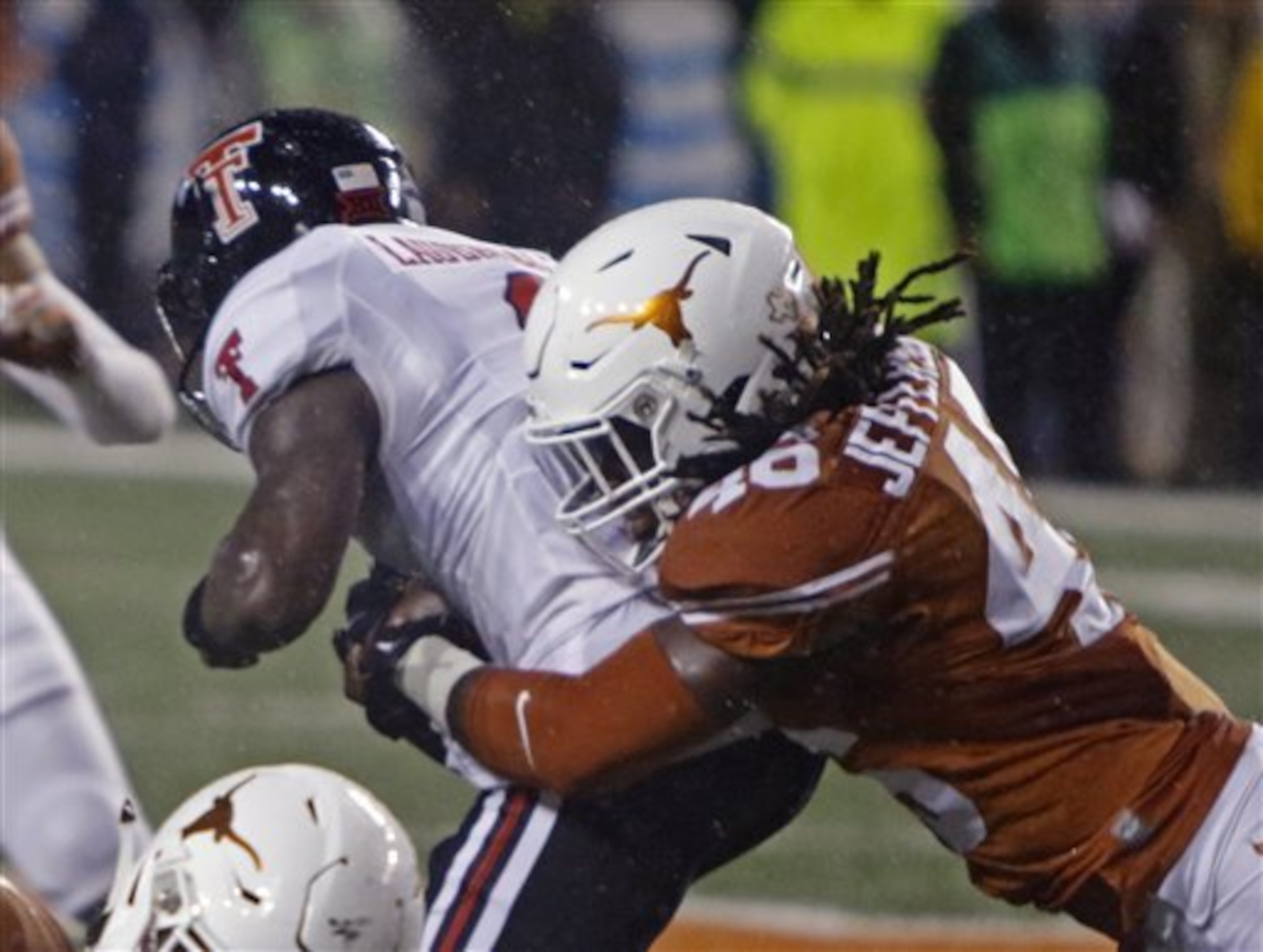
Position: Linebacker
Height, weight: 6'3”, 232 lbs
What He's Done
Malik Jefferson is the future of Texas football, and he wasted little time in showing that. During last year's spring game the early enrollee obliterated a teammate on a bubble screen, and the impact plays continued throughout the regular season.
His 61 tackles were second-most on the team in 2015, with Jefferson adding seven tackles for loss and 2.5 sacks. He also had a 26-yard fumble return for a score against Rice.
What Can We Expect in 2016?
His coaches refer to him as the “unofficial mayor of Austin,” per Max Olson of ESPN, for his ability to help Texas land another top recruiting class. Jefferson is also the unquestioned leader of the the defense. He's the one who everyone else will turn to for guidance as well as to show how to get it done.
That could mean having him play more up near the line than as a freshman, getting into the backfield to disrupt run plays and hurry the quarterback, though his open-field skills make him best-suited for roving in the middle and heading toward the action.
5. Josh Rosen, UCLA
22 of 26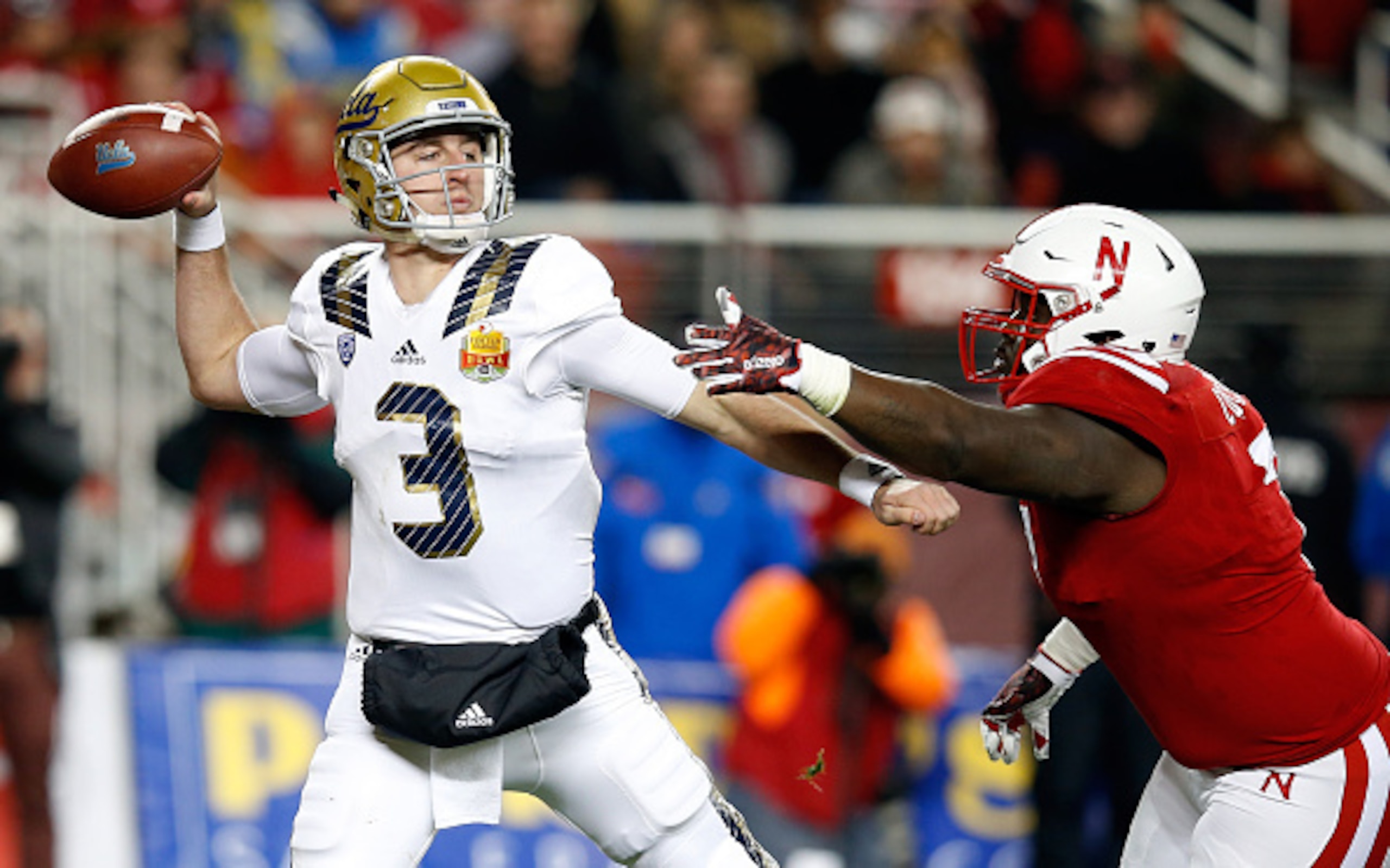
Position: Quarterback
Height, weight: 6'4”, 210 lbs
What He's Done
A true freshman starting at quarterback at a power-conference school isn't so much of a rarity anymore—he's not the only one of that ilk on this list, after all—but Josh Rosen took “first-year player” to a different level in 2015. His 28-of-35, 350-yard, three-touchdown debut against Virginia set the stage for one of the best seasons in UCLA history, regardless of class.
Rosen had six 300-yard games and finished with 3,669 passing yards and 23 touchdowns, though he threw 11 interceptions. His picks tended to come in bunches, with seven occurring in the Bruins' losses, and his accuracy fluctuated from game to game.
What Can We Expect in 2016?
The overall numbers might not go up much, if at all, but Rosen's second year in charge of UCLA's offense should see him improve his efficiency and cut down on mistakes. He no longer has the luxury of a veteran receiving corps or a multiyear 1,000-yard rusher behind him, so that will put more responsibility on his shoulders to carry the team.
Rosen also has a new offensive coordinator, as Noel Mazzone went to Texas A&M, and running backs coach Kennedy Polamalu replaced him. He's also picked up a new quarterbacks coach in former Washington passer Marques Tuiasosopo.
4. Derwin James, Florida State
23 of 26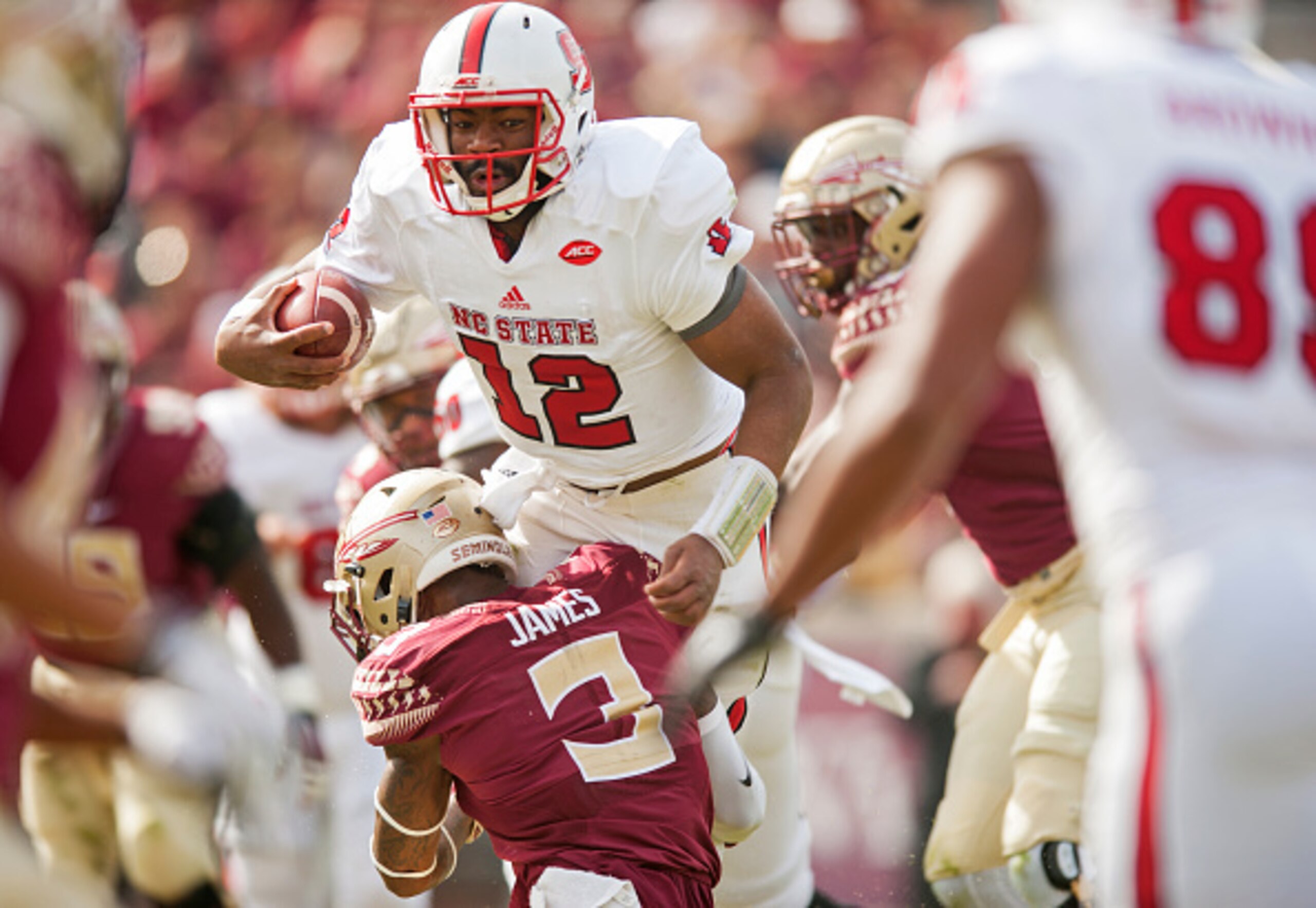
Position: Safety
Height, weight: 6'3”, 213 lbs
What He's Done
Florida State never lacks for impact players in the secondary, and Derwin James is the latest in an increasingly long line of back-line studs. As a true freshman, he was second on the team in tackles (91) and tackles for loss (9.5) while starting the Seminoles' final eight games.
James also had 4.5 sacks, five pass breakups and forced two fumbles. He went out on a high note with 14 tackles and a sack in FSU's Peach Bowl loss to Houston, one of four games with at least 10 tackles in the final two months of the season.
What Can We Expect in 2016?
With Jalen Ramsey on his way to likely being a first-round draft pick later this month, James is moving into the role of leader in the secondary.
"They look to me sometimes to bring the energy," James told Tom D'Angelo of the Palm Beach Post.
3. Saquon Barkley, Penn State
24 of 26
Position: Running back
Height, weight: 5'11”, 222 lbs
What He's Done
On an offense that tended to move backward as often as it went forward, Saquon Barkley still managed to churn out a 1,000-yard season as a freshman. His 1,076 yards, a school record for a freshman, came on only 182 carries as he missed two games because of injury and had only one touch in Penn State's 2015 opener.
Barkley recorded five 100-yard games, including efforts of 195 against Rutgers and 194 against Ohio State, and as the year went, on he became more of a weapon in the passing game with 19 of his 20 receptions in the Nittany Lions' final five contests.
What Can We Expect in 2016?
Penn State is starting over at quarterback, which should make Barkley even more of a focal point on offense than he's already been. The arrival of highly touted running back Miles Sanders might prevent him from being a workhorse back, but that won't cut down on his production, particularly if the pass-catching area continues to improve.
Barkley will also bring improved strength to the field this fall, having shown off his weight-lifting stills this spring when he power-cleaned 390 pounds.
2. Jabrill Peppers, Michigan
25 of 26
Position: Linebacker/safety
Height, weight: 6'1”, 208 lbs
What He's Done
After injuries limited him to only three games in 2014, Jabrill Peppers showed just how versatile he was last year. He held down a starting safety spot all season, after beginning his career as a cornerback, recording 5.5 tackles for loss and 10 pass breakups along with 45 tackles.
But where Peppers brought forth the most excitement was when he was on offense or special teams. He had 18 carries, scoring touchdowns against Minnesota and Rutgers, and added eight receptions, while overall he gained 11.4 yards per punt return and 27.9 on kickoffs.
What Can We Expect in 2016?
Peppers has undergone another defensive position change, now slotted in as a linebacker for this fall. That's where he spent almost all of spring practice, learning the ins and outs of this new role so he could become more comfortable with it, though that doesn't mean he won't get used on offense and special teams when the season begins.
"I think the sky’s the limit on what positions he can play," linebackers coach Chris Partridge, who was also Peppers' high school coach, told ESPN's Dan Murphy. "We might even line him up at nose tackle this year if we can."
1. Christian Kirk, Texas A&M
26 of 26
Position: Wide receiver
Height, weight: 5'11”, 200 lbs
What He's Done
Christian Kirk was the most dangerous all-purpose freshman in the country in 2015, averaging 137.6 yards per game as a receiver, return man and occasional ball-carrier. He scored seven times on 80 receptions for 1,009 yards and added a pair of punt return touchdowns, with one of each in his first college game.
Had he returned two more punts, Kirk's 24.4 average would have put him first in the nation by a wide margin. He only logged 14 on the season, none in Texas A&M's final two games.
What Can We Expect in 2016?
An offense that stalled down the stretch last year needs to get the ball into its best athlete's hands as much as possible, so look for Kirk to get additional touches in the backfield. However, he's most deadly in the open field where he can use even the tiniest of spaces to create something, so his involvement in the return game and as the Aggies' top receiving target won't change.
Kirk should benefit from new offensive coordinator Mazzone, who comes from UCLA and will want to find as many ways as possible for his speedy and powerful weapon to get involved.
Statistics courtesy of CFBStats.com or Sports-Reference.com, unless otherwise noted. Recruiting information courtesy of 247Sports, unless otherwise noted.
Follow Brian J. Pedersen on Twitter at @realBJP.

.jpg?w=2560 "Skattebo Has 0 Touch Game 😬")
.jpg?w=2560 "Jameis Benched by Giants")
.jpg?w=2560 "Travis Hunter Makes Rare History")
.jpg?w=2560 "49ers FB Slams CJGJ 😳")
.jpeg?w=2560 "Colts DT's Harsh Quote 😨")
.jpg?w=2560 "CJGJ Ejected for Spitting")