Why Did the SEC Get Shut out of the First-Ever College Football Playoff Final?
The first season of the College Football Playoff has wrapped up, and for the first time since Vince Young ran Texas to a title and himself into college football immortality, an SEC team didn't play for a chance to be college football's best.
Is this an anomaly or the start of a trend?
Oregon and Ohio State have established themselves as powers, the SEC posted a 7-5 bowl record—which isn't as dominant as it has been in the past—and Alabama lost in the Sugar Bowl national semifinal to Ohio State.
TOP NEWS
CFB Star's Projected NIL Valuations
Report: LeBron Race Down to 2 Teams
Early NBA Draft Steals 😮💨
So what happened in 2014?
Alabama's Lingering Problems

To best explain why the SEC got shut out of Jerry World, let's start with the team that had the top chance: Alabama.
The Crimson Tide built a 21-6 lead on Ohio State midway through the second quarter of the Allstate Sugar Bowl semifinal, and it appeared that the game was about to get sideways in favor of the crimson and white. But it slipped away, the Tide made too many mistakes on both sides of the ball and Buckeyes running back Ezekiel Elliott shut the door with an 85-yard touchdown run late in the fourth.
Forget about offensive coordinator Lane Kiffin's play-calling and quarterback Blake Sims' three interceptions. While both contributed to the loss—particularly late—if Saban and defensive coordinator Kirby Smart had their best games, Kiffin and Sims' late mistakes wouldn't have had as big of an impact as they did.
Ohio State hit every one of the weak spots that have become synonymous with Alabama's defense: plays, mobility and pass defense.
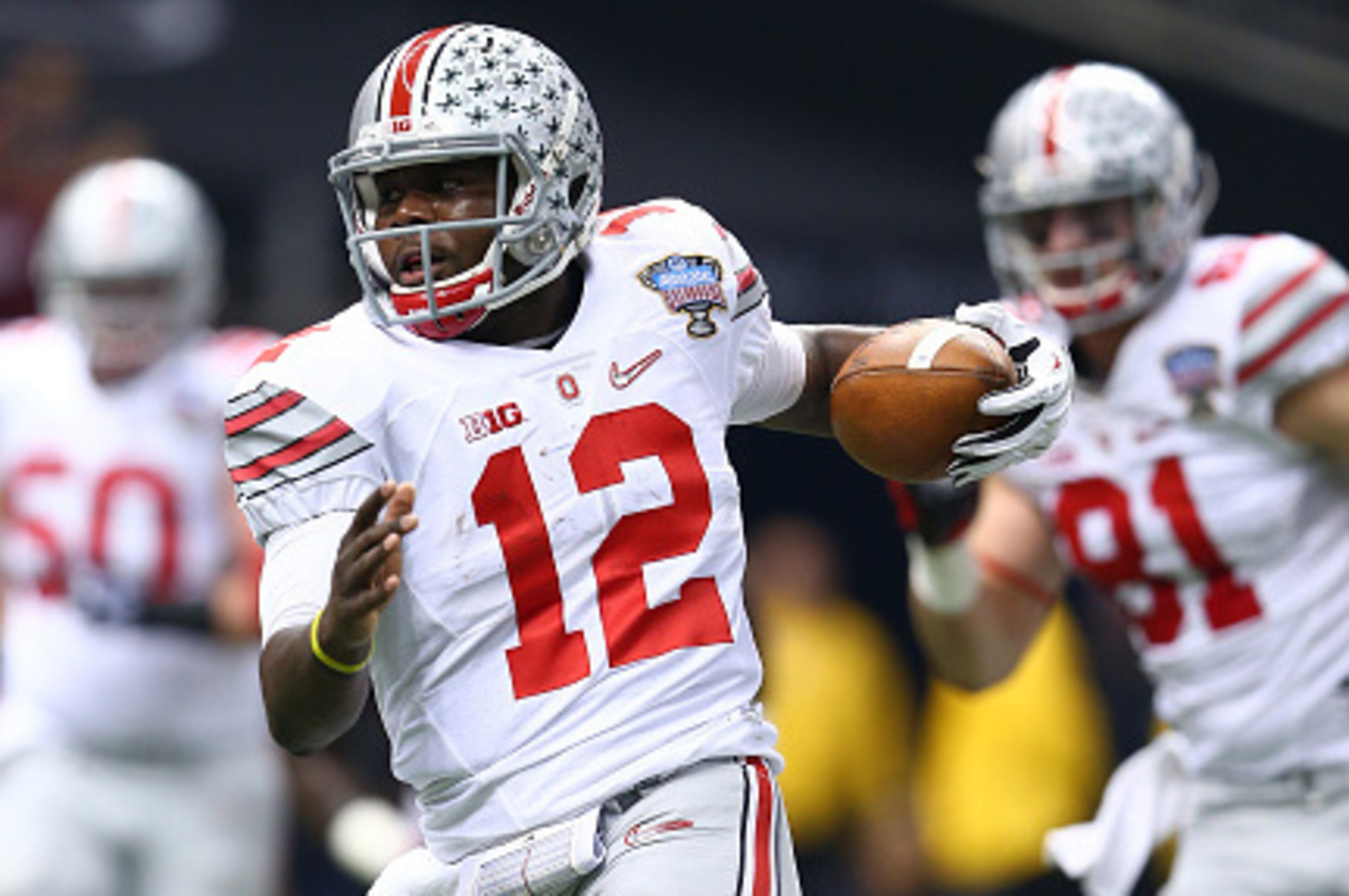
The Buckeyes ran 50 plays in the first half—a first half that culminated with two Buckeyes touchdowns in the final three minutes. Coincidence? Nope. Alabama's defense was out on the field for far too long in the first half, was clearly gassed and allowed the Buckeyes to get the game within arm's reach going into halftime.
Quarterback Cardale Jones has a cannon, and that was widely known following his three-touchdown performance in the 59-0 win over Wisconsin in the Big Ten Championship Game. His mobility, however, wasn't on tape as much.
It is now, thanks to a 43-yard performance that was a mix of designed runs and scrambles. At 6'6", 250 pounds, Jones is a load to bring down when he gets moving, and Alabama had no answer in New Orleans.
The third issue—pass defense—has been a problem for going on two years now, and it's the one position unit that Saban has the most influence over. Against the Buckeyes, it had trouble. Jones threw for 243 yards, 13.5 yards per completion, completed four of seven passes for third-down conversions and ran for four more.
In obvious passing situations, Alabama's defense can't hang. That falls on Saban and Smart, not Kiffin and Sims.
Big-Time Programs Doing Damage

The SEC set the tone more than a decade ago by pouring money into facilities, assistant coaching salaries, recruiting budgets and all things that make big-time programs what they are today.
Only now, though, has the rest of the country caught up.
Three Ohio State assistants—Luke Fickell, Tom Herman and Chris Ash—made more than $500,000 per year last season, according to the USA Today assistant coaching salary database. Three Florida State assistants made exactly $500,000, and two Oklahoma assistants topped the half-million mark. Those three schools are three primary reasons why the SEC has gone winless in major bowls (BCS/Group of Six) over the last two seasons.
Sure, some of those figures pale in comparison to the assistant salaries that are popping up now, but those programs around the country know they have to keep up now and will do so when appropriate.
Urban Meyer famously called out the Big Ten's other schools for not recruiting at the level they need to in order to be competitive at the top level in college football following his first season as Ohio State's head coach.
"It's not only important, it's essential," he said on 97.1 in Columbus in January 2013 (via Dan Wetzel of Yahoo Sports). "It has to happen."
Ohio State was already doing that, as was Florida State, Oklahoma and other major programs around the country. That trend is only going to continue, as super-recruiter James Franklin enters his second season at Penn State, Jim Harbaugh takes over at Michigan and Wisconsin had its head coach poached for the second time in three years.
No Sense of Urgency from SEC Powers
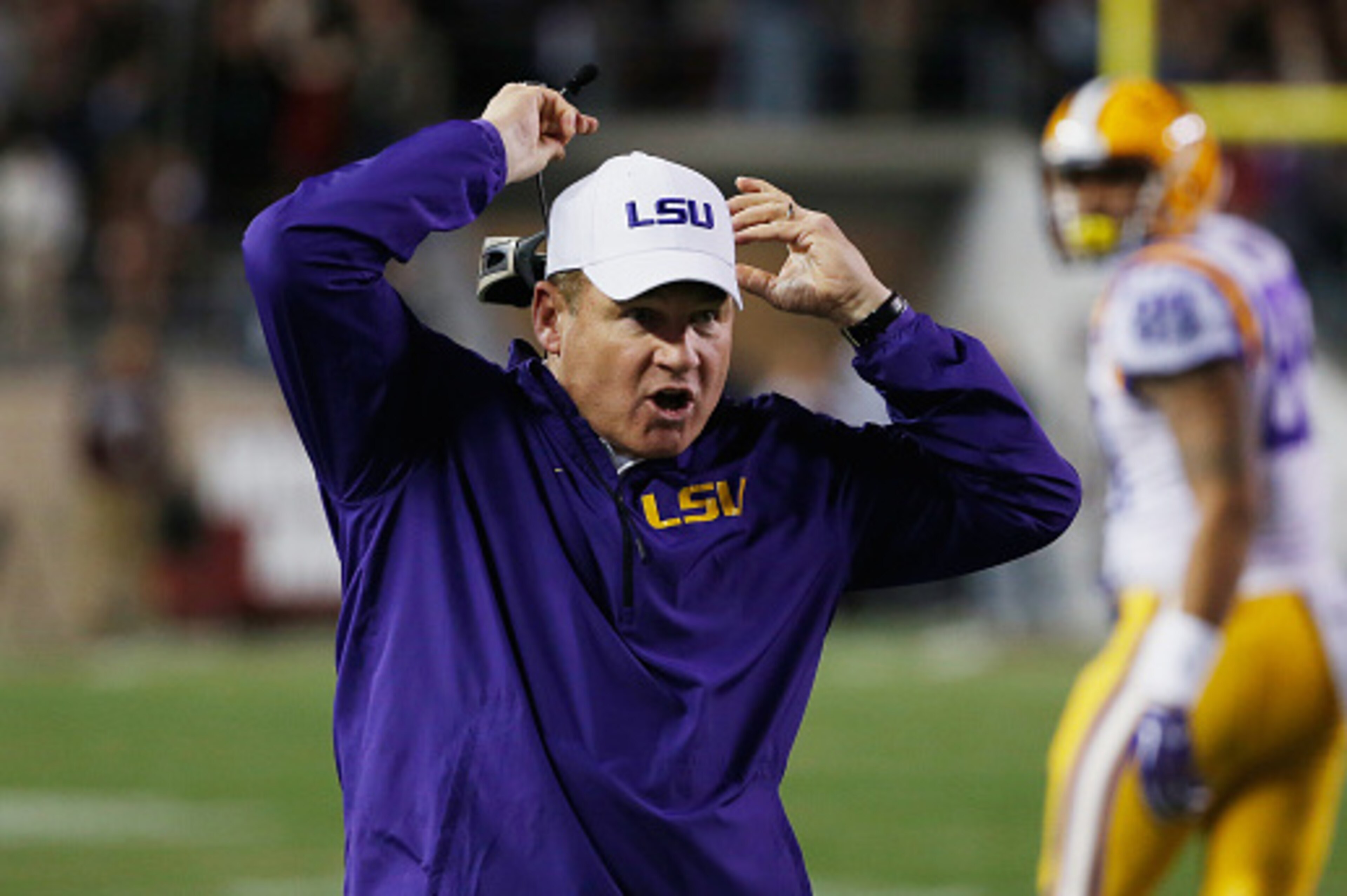
Save for Zach Mettenberger's senior season in 2013, LSU has struggled to find consistency in the quarterback position ever since Ryan Perrilloux was dismissed before the 2008 season.
Auburn—once known for its defense—hasn't finished in the top half of the conference in total defense or yards per play since Tommy Tuberville's next-to-last season in 2007.
Georgia seemingly has an inexplicable loss or two every year, which consistently prevents the Bulldogs from stepping up to the big-boy table.
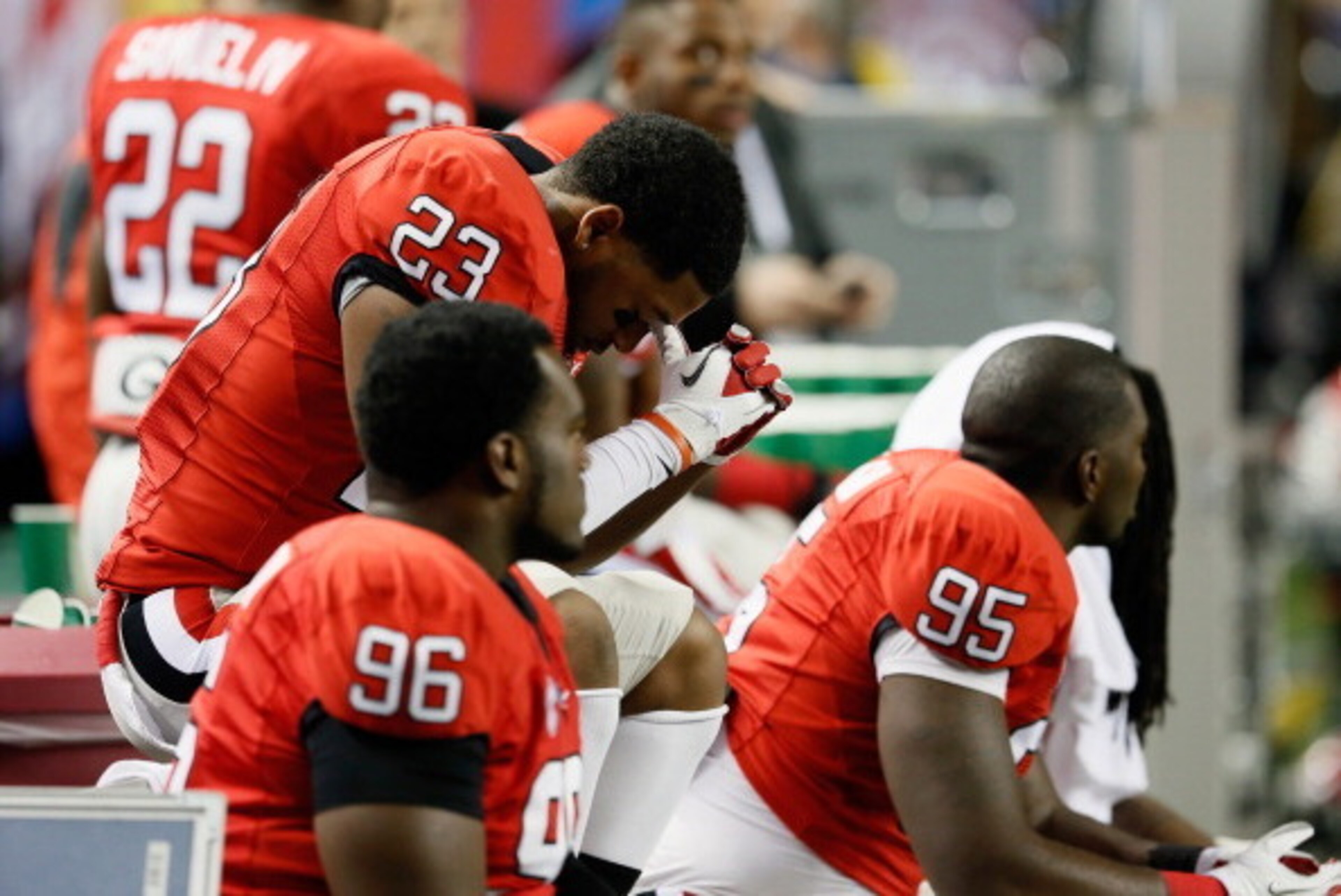
Despite all of that, SEC powers got by.
Auburn won a national title and played for another, LSU won an SEC title and played in the 2012 BCS National Championship Game following the 2011 season, and Georgia came within five yards of winning the SEC title in 2012 and advancing to the 2013 BCS National Championship Game against Notre Dame.
That can't continue.
When the SEC was blazing the trail, these problems wouldn't kill seasons. That's not going to continue anymore, and when problems arise and linger, SEC programs have to address them swiftly and effectively.
Barrett Sallee is the lead SEC college football writer and video analyst for Bleacher Report, as well as a co-host of the CFB Hangover on Bleacher Report Radio (Sundays, 9-11 a.m. ET) on Sirius 93, XM 208.
Quotes were obtained firsthand unless otherwise noted. All stats are courtesy of cfbstats.com, and all recruiting information is courtesy of 247Sports. Follow Barrett on Twitter @BarrettSallee.
.jpg?w=3840)

.jpg?w=3840 "Inside Donald's Rams Workout")