Why SEC Bluebloods Should Be Wary of College Football Playoff
After years of complaints, anger and frustration, college football fans finally got their way.
The 2014 season will be the first that concludes with an FBS playoff when the 13 esteemed members of the College Football Playoff selection committee choose the four best teams in the country.
Don't expect there to be two or more SEC teams because that's not happening.
TOP NEWS

Updated CFP Bracket Projections 🔮

Week 5 AP Top 25 Poll 🔢

Top Overreactions after Week 5 of CFB Season 😧
The reason is simple—the goals for the College Football Playoff contradict themselves.

Executive director Bill Hancock explained the main objective for the committee when they sit down to pick the four participants.
"The committee will select the best four teams, period, no strings attached," he said at SEC media days earlier this month.
There's one problem though: There are strings attached. One big one, in fact.
The selection procedure specifically states that one point of emphasis should be conference championships, which presents a bit of a problem based on how college football has worked itself out in the past. Two teams from the same conference have finished in the top four of the final BCS standings in each of the last four seasons, the last three of which have been from the SEC.
| 2013 | FSU | Auburn | Alabama | Michigan St. |
| 2012 | Notre Dame | Alabama | Florida | Oregon |
| 2011 | LSU | Alabama | Oklahoma St. | Stanford |
| 2010 | Auburn | Oregon | TCU | Stanford |
| 2009 | Alabama | Texas | Cincinnati | TCU |
One coach who recently mentioned the possibility of two teams from the same conference getting in was Auburn's Gus Malzahn, whose Tigers won the SEC title last year and are in the preseason discussion to make the four-team playoff in 2014.
"I think it's safe to say the SEC champion will be in the final four," he said at media days. "If you look at the last few years, numerous times there would be two teams from the SEC in the final four."

We're playing by an entirely different set of rules now, and one of those rules urges committee members to vote based on arbitrary conference championships, not overall merit.
Would Alabama have gotten a bid last year? Maybe.
Michigan State had a conference championship and finished fourth in the BCS, and Big 12 champ Baylor and possibly even Pac-12 champ Stanford would have had an argument. Stanford and Kansas State each would have been knocking on Florida's door in the previous season, especially since the Gators lost to Georgia in the regular season and the Bulldogs suffered their second loss in the SEC Championship Game to Alabama.
On top of the stated contradiction of rewarding conference champs, there's an implied goal of making this a national event on top of determining the best team. The national title game is designed to mirror the biggest spectacle in sports based on how the location is determined.
"It will be much like the Super Bowl," Big Ten commissioner Jim Delany said in 2012, according to The New York Times. "You'll be dealing with civic communities, and I think it'll be a national process and people have to be very energetic about it. I think it's going to be great for the sport."
Overall, ESPN paid a cool $7 billion for the television rights to the playoff games, according to the Chicago Tribune.
Terms like "national process" and "like the Super Bowl" are code for "spectacle," which, on top of the hefty media deal, is exactly what the College Football Playoff is designed to be. That's great for the sport because more eyeballs means more exposure, which equals more money. But it's terrifying if you're weary of politics and the lure of the almighty dollar.
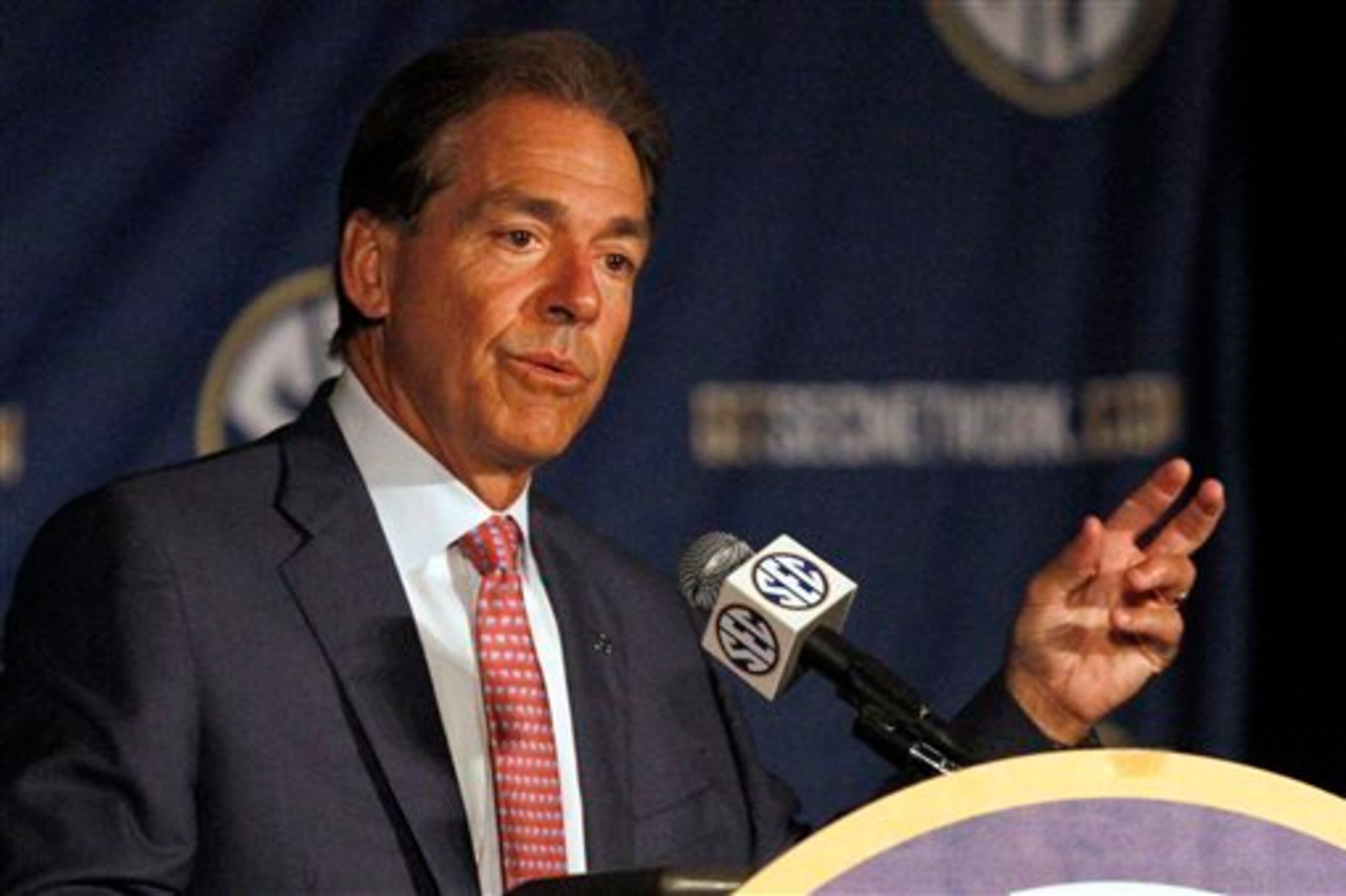
If you're expecting multiple teams from the same conference to make the inaugural playoff—or any playoff—you're going to be disappointed. It's more likely to be the exception, not the rule.
There's no way to know exactly how the committee will operate until it actually gets down to business, but with a stated goal like rewarding conference championships and the clear intent to make this a spectacle, why would the committee regionalize the playoff by taking two teams from the same conference unless there's really no other option?
The SEC has built itself quite a reputation as the nation's top college football conference based on the seven-year streak of BCS National Championships. But the way this process is set up, it's unlikely that reputation will benefit the conference when it comes to getting a second team into the mix.
Two teams from the same conference in the College Football Playoff?
That's unlikely, especially in its first year of existence. Just be happy with one.
Barrett Sallee is the lead SEC college football writer for Bleacher Report. Quotes were obtained firsthand unless otherwise noted. All stats are courtesy of CFBStats.com, and all recruiting information is courtesy of 247Sports.
_0.png?w=2560)


.jpg?w=2560 "Injury-stricken Seahawks signing veteran RB")
.jpg?w=2560 "2 NFL Officials Suspended")


.jpg?w=2560 "Mahomes' Wife Trolls Kubiak 💀")


.jpg?w=2560 "Viral Rams Coach Vid 🖕")