
Ranking Every Team's Projected Starting 5 After Free Agency
Nothing generates NBA optimism like the post-free-agency haze.
This is when everyone thinks their team's starters are terrific, sure to be better than last year because of new additions or a clean slate and increased familiarity.
That's not how it works, though. There'll be great first units and terrible ones. A league with 30 teams means somebody's starters will rank 30th. There's no getting around it.
We'll order them here, using data from last year when applicable and speculating on teams with new personnel who haven't played together before. And yes, for now, we're still using five traditional spots, even as positionless roles become the norm.
Benches matter in the grand scheme, but we don't care about those at the moment. As rosters get settled following free agency, here's how all 30 first units stack up.
30. Brooklyn Nets
1 of 30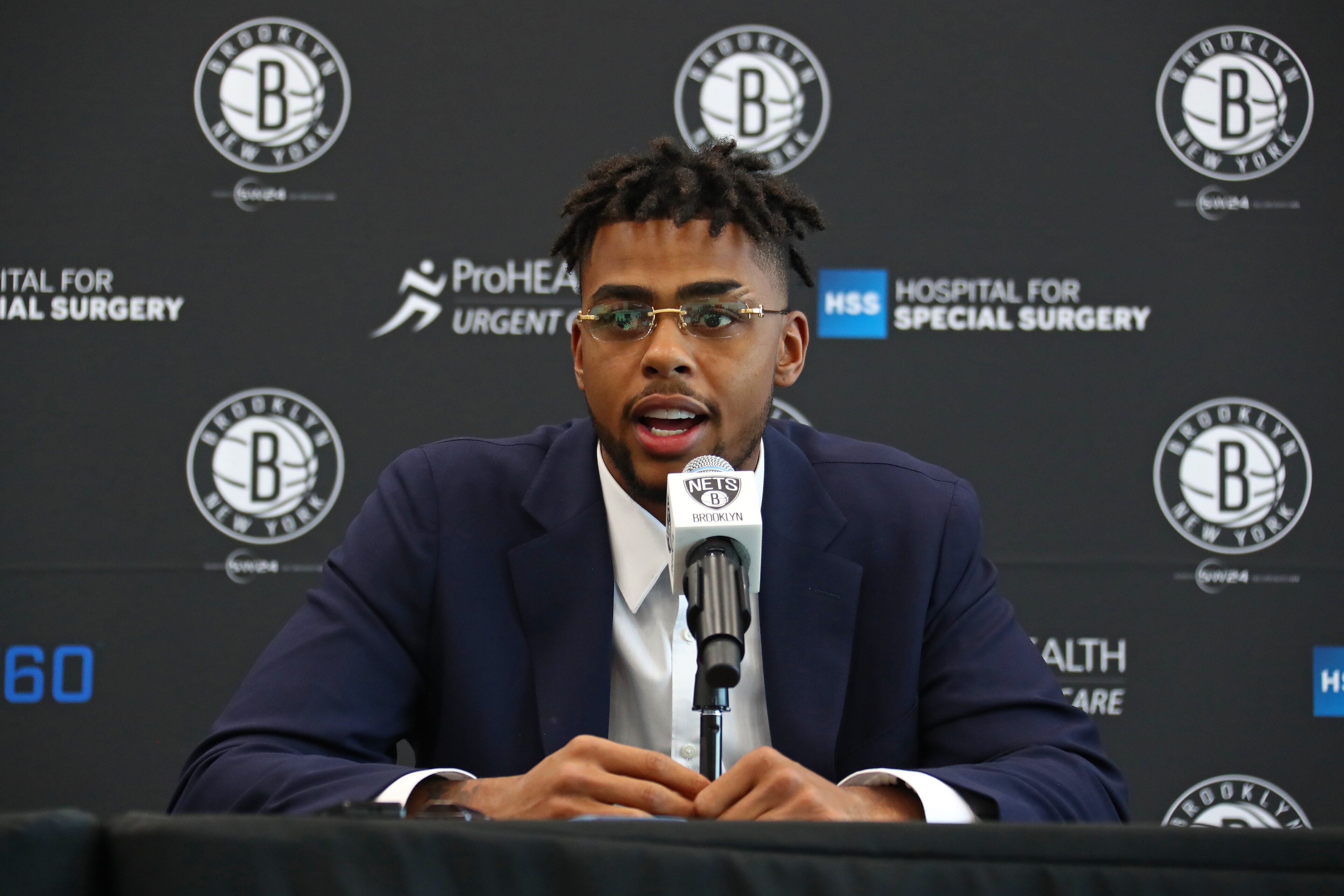
PG: D'Angelo Russell
SG: Jeremy Lin/Caris LeVert/Sean Kilpatrick
SF: DeMarre Carroll
PF: Rondae Hollis-Jefferson
C: Timofey Mozgov
The Brooklyn Nets won the fewest games in the league and then lost their best player, Brook Lopez, via trade with the Los Angeles Lakers in June.
So even if getting D'Angelo Russell for Lopez's expiring deal made perfect team-building sense, and even if taking on the dumped salary of DeMarre Carroll with picks attached should improve the wing rotation, the math here is still pretty simple.
Worst team loses best player.
Russell should thrive in a spaced system that prioritizes his pick-and-roll game, and whoever starts at the 2 (we'll give Lin the inside track) brings solid secondary playmaking. But this team figures to convert a low percentage on high volume from deep, and it's hard to see a path toward league-average defense.
The Nets are adding pieces the right way, but their starting unit is a good indicator of how long the road to respectability truly is. Even with charitable views on Russell and Carroll, who might not even deserve to start over LeVert, Brooklyn's starters look more like fringe rotation players on an average team.
29. Phoenix Suns
2 of 30
PG: Eric Bledsoe
SG: Devin Booker
SF: Josh Jackson
PF: Marquese Chriss
C: Tyson Chandler
If it were 2011, maybe Chandler could have helped organize this mess. And if he weren't such an obvious trade candidate, maybe Eric Bledsoe would have the incentive to help.
But the Phoenix Suns are painfully young—now younger with the addition of No. 4 overall pick Josh Jackson—and the price of developing youth with big minutes is a starting lineup that'll get crushed on a nightly basis.
Bledsoe is an objectively good player, one whose 21.1 points, 6.3 assists and 4.8 rebounds last year would have earned him All-Star consideration on a better team. Whether he'd have been able to accumulate those stats on a team playing meaningful games is a fair question, though.
Bledsoe, Booker, Chriss and Chandler tallied a minus-5.5 net rating last year. With T.J. Warren* at the 3, that rate skyrocketed to...minus-5.0.
Booker, 20, is a gifted scorer who so far is unfamiliar with the concept of defense. Chriss, also 20, spends more time lost than found on most possessions. Jackson, a 20-year-old No. 3, will be a rookie, and rookies are virtually always net negatives.
There will be exciting moments, but these Suns aren't going to be competitive.
*Warren started at the 3 last year and could again, but considering where the Suns are and what they've invested in Jackson...why should he?
28. Chicago Bulls
3 of 30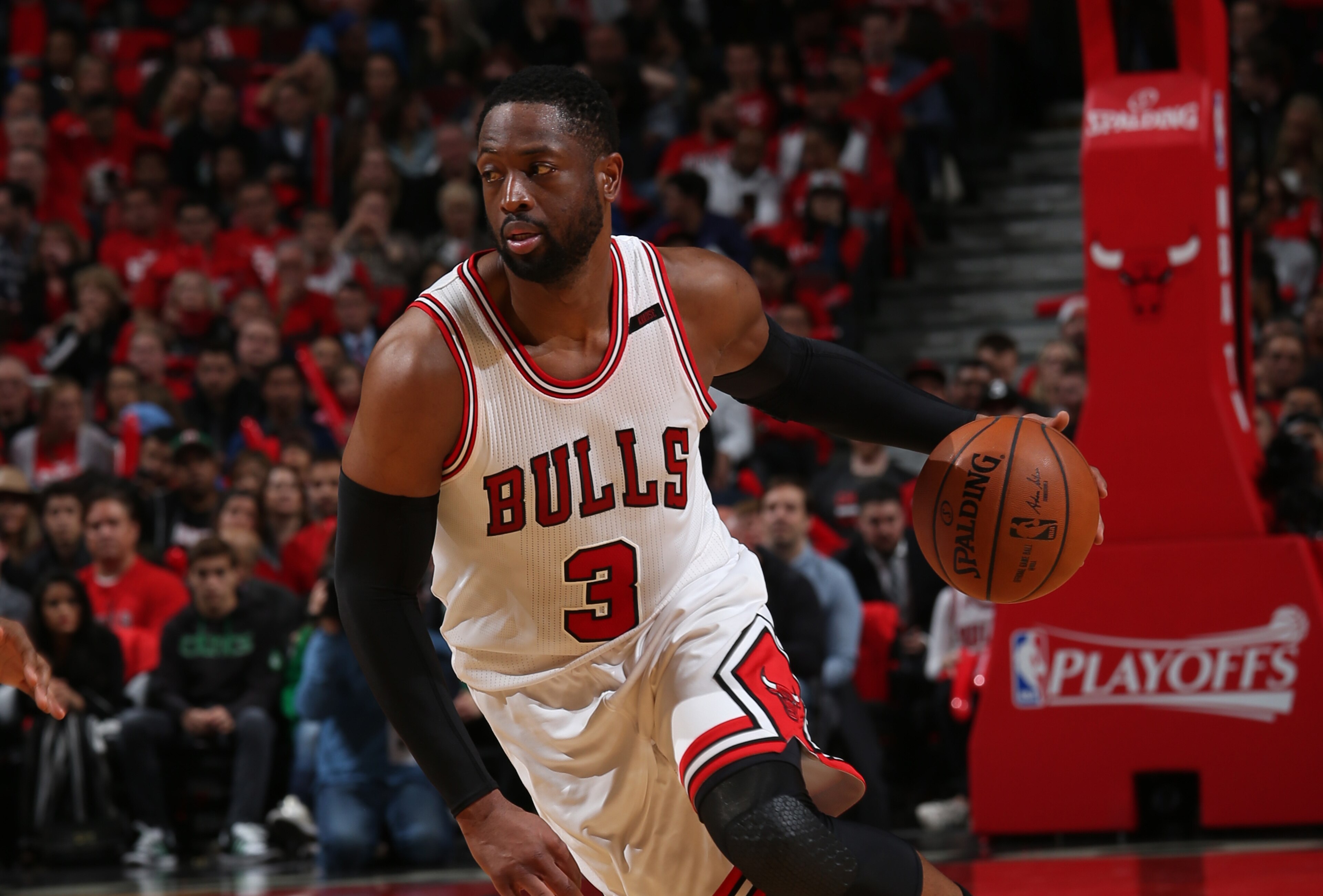
PG: Kris Dunn
SG: Dwyane Wade
SF: Denzel Valentine
PF: Nikola Mirotic
C: Robin Lopez
Dunn was old for a rookie and showed no signs of NBA-level offense last year. Cameron Payne, who spent time in the D League (now G League), might push him for starter's minutes.
Wade is a clear buyout candidate.
Valentine bricked it up in Summer League and has bad knees.
Mirotic hasn't even signed a contract yet.
But hey, Lopez is a reliable starting center. So there's that.
The Bulls' first unit is one of the least predictable because almost no one is good enough to clearly deserve a job. Maybe Paul Zipser moves Valentine aside on the wing. Perhaps Bobby Portis or Cristiano Felicio show enough in training camp to slide into a starting spot.
Eventually (likely not until the All-Star break, per Zach Harper of FanRag Sports), Zach LaVine will make it back from his ACL tear and need minutes.
Ultimately, though, no permutation of the Bulls' starters projects for anything but bottom-five production. This group is bad, and the young players are the most concerning of all.
27. Sacramento Kings
4 of 30
PG: George Hill
SG: Buddy Hield
SF: Bogdan Bogdanovic
PF: Skal Labissiere
C: Willie Cauley-Stein
Hill is a known commodity who'll run the offense, defend multiple positions and hit open shots—though his most important job may be mentoring rookie De'Aaron Fox while shielding him from minutes against opposing first units.
Hield and Cauley-Stein were consistent starters after the All-Star break last year, with the former winning Rookie of the Month in March and the latter showing considerable growth as a rebounder and lob-catcher.
Labissiere is too thin to compete against conventional power forwards, but there aren't many of those left. His fluid stroke projects well, which could make him exactly the type of stretch big everyone covets. That'll leave Zach Randolph to tussle with backups.
Loaded with wings, the Sacramento Kings could easily start veterans Vince Carter or Garrett Temple at small forward, if experience and defensive reliability are the goals. If it's a proving ground Sacramento wants, rookie Justin Jackson could be the guy.
And don't forget about Malachi Richardson.
For now, the bet is on Bogdanovic.
This unit will struggle mightily on defense. Only Hill is reliable on that end. On the other, there's immense pressure on Hield and Bogdanovic to help generate looks, as Hill is more of a game manager than a zippy drive-and-create weapon.
There's too little experience to expect a positive net rating, but the Kings starters should compete—if only because there's depth lurking to create battles for playing time.
26. Indiana Pacers
5 of 30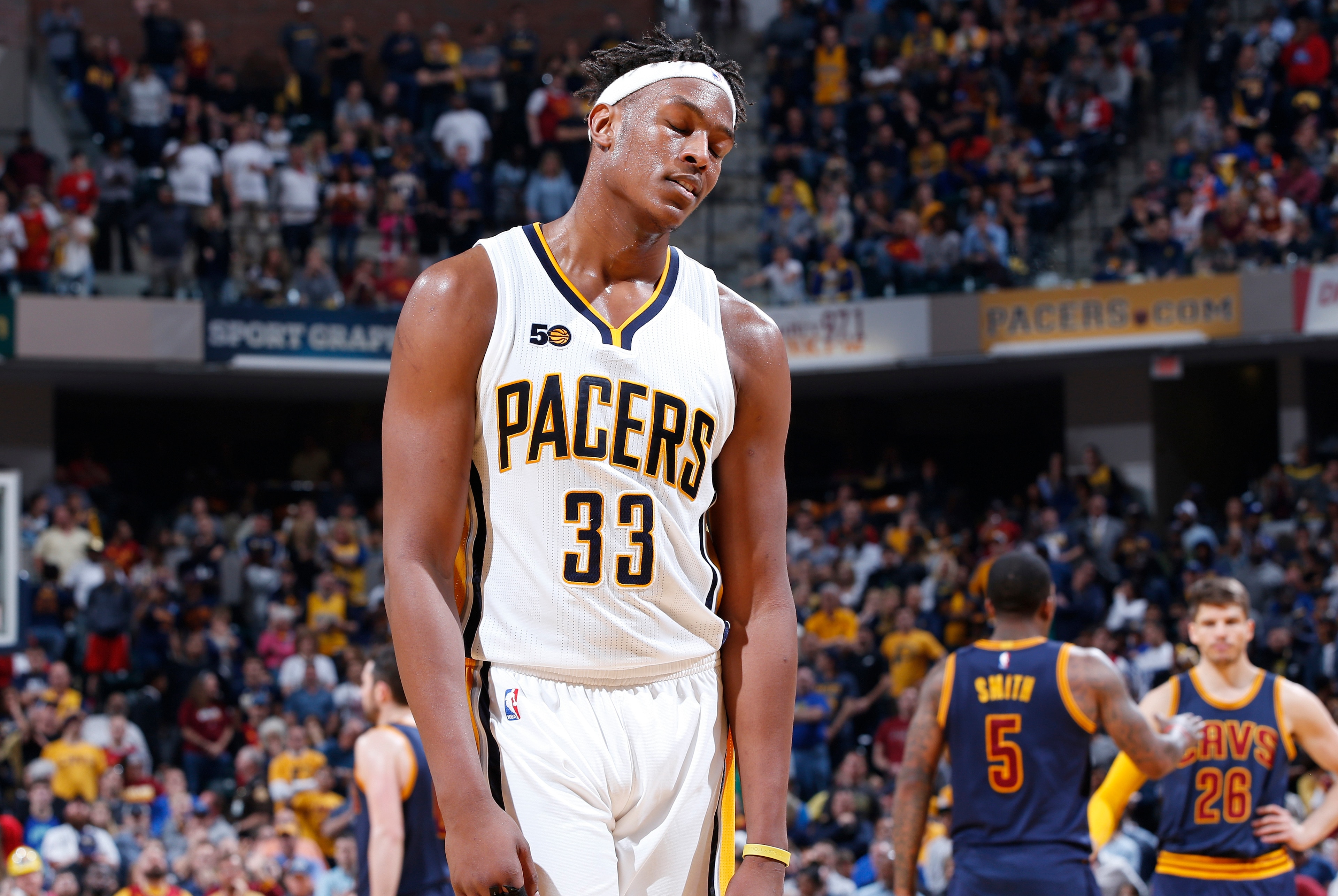
PG: Darren Collison
SG: Victor Oladipo
SF: Bojan Bogdanovic
PF: Thaddeus Young
C: Myles Turner
The Indiana Pacers swapped out 60 percent of their starters over the summer, and Oladipo is the only newcomer who projects as an improvement. That's measuring him against Monta Ellis, though.
In comparison to C.J. Miles, he's a downgrade. And Indy's starting five with Glenn Robinson at the 2 last year was solid as well, playing to a plus-7.7 net rating.
Yes, that's correct. The quiet epiphany you're having right now is: Wait, the Pacers starters (sans Ellis) were really good last year.
Did I mention 60 percent of them are gone?
Collison is maaaaybe a top-30 player at his position, but he'd come off the bench on a good team, and Bogdanovic doesn't guard anyone.
That leaves a lot of slack for Young and especially Turner, who'll need to make a leap toward serious stardom if this group is going to avoid getting smacked in the first six minutes of every game.
Indy is in for a rough go. Its starters are considerably worse, and the bench still stinks.
25. New York Knicks
6 of 30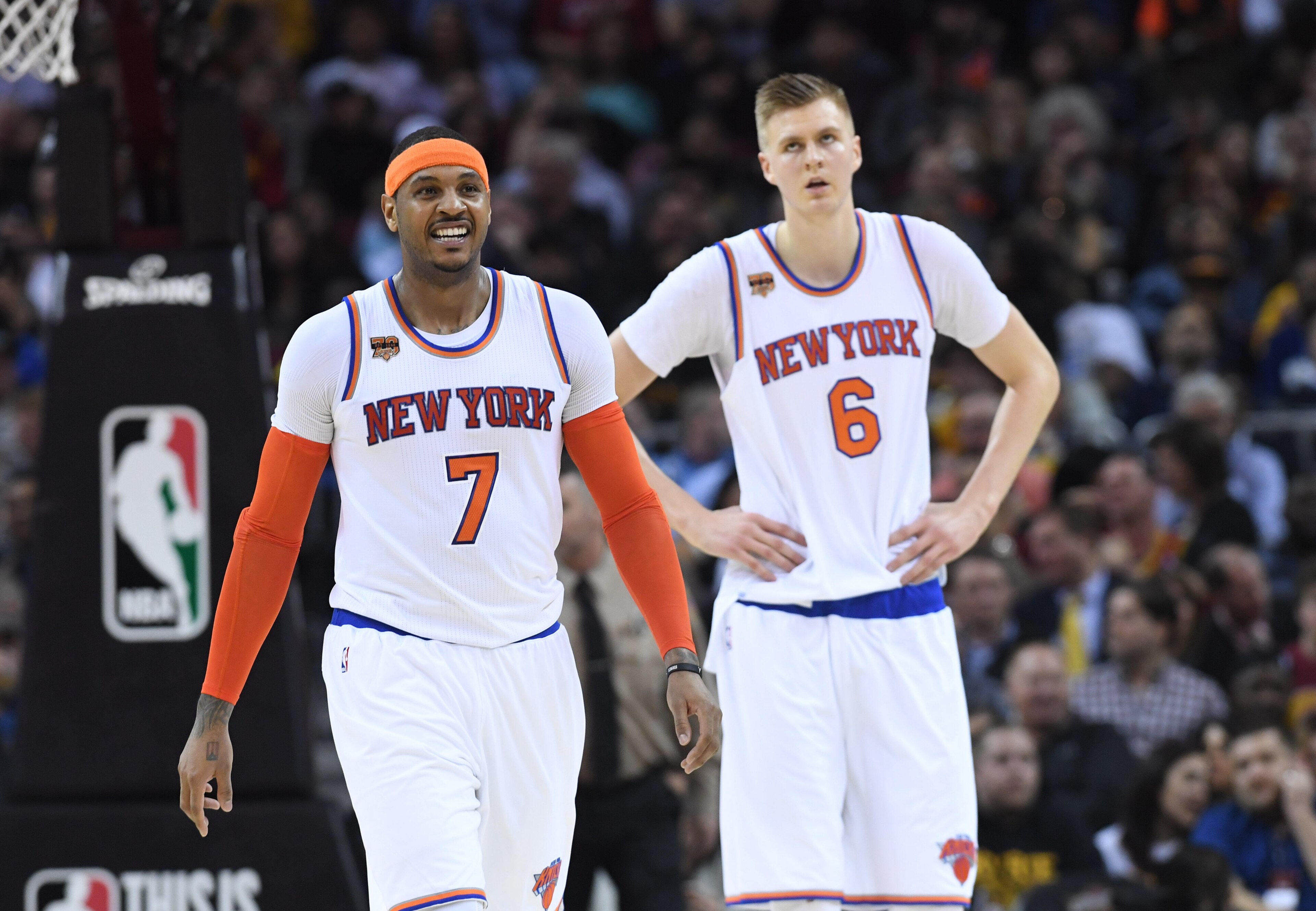
PG: Ron Baker
SG: Tim Hardaway Jr.
SF: Carmelo Anthony
PF: Kristaps Porzingis
C: Willy Hernangomez
If you look past all the organizational dysfunction, there's reason to believe the New York Knicks' starting five will improve.
Porzingis is still on the ascent, and whatever decline the Derrick Rose-to-Baker (or Rose-to-Frank Ntilikina) swap produces should be offset by giving Joakim Noah's minutes to Hernangomez.
The drama surrounding Anthony obscures the fact that he's still a good shot-creator with a nasty post game and a reliable jumper. He shot 41.8 percent on catch-and-shoot threes in 2016-17. He's still a helpful player.
That's if he isn't traded or bought out—both legitimate possibilities.
Plus, who knows how much better everyone will be without the silly constraints of the triangle?
And yet, it remains so difficult to be optimistic about New York—probably because of the unquantifiable pall cast over the personnel by such constant front-office nonsense.
We don't need hazy reasoning to rate the Knicks starters this low though. We have data showing the key players just don't perform well together.
In 1,374 minutes last year, Anthony and Porzingis produced a minus-5.1 net rating. Even the enticing KP-Hernangomez tandem was a minus-3.8.
Maybe new management and a new philosophy will change all that. But this is a definite "I'll believe it when I see it" situation.
24. Atlanta Hawks
7 of 30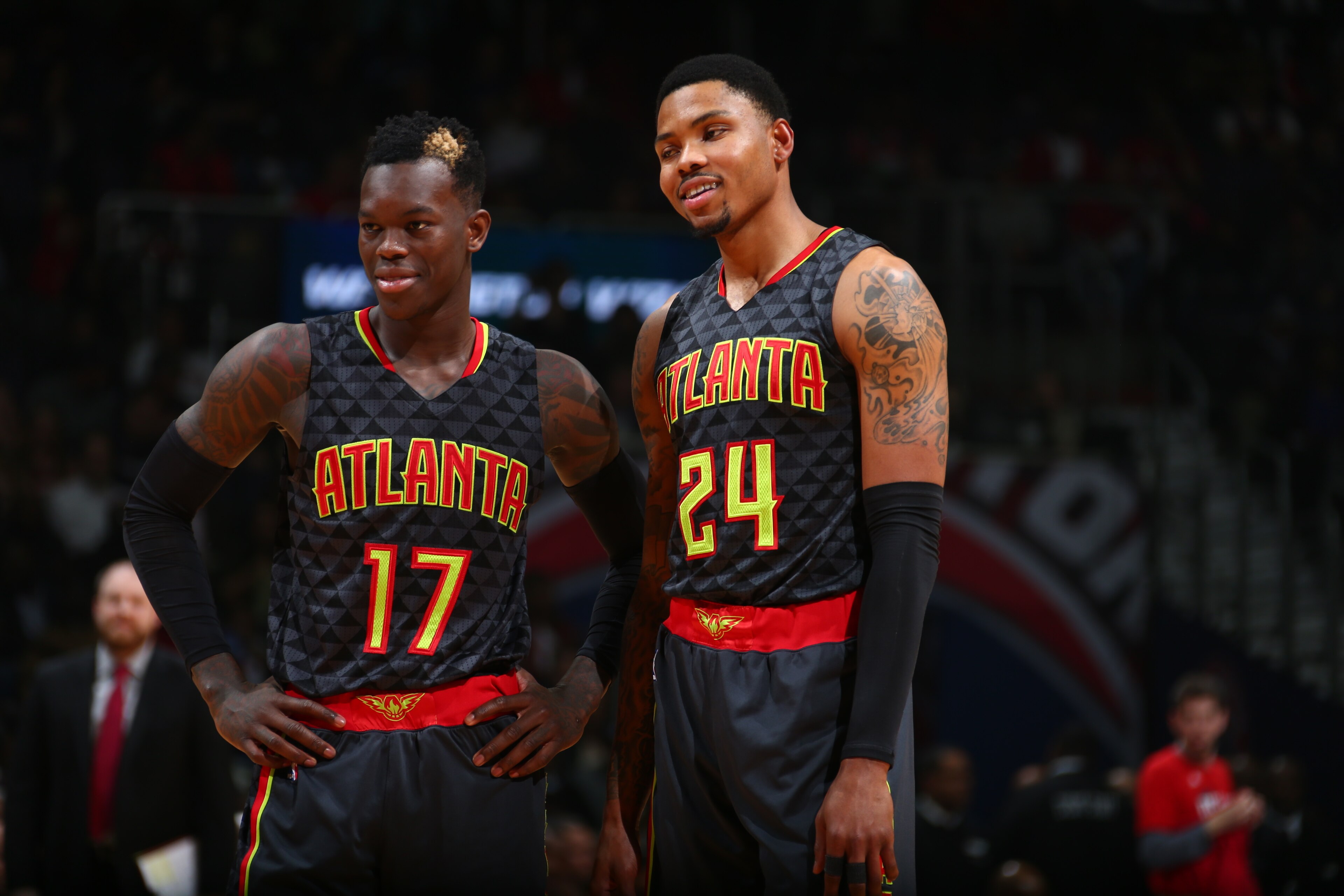
PG: Dennis Schroder
SG: Kent Bazemore
SF: Taurean Prince
PF: Ersan Ilyasova
C: Dewayne Dedmon
The projected Atlanta Hawks starting lineup has two new members in Ilyasova and Dedmon, and it's difficult to judge the returning players independent of Paul Millsap's reliable two-way contributions.
Much depends on Schroder assuming a leadership role. He may be this team's best player, but he's a combustible talent who is only in this position by default following the Hawks' offseason teardown. If he develops a bit of offensive craft in place of his predictable straight-line, sprinting drives, it'll help a potentially solid offense reach its potential.
He needs to get comfortable in something other than fifth gear.
Bazemore lost his starting job to Tim Hardaway Jr. last year, but he's been a reliable two-way wing in the past. Prince could take a leap after drawing (dangerously hasty) Kawhi Leonard comparisons in the postseason.
Ilyasova and Dedmon are known commodities better suited as reserves but dependable even in their new roles.
In all, the Hawks have the makings of a respectable first unit. And that might be all it takes to sniff the playoffs in the East.
23. Orlando Magic
8 of 30
PG: Elfrid Payton
SG: Evan Fournier
SF: Terrence Ross
PF: Aaron Gordon
C: Nikola Vucevic
Health was an issue, but the Orlando Magic's projected starting five actually outscored opponents on a per-possession basis last season.
So while bringing back the same group that headlined a wildly disappointing 29-53 season might feel foolish, the truth is that the Magic's struggles weren't the fault of the first unit. If this crew had played in more than 19 games together, who knows how much better the Magic might have been?
It was the bench that gave games away, and if Bismack Biyombo improves on a lost year while Jonathon Simmons bolsters the wing as a reserve, maybe those leads don't slip quite as frequently.
Payton (if he holds onto the job) must be better than a 27.4 percent shooter from deep, and every second Gordon spends at the 3 will be wasted. Defensively, Orlando had better hope Frank Vogel's magic suddenly works after a year of surprising failure.
The Magic will still struggle to reach the playoffs, even in the diminished East. If it only takes 40 victories to secure the No. 8 seed in 2017-18, that'd still be an 11-win improvement. Those are hard to pull off, particularly when the personnel hasn't really changed.
22. Detroit Pistons
9 of 30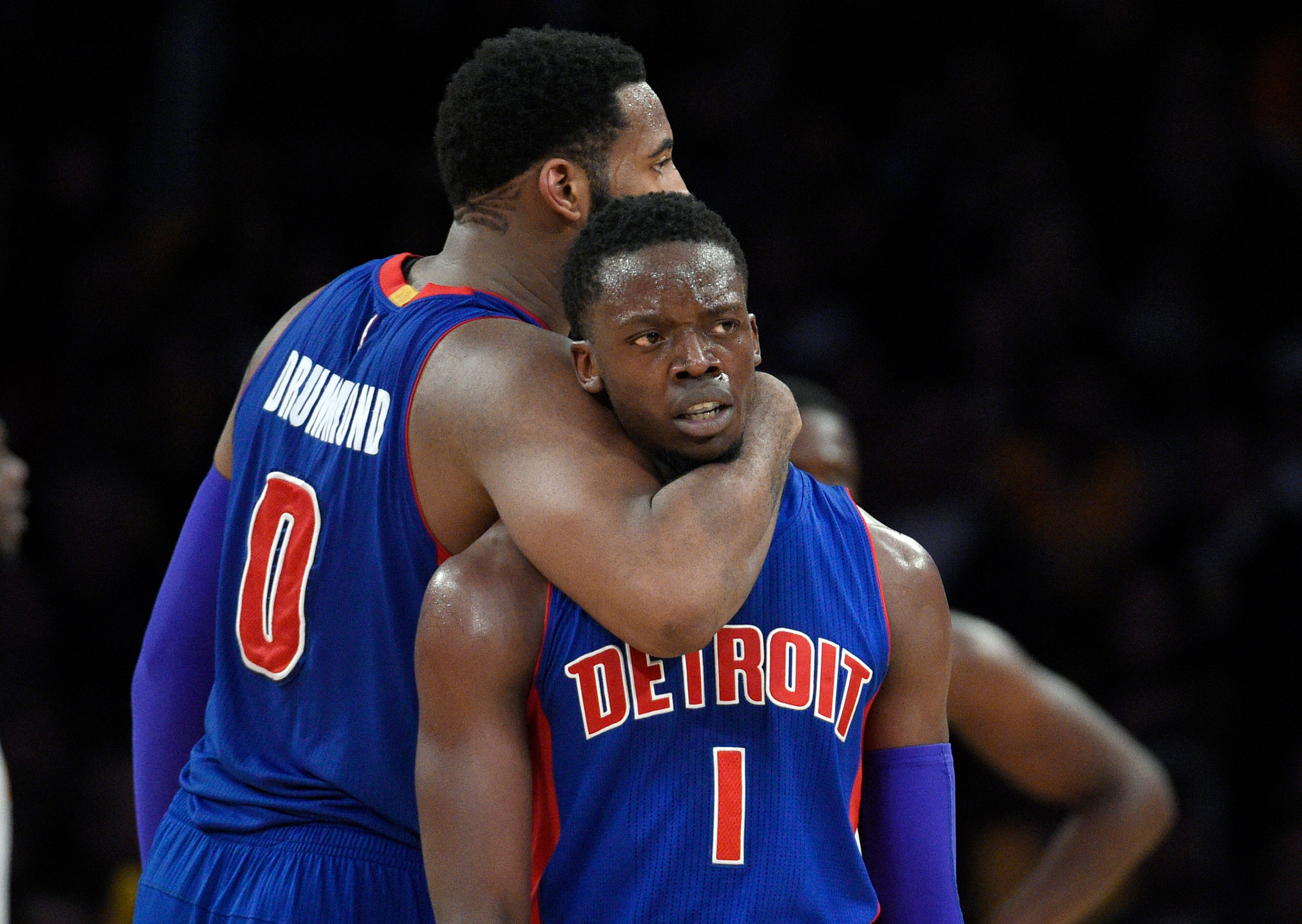
PG: Reggie Jackson
SG: Avery Bradley
SF: Stanley Johnson
PF: Tobias Harris
C: Andre Drummond
Good news!
The Detroit Pistons, who fielded the two worst five-man groupings in the league last year (minimum 400 minutes) cannot trot out those same lineups in 2017-18.
Kentavious Caldwell-Pope and Marcus Morris are both gone, and while nobody's suggesting those two were the problems (more like the solutions, actually), at least if the Pistons fail again, it won't be for the same reasons.
Bradley is a pretty good stand-in for KCP—a bit smaller and not as adept at creating his own shot. However, Bradley is defensively stout and a better accuracywise (39 percent from three last year).
Johnson is a wild card—a lottery pick who needs to prove he's a rotation player in his third year. It's possible Stan Van Gundy will go with Jon Leuer or even Anthony Tolliver to preserve Harris as an off-the-bench weapon again, but the five guys listed above feel like Detroit's best.
Bad news!
Jackson was awful last year. He produced a minus-8.3 net rating when he shared the floor with Drummond. If he's still the Pistons' starting point guard when the season opens (and his health isn't improved following last summer's knee surgery), it may not matter that three of the five starters are different.
21. Dallas Mavericks
10 of 30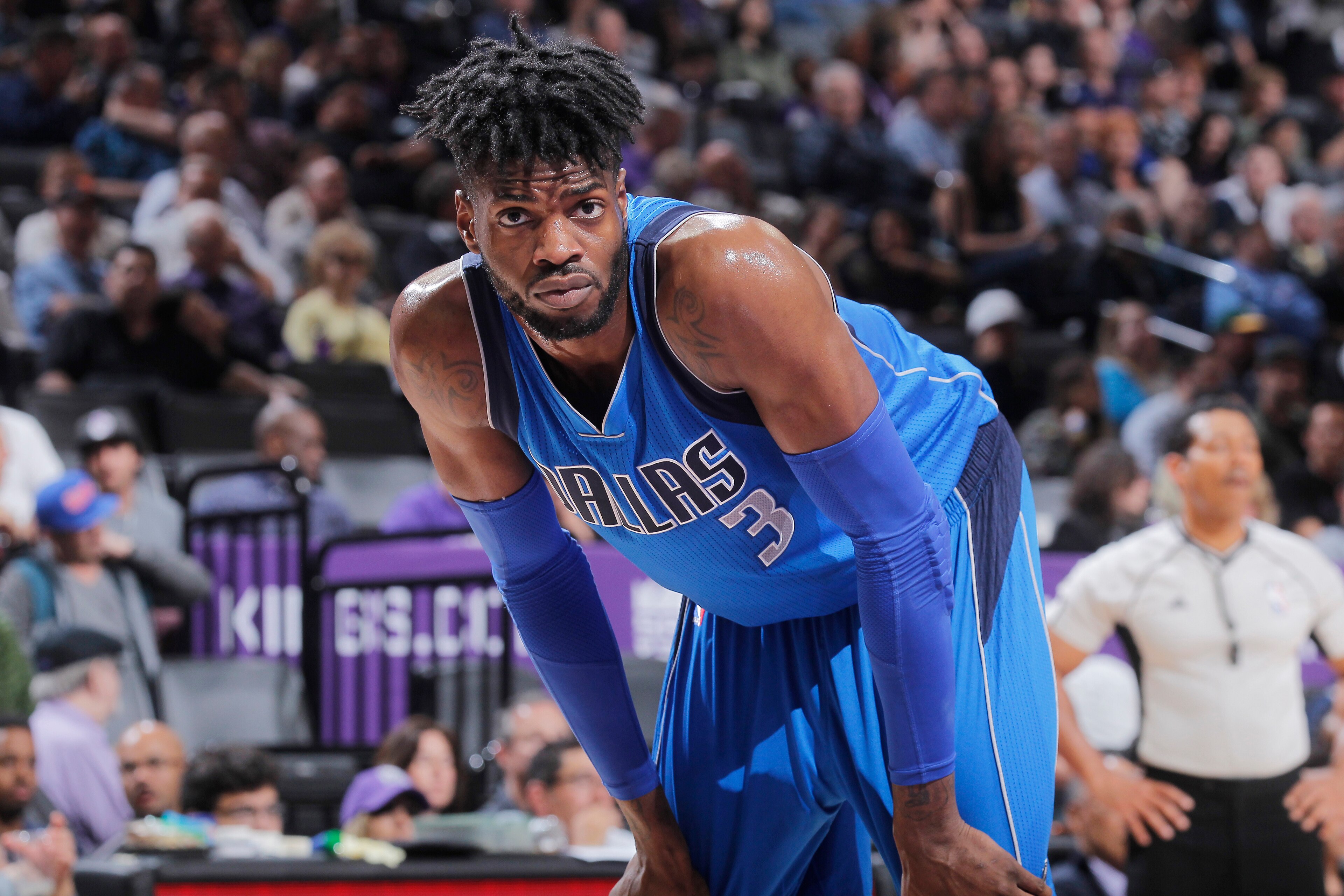
PG: Yogi Ferrell
SG: Wesley Matthews
SF: Harrison Barnes
PF: Dirk Nowitzki
C: Nerlens Noel
Dennis Smith Jr.'s showing in Summer League suggests Ferrell is just keeping the point guard position warm until the rookie is ready to take over, but the rest of the Dallas Mavericks' first five are locked in.
Or, it would be if Noel and the team could reach an agreement on a new deal.
If the comments Noel's agent, Happy Walters, made to Eddie Sefko of the Dallas Morning News are any indication, that's a long way off: "We're very disappointed with where things stand. Nerlens loves Dallas and spent June there working out, but we're still waiting on a serious offer."
Assuming everything works out with Noel, there's a lot to like with this unit. And yes, optimism requires looking past the minus-29.9 net rating this group produced in a tiny 34-minute sample last year.
Just go down the line: Ferrell (and eventually Smith) can run an offense and create looks. Matthews can guard wings and hit open shots. Barnes can get his own looks in isolation. Nowitzki is Nowitzki, and Noel cleans up for some of the unit's shakier defenders.
The composition makes sense and should at least reach break-even production. If Smith is for real, the outlook gets even better.
20. Los Angeles Lakers
11 of 30
PG: Lonzo Ball
SG: Kentavious Caldwell-Pope
SF: Brandon Ingram
PF: Julius Randle
C: Brook Lopez
New starters Lopez and KCP are good NBA players, which is important to remember, because even if there's justifiable excitement about Ball, Ingram and Randle, all three are still painfully young and unproven.
Ball showed out in Vegas, but he's going to struggle—as all rookie point guards do. Triple-doubles aside, he's a suspect defender who'll get put through pick-and-rolls on a loop and may not be able to create his own shot against quality defenders.
Ingram improved as a rookie, but he finished 2016-17 with the fewest wins generated in the league, as measured by ESPN's RPM. No catch-all stat is perfect, but finishing 468th in a sample of 468 players in anything is bad.
Still, Ball's passing should be contagious, and there'll be spacing to utilize with KCP and Lopez bombing away. If Randle's physical transformation helps him make better use of his versatile skill set, the Lakers' dual-creator offense could score effectively.
There's always going to be outsized optimism with the Lakers. We need to temper that because of guaranteed defensive atrociousness, but it's fair to be positive about the talent and ball-sharing philosophy.
19. New Orleans Pelicans
12 of 30
PG: Rajon Rondo
SG: Jrue Holiday
SF: Solomon Hill
PF: Anthony Davis
C: DeMarcus Cousins
The dual-point guard look makes a lot of sense in today's NBA, where one stifled pick-and-roll can still create opportunities if there's a second playmaker on the weak side. So, in a vacuum, the Pelicans starting Rajon Rondo alongside Jrue Holiday is a defensible move.
It's just that an already cramped offense with two traditional bigs will now suffer from an even more suffocating lack of spacing.
Let's not pretend opponents fear Cousins or Davis on the perimeter enough to chase them. Any three-point attempt by either of those two dominant paint forces is a humongous win for the defense. Teams will beg Boogie and AD to shoot threes.
Hill is miscast as a small forward but can't play the 4 in this unit for obvious reasons, and Rondo, despite a surprising 41 percent hit rate on catch-and-shoot threes last year, doesn't worry defenders.
Cousins, Davis and Holiday posted a plus-2.8 net rating in 376 minutes together last year. In Chicago, the Bulls were 4.1 points per 100 possessions better with Rondo off the court. Assuming he'll positively affect New Orleans' starting five is, at best, risky.
It's possible this group dominates on the glass and makes up for zero spacing with second-chance points. And maybe the individual excellence of these two big men will produce enough free throws to result in a respectable overall offense.
But Rondo is a disinterested defender, Hill isn't quick enough to guard elite wings, and Cousins (though apparently in shape now) must prove he's committed to playing both ends.
There's a scenario where everything clicks, and the Pels' first unit leverages its size and playmaking into a positive net rating built on bruising defense and rebounding. But there's an equally plausible one where it just doesn't work.
18. Memphis Grizzlies
13 of 30
PG: Mike Conley
SG: Ben McLemore
SF: Chandler Parsons
PF: JaMychal Green
C: Marc Gasol
Let's start here: The Memphis Grizzlies' three best returning players are Conley, Gasol and Green (if we assume Green eventually decides to stick around). Last year, that trio got outscored by 0.4 points per 100 possessions.
That's not awful, but it gets a little scary when you add Parsons and your shooting guard retread of choice to complete the lineup.
Parsons was a catastrophe last season. Limited to just 34 games, he shot 33.8 percent from the field, moved like he was subject to stricter laws of gravity than everyone else and averaged 6.2 points. He's on a max deal and will start if he's healthy, but banking on him to be a net-positive player is a mistake after so many surgeries and so little production last year.
Maybe McLemore won't start. Maybe it'll be Wayne Selden. Or Troy Daniels. Or even Tyreke Evans (though he's clearly a better fit running the second unit).
However it shakes out, the Grizzlies won't be able to count on league-average production at the 2.
Oh, and Gasol and Conley are now both a year older and coming off career seasons on offense. Don't expect either to repeat those feats at 30 and 32 years old, respectively.
The Grizz were four games over .500 last year. It'll be a miracle if they get anywhere close to that in 2017-18.
17. Miami Heat
14 of 30
PG: Goran Dragic
SG: Dion Waiters
SF: Justise Winslow
PF: Kelly Olynyk
C: Hassan Whiteside
Dragic and Waiters are safe bets to start, as is Whiteside. And though his lack of shooting makes him an off-trend pick at the 3, Winslow was on the floor at the opening tip in 15 of the 18 games he played a year ago.
His shaky outside shot is one reason Olynyk could get the nod over James Johnson at the 4.
Spacing is vital for Dragic and Whiteside to work in the pick-and-roll, and Olynyk provides it—even if he lacks Johnson's playmaking and versatility. That's another reason to bring Johnson off the bench, though. He can run an offense from a frontcourt spot.
Point is: This group is subject to change. But if it shakes out as predicted, the Heat will be able to compete with just about anyone.
Dragic is a borderline All-Star, Waiters can create looks for himself, Winslow defends, Olynyk spaces and Whiteside looms in the lane. That's a lot of checked boxes.
If this ranking feels low, it's only because Miami's real strength is depth (if healthy). The starting group is capable, but if the Heat improve on last year's .500 mark like many expect, it'll be because the backups feast against second units.
16. Portland Trail Blazers
15 of 30
PG: Damian Lillard
SG: CJ McCollum
SF: Maurice Harkless
PF: Al-Farouq Aminu
C: Jusuf Nurkic
We didn't see much of this group after Nurkic came over from the Nuggets, but the plus-5.4 net rating in 72 minutes looked promising.
Unfortunately, it's difficult to imagine how that figure gets any better, but it's pretty easy to see how it might get worse.
Nurkic was a master in his second-half stint before getting injured. He posted averages of 15.2 points, 10.4 rebounds, 3.2 assists, 1.9 blocks and 1.3 steals in 20 games. Only DeMarcus Cousins exceeded that five-category production last year. So unless you think Nurkic is suddenly one of the most across-the-board dominant bigs in the league all of a sudden, he's going to regress a bit.
Defense is going to be the issue for this quintet, which allowed 109.3 points per 100 possessions last year. That would have ranked 28th in the league, and Nurkic's potential slippage could result in even less stopping power than that.
Lillard and McCollum are both poor defenders as well.
Portland was 10 games over .500 after the break last year, but 10 games under before it. More recent success tends to stick in the mind, and the Nurkic addition is a plus. But on balance, this team (and this first unit) feels like a middle-of-the-pack outfit.
15. Los Angeles Clippers
16 of 30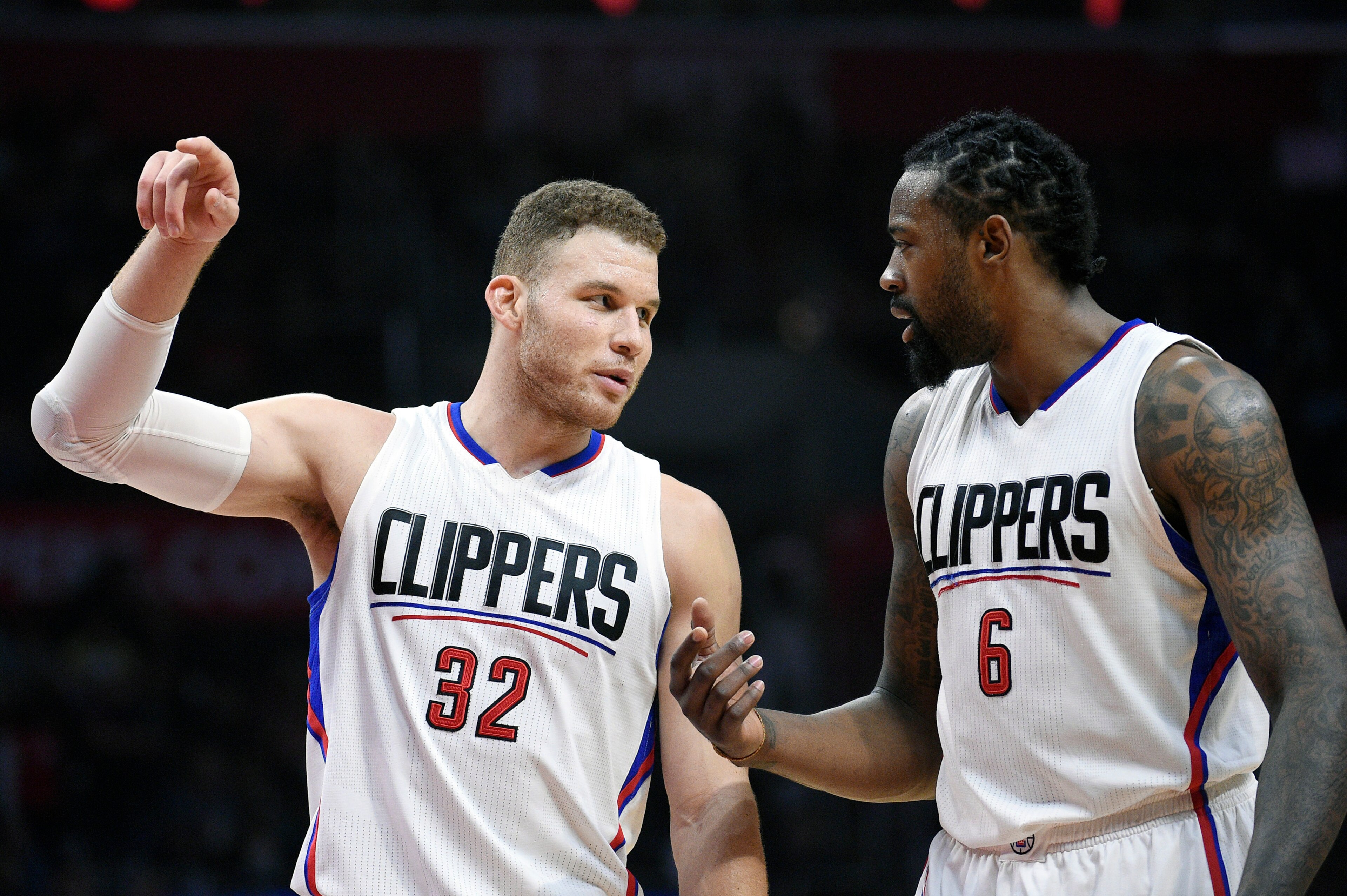
PG: Patrick Beverley
SG: Austin Rivers
SF: Danilo Gallinari
PF: Blake Griffin
C: DeAndre Jordan
This is a weird starting five for the Los Angeles Clippers, and that's not just because we can't count on it to be one of the three or four best units in the league anymore.
Last year, Chris Paul, J.J. Redick, Luc Mbah a Moute, Griffin and Jordan produced a plus-15.8 net rating that was best in the league (non-Warriors division). In 2015-16, that same unit posted a plus-19.4.
Paul, Redick and Mbah a Moute are gone now, which leaves an unconventional quintet in charge.
This bunch figures to get most of its playmaking from the forward spots, with Griffin and Gallinari handling the ball. Further inverting offensive norms, Beverley and Rivers look like they'll be best utilized as spot-up threats around odd 3-4 and 4-5 pick-and-rolls.
It's going to be strange and maybe a little clunky at first—especially on offense. On the other end, Gallinari's waning mobility means he'll struggle to guard most wings.
It's not hard to see this group outscoring opponents (something that would probably be even more feasible if Lou Williams started over Rivers), but the days of pure first-unit dominance are done. Beverly and Rivers just aren't on Paul and Redick's level, and fit issues make Gallo no more than a slight upgrade over Mbah a Moute.
Final note: We're pricing in Griffin's health here. He's recovering from toe surgery, has too many recent injuries to chronicle and may not meet even last year's diminished physical standards.
14. Philadelphia 76ers
17 of 30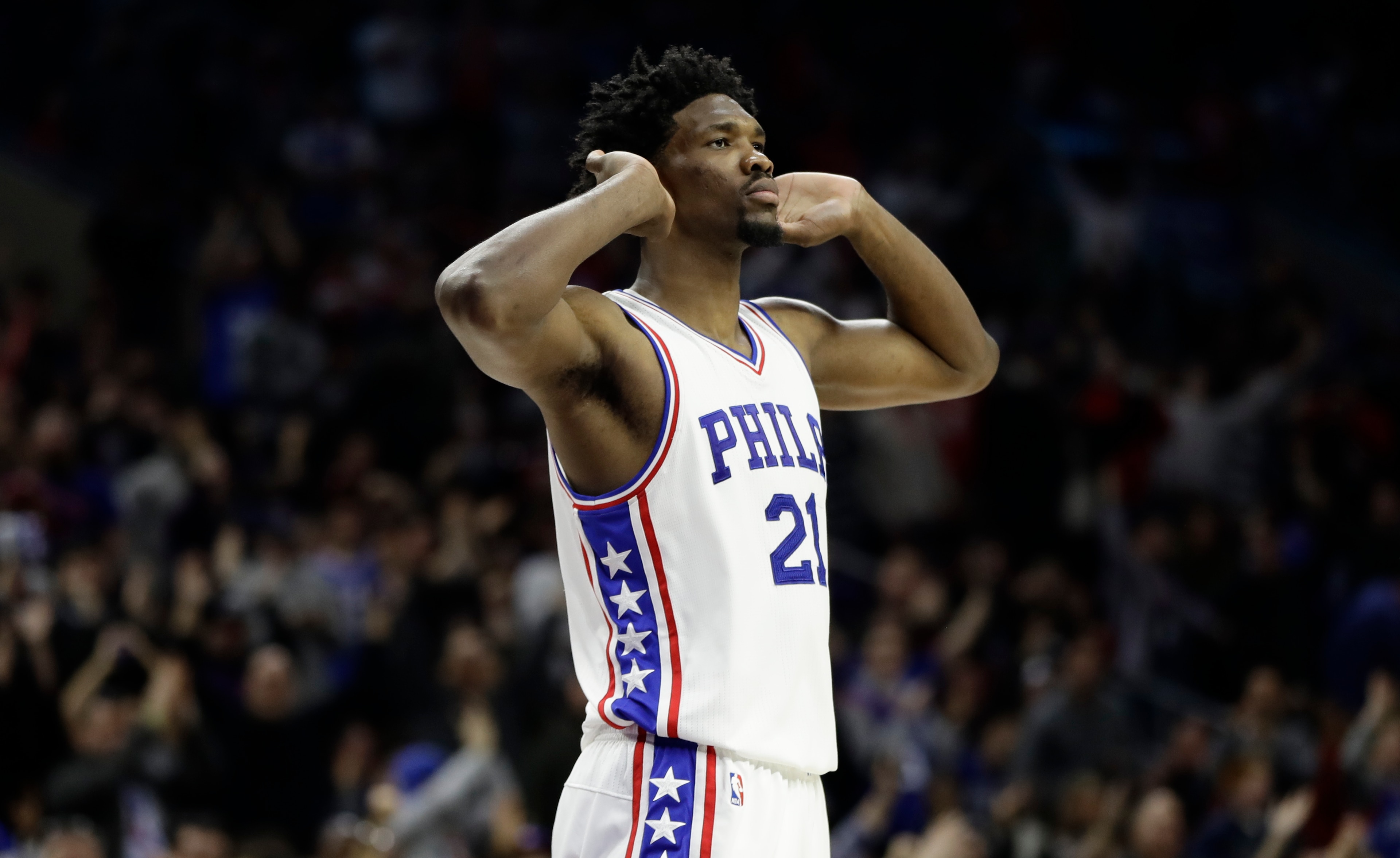
PG: Markelle Fultz
SG: J.J. Redick
SF: Robert Covington
PF: Ben Simmons
C: Joel Embiid
There are several reasons to think we're overvaluing the Philadelphia 76ers' starters.
This team went 28-54 last year and compiled that crummy mark with several wheels-have-come-off stretches. Philly lost at least seven games in a row three separate times. Only Brooklyn duplicated that feat.
Not only that, but we're dealing with roughly two-and-a-half rookies here. Fultz and Simmons have yet to play an NBA game, and they're going to see some tough times as the league chews them up a bit—especially on defense. Top picks come with especially large targets on their backs, and the struggle will be real.
Embiid is the half-rookie, a historically promising force of nature with just 31 games on his resume heading into what should be his fourth season.
But he's the reason we're putting so much faith in this collection of talent.
Embiid was exceptional in his abbreviated stint last year. He posted per-36-minute averages of 28.7 points, 11.1 rebounds, 3.0 assists, 3.5 blocks and 1.2 steals. He also shot 36.7 percent from three and got to the line at an elite rate. Even if you trim away some of the statistical fat and limit your criteria to 28 points, 11 rebounds and three blocks per 36 minutes, Embiid was the only guy in the NBA to post that in 2016-17.
And incredibly, the Sixers outscored opponents by 3.2 points per 100 possessions when he was on the floor.
Redick and Covington will destroy teams from deep, Simmons will whip the ball around and push it on the break and Fultz can get his own offense.
With Embiid in the middle and that plus-3.2 net rating as a baseline, the Sixers starters could easily make this ranking look low.
13. Charlotte Hornets
18 of 30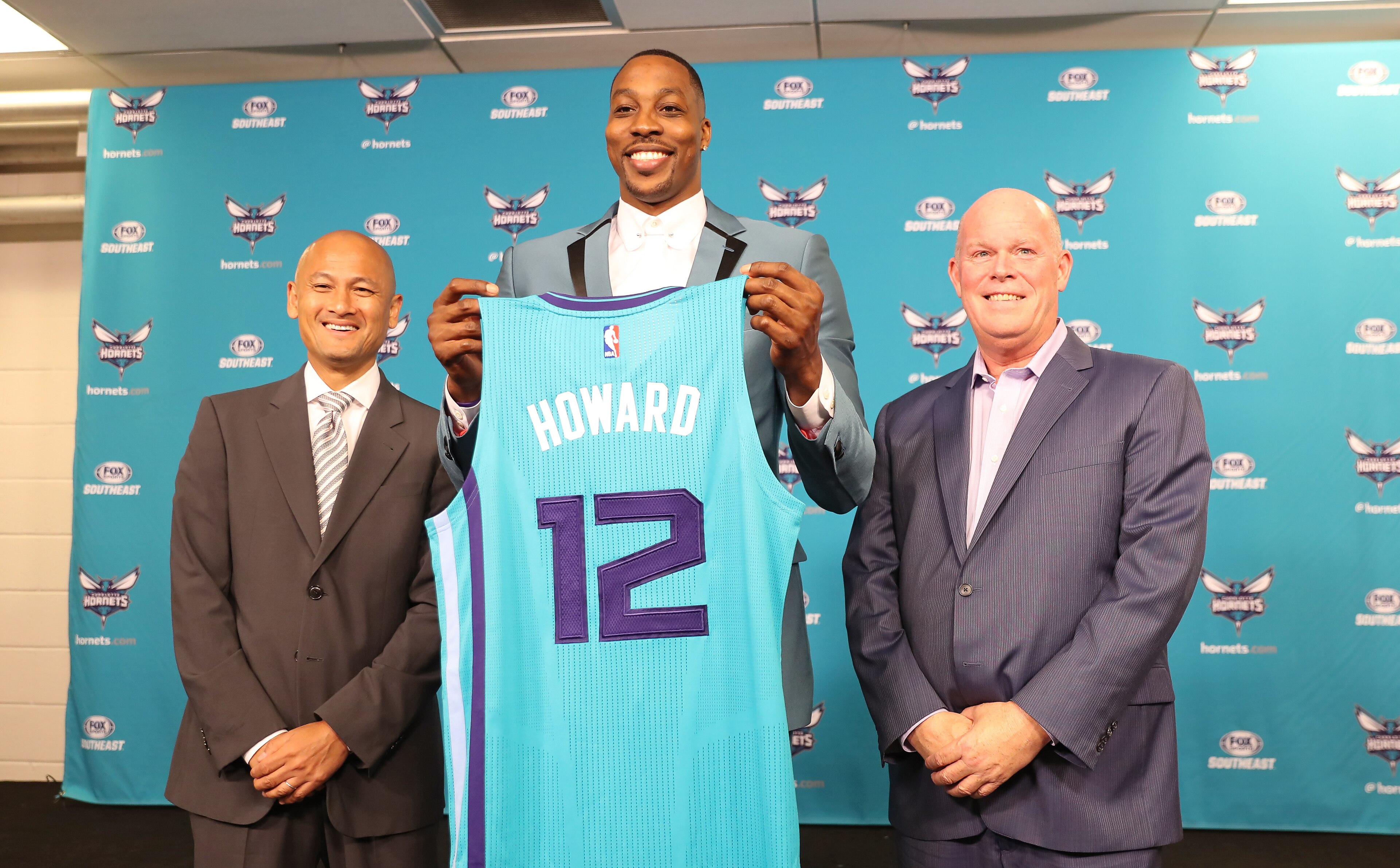
PG: Kemba Walker
SG: Nicolas Batum
SF: Michael Kidd-Gilchrist
PF: Marvin Williams
C: Dwight Howard
The Charlotte Hornets' starting unit would rank much higher if Cody Zeller were in it.
This is a gut reaction and perhaps one that puts too much emphasis on Howard's shocking lack of mobility toward the end of last season.
At the same time, preferring Zeller to Howard is a testament to how effective the former was a year ago. Whenever Zeller was healthy enough to start with Walker, Batum, MKG and Williams, Charlotte was 27-20. Not bad in a 36-46 season, right?
Howard always averages a double-double, and he's a better shot-blocker than Zeller is. But it's no coincidence that he's playing for his fifth team in seven seasons. Chemistry doesn't exactly follow him around.
Charlotte did well to get rid of Miles Plumlee's contract in the bargain, but adding Howard (and playing him over Zeller) alters one of last year's only reliable personnel groupings.
In theory, the Hornets are more formidable with Howard starting. We'll see if that holds true in practice.
12. Milwaukee Bucks
19 of 30
PG: Malcolm Brogdon
SG: Tony Snell
SF: Khris Middleton
PF: Giannis Antetokounmpo
C: Thon Maker
Down the line, we could see some tantalizing small-ball action with Antetokounmpo at the 5 and Jabari Parker at the 4. But until Parker makes it back from his second torn ACL sometime during the 2017-18 season, this group will do nicely.
In 135 minutes last year, these guys hung a plus-11.9 net rating on opponents.
If Maker continues to develop as a floor-stretcher and rim-protector, there's plenty of upside in the future. Even if his progress is minimal, we should expect Middleton to play at least as well as he did a year ago, now that he's further removed from that nasty torn hamstring.
And there's always the chance, terrifying as it sounds, that Antetokounmpo just keeps making quantum leaps.
If he becomes a 35 percent three-point shooter, do we just cancel the season?
11. Utah Jazz
20 of 30
PG: Ricky Rubio
SG: Rodney Hood
SF: Joe Ingles
PF: Derrick Favors
C: Rudy Gobert
We can all agree the Utah Jazz will have a harder time scoring without Gordon Hayward.
But what if they're even better defensively?
A healthier season from Favors (it'd be hard for him to have a less healthy one) would make a world of difference. Good luck getting any second shots against this paint-clogging, board-cleaning front line.
Rubio is at least George Hill's equal as a point-of-attack defender, and he'll bring a badly needed ability to disrupt opponents to a defense that was good last season in spite of its failure to force mistakes.
Utah forced the fifth-lowest opponent turnover rate in the NBA last year, but Rubio is a steal machine, having averaged 2.1 per game for his career.
Ingles and Hood aren't great athletically, and elite wings will give them trouble. But that's the thing about elite wings: They give almost everyone trouble. With a back line of Favors and Gobert, Utah's 2 and 3 can play aggressively on D, which should help.
It may not be pretty all the time, but the Jazz could produce a league-average offense with this fivesome. Throw in top-five defense (at least), and you've really got something.
10. Denver Nuggets
21 of 30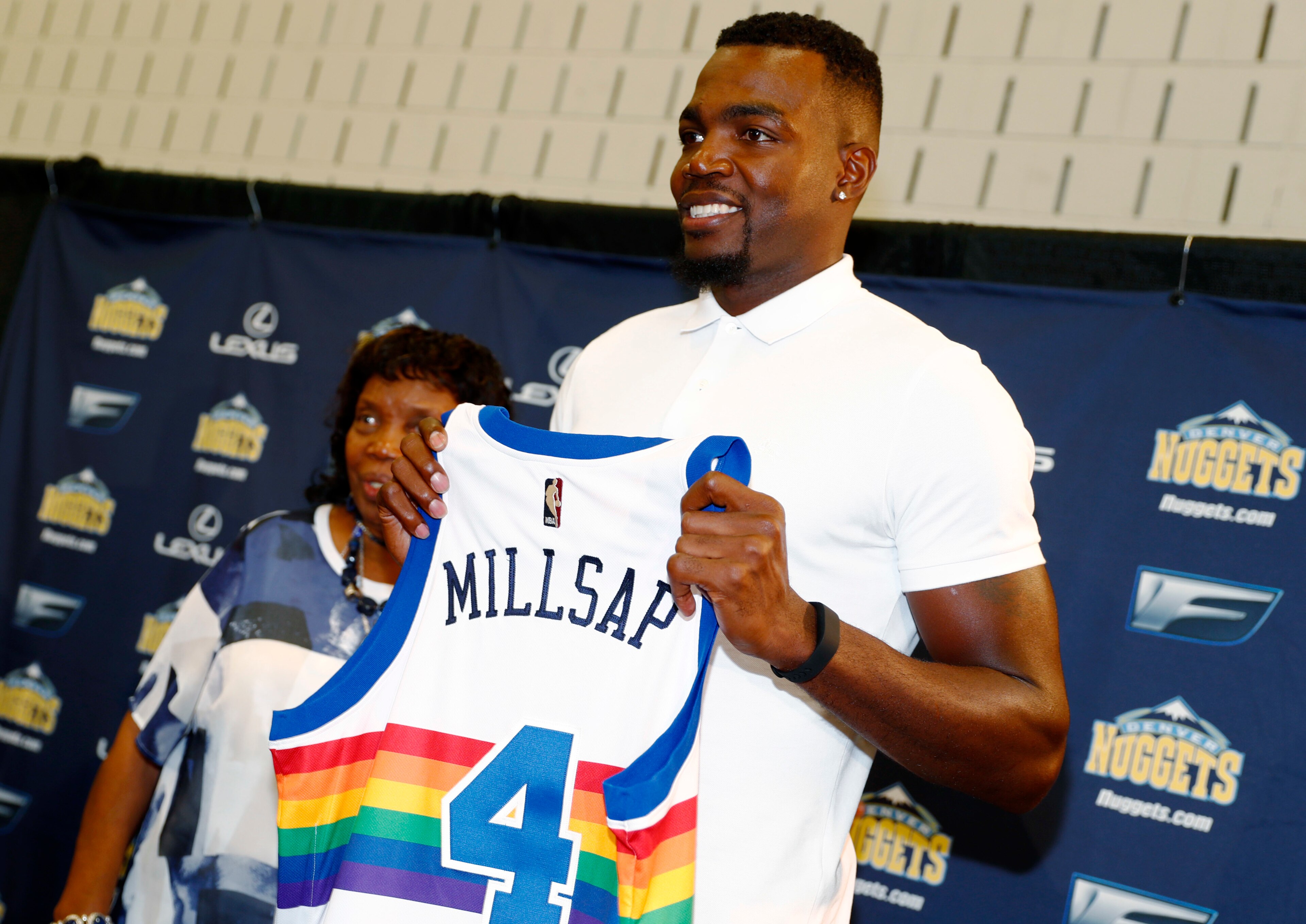
PG: Jamal Murray
SG: Gary Harris
SF: Wilson Chandler
PF: Paul Millsap
C: Nikola Jokic
After Nikola Jokic became a full-time starter last year, the Denver Nuggets were the best offense in the league. Four of the five players who keyed that scoring surge—Murray, Harris, Chandler and Jokic—are back.
Millsap now joins that unstoppable offense, bringing toughness, defense and rebounding with him—along with just enough stretchiness to give Denver a legitimate five-out attack. Jokic's rim protection may always be a problem because of his limited athleticism, but Millsap graded out as one of the NBA's 15 best overall defenders in 2016-17, per ESPN's DRPM.
He can help.
There's a lot of work to be done, but if all Millsap does is get this unit's defensive rating down from 115.5 (which is where it was with Danilo Gallinari occupying the 4 last year), the offense should be potent enough to torch just about anyone with its 120.2 offensive rating.
Think of it this way: This Nuggets quintet could allow a defensive rating bad enough to rank last in the league (say, 110 or so) and still blow out opposing starters.
Toss in improvements from gifted scorer Murray and stud two-way wing Harris, and you've got one of the 10 best starting fives in the game.
9. Minnesota Timberwolves
22 of 30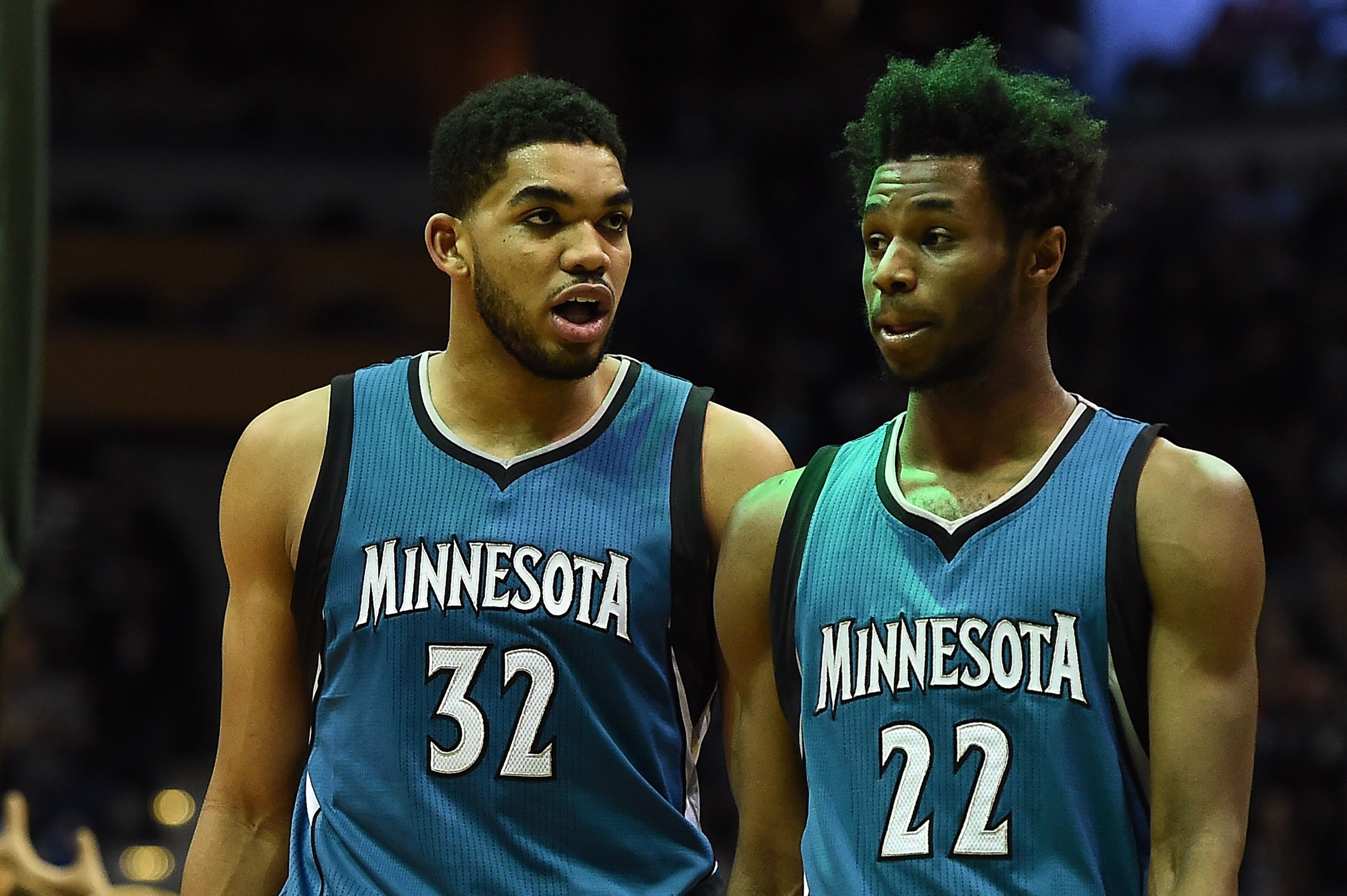
PG: Jeff Teague
SG: Jimmy Butler
SF: Andrew Wiggins
PF: Taj Gibson
C: Karl-Anthony Towns
The Minnesota Timberwolves' starting five was in the red last year, outscored by 2.3 points per 100 possessions. But that should change with Butler, Gibson and Teague joining up and, in theory, bringing defensive accountability with them.
Teague isn't so much a part of that ideological overhaul, but Gibson and Butler should direct traffic in Tom Thibodeau's system. At the very least, Gibson will lead by example, according to Sports Illustrated's Rob Mahoney:
"With him, there will always be an adult in the room. Every lineup in which he is a part will benefit from his steadying influence. Players who don’t quite know where to be or what to do can look to Gibson or ask him; teammates past and present respect him almost universally for the way he contributes to organizational culture. It helps, too, that he brings it."
Spacing on offense will be a problem, as Towns is the first unit's most reliable three-point shooter. He and Butler technically tied at 36.7 percent from deep last year, but Towns' career conversion rate of 36.1 percent tops Butler's 33.7.
Everyone wants shooting from their centers, but this Wolves offense needs it.
Fortunately for Minnesota, which attempted the fewest threes in the league, it still produced a top-10 offense last year with bad spacing. If this group can simply meet that low bar and get significantly better on D (26th in 2016-17), things look promising.
This unit has its flaws, but the skill, length and (now) experience should produce a net rating well above the middle of the pack.
8. Toronto Raptors
23 of 30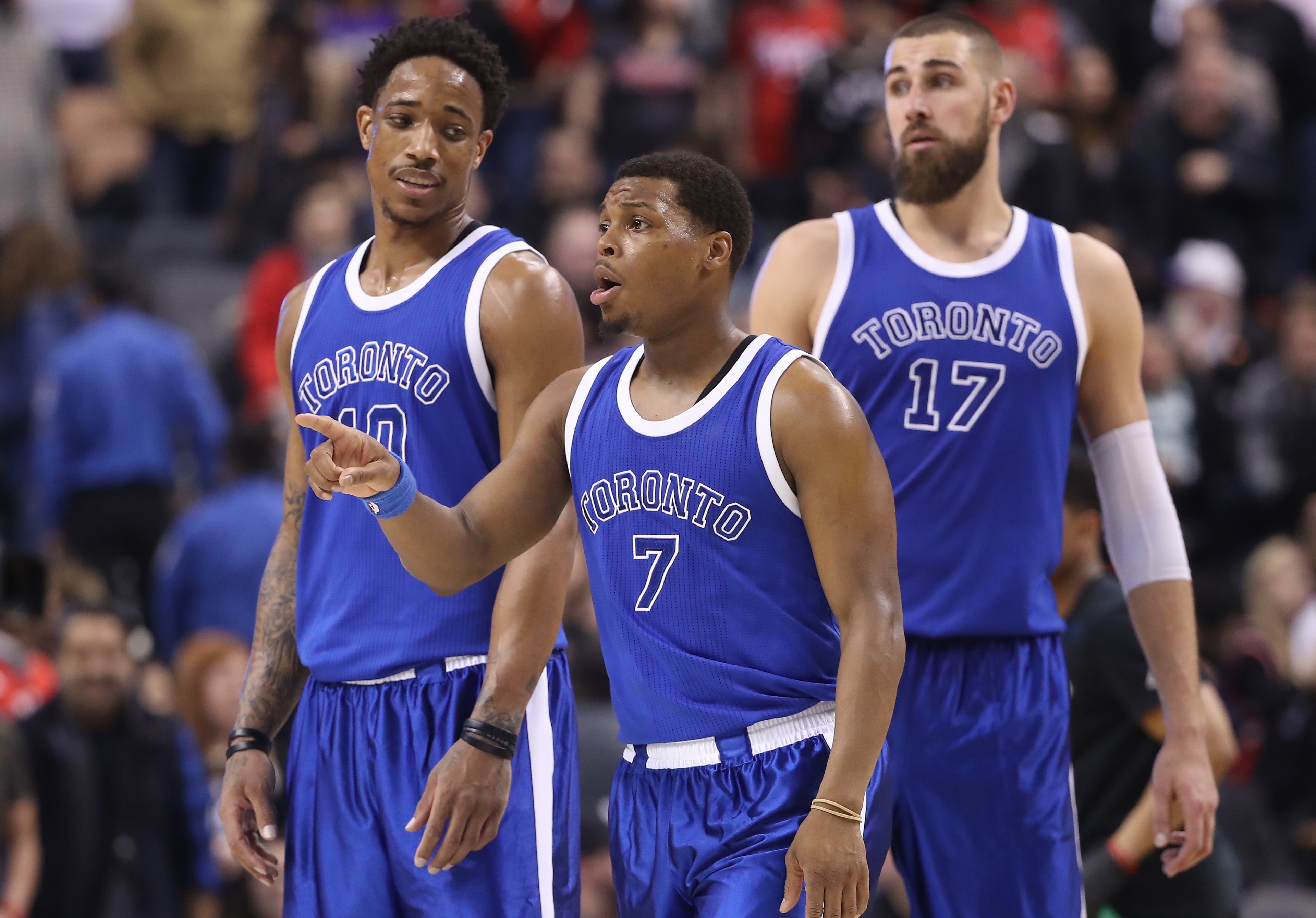
PG: Kyle Lowry
SG: DeMar DeRozan
SF: C.J. Miles
PF: Serge Ibaka
C: Jonas Valanciunas
Nobody started more games for the Toronto Raptors last year than Valanciunas. So despite reports he's been on the block, we're penciling him in at the 5 here.
Miles is a major addition who can flat-out stroke it from deep. He ranked ninth in threes made per 36 minutes last year, ahead of more notable snipers like J.J. Redick and Kyle Korver. With size that allows him to play the 4 in small lineups, his shooting will become even more valuable in closing situations when Ibaka slides to center and Norman Powell plays over Valanciunas.
Toronto's success last season stemmed from the bench. Usual starters Lowry, DeRozan, Carroll, Pascal Siakam and Valanciunas got smoked by 8.8 points per 100 possessions when sharing the floor. Bench units that included Lowry were the reason the Raps won 51 games.
Example: Before a trade sent Ross away, Lowry joined him, Cory Joseph, Lucas Nogueira and Patrick Patterson for 199 minutes and a plus-14.3 net rating. When Carroll and Patterson occupied the 3 and 4 spots with Lowry, DeRozan and Valanciunas, Toronto posted a plus-26.8 over 147 minutes.
Last year's best lineup options are gone now. The new ones are good, too, though. But how much time will it takes for these new groupings to coalesce?
7. San Antonio Spurs
24 of 30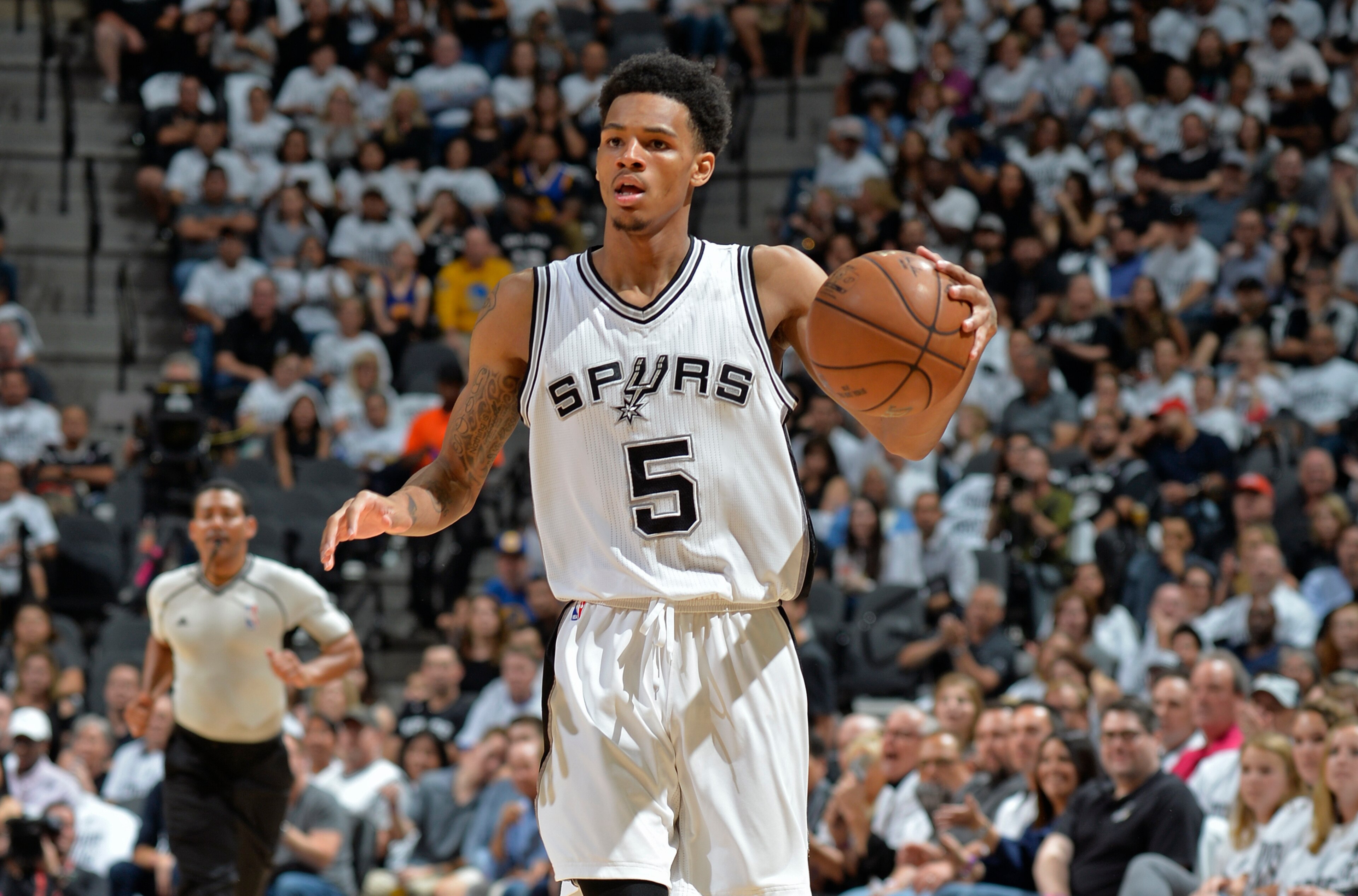
PG: Dejounte Murray
SG: Danny Green
SF: Kawhi Leonard
PF: LaMarcus Aldridge
C: Pau Gasol
Murray didn't play a second with all of the Spurs' other four starters last year, so there's some uncertainty about how effective this unit will be without Tony Parker, who may not return until January 2018.
With Parker at the 1, this group outscored foes by 7.4 points per 100 possessions last year.
Without diminishing Parker's career achievements, consider this a bet that Murray may not be a downgrade at all. Murray could play a decade's worth of games and still fall short of the 35-year-old's institutional knowledge and craft, but in terms of raw production in 2016-17, the two weren't that far apart.
Murray's per-36 stats included 14.5 points, 5.4 assists and 4.7 rebounds on 50.3 percent true shooting. Parker posted 14.5 points, 6.5 assists and 2.6 rebounds on 51.4 percent true shooting.
Factor in likely improvement in Murray's age-21 season, and the gap may be almost nonexistent.
The starters will have to be good in San Antonio, as Dewayne Dedmon, Jonathon Simmons and David Lee are gone from last year's league-best bench.
Note that it's possible Patty Mills could start for San Antonio. He's a better player than Murray, but he's also been better than Parker for a couple of years now, and Gregg Popovich has still brought him off the bench.
6. Boston Celtics
25 of 30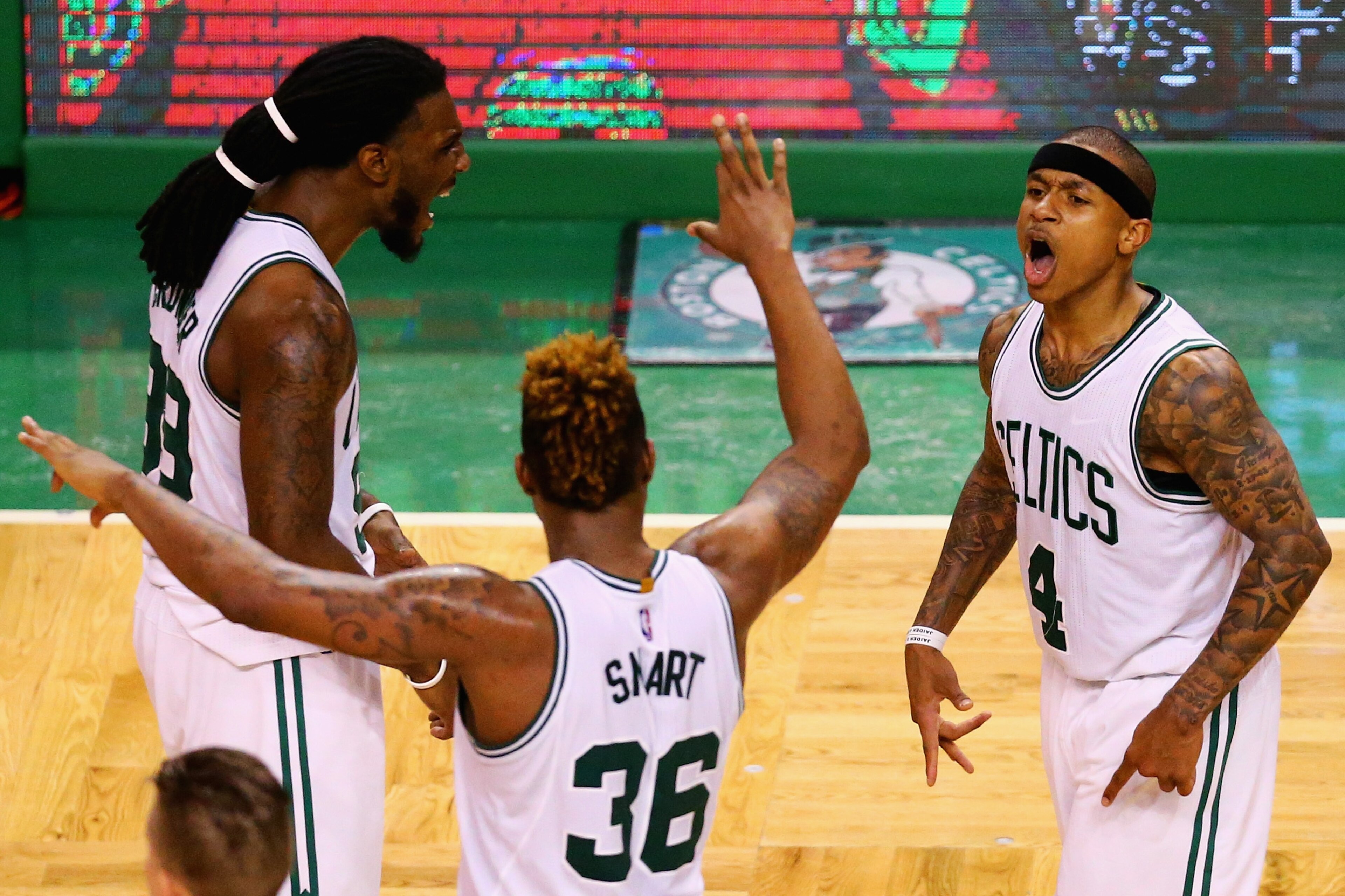
PG: Isaiah Thomas
SG: Marcus Smart
SF: Gordon Hayward
PF: Jae Crowder
C: Al Horford
The breadth of options available to head coach Brad Stevens is tough to digest.
Jaylen Brown could start at the 2 and provide serious length and athleticism. If rebounding is the priority, Aron Baynes might join the first unit at center, push Horford to the 4 and relegate Crowder to the bench.
Maybe Hayward gets a look at the shooting guard position, and Brown or Jayson Tatum slides in at the 3.
There are a lot of good answers here, but the above group projects as the most sensible for a handful of reasons—the key one being Smart's ability to cover for Thomas' defensive shortcomings. Though he was a critical part of reserve units a year ago, Smart might be necessary as a starter now that Avery Bradley is gone.
Rebounding will be an issue unless the Celtics play two bigs. Horford has always been shaky on the glass, but there's so much stretch, shotmaking and passing in this group that shoddy boardwork may not matter.
The only reason Boston's starters don't rank higher is the superior familiarity and chemistry on the next two clubs. If Stevens makes the right choices and these guys jell quickly, watch out.
5. Washington Wizards
26 of 30
PG: John Wall
SG: Bradley Beal
SF: Otto Porter Jr.
PF: Markieff Morris
C: Marcin Gortat
Even if you think the Washington Wizards overpaid when they matched Brooklyn's max offer sheet for Otto Porter Jr., you've got to concede there was logic to retaining him at a high cost.
Last season, Porter was an integral part of the most durable, most frequently utilized five-man unit in basketball. He, John Wall, Brad Beal, Markieff Morris and Marcin Gortat started 69 games together and logged 1,347 shared minutes of court time.
No other five-man unit played more than 880 minutes together.
Washington's starting five outscored opponents by a total of 238 points in that fat swath of minutes. That translated to a plus-8.1 net rating—fourth-best in the league among units logging at least 400 minutes on the year.
It's unlikely the Wizards starters will stay as healthy as they were last season, but their chemistry and familiarity could lead to even better results when they're on the floor.
Washington's bench was among the worst in the NBA in 2016-17, and it figures to be terrible again.
Good thing its starters are this good.
4. Cleveland Cavaliers
27 of 30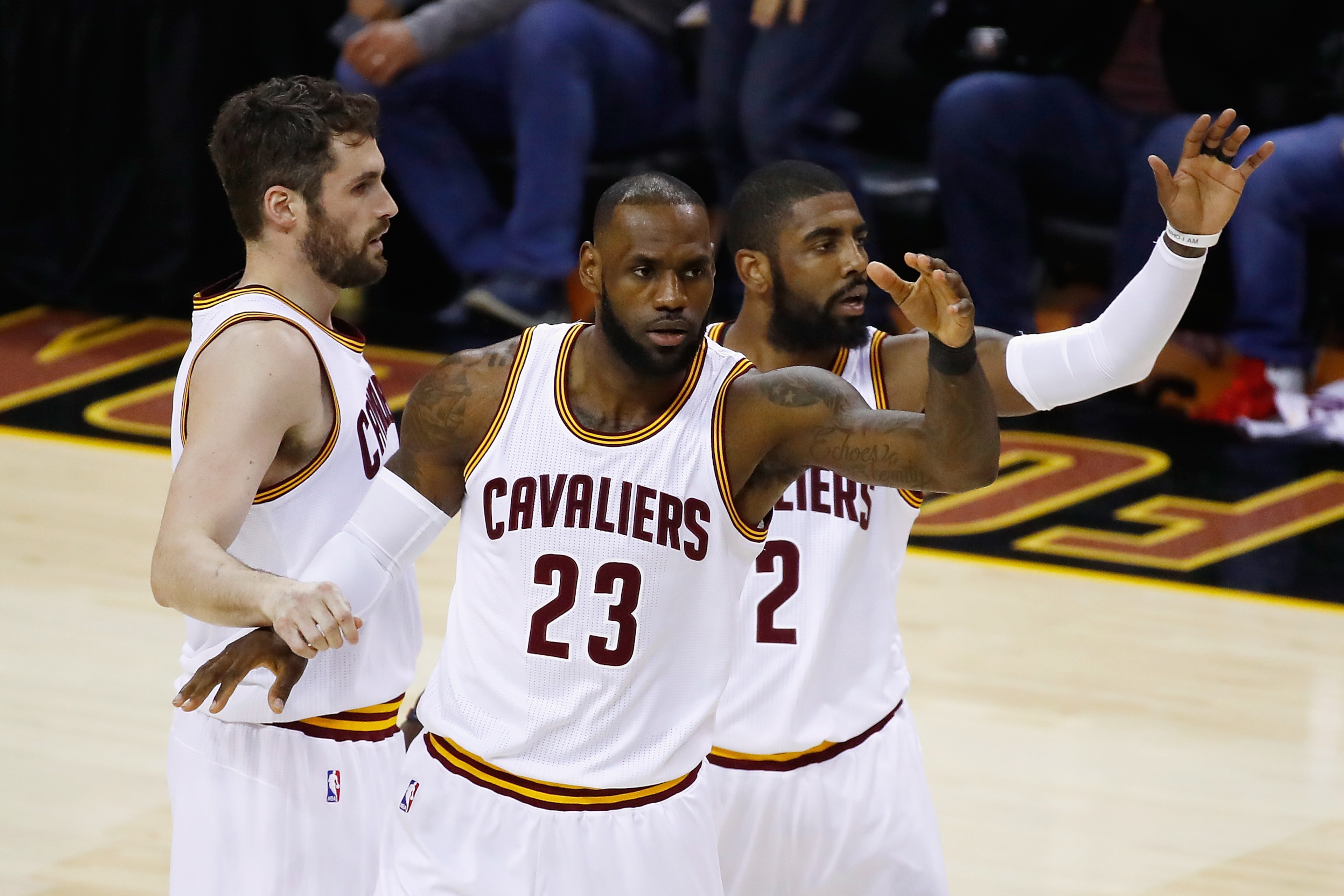
PG: Kyrie Irving
SG: J.R. Smith
SF: LeBron James
PF: Kevin Love
C: Tristan Thompson
Like everything about the Cleveland Cavaliers, projecting the performance of its starting five is an exercise in split thinking.
You have to objectively measure its regular-season production and give weight to that information. Then, you make some indeterminate markup that reflects how much better that performance will inevitably be when James and his teammates start caring at postseason levels.
The 2016-17 season saw the Cavs starters produce a ho-hum plus-5.6 net rating. Good but not great, and right in line with Cleveland's mailed-in 51-31 record. If that was where we believed the Cavs' true talent to reside, they'd struggle to crack the top 10 here.
But we know they're better than that, even if we price in some age-related decline for James and Smith. We know because we've seen them mop up the East in breezy playoff runs fueled by increased minutes from the starters.
That's how they rank in the top five despite a returning group that universally refused to defend and ranked ninth in net rating among starting groups that logged at least 400 minutes.
This is a bet on Cleveland's extra gear still being there.
3. Oklahoma City Thunder
28 of 30
PG: Russell Westbrook
SG: Andre Roberson
SF: Paul George
PF: Patrick Patterson
C: Steven Adams
You can attribute almost all of the Oklahoma City Thunder's success last year to Russell Westbrook; most people do, and the MVP award is a good indication of that idea's broad acceptance. When he played, OKC outscored opponents by 3.3 points per 100 possessions. When he sat, OKC's net rating plummeted to minus-8.9.
But here's something!
Once Taj Gibson joined the starting five with Russ, Victor Oladipo, Roberson and Adams, the Thunder got really good. In 208 minutes, Oklahoma City's new (and now, old) starting five posted a plus-11.8 net rating.
That, despite ranking dead last (among 60 high-usage fivesomes) in the recently cooked-up spacing rating by Nick Sciria of Nylon Calculus.
Now, swap in George, a top-15 player, for Oladipo. Next, add Patterson's floor-stretching and defensive versatility in place of Gibson's conventional power forward-ness. Those aren't just upgrades; they're upgrades that specifically address the weaknesses in a Thunder starting five that was already excellent.
George is a superstar who will kill it as a secondary playmaker, and Patterson's outside shot opens the lane up for Westbrook. This new fivesome grades out as average in Sciria's spacing rating. That's a big step up from worst.
If the Thunder don't stagger Westbrook and George's minutes, maybe the bench repeats its lead-bleeding ways of a year ago. But that's not what this is about.
Post-free agency, OKC's starting five is nasty.
2. Houston Rockets
29 of 30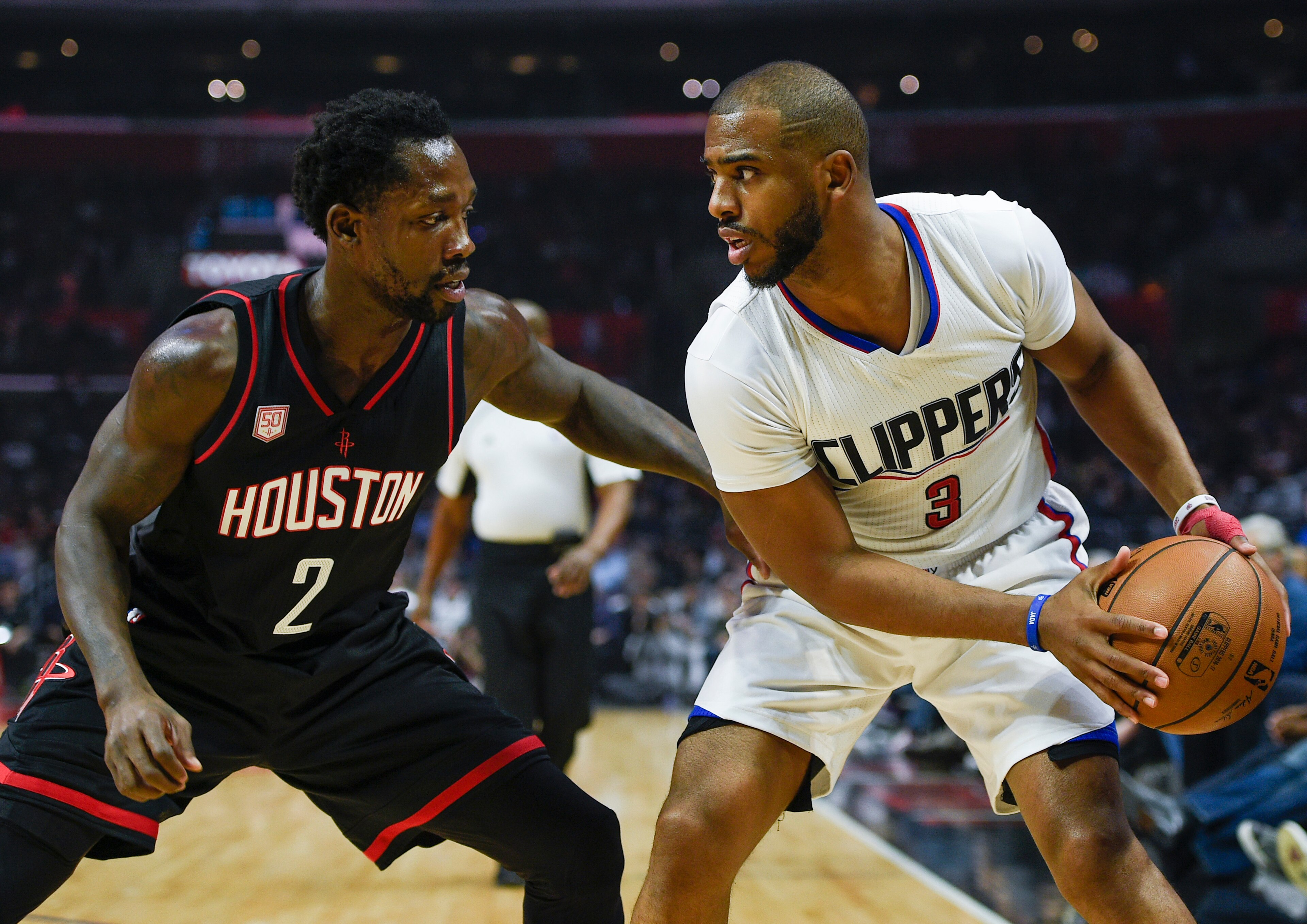
PG: Chris Paul
SG: James Harden
SF: Trevor Ariza
PF: Ryan Anderson
C: Clint Capela
No shade intended toward Beverley, but he's no CP3.
He said it himself during his introductory presser in L.A., per Bill Oram of the Southern California News Group: "I am not Chris Paul, I am not Chris Paul, I am not Chris Paul. But saying that, he is not me neither."
Double negatives aside, this is a cogent point—one that makes it easy to rank the Houston Rockets starters this high.
Last year, Houston posted a plus-15.4 net rating with Beverley as the starting guard alongside Harden, Ariza, Anderson and Capela. We can all agree that Paul, being perhaps the best to ever play the position, is a significant upgrade.
Sure, there might be fit issues. But there is real value in the security of always having one on the court to run the offense?
If we're starting with a plus-15.4 baseline, third-best among big-minute first units last year, and we're adding Paul, improvement feels like a given.
You could make the case for P.J. Tucker or even Mbah a Moute in the first unit over Anderson or Ariza—depending on the defensive issues presented by the opponent. Chances are, Anderson won't close games.
Houston is built to go wing-heavy in the minutes that really count.
But this unit profiles as an unstoppable offensive force with just enough defense to build and sustain massive leads.
1. Golden State Warriors
30 of 30
PG: Stephen Curry
SG: Klay Thompson
SF: Kevin Durant
PF: Draymond Green
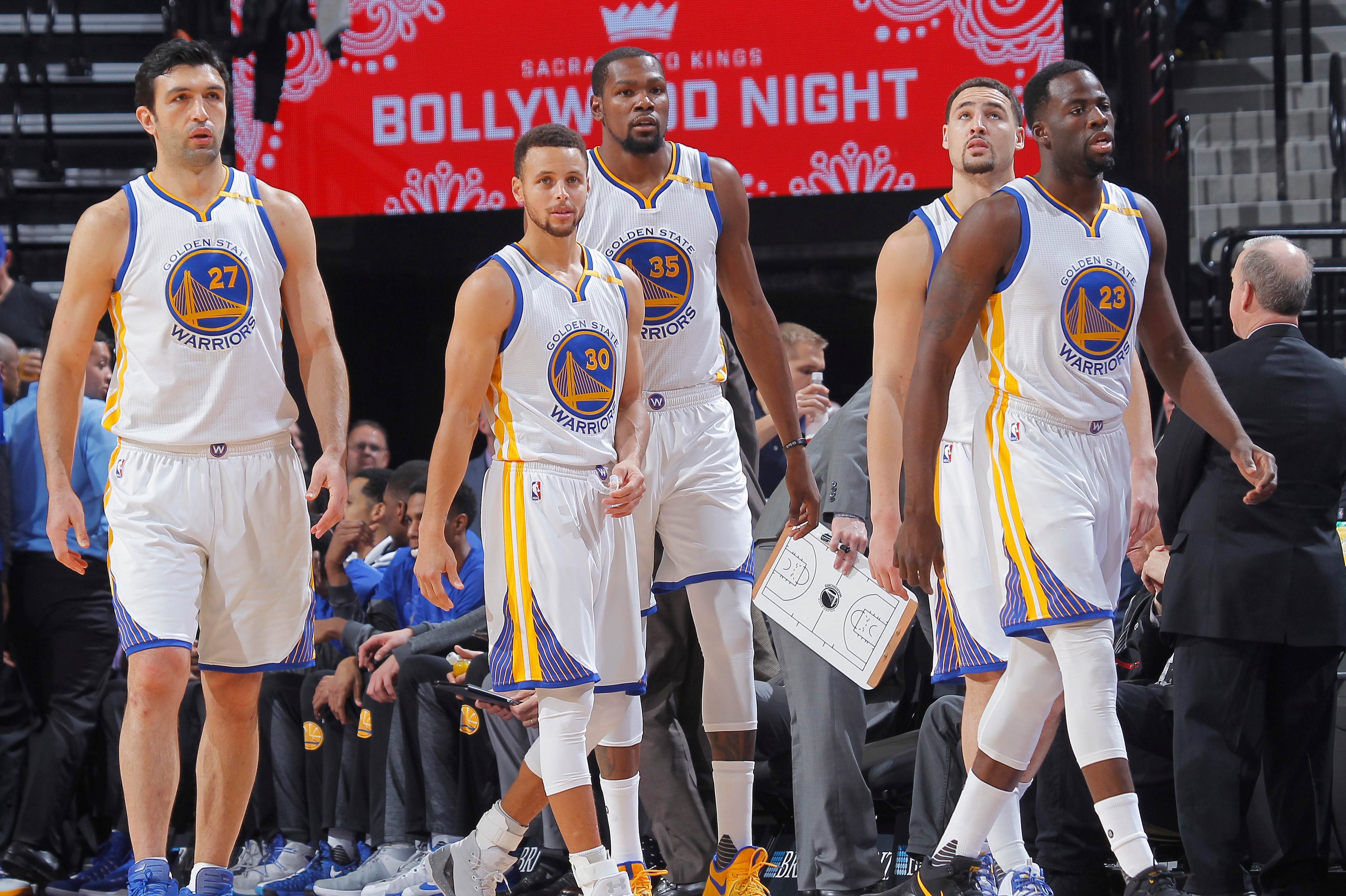
C: Zaza Pachulia
The Golden State Warriors have the best starting lineup on our list, and it's not even their best five-man unit.
So when their starters bludgeoned foes by 23.1 points per 100 possessions last year, then gave way to the smaller, deadlier closing group that replaced Zaza Pachulia with Andre Iguodala (which posted a plus-23.9 net rating), it was basically The Princess Bride's Inigo Montoya telling the Dread Pirate Roberts "I am not left-handed!"
Unfair.
And I'm not even sure what to think when units with JaVale McGee (still unsigned) in Pachulia's place smashed opponents by 32.1 points per 100 possessions in a 126-minute sample last year.
The Warriors had 2016-17's best starting five, and they had a handful of units that were even more potent. With all the principals back and another season to familiarize themselves with Durant, it's not unreasonable to expect the gap between the Dubs and everyone else to widen.
The status quo with this team is, as ever, terrifying.
Stats courtesy of Basketball Reference or NBA.com.
.png?w=3840)
.jpg?w=3840 "🔴 LIVE: 2026 MLB Draft")
.jpg?w=3840 "MLB Draft Live Grades 🔢")
.png?w=3840 "New NFL Power Rankings 📊")
.jpg?w=3840 "Final Mock Draft 🔢")