
Every NBA Team's Biggest Bonehead Offseason Decision
Not to burst anyone's bubbles, but NBA offseasons typically aren't perfect.
Making a mistake is easy. A momentary lapse in judgement can be all it takes to dole out a regrettable contract or overlook a key piece. Reaching for a player in the draft might be easier still. So while a few teams have navigated the turbulent offseason to near-perfection, most haven't.
But where were their biggest missteps?
Some, like the New York Knicks' decision to hand Tim Hardaway Jr. a gigantic contract, are obvious. Others require some deeper thought, and lucky for you, we're doing all the thinking on your behalf.
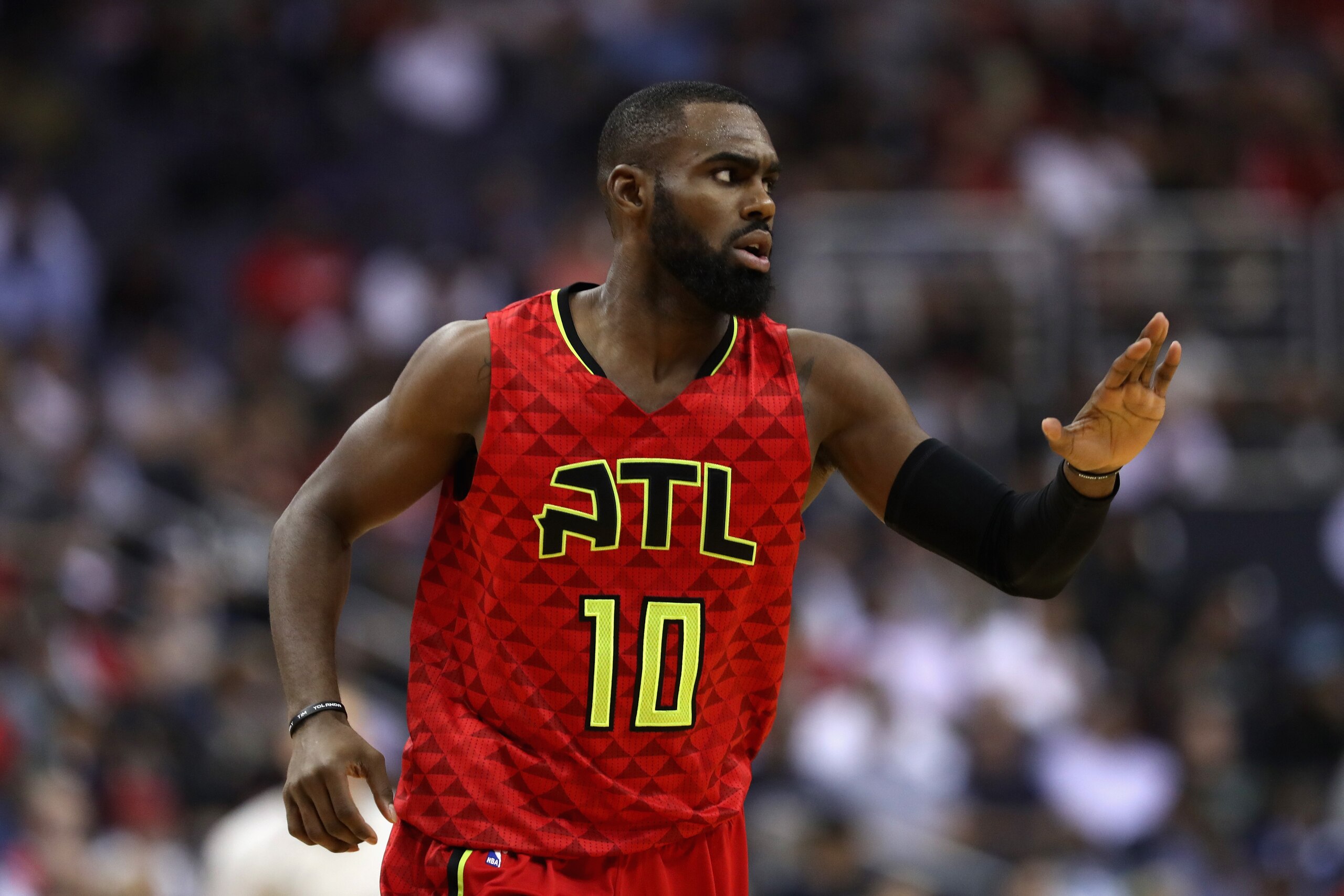
Atlanta Hawks: Not Getting More for Dwight Howard
1 of 30
Dwight Howard may have been an unlikable presence who often seemed unmotivated, but he was still quite valuable to the Atlanta Hawks. He was dominant enough on the glass to alter head coach Mike Budenholzer's philosophy about eschewing offensive rebounds for extra transition defense, and he often shut down the paint.
No matter how little he provided with post-up moves, his ability to hold opponents to 48.7 percent shooting at the rim can't be overlooked. That number isn't in line with what Howard could do during his Defensive Player of the Year-caliber seasons, but it's still valuable when a big man can stand alone in the painted area and anchor a set.
And that's why it's so inexplicable that the Hawks couldn't find a better offer for his services.
Just getting back Marco Belinelli and Miles Plumlee is bad enough. Those two can settle in as role players for Atlanta, but neither is capable of serving as a starter on a playoff-bound squad at this stage of their respective careers—unless surrounded by superstars, of course. But that's not it.
To facilitate the deal, the Hawks also had to move back 10 spots in the 2017 NBA draft on June 22. Downgrading picks while accepting such a meager return is wholly unacceptable.
Boston Celtics: Not Getting Teams to Wait Before Dealing Stars
2 of 30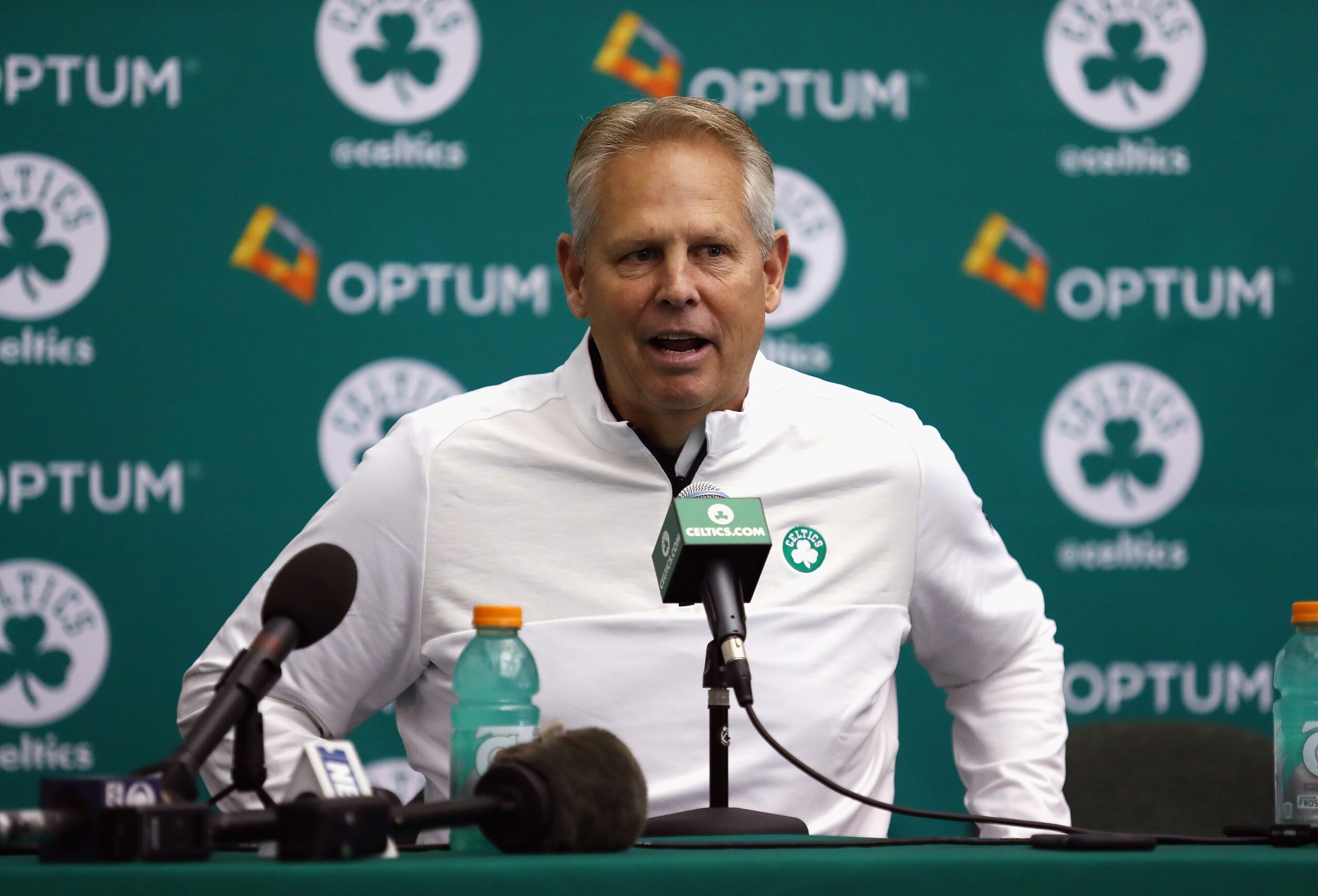
Not wanting to deal assets for Paul George when he remained a potential one-year rental is understandable. Ditto for failing to pull the trigger on a Jimmy Butler trade, since it still made sense to wait and see what the asking price would be after the pursuit of Gordon Hayward was finished.
But if the Boston Celtics made a mistake—and it's not 100 percent clear they did, contrary to what those who want to ream general manager Danny Ainge for his opposite-of-itchy trigger finger might think—it was that they couldn't convince the Indiana Pacers or Chicago Bulls to wait before pulling off their blockbuster deals.
Just imagine the scenario.
The C's have already gotten Hayward to come aboard, and they're now looking to clear up cap space to facilitate the trade. At this point, they're far more willing to ship off Avery Bradley, Terry Rozier and a package of future picks to the Pacers for George's services, knowing that they can boast an uber-versatile starting five comprised of Isaiah Thomas, George, Hayward, Crowder and Al Horford.
Perhaps this was impossible. But just imagine if Ainge had been able to convince someone to operate on his timetable rather than accepting a lesser return and immediate relief from the unfortunate hostage situation.
Brooklyn Nets: Declining K.J. McDaniels' Option
3 of 30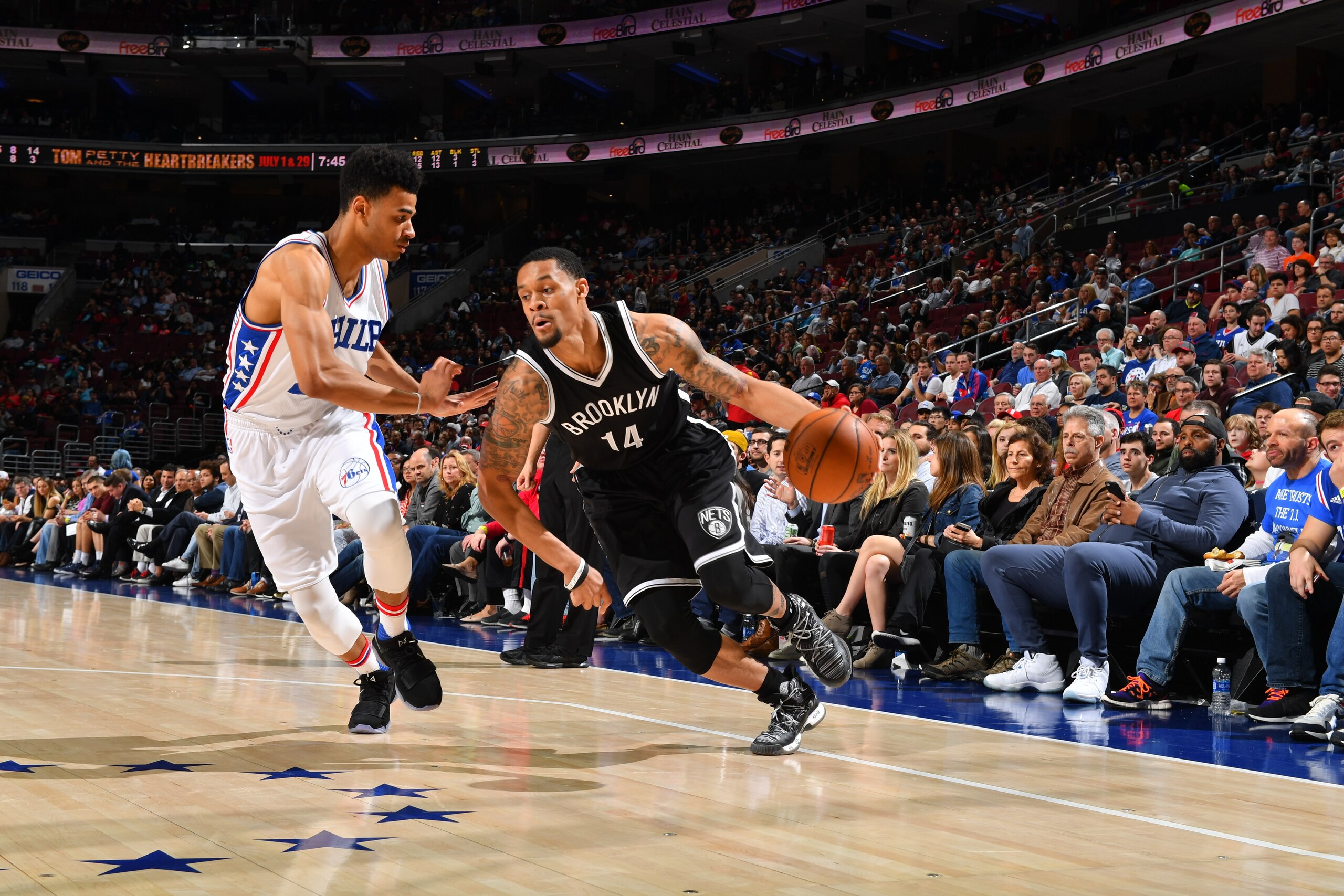
General manager Sean Marks has enjoyed a fantastic offseason.
Trading for D'Angelo Russell was a brilliant move, since taking on albatross contracts like Timofey Mozgov's is exactly what a rebuilding team should be doing with its cap space when coupled with an opportunity to acquire a potential star. The draft picks were solid. The free-agency decisions have made sense, even if Otto Porter Jr.'s offer sheet never materialized into a roster addition.
But declining to exercise a team option on K.J. McDaniels, a decision presumably made almost solely for cap purposes, was the sole head-scratcher.
Paying the swingman $3.47 million for 2017-18 might have made for a hefty expenditure if he just sat on the bench, but the Nets aren't exactly struggling to avoid the luxury tax. In fact, they're still operating with cap room.
McDaniels' offense hasn't developed much at all, but he remains a defensive force capable of providing unorthodox production as a rim-protecting wing player. Keeping him around and allowing him to continue realizing some of his lofty potential would've been a sensible decision for a team in desperate search of a higher ceiling, no matter how much the engorged salary might have pained it.
Plus, especially in today's cap climate, $3.47 million isn't that much for an NBA salary.

Charlotte Hornets: Signing Michael Carter-Williams
4 of 30
Throughout the 2016-17 campaign, disaster ensued whenever Kemba Walker left the floor.
With the All-Star point guard playing, the Charlotte Hornets outscored the opposition by 3.5 points per 100 possessions. When he was on the pine, that net rating sank all the way to minus-6.6, which serves as the primary reason the team could only muster 36 wins and fell shy of the playoffs in the weak Eastern Conference.
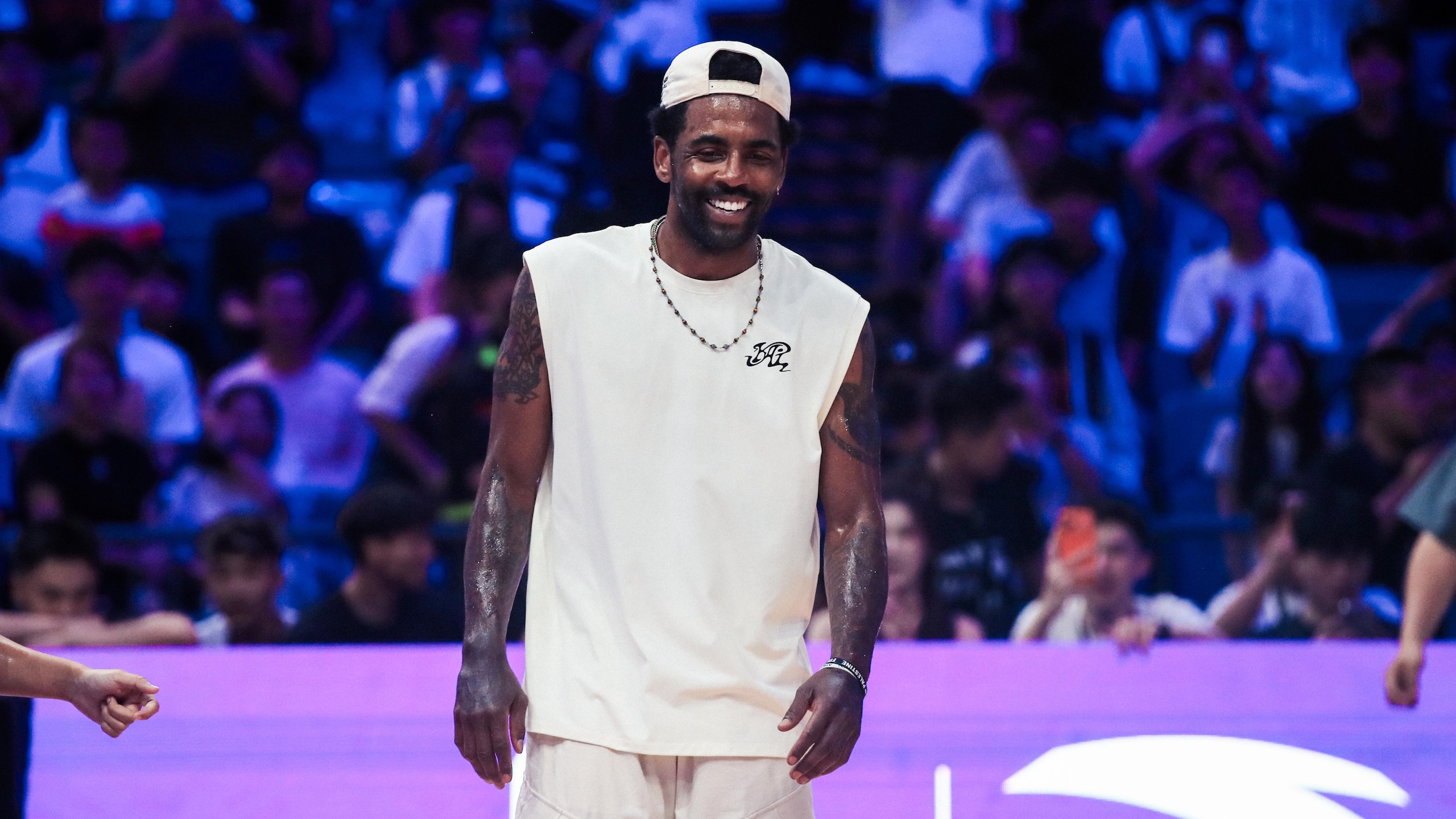
The Hornets had to address this problem during the offseason, but they chose to do so by signing Michael Carter-Williams.
At this point, there's no guarantee the 2013-14 Rookie of the Year is a significant upgrade over Briante Weber, Ramon Sessions and Brian Roberts. Carter-Williams has developed substantially on defense, but his woeful shooting makes him a poor fit with the rest of the Hornets, given their need for spacing that only Walker has been able to provide from the 1.
In 45 games with the Chicago Bulls last season, Carter-Williams shot just 36.6 percent from the field and 23.4 percent from beyond the arc, further contributing to the Windy City's own spacing issues. The offense took a step in the wrong direction whenever he played, which is particularly troubling when the Bulls used a carousel of floor generals to fill in their hole at the point all season.
On the right team, Carter-Williams (6'6") could be a quality backup used when the squad needs a big body at the 1 for defensive purposes. Unfortunately, there's no indication Charlotte is the right team.
Chicago Bulls: Not Telling Dwyane Wade the Plan
5 of 30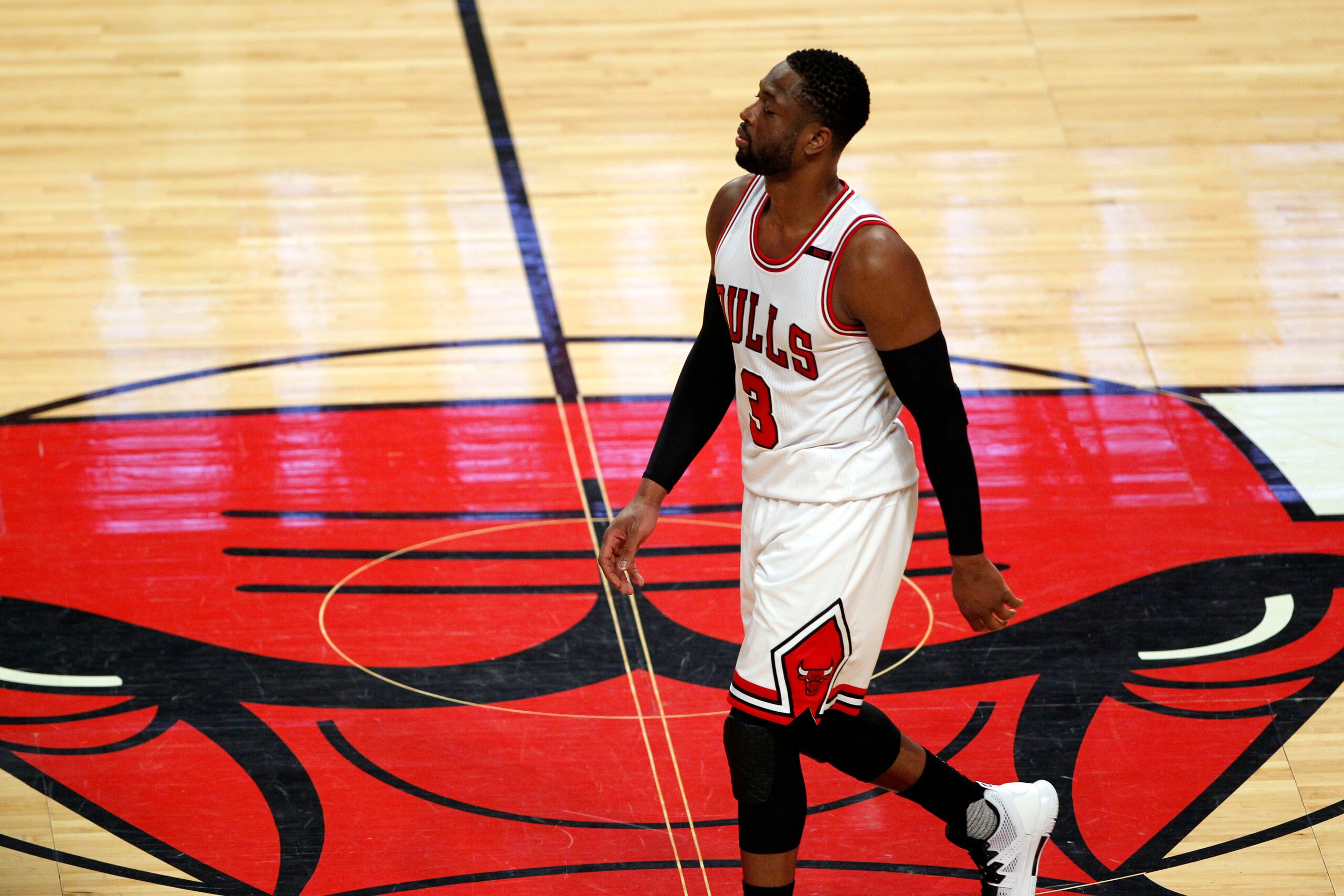
First, Dwyane Wade opted into his contract for 2017-18, which will guarantee him $23.8 million. Per TNT's David Aldridge, the future Hall of Famer said he had "24 million reasons" to do so.
But the decision came prior to the Chicago Bulls' move to trade Jimmy Butler to net Kris Dunn, Zach LaVine and the pick that became Lauri Markkanen from the Minnesota Timberwolves. That swap didn't change anything about Wade's choice, though it might not make him too happy as he enters a twilight season as one of the leaders of a squad that's most assuredly rebuilding.
Let's allow SB Nation's Tom Ziller to take it away:
"The Bulls aren’t going to win anything in 2017-18, and at 35 years old, Wade has a limited amount of time to both make money and compete for a fourth championship. Wasting a season in Chicago after what was arguably a wasted season last year is not tenable.
"Wade’s a professional, but it’s not a good situation for young players like Zach LaVine and Kris Dunn. A miserable, impatient Wade playing for a team that doesn’t really want him anymore is an ugly combination, even if everyone tries their best to keep it positive.
"Trading a player of D-Wade’s stature while he’s making $24 million is tough. The intersection in the Venn diagram of teams that can absorb that kind of salary (through cap space or with non-obtrusive outgoing contracts) and teams that could use Wade’s still-potent scoring and veteran moxie is small."
Perhaps a buyout is coming. Maybe Wade will suck it up and try to fit in with his younger teammates. There's even a chance the youngsters could all break out and push Chicago into playoff contention in a ridiculously weak Eastern Conference.
But if the timetables had been flipped, perhaps he could've just opted out and found a new home.
Cleveland Cavaliers: Not Appeasing LeBron James
6 of 30
Dear Cleveland Cavaliers:
If there's one thing you want to avoid doing, it's upsetting your franchise centerpiece. LeBron James means everything to this team. You basically can't function without him on the floor (minus-8.6 net rating last year). And even though he's quickly moving toward his mid-30s, he's showing no signs of an imminent decline.
You should keep him happy. At all costs. Seriously. Like pay whoever whatever it takes.
Don't let team owner Dan Gilbert part ways with a highly competent general manager (David Griffin) and then fail to land his one and only initial candidate for replacement (Chauncey Billups). Don't watch as the Golden State Warriors improve their bench and then allow Jose Calderon to serve as your big free-agent addition. Don't be content with stagnation.
I hate to break this to you, but James is already acting a bit malcontent. He's reportedly frustrated with these developments, per Jeff Zillgitt of USA Today, and I know you haven't forgotten he can become a free agent next offseason. Ben Simmons is already recruiting him to the Philadelphia 76ers. The Los Angeles Lakers speculation has begun in earnest.
Kyrie Irving and Kevin Love deserve a chance to continue competing for championships. The former, given his yo-yo handles and big-shot proclivities, is so much fun to watch on the biggest stage. The fans don't want to suffer through another James departure, even though it would be more than justified—just like it was the first time around.
Basically, do better.
Dallas Mavericks: Failing to Ink Nerlens Noel Sooner
7 of 30
"We're very disappointed with where things stand," Happy Walters, Nerlens Noel's agent, recently said, per Eddie Sefko of the Dallas Morning News. "Nerlens loves Dallas and spent June there working out, but we're still waiting on a serious offer."
That's...not where you want to be in the negotiation process after moving past July's halfway point.
Most prominent free agents are already off the board, but the Dallas Mavericks and Noel are still engaged in protracted discussions about his next contract. Already, it's having a negative effect on his morale, given—in his opinion—the dearth of "a serious offer."
At this point, it's unlikely Noel goes anywhere else. Few teams have money to spare, and the ones who do almost universally have upside-laden players lining up at the frontcourt spots. Unfortunately for the Kentucky product, that limits his leverage.
But the Mavericks have to be careful here. They don't want to force him into a holdout situation or offer him so little money that he plays through the contract in disgruntled fashion. Keeping employees appeased and maintaining a quality work environment helps produce a better product.
Right now, it's not clear why Dallas isn't just ponying up the cash Noel feels he deserves. And based on his infectious play and remarkable defensive upside, he's not alone in that feeling.
Denver Nuggets: Not Upgrading at Point Guard
8 of 30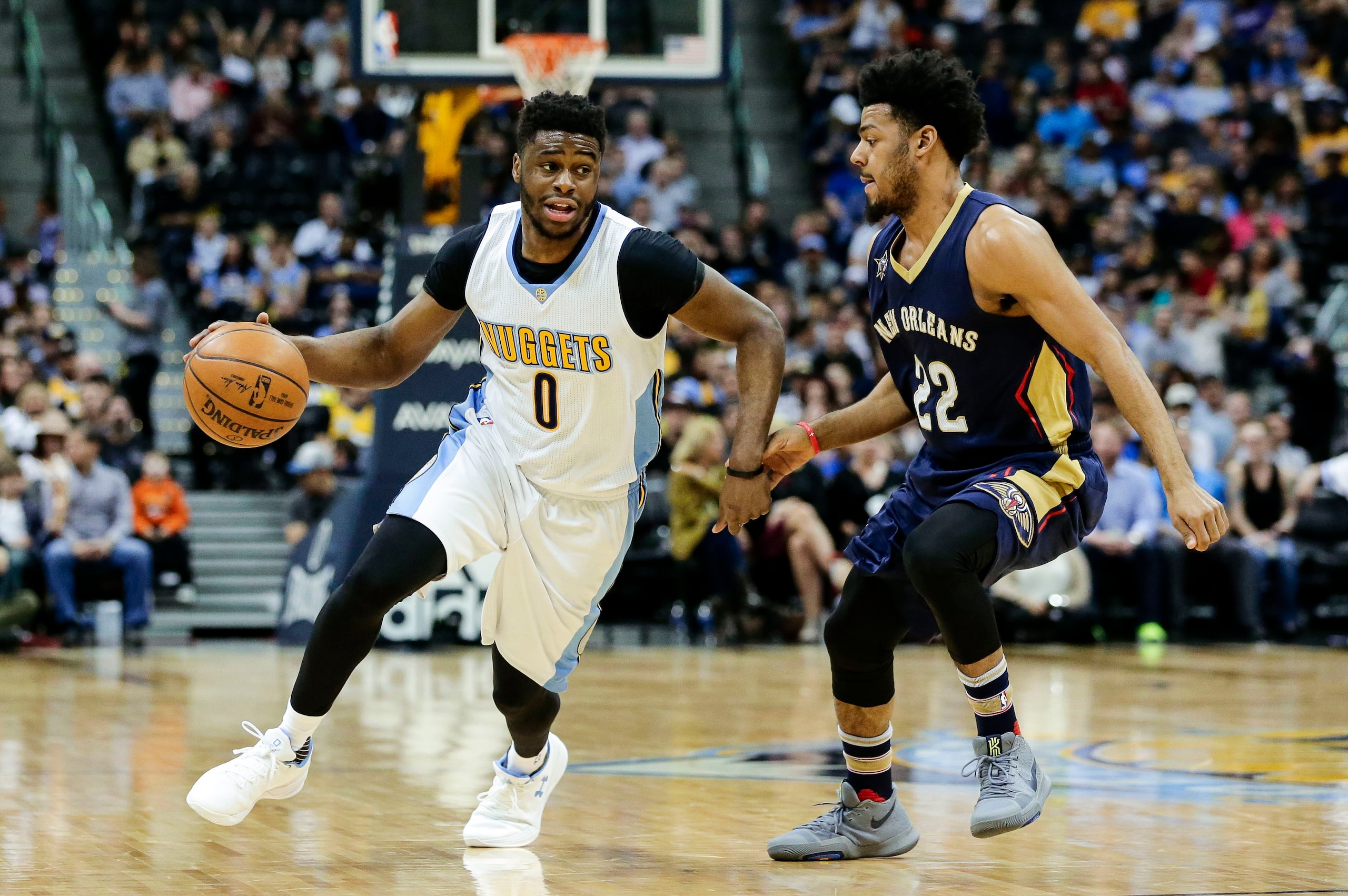
Landing Paul Millsap was a remarkable victory for a Denver Nuggets organization that's traditionally had trouble signing big free agents. More than a few times, it's been able to get them on the line and sink the hook. But reeling them in? Before Millsap, that was a different story.
The power forward is a perfect fit next to rising star Nikola Jokic, and his presence should immediately thrust the team into playoff contention—strength of the Western Conference be damned. Plus, the Nuggets are overflowing with quality players and upside at four of the five traditional positions.
But point guard is a different story.
Unless Jamal Murray becomes a full-time 1, which would be a waste of some of his talents, Denver is heading into the 2017-18 campaign with a three-headed monster of Emmanuel Mudiay, Jameer Nelson and Monte Morris. Unfortunately, the three-headed monster is more of a puppy than a full-grown Cerberus.
Mudiay has showed a stunning lack of development since entering the league in 2015, and his presence remains detrimental on both ends. Nelson is a steady hand but should be used sparingly. Morris hasn't played an NBA minute yet, and there's a reason he didn't come off the board until the No. 51 pick of the 2017 draft.
Denver should've been looking to consolidate assets and cash in, either with a free-agency signing (George Hill, perhaps?) or a trade for Eric Bledsoe. It may not be too late to travel down the latter route, but no tea leaves are indicating that's in the cards.
Detroit Pistons: The Avery Bradley Trade
9 of 30
I understand if you're confused.
Avery Bradley is objectively a better player than Marcus Morris. Some defensive metrics might sell him short, but he's respected around the league as one of the NBA's best perimeter defenders, and he's coming off a season in which he shot 39 percent from downtown while taking five attempts per game.
Surely trading Morris for him and a second-round pick was a good move. Except it wasn't.
ESPN.com's Kevin Pelton even gave the Detroit Pistons a "D" for their side of the trade:
"So the Pistons have lost two starters to get one...and that one can be an unrestricted free agent in 12 months. At best, they've just kicked their luxury-tax concerns down the road a year, since re-signing Bradley would push them deep into the tax in 2018-19. (Detroit may find it easier to move other players for tax relief with a year less on their deals, it should be noted.) At worst, the Pistons gave up two years of Morris at a good price for one with Bradley."
Acquiring Bradley forced the Pistons to renounce Kentavious Caldwell-Pope's rights, and the 2-guard subsequently inked a one-year balloon contract with the Los Angeles Lakers. So he and Morris are both gone, and there's no guarantee the newcomer can even help the team maintain the 2016-17 level that left it four games shy of the East's No. 8 seed.
Don't be fooled by name recognition. This was a shortsighted move that could have significant long-term repercussions.
Golden State Warriors: That's Funny
10 of 30
The Golden State Warriors have made nine significant moves this offseason, and we'll list them in the order of Zach Buckley's rankings for Bleacher Report:
- Re-signing Zaza Pachulia on a one-year deal for $3.5 million
- Bringing back David West for the final year of his career on a one-season deal for $2.3 million
- Buying the No. 38 selection from the Chicago Bulls and using it on Jordan Bell, who's likely one of the class' biggest steals
- Giving Nick Young the full taxpayer mid-level exception of $5.2 million
- Signing Omri Casspi to the veteran's minimum of $2.1 million
- Handing Shaun Livingston a three-year deal worth $24 million
- Paying Andre Iguodala $48 million over the next three seasons
- Rewarding Stephen Curry with a five-year, $201 million contract
- Letting Kevin Durant take a massive pay cut to stay aboard
You might have some qualms with the financial specifics of a few deals, and that would be justifiable.
Young's contract limited the length of Bell's rookie contract, for example. Iguodala might be slightly overpaid, but he's so important to the Dubs' plans. Livingston may not be worth $24 million in a vacuum, especially as his role continues to shrink.
But all together, the moves made sense and further strengthened a squad that was already among the best in NBA history.
Houston Rockets: Putting the Franchise Up for Sale
11 of 30
First, a couple of caveats.
This is not an indictment of Leslie Alexander's decision to sell the Houston Rockets. From a business perspective, putting your team on the market right after locking up a superstar makes sense, especially when the television-revenue bubble could eventually pop and force profits and valuations to decrease dramatically. It's also not a huge negative for the organization.
Houston pulled off a nearly perfect offseason, beginning with a trade for Chris Paul that it followed up with savvy moves to acquire/retain P.J. Tucker, Luc Mbah a Moute and Nene. Now, there's a serious chance that immediate coalescing between Paul and James Harden could push the Rockets to earn the NBA's second-best record and become legitimate challengers to the Golden State Warriors' supremacy.
But there still has to be a little uncertainty about the movement at the top.
Stability in NBA organizations is valued, and the timing here was questionable. Paul had just agreed to come aboard. Harden had just inked a massive extension. And now, they're left wondering whether the franchise could be headed in a different direction—however slight the alteration may be—under new management.
As ESPN.com's Adrian Wojnarowski reported, "Leslie Alexander's decision to sell the Houston Rockets didn't only surprise the rest of the NBA, it surprised those within the franchise."
Indiana Pacers: The Paul George Return
12 of 30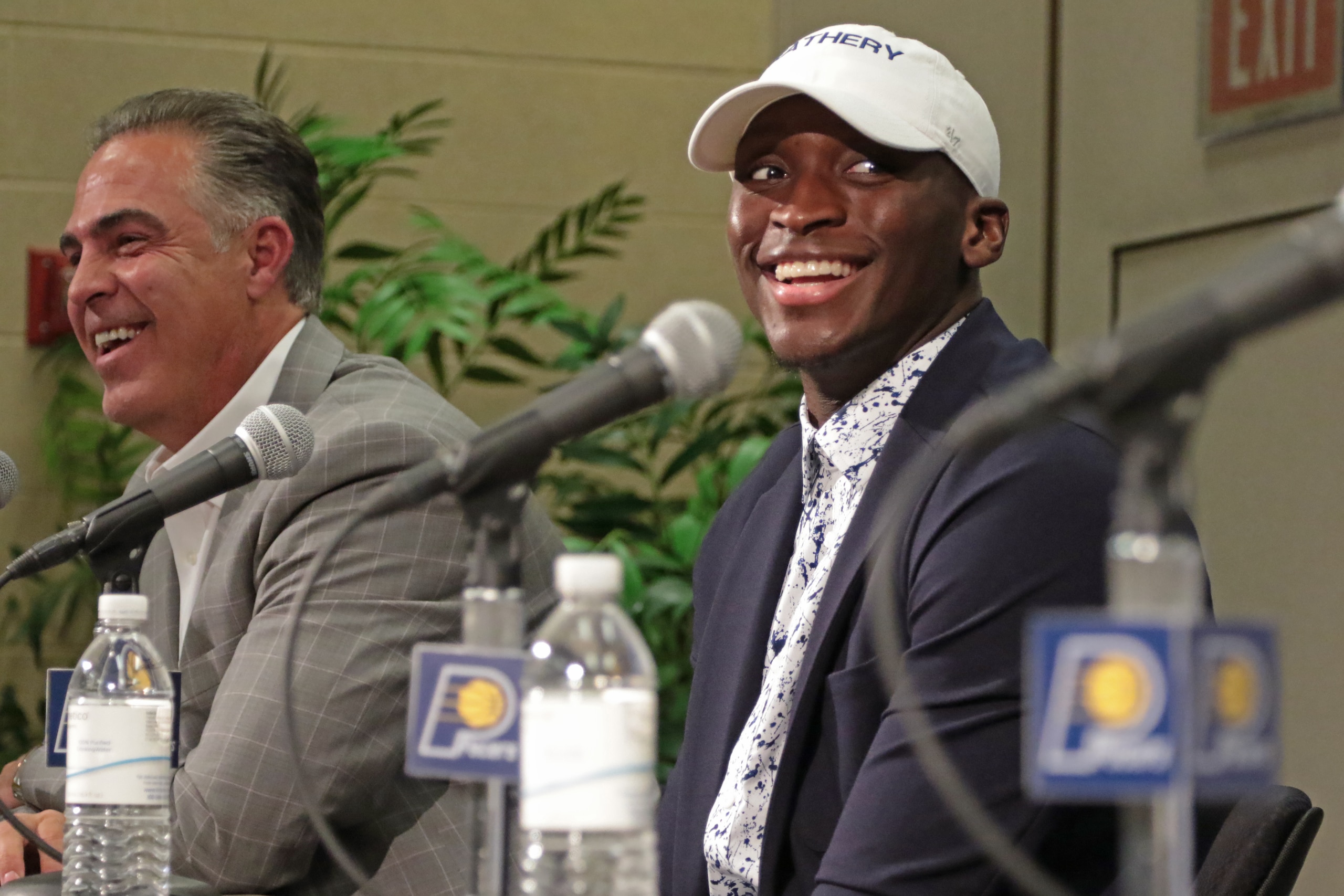
Yes, Paul George was essentially holding the Indiana Pacers hostage. By making his intentions to eventually join the Los Angeles Lakers clear, he minimized his old franchise's potential return by billing himself as little more than a one-year rental.
But still. The Pacers could've held out and gotten more for his services.
Domantas Sabonis and Victor Oladipo with no draft pick included? That's just peanuts for one of the Association's 20 best players, even if he's a flight risk after his initial go-round in a new location.
The Pacers should've been collecting upside, but they instead landed a mid-level shooting guard in Oladipo whose contract ($21 million per season for the next four years) already makes him less valuable and a big man who struggled immensely throughout his rookie season. And again, no picks were involved.
Even if both up-and-comers pan out, the Pacers surely could've gotten more if they'd exercised patience. Just waiting until the Boston Celtics figured out the Gordon Hayward situation, for example, would've done wonders.
Los Angeles Clippers: Nothing
13 of 30
What did the Los Angeles Clippers do wrong?
They had no influence over Chris Paul's decision and managed to squeeze some high-quality pieces out of the Houston Rockets once he made his intentions clear. They re-signed Blake Griffin to a reasonable contract (five years, $172.3 million), added Danilo Gallinari and made an upside play by acquiring Milos Teodosic.
Just consider how poorly the summer could've gone. LAC could've watched as Paul, Griffin and JJ Redick all walked, dooming them to a lottery-bound season in which DeAndre Jordan served as the team's only notable player.
Instead, they're prepared to enter 2017-18 with a potential starting five comprised of Patrick Beverley, Lou Williams, Gallinari, Griffin and Jordan while Teodosic, Sam Dekker and Montrezl Harrell come off the bench. Moreover, they made strong second-round plays during the 2017 draft to acquire Sindarius Thornwell and Jawun Evans, both of whom could immediately factor into the rotation.
There's accepting the bitterness of lemons. There's turning lemons into lemonade.
And then there's whatever the Clippers did to make the most of their unfortunate situation.
Los Angeles Lakers: Devaluing D'Angelo Russell
14 of 30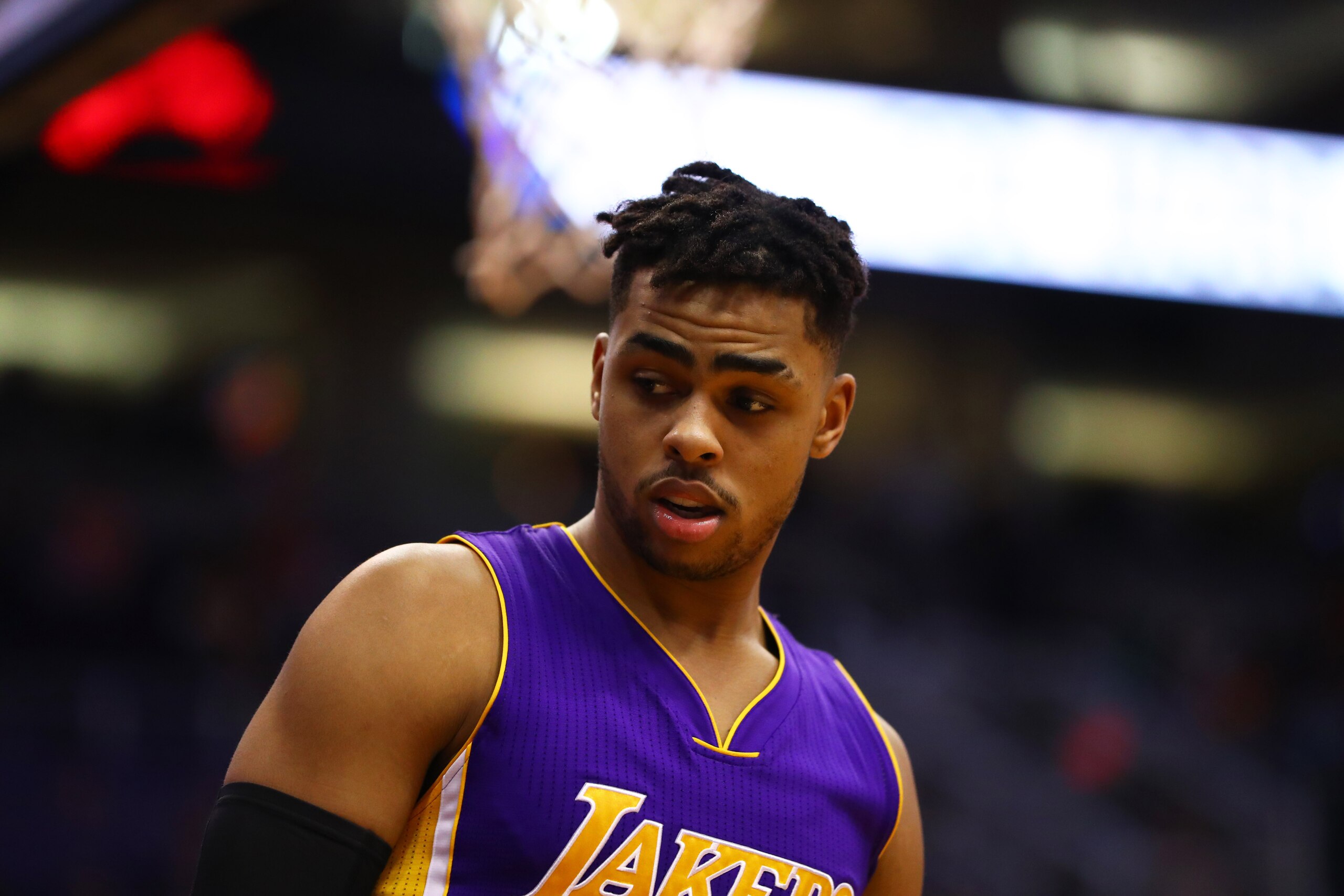
Magic Johnson has made it inordinately clear that he didn't think too highly of D'Angelo Russell. It took him all of one press conference after the young guard's departure to bash his leadership skills. But that doesn't mean he couldn't have held out and waited for a better return.
The Los Angeles Lakers didn't have to trade Russell. They could've experimented with both him and Lonzo Ball in the lineup, especially because a failure of that trial run wouldn't have sunk the guard's stock any lower than it was upon the actual trade.
Lest we forget, the Lakers didn't move Russell to get assets back. They shipped him off to the Brooklyn Nets largely to rid themselves of Timofey Mozgov's contract. That's how much he was devalued—and don't pretend Brook Lopez was a coveted prize, since he's an expiring contract whose deal lines up nicely with the team's expected pursuits in the summer of 2018.
Sure, they originally went after a lottery pick before settling for the No. 27 selection that became Kyle Kuzma, per ESPN.com's Ramona Shelburne. But if there are no takers, hold tight. You can still grab an expiring deal at the 2018 trade deadline.
Settling is bad, especially when the player you're giving up has so much untapped potential and demonstrated clear-cut offensive improvement throughout his second season.
Memphis Grizzlies: The Strange JaMychal Green Situation
15 of 30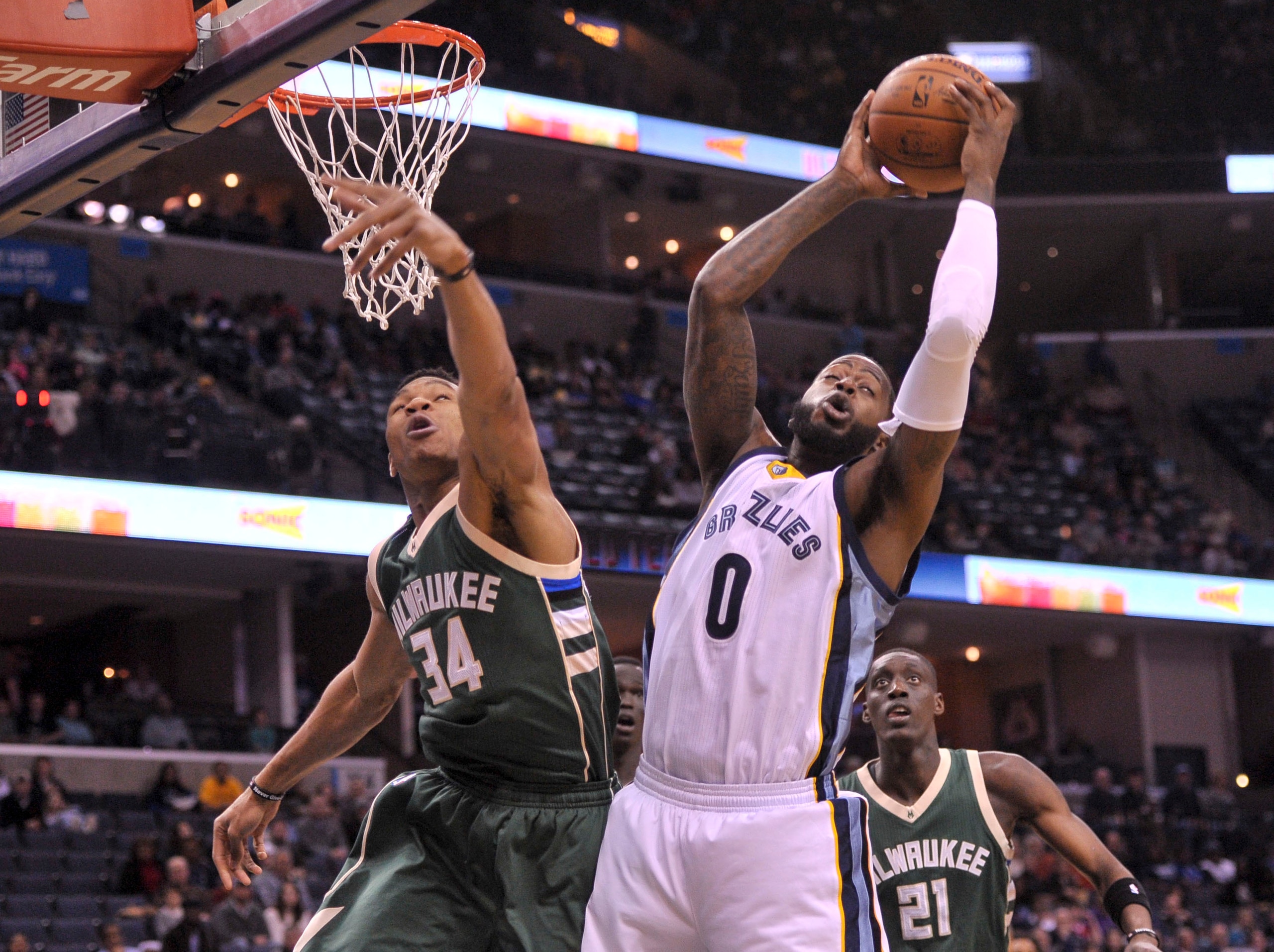
The Memphis Grizzlies have already watched as most of their depth has gone by the wayside. And after signing Mario Chalmers, they've hard-capped themselves, which makes it even more difficult to retain Tony Allen and/or JaMychal Green.
But the Green situation is especially funky.
Throughout his latest go-round on Beale Street, Green put his immense upside on display. He was a versatile defensive force, and that didn't stop him from excelling on the offensive end with his expanding range and ability to serve as a secondary distributor from any spot on the court.
We're now only one year removed from head coach David Fizdale revealing, per Peter Edmiston for the Commercial Appeal, "He has kind of that Draymond Green versatility. Maybe not off the dribble yet. But from every other aspect, I like what he brings to the table."
And then he got better. And then the Grizzlies have shown no intention of bringing him back on a reasonable deal, even as the market around him continues to dwindle and he waits for the offer sheet that might eventually come.
Should they retain him, he might not be in the best of moods. And that's if they retain him at all.
Miami Heat: Overpaying Mid-Level Players
16 of 30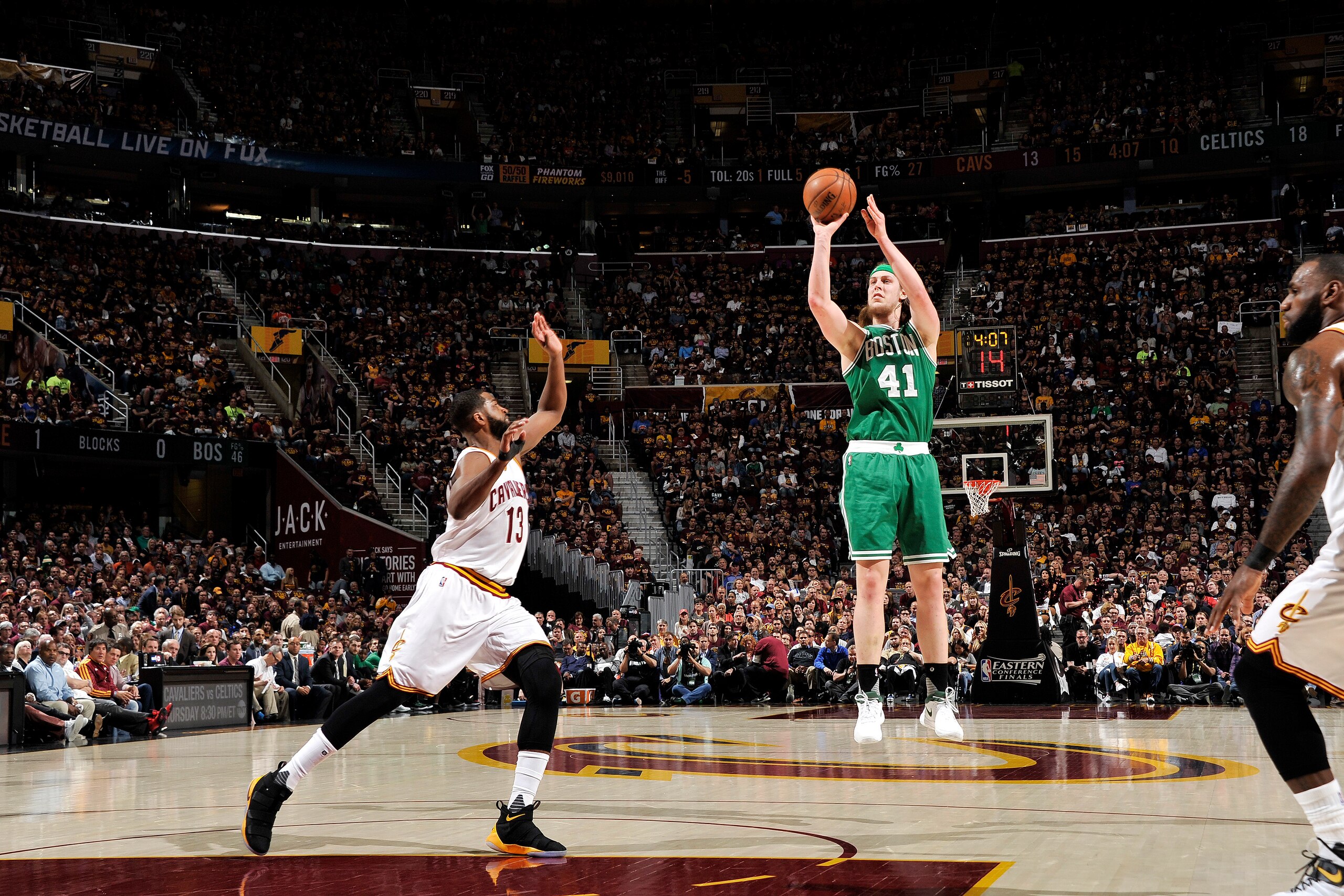
The Miami Heat brought back Dion Waiters for four years and $52 million. They signed Kelly Olynyk to a four-year deal worth $50 million. They got James Johnson to agree to a four-year contract that will pay him $60 million.
Isolated, none of these moves are disastrous. Each player could certainly perform at a level that justifies the new expenditures.
Waiters displayed so much promise after head coach Erik Spoelstra implemented a drive-and-kick focus in his offensive schemes, and the Heat had no choice but to lock him up after failing in their pursuit of Gordon Hayward, per ESPN.com's Zach Lowe. Olynyk is a solid stretch option out of the frontcourt who should look nice as the league continues its trend toward pace-and-space play. Johnson was an unmitigated stud during his breakout season.
But all together, Miami's plan is questionable.
The Heat are now committing, on average, $40.5 million per year to these three players—and that's before incorporating Tyler Johnson's ballooning contract into the calculations. Throw the combo guard into the mix as his salary swells to $19.2 million for 2018-19, and the numbers quickly become unwieldy.
It's simply too much to pay a quartet devoid of established star power.
Milwaukee Bucks: Derrick Rose Flirtations
17 of 30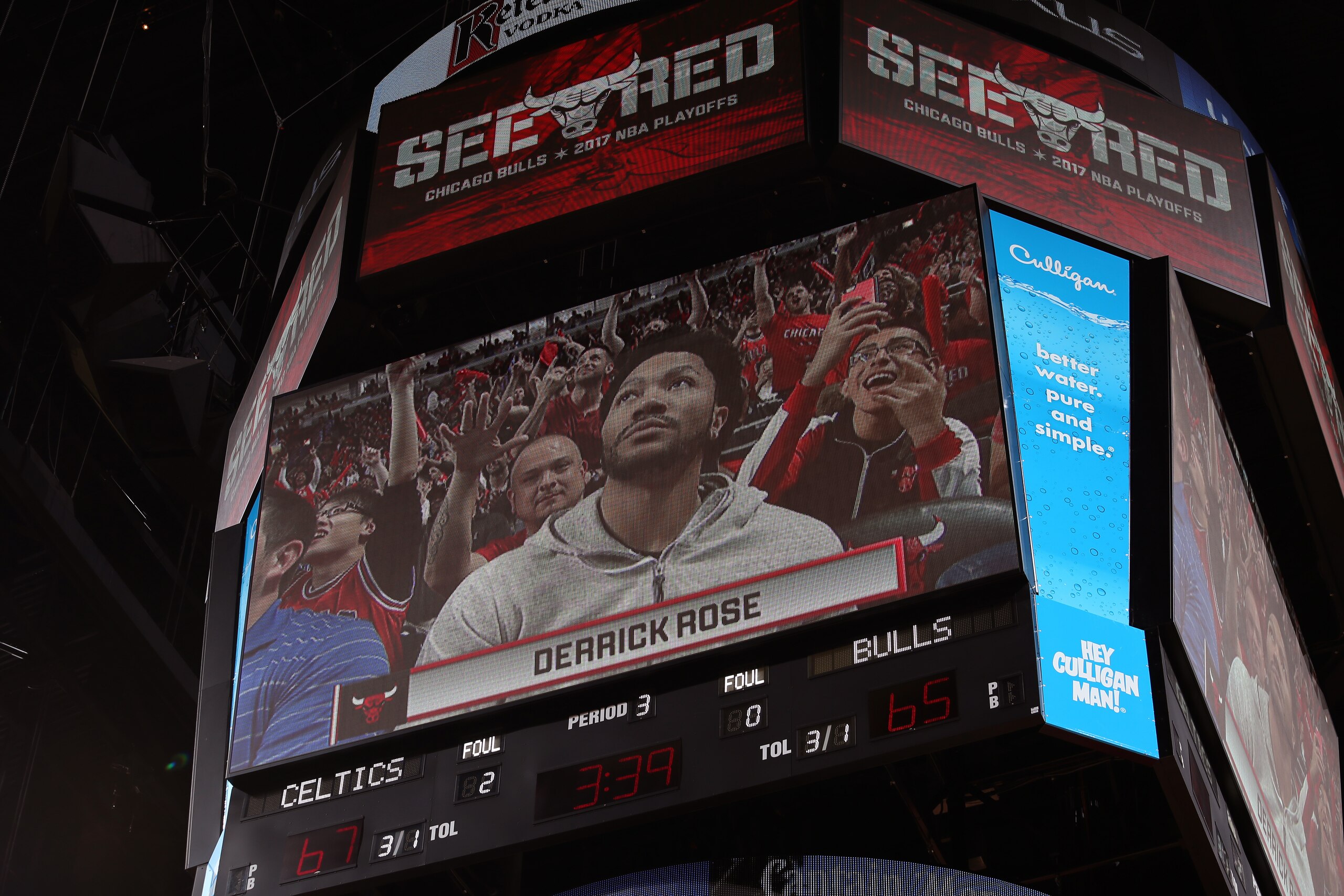
The Milwaukee Bucks haven't done much this offseason, which was largely by design.
They acquired Sterling Brown and D.J. Wilson (maybe a slight reach at No. 17) during the 2017 draft, added Bronson Koenig and Jalen Moore on two-way contracts and signed JeQuan Lewis as an undrafted free agent. But that's it. After Greg Monroe opted into his deal for 2017-18, they simply didn't have enough space to bring in many more players.
But that hasn't stopped them from flirting with Derrick Rose. No meeting has been scheduled, per Zillgitt, but there is mutual interest between the two parties.
And that's not good.
Rose can be a valuable player in the right situation. Despite his turnstile defense and overall inefficiency, he can put together some impressive scoring runs. Throw him into the mix as a sixth man meant to serve as an offensive spark plug, and he'll do well.
But that's not what the Bucks are looking for. Or, at least, it's not what they should be looking for.
They already have plenty of players capable of handling the rock (especially with Giannis Antetokounmpo still expected to run the show as a primary handler), and their second unit needs defensive help far more than it needs additional offensive production. This potential signing would have more thorns than anything else.
Minnesota Timberwolves: Signing Jamal Crawford
18 of 30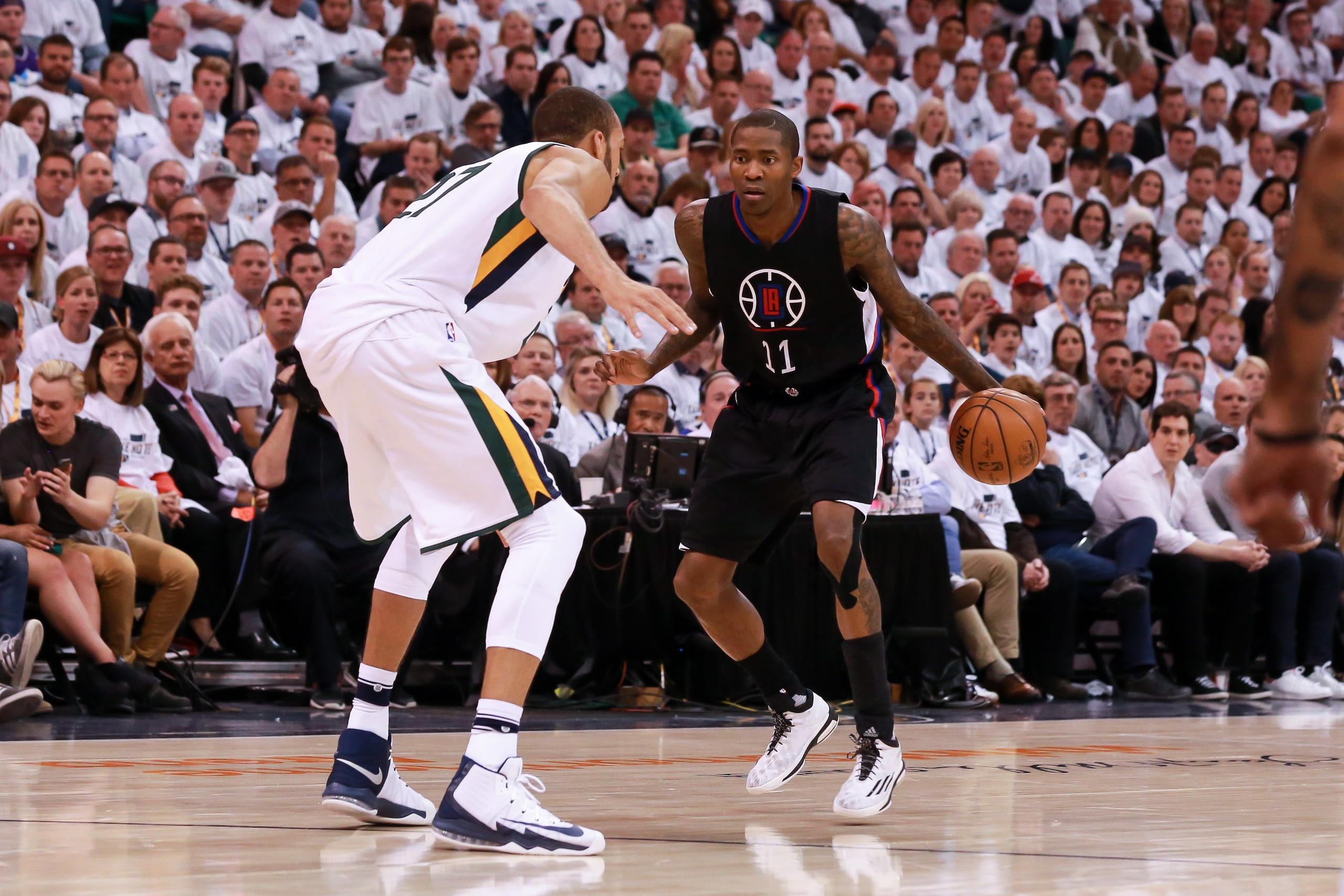
This might not be a popular opinion, but Jamal Crawford's time as a useful NBA player has passed.
The high-scoring guard still possesses lightning-quick dribbling reflexes and can make tough shots as well as anyone. But the stretches in which he misfires over and over are quite detrimental, and his overwhelming porosity doesn't help his cause. Crawford remains one of the NBA's good guys and is an easy player to root for, but we need to stay objective and realize his value has diminished rather significantly.
According to NBA Math's total points added (TPA), he finished last year as a distinct negative on both ends of the court. And that, coupled with his lofty playing time, helped him add more negative value than all but nine of the Association's 486 contributors. ESPN.com's real plus-minus (RPM) tells a similar story, as Crawford finished at No. 407 and was a substandard player on both ends.
Moreover, his style makes him a poor fit for the Minnesota Timberwolves.
Given the enduring presences of Karl-Anthony Towns and Andrew Wiggins, as well as the new additions of Jeff Teague and Jimmy Butler, the 'Wolves need to be seeking out defensive stalwarts to populate their second unit. There's no shortage of offensive firepower, which mitigates the impact of Crawford's primary skill.
New Orleans Pelicans: The Rajon Rondo-Jrue Holiday Experiment
19 of 30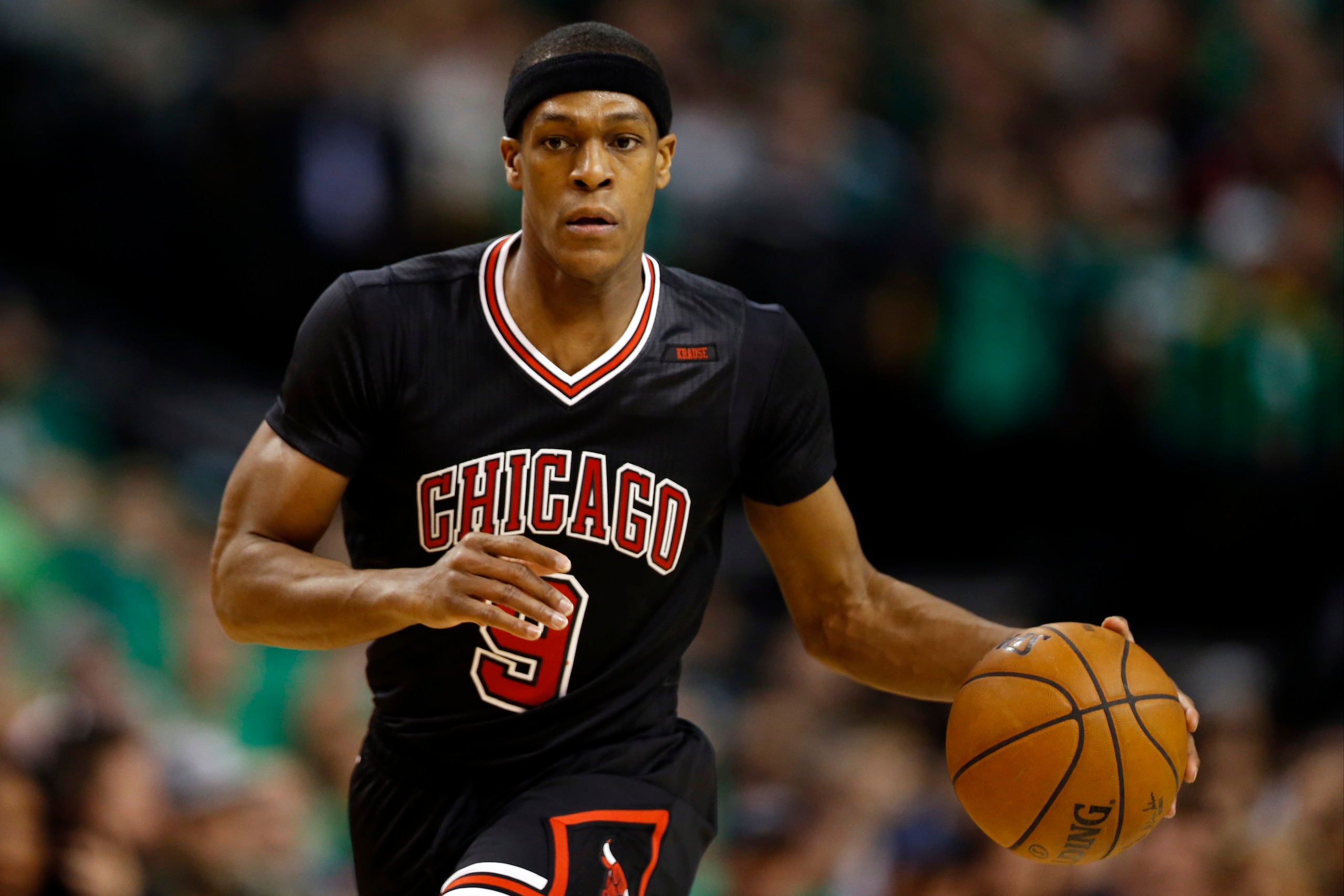
The New Orleans Pelicans are operating under some substantial pressure.
DeMarcus Cousins will be a free agent in the summer of 2018, and Anthony Davis could be placed on the trade block if the franchise doesn't suddenly start trending toward the Western Conference's upper echelon. Both departures would be disastrous, setting the organization back to Step 1 of its longtime rebuild.
Moves this offseason should've been geared toward immediate competitiveness, and that involved building up assets on the wings who would complement the two bigs and a newly re-signed Jrue Holiday. Instead, the Pelicans went out and acquired Rajon Rondo.
Not only is he a massive spacing concern for a lineup that already needs help stretching out a defense, but he and Holiday will need to figure out how they can coexist. That's a process that takes time, and time isn't a something the Pelicans have at their disposal.
Rondo could work out, but at what cost? Unless he's an immediate fit who helps propel New Orleans into the playoff picture—unlikely, given his impact the last few seasons and the fact he'll now be operating in a dual-point guard lineup—this acquisition could spell the end of an era by the bayou.
New York Knicks: Tim Hardaway Jr. Salary
20 of 30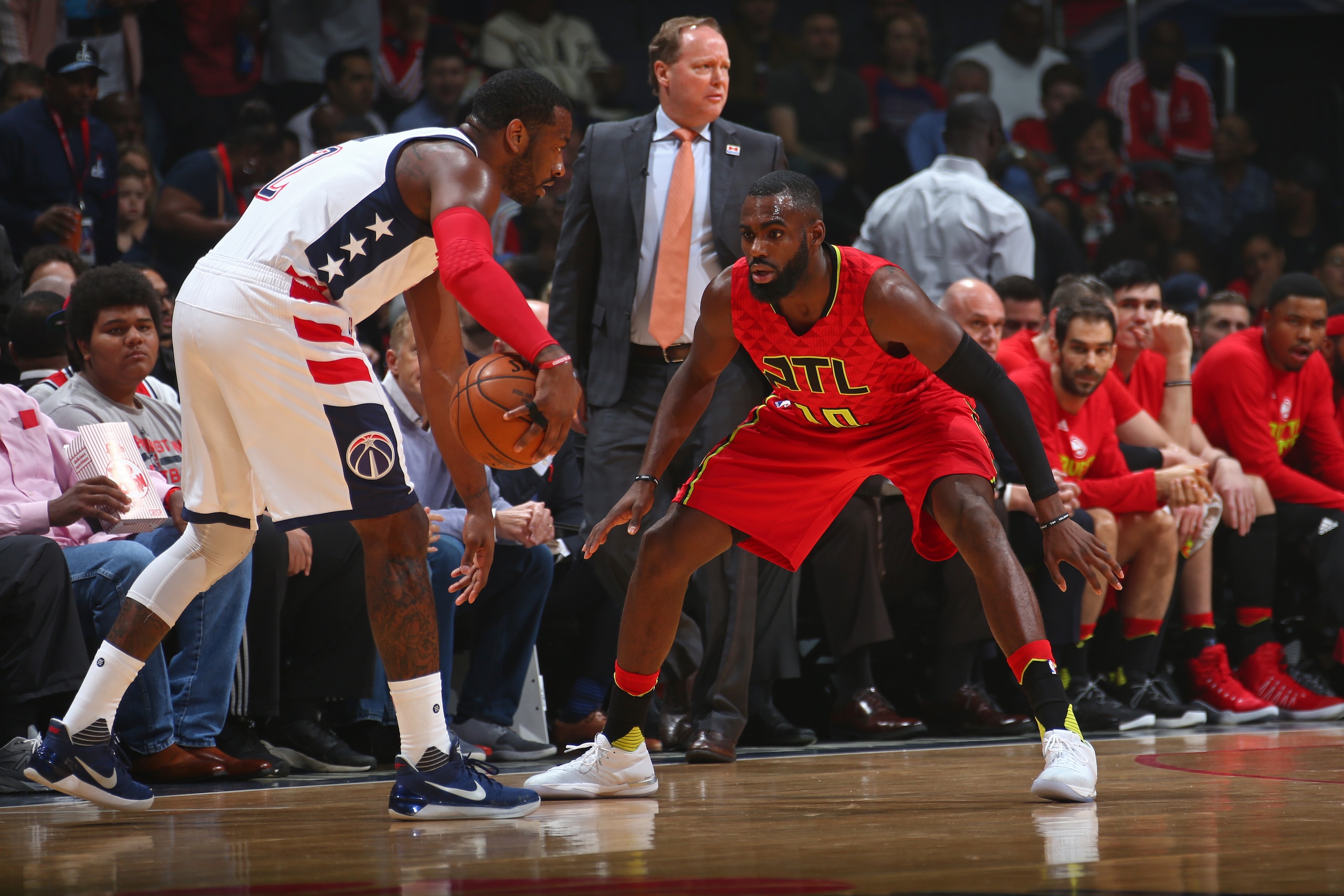
Which of these isn't like the others?
- Tim Hardaway Jr.: Four years, $71 million
- Dion Waiters: Four years, $52 million
- Tony Snell: Four years, $46 million
- Kyle Korver: Three years, $22 million
- Langston Galloway: Three years, $21 million
- Kentavious Caldwell-Pope: One year, $18 million
- Jonathon Simmons: Three years, $18 million
"The Hardaway thing was the greatest sign of their dysfunction," a rival executive told Bleacher Report's Howard Beck, referring to the New York Knicks' carousel of ineptitude. "It's a cycle that you can't get out of without an actual leader."
It's hard to tell what's most damning about the Hardaway Jr. signing.
Maybe it's the market that was set by other similar players at his position (see above). Perhaps it's the reports from ESPN.com's Zach Lowe that the Atlanta Hawks didn't want to pay any more than $48 million for his services. There's a chance that it's the sequence of events that led to this purchase: trading him for Jerian Grant, trading Grant (and other pieces) for Derrick Rose and then using the space left by Rose's departure to reacquire him for way more money.
Or maybe it's this quote from Hardaway himself, per USA Today's Steve Popper: "They [the Knicks] said straight up, 'You have to obviously improve a lot more on defense and improve a lot more on the offensive end.'"
Come to think of it, there are plenty of reasons Hardaway's deal was listed as the NBA's worst shooting guard contract by Bleacher Report's Dan Favale.
Oklahoma City Thunder: Literally Nothing
21 of 30
General manager Sam Presti won the offseason.
Trading for Paul George was a brilliant move and not just because the return was so minimal. Giving up Victor Oladipo and Domantas Sabonis should've been an easy decision, particularly when the former is already working on a contract that pays him $21 million for each of the next four seasons. George is a perfect fit next to Russell Westbrook, giving the dynamic point guard and reigning MVP a top-notch spot-up threat who can also cover up defensive deficiencies.
But was Presti done yet? Of course not!
He re-signed Andre Roberson, a legitimate Defensive Player of the Year candidate moving forward, to a bargain of a contract ($30 million over three years). Ditto for Patrick Patterson (regarding his deal, not the DPOY candidacy), and it's not like Raymond Felton is a bad find as a backup point guard.
The Thunder made the most of their resources and then some. Finding fault with their offseason endeavors is a fruitless mission.
Orlando Magic: Failure to Address Spacing Concerns
22 of 30
During the 2016-17 campaign, the Orlando Magic took more three-point attempts than only 14 teams. And that's fine. What's less acceptable is their accuracy when firing away. Connecting on just 32.8 percent of their treys, they finished ahead of only the Oklahoma City Thunder (32.7).
Clearly, spacing was an issue the Magic needed to address during the offseason.
Well, they added Jonathan Isaac during the draft at No. 6 overall, essentially replaced C.J. Watson with Shelvin Mack as the second- or third-string point guard (depending on D.J. Augustin's play) and signed Jonathon Simmons to a reasonable contract. Isaac is a spectacular talent, and Simmons could make the Magic's gamble pay off in a big way. But this incoming trio doesn't fix the spacing problem.
During his freshman season at Florida State, Isaac connected at a 34.8 percent rate from beyond the (shorter) arc, and he took only 2.8 long-range attempts per game. Mack is coming off a campaign in which he shot 30.8 percent from three-point territory and dropped his career mark to 32.1 percent. Simmons posted a miserable 29.4 percent clip as a sophomore with the San Antonio Spurs.
Somehow, the Magic may have compounded their biggest offensive problem rather than solving it.
Philadelphia 76ers: Letting Markelle Fultz Play in Summer League
23 of 30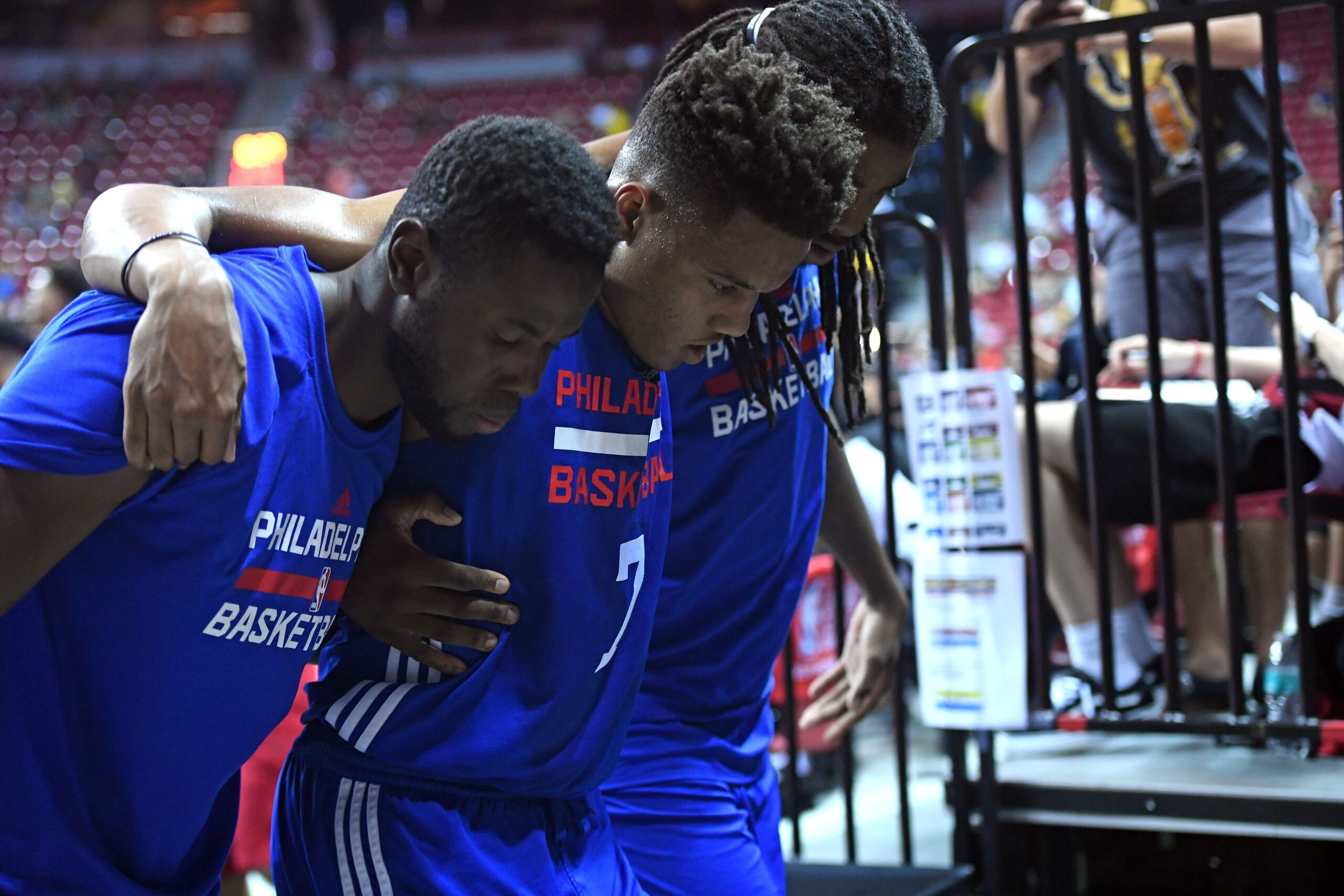
The Philadelphia 76ers didn't do much worthy of drawing complaints this summer.
Signing JJ Redick to a one-year balloon deal was a fantastic move that immediately expedites the rebuild and should push them into playoff contention. The same applies to the Amir Johnson signing, though admittedly to a lesser extent. Picking up Robert Covington's team option was an easy decision, and management got bold by trading up to draft Markelle Fultz with the top overall selection.
Now, just exercise some caution with the players. Please?
The Sixers have already seen too many of their biggest names miss significant time, and they don't want to deprive the world of watching Fultz during his true rookie season. Throwing him into the mix for summer league wasn't necessarily a poor choice—almost every healthy rookie participates, after all—but that didn't make it any less terrifying when he needed help off the floor after spraining his ankle.
One of the Rookie of the Year favorites, Fultz should be back before training camp begins. But the last thing Philly needs is any more bad injury luck.
Phoenix Suns: Keeping Eric Bledsoe
24 of 30
Devin Booker. Tyler Ulis. Josh Jackson. TJ Warren. Marquese Chriss. Dragan Bender. Alan Williams. Alex Len (if he re-signs).
The Phoenix Suns are tantalizingly close to a full commitment on the youth movement, but they have one piece still in the way: Eric Bledsoe.
To be clear, Bledsoe is an incredible player. The 27-year-old deserves All-Star consideration when he's healthy and may well be the league's most underrated star. According to NBA Math's TPA, only 27 players added more on-court value during the 2016-17 campaign, and that score came despite the athletic floor general suiting up only 66 times before Phoenix shut him down for the stretch run.
But he's in the way now.
Bledsoe requires constant touches on the offensive end, and those come at the expense of the many youngsters populating the desert-based backcourt. It would behoove Phoenix to turn over control to Ulis and the other up-and-comers in an attempt to parse out their levels as soon as possible. Plus, someone is bound to offer a substantial return for Bledsoe's services.
The fact he remains on the Phoenix depth chart is easily the organization's biggest offseason misstep.
Portland Trail Blazers: Overloading the Frontcourt
25 of 30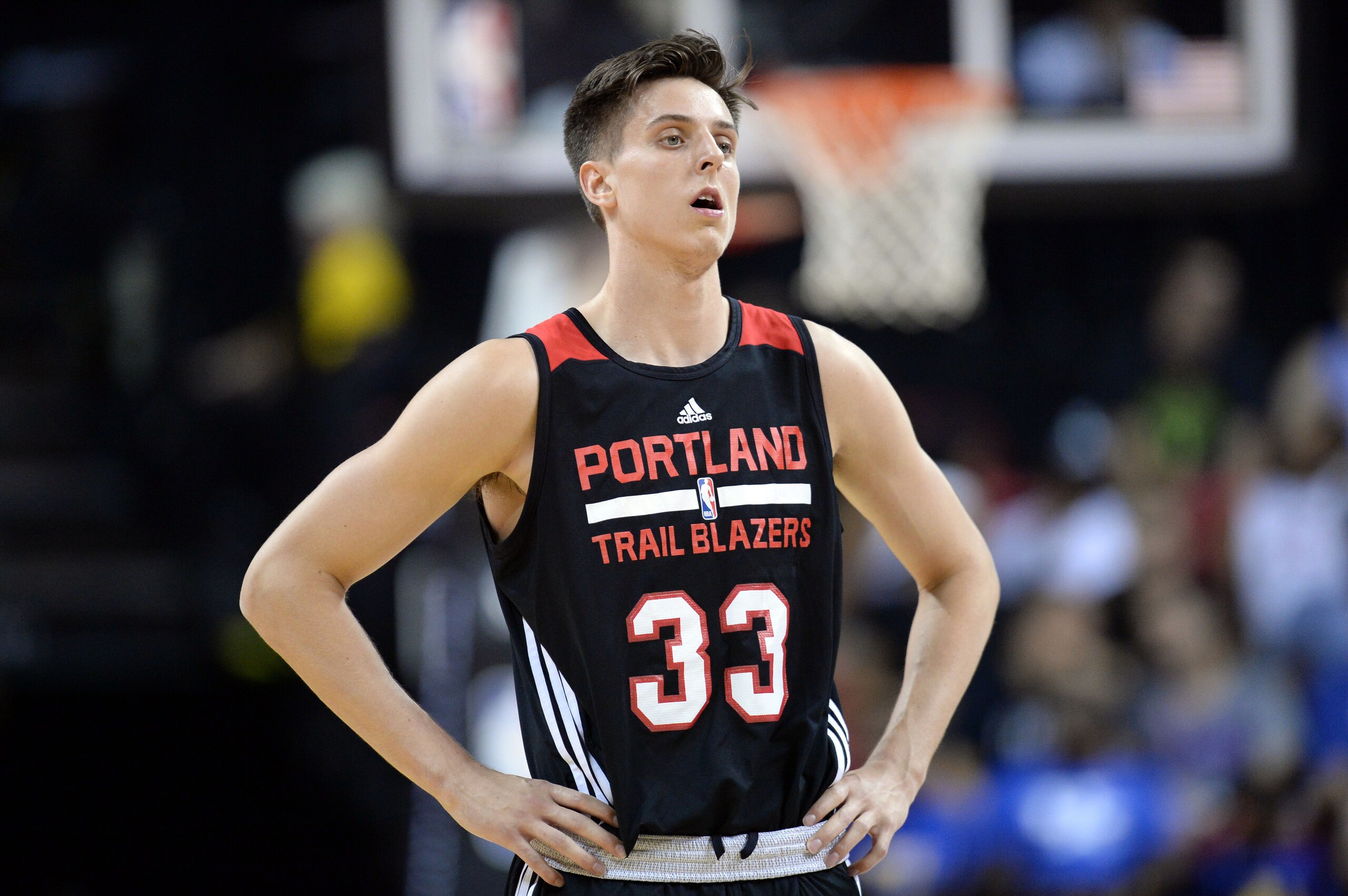
Analyzed in a vacuum, none of the Portland Trail Blazers' offseason decisions have been remotely troubling. Basically, all they've done is waive the dead weight that was Festus Ezeli's contract and then acquire Zach Collins and Caleb Swanigan through the draft.
But adding two players at the same position was a bit questionable, especially because the Rip City frontcourt was already overcrowded. The overlapping talent could minimize the available playing time for any one player and stunt—at least partially—development.
Using Rotoworld's depth charts, we can see the Blazers now have Al-Farouq Aminu, Swanigan, Noah Vonleh and Collins listed at power forward. Meanwhile, Jusuf Nurkic, Meyers Leonard and Ed Davis are still on the books at center.
How in the world is head coach Terry Stotts supposed to play everyone?
There's a simple answer: He can't.
Sacramento Kings: Bringing in George Hill
26 of 30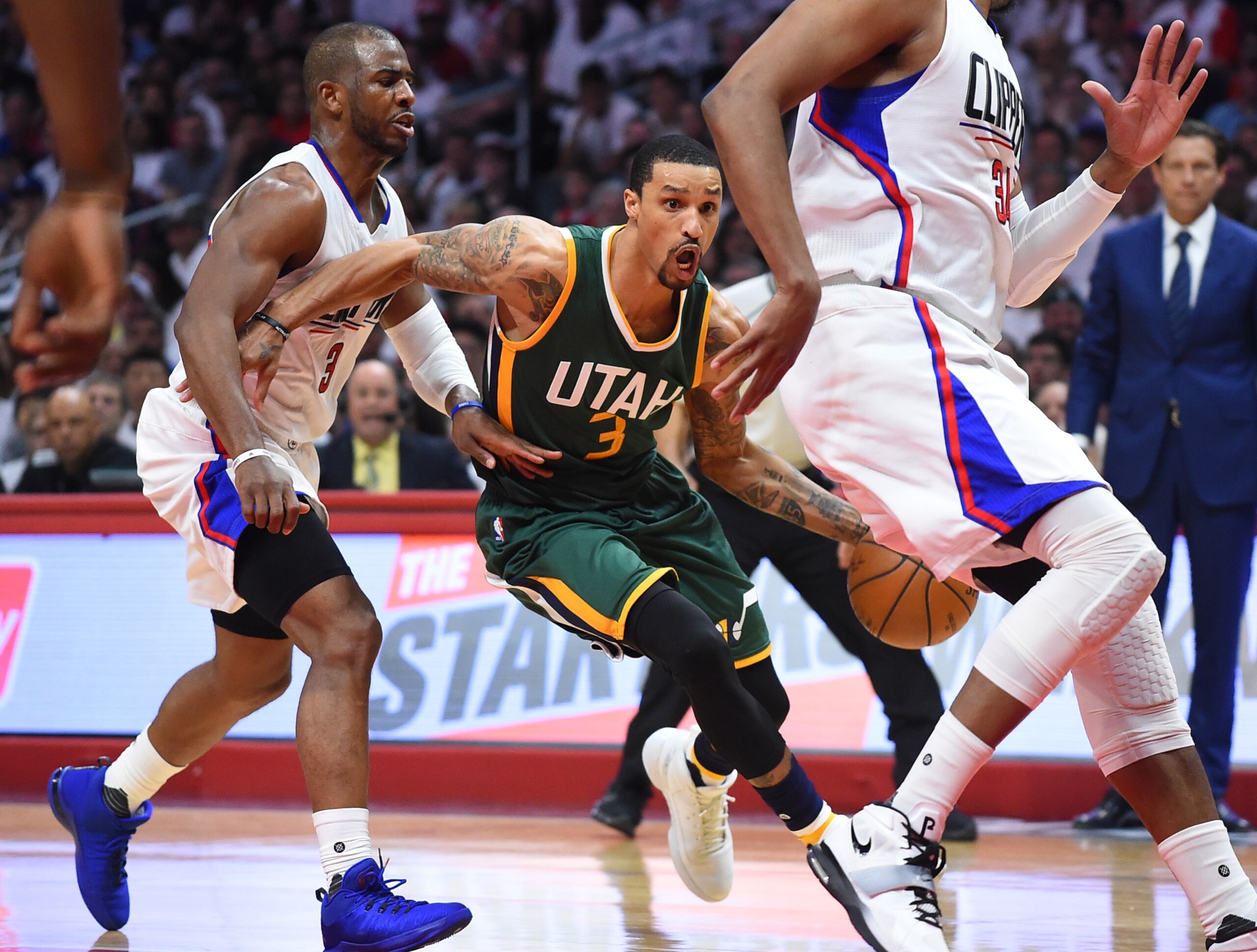
It's possible to overload on veteran presences, and the Sacramento Kings moved past that critical point.
Acquiring Zach Randolph and Vince Carter was fine. But bringing aboard George Hill was a bit unnecessary, since his presence could block the development of the franchise's most promising prospect.
To be clear, we're picking at nits here. The Kings have done a fantastic job recovering from the DeMarcus Cousins trade, and they've acquired an impressive amount of talent over the summer. This is nothing more than a minor gripe, though it's still a gripe all the same.
De'Aaron Fox, the No. 5 overall pick in this year's draft, needs to be playing. And with Hill aboard, Sacramento is either looking to a strange backcourt comprised of two 1-guards who don't necessarily complement each other or sitting one of the two. And then the choice is between holding Fox back or risking a disgruntled Hill if he's not playing as much as he could've in a different location.
This could work out. It very well might.
But there's too much risk involved, and Hill's presence still isn't pushing the Kings into playoff contention in the ridiculously stacked Western Conference.
San Antonio Spurs: Minimizing Depth
27 of 30
Dewayne Dedmon? Gone to the Atlanta Hawks. Jonathon Simmons? Gone to the Orlando Magic. David Lee and Pau Gasol are free agents, though there's a good chance both return to their old stomping grounds with the San Antonio Spurs, just like Patty Mills and Manu Ginobili, per Wojnarowski.
But even if they do, this feels like the thinnest rotation San Antonio has boasted in quite some time, especially with Tony Parker still recovering from his season-ending leg injury and Rudy Gay working his way back from an Achilles rupture.
Take a peek at the projected depth chart, per Rotoworld:
- Point Guard: Tony Parker, Dejounte Murray, Patty Mills
- Shooting Guard: Danny Green, Manu Ginobili, Bryn Forbes, Brandon Paul, Derrick White
- Small Forward: Kawhi Leonard, Rudy Gay, Kyle Anderson, Jaron Blossomgame
- Power Forward: LaMarcus Aldridge, Davis Bertans, Joffrey Lauvergne
- Center: Cady Lalanne
Kawhi Leonard alone guarantees a playoff spot, and the Spurs should again compete for one of the West's best records. But it's hard to look at that depth chart and feel too inspired unless Ginobili can continue staving off Father Time, while Parker and Gay experience full recoveries from their respective major injuries.
Of course, this all just means head coach Gregg Popovich will turn the third-stringers into future All-Stars and beat the system once again. The Spurs' reign near the top of the West is as inevitable as it is everlasting.
Toronto Raptors: Nada
28 of 30
The Toronto Raptors were in quite the pickle.
Should they let Kyle Lowry walk and allow themselves to drop down the Eastern Conference hierarchy? Should they pay him a max deal as he moves deeper into his 30s and hope the team is able to continue progressing?
Ultimately, they opted for the latter route, handing the All-Star floor general a three-year deal worth $100 million. But that wasn't all, as they retained Serge Ibaka, brought in C.J. Miles to replace a traded DeMarre Carroll and landed a potential draft-day steal in the injured OG Anunoby. At the least, they've stagnated near the top of the NBA's weaker half.
But what if they improve?
Miles is a tremendous fit on this roster, and the Raptors will enjoy more continuity now that Ibaka has an offseason to shore up his defensive rotations and build upon his impressive postseason performance. Unlikely as it may sound, they're still just a LeBron James injury (or—gasp—trade?) away from overtaking the Cleveland Cavaliers, and giving yourself the opportunity to luck into a deep playoff run is valuable in and of itself.
Utah Jazz: Nothing This Year
29 of 30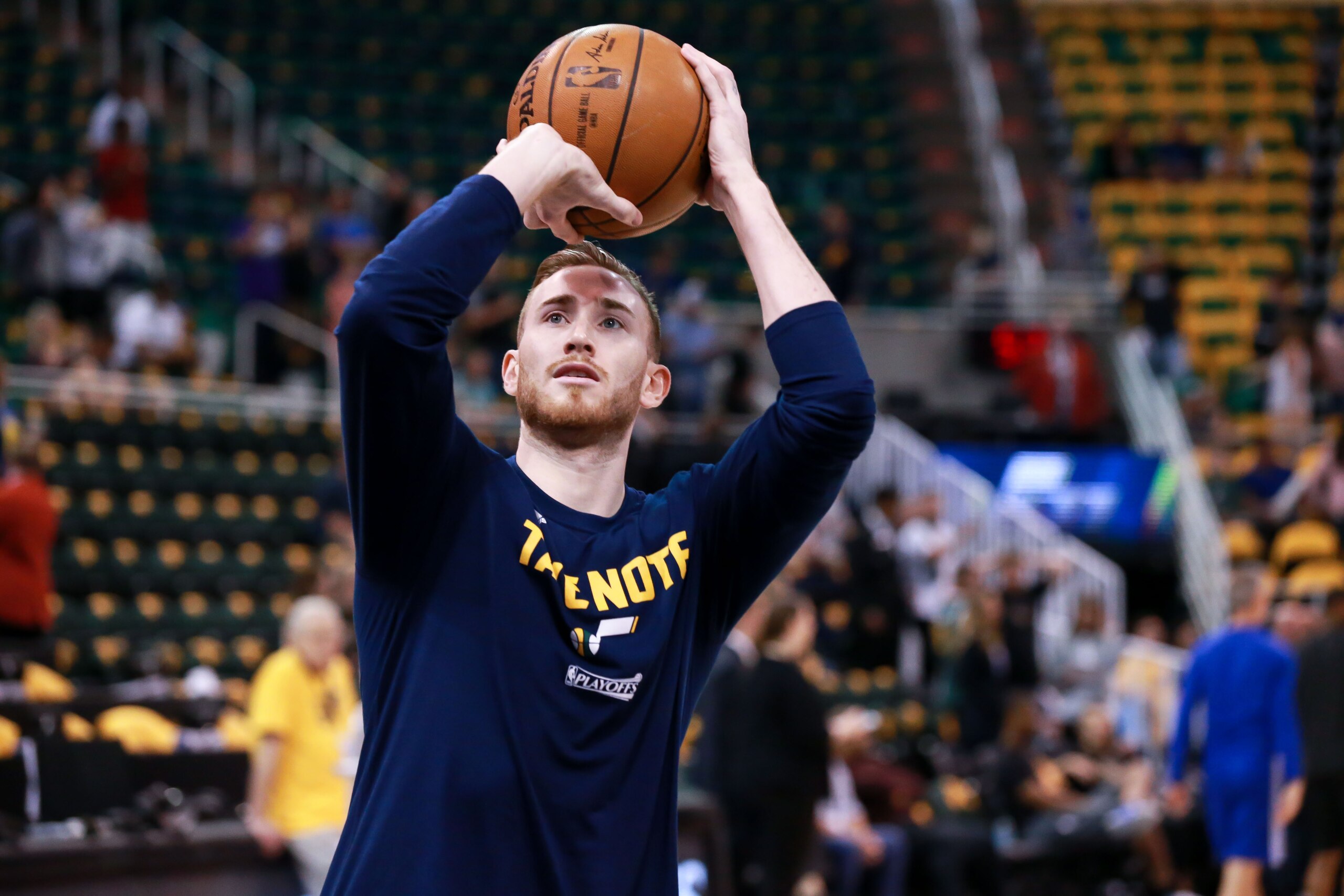
The fact Gordon Hayward spurned the Utah Jazz's contract offers to join the Boston Celtics was not a misstep by the Salt Lake City organization. It did everything correctly, building a team of homegrown talents that was capable of competing with the best squads in the Western Conference.
Sure, the Jazz could've stayed healthier. But ultimately, nothing they did was going to prevent Hayward from reuniting with his college head coach in Brad Stevens while wearing a green uniform.
Well, kind of.
The Jazz didn't make any major errors this offseason, and they recovered nicely by bringing in Ricky Rubio and retaining the rest of their players. Acquiring draft rights to Donovan Mitchell, who dominated on both ends during summer league, was a nice touch as well.
But if we travel back in time, we can find a crack emerging. What if the Jazz had come to terms with Hayward on a five-year extension back in 2014 rather than opting to let him test the market? It would've been a risky endeavor since they didn't yet know how good he was going to become, but that still would've secured his services for at least a few more years.
Washington Wizards: John Wall's Comments
30 of 30
The Washington Wizards were always going to match any offer for Otto Porter Jr., which was the correct decision while he was coming off such an impressive breakout campaign. He might not score like most max players, but his impact was on the same level thanks to his versatility and remarkable spot-up prowess.
John Wall should've known this. And John Wall should've avoided publicly dragging his teammate.
Here are the point guard's comments, per Marc J. Spears of ESPN's The Undefeated:
"Look at our team. We are one piece away. We have the point guard, we have the shooting guard, we have the center, we have the power forward. Our 3-man, [Otto Porter Jr.], did great for us. You can't take nothing away from what he did. But, [Paul George] is a guy that can guard LeBron [James] and go back at LeBron. It's a piece that you're going to need to win. If you don't have a guy who can do that, you don't have a chance. ...
"You got to add another star. You got to add another piece. You got to have three guys. And that's what it's looking like."
Reading between the lines isn't difficult here, no matter how Wall might've tried to subsequently apologize and clarify his comments with FanRag's Ben Standig. In fact, this "clarification" might've made things worse:
"It's nothing wrong about it. You understand I know [what] Otto means for us here. At the end of the day, as for any team, if you can improve a position—Otto is going to be a great player for us, a great role player for a lot of teams. There's a difference between a role player and a superstar. There's a big difference."
Get ready for some tension in the nation's capital.
Adam Fromal covers the NBA for Bleacher Report. Follow him on Twitter: @fromal09.
Unless otherwise indicated, all stats from Basketball Reference, NBA.com, NBA Math or ESPN.com.
.jpg?w=2560 "Dart Believed to Have Sprained MCL")

.jpg?w=2560 "WWE Raw Live Grades 🔠")
.jpg?w=2560 "Ertz Returning to Eagles")
.jpg?w=2560 "Dak Addresses 'Dumb' Old Romo Tweet 🤣")

.jpg?w=2560 "Follow Raw As It Happens 👊")