
Breaking Down Each NBA Team's Early-Season Trade Bait
Early-season NBA trade talk is in the air.
But only because we're putting it there.
Trade rumors and speculation tend to heat up just prior to the February deadline, but the league is nearing what can sometimes be an equally important date on the calendar: Dec. 15.
That's when (most) free agents who signed contracts over the offseason can first be dealt. And that, in turn, marks the unofficial beginning of the NBA's trade season.
In advance of those unsanctioned festivities, the powers that be—as in, our innately compulsive need to riff on trades—demand we take stock of every team's most enticing asset.
Those not yet eligible to be traded are noted as such. Above all else, we're looking to keep this discussion semi-realistic. Inclusions are not based solely on existing rumors, and this isn't a referendum on every team's best player or someone they might deal down the road.
This is instead a look at the most appealing and most believably and immediately available asset in every team's possession, determined in large part by positional logjams, cap situations and areas of need.
Get it? Got it? Good. I'll see you on the other side of the "next" button.
Atlanta Hawks: Kent Bazemore
1 of 30
Kent "DeMarre Carroll Who?" Bazemore.
Yup, it has been that type of season for Kenneth Lamont Bazemore Jr. He's emerged as the ideal three-and-D weapon for the Atlanta Hawks in Carroll's absence. Given the unfathomable rate at which he's drilling catch-and-shoot three-pointers, it's not unreasonable to posit that 2015-16 Kent Bazemore is better than 2014-15 DeMarre Carroll.
But only because it's true.
Unfortunately for the Hawks, they're about to run into the same issue with Bazemore that they did with Carroll. He's playing through the final season of a two-year deal, so not only is he speeding toward free agency, but Atlanta won't own his Bird rights.
That means the Hawks don't have the luxury of going over the salary cap to re-sign him. And even if they could, they have Al Horford's foray into free agency to consider.
Rather than pay Bazemore what, in next summer's cap-rich market, might amount to $10 million-plus annually, the Hawks can try capitalizing on his breakout performance. His $2 million salary won't allow them to take back much in return, but a team that's fully committed to his future and/or a contender desperate for depth may be willing to fork over a future first-rounder.
And with a deluge of other wings on the roster to boot (Tim Hardaway Jr., Justin Holiday, Kyle Korver, Thabo Sefolosha, etc.), Bazemore falls short of indispensable.
Boston Celtics: Brooklyn's 2016 First-Round Pick
2 of 30
Dear Louisiana State University's Ben Simmons,
Enclosed is a Boston Celtics jersey with your name and number. (Don't worry, K.C. Jones has given us the OK to adorn you in No. 25). Please try it on to make sure it's an adequate fit.
Much love,
Your (potentially) future team.
P.S. We've included a Sacramento Kings jersey for you to test out as well—you know, just in case the DeMarcus Cousins rumor mill ever gets hot again.
See? This isn't hard.
The Celtics will receive the Brooklyn Nets' 2016 first-round pick free and clear after this season. It doesn't matter where it falls. The selection is unprotected. If Brooklyn snags the top pick in this year's draft, it's going to Boston.
And the Nets very well could end up with that top slot. A tactical disaster on both ends of the floor, they figure to contend for one of the NBA's three worst records all season long.
A league source did tell the Boston Herald's Steve Bulpett that "he can’t see" Celtics president Danny Ainge "giving that thing up unless it’s for a sure thing." But when combined with any combination of the team's many tangible assets, that Brooklyn pick is enough to get Boston in negotiations for any sure thing (read: superstar) who might become available.
On a totally random, not-at-all-related note: Are the Oklahoma City Thunder entertaining trade proposals for Kevin Durant these days or nah?
Brooklyn Nets: Thaddeus Young (Dec. 15)
3 of 30
Speaking of hopeless basketball teams that need to reverse course, like, yesterday...What's up, Brooklyn?
Thaddeus Young isn't going to nab the Nets a superstar. But he's a stat-stuffing tweener on a hyper-reasonable four-year, $50 million deal who can sometimes be used as a point forward.
Basically, he's actual trade bait for a franchise that has virtually none.
Brook Lopez is still doing work on the offensive end and blocking shots on the defensive end, but until the Nets stumble across another high-scoring center with All-Star lines, he's too irreplaceable.
No suitor is going to swallow the $24.9 million Joe Johnson is earning. Any move the Nets make should aim to significantly trim their future salary commitments, and they would need to accept too much financial fodder in return to justify flipping Johnson's expiring pact.
Bojan Bogdanovic and Rondae Hollis-Jefferson should hold some outside value. But, as Brooklyn's lone worthwhile developmental projects, they should be untouchable.
That leaves Young.
Moving him would aid Brooklyn's plunge down the standings, assuring Boston of an even tastier draft pick this June. And that—well, that sucks. But the Nets cannot be concerned with such optics. That commitment already looks bad. The gap between "terrible" and "terribly terrible" isn't that wide.
The goal for them is to amass some picks of their own. They don't have the unrestricted rights to their own selection until 2019, and Young might fetch a low-level first-rounder—a return the pick-poor Nets are in no position to rebuff.



Charlotte Hornets: Cody Zeller
4 of 30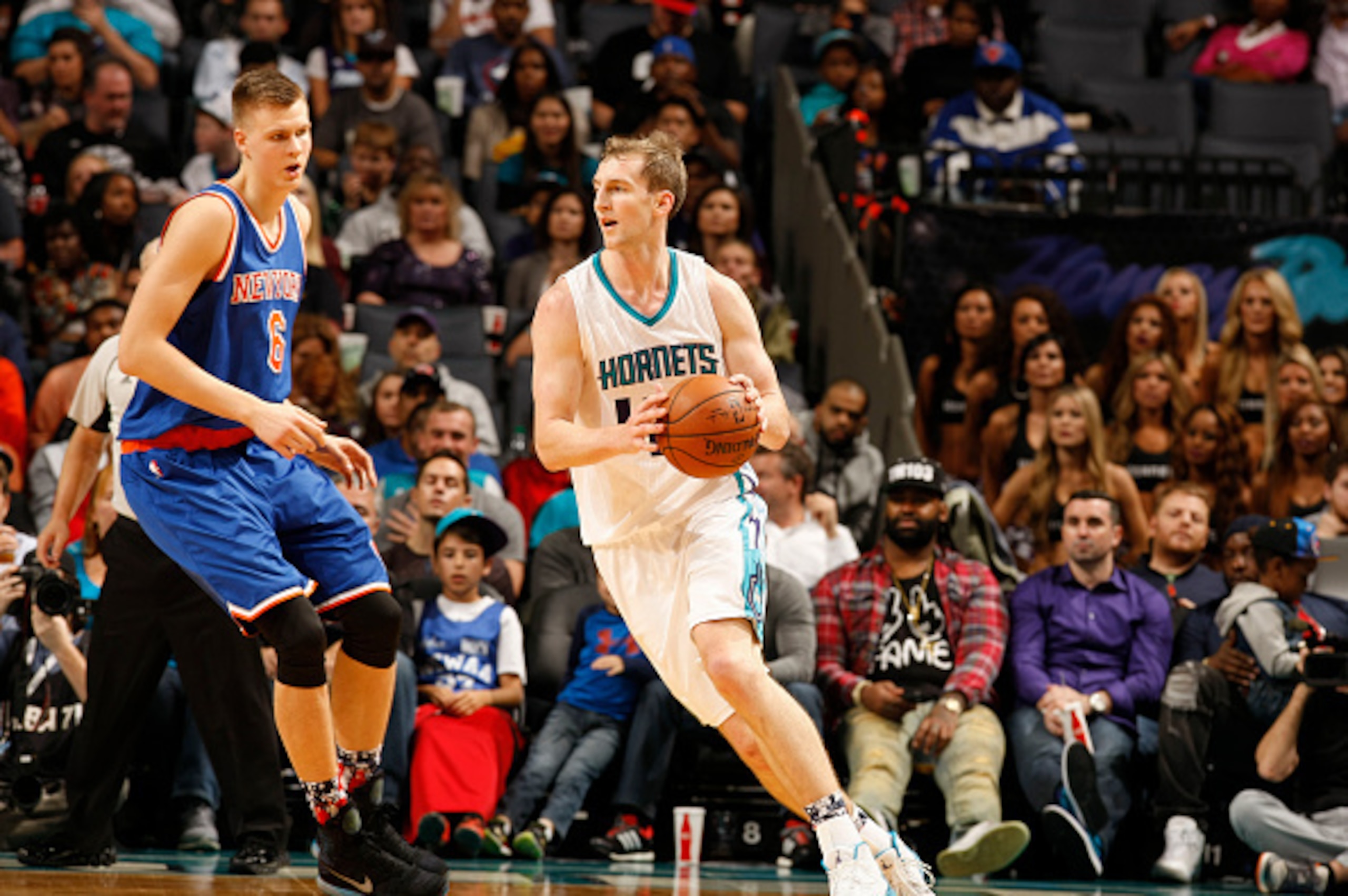
Cody Zeller's role with the Charlotte Hornets is diminishing.
Head coach Steve Clifford has adopted a more floor-spacing-friendly offensive approach, and despite Zeller's occasional attempts to journey beyond the arc, he's nowhere close to a palatable fit for Charlotte's system.
Spencer Hawes and rookie Frank Kaminsky are better suited to help headline the Hornets' three-point-happy movement. Kaminsky specifically needs to play more, and the absence of Zeller would enable him to see the court with some semblance of consistency.
Al Jefferson, now almost 31 years old, shouldn't factor into this decision. But this is the mediocrity-obsessed Hornets we're discussing. There's a good chance they make re-signing him a priority this summer, indefinitely complicating an already much-too-complex frontcourt rotation.
Though Zeller has never lived up to his top-four draft status, he's still a top-four pick. He has been an above-average passer in the past, he shot the lights out of arenas during the preseason and interested teams needn't worry about paying him big money until 2017, when he's slated for restricted free agency.
Of course, Zeller's financial appeal is also part of the problem. His $4.2 million salary won't net the Hornets much in the way of impact players. But when paired with Marvin Williams' expiring deal, he's a vessel through which Charlotte can absorb a more expensive unwanted deal that advances their push for a low-seeded playoff spot.
Well, that or the Hornets can try to glean a future first-rounder out of Zeller's unknown, and therefore still promising, ceiling.
Chicago Bulls: Taj Gibson
5 of 30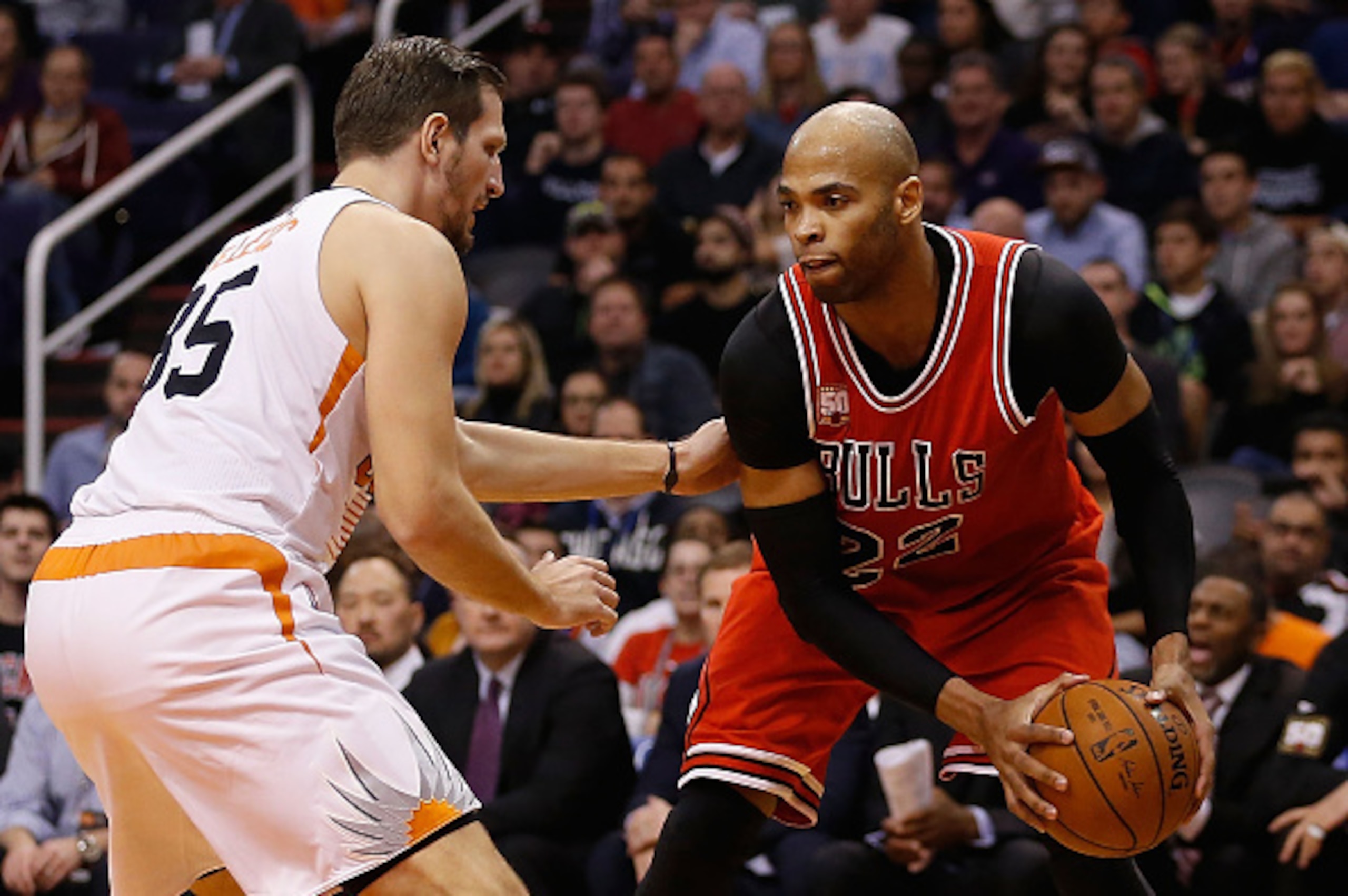
Now that Doug McDermott and Nikola Mirotic are both staples in the frontcourt rotation, the Chicago Bulls need to do something about the Pau Gasol-Taj Gibson-Joakim Noah tricycle.
I could say Gasol is too valuable for the Bulls to ship out from an offensive standpoint. But then I'd be lying. At 35, with more than 35,000 minutes on his treads, he's just too old and unlikely to grab Chicago anyone of consequence.
Noah's untimely regression, meanwhile, rages on. His player efficiency rating has never been lower, and he's set to become a free agent. The going rate for a declining flight risk isn't anything special.
Gibson is the more enticing trade bait. His minutes are down and he remains a wash offensively, but he's still among the best rim protectors in the league.
Owed just $17.5 million between now and the end of 2016-17, he's a contractual steal, even for a glorified and aging specialist. He should be enough on his own to help the Bulls add more qualified insurance at point guard, behind or in front of Derrick Rose.
Taj Gibson and E'Twaun Moore for Justin Anderson, Devin Harris and John Jenkins (on Dec. 15) anyone?
Cleveland Cavaliers: Brendan Haywood Trade Exception
6 of 30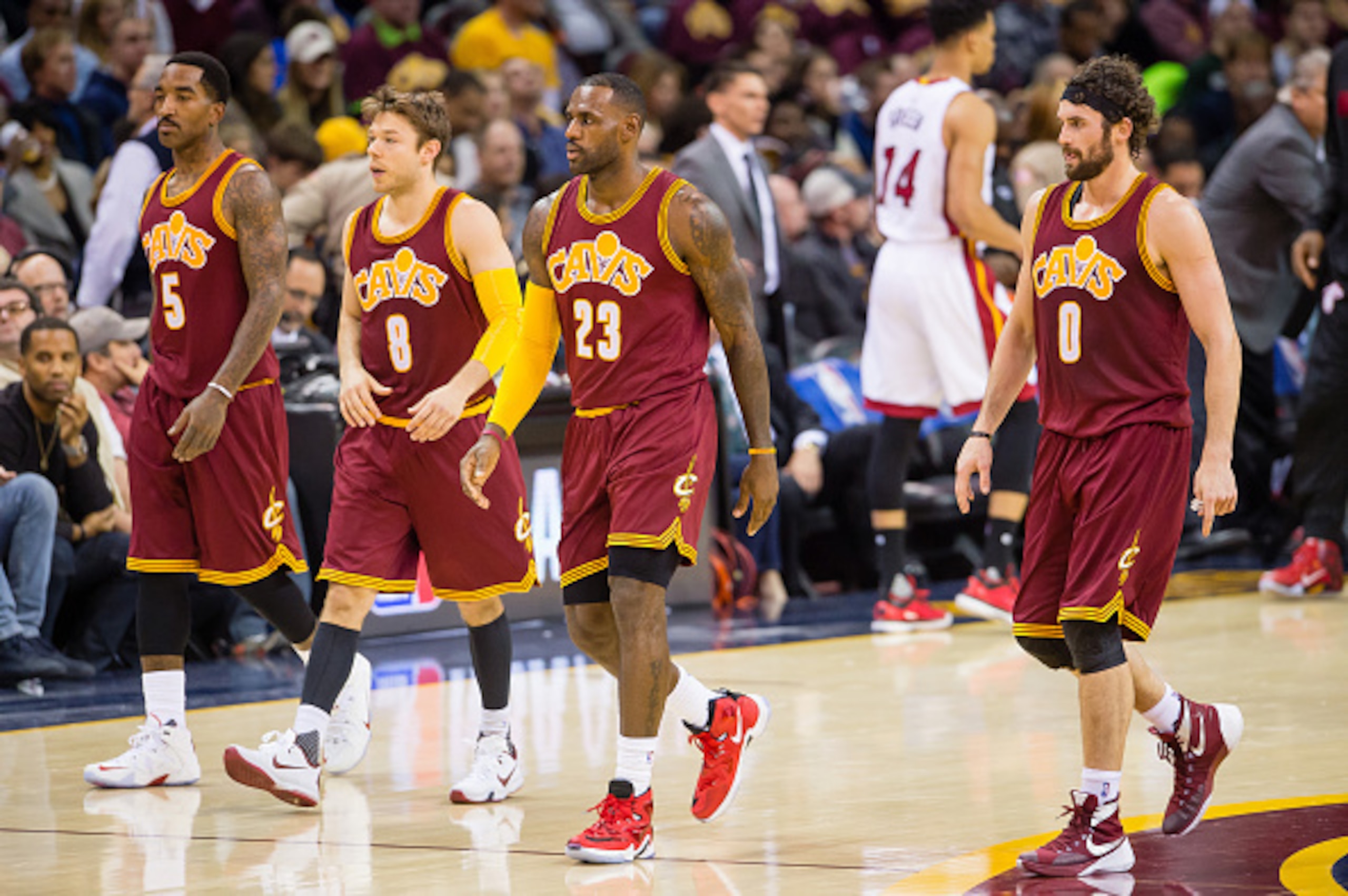
Taxed out to the high heavens, the Cleveland Cavaliers have one last card up their sleeve that, provided the ideal situation presents itself, can help them significantly upgrade the roster: Brendan Haywood's trade exception.
This Haywood exception is worth just over $10.5 million, and it permits the Cavaliers to acquire a player without sending anything or anyone back in return. They cannot package it with another player, but as a tax-paying team, they can absorb 125 percent plus $100,000 of what the exception is worth. And that gives Cleveland the power to acquire one player making up to $13.2 million.
Owner Dan Gilbert was evasive at best when asked if the Cavaliers would use the Haywood exception, according to ESPN.com's Brian Windhorst. Now that his team is towering over the rest of the Eastern Conference, and doing so without Kyrie Irving or Iman Shumpert, it seems more and more likely the Cavaliers will stand pat—at least through this season; the exception expires in July.
At the same time, LeBron James' window to win is now, not later. If a relatively high-impact but evidently unwanted player becomes available ahead of February's trade deadline, the notion of strengthening an already terrifying rotation is too tantalizing to ignore.
Dallas Mavericks: Devin Harris
7 of 30
Relative to preseason expectations, the Dallas Mavericks are rolling.
Devin Harris, however, is not.
Not only are his shooting percentages in the toilet, but head coach Rick Carlisle is investing more playing time in Deron Williams and Raymond Felton. And J.J. Barea is right behind them. The Mavericks, as it stands, don't actually need Harris.
Luckily for them, his contract is super movable, even amid a significant downturn. Harris has shown he can play off the rock as a quasi-shooting guard in previous seasons, and his numbers might improve if he's utilized more than he is now. His usage rate is at an all-time low, and it's difficult to gain any sort of momentum when you're essentially the fourth-most-important point guard in the rotation.
Suitors won't be lining up to give Harris a new home, but Dallas is light on trade assets, as has been the case since 2011. Plus, Harris is owed just $4.3 million next season, and his 2017-18 salary is non-guaranteed. Even if he doesn't work out, said mistake would be short-lived.
What I'm trying to say is: The Bulls should consider placing Mavericks general manager Donnie Nelson on speed dial.
Denver Nuggets: Kenneth Faried
8 of 30
Kenneth Faried meandered his way into the rumor mill last season because of his uneven play. He peaked statistically, and the four-year, $50 million extension the Denver Nuggets signed him to—which didn't kick in until this season—looked like an albatross.
Faried has, without question, been better this year. His PER is the highest it's been since he was a rookie, and he's playing with the fire and exuberance reminiscent of his pre-2014-15 self. But his minutes are still down, and the Nuggets have a ton of other options to evaluate up front.
Nikola Jokic has already established himself as a consistent part of the rotation. Joffrey Lauvergne and Jusuf Nurkic will both be healthy at some point. Wilson Chandler is done for the season, but the Nuggets have to think big-picture. Having him, along with Will Barton and Gary Harris, will mean more minutes for Danilo Gallinari at the 4, both now and down the line.
It's not that the 26-year-old Faried cannot be part of a rebuild. The Nuggets just won't have room for everyone. And when you're a work in progress as far away from championship contention as the Nuggets are, it's best to sell off the most proven pieces first.
Chandler and Gallinari themselves might one day fall under that umbrella. For now, having gradually improved his trade stock, Faried looks like the odd man out.
Detroit Pistons: Ersan Ilyasova
9 of 30
Ersan Ilyasova is doing exactly what the Detroit Pistons need him do.
Around half of his shots are coming from downtown, of which he's draining more than 45 percent. He has injected some much-needed floor-spacing into the starting lineup, and the Pistons are able to provide Andre Drummond with ample room to clumsily post up and position himself for offensive rebounds largely because of him.
Still, Ilyasova is 28 and will be due for a long-term payday either this summer or next. His $8.4 million salary for 2016-17 is non-guaranteed, making him a cap-friendly acquisition for any team in search of financial relief or affordable shooting.
Losing Ilyasova puts a dent in Detroit's continuously wonky floor-spacing, but coach and president Stan Van Gundy is more likely to part ways with Ilyasova over the offseason, as he tries to carve out max cap space ahead of free agency.
The Pistons' other four starters are also statistically superior when playing beside rookie Stanley Johnson as opposed to Ilyasova. That five-man unit of Kentavious Caldwell-Pope, Andre Drummond, Reggie Jackson, Johnson and Marcus Morris is light on shooting, but it's a demolition man's dream: explosion everywhere.
Morris is more equipped to man the power forward spot anyway, and the Pistons have an obligation to develop Johnson. Just because they're scrapping and clawing to remain in the Eastern Conference's playoff picture doesn't mean they're not rebuilding.
Dumping Ilyasova either helps the Pistons clear the decks in time to become major free-agency players or, when partnered with Brandon Jennings' expiring contract, enables them to make a headlining move long before July.
Golden State Warriors: LOL, Good One
10 of 30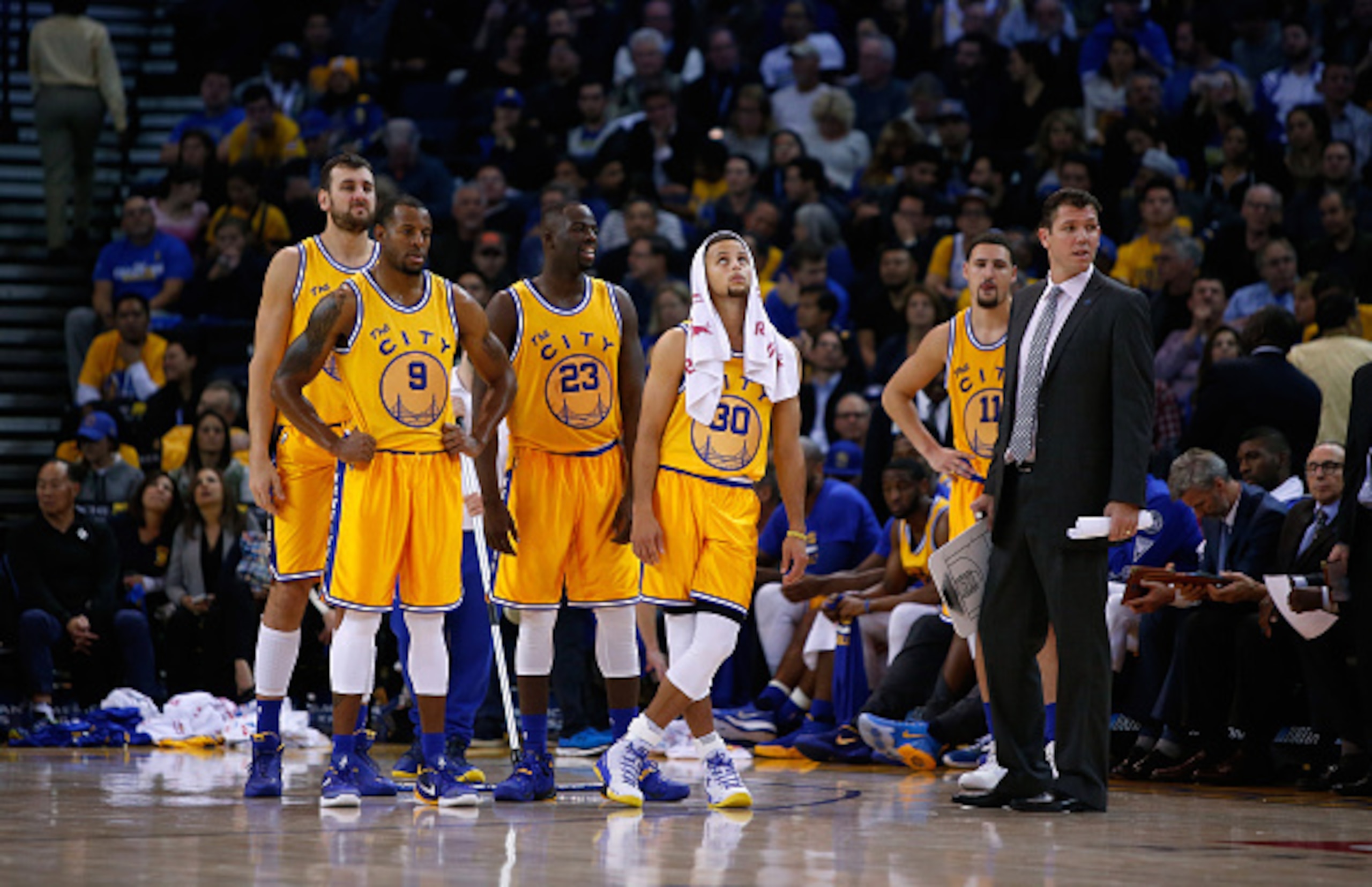
Pretending as if the Golden State Warriors have expendable assets to dangle is cute.
And futile.
Anyone the Warriors would consider moving (Marreese Speights, Jason Thompson, etc.) isn't remotely appealing on a profound level. Thompson and his non-guaranteed 2016-17 salary might hold some value on the trade front for teams pining after increased flexibility, but that would entail the Warriors taking on long-term money, something they have no incentive to do.
Identifying trade bait also implies there are changes that need to be made, and no self-respecting general manager, let alone Golden State's actual general manager, the ingenious Bob Myers, would touch this Warriors team with a 10-foot pole.
Two of Harrison Barnes (restricted free agent), Andrew Bogut, Festus Ezeli (restricted free agent) and Andre Iguodala, in addition to Shaun Livingston (non-guaranteed) and Thompson, will have to hit the pavement if Golden State intends to pursue Durant in free agency.
For the rest of this season, though, the Warriors are chasing a second straight championship, the 1995-96, 72-win Bulls and history. There's no sense in making changes, no matter what they are, in the near future.
Houston Rockets: Terrence Jones
11 of 30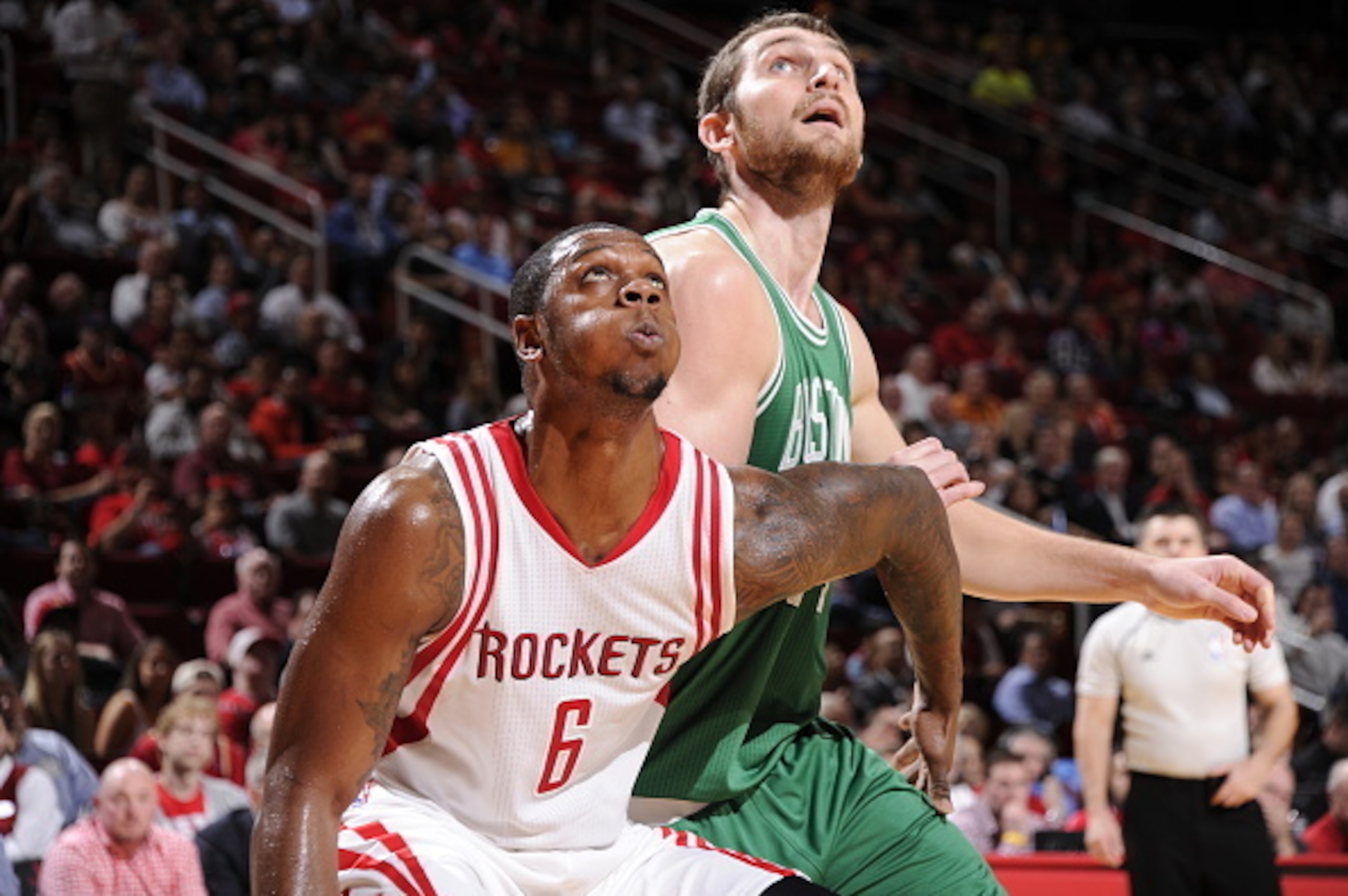
Big men who protect the rim and shoot the rock are the new stretch power forwards, and Terrence Jones' on-court function now perfectly encapsulates the league's hottest fad. (Karl-Anthony Towns and Kristaps Porzingis say, "Yo," by the way.)
Among players to appear in a minimum of five games and contest at least four shots at the rim per outing, no one is a better iron guardian than Jones—not even Rudy Gobert. And while he's jacking up threes with career-high frequency, Jones is putting them in with career-best efficiency.
None of this should be motive for the Houston Rockets—currently playing like the Houston Rockbottomettes—to flip their fourth-year forward-center. But he, like the injured Donatas Motiejunas, is speeding toward restricted free agency. With Dwight Howard potentially hitting the open market (player option) and Clint Capela swallowing shots at will, Houston won't be able to justify paying everyone.
Jones is easier to move because, unlike Motiejunas and Howard, he's neither presently injured nor on the cusp of turning 30. His $2.5 million salary won't net the Rockets anything better than a first-round pick, but he can grease the wheels of a salary-dump.
Much like the NBA's 29 other teams, the Rockets are smitten at the thought of giving chase to Durant in 2016, according to the Houston Chronicle's Brian T. Smith. Next summer's salary-cap eruption will give them some wiggle room, but not enough to offer Durant a max contract that pays him more than $25 million in its first year.
Should the Rockets attach Jones' contract to, say, Corey Brewer's digestible deal, they'll have the opportunity to take back more salary or, more importantly, decrease the amount of financial finagling they'll have to do over the summer.
Indiana Pacers: C.J. Miles
12 of 30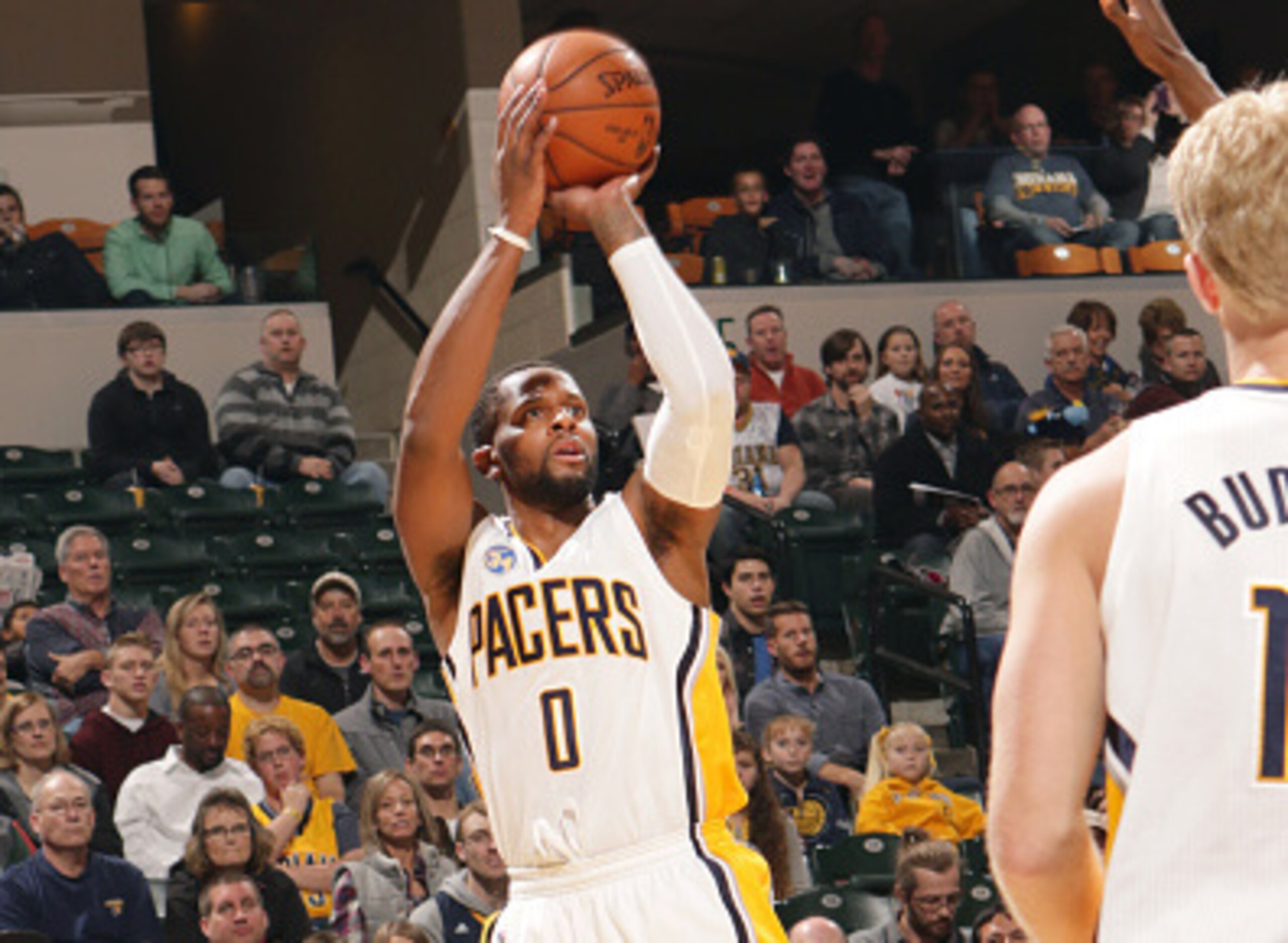
A three-position swingman who's shooting better than 40 percent from deep for his career and won't even earn $5 million annually before 2017-18?
Yes, please.
Slotting C.J. Miles here isn't rocket science. It's barely even first-grade-level process of elimination.
Paul George, George Hill and Myles Turner (injured) should be thought of as untouchable as the Indiana Pacers try balancing rebuilding with contending for a playoff berth. Miles is the team's second-best offensive weapon; only George has a better offensive box plus/minus. But the Pacers can at least make do with some combination of Chase Budinger, Monta Ellis, Hill, Glenn Robinson III and Rodney Stuckey until this summer, when they'll have plenty of spending power.
Tethering Miles' clearance-rack deal to another modestly priced, preferably expiring agreement (Lavoy Allen, Ian Mahinmi), while also opening their draft-pick cupboard, should be enough to get the Pacers in talks for an upgrade at center or somewhere on the perimeter.
Los Angeles Clippers: Jamal Crawford
13 of 30
Unless the Los Angeles Clippers are gearing up for a thorough teardown that includes taking a stick of dynamite to their Big Three, Jamal Crawford represents about the only chance they have at making any upgrades via trade.
Lance Stephenson's contract is technically expiring (team option in 2016-17), but he won't be generating significant interest while shooting under 40 percent from the field; J.J. Redick is the only consistent three-point shooter the Clippers employ; Josh Smith doesn't make enough money to warrant a substantive return; Austin Rivers, to the best of my knowledge, doesn't have any other family members among the NBA's head coaching ranks; and Paul Pierce is in hibernation until mid-April.
Crawford, unlike many of his aging counterparts, isn't feeling the ill effects of time. He's hot and cold as ever, struggling to shoot even 40 percent from the floor, but he still puts up points in a hurry—his 37-point outing in a win over the Pistons on Nov. 14, for instance.
"He's Benjamin Button," DeAndre Jordan said at the time, per the Los Angeles Times' Melissa Rohlin. "Being as old as he is, ready to play at all times."
Pushing 36, Crawford won't be of use to the Clippers much longer. He's a free agent at the end of the season, making him an especially attractive piece for teams in need of short-term offensive production on the cheap. The Clippers showed a willingness to use him as bait over the summer and, barren of other assets, could be inclined to do so again.
Los Angeles Lakers: Jordan Clarkson
14 of 30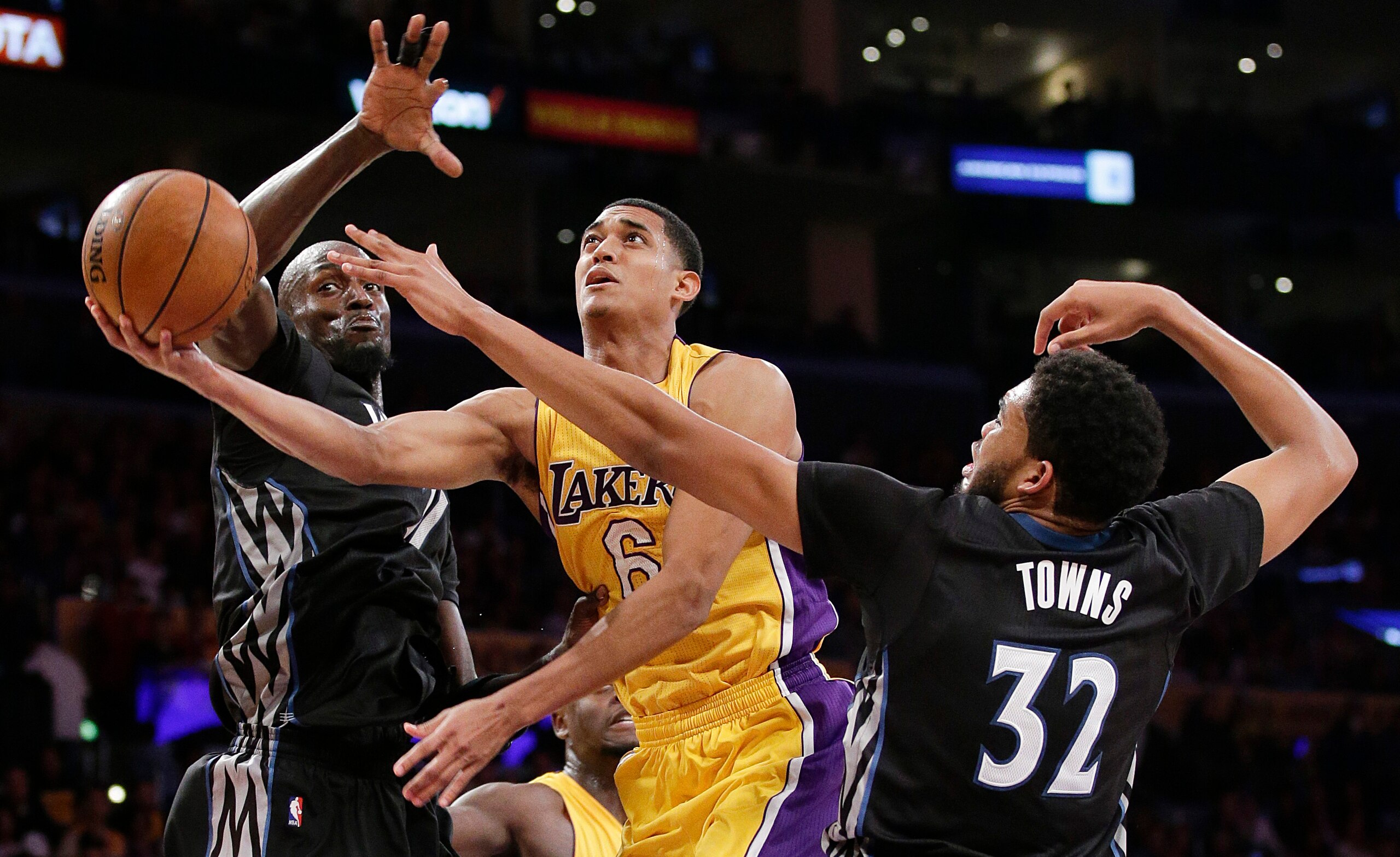
Jordan Clarkson is the Los Angeles Lakers' best player. (Sorry not sorry, Kobe.)
So, naturally, they wouldn't dream of trading him, right?
Wrong.
More is at play here, not the least of which is Clarkson's impending restricted free agency. The Lakers will have the rights to match any offer he receives, but against an $89 million cap, that offer could top $10 million per year.
Are they prepared to invest that much in Clarkson? When they have D'Angelo Russell in the backcourt? When Lou Williams and Nick Young are on the roster?
When they're supposed to scrimp and save for superstar free agents?
Fearful of overpaying him or losing him for nothing, the Lakers could see if they're able to use Clarkson's sub-$1 million salary as a buffer that rids them of an unsavory deal—the cherry atop a Nick Young or Lou Williams trade sundae that simultaneously slices costs and gives the team a better shot at keeping its top-three-protected first-rounder this June.
Memphis Grizzlies: Tony Allen
15 of 30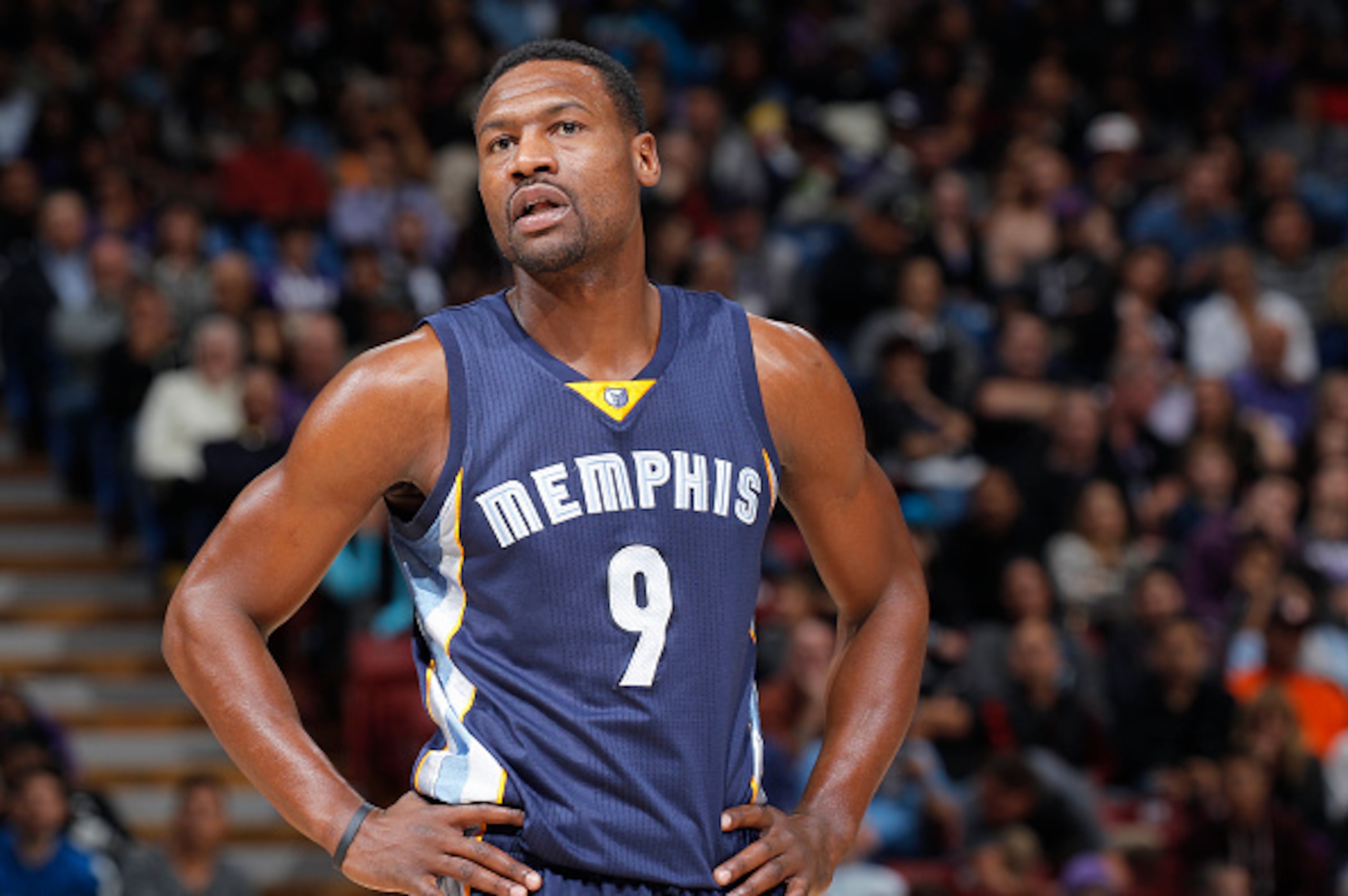
Some teams can afford to deploy the perimeter-challenged Tony Allen.
The Memphis Grizzlies are not one of them.
Allen has outlasted his use in Memphis. The Grizzlies don't have enough surrounding shooters to justify playing him heavy minutes anymore.
Defenders blatantly sag off Allen, sealing off his paths to the basket and daring him to shoot. Certain teams don't actually put a defender on him at all. They stick a big man within 10 to 12 feet of him, knowing any damage he inflicts will be limited.
Three years ago, the Grizzlies could get by grinding their way to victories without giving pause to Allen's horrendous shooting (under 28 percent from three for his career). But the league is different now, and they've been forced to adjust. Allen doesn't rank in the top five of minutes played on his own team, and the Grizzlies defense statistically improves with him on the bench.
Opponents are still shooting poorly when being defended by Allen, specifically when they fire away from long distance, so he's not completely ineffective. There will be a team willing to give up something or someone of value for his on-ball peskiness and off-ball denial.
Owed just $5.5 million next season, Allen's price it right—just not for the Grizzlies.
Miami Heat: Josh McRoberts
16 of 30
Good luck trying to figure out what Josh McRoberts means to the Miami Heat.
As the Palm Beach Post's Jason Lieser wrote:
"The Heat remain as fascinated by Josh McRoberts as they were when they signed him in July 2014, and he is finding his fit with their second unit. In particular, coach Erik Spoelstra’s crafty substitution pattern has set him as the perfect low-post complement to Chris Bosh.
McRoberts’ value is hard for anyone to quantify. He is a brilliant facilitator, can explode to the basket and is a potent 3-point shooter, yet none of his stats are amazing.
"
McRoberts' value is compounded by a difficult-to-interpret sample size. He missed most of last season after tearing the meniscus in his right knee, and he's averaging under 15 minutes per game for the first time since 2011-12. The room for burn just isn't there with Chris Bosh and Hassan Whiteside both healthy.
Following the Mario Chalmers trade, we know Miami is at least trying to evade the $84.7 million luxury-tax line, and the dreaded repeater's tax that eclipsing it will trigger. Offloading McRoberts' $5.5 million cap hit would, depending on what they take in return, put the Heat on the verge of ducking that threshold entirely.
Playmaking forwards aren't assets teams typically pawn off in salary-dumps, but as ESPN.com's Zach Lowe pointed out in September for now-defunct Grantland, the Heat aren't most organizations. They will make a strong push at Durant, and that will demand they make some sacrifices. McRoberts is going to become collateral damage anyway if Miami wants to court Durant without severing ties with more than one of Bosh, Goran Dragic, Dwyane Wade and Whiteside.
And despite shooting worse than 20 percent from three-point land, McRoberts still stretches defenses just by flinging passes from above the break. Finding takers for him and the remaining three years (including this one) and $17.3 million left on his contract won't be a problem.
Sussing out a deal that promises the Heat more than tax breaks will be the real issue.
Milwaukee Bucks: O.J. Mayo
17 of 30
Hamstring issues have limited O.J. Mayo's availability thus far this season, but he's been mostly effective on an individual level in his few appearances, hitting just as many triples through three games as Michael Carter-Williams has in nine.
To be honest, the Bucks offense remains disjointed enough that Mayo's shooting isn't totally expendable. They're hitting threes at an efficient clip but aren't attempting enough, and they're not built to fire up anymore.
Between Giannis Antetokounmpo, Jerryd Bayless, Carter-Williams and Khris Middleton, though, Milwaukee's perimeter rotation is pretty crowded. It becomes even harder to carve out meaningful playing time for Mayo with Jabari Parker back. He instantly soaks up time at small forward and power forward that could otherwise go to Antetokounmpo and Middleton, forcing them to play down a position.
Since the Bucks are unwavering in their commitment to developing for the future, Mayo's expiring contract is more useful to them as a trade chip. The return on a top-three draft prospect-turned-role player won't transform Milwaukee into a patented juggernaut, but Mayo has never shot worse than 35.7 percent from long range and, as he showed last season, can find the basket as a deadly spot-up assassin.
Throw in his $8 million salary, and the Bucks have the means to match the numbers on a $10-plus million contract that might not be wanted elsewhere.
At minimum, they have a player in Mayo who can command something, anything for a departure that is likely going to take place over this summer anyway.
Minnesota Timberwolves: Kevin Martin
18 of 30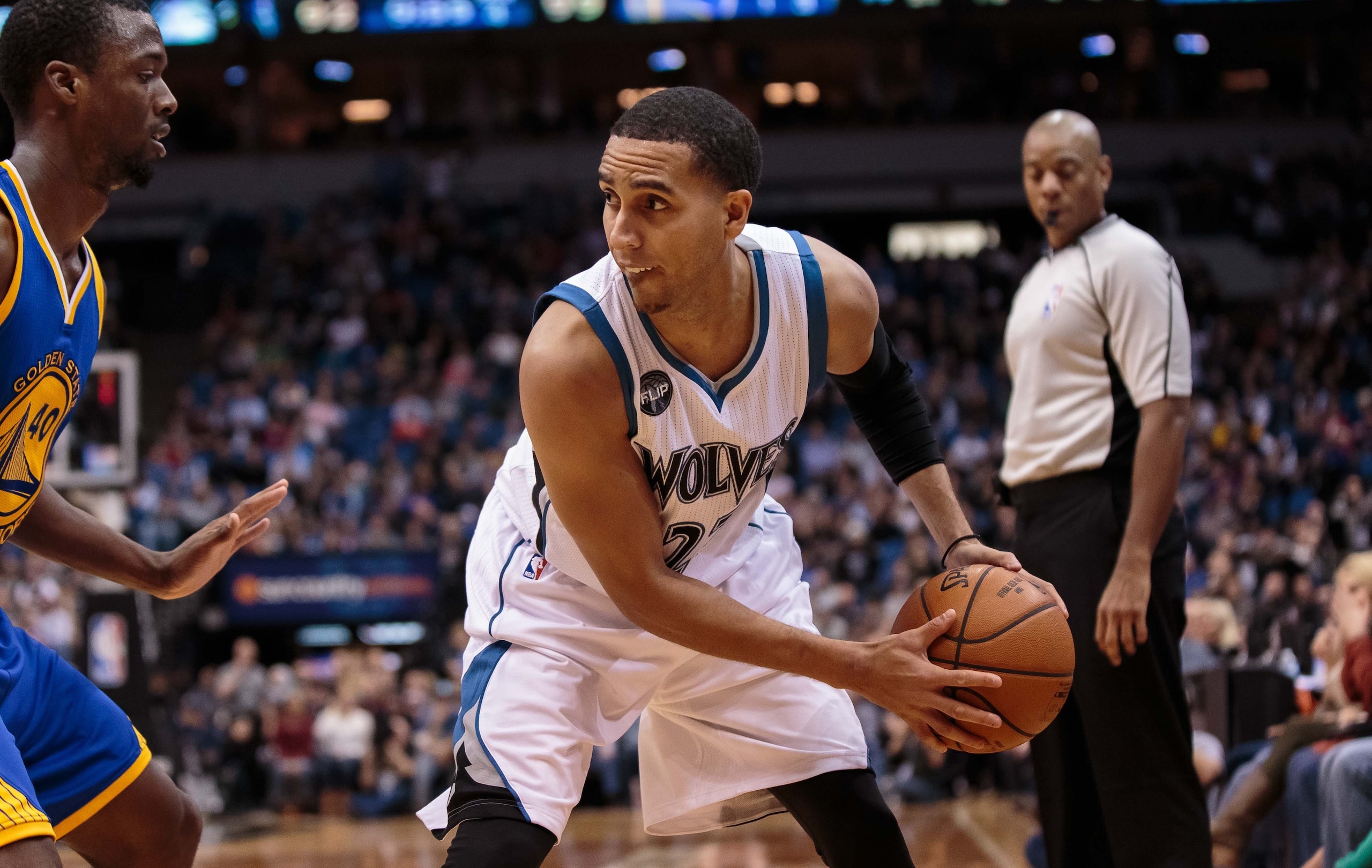
There isn't much the Minnesota Timberwolves should be looking to do.
Most of the players on their roster are either building blocks (Ricky Rubio, Karl-Anthony Towns, Andrew Wiggins), aging vets quietly playing out their twilight (Kevin Garnett, Andre Miller, Tayshaun Prince) or just plain immovable (Nikola Pekovic). Where other teams are looking to make moves in haste, the Timberwolves are in the wait-and-see stages of their latest rebuild.
Kevin Martin stands out as the exception to their developmental process. At 32, with a player option for 2016-17, he's not young enough to be a long-term fixture, yet he's not old enough to be ceding a lion's share of his minutes and touches to inexperienced youngsters.
Playing for the full-on restructuring Timberpups doesn't look good on him, either. Nearly two-thirds of his scoring opportunities are being contested as Minnesota tries to sort out an offensive pecking order, and his shooting percentages are at an all-time low.
Place Martin in a contender's rotation, as a spot-up-shooting reserve, and he'll have a real impact.
Sell that schtick to the NBA's foremost buyers, and the Timberwolves should be able to squeeze out another flier-worthy prospect or some salary-cap relief.
New Orleans Pelicans: Jrue Holiday
19 of 30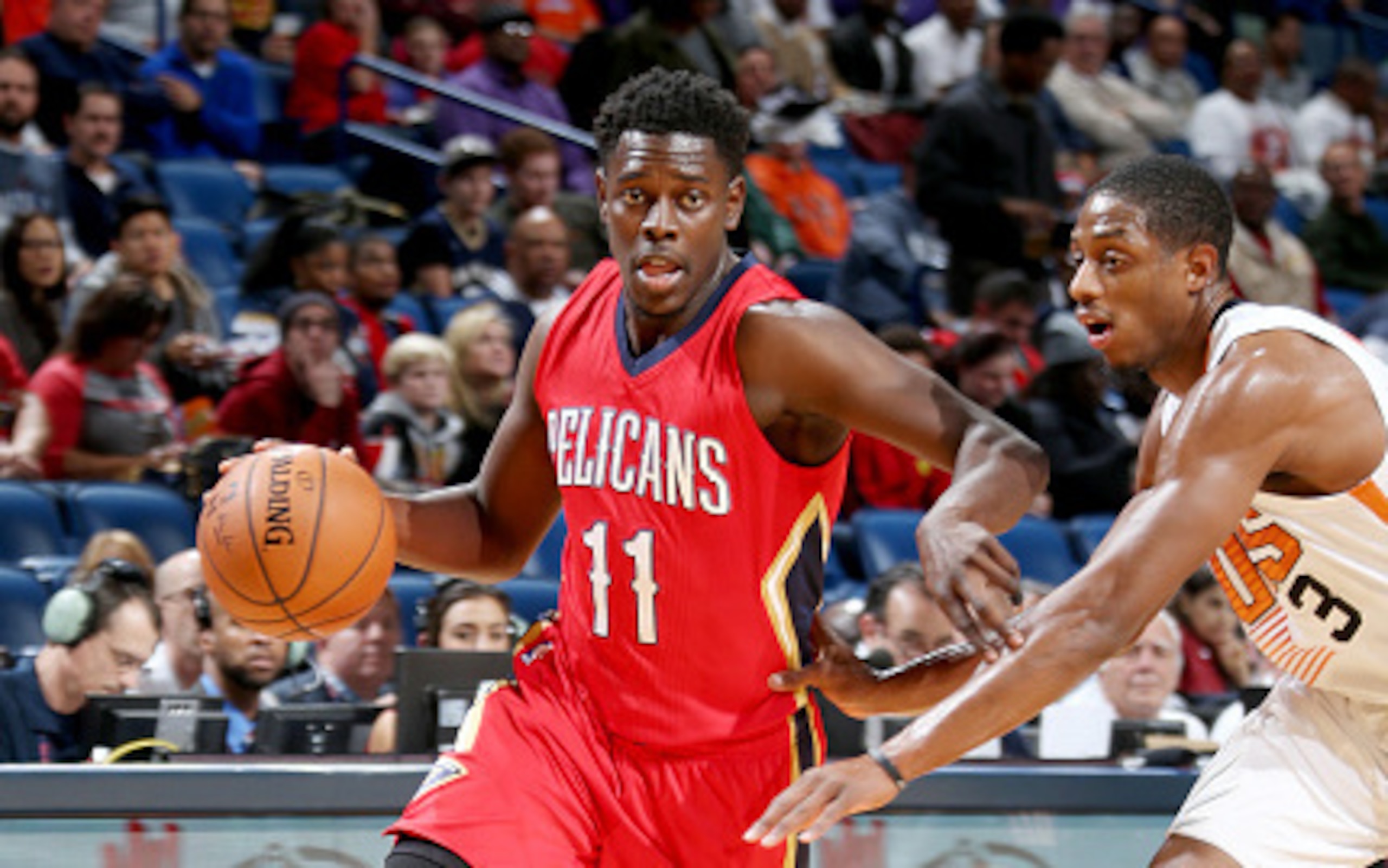
It's time for the New Orleans Pelicans to face facts.
Injuries have put them in a hole not even Anthony Davis can escape. Maybe he ensures they do more than contend for the Western Conference's worst record. Maybe he even wills them back into the playoff picture.
What then?
Another first-round exit.
That, really, is the best-case scenario for these Pelicans. And after rebuilding haphazardly around Davis these last few years, they need to angle for more, for better.
Dealing Jrue Holiday is to admit that the Pelicans swung and missed when they sold off Nerlens Noel and their 2014 first-rounder. But that's how these things go.
Holiday isn't thriving in head coach Alvin Gentry's offense and remains on a minutes cap. Ish Smith has been surprisingly effective, posting a higher assist percentage than Holiday, and he's most definitely qualified to run an offense that, as of now, should be dreaming of Ben Simmons.
Still only 25, playing on a pleasantly priced pact that'll pay him $11.3 million in 2016-17, Holiday remains starting point guard material. He might be enough to land the Pelicans a first-round pick. He could even be used as the carrot that makes Omer Asik's disastrous deal easier for another team to stomach.
Mostly, bidding farewell to Holiday is a way for the Pelicans to regroup, compile some assets and, depending on how much money they take back, enter the offseason with more cap space to burn.
New York Knicks: Kyle O'Quinn (Dec. 15)
20 of 30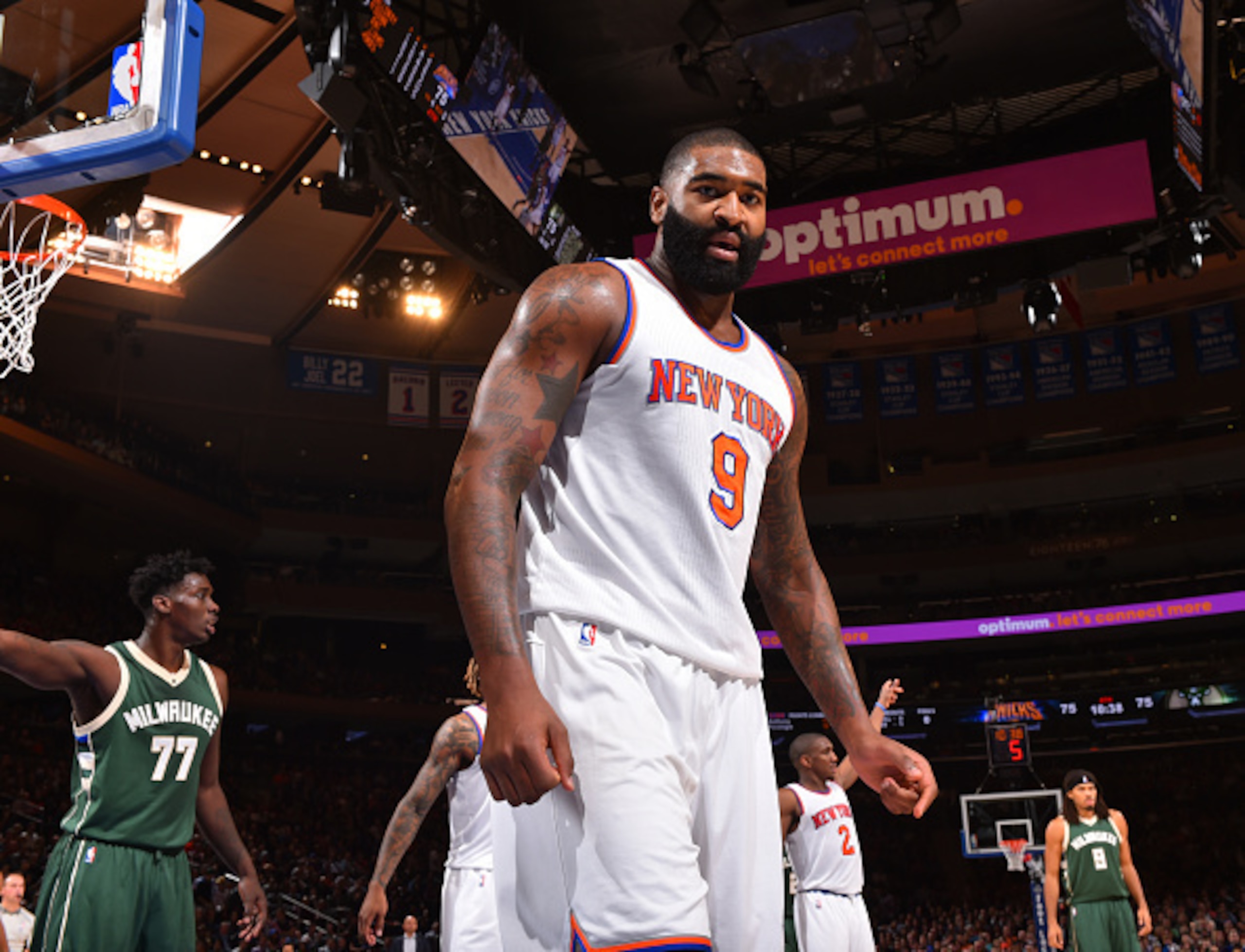
Kyle O'Quinn shouldn't be here—not after putting pen to paper on a four-year, $16 million deal over the summer. He figured to play an important part of the New York Knicks' quest for redemption, offering rim protection, passing and spacing up front.
And yet, here he is.
You can thank Knicks coach Derek Fisher for the invite.
Lou Amundson, Kevin Seraphin and Derrick Williams are each being plucked off the bench before O'Quinn. Finding playing time for him was always going to be hard, with Robin Lopez, Kristaps Porzingis and Carmelo Anthony's spot-duty at power forward all capping his exposure. It's virtually impossible to expect anything from him now, when he's not even the fifth guy off the pine.
Fisher's logic behind his rotation—and O'Quinn's numerous "Did Not Plays"—isn't entirely clear. Nor is it the slightest bit clear. The Knicks are a net-minus when he's in the game, but the offense flows a bit better when he's on the floor, he was a huge part of the second unit's early-season success, and his per-36-minute splits put him in his own class of production.
If the Knicks aren't going to use him, another team will—perhaps one that's also open to eating what's left of Jose Calderon's deal.
Oklahoma City Thunder: Anthony Morrow
21 of 30
Anthony Morrow is no more than excessive firepower to one of the NBA's best offenses.
Or so it seems.
New Thunder head coach Billy Donovan is more apt to roll with Andre Roberson and Dion Waiters to fill the time at shooting guard, and most of Kyle Singler's minutes have come at small forward. Morrow's playing time has plummeted as a result; he's on pace to average under 17 minutes per game for just the second time in his career.
Donovan's rotation admittedly isn't borne out of ignorance. Morrow has never performed exceptionally well on the defensive end and is a liability against backdoor cuts from opposing wings. And with Enes Kanter, the $70 million man, already in the rotation, the Thunder can only afford to shell out so much playing time to a slow-to-react marksman.
Other teams aren't necessarily in the same boat—not when Morrow remains a lethal three-point gunner. He has never drained less than 37 percent of his outside missiles and is shooting nearly 43 percent from behind the rainbow for his career. Morrow's spot-up efficiency, by his own standards, is unimpressive this season, but it's still good, and savvy suitors won't soon forget that he ripped the bottom of the net on 45.3 percent of his catch-and-shoot triples in 2014-15.
Three-point specialists are at a premium as the league continues chucking treys at unprecedented rates. Morrow isn't going to get the Thunder a lottery pick, but he's raking in just under $3.4 million this season, and his $3.5 million salary in 2016-17 is non-guaranteed. He's the perfect addition to a playoff hopeful looking to address a shooting deficiency.
Here's hoping the Thunder and Celtics eventually talk turkey on a Morrow-for-Evan Turner swap.
Orlando Magic: Channing Frye
22 of 30
First thing's first: Fire up the ol' Twitter machine, disregard the talk of vampire squids in your timeline and post the following: #FreeChanningFrye.
Don't you feel better? You should. Because freeing Frye is also about uncuffing Aaron Gordon from his low-key usage.
Frye isn't playing much and registered a bunch of DNPs earlier in the season. Coach Scott Skiles has called his number more frequently in recent matchups, but the Orlando Magic's frontcourt corps isn't thinning out anytime soon.
Gordon and Nikola Vucevic both need to play starter-level minutes, and Evan Fournier's spotlight-stealing season, coupled with Orlando's Mario Hezonja project, limits the amount of time Tobias Harris can spend at the 3. He is almost exclusively being slotted at the 4, thoroughly pushing Frye to the back end of the rotation.
Which, in all actuality, is how it should be. The Magic have too many 25-and-under contributors to justify extensively playing the 32-year-old Frye.
Moving him opens up minutes for Gordon while clearing $7.8 million from Orlando's books in 2016-17 and $7.4 million in 2017-18—assuming, of course, the Magic can coax another team into sending an expiring contract their way.
Knowing that Frye can be used as a stretch 4 or 5 and is burying 40-plus percent of his deep balls, that's a reasonable assumption.
Philadelphia 76ers: Nerlens Noel
23 of 30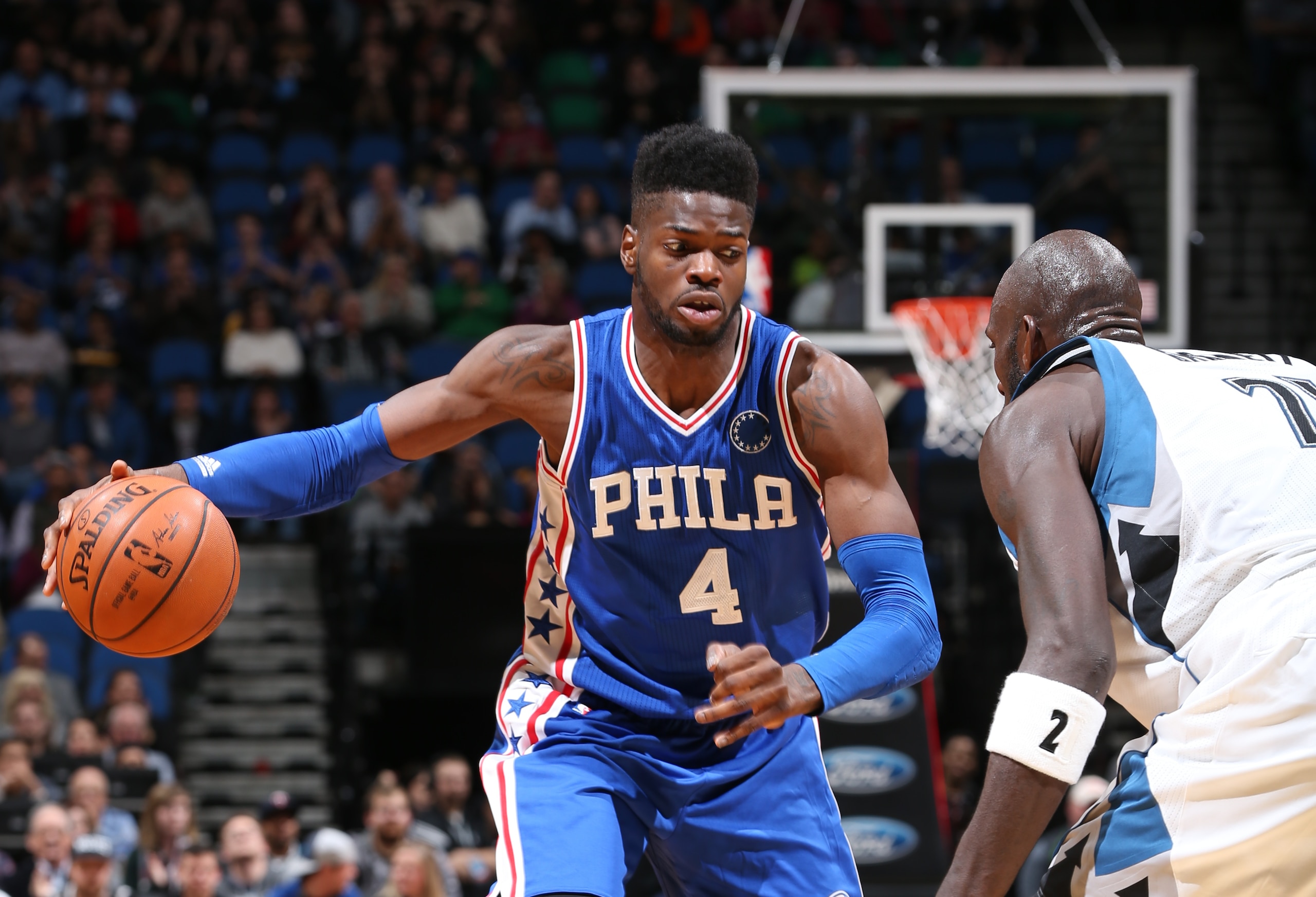
Nerlens Noel's dispensability is less about Nerlens Noel and more about the Philadelphia 76ers.
Year 3 of Operation: Trust the Slop Fest has been a success, insofar as the Sixers wanted to enter the fray for the endlessly touted Simmons. Some will be quick to point out that Philly has enough frontcourt bodies, but those tunes will inevitably change because of how ridiculously talented Simmons appears to be.
As Sports Illustrated's Chris Mannix underscored:
"Comparisons for Simmons have been overwhelming. Lamar Odom. Paul George. Even LeBron James. He’s that good. Simmons is an irresistible talent, long and lean and getting bigger by the day, with natural playmaking instincts. NBA scouts have been fawning over Simmons all summer, with several projecting him as a next generation of stretch-four; strong and versatile enough to defend the position and a matchup nightmare for anyone that tries to guard him.
"
Remaining in contention for the NBA's worst record and, thus, Simmons is actually problematic for the loss-seeking Sixers. They already have enough problems creating space on offense with the limited range of both Noel and rookie Jahlil Okafor, and that's before factoring in the inevitable debuts of Joel Embiid and Dario Saric in 2016-17.
General manager Sam Hinkie will need to blow up the Sixers' power forward and center platoon eventually, even if he doesn't land Simmons. Embiid isn't going to command anything of value given his injury history, and Okafor is of more long-term importance to the Sixers as a scorer if they plan on retaining Embiid, who does a lot of what Noel is doing on the defensive side.
Hinkie has shown a propensity for turning anything resembling an impact player into coveted, albeit unproven, assets. Noel is still a defensive superhero despite Philly's troubles, so Hinkie won't have to search high and low for a team willing to cobble together some picks and prospects in exchange for his services.
Phoenix Suns: Alex Len
24 of 30
Entering the season, even after signing Tyson Chandler, the Phoenix Suns still needed to choose between gunning for a playoff spot and rebuilding the right way. Their balancing act is still at play to some degree, but they've made their decision.
Chandler has almost doubled Alex Len's playing time. Mirza Teletovic is being turned to more than Len. Jon Leuer has played more than Len.
Jon. Freaking. Leuer.
Need I say more?
Len is a top-five selection and acts as premier insurance against a 33-year-old Chandler suffering injury. But the Suns are obviously trying to land inside the West's playoff bubble, and Len will be eligible for an extension after this season. And because he doesn't have enough offensive range to play beside Chandler, Phoenix cannot expect to employ them both for much longer.
Offering up Len in trade discussions should allow the Suns to pick up some variation of perimeter help, a future first-rounder and another backup center. They don't have to sell low, but unless they're planning on making drastic changes to the roster's dynamic, they must accept that they do have to sell.
Portland Trail Blazers: Ed Davis (Dec. 15)
25 of 30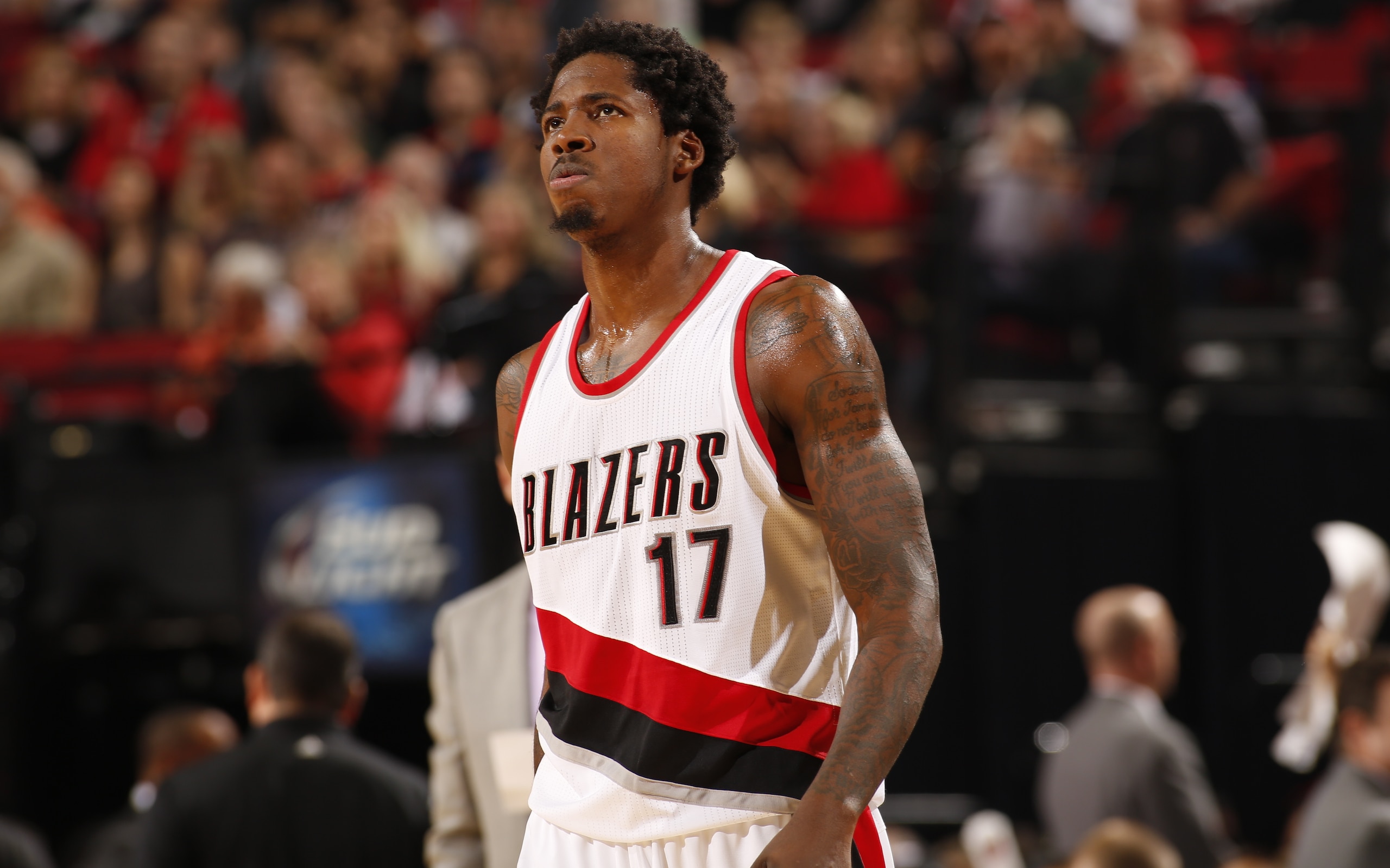
Chances are that the Portland Trail Blazers didn't envision signing Ed Davis to a three-year deal over the offseason only to trade him as soon as they could.
Chances also are that they didn't foresee Mason Plumlee going full "How you like me now, Brooklyn?" either.
Plumlee ranks second on the Blazers in both PER and win shares, behind only Damian Lillard. Davis, to his credit, is third in both categories. But Plumlee's production comes at a fraction of the cost, and the Blazers will need to earmark tens of millions of dollars for Meyers Leonard's stroll into restricted free agency.
Plenty of teams, meanwhile, will be chomping at the bit for Davis. Opposing shooting percentages take a nosedive when facing him inside 10 feet of the basket, he's an aggressive offensive rebounder, and his cuts toward the basket are explosive and well timed. That he'll never earn $7 million in any one year of his current deal only heightens his value.
Indeed, Davis is best used as a backup center. But he's being paid like a second-stringer in the new salary-cap climate and is once again proving he can have an impact without being guaranteed 25 or more minutes per game. That's influence outside teams can appreciate, rendering Davis an asset who should land the Blazers some additional depth on the wings.
Calling up the Washington Wizards on or after Dec. 15 and offering Davis in exchange for Jared Dudley and Kelly Oubre Jr. sounds like a pretty good idea right about now.
Sacramento Kings: DeMarcus Cousins
26 of 30
This is no time to be coy or to ignore the cyclically churning rumor mill.
Any roster-rattling move the Kings make doesn't just begin with Cousins. It, as Bulpett unpacked, needs to include Cousins:
"In fact, yes. That kind of valuation fits well with the fact the Kings have seemed to treat Cousins’ deviations from proper decorum as the fault of someone else. Several reports have the 6-foot-11 center launching a verbal blast at coach George Karl after Monday’s loss to San Antonio, and when Karl sought to have Cousins suspended, the request was denied by general manager Vlade Divac. . . .
While Sacramento has bowed to Cousins’ talent and potential thus far, one would think it has to begin investigating what it can get in return. Either that, or the Kings can burn through a few more coaches.
"
Shipping out All-Stars is never easy. Cousins is the best center in basketball, and no matter how many picks and prospects or high-end players the Kings receive in return, they won't take ownership of a similarly proven commodity.
Something has to give, though. Cousins is a center masquerading as a power forward under Karl, playing within a fast-paced system that isn't conducive to his long-term durability.
Sacramento has a top-seven prospect at center in Willie Cauley-Stein and one of the NBA's better backup bigs in Kosta Koufos. The Kings desperately need to rebuild the right way for a change.
Pushing forward without Cousins—should the Kings finally decide to push forward—is a way for this team to hit reset and gain a fresh start without enduring the trials and tribulations of a totally blank slate.
San Antonio Spurs: Boris Diaw
27 of 30
In the interest of not keeping secrets, the San Antonio Spurs are an extension of the Warriors. They don't truly have any realistic trade bait, because they have no reason to conjure any realistic trade bait.
LaMarcus Aldridge and the rest of the team are still trying to find their way on offense, but that hasn't prevented the Spurs from exceeding expectations on defense—or from posting their fifth-best early-season net rating of the Tim Duncan era. Basketball is a joke to them, and they're the only ones in on it.
Nevertheless, to any normal team, Boris Diaw would loom as legitimate fuel for the rumor-mill jet. He's owed $14.5 million over the next two seasons—neither of which are guaranteed—and the Spurs have already started relying more on sophomore/first-round pick/Las Vegas Summer League overlord Kyle Anderson, their Boris Diaw in training.
Diaw poses clear value for teams in the playmaking forward market, and the out-clause in the final two years of his contract makes for a low-risk gambit. And while the Spurs aren't ones for rocking the boat, the uncertain futures of Duncan and Manu Ginobili have turned them into active offseason threats.
Saying goodbye to Diaw ahead of the trade deadline gives them more breathing room with which to work in free agency.
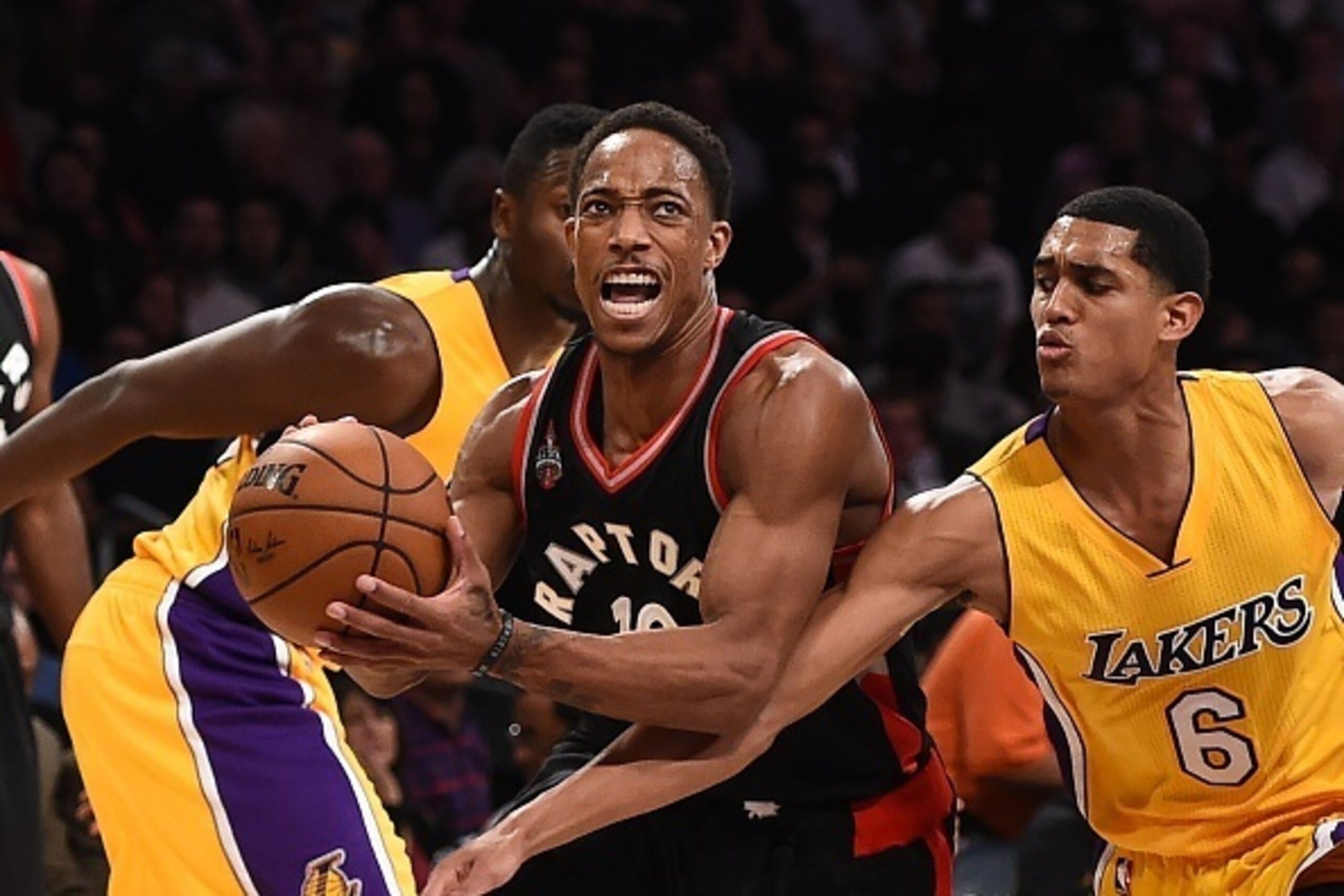
Toronto Raptors: DeMar DeRozan
28 of 30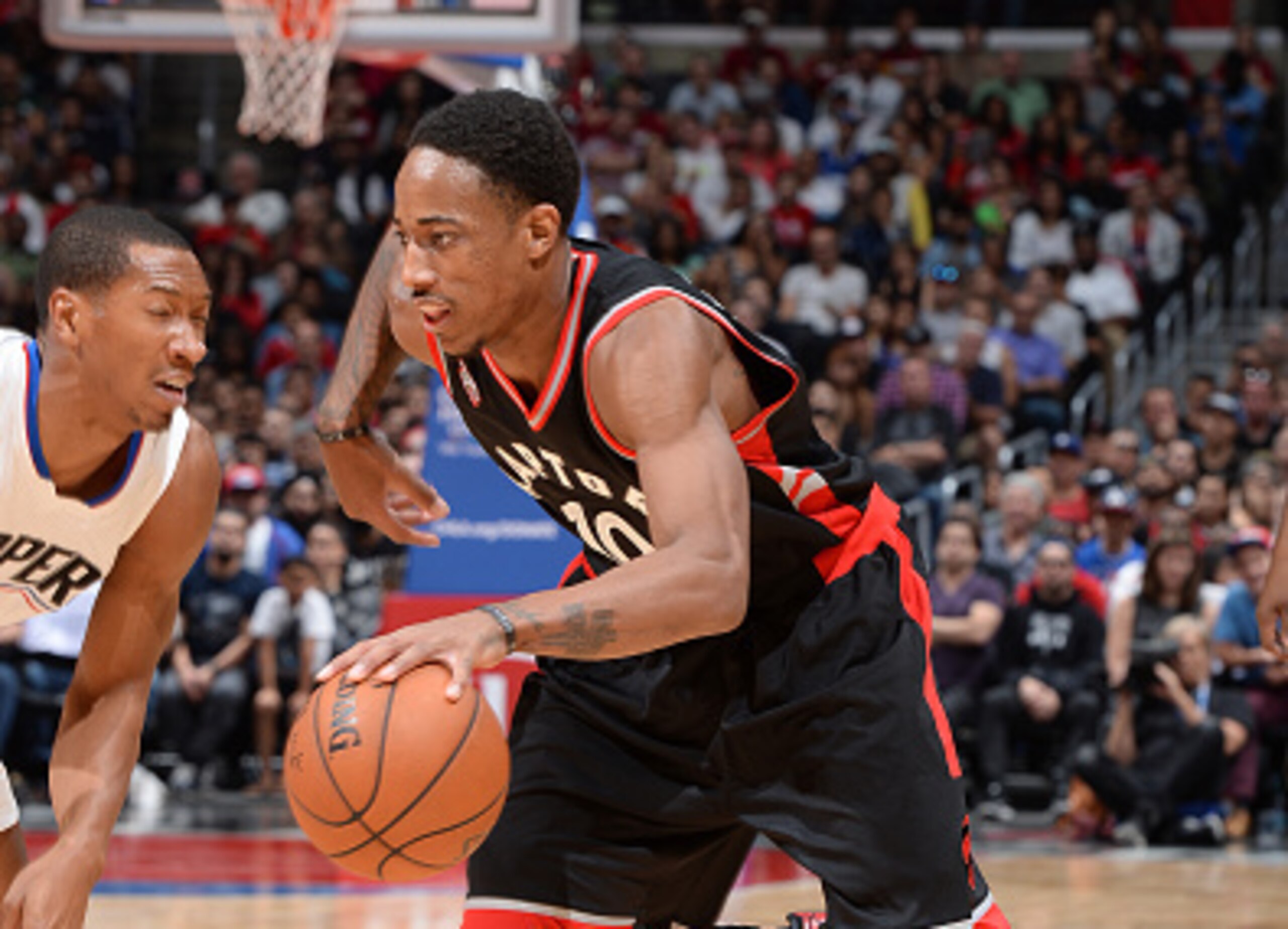
DeMar DeRozan is, by and large, overrated.
Today's NBA no longer offers warm welcomes to volume shooting guards who convert around 40 percent of their looks and can't notch a 30 percent success rate from three-point range. DeRozan is an understated passer, but he's more Kobe Bryant at a time when the league is hot for Klay Thompson. And that brings the Toronto Raptors to a crossroads.
DeRozan isn't expected to pick up his player option worth just under $10.1 million for 2016-17. There will be plenty of money floating around in free agency, and he'll be trying to get his piece of the financial pie.
Ryan Wolstat of the Toronto Sun reported back in June that DeRozan will seek a max contract that pays him around $25.3 million next season. The Raptors have already committed money to more efficient wings in DeMarre Carroll and Terrence Ross, and they've long been considered a threat to poach Durant from Oklahoma City.
Giving adequate chase to Durant will demand Toronto part ways with at least one of its core guys. Seeing as Kyle Lowry is on a bargain-bin deal and Jonas Valanciunas only recently signed a long-term extension, DeRozan is the easiest to move.
On the plus side: Because he's more than a decade Kobe's junior and earning about $15 million less than No. 24 this season, the Raptors won't have as much trouble extracting trade value out of him as the Lakers would Bryant.
Utah Jazz: Trey Burke
29 of 30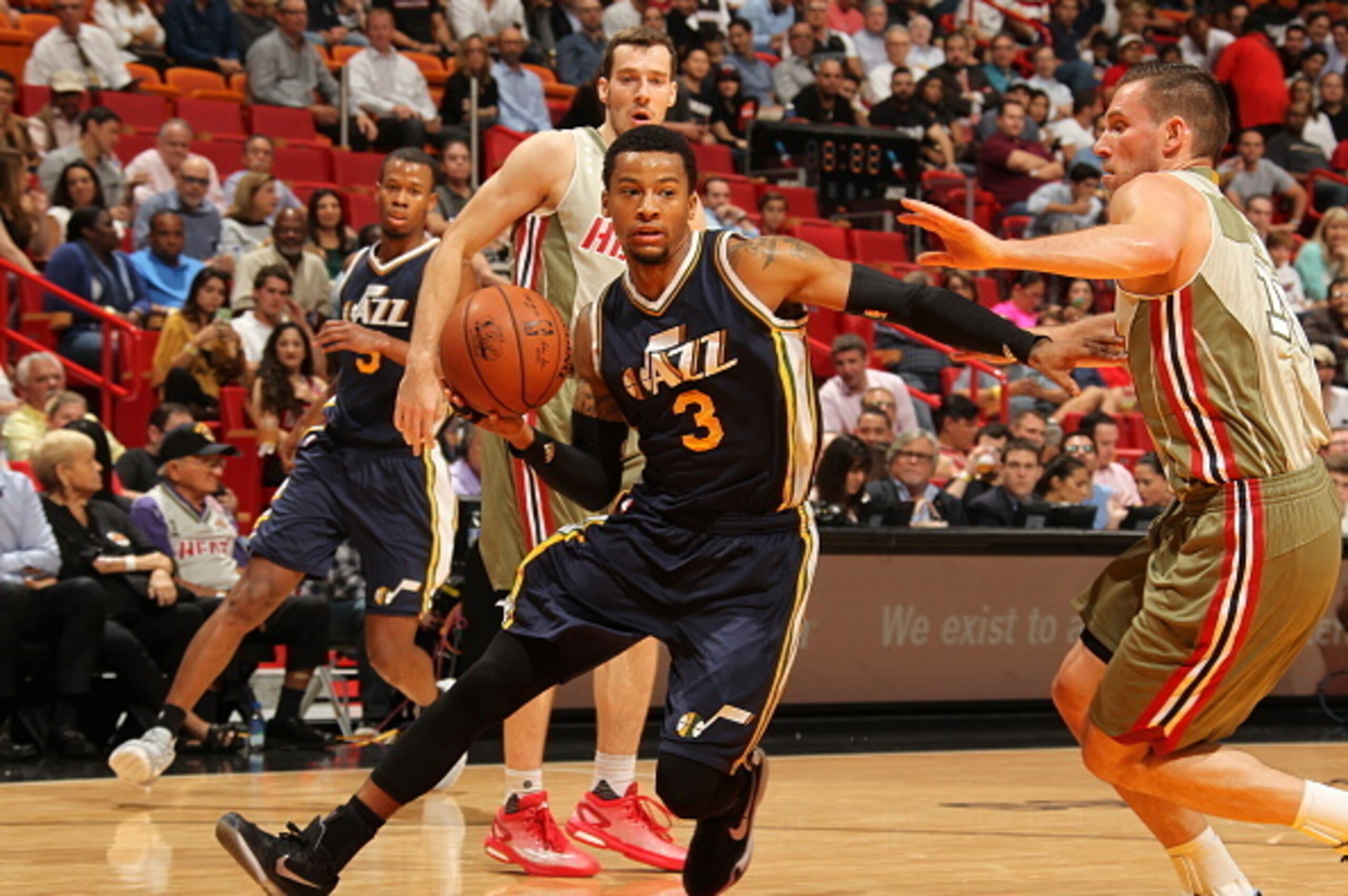
Consider this your "Trey Burke is posting the first above-board PER of his career and the second-highest PER of anyone on the Utah Jazz" alert.
Sure, Burke's success may prove unsustainable. He's torching twine on more than 40 percent of his three-pointers and scoring at a decent clip while recording a career-low assist rate. It's still early in the season, and Burke is playing in small, measured doses. His performance could end up being a mirage. Or perhaps it's the real thing.
Either way, the Jazz seem more committed to Dante Exum, even though he'll miss all of 2015-16 nursing an ACL injury. Burke is playing through his third season, so the magically expensive words "Extension time!" are going to pop up soon enough.
Even if Utah has renewed faith in him, new contracts must be doled out to Exum, Derrick Favors, Gobert, and Rodney Hood over the next three years. Doubling down on Burke, either this summer or next, only makes sense if the Jazz are sure he's they're point guard of the future.
Quite clearly, they're not sure. And, in all fairness, they have no reason to be sure. Burke's career has been up and down. He's a candidate to regress to his mean on a whim, which is why it'd be best for Utah to surf his market when it's heating up—or, for that matter, when he would have a market at all.
Washington Wizards: Nene
30 of 30
Nothing the Wizards have done between last season and now suggests they're not wholly committed to recruiting Durant. They didn't make any splashy additions over the summer, they held off on an extension for Bradley Beal and sources reiterated to CBS Sports' Ken Berger over the offseason that their interest in the 2013-14 MVP is real.
In all likelihood, then, the Wizards won't ever relinquish their best trade asset: Nene.
Nene is years removed from his prime, but his $12 million salary comes off the books this summer. Washington can become a prime contract dumping ground for a player still capable of contributing if it so chooses.
(Violently gestures toward Orlando and Frye).
The caveat: Fitting Durant and his $25.3 million salary in 2016-17 under the salary cap becomes exponentially harder once the Wizards take on any long-term money. It's possible but will invariably end up creating more collateral damage than just waiving Kris Humphries and Martell Webster. Washington would either need to move on from Otto Porter and potentially others, or they would need to cut bait with whomever they receive in exchange for Nene.
Everything should be in play, though, so long as the Wizards continue dwelling outside the top four of the Eastern Conference. They need to worry about this season. Durant isn't on their team, and he might never be on their team.
Worrying about him comes later.
Stats courtesy of Basketball-Reference.com and NBA.com unless otherwise cited. Salary information via Basketball Insiders. Draft pick commitments from RealGM.
Dan Favale covers the NBA for Bleacher Report. Follow him on Twitter, @danfavale.


.jpg?w=2560 "NFL investigating 2 referees for separate viral exchanges")

.jpg?w=2560 "Love's Body Already 'Tired'")
.jpg?w=2560 "OBJ Calls Out Giants 😳")
.jpg?w=2560 "Ward Nearly Walks Out of Presser ▶️")