

NBA Awards Watch: Expert Predictions for Every Major Category
For the second year in a row, the NBA will make fans wait for an awards show in late June to reveal who takes home hardware for MVP, Rookie of the Year and each of the league's major accomplishments.
That's a bummer for folks who have traditionally enjoyed surprise announcements in April and May, but as Commissioner Adam Silver told Bleacher Report's Howard Beck on The Full 48 podcast last year, "I never liked the way the awards were dribbled out, essentially, throughout the playoffs."
With nearly two months to go until this year's awards show, the official announcements will have to wait. But as far we're concerned, the discussion surrounding each trophy begins now, with the end of the regular season on the horizon.
TOP NEWS

Buzz: Bron Chopper Part of Deal 🚁
Buzz: Knicks' KAT Offer Revealed

MJ Makes Record-Setting Donation 🙌
Executive of the Year: Daryl Morey
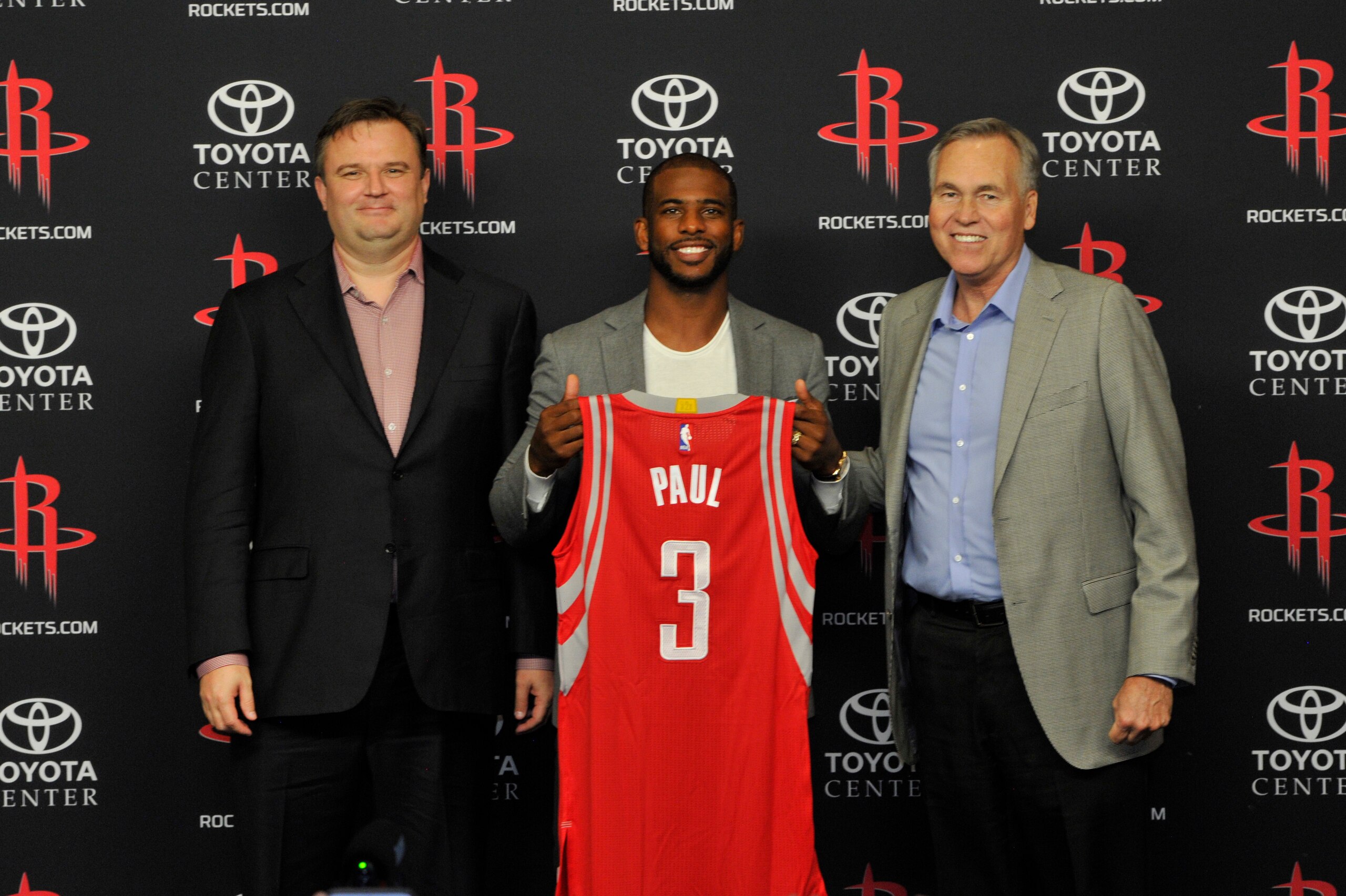
Daryl Morey staked his claim to this honor when he turned Lou Williams, Patrick Beverley, a first-round pick and some spare parts into Chris Paul just before the start of free agency. But his body of work since has been equally impressive.
Signing Luc Mbah a Moute and PJ Tucker has helped the Rockets prop up a top-eight defense to complement their out-of-this-world offense. They're better equipped to hide Harden on the less glamorous end and now have the personnel to deploy some truly terrifying no-big combinations.
In the time the Rockets have spent with Mbah a Moute and Tucker at the 4 and 5, respectively, they're outpacing opponents by 38.4 points per 100 possessions, according to Cleaning The Glass. They don't go to this makeup (190 total possessions) often, but having them stashed away for a rainy day—i.e., a Western Conference Finals showdown with the Warriors—is a luxury of Morey's design.
Even his moves on the margins have been good. Gerald Green was a fantastic midseason pickup, and Joe Johnson is yet another player the Rockets can turn to in a pinch for face-up offense.
That Harden and Paul have coalesced into one of the NBA's top duos despite initial concerns only solidifies Morey's already airtight case. He's the Executive of the Year. To argue for someone else is to fight a losing battle.
Coach of the Year: Dwane Casey

Too many deserving names get jilted here.
Quin Snyder has done immaculate work with the Jazz in the aftermath of Gordon Hayward's departure. Gregg Popovich has cobbled together another highly competitive Spurs squad despite Kawhi Leonard playing only nine games this season.
Terry Stotts is shepherding the Blazers to a top-three playoff seed without any groundbreaking roster changes. Brad Stevens has the Celtics in line for the East's No. 2 seed even though Hayward went down for the year on opening night and Kyrie Irving isn't partaking in the team's stretch run.
Of this bunch, Stevens is the most difficult to overlook. He'd command attention even if the Celtics were fully healthy. They turned over more than half of their roster during the offseason. Picking up the pieces from that wholesale shift, however shiny, isn't easy.
Dwane Casey remains the choice anyway. That could change if the Raptors surrender the East's No. 1 seed to the Celtics, but it might not. He has overseen a complete shift in identify—a stylistic and cultural about-face usually attained through head-coaching changes.
Roughly 70 percent of the Raptors' shot attempts are coming at the rim or from beyond the arc, up from around 59 percent in 2016-17, according to Cleaning The Glass. They're 12th in possessions used per 48 minutes and 11th in transition frequency, compared to 22nd and 17th, respectively, last year. Their second-most-used lineup is an all-bench unit headlined by four players age 25 or younger—not one of whom has more than three years of NBA experience.
Yes, the Raptors have slipped in recent weeks. But their tactical transformation and willingness to lean on youngsters without sacrificing their place in the East is spectacular. Casey needs to be recognized for his hand in their reinvention—right down to him getting buy-ins from mainstay veterans like DeMar DeRozan (more threes), Kyle Lowry (more off-ball work) and Jonas Valanciunas (fewer minutes).
—Favale
Defensive Player of the Year: Rudy Gobert
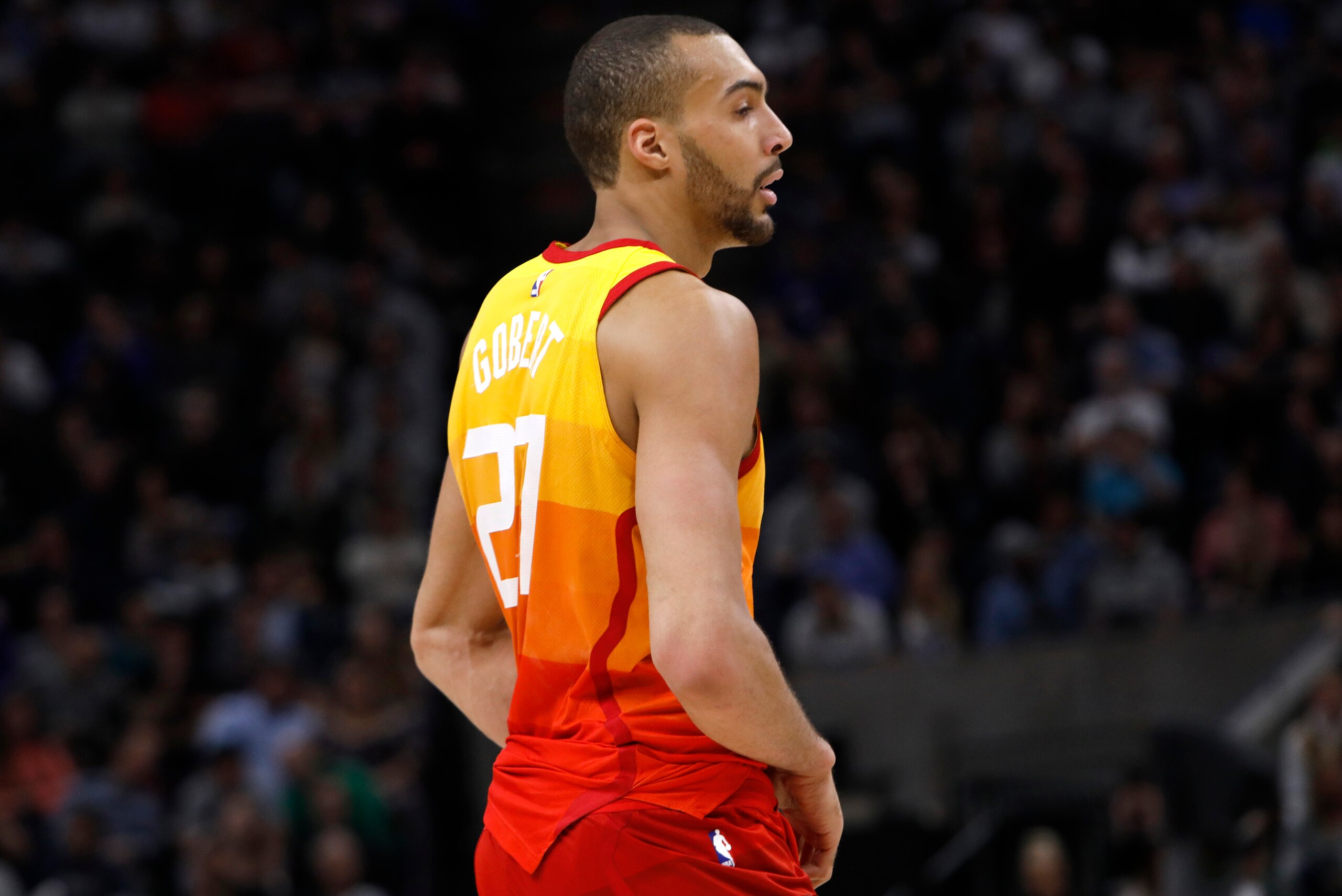
Rudy Gobert has missed 26 games this season and I. Don't. Care.
Upon returning from a sprained PCL in his left knee on Jan. 19, Gobert became the driving force behind a full-on defensive tidal wave in Utah. Since then, the Jazz have produced the league's second-best net rating and a 98.1 defensive rating. Nobody else is lower than 101 during that span.
Individually, Gobert is tops in defensive real plus-minus by a considerable margin, and he holds opponents to a 52.1 percent conversion rate inside of six feet. Among players who've defended at least six shots per game from that range, Sixers big man Joel Embiid is the only one who has been stingier.
As a pure deterrent, nobody is on Gobert's level. Spend a game watching how many times he forces drivers to reconsider their intentions. Layups are ordeals when he's around, and because Gobert is such an in-your-head presence down low, he allows the Jazz's help defense to stick to their perimeter assignments. Because why would you ever need to help someone with a 9'7" standing reach, quick feet and timing that sometimes looks more like clairvoyance?
With a nod to Embiid, Al Horford and even Anthony Davis, this is Gobert's award. Easily.
MIP: Victor Oladipo

When the Indiana Pacers traded Paul George for Victor Oladipo and Domantas Sabonis this past offseason, the vast majority of analysts seemed to think the Oklahoma City Thunder had fleeced them. How could a superstar bring back a disappointing rookie center, an overpaid role player and exactly zero draft picks?
Allow what Ben Golliver wrote for Sports Illustrated to serve as a quick summary of the consensus view:
"In Oladipo (15.9 PPG, 4.3 RPG, 2.6 APG) and Sabonis (5.9 PPG, 3.6 RPG), he [Pacers general manager Kevin Pritchard] acquired two rotation players with some degree of untapped potential but no real shot at star potential. He also inherited a significant contract—the $84 million owed to Oladipo—that is most likely going to look no better than mediocre as it unfolds."
Less than a calendar year later, the Pacers have to be thrilled with their haul.
Oladipo broke out with a career-best season, unexpectedly carrying Indiana into the Eastern Conference playoffs with his two-way abilities. He's blossomed into an ace defender on the wings (even leading the league in steals), and his combination of spot-up ability and slashing prowess has allowed him to average 23.4 points while shooting 47.3 percent from the field, 36.5 percent from downtown and 80.8 percent from the stripe. He's one of only 14 qualified players topping 20 points per game with a true shooting percentage north of 57.
He easily passes the eye test, transitioning from mediocre afterthought on the Thunder to clear-cut All-Star in Indiana. The numbers work in his favor to an even greater extent.
Oladipo has become the obvious choice for an award that rarely offers such ease of selection.
Sixth Man of the Year: Lou Williams
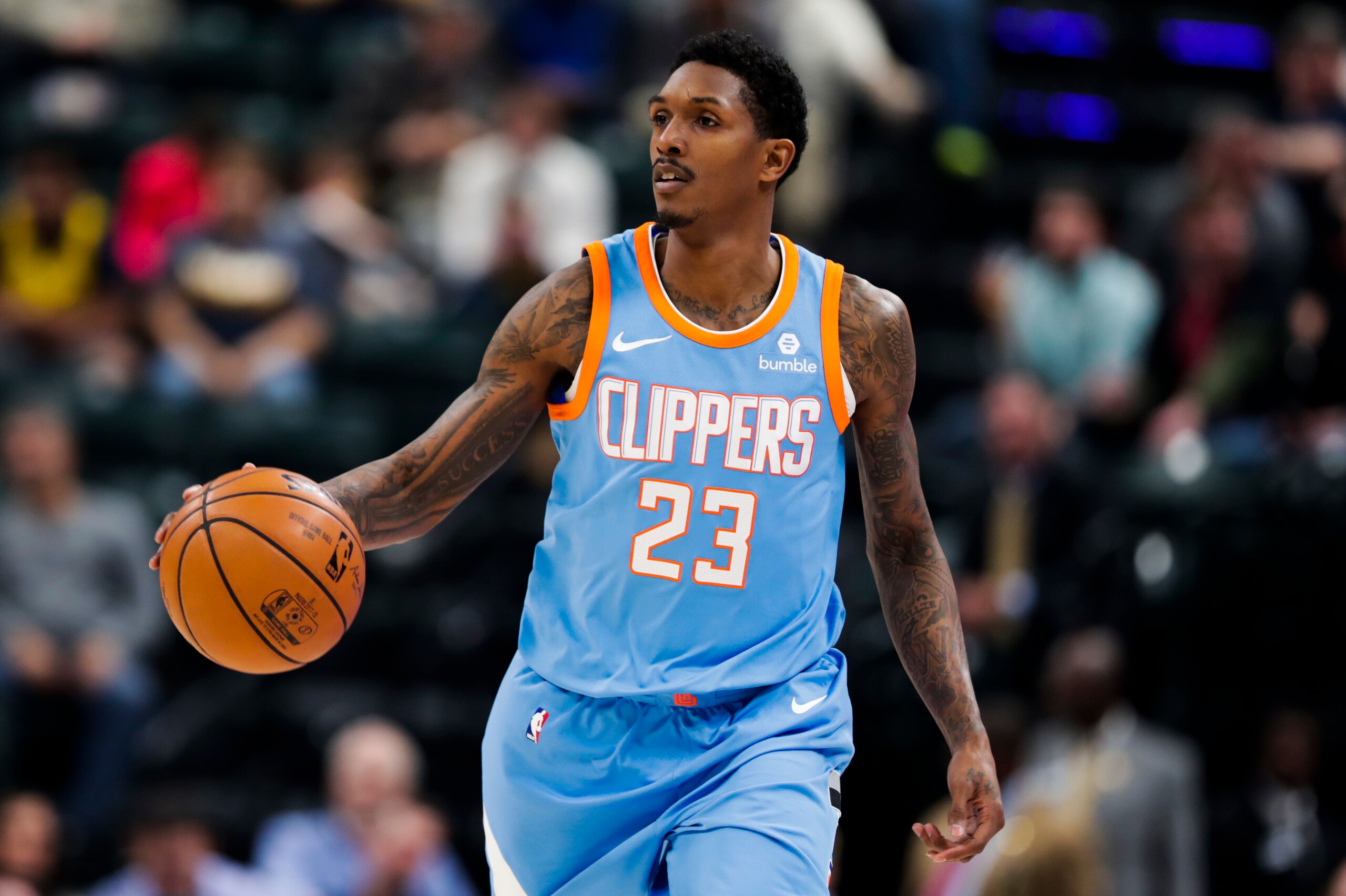
Eric Gordon warrants mention in the Sixth Man of the Year race, Fred VanVleet has been key to the Toronto Raptors' league-best bench and Wayne Ellington makes more tough threes than just about anybody.
However, this is Lou Williams' award to lose.
The Los Angeles Clippers guard is on pace to average more points per game than 34 of the 35 past Sixth Man winners, and he scored more total points in the month of January than anyone else in the NBA. Williams took control of the Clips that month, effectively carrying them with Blake Griffin out.
Say what you want about his casual approach to defense—not that this award has ever rewarded two-way play—but Williams propped up an entire franchise for an extended stretch. Few reserves could have pulled that off, and what we saw from Williams this year served as a reminder that he isn't some opportunistic chucker who capitalizes on second-unit defenders and garbage-time minutes.
He's a legitimately potent scorer who can fill it up against anyone. Runaway winner. No question.
—Hughes
Rookie of the Year: Ben Simmons
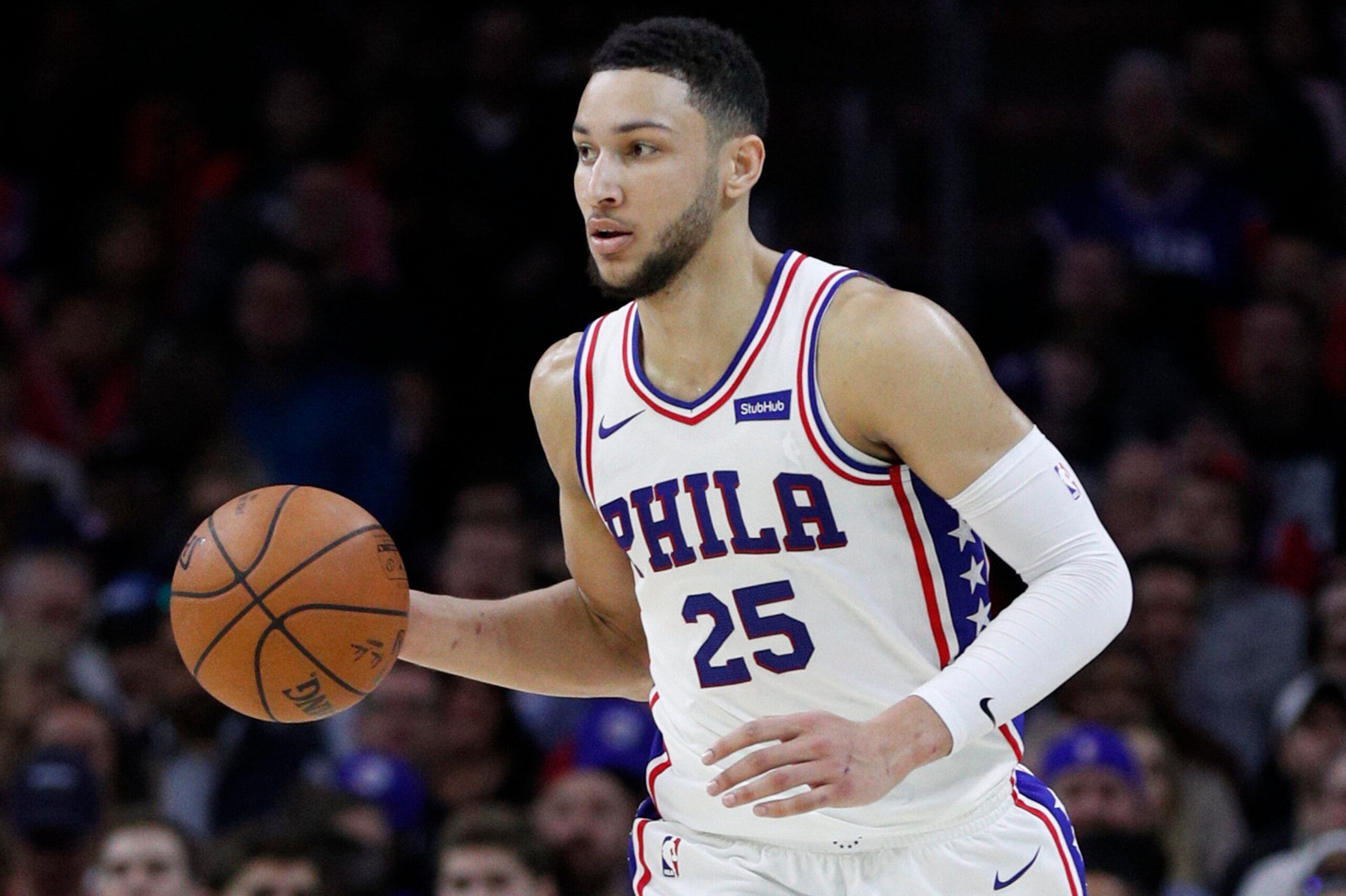
The Rookie of the Year runner-up should still be considered a winner in 2018. In almost any other season, Donovan Mitchell would take the award running away.
But Ben Simmons happened to be eligible for it this year.
We've seen players enter the league and average 20 points like Mitchell during their first NBA season. Since 1946, 47 (including Mitchell) have accomplished that feat. However, only Simmons and Oscar Robertson have averaged at least 15 points, eight rebounds and eight assists as rookies.
With 11 triple-doubles, third behind Russell Westbrook and LeBron James, Simmons has demonstrated outrageously unique versatility and across-the-board production. He's also shooting 54.1 percent to Mitchell's 43.7 percent.
The 6'10" point-forward has helped transform a 28-win Philadelphia 76ers franchise from 2016-17 into one of the league's best. Heading into Thursday, only four other NBA teams sport a higher winning percentage than Philadelphia.
Simmons also deserves the nod as the more valuable defender with his ability to guard multiple positions, both inside and out. He ranks 47th in the league in defensive real-plus minus, per ESPN.com, while Mitchell ranks 229th.
Though it's tough to find significant holes in Mitchell's case for Rookie of the Year, what Simmons is doing is too rare to ignore.
MVP: James Harden
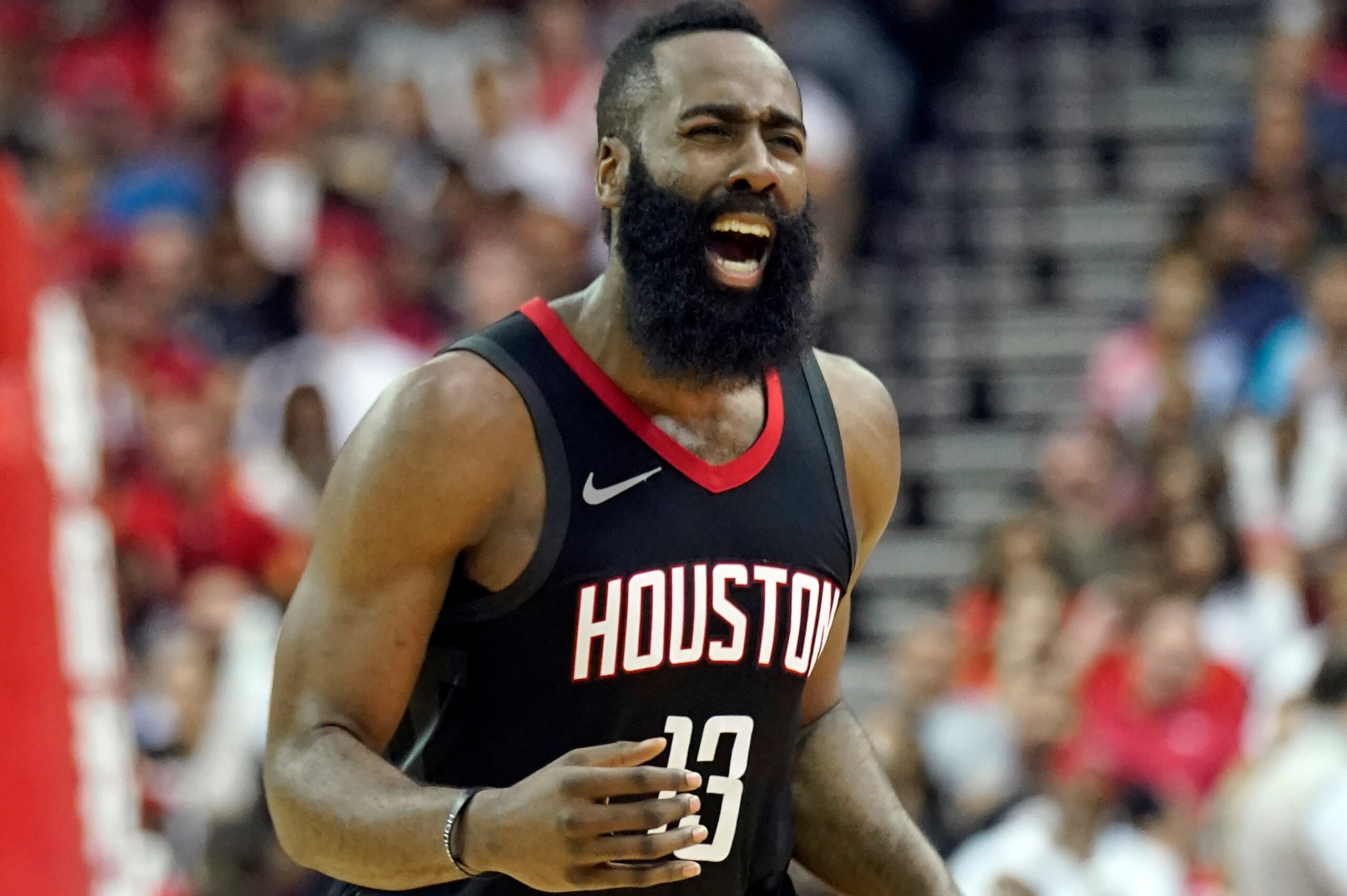
Blame the Golden State Warriors.
After they've spent the last few years shattering expectations with 70-win seasons, NBA fans have forgotten how special it is to get closer to 70 than 60. And the Houston Rockets are tracking toward that exact achievement, as they're on pace to become only the 21st squad in league history with at least 65 victories.
The unrelenting engine in that quest has been none other than James Harden.
With his follicular forest on full display, this offensive machine has consistently torched whichever opponent is set in front of him. He's leading the league in scoring while slashing 44.9/36.5/86.1, and he trails only Russell Westbrook and LeBron James in assists per game. He remains one of the best rebounders in an NBA backcourt. Despite his longstanding reputation as a defensive sieve, he's even displayed better stopping instincts as the tip of the eighth-ranked unit on that end of the floor.
But perhaps Harden's best asset is the fear he strikes into the collective heart of the opposition.
Game-planning for him is impossible, given his ability to connect on step-back triples or dance with the basketball until he creates a lane toward the rim. Inevitably, he'll draw contact on at least one of those two plays. Stopping him—if that's even possible—is the quintessential example of a team effort, which affords his talented teammates easier opportunities.
LeBron James has been a worthy challenger, throwing up unbelievable numbers during his 15th professional season. Anthony Davis has earned some late buzz for his heroics after the year-ending injury suffered by DeMarcus Cousins. The league's other stars have strutted their stuff.
None have done so while leading the NBA's best team, and none have proved capable of matching this guard's statistical impact. As one of many metric-based examples, he's become the leader in ESPN.com's real plus/minus wins to such an extent that the gap between him (14.8) and second-place Davis (13.45) stands equivalent to the fissure between Davis and No. 11 Nikola Jokic (12.1).
Harden finished second in the MVP voting during both the 2014-15 and 2016-17 campaigns. Now, the time has come for him to ascend into the gold-medal position and hoist the Maurice Podoloff Trophy.
—Fromal




.jpg?w=2560 "Love's Body Already 'Tired'")
.jpg?w=2560 "Mahomes' Wife Trolls Kubiak 💀")

.jpg?w=2560 "2 NFL Officials Suspended")