
The Offseason Moves That Could Turn NBA Free Agency on Its Head
Every NBA offseason transaction has a trickle-down effect. Some are more extensive than others, but it's rare that a free-agent signing or completed trade impacts only the involved parties.
Other teams pursuing a player on the chopping block have to adjust when they miss out. Free agents leave some suitors empty-handed, create new championship contenders or catapult their previous squad into difficult decisions and often unscheduled rebuilds. Contracts handed out to select players affect those given to similar talents afterward.
Certain moves incite all of these reactions at the same time, simultaneously sending shockwaves through multiple teams, both directly and obliquely, stirring the Association's competitive balance at large.
These hypothetical scenarios are agents of anarchy, and they will leave stark across-the-board imprints on free agency should they come to fruition.
If you're rooting for summertime chaos, you're also rooting for them.
Bulls Send Jimmy Butler to Celtics
1 of 8
Ah, yes. Jimmy Butler-to-the-Boston Celtics. The boomerang scenario—it's here, then thrown away, only to come back around.
Boston's refusal to include Jae Crowder in any deal killed talks last February, according to NBA.com's David Aldridge. Chicago's vice president of basketball operations, John Paxson, has also said he's not looking to trade Butler, per the Chicago Tribune's K.C. Johnson.
But come on. The Bulls don't have a direction. They're hovering somewhere between rebuilding and competing, ill-fit to fully lean toward one or the other. They don't have the talent or, if they bring back Rajon Rondo and Dwyane Wade, cap space to make a legitimate run now. Nor do they have the cornerstones to effectively hit the reset button.
Reaching a restart point will be easier than challenging the Cleveland Cavaliers for Eastern Conference supremacy. Butler is the Bulls' ticket to restocking the decks with picks and prospects. And the Celtics have the perfect mix of each.
Getting some combination of this year's No. 1 overall pick, next season's unprotected Brooklyn Nets first-round pick and Jaylen Brown in exchange for Butler is a huge win. The Celtics won't give up all three, but the Bulls might at least get two while drumming up the value of their own 2018 selection. If they can coax Crowder's league-best contract out of Boston, even better.
Which raises the question: What would this trade mean for the Celtics?
It will likely come after the free-agency dust settles so they don't compromise flexibility. But would mortgaging the house for Butler mean they've already signed Gordon Hayward? Or that they've struck out in free agency altogether?
Better yet: What if the Butler joins the Celtics before free agency unfolds? What if, borne from fear the Indiana Pacers will accept less for Paul George, the Bulls accept a cut-rate package that's still headlined by the No. 1 pick?
Taking on Butler earlier without gutting the core bilks the Celtics of cap flexibility. Would they pull the trigger without sending back comparable salary in return, essentially removing themselves from other star pursuits? And what would that do for the top-tier free agents (like Hayward) expected to draw their attention?
Blake Griffin Flees Hollywood
2 of 8
There are so many moving parts to the Los Angeles Clippers' offseason that it's hard to single out one defining factor. Four of their five starters will be free agents, and no one knows whether they'll all be back—or whether the Clippers want them all back.
"I don't know," head coach and team president Doc Rivers told reporters when asked specifically if it's time to dissolve the Big Three. "I think they deserve a chance to win. They have built this legacy. I do believe that. ... There's a big part of me that believes [in them]. These guys are responsible for the birth of our franchise in a lot of ways. They consider themselves Clippers. ... I would love them to shepherd that through. Whether that happens or not, it's too early to make all those decisions or they'll make them for us. But I do have a strong belief in that."
Counting on a full-fledged teardown misidentifies what's at play in Los Angeles. There will be no contrived demolition. The Clippers cannot pivot to any viable alternatives. They don't have the flexibility. There is just the status quo, and the question of who, if anyone, has the urge to dismantle it.
Luc Mbah a Moute and J.J. Redick are both flight risks. The Clippers only own Mbah a Moute's Early Bird rights, which caps how much they can offer him, and many around the league believe Redick will bolt for a contract that pays him $18 million or more per year, according to the Los Angeles Times' Broderick Turner. One or both could leave, but neither is important enough to be the impetus behind a roster-razing.
Chris Paul is certainly important enough. But will he pass on a five-year megadeal when he, the president of the National Basketball Players Association, helped abolish the over-36 rule that directly benefits him?
Blake Griffin is the more fitting trigger. Sources told ESPN.com's Kevin Arnovitz that compared to Paul's, his return is "less certain." If he leaves, everything could come crashing down.
Where would Griffin even go? At 28, he doesn't need to seek out an established superpower. He has leeway with his decision. He can latch on to a blossoming organization like the Denver Nuggets. He can join a fringe-playoff team like the Miami Heat. He can hope to be the finishing touch for a contender such as Boston.
Equally important, what does Paul do if Griffin is out of the picture? Plenty of people will argue the Clippers are better off surrounding him and DeAndre Jordan with shooters, but they still won't be able to afford outside talent. Does Paul jump ship to join a deeper squad? Would Griffin's absence make it more likely Rivers overpays Redick in an attempt to retain Paul?
No team in the NBA has more on the line this offseason than the Clippers. And the outcome to their in-house dealings will have a direct impact on the rest of the league—from which high-end free agents are or aren't available to how many finished or up-and-coming contenders are or aren't formed.
Gordon Hayward Signs with Celtics
3 of 8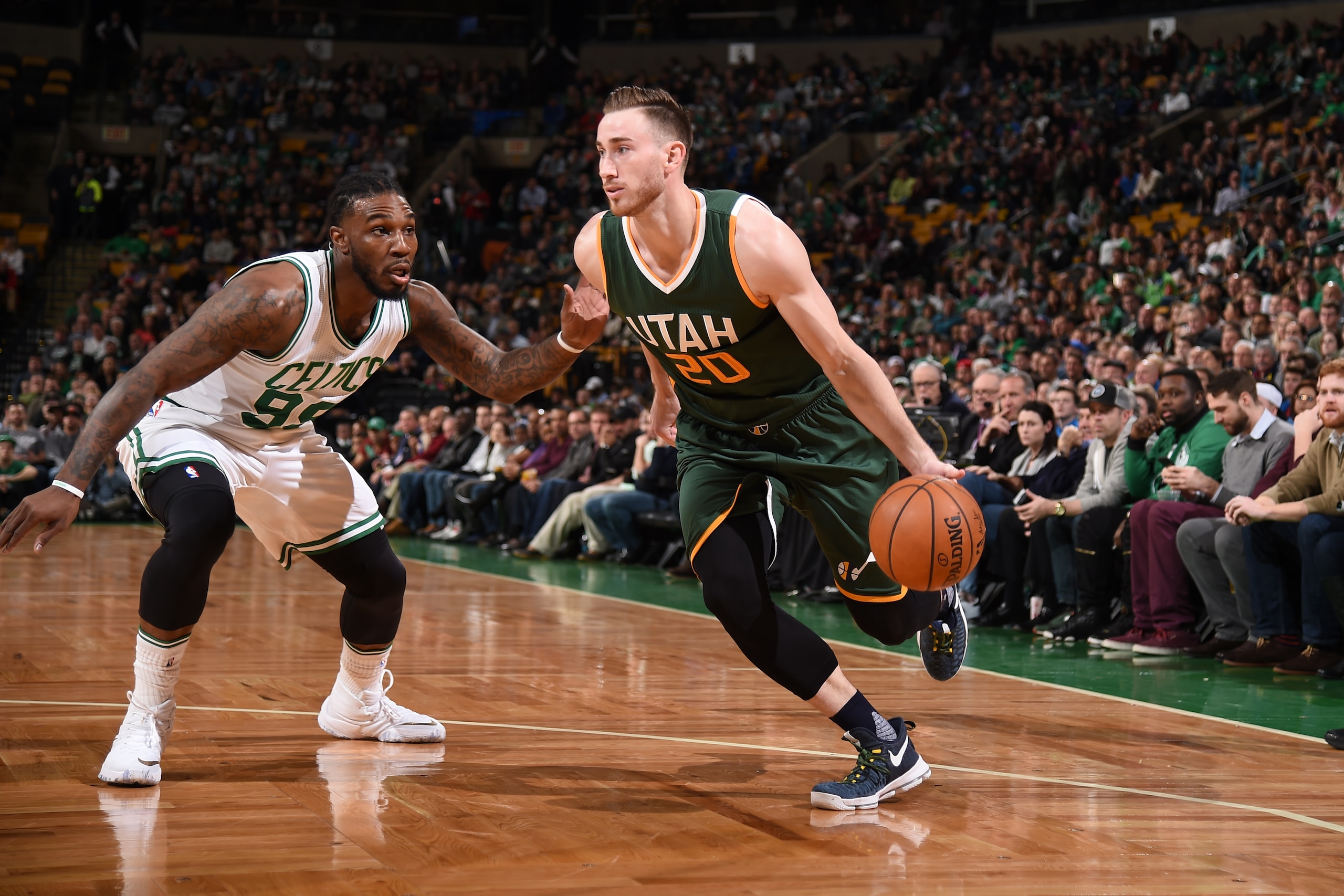
Hayward abandoning the Utah Jazz would turn the offseason upside down, but he won't leave a 51-win team for just anyone. So specificity pays here.
"The only realistic team with max cap space and a less treacherous road to the NBA Finals than the Jazz is the Celtics," The Ringer's Kevin O'Connor wrote in March. "Brad Stevens coached Gordon Hayward for two years at Butler and the two have a bond that extends back to Hayward's high school days. There have been rumblings about the duo reuniting ever since Stevens took the Celtics job in 2013; if there's one looming threat to Utah for Hayward, it's Boston."
This is harrowing when you think about it. One of this year's two Eastern Conference finalists could add an All-Star and then still have the assets to poach Butler from Chicago. Even LeBron would do a double-take when looking at that roster. Maybe. (OK, probably not.)
Losing Hayward, meanwhile, would relegate the Jazz into an unexpected rebuild. They can't offer a near-max deal to 31-year-old point guard George Hill or armored-truck money to the soon-to-be 30-year-old Joe Ingles without the lifeblood of their offense.
One, if not both, of Hill and Ingles will be gettable anyway. But the landscape is different when other suitors don't have to worry about Utah putting up a fight. They needn't peddle above-market deals to poach them; they'll be fair game.
Just like that, three starting-caliber players, one of whom is an All-Star, could be suiting up elsewhere.
And then there's the bonus side-effect: The Jazz have to make expensive decisions on Dante Exum and Rodney Hood. Both are extension-eligible and coming off unflattering 2016-17 campaigns. Do the Jazz hammer out new deals before the season at a possible discount? Do they let Hood and Exum go into restricted free agency next summer, where ruthlessly lavish offers could be awaiting both guards? Might they look to keep one and trade the other?
Utah will be thrust into a state of unrest if Hayward opts to relocate—the collateral damage of which will be sprinkled throughout the league.

Kyle Lowry Goes Home
4 of 8
Kyle Lowry's free agency is already contradicting itself.
Sources told Philly.com's Keith Pompey the "North Philly native has been interested in playing for the [Philadelphia] Sixers for some time." Pompey has also heard that the "Sixers planned to offer Lowry a lucrative contract this summer."
And yet...
"I want a ring," Lowry told reporters of his intentions. "That's all that drives me. I want to just get better, I want to have fun, I want to win a ring."
Let's say money becomes an issue, though. The Sixers can carve out almost two max-ish slots if they want. Giving a 31-year-old Lowry more than $35 million per year won't faze them. It might even be worth it to them—you know, for the culture.
In a normal world, Philly is nothing more than leverage Lowry brings back to the Toronto Raptors. He tells general manager Masai Ujiri the Sixers have a four-year max on the table, and the Raptoers will either match or vomit out a fifth-year sweetener.
Except, what if they don't? What if they won't affix that much of their future to an aging floor general who doubles as a postseason bricklayer? Or what if the call to return home is so strong that Lowry bolts regardless?
Do the Raptors pack it in? They'll have lost their best player, along with the incentive to shell out money for free agents Serge Ibaka, Patrick Patterson and P.J. Tucker. Would Ujiiri let them all walk? Re-sign Ibaka and then figure out the disassembly later via trade? Does another team sling near-max money for Ibaka knowing he's a flight risk with Lowry off trusting the Process? What squad would that be? The Heat? Nuggets? Indiana Pacers?
Are the Sixers, with Lowry, instantly a choice destination? Will they sign him and use the remaining cash—as much as $20 million if Lowry commands the max—to seduce a wing (Ingles?) who helps them make a playoff push from the jump?
Toronto and Philly, in many ways, swap places if Lowry leaves the former for the latter. And you better believe the rest of the league, particularly the Eastern Conference, will feel such a seismic shift.
Nuggets Land a Star
5 of 8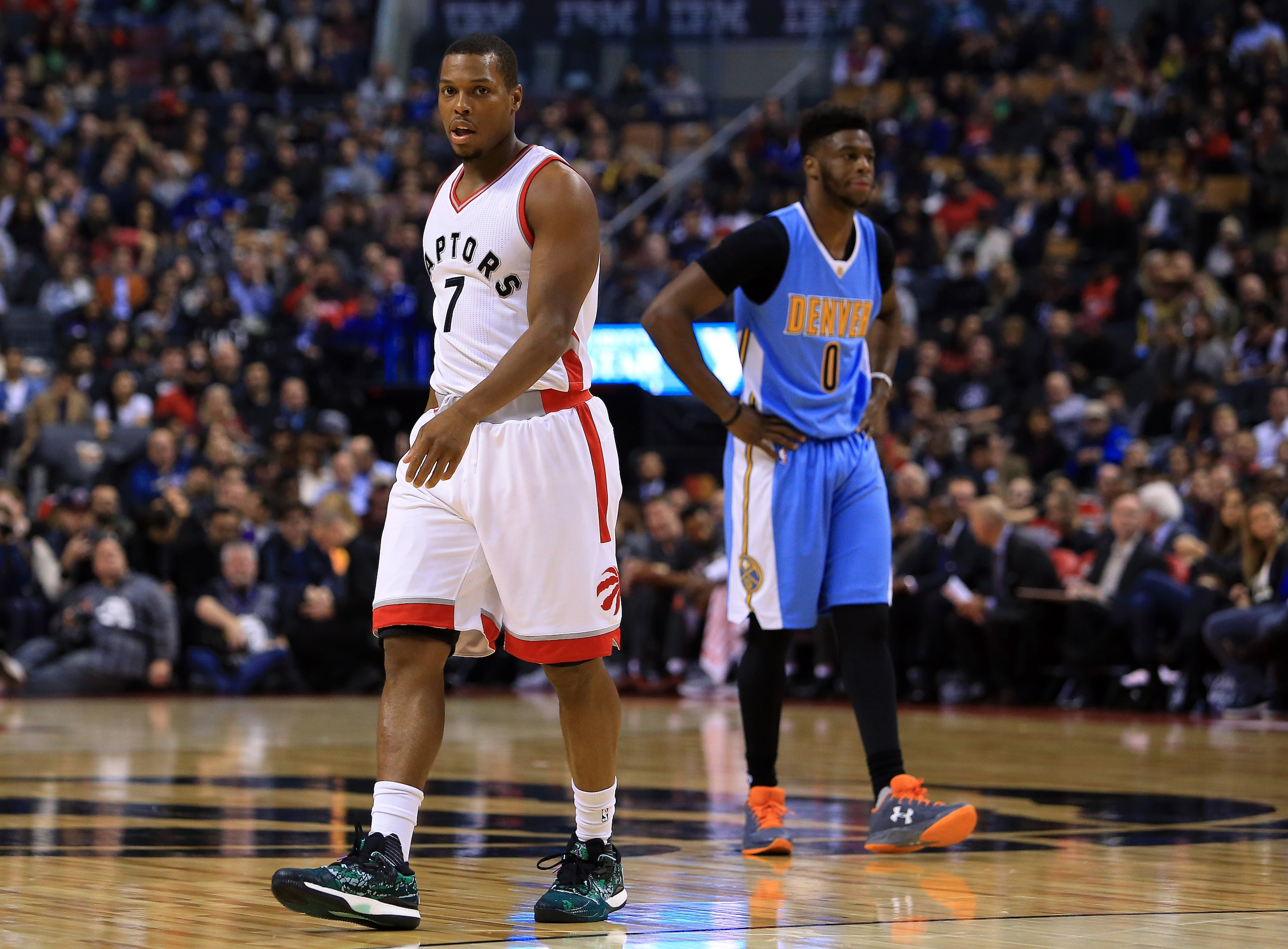
Denver isn't a primo free-agent landing spot, but few teams have the ability to create more than $35 million in cap space and court whatever name they choose. As one of them, the Nuggets will have the inside track on big names who otherwise may not give them a cursory glance.
Renouncing Danilo Gallinari (player option) gives them more than $34 million in room. From there, they're a teensy-tiny salary dump away from jumping the $35 million threshold, which would leave them with the cap space necessary to max any free agent—including those with 10 or more years experience.
And wouldn't you know it, NBA reporter Marc Stein heard Lowry might want to head west. LeBron James does that to some people.
This isn't limited to Lowry, though his blend of on-ball playmaking and off-ball shot-making ideally complement Nikola Jokic. Denver needs a star—almost any star.
If Griffin is sick of having Paul set his curfew, the Nuggets should gauge his interest, even though he and Jokic make for a shoddy defensive duo. If Paul Millsap wants to escape the Atlanta Hawks' permanent stay on Mediocre Island, his price tag is worth a long, hard look.
Pretty much any one of this summer's top 10 free agents could be a workable fit in Denver. And like the Celtics, if the Nuggets catch a whale, they'll still have the assets to deal for another one.
They made a "monster" offer for George at the trade deadline, according to Stein and ESPN.com's Chris Haynes, but nothing ever materialized—most likely because George, per Haynes, didn't seem keen on joining their cause beyond 2018.
If the Nuggets sign a star, they may not care. They could broker a deal for George anyway and hope playing with Jokic and another All-Star convinces him to stick around long term. Or maybe they try to outbid the Celtics for Jimmy Butler. They have the picks, prospects and team-friendly contracts to at least try.
In theory, the Nuggets can be the squad that removes a superstar from both the free-agent and trade markets, forcing the rest of this summer's most aggressive buyers to rejigger their scopes accordingly.
Pacers Trade Paul George...Anywhere
6 of 8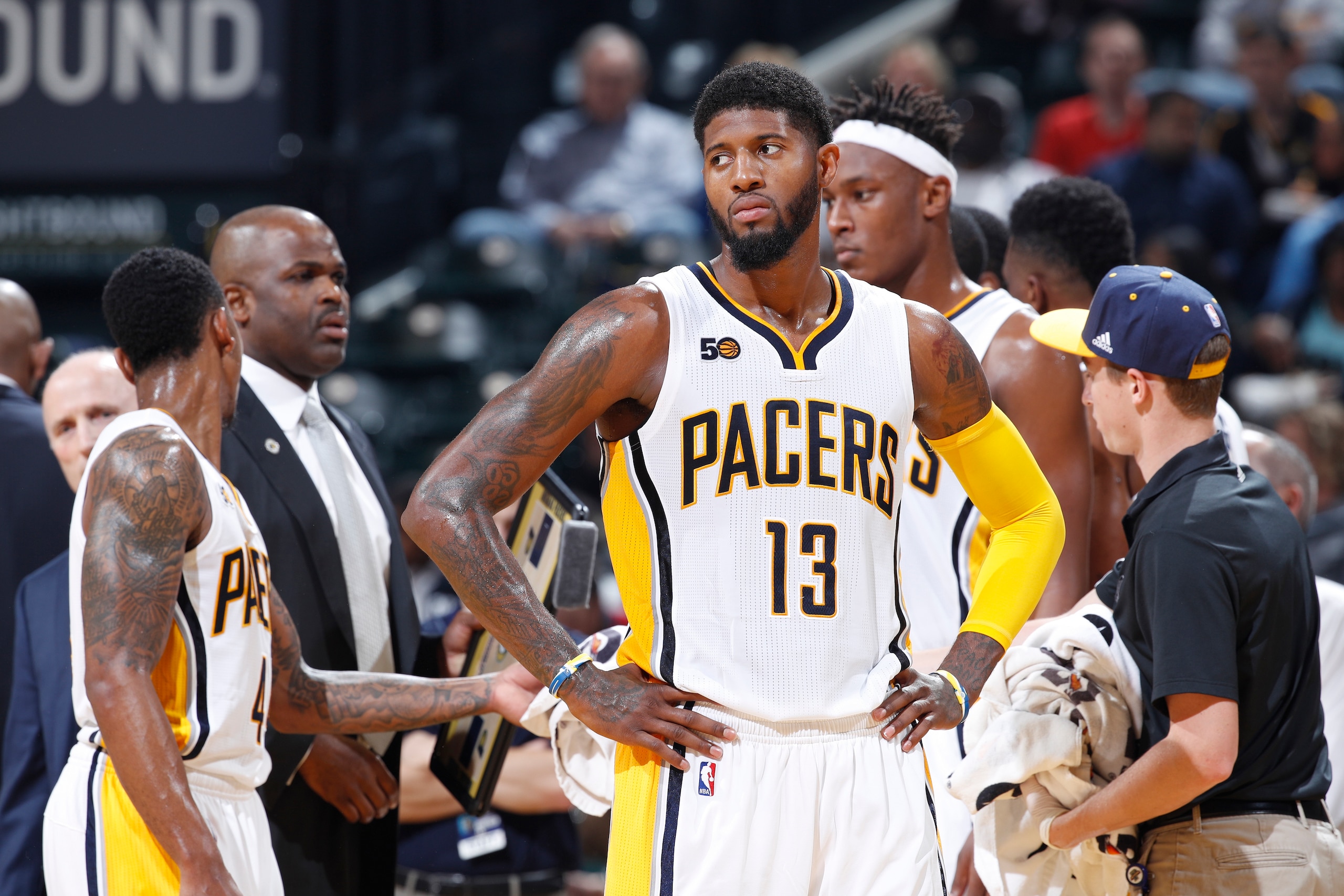
As USA Today's Sam Amick relayed in February, George is "hell-bent" on playing for the Los Angeles Lakers unless Indiana morphs into a title contender. That ain't happening—not by end of next season.
The Pacers can forge max space if they don't want to re-sign C.J. Miles or Jeff Teague, but they're not exactly deep as currently constructed. Consolidating two of their six most-used players into one big name doesn't move their needle into Cavaliers territory. They'd be better off hoping and praying they can cobble together enough perks for another team to absorb Monta Ellis' or Al Jefferson's contracts.
But Indiana isn't a free-agent hotspot. And one season isn't enough time to prove much of anything following wholesale changes. Besides, George recently made an appearance on Jimmy Kimmel Live, and the conversation took a rather discouraging turn.
"Have you talked to Kobe [Bryant] about coming to the Lakers?" Jimmy Kimmel asked.
"Not yet," George responded, before explaining how he and Bryant plan on working out over the summer.
George did say "I love" Indiana. But outside of him making an All-NBA team and the Pacers using a super-duper five-year extension to sell him on staying, there's little hope for this union.
With Larry Bird stepping down as team president and the younger Kevin Pritchard taking over, now feels like a good pivot point. And George's departure impacts more than just the team he joins.
Trade him, and the Pacers have turned their own talent into best-offer mercenaries. Where it's easy to see them keeping the 30-year-old Miles and 28-year-old Teague if the goal is to woo George, it's impossible to picture them hurling pricey four-year pacts to players approaching the back end of their primes.
Indy's loss, in this case, would be more than one team's gain. Everyone with $15 million in cap space to spare will look at a dead-eye shooter like Miles, while the Nuggets, Sixers, Dallas Mavericks, Sacramento Kings and New York Knicks (maybe) all have money to burn and holes at point guard to fill.
Andre Roberson Gets Mega-Overpaid
7 of 8
Restricted free agents Kentavious Caldwell-Pope and Otto Porter have progressed into max-contract formalities. If Andre Roberson wielded a fractionally dependable jumper, he'd be right there with them.
"Roberson's postseason confirmed everything we thought we knew about him: He's a defensive dynamo, and he can't shoot," NBC Sports' Dan Feldman wrote. "But understanding Roberson's skill set is only a small step in evaluating him. Teams are better than ever at exposing perimeter players who can't shoot, and that makes Roberson's price point difficult to read as he enters restricted free agency."
Although Roberson canned more than 40 percent of his treys during the Oklahoma City Thunder's postseason stay, five games and 17 shots isn't a reliable sample. Those obnoxiously wide-open looks the Houston Rockets gave him won't always be available, either. If they are, Roberson won't necessarily convert them. He shot under 25 percent from deep during the regular season when defenders were four or more feet away from him.
Still, teams will always pony up for wings who can wreak havoc on the other side's best offensive player—even if he's a point guard. It's entirely possible a cash-rich suitor lays a large sum of money at his feet. Brooklyn and Philadelphia have gobs of cap space and zero risk attached to whatever investments they make. Denver, Indiana and the Phoenix Suns all need a premier perimeter pest and have the financial malleability to pay one.
The Thunder could be staring at offer sheets worth between $17 to $20 million or more per year. Matching isn't a no-brainer when it would vault them into the luxury tax, barring salary dumps elsewhere.
Even if they do bite the bullet, a massive payday for Roberson sets an interesting precedent for other wings. In the event he's worth, say, a four-year, $75 million contract, the asking prices for Tim Hardaway Jr., Shabazz Muhammad and Tony Snell explode. Elder statesmen like Miles, Tucker and Mbah a Moute will see dollar signs, too.
Of all this year's available wings with undefined market values, Roberson is the quintessential case study. Pay him like a fringe star, and the Thunder or whatever team ends up with him will have made a lot of money for countless other free agents.
Spurs Create Max Cap Space
8 of 8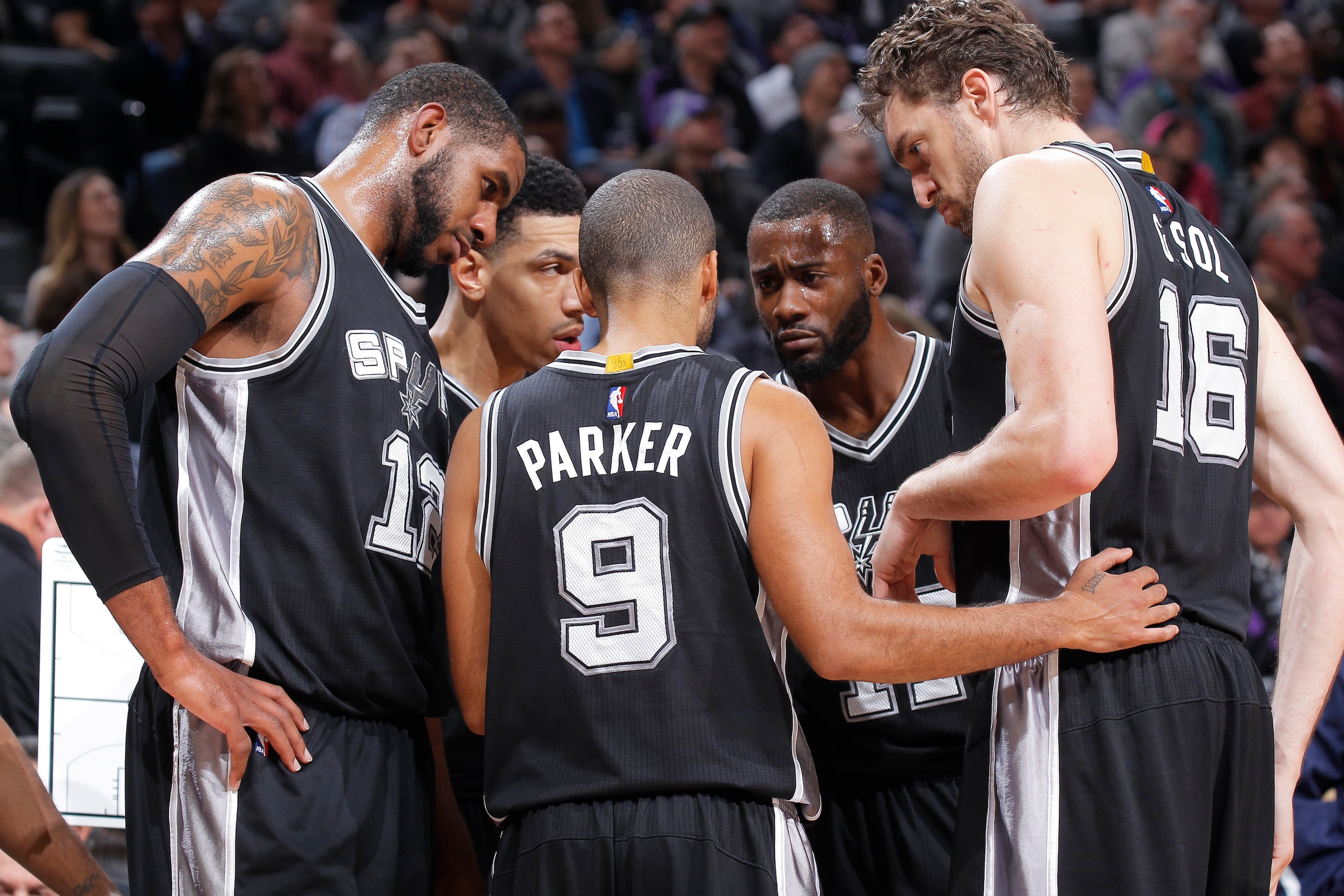
If there's a team that can unexpectedly send the offseason into bedlam, it's the San Antonio Spurs.
Money being equal, or close to it, there isn't a stud free agent who wouldn't listen to them. The Spurs just need to manufacture equal money.
Sniffing near-max space isn't an effortless task. A soon-to-be 37-year-old Pau Gasol likely isn't turning down a $16.2 million player option, so assuming San Antonio retains all incumbent holds, it will need to shed around $32 million in salary to have $30 million in spending power.
Eighty-sixing holds for Bryn Forbes (non-guaranteed), David Lee (player option), Patty Mills and Jonathon Simmons (restricted) doesn't do much. The Spurs will open up just under $8 million in space—less than the projected value of the mid-level exception. Danny Green and one of Gasol, LaMarcus Aldridge or Tony Parker needs to go for them to reach the goal.
Granted, this wouldn't even be enough to bait Lowry or Paul with maxes. The most convenient route to get there would be dumping two of Aldridge, Gasol and Parker. But around $30 million should put the Spurs in the conversation.
Whatever route they use to get there doesn't actually matter. They'll command the attention of anyone they meet. And with Mills entering free agency and Parker recovering from a torn left quadriceps, they have reasonable cause to fling the kitchen sink at a point guard. (Dejounte Murray is doing his damnedest to change that.)
Add Lowry or Paul to the core, and the Spurs will look better equipped to challenge the Golden State Warriors. Cheaper options like Hill and Jrue Holiday do the same. From there, it wouldn't just be the team who lost a star that's left to adjust.
Land a punch like this, and the Spurs set the bar for every offseason outside of Cleveland and Oakland.
Dan Favale covers the NBA for Bleacher Report. Follow him on Twitter (@danfavale) and listen to his Hardwood Knocks podcast co-hosted by B/R's Andrew Bailey.
Stats courtesy of Basketball Reference or NBA.com. Team salary and player contract information via Basketball Insiders and RealGM.


.jpg?w=2560 "Report: Darnold Could Miss 3-6 Weeks")
.jpg?w=2560 "Week 2 Start 'Em, Sit 'Em Decisions")
.jpg?w=2560 "Best NFL Free Agent Fits 📝")