

NBA Power Rankings: Who's Flexing After 2 Weeks of NBA Playoffs?
With the first round of the NBA playoffs nearly over, we've swept the power-ranking field of the lottery flotsam and four teams already bounced from the postseason.
We're dealing with the best of the best now, and after a year of finding interesting things to say about the Orlando Magic every week, let's just say it feels good.
The process is a bit trickier, though, because we're dealing in smaller samples and factoring in matchups. It's only gotten harder to separate these teams into an order that reflects present strength. As an example, maybe the San Antonio Spurs are still the second-best team in the NBA, but they sure didn't look like it against the Memphis Grizzlies, even though they won the series.
As always, advanced metrics, record and health influence each team's position. If certain playoff matchups revealed weaknesses we were concerned about heading into the playoffs, they will factor in too.
The finality of the postseason means results get a leg up on process in our evaluations, so the teams that have already advanced will populate the upper reaches of our rankings.
Wins are what matter most now.
11. Atlanta Hawks
1 of 11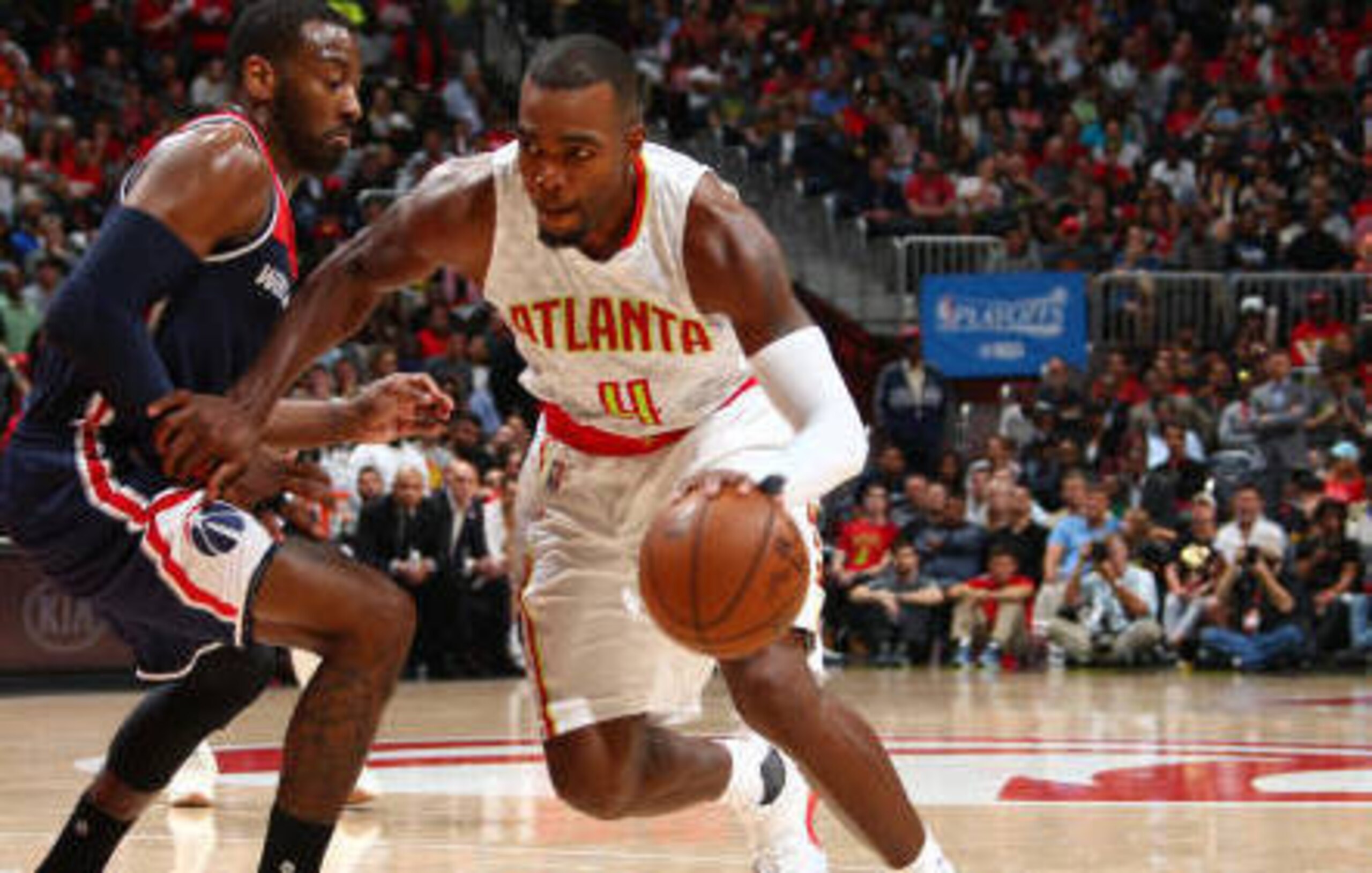
To this point, the battle between the all-offense Washington Wizards and all-defense Atlanta Hawks favors the team that scored the ball better during the year.
But the Hawks have made a series of it, getting a combined 47.4 points per game from Dennis Schroder and Paul Millsap, plus tantalizing defense from Taurean Prince, who's also averaging 12.6 points on 57.4 percent shooting.
Dwight Howard's mobility looks increasingly compromised, and Thabo Sefolosha has been glued to the bench in a series wherein his defense should have mattered.
Chances are the Wizards will win one of their next two games and close out the Hawks, who didn't profile as a playoff team during the regular season but managed to make the dance. Being outscored on the year would normally make postseason aspirations a joke, but here the Hawks are anyway.
Before we say goodbye to the Hawks, it's worth celebrating a sneakily sharp strategy they've employed to capitalize on the Wizards' woeful bench.
This is an imperfect measurement, and the sample is small, but Atlanta's reserves are playing at a scorching pace—the fastest of any playoff team. That's exactly what they should be doing to maximize the number of possessions against the Wizards' shoddy backups. For the same reason overmatched bench units should play slower, limiting the chances of the opponent to build leads, speeding things up with an advantage makes sense.
And if this is all just a coincidence, at least we've said something nice about the Hawks.
10. Chicago Bulls
2 of 11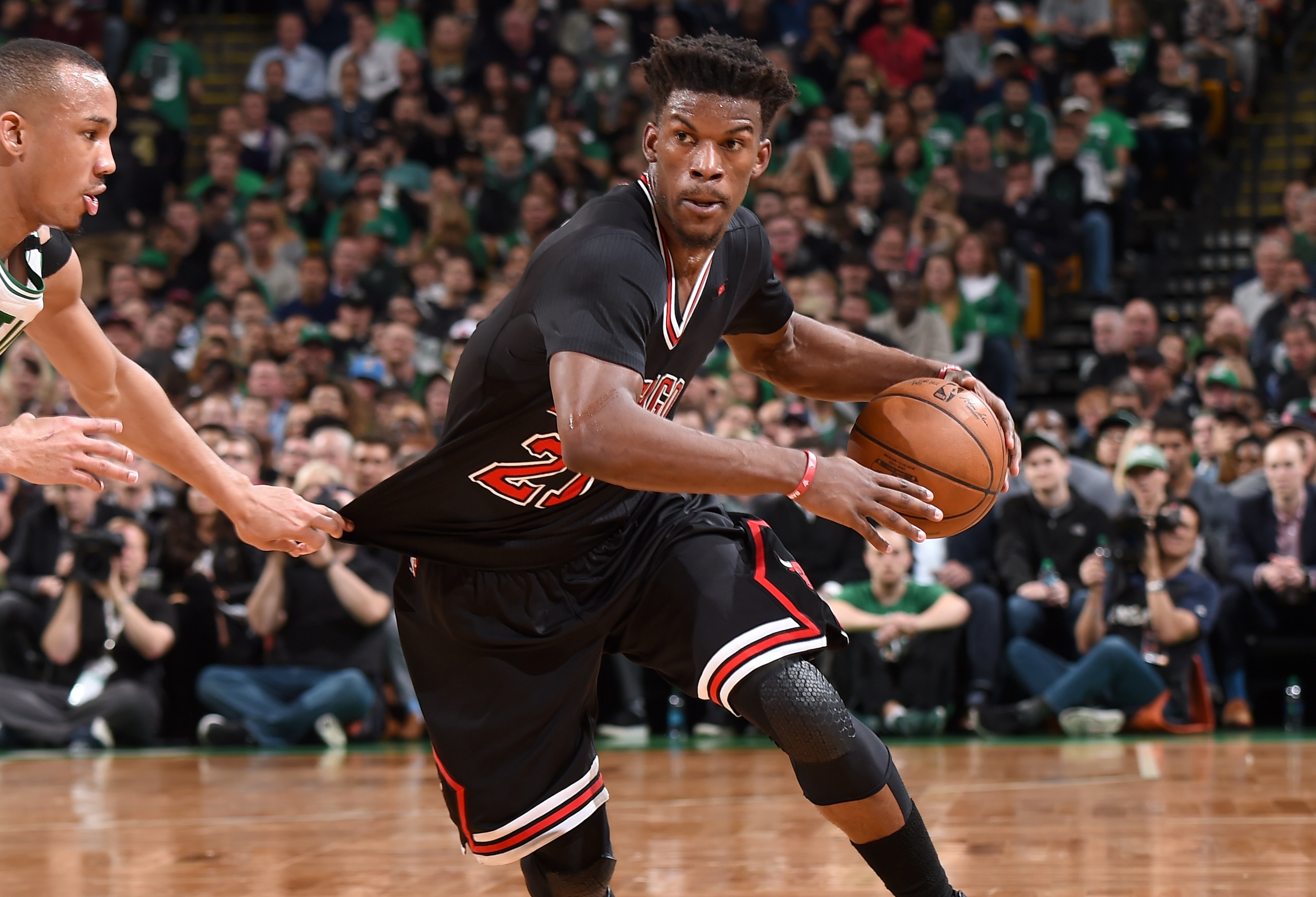
The Chicago Bulls are still leading all playoff teams in rebound rate, but the Boston Celtics have cut into that advantage as the series has worn on.
With their biggest edge dwindling—Chicago grabbed just four more boards than Boston in Game 4 and two more in Game 5—the Bulls don't have many other ways to stay competitive.
Sure, Jimmy Butler could shoot better than 40.7 percent from the field, but it's difficult to ask that of him with the Celtics' never-ending supply of rugged defensive wings swarming him in shifts.
After a stunning 2-0 start, Chicago is coming back to earth and faces elimination in Game 6. And Boston, as we'll elaborate on later, has mostly addressed its biggest defensive weakness, leaving the Bulls with one less vulnerability to poke at.
9. Los Angeles Clippers
3 of 11
The Los Angeles Clippers' season isn't on the brink just because Blake Griffin is out.
It's hanging by a thread because a roster bereft of depth has run up against one that has more than seems fair.
"We've got a lot of guys who are coming off the bench who have been starters," Utah Jazz coach Quin Snyder recently told reporters. "For me, I'm not really differentiating who's coming off the bench and who's starting the game."
With Joe Johnson, Derrick Favors and Rodney Hood in reserve, Utah has three players that would, if rosters were swapped, be the Clippers' best backup. And before anyone starts crowing about Jamal Crawford, watch again as the Jazz seek him out in every end-of-game sequence, preying on his defensive limitations.
During the year, the Clippers' bench posted a minus-3.8 net rating, 25th in the league. Through five postseason contests, it has been better than that, but not nearly good enough to compete with Utah's backups.
Chris Paul is, as always, fantastic. But even if he exerts more control over the other nine players on the court than anyone else, that doesn't make him an alchemist. L.A.'s supporting cast is lead, dragging the team down despite its best player's remarkable efforts.
CP3 can't turn it into gold.
.jpg?w=2560)
8. Washington Wizards
4 of 11
The Atlanta Hawks entered the postseason with red flags flying everywhere.
Having been outscored by 0.8 points per 100 possessions on the year, they were the only club in the red to reach the postseason. Their offense was suspect too, checking in at No. 27 when the playoffs began.
Howard had been looking slower and more mechanical for months, Schroder's fifth-gear-all-the-time approach seemed risky in a postseason setting and Sefolosha's diminishing minutes screamed "nagging injury."
That the Washington Wizards had any trouble at all with these bedraggled Hawks says a lot about how seriously we should take John Wall and Co. going forward.
Ideally, Bojan Bogdanovic and Brandon Jennings' embarrassing defense would relegate them to the end of any good team's bench. But they're the primary reserves, along with Kelly Oubre Jr., for Washington. As a result, castoffs like Jose Calderon and Ersan Ilyasova have produced shocking scoring streaks.
Washington's lack of depth figured to hurt less in the playoffs, when rotations shorten and starters push up toward 40 minutes per game. As usual, its starting five has been excellent, amassing a net rating of plus-10.6 while playing more minutes than any other five-man unit in the playoffs so far.
But with a bench this shallow, one outscored by 9.1 points per 100 possessions through Game 5, all bets are off.
7. Boston Celtics
5 of 11
So much of the same analysis that dumped the Wizards down the rankings applies to the Boston Celtics, who've struggled to take a 3-2 lead against a Bulls team that barely sneaked into the playoffs.
When an injury to Rajon Rondo—a player who fell behind the likes of Michael-Carter Williams and Jerian Grant in the point guard rotation—might be all that winds up preventing the Bulls from completing a massive upset, it reveals the frailties of one of the softest top seeds in memory.
Defensive weak links and the fully foreseeable failure to rebound have hurt the Celtics.
The good news for Boston is that the Bulls' efforts to exploit Isaiah Thomas on defense have served as a testing ground for countermeasures. It took a pair of losses, but Boston has figured out a decent workaround, effectively pre-switching every pick-and-roll in a hybrid zone defense that hides Thomas in the corner.
Per ESPN.com's Zach Lowe: "The little gimmick took Chicago out of its rhythm as Boston salted away the game. If the Bulls were going to attack Thomas, they would have to do some gymnastics to find him, and they'd find him on the wing, where the Celtics could use the sideline as an extra defender."
The Celtics have sorted things out, and they've scored plenty despite Thomas only hitting 21.1 percent of his threes through five games. But there never should have been this much drama against an eighth seed.
6. Utah Jazz
6 of 11
This is as high as we can rank the Jazz without opening up the possibility of looking ridiculous, but it's tempting to move them higher.
The Clips aren't officially dead yet, and a comeback isn't out of the question. But Utah has looked increasingly impressive as it continues to capitalize on a Clippers squad missing Griffin, pushing to a 3-2 lead with a Game 6 at home on Friday.
Gordon Hayward beat food poisoning in Game 4 to pump in 27 points on 16 shots in a 96-92 Game 5 win that should have featured a much wider margin. The Jazz generated endless open looks in that contest and could easily have shot better than 13-of-36 from long distance.
With Joe Johnson winning games on his own in the fourth quarter, Rudy Gobert looking fine after a knee sprain in Game 1 and a defense living up to its regular-season billing, the Jazz are better than any team that has yet to officially advance.
Frankly, they look tougher than some that have. But let's not get ahead of ourselves.
5. Toronto Raptors
7 of 11
When P.J. Tucker and Patrick Patterson showed up to Game 4 with matching sweaters, the Toronto Raptors should have known they were in good shape.
With unspoken chemistry like that, there was no way they'd lose.
The Raptors may say the series swung in their favor for other reasons, but we know the truth. It was sweaters.
Toronto won that pivotal Game 4 and effectively solved the Milwaukee Bucks in the process. So after evening the series with that victory, they continued cramming the paint, leaning on smaller lineups (thank you, Norman Powell) and making sure Giannis Antetokounmpo's postseason freak show stopped short of a first-round upset.
Two more victories later, they'd survived.
Barely.
Because these are the Raptors we're talking about, this series win had to come with a brutal blown advantage in Game 6. Milwaukee came back from a 25-point deficit to take the lead in the fourth quarter, but the Raps summoned just enough to close out the contest.
There are some issues here.
Kyle Lowry hasn't looked like himself while dealing with a sore back. Plus, for the umpteenth series in a row, DeMar DeRozan looked vulnerable as stellar individual defense stifled his mid-range game. He shot 0-of-8 from the field in Game 3. Even after finding a bit of a groove late in the series, DeRozan hasn't done enough to ward off concerns about better defenders and playoff whistles shutting him down.
4. San Antonio Spurs
8 of 11
There's a lot to worry about with the San Antonio Spurs, which is an odd thing to note about a team with the league's best two-way player, maybe the greatest coach of all time and a playoff-experience advantage against everyone they face.
But it's troubling when the exact struggles you think might arise before a series show up just as you'd imagined them.
San Antonio lacks secondary creators in support of Kawhi Leonard, who, for all his gifts, is still mostly a creator for himself. Unless Tony Parker has his 2007 mojo working full time, which he showed in surprising flashes against the Memphis Grizzlies, the Spurs can't always generate consistent offense.
Another issue is the woefully unathletic interior defense—the type of weakness that is especially problematic in an era of pick-and-roll basketball.
Pau Gasol and David Lee have no hope of containing quick guards when a screen is involved. And if a viable shooter is setting the pick (say, Ryan Anderson, in the next round), that further exploits the frailty. If LaMarcus Aldridge is your best big-man option against the game's most commonly used offensive tactic, you're not in great shape.
Still, the Spurs have gotten production from their vets when necessary. Parker scored 27 points to close the Grizzlies out in Game 6, and Manu Ginobili recharged the bench to swing the series.
"He brought that grandpa juice, [which] is what I call it, and we all followed," Patty Mills said of Ginobili's mid-series revival. "It's inspiring. We shouldn't wait for him to do that before we get into gear. But it really is inspiring when you see him dive on the ball, putting his body on the line, hard drives, hard cuts. It gets us all going."
The Spurs may have simply had a tough matchup in the first round, but that doesn't change the fact they haven't looked much like a 60-win outfit so far.
3. Houston Rockets
9 of 11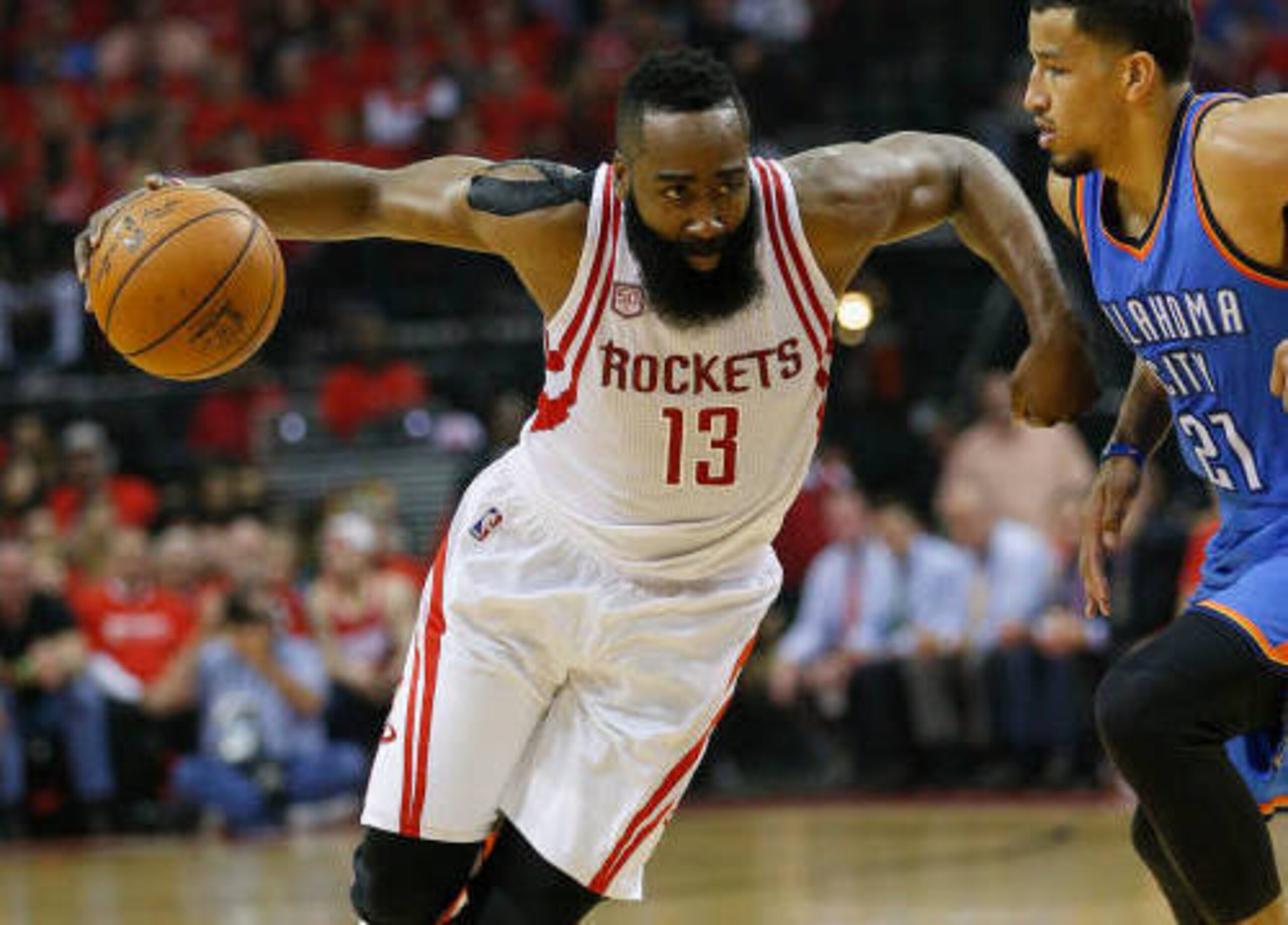
It's not quite as simple as ranking the lone victor of a five-game series behind the two that won in sweeps. Though if ever there were a time to focus strictly on the results, it's the playoffs.
But in addition to sending Russell Westbrook and the Oklahoma City Thunder home with little difficulty, the Houston Rockets did it with James Harden less than fully fit, Sam Dekker out of the lineup entirely and with enough strategic nuance to signal that this team is only going to get more dangerous as the postseason continues.
That's assuming Harden's ankle heals during his time off. Even if it doesn't, his performance in the decisive fifth game against OKC (34 points on 8-of-25 shooting) suggests he'll still be effective at half-strength.
Despite limitations, Houston posted a 109.7 offensive rating against Oklahoma City, a couple of points lower than its regular-season figure but still commendable under the circumstances—and against a Thunder D that ranked among the top 10.
The Rockets played Enes Kanter off the floor by relentlessly attacking him in the pick-and-roll, ignored (and then hacked) Andre Roberson to great effect and generally outfoxed the Thunder at every turn. Credit head coach Mike D'Antoni for most of the strategic upper hand, but don't forget the other advantage Houston has over its competition: a roster laden with weapons.
Lou Williams created offense on his own, Nene made 14 straight field goals at one point and Eric Gordon even summoned the will to turn in what had to be his most impressive dunk since 2010.
Houston has options, and it augurs well to have had such an easy time against a defense that did everything it could to take away the three-point shot. OKC hugged up on shooters, and the Rockets attempted nearly seven fewer threes per game than during the regular season, hitting them at only a 28.3 percent clip.
A Rockets team that wins easily without getting off from long distance is a scary thing.
2. Cleveland Cavaliers
10 of 11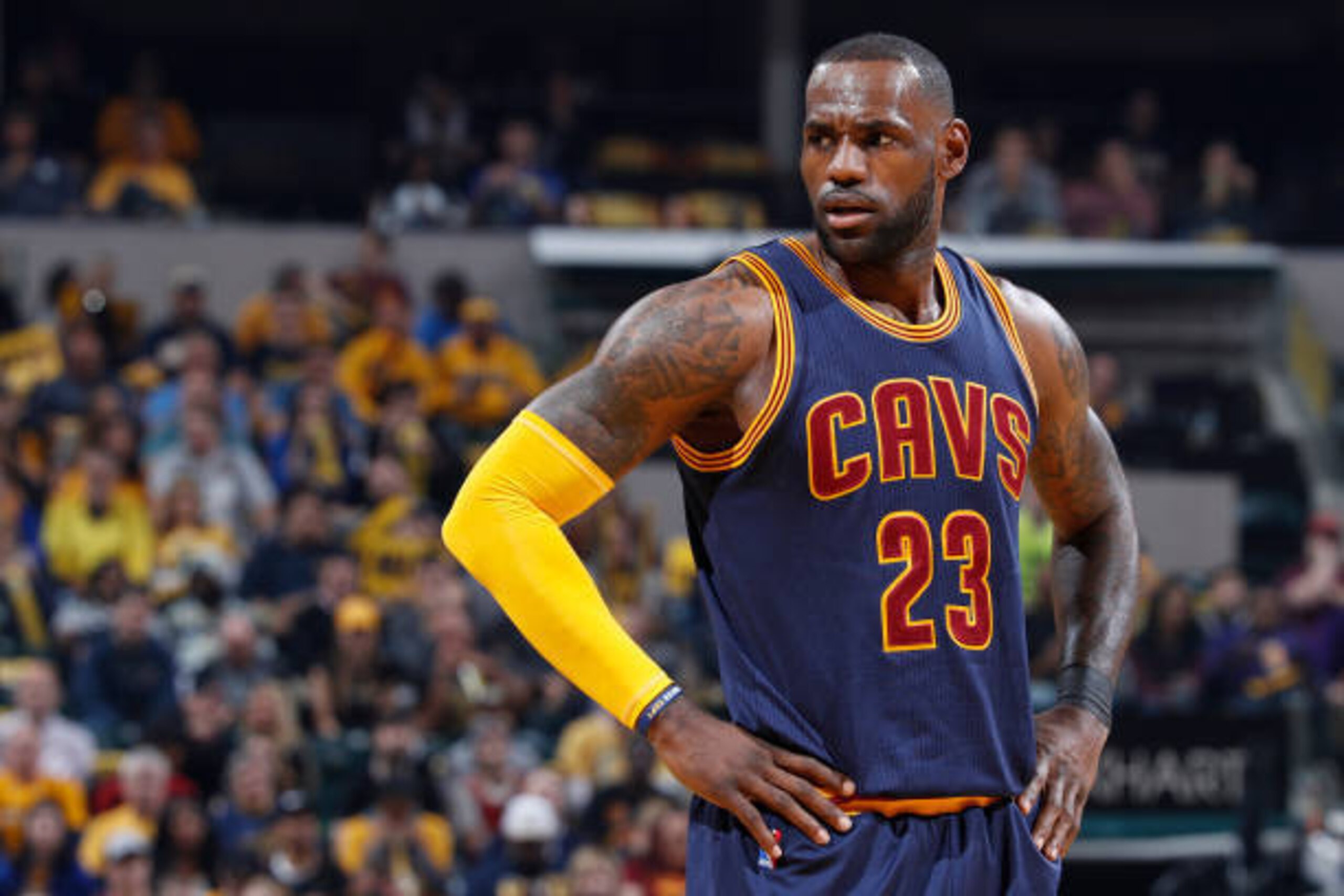
LeBron James is no stranger to sweeps, having now logged 10 of them in seven-game series during his career, per Elias Sports Bureau (h/t ESPN Stats & Info).
As four-game dismissals go, though, the one the Cleveland Cavaliers handed the Indiana Pacers was less inspiring than most. The Cavs outscored Indy by a total of 16 points in their quartet of wins, and the switch-flipping we expected only showed up once, when the Cavs rallied from a 25-point halftime deficit to steal Game 3.
Cleveland's defense still stunk. Disjointed and crippled at the point of attack by substandard effort (this is about your defending of pick-and-roll ball-handlers, Kyrie Irving), the Cavs defense, which ranked 29th and permitted 111.1 points per 100 possessions after the All-Star break, surrendered 111.0 in four games against Indy.
This was a Pacers team, mind you, that ranked 15th in the NBA in offense. Unless the Cavs somehow meet the Hawks as their playoff run continues, they'll only see offenses better than Indiana's from here on.
In the absence of a defensive pulse, James' predictable channeling of Playoff LeBron Mode offers hope for the Cavs. He left his fantastic regular season line of 26.4 points, 8.7 assists and 8.6 rebounds in the dust, upping his averages to 32.8 points 9.8 rebounds and 9.0 assists—while adding five minutes to his per-game average and suffering only a modest drop off in true shooting percentage, from 61.9 to 60.2.
The minutes, as ever, are the concern with James. Even if head coach Tyronn Lue isn't particularly bothered, per his comments to ESPN.com's Dave McMenamin: "With him playing the minutes he played during the course of the regular season, it has helped him in the playoffs. Now he is able to play those 42, 43 minutes. Because he's used to it. His body can take it, so I'm not worried about what outside people say."
One other bonus for the Cavs is that no other East team has looked formidable in the first round. Despite a ho-hum effort, Cleveland's route to the Finals looks less obstructed than ever.
1. Golden State Warriors
11 of 11
The Golden State Warriors set an unofficial record by eliminating the Portland Trail Blazers in three games and about three minutes.
Usually, it takes a full four games to win a best-of-seven series, but when the Dubs roared into a 14-0 lead in the first three minutes of Game 4 on Monday, full of purpose and possessed by some kind of demon spirit of ruthless basketball efficiency, the Blazers were done.
And though it's far too early to assign the same finality to the rest of the postseason, it's difficult to ignore the thoroughness with which the Warriors dispatched Portland.
Golden State hammered the Blazers by an average of 18.3 points per 100 possessions, logging a first-round net rating double that of the next most dominant team, the Spurs (plus-9.5).
Maybe the Dubs are drawing inspiration from head coach Steve Kerr's struggles. Maybe a desire to right last year's wrongs is the source of their frightening focus.
Or—and this is the explanation that should have the rest of the playoff field most concerned—this version of the Warriors is just more talented, more driven and more dialed in than it's been at any point in the franchise's historic three-year run.
Stephen Curry drilled 30-footers, Draymond Green guarded everyone from Damian Lillard to the popcorn vendor, Kevin Durant's calf injury appeared forgotten and JaVale McGee dunked lobs that scraped the jumbotron.
Injury felled these Warriors a year ago, so anything's possible.
But for now, this group is a basketball WMD visiting instant and complete destruction on all targets.
Stats courtesy of NBA.com and Basketball Reference unless otherwise indicated. Accurate through games played April 27.
.jpg?w=2560 "Suns Brooks Basketball")
.jpg?w=2560 "Joey Porter Jr. Traded to Cowboys 🤠")
.JPEG?w=2560 "Marshawn Reveals Scary Stat 🚗")


.jpeg?w=2560 "B/R's Expert Week 4 2026 NFL Picks 🔮")