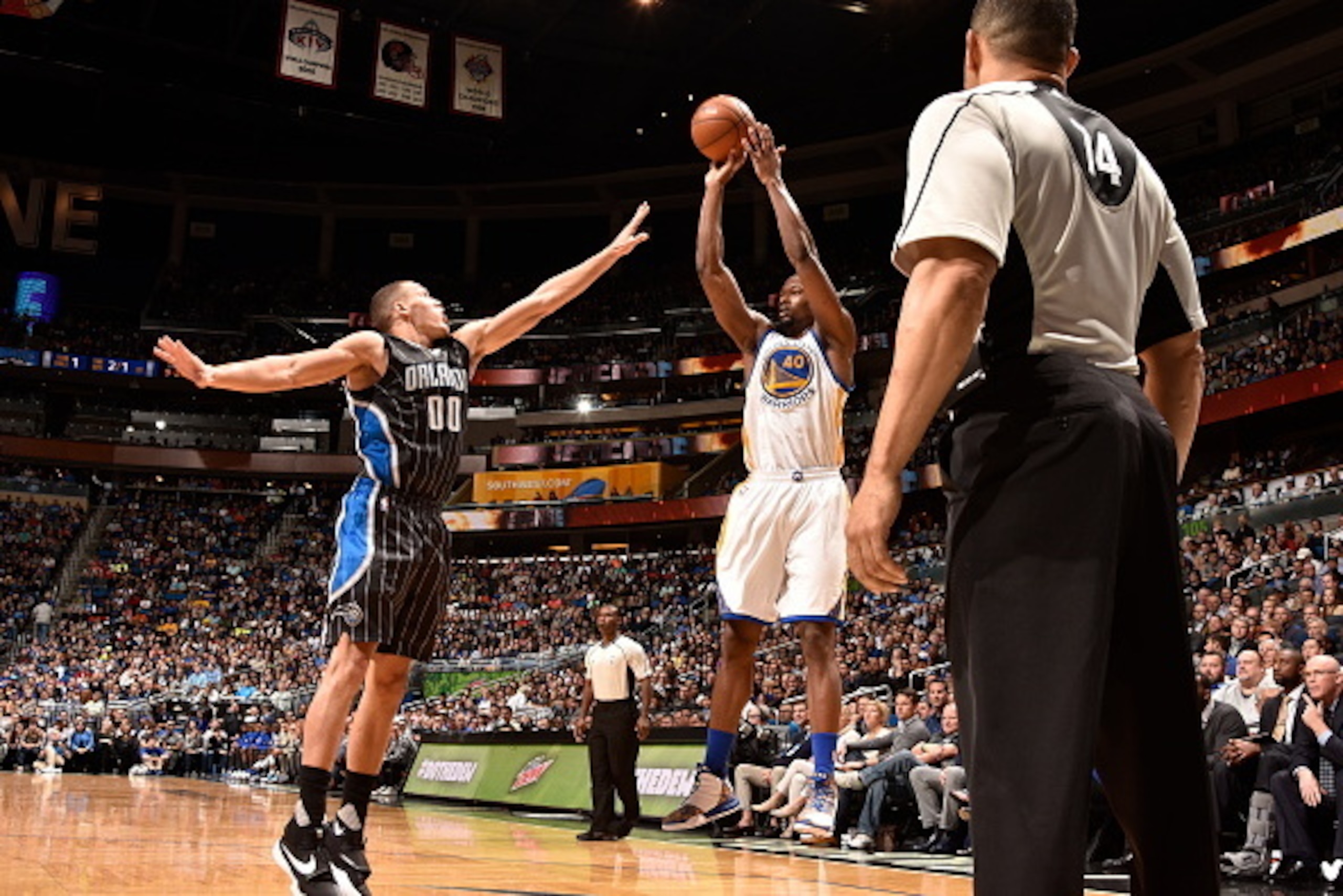

The Top 3 NBA Breakout Candidates at Every Position Entering 2016-17
If you look up "most improved" in the (basketball) dictionary, you may well find a picture of C.J. McCollum—and not just because he won the NBA's award for that last season. His rise to stardom for the Portland Trail Blazers was nothing if not a textbook breakout.
While the Lehigh had previously product piled up double-digit scoring games down the 2014-15 season stretch with Wesley Matthews and Arron Afflalo sidelined by injuries, those two, along with three other Blazers stalwarts (LaMarcus Aldridge, Nicolas Batum and Robin Lopez), departed in one way or another the following summer.
In their stead, McCollum stepped up to become an everyday 20-point-per-game scorer, a deadeye shooter and Damian Lillard's backcourt sidekick last season. McCollum both followed and laid out a blueprint for rising success.
The NBA, with its wealth of young talent, is primed to see many more up-and-comers tread in those same footsteps during 2016-17. But sometimes, even a veteran just has to land in the right spot and the right role for everything to break right.
These 15—three at each position—are well suited to break out into more prominent production, based on their individual abilities and the shifting circumstances of their teams.
Point Guard No. 3: George Hill, Utah Jazz
1 of 15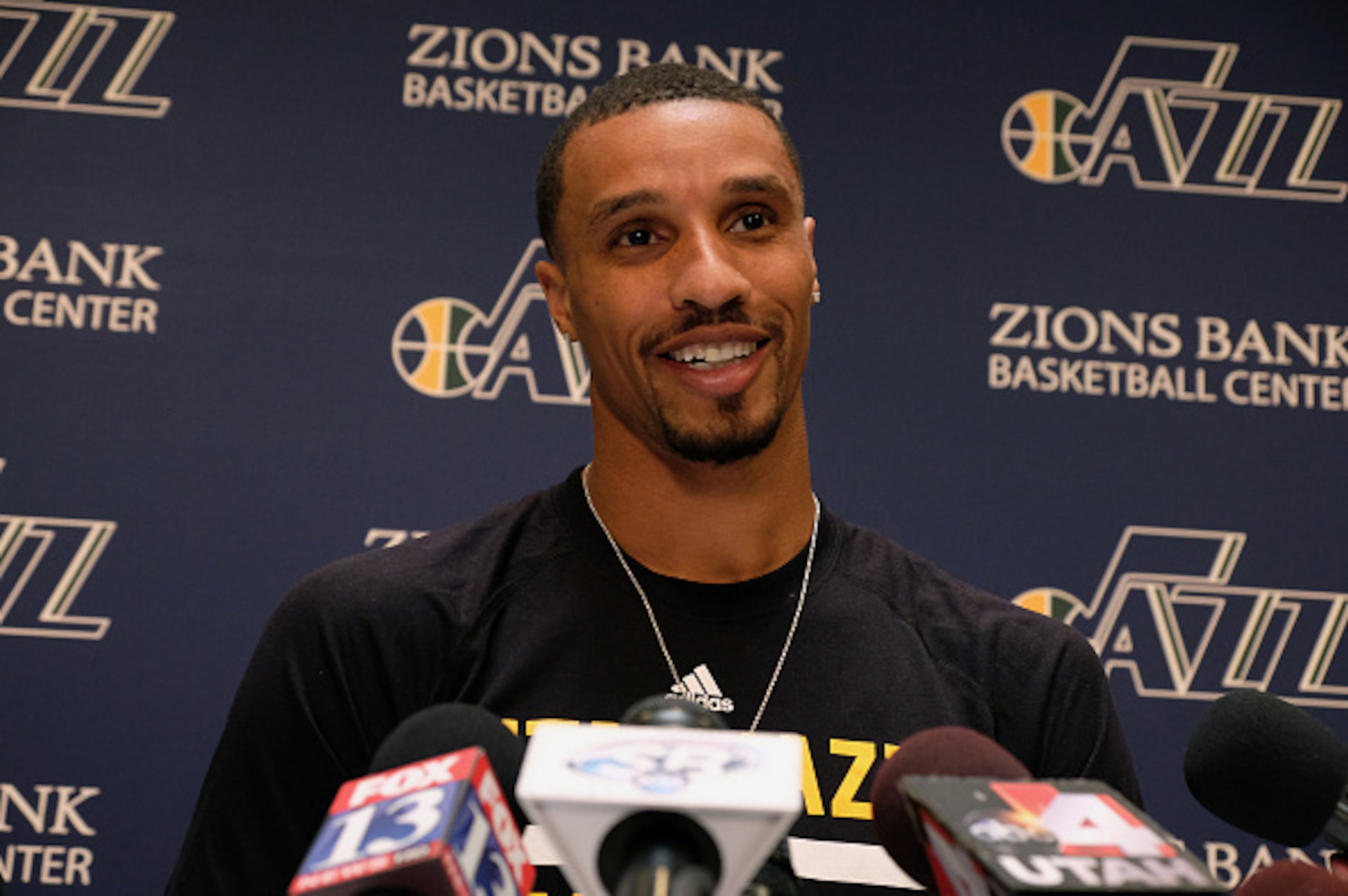
George Hill is hardly a fresh face on the NBA scene. He was a favorite of Gregg Popovich once upon a time with the San Antonio Spurs before entrenching himself as the starting point guard of the Indiana Pacers for five seasons.
But Hill never quite got his due during his time in Naptown—he was less revered as a hometown product than remembered as the guy the Pacers gave up Kawhi Leonard to get. During Indy's peak under Frank Vogel, Hill was also the least heralded member of the team's stalwart starting five, behind Paul George, Roy Hibbert, David West and Lance Stephenson.
A change of scenery in Salt Lake City isn't likely to turn the 30-year-old into a star overnight, but Hill won't need long to acclimate himself. Dennis Lindsey, the Jazz's general manager, played a part in drafting Hill to San Antonio out of IUPUI in 2008. Quin Snyder, Utah's head coach, was an assistant on Popovich's staff in the Alamo City.
Gordon Hayward, the Jazz's resident star, goes back even further with Hill.
"I’ve known him since he was a sophomore at Brownsburg and I was in college at the time," Hill said, per Vigilant Sports' Scott Agness. "And then him going on to Butler. When I actually got to the NBA, I still kept tabs on him to see how he was doing, him and Shelvin [Mack], at Butler."
The Jazz should already appreciate Hill's steady hand at the point, especially after watching the likes of Trey Burke, Dante Exum and Shelvin Mack stumble and fumble in recent years. As for Hill's new running mates and fans, they'll enjoy what he brings to the table as a long-armed, disruptive defender (1.1 steals per game in 2015-16) and reliable outside shooter (40.8 percent from three).
Point Guard No. 2: D'Angelo Russell, Los Angeles Lakers
2 of 15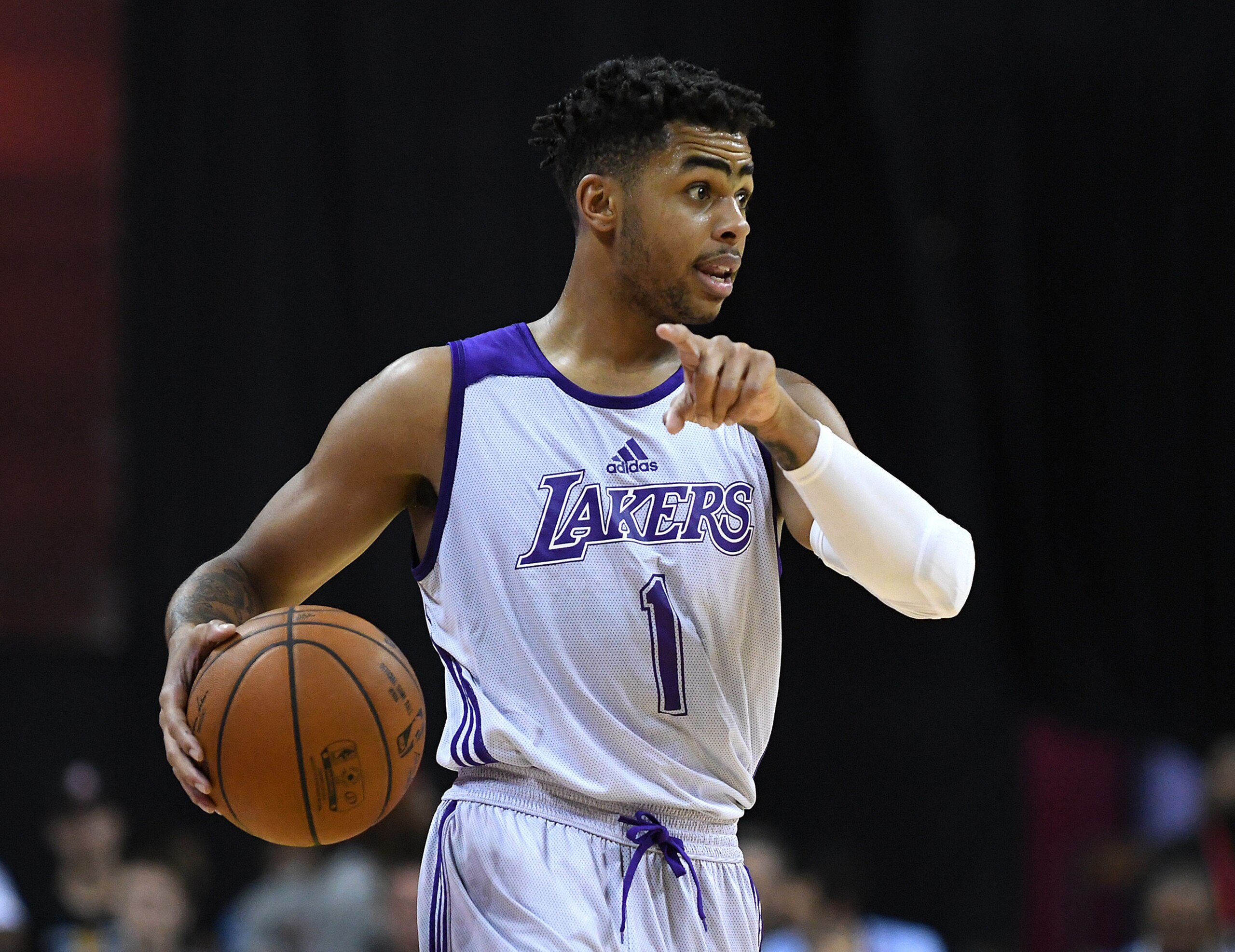
On its face, D'Angelo Russell's rookie season was a disaster: He shuttled between Byron Scott's starting lineup and the bench, shot 41 percent from the field, played (perhaps) half a lick of defense and suffered through the worst campaign (21-61) in Lakers franchise history, (Los Angeles or Minneapolis).
And that was just on the court. Off it, his surreptitious Snapchat exposed Nick Young's infidelity and made Russell a pariah in the Lakers' locker room and beyond. Talk to folks who spend ample time around the team, though, and they'll tell you Russell's social-media mishap might be the best thing that could have happened to him—and not just because of the commercial fodder it spawned. By all accounts, the former No. 2 pick has seen his ego shrink and his focus sharpen this summer.
"I went through a lot last year, so I would just say I feel mentally strong that whatever happens from this point on can’t break me, you know?," Russell told Slam's Drew Ruiz. "So it’s like whatever God throws my way, it’s not going to break me. I’m prepared for it."
Russell figures to find fewer obstacles in his path this fall. Scott is gone. So is Kobe Bryant, whose farewell tour pushed L.A.'s player-development plans onto the back burner.
Instead, Russell will be surrounded by the Lakers' young Breakfast Club (Brandon Ingram, Julius Randle, Jordan Clarkson, Larry Nance Jr.), a cast of veteran role players (Luol Deng, Timofey Mozgov, Jose Calderon) and a head coach (Luke Walton) who can more easily relate to the new generation.
That shift in circumstances should allow Russell to shine even brighter in Year 2. This, after putting himself in sneaky historic company as a debutant, per The Ringer's Kevin O'Connor: "He was one of only 18 rookies (age 20 or younger at the end of the season) who have scored at least 20 points per 100 possessions with an assist percentage over 20, per Basketball-Reference."
Point Guard No. 1: Dennis Schroder, Atlanta Hawks
3 of 15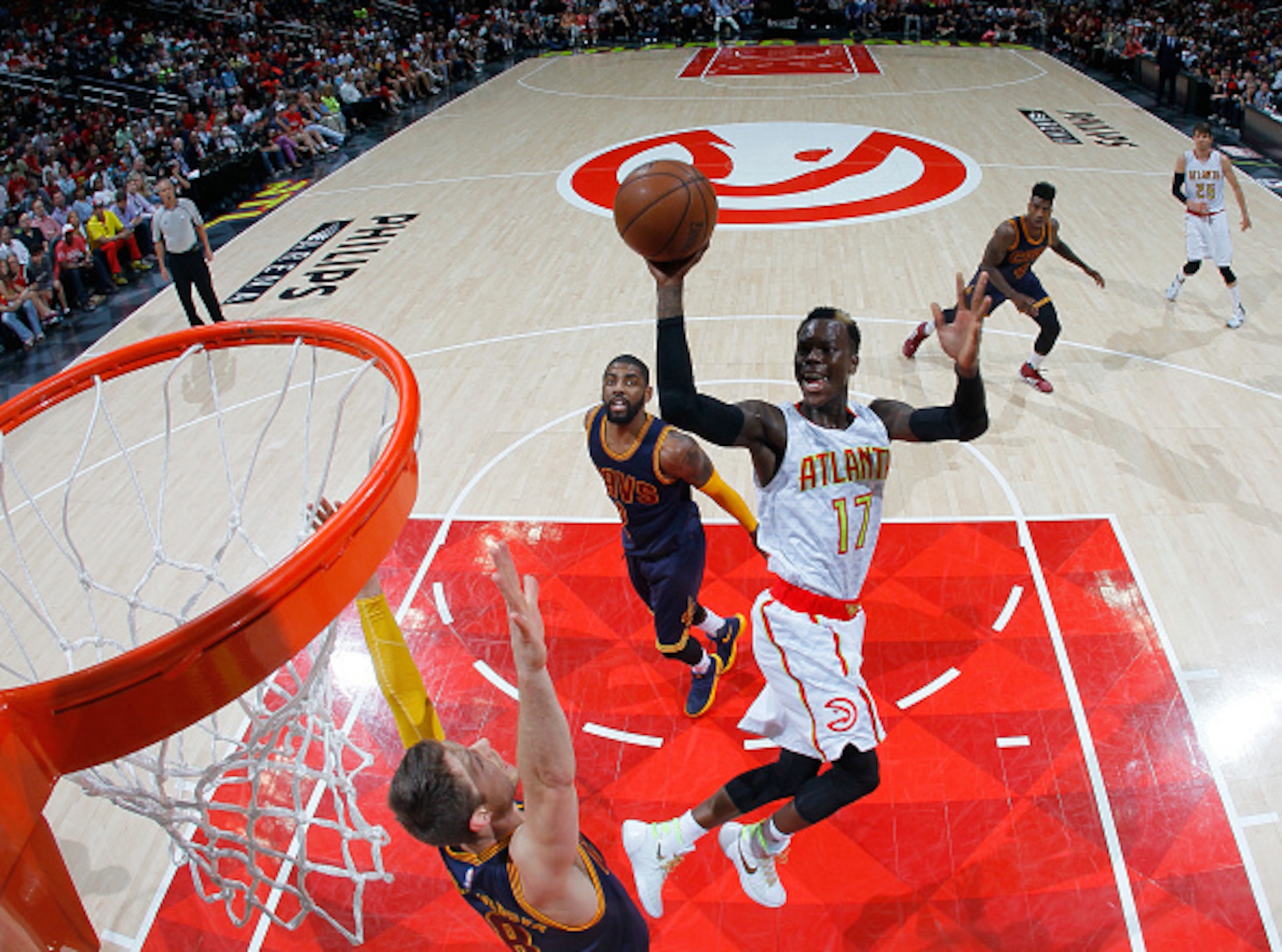
Jeff Teague likened his working relationship with Dennis Schroder to a game of "tug-of-war based on who was playing better," per The Vertical's Adrian Wojnarowski.
Schroder ultimately won out, though only after Teague and his agent pushed for a trade out of Atlanta. Either way, Schroder now has the keys to head coach Mike Budenholzer's offense all to himself.
Concerns about the soon-to-be-23-year-old's readiness for the role are easy to find: Can he shoot well enough to earn the respect of opposing defenses? Will he play with greater control and maturity? How will he mesh with Dwight Howard, the Hawks' new starting center and hometown hero?
Budenholzer, for one, has seen players battle similar concerns before. Once upon a time, he was an assistant in San Antonio when another wily, 20-something point guard with quick feet, crafty hands and a suspect jump shot tried to make his mark in the NBA.
With Budenholzer's help, Tony Parker soon became one of the game's premier floor generals. Schroder has a long way to go before he can even sniff Parker's echelon. But if the ambitious German follows Bud's lead, he could lead the Hawks a long way into their future without Teague and Al Horford.

Shooting Guard No. 3: Victor Oladipo, Oklahoma City Thunder
4 of 15
Production hasn't yet been a problem for Victor Oladipo. Through his first three pro seasons, he's averaged 15.9 points, 4.4 rebounds, four assists and 1.6 steals across 224 games. Trouble is, the Orlando Magic won only 83 of those—33.7 percent.
Thus, Oladipo arrives in Oklahoma City with a tinge of the "good stats, bad team" tag. Yet, the Thunder will need the Indiana product to be every bit as prolific as he was for the Magic, if not more so, now that Kevin Durant is gone.
Coming off a stint with Team USA's Select squad, Oladipo is up for the challenge and believes he'll continue on an upward trajectory in Loud City.
He told Basketball Insiders' Alex Kennedy back in July:
"I can still grow way, way more. I’ve only been in the NBA for three years and I’m just getting more and more comfortable every year. The game has been slowing down for me every year and I’m just so much more comfortable out there. It’s going to be really fun to see how good I can be [with more experience and a change of scenery]. Sometimes, you end up surprising yourself.
"
The Thunder could use his surprising accuracy (33.9 percent from three for his career) and restraint (2.7 turnovers per game). He may not be quite the freak athlete that Russell Westbrook is—who is, really?—but his game, in terms of aggression and shot selection, has shades of his All-Star teammate's.
That overlap could stir up conflict in OKC...or prove to be a force multiplier against opponents who are incapable of handling such a vicious backcourt.
Shooting Guard No. 2: Tyler Johnson And/or Josh Richardson, Miami Heat
5 of 15
Josh Richardson will have to wait a few years before he can cash in like Tyler Johnson did with a $50 million contract this summer. In the meantime, both will have to earn their money for the Miami Heat now that Dwyane Wade is gone.
Neither youngster figures to fill the void left behind by the departure of the Heat's franchise face. Even combined, they might not come close to replacing all that Wade came to mean to the team and the city.
On the court, though, the Heat hope to find at least one long-term solution at the 2 between them. Johnson opened eyes on South Beach with his scoring off the bench before a shoulder injury short-circuited most of his season. Richardson, a second-round pick out of Tennessee, shuttled between the NBA Development League and the big club before catching fire from three (46.1 percent) amid Johnson's absence.
Both will have to scratch and claw for their spots, and not just against each other. Veterans Dion Waiters and Wayne Ellington will both get long looks at shooting guard. Goran Dragic is entrenched at the point, with Beno Udrih, Briante Weber and Rodney McGruder vying for minutes there as well.
That crowd could force Johnson and Richardson to compete for wherever and whenever they can find them. Or, with what they learned from Wade, perhaps this young duo will rise above the rest to assume their former mentor's mantle.
"I think me and Josh Richardson have a good opportunity to play both guard spots," Johnson told the South Florida Sun Sentinel's Ira Winderman. "It's interchangeable. So I mean whether I'd be coming off the bench or whether I'm starting, either one, I've shown that I have the ability to fit into any type of role."
Shooting Guard No. 1: Devin Booker, Phoenix Suns
6 of 15
In some respects, Devin Booker has already broken out.
He left behind his inexperience when the Phoenix Suns, who were reeling from injuries to Eric Bledsoe and Brandon Knight (among others), thrust the NBA's youngest player (19) into a lead guard role. Through 51 starts, Booker averaged 17.4 points, three rebounds and 3.5 assists—albeit for a Suns squad that finished with the league's fourth-worst record (39-43).
"I knew I’d have success. I knew it’d be early," Booker told Bleacher Report. "I didn’t know it was going to be that early."
The first-team All-Rookie performer might not have such a clear path to playing time in Year 2, assuming Bledsoe and Knight come back and avoid additional injuries. (Though that assumption could prove to be a stretch over the long run, given their respective health histories.)
Either way, there will be a role—perhaps a substantial one—for Booker this season. He's already a standout shooter, though his three-point percentage (34.3 percent) took a hit as the campaign took its toll.
With the benefit of an offseason strength and conditioning program, along with some work on his decision-making (2.1 turnovers per game in 2015-16), Booker could carve out an even bigger niche for himself this time around, irrespective of injuries and potential trades involving his backcourt mates.
Small Forward No. 3: Kelly Oubre Jr., Washington Wizards
7 of 15
It was no mere coincidence that so many of Kelly Oubre Jr.’s teammates went to bat for him during the Washington Wizards’ exit interviews this past spring.
“When he was in the game, you knew he was going to play hard, whether it was rebounding, playing defense, pushing the ball, scoring the ball,” Bradley Beal told Bleacher Report.
Under now-former head coach Randy Wittman, Oubre Jr.’s effort garnered only occasional rotational stints during December and April, with mop-up appearances in between. With noted player development guru Scott Brooks now at the helm, the Kansas product could find himself competing with Otto Porter Jr. for a starting spot on the wing.
Oubre Jr. has the tools to complement Beal and All-Star point guard John Wall, no matter the condition of the relationship between the Wizards’ two young stalwarts. His sheer length, burgeoning strength and all-around athleticism portend plenty of top-notch defense in his future.
And with the help of his trainers over the summer, Oubre Jr. has sharpened his jump shot into a bona fide weapon. That won’t likely make him a star during his sophomore season. But with a strong training camp, Oubre Jr. should do no worse than scratch out more consistent playing time.
“I’m working my way up to becoming more of a key guy,” he told B/R. “Everybody has to wait their turn. I’m waiting mine now patiently, but I’m just getting better.”
Small Forward No. 2: Harrison Barnes, Dallas Mavericks
8 of 15
Once Steve Kerr took over the Golden State Warriors, Harrison Barnes became the fourth option—and, when in the team’s so-called “death lineup,” the fifth. Leaving the league’s most potent offense with a move to the Dallas Mavericks, Barnes could move up a rung.
Dirk Nowitzki will be the focal point of Rick Carlisle’s attack until the German retires. Deron Williams would be second in command if he could ever stay healthy. Behind them, Barnes should battle Wesley Matthews, whose first campaign post-Achilles tear was a roller-coaster ride, for the next biggest role.
All the better that Barnes, a newly minted Olympic gold medalist, isn’t the one creating the shots anyway. As ESPN.com's Kevin Pelton pointed out (h/t the Dallas Morning News):
"Upon Steve Kerr's arrival, Barnes became more effective when he returned to the starting lineup and feasted on the open 3s created by Golden State's stars. Per SportVU tracking on NBA.com/stats, more than 60 percent of Barnes' 3-point attempts came with no defender closer than six feet. He shot 42.6 percent on such attempts, as compared to 30.8 percent on more contested 3-point attempts.
"
Barnes won’t be quite as open in Big D as he was in the Bay, considering the disparity in quality between his former and current squad. But if the North Carolina product has to adjust to smaller shooting windows and more playmaking responsibilities, he and the Mavs will be better off down the line when Nowitzki is no longer around to captain the attack.
Small Forward No. 1: Bojan Bogdanovic, Brooklyn Nets
9 of 15
Say what you will about the Brooklyn Nets, but somebody other than Brook Lopez will have to score points for them in 2016-17. Bojan Bogdanovic could be that guy.
The Croatian swingman put the ball in the basket aplenty over the final two months of the 2015-16 season. In 25 games after Joe Johnson’s departure, Bogdanovic bumped his scoring average to 15.1 points while draining 40.6 percent of his threes. Over that span, he topped 20 points during a game six times, including a 44-point bonanza against the Philadelphia 76ers.
Bogdanovic carried that hot streak into a busy summer. He poured in 24.3 points per game during Olympic qualifiers to get Croatia to Rio de Janeiro, then led all comers in the Summer Games with 25.3 points per contest.
Those performances may not have earned Bogdanovic a more substantial role in Brooklyn, though they do point to his ability to handle such an expansion. More indicative was the time he spent with Chris Fleming, one of Kenny Atkinson’s assistants with the Nets and the coach of the German national team, prior to the offseason’s international competitions.
“That's proof for me that Nets have big plans for me in next season,” Bogdanovic told Sportske Novosti (h/t SB Nation’s Anthony Puccio).
So, too, is the sheer lack of proven scorers who will surround Lopez in the fall.
Power Forward No. 3: Nikola Mirotic, Chicago Bulls
10 of 15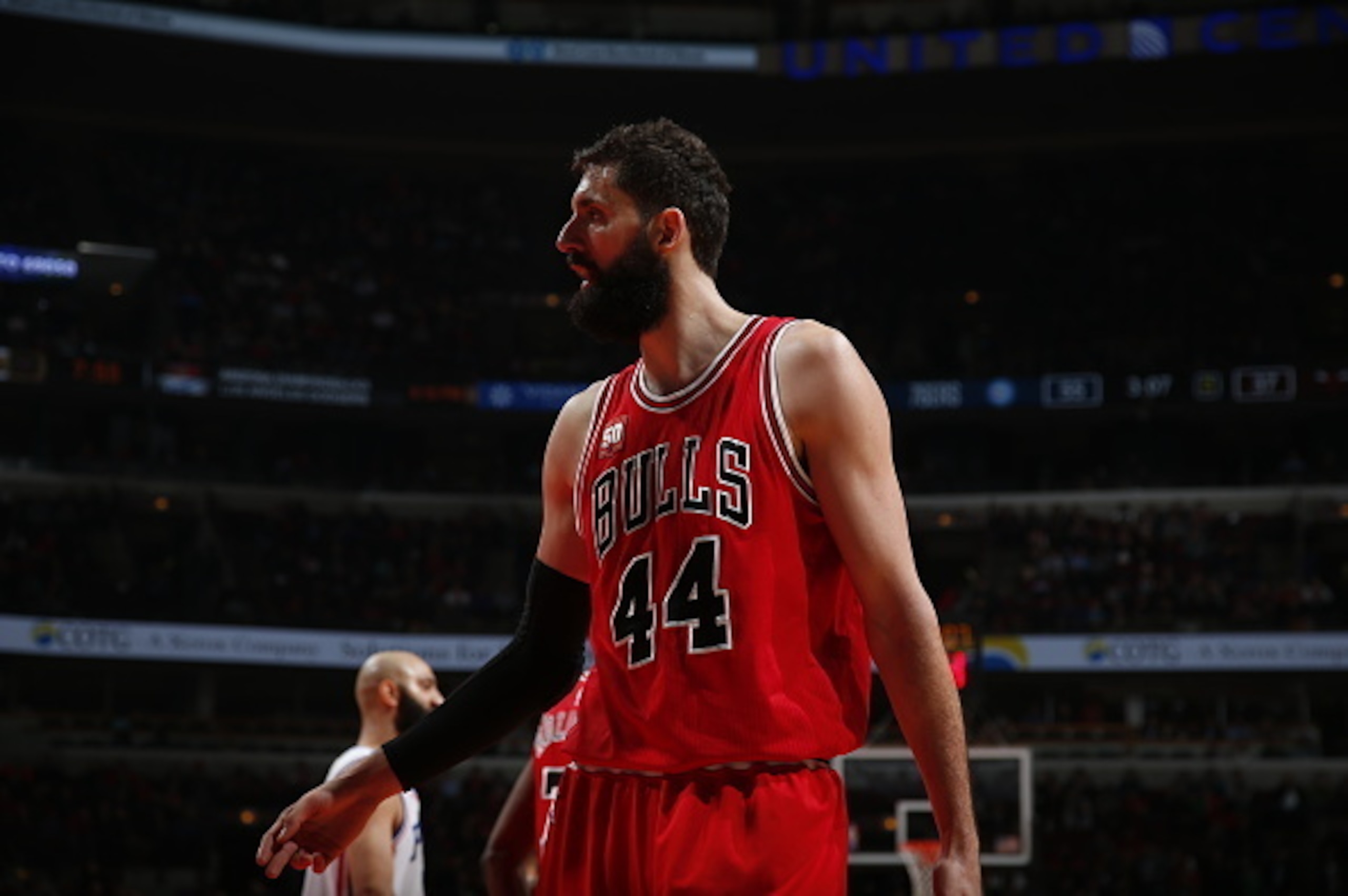
Having much say in the offensive conversation will be difficult, (if not downright impossible), for just about all of the Chicago Bulls not named Dwyane Wade, Jimmy Butler and Rajon Rondo.
If anyone is going to cut through the noise, though, it’s Nikola Mirotic.
The Spanish national teamer splits the difference between Taj Gibson and Doug McDermott at power forward. He’s a better defender than the latter, a much rangier shooter than the former and, as The Athletic’s Stephen Noh notes, a surprisingly adept glass-cleaner:
"Mirotic is a sneaky-solid defensive rebounder. Last season, he grabbed 6.6 defensive rebounds per 36 minutes to Gibson’s 5.5. The Bulls’ defensive rebounding percentage dropped when both were on the floor, but Gibson’s drop (-2.3 percent) was more precipitous than Mirotic’s (-0.6 percent).
"
The Bulls will need Mirotic’s shooting, above all else, to grease what’s shaping up to be a grind of an offense. With three ball-dominant perimeter players who operate almost exclusively inside the arc, Mirotic may be head coach Fred Hoiberg’s best (only?) hope to create even the tiniest slivers of space.
Mirotic, though, may be capable of much more than mere sideshow. Over the final month of the 2015-16 season, he averaged 15.3 points while knocking down 45.1 percent of his threes, including six games of 20 points or more.
Power Forward No. 2: Jabari Parker, Milwaukee Bucks
11 of 15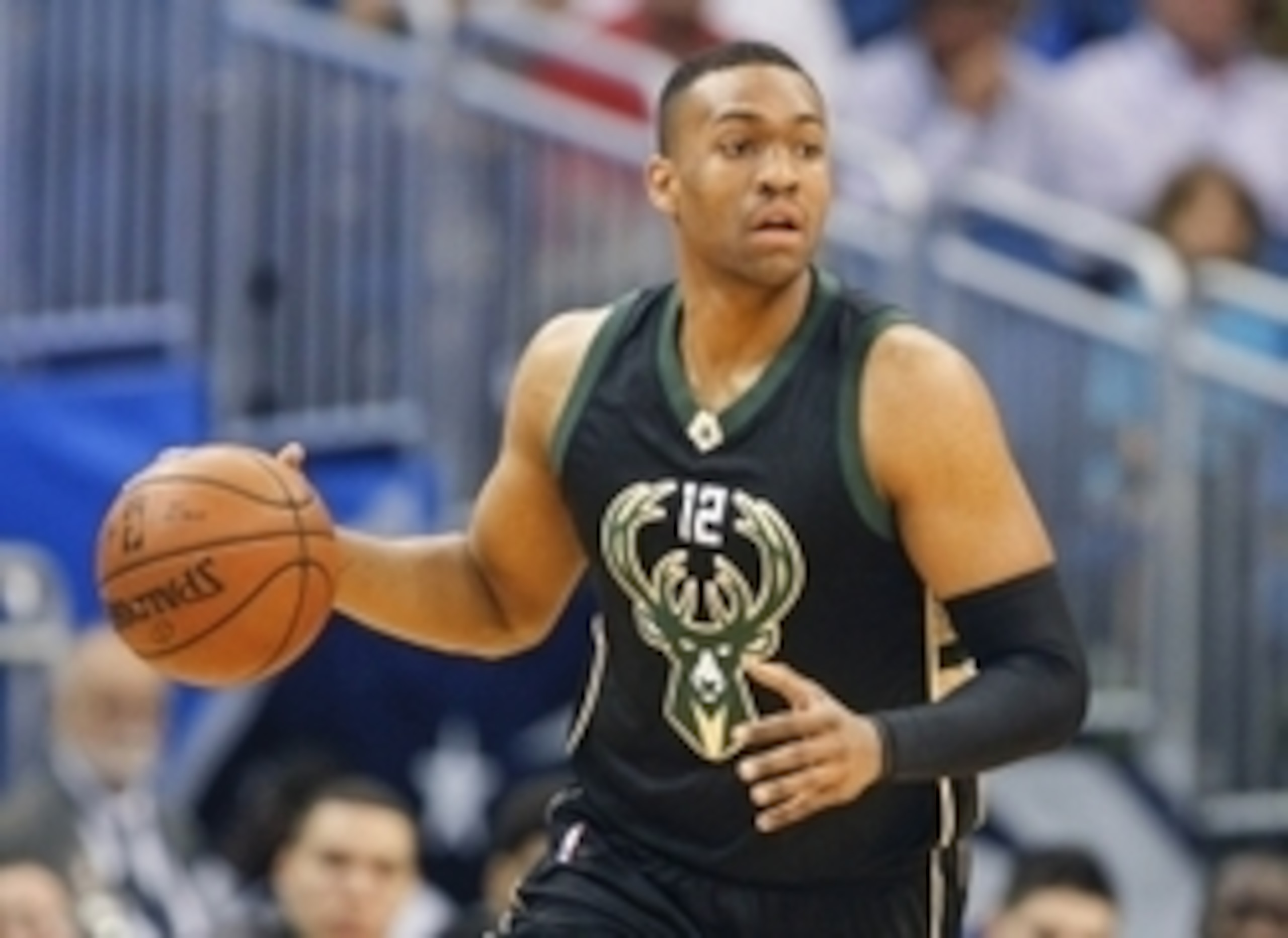
An ACL tear derailed Jabari Parker’s rookie season and put him behind the eight-ball in Year 2. He did, however, start to find his stride over the second half of 2015-16.
After the All-Star break, the former No. 2 pick averaged 18.9 points and shot 49.3 percent from the field.
Parker’s uptick in production also dovetailed with Giannis Antetokounmpo’s move to the point. The Milwaukee Bucks’ plan, as of this past March, is to have Antetokounmpo fill that role.
"We're going to go forward with him (Antetokounmpo) handling the ball," head coach Jason Kidd said, per the Milwaukee Journal Sentinel’s Charles F. Gardner. "You can call him point guard, point forward, point center, however you want to look at it.”
Parker should benefit from Antetokounmpo’s switch, regardless of how it’s designated. According to NBA.com, the Greek Freak accounted for 40.4 percent of the passes Parker received after the All-Star break, with the Duke product hitting 50 percent of the resulting shots.
Between Milwaukee’s pivot toward the future and his own growth, Parker (who is now more than a year-and-a-half removed from major knee surgery) is poised to put the Bucks back in the playoff hunt while placing the rest of the league on notice.
Power Forward No. 1: Aaron Gordon, Orlando Magic
12 of 15
Aaron Gordon isn’t a power forward in the traditional sense, though he might not be one in a practical sense this season, either.
The Orlando Magic went haywire upfront over the summer, adding Serge Ibaka, Bismack Biyombo and Jeff Green to a group that already featured Gordon and Nikola Vucevic.
Wherever the Arizona product winds up positionally, he should be primed for impact across the board. After sliding into Orlando’s starting lineup in late January, Gordon averaged 11.3 points, 8.1 rebounds and 2.1 assists in 28.5 minutes per game.
Gordon’s greatest asset, though, may be his versatility on the defensive end. With his combination of size, length, strength, lateral quickness and otherworldly leaping ability, he’s capable of guarding every position and providing help at the rim. New coach Frank Vogel, who brings a wealth of defensive chops from Indiana to Orlando, will be tasked with turning Gordon loose on the league.
In the 20-year-old’s own mind, though, the success of this coming season won’t be measured in points scored, shots blocked or passes picked off. As Gordon explained to Basketball Insiders' Alex Kennedy: "To me, a breakout year means the level of fun and joy that I receive from the game. And yes, I think this year I’ll be much more joyful when I play, much happier when I play. I think I’ll be much more confident in my play. If those three things lead to a breakout year, then yeah, I believe that I’m ready."
Center No. 3: Jusuf Nurkic, Denver Nuggets
13 of 15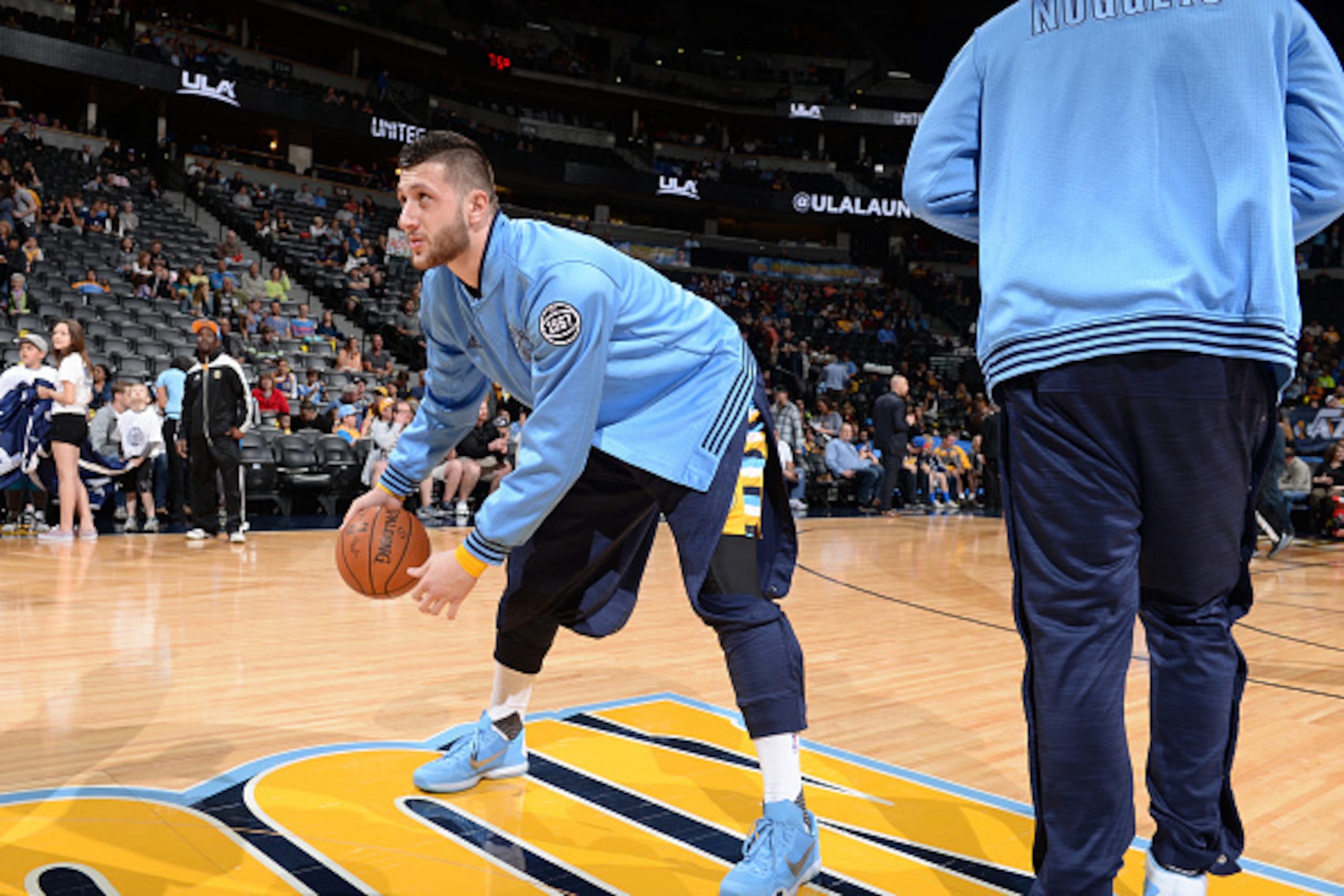
As a rookie, Jusuf Nurkic opened eyes, among the Denver Nuggets and league-wide, for his peculiar blend of imposing size, surprising skill and sheer fearlessness—if not downright brashness.
As a sophomore, though, injuries and on-court inconsistencies sidetracked the burly Bosnian. All the while, Nikola Jokic, another crafty big from the Balkans, staked his own claim to the starting center spot in the Mile High City.
The Nuggets believe that Nurkic and Jokic can play together, with the latter using his smooth jumper and deft eye as a passer to spread the floor for the former's low-post brutality.
Nurkic won’t have quite as much bulk to throw around this season. According to the Denver Post’s Christopher Dempsey, Nurkic had dropped 35 pounds from his 7-foot, 280-pound frame as of late June.
Whether he comes into camp even more waif-like remains to be seen. But after struggling with knee problems last season, a lighter load should allow him to not only stay on the court but entrench himself within Denver’s young nucleus.
Center No. 2: Joel Embiid, Philadelphia 76ers
14 of 15
Does it count as a breakout if a player has yet to set foot in an NBA game? Joel Embiid is about to find out.
With each workout video posted to social media by trainer Drew Hanlen, Embiid has had the basketball world buzzing. Now 7’2” with a burgeoning face-up game, the 2014's No. 3 pick insists he’s finally ready for pro debut after missing his first two seasons to a nagging foot injury.
"I feel 100 percent and ready to get started. My summer has been great," Embiid said at the Philadelphia 76ers’ Beach Bash, per the Philadelphia Inquirer’s Marc Narducci. "We have been working on a lot this summer, and I got a chance to play a little bit against the guys, and it has been going great."
Health alone won’t be enough for Embiid to secure a prominent place in the Sixers’ universe.
Philadelphia’s frontcourt will be crowded, with rookies Ben Simmons and Dario Saric joining incumbents Nerlens Noel and Jahlil Okafor. Embiid will have to compete with at least some of those youngsters for a spot in Brett Brown’s lineup. However, according to The Vertical’s Adrian Wojnarowski, the Sixers plan to offload one of Noel and Okafor.
Then again, Embiid, now 22, might be good enough to blow them all out of the water, even if the Sixers stand pat.
Center No. 1: Steven Adams, Oklahoma City Thunder
15 of 15
Steven Adams’ coming-out party began in earnest during the Oklahoma City Thunder’s run to within sniffing distance of the NBA Finals. He was clearly the team’s third-best player, behind Kevin Durant and Russell Westbrook, and was arguably the key to OKC’s second-round turnaround against the San Antonio Spurs. His work against that team’s front line—he had four double-doubles in the series—served to neutralize San Antonio’s biggest strength.
The departures of Durant and Serge Ibaka won’t clear the way for Adams to become a dynamic scorer, as if he ever would be. What they will do, however, is make everything the New Zealander does that much more critical to the Thunder’s success.
According to NBA.com, Adams converted 32 of 40 alley-oops last season. Expect that number to skyrocket in 2016-17, perhaps as a new jewel in OKC’s offensive crown.
Such is the benefit of having a big, mobile center, especially one who scored a sturdy 1.12 points per play as a finisher in the pick-and-roll last season, per NBA.com. Adams isn’t the sort to spread the floor with his jumper or evoke oohs and aahs with flashy plays. He’s an old-school pivot who impacts the game with his strength, energy and, at times, underhanded tactics.
Stepping up as Westbrook’s right-hand man in the Sooner State will mean heaping helpings of the same—perhaps enough to stamp Adams as one of the top players at his position.
.png?w=2560 "Fernando Mendoza avoided this Vegas attraction")
.jpg?w=2560 "Daniels' IG Story on LSU Dispute")
.png?w=2560 "Quick Take on Every Team 🗣️")
.jpg?w=2560 "Bears Give Stadium Update")