

NBA Then and Now: Would Yesterday's Legends Still Dominate Today?
Bill Russell won more rings than anyone else in the history of the Association. Wilt Chamberlain scored a stunning 100 points in a single game. Michael Jordan three-peated twice with the Chicago Bulls and typically leads off the G.O.A.T. discussion.
Larry Bird was a legendary trash-talker and an even better player. Magic Johnson's work with the ball in his hands made fans believe anything was possible on the offensive end of the court.
But for each of those five legends of yesteryear, one question will remain forever unanswered: Would they dominate today?
We asked Bleacher Report analytics guru Adam Fromal and Pro Hoops History's Curtis Harris to discuss how some of the most prominent players from past eras would stack up against the superstars we've spent the last few months watching. (See Part 1 of the NBA Time Machine miniseries, in which they discuss how today's superstars would manage back in the day, here.)
Using analytics and era adjustments (which factor in pace, the changing impact of the three-point arc, the stinginess of arena scorers in the assist column, the minutes played by stars and the overall trends of the league), Adam will provide more of a numerical perspective, while Curtis has the scouting and video-based analysis on lock.
We'll never have any definitive answers to these questions. We can only imagine Russell and Chamberlain going toe-to-toe with the top centers in today's game. Jordan playing in 2015's NBA will always be an unfulfillable desire.
But we're going to take a swing at it all the same.
Bill Russell in 2015
1 of 5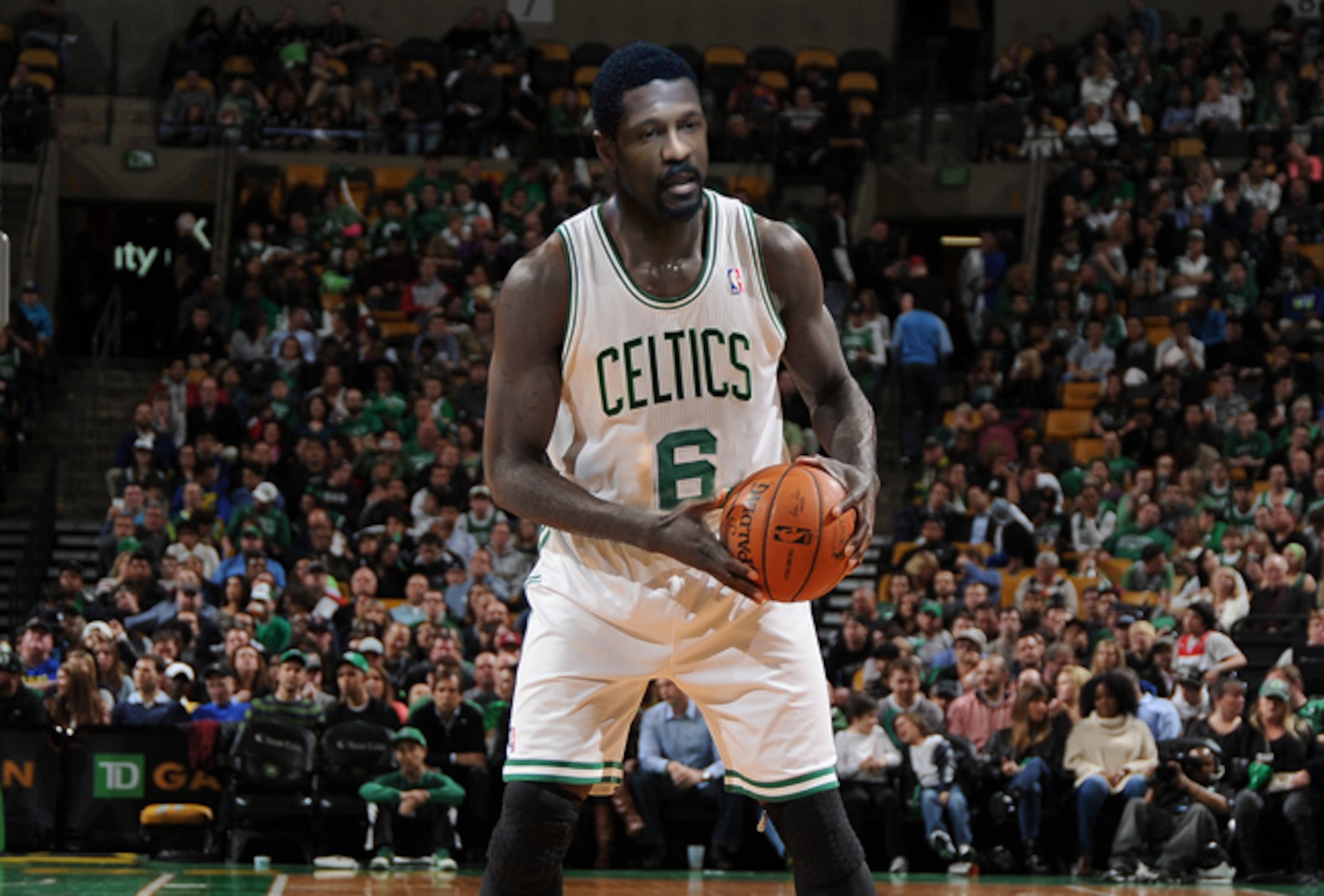
Biggest Rival: DeMarcus Cousins (Curtis and Adam)
Most Comparable Player: Tyson Chandler (Curtis), Rudy Gobert (Adam)
Better Off Playing in 1960s or 2015? Now (Curtis), Then (Adam)
Curtis
Bill Russell would fare just as well, if not better, in today’s NBA. Not in terms of statistical production—whether individual stats or team titles—but he would still be a better player. All of Russell’s greatest assets and abilities would be better utilized and trained in 2015 than they were in 1965.
Russell had flawless timing in terms of when to jump and swat shots. That was thanks to his natural jumping ability and his own memory of how opponents liked to shoot. With game film to use in 2015, Russell’s dedication to studying opponents would be enhanced, and the rest of the NBA would suffer humiliation at the rim as a result.
The drawback with Russell would obviously fall on offense, since he had little range on his mediocre jumper. However, Russell was one of the first players to use alley-oops. Imagine him as a Tyson Chandler type today: limited but still useful on offense and absolutely devastating on defense.
Adam
The problem I have with that comparison is Tyson Chandler's size. He's a 7'1", 235-pound physical behemoth, and the same simply can't be said of Bill Russell, who was listed at 6'10", 215 pounds. Russell never averaged more than 18.9 points per game (1961-62), he played during a pace-inflated era when stars rarely left the court, and as a shooter, he wasn't much more efficient than the league average.
Offensively, I've got him peaking at 11.5 points per game with a 48.2 field-goal percentage, which puts him more in Andre Drummond-Gorgui Dieng territory than that owned by Chandler—one of the game's best pick-and-roll finishers.
On defense, there's no doubt he'd translate well enough to be a perennial Defensive Player of the Year candidate. He was always ahead of his time, studying scouting reports and understanding tendencies, and the addition of video scouting and his enduring athleticism ensure he's still going to be dominant.
Overall, he's by no means an MVP candidate, as he was during his actual playing days, but he's going to have the total impact of someone like Andrew Bogut—just with a bit more offensive capability. Your team will quite obviously be better when he's playing.
Wilt Chamberlain in 2015
2 of 5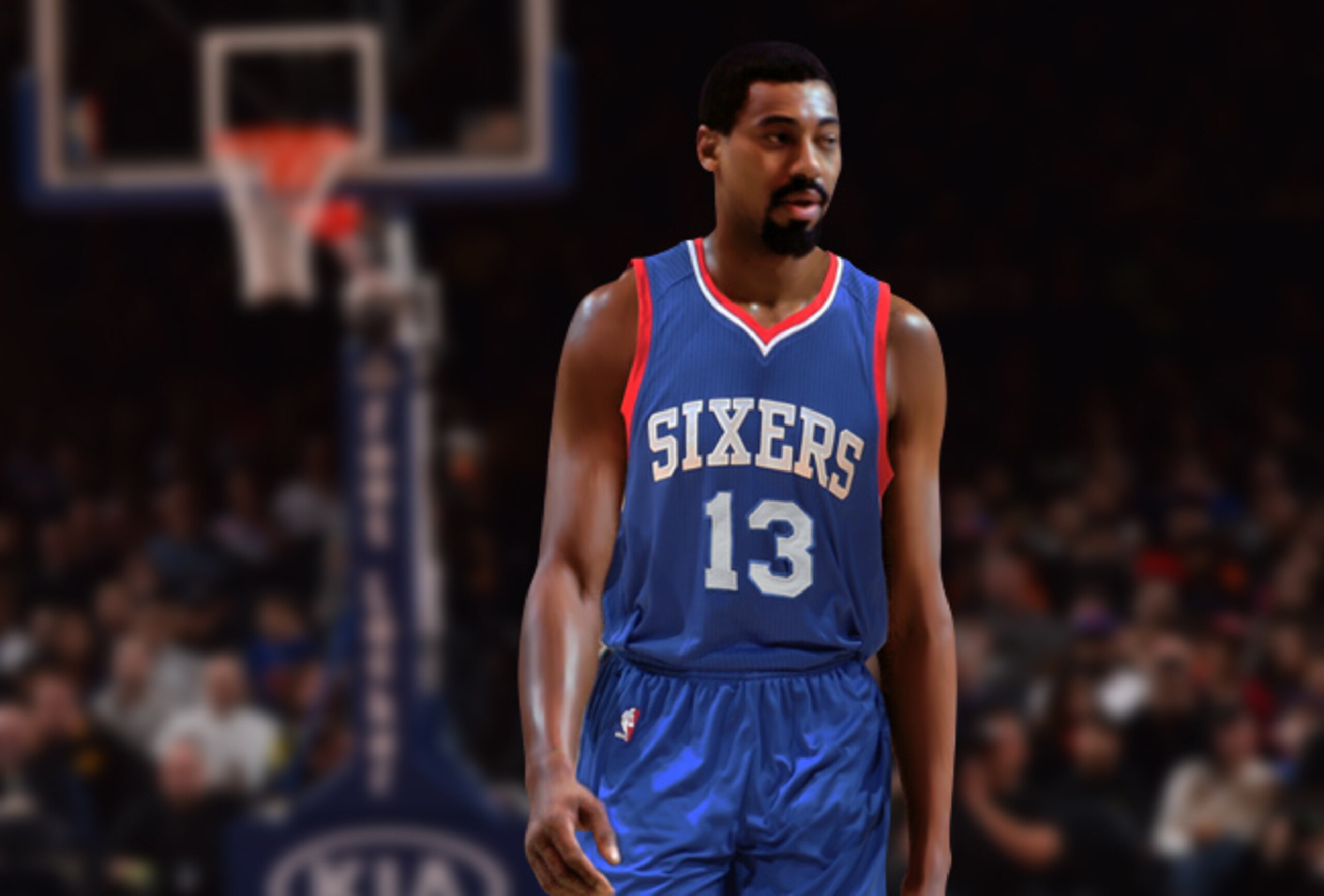
Biggest Rival: DeAndre Jordan (Curtis) or Anthony Davis (Adam)
Most Comparable Player: DeMarcus Cousins (Curtis) or Taller Dwight Howard (Adam)
Better Off Playing in 1960s or 2015? Now (Curtis); Then (Adam)
Curtis
Wilt Chamberlain would fare spectacularly well in today's game, depending on which version of Wilt showed up. The early-'60s version of Chamberlain, who pummeled and bullied opponents down low, wouldn't totally work these days, given the changes in defensive rules and schemes. Isolation post plays have gone by the wayside. However, the late-'60s version of Chamberlain would eviscerate today's NBA.
Wilt's ability to score in the post would still force double-teams and distort defenses. That already caused issues in the 1960s NBA but would be near-fatal in today's game, thanks to the three-pointer. If the Big Dipper were surrounded by three-point sharpshooters and wings who could cut and dive down the paint for his passes, opponents would be placed between a rock and a hard place on defense every possession.
The biggest drawback with Chamberlain would be his often-difficult relationship with coaches. It’d take a great coach to get the best out of Wilt and keep him from descending into moody stat-chasing.
Adam
While I'd argue that some isolation offenses do still exist—Al Jefferson's constant effort to establish himself on the left block, for example—they generally aren't all that effective on a team scale. However, as you said, Chamberlain could do so much more later in his career, to the point that I have zero doubts he'd be just fine today.
Physically, Chamberlain rivals LeBron James as the premier athlete in NBA history. He competed in track-and-field events, lifted weights with Arnold Schwarzenegger and stood at a towering 7'1", 275 pounds, which would still give him a size advantage against most matchups in 2015. And scarily enough, he might have been more skilled than he was athletic.
He may not have been able to hold his own at the charity stripe, but Chamberlain could stroke mid-range jumpers, and it's not unrealistic to think he'd develop three-point range if there were motivation to do so. And even if he were forced to roam the painted area, it's exceedingly likely he could've replaced Dwight Howard on the 2009 Orlando Magic and used the one-in, four-out Stan Van Gundy schemes to win a title. Build the same offense around him in 2015, and you'll be even more successful.
The only sad part of lifting him out of the 1960s and into the present day would be the inevitable Hack-a-Wilt strategies. You know as well as I do that the league would do everything possible to put a career 51.1 percent shooter on the line.
Michael Jordan in 2015
3 of 5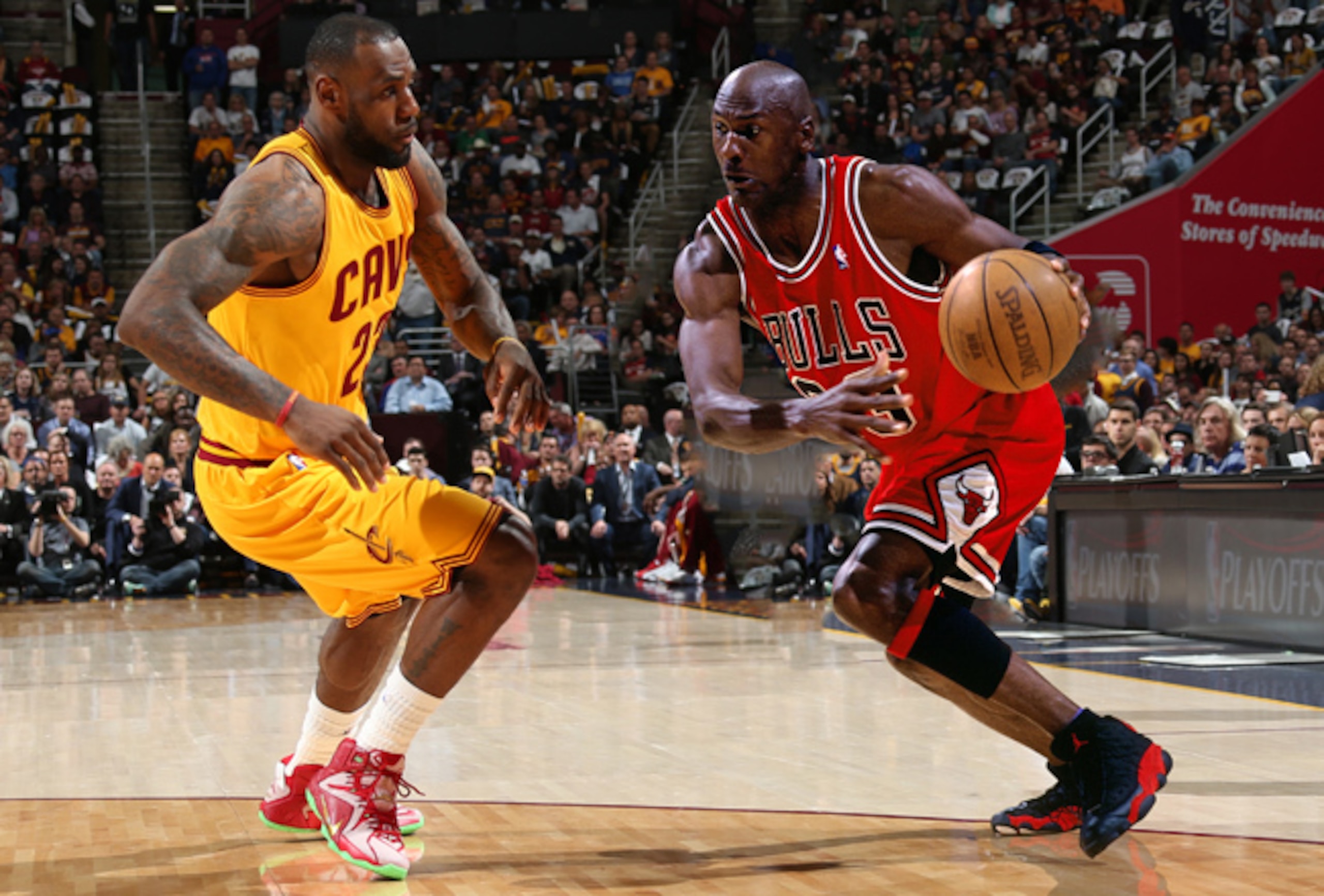
Biggest Rival: Russell Westbrook (Curtis) or LeBron James (Adam)
Most Comparable Player: Dwyane Wade (Curtis) or Kobe Bryant (Adam)
Better Off Playing in 1980s-90s or 2015? Then (Curtis); Then (Adam)
Curtis
Michael Jordan would obviously be great in today's NBA, but it's hard to see how that greatness would translate. The drastic reduction of isolation plays from the wings would severely hamper his game. Especially as he got older, Jordan made a living off mid-range post-ups, jumpers and fadeaways. The changes in defensive rules, particularly the elimination of illegal defense, would dramatically reduce the effectiveness of Jordan's pet moves.
Nonetheless, Jordan wasn't a one-trick pony. He could score in many other ways with dribble drives, beautiful cuts and breakaway acrobatics. Still, the lack of extensive range on his jumper would hamper his ability to stretch the floor for his team. A 2-guard with no effective three-point shot is a huge detriment in today's NBA.
On the defensive end, Jordan would be just as effective, if not more so. Given the importance of guards penetrating defenses in today's NBA, Jordan's defensive abilities have an even higher value in 2015 than they did 25 years ago. Jordan was great at pressuring the ball, picking off passes, mental intimidation and fearlessly fighting through picks. This is not a man the opposing dribbler would want to see.
Adam
Even if many moves in Michael Jordan's arsenal would be outdated in this space-heavy NBA we currently watch, that doesn't mean the greatness of his offensive game would fail to translate. I find it hard to believe that Jordan, a relentless competitor and gym rat, would fail to develop a three-point shot in a league that prioritizes perimeter shooting. Lest we forget, LeBron James was a poor marksman early in his career and worked on shoring up that weakness. Now it's another one of his strengths.
And even if Jordan didn't improve his long-range shooting, he's still so skilled that coaches would be foolish if they avoided building systems centered around his primary assets.
If we take 1988-89 Jordan—my favorite season from the Hall of Famer, among many, many great options—and put him in the Association right now, he'd average 30.0 points, 7.2 rebounds and 7.0 assists while shooting 49.4 percent from the floor. Those aren't quite on par with the numbers from his best seasons in the late '80s and throughout the '90s, but they're still pretty damn good.
Subjectively, there are so many counteracting forces here.
On one hand, the increased pace and offensive focus play right into the hands of a superior athlete like Jordan. On the other hand, there are those legitimate concerns about his perimeter shooting. On a third hand, the lack of, well, hand-checks would make it impossible to keep him away from the rim. On a final hand, it's tough to see him maintaining such ridiculous usage rates.
The league often evolves, but every once in a while, there's a transcendent player who shapes it to his whims. If anyone counts as such a superstar, it has to be Jordan.

Larry Bird in 2015
4 of 5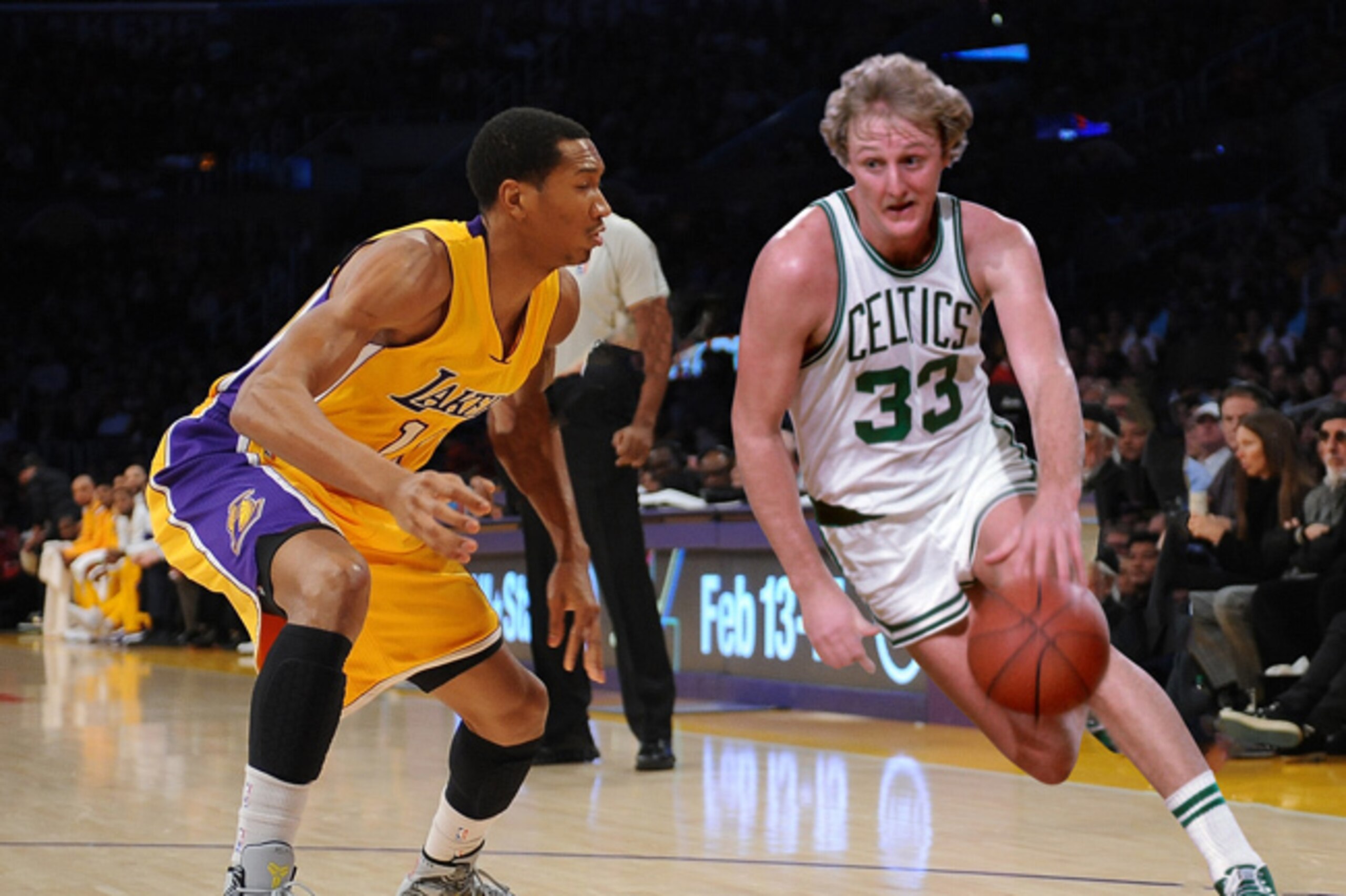
Biggest Rival: Kawhi Leonard (Curtis) or LeBron James (Adam)
Most Comparable Player: Kevin Durant (Curtis) or Kevin Durant (Adam)
Better Off Playing in 1980s or 2015? Now (Curtis); Now (Adam)
Curtis
Larry Bird would be an even better asset in today's NBA than he was in his own time. Practically every offensive skill Bird excelled at in the 1980s has become even more highly valued in today's NBA. In small-ball lineups, he could be a stretch 4 who distorts defenses with his outside shooting and pinpoint passing. In big lineups, Bird could shift to small forward and punish opponents on the block while crashing the boards with ease.
I can't stress enough just how amped up Bird's play would be in 2015. Over the last nine years of his career, Bird shot 39.8 percent from three-point range but took only 2.6 shots from downtown a game. Put him on the Atlanta Hawks today, and he'd be firing up seven threes a game.
Bird's flaws would fall on the defensive end. He was great at gambling on passing lanes for steals and other crafty defensive tricks. The problem there is that his foot speed didn't allow recovery if the gamble failed. Wherever Bird played in 2015 would require a scheme that could keep him gambling without undermining the team's defense.
Adam
Vintage Larry Bird (taken from his second MVP campaign in 1984-85) would average 27.4 points, 9.5 rebounds, 5.9 assists, 1.5 steals and 1.1 blocks in today's NBA, and he'd do that while shooting 47.7 percent from the field. Those are unquestionably superstar numbers, even if, as you mentioned, his defensive effectiveness would be a bit diminished.
I guess there's a reason Kevin Durant keeps popping into mind. Both players are capable of getting shots off from everywhere and really should serve as stretch 4s who just torture defenses in every possible way.
Obviously, we're supposed to be debating here, but you hit the nail right on the head. Bird's skills were ahead of his time and would fit in even better during the modern era, though his speed would indeed hinder him on the defensive end. But there's one thing we haven't brought up yet.
Unfortunately, the tail end of Bird's career was diminished—and ultimately cut short—by a balky back, though he tried to wear that heavy brace and play his way through it. With superior skills from training staffs and the luxury of modern travel and medicine, would he have a bigger role in the greatest-ever conversation if he started his career in 2015?
Magic Johnson in 2015
5 of 5
Biggest Rival: LeBron James (Curtis) or Chris Paul (Adam)
Most Comparable Player: LeBron James (Curtis) or N/A (Adam)
Better Off Playing in 1980s or 2015? Now (Curtis); Then (Adam)
Curtis
Magic Johnson in 2015 would be a pretty destructive offensive force. We all know how he handled the basketball like it was a yo-yo on a string. What's often forgotten is that in the latter stages of Magic's career, he developed two pretty important attributes for the NBA of 2015: three-point shooting and mastering the power forward slot.
During the first nine years of Magic's career, he shot a miserable 19.2 percent from three-point range. Then, from 1989 to 1991, Magic developed a set shot from downtown that drove his three-point percentage to 34.3 during those seasons, including a 38.4 percent clip in 1989-90. Then, after returning from his first retirement, Magic shifted from point guard to power forward for the Lakers in 1996 and commanded double-teams in the post.
Let’s not kid ourselves, though. Magic's passing and court vision would still be his most valuable assets. Here are some shooting stats for players with and without Magic as their point guard:
| Byron Scott | 50.0 | 44.4 |
| James Worthy | 54.6 | 43.5 |
| Kurt Rambis | 55.3 | 51.1 |
| Jamaal Wilkes | 52.5 | 46.7 |
Yeah, go ahead and make Magic the point guard or point forward for an offense today and watch the team run like a well-oiled machine.
Adam
Projecting Magic Johnson's transition is just about impossible, as he's unquestionably one of the most unique players to ever suit up on an NBA court. The only thing we know for sure is that he'd still be very effective.
Looking at the late-career version of Magic—the one whom you described as mastering the power forward position and using a three-point stroke to great success—I've got him at 20.9 points, 5.9 rebounds and 9.9 assists per game in 2015, though that's working under the assumption that he spends most of his time running the point.
Chances are that the rebounds would go up and the assists would drop a bit more, as he'd be the perfect player to line up for coaches such as Quin Snyder, Jason Kidd and others who refuse to cave to the limitations of traditional positions.
Honestly, describing his offenses as "well-oiled machines" may actually be selling them short. Trying to imagine vintage Magic running the show while surrounded by shooters in a league that actually promotes spacing for his dribbling assaults on the basket…well, yikes.
That would be something to behold.

.jpg?w=2560 "McCarthy's 1st Comments on Trade 😲")
.jpg?w=2560 "🚨 Tony Romo, CBS Sports Part Ways")
.jpg?w=2560 "Lions Wanted Joey Porter Jr.")
