
Metrics 101: Power Ranking Every Player in 2017 NBA Finals
When a Big Three faces off against a Big Four, star power is sure to reign supreme.
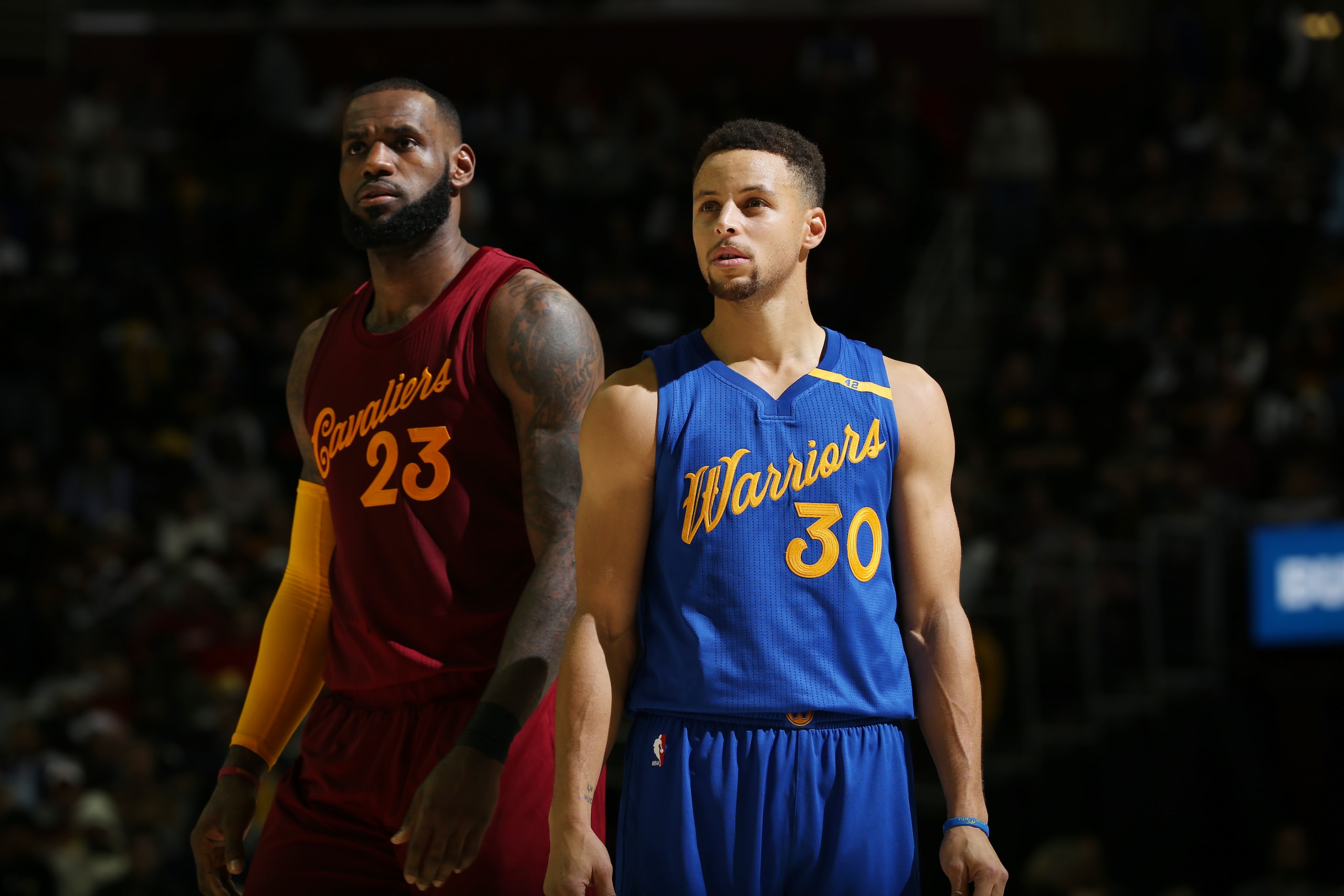
The 2017 NBA Finals features three studs from the Cleveland Cavaliers (Kyrie Irving, LeBron James and Kevin Love) matched up with an indomitable quartet boasted by the Golden State Warriors (Stephen Curry, Kevin Durant, Draymond Green and Klay Thompson). And yet, this series is about so much more than the biggest names.
How they stack up is important, but we can't overlook the many youngsters and ring-seeking veterans who line up in smaller roles. Tristan Thompson, Andre Iguodala, David West, Kyle Korver and plenty of others will have big impacts, helping determine which organization wins the rubber match and gets to hold up the Larry O'Brien Trophy for the second time in three years.
To provide perspective before the Finals begin, we're putting all 27 players who have logged even a single postseason minute for these two organizations in order from worst to best. Their distant past is irrelevant, and the same is true of their long-term potential.
All that matters is the level at which they should be expected to play over the next four to seven games, taking into account everything from their point-producing acumen to their defensive prowess.
27-23: Jones, Jones, Jones, McAdoo, Barnes
1 of 15
27. Dahntay Jones, SG/SF, Cleveland Cavaliers
Postseason Stats: 1.0 points, 0.4 rebounds, 0.1 assists, 0.1 blocks
Postseason Advanced Metrics: 2.9 PER, 47.0 TS%, 0.006 WS/48, minus-3.06 TPA
Though Dahntay Jones was a valuable marksman and defensive presence in his prime, he's now far removed from those days. In fact, he only appeared in the Cleveland Cavaliers' final regular-season outing, thereby extending the definition of "garbage-time production" to not just include the tail end of singular games, but also the meaningless portion of an entire season.
During the playoffs, his role hasn't changed. Jones logged a total of 23 minutes over the course of seven appearances through the first three rounds, and he likely won't see the court during the Finals unless a game is out of hand.
26. James Jones, SF, Cleveland Cavaliers
Postseason Stats: 0.4 points, 0.6 rebounds
Postseason Advanced Metrics: minus-6.4 PER, 25.0 TS%, minus-0.174 WS/48, minus-5.33 TPA
Congratulations to James Jones for accompanying LeBron James to seven consecutive NBA Finals. He's an incredible teammate and inspiring locker room presence, which is how he's been able to stick around the King for so many years, even as his production continues to decline. Regardless of his role, he's now one of only 19 players in NBA history to advance to the Finals at least seven times.
But much like the other Jones on the Cleveland roster, he won't do much playing against the Golden State Warriors. Especially now that he's struggling to knock down jumpers in his garbage-time minutes, there's no reason to play him at the expense of a nimbler body.
25. Damian Jones, C, Golden State Warriors
Postseason Stats: 1.8 points, 1.5 rebounds, 0.5 steals, 0.3 blocks
Postseason Advanced Metrics: 17.4 PER, 44.4 TS%, 0.203 WS/48, 0.0 TPA
The Cleveland Joneses have the more impressive resumes, but Damian Jones has the best chance to make an actual impact during the 2017 NBA Finals. He's a legitimate 7-footer capable of cleaning the boards if the more important Warriors get into foul trouble, though there's not much else for which he can be counted on during the tail end of his rookie season.
Until he improves as a floor-spacing threat and learns how to pass the ball, Jones can't operate in the Golden State system. Fun fact: He has yet to record an assist during four postseason appearances and 10 regular-season games.
24. James Michael McAdoo, PF, Golden State Warriors
Postseason Stats: 2.2 points, 1.2 rebounds, 0.1 steals, 0.2 blocks
Postseason Advanced Metrics: 17.0 PER, 60.1 TS%, 0.193 WS/48, minus-2.66 TPA
Athleticism can go a long way. Ditto for playing in the same system for three consecutive years, as James Michael McAdoo has done with the Warriors. He might not be the most talented reserve in the NBA, but his understanding of the schemes and ability to spring toward the rim have helped make him an efficient finisher.
McAdoo likely won't play much against the Cavaliers unless Golden State blows its foe out of the water on a regular basis. But if he's ever needed in a pinch, the North Carolina product can finish around the hoop. He even shot 66.7 percent from within three feet during the regular season.
23. Matt Barnes, SF, Golden State Warriors
Postseason Stats: 0.9 points, 1.1 rebounds, 0.7 assists, 0.3 steals
Postseason Advanced Metrics: minus-0.1 PER, 25.0 TS%, minus-0.037 WS/48, minus-4.79 TPA
The 37-year-old version of Matt Barnes isn't much more than an agitator who can occasionally be used to get a defensive stop. His shooting stroke has all but disappeared, and the Warriors don't let him handle the rock frequently enough to get going as a creator.
But at least he can still play defense. He posted a 1.6 defensive box plus/minus (DBPM) during his 20 regular-season appearances with Golden State, and he finished the year with a minus-0.02 defensive real plus/minus (DRPM), per ESPN.com, which indicates that he was a league-average stopper during his 14th professional season.
22-20: Williams, Jefferson, Clark
2 of 15
22. Derrick Williams, PF, Cleveland Cavaliers
Postseason Stats: 2.8 points, 0.4 rebounds, 0.6 assists, 0.2 blocks
Postseason Advanced Metrics: 18.1 PER, 77.8 TS%, 0.132 WS/48, minus-0.05 TPA
It's been a long fall from grace for Derrick Williams, who was the No. 2 overall pick just under six years ago. Since then, he's played for the Minnesota Timberwolves, Sacramento Kings, New York Knicks, Miami Heat and Cavaliers, latching on with the defending champions in time to make a run at his first ring.
This isn't quite an Adam Morrison situation, though. Williams' spring and ability to connect on three-point jumpers make him a usable player, even if the Cavs would rather rely on their more consistent contributors in games that truly count. If he's on the court with any semblance of frequency, something has gone wrong in Cleveland.
21. Richard Jefferson, SF/PF, Cleveland Cavaliers
Postseason Stats: 2.9 points, 1.4 rebounds, 0.6 assists, 0.1 steals, 0.2 blocks
Postseason Advanced Metrics: 7.6 PER, 53.3 TS%, 0.076 WS/48, minus-2.07 TPA
Last year, Richard Jefferson put together a few throwback performances and showcased his enduring athleticism with rim-rattling dunks when he wasn't peppering the opposition with three-point attempts. But late in an NBA career, 12 months can make a world of difference.
If we took his best single-game numbers from the first three rounds—i.e. giving him his top scoring total, his best rebounding total, etc.—he'd still produce just 10 points, five rebounds, one assist, one steal and two blocks. The output just isn't what it used to be, though a player with his pedigree could always have one standout showing lying dormant as he waits for the opportune moment to unleash all his remaining energy.
20. Ian Clark, PG/SG, Golden State Warriors
Postseason Stats: 7.5 points, 1.8 rebounds, 0.7 assists, 0.4 steals
Postseason Advanced Metrics: 14.7 PER, 64.7 TS%, 0.15 WS/48, 2.19 TPA
Remember when Ian Clark seemed like he was tracking toward a more important role with the Warriors? Through his first five games in 2016-17, he was averaging 7.6 points while shooting 51.9 percent from the field and 41.7 percent from downtown. After 20 appearances, he was sitting at 6.8 points per contest while slashing 49.5/40.8/73.3.
But Clark spent the rest of his fourth NBA campaign crashing back to earth. His percentages fell throughout the year, and he's only just starting to remind the world of his shooting ability with some streakiness in non-essential postseason situations. He could be a spark plug off the Golden State bench, but he could also shoot the second unit into a deficit.
19-17: McCaw, Shumpert, Korver
3 of 15
19. Patrick McCaw, SG/SF, Golden State Warriors
Postseason Stats: 5.0 points, 2.3 rebounds, 1.4 assists, 0.8 steals, 0.3 blocks
Postseason Advanced Metrics: 15.7 PER, 61.0 TS%, 0.212 WS/48, 17.82 TPA
The 21-year-old rookie might be able to do even more for the Warriors if he were granted a larger role. He's excelled when allowed to start for an injured Kevin Durant, and he dropped 11 points, five rebounds, five assists and three steals in Game 3 against the Portland Trail Blazers.
But don't expect the Warriors to count on him in the 2017 NBA Finals. The Cavaliers are a much stronger opponent than any he's faced thus far, he's dealing with a problematic ankle that could curtail his impact early in the upcoming series and the Finals stage is significantly tougher than working in the first few rounds against other Western Conference squads.
18. Iman Shumpert, SG/SF, Cleveland Cavaliers
Postseason Stats: 4.7 points, 3.1 rebounds, 1.0 assists, 0.6 steals, 0.3 blocks
Postseason Advanced Metrics: 11.4 PER, 60.8 TS%, 0.141 WS/48, 9.95 TPA
Iman Shumpert's job is to fill the three-and-D role as best he can. Though he struggled with it throughout the regular season, he performed much more adequately against the Indiana Pacers, Toronto Raptors and Boston Celtics.
Taking 1.4 shots per game from beyond the arc, Shumpert has connected at a 47.1 percent clip. He hasn't been nearly as successful finishing plays around the hoop and hasn't been involved as a facilitator, but he's overachieved in that spot-up role. Plus, he's held his own defensively by jumping into passing lanes and buckling down against isolation attacks to give the second unit more of a chance on the preventing end.
17. Kyle Korver, SG/SF, Cleveland Cavaliers
Postseason Stats: 6.4 points, 1.8 rebounds, 0.8 assists, 0.5 steals, 0.3 blocks
Postseason Advanced Metrics: 12.9 PER, 64.8 TS%, 0.142 WS/48, 12.32 TPA
This Kyle Korver guy might have a future as an NBA sharpshooter.
The 36-year-old just continues to drain triples and excels as a spot-up sniper who eagerly awaits on-target feeds from LeBron James and the rest of the Cleveland distributors.
Overall, he's taking 4.1 triples per game during the playoffs and connecting at a 41.5 percent clip, but his numbers in catch-and-shoot situations are even gaudier. Scoring 1.43 points per possession on spot-up plays, he sits in the 88.9 percentile, trailing only Stephen Curry, Channing Frye, Gerald Green, Joe Ingles and Gordon Hayward among the 62 players with at least 20 such postseason possessions.
16-14: Frye, McGee, Williams
4 of 15
16. Channing Frye, C, Cleveland Cavaliers
Postseason Stats: 7.8 points, 1.7 rebounds, 1.1 assists, 0.3 steals, 0.4 blocks
Postseason Advanced Metrics: 23.5 PER, 74.0 TS%, 0.279 WS/48, 18.44 TPA
Channing Frye doesn't know how to miss shots in the playoffs. As long as he keeps shooting flames from his right hand, his defensive ability, rebounding and distributing are as close to irrelevant as possible for a player filling a key rotation role.
Last year, Frye's 79.1 true shooting percentage paced the postseason field. As an encore, he's barely seen that number decline thanks to his ability to hit 54.5 percent of his field-goal attempts, 52.6 percent of his triples and 85.7 percent of his free-throw tries. The big man displays incredible synergy with LeBron James, and he's able to capitalize almost every time the superstar gets him the rock on the perimeter.
15. JaVale McGee, C, Golden State Warriors
Postseason Stats: 7.0 points, 3.2 rebounds, 0.1 assists, 0.2 steals, 1.1 blocks
Postseason Advanced Metrics: 27.0 PER, 74.8 TS%, 0.293 WS/48, 10.53 TPA
JaVale McGee has come such a long way after flaming out with the Denver Nuggets, Philadelphia 76ers and Dallas Mavericks. Since finding a new home and another chance with the Warriors, he's displayed a newfound commitment to playing basketball the right way, focused on his positioning and accepted a smaller role in which he can thrive as a per-minute stud.
It's not a fluke that McGee is shooting an NBA-best 74 percent from the field during the playoffs. That number will inevitably regress a bit, but it's still a strong testimony to the type of ball he's playing—patiently waiting for his opportunities around the hoop, avoiding mistakes and then using his spring-loaded athleticism to capitalize on his chances. Even more importantly, he's playing high-quality defense for the Dubs, allowing playoff opponents to shoot just 36.8 percent at the hoop while contesting 11 shots per 36 minutes.
14. Deron Williams, PG, Cleveland Cavaliers
Postseason Stats: 5.6 points, 1.2 rebounds, 2.5 assists, 0.6 steals, 0.1 blocks
Postseason Advanced Metrics: 14.9 PER, 69.1 TS%, 0.177 WS/48, 6.37 TPA
Deron Williams was a disaster during his regular-season stint with the Cavaliers. After he was granted a release from the Dallas Mavericks and joined his second team of the 2016-17 campaign, he promptly forgot how to shoot, dealt far too many careless turnovers and refused to function as anything but a matador on the defensive end.
Apparently, he was just conserving energy.
Williams has been a revelation off the bench through three postseason series and has turned back the clock to his days as an All-Star with the Utah Jazz. He's used a crossover and his physicality to finish plays around the hoop, and his spot-up excellence has allowed him to post a staggering 69.1 true shooting percentage—far better than any regular-season mark earned throughout his professional career.
13-11: Livingston, West, Pachulia
5 of 15
13. Shaun Livingston, PG, Golden State Warriors
Postseason Stats: 4.4 points, 2.7 rebounds, 1.6 assists, 0.4 steals, 0.2 blocks
Postseason Advanced Metrics: 10.7 PER, 61.1 TS%, 0.119 WS/48, 4.54 TPA
Some cracks are beginning to surface in Shaun Livingston's game. The oversized point guard remains a deadly mid-range shooter who can rise and fire over defenders who switch onto him from multiple positions, and he remains careful with the ball at all times. His defense, however, hasn't quite been on par with the level he's reached in previous postseasons.
Fortunately for the Warriors, there might be an easy explanation. Livingston was dealing with finger and hand injuries early in the 2017 playoffs, and he's now fully healthy. His game has trended in the same direction as his body, to the point that he was at his best filling a small role against the San Antonio Spurs in the Western Conference Finals.
It's a testament to Golden State's depth that he's not even the team's second-best reserve these days, because he's still one of the NBA's best backups.
12. David West, PF, Golden State Warriors
Postseason Stats: 4.6 points, 3.0 rebounds, 2.8 assists, 0.6 steals, 0.8 blocks
Postseason Advanced Metrics: 17.7 PER, 61.0 TS%, 0.221 WS/48, 20.72 TPA
"David is such a good passer," Warriors head coach Steve Kerr told the Associated Press, via the New York Times. "He loves to get to those elbows. He has good cutters around him. We have a lot of guys on the floor who really like to cut and move without the ball, so David has fit in beautifully with the way we like to play."
This dime-dropping habit has been a pleasant surprise, and it's boosted West's stock to its zenith during his time in Golden State.
The 36-year-old is still a physical presence on both ends who loves banging bodies with his shoulders, but the skill has allowed him to blend in even more seamlessly. Now, the Warriors can use him at either power forward or center and watch as he picks apart defenses with his precise passing from either spot.
11. Zaza Pachulia, C, Golden State Warriors
Postseason Stats: 6.1 points, 4.3 rebounds, 1.0 assists, 0.6 steals, 0.4 blocks
Postseason Advanced Metrics: 16.6 PER, 58.3 TS%, 0.193 WS/48, 7.58 TPA
Zaza Pachulia doesn't put up big numbers, but his contributions go well beyond the per-game stats. Just consider that he finished the regular season ranked No. 54 in NBA Math's TPA despite averaging only 6.1 points and 5.9 rebounds. That left him sandwiched between Amir Johnson and Jae Crowder.
The center does all the unglamorous things. He's a capable passer who loves hitting cutters on the move. He boxes out his matchup, even when he's not rewarded with a board and instead watches as a smaller player gets credited with the rebound and initiates the fast break. He's a tough screen-setter who can clear up space for shots from the many snipers who surround him on the court.
Don't make the mistake of overlooking Pachulia as a solid center. Even without gaudy numbers, he can have a big impact.
10. J.R. Smith, SG, Cleveland Cavaliers
6 of 15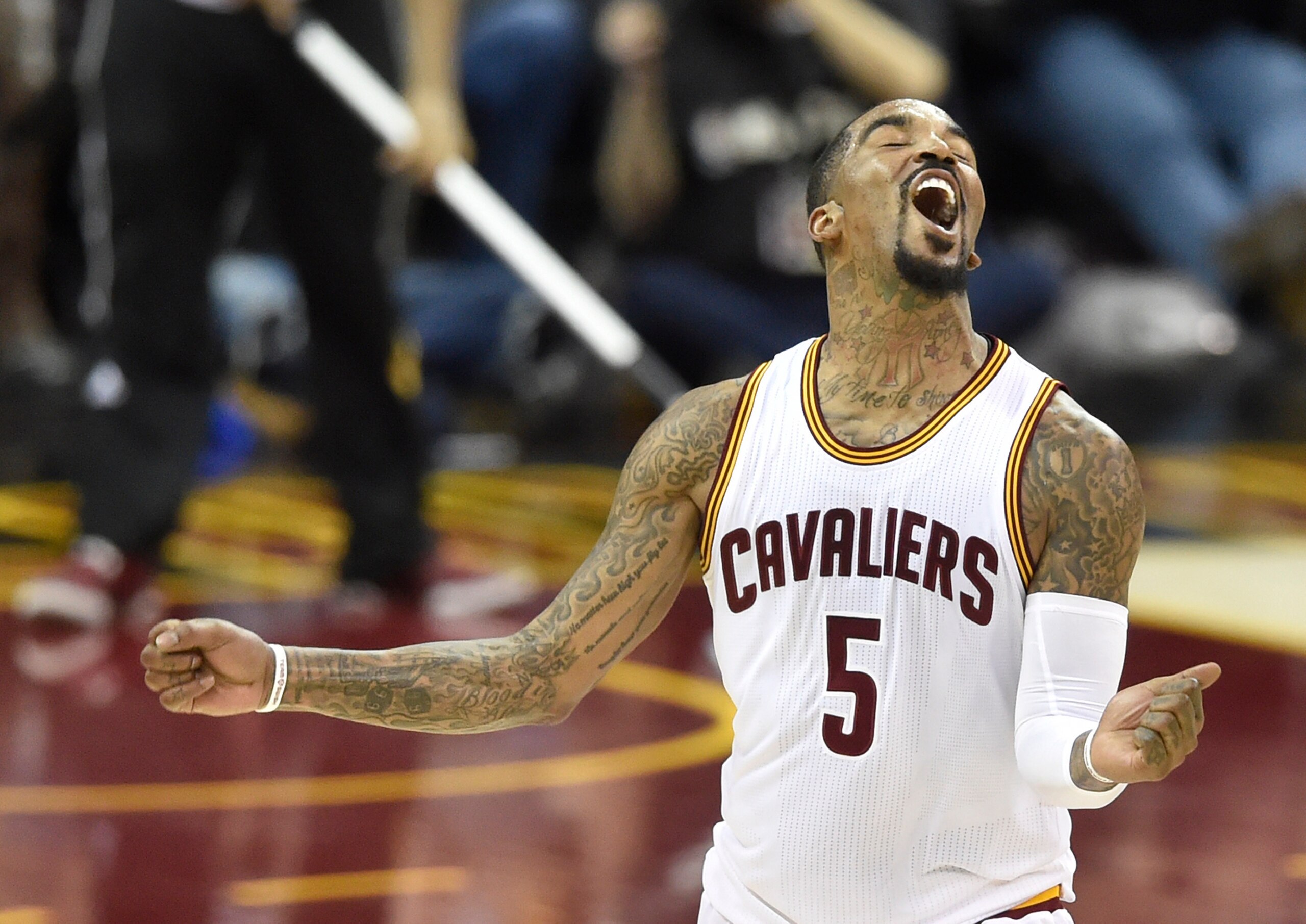
Postseason Stats: 6.6 points, 2.6 rebounds, 0.8 assists, 0.8 steals, 0.3 blocks
J.R. Smith has struggled throughout the 2016-17 campaign, though it's not tough to imagine a potential breakout on the biggest stage.
The mercurial shooter was dealing with a thumb injury for much of the regular season, and he's only just now starting to hit his stride. While filling a small role during the first three postseason series, he's knocked down 48.4 percent of his field-goal attempts and 44.9 percent of his three-balls.
He's also started to recover on defense, though the production has come in unorthodox fashion. Here's Chris Herring with the explanation for FiveThirtyEight:
"That Smith thrives in harder scenarios and struggles with ones that most people would find to be easier—also seems to apply to the 31-year-old's defense. This postseason, Smith has been fantastic when he has been responsible for guarding the opposing team's star scorer. In round one, he shut down Indiana's Paul George. And in the conference semifinals, he stifled Toronto's DeMar DeRozan. But when he has been tasked with defending a lesser opponent—the team's second or third scoring option—he has struggled."
Smith could easily throw up a handful of bricks and lose interest on defense. But if he's tasked with locking down a stud on the Warriors and starts knocking down a few contested jumpers, everything may fully come together.
9. Andre Iguodala, SG/SF, Golden State Warriors
7 of 15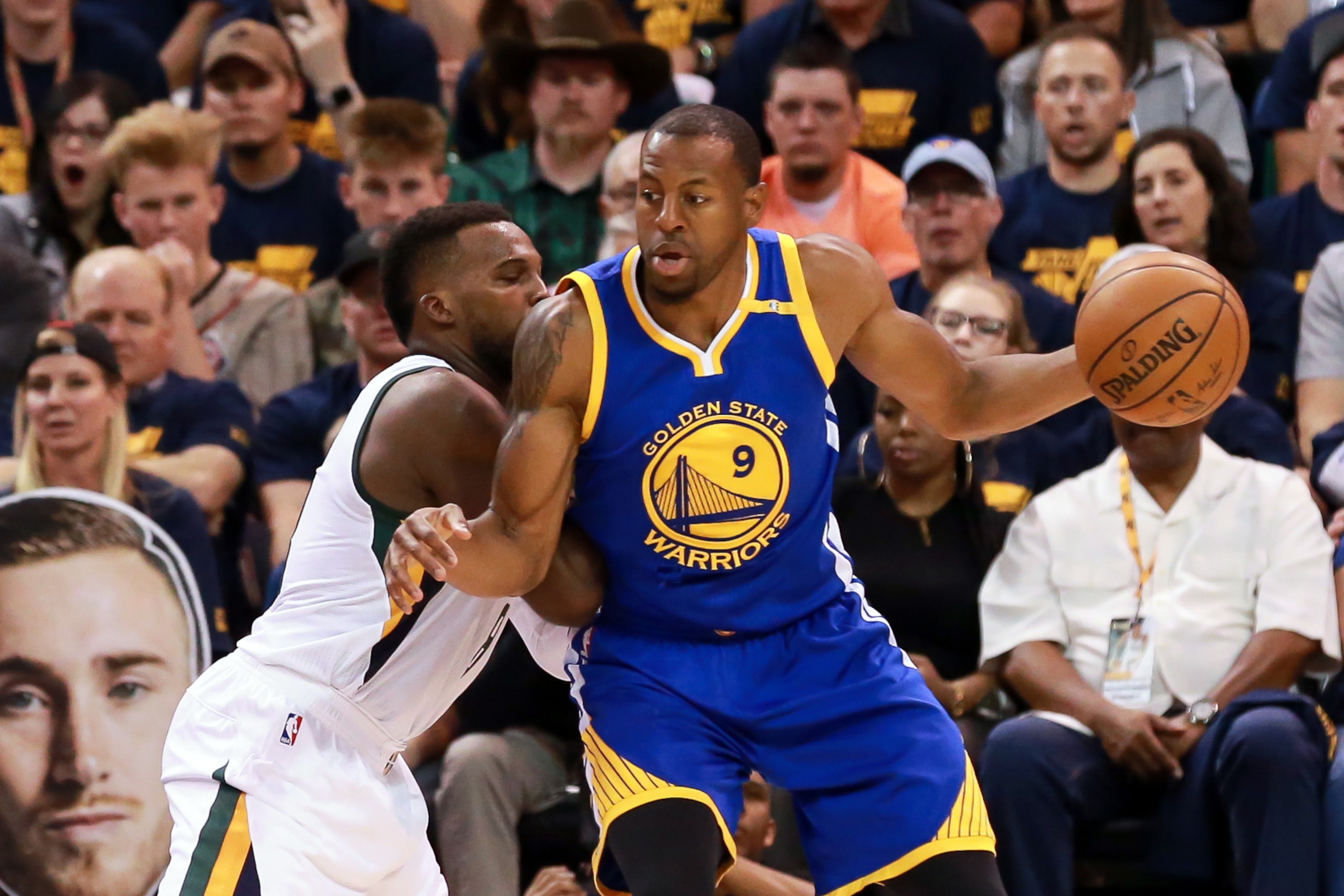
Postseason Stats: 6.5 points, 4.4 rebounds, 3.1 assists, 0.7 steals, 0.2 blocks
Andre Iguodala is an ageless wonder.
He hasn't shot the ball particularly well during the postseason, but his versatility has still allowed him to maintain his status as a positive presence. Even while the stroke is missing, he's been capable of sparking the Golden State Warriors by crashing the boards with aplomb, serving as a leading facilitator for small-ball units and buckling down on the defensive end.
Just consider this: Iguodala's 47.5 true shooting percentage is substantially lower than the league-average mark during the playoffs. But he still grades out as a positive on both ends according to box plus/minus (BPM) and, correspondingly, NBA Math's TPA. It's a testament to his longstanding ability to contribute in any and all areas, filling in the holes in his game by contributing even more elsewhere.
No matter what role the Golden State coaching staff thrusts him into, Iguodala is up to the request. He'll spend some possessions functioning as a lockdown defender before attempting to thrive as a spot-up sniper. A possession later, he might bring the ball down the court and initiate the ever-dangerous offense.
Don't be fooled by the box-score stats. Iguodala was a deserving candidate for Sixth Man of the Year, and he's continued to function as such now that games matter even more.
8. Tristan Thompson, PF/C, Cleveland Cavaliers
8 of 15
Postseason Stats: 9.2 points, 9.3 rebounds, 1.0 assists, 0.5 steals, 0.8 blocks
Against the Warriors, Tristan Thompson gets to assume an advantageous role. His biggest strength just happens to correspond with one of the opposition's most glaring weaknesses, which affords him the opportunity to play so well his placement here could eventually look a bit too low.
During the regular season, the Warriors successfully grabbed 74.9 percent of the available defensive rebounds, leaving them ahead of only the New York Knicks (74.1 percent). They've improved throughout the postseason, but only to the point that they're corralling 77.5 percent of their opponents' misses.
Meanwhile, Thompson continues to serve as one of the NBA's best offensive rebounders. He's a master of sneaking around box-outs and getting a paw on the orange sphere, and then either finishing the play himself or tipping it to a teammate. Throughout the 2016-17 campaign, he ranked within the top five for offensive rebounding percentage among all qualified players:
- Andre Drummond, 15.1 percent
- Dwight Howard, 15
- Enes Kanter, 14.1
- Tristan Thompson, 14
- Rudy Gobert, 13.6
Thompson is also an underrated defender, and he's grown quite adept at converting plays around the hoop. But this remains his primary skill, and it's what gives him the biggest chance to become a matchup nightmare throughout the Finals.
7. Klay Thompson, SG, Golden State Warriors
9 of 15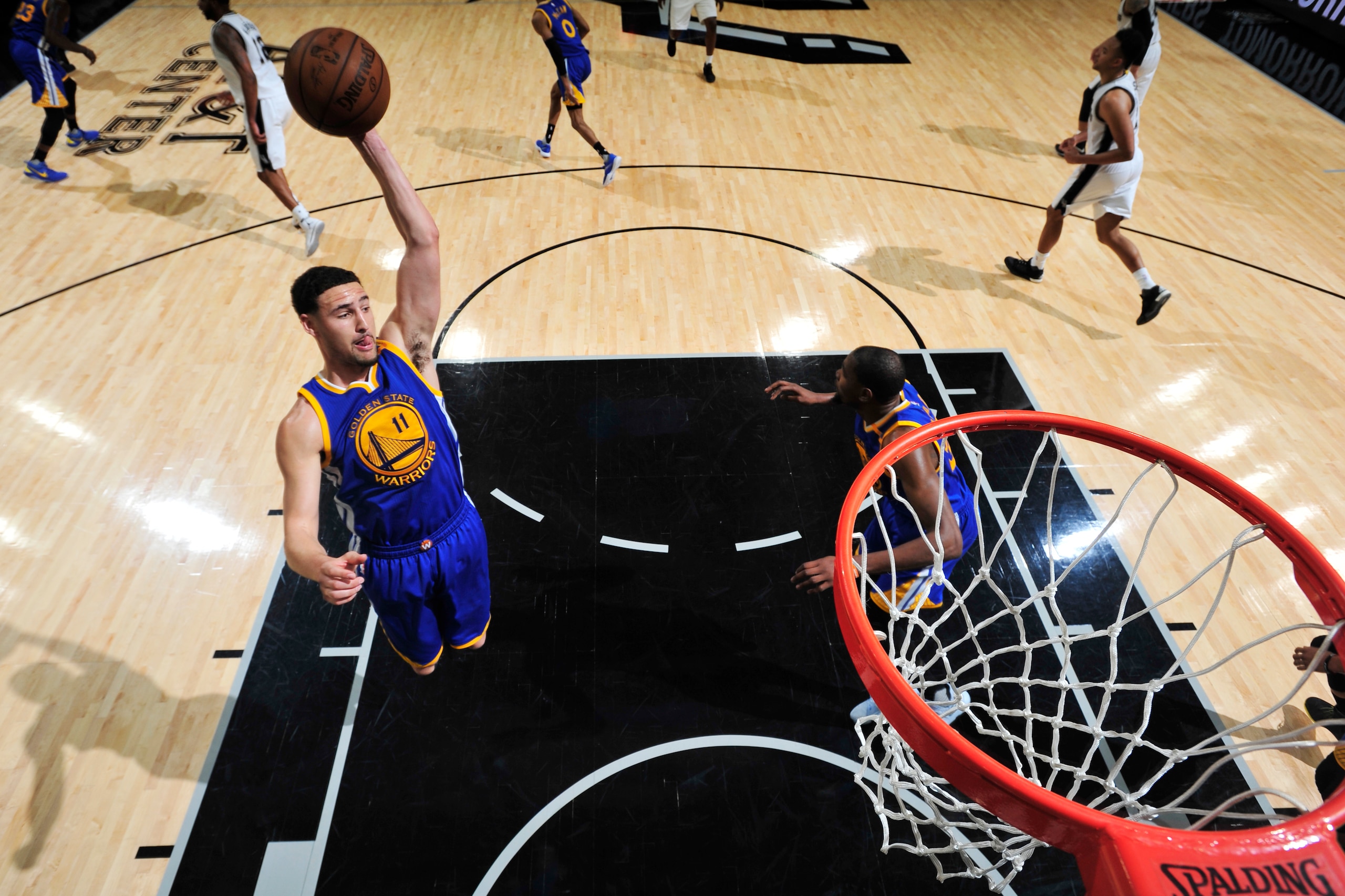
Postseason Stats: 14.4 points, 3.5 rebounds, 2.0 assists, 1.0 steals, 0.3 blocks
Postseason Advanced Metrics: 8.4 PER, 48.5 TS%, 0.035 WS/48, minus-17.26 TPA
If anyone has seen Klay Thompson's missing shot, please call the Golden State Warriors and let them know immediately.
The All-Star shooting guard has inexplicably struggled throughout the playoffs, connecting on only 38.3 percent of his field-goal attempts and 36.4 percent of his looks from beyond the arc. The funk is also affecting another part of his game since his defense has been a bit more lackluster than in typical outings.
Fortunately or unfortunately, depending on your perspective, it can't harm any other contributions because it's so exceedingly rare that Thompson thrives on the glass or as a secondary distributor.
But even without his shot, Thompson is still a valuable presence. His reputation precedes him to the point that foes are forced to grant him a substantial gravitational pull. No one wants to be the unfortunate defender who cheats too far away from Thompson and gives him the one wide-open shot that leads to an infusion of confidence.
If Thompson returns to form, he could surpass the next two players in these rankings. But given his postseason struggles, it's also possible he could fall further down, especially if the Cavaliers exploit his shoddy off-ball defense and avoid attacking him in one-on-one situations.
6. Kevin Love, PF, Cleveland Cavaliers
10 of 15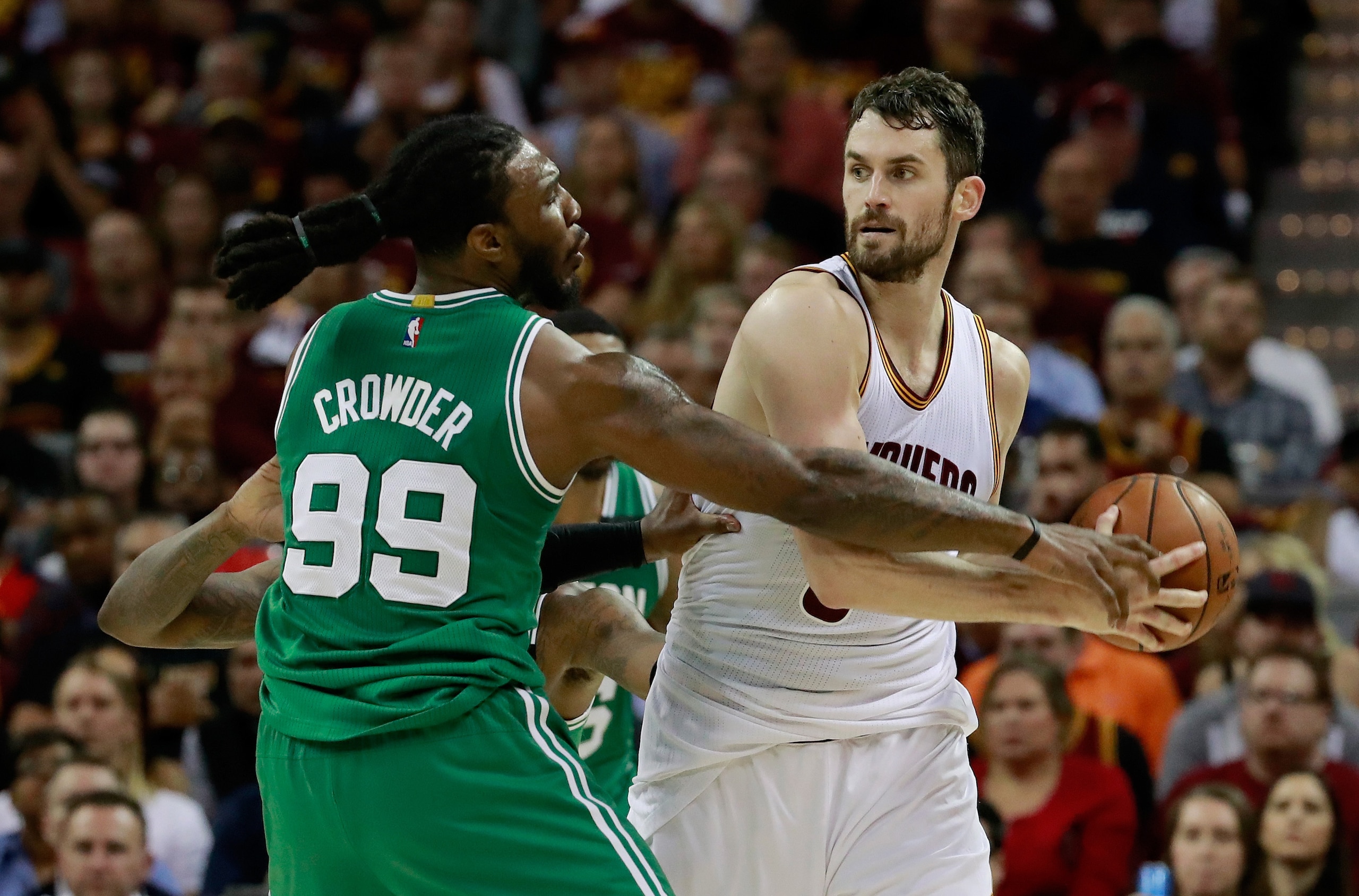
Postseason Stats: 17.2 points, 10.4 rebounds, 1.9 assists, 0.8 steals, 0.8 blocks
We're never going to see the Minnesota Timberwolves version of Kevin Love while he's on the Cavaliers. He might turn back the clock in small doses, but the 20/20 games and ridiculous strings of double-doubles are firmly rooted in the past while he's sharing touches with LeBron James and Kyrie Irving.
However, that doesn't mean he lacks value. Quite the opposite, in fact.
Much like it took Chris Bosh a few years to fully comprehend how he could maximize his role with the Miami Heat, Love's growth alongside his fellow stars required some time. But he's now back in the realm of studs, thriving on the glass and as a spot-up shooter who can carry the team as a scorer at a moment's notice.
Love doesn't get too many post touches these days, but he doesn't even need them. Instead, he can reallocate his energy to play better defense while still throwing up points in catch-and-shoot situations.
When a teammate feeds him the rock, he's shooting 46.6 percent from the field and 47.8 percent from downtown during the playoffs. Of the 22 players taking at least five catch-and-shoot attempts per game this postseason, only Stephen Curry, Tony Snell, Draymond Green and Al-Farouq Aminu (over a whopping four-contest sample) have posted higher effective field-goal percentages.
5. Kyrie Irving, PG, Cleveland Cavaliers
11 of 15
Postseason Stats: 24.5 points, 2.4 rebounds, 5.6 assists, 1.4 steals, 0.5 blocks
Kyrie Irving is by no means a perfect point guard.
He's a porous presence on defense and often ushers opposing floor generals into the lane because he's unable to prevent dribble penetration. He doesn't do much on the glass, and his distributing is a hot-and-cold affair; some games he functions as a dynamic playmaker, while he seems to forget he's capable of passing in others.
And yet, those flaws often don't matter.
Irving is as dynamic as it gets off the bounce, capable of not just beating but embarrassing defenders. No one in the NBA has a tighter crossover, and the 25-year-old frequently uses his yo-yo handles to create open space and connect. Whether he's pulling up for a jumper or finishing creatively around the hoop, he can—in the immortal words of Uncle Drew—get buckets.
"He was born to play one-on-one. That's what he do," LeBron James explained, per Vice Sports' Michael Pina. "I think what he's improved more upon is the feel of the game, taking the time and score and possessions and things of that nature, and grown as a point guard and grown as a leader. But the kid was born to play one-on-one. You have these great one-on-one players in our league history, and he's up there."
4. Draymond Green, PF, Golden State Warriors
12 of 15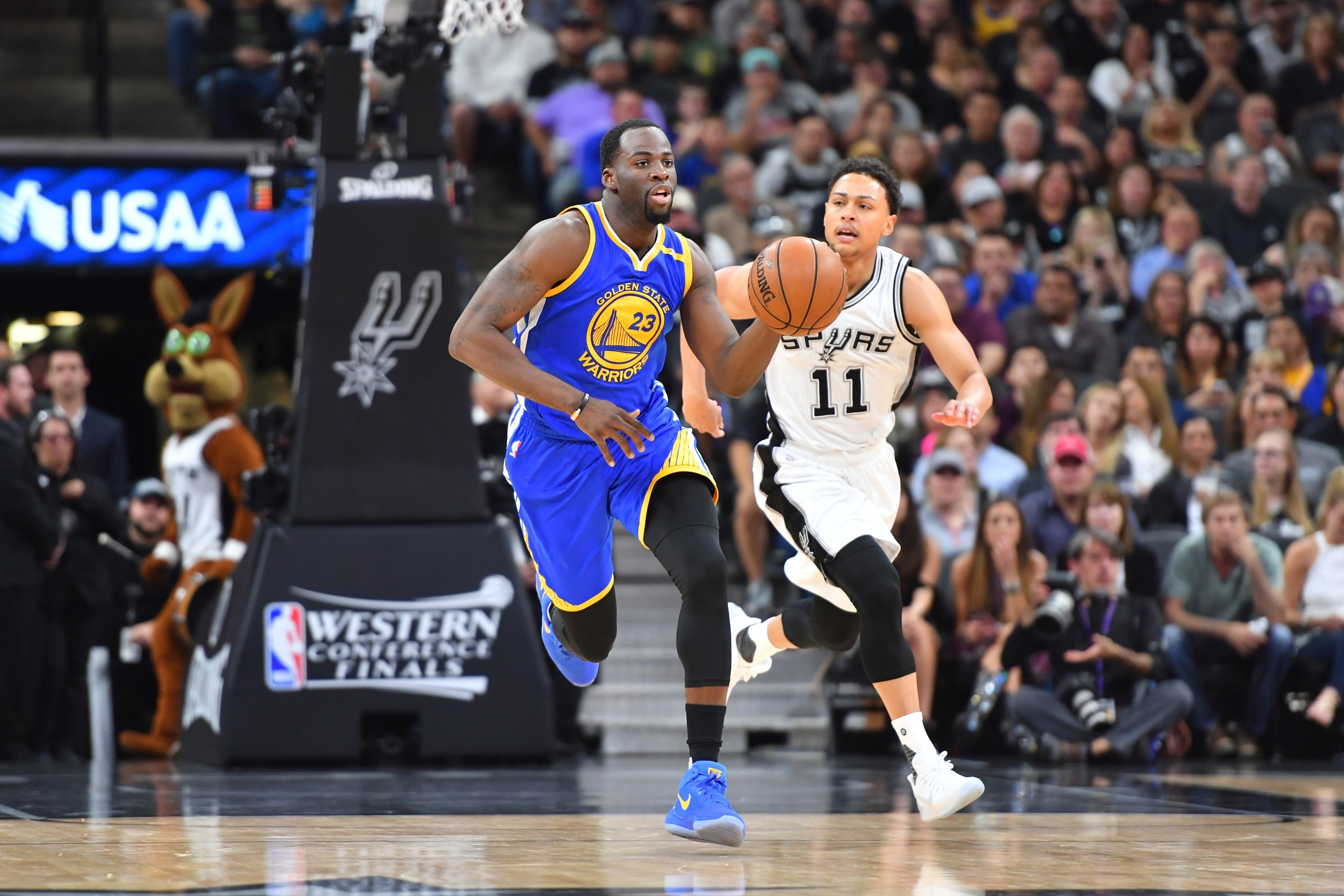
Postseason Stats: 13.9 points, 8.7 rebounds, 7.2 assists, 1.9 steals, 2.1 blocks
Draymond Green can function like one of the NBA's 10 best players even when his shot isn't falling. Thanks to his rebounding prowess, ability to lead the Golden State Warriors in assists and Defensive Player of the Year tendencies, he impacts the game in so many different ways.
When his shot is swishing through the net—as it has through the first three rounds of the playoffs, in which he's slashing 50.0/47.2/69.2—he leaves little doubt about that top-10 status.
But let's cycle back.
Remove Green's red-hot shooting from the equation. Forget about his work as a distributor. Don't take into account his indefatigable presence when trying to create second-chance opportunities. Even if we focus only on defense, he's unbelievably valuable.
According to NBA Math's defensive points saved (DPS), Green has saved 43.46 points on the preventing end through the first 12 games of the postseason. Not only is that the league's top mark, well clear of LeBron James (34.82) and Marcus Smart (33.68), but it beats the total value (including offensive and defensive production) of all but eight other men in 2017's playoff field.
Green's regular-season efforts will either give him the DPOY trophy or leave him as the runner-up to Rudy Gobert. But somehow, he's been even more effective during the playoffs.
3. Kevin Durant, SF/PF, Golden State Warriors
13 of 15
Postseason Stats: 25.2 points, 7.8 rebounds, 3.7 assists, 0.7 steals, 1.2 blocks
How do you know a series contains a ridiculous amount of talent? When Kevin Durant, who's undoubtedly one of the six most talented basketball players in the world, falls in at No. 3.
Durant hasn't had any trouble adjusting to his new digs. He hasn't been forced to sacrifice too many touches to the rest of the Golden State Warriors but has still focused his energies on becoming more well-rounded than ever before.
The 28-year-old remains one of the NBA's deadliest scorers. During the playoffs, he's averaged 25.2 points while shooting 55.6 percent from the field, 41.7 percent from three-point land and 87.1 percent from the charity stripe. Even if that leaves him just shy of the 50/40/90 club, it gives him numbers even the league's premier producers can only dream about.
But it's on defense where Durant has impressed most.
Perhaps because his points now come fully within the flow of the offense, he's been able to allocate more resources toward playing high-quality defense. He fills a similar role to Draymond Green, where his versatility allows him to slow down ball-handlers and then switch onto a bigger player. He can even defend the rim in a pinch and held opponents to 48.7 percent shooting during the regular season and 43.2 percent through three rounds of the playoffs.
2. Stephen Curry, PG, Golden State Warriors
14 of 15
Postseason Stats: 28.6 points, 5.5 rebounds, 5.6 assists, 1.9 steals, 0.3 blocks
Stephen Curry's 2015-16 campaign may well have been the greatest offensive season in NBA history, though that's an argument for another time and place. What's more important now is that his production during the 2017 playoffs has been comparable to that year in which he drilled an NBA-record 402 three-pointers:
| 2015-16 | 30.1 | 6.7 | 50.4 | 45.4 | 90.8 | 66.9 | 12.4 |
| 2017 Playoffs | 28.6 | 5.6 | 50.2 | 43.1 | 90.7 | 67.5 | 11.5 |
Maybe it's not quite on the same level. But it's still in the same upper echelon, and Curry is playing on the offensive end like few ever have throughout NBA history.
The sharpshooting point guard has played 412 minutes through the playoffs' first three rounds, leaving him behind 19 other players in that particular category. But according to NBA Math's offensive points added (OPA), he's provided more value on offense than anyone not named LeBron James.
Shooting isn't the only thing he does well. He won't ever be a standout defender, but he can hold his own against most matchups and often shepherds his assignment into the right position. He's also a tremendous rebounder for his size, capable of reading caroms quicker than most and darting to the proper spot for an uncontested board that sparks a transition opportunity.
He's more complete than many who only focus on his three-point shooting realize.
1. LeBron James, SF, Cleveland Cavaliers
15 of 15
Postseason Stats: 32.5 points, 8.0 rebounds, 7.0 assists, 2.2 steals, 1.4 blocks
Postseason Advanced Metrics: 30.4 PER, 65.7 TS%, 0.299 WS/48, 115.01 TPA
Is there any doubt?
LeBron James won't win MVP this year. He's not even a finalist, as that designation was reserved for James Harden, Kawhi Leonard and Russell Westbrook. But that's only because the award is for the regular season. The 32-year-old's more restrained efforts already nearly put him in the conversation for the league's premier individual honor, and he's been even better during the playoffs.
Just look at the advanced metrics. His PER is better than the regular-season mark by a substantial margin. He's shooting the ball more effectively, even connecting on 42.1 percent of his treys while taking 5.8 attempts per game. He's adding more win shares per 48 minutes, and he's on pace to have one of the greatest single-postseason TPA scores of the modern era, per NBA Math.
James can simply do it all.
He's been a defensive terror, often operating in an off-ball setting that allows him to play free safety and wreak havoc in the passing lanes. He's threatening triple-doubles while scoring with both volume and efficiency. He's shown a counter to every style of defense, thriving as a pull-up shooter, an unstoppable freight train moving toward the hoop and a drive-and-kick distributor.
Somehow, it feels like he's playing better than ever in spite of the ridiculous mileage he's racked up while making seven straight trips to the NBA Finals. Don't be surprised if he's the overwhelming favorite for Finals MVP, irrespective of the series result.
Adam Fromal covers the NBA for Bleacher Report. Follow him on Twitter: @fromal09.
Unless otherwise indicated, all stats from Basketball Reference, NBA.com, ESPN.com or NBA Math and accurate heading into the 2017 NBA Finals.

.jpg?w=2560 "A.J.'s Explicit Seahawks Rant 😳")
.jpg?w=2560 "Lions Clear $35.6M Cap Space")


.jpg?w=2560 "Most Important 2027 NFL Free Agents")

.jpg?w=2560 "Report: Lamar, Ravens Don't Reach Deal")