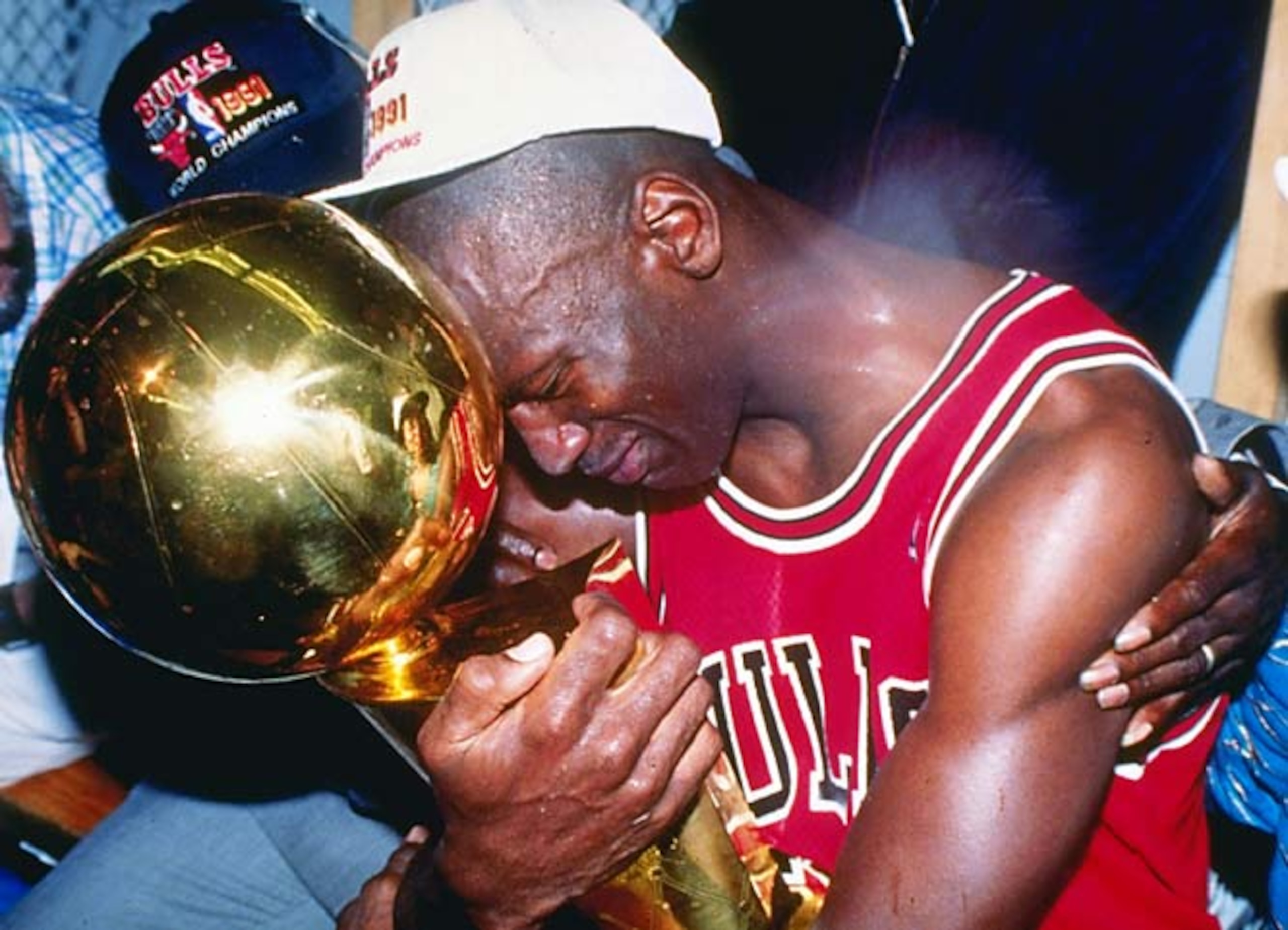

NBA Finals 2011: Power Ranking Chicago Bulls and the Last 25 Championship Teams
After long last, we have finally arrived at our destination: the 2011 NBA Finals.
For over six decades, we have watched the greatest players perform at their best with the pressure at its highest and the spotlight at its brightest. Over the past 25 seasons, we have seen just about all you could possibly ask for as an NBA fan. From the greatest player in the world leading his team to title after title to the NBA's biggest character making the big shots in the end, the NBA Finals is where legends are born and champions are made.
Only once have we seen a team truly dominate a decade like the Boston Celtics did in the 1960's, and that came as recently as the 1990's, when Michael Jordan and the Chicago Bulls absolutely decimated the rest of the NBA. We have seen other teams nearly perform the same feats as well, with the Los Angeles Lakers taking home three consecutive titles and the San Antonio Spurs taking four titles between 1999 and 2007.
It's the best and worst time to be an NBA fan. It's unfortunate that following the completion of the series, all we'll have to look forward to on ESPN are baseball highlights for three months, but it is worth it when watching what the greatest teams in the league can do when facing off against each other. In the Finals, we have seen improbable acts from some of the greatest athletes the world has ever seen.
In this year's postseason, we watch as the Big Three and the Miami Heat take on Dirk Nowitzki and the Dallas Mavericks. Both teams have played extremely well this postseason, with each team only needing 15 games to find themselves at this point. After the completion of this series, we'll learn a few things about each team and where they stand overall.
We'll also see just how high they could rank in this list of the top 25 championship teams over the past 25 years.
25. 1995 Houston Rockets
1 of 25
Regular season record: 47-35
Starting lineup: PG: Kenny Smith, SG: Clyde Drexler, SF: Robert Horry, PF: Otis Thorpe, C: Hakeem Olajuwon
Road to the title:
First round: Defeated Utah Jazz 3-2
Semifinals: Defeated Phoenix Suns 4-3
Conference finals: Defeated San Antonio Spurs 4-2
NBA Finals: Defeated Orlando Magic 4-0
With Michael Jordan suffering his first postseason loss since 1990, the door was once again left open for teams to take advantage of obtaining a title without the difficulty of beating Jordan and the Chicago Bulls.
The Houston Rockets decided to be greedy by taking home both titles during the down years of the Bulls. Their second title of the 1990's came after a disappointing regular season where they only won 47 games, the same win total as your average fourth or fifth seed in the Eastern Conference today. Even with the low win total, the Rockets were able to prevail in the final games in series against Utah and Phoenix.
It turned out that the NBA Finals would be the easiest series, as they swept Shaquille O'Neal and the Orlando Magic. Hakeem Olajuwon won Finals MVP after averaging a mind-boggling 33 points and 10 rebounds per game in the postseason. Houston had five players score in double figures in the postseason with Clyde Drexler, Robert Horry, Sam Cassell and Kenny Smith all contributing in big ways.
24. 2006 Miami Heat
2 of 25
Regular season record: 52-30
Starting lineup: PG: Jason Williams, SG: Dwyane Wade, SF: Antoine Walker, PF: Udonis Haslem, C: Shaquille O'Neal
Road to the title:
First round: Defeated Chicago Bulls 4-2
Semifinals: Defeated New Jersey Nets 4-1
Conference finals: Defeated Detroit Pistons 4-2
NBA Finals: Defeated Dallas Mavericks 4-2
It was about this time that the NBA world began to realize that Dwyane Wade was going to be pretty good. With Shaquille O'Neal as his main running mate, the Heat were able to skate through the regular season, winning only 52 games and obtaining a second seed. This came a year after the team had won 59 games and fell in the conference finals due to significant injuries Wade had suffered.
The Heat struggled at times throughout their postseason run, but were able to make it to the NBA Finals after defeating the same Pistons squad that had beat them the year before. Dallas took a 2-0 series lead and then saw Wade take over as he led the team back from a 13-point deficit in the final five minutes of Game 3. Wade averaged 35 points per game in the Finals and led the Heat to four consecutive wins over Dallas.
Wade averaged 28 points, six rebounds and six assists in the postseason, while Shaquille O'Neal chipped in 19 points and 10 rebounds.
Their reign at the top was short like leprechauns, as the team won 15 games two years later.
23. 2005 San Antonio Spurs
3 of 25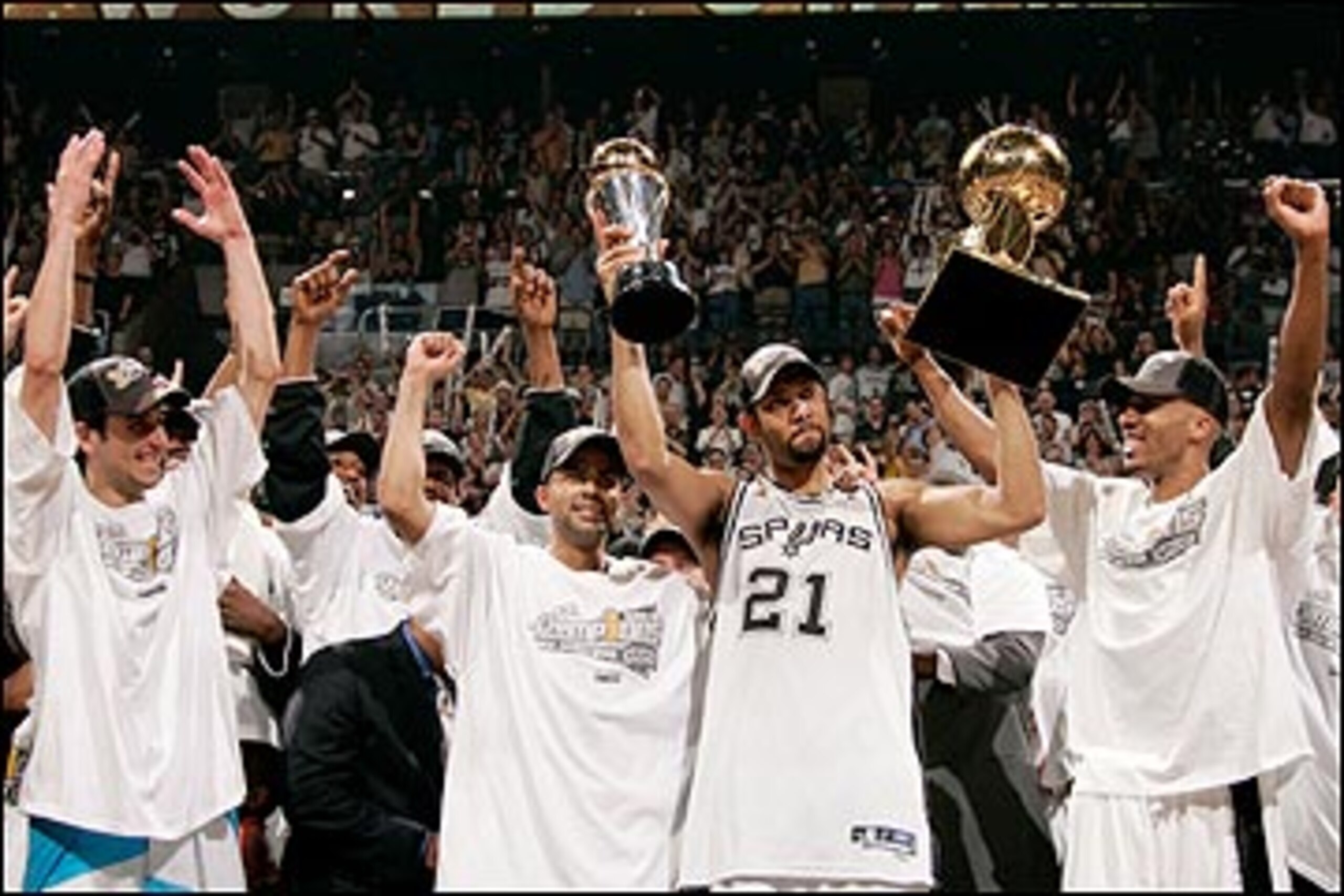
Regular season record: 59-23
Starting lineup: PG: Tony Parker, SG: Manu Ginobili, SF: Bruce Bowen, PF: Tim Duncan, C: Rasho Nesterovic
Road to the title:
First round: Defeated Denver Nuggets 4-1
Semifinals: Defeated Seattle Sonics 4-2
Conference finals: Defeated Phoenix Suns 4-1
NBA Finals: Defeated Detroit Pistons 4-3
Nobody said that all NBA Finals were supposed to be entertaining. Yes, that even includes Finals that go the distance.
The San Antonio Spurs dominated the 2000's with three championships in the decade, after winning in 1999. They made easy work of their competition in the Western Conference, with only one series needing six games, before reaching a road block in the Detroit Pistons. The Pistons were very similar to the Spurs, as they both focused on offensive balance and tough defense.
What does that mean in terms of entertainment value? An awfully boring, agonizing series.
Tim Duncan did most of the heavy lifting, with 24 points and 12 rebounds. Manu Ginobili poured in 21 points and six rebounds, while Tony Parker chipped in 17 points and four assists from the 1 spot.


22. 2010 Los Angeles Lakers
4 of 25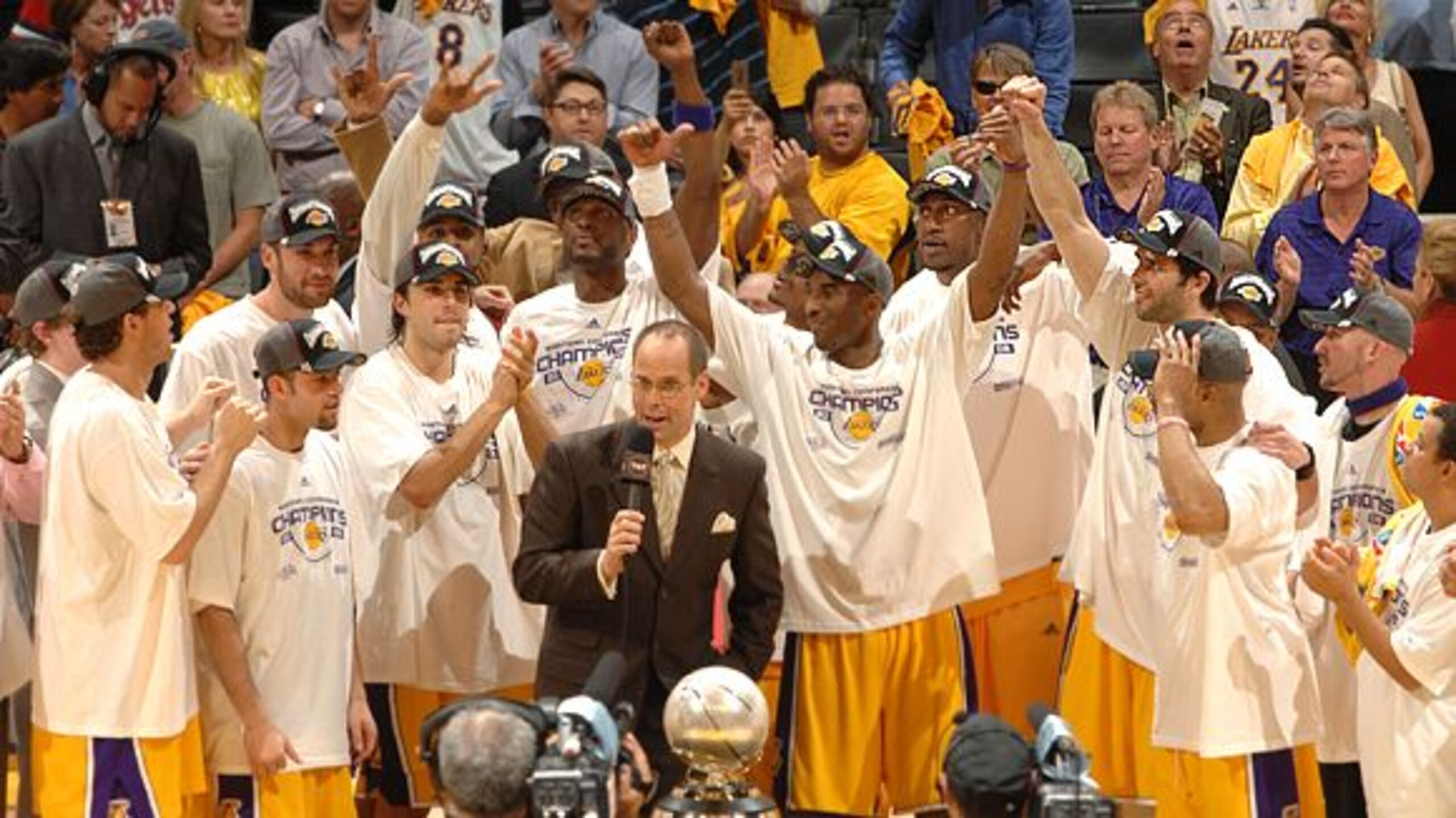
Regular season record: 57-25
Starting lineup: PG: Derek Fisher, SG: Kobe Bryant, SF: Ron Artest, PF: Pau Gasol, C: Andrew Bynum
Road to the title:
First round: Defeated Oklahoma City Thunder 4-2
Semifinals: Defeated Utah Jazz 4-0
Conference finals: Defeated Phoenix Suns 4-2
NBA Finals: Defeated Boston Celtics 4-3
Possibly the last title coming to Los Angeles for a while, unless Dwight Howard goes the way of Shaquille O'Neal, the 2009-10 Lakers were basically the same team from the year before with a more defensive-minded small forward. Ron Artest replaced Trevor Ariza at the 3 spot and offered a number of key shots in the NBA Finals.
Kobe Bryant was once again the clear-cut leader of the team in the playoffs, averaging 29 points on 46 percent shooting. Pau Gasol offered plenty of help in the post, and it was even argued that he should have received the Finals MVP, averaging 20 points and 11 rebounds per game in the postseason.
21. 1999 San Antonio Spurs
5 of 25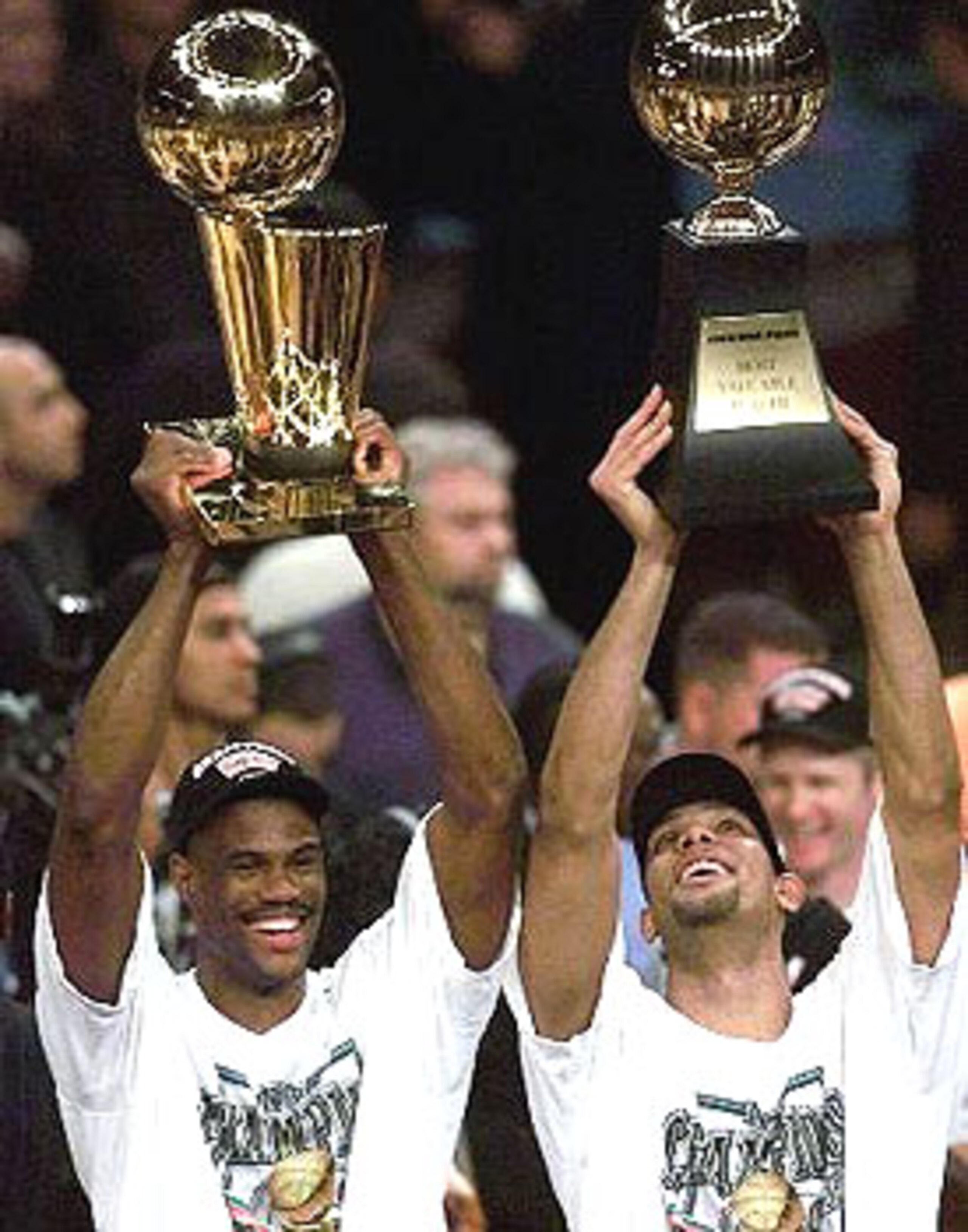
Regular season record: 37-13
Starting lineup: PG: Avery Johnson, SG: Mario Elie, SF: Sean Elliott, PF: Tim Duncan, C: David Robinson
Road to the title:
First round: Defeated Minnesota Timberwolves 3-1
Semifinals: Defeated Los Angeles Lakers 4-0
Conference finals: Defeated Portland Trail Blazers 4-0
NBA Finals: Defeated New York Knicks 4-1
The first title of the San Antonio Spurs dynasty that ran from 1999 to 2007, the team took advantage of the lockout year by making quick and easy work of their postseason opponents. They only lost one game during their run to the Finals and then only needed five games against the eighth-seeded New York Knicks.
The Spurs had a fair share of balance, as they had four players average double figures in points. Tim Duncan took home the Finals MVP after averaging 23 points and 12 rebounds in the postseason, David Robinson added 16 points and 10 rebounds, Avery Johnson contributed 13 points and seven assists, and Sean Elliott averaged 12 points and three rebounds.
20. 1994 Houston Rockets
6 of 25
Regular season record: 58-24
Starting lineup: PG: Kenny Smith, SG: Vernon Maxwell, SF: Robert Horry, PF: Otis Thorpe, C: Hakeem Olajuwon
Road to the title:
First round: Defeated Portland Trail Blazers 3-1
Semifinals: Defeated Phoenix Suns 4-3
Conference finals: Defeated Utah Jazz 4-1
NBA Finals: Defeated New York Knicks 4-3
It wasn't as easy as their second title, but the Houston Rockets managed to will themselves to their first NBA title with a seven-game series win over the Eastern Conference champion New York Knicks. This was the first year the Bulls were without Michael Jordan, and it became a free-for-all in the NBA, as it then became possible for other teams to possibly take home the title.
Hakeem Olajuwon led the way for the Rockets with 29 points and 11 rebounds per game in the postseason, earning his first Finals MVP. The Rockets had four other players scoring in double-figures in the postseason with those key components being Vernon Maxwell, Robert Horry, Otis Thorpe and Kenny Smith. Sam Cassell only came a few decimal points away from being the sixth.
19. 2002 Los Angeles Lakers
7 of 25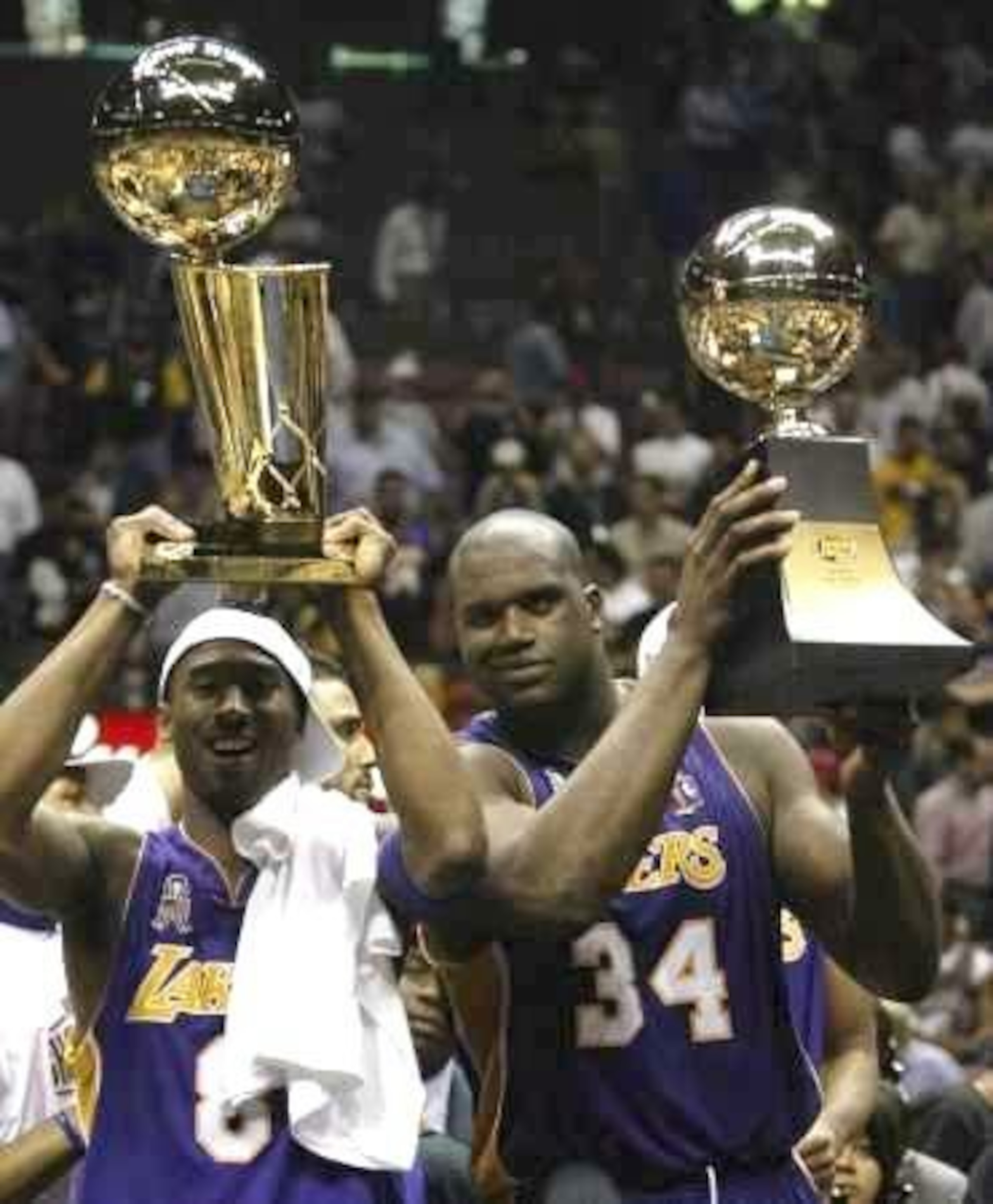
Regular season record: 58-24
Starting lineup: PG: Lindsey Hunter, SG: Kobe Bryant, SF: Rick Fox, PF: Samaki Walker, C: Shaquille O'Neal
Road to the title:
First round: Defeated Portland Trail Blazers 3-0
Semifinals: Defeated San Antonio Spurs 4-1
Conference finals: Defeated Sacramento Kings 4-3
NBA Finals: Defeated New Jersey Nets 4-0
The Los Angeles Lakers finished off their three-peat in style with an easy sweep over Jason Kidd and the New Jersey Nets. They only lost one game before coming upon their division rivals, the Sacramento Kings, in the conference finals. As great as the Lakers played in that year's postseason run, they'll be most remembered for their series against the Kings, where foul play from the officials was said to play a part.
The duo of Shaquille O'Neal and Kobe Bryant in the playoffs that year was nearly unstoppable, as Shaq contributed 29 points and 13 rebounds, while Kobe added in a modest 27 points, five rebounds and five assists per game. Derek Fisher was the only other player on the team to average double-digits in points with 10 points, three rebounds and three assists.
18. 2004 Detroit Pistons
8 of 25
Regular season record: 54-28
Starting lineup: PG: Chauncey Billups, SG: Richard Hamilton, SF: Tayshaun Prince, PF: Rasheed Wallace, C: Ben Wallace
Road to the title:
First round: Defeated Milwaukee Bucks 4-1
Semifinals: Defeated New Jersey Nets 4-3
Conference finals: Defeated Indiana Pacers 4-2
NBA Finals Defeated Los Angeles Lakers 4-1
One of the greatest Finals upsets in recent NBA history, the 2003-04 Detroit Pistons shocked the world with their seemingly easy series win over the dominant Los Angeles Lakers. Prior to the season before, the Lakers had won three consecutive titles, as Kobe Bryant and Shaquille O'Neal reigned supreme over the NBA.
The Pistons had terrific balance, with five players in the postseason averaging double figures in points. Richard Hamilton led the way with 21 points per game, and Ben Wallace contributed 10 points and 14 rebounds per game to lead the defensive onslaught of the Pistons. Needless to say, the easy win over the Lakers was a devastating blow to LA, as they shipped off O'Neal to Miami after the season.
17. 2007 San Antonio Spurs
9 of 25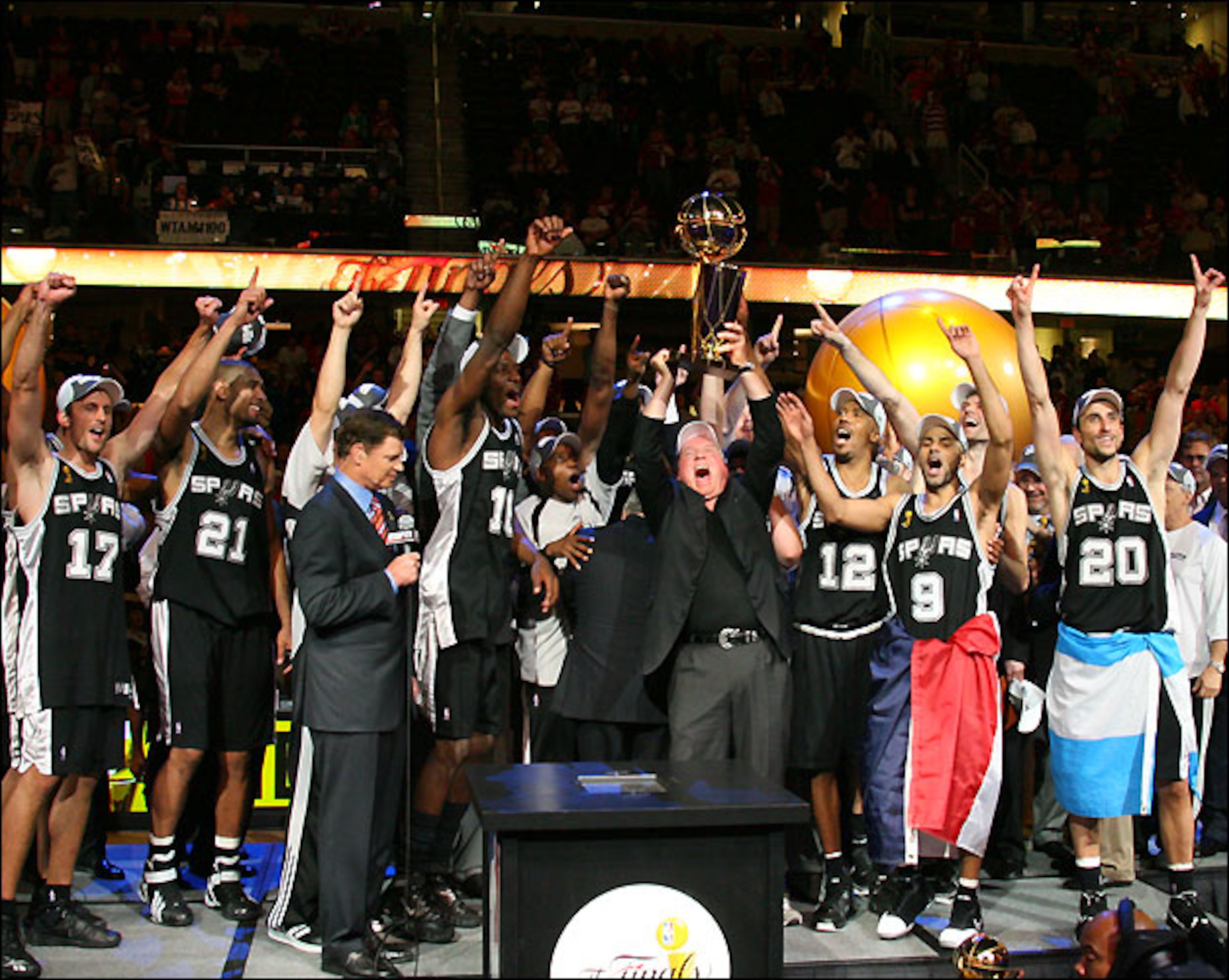
Regular season record: 58-24
Starting lineup: PG: Tony Parker, SG: Michael Finley, SF: Bruce Bowen, PF: Tim Duncan, C: Fabricio Oberto
Road to the title:
First round: Defeated Denver Nuggets 4-1
Semifinals: Defeated Phoenix Suns 4-2
Conference finals: Defeated Utah Jazz 4-1
NBA Finals: Defeated Cleveland Cavaliers 4-0
You can consider Tim Duncan as the best power forward to play the game, but the San Antonio Spurs aren't the type of team that's going to see the majority of its scoring come from one player. Instead, they'll get solid, balanced contributions from every starter with key contributions off the bench to help support the cause.
In the Spurs' easy postseason run, they were able to receive 22 points and 12 rebounds from Duncan, 21 points and six assists from Tony Parker and 17 points off the bench from Manu Ginobili. Michael Finley contributed a solid 11 points per game, while Bruce Bowen provided his usual hard-nosed defense.
The Spurs made easy work of their opponents and annihilated LeBron James and the Cleveland Cavaliers in one of the most lopsided NBA Finals.
16. 1990 Detroit Pistons
10 of 25
Regular season record: 59-23
Starting lineup: PG: Isiah Thomas, SG: Joe Dumars, SF: Bill Laimbeer, PF: Dennis Rodman, C: James Edwards
Road to the title:
First round: Defeated Indiana Pacers 3-0
Semifinals: Defeated New York Knicks 4-1
Conference finals: Defeated Chicago Bulls 4-3
NBA Finals: Defeated Portland Trail Blazers 4-1
If you were a team in contention for a title in the Eastern Conference, you just plain didn't like the Detroit Pistons. They'd beat you in the game and in the fight and then take your lunch money.
Alas, you can't deny the talent that the 1989-90 Pistons squad possessed. It was basically the same team as the year before, with a number of bruisers on the roster to go along with the deadly jump shot of Joe Dumars and the electric passing of Isiah Thomas. They made easy work of every team on their road to a championship, aside from the Bulls, who took them to seven games.
The Pistons had six players in that year's postseason averaging double figures in points, with Isiah Thomas leading the way at 21 points, eight assists and six rebounds per game. Dumars, Bill Laimbeer, James Edwards, Mark Aguirre and Vinnie Johnson all scored at least 10 points per game.
15. 1988 Los Angeles Lakers
11 of 25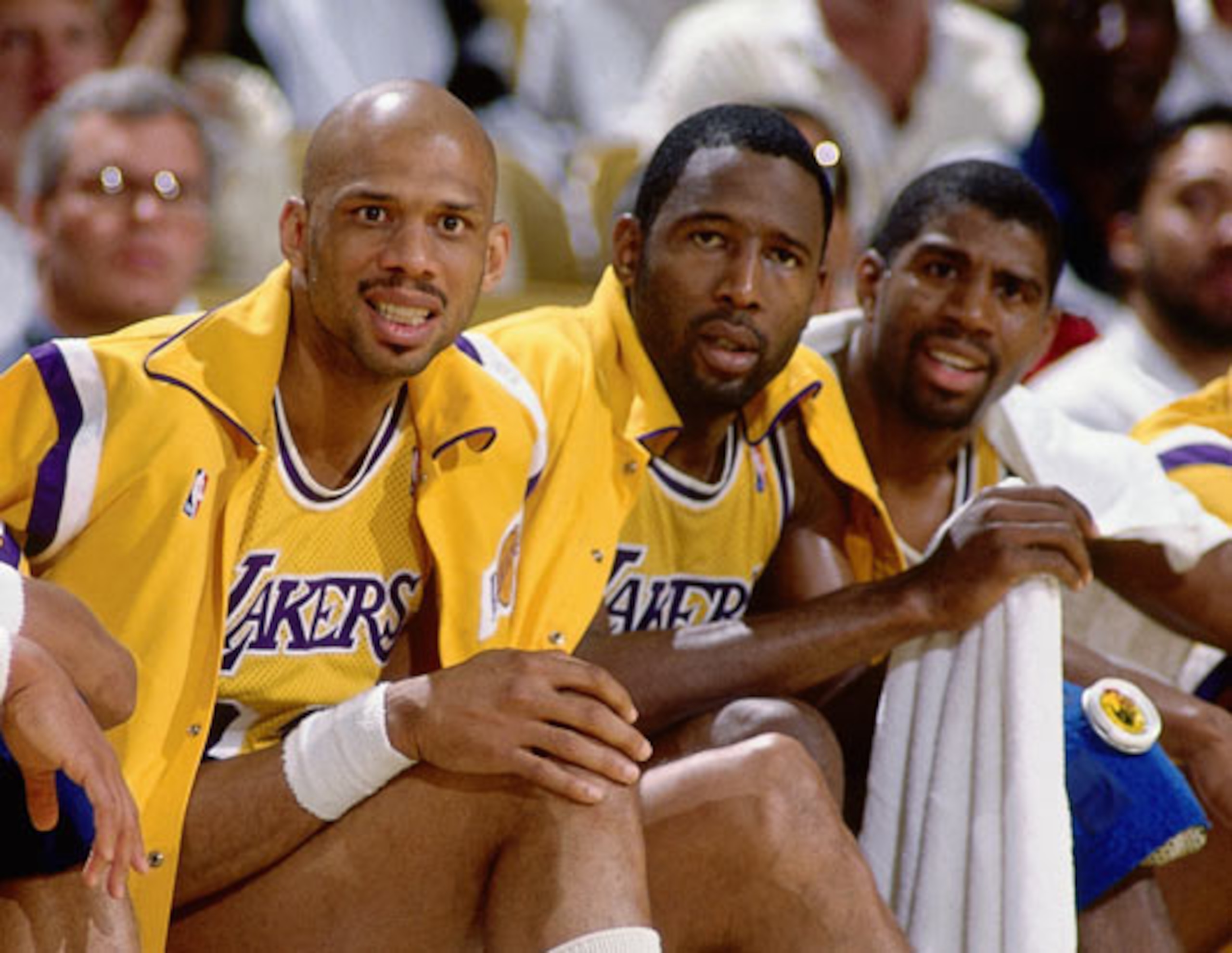
Regular season record: 62-20
Starting lineup: PG: Magic Johnson, SG: Byron Scott, SF: James Worthy, PF: A.C. Green, C: Kareem Abdul-Jabbar
Road to the title:
First round: Defeated San Antonio Spurs 3-0
Semifinals: Defeated Utah Jazz 4-3
Conference finals: Defeated Dallas Mavericks 4-3
NBA Finals: Defeated Detroit Pistons 4-3
It certainly wasn't the easiest road, as the Los Angeles Lakers saw three series decided in Game 7, but they managed to get the job done by winning their second consecutive title.
Each starter scored at least 10 points per game, with James Worthy leading the way at 21 points per game and eventually winning his first and only Finals MVP award in the Lakers' seven-game series win over the Detroit Pistons. This would be the last title the Lakers would win until 2000, when Kobe Bryant and Shaquille O'Neal would begin a three-peat.
14. 2001 Los Angeles Lakers
12 of 25
Regular season record: 56-26
Starting lineup: PG: Ron Harper, SG: Kobe Bryant, SF: Rick Fox, PF: Horace Grant, C: Shaquille O'Neal
Road to the title:
First round: Defeated Portland Trail Blazers 3-0
Semifinals: Defeated Sacramento Kings 4-0
Conference finals: Defeated San Antonio Spurs 4-0
NBA Finals: Defeated Philadelphia 76ers 4-1
The 2000-'01 Los Angeles Lakers finished the regular season with a modest 56 wins, but began to make their impression felt with one of the most dominant postseasons in NBA history. They decimated every team on their road to the NBA Finals, as they successfully swept every team in the West before taking on the Philadelphia 76ers.
If not for one of most dominant Finals performances by Allen Iverson in Game 1, the Lakers would have made it a perfect postseason. However, Iverson couldn't score 48 points per game, and the Sixers lost to the Lakers in five games.
O'Neal once again earned Finals MVP honors with 30 points and 15 rebounds in the Lakers' dominant postseason run. Kobe Bryant contributed 29 points, seven rebounds and six assists per game, while Derek Fisher and Rick Fox each dropped in 13 and 10 points, respectively.
13. 2009 Los Angeles Lakers
13 of 25
Regular season record: 65-17
Starting lineup: PG: Derek Fisher, SG: Kobe Bryant, SF: Trevor Ariza, PF: Pau Gasol, C: Andrew Bynum
Road to the title:
First round: Defeated Utah Jazz 4-1
Semifinals: Defeated Houston Rockets 4-3
Conference finals: Defeated Denver Nuggets 4-2
NBA Finals: Defeated Orlando Magic 4-1
Basically the same Los Angeles team as the past few years, the 2008-09 Lakers were one of the most successful teams in recent history. They won 65 games and only saw one postseason series go the distance, and that was against a Houston Rockets club that was playing without its best player. Thanks to the Celtics suffering a few detrimental injuries, the Lakers were fortunate enough to take on the Orlando Magic, who were without their All-Star point guard.
The Lakers executed very well on defense and kept Magic star Dwight Howard in check. Kobe Bryant was phenomenal on the offensive end, averaging over 30 points per game for the postseason, while Pau Gasol contributed a solid 18 points and 11 rebounds per game.
12. 1993 Chicago Bulls
14 of 25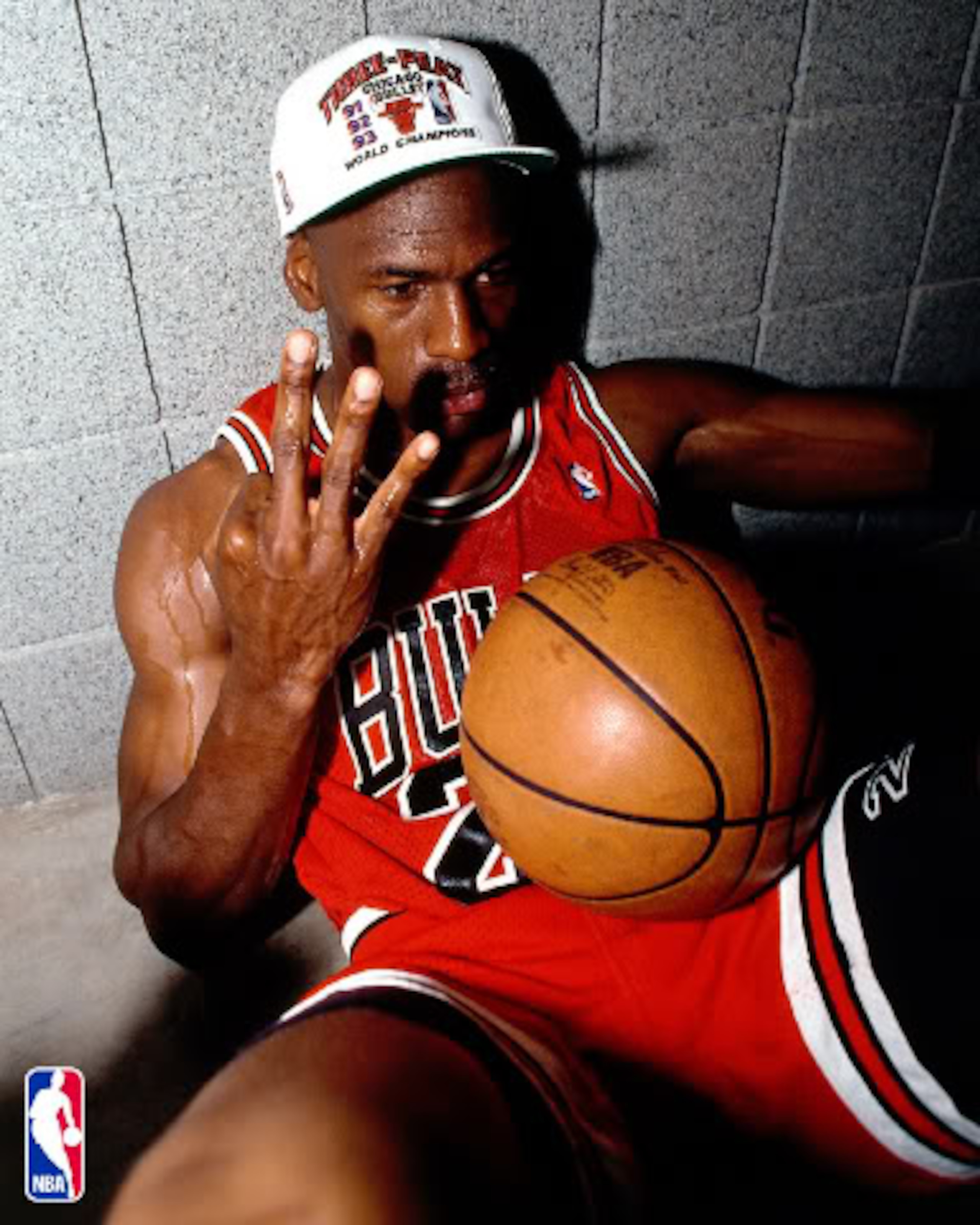
Regular season record: 57-25
Starting lineup: PG: B.J. Armstrong, SG: Michael Jordan, SF: Scottie Pippen, PF: Horace Grant, C: Bill Cartwright
Road to the title:
First round: Defeated Atlanta Hawks 3-0
Semifinals: Defeated Cleveland Cavaliers 4-0
Conference finals: Defeated New York Knicks 4-2
NBA Finals: Defeated Phoenix Suns 4-2
The final year of Michael Jordan's first stint as a member of the NBA ended with him leading the Chicago Bulls to their first three-peat thanks to a key block from Horace Grant to end their six-game series win over Charles Barkley and the Phoenix Suns.
Michael was absolutely electric in that year's postseason run, as he averaged 35 points, seven rebounds and six assists while leading the team to two sweeps and only four playoff losses. Scottie Pippen, B.J. Armstrong and Grant all played important roles on the team, as each of them scored in double-figures and Grant averaging eight rebounds per game.
The year after, Jordan decided to retire as an attempt to give other teams the possibility to win a title for themselves.
11. 2008 Boston Celtics
15 of 25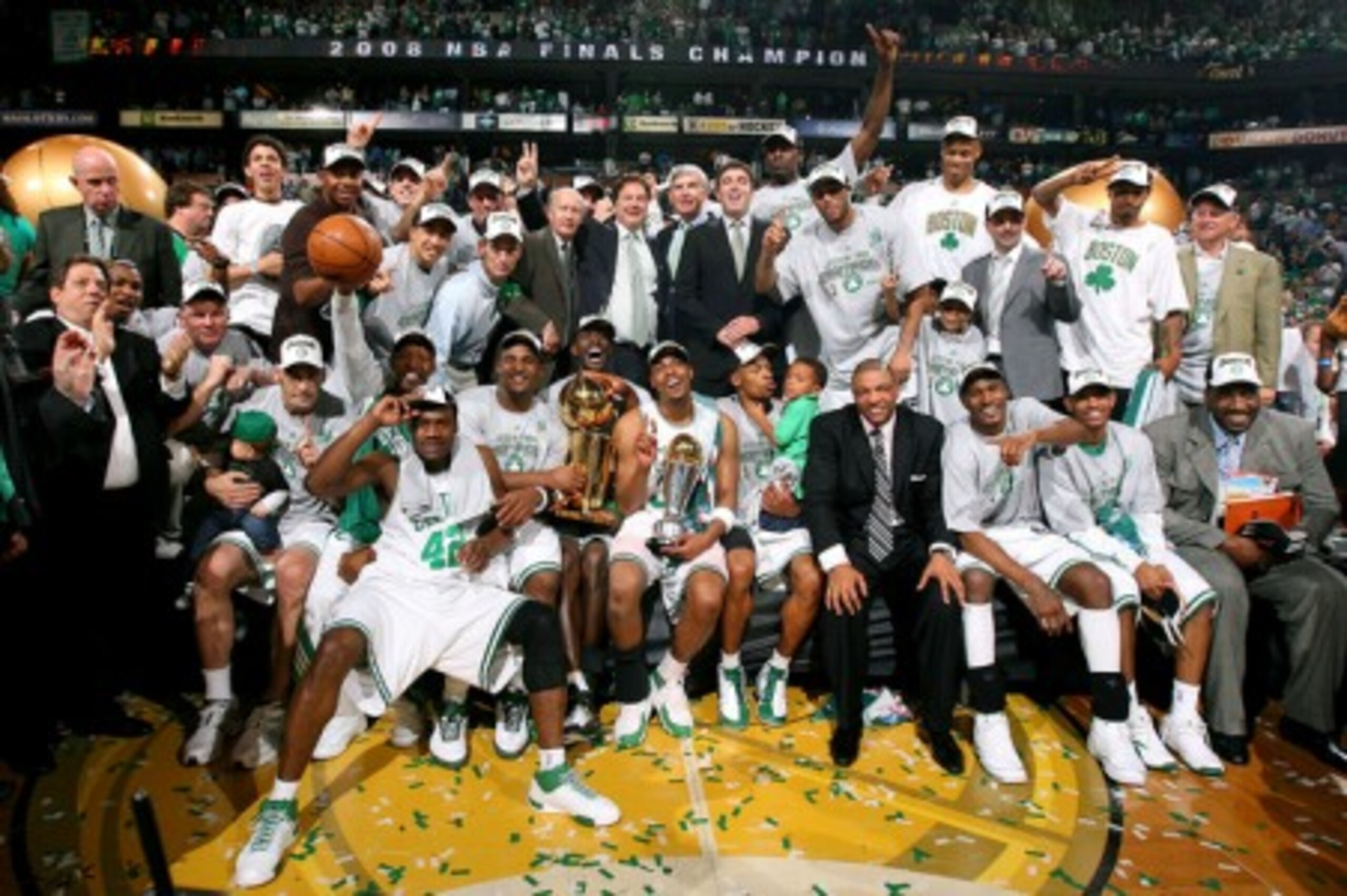
Regular season record: 66-16
Starting lineup: PG: Rajon Rondo, SG: Ray Allen, SF: Paul Pierce, PF: Kevin Garnett, C: Kendrick Perkins
Road to the title:
First round: Defeated Atlanta Hawks 4-3
Semifinals: Defeated Cleveland Cavaliers 4-3
Conference Finals: Defeated Detroit Pistons 4-2
NBA Finals: Defeated Los Angeles Lakers 4-2
The reason for all the Big Threes beginning to pop up amongst franchises today, the 2007-08 Boston Celtics were the first to implement the idea of having three players dominate the majority of the team's overall offensive output. Kevin Garnett and Ray Allen joined Paul Pierce in Boston, and the team saw immediate success with 66 regular season wins.
However, they struggled out of the gate in the postseason, as they saw their first two series go seven games. When it came down to the important series, however, they made it look a little easier with a six-game series win over the Detroit Pistons and a six-game series win over the Los Angeles Lakers, where they staged a huge comeback in the Staples Center and then won by a blowout in the deciding Game 6.
10. 1998 Chicago Bulls
16 of 25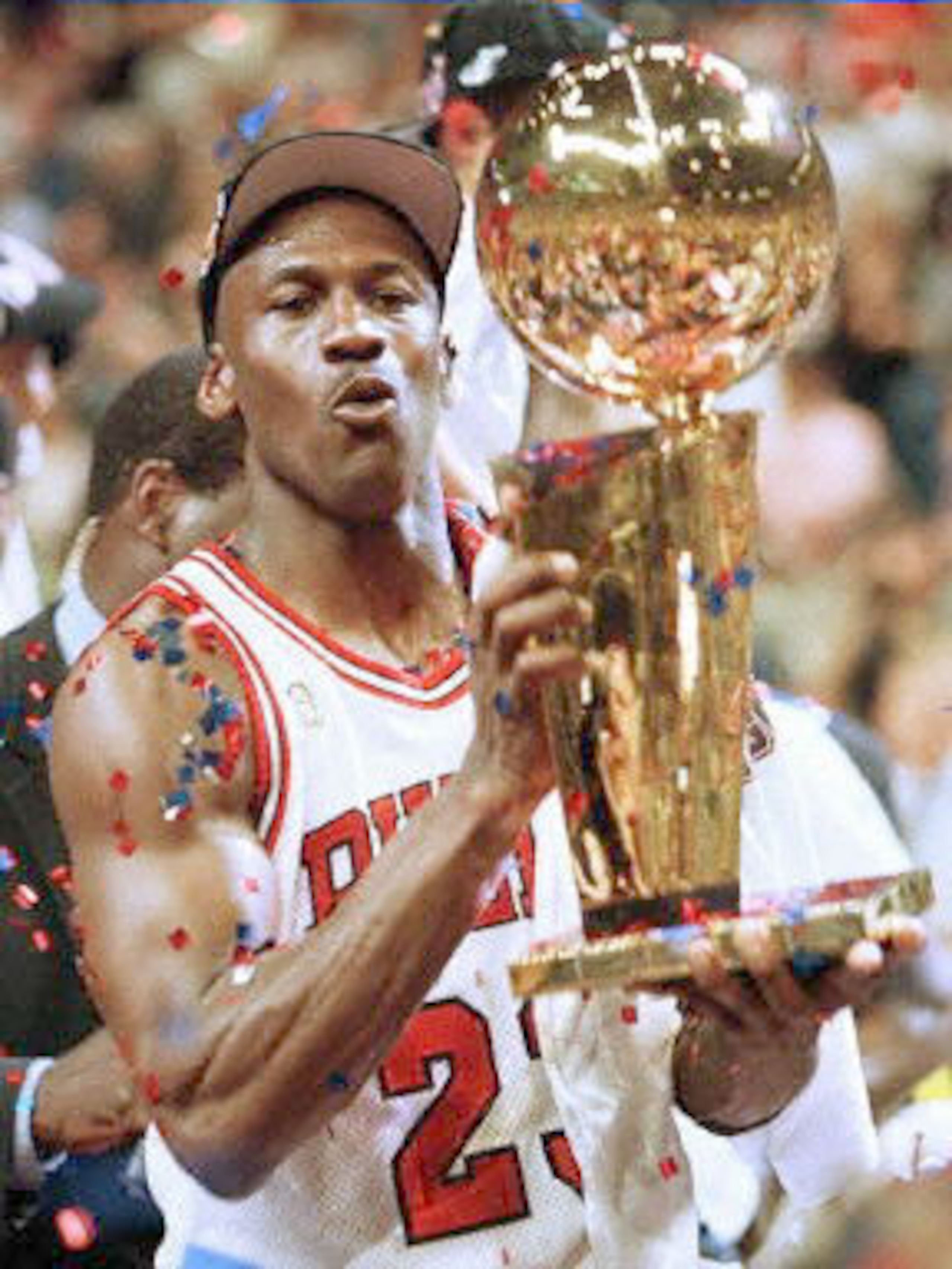
Regular season record: 62-20
Starting lineup: PG: Ron Harper, SG: Michael Jordan, SF: Scottie Pippen, PF: Dennis Rodman, C: Luc Longley
Road to the title:
First round: Defeated New Jersey Nets 3-0
Semifinals: Defeated Charlotte Hornets 4-1
Conference finals: Defeated Indiana Pacers 4-3
NBA Finals: Defeated Utah Jazz 4-2
Aside from the Boston Celtics in the 1960's, there wasn't a team as dominant as the Chicago Bulls in the 1990's. In Michael Jordan's final season with the Chicago Bulls, he decided to go out with a bang by finishing off the team's second three-peat in the span of a decade. The team nearly came close to having their run end in the conference finals, but were able to prevail in Game 7 against the Indiana Pacers.
The Bulls once again took on Karl Malone and the Utah Jazz and once again ended it in six games. Michael Jordan took home his sixth and last Finals MVP award after averaging 32 points and five rebounds in the postseason. Scottie Pippen played the role of sidekick perfectly with 17 points and seven rebounds, while Toni Kukoc averaged 13 points per game.
This was the third consecutive season that the Bulls had won over 60 games.
9. 1991 Chicago Bulls
17 of 25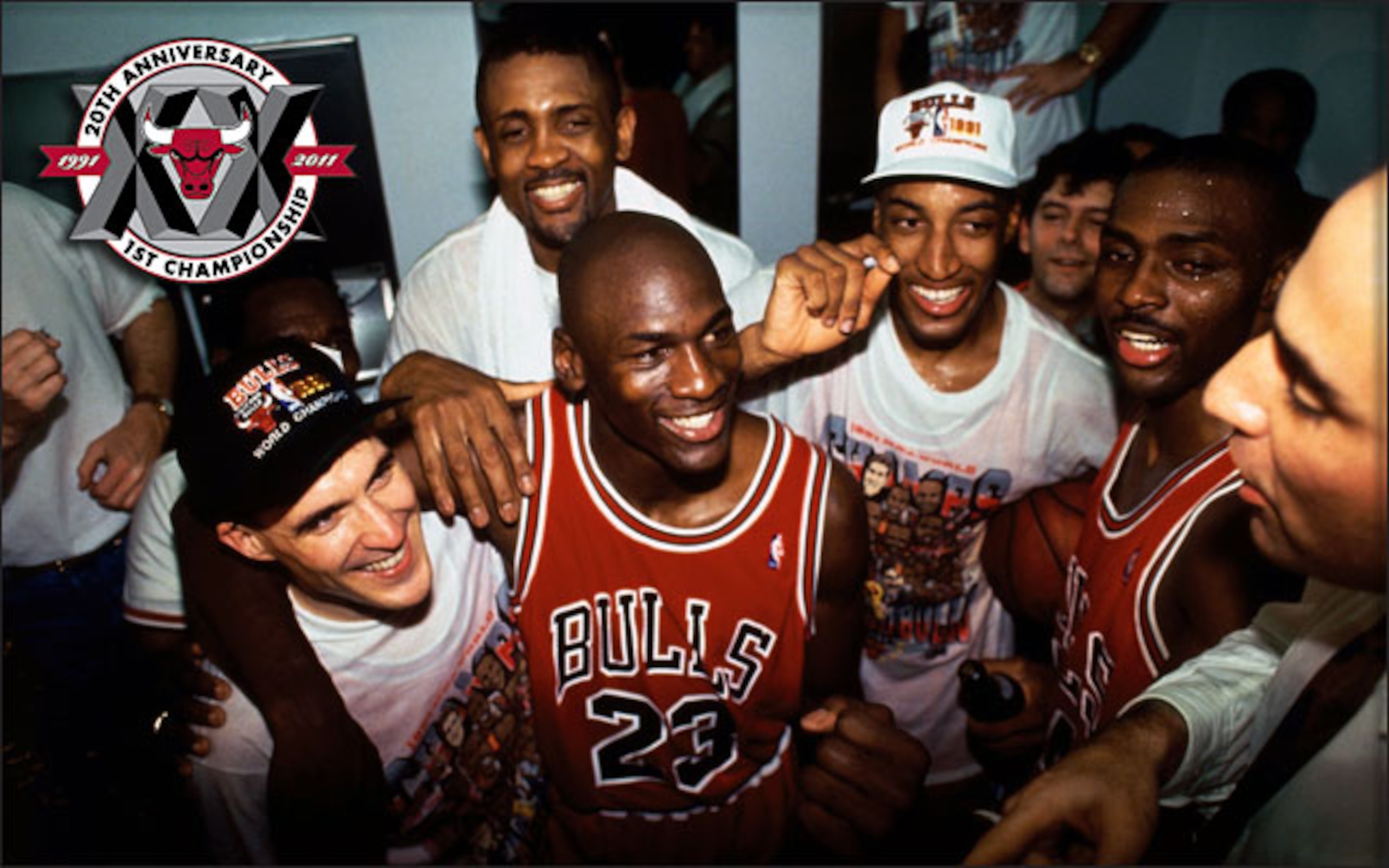
Regular season record: 61-21
Starting lineup: PG: John Paxson, SG: Michael Jordan, SF: Scottie Pippen, PF: Horace Grant, C: Bill Cartwright
Road to the title:
First round: Defeated New York Knicks 3-0
Semifinals: Defeated Philadelphia 76ers 4-1
Conference finals: Defeated Detroit Pistons 4-0
NBA Finals: Defeated Los Angeles Lakers 4-1
It was at this point that the NBA began to worry just how good that Michael Jordan could really be now that he had a team. Not just because they won it, but just how easy they made it look. The Detroit Pistons had run the Eastern Conference for years and were punched in the mouth by the Bulls with a sweep to end their reign at the top.
The Bulls only lost one game in their run to the NBA Finals and then needed only five games to defeat Magic Johnson and the Los Angeles Lakers. Jordan was dominant in his first title run, as he averaged 31 points, eight assists and six rebounds. Pippen played the role of sidekick, averaging 22 points, nine rebounds and six assists per game.
Once again, though, it was Michael Jordan stealing the show.
8. 2003 San Antonio Spurs
18 of 25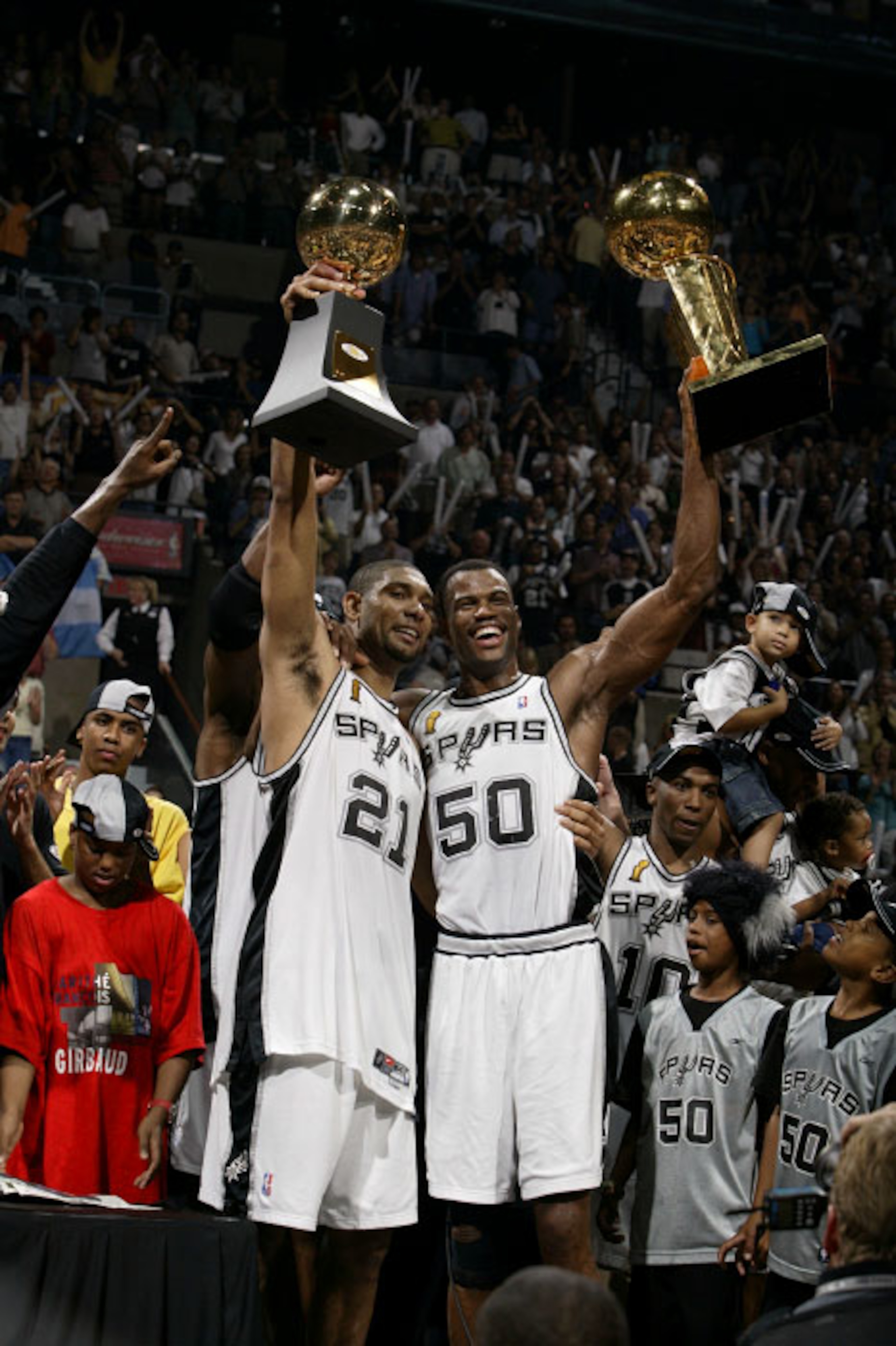
Regular season record: 60-22
Starting lineup: PG: Tony Parker, SG: Stephen Jackson, SF: Bruce Bowen, PF: Tim Duncan, C: David Robinson
Road to the title:
First round: Defeated Phoenix Suns 4-2
Semifinals: Defeated Los Angeles Lakers 4-2
Conference finals: Defeated Dallas Mavericks 4-2
NBA Finals: Defeated New Jersey Nets 4-2
In his heyday, there was no stopping Tim Duncan. He and the San Antonio Spurs were dominant throughout the 2000's and were perennial favorites to win the title. In the 2002-03 season, the team won the most amount of games since they won 62 following the end of the 1994-95 campaign. Duncan took home his second consecutive MVP award after averaging 23 points, 13 rebounds and three blocks.
The Spurs needed six games in every series to obtain the title, with their Finals win coming against Jason Kidd and the New Jersey Nets. Duncan led the way with 25 points and 15 rebounds per game in the postseason, Tony Parker contributed 15 points and four assists and Stephen Jackson dropped 13 points and four rebounds.
7. 2000 Los Angeles Lakers
19 of 25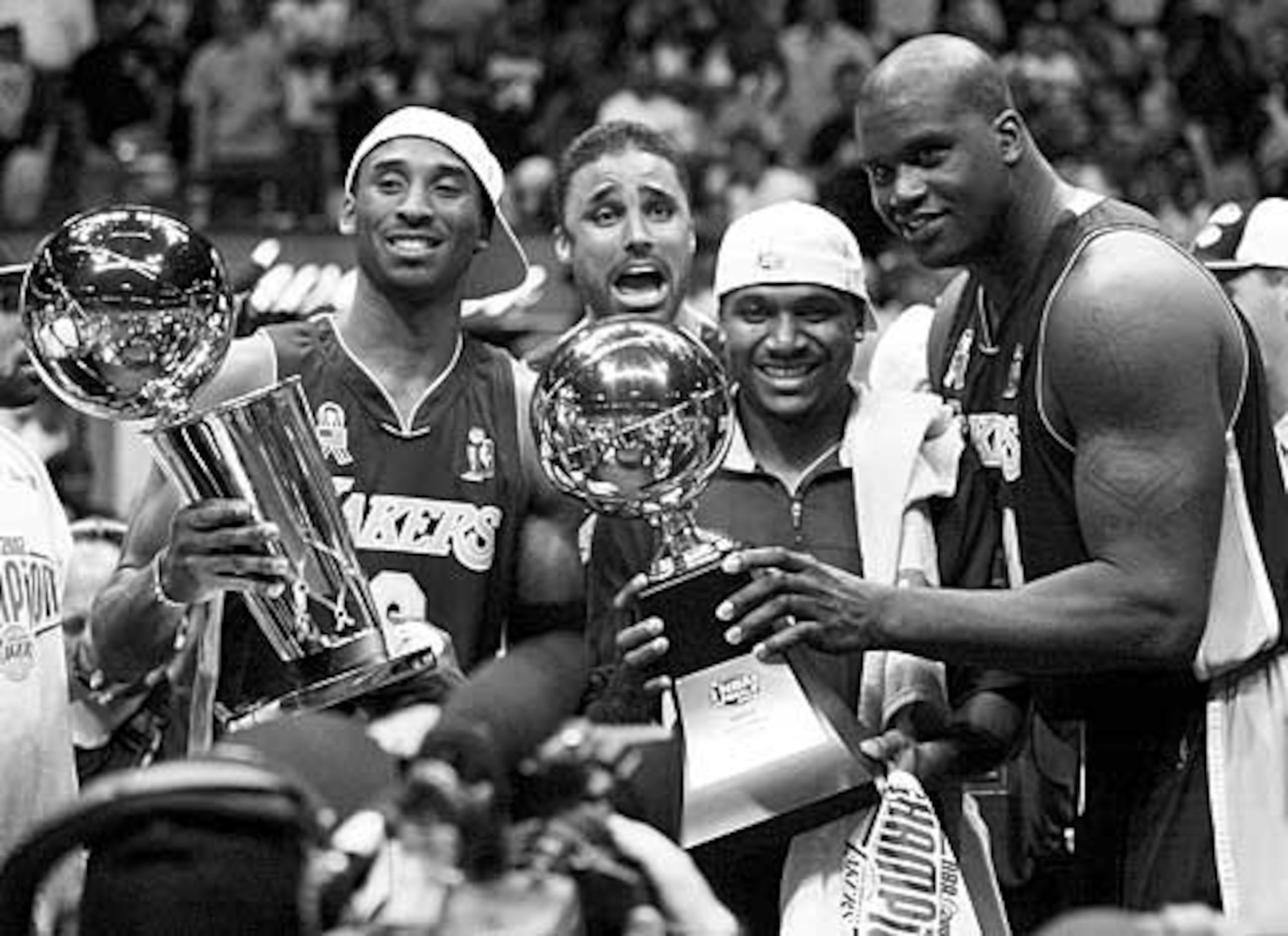
Regular season record: 67-15
Starting lineup: PG: Ron Harper, SG: Kobe Bryant, SF: Glen Rice, PF: A.C. Green, C: Shaquille O'Neal
Road to the title:
First round: Defeated Sacramento Kings 3-2
Semifinals: Defeated Phoenix Suns 4-1
Conference finals: Defeated Portland Trail Blazers 4-3
NBA Finals: Defeated Indiana Pacers 4-2
Was there anyone that could stop Shaquille O'Neal? In his heyday, when he had a perfect blend of a post moves and power, O'Neal was basically regarded as unstoppable and was able to lead the Lakers to three consecutive titles. Following the 1999-2000 campaign, O'Neal led the Lakers to one of their best seasons in franchise history with 67 wins.
O'Neal averaged 31 points and 15 rebounds and took home his first Finals MVP honors. Bryant was the perfect sidekick, as he dropped 21 points, four rebounds and four assists per game. Glen Rice earned his first NBA championship, chipping in 12 points and four rebounds per game.
The top moment of the postseason run came during the Lakers' conference finals matchup with the Portland Trail Blazers. The Lakers erased a huge deficit with one of the best comebacks in playoff history.
6. 1992 Chicago Bulls
20 of 25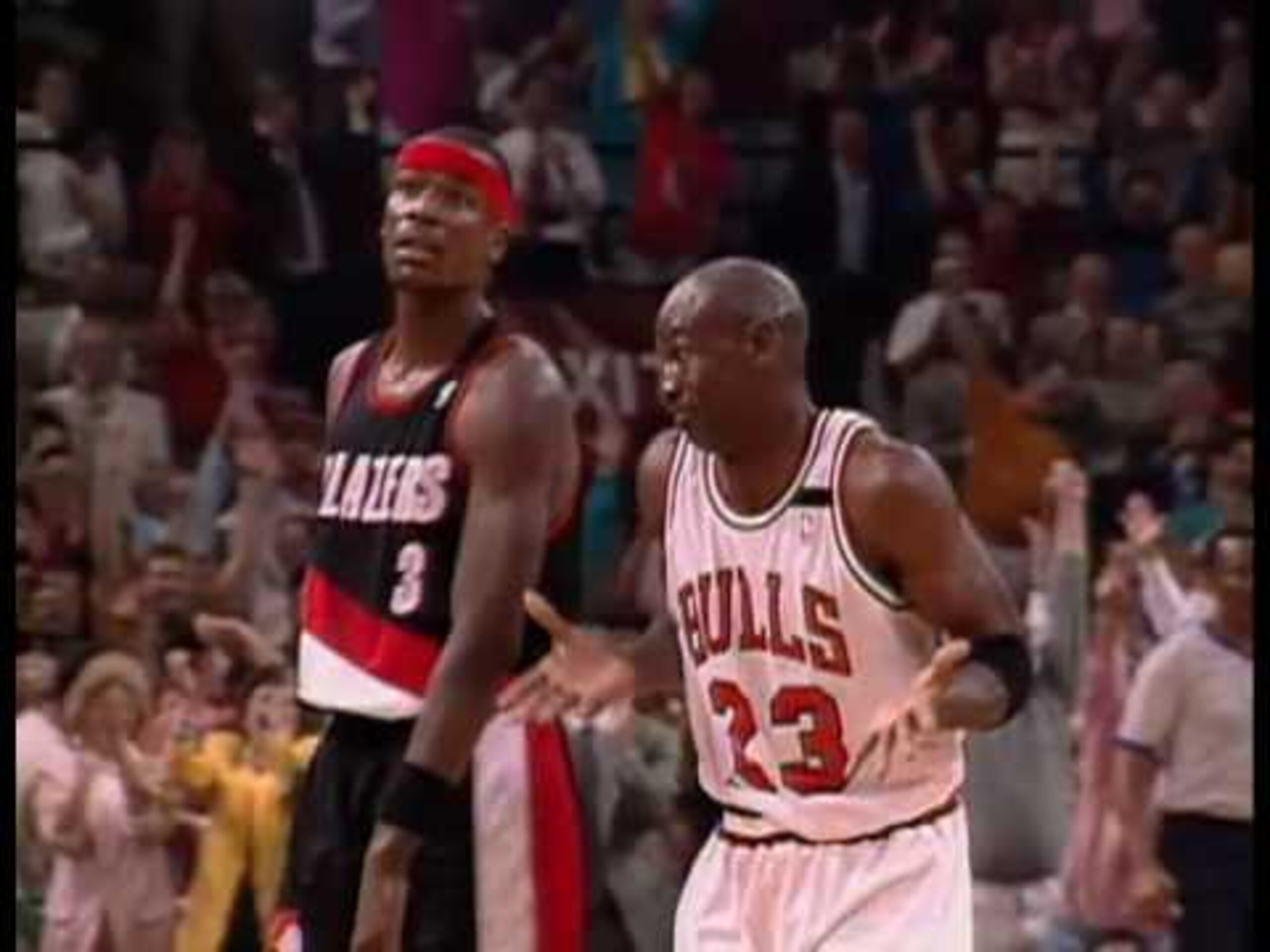
Regular season record: 67-15
Starting lineup: PG: John Paxson, SG: Michael Jordan, SF: Scottie Pippen, PF: Horace Grant, C: Bill Cartwright
Road to the title:
First round: Defeated Miami Heat 3-0
Semifinals: Defeated New York Knicks 4-3
Conference Finals: Defeated Cleveland Cavaliers 4-2
NBA Finals: Defeated Portland Trail Blazers 4-2
Nobody said that the Chicago Bulls' championship runs were easy. Their 1992 run that ended with a six-game series win over Clyde Drexler and the Portland Trail Blazers came after the Bulls had lost five games in the two series prior to their eventual Finals matchup.
Somehow, the team had trouble putting away the likes of New York and Cleveland to escape out of the East, despite Michael Jordan averaging 35 points, six rebounds and six assists per game and Scottie Pippen pouring in another 20 points, nine rebounds and seven assists. Horace Grant averaged 11 points and nine rebounds to support the Bulls' second consecutive title.
However, the 1992 NBA Finals will always be remembered for the first half of one game.
5. 1989 Detroit Pistons
21 of 25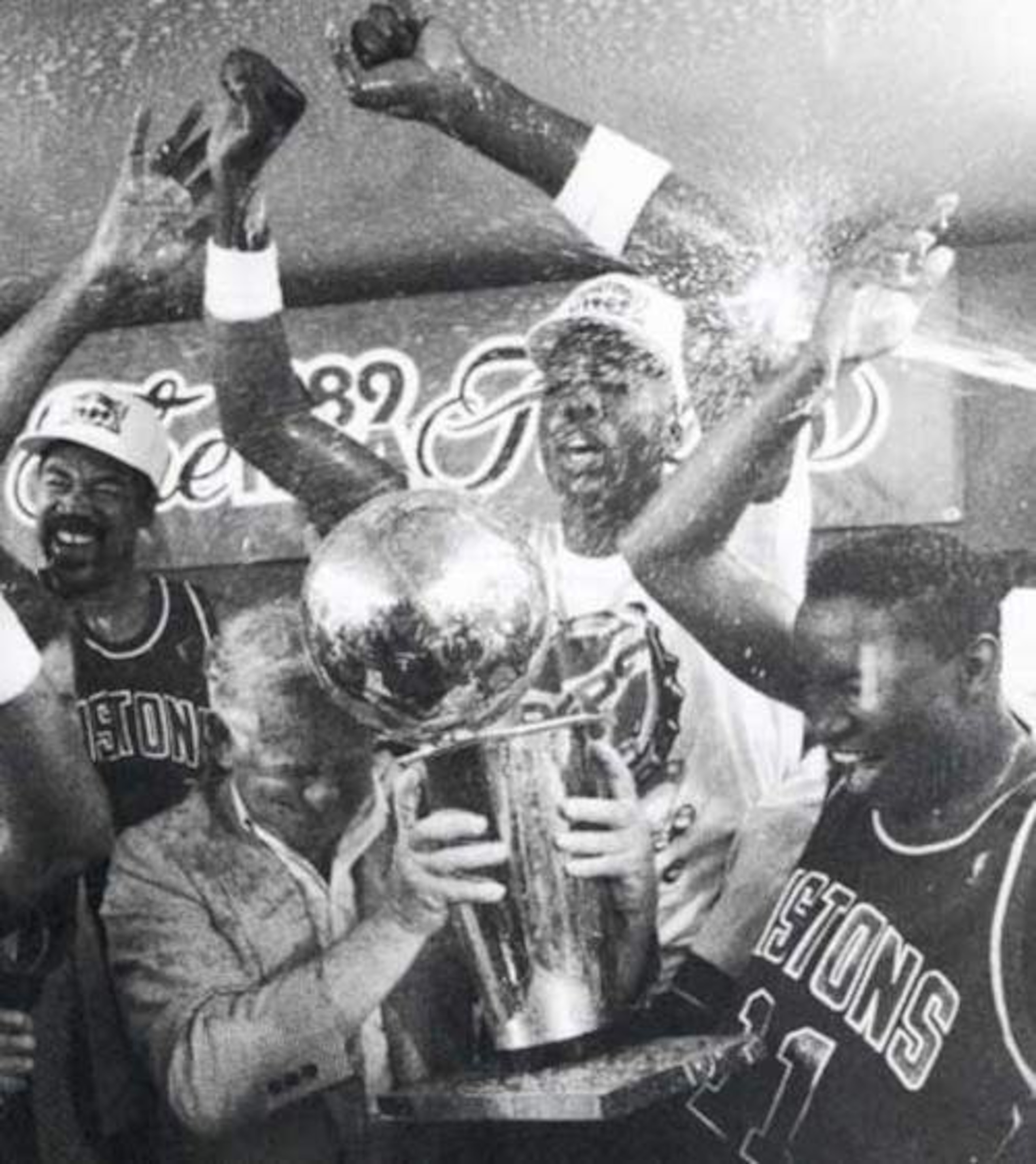
Regular season record: 63-19
Starting lineup: PG: Isiah Thomas, SG: Joe Dumars, SF: Mark Aguirre, PF: Bill Laimbeer, C: Rick Mahorn
Road to the title:
First round: Defeated Boston Celtics 3-0
Semifinals: Defeated Milwaukee Bucks 4-0
Conference finals: Defeated Chicago Bulls 4-2
NBA Finals: Defeated Los Angeles Lakers 4-0
If not for young Michael Jordan, the Detroit Pistons could have very easily swept every team in their 1989 postseason run. They were dominant during the regular season and transmitted it to the postseason with three sweeps, including one over the reigning champion Los Angeles Lakers.
The team saw their usual balanced attack, with Isiah Thomas leading the way at 18 points and eight assists per contest in the postseason. Joe Dumars, Vinnie Johnson, Mark Aguirre and Bill Laimbeer would all average at least 10 points per game, as the team played in only 17 postseason games.
It was at this time that the Pistons would become recognized as the bad boys of basketball for their in-your-face style of play.
4. 1997 Chicago Bulls
22 of 25
Regular season record: 69-13
Starting lineup: PG: Ron Harper, SG: Michael Jordan, SF: Scottie Pippen, PF: Dennis Rodman, C: Luc Longley
Road to the title:
First round: Defeated Washington Bullets 3-0
Semifinals: Defeated Atlanta Hawks 4-1
Conference finals: Defeated Miami Heat 4-1
NBA Finals: Defeated Utah Jazz 4-2
You thought the 1995-96 team was good? The 1996-97 team nearly one-upped their 72 wins from the year before with 69 wins. Michael Jordan once again was the leader of the team in the regular season and was also the leader during the postseason, as he averaged 31 points, eight rebounds and five assists during the team's fifth championship of the decade.
Scottie Pippen was the only other scorer to average double-figures in the postseason, with 19 points and seven rebounds per game. Even with only two players scoring in double-figures, the Bulls decimated just about every team they faced in the postseason. They only lost two games en route to the NBA Finals, where they would only need six games to beat the Utah Jazz.
3. 1987 Los Angeles Lakers
23 of 25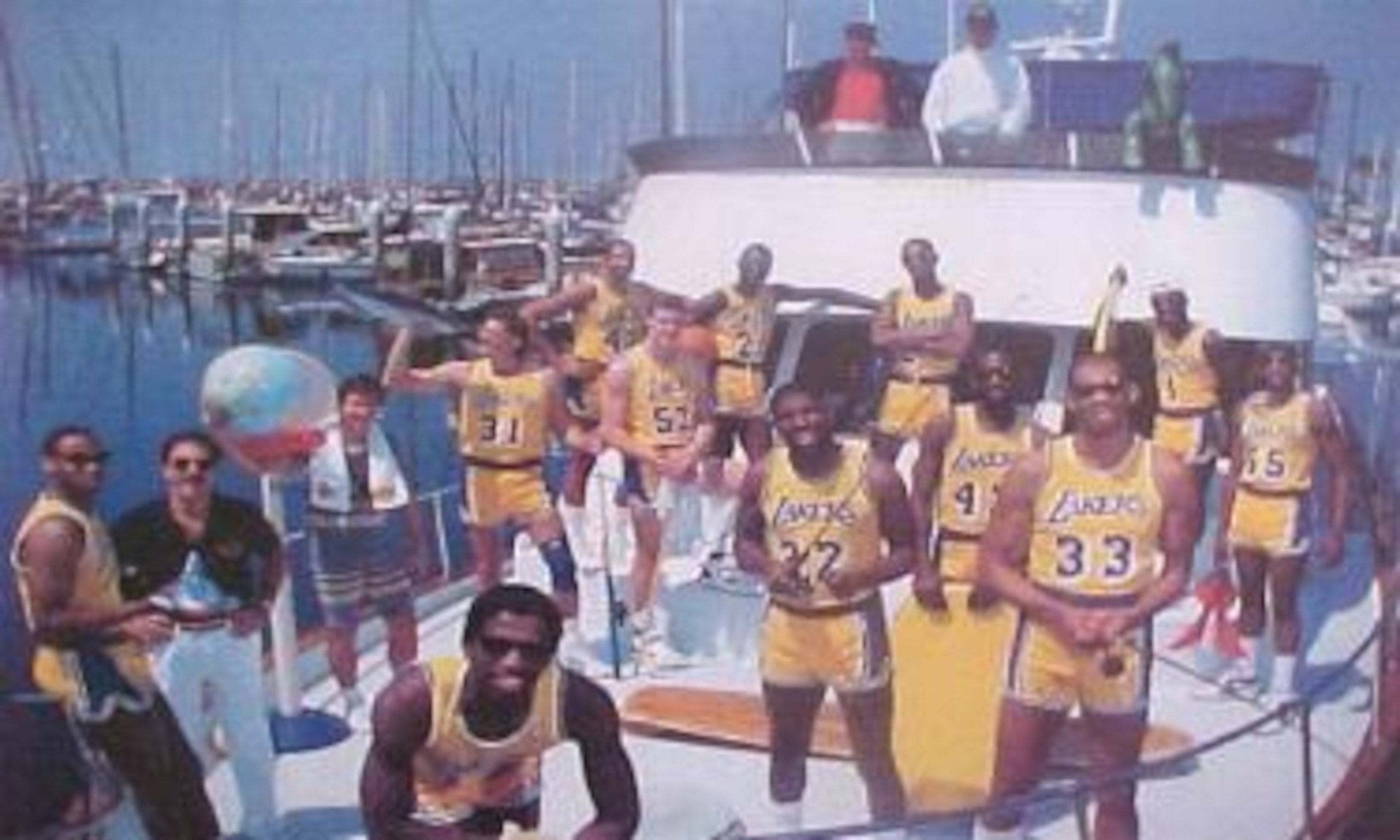
Regular season record: 65-17
Starting lineup: PG: Magic Johnson, SG: Byron Scott, SF: James Worthy, PF: A.C. Green, C: Kareem Abdul-Jabbar
Road to the title:
First round: Defeated Denver Nuggets 3-0
Semifinals: Defeated Golden State Warriors 4-1
Conference finals: Defeated Seattle Sonics 4-0
NBA Finals: Defeated Boston Celtics 4-2
One of the most dominant Laker teams ever assembled, this would be the first of back-to-back championships for this particular squad.
The Lakers made easy work in the regular season on their way to winning 65 games and then brought that same game into the postseason, as they only lost one game prior to the start of the NBA Finals. They would take on the rival Boston Celtics, where they would deny them a chance at a repeat with a six-game series win.
James Worthy and Magic Johnson each averaged over 20 points per game, while Kareem Abdul-Jabbar, Byron Scott, Michael Cooper and A.C. Green all scored over 10 points.
2. 1986 Boston Celtics
24 of 25
Regular season record: 67-15
Starting lineup: PG: Dennis Johnson, SG: Danny Ainge, SF; Larry Bird, PF: Kevin McHale, C: Robert Parish
Road to the title:
First round: Defeated Chicago Bulls 3-0
Semifinals: Defeated Atlanta Hawks 4-1
Conference finals: Defeated Milwaukee Bucks 4-0
NBA Finals: Defeated Houston Rockets 4-2
The last great Boston Celtics team to be assembled prior to 2007, this team was nearly unstoppable on their quest for a title.
Led by the league's top frontcourt, the Celtics won 67 games and then lost only once on their road to the title series. They would not be rewarded with taking on the Los Angeles Lakers, but instead the Houston Rockets, who they would defeat in six games.
Larry Bird led the way with jaw-dropping numbers of 26 points, nine rebounds and eight assists per game in that year's postseason, with Kevin McHale closely following behind with 25 points and nine rebounds per contest. Dennis Johnson, Danny Ainge and Robert Parish all scored over 15 points per game for the juggernaut of a team.
1. 1996 Chicago Bulls
25 of 25
Regular season record: 72-10
Starting lineup: PG: Ron Harper, SG: Michael Jordan, SF: Scottie Pippen, PF: Dennis Rodman, C: Luc Longley
Road to the title:
First round: Defeated Miami Heat 3-0
Semifinals: Defeated New York Knicks 4-1
Conference Finals: Defeated Orlando Magic 4-0
NBA Finals: Defeated Seattle Sonics 4-2
The best team to win a championship in the past 25 years and the best team to ever be assembled, period.
The first full season after Michael Jordan returned to the Chicago Bulls, he led the team to their best season in franchise history and broke the NBA record for most wins in a season by a team with 72. They won 41 of their first 44 games and were dominant from the start, as Jordan came back to the game of basketball with a vengeance.
The postseason came a bit more difficult, as the team suffered three postseason losses, but saw two of those losses come in the NBA Finals against Gary Payton and the Seattle Supersonics. The Bulls had two sweeps in that year's postseason and were led by Jordan, who averaged 31 points and five rebounds during the team's historic run.
Scottie Pippen dropped in 17 points and nine rebounds, and Toni Kukoc added 11 points, four rebounds and four assists.

.jpg?w=2560 "Grading WWE Raw 🔠")


.jpg?w=2560 "Viral Rams Coach Vid 🖕")
.jpg?w=2560 "Injury-stricken Seahawks signing veteran RB")