

5 NBA Players Who Cheat Advanced Stats
Numbers don't always tell the whole story.
Sometimes, one commonly used metric inaccurately describes an NBA player. Overarching stats like player efficiency rating (PER) and win shares have significant flaws that can be exploited, creating misleading perceptions of big-name players. Other times, the entire statistical profile of a key contributor can overlook an important bit of context
Relying on nothing more than the eye test is often a recipe for disaster, as doing so leaves the door wide open for ideas like confirmation bias and the availability heuristic. But if you lean too heavily on the metrics, information still slips through the cracks.
For some players, that's especially true.
Kobe Bryant: The Meaning of 1 Bucket
1 of 5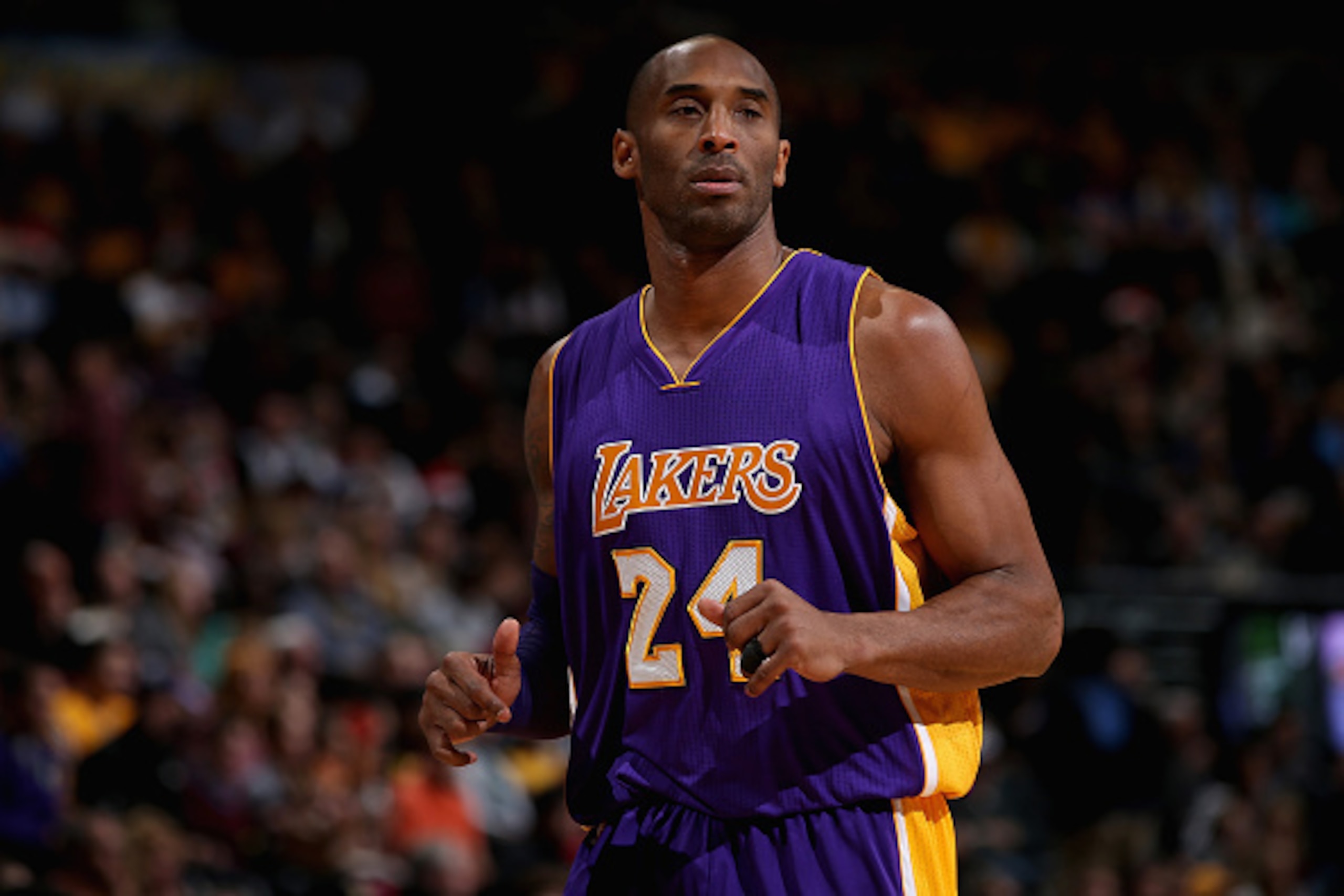
Despite Kobe Bryant's recent hot streak, one capped off by an 11-point fourth quarter against the Denver Nuggets, he's still embroiled in the midst of his worst season as a professional. It's a bit disconcerting to see the future Hall of Famer averaging just 17.3 points, 4.3 rebounds and 3.5 assists while shooting 34.5 percent from the field and 24.6 percent from beyond the arc.
His PER is just 13.7, putting him below the league-average mark of 15. He's provided the Los Angeles Lakers with minus-0.4 win shares on the season, indicating that they'd be better off without him. Along the same lines, the team's net rating improves by 0.4 points per 100 possessions when he takes a seat on the pine.
According to my total points added metric (explained in full throughout this article), he's on pace to be more valuable than only 20 players throughout the league, which is problematic when you realize there are 434 players who have suited up during the 2015-16 campaign.
All of that may well be accurate, though Bryant is indeed starting to trend in the right direction. However, it misses the point.
As Tim Cato wrote for SB Nation, reacting to Bryant's twisting dagger in the Mile High City with just 36 ticks remaining in the fourth quarter, this season is about appreciating the flashes of the 2-guard's former prowess:
"This makes Kobe's last season worth it. There's no joy to be gleamed from the petty drama that always accompanies Los Angeles, nor the games Kobe is forced to sit by his aging body, but we're glad that he's still lacing them up during games like this. Even those who hate Kobe have to feel their hearts melt watching this version of the Mamba. He's basically harmless now, defanged and docile. Now's the time to enjoy the moments when he does flash that old killer instinct against a foe who's even weaker than him.
"
Advanced metrics aren't accounting for the fact that the Los Angeles roster is brutally overmatched on most nights, forcing Bryant to attempt takeovers when he's on the court. It doesn't matter that he's the subject of far too much defensive attention than a player with his current skill level would typically receive.
But most importantly, it doesn't factor in the memories accumulated during this prolonged swan song. For many who watched his entire career unfold, one vintage moment can trump an entire night of bricklaying, but a stat such as true shooting percentage will never agree.
James Harden: Defensive Win Shares
2 of 5
Apparently, James Harden isn't actually that bad on defense.
He's earned 0.9 defensive win shares during the first third of the 2015-16 campaign, putting him at No. 69 throughout the entire Association. Clearly, he's been a beneficial point-preventing presence for a Houston Rockets squad slowly climbing the Western Conference ladder.
Problem is, defensive win shares are severely flawed.
Among many other issues, they credit non-assigned turnovers and opponents' missed shots to everyone on the court, not just the one player who caused the cough-up or misfire. So considering Harden plays on a team that A) has the No. 2 pace in the NBA, B) forces misses quite often and C) gets the opponent to turn the ball over at a high rate, it stands to reason that his defensive win shares are artificially and inaccurately boosted.
If we turn to virtually any other metric, the truth is increasingly clear.
The Rockets allow an additional 6.3 points per 100 possessions when he's on the court, despite the fact that he often shares it with some of the squad's premier stoppers. His minus-0.6 defensive box plus/minus (DBPM) puts him at No. 189 among the league's 294 qualified players. ESPN.com's defensive real plus/minus (DRPM) tells a similar story, placing the bearded shooting guard at No. 366 of 422.
My database of defensive points saved (DPS) also concurs, showing that Harden is on pace to produce more value on the less glamorous end than only 81 players in the league.
And even these more-accurate metrics don't fully sum up the pure putridity of Harden's porous play. They can't fully account for the possessions in which he lazily swipes at the ball in transition, turning what was already a likely bucket into a sure thing. They also can't factor in the pervasiveness of the contagious apathetic attitude displayed by one of the team's supposed leaders.
"Playing those amount of minutes (39.7) your [sic] going to have some lapses, some mistakes," Harden told ESPN.com's Calvin Watkins in early December.
He speaks the truth. Shouldering such a heavy load is bound to take its toll. We saw as much with Jimmy Butler's defense during the 2014-15 season, as the shooting guard regressed while taking on more offensive responsibility.
But at least Butler still tried.
Enes Kanter: Player Efficiency Rating
3 of 5
According to player efficiency rating (PER), Enes Kanter deserves to be in the All-Star conversation. His mark of 22.5 leaves him at No. 17 among all qualified players, directly behind Paul George and Paul Millsap.
Too bad PER rewards players who shoot a lot. Naturally, that benefits Kanter and his 14.1 field-goal attempts per 36 minutes. It also almost completely ignores defense, which might be an even bigger positive for the one-way Oklahoma City Thunder center.
If basketball were only played on the offensive end, Kanter would indeed be a valuable commodity. He has fantastic hands and footwork around the basket, shows off a bit of jump-shooting range and can remain efficient while taking on a high-usage role for short spurts.
But even on the offensive end, overarching metrics such as PER don't fully account for his limitations. For example, the big man remains a complete black hole, and he's now recorded over twice as many turnovers as assists. It's one of the reasons that ESPN.com's offensive real plus/minus (ORPM) puts him at No. 80 throughout the league.
And we still can't just overlook defense. No matter how you spin his offensive game, Kanter has been so bad at preventing points that he remains a net negative for the Western Conference hopefuls.
He's atrocious defending the rim, and NBA.com's databases show that he's allowing opponents to shoot 51.7 percent at the hoop despite facing only 5.2 shots per game. SportVU also reveals he currently sits in the 41.1 percentile while guarding post-ups and the 13th percentile against spot-up shooters. Unless he's caught in a standard pick-and-roll, he's often lost.
When you look at DRPM in conjunction with ORPM, Kanter is a negative. When you include DBPM with OBPM, the same holds true, except in even more decisive fashion.
Along those lines, my total points added database indicates that Kanter is on pace to provide the Thunder with 62.67 fewer points this season than a perfectly average player would—he adds 23.08 on offense, but he takes away 85.75 on the other end.
The overall result puts him in the 19th percentile of all NBA players, which obviously stands in stark contrast to that sparkling PER.


Jahlil Okafor: Tough Situation
4 of 5
On the surface, Jahlil Okafor's numbers look decent. After all, he's a rookie averaging 17.6 points and 7.9 rebounds, which isn't a particularly easy feat.
But when you start digging, things get ugly in quick fashion.
The Duke product is knocking down only 46.3 percent of his shots from the field, and his work at the charity stripe—while better than expected—hasn't been enough to dig him out of the self-created hole. He's also been a mediocre per-minute rebounder for a player with so much size, and his turnovers more than double his dimes. If that's not enough, he's been atrocious on the defensive end.
According to my database for total points added, only Emmanuel Mudiay is on pace to provide less value during the 2015-16 campaign. And that shouldn't be too surprising, given the shoddy metrics and the fact that Okafor is suiting up for a Philadelphia 76ers team that won only one of its first 30 outings.
Therein lies the problem with evaluating Okafor.
How in the world are we supposed to make substantiated judgements about the value of his contributions when he's stuck on a team designed to lose?
As a traditional back-to-the-basket player, Okafor desperately needs players who can space the court out for him, giving him time to operate from the blocks without a double-team swarming in his direction. He could also use a legitimate NBA-caliber point guard to feed him the rock, get him some easy buckets and help his teammates actually draw away defensive attention.
He has none of that in the City of Brotherly Love, where, per NBA.com, he's isolating on 18.2 percent of his plays—the ninth-highest mark in the league, putting him just slightly behind Kobe Bryant (18.5 percent).
Isaiah Canaan, Kendall Marshall and T.J. McConnell don't qualify as the 1-guard he needs, and it's troubling that only the Los Angeles Lakers, Memphis Grizzlies and Brooklyn Nets have hit a lower percentage of their long-range attempts. As a result, Okafor is stuck in a horrible situation that does nothing to maximize the legitimate talent he does have at his disposal.
Until that changes, please avoid using the "bust" label. We simply can't make any judgments yet, which, to be fair, is an indictment of the Sixers' process in and of itself.
Andrew Wiggins: The Youth Element
5 of 5
Right now, the lone appeal to Andrew Wiggins' game is his scoring ability. But even that is problematic, since the value of his 21.3 points per game is mitigated by the fact that he's shooting just 44 percent from the field and 25.4 percent from beyond the arc.
For a wing player, Wiggins is a horrible distributor who records more turnovers than assists. He doesn't stand out as a rebounding threat, and his defense hasn't yet translated to the NBA level. In fact, he grades out as one of the worst high-minute defensive players in the league by most metrics, and the combination of that and his limited offensive game makes him decisively negative as an overall player.
But all of this overlooks one crucial element.
Wiggins won't celebrate his 21st birthday until Feb. 23. He's still playing out his age-20 season, and that means he's doing things as a scorer that few have during any portion of the NBA's lengthy history. Throughout the annals, only eight qualified players have averaged more than 20 points before their age-21 campaigns:
- Carmelo Anthony (twice)
- Elton Brand
- Adrian Dantley
- Anthony Davis
- Kevin Durant (twice)
- Tyreke Evans
- LeBron James (twice)
- Shaquille O'Neal
Even emerging as the worst player on that list isn't exactly a bad thing, and Wiggins has far more potential than Tyreke Evans ever did. There's still plenty of time for him to grow along with the rest of the young contributors on the Minnesota Timberwolves roster.
All stats, unless otherwise indicated, come from Basketball-Reference.com or my own databases and are current heading into Dec. 23's games.
Adam Fromal covers the NBA for Bleacher Report. Follow him on Twitter: @fromal09.
.jpg?w=2560 "Former Pats QB Calls Out Team")
.jpg?w=2560 "Predicting Every NFL Division's Standings for 2026 Season")
.jpg?w=2560 "Sportico's NFL Valuations 💰")
