

How Much Better Would Your Team Be with Steph Curry?
Say hello to the army of Stephen Curry clones.
In a move that would make Oprah Winfrey proud, we're handing out free Currys to every team in the NBA. Each squad gets an exact replica, one capable of playing just like the real version has during the Golden State Warriors' historic 15-0 start to the 2015-16 campaign.
Teams don't have to trade pieces to get Curry. He's joining for a minimum salary, so they don't even need to get rid of key rotation members in order to bring him into the fold. He's just there, operating as if he's always been there and without any knowledge of the fact he's not the real Curry.
Would every team, ordered here from worst to best with clone Curry, be good enough to make the playoffs in the actual version of the NBA? How many would become historically great squads? We're after the answers to those questions and so much more.
In order to determine the merits of every squad, we're replacing the starting point guard with the reigning MVP and allowing him to take over the minutes typically played by the incumbent starter. That now-former starter will become the primary backup, sending the actual backup (as determined by Rotoworld's depth charts) to the bench and subsequently taking his minutes.
Would Curry play more in some situations? Sure, but this objective method is better than subjectively attempting to determine how a coach would redraw an entire rotation. At the very least, we know how many minutes a starting point guard typically gets.
The impact here is determined by looking at the total points added per 100 possessions—derived from total points added, a combination of offensive points added and defensive points saved, as explained at length here—of each involved player, scaled by how much time he typically spends on the court. The differences are then applied to actual teams' net ratings, and the Curry effect determines how much that all-important number rises.
And trust us. It would rise for every team.
The only uncertainty is by how much.
29. Philadelphia 76ers
1 of 29
Stephen Curry: 12.3 points added per 100 possessions
Incumbent Starter (T.J. McConnell): Minus-1.0 points added per 100 possessions
Incumbent Backup (Isaiah Canaan): Minus-2.1 points added per 100 possessions
With Jahlil Okafor and Nerlens Noel teaming up in the frontcourt, the Philadelphia 76ers have at least hung tough with a number of teams. Unlike the rosters this franchise has put on the court in previous seasons, this one is actually filled with legitimate NBA rotation members, and the improvement from 2014-15 is palpable at certain times—however much time might come between them.
Nevertheless, the Sixers have been the worst team in the league, as well as the only squad without a single tick in the victory column. They're being outscored by a staggering 14.5 points per 100 possessions—4.8 worse than every other member of the Association.
Point guard hasn't been the primary issue, thanks to the hidden gem that T.J. McConnell has appeared to become. He's a solid table-setter for his teammates, emerging from the pool of undrafted free agents to post some impressive assist totals on a nightly basis. But even though he's been a significant step up from the nauseating litany of point guards Philly has thrown out the last few years, he's still performed worse than an average player might—if only marginally.
Curry would be a massive upgrade, especially because McConnell would get to take over for Isaiah Canaan as the primary backup at the 1.
Unfortunately, that's still not enough to get the Sixers into positive territory. Even with Curry taking over for the former Arizona Wildcat, Philadelphia would remain well outside the top half of the NBA, getting closer to playoff contention but still not nearly there. In fact, the reigning MVP would have to log 50.4 minutes per game at his current pace in order to push these Sixers to a positive net rating.
Reality: Minus-14.5 net rating (No. 30 in the real NBA); lottery darlings
The Curry Effect: Minus-5.9 net rating (No. 25 in the real NBA); still lottery locks
28. New Orleans Pelicans
2 of 29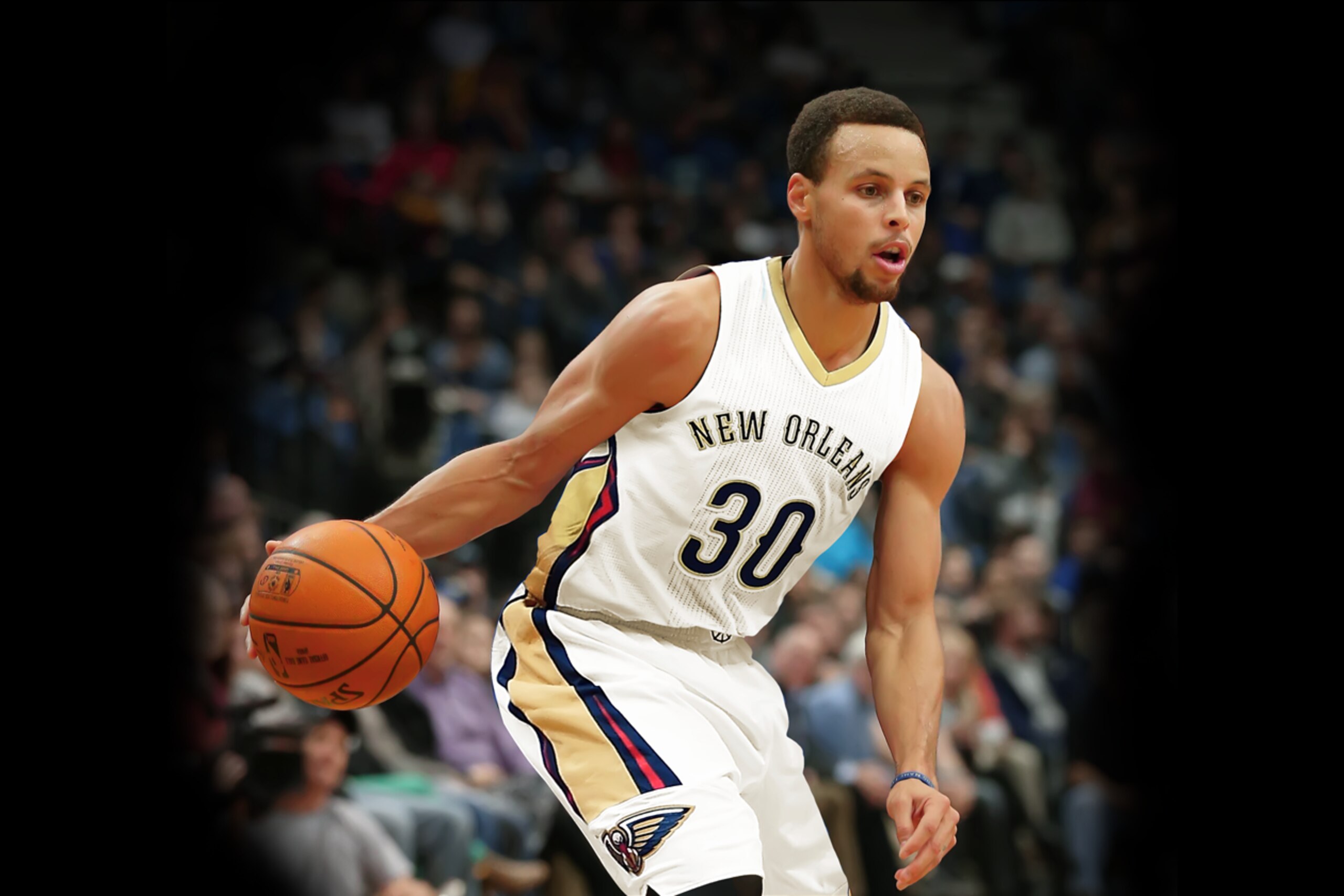
Stephen Curry: 12.3 points added per 100 possessions
Incumbent Starter (Jrue Holiday): Minus-4.5 points added per 100 possessions
Incumbent Backup (Ish Smith): Minus-0.2 points added per 100 possessions
The New Orleans Pelicans have been an absolute disaster during the opening portion of the 2015-16 season, sinking down near the bottom of the Western Conference as they attempt to learn Alvin Gentry's new system while half the roster is recovering from various injuries.
Not even Curry is going to save them.
Part of the issue here is the way we're running this analysis, as we're forcing Jrue Holiday into the backup role, while Ish Smith spends entire games on the bench. Since Smith has been one of the NBA's most pleasant surprises, thoroughly outplaying the starting point guard whenever Holiday is actually in the lineup, that's problematic for the Pelicans.
In fact, if we only replace Holiday with Curry, New Orleans would end up with a 0.9 net rating, thereby moving up just outside the top half of the Association. And that's in only 22.5 minutes per game of action. If we only make that one swap but let Curry shoulder 35 minutes per game, the Pelicans would actually boast the No. 3 net rating in the Western Conference, behind only the Golden State Warriors and San Antonio Spurs.
This Pelicans team is not irredeemable. As the sample size grows larger, the players get healthier and everyone is more comfortable operating in Gentry's schemes, it'll trend in the right direction.
And once that happens, the Curry-Anthony Davis combination would be ridiculous.
Reality: Minus-7.0 net rating (No. 26); Western Conference basement-dwellers
The Curry Effect: Minus-1.7 net rating (No. 21); on the stairs leading to the main level
27. Milwaukee Bucks
3 of 29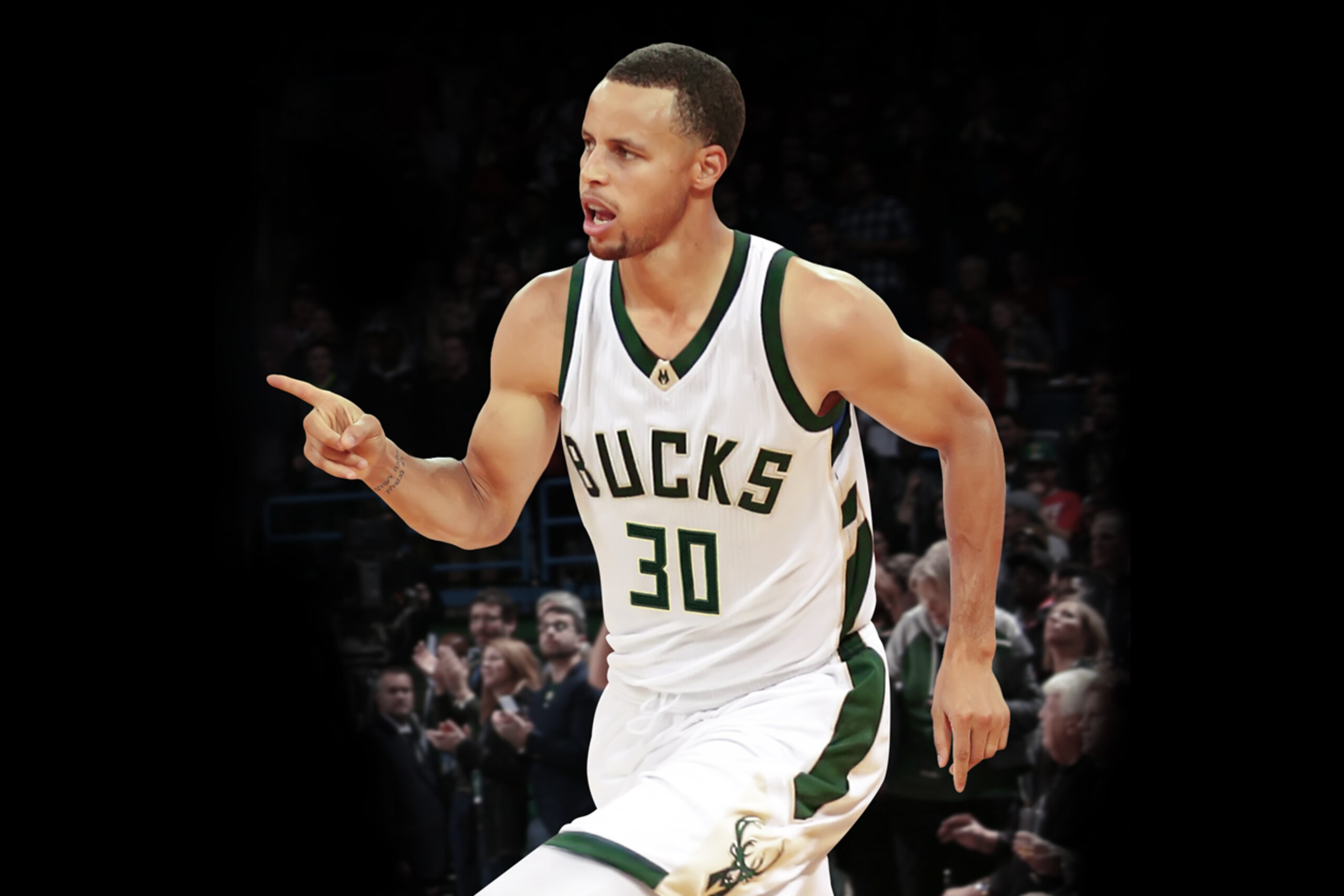
Stephen Curry: 12.3 points added per 100 possessions
Incumbent Starter (Michael Carter-Williams): Minus-3.8 points added per 100 possessions
Incumbent Backup (Jerryd Bayless): Minus-2.0 points added per 100 possessions
The Milwaukee Bucks have regressed hard, to the point that they actually have the worst defensive rating in the NBA. And it's not like the offense has been too much better, since it's scoring a meager 102.8 points per 100 possessions.
One of the major issues has been the play of the point guards, and that's why adding Curry into the mix boosts these Bucks all the way into the realm of mediocrity.
Michael Carter-Williams has been an abject disaster during his first full season with Milwaukee. While he's shooting better from the field, he's spending less time at the free-throw line and turning the ball over far more frequently. Couple that with declining assist numbers and shockingly porous defense, and you have the makings of a floor general who's been a liability on both ends of the floor.
Jerryd Bayless has been better, but he's still doing more bad than good. Though he's been a positive presence on offense—thanks to his three-point stroke and ability to draw fouls—his defense has been so horrid that he remains a net negative.
Due to the situation at the 1, Curry makes a huge difference for this team, though the Bucks are still hurt by Carter-Williams subsequently taking away Bayless' minutes. Swap only the starters, and Milwaukee suddenly looks like a slightly above-average squad.
Reality: Minus-9.7 net rating (No. 29); surprisingly awful
The Curry Effect: Minus-0.8 net rating (No. 19); still surprisingly bad
26. Memphis Grizzlies
4 of 29
Stephen Curry: 12.3 points added per 100 possessions
Incumbent Starter (Mike Conley): 1.7 points added per 100 possessions
Incumbent Backup (Mario Chalmers): 6.0 points added per 100 possessions
A few things hurt the Memphis Grizzlies in this scenario.
Starting with the most unsustainable, Mario Chalmers has played fantastic basketball since Memphis obtained him from the Miami Heat. Granted, he's only suited up in five contests, but he's averaging 14.4 points while shooting 46.7 percent from beyond the arc and making seven trips per game to the charity stripe. As he regresses to the mean, replacing him with Mike Conley will help the Grizzlies, not hurt them.
But hurt them Conley does here, because he hasn't been quite as excellent as small-sample-size Chalmers. Even that's going to change, because the southpaw is posting the worst defensive season of his career and should get dramatically better as the year progresses.
It's staggering a team that entered the season with reasonable hopes of a 50-win campaign has been so bad that not even Curry's presence can lift it into positive territory. But that's the situation for Memphis. Beale Street simply hasn't been filled with cheers yet, and the team looks slow and largely outdated.
Watching Dave Joerger squirm as Curry lofts up heat-check three-pointers with a defender's hand in his face would be pure entertainment, but it might be harder for the head coach to swallow when his team still struggles to hang with many opponents.
Reality: Minus-5.7 net rating (No. 24); old, slow and outdated
The Curry Effect: Minus-0.5 net rating (No. 17); younger, faster and still below average
25. Brooklyn Nets
5 of 29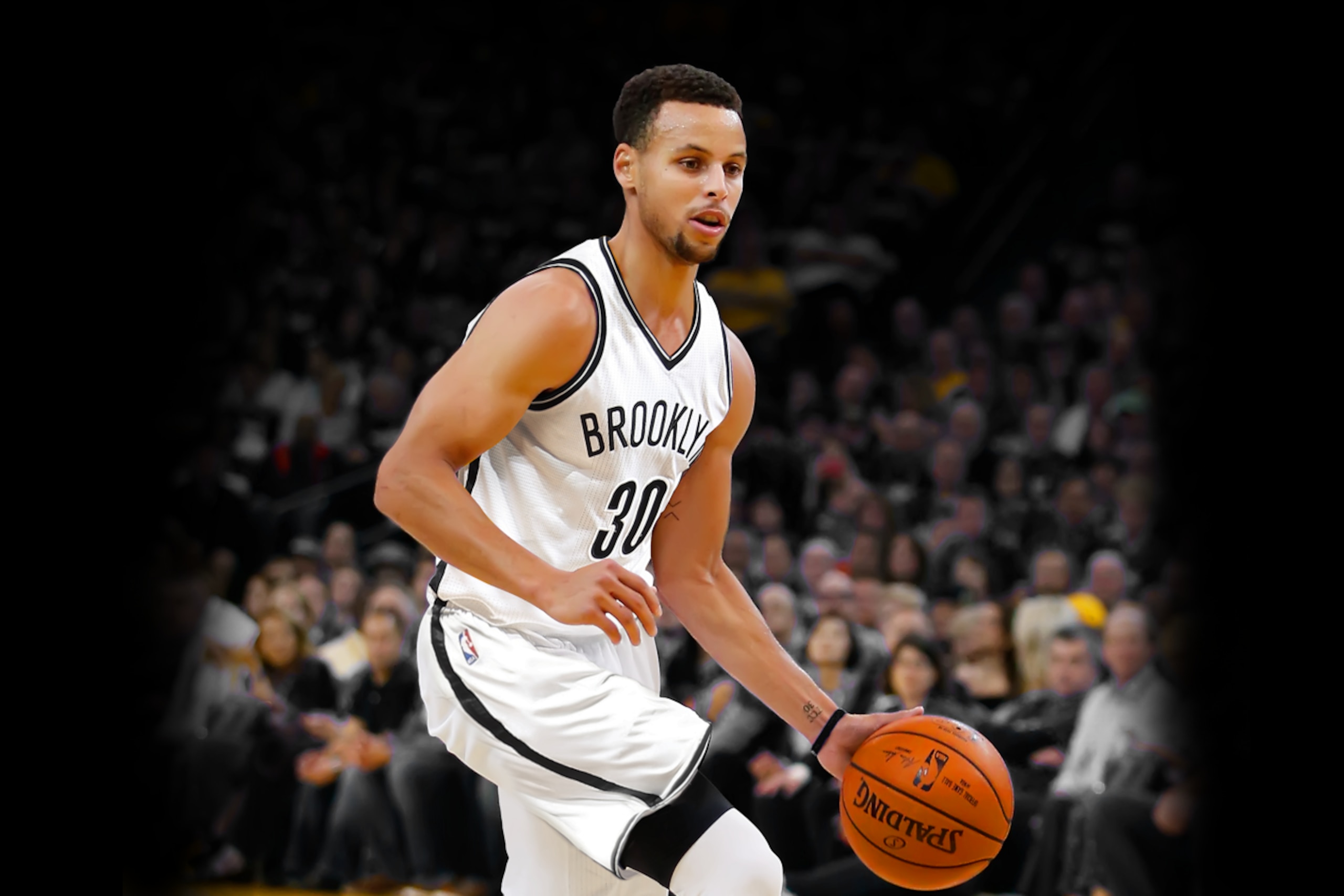
Stephen Curry: 12.3 points added per 100 possessions
Incumbent Starter (Jarrett Jack): Minus-0.6 points added per 100 possessions
Incumbent Backup (Shane Larkin): 0.2 points added per 100 possessions
Though this is another one of those situations in which the backup has outplayed the starter (admittedly without spending as much time on the court), Curry has massively outplayed both of them.
The Brooklyn Nets have been terrible in 2015-16, sinking all the way down near the bottom of the Eastern Conference standings despite not having a draft pick to actively tank for (see: Celtics, Boston). It's hard to blame the point guards, since the relative net production there hasn't been all that bad, but relative is an important word.
If you built an unorthodox starting five out of the players on the Nets roster with the best box plus/minus (BPM) scores, you'd be looking at a unit with Shane Larkin (0.2), Jarrett Jack (minus-0.6), Rondae Hollis-Jefferson (1.8), Thaddeus Young (0.8) and Brook Lopez (minus-0.4). Despite the glaring averageness of the floor generals, both of them are among Brooklyn's five best players thus far.
And that's why replacing them with Curry makes a big impact but not necessarily enough of an impact to push the Nets into actual playoff contention. There are still far too many flawed pieces on this roster, and the Golden State Warriors superstar alone can't cover up for all of the holes.
Reality: Minus-8.0 net rating (No. 28); top Ben Simmons contender
The Curry Effect: 0.4 net rating (No. 17); no-man's land
24. Los Angeles Lakers
6 of 29
Stephen Curry: 12.3 points added per 100 possessions
Incumbent Starter (D'Angelo Russell): Minus-1.4 points added per 100 possessions
Incumbent Backup (Lou Williams): Minus-2.4 points added per 100 possessions
If you want Kobe Bryant to take a step back and stop shooting quite so frequently, giving him Curry as a teammate might do the trick. The future Hall of Famer hasn't been willing to cede touches to his limited partners on the Los Angeles Lakers thus far, but that's partially because none of them is playing well enough to force his hand.
Curry would.
Even without any subjective bonuses—some would probably take place, like Bryant becoming a more efficient offensive player who has energy to spend on the defensive end—the Lakers would become an average squad with the reigning MVP on board. While that may not sound like much to L.A. fans who are accustomed to unyielding title contention, that's still a substantial boost for a squad that hasn't done much in recent years.
Lou Williams may have won Sixth Man of the Year in 2014-15, but voters overlooked his horrid defense. He only posted a 0.9 BPM last year—the result of one of the worst point-preventing grades from an NBA rotation player.
This year, Williams' offense has regressed, making him a decisive overall negative. When he's not lighting up scoreboards, it's so much tougher to justify the never-ending porosity of his play on the less glamorous end.
Just as replacing D'Angelo Russell with Curry is a huge positive, so too is replacing Williams with Russell. Head coach Byron Scott might have trouble believing that, but the numbers don't lie.
"When guys see him their eyes light up and they're trying to go at him pretty hard," Bryant recently said about his rookie backcourt mate, per Lakers Nation's Serena Winters. Just imagine what happens when they see Williams on the court.
Reputations aside, the Curry-Russell rotation is already better than Curry-Williams.
Reality: Minus-7.4 net rating (No. 27); contenders for No. 1 pick
The Curry Effect: 0.6 net rating (No. 16); middling team
23. Houston Rockets
7 of 29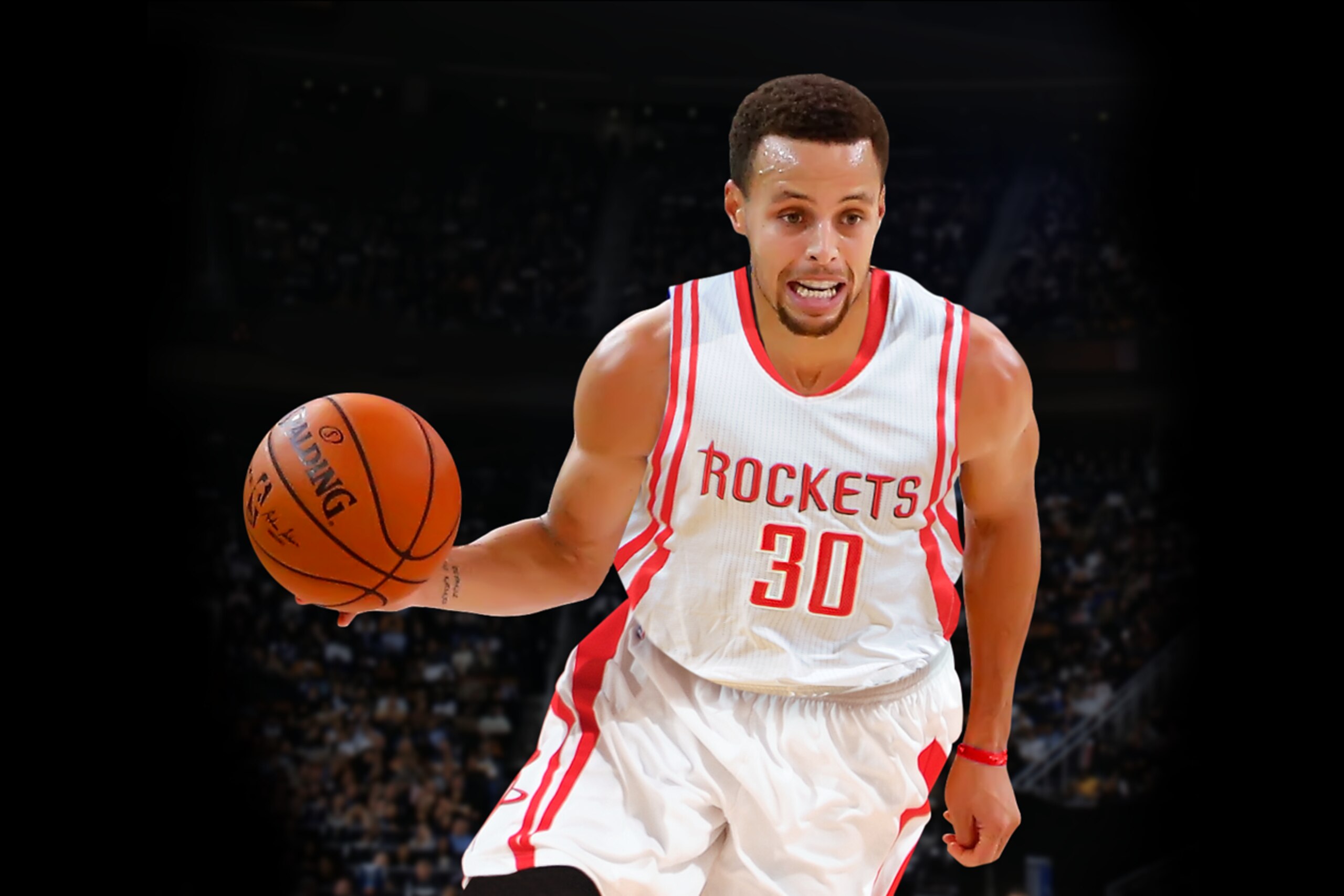
Stephen Curry: 12.3 points added per 100 possessions
Incumbent Starter (Ty Lawson): Minus-5.9 points added per 100 possessions
Incumbent Backup (Patrick Beverley): Minus-6.1 points added per 100 possessions
The Houston Rockets' failure to finish any higher than this with a Curry clone is a massive indictment of their early-season results. They've been horrid before and after the firing of former head coach Kevin McHale, playing entirely apathetic and uninspired basketball on both ends.
Point guard has been one of the biggest problems.
Ty Lawson has been atrocious, shooting a vomit-inducing 31.6 percent from the field, knocking down 25 percent of his three-point attempts and seeing his assists get cut in half without a corresponding decline in the turnover column. Throw in a decidedly below-average level of play on defense, and he might be one of the leaders for the Least Valuable Player award that doesn't actually exist.
During the brief portion of the year in which he's been healthy, Patrick Beverley has actually been even worse. He hasn't played nearly as much, but it's never a good thing when a point guard is averaging more turnovers than assists.
Throwing Curry into the Houston mix is the most impactful addition of any of the 29 changes we're making in this article. He boosts the Rockets' net rating a massive 12.3 points per 100 possessions, pushing them all the way from the basement of the standings to the second tier of the Western Conference.
Having an above-average defensive presence at the point, as well as a player who can actually knock down shots, would take so much pressure off James Harden and Dwight Howard, providing a score of sparks for a team that has been so desperately searching for one.
Reality: Minus-7.0 net rating (No. 25); apathetic and awful
The Curry Effect: 5.3 net rating (No. 5); second tier of Western Conference
22. Minnesota Timberwolves
8 of 29
Stephen Curry: 12.3 points added per 100 possessions
Incumbent Starter (Ricky Rubio): 3.3 points added per 100 possessions
Incumbent Backup (Zach LaVine): 1.9 points added per 100 possessions
The Minnesota Timberwolves have to be thrilled with the work they've gotten from their point guards.
A healthy Ricky Rubio has picked up where he left off before his last big injury, dishing out dimes left and right while he wreaks havoc with his quick hands against unsuspecting ball-handlers and in passing lanes. Even Zach LaVine has improved demonstrably, corralling his overflow of athleticism into productive play. We're not even including Andre Miller here, but he's been a net positive as well.
Still, Rubio and LaVine aren't Curry.
The Wolves would benefit from adding a three-point marksman to the mix, as the record-setting sniper would open up driving lanes for the athletic wings and give Karl-Anthony Towns even more time to work in the post.
Hard as this may be to believe, the 'Wolves made just 63 three-pointers during their first 13 games on 203 attempts. In his opening 13 outings of 2015-16, Curry went 68-of-150 from beyond the arc.
It's safe to say he'd make a big difference.
Reality: Minus-1.2 net rating (No. 19); moving slowly in the right direction
The Curry Effect: 5.3 net rating (No. 5); sprinting in the right direction
21. Washington Wizards
9 of 29
Stephen Curry: 12.3 points added per 100 possessions
Incumbent Starter (John Wall): 1.4 points added per 100 possessions
Incumbent Backup (Ramon Sessions): 1.5 points added per 100 possessions
One of the reasons Curry makes such a big impact on a floundering Washington Wizards squad is that John Wall hasn't been, well, John Wall quite yet this season.
Take a gander at the comparison between the 2014-15 and 2015-16 versions of the dynamic point guard:
| 2014-15 | 17.6 | 10.0 | 4.6 | 52.3 | 19.9 | 2.4 | 1.1 | 3.5 |
| 2015-16 | 16.6 | 8.4 | 3.3 | 50.5 | 18.8 | 1.2 | 0.2 | 1.4 |
This isn't just the byproduct of spending a bit less time on the court. Wall has struggled to adapt to the new players around him and handle the emergence of Bradley Beal. As a result, he's actually graded out as slightly less valuable than Ramon Sessions on a per-possession basis.
Replacing last year's Wall with this year's Curry would have made a big difference, though not quite as large as the one we're seeing here.
Reality: Minus-1.7 net rating (No. 21); inexplicably bad non-playoff team
The Curry Effect: 5.7 net rating (No. 5); Eastern Conference contender
20. Utah Jazz
10 of 29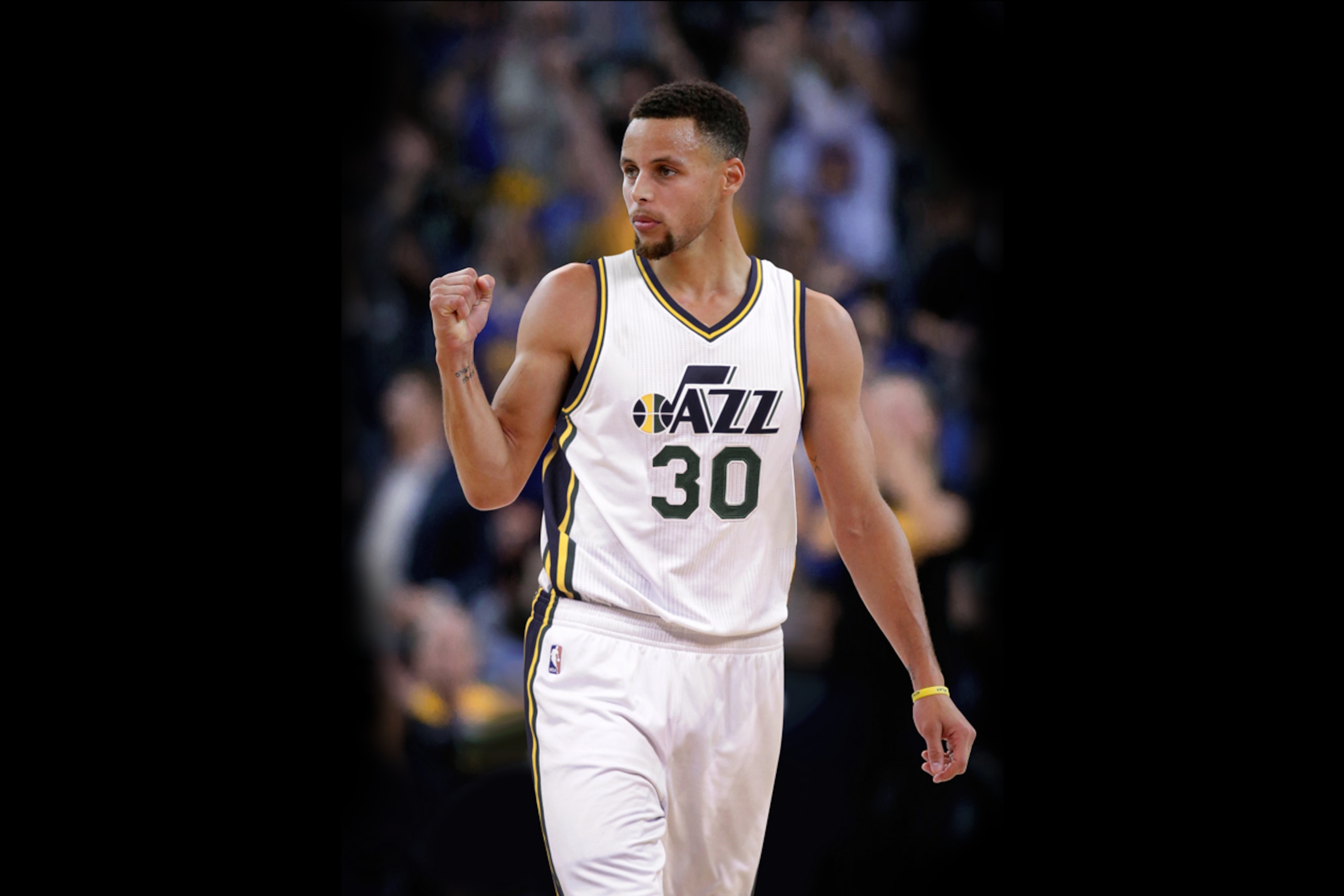
Stephen Curry: 12.3 points added per 100 possessions
Incumbent Starter (Raul Neto): Minus-2.6 points added per 100 possessions
Incumbent Backup (Trey Burke): 1.4 points added per 100 possessions
The Utah Jazz could use a star at point guard, even if they have an abundance of wing and interior talent. Curry would add an entirely new element to an offense that often stagnates, and he'd likely be a strong defender in another scheme that funnels ball-handlers into the middle, where the brutal front line of Derrick Favors and Rudy Gobert awaits.
But the Jazz—who still jump all the way up near the top of the NBA with Curry in the mix—could be even better if they made a few more changes. We're bound by the constraints of our methodology here, but let's get rid of them for a minute.
Trey Burke has outplayed Raul Neto by a rather significant margin in 2015-16, but Curry is pushing the Michigan product out of the rotation in this hypothetical situation. After all, he's listed as the backup and consistently comes off the pine.
If we pretend Burke was the starter and Neto the backup, adding Curry would push the Jazz's net rating to a scorching 9.5. For perspective, the real-life San Antonio Spurs currently sit in the NBA's No. 2 spot, outscoring the opposition by 9.4 points per 100 possessions.
And that number comes with Curry still playing a minimal rule, since he's eating up only the 22.9 minutes per game Burke plays. If we leave the reigning MVP in the lineup for as long as he's played during the average Golden State outing, Utah's net rating rockets up to 12.2.
So yeah, this team has a lot of potential with Curry in the fold.
Reality: 2.9 net rating (No. 11); strong playoff contenders
The Curry Effect: 6.3 net rating (No. 4); playoff locks
19. Portland Trail Blazers
11 of 29
Stephen Curry: 12.3 points added per 100 possessions
Incumbent Starter (Damian Lillard): 4.0 points added per 100 possessions
Incumbent Backup (Tim Frazier): Minus-3.6 points added per 100 possessions
Can you imagine a backcourt duo of Curry and Damian Lillard?
Curry would open games as the starter, doing his thing with an unending green light that lets him handle the rock on virtually every possession. In a system that requires scoring from the point guard, he might actually manage to average even more points than he's been putting up in Golden State. And when he needs a breather, in comes Lillard to continue the flame-throwing ways.
In theory, it's a great idea.
But the Portland Trail Blazers tend to leave their starting floor general on the court for lengthy stretches, and in this analysis, that devalues what Lillard can do as a backup. Though he'd certainly make an impact in the minimal playing time Tim Frazier receives, it's just not enough.
Essentially, Rip City is building upon a pre-existing strength while failing to shore up any of its biggest weaknesses. No matter how the rotation is balanced with the two All-Star floor generals, that's not a recipe for the type of success other squads will have with Curry in the mix.
Reality: Minus-0.7 net rating (No. 18); as mediocre as it gets
The Curry Effect: 6.3 net rating (No. 4); favorite for home-court advantage in the first round
18. Denver Nuggets
12 of 29
Stephen Curry: 12.3 points added per 100 possessions
Incumbent Starter (Emmanuel Mudiay): Minus-4.7 points added per 100 possessions
Incumbent Backup (Jameer Nelson): Minus-5.1 points added per 100 possessions
Unlike the Portland Trail Blazers, the Denver Nuggets would be fixing one of the spots holding them back most.
Emmanuel Mudiay has shown flashes of future stardom, but he's been inconsistent during his rookie season—and that may be putting it kindly
Without any sort of reliable jumper and an inability to cut back on his massive turnover numbers, he's been an offensive liability. Given that he's just one year removed from playing for the Chinese Basketball Association's Guangdong Southern Tigers, it's understandable, and the Nuggets are certainly making the right decision by letting him learn on the job.
But when you take a 19-year-old floor general and replace him with Curry, the difference will be palpable. And to Mudiay's credit, he's been better than Jameer Nelson, who has struggled during his first full season in the Mile High City.
Denver's 1-guards need to be able to space out the court and make the proper passes when they're caught up in traffic. Curry might average a lot of turnovers in that system, but he'd also make so many more positive plays.
Reality: Minus-4.4 net rating (No. 23); rebuilding time
The Curry Effect: 6.6 net rating (No. 4); threat for home-court advantage
17. Los Angeles Clippers
13 of 29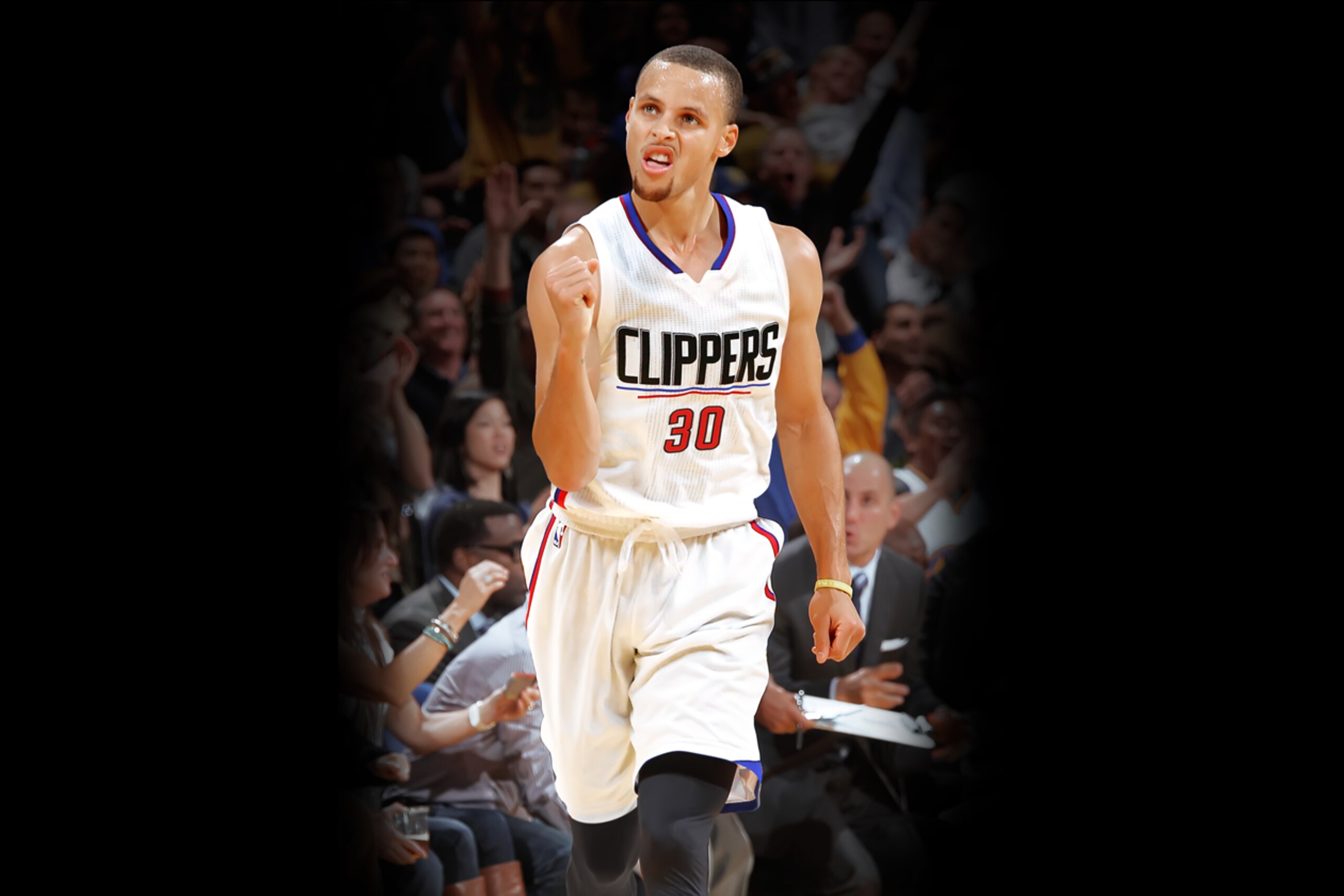
Stephen Curry: 12.3 points added per 100 possessions
Incumbent Starter (Chris Paul): 2.1 points added per 100 possessions
Incumbent Backup (Austin Rivers): Minus-2.6 points added per 100 possessions
Chris Paul is usually better than this.
He's still one of the league's top point guards, but he's been a negative on defense for the first time since 2011-12, and his inability to shoot as efficiently as he customarily does is also holding him back. Though you could replace any version of Paul with this year's Curry and see a boost, the difference between the two is astronomical in 2015-16.
Of course, the same is true of Paul and Austin Rivers this year. Moving Paul to the second unit would have an incredible impact on the Los Angeles Clippers, possibly preventing them from experiencing so many collapses late in games.
LAC started off the year looking like quite the contender in the Western Conference, but it's since fallen well off that pace. Lately, the team has been unable to recover mentally from the blown 23-point lead against real Curry's Warriors.
But put the leading MVP candidate in the Staples Center, and you're suddenly looking at a team capable of advancing all the way through the postseason gauntlet.
"I wouldn't call this a rivalry," Blake Griffin explained to Diamond Leung of the San Jose Mercury News about his team's relationship with the Warriors. "They're the better team. They have the upper hand."
Give the Clippers a Curry of their own, and the rivalry may resume again.
Reality: Minus-1.6 net rating (No. 20); falling out of the playoff picture
The Curry Effect: 7.6 net rating (No. 3); actual rivals of the Warriors
16. Sacramento Kings
14 of 29
Stephen Curry: 12.3 points added per 100 possessions
Incumbent Starter (Rajon Rondo): 2.0 points added per 100 possessions
Incumbent Backup (Darren Collison): Minus-3.8 points added per 100 possessions
Is Rajon Rondo back?
Even though he's shooting free-throw attempts worse than ever, it would appear so. Not only is he averaging a double-double in points and assists, but he's also posted his highest defensive box plus/minus (DBPM) since 2010-11.
Still, replacing him with Curry is a massive upgrade for the Sacramento Kings, especially when Rondo is able to fill in for this ineffective version of Darren Collison. And that's only from a statistical perspective.
Subjectively, the Kings would become a ridiculous offensive unit.
It's impossible to guard Curry this year, since he's making every type of shot he even thinks about taking, and he's not playing alongside a Bay Area option nearly as unguardable as DeMarcus Cousins. The Sacramento big man is an offensive star in his own right, capable of torturing defenses on the inside with his brutal combination of physicality and finesse or stepping out to the perimeter, where he's knocked down 14 of his 36 three-point attempts on the still-young season.
If a defense was forced to deal with both forces of basketball nature at once, it might just spontaneously combust.
Reality: Minus-3.7 net rating (No. 22); likely lottery squad
The Curry Effect: 7.6 net rating (No. 3); Western Conference Finals hopeful
15. New York Knicks
15 of 29
Stephen Curry: 12.3 points added per 100 possessions
Incumbent Starter (Jose Calderon): 0.6 points added per 100 possessions
Incumbent Backup (Jerian Grant): Minus-2.8 points added per 100 possessions
Stephen Curry was almost a New York Knick in real life, but he went one pick before the Madison Square Garden residents were on the clock during the 2009 NBA draft. Obviously, the NBA landscape would look significantly different if that hope had actually become a reality, though Knicks fans can find some solace in the fact they now get to cheer for Kristaps Porzingis.
But what if they had both?
With Curry spacing out the floor, Carmelo Anthony establishing himself in the post even more frequently and Porzingis flying in for putback opportunities, New York would be an offensive machine. Plus, the defense would still be solid enough to push this squad into the realm of true contenders for the No. 1 seed in the Eastern Conference.
Even though head coach Derek Fisher has taken some flak for his willingness to stick with Jose Calderon, the numbers back him up. It could make sense to give Jerian Grant more opportunities to learn on the job—as the Denver Nuggets are doing with Emmanuel Mudiay—but Calderon's ability to knock down perimeter jumpers and avoid turning the ball over has left him as a net positive.
If we're trying to maximize the current success of this team, a Curry-Calderon rotation at the point would do the trick.
Reality: 1.2 net rating (No. 14); playoff contender in Eastern Conference
The Curry Effect: 8.8 net rating (No. 3); favorite for No. 1 seed in Eastern Conference
14. Orlando Magic
16 of 29
Stephen Curry: 12.3 points added per 100 possessions
Incumbent Starter (Elfrid Payton): Minus-1.8 points added per 100 possessions
Incumbent Backup (C.J. Watson): Minus-1.4 points added per 100 possessions
One day, Elfrid Payton will become more of an asset than a detriment.
But during his sophomore season, that hasn't been the case. Shooting only 35.9 percent from the field without getting to the charity stripe often enough to make up for his inaccuracy, he's been so bad on offense that he's more than canceled out his positive work on the point-preventing side.
Replacing Payton with Curry makes a remarkably large difference for the Orlando Magic, giving them a player who can actually lead the charge and help draw defenders away from Nikola Vucevic. Everyone would benefit from his presence, and it's not like Payton is disciplined enough to be that much better than Curry on defense. In fact, his 0.6 DBPM is only marginally better than Curry's 0.2.
If you're looking for a team that truly showcases the overall Curry effect, the Magic would be a great example.
Through their first 13 games, they were outscored by 0.5 points per 100 possessions and compiled a 6-7 record, leaving them in 12th place in the Eastern Conference. But with the reigning MVP added into the mix, they'd have an 8.8 net rating, which would be better than the marks of every other team in their half of the NBA.
Reality: Minus-0.5 net rating (No. 17); just out of Eastern Conference playoff contention
The Curry Effect: 8.8 net rating (No. 3); Eastern Conference favorites
13. Detroit Pistons
17 of 29
Stephen Curry: 12.3 points added per 100 possessions
Incumbent Starter (Reggie Jackson): 3.8 points added per 100 possessions
Incumbent Backup (Steve Blake): Minus-5.0 points added per 100 possessions
There's a solid chance head coach and president of basketball operations Stan Van Gundy dreams about Curry's suiting up for his Detroit Pistons.
Everything in the Motor City is geared toward surrounding Andre Drummond with shooters, and there's no better shooter than Curry. A four-out, one-in system needs players who actually threaten defenses, and the Golden State Warriors floor general exhibits one of the largest gravitational pulls of anyone in the Association's history.
If there's space around Drummond now, imagine what would happen with Curry taking Reggie Jackson's place. The incumbent starter has been excellent this year, but he can't hope to make the type of impact his hypothetical replacement routinely has on the offensive end.
In fact, Curry shooting contested threes might be the best offense in the NBA if he were wearing a Detroit uniform. He'd make plenty of them, but he'd also be shooting with the sport's most dangerous offensive rebounder corralling caroms and setting up second-chance opportunities.
The Warriors have rebounded 24.4 percent of their missed shots when Curry is on the floor this season—obviously, not all of those misses are leaving his hands. On the flip side, the Pistons have an offensive rebounding percentage of 29 when Drummond is playing in 2015-16.
With Detroit, Curry's light couldn't get any greener.
Reality: 0.6 net rating (No. 16); moving in the right direction but mediocre
The Curry Effect: 8.9 net rating (No. 3); Eastern Conference favorites
12. Phoenix Suns
18 of 29
Stephen Curry: 12.3 points added per 100 possessions
Incumbent Starter (Eric Bledsoe): 5.7 points added per 100 possessions
Incumbent Backup (Ronnie Price): 3.0 points added per 100 possessions
Point guard play isn't exactly holding back the Phoenix Suns, who have exceeded expectations early on in the 2015-16 campaign. The two-headed monster of Eric Bledsoe and Brandon Knight—for our purposes, the former is listed as the 1-guard—has been excellent while taking the starting backcourt roles, and Ronnie Price has more than held his own coming off the bench.
Of course, the Suns are still going to be even deadlier if Curry is added to the mix.
He wouldn't need a particularly long adjustment period, given head coach Jeff Hornacek's willingness to let his point guards create on the fly and commandeer possessions. Just let him step onto the court and fire away, and good things will inevitably happen.
We can actually make the Suns even more dangerous, though.
Instead of pushing Bledsoe to the bench, where he'd fill Price's role, let's move him to the 2 and have Knight open games on the pine. In that situation, Phoenix's net rating soars all the way up to 10.2.
Reality: 3.9 net rating (No. 9); playoff contenders
The Curry Effect: 9.3 net rating (No. 3); NBA Finals contenders
11. Oklahoma City Thunder
19 of 29
Stephen Curry: 12.3 points added per 100 possessions
Incumbent Starter (Russell Westbrook): 12.9 points added per 100 possessions
Incumbent Backup (D.J. Augustin): Minus-2.8 points added per 100 possessions
Only one player in the NBA—excluding Steve Novak, Jordan Mickey and Lucas Nogueira, who have combined to play all of 11 minutes—has added more points per 100 possessions than Curry has, and that player happens to suit up for the Oklahoma City Thunder. Russell Westbrook has been that good during the opening salvo of the 2015-16 season, though it's worth noting Curry might be able to do even more if he had the opportunity to be a one-man show.
For perspective, LeBron James is third in the league, and he's well behind the two point guards, adding "just" 8.8 points per 100 possessions.
As such, the Thunder are actually slightly hurt by Curry's replacing Westbrook in the starting lineup, though the difference between Westbrook and D.J. Augustin is astronomical. When that change also takes place, OKC's net rating still trends in the right direction, jumping from 4.5 to 9.8.
However, Augustin has only played 17.3 minutes per game this year, so that's all we're granting Westbrook in this situation. If we let him spend 35 minutes on the court during his average outing, pulling back minutes from whoever is lining up at the 2 so he and Curry can form a dual-point guard backcourt, then the Thunder's net rating elevates all the way to 15.6.
The numbers may not immediately show it, but a Curry-Westbrook combination is one of the few in the NBA capable of topping what the Golden State Warriors are already doing with their actual roster.
Reality: 4.5 net rating (No. 8); Western Conference's second tier
The Curry Effect: 9.8 net rating (No. 2); Western Conference's first tier
10. Chicago Bulls
20 of 29
Stephen Curry: 12.3 points added per 100 possessions
Incumbent Starter (Derrick Rose): Minus-4.2 points added per 100 possessions
Incumbent Backup (Aaron Brooks): 2.6 points added per 100 possessions
Talk about a fall from grace.
When he's been healthy enough to play, Derrick Rose has been wholly ineffective. He's shot just 37.7 percent from the field, knocked down only 15 percent of his three-point attempts, gotten to the free-throw line at a shockingly low rate and played shoddy defense for the majority of his time on the court. That's a putrid combination, and it shouldn't be surprising that he's another contender for the nonexistent LVP award.
Replacing him with Curry makes a substantial difference for a Chicago Bulls lineup that has played with a distinct offensive lean under first-year head coach Fred Hoiberg. Having a point guard who can stretch out a defense from the perimeter and compress it around him when he drives will only make things easier for the bevy of shooters—Doug McDermott, Nikola Mirotic, Tony Snell and more.
Unfortunately, replacing Aaron Brooks with Rose in the role of primary backup hurts the Bulls. A one-for-one swap of Curry and Rose yields a staggering 12.2 net rating for Chicago, but the switch on the bench knocks them back down to an even 10.0.
Still, that's an incredible finish. And here's where we must step back and marvel at Curry's majesty.
My databases show that throughout all of NBA history, only nine teams have ever managed to post a double-digit net rating: the 1971-72 Milwaukee Bucks (10.0), 2008-09 Cleveland Cavaliers (10.0), 2014-15 Golden State Warriors (10.2), 1971-72 Los Angeles Lakers (10.5), 1970-71 Milwaukee Bucks (10.8), 1991-92 Chicago Bulls (11.0), 2007-08 Boston Celtics (11.3), 1996-97 Chicago Bulls (12.0) and 1995-96 Chicago Bulls (13.4).
With our army of Currys playing on each and every team, 10(!) have managed to break into double digits.
Reality: 1.1 net rating (No. 15); Eastern Conference playoff contender
The Curry Effect: 10.0 net rating (No. 2); NBA Finals contender
9. Dallas Mavericks
21 of 29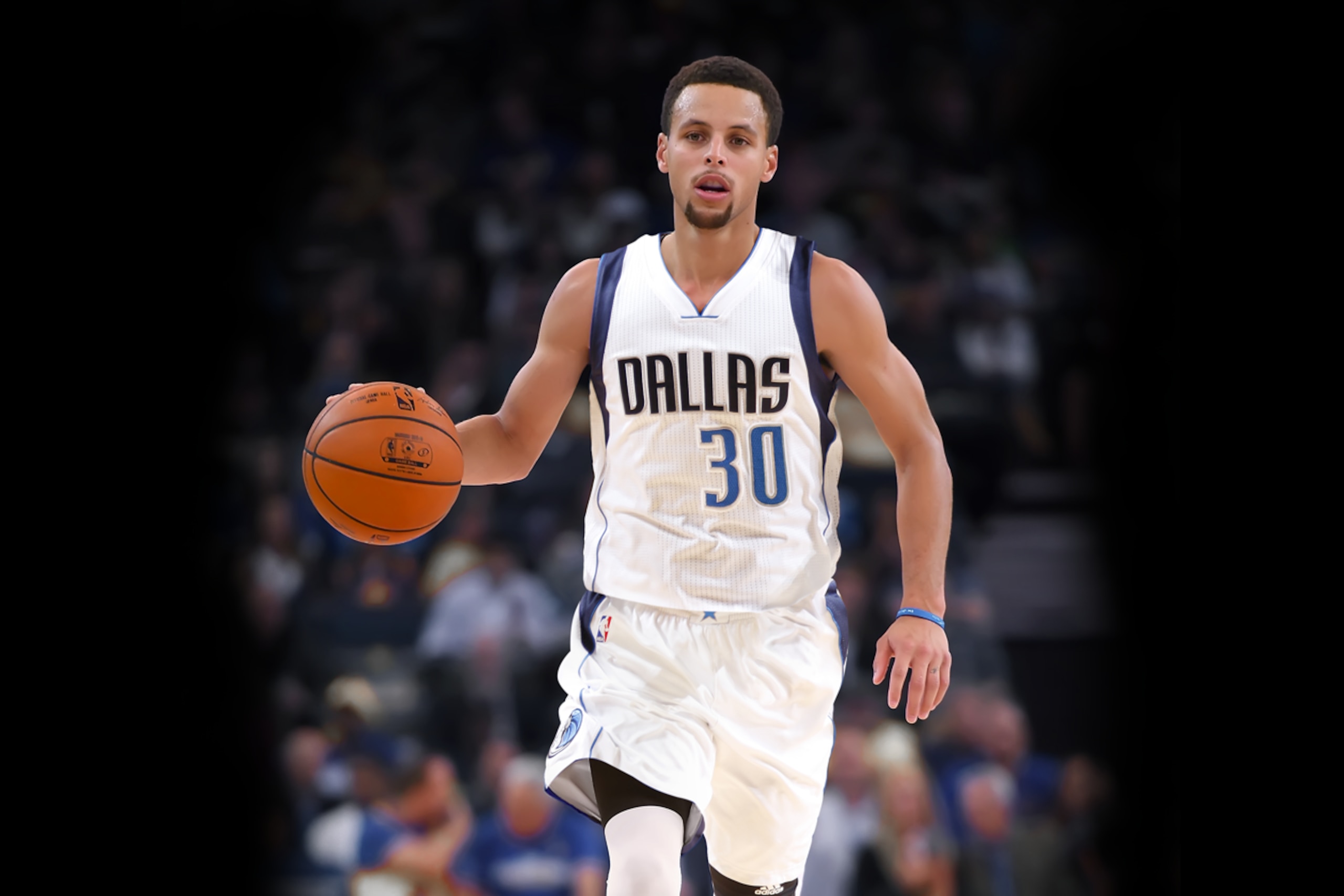
Stephen Curry: 12.3 points added per 100 possessions
Incumbent Starter (Deron Williams): 2.1 points added per 100 possessions
Incumbent Backup (J.J. Barea): Minus-2.9 points added per 100 possessions
In the midst of a resurgent season with the Dallas Mavericks, Deron Williams is starting to turn back the clock. Head coach Rick Carlisle is bringing out the best of his ability at all times, allowing him to thrive as an offensive threat who can capably find open teammates or call his own number. Now, he's playing with enough confidence and youthful exuberance that he even dunked in a game.
That might not sound significant for an established NBA player, but it's the first time Williams has thrown down since his 2013-14 go-round with the Brooklyn Nets.
Still, Curry would be a massive upgrade—especially if it means Williams can step in for J.J. Barea, whose occasional scoring spurts haven't made up for his defensive inefficiencies and cold stretches of offense.
Carlisle is the master of squeezing talent out of role players and maximizing his team's chances of success. We've already seen him rejuvenate Williams, help Dirk Nowitzki stave off a decline and turn a host of mismatched pieces into a team that looks an awful lot like a playoff squad in the Western Conference.
Just imagine what he could do with a star such as Curry who is playing squarely in the midst of his prime.
Reality: 1.8 net rating (No. 12); confirmation that Carlisle is an evil genius
The Curry Effect: 10.5 net rating (No. 2); even stronger confirmation
8. Atlanta Hawks
22 of 29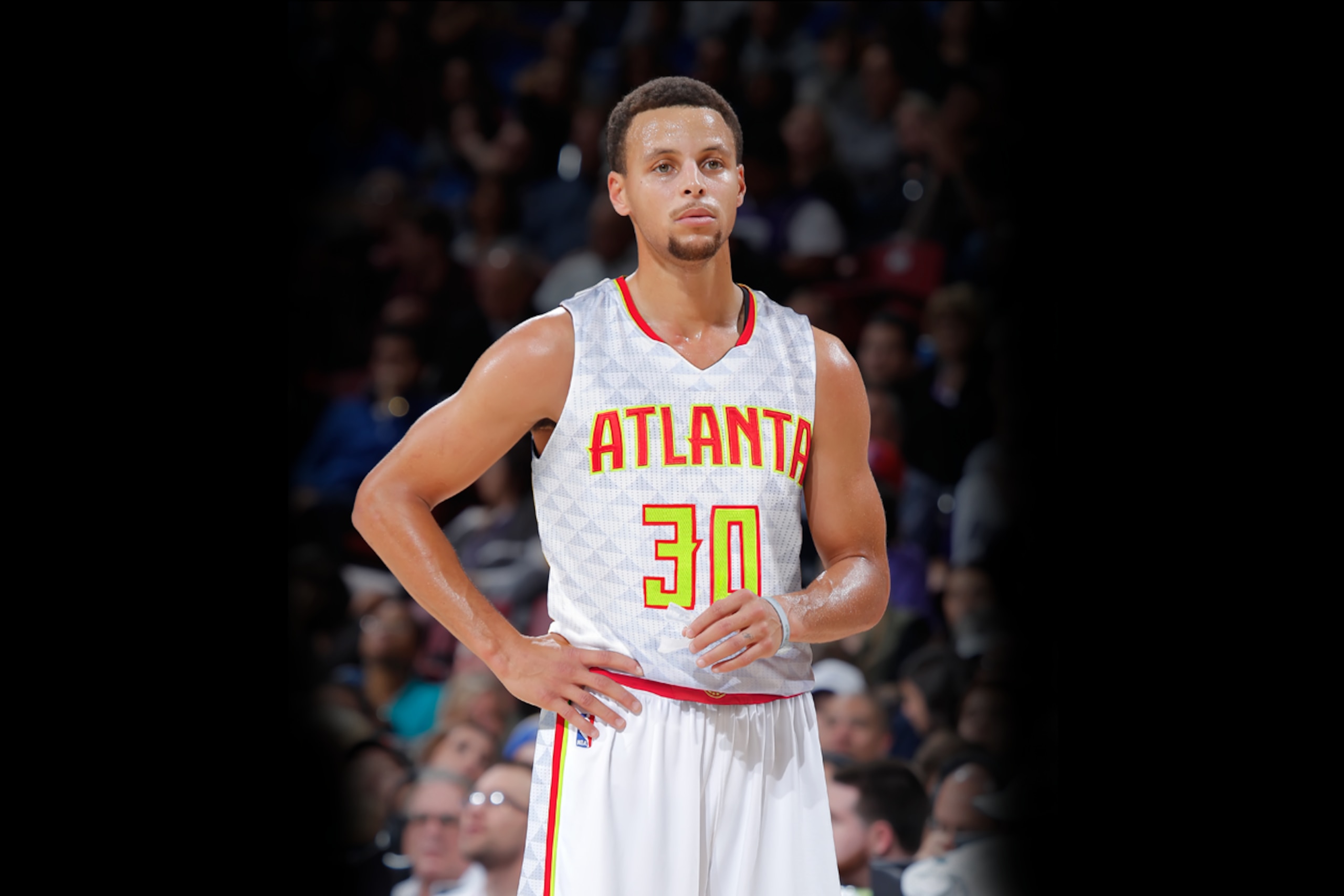
Stephen Curry: 12.3 points added per 100 possessions
Incumbent Starter (Jeff Teague): Minus-1.2 points added per 100 possessions
Incumbent Backup (Dennis Schroder): Minus-2.4 points added per 100 possessions
One of the NBA's dirty little secrets has been the play of Jeff Teague.
After making his first All-Star appearance in 2014-15, the Wake Forest product has declined substantially. The floaters that dropped with such frequency last year are drawing iron, and his touch on mid-range jumpers has all but disappeared. Plus, he's been an absolute sieve on the defensive end.
Replacing early-season Teague with Curry is a huge bonus for the Hawks, and it's a little disconcerting that replacing the up-and-coming Dennis Schroder with Teague is still a positive change as well. This was supposed to be the breakthrough year for the German point guard, but that simply hasn't been the case.
It's still a bit unclear how Curry would operate in a pure ball-sharing system like the one the Hawks run. For all the talk about the ball movement of the Warriors, they do have plenty of possessions where he's allowed to dribble to his heart's content, eventually forcing up a contested look that often rips through the twine despite great defense.
Danilo Gallinari knows exactly what I'm talking about after finding himself in an isolation situation against the Warriors point guard.
Curry would probably adjust just fine. And just as Gregg Popovich sometimes allows Kawhi Leonard to operate outside the confines of the rigid San Antonio Spurs schemes, so too would Atlanta head coach Mike Budenholzer let Curry do the same with the Hawks' stratagems.
Reality: 1.4 net rating (No. 13); strong playoff contender
The Curry Effect: 10.6 net rating (No. 2); ball-moving juggernaut
7. Toronto Raptors
23 of 29
Stephen Curry: 12.3 points added per 100 possessions
Incumbent Starter (Kyle Lowry): 8.4 points added per 100 possessions
Incumbent Backup (Cory Joseph): 2.3 points added per 100 possessions
The Toronto Raptors have had one of the league's best rotations at point guard, in large part because of the inspired play of a skinny and suave Kyle Lowry. Only Russell Westbrook, Stephen Curry and LeBron James have added more points per 100 possessions this season, though it's worth noting that Lowry did begin the 2014-15 campaign at a similarly torrid pace before regressing.
Plus, Cory Joseph has developed into one of the league's best backup point guards, thriving in his role as a defensive stopper with a burgeoning offensive game. It's a shame we're essentially kicking him out of the rotation here, but a two-man combo of Curry and Lowry is good enough to mitigate the painful feelings.
Scoring 106.7 points per 100 possessions, the Raptors already have one of the league's top five offensive ratings. But there's still room for growth, and grow they will with Curry and Lowry working together.
There's a serious chance that duo could help the Canadian representatives compete with the Warriors to claim the best offense in basketball.
Reality: 4.7 net rating (No. 7); Eastern Conference contenders
The Curry Effect: 10.7 net rating (No. 2); Eastern Conference favorites
6. Charlotte Hornets
24 of 29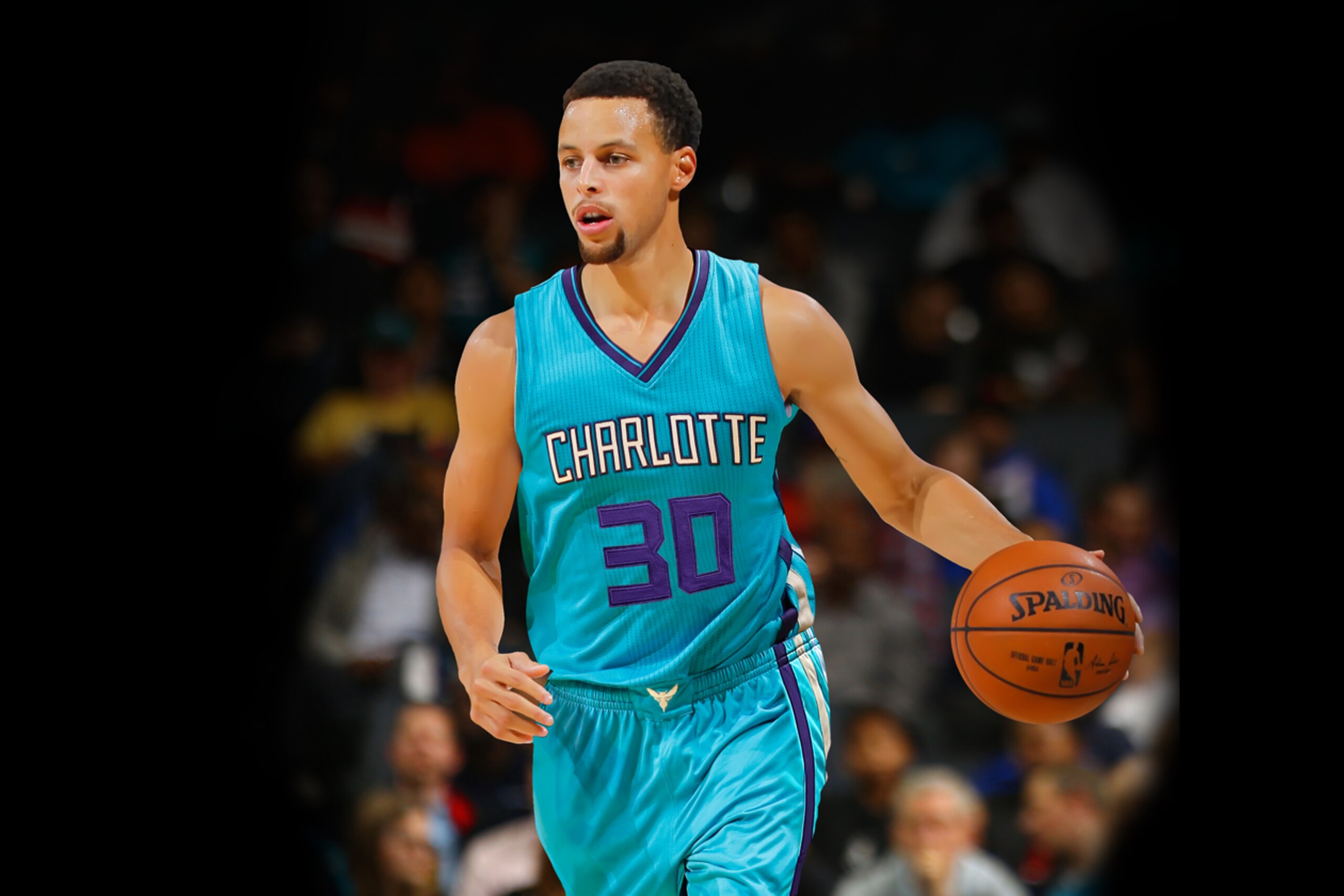
Stephen Curry: 12.3 points added per 100 possessions
Incumbent Starter (Kemba Walker): 3.1 points added per 100 possessions
Incumbent Backup (Jeremy Lin): Minus-0.5 points added per 100 possessions
Even though Kemba Walker has seemingly turned a corner and become an undeniable offensive asset—high volume is no longer accompanied by any sort of glaring inefficiency—it's easy to get excited about the prospect of Curry's leading this team.
Despite the obvious improvements, Walker is not the best offensive point guard in the NBA. That would be Curry by a substantial margin, and his shooting ability from the perimeter would lead to so much more success for the Charlotte Hornets.
Under head coach Steve Clifford, the Hornets have usually operated as a defensive machine. But the results have been mixed lately, and 2015-16 has seen them overcome the painful loss of Michael Kidd-Gilchrist to the tune of a top-five offensive rating. All the while, the defensive component leaves them right at No. 15.
Offense is becoming the strength of this team, and the combination of Curry and Walker would make them all the more dangerous. Al Jefferson would have more space to operate from his favorite spot on the left block. Nicolas Batum and Jeremy Lamb would be left open even more often.
Everything would run as close to seamlessly as possible.
Reality: 3.5 net rating (No. 10); party-crasher in Eastern Conference
The Curry Effect: 11.5 net rating (No. 2); potential favorite in Eastern Conference
5. Boston Celtics
25 of 29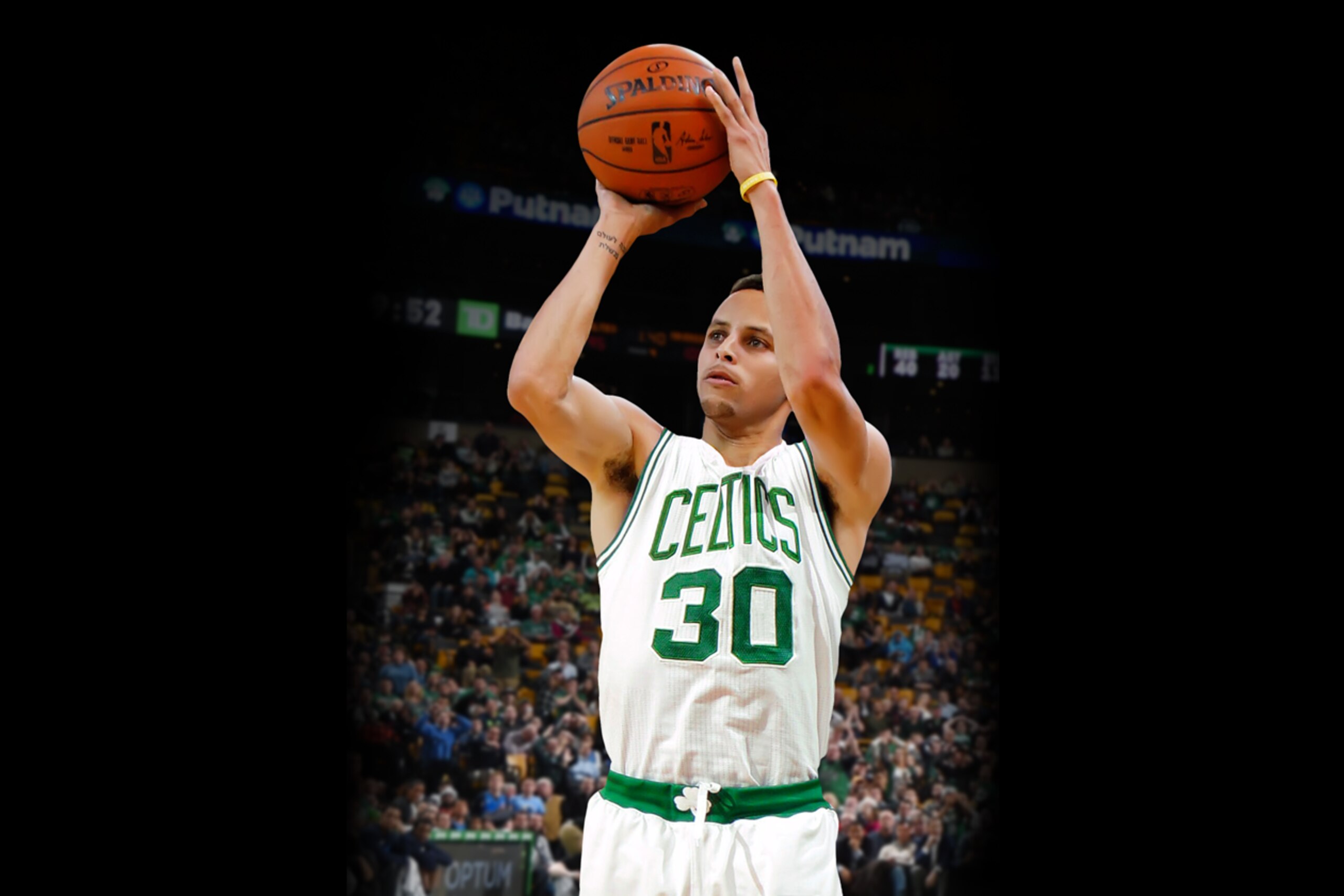
Stephen Curry: 12.3 points added per 100 possessions
Incumbent Starter (Marcus Smart): Minus-0.1 points added per 100 possessions
Incumbent Backup (Isaiah Thomas): 2.8 points added per 100 possessions
With Brad Stevens manning the helm as the head coach, the Boston Celtics have overcome a distinct lack of star power by playing team-oriented basketball that focuses the efforts on both sides of the floor. Isaiah Thomas has been the closest thing to a celestial player, coming off the bench to score gaudy point totals in a relatively meager amount of playing time.
But if Thomas can go supernova, Curry might be able to go hypernova.
Hell, he might just be the Big Bang.
The issue here is that Marcus Smart is listed as the starter, and that means Thomas drops out of the rotation in our hypothetical scenario, despite clearly being the better player in 2015-16. There's no denying the potential stardom of the former Oklahoma State standout, but his offensive shortcomings have made him decidedly average this year.
If we reverse the roles and let Thomas remain the backup point guard, Boston's net rating jumps all the way to an absurd level. The Celtics would be outscoring their opponents by 13.8 points per 100 possessions, putting them on par with what the real-life Warriors are doing thus far and just ahead of the 1995-96 Chicago Bulls' all-time-best 13.4 net rating.
Reality: 6.0 net rating (No. 4); emerging Eastern Conference power
The Curry Effect: 11.7 net rating (No. 2); true Eastern Conference power
4. Indiana Pacers
26 of 29
Stephen Curry: 12.3 points added per 100 possessions
Incumbent Starter (George Hill): 2.5 points added per 100 possessions
Incumbent Backup (Joseph Young): Minus-8.0 points added per 100 possessions
From this point forward, every team would be fighting to become the best in NBA history. Not only would they top the Golden State Warriors' current net rating—though keep in mind they're adding another superstar without any cap penalties or ensuing roster cuts in order to do so—but they'd beat the marks posted by every other team to ever line up in the Association.
Is it a little strange that the Indiana Pacers lead off that group? Sure, since they entered the season as fringe playoff contenders and few seemed to think they were capable of working together so well and so quickly.
Even with a healthy Paul George, the Pacers are only coming in at No. 17 in offensive rating during the opening portion of the 2015-16 season. But without Roy Hibbert and David West, they're still employing the vaunted defensive principles of head coach Frank Vogel, allowing just 98.1 points per 100 possessions—a mark that puts them behind only the San Antonio Spurs and Miami Heat.
Now, think about what happens when you add the offensive force that is Curry into the equation. No knocks against George Hill, who's in the midst of a fine season, but the league's reigning MVP brings quite a few new elements to the table.
Reality: 5.3 net rating (No. 5); surprising Eastern Conference contenders
The Curry Effect: 14.8 net rating (No. 1); unstoppable offensive machine
3. Miami Heat
27 of 29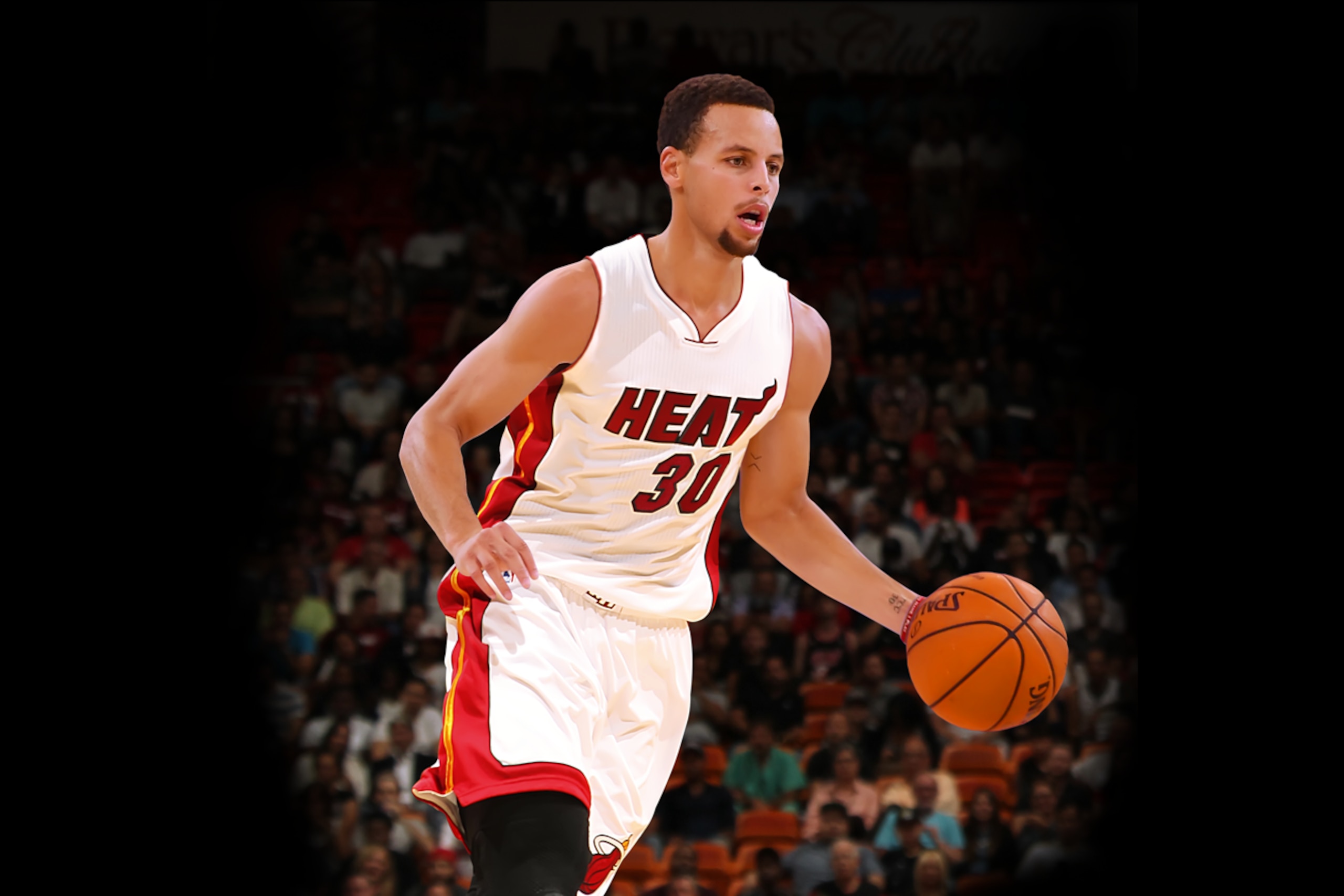
Stephen Curry: 12.3 points added per 100 possessions
Incumbent Starter (Goran Dragic): Minus-0.9 points added per 100 possessions
Incumbent Backup (Beno Udrih): Minus-7.3 points added per 100 possessions
Despite rostering so many new pieces—including those returning from injury—the Miami Heat have coalesced quickly and covered up their offensive flaws with a concerted effort on the point-preventing end. The entire team has been fully engaged while playing defense, to the point that not a single member of the starting lineup has been a negative on that side. For that matter, many of the backups have been assets as well.
But the offense has still struggled, and a major reason is the uninspiring play of Goran Dragic.
Averaging only 10.5 points and 4.6 assists, the Slovenian floor general is shooting just 41.7 percent from the field and 25.8 percent from beyond the arc. He's turning the ball over too frequently for a player tasked with sharing responsibilities, and the overall product just hasn't been pretty. He'll surely trend up as the season progresses, but he's been a below-average point guard thus far.
"To me, the current issue with Goran is not about speed, quickness or system," Ira Winderman wrote for the South Florida Sun Sentinel. "It's about confidence. He seems to have none with his shot. When the shot starts coming around, I think the confidence will extend throughout his game."
Regardless of the issue, replace Dragic with Curry while letting the incumbent starter take over for a version of Beno Udrih that can't get anything going on either end, and the Heat's offense will no longer struggle. Miami is just adding yet another dangerous weapon to a squad with a pre-existing plethora of them, and this one can also get his teammates going far better than Dragic can.
If you want to be one of the best teams in NBA history, you must play both defense and offense at a remarkably high level. With Curry in the mix, these Heat could.
Reality: 5.0 net rating (No. 6); Eastern Conference contenders
The Curry Effect: 15.0 net rating (No. 1); prohibitive NBA favorites
2. San Antonio Spurs
28 of 29
Stephen Curry: 12.3 points added per 100 possessions
Incumbent Starter (Tony Parker): Minus-0.6 points added per 100 possessions
Incumbent Backup (Patty Mills): 2.2 points added per 100 possessions
The San Antonio Spurs are already unfair.
Two of their key pieces (Manu Ginobili and Tim Duncan) are nearing AARP eligibility. LaMarcus Aldridge has never played in a system where he's not always allowed to hold the ball on the elbows and attempt to make things happen for himself whenever he desires. Tony Parker hasn't even maintained an average level of production, shocking as that may be.
Nonetheless, the Spurs are right near the top of the Western Conference standings, the proud owners of the No. 2 net rating in the NBA. It's just ridiculous—and probably a bit disheartening for some of the other franchises around the Association.
Now we want to add Curry to the picture?
Gregg Popovich is already a master at getting open three-point attempts for his players, so the schemes he could draw up for the league's best shooter would likely result in jaw-dropping levels of efficiency. The All-Star point guard might see his individual numbers go down if he played in San Antonio, but that doesn't necessarily mean he'd be any less effective.
Just imagine a five-man lineup of Curry, Ginobili, Kawhi Leonard, Aldridge and Duncan.
Now, try to stop giggling. Good luck.
Reality: 9.4 net rating (No.2): juggernaut with developing chemistry
The Curry Effect: 15.7 net rating (No. 1); prohibitive NBA favorite
1. Cleveland Cavaliers
29 of 29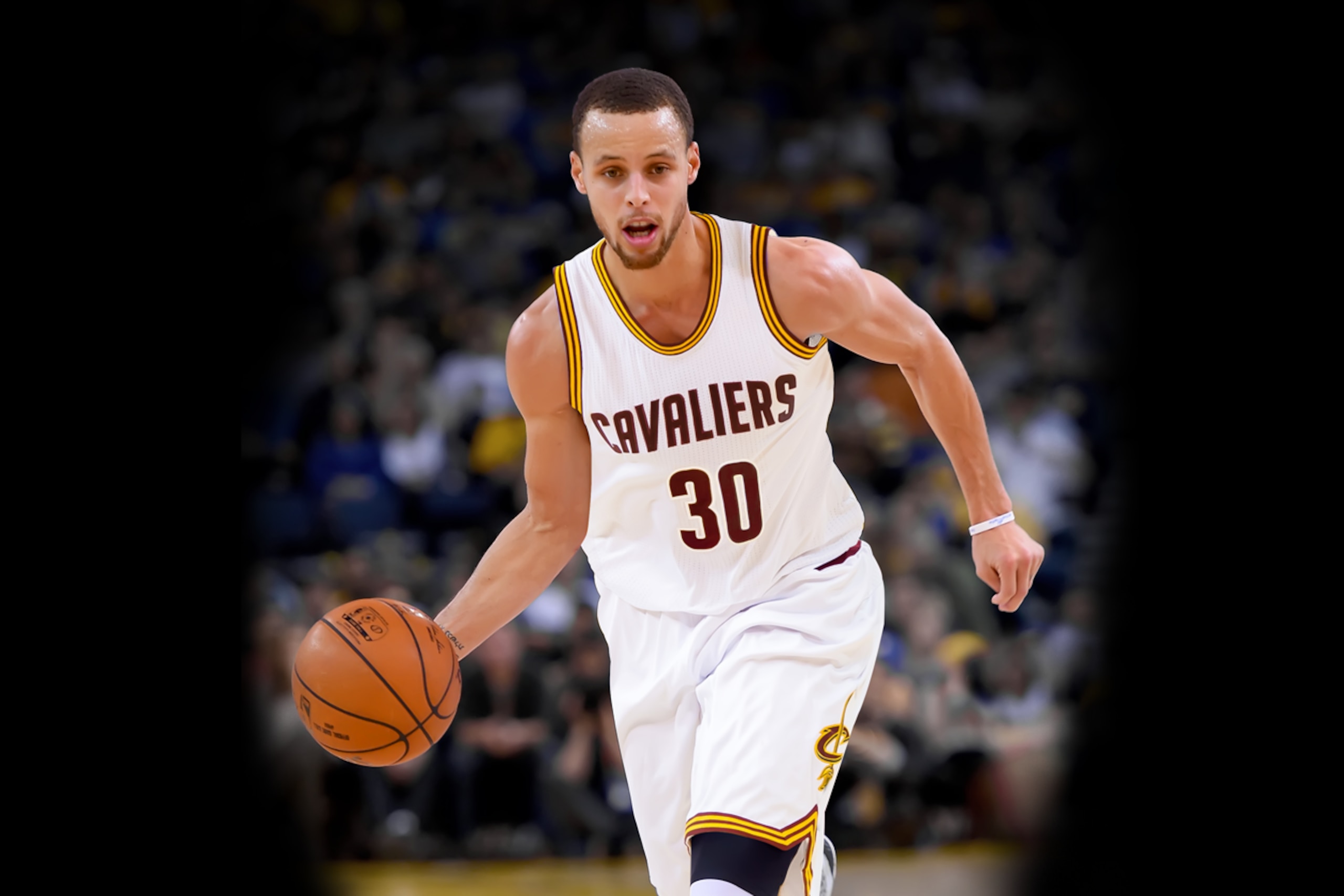
Stephen Curry: 12.3 points added per 100 possessions
Incumbent Starter (Mo Williams): 1.9 points added per 100 possessions
Incumbent Backup (Matthew Dellavedova): Minus-1.0 points added per 100 possessions
If you thought the San Antonio Spurs' five-man lineup was ridiculous with Curry included, just get ready for the Cleveland Cavaliers'. Once Timofey Mozgov regained his health, they'd be able to throw out the reigning MVP, J.R. Smith, LeBron James, Kevin Love and Mozgov.
Some of the individual pieces aren't as special, but it's hard to argue with the two-man combination of Curry and James. After all, there's an argument to be made that they're the two best players in basketball right now.
The Cavs haven't skipped a beat since losing to the Golden State Warriors in the 2015 NBA Finals. Posting the third-best net rating in the Association, they've stormed out to the best record in the Eastern Conference and look poised to earn the No. 1 seed in their half of the league.
Oh, and they're doing all this without Kyrie Irving.
Mo Williams and Matthew Dellavedova have been strong stopgap options, but they're still holding Cleveland back from its full potential. That's not a knock on either of the two aforementioned guards but rather a compliment to Irving.
The typical starter will help the Cavs realize that full potential, making them all the more dangerous. But if Curry were involved? Yikes.
The rest of the NBA would presumably love to get a Curry clone onto the roster, but they might rather stick with the status quo if the changes meant Cleveland had the ability to morph into this kind of juggernaut.
Reality: 7.6 net rating (No. 3); Eastern Conference favorite
The Curry Effect: 16.0 net rating (No. 1); the best team in NBA history
All stats, unless otherwise indicated, come from Basketball-Reference.com and my own databases. They're current heading into games on Nov. 23.
Adam Fromal covers the NBA for Bleacher Report. Follow him on Twitter: @fromal09.




.jpg?w=2560 "Report: Darnold Could Miss 3-6 Weeks")
.jpg?w=2560 "Breaking News")

.jpg?w=2560 "Week 1 Fantasy Duds 👎")