

With great flexibility ahead of the NBA draft comes great responsibility.
Peter Parker's Uncle Ben said something like this, and he wasn't wrong. Teams partaking in the first round of the June 22 festivities aren't grooming the next spandex-sporting, web-slinging superhero, but they are getting an opportunity to shape the league's future.
First-round picks of any kind have never been more valuable. The Association is still navigating the new salary-cap waters, and even with the rookie-scale deals increasing, getting lucky in the draft is the best way to add impactful talent on the cheap. It doesn't matter whether you're drafting in the top five or the bottom five, chasing a cornerstone or a touch-up. The draft, as unscientific as it remains, is an invaluable mechanism.
It's no surprise, then, that any deviations from the norm can have a whirlwind of aftereffects. Trades change the order and redistribute big names, both incumbent and inbound, across the competitive landscape. Surprise selections force adjustments from teams that have yet to pick while perhaps increasing the appetite others have to trade up.
These teams aren't solely those most likely to engage in such extracurriculars. They're the ones with the ability to make moves that are most felt throughout the rest of the league.
Honorable Mentions
1 of 6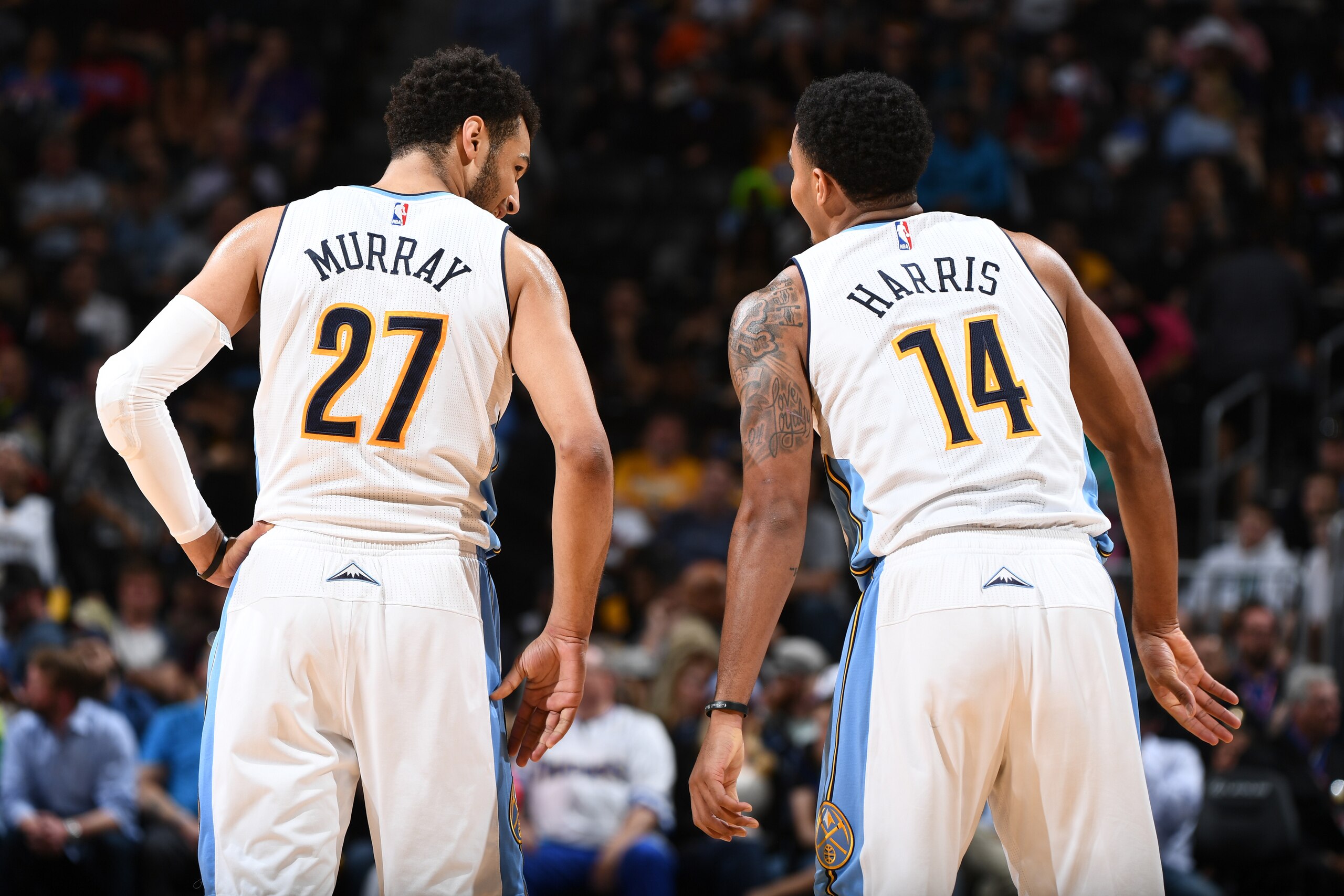
Denver Nuggets
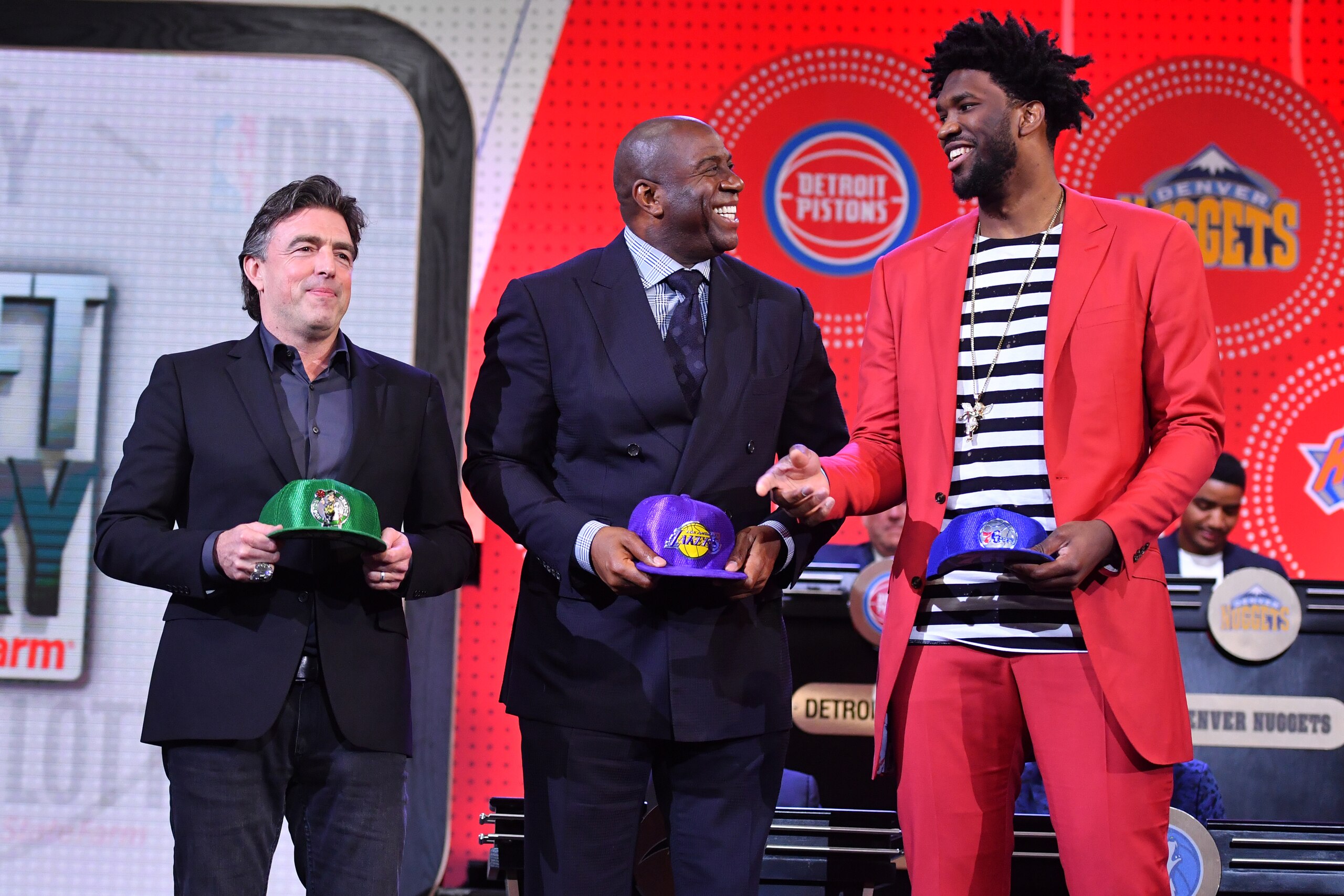
If a superstar makes a cameo on the chopping block leading into draft night, the Denver Nuggets will be in the thick of contention. They need a headlining name to partner up wit Nikola Jokic, and the Boston Celtics are the only team with the stable of assets to rival or exceed their best offers.
But this year's draft pick won't be at the center of any deal. The focus will be more on who the Nuggets are sending back. Some mix of Will Barton, Malik Beasley, Wilson Chandler, Gary Harris, Juan Hernangomez, Emmanuel Mudiay and Jamal Murray is far more appealing to prospective sellers than the 13th overall selection.
And if the Nuggets need to break up a chunk of their foundation to reel in a big name, they might as well wait until after the draft. They have a boatload of cap space to spend on free agents, and their most ambitious packages won't lose cachet just because their end-of-lottery choice turned into an actual player.
New York Knicks
Sources told ESPN.com's Ian Begley the New York Knicks have talked about trading for another first-round pick, suggesting they'll be plenty active between now and June 22. But they're not armed with the assets necessary to eke out another choice unless they're ready to unload Willy Hernangomez or Courtney Lee.
Let's be clear: Carmelo Anthony isn't netting the Knicks a top selection. There isn't a team in the top 10 that should be trading for him. With the exception of maybe, but probably not, the Miami Heat, there isn't a potential suitor in the lottery.
The Los Angeles Clippers, who love Anthony, don't even have a draft pick. Anything the Knicks do on draft day is bound to be small-scale. The bigger splashes will come during or after free agency—if they come at all.
Boston Celtics
2 of 6
Calls for the Boston Celtics to shake up this draft extend back past the February's trade deadline, long before they ever knew where the Brooklyn Nets pick swap would position them. Advocates for parity have no doubt strengthened their stance since the lottery and after Boston earned a trip to the Eastern Conference Finals.
It's hard to fault those pleas for action. The Cleveland Cavaliers and Golden State Warriors have turned the NBA into a rabbit hole of inevitability, and the Celtics are more equipped to derail their reign than any team outside San Antonio. This No. 1 pick could, realistically, get them Jimmy Butler or Paul George—a patented superstar to tighten the cosmic-sized gap between them and whatever franchise LeBron James reps.
But will team president Danny Ainge take that plunge?
“Just because you’re one piece away doesn’t mean you can get it," he said, per the Boston Herald's Steve Bulpett. "And if you force yourself to get it, and if you force a deal or force yourself to get the second-best available or the third- or fourth-best available player at that position that you need, then it might not make you that much better or make you still not good enough, and you’re stuck."
If the Celtics trade the pick, they'll probably be moving the actual player. Acquiring a Butler or George eats into their spending power, so it makes more sense to wait until their free-agency pursuits are resolved. It'll be easier for them to cobble together an offer with matching salary than carve out meaningful cap room with another star on the books.
At the same time, Boston won't be the only team monitoring the Butler and George situations. All it takes is a squad like the Denver Nuggets, Los Angeles Lakers or Philadelphia 76ers to expedite the issue, forcing the Chicago Bulls or Indiana Pacers into an earlier-than-expected ultimatum.
The Celtics are committed to mastering their balancing act the right way, but can their willpower transcend Butler or George going elsewhere? Does the idea of giving up less and using some of their cap space to absorb an inbound star not appeal to them?
Cave to temptation, and Boston gives another team the right to shape this year's prospect pageant. Maybe Chicago or Indiana would be more inclined to roll the dice on Josh Jackson at No. 1 when they're trading away All-Star wings. Perhaps they'd value Lonzo Ball's polarizing play style over Markelle Fultz's dominant scoring. It's unlikely the Celtics fold ahead of June's draft, but things change quickly in the NBA. They'll be on Trade Watch until they're off the clock—and beyond.
Los Angeles Lakers
3 of 6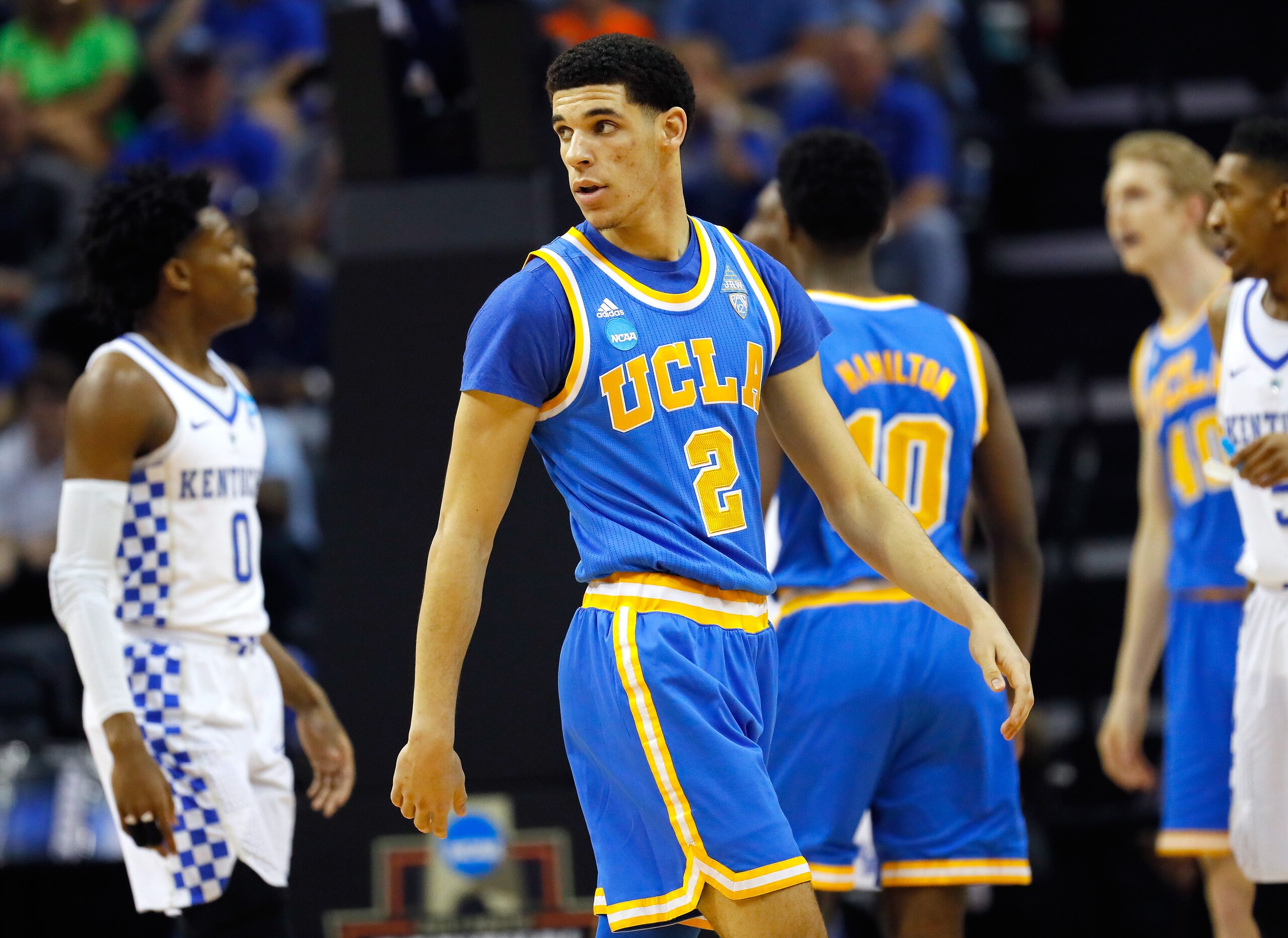
Constant links to Paul George have not incited desperation into the Lakers. Though they have the ammunition to engage the Pacers in trade talks, they also believe he'll come to Hollywood even if he's dealt elsewhere before entering free agency in 2018, according to The Vertical's Adrian Wojnarowski.
Pair this with team president Magic Johnson gushing excitement over next year's crop of free agents (wink, wink) and deeming Brandon Ingram untouchable, and there's little chance the Lakers turn the selection process upside down by dealing their No. 2 choice.
Similar to the Celtics' situation, we can't rule out a trade. The Lakers might change their tune if they find out George would end up with Boston or another contender capable of successfully wooing him over the next year. Any play for George—or, less likely, Butler—throws the top of the board for a loop.
Keep the pick, and the Lakers are still ripe to flip the script.
Their decision isn't as simple as choosing the Celtics' leftovers. Nor are they guaranteed to select Ball. They already have D'Angelo Russell and Jordan Clarkson. Introducing another ball-dominant talent into the equation spawns a fickle dynamic, even if they believe everyone can thrive amid equal shares off the rock.
Lonzo's father, LaVar, has half-succeeded in creating the illusion that this is a non-issue. He's emphatically trumpeted the potential fit, and Lonzo's camp has already informed the Celtics he won't grant them a workout.
But what if the Lakers balk at adding another guard? Rolling with a wing, like Jackson or Jayson Tatum, is an entirely plausible scenario, and it opens the door for Ball to fall. The Sixers, at No. 3, don't need a floor general with Ben Simmons expected to run point. The Phoenix Suns, at No. 4, have no business taking Ball with Eric Bledsoe and Devin Booker in the backcourt, and with Brandon Knight's deal on the cap sheet.
Pass on Ball, and the Lakers sound the "TRADE UP DAMMIT" alarm—a speakers-blown raspy siren cut with a mix of Doc Rivers' and Tom Thibodeau's voices, aimed mainly at the Sacramento Kings (Nos. 5 and 10), Orlando Magic (No. 6) and Dallas Mavericks (No. 9).
If you're a fan of chaos, you're rooting for Ball to end up anywhere other than Los Angeles.
Minnesota Timberwolves
4 of 6
There is no combination more volatile than a team itching to make the playoffs, a mid-lottery pick and a glaring need for defense and shooting.
Unless that team is also headed up by Tom Thibodeau.
The Minnesota Timberwolves tried poaching Butler from the Bulls last summer, and after a disappointing 31-win campaign, during which it became clear this group of kiddies was saddled with too much potential, Thibodeau might resume his hot pursuit for win-now talent. That changes if he becomes more invested in building from the ground up, but an epiphany of patience seems unlikely.
Derrick Rose, another one of Thibodeau's former players, is expected to be courted by Minnesota in free agency, according to Begley. And Ricky Rubio remains on the not-so-secretly secret chopping block, per Basketball Insiders' Steve Kyler.
Thibodeau clearly wants to make a splash, and dangling the seventh pick is his best chance to do anything substantial. The Timberwolves aren't free-agent whisperers, and at No. 7, they're in Malik Monk and Jonathan Isaac territory—neither of whom is going to immediately beef up their perimeter defense.
Besides, there has never been a better time for them to roll the draft-day dice. Both Zach LaVine and Andrew Wiggins are extension-eligible, and Karl-Anthony Towns is right behind them. The core is about to get expensive.
Attaching Wiggins or LaVine, even after his ACL injury, to the No. 7 pick most definitely rekindles Butler discussions. They could try trading down for Wilson Chandler, Courtney Lee or Wesley Matthews. Thibodeau could disregard George's attraction to Hollywood and present Indiana with a package that undercuts what Boston, Los Angeles or another team is peddling.
Whatever the Timberwolves ultimately do will be preceded by rampant rumors. That's the nature of their position: They're always one Thibodeau impulse away from rattling the draft order and, most importantly, their roster makeup.
Philadelphia 76ers
5 of 6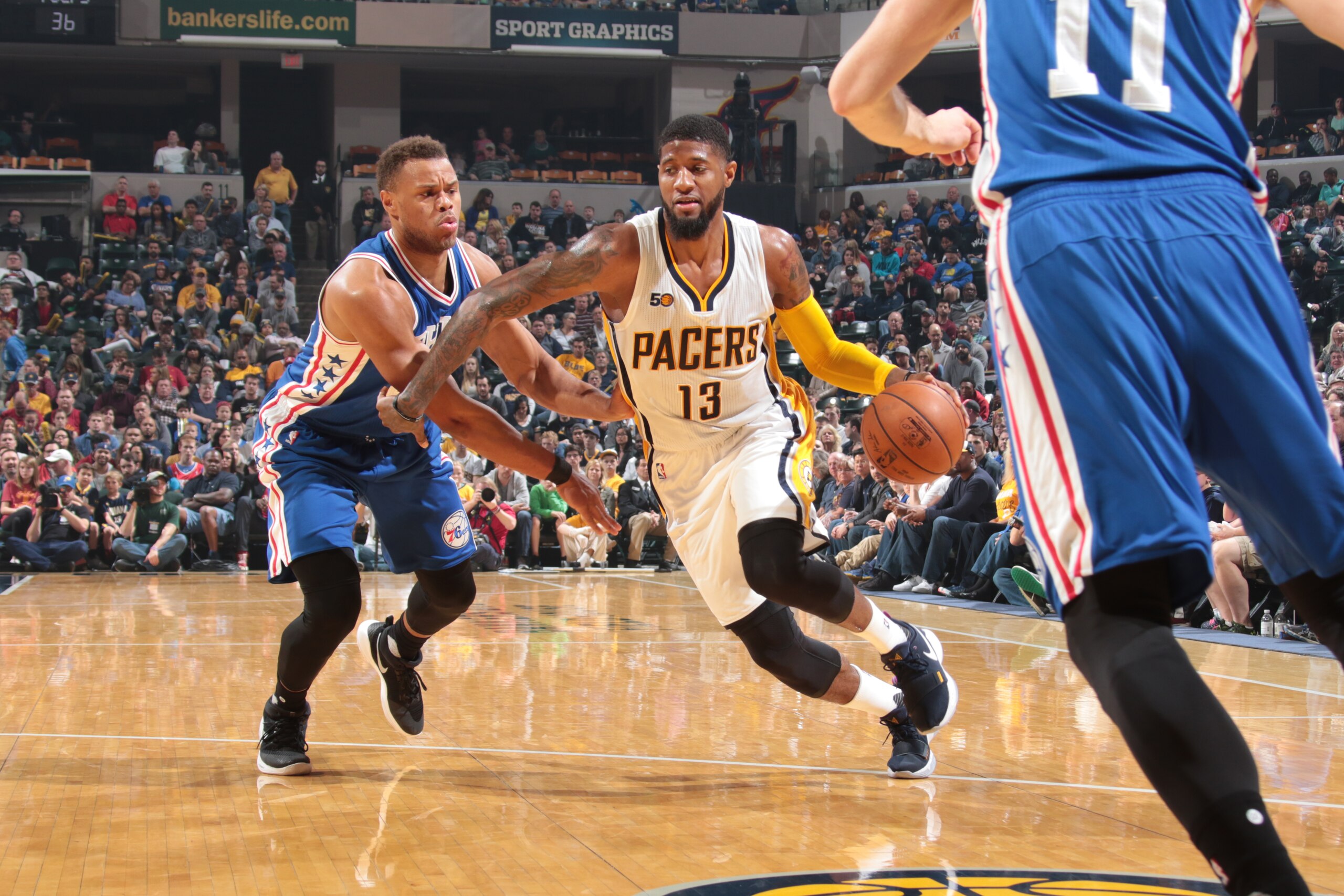
This is where the absence of Sam Hinkie comes in handy—insofar as you value draft-night chaos.
With him at the helm, there would be no mystery. You wouldn't know who the Sixers planned to take, but there would be a precisely negative-one-jillion percent chance of him dealing the third overall selection.
Hinkie's successor, Bryan Colangelo, is more of a wild card. He appeared open to moving down after the lottery, per Montgomery Media's Jack McCaffrey. Sources also told Liberty Ballers' Kyle Neubeck that Philly made a "significant" bid for George at the trade deadline. The original parameters didn't include this selection, but Colangelo wants veterans, and it doesn't take much to talk yourself into Joel Embiid and Ben Simmons convincing George to stick around long term.
In the event the Sixers keep this pick, they remain wild cards.
While Bleacher Report's Jonathan Wasserman has them taking Tatum in his latest mock draft, Jackson has been his favorite for them in the past. Sam Vecenie of the Sporting News told CatsPause.com Malik Monk "is in play" for them, too. Stefan Bondy of the New York Daily News also heard they'll look at De'Aaron Fox and Dennis Smith Jr.
Fox is a genuinely interesting reach because he's a feisty defender who can hang with wings and also alleviates the playmaking burden Simmons will be forced to ferry in his first year. The Ringer's Mark Titus expanded:
"Fox reminds me of Mike Conley when he was in college (they’re both left-handed!) just as much as he reminds me of Wall. Fox seemed way too smart and in control of the Wildcats offense to be a freshman point guard; he’s got insane quick-twitch muscles; and he’s the fastest guy on the court who knows that the most effective way to use that advantage is to deploy clever changes of pace."
Playing Simmons next to a point guard who canned under 25 percent of his threes at Kentucky poses an awkward fit, but the Sixers have stockpiled enough high-end prospects to take this kind of chance. And if they are enamored with Fox, at least one of Ball and Jackson will have fallen outside the top three—which would, once again, trigger the "TRADE UP DAMMIT" alarm for everyone behind the Suns.
Portland Trail Blazers
6 of 6
If there is a team outside the lottery fixing for a draft-day shakeup, it's the Portland Trail Blazers.
General manager Neil Olshey has more picks than roster spots. Retain all three (Nos. 15, 20 and 26), and the Blazers could have as many as 18 players on the roster before July. That number drops to 17 once Festus Ezeli gets waived, and it can dip to 15 if they also ditch the non-guaranteed contracts of Pat Connaughton and Tim Quarterman.
This is still a touchy spot to be in regardless of what the Blazers do with their non-guaranteed commitments. They're projected to blow past next season's luxury tax before adding any money to the payroll. These draft picks will cost them way more than their actual rookie-scale salaries.
Trimming expenses has to be a priority. Even if the Blazers believe in this nucleus, they barely scrapped together a playoff berth. A 41-win unit shouldn't thrust you into the luxury tax.
Trading up is fine if they're looking to crack the lottery. (Do the Charlotte Hornets deal No. 11 for No. 15 and No. 26?) Otherwise, the Blazers should be trying to pawn off more unsavory deals—namely those of Meyers Leonard (three years, $31.8 million) and Evan Turner (three years, $53.6 million).
Does offering No. 15 to the Kings get them to absorb Turner? Are the Blazers willing to include two firsts to make it happen? And if they're shipping out Turner, might they be open to bringing in Pau Gasol as part of some three-team trade that helps the San Antonio Spurs clear space? Does the dumping ground they're sending first-rounders to all of a sudden have enough juice to trade up?
The Blazers have a lot to figure out over the summer, and there's a better-than-good chance they look noticeably different next season—tinkering that could begin, in a big way, on or before draft night.
Dan Favale covers the NBA for Bleacher Report. Follow him on Twitter (@danfavale) and listen to his Hardwood Knocks podcast co-hosted by B/R's Andrew Bailey.
Stats courtesy of Basketball Reference or NBA.com. Team salary information via Basketball Insiders and RealGM.
.jpg?w=2560 "🚨 Davante Out 6-10 Weeks")
.jpg?w=2560 "Tank Dell Playing Sunday 💯")