

1 Key for Every 2016 NBA Title Contender to Go Home with the Trophy
Want to know how every serious NBA title contender can maximize its chances of winning this year's championship?
Then follow me.
Serious contenders mean serious contenders. We won't be dealing with fluff pretenders that aren't part of the championship conversation. Our legitimate threats will be separated into tiers, which are based off the likelihood of them winning the title.
TOP NEWS
Buzz: Kings Declined Trae Trade
Buzz: Why Kawhi Trade Is Delayed ✋

Top NBA Free Agents Available 🙋
There is no one key that can guarantee a championship. These are just the important improvements and adjustments the league's best must make if they're to hoist the 2016 Larry O'Brien Trophy.
Tier 3: Fringe Title Threats
Los Angeles Clippers: Blake Griffin's Return

That awkward ripple in time when we wondered whether the Los Angeles Clippers were better off without Blake Griffin? It has passed.
These Clippers, if they wish to seriously contend with the Western Conference's powerhouse tricycle, need Griffin. There is no exceptionally good news to report on his pending return. On the bright side, there's no patently bad news to deliver, per Clippers.com's Rowan Kavner:
Indeed, the Clippers have been good without Griffin. Since Dec. 26, when his extended absence began, they rank sixth in offensive efficiency, fifth in defensive efficiency and third in net rating. This months-long effort lines up with their performance when he plays:
| With Griffin | 107.8 (5) | 102.1 (9) | 5.8 (5) |
| Without Griffin (since Dec. 26) | 108 (7) | 102.2 (5) | 5.8 (5) |
But cracks in the Clippers' Griffin-less foundation are starting to show—flaws that the extra space and pick-and-roll dives generated by his sabbatical just can't cover up.
Through seven games against fellow top-five Western Conference teams without him, the Clippers are an unimpressive 2-5. Though their offense remains steady in those competitions, they have struggled defensively, typically to the point of an unfortunate end result:
| Vs. Top 5 West Teams (No Griffin) | 105.6 | 111.0 | -5.4 |
| Overall | 106.1 | 101.8 | 4.4 |
Getting Griffin back won't solve the defensive woes, and they are 1-4 versus these same squads with him. But they still field a top-10 defense even when he's on the court, and the additional playmaking he guarantees can help combat the efficient point-piling machines in Oakland, Oklahoma City and San Antonio.
Toronto Raptors: Three-Point Defense
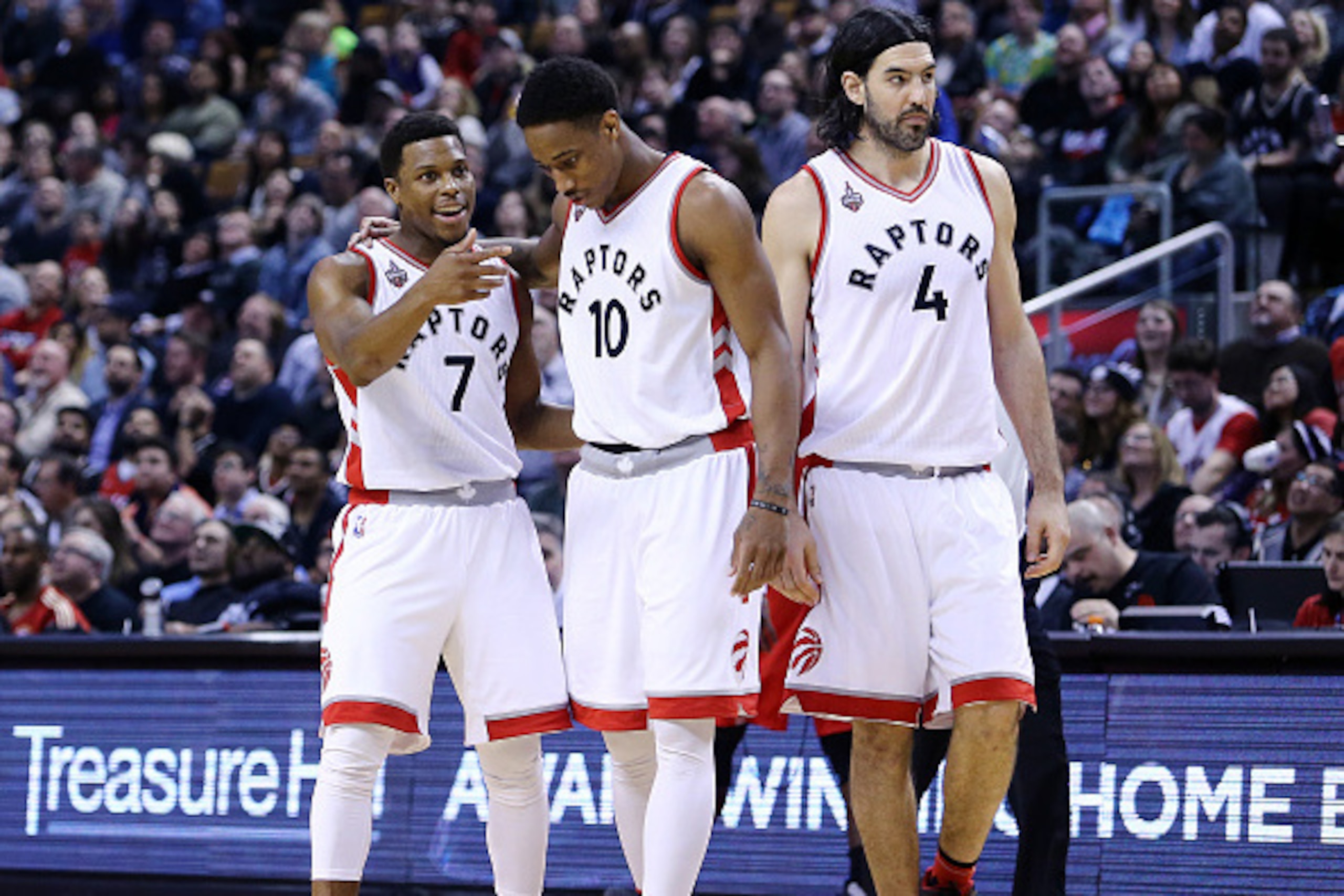
Sources previously told TSN Sports' Josh Lewenberg that DeMarre Carroll, who hasn't played since Jan. 3 after undergoing arthroscopic surgery on his right knee, is planning to return sometime before April.
The Toronto Raptors should rejoice accordingly. Their perimeter defense needs him.
Only the Phoenix Suns allow opponents to drain a higher percentage of three-point looks. The Raptors do an OK job of limiting those shots overall, but they're vulnerable in ways that aren't indicative of a team hovering around the top 10 in points allowed per 100 possessions.
Flimsy defensive frontcourts headlined by combinations such as Luis Scola and Jonas Valanciunas (injured; hand) force the Raptors to converge on ball-handlers inside the arc. This works to some degree, as they rank in the top five of paint protection despite Scola's and Valanciunas' nightmare defense at the rim.
But it comes at a price. Teams that repeatedly attack the basket coax the Raptors into a flurry of rotations. Pass enough, and they'll lose sight of at least one shooter as they try compensating:
Slotting Bismack Biyombo, a more staunch rim protector, at the 5 has not allowed Toronto to break these habits either. The defense is constantly scrambling to mask the lack of speed at the 4 spot.
Players are subsequently relying far too much on close-outs, mostly to no avail. Quicker wings are tasked with covering too much ground, and the Raptors' power forwards aren't capable of shooting even the slightest gaps.
Toronto, not surprisingly, dwells inside the bottom five of spot-up defense. Aside from the subtly nimble Kyle Lowry, no prominent wing or forward is having a profound impact on rival three-point chuckers:
Welcoming back Carroll will let the Raptors deviate from ball-swarming. He is quick enough to shimmy between assignments on the same possession and saves teammates like DeMar DeRozan, Cory Joseph, Lowry et al. from abandoning their own man.
Shore up that leaky three-point wall, and the Raptors, without question, make the jump from fringe threat to real deal.
Tier 2: Bona Fide Contenders
Cleveland Cavaliers: Regaining Defensive Mojo
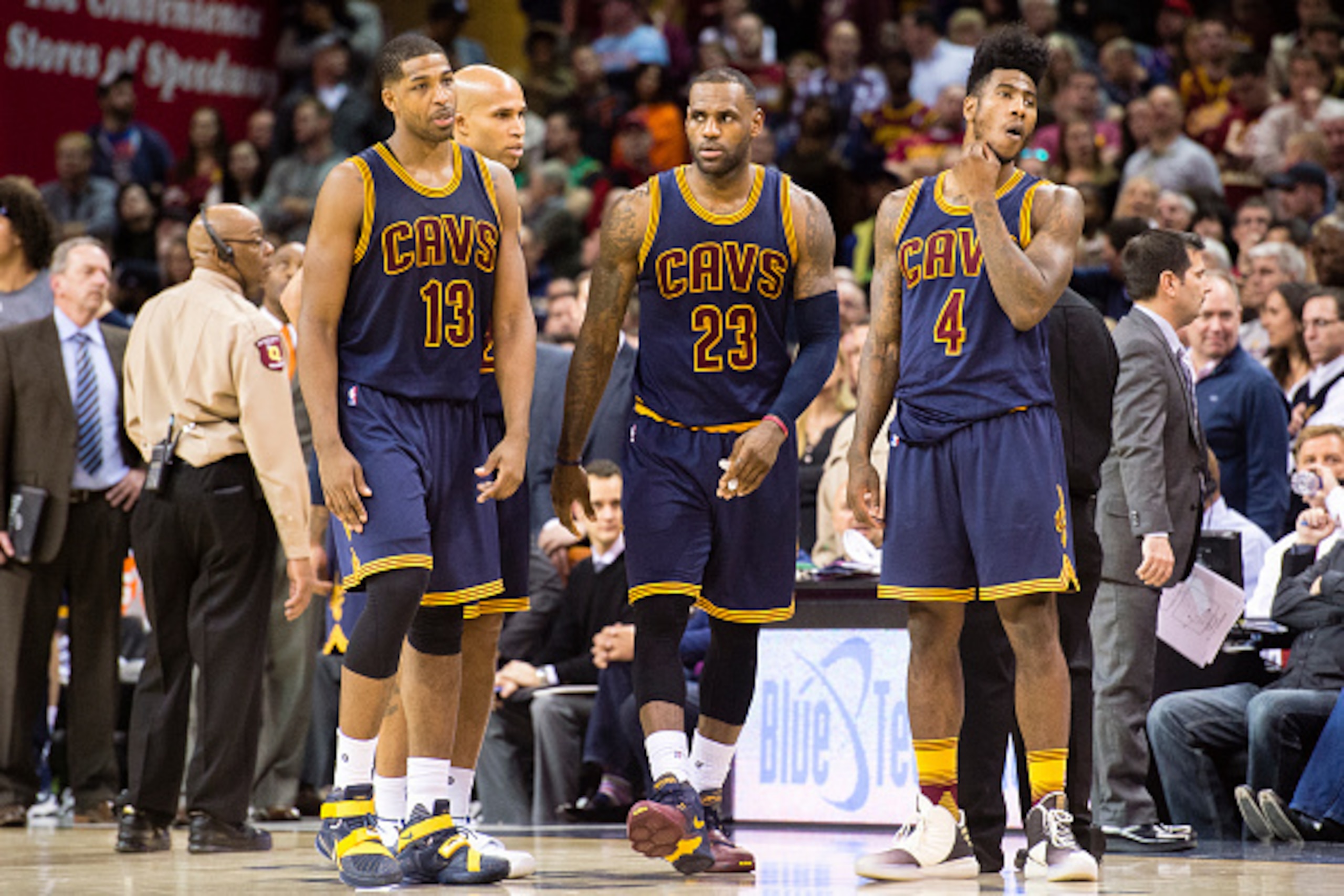
For a while, it looked as if the Cleveland Cavaliers would end up being one of the league's most balanced teams. But their defense has regressed under head coach Tyronn Lue.
Cleveland ranks 13th in defensive efficiency and has been even worse over its last 16 games, relinquishing 106.9 points per 100 possessions, the 16th-best mark during that time.
There is no one problem fueling this demise. The issues extend from the inside out. Since Feb. 24, the Cavaliers are in the bottom eight of rim protection and three-point defense. And Lue, to his credit, has taken full responsibility for the team's breakdown.
“It’s going to get better,” he said, per ESPN.com's Dave McMenamin. “Yeah, our defense is going to get better. And I take full blame for that. We’re trying to do some different things and now we've just got to get back to the basics and get back to our foundation.”
Injuries and, recently, rest days have forced Lue to experiment. But these "dumbed-down" schemes, as McMenamin calls them, are susceptible to pretty much any opposing offense that doesn't traffic in isolation sets.
Constantly tinkering with the rotation isn't helping matters. Cleveland has trotted out 17 different starting lineups on the season, more than any other team on this list aside from the Clippers. The defense is at its worst in the first quarter as a result:
The Cavaliers have moved away from the starting lineup of Kyrie Irving, J.R. Smith, LeBron James, Kevin Love and Tristan Thompson that proved so effective. Those five are a statistical dream when on the floor this season, outpacing opponents by almost 13 points per 100 possessions. That group is still Cleveland's second-most combination since Feb. 24, with a defensive rating (94.3) that would rank first and an offensive rating (109.9) that would check in at second.
Ditching units that feature Love at center or that limit Thompson to the second unit should help beef up the Cavaliers' rotation ahead of the playoffs. They can't worry about staggering the minutes of certain players when the defense is this compromised.
Oklahoma City Thunder: Late-Game Execution
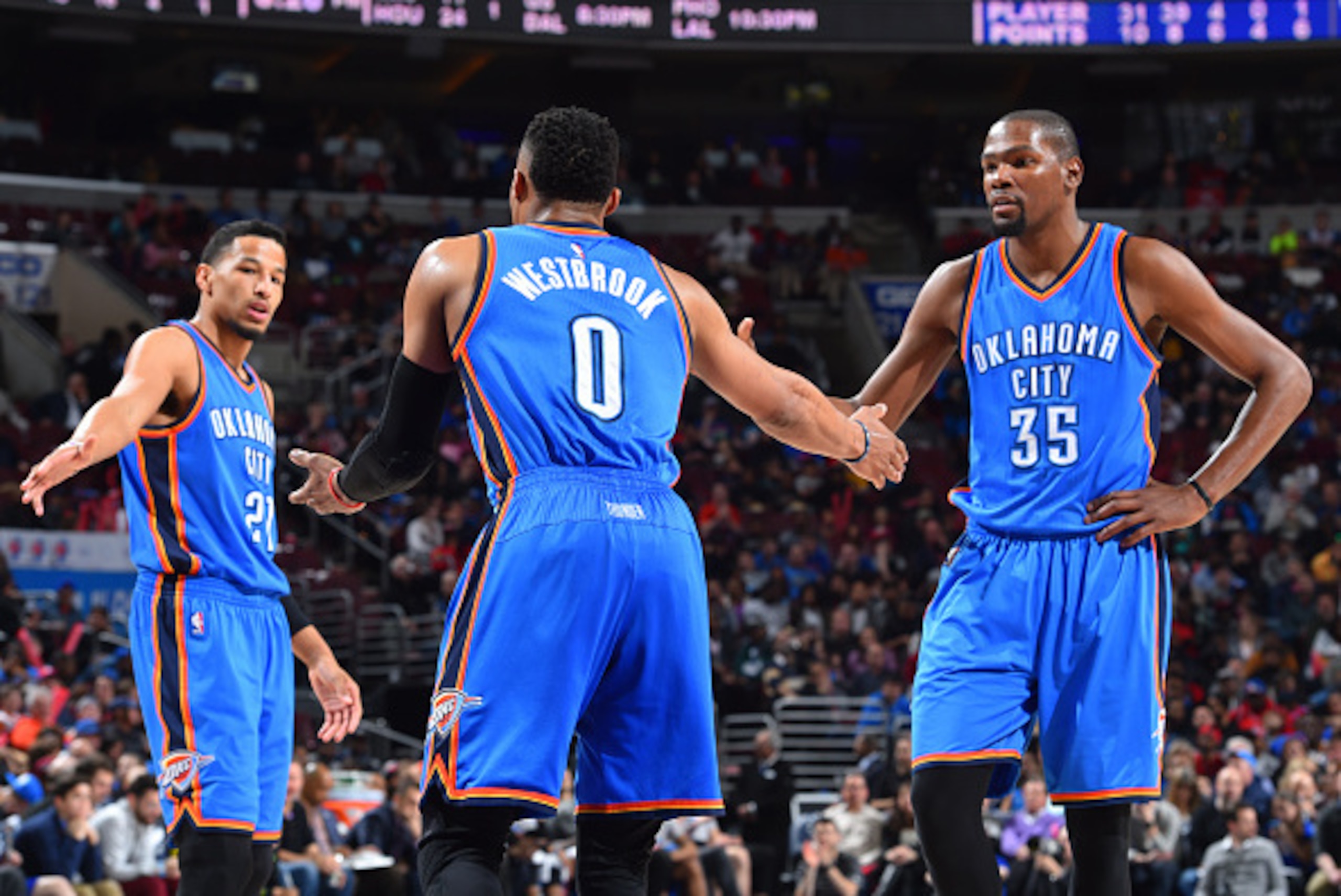
Crunch-time hiccups are kind of the Oklahoma City Thunder's thing.
Seventeen of their 22 losses have come during games in which they trail or lead by no more than five points entering the final five minutes of play. Their overall record in these situations, 21-17, is just absurdly bad when considering they're on track to win 56 or 57 games by season's end.
Everything about the crunch-time Thunder has, by and large, been a disappointment. They rank 25th in defensive rating, allowing more points per 100 possessions than high-profile turnstiles like the New York Knicks and Sacramento Kings. Their offense, while ninth in efficiency, gets bogged down by sloppy decision-making and a complete absence of creativity.
Just 42.7 percent of Oklahoma City's buckets come off assists down the stretch, the NBA's fifth-lowest figure. Kevin Durant and Russell Westbrook are both settling for too many jumpers, killing the team's clutch-time free-throw rate.
Westbrook specifically has been a detriment during the latter stages too. His per-36-minute averages of 29.6 points, 8.9 rebounds and 7.7 assists are, as usual, inexplicable. But those numbers are accompanied by equally inexplicable shooting percentages and turnover rates:
Close games are a reality of the playoffs. The Thunder have already shown they can remain within striking distance of the Golden State Warriors (twice) and San Antonio Spurs for quarters at a time. They just need to finish out pressure situations with more cohesion and savvy, defending the full length of the court and creating better shots.
After all, Westbrook and Durant cannot always be expected to make something out of nothing.
Tier 3: Championship Favorites
Golden State Warriors: Getting, and Staying, Healthy
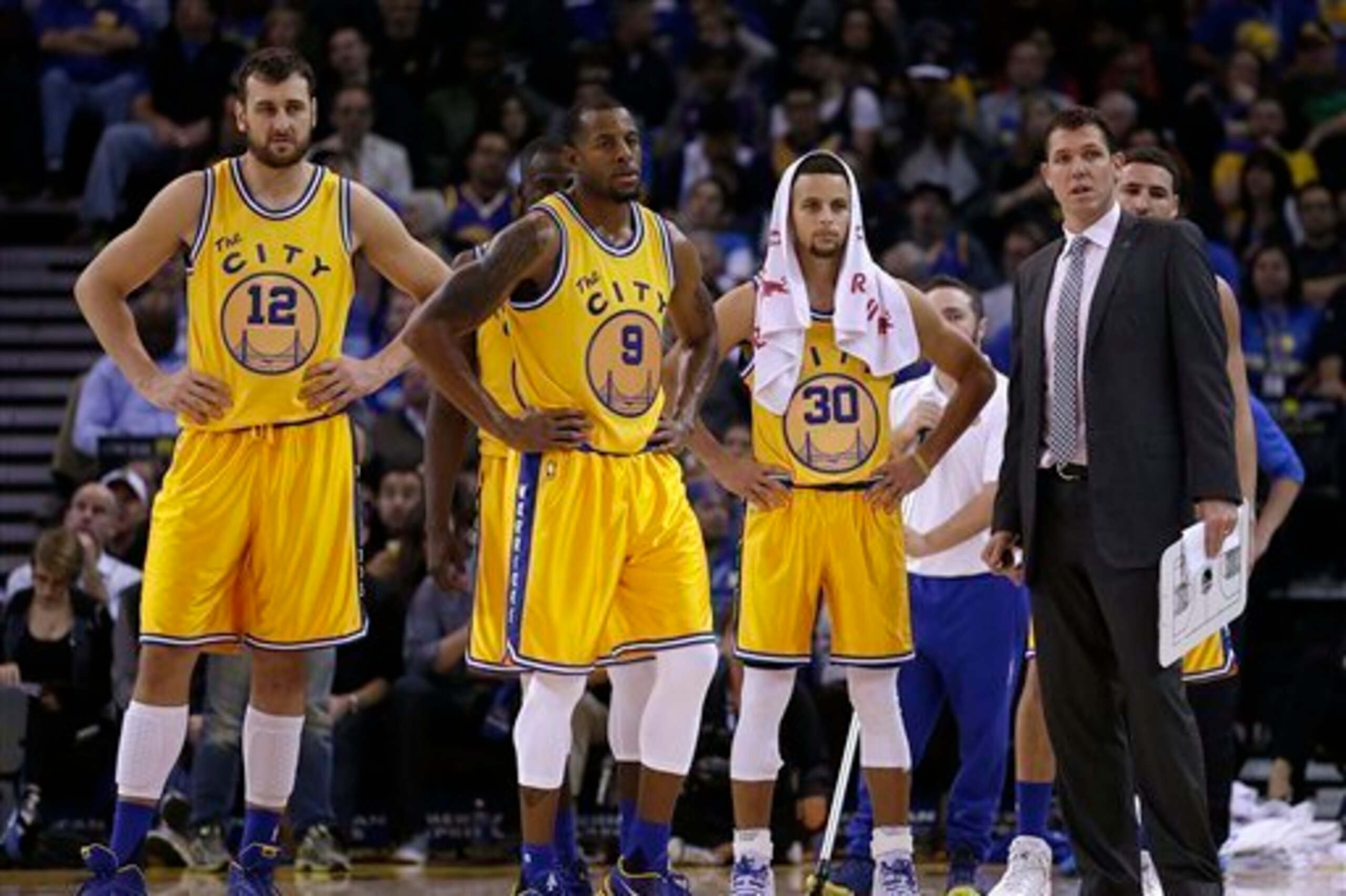
It really is this simple for the Warriors. They are challenging the 1995-96 Chicago Bulls for best-ever honors, and there's no use pretending anything else other than health is of greater value to them.
Stephen Curry, Draymond Green and Klay Thompson, Golden State's three most important players, are in good form. But Andrew Bogut is banged up (toe), Festus Ezeli hasn't played since Jan. 25 as he recovers from arthroscopic surgery on his left knee and Andre Iguodala remains sidelined with a left ankle sprain.
Iguodala is clearly the most important of this trio. He defends a wide variety of positions, and is an ideal off-action weapon for Curry and Green to leverage on dribble drives.
Golden State's small-ball "Death Squad," a unit comprising Harrison Barnes, Curry, Green, Iguodala and Thompson, doesn't exist without the reigning NBA Finals MVP. No in-house lineup has logged more minutes in the fourth quarter—which, for the record, is saying something, since this group has appeared in just 17 final frames together.
The Warriors depend on this five-man combination to dictate terms. It creates an inordinate number of offensive mismatches and thrives defensively without exceptional size. And in less than 70 minutes of total spin, it has outscored opponents by 97 points.
To keep ripping rivals out of their comfort zone and enforcing adjustments for which many foes aren't fit, the Warriors need this lineup.
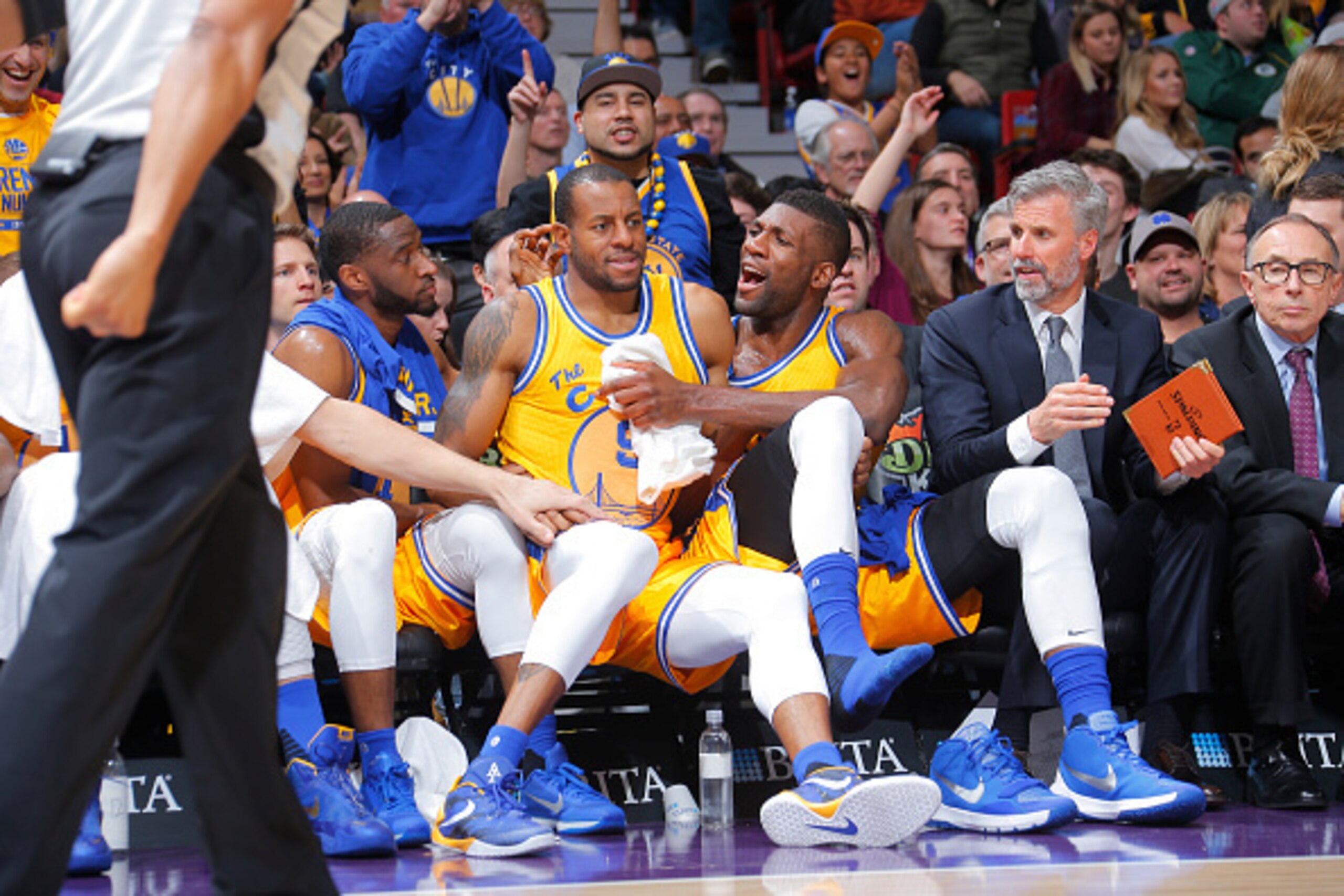
Bogut and Ezeli are important on a completely different level. They help Golden State play a more traditional, half-court style, something the Warriors will need should they meet the Spurs in the Western Conference Finals.
San Antonio turned the tables on Golden State during its March 19 victory over the Bay Area's finest. This time, it was the Warriors, not their opponent, who needed to adjust.
The Spurs limited them to an average of 87.1 possessions per 48 minutes—by far Golden State's slowest affair of the season. They also pounded the Dubs on the glass, doubling their offensive rebound total and finishing as a plus-16 on the boards overall.
When either Bogut or Ezeli play, Golden State isn't as vulnerable on the glass. Bogut is especially valuable as a playmaker. He isn't an efficient post-up finisher, but he sees the floor well and expertly anticipates the separation from one of the team's many cutters:
So much of the Warriors' appeal as historical favorites is rooted in this ability to excel playing any style, slow or fast, big or small. That allure, though, doesn't shine as bright if they're not at full strength.
San Antonio Spurs: Planning for the Warriors
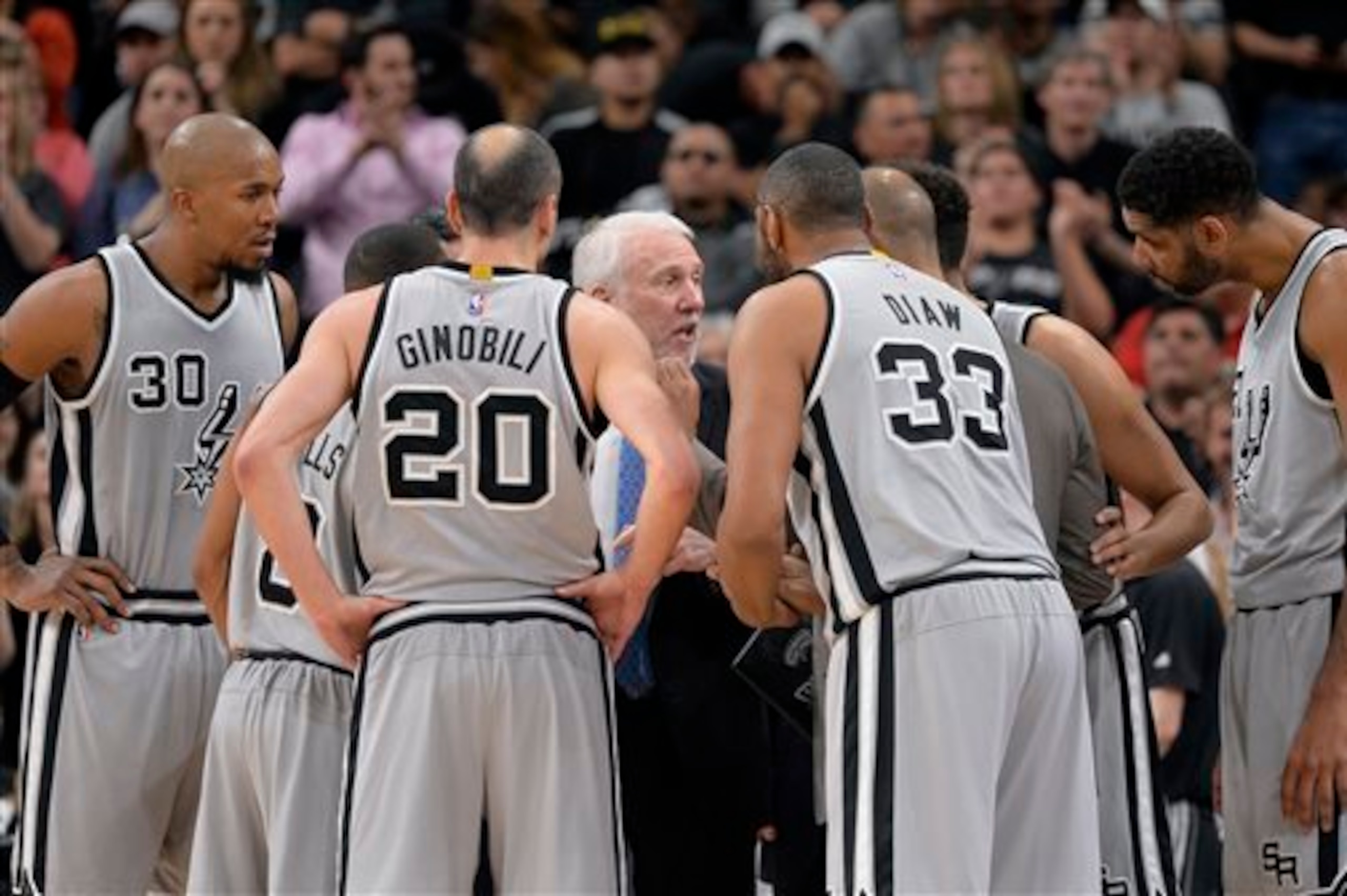
Tailoring an NBA Finals blueprint to one team might seem presumptive. In San Antonio's case, however, it's just good business.
The Spurs are, in theory, built to beat the Warriors. They favor dual-big lineups, chase opponents off the three-point line and control the pace, preferring that every tilt turn into a half-court slugfest.
But they cannot only bank on playing their style. The Warriors are their greatest threat and assembled to disarm opponents. There will be stretches, as there were during San Antonio's March 19 win, when the team must cater to Golden State's model, as ESPN.com's Tom Haberstroh noted:
Head coach Gregg Popovich countered with Boris Diaw and LaMarcus Aldridge up front whenever the Warriors used Green at center during the second meeting between these two teams. Diaw, like Green, is uniquely qualified to guard just about every position, affording San Antonio similar offensive versatility without the risk of wholly ruining the defense.
Still, the Spurs will have to warm up to the idea of removing Aldridge, like they did Tim Duncan, and throwing out Diaw as a 5. Aldridge found himself lined up with Green on the perimeter at times, and San Antonio's defense won't be able to function properly in man coverage or on switches during those moments if Green gets any downhill momentum.
Launching more threes, at least against Golden State, will also be a must. The Spurs rank 25th in long-distance volume, which won't fly when the Warriors are hitting shots. San Antonio was minus-18 from downtown in the first meeting and needed Golden State to shoot 25 percent from the outside to win the second matchup.
Contradicting the Warriors' approach is no doubt part of the Spurs' charm. But to end this season with a title, they will, in all likelihood, need to go through the defending champs.
To do that, they'll need to eventually beat them at their own game.
Stats courtesy of Basketball-Reference.com and NBA.com and accurate leading into games on March 24.
Dan Favale covers the NBA for Bleacher Report. Follow him on Twitter, @danfavale.
.jpg?w=2560 "NFL head coaching legend has a Minecraft hobby just as impressive")
.jpg?w=2560 "Baker, Bucs Agree to Deal 💰")
.jpg?w=2560 "Week 1 Waiver Wire Targets")
.jpg?w=2560 "Week 1 Start 'Em, Sit 'Em Plays")
