

Why Some NBA Points Mean More Than Others
Of all the stats in basketball, none are as prestigious as points. But some points are still better than others.
Nothing can validate a player more than pouring in a massive number of basketballs through the net. It’s reasonable that it should be the case. After all, the end objective of any offensive possession is parting the nylon.
Kids playing basketball in the driveway don’t chant “Three…two…one…rebound! And the crowd goes wild!”
TOP NEWS

Jokić Pops Out at CU Game 🦬

Watch: LeBron's 1st 76ers highlights

NBA Power Rankings Entering Preseason 🔢
Scoring is where it’s at. It’s the Hollywood of basketball. Sometimes, though, that glamour isn’t deserved.
My Bleacher Report colleague, Adam Fromal, and I have developed “Scorer Rating” to separate the wheat from the chaff.
Points per game tells you how often a player succeeds in his endeavor to score, but that’s all it tells you.
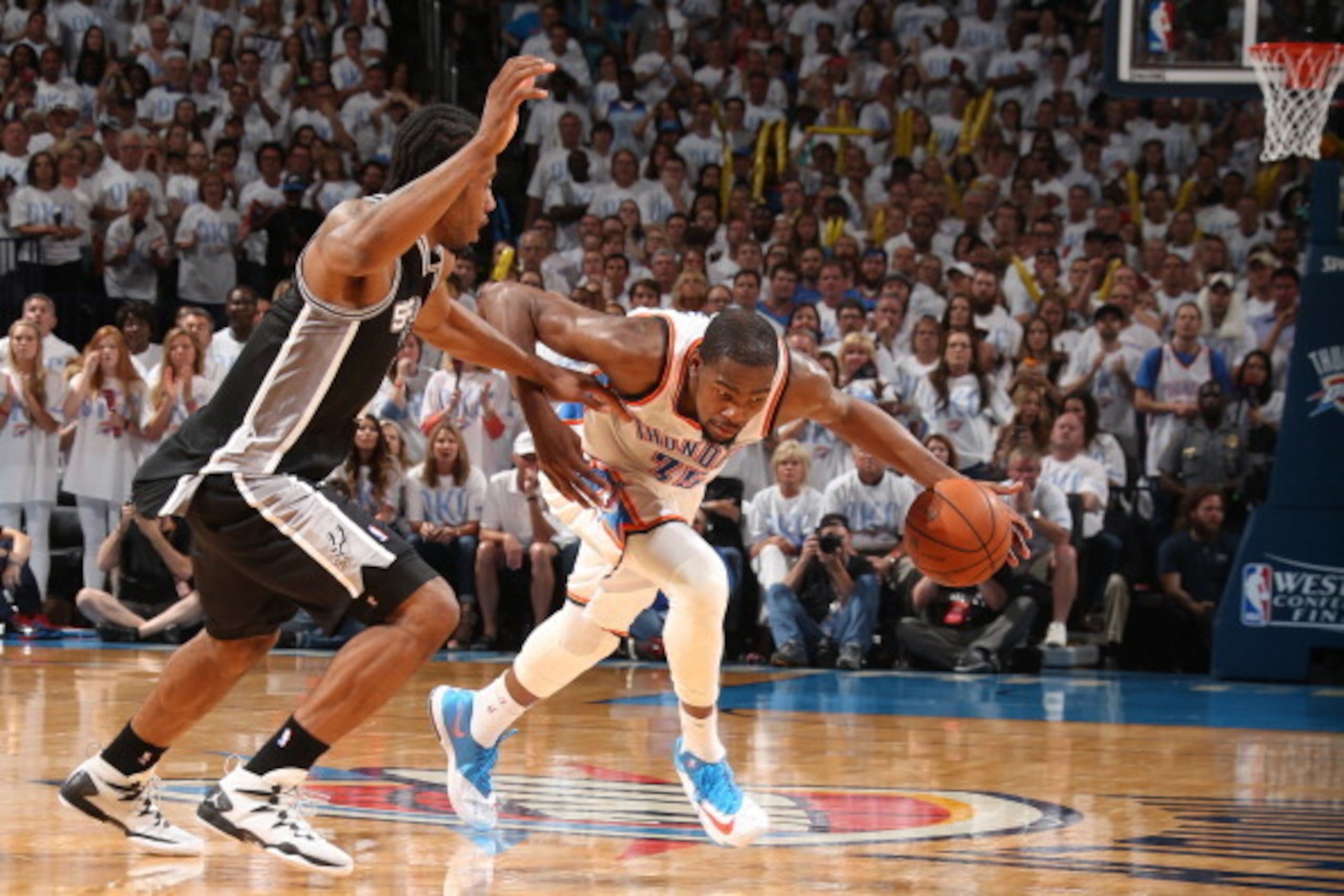
Scorer Rating doesn’t just reflect a player’s success, it shows how much his success and failures help or hinder the team. It measures how many points a player adds to his team through his scoring.
Bear in mind, possessions have a 24-second shelf life. They get used regardless of whether Player X is on the floor. Some of those would still result in points. Therefore, not all the points a man scores are “added”; some would have come anyway.
For example, the Oklahoma City Thunder scored 106.2 points per game. Kevin Durant scored 32.0 of those. That doesn't mean that Durant added 32 points. They would have still used every possession he did and scored points on some of them.
Durant's scorer rating was 13.0. That is the number of points he actually added after accounting for those other possessions being used. That means, the Thunder, who had the fifth-best offense, would have averaged about 93.2 points without Durant on the team. That's slightly less than the Chicago Bulls' last-place offense (93.7).
So, Durant was the difference between the Thunder being one of the five best offenses in the league and the worst. The number 13 might not seem big if you’re using points per game as a reference, but it’s huge in the context of Scorer Rating. Only six players had a Scorer Rating over 9.0, and only 50 were better than 5.0.
Adam already gave the player rankings. My job here is to explain how we got the numbers and what they mean in the larger sense.
Quantity vs. Quality in Points Scored
Sometimes teams can be hurt by an overly zealous shooter. Even if he’s scoring, if he’s missing a plethora of attempts in the process, he isn’t helping them win.

For example, DeMar DeRozan averaged 22.7 points, but he shot just 42.9 percent overall and 30.5 percent from deep. He was the least efficient shooter to average better than 20 points last season, per Basketball-Reference.com.
On the other hand, a scorer might make a high percentage of his attempts, yet he only does so because he is limited in what his skills are. A big man who gets the majority of his points off tip-ins is likely to be a very efficient scorer with little offensive ability apart from that one skill. And you can’t game-plan missed shots for him to rebound.
For example, Ryan Hollins of the Los Angeles Clippers had a field-goal percentage of 73.6 last season, which was the highest of anyone qualified for the scoring title. But he scored 141 points on the entire season.
If we’re looking at just efficiency, Hollins is better than DeRozan. But—and I don't mean to blow your mind here—DeRozan is a much better scorer than Hollins. Efficiency matters, but it’s not the only relevant metric.

Another factor that is important is how those points were produced. A player who can generate field goals for himself is harder to find than a guy who can just catch and shoot. Kyle Korver might be the best true shooter in the league, but he's not the next cornerstone of a championship team. Shot-creating matters.
Thus, there are three important factors: volume, creativity and efficiency. Scorer Rating accounts for all of them.
Here are some statistics and metrics normally applied to scoring and the problems inherent in each of them.
- Field-goal percentage is possibly the most commonly used meaningless number in basketball. It tells very little because there are so many things it doesn’t account for, such as three-point shots and free throws. It also doesn't tell you if those shots were assisted or unassisted.
- Effective field-goal percentage is better, in that it accounts for the fact that a three-point make should factor more than a two-point one, but it can still be misleading. A smaller player who gets to the rim a lot will get fouled more often. While those don’t count as “attempts,” the ensuing free throws, which are a result of that possession, aren’t factored in.
- True shooting percentage accounts for free throws and threes. As a percentage, it’s the best thing there is, but it doesn’t account for volume. And it still doesn’t tell you if a player generated points for himself.
- Points per game shows how much a player scores, but it doesn’t tell you how often he misses.
- Single-number metrics tend to just throw the whole fruit basket—apples, oranges and bananas—into a giant salad. They’re good for seeing the value of an overall player but do little to distinguish the best scorers because they include rebounding and passing numbers. Ambrosia’s great and all, but sometimes you just want an apple.
Here are some factors that aren’t accounted for by most of the predominant scoring measures:
- Unassisted field goals come when a player creates the shot for himself. It is arguably the most difficult skill in basketball, but it is not reflected any differently than assisted field goals.
- Offensive rebounds don’t seem like they should matter, but they do. The player only costs his team the value of a possession when his team doesn’t retain it.
- Pace makes a difference. Players who are on faster offenses will have more opportunities.
- Offensive rating varies. However, many metrics ignore this when assigning value to a possession. A possession should reflect the team he plays for, not some singular standard.
And this is how Scorer Rating resolves the issues.
- Points are still the beginning of everything. Every player gets credited with the full value of his scoring.
- Shot-creating is accounted for by essentially splitting every field goal into halves: creating the shot and making it. When a player was unassisted on the shot, he retained full credit for it. When a player was assisted on it, half the credit was taken from him. (The other half was assigned to the passer in our Passer Ratings.)
- Missed field goals are the primary value of shooting-percentage stats. The problem is they account for only the rate, not the volume of misses. Thus, players with varying levels of production are lumped together (i.e., the aforementioned Hollins/DeRozan factor). We accounted for this by subtracting the value of the team’s possession (offensive rating/100) to each miss.
- Missed free throws follow the same principle, albeit with a slight adjustment. There are times when a missed free throw doesn’t actually cost the team the ball. For example, on an and-1 or when a player is attempting a technical, no possession is used. For that reason, a free-throw attempt was assigned the value of .44 possessions, the norm for advanced stats.
- Offensive rebounds sometimes follow a miss. Thus, not every clank off the rim equals a lost possession. Scorer rating accounts for this by multiplying a player’s misses by the team’s offensive-rebound percentage. So, if he misses 10 shots a game, and his teammates rebound 30 percent of those, we “refund” him three possessions.
- Pace was adjusted for to neutralize the number after all the other factors had been taken into account.
The full formula, for those who want to see, it is here.
The 95 Percent Test
As with all our new metrics, we applied the 95 percent test, meaning that the results should look mostly right but not exactly the same as what we already had. If the results are too odd, then there’s something flawed in the logic. If they are too similar, it’s pointless (pun intended).
So the first thing we did is get a visual comparison of Scorer Rating and points per game. Here is a dot for everyone who averaged 10 points and played in at least 20 games:
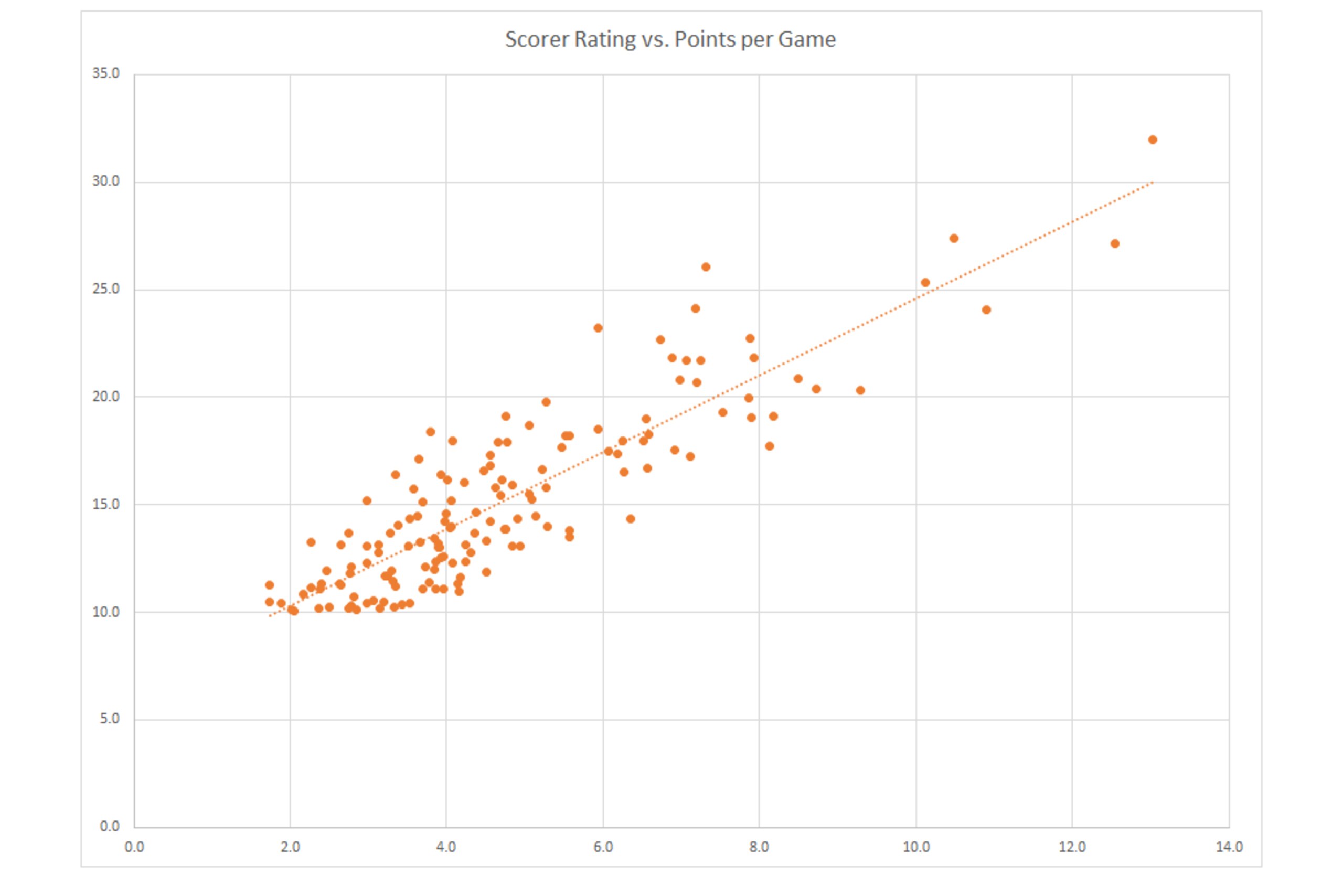
What we want to see here is clustering around the trend line, but with some disparity. Since that’s what we saw, we felt comfortable with our new formula.
Generally speaking, the further below the trend line a dot is, the more points per game undervalues the player.
But, since random dots don’t tell you anything about individual players, you can find who you’re looking for in the infographic below. Just use the drop-down menu to select the player you want to see.
From there you can pinpoint the placement on the graph above. Take a guess as to who the dot in the top, right-hand corner is!
Trends
The next thing we looked for are trends. What did the dots that are further away from the trend line tell us that we didn’t already know? Are there tendencies that jump out?
I looked at two things: players who moved up the most in the Scorer Rating rankings and those who dropped the furthest.
The sortable table below shows how players who averaged at least 15 points fared:
In the differential column, the higher the number, the more a player is being undervalued. The lower the number, the more overrated he is.
So, Eric Bledsoe is the most underrated scorer in the game (but still can’t get a max deal), and Klay Thompson is the most overrated (but was too good to let go of for Kevin Love). Just those two things validate the stat.
But why do Bledsoe and Thompson fare so differently? Thompson scores 18.4 to Bledsoe’s 17.7.
Thompson is very efficient with a hefty effective field-goal percentage of .533. Bledsoe is still proficient from the field—51.7 percent from two and 35.7 percent from three. But he also created 3.8 unassisted points for every assisted one, the highest ratio in the league.
Thus, he has all three factors we are looking for: creativity, volume and efficiency.
Thompson, though, was not very creative, averaging just 0.3 points for every assisted one.
Bledsoe does better because his points are harder to come by and less team-dependent. He is rewarded more by Scorer Rating than Thompson, accordingly.
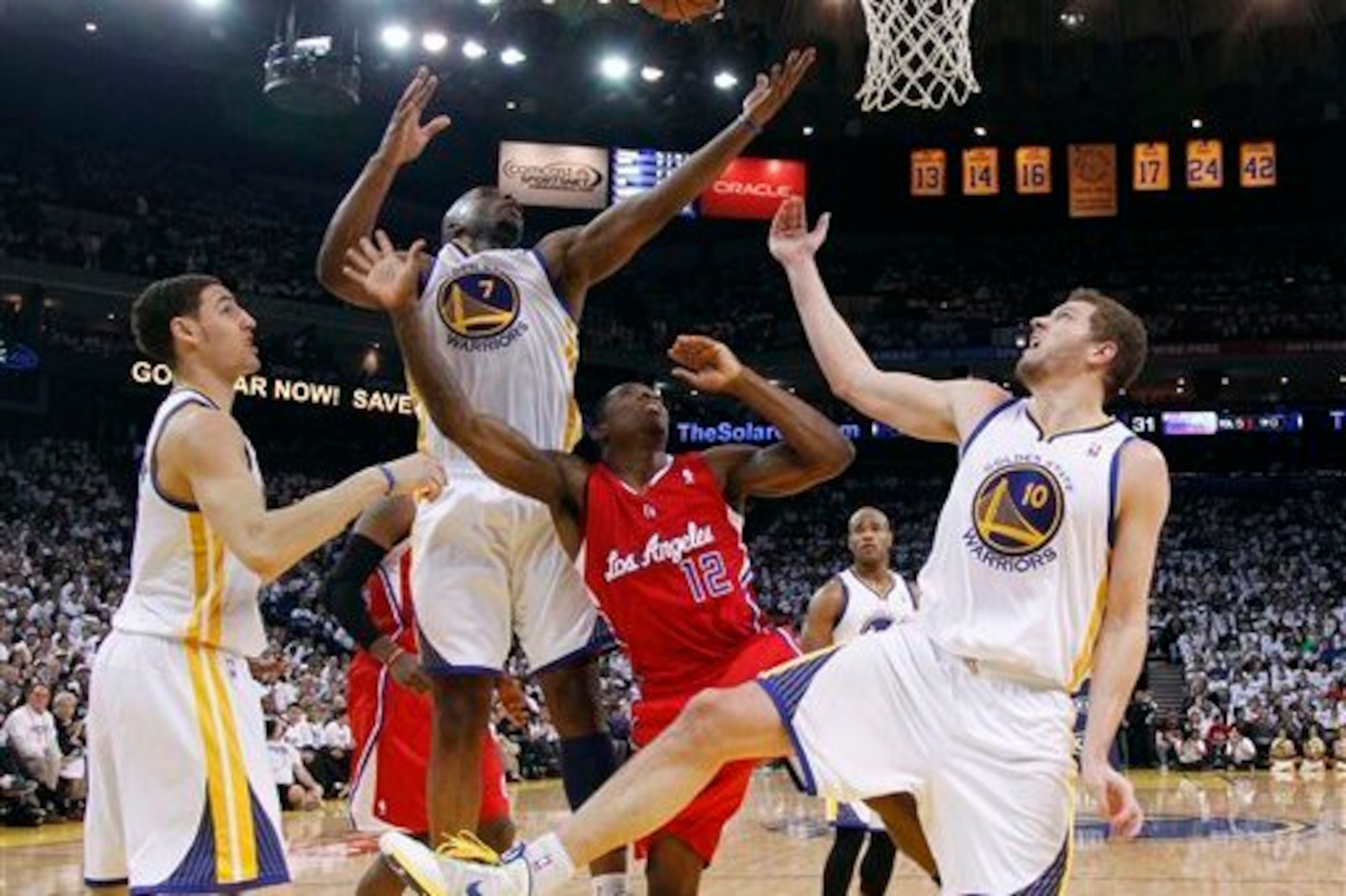
Lest you think that Scorer Rating skews toward shot-creators, though, it doesn’t. Efficiency matters, too. Josh Smith, Nick Young and DeRozan all create more than half their own shots, but they are among the most overrated players, as well, because they are low-percentage scorers.
In fact, notice that most of the players near the top of the differential list are ball-handlers who generate the majority of their own points but still do so efficiently (e.g., Bledsoe, Mike Conley, Tony Parker). That doesn’t mean they’re the best scorers; it means they’re the ones whose value gets curtailed the most by points per game.
Likewise, Thompson being near the bottom doesn’t mean he’s a bad scorer; it just means he benefits the most from points per game.
In other words, our formula does what it was designed to do.
Nuggets
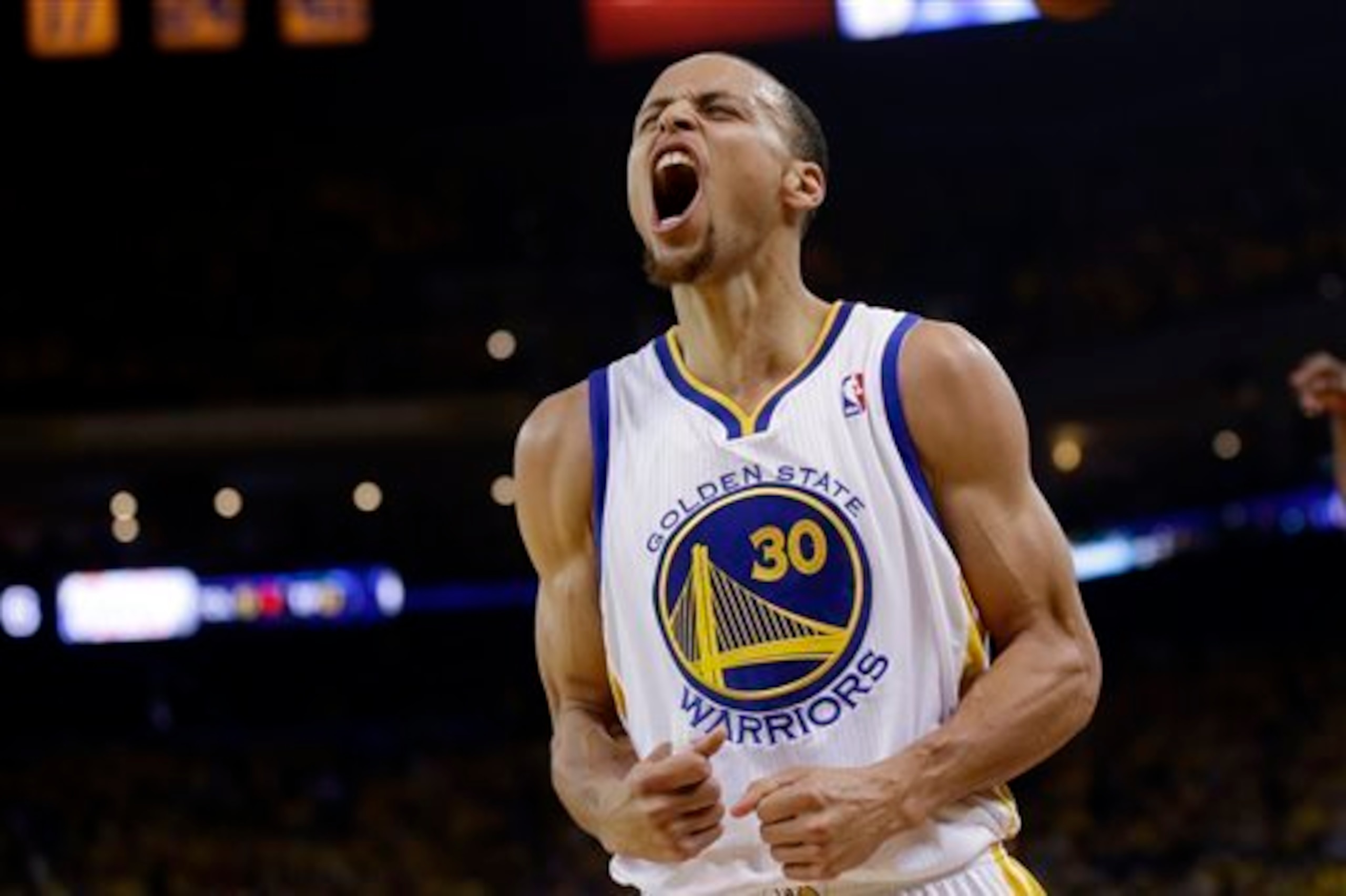
The next thing that we like to do with new metrics is look for the tasty little morsels that make the brain spark. Here are some things that you might be interested in knowing. Unless otherwise stated, these are numbers for points off field goals:
- Stephen Curry led the league in unassisted points per game with 13.5. Carmelo Anthony was second at 12.5.
- Of all the players who averaged in double figures, Korver had the fewest unassisted, 0.6.
- It’s worth repeating: Bledsoe had the highest unassisted-to-assisted points ratio: 3.8.
- Korver also had the lowest unassisted-to-assisted ratio for his points: .05. That means Bledsoe was 76 times more likely to create a field goal than Korver. Put another way, he created about as many shots each game as Korver did all year. Let that boggle around in your mind for a bit.
- Kevin Love led the league in assisted points per game, 13.2. Thompson was second at 13.0.
- If we factor in free throws as unassisted points, Durant had the most in the league (20.8), and James Harden (18.8) was second.
- Durant is the only player to average double digits in both unassisted (12.2) and assisted (11.1) points. LeBron James (12.2/9.1) and Carmelo Anthony (12.5/9.0) are the only others who even came close.
- Just in case you couldn't figure it out, that dot way up in the right-hand corner was Durant. Shocker!
And, as with all of these, we name our "NBA All-Scorer Rating Team." The only two players who were on our "All-Passer Rating Team," "All-Rebounder Rating Team" and "All-Scorer Rating Team" are James and Love.
Imagine if those two guys were teammates!
Warts
Perhaps because scoring is the most glamorous stat, it has been the most thoroughly researched. Thus, a la carte, it has the most available “Compound W.” As a result, there are fewer warts here than in our other metrics. We were able to factor in most of what we wanted to.
That doesn’t mean that there aren’t things unaccounted for. Screens have a big impact on scoring. Ideally, when a pick was involved, the screener would get a portion of the credit as well, but we don’t have information available on who sets them, so we can’t do that.
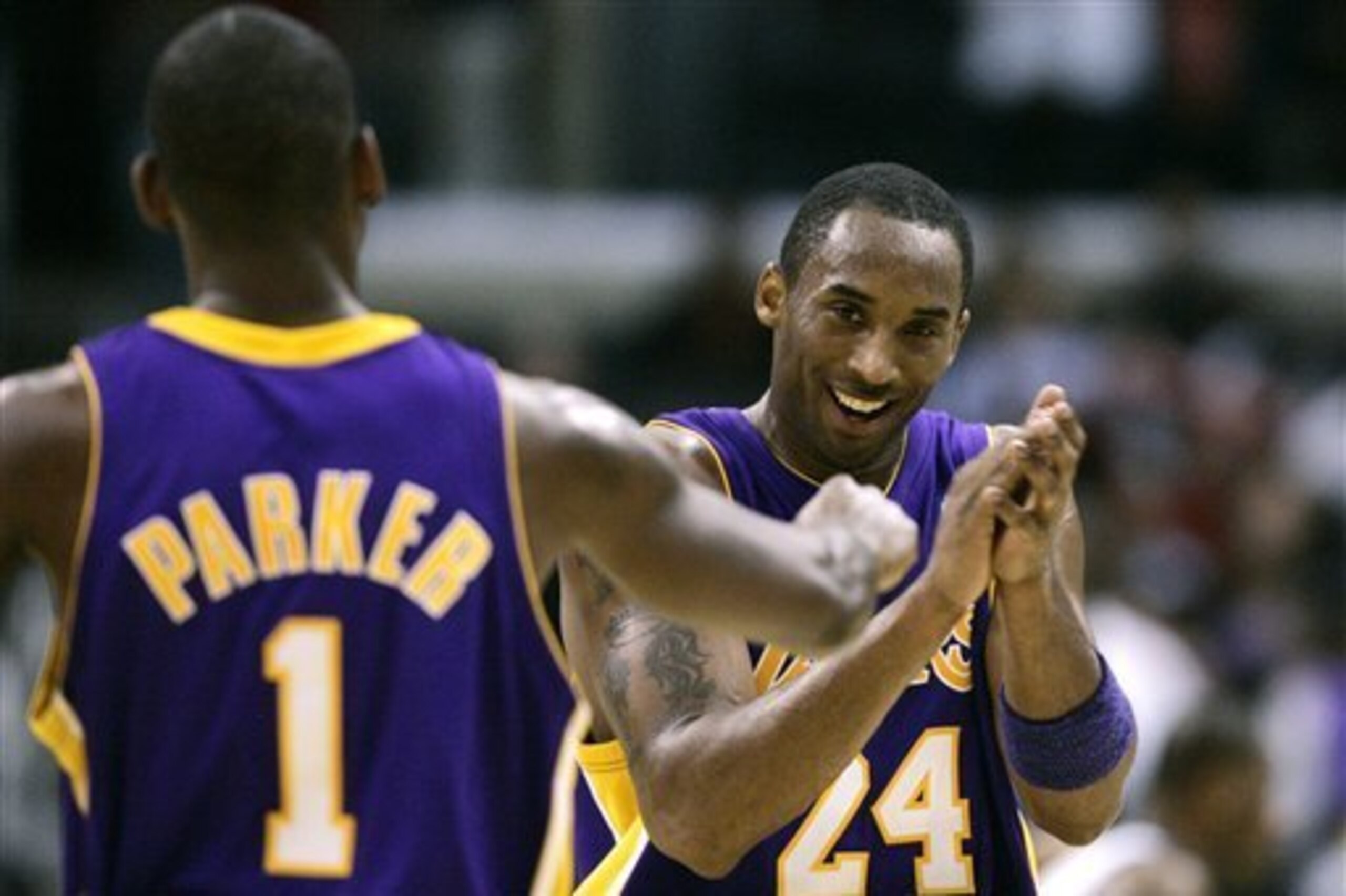
Differing teammates are normally a “wart,” but they have less impact on Scorer Rating than with other scoring-based stats by design.
The less efficient a team is, the less severe a player is penalized for a missed shot. At the same time, because his teammates are less skilled, by necessity the best scorer is more inclined to shoot. Ergo, he should have less of a penalty for a missed shot. It’s a little something we can call the “Smush” factor, in honor of Kobe Bryant’s former teammate, Smush Parker.
However, if a player is jacking up bad shots recklessly while he has efficient scorers around him, he should be penalized more heavily, and in Scorer Rating he is because his team’s higher offensive rating will reflect that.
Overall, we’re pleased with this metric. It isn’t meant to be a universal player rating, it’s just intended to be a better indicator of scoring by including all the factors we could think of, and it does that.
Still, as with all of these statistics, we are quite open to suggestions on how we can improve them. Feel free to let us know, if you have any.



.jpg?w=2560 "Rap: Lions, LaPorta End Contract Talks")
.jpg?w=2560 "Commanders May Change Logo 👀")
_0.png?w=2560 "Week 5 Winners & Losers 📊")

.jpg?w=2560 "EVERY Fantasy Football Update")
.jpg?w=2560 "Report: Baker May Miss Up to 6 Weeks")