
Bleacher Report's Ultimate 2015-16 NBA Re-Draft
Did you think Dirk Nowitzki and Kobe Bryant were always going to suit up for the Dallas Mavericks and Los Angeles Lakers? Wrong. Were you expecting LaMarcus Aldridge, Tim Duncan, Kawhi Leonard, Tony Parker and Manu Ginobili to team up and help push the San Antonio Spurs to the top of the Western Conference? So much for that.
These are the types of things that happen when a select group of 11 NBA writers and editors get together and participate in Bleacher Report's fourth annual NBA re-draft—a creative and democratic way to put the league's premier talents (players and coaches) in order from best to worst.
While starting from scratch and completely dispersing the league's talent across the 30 current teams into a landscape flush with parity, these basketball minds drafted 13-man squads—12 players and a coach—set to compete with each other during the 2015-16 season in a magical world where injuries are suddenly healed before the first game.
Here, you'll see every team's full roster, complete with analysis and results, decided by a vote from those who worked together as GMs. For the first time, we also have NBA 2K16-inspired projections as well.
How high up will Karl-Anthony Towns, Jahlil Okafor and the rest of the incoming rookies be taken off the board? Who's being recognized as a future star? What happens to veterans such as Bryant, Kevin Garnett and Paul Pierce?
This is the 2015 re-draft, a unique way of looking at the best of the best for the 2015-16 NBA season. And for the first time ever, you can download our rosters on Xbox One by searching for the B/R NBA Re-Draft 2015-16, created by Fromal09.
Special thanks to Andy Bailey, Jacob Bourne, Zach Buckley, Joel Cordes, Dan Favale, Adam Fromal, Grant Hughes, Alec Nathan, Kelly Scaletta, Greg Swartz and Bryan Toporek for their participation.
The Process
1 of 42
In years past, we've had 30 general managers. This year, we streamlined to 11 participants (10 GMs plus a backup), with the order set so that every GM would pick for each of the NBA's 30 teams at least once. As a result, no one was biased toward any one organization, and everyone sought to make each squad as strong as possible.
The 13 rounds proceeded in a snake format. That means the 30th team in the first round picked first in the second round, and the order of franchises was determined randomly. The draft order snakes back and forth to allow for a more even playing field.
Now, some rules:
- GMs were only concerned with the 2015-16 season, so how these players develop in the future is completely irrelevant. A player is only as good as he'll be during the next campaign.
- Team fit did matter, especially when thinking about the coach. The players selected should be able to work well together, and playing styles should not clash.
- Injuries—like Michael Kidd-Gilchrist's shoulder—are automatically healed for the start of the season. However, injury-prone players do remain injury-prone.
- GMs could form whatever type of team they wanted. If someone wanted five centers in his starting lineup—well, then, that was his prerogative.
- Players and coaches were only eligible if they were on a 2015-16 NBA roster. Foreign players, collegiate athletes, retired stars and coaches without current NBA contracts were not available to be selected.
You can check out the 2014, 2013 and 2012 versions to further refamiliarize yourself with the process.
1st Round
2 of 42
(Note: Team-by-team analysis will follow all of the picks later in this slideshow.)
1. Anthony Davis, New Orleans Pelicans (Up three spots from last year)
2. LeBron James, Phoenix Suns (No change)
3. Stephen Curry, Memphis Grizzlies (Up five)
4. Kevin Durant, Los Angeles Lakers (Down three)
5. James Harden, New York Knicks (Up eight)
6. DeMarcus Cousins, Dallas Mavericks (Up 18)
7. Chris Paul, Sacramento Kings (Down two)
8. Marc Gasol, Chicago Bulls (Up 11)
9. Russell Westbrook, Orlando Magic (Up one)
10. Blake Griffin, Philadelphia 76ers (Down one)
11. John Wall, Washington Wizards (No change)
12. Kawhi Leonard, Toronto Raptors (Up 19)
13. Paul George, Minnesota Timberwolves (Up four)
14. Jimmy Butler, Boston Celtics (Up 77)
15. Kyrie Irving, Portland Trail Blazers (Up three)
16. Rudy Gobert, Brooklyn Nets (Up 212)
17. Dwight Howard, Milwaukee Bucks (Down 11)
18. Tim Duncan, Atlanta Hawks (Down 11)
19. LaMarcus Aldridge, Golden State Warriors (Down 5)
20. Draymond Green, Detroit Pistons (Up 105)
21. Al Horford, Utah Jazz (Up 12)
22. Klay Thompson, Houston Rockets (Up 14)
23. Kevin Love, Miami Heat (Down 20)
24. Chris Bosh, Denver Nuggets (Up 15)
25. Carmelo Anthony, Oklahoma City Thunder (Down 13)
26. Andrew Wiggins, Cleveland Cavaliers (Up 23)
27. Gordon Hayward, San Antonio Spurs (Up 25)
28. Derrick Favors, Charlotte Hornets (Up 62)
29. Serge Ibaka, Indiana Pacers (Up three)
30. DeAndre Jordan, Los Angeles Clippers (Up five)
2nd Round
3 of 42
31. Damian Lillard, Los Angeles Clippers (Down 15 spots from last year)
32. Eric Bledsoe, Indiana Pacers (Down two)
33. Goran Dragic, Charlotte Hornets (Up one)
34. Dwyane Wade, San Antonio Spurs (Up 11)
35. Andre Drummond, Cleveland Cavaliers (Down six)
36. Mike Conley, Oklahoma City Thunder (Up 11)
37. Kyle Lowry, Denver Nuggets (Down 12)
38. Ty Lawson, Miami Heat (Up two)
39. Paul Millsap, Houston Rockets (Up five)
40. Jeff Teague, Utah Jazz (Up 24)
41. Tyson Chandler, Detroit Pistons (Up 37)
42. Kyle Korver, Golden State Warriors (Up 66)
43. Pau Gasol, Atlanta Hawks (Up five)
44. Derrick Rose, Milwaukee Bucks (Down 21)
45. Brandon Knight, Brooklyn Nets (Up 135)
46. Nikola Vucevic, Portland Trail Blazers (Up 11)
47. Andrew Bogut, Boston Celtics (Up 25)
48. Khris Middleton, Minnesota Timberwolves (Up 216)
49. Nicolas Batum, Toronto Raptors (No change)
50. Hassan Whiteside, Washington Wizards (Undrafted in 2014)
51. Jrue Holiday, Philadelphia 76ers (Up nine)
52. Dirk Nowitzki, Orlando Magic (Down 31)
53. Bradley Beal, Chicago Bulls (Down 12)
54. Gregg Popovich, Sacramento Kings (Down 34)
55. Zach Randolph, Dallas Mavericks (Down 17)
56. Brook Lopez, New York Knicks (Up 13)
57. Andre Iguodala, Los Angeles Lakers (Down 14)
58. Danny Green, Memphis Grizzlies (Up 42)
59. Joakim Noah, Phoenix Suns (Down 45)
60. Karl-Anthony Towns, New Orleans Pelicans (Ineligible in 2014)


3rd Round
4 of 42
61. Rudy Gay, New Orleans Pelicans (Down 6 spots from last year)
62. Tony Parker, Phoenix Suns (Down 36)
63. Al Jefferson, Memphis Grizzlies (Down 35)
64. Greg Monroe, Los Angeles Lakers (Up nine)
65. Danilo Gallinari, New York Knicks (Up nine)
66. J.J. Redick, Dallas Mavericks (Up 53)
67. Giannis Antetokounmpo, Sacramento Kings (Up 73)
68. DeMar DeRozan, Chicago Bulls (Down 17)
69. Nerlens Noel, Orlando Magic (Up 38)
70. Wesley Matthews, Philadelphia 76ers (Up 14)
71. Luol Deng, Washington Wizards (Down three)
72. Victor Oladipo, Toronto Raptors (Down five)
73. Tyreke Evans, Minnesota Timberwolves (Up 22)
74. Michael Kidd-Gilchrist, Boston Celtics (Up 53)
75. Tony Allen, Portland Trail-Blazers (Up 43)
76. Chandler Parsons, Brooklyn Nets (Down 23)
77. Tobias Harris, Milwaukee Bucks (Up 47)
78. Reggie Jackson, Atlanta Hawks (Up 23)
79. DeMarre Carroll, Golden State Warriors (Up 91)
80. Monta Ellis, Detroit Pistons (Down 34)
81. Trevor Ariza, Utah Jazz (Up 13)
82. Robin Lopez, Houston Rockets (Down one)
83. Marcin Gortat, Miami Heat (Up 13)
84. Kobe Bryant, Denver Nuggets (Down 62)
85. Taj Gibson, Oklahoma City Thunder (Down 19)
86. George Hill, Cleveland Cavaliers (Up 51)
87. Ricky Rubio, San Antonio Spurs (Down 24)
88. Jabari Parker, Charlotte Hornets (Down 30)
89. Wilson Chandler, Indiana Pacers (Up 55)
90. Harrison Barnes, Los Angeles Clippers (Up 62)
4th Round
5 of 42
91. Ryan Anderson, Los Angeles Clippers (Down five spots from last year)
92. Marcus Smart, Indiana Pacers (Up 40)
93. Paul Pierce, Charlotte Hornets (Up nine)
94. Roy Hibbert, San Antonio Spurs (Down 38)
95. Boris Diaw, Cleveland Cavaliers (Down 16)
96. Jonas Valanciunas, Oklahoma City Thunder (Up 15)
97. Jeff Green, Denver Nuggets (Down 14)
98. Rick Carlisle, Miami Heat (Up 14)
99. Otto Porter, Houston Rockets (Up 200)
100. Manu Ginobili, Utah Jazz (Down 58)
101. Steve Kerr, Detroit Pistons (Up 250)
102. Michael Carter-Williams, Golden State Warriors (Down 41)
103. Eric Gordon, Atlanta Hawks (Up 35)
104. Nikola Mirotic, Milwaukee Bucks (Up 87)
105. Patrick Beverley, Brooklyn Nets (Up 21)
106. Ed Davis, Portland Trail Blazers (Up 127)
107. Thaddeus Young, Boston Celtics (Down 14)
108. Timofey Mozgov, Minnesota Timberwolves (Up 107)
109. Isaiah Thomas, Toronto Raptors (Down 34)
110. Avery Bradley, Washington Wizards (Down 12)
111. Arron Afflalo, Philadelphia 76ers (Down 46)
112. Joe Johnson, Orlando Magic (Down 35)
113. Deron Williams, Chicago Bulls (Down 31)
114. Jahlil Okafor, Sacramento Kings (Ineligible in 2014)
115. D'Angelo Russell, Dallas Mavericks (Ineligible in 2014)
116. Markieff Morris, New York Knicks (Down 13)
117. Rajon Rondo, Los Angeles Lakers (Down 80)
118. John Henson, Memphis Grizzlies (Down 12)
119. Aaron Gordon, Phoenix Suns (Up two)
120. Alec Burks, New Orleans Pelicans (Down 10)
5th Round
6 of 42
121. Brandon Jennings, New Orleans Pelicans (Up 39 spots from last year)
122. J.R. Smith, Phoenix Suns (Up 28)
123. Evan Turner, Memphis Grizzlies (Up 35)
124. Brad Stevens, Los Angeles Lakers (Up 159)
125. Darren Collison, New York Knicks (Up five)
126. Anthony Morrow, Dallas Mavericks (Up 63)
127. Courtney Lee, Sacramento Kings (Up 65)
128. Channing Frye, Chicago Bulls (Down 12)
129. Rodney Hood, Orlando Magic (Up 134)
130. Amir Johnson, Philadelphia 76ers (Up 39)
131. David Lee, Washington Wizards (Down 32)
132. Nene, Toronto Raptors (Down 35)
133. Gorgui Dieng, Minnesota Timberwolves (Up 26)
134. Emmanuel Mudiay, Boston Celtics (Ineligible in 2014)
135. Josh Smith, Portland Trail Blazers (Down 69)
136. Kenneth Faried, Brooklyn Nets (Down 66)
137. Iman Shumpert, Milwaukee Bucks (Down 15)
138. Mike Dunleavy, Atlanta Hawks (Up 18)
139. Brandan Wright, Golden State Warriors (Up 25)
140. Shaun Livingston, Detroit Pistons (Down 36)
141. Tristan Thompson, Utah Jazz (Up 44)
142. Elfrid Payton, Houston Rockets (Up 66)
143. C.J. McCollum, Miami Heat (Up 86)
144. Steven Adams, Denver Nuggets (Up 29)
145. P.J. Tucker, Oklahoma City Thunder (Down 10)
146. Robert Covington, Cleveland Cavaliers (Undrafted in 2014)
147. Terrence Jones, San Antonio Spurs (Down 27)
148. Kevin Martin, Charlotte Hornets (Down 39)
149. Kelly Olynyk, Indiana Pacers (Up 72)
150. Jae Crowder, Los Angeles Clippers (Up 145)
6th-9th Rounds:
7 of 42
Sixth Round
151. Jamal Crawford, Los Angeles Clippers (Down 62 spots from last year)
152. Tiago Splitter, Indiana Pacers (Down nine)
153. Stanley Johnson, Charlotte Hornets (Ineligible in 2014)
154. Ersan Ilyasova, San Antonio Spurs (Up 23)
155. Lou Williams, Cleveland Cavaliers (No change)
156. Billy Donovan, Oklahoma City Thunder (Ineligible in 2014)
157. Jared Dudley, Denver Nuggets (Up 129)
158. Justise Winslow, Miami Heat (Ineligible in 2014)
159. Kristaps Porzingis, Houton Rockets (Ineligible in 2014)
160. Zach LaVine, Utah Jazz (Up 102)
161. Ben McLemore, Detroit Pistons (Up 78)
162. Marco Belinelli, Golden State Warriors (Down nine)
163. Noah Vonleh, Atlanta Hawks (Up 46)
164. Kyle O'Quinn, Milwaukee Bucks (Up 63)
165. David West, Brooklyn Nets (Down 115)
166. Doc Rivers, Portland Trail Blazers (Down 81)
167. Enes Kanter, Boston Celtics (Up 12)
168. Erik Spoelstra, Minnesota Timberwolves (Down 22)
169. Julius Randle, Toronto Raptors (Down 18)
170. Donatas Motiejunas, Washington Wizards (Up 97)
171. Trevor Booker, Philadelphia 76ers (Up 100)
172. Festus Ezeli, Orlando Magic (Up 207)
173. Meyers Leonard, Chicago Bulls (Undrafted in 2014)
174. Patty Mills, Sacramento Kings (Down 35)
175. Mike Budenholzer, Dallas Mavericks (Up 109)
176. Alvin Gentry, New York Knicks (Ineligible in 2014)
177. Willie Cauley-Stein, Los Angeles Lakers (Ineligible in 2014)
178. Jordan Clarkson, Memphis Grizzlies (Undrafted in 2014)
179. Kemba Walker, Phoenix Suns (Down 117)
180. Dennis Schroder, New Orleans Pelicans (Up 186)
Seventh Round
181. Marreese Speights, New Orleans Pelicans (Up 157)
182. Anderson Varejao, Phoenix Suns (Down 69)
183. Josh McRoberts, Memphis Grizzlies (Down 21)
184. Devin Harris, Los Angeles Lakers (Up 15)
185. Al-Farouq Aminu, New York Knicks (Up 83)
186. Dante Exum, Dallas Mavericks (Down 104)
187. Patrick Patterson, Sacramento Kings (Down 42)
188. O.J. Mayo, Chicago Bulls (Up 13)
189. Mario Hezonja, Orlando Magic (Ineligible in 2014)
190. Cory Joseph, Philadelphia 76ers (Up 193)
191. Joel Embiid, Washington Wizards (Down 104)
192. Omer Asik, Toronto Raptors (Down 121)
193. Cameron Payne, Minnesota Timberwolves (Ineligible in 2014)
194. D.J. Augustin, Boston Celtics (Down seven)
195. Gerald Green, Portland Trail Blazers (Down 80)
196. Quin Synder, Brooklyn Nets (Up 105)
197. Jarrett Jack, Milwaukee Bucks (Up 15)
198. Greivis Vasquez, Atlanta Hawks (Down 37)
199. Myles Turner, Golden State Warriors (Ineligible in 2014)
200. Corey Brewer, Detroit Pistons (Down 59)
201. Mike Malone, Utah Jazz (Undrafted in 2014)
202. Jason Kidd, Houston Rockets (Undrafted in 2014)
203. Kentavious Caldwell-Pope, Miami Heat (Up 66)
204. Jodie Meeks, Denver Nuggets (Down 18)
205. Evan Fournier, Oklahoma City Thunder (Up 40)
206. Mason Plumlee, Cleveland Cavaliers (Down 83)
207. Stan Van Gundy, San Antonio Spurs (Up 65)
208. Beno Udrih, Charlotte Hornets (Up 144)
209. Terrence Ross, Indiana Pacers (Down 67)
210. Anthony Tolliver, Los Angeles Clippers (Up 102)
Eighth Round
211. T.J. Warren, Los Angeles Clippers (Up 19)
212. Thabo Sefolosha, Indiana Pacers (Up 13)
213. Bobby Portis, Charlotte Hornets (Ineligible in 2014)
214. Jusuf Nurkic, San Antonio Spurs (Undrafted in 2014)
215. Frank Vogel, Cleveland Cavaliers (Up 11)
216. Mo Williams, Oklahoma City Thunder (Down five)
217. Clint Capela, Denver Nuggets (Undrafted in 2014)
218. Bismack Biyombo, Miami Heat (Up 142)
219. Gerald Henderson, Houston Rockets (Down 71)
220. Frank Kaminsky, Utah Jazz (Ineligible in 2014)
221. Nemanja Bjelica, Detroit Pistons (Ineligible in 2014)
222. Jared Sullinger, Golden State Warriors (Down 75)
223. Gary Harris, Atlanta Hawks (Up 34)
224. Jeremy Lamb, Milwaukee Bucks (Down 14)
225. Rodney Stuckey, Brooklyn Nets (Up 17)
226. Dion Waiters, Portland Trail Blazers (Down 109)
227. Fred Hoiberg, Boston Celtics (Up 76)
228. Jeremy Lin, Minnesota Timberwolves (Down 99)
229. Tyler Zeller, Toronto Raptors (Up 65)
230. Nick Young, Washington Wizards (Down 94)
231. Nikola Jokic, Philadelphia 76ers (Ineligible in 2014)
232. Jordan Hill, Orlando Magic (Down 51)
233. Pablo Prigioni, Chicago Bulls (Up five)
234. Bojan Bogdanovic, Sacramento Kings (Up 122)
235. Mirza Teletovic, Dallas Mavericks (Up 14)
236. Lance Stephenson, New York Knicks (Down 182)
237. Hollis Thompson, Los Angeles Lakers (Undrafted in 2014)
238. David Blatt, Memphis Grizzlies (Up eight)
239. Randy Foye, Phoenix Suns (Down 51)
240. Kyle Anderson, New Orleans Pelicans (Up 53)
Ninth Round
241. Jeff Hornacek, New Orleans Pelicans (Down 84)
242. James Johnson, Phoenix Suns (Down 36)
243. Matthew Dellavedova, Memphis Grizzlies (Up 79)
244. Kevin Garnett, Los Angeles Lakers (Down 68)
245. Kosta Koufos, New York Knicks (Up six)
246. Cody Zeller, Dallas Mavericks (Up 42)
247. Nik Stauskas, Sacramento Kings (Up 75)
248. K.J. McDaniels, Chicago Bulls (Up 66)
249. Jose Calderon, Orlando Magic (Down 161)
250. Brett Brown, Philadelphia 76ers (Up 132)
251. Omri Casspi, Washington Wizards (Up 91)
252. Wayne Ellington, Toronto Raptors (Up 46)
253. Vince Carter, Minnesota Timberwolves (Down 125)
254. Kyle Singler, Boston Celtics (Up 23)
255. Justin Anderson, Portland Trail Blazers (Ineligible in 2014)
256. Ian Mahinmi, Brooklyn Nets (Down 33)
257. Doug McDermott, Milwaukee Bucks (Down 90)
258. Alex Len, Atlanta Hawks (Up 114)
259. Jameer Nelson, Golden State Warriors (Up 26)
260. Nikola Pekovic, Detroit Pistons (Down 180)
261. Tim Hardaway Jr., Utah Jazz (Down 107)
262. Isaiah Canaan, Houston Rockets (Up 103)
263. Mario Chalmers, Miami Heat (Down 27)
264. Joffrey Lauvergne, Denver Nuggets (Undrafted in 2014)
265. Quincy Pondexter, Oklahoma City Thunder (Up 79)
266. Marcus Morris, Cleveland Cavaliers (Down 62)
267. Jerian Grant, San Antonio Spurs (Ineligible in 2014)
268. Spencer Hawes, Charlotte Hornets (Down 163)
269. Tony Wroten, Indiana Pacers (Down 52)
270. Aaron Brooks, Los Angeles Clippers (Up 88)
10th-13th Rounds:
8 of 42
10th Round
271. Zaza Pachulia, Los Angeles Clippers (Up eight spots from last year)
272. C.J. Miles, Indiana Pacers (Down 20)
273. Jerami Grant, Charlotte Hornets (Undrafted in 2014)
274. Martell Webster, San Antonio Spurs (Down 18)
275. Shabazz Muhammad, Cleveland Cavaliers (Undrafted in 2014)
276. J.J. Hickson, Oklahoma City Thunder (Down 83)
277. Andre Miller, Denver Nuggets (Down 45)
278. Wesley Johnson, Miami Heat (Up nine)
279. Alexis Ajinca, Houston Rockets (Up 50)
280. Moe Harkless, Utah Jazz (Down five)
281. Tyler Hansbrough, Detroit Pistons (Down 38)
282. Alan Anderson, Golden State Warriors (Up 53)
283. Becky Hammon, Atlanta Hawks (Ineligible in 2014)
284. Kevin McHale, Milwaukee Bucks (Undrafted in 2014)
285. Terry Rozier, Brooklyn Nets (Ineligible in 2014)
286. Kris Humphries, Portland Trail Blazers (Down 70)
287. Devin Booker, Boston Celtics (Ineligible in 2014)
288. Mitch McGary, Minnesota Timberwolves (Up 14)
289. Dave Joerger, Toronto Raptors (Undrafted in 2014)
290. Randy Wittman, Washington Wizards (Undrafted in 2014)
291. Matt Barnes, Philadelphia 76ers (Down 97)
292. George Karl, Orlando Magic (Down 45)
293. Mike Muscala, Chicago Bulls (Undrafted in 2014)
294. Trey Burke, Sacramento Kings (Down 11)
295. Kent Bazemore, Dallas Mavericks (Down 55)
296. Marvin Williams, New York Knicks (Down 133)
297. Joe Ingles, Los Angeles Lakers (Undrafted in 2014)
298. Andre Roberson, Memphis Grizzlies (Undrafted in 2014)
299. Tyronn Lue, Phoenix Suns (Ineligible in 2014)
300. Tibor Pleiss, New Orleans Pelicans (Ineligible in 2014)
11th Round
301. R.J. Hunter, New Orleans Pelicans (Ineligible in 2014)
302. Marcelo Huertas, Phoenix Suns (Ineligible in 2014)
303. Chris Kaman, Memphis Grizzlies (Down 89)
304. Miles Plumlee, Los Angeles Lakers (Down 126)
305. Kendall Marshall, New York Knicks (Down 172)
306. Tony Snell, Dallas Mavericks (Down 46)
307. JaVale McGee, Sacramento Kings (Down 142)
308. Terry Stotts, Chicago Bulls (Down 19)
309. Kelly Oubre, Orlando Magic (Ineligible in 2014)
310. Jordan Adams, Philadelphia 76ers (Undrafted in 2014)
311. Austin Rivers, Washington Wizards (Up 35)
312. Delon Wright, Toronto Raptors (Ineligible in 2014)
313. Leandro Barbosa, Minnesota Timberwolves (Undrafted in 2014)
314. Amar'e Stoudemire, Boston Celtics (Down 117)
315. Ray McCallum, Portland Trail Blazers (Down 50)
316. Sam Dekker, Brooklyn Nets (Ineligible in 2014)
317. Jonas Jerebko, Milwaukee Bucks (Up nine)
318. Luis Scola, Atlanta Hawks (Down 64)
319. Ime Udoka, Golden State Warriors (Ineligible in 2014)
320. Raul Neto, Detroit Pistons (Ineligible in 2014)
321. Jon Leuer, Utah Jazz (Undrafted in 2014)
322. Langston Galloway, Houston Rockets (Undrafted in 2014)
323. Carl Landry, Miami Heat (Down 125)
324. Ron Adams, Denver Nuggets (Ineligible in 2014)
325. Kevin Seraphin, Oklahoma City Thunder (Up 46)
326. Trey Lyles, Cleveland Cavaliers (Ineligible in 2014)
327. Justin Holiday, San Antonio Spurs (Undrafted in 2014)
328. Ettore Messina, Charlotte Hornets (Down 20)
329. Kenny Atkinson, Indiana Pacers (Ineligible in 2014)
330. Jay Larranaga, Los Angeles Clippers (Ineligible in 2014)
12th Round
331. Elijah Millsap, Los Angeles Clippers (Undrafted in 2014)
332. Andrew Nicholson, Indiana Pacers (Undrafted in 2014)
333. Mike Scott, Charlotte Hornets (Up four)
334. Seth Curry, San Antonio Spurs (Undrafted in 2014)
335. Will Barton, Cleveland Cavaliers (Undrafted in 2014)
336. Markel Brown, Oklahoma City Thunder (Undrafted in 2014)
337. Jason Terry, Denver Nuggets (Down 24)
338. Gary Neal, Miami Heat (Down 119)
339. Bruno Caboclo, Houston Rockets (Down seven)
340. Archie Goodwin, Utah Jazz (Down 31)
341. Jason Thompson, Detroit Pistons (Down 63)
342. Norris Cole, Golden State Warriors (Down 92)
343. Jeremy Evans, Atlanta Hawks (Up 18)
344. Shabazz Napier, Milwaukee Bucks (Up three)
345. Chase Budinger, Brooklyn Nets (Down 92)
346. Solomon Hill, Portland Trail Blazers (Undrafted in 2014)
347. Brian Roberts, Boston Celtics (Down 57)
348. Brandon Bass, Minnesota Timberwolves (Down 113)
349. Rondae Hollis-Jefferson, Toronto Raptors (Ineligible in 2014)
350. Rashad Vaughn, Washington Wizards (Ineligible in 2014)
351. Shelvin Mack, Philadelphia 76ers (Up 13)
352. Caron Butler, Orlando Magic (Down 150)
353. Nate Robinson, Chicago Bulls (Down 178)
354. Tayshaun Prince, Sacramento Kings (Down 20)
355. Luke Babbitt, Dallas Mavericks (Undrafted in 2014)
356. Spencer Dinwiddie, New York Knicks (Undrafted in 2014)
357. Derrick Williams, Los Angeles Lakers (Down 32)
358. Jeff Withey, Memphis Grizzlies (Down 34)
359. Kevon Looney, Phoenix Suns (Ineligible in 2014)
360. Allen Crabbe, New Orleans Pelicans (Undrafted in 2014)
13th Round
361. Walter Tavares, New Orleans Pelicans (Ineligible in 2014)
362. Thomas Robinson, Phoenix Suns (Down 52)
363. JaKarr Sampson, Memphis Grizzlies (Undrafted in 2014)
364. C.J. Watson, Los Angeles Lakers (Down 157)
365. Darrell Arthur, New York Knicks (Undrafted in 2014)
366. Ramon Sessions, Dallas Mavericks (Down 198)
367. Aron Baynes, Sacramento Kings (Down 47)
368. Drew Gooden, Chicago Bulls (Down 88)
369. Maurice N'Dour, Orlando Magic (Ineligible in 2014)
370. Chris Copeland, Philadelphia 76ers (Down 139)
371. Lavoy Allen, Washington Wizards (Undrafted in 2014)
372. J.J. Barea, Toronto Raptors (Down two)
373. Pat Connaughton, Minnesota Timberwolves (Ineligible in 2014)
374. Lucas Nogueira, Boston Celtics (Undrafted in 2014)
375. Jerryd Bayless, Portland Trail Blazers (Down 117)
376. DeJuan Blair, Brooklyn Nets (Down 142)
377. Anthony Bennett, Milwaukee Bucks (Down 187)
378. Joe Young, Atlanta Hawks (Ineligible in 2014)
379. John Jenkins, Golden State Warriors (Undrafted in 2014)
380. Norman Powell, Detroit Pistons (Ineligible in 2014)
381. Tyus Jones, Utah Jazz (Ineligible in 2014)
382. Jordan Mickey, Houston Rockets (Ineligible in 2014)
383. Tarik Black, Miami Heat (Undrafted in 2014)
384. Cole Aldrich, Denver Nuggets (Down 27)
385. Jimmer Fredette, Oklahoma City Thunder (Down 163)
386. Larry Nance, Jr., Cleveland Cavaliers (Ineligible in 2014)
387. Ryan Kelly, San Antonio Spurs (Down 117)
388. E'Twaun Moore, Charlotte Hornets (Undrafted in 2014)
389. P.J. Hairston, Indiana Pacers (Down 92)
390. Richaun Holmes, Los Angeles Clippers (Ineligible in 2014)
Biggest Changes and Superlatives from 2014-15
9 of 42
Highest Risers
- Khris Middleton, Up 216 spots
- Rudy Gobert, Up 212
- Festus Ezeli, Up 207
- Otto Porter, Up 200
- Cory Joseph, Up 193
- Dennis Schroder, Up 186
- Marreese Speights, Up 157
- Jae Crowder, Up 145
- Beno Udrih, Up 144
- Bismack Biyombo, Up 142
Biggest Fallers
- Ramon Sessions, Down 198 spots
- Anthony Bennett, Down 187
- Lance Stephenson, Down 182
- Nikola Pekovic, Down 180
- Nate Robinson, Down 178
- Kendall Marshall, Down 172
- Spencer Hawes and Jimmer Fredette, Down 163
- Jose Calderon, Down 161
- C.J. Watson, Down 157
- Caron Butler, Down 150
Top Re-Draft Rookies
- Karl-Anthony Towns, No. 60
- Jahlil Okafor, No. 114
- D'Angelo Russell, No. 115
- Emmanuel Mudiay, No. 134
- Stanley Johnson, No. 153
- Justise Winslow, No. 158
- Kristaps Porzingis, No. 159
- Willie Cauley-Stein, No. 177
- Mario Hezonja, No. 189
- Cameron Payne, No. 193
Top Undrafted-to-Drafted Guys
- Hassan Whiteside, No. 50
- Robert Covington, No. 146
- Meyers Leonard, No. 173
- Jordan Clarkson, No. 178
- Jusuf Nurkic, No. 214
- Clint Capela, No. 217
- Hollis Thompson, No. 237
- Joffrey Lauvergne, No. 264
- Jerami Grant, No. 273
- Shabazz Muhammad, No. 275
Top Coaches
- Gregg Popovich, No. 54
- Rick Carlisle, No. 98
- Steve Kerr, No. 101
- Brad Stevens, No. 124
- Billy Donovan, No. 156
- Doc Rivers, No. 166
- Erik Spoelstra, No. 168
- Mike Budenholzer, No. 175
- Alvin Gentry, No. 176
- Quin Snyder, No. 196
Atlanta Hawks
10 of 42
| Reggie Jackson | Eric Gordon | Mike Dunleavy | Pau Gasol | Tim Duncan |
| Greivis Vasquez | Gary Harris | Jeremy Evans | Luis Scola | Alex Len |
| Joe Young | Noah Vonleh |
Head Coach: Becky Hammon
Best Pick?
If her performance at the Las Vegas Summer League was any indication, Becky Hammon appears to be a rising star among the coaching ranks. Thus, selecting her in the 10th round was a heist for Atlanta, particularly given her background with the team's first-round pick, Tim Duncan.
On a team overflowing with youngsters, Hammon's lack of head coaching experience might have come back to bite her. But with seasoned veterans such as Duncan, Pau Gasol and Mike Dunleavy on this squad, she should have little trouble commanding the respect of her troops. A few years down the road, this pick has the potential to look like pure genius, particularly given the dearth of other quality coaching candidates still available at this point in the draft.
Worst Pick?
After choosing Duncan in the first round, the Hawks regrettably went back to the frontcourt well in Round 2 with Gasol. While Duncan isn't one to play 35-plus minutes per game anymore, Gasol makes for a somewhat questionable fit beside him. Neither big is laterally quick enough to defend 4s on a regular basis, which is why Gasol often played the 5 defensively for the Chicago Bulls in 2014-15.
You're not asking the 38-year-old Duncan to bite that bullet, though, so opposing stretch 4s in particular will have a field day against this squad. Ideally, Duncan's frontcourt counterpart would have been a smaller, stretchier power forward capable of reliably knocking down three-pointers, which would only help space the floor while the future Hall of Famer roams closer toward the basket.
Team Identity?
This Atlanta team is built primarily around Gasol and Duncan, with a bunch of floor-spacing guards and wings spotting up around the perimeter. Reggie Jackson can run pick-and-rolls with any of the Hawks frontcourt players to his heart's content, while Eric Gordon can help alleviate some of the ball-handling responsibility at times.
Meanwhile, Gary Harris and Dunleavy will serve as Atlanta's primary three-point threats, ready to take advantage of an opponent's double-team at a moment's notice. This squad isn't going to have an elite defense or run up and down the floor like Mike D'Antoni's Seven Seconds or Less Phoenix Suns, but it has enough options on offense to keep opponents guessing.
Biggest Strength?
With Gasol and Duncan up front and Noah Vonleh, Alex Len and Luis Scola waiting on the bench, frontcourt depth is easily the Hawks' biggest strength. Vonleh and Len, in particular, give Atlanta two young, high-upside prospects to build around, while Scola provides some quality veteran insurance at either frontcourt position for the next few seasons.
The lack of a stretch 4 is mildly concerning, but as the Memphis Grizzlies have proved in recent years, it's still possible to experience a great deal of success while bludgeoning opponents with a post-centric attack.
Biggest Weakness?
When healthy, Gordon is a versatile stat-sheet stuffer who's fresh off a season in which he knocked down 2.3 treys per game on a career-high 44.8 percent shooting from deep. Harris, meanwhile, looked like a completely different player this preseason after hardly cracking the Denver Nuggets' rotation as a rookie in 2014-15.
Gordon's health remains a concern, however—he's missed 136 games over the past four years—while reading too much into Harris' preseason production could be a fool's errand if he can't replicate those performances. Shooting guard is easily Atlanta's highest-risk position, but there's at least the potential of it being a strength if all breaks right.
Writeup provided by Bryan Toporek.
Boston Celtics
11 of 42
| Emmanuel Mudiay | Jimmy Butler | Michael Kidd-Gilchrist | Thaddeus Young | Andrew Bogut |
| D.J. Augustin | Devin Booker | Kyle Singler | Amar'e Stoudemire | Enes Kanter |
| Brian Roberts | Lucas Nogueira |
Head Coach: Fred Hoiberg
Best Pick?
Enes Kanter (selected at No. 167 overall) might in fact be the very worst defensive player in the entire NBA, often acting like a matador. But with touch around the painted area and a developing mid-range shot that should allow for him to serve as a dynamite pick-and-pop option in tandem with whichever point guard is currently running the show, he's the offensive weapon the C's so desperately needed off the bench.
Few teams are better suited to cover up his glaring flaws more effectively than this Boston squad, allowing his value to rise far higher than the draft slot might indicate.
Worst Pick?
With Jimmy Butler, Andrew Bogut and Michael Kidd-Gilchrist already on board, the Celtics needed a big man capable of spreading out the defense at the 4. Instead, the slashing, transition talents of Thaddeus Young traveled from the big board to Beantown. It's troubling news, even in the wake of a season during which he went 19-of-50 from downtown in 28 games for the Brooklyn Nets.
The Celtics would've been far better off drafting a point guard in the fourth round, then waiting to either find a stretch 4 later on in the proceedings or embrace the small-ball revolution.
Team Identity?
Fred Hoiberg will run plenty of off-ball motion to free up players on the perimeter, especially when some of the primary backups are in. This bench was made to supplement the defensive ability of the starting lineup, allowing it to be mixed and matched with the opening five to feast upon any hole in the opposing unit.
Defensively, the Celtics can funnel everything toward Bogut while letting Butler and Kidd-Gilchrist take care of the best perimeter players. You're looking at one of the league's elite rim-protectors working in conjunction with two wings who—when healthy—can make legitimate noise in Defensive Player of the Year conversations.
Biggest Strength?
Again, how exactly do you score on this starting lineup? Bogut, Butler and Kidd-Gilchrist are all incredible defenders at their respective positions, and the latter two have the versatility necessary to take on the toughest matchups at virtually any position. Though the bench is filled with offensive specialists, the right rotations will ensure that at least one of the three bona fide stoppers is always on the floor wreaking havoc.
Biggest Weakness?
Though this roster has enough talent to remain competitive throughout the re-draft season, injuries could prove perilous. With a bench set up to provide offensive sparks at every positionm but no defensive reinforcements, one of the stoppers going down would be rather problematic.
Two would just be disastrous. Some teams are built to overcome injury woes, and this Boston squad certainly isn't one of them.
Writeup provided by Adam Fromal.
Brooklyn Nets
12 of 42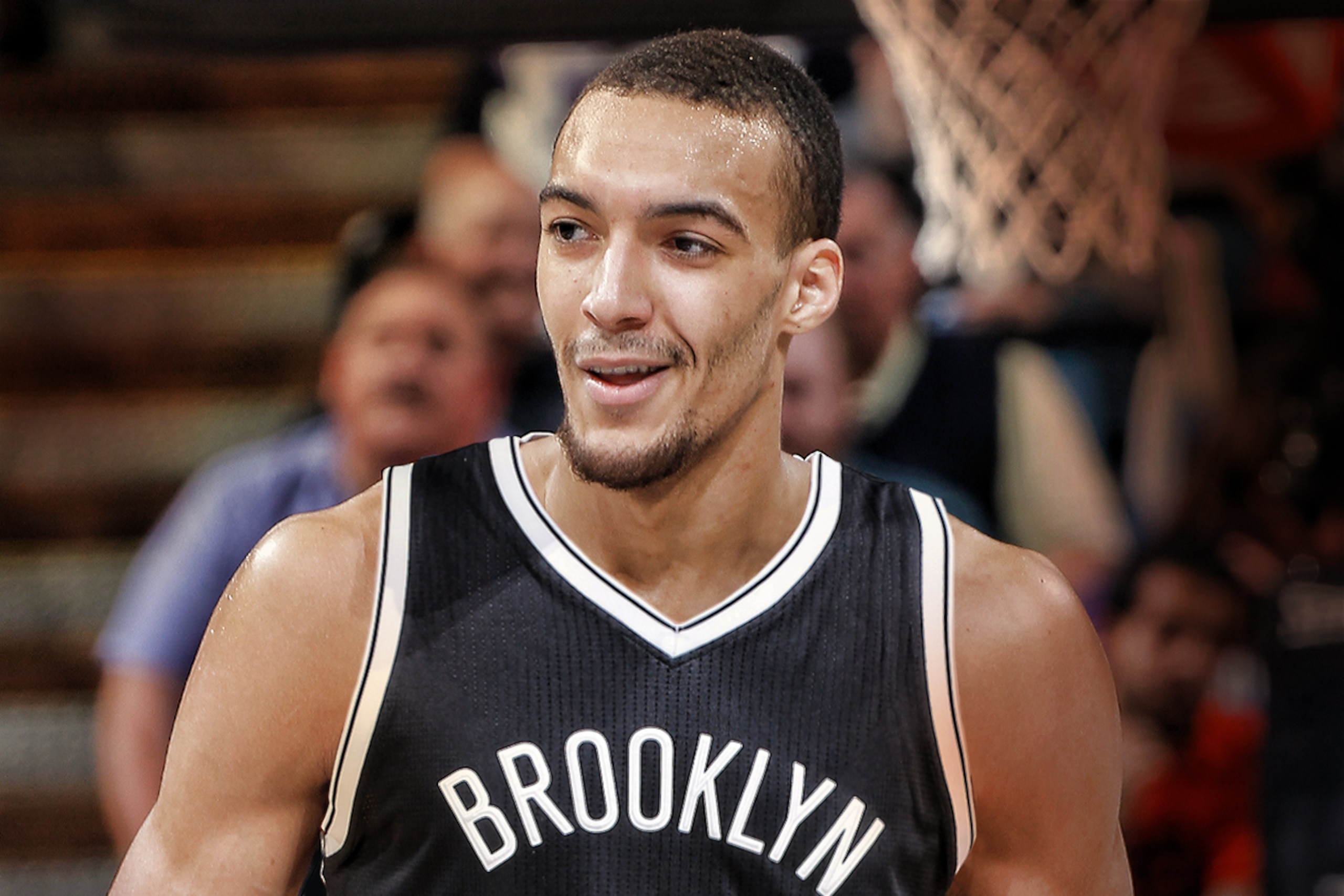
| Patrick Beverley | Brandon Knight | Chandler Parsons | Kenneth Faried | Rudy Gobert |
| Terry Rozier | Rodney Stuckey | Sam Dekker | David West | Ian Mahinmi |
| Chase Budinger | DeJuan Blair |
Head Coach: Quin Snyder
Best Pick?
With a starting five all in their 20s, the Nets desperately needed a veteran winner to tie the group together.
David West, (selected at 165), is potentially a better option in the starting lineup alongside Rudy Gobert than Kenneth Faried, who was taken a round earlier. West can generate his own offense, something Brooklyn needed and was lucky to grab in the sixth round.
Worst Pick?
It's not that Patrick Beverley is a bad player by any means, but his selection (at 105) forced Brandon Knight to move to shooting guard, where he's far less effective. Knight is just 6'3" and an average outside shooter, something he'd have to do more of with Bev running the point.
The Nets would have been better off with Knight running the point and placing a shooter like Kevin Martin next to him.
Team Identity?
Defend and run!!!
With Gobert swatting everything within 10 feet of the basket, the likes of Knight, Beverley, Chandler Parsons and Faired better be ready for the fastbreak. While scoring may be hard to come by at times, this is a Nets team that will rely on its youth, athleticism and defensive potential to win ballgames.
Biggest Strength?
Gobert and Beverley are among the best defenders at their respective positions, while Faried, West and Knight can hold their own as well. With a young overall roster, Brooklyn will look to speed up the pace and score in transition with its athletes.
Biggest Weakness?
Knight is the lone playmaker here, with Gobert, Faried and Beverley all limited on the offensive end. West and Rodney Stuckey will certainly help provide a punch off the bench, but against teams that like to slow down the pace, the Nets could struggle to get shots up in the halfcourt.
Writeup provided by Greg Swartz.
Charlotte Hornets
13 of 42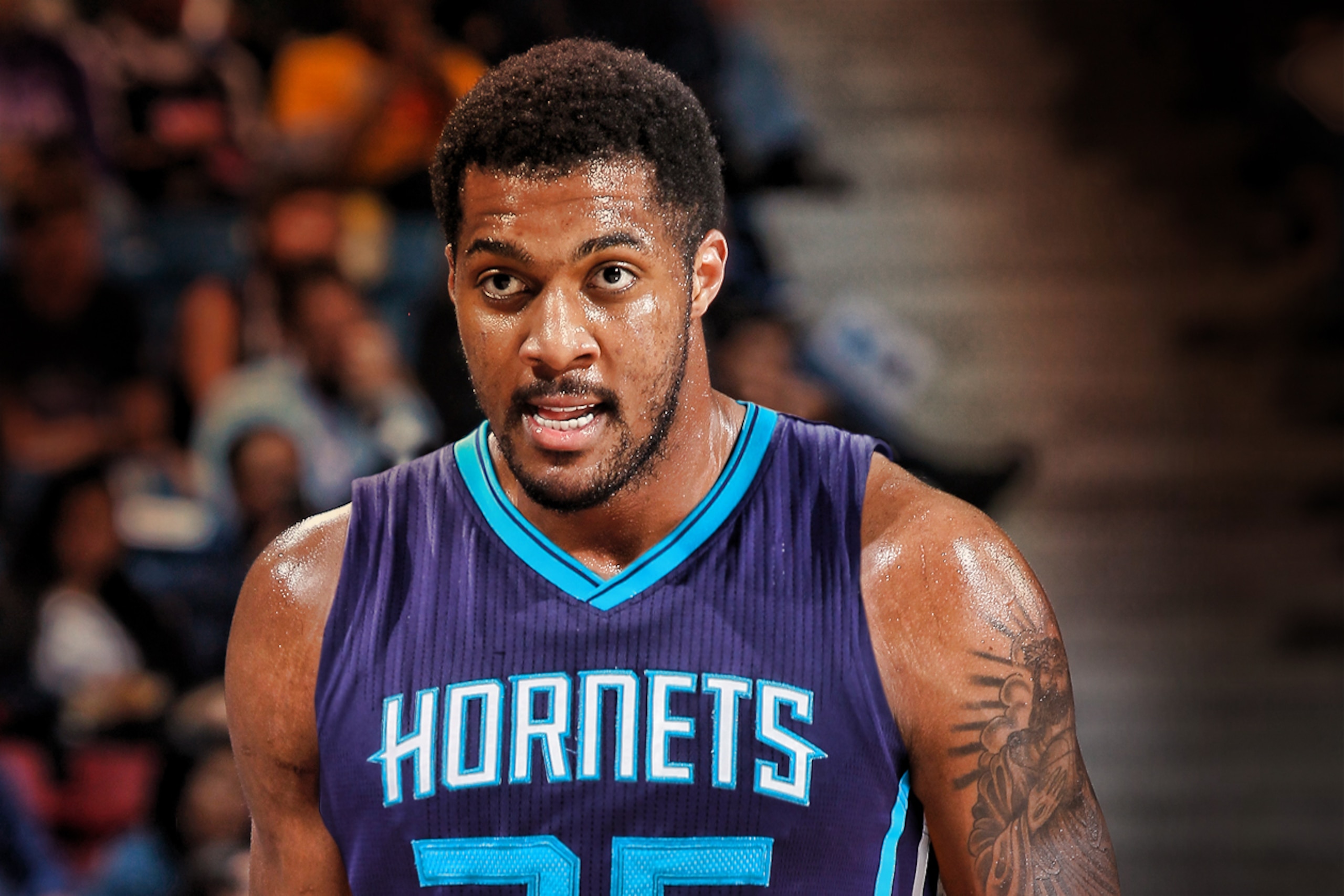
| Goran Dragic | Kevin Martin | Paul Pierce | Jabari Parker | Derrick Favors |
| Beno Udrih | Jerami Grant | Stanley Johnson | Bobby Portis | Spencer Hawes |
| E'Twaun Moore | Mike Scott |
Head Coach: Ettore Messina
Best Pick?
If there's one thing we've learned this preseason, it's that Bobby Portis is legit. The 20-year-old forward was a handful back at the University of Arkansas, where he averaged 17.5 points and 8.9 rebounds in 29.9 minutes as a sophomore. Portis was one of the leading rebounders at Las Vegas Summer League, where he pulled in 8.7 boards in just 28.1 minutes per game, and he somehow topped himself during the Chicago Bulls' preseason contests, reeling in an average of 9.1 boards in 21.7 minutes.
After rarely flashing three-point range in college—he knocked down only 23 treys in his two years at Arkansas—he's also debuted a burgeoning perimeter shot since coming to the Association. He's the type of high-upside bench forward any team would love to have, so snagging him in the eighth round was a great play.
Worst Pick?
If Paul Pierce were five years younger, grabbing him in the fourth round would be an absolute heist. Unless he comes in tandem with a Fountain of Youth, however, the Hornets can't expect a great return on their investment.
As his career winds down, Pierce's production is likewise tailing off; he averaged career lows in points (11.9), rebounds (4.0), assists (2.0), steals (0.6) and minutes (26.2) with the Washington Wizards in 2014-15, and there's little reason to expect a significant turnaround in Charlotte. Pierce will still be the Hornets' nominal starting 3, but sixth-round pick Stanley Johnson may be the most valuable small forward on the team.
Team Identity?
With Goran Dragic running the point, the Hornets are built to play pick-and-roll-centric small-ball. Kevin Martin and Pierce will spot up behind the three-point line while Jabari Parker and Derrick Favors serve as the team's primary pick-and-pop and pick-and-roll threats.
Given the team's dearth of lockdown defenders in the starting lineup, Charlotte will have to play up-tempo in the hopes of running its opponents out of the building. Unless Jerami Grant and Johnson can carve out larger-than-expected roles, the Hornets will find themselves in shootouts on a nightly basis.
Biggest Strength?
Head coach Ettore Messina, long renowned as one of European basketball's most innovative offensive minds, has no shortage of toys at his disposal. In particular, the forwards and centers are largely interchangeable, giving Messina the option of adapting to an opponent's style on a moment's notice.
Want to counter a small-ball lineup? Throw out Paul Pierce at the 4 with either Johnson or Grant at the 3. Feel like bullying a smaller team? Trot out Favors alongside either Portis or Spencer Hawes. Throw in Parker, the No. 2 overall pick from 2014, and Messina has a strong combination of young, high-upside players and established veterans to mold.
Biggest Weakness?
Though versatility is a clear strength, rim protection could be its Achilles' heel. Favors performed admirably in that department last season, allowing the fifth-lowest shooting percentage at the rim among players who faced at least five shots there per game, according to NBA.com. But that mostly came at the 4, not the 5. Without Rudy Gobert standing alongside him to swat away everything in sight, Favors' defensive effectiveness as a full-time 5 is a legitimate question mark.
Hawes, meanwhile, is far better known for his offensive acumen and three-point range than his defense. Considering the Hornets' dearth of lockdown perimeter defenders in the starting lineup, the quality of rim protection will go a long way toward determining how successful this squad can be.
Writeup provided by Bryan Toporek.
Chicago Bulls
14 of 42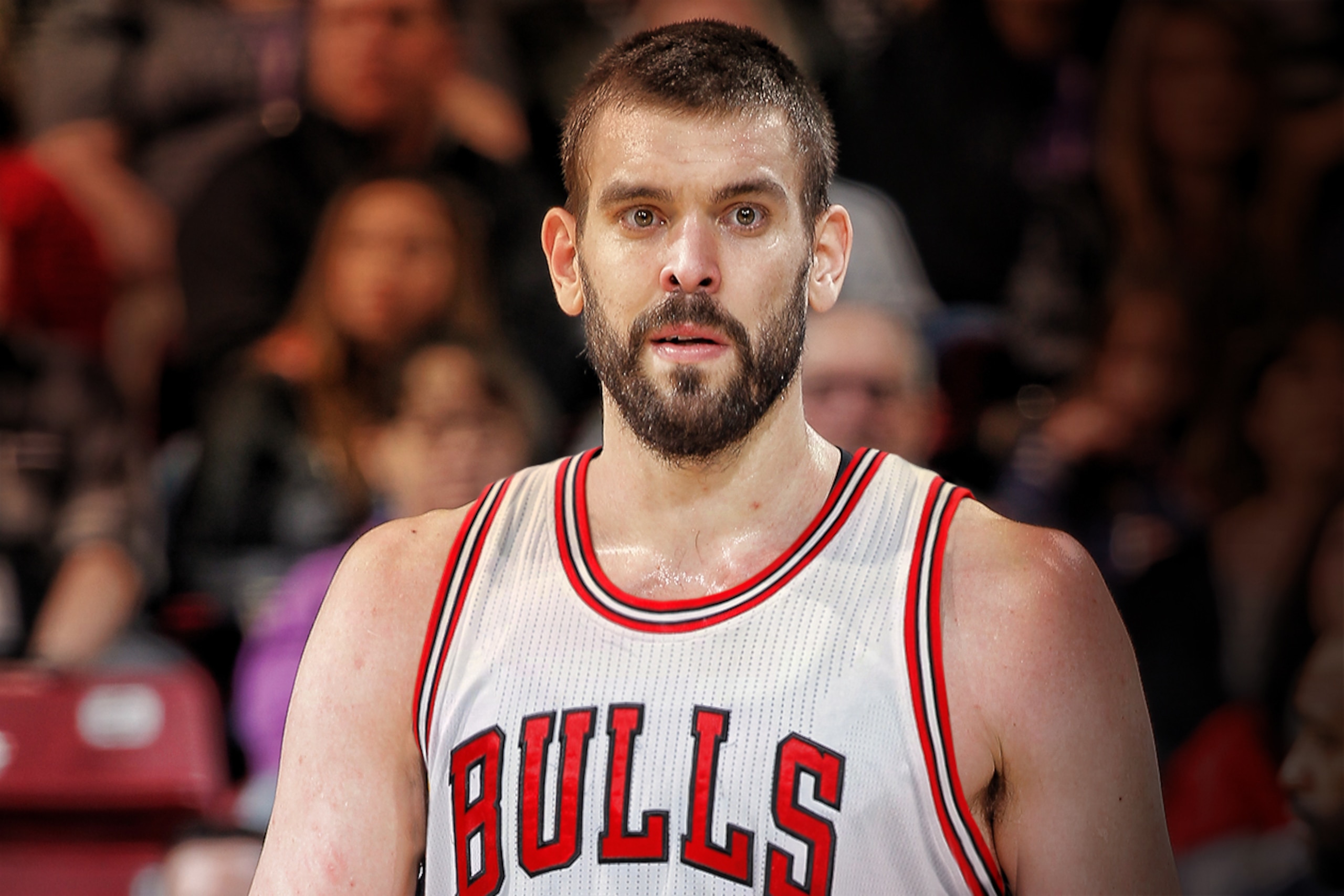
| Deron Williams | Bradley Beal | DeMar DeRozan | Meyers Leonard | Marc Gasol |
| Pablo Prigioni | O.J. Mayo | K.J. McDaniels | Channing Frye | Mike Muscala |
| Nate Robinson | Drew Gooden |
Head Coach: Terry Stotts
Best Pick?
If you aren't on the Meyers Leonard train already, there won't be room for more passengers. Even though the Illinois product is more of a natural 5, landing him at No. 173 to serve as the starting power forward alongside Marc Gasol is a flat-out coup. Not only was he one of the league's better rim-protecting presences during the 2014-15 campaign, but he submitted a 50/40/90 season on the other end of the floor—albeit without enough attempts to actually join the club.
Worst Pick?
Though DeMar DeRozan was a good value at No. 68, he wasn't a strong fit alongside Gasol and Jimmy Butler—the two studs already on this roster. Finding a floor-spacing power forward or a two-way point guard would have been better than limiting the offense via a wing player who can't knock down perimeter shots with any semblance of consistency.
If defense is what these Bulls were after in the third round, there were plenty of better stoppers available. If offensive ability was desired, there were vastly superior shooters still on the board. Even if a three-and-D combination was ideal, that could have been handled more effectively.
Team Identity?
Everything must revolve around Gasol on both ends of the court. Even though Deron Williams will handle the ball plenty—more so out of necessity than desire—this is the big man's team, and he'll plant himself on either an elbow or block and direct traffic with astounding frequency.
Also expect to see Terry Stotts use plenty of smaller lineups, even while Gasol is at the 5. K.J. McDaniels and O.J. Mayo, for example, can both slide up a spot in the rotation and help run opponents to death on a regular basis.
Biggest Strength?
The backcourt depth is impressive, even if an advanced age hasn't treated Williams with much kindness. Pablo Prigioni and Nate Robinson don't make for the most glamorous backup 1-guards, but both are effective in their limited roles. The same is true for Mayo, who will provide an offensive spark whenever the durable Butler needs to take a quick breather.
Biggest Weakness?
Though the Bulls can go big with Leonard and Gasol playing alongside one another or choose some small-ball instead, there aren't any true power forwards on this roster outside of Channing Frye and Drew Gooden. That could prevent Chicago from sizing up with a team that dominates the chess match between coaches.
Writeup provided by Adam Fromal.
Cleveland Cavaliers
15 of 42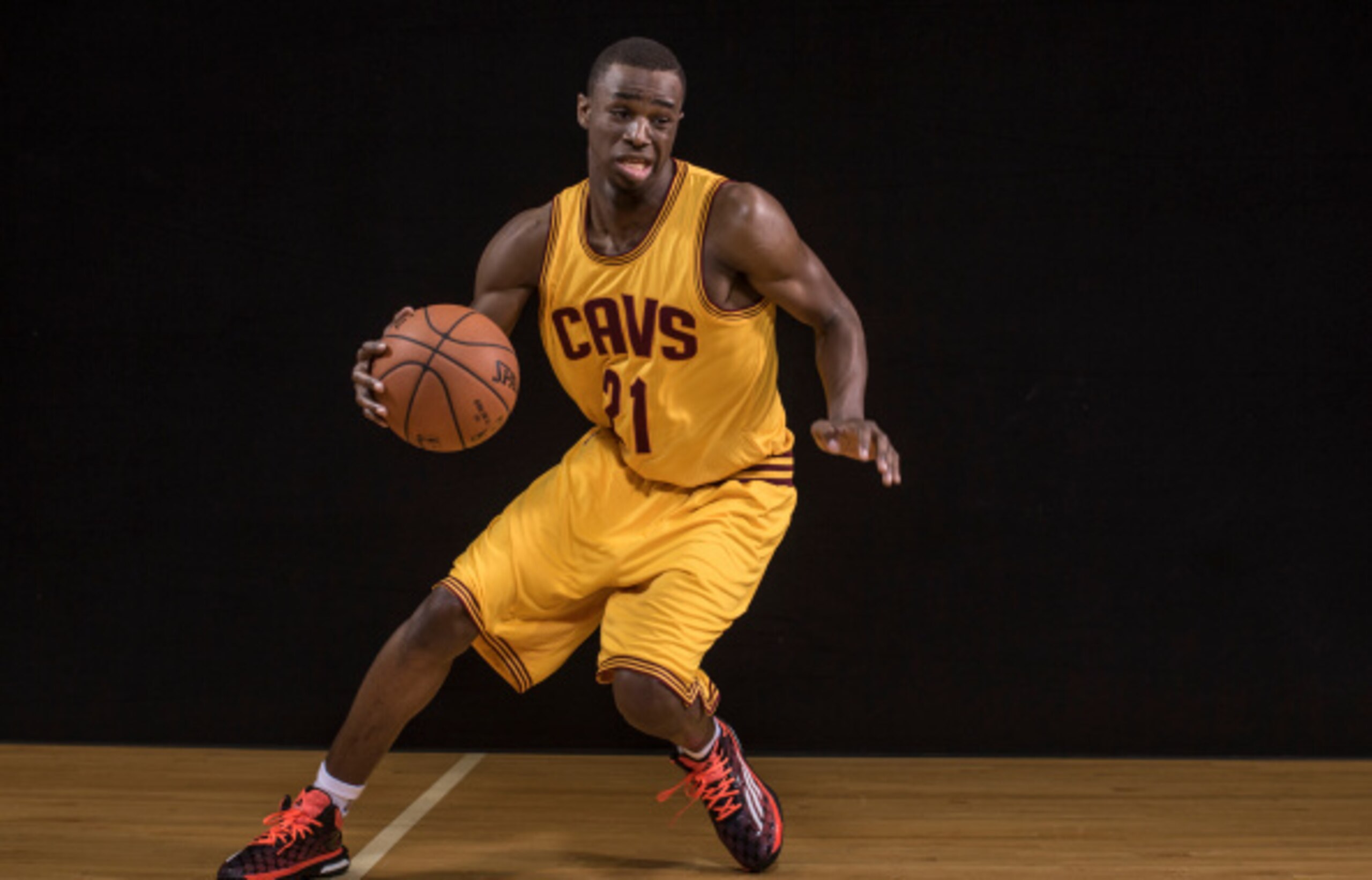
| George Hill | Andrew Wiggins | Robert Covington | Boris Diaw | Andre Drummond |
| Lou Williams | Shabazz Muhammad | Marcus Morris | Trey Lyles | Mason Plumlee |
| Will Barton | Larry Nance |
Head Coach: Frank Vogel
Best Pick?
What in the world was Shabazz Muhammad still doing on the board? It'll probably take a gaggle of brainiacs to explain how Muhammad was drafted more than 50 spots after unproven talents like Gary Harris (No. 223) and Jeremy Lamb (No. 224).
Muhammad, when healthy, is a great glue player. He can create his own shot off the dribble, score with his back to the basket and drill shots off the catch. His defense is spotty, but he's pretty darn good when he tries, and he has the size (6'6") and strength to defend multiple positions. He is going to eat on this version of the Cavaliers while catching passes from Andrew Wiggins, George Hill and Boris Diaw—Andre Drummond too, provided he eventually starts passing.
Worst Pick?
Trey Lyles had no business going at all in this draft. I totally get the idea of taking a flier on a raw rookie with upside at 326, but this is too much of a stretch. Lyles isn't someone you want in today's NBA. His jumper is virtually nonexistent, he doesn't rebound at a particularly high clip and he's a suboptimal defender. There were better options out there when looking for bigs to complement this roster—such as Drew Gooden, Derrick Williams and Maurice N'dour.
Team Identity?
The projected starting lineup of Robert Covington, Diaw, Drummond, Hill and Wiggins is built to hover around the top five in defensive efficiency. Lyles and Lou Williams pose some issues off the bench, but their warts are mitigated by an engaged Muhammad and Mason Plumlee. Plus, Frank Vogel is one of those coaches who can strengthen a flimsy defensive infrastructure just by getting his hands on it.
Biggest Strength?
Good luck getting wide-open looks from beyond the arc or driving into the paint*. Hill, Muhammad and Wiggins are going to stalk you. Marcus Morris might even get in on the fun if he can look past the fact that he's still not playing with his brother, Markieff Morris.
*I'm of course assuming that Hill will play all the minutes while Lou Williams remains roped to the bench.
Biggest Weakness?
Although I hate to play this card, the "superstar" descriptor is tossed around the NBA haphazardly, and yet the Cavaliers lack a definitive megastud. Wiggins is a superhuman in the making, but as of now, Drummond is the closest thing they have to a superstar (sorry, Boris). And in a totally made up league that saw one legitimate All-Star fall to almost every team, this figures to be a problem.
Writeup provided by Dan Favale.
Dallas Mavericks
16 of 42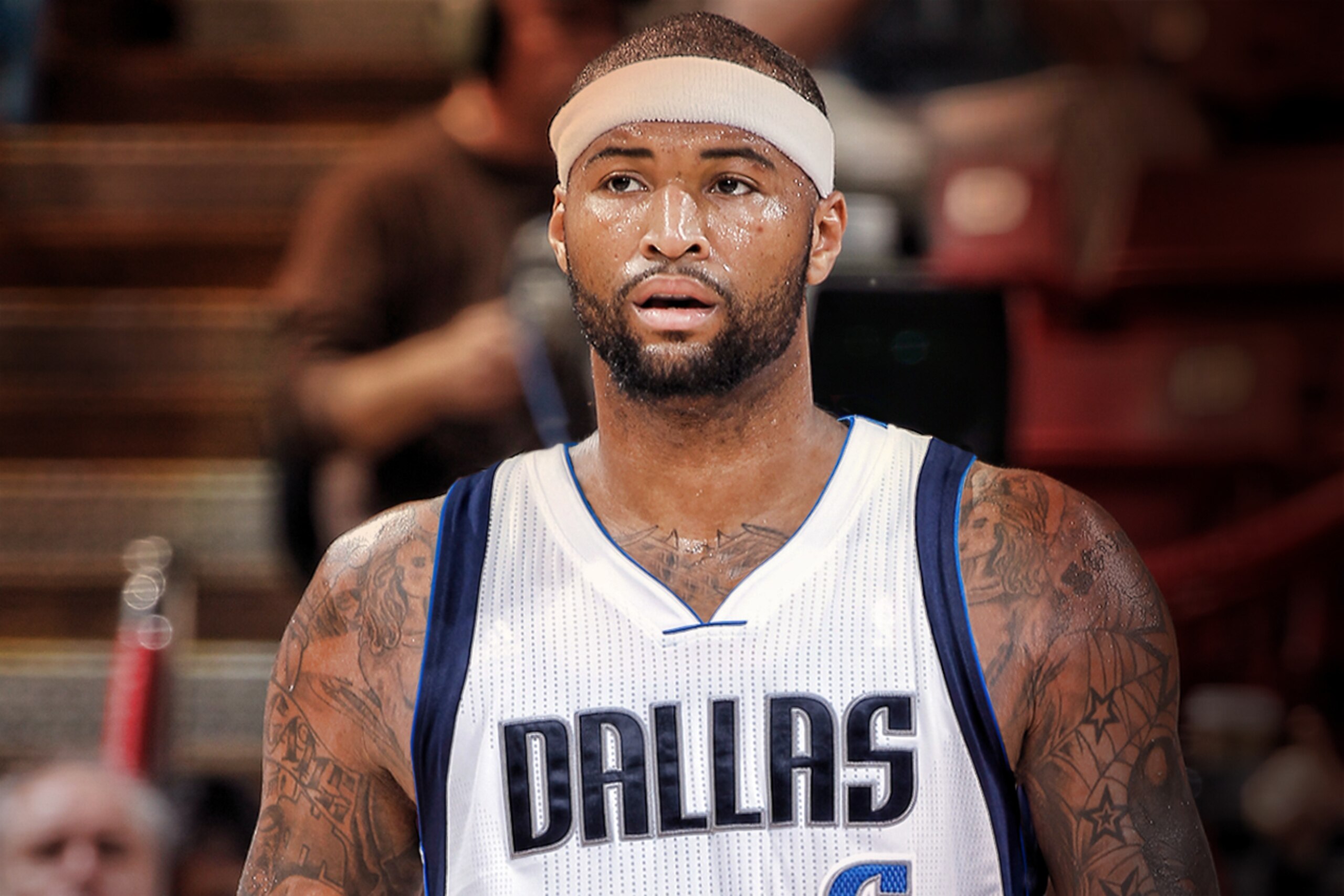
| D'Angelo Russell | J.J. Redick | Tony Snell | Zach Randolph | DeMarcus Cousins |
| Dante Exum | Anthony Morrow | Kent Bazemore | Mirza Teletovic | Cody Zeller |
| Ramon Sessions | Luke Babbitt |
Head Coach: Mike Budenholzer
Best Pick?
DeMarcus Cousins is the obvious choice, but he would have been taken that early anyway, so I really like pairing him with D'Angelo Russell at 115. The jury is still out on Russell's NBA place, but he's a big guard who can shoot, an unselfish passer and unafraid of the moment. Sounds like a perfect sidekick to get out of Boogie's way 80 percent of the time, but then grab the reins when needed.
Worst Pick?
Zach Randolph at 55. Why? Why?!?!? Why ask the best mid-block player in the game today to dodge a one-dimensional low-block veteran who will take away ALL the space while overlapping defensive strengths and weaknesses?
This is no knock on Randolph; he would be fantastic on any number of teams, but surely not this one. He'll feel like he's reliving that Knicks nightmare when he was paired with Eddy Curry. No, I didn't just compare DeMarcus Cousins to Eddy Curry. But squint at the spacing issues, and it would be hard to tell the difference some nights.
Team Identity?
Do not ask this team to run. Ever. But don't try getting them off the blocks either. Wise selections included a ton of shooting, and two tall, young guards (Russell and Dante Exum) who can run some great pick and rolls with the bigs. It's gonna be a vanilla, inside-outside offense, as the team lacks many good ways to free up Anthony Morrow and J.J. Redick. Fortunately, Mike Budenholzer is a good coach to get creative in modernizing this Grit 'N' Grind 2.0 squad.
Biggest Strength?
High-low action and pick-and-roll kicks to corner shooters will churn out points very regularly. Cousins could end up learning so much from Zach Randolph, both on the court and in the emotional toughness/maturity department. Exum and Russell could be really good together in a few years, though that doesn't count right now. This team will absolutely bully opponents to pieces inside.
Biggest Weakness?
Who is setting wing screens for the shooters? How is J.J. Redick getting open? He's gonna wind up camping out and waiting for kickouts from the block or the driving point guards, and that's missing out on at least 50 percent of what makes him a weapon.
This group will get beat down in transition defense and at the rim, and they'll only be able to play at one pace if Randolph and Cousins are in together. Things can improve by splitting them up with Mirza Teletovic and Cody Zeller, but it's a bummer when your two best players can't share the floor without setting your offense back into the 1990s.
Writeup provided by Joel Cordes.
Denver Nuggets
17 of 42
| Kyle Lowry | Kobe Bryant | Jeff Green | Chris Bosh | Steven Adams |
| Andre Miller | Jodie Meeks | Jared Dudley | Joffrey Lauvergne | Clint Capela |
| Jason Terry | Cole Aldrich |
Head Coach: Ron Adams
Best Pick?
Steven Adams has upside left, but he gets in foul trouble and may never reach a ceiling beyond being the league's most loveable irritant. It was great to provide him with another young stud-in-the-making like Clint Capela at 217.
Asking either of those two for 30 minutes a night is unwise in 2015-16, but splitting their minutes is something Ron Adams could really maximize. This tandem complements the group by never needing the ball on offense beyond garbage work, anchoring the paint on defense and causing huge problems for the opposition.
Worst Pick?
I could knock the Kobe Bryant pick. But I think there's enough protection in the lineup to cover for him, and Denver can actually use his isos.
A jack-of-all trades like Jeff Green is useful, but probably as a bench player. This team really could have used some more outside shooting with the selection instead. That he was taken at 97 meant reaching on a chronic underachiever while the likes of Joe Johnson, Rodney Hood, Robert Covington, etc. were still on the board.
Team Identity?
The punchability factor is off the charts, and it's awesome. Kyle Lowry and Kobe Bryant will chatter opponents to death while Adams and Chris Bosh annoy people. It feels like they're capable of playing either fast or slow, and is similar to the present Miami Heat: An ensemble cast with a nice mix of youth and savvy veterans who will have a puncher's chance in any game or series. (Provided Kobe stays upright all year, of course.)
This offense will need him to score 18 points per game, but fortunately Lowry and Bosh provide great safety valves.
Biggest Strength?
What a great choice to make Ron Adams the coach for what already was to be a surprisingly strong defense. No matter how physically compromised Kobe is, he still understands the concepts needed to let the other four spots protect him. Adams is great at building defenses to his personnel, and he has a lot of good individual stoppers to meld. Lowry and Bosh are once again the unheralded lynchpins, but have lots of help.
Biggest Weakness?
There will have to be a different go-to scorer every night, as Kobe's health and consistency will falter just as often as Lowry and Bosh's discomfort with being No. 1 options is problematic. This is one of those classic teams that needs to play with a lead and move the ball. If the players suffer injuries among the old guys (there are a lot of them) or key contributors, this could turn ugly fast. There's not a lot of room for error overall, but a decently high ceiling and great villain potential.
Writeup provided by Joel Cordes.
Detroit Pistons
18 of 42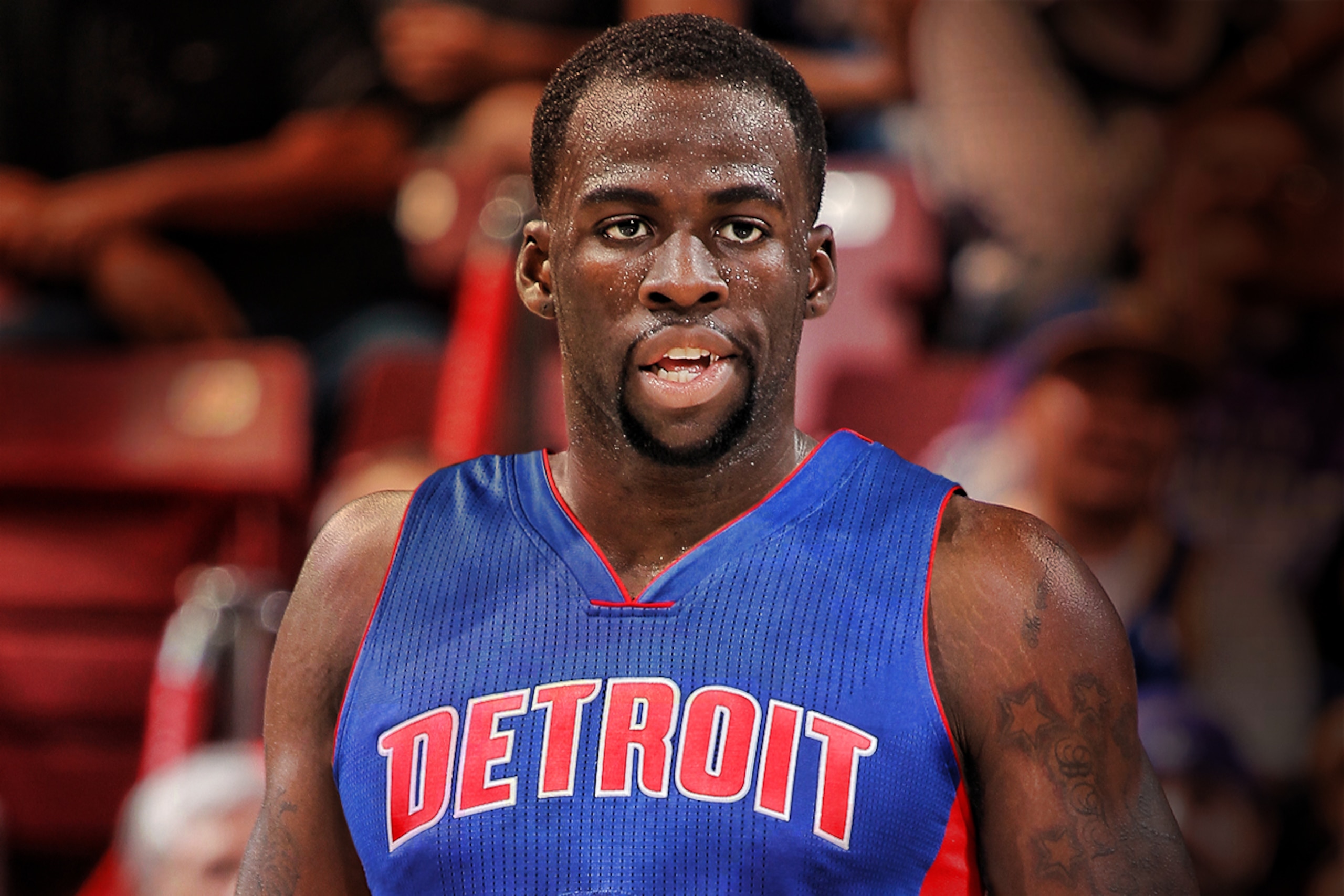
| Shaun Livingston | Monta Ellis | Draymond Green | Nemanja Bjelica | Tyson Chandler |
| Raul Neto | Ben McLemore | Corey Brewer | Tyler Hansbrough | Nikola Pekovic |
| Norman Powell | Jason Thompson |
Head Coach: Steve Kerr
Best Pick?
With Draymond Green and Tyson Chandler taken in the first two rounds, the Pistons were desperate for a shot creator, and the proverbial pickings at that point were incredibly thin. Monta Ellis is not one of the league's first-tier point producers, but he's better than anyone who was left on the big board at 80. He has defensive issues, but it's safe to say that with Green and Chandler on the team, that's not the Pistons' primary concern.
Worst Pick?
Green was a reach at 20. Green's a great defender, but you don't start building a team around a great defender.
Offensively, Draymond was decent with the Warriors last season, but that was with Klay Thompson, Stephen Curry and even Harrison Barnes all drawing attention away from him. Even then, he only shot 33.7 percent from deep, which is barely better than what Josh Smith did with the Rockets. Green is a finishing stone, but he's not a cornerstone. Taking him this high sabotaged the team from the start.
Team Identity?
With a priority on defensive players and not a lot of court stretchers, this is going to be an old-school team, which will be a challenge for Steve Kerr, who's working with a completely different type of roster than he had last year in Golden State. Look for them to slow the pace down and ugly things up as much as possible. These guys have little reason to run.
Biggest Strength?
With Green defending the perimeter and Chandler protecting the rim, this team has a nice start to a stellar defense. Shaun Livingston offers a stable presence at the point at both ends.
History shows that when you have three plus-defenders in your starting lineup, you tend to have a top-10 defense. With guys like the fast-break machine known as Corey Brewer coming off the bench, that should only help. Can the city of Detroit get behind a defense-first, bruising style of basketball? I think so.
Biggest Weakness?
The Pistons are going to be struggling to put points on the board all season. Livingston and Ellis are no Splash Brothers for sure. The former has only made 10 three-point shots in his career, though he's effective inside the arc, sinking 50.3 percent of his shots last year.
Green is slated to play the 3, not the 4, where he's a greater threat. Nemanja Bjelica is getting Nikola Mirotic comparisons, but he's still just an NBA rookie. And Chandler is a nice guy for picking up table scraps, but he's not someone to build an offense around. The defense should be solid with Green and Chandler, yet you look down the roster and it's hard to find points.
Writeup provided by Kelly Scaletta.
Golden State Warriors
19 of 42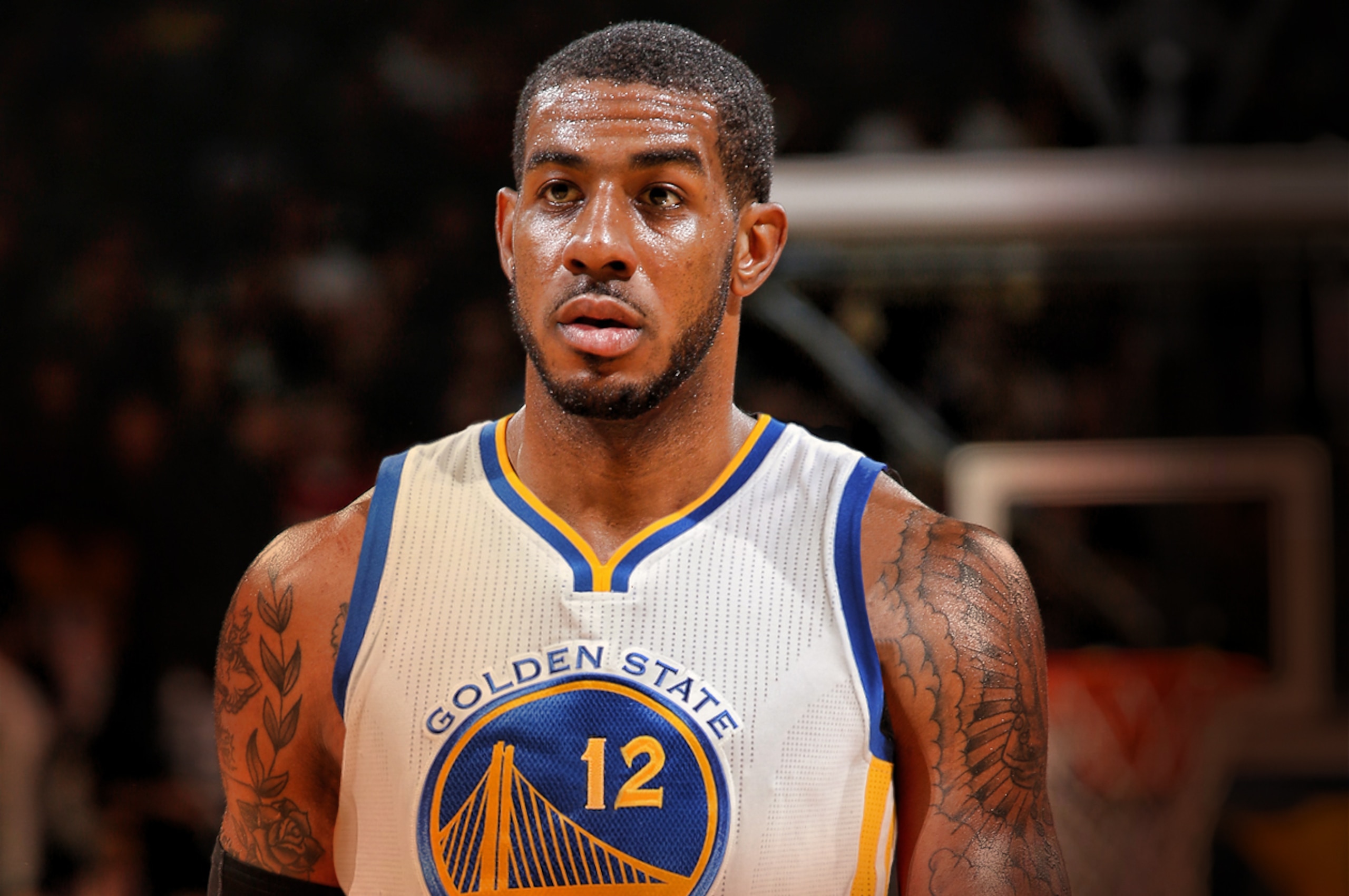
| Michael Carter-Williams | Kyle Korver | DeMarre Carroll | LaMarcus Aldridge | Brandan Wright |
| Jameer Nelson | Marco Belinelli | Alan Anderson | Jared Sullinger | Myles Turner |
| Norris Cole | John Jenkins |
Head Coach: Ime Udoka
Best Pick?
Admittedly, it might take some time for rookie Myles Turner to bring himself up to NBA speed. But if the 19-year-old hits the ground running, he could be the rarest of basketball breeds: a rim protector with three-point range. That combination is almost impossible to find, and the Warriors scored that lottery ticket at 199.
If Turner needs some seasoning, he can settle in as the second big off the bench behind Jared Sullinger. That’s as bad as the worst-case scenario gets. Weigh that risk against the reward, and this is incredible value in the slot between where Greivis Vasquez and Corey Brewer came off the board.
Worst Pick?
The idea of Marco Belinelli is what most teams want in a reserve guard and why the Dubs likely took him at 162. Marco's an incendiary shooter, a crafty scorer inside the arc and a serviceable setup man. He can play all three perimeter positions, and that versatility eases the task of finding consistent minutes for him.
But if Belinelli's reality was closer to his potential, he'd have something higher than a career 22.8 minutes average. And his player efficiency rating wouldn't have checked in well below average during seven of his eight seasons. He rarely functions outside of a spot-up specialist role, and his defensive deficiencies limit how often he can fill those shoes. That's not what you want in your first player off the pine.
Team Identity?
As in real life, LaMarcus Aldridge will try to fit his individual talents into an egalitarian system. Coach Ime Udoka is a Gregg Popovich disciple, Belinelli is a former San Antonio Spur and both Kyle Korver and DeMarre Carroll spent two-plus seasons in the Atlanta Hawks' distinctly Spursian franchise.
This offense will be built around player and ball movement, precision and patience. Aldridge isolations will be liberally added to the mix, and he'll be encouraged to punish overzealous defenses with kick-outs to open shooters. The defense should feature several good-to-great stoppers, including the potentially stout Turner-Brandan Wright tandem at center.
Biggest Strength?
There is a lack of obvious holes. Michael Carter-Williams isn't a shooter, but the other four positions (plus MCW's backup) should all provide floor spacing. The starting five has zero defensive liabilities, and the bench has some disruptive stoppers in Turner, Alan Anderson and Norris Cole.
That’s not to say this is a perfect roster by any stretch, but rather that it should function at average levels or above across the board. It should be adaptable to any game situation, and the fact that every player fills an obvious role should make it easy to create chemistry on the fly.
Biggest Weakness?
Initiating the offense could be an ongoing struggle. It's a stretch to assume Carter-Williams can continually break down the defense and make the correct read, when his 1.75 assist-to-turnover ratio last season ranked tied for 65th out of 84 qualified players.
But MCW has to set everything in motion with dribble penetration. The Dubs can't risk leaning too heavily on Aldridge’s post-ups and becoming one-dimensional. They certainly shouldn't expect Korver and Carroll to suddenly become off-the-dribble threats. If Carter-Williams doesn't make significant progress as a floor general, this attack could struggle to get out of the gates.
Writeup provided by Zach Buckley.
Houston Rockets
20 of 42
| Elfrid Payton | Klay Thompson | Otto Porter | Paul Millsap | Robin Lopez |
| Isaiah Canaan | Langston Galloway | Gerald Henderson | Kristaps Porzingis | Alexis Ajinca |
| Bruno Caboclo | Jordan Mickey |
Head Coach: Jason Kidd
Best Pick?
If basketball had five-tool players, Paul Millsap would be one of the few guys graced with that label. He does everything well; he can change a game's outcome with scoring, shooting, distributing, rebounding and defense. Typically, he'll do all of the above, though his high basketball IQ helps him identify where he needs to focus his effort.
It's not a shock that he fell into the second round, because Millsap doesn't post the sexiest stats and, at 30 years old, he never will. But versatility is so critical in both today's NBA and an exercise like this, where so many different visions are building a roster. With his malleability and do-it-all skills, he's a steal outside of the first round.
Worst Pick?
A slew of centers were off the board, and the league isn't exactly littered with starting-caliber players at the 5. Assuming that was the motivation at 82, I get it. And there aren't any real complaints with the fit, as Robin Lopez is the type of player who could go anywhere.
But with two safe, stable selections already in hand (Klay Thompson and Millsap), this could have been the spot to make a risk-reward pick. Solid centers like Timofey Mozgov, Tiago Splitter and Gorgui Dieng could have all been had a round or two later. Gambling here could have delivered a possible stud like Jabari Parker, Marcus Smart or Jonas Valanciunas—guys who could impact the ceiling's height more than Lopez.
Team Identity?
Jason Kidd will form the perimeter into a thicket of long limbs. Elfrid Payton, Klay Thompson and Otto Porter will all hug tight on their opponents, emboldened by the Paul Millsap-Robin Lopez frontcourt behind them and conscious of the fact that transition opportunities will be critical to offensive survival.
Scoring will be a struggle on nights when the fast-break attack can't get going. The spacing should be good with the starters, especially for Payton-Lopez pick-and-rolls, which will open a lot of offensive sets. While Payton and Lopez are both capable finishers, the ideal end result is a kick out to an open shooter or a timely delivery to an athletic slasher.
Biggest Strength?
Kidd will feel like he never left Milwaukee with all the length he has on defense. Payton is the smallest starter, and he's still 6'4" with a disruptive 6'8"wingspan. Thompson, Porter and Millsap all stand between 6'7" and 6'8", and each is capable of defending multiple positions. Gerald Henderson brings that same versatility to the second team, and Bruno Caboclo can do the same if he forces his way onto the floor.
Biggest Weakness?
Thompson and Millsap are both more comfortable as Robin than Batman. Everyone else works in the background, unless Kristaps Porzingis can fast-track his NBA transition. That's not necessarily a bad thing, since Kidd will implement an equal-opportunity offense. But it'll present problems every time the Rockets are desperate for a score.
Clearing a side for their top options will only exploit their limitations. Over 55 percent of Thompson's two-point field goals and 59 percent of Millsap's were assisted last season. When ball movement alone can't break down a defense, Houston needs its catch-and-shoot snipers to step out of their comfort zones.
Writeup provided by Zach Buckley.
Indiana Pacers
21 of 42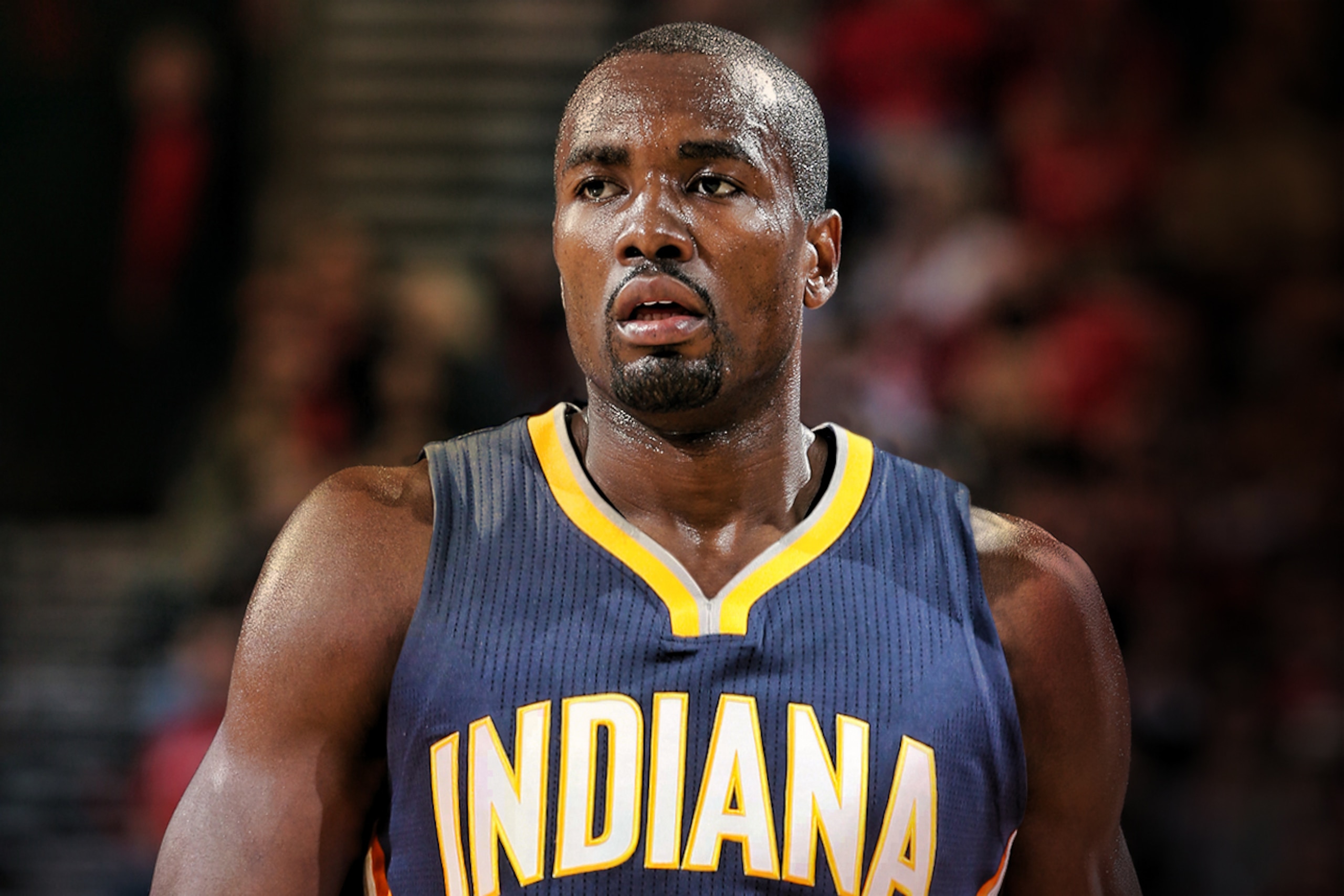
| Marcus Smart | Eric Bledsoe | Terrence Ross | Wilson Chandler | Serge Ibaka |
| Tony Wroten | C.J. Miles | Thabo Sefolosha | Kelly Olynyk | Tiago Splitter |
| P.J. Hairston | Andrew Nicholson |
Head Coach: Kenny Atkinson
Best Pick?
At the end of the third round, the Pacers found solid value in Wilson Chandler, a forward who was criminally misused by Brian Shaw over the last two seasons. Under Hawks assistant Kenny Atkinson (re-drafted as the Pacers head coach) and now playing the 4, Chandler has a chance to be a matchup nightmare against some of the league's lumbering power forwards.
Worst Pick?
Considering he went 269th, it's hard to be too upset over the Tony Wroten selection. But he could jam up a roster that's otherwise suited for a ball-movement-heavy offense like the one Atkinson figures to implement. Wroten did average 5.2 assists over 30 games last season; he also jacked up 14.5 shots at 40.3 percent.
Team Identity?
This team is going to be lots of fun. Atkinson's seen firsthand how an NBA offense should run under the tutelage of real-life Hawks coach Mike Budenholzer, and he'll bring that same movement-heavy offense to the Pacers, but with a twist. Guards Marcus Smart and Eric Bledsoe will live in the paint with their slashing ability. And the fact that Terrence Ross, Wilson Chandler and Serge Ibaka can all shoot means there will be plenty of room inside for drives and kick-outs.
Biggest Strength?
The ability of the big men is really what opens up the offense. Since 2012-13 (when Ross entered the league and Ibaka started shooting threes), all three members of Indiana's frontcourt have hit over 35 percent of their three-point attempts. Backup big Kelly Olynyk is a career 34.3 percent shooter from deep. Opposing defenses will never be able to sag into the paint against the Pacers.
Biggest Weakness?
Against bigger frontcourts, Ross and Chandler could get bullied. And while Ibaka is a solid rim protector, he's not really one to hold his ground in isolated post-ups against traditional centers. The silver lining is the ability to bring bigger guys like Olynyk and Splitter off the bench, but the team's generally undersized.
Writeup provided by Andy Bailey.
Los Angeles Clippers
22 of 42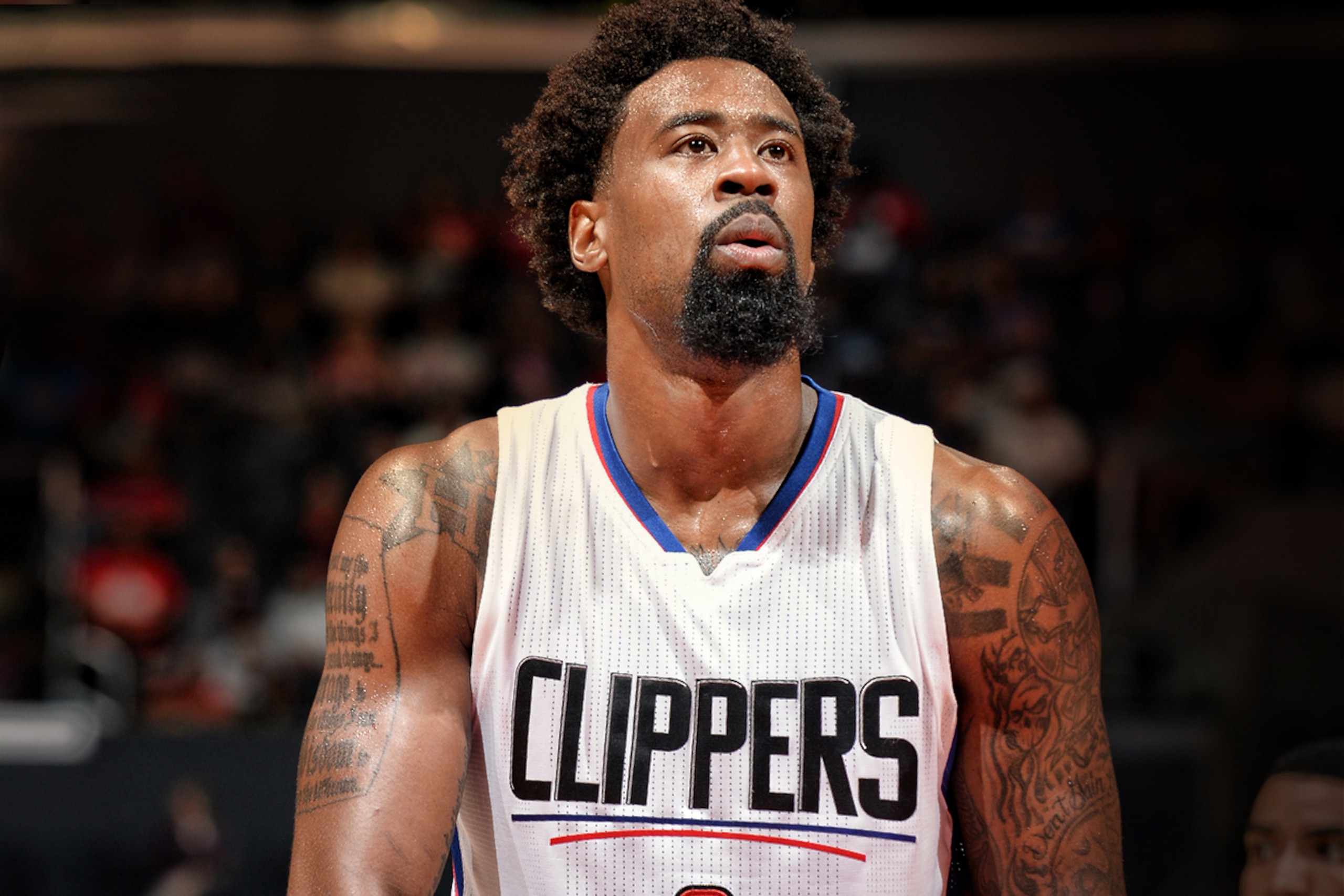
| Damian Lillard | T.J. Warren | Harrison Barnes | Ryan Anderson | DeAndre Jordan |
| Aaron Brooks | Jamal Crawford | Jae Crowder | Anthony Tolliver | Zaza Pachulia |
| Elijah Millsap | Richaun Holmes |
Head Coach: Jay Larranaga
Best Pick?
It's a tie between Damian Lillard and DeAndre Jordan, but only because they came in BACK-TO-BACK picks. Despite having the final slot in the first round (thus the first choice in the second), and despite having two different GMs, the Clippers came away with a cohesive strategy before any other team.
At this point, just plugging in some versatile wings and shooting was all that was left to do (and was later done). Lillard and Jordan are flawed players, but they're uber-talented within their lanes and complement each other incredibly well.
Worst Pick?
Anthony Tolliver is a fine role player, but there's no way LAC should have taken him at 210 when AT duplicates what Ryan Anderson already brings as a stretch 4 and when at least a dozen more complete power forwards were still on the board. Tolliver is a great teammate and glue guy, so I'm not knocking his inclusion, but put him on a team about 3-4 rounds later, and then we'll still talk about a (slight) reach.
Team Identity?
Start your engines, as this team is built to run. "DJ Blocks" will ignite fastbreaks that will have Lillard finding his high-flying wings for a ton of highlights. There's enough shooting to let Jordan work a little pick-and-roll and post-ups, too, but most of the baseline stuff will run through Ryan Anderson.
Half-court offense will rely on Anderson and Barnes to be consistent off the ball, but it's still Lillard's show. That's a good thing, as this feels like the protected lineup he thrived with during the past couple years in Portland.
Biggest Strength?
The interchangeable wings are truly tantalizing, especially when you play Jae Crowder at the 4. Jamal Crawford and Aaron Brooks probably can't be on the floor together, yet they provide even more offensive punch.
This isn't a one-dimensional team either, as Jordan, Warren, Barnes, Crowder and Zaza Pachulia should be able to clean up just enough defensively. Pairing Jordan with Anderson was so good for both of these players. Talk about a synergistic balance of strengths.
Biggest Weakness?
You can still swarm Damian Lillard, take him out of a game and then dare the rest of these guys to beat you. There is no clear-cut No. 2 offensive option who can create his own shot, unless Harrison Barnes is finally ready to do that sort of thing consistently. The complementary parts are fantastic, and this group will win a bunch of games, but they're susceptible to great coaching schemes and veteran defenses come playoff time.
Writeup provided by Joel Cordes.
Los Angeles Lakers
23 of 42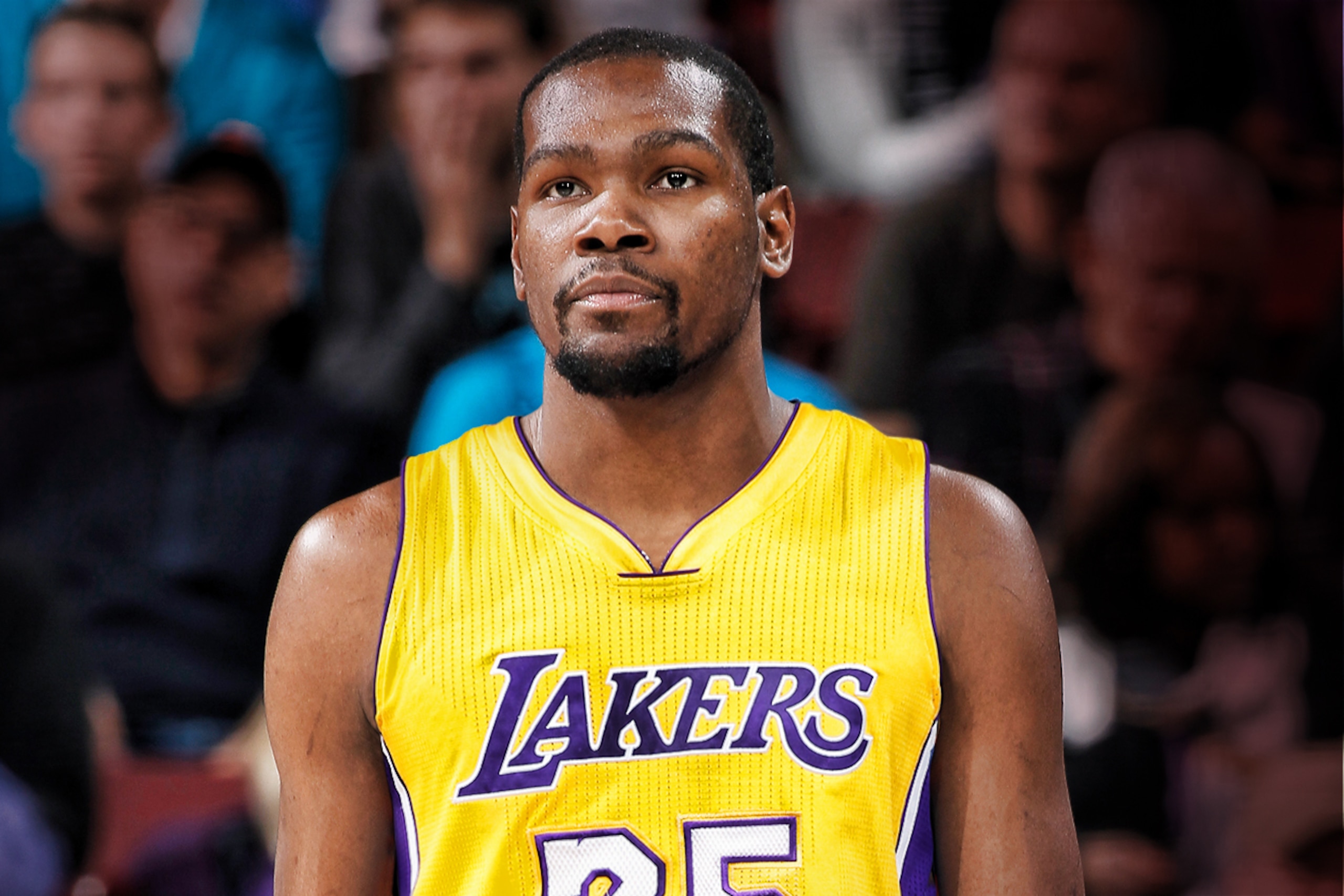
| Rajon Rondo | Andre Iguodala | Kevin Durant | Kevin Garnett | Greg Monroe |
| Devin Harris | Hollis Thompson | Joe Ingles | Willie Cauley-Stein | Miles Plumlee |
| C.J. Watson | Derrick Williams |
Head Coach: Brad Stevens
Best Pick?
Finding Miles Plumlee at 304 was a steal, especially given the shortcomings of the starting bigs (Greg Monroe doesn't defend, and Kevin Garnett's career started during the Clinton administration). Plumlee's bouncy, defending and rebounding without asking for a bunch of touches on the offensive end. For 15-20 minutes a night, he'll energize what could be an otherwise stale frontcourt.
Worst Pick?
Rajon Rondo was taken with the 117th pick, and even that may have been too early. The point guard demonstratively destroyed the Dallas Mavericks' previously elite offense last season. Before the Mavs acquired Rondo in December, they were scoring 113.6 points per 100 possessions, the best mark in the league. After the deal, they had an offensive rating of 104.1, which was 13th in that timeframe.
In a league where ball movement and shooting have become critical, Rondo still dominates the ball and can't shoot (he had the third-worst true shooting percentage among players who qualified for the minutes leaderboard last season).
Team Identity?
All passes will flow to Kevin Durant. Sure, Monroe will get his post-ups and will likely average a double-double, but for this team to be successful, Durant's going to have to shoot a lot. Three other starters (Rondo, Garnett and Andre Iguodala) can't score.
Biggest Strength?
Rondo, Iguodala and Garnett are all past their primes, but they're still smart, veteran defenders. Brad Stevens can build a cohesive team defense around those three without having to rely too much on Durant or Monroe.
Biggest Weakness?
Durant's prowess from deep is obvious, but no other Lakers starter is reliable there. Hollis Thompson (career 40.1 percent shooter from three) and Joe Ingles (42.7 percent from three after the 2015 All-Star break) will provide a little spacing off the bench.
You have to be able to hit threes to keep up in today's NBA, meaning these Lakers are going to have a whale of a time. Things are going to be real cozy inside the arc.
Writeup provided by Andy Bailey.
Memphis Grizzlies
24 of 42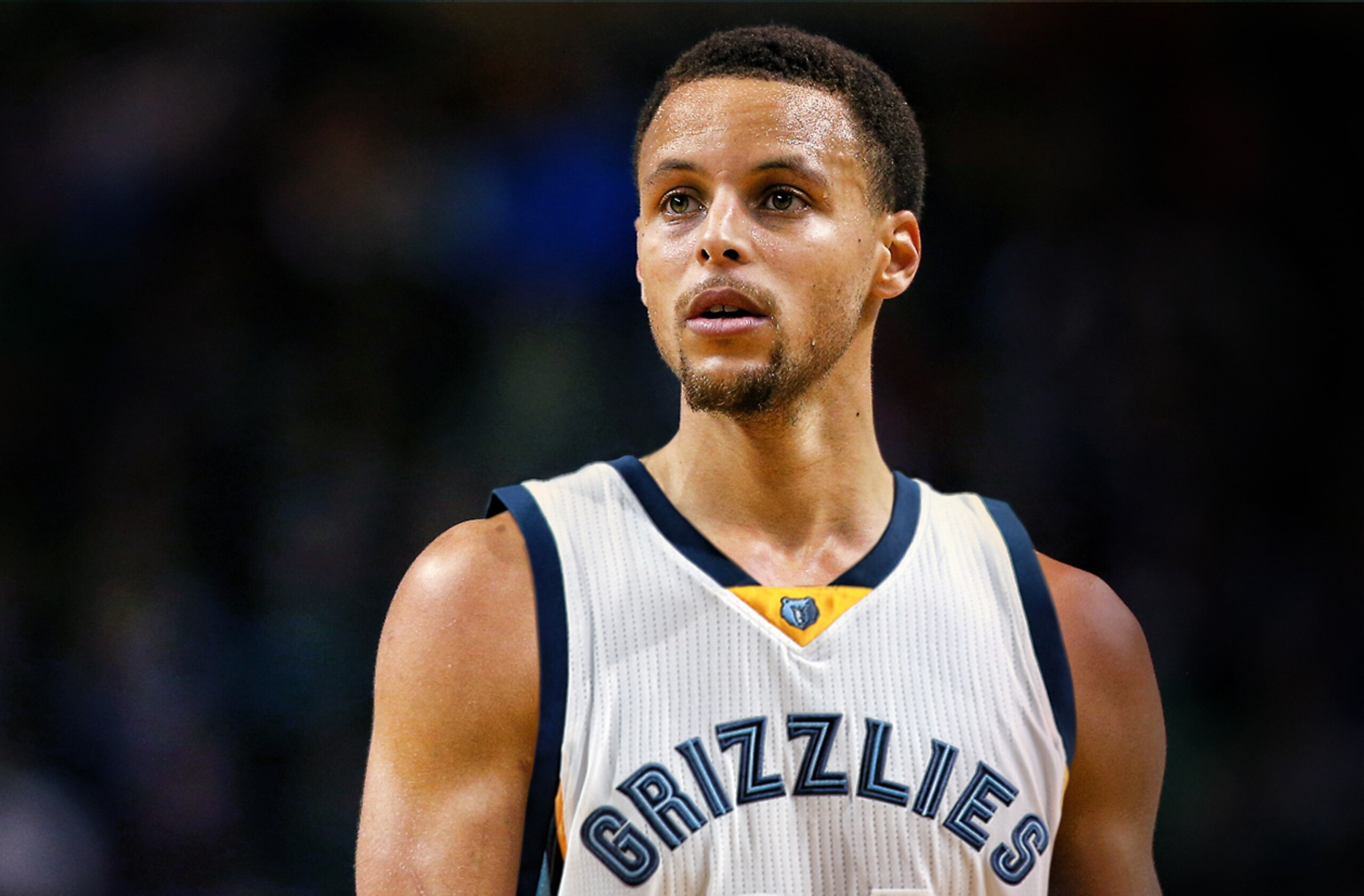
| Stephen Curry | Danny Green | Evan Turner | John Henson | Al Jefferson |
| Matthew Dellavedova | Jordan Clarkson | Andre Roberson | Josh McRoberts | Chris Kaman |
| JaKarr Sampson | Jeff Withey |
Head Coach: David Blatt
Best Pick?
Memphis’ best pick was its first. Stephen Curry could have arguably gone first after his record-setting 2014-15 season; to snag him at three was a major boon for a team that doesn’t have another bona fide star.
Worst Pick?
Memphis was on the right track with Stephen Curry, Danny Green and Al Jefferson—a trio that could have conceivably given a four-out, one-in look, freeing the big man up for lots of easy looks on the blocks. Evan Turner, selected at 123, is a ball-dominant presence who has yet to shoot better than 45 percent from the field over the course of his six-year career. His PER has also never topped 13. On a team that would prefer to embrace modern efficient practice, he simply doesn't fit.
Team Identity?
The Grizzlies would prefer to play outside-in, with Curry and Green forcing defenses to send extra perimeter help, giving Jefferson space to operate in the post. Jefferson posted up more than any player in the league last season, and he's wildly proficient when he has the room to take a few dribbles and put his footwork to use.
Biggest Strength?
The obvious answer is shooting, but we'll get more specific and say Curry’s playmaking. As Curry demonstrated throughout last season, his dribbling and passing skills can open up an entire offense for ancillary weapons, and Memphis will hope he can do the same—especially with limited scoring presences like Turner and John Henson in the starting lineup.
Biggest Weakness?
Curry, Green and Jordan Clarkson represent a nice trio of diverse guards, but a small forward triumvirate of Turner, Andre Roberson and JaKarr Sampson isn't particularly strong on offense. They'll be able to defend adequately next to Green, but that group leaves plenty to be desired from a playmaking perspective.
Writeup provided by Alec Nathan.
Miami Heat
25 of 42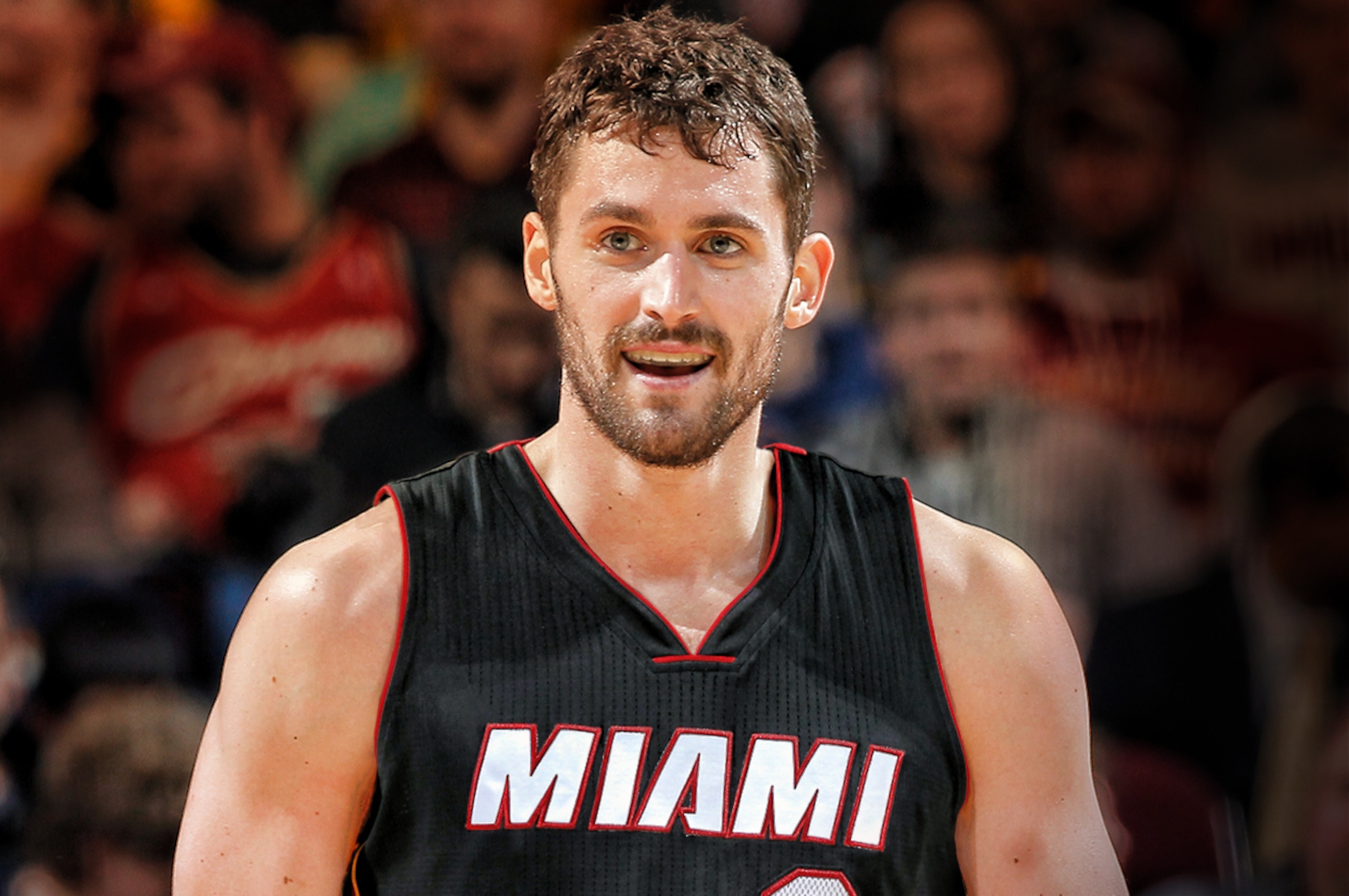
| Ty Lawson | Kentavious Caldwell-Pope | Justise Winslow | Kevin Love | Marcin Gortat |
| Mario Chalmers | C.J. McCollum | Wesley Johnson | Carl Landry | Bismack Biyombo |
| Gary Neal | Tarik Black |
Head Coach: Rick Carlisle
Best Pick?
We overlook the importance of a great head coach far too often, and Rick Carlisle served as the perfect example in this year's re-draft. Gregg Popovich went at No. 54—arguably too late already—and Carlisle wasn't picked until 98.
For perspective, Otto Porter, Manu Ginobili and Michael Carter-Williams were the next three players taken, and it's hard to imagine any of them having a more substantial impact on their teams than this coach will. No matter who's on the roster, he can coax an incredible amount of production out of them.
Worst Pick?
Even though it's hard to do anything too negative with the No. 218 pick, the Heat still missed an opportunity to land someone like Tyler Zeller or a high-upside player such as Nikola Jokic. Is Bismack Biyombo a strong rim-protector? Sure, but he's an entirely limited player who doesn't belong playing major minutes on a competitive squad. Though he's far better off as a third center, he has no choice but to serve as the primary backup on this roster.
Team Identity?
Talk about a team that was crafted to let Ty Lawson make the most of his immense offensive skills. Even though he had trouble serving as the man in charge for the Denver Nuggets, every part of this roster feels like it's tailored to his passing ability, speediness and dribble penetration.
Both Justise Winslow and Kentavious Caldwell-Pope should thrive on the wings as they wait for catch-and-shoot opportunities. In the frontcourt, expect plenty of screens as Kevin Love engages in pick-and-pop sequences while Marcin Gortat looks to dive to the hoop and finish with flushes. The combination should spread defenses rather thin and let Lawson rack up double-digit assists nearly every time he takes to the court.
Biggest Strength?
Lawson is the perfect floor general for this crew, and everyone surrounding him at the guard spots is an ideal fit as well. Caldwell-Pope was one of the biggest steals of the entire draft, and he's due for a two-way breakout in a system that will let him serve as a key wing defender and spot-up shooter. Plus, the Heat have Mario Chalmers as a strong backup 1-guard, C.J. McCollum emerging as a prospective Sixth Man of the Year contender and Gary Neal providing a ridiculous amount of depth at either of the two smallest spots in a lineup.
Biggest Weakness?
Whether we're looking at Gortat in the starting five or Carl Landry, Biyombo and Tarik Black coming off the bench, no one else in the big-man rotation is truly capable of spacing out the court for the plethora of shooters. The inherent deficits place an undue amount of pressure on the shoulders of Love, who hasn't exactly proven himself the most durable star in recent years.
Writeup provided by Adam Fromal.
Milwaukee Bucks
26 of 42
| Derrick Rose | Iman Shumpert | Tobias Harris | Nikola Mirotic | Dwight Howard |
| Jarrett Jack | Jeremy Lamb | Doug McDermott | Jonas Jerebko | Kyle O'Quinn |
| Shabazz Napier | Anthony Bennett |
Head Coach: Kevin McHale
Best Pick?
Selected at 164, Kyle O'Quinn is one of the most underrated players in the NBA. He rebounds. He passes. He can post up. He can do some work off the dribble. He can shoot. He can protect the rim. Since 2012-13, only two players have averaged at least 18.5 points, 15 rebounds, three assists and three blocks per 100 possessions while logging 2,500 total minutes: Tim Duncan and Kyle O'Quinn. Essentially, he's a jack of all trades who's recognized for none.
Worst Pick?
Injuries aren't an immediate issue on our fantasy basketball island, but incident-prone players are still incident-prone. Derrick Rose has missed 212 of a possible 312 regular-season matchups over the last four years. Not only that, but his skill set is ill-fit for the way this game must now be played. He still cannot shoot threes at an efficient clip, and the explosion that once helped overshadow his outside shortcomings left him long ago.
Milwaukee could have gone a number of different directions with players such as Jrue Holiday, Khris Middleton, Bradley Beal and Danny Green, among many others, still on the board at 44. There was no need to burn a second-round pick on someone who, truthfully, shouldn't have been grabbed until the fourth or fifth.
Team Identity?
The Bucks don't have an elite shot creator unless Rose finds a time machine that can transport him back to 2010-11. Their perimeter defense is predicated on Iman Shumpert remaining healthy (sigh) and Tobias Harris trying all the time (double sigh). Harris, Jeremy Lamb, Doug McDermott and Nikola Mirotic are supposed to be solid shooters, but none of them has been ripping nylon consistently for long—or, in some cases, at all.
That leaves Howard, who will need to break out a time machine of his own, journeying back to his Orlando Magic days, when he provided elite-level rim protection and collected Defensive Player of the Year awards like they were Pokemon cards.
Biggest Strength?
Howard still does some pretty nasty things at the rim. He averaged just 1.6 blocks per 36 minutes last season while battling injuries, which is admittedly the second-lowest mark of his career. But of the 54 players to contest at least seven shots at rim per game, Howard ranked eighth in opponent field-goal percentage, holding rival shooters to a 45.7 percent conversion rate.
O'Quinn isn't bad himself. He allowed opponents to shoot 48.8 percent at the iron, which ranked in the top half of the league among all players to face four such shots per game.
Biggest Weakness?
Aside from Rose, the Bucks have little to no proven playmaking. Their backup point guard situation borders on a joke with Jarrett Jack and Shabazz Napier, while Harris, Lamb and Shumpert won't be winning any point-wing awards in the near future. There's a real chance O'Quinn ends up being the second-best playmaker on this team. And that's not the court-vision hierarchy from which above-average offenses are born.
Writeup provided by Dan Favale.
Minnesota Timberwolves
27 of 42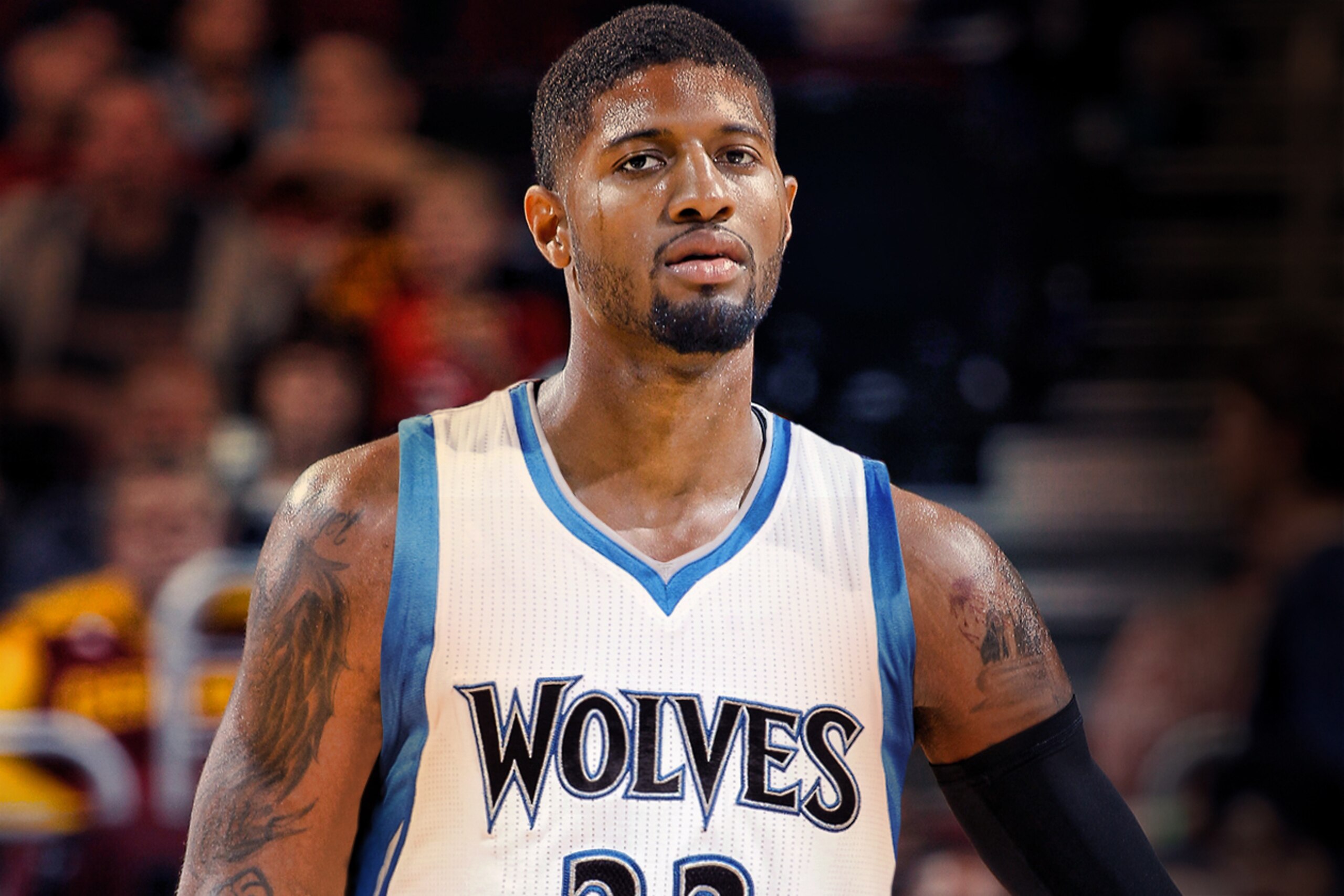
| Jeremy Lin | Tyreke Evans | Khris Middleton | Paul George | Timofey Mozgov |
| Cameron Payne | Leandro Barbosa | Vince Carter | Mitch McGary | Gorgui Dieng |
| Pat Connaughton | Brandon Bass |
Head Coach: Erik Spoelstra
Best Pick?
It's hard to find centers who can change the game defensively; they're scarce. And when a center with defensive value can also score a little bit on the block (not to mention impact the offensive boards), he shouldn't hang around a draft past the century mark. Timofey Mozgov, i.e. the guy who was often the second-best player on a team in last year's NBA Finals, is better than No. 108, but Minnesota got him there nonetheless.
Worst Pick?
The Wolves had just taken Mozgov with their previous pick, and they didn't have a point guard yet (and no, Tyreke Evans cannot be trusted to play the point). So Gorgui Dieng at 133 wasn't just a reach for a ho-hum backup big; it also came with an opportunity cost. Now, the Wolves have Jeremy Lin and Cameron Payne manning the PG spot. If not for the shakiness of that position, this team might be a real contender.
Team Identity?
I do like having Paul George as the starting 4, which should lead to a four-out lineup around a conventional center. That's a plus. But leaving the starting backcourt duties to Lin and Evans is a concern. Let's just say this team will lean on defense until Erik Spoelstra, always creative, figures out how to best utilize this weird mixture of talent.
Biggest Strength?
Frontcourt defense is an asterisk here unless George doesn't get smashed by opposing power forwards. I like his chances, especially with Middleton handling some of the tougher wings and Mozgov shutting things down inside. Also consider the wing shooting as a sort of backup strength. Leandro Barbosa, Middleton, Vince Carter and George can stripe it. And there's a rumor going around that Mitch McGary is firing up threes these days, too.
Biggest Weakness?
It has to be the point guard spot, but even that position isn't really that bad. If Lin can play the point at a league-average level, which is basically what he's done for his entire career (Linsanity notwithstanding), there's very little to dislike. And if Evans and/or Payne prove to be better distributors than I'm giving them credit for, this could be one of the five or six best teams in the re-draft.
Writeup provided by Grant Hughes.
New Orleans Pelicans
28 of 42
| Brandon Jennings | Alec Burks | Rudy Gay | Anthony Davis | Karl-Anthony Towns |
| Dennis Schroder | R.J. Hunter | Kyle Anderson | Marreese Speights | Tibor Pleiss |
| Allen Crabbe | Walter Tavares |
Head Coach: Jeff Hornacek
Best Pick?
Anthony Davis. At No. 1. Duh.
I mean, yes, it was the easiest, most obvious pick imaginable, but the option here is for "best" pick, right? Not most creative pick. Not biggest steal. It is the best pick. And how is the man who will be the best in the NBA this year anything but the obvious choice?
Worst Pick?
There aren't many "bad" picks on this team, but the least good one is Rudy Gay in the third round. With Anthony Davis and Karl-Anthony Towns as the post players, Giannis Antetokounmpo would have made this group essentially impossible to score on. Towns was a bit of a reach in the second round, but the joy of seeing him and the Brow together softens that blow.
Team Identity?
Gay showed us in Sacramento that he can cooperate with teammates and become efficient. He'll do so with this group, too. Burks is an underrated two-way player. But let's face it, this team is about Kentucky's finest. The KAT and Brow combo is going to be selling out arenas everywhere. And it's going to be so much fun.
Biggest Strength?
Gay, Davis and Towns are going to be so electric that they won't even need power in home games. If Brandon Jennings comes back as his post-Josh Smith, pre-Achilles-tear self, then this team is going to be very hard to guard, But the frontcourt tandem of Davis and KAT gives so much rim protection that it's just silly. And good luck trying those stretch 4 corner-threes with Davis prowling about. This is all about ruling the paint, which is going to win the Pelicans a lot of games.
Biggest Weakness?
While it's hard not to love this starting five, the depth leaves a lot to be desired. Dennis Schroder is nice as a sixth man, if he's getting his shots. His penetration is top-notch, but who is he going to kick out to on those drives? Kyle Anderson? Marreese Speights? Tibor Pleiss?
I don't like the way the second unit fits together, and eventually this team is going to burn out. They're going to be a great regular-season show that doesn't have the wherewithal to win in the playoffs.
Writeup provided by Kelly Scaletta.
New York Knicks
29 of 42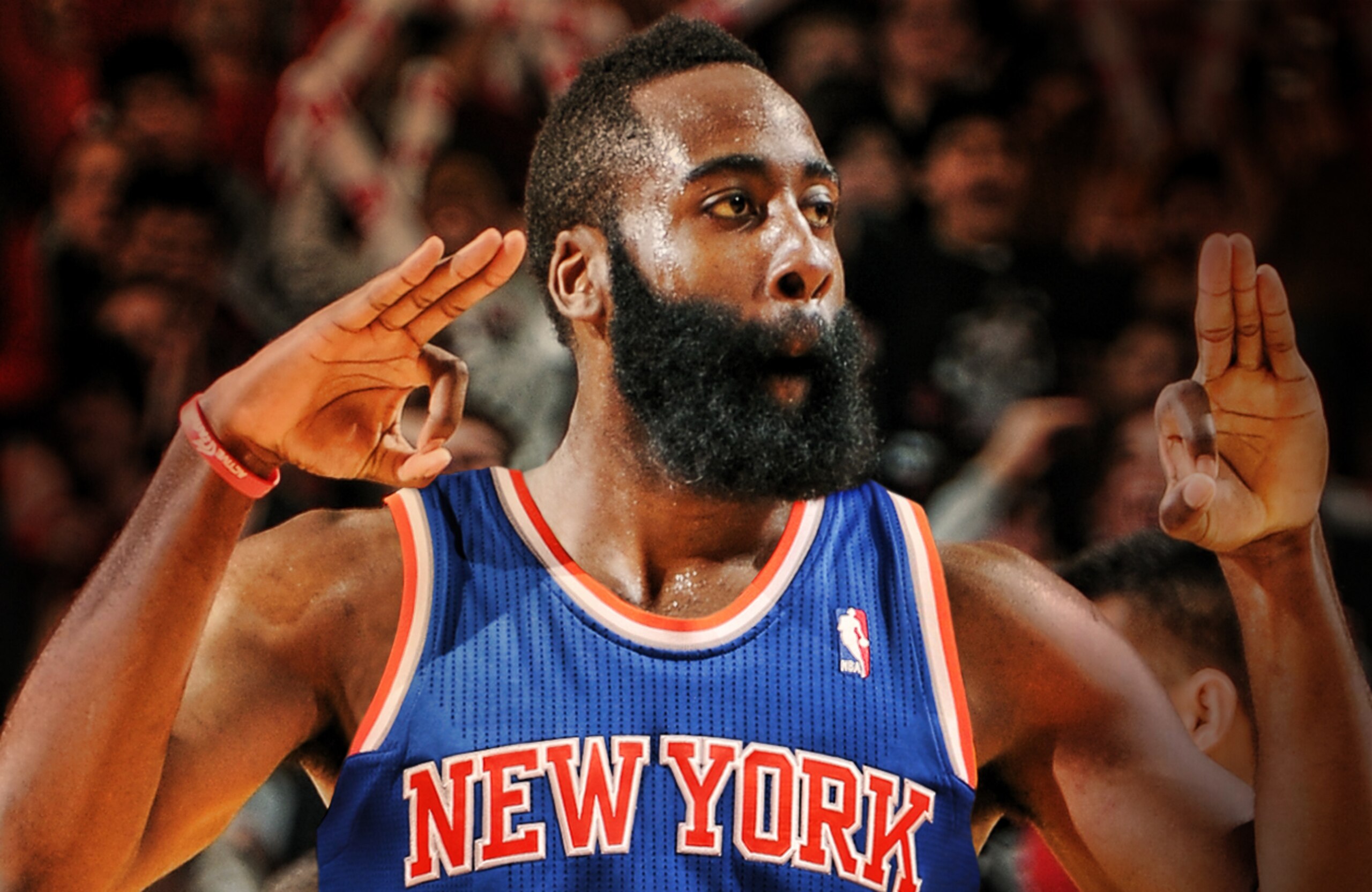
| Darren Collison | James Harden | Danilo Gallinari | Markieff Morris | Brook Lopez |
| Kendall Marshall | Lance Stephenson | Al-Farouq Aminu | Marvin Williams | Kosta Koufos |
| Spencer Dinwiddie | Darrell Arthur |
Head Coach: Alvin Gentry
Best Pick?
Taken at 125, Darren Collison isn't a perfect complement for James Harden. They'll have their struggles on the defensive end, but trying to slow them down will be a nightmare. Harden is best-suited alongside a 1 who doesn't command the ball and can knock down a three off a kick-out; Collison checks both of those boxes. Plus, he's more capable of driving and dishing when he does have the ball than Harden's last point guard, Patrick Beverley.
Worst Pick?
Taking a flyer on someone at 236 is generally pretty safe (and it may be in this case), but Lance Stephenson has already proven capable of cratering a team. After making the playoffs in 2014, Charlotte's biggest acquisition of that summer wound up being the only Hornet with negative win shares in 2014-15. New York took a chance on the worst true shooting percentage in the NBA among players who logged at least as many minutes.
Team Identity?
The Knicks don't have a single defensive specialist in their starting lineup. They may not even have a single plus defender. They're simply going to have to try to run teams off the floor.
Offensively, they'll play a lot like the real-life Houston Rockets, with Harden generally handling the ball and everyone else spacing the floor around him (with the obvious exception of Brook Lopez, who'll have to get used to being a pick-and-roll big).
Biggest Strength?
New York's wing combination of Harden and Danilo Gallinari is the embodiment of modern offense: lots of layups, threes and free throws, forsaking all other shots. In '14-15, over half of Gallo's attempts came from beyond the arc. Just under 40 percent of Harden's shots were threes. Additionally, Gallinari may be a perfect kick-out target off Harden's drives to the rim. He's hit 36.7 percent of his threes over his eight-year career but can also put the ball on the ground to beat a hard closeout.
Biggest Weakness?
The Knicks are going to give up points. Lots and lots of points. Collison's quick but is undersized against a lot of today's point guards. Harden's defensive struggles are notorious. Brook Lopez does a decent job of clogging the paint but is borderline immobile.
When Markieff Morris and Gallinari are likely the best defenders in your starting lineup, you're going to struggle. Kosta Koufos and Al-Farouq Aminu will help off the bench, but not enough to completely offset this weakness.
Writeup provided by Andy Bailey.
Oklahoma City Thunder
30 of 42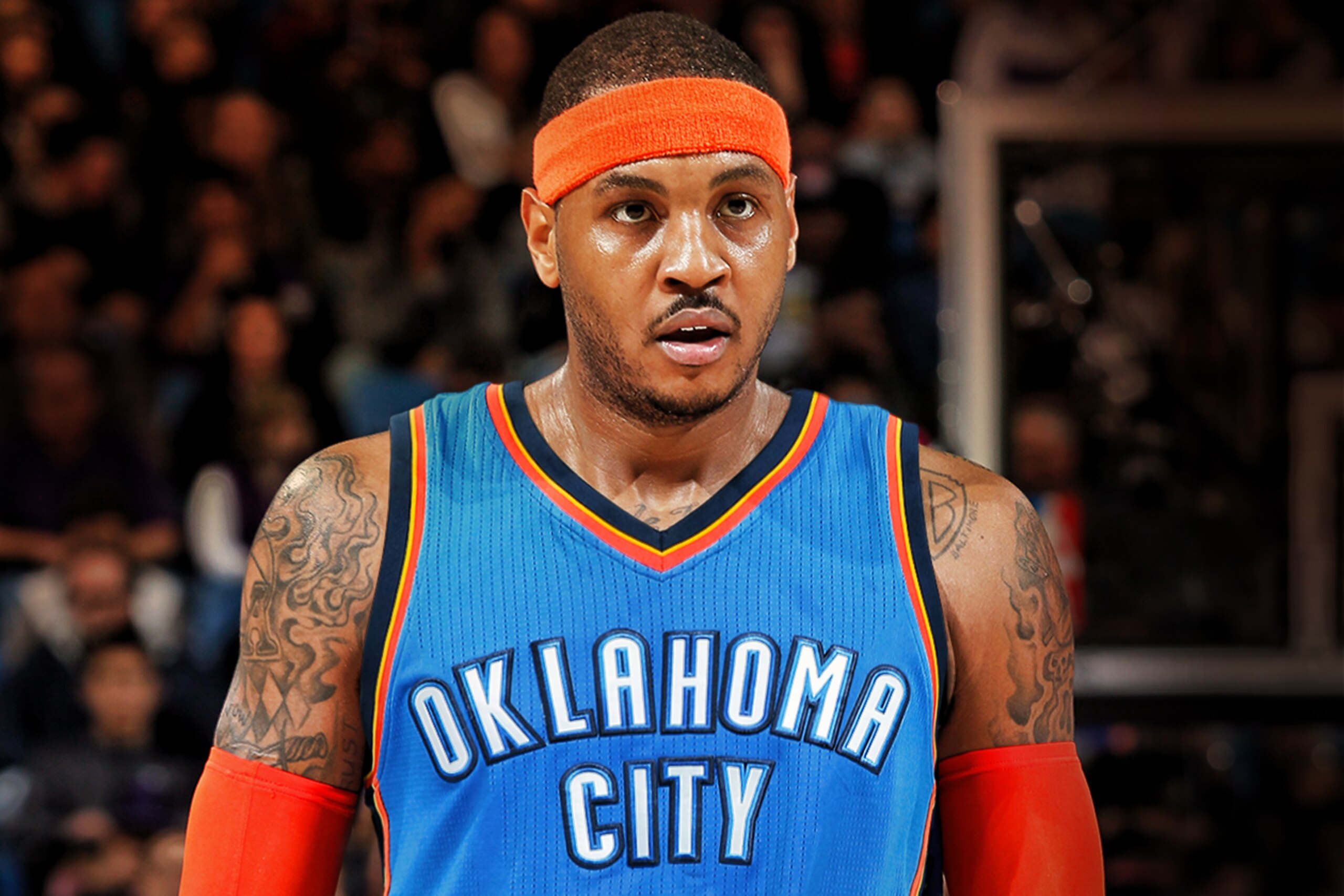
| Mike Conley | Evan Fournier | P.J. Tucker | Carmelo Anthony | Jonas Valanciunas |
| Mo Williams | Markel Brown | Quincy Pondexter | Taj Gibson | J.J. Hickson |
| Jimmer Fredette | Kevin Seraphin |
Head Coach: Billy Donovan
Best Pick?
Mike Conley is still a perennially underrated floor general despite evidence to the contrary. He's a wizard in the pick-and-roll, uses ambidexterity to his advantage on a regular basis and hit threes at a 38.6 percent rate last year. Although he's not the flashiest guard, his defensive tenacity and stable offensive offerings made him a steal at No. 36.
Worst Pick?
Drafting P.J. Tucker at 145 to play the role of shutdown wing defender made sense with Carmelo Anthony already in the fold, but the Thunder had a serious need for a 2-guard at this stage in the draft. By opting to go with Tucker instead of available options like Kevin Martin and Jamal Crawford, OKC missed out on the makings of a potentially lethal offense. Instead, Evan Fournier will assume starting shooting guard duties.
Team Identity?
The roster composition is a bit wacky, but OKC will try to beat opponents with a strong pick-and-roll scheme. Conley can run the show, and Jonas Valanciunas is a better roll man than he's given credit for. Carmelo can thrive as a spot-up weapon on the wing, and if the Thunder can run some of the offense through him in the post, it could open up things for other options.
Biggest Strength?
Whether he's spotting up on the wing, posting up or breaking down defenders in isolation, Carmelo can act as the linchpin of the offense. Anthony's also a better passer than he's given credit for, and his ability to keep the offense moving will be key.
Biggest Weakness?
Taj Gibson as a backup 4 helps, but OKC really lacks physically imposing presences capable of protecting the rim. Carmelo isn't going to play that role at the 4, and Valanciunas isn't exactly a bouncy threat to consistently swat shots in the paint. Pairing the undersized J.J. Hickson with J-Val could be a recipe for disaster when it comes to interior defense.
Writeup provided by Alec Nathan.
Orlando Magic
31 of 42
| Russell Westbrook | Rodney Hood | Joe Johnson | Dirk Nowitzki | Nerlens Noel |
| Jose Calderon | Mario Hezonja | Kelly Oubre | Jordan Hill | Festus Ezeli |
| Caron Butler | Maurice N'dour |
Head Coach: George Karl
Best Pick?
Nerlens Noel was a fantastic pick at 69 because he perfectly complements Russell Westbrook and Dirk Nowitzki.
Nowitzki is not the franchise player he once was, but his shot is still one of the most beautiful things not currently hanging in the Louvre, and the drive-and-kick game between him and Russell Westbrook is going to be a delight to watch. However, with Westbrook's often over-aggressive defense and Nowitzki, even at his best, never being a great defender, rim protection is a must. Noel provides that without having to re-gear the offense. It's a perfect pick.
Worst Pick?
Joe Johnson was just taken too high at 112. I get the logic: Johnson is a proven wing who is a vastly underrated clutch performer. But there were better options on the table, and some who would play off Westbrook better. J.J. is well past his prime; it's concerning that his regression appears to be fairly steep. He may not be anything more than average this year, and he may be lucky to be that.
Team Identity?
This team is going to revolve around Westbrook's heroics, and it's not like he's going to have a problem with that. He showed last year (with a team not built around his abilities) what he can do.
But there is a lot around him that can provide the help he needs. With Nowitzki and Rodney Hood stretching the court, Westbrook should have room to operate, and it's not like he needs much of that. This identity is going to be tied to the star, and that's a beautiful thing.
Biggest Strength?
Chemistry is going to be great. The pieces work well together, and there's a nice blend of offense and defense. With Westbrook breaking down defenses, Nowitzki, Hood, and, to a lesser degree, Johnson knocking down shots, the team should have a highly efficient offense. And with Noel there to anchor the defense, they'll have a guy who can keep up with a fast pace and still serve in that role. George Karl is a great choice to put all the working parts together.
Biggest Weakness?
The secondary shot creator is Johnson, and he's not what he used to be. Other than that, they have Jose Calderon and maybe Hood. As great as the team can be revolving around Westbrook, it might be too much in that regard. If you can stop him, which is no easy feat, there's not much else these Magic can do to beat you.
Writeup provided by Kelly Scaletta.
Philadelphia 76ers
32 of 42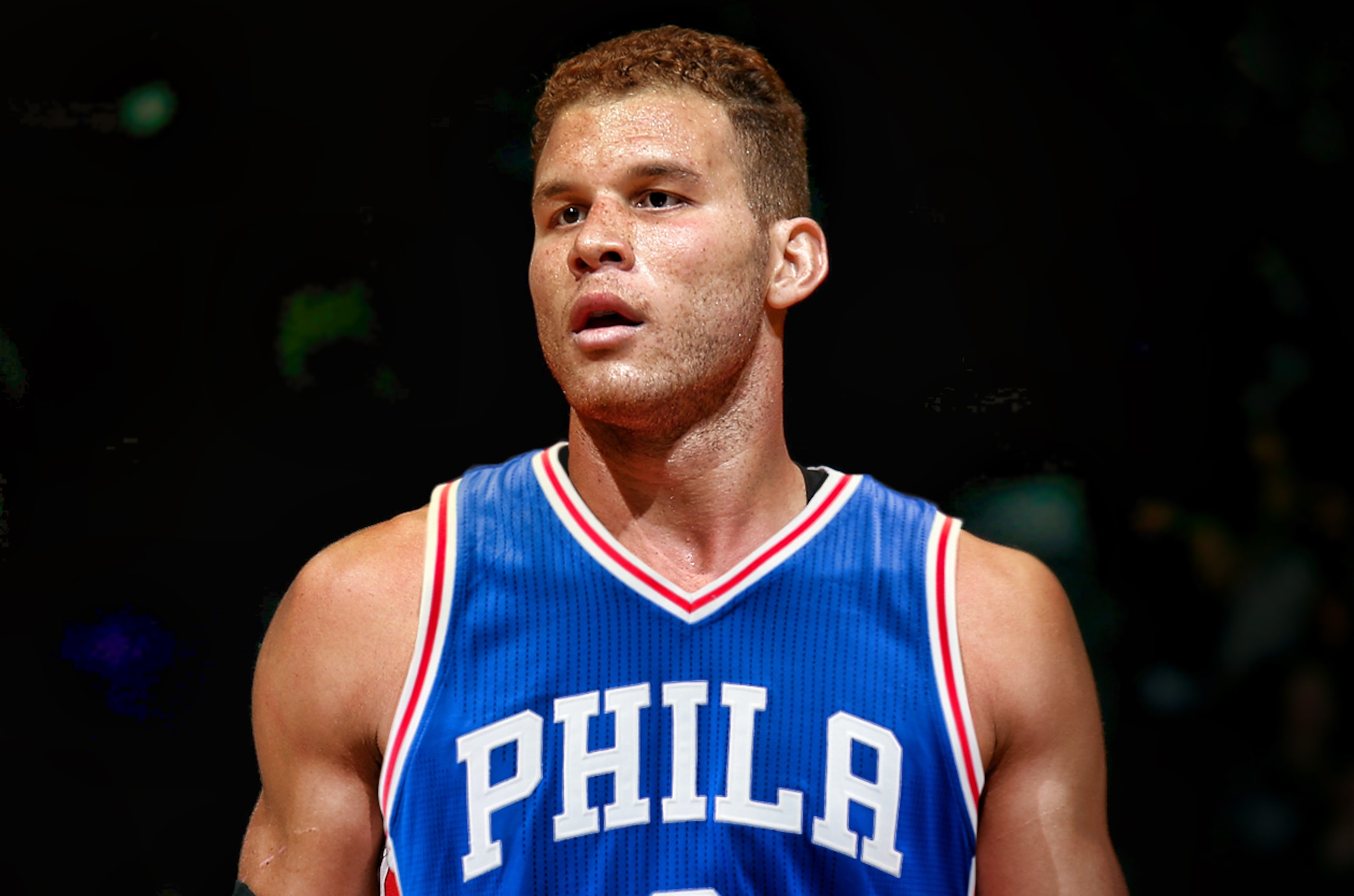
| Jrue Holiday | Arron Afflalo | Wesley Matthews | Blake Griffin | Amir Johnson |
| Cory Joseph | Jordan Adams | Matt Barnes | Trevor Booker | Nikola Jokic |
| Shelvin Mack | Chris Copeland |
Head Coach: Brett Brown
Best Pick?
On a team fairly starved for talent, Blake Griffin is the only one worth buying a ticket to see. The former one-dimensional high-flyer has become one of the NBA's best overall players with his scoring, rebounding and passing. While you could make the argument that most players on the 76ers went a round too early, selecting Griffin at No. 10 is a great value.
Worst Pick?
Jrue Holiday is a fine young point guard, but there's no way he's a second option on a championship team. With better, more reliable players still available, choosing Holiday so early (pick 51) crippled the Sixers.
Team Identity?
The whole team revolves around Griffin's ability to draw double-teams and open up others outside. Arron Afflalo and Wesley Matthews are fine shooters and defenders who can thrive with some inside-outside action with Griffin. Amir Johnson serves as a poor man's DeAndre Jordan while Holiday does his best Chris Paul impression. While Griffin's real-life Clippers have the luxury of multiple stars, it's now up to Blake to carry the load here.
Biggest Strength?
Brett Brown is a great coach who hasn't gotten the chance to shine behind the real-life Sixers roster. This version is far, far better and has the personnel to buy into his defense-first philosophies. Afflalo and Matthews are smart, two-way wings who will compete every night. Griffin's overall play will keep Philly in games, but it will come down to Brown's coaching to transform this into a playoff team.
Biggest Weakness?
This is a team begging for a second star that has to settle for a plethora of No. 3 options. Depth is also a huge concern, as most of the bench contributors are far past their prime (Matt Barnes) or have yet to hit one (Cory Joseph, Trevor Booker). Griffin, Holiday, Afflalo and Matthews better be logging 33 to 38 minutes a night for Philly to have a chance.
Writeup provided by Greg Swartz.
Phoenix Suns
33 of 42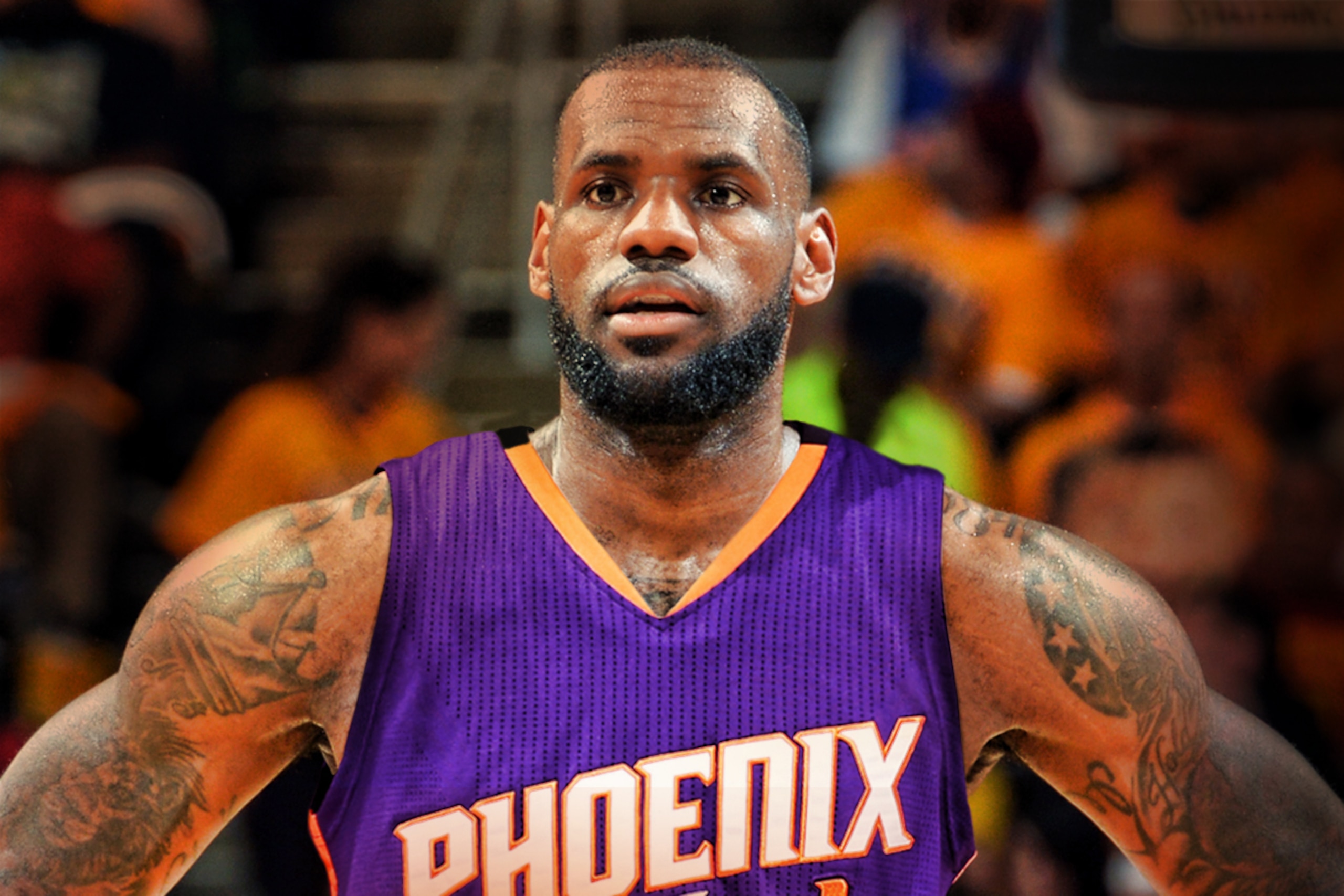
| Tony Parker | J.R. Smith | LeBron James | Aaron Gordon | Joakim Noah |
| Kemba Walker | Randy Foye | James Johnson | Kevon Looney | Anderson Varejao |
| Marcelo Huertas | Thomas Robinson |
Head Coach: Tyronn Lue
Best Pick?
So long as LeBron James (taken No. 2) is healthy, his squad is going to be a perennial title contender, and the Suns are just that with him at the center of everything.
Worst Pick?
J.R. Smith can certainly thrive next to LeBron and Tony Parker. But with a less streaky presence like Courtney Lee on the board at 122, it would have been nice to see Phoenix play it safe and add a sturdier two-way guard to help take some pressure off LeBron.
Team Identity?
The Suns are going to play tough and smart. With Tyronn Lue running the show from the bench, his tenacious attitude will translate to a team that has proven winners like Joakim Noah, James, Parker and Anderson Varejao. Lue learned defensive principles from Tom Thibodeau and offensive schemes from Doc Rivers, so this squad will function at high rates on both ends of the floor.
Biggest Strength?
Taking the pressure off LeBron is of the utmost importance, and the Suns can do just that with Parker, Kemba Walker and Smith all around to handle the rock. Heck, Noah can even initiate actions around the free-throw line to give the offense an extra wrinkle. Phoenix should have no problem creating offense.
Biggest Weakness?
Aaron Gordon packs tremendous potential, but it remains to be seen if his offensive game will develop to the point where he isn't a liability outside of 10 feet. Factor in the presences of rookie Kevon Looney and the scrappy, limited Thomas Robinson, and power forward stands out as Phoenix's biggest red flag.
Writeup provided by Alec Nathan.
Portland Trail Blazers
34 of 42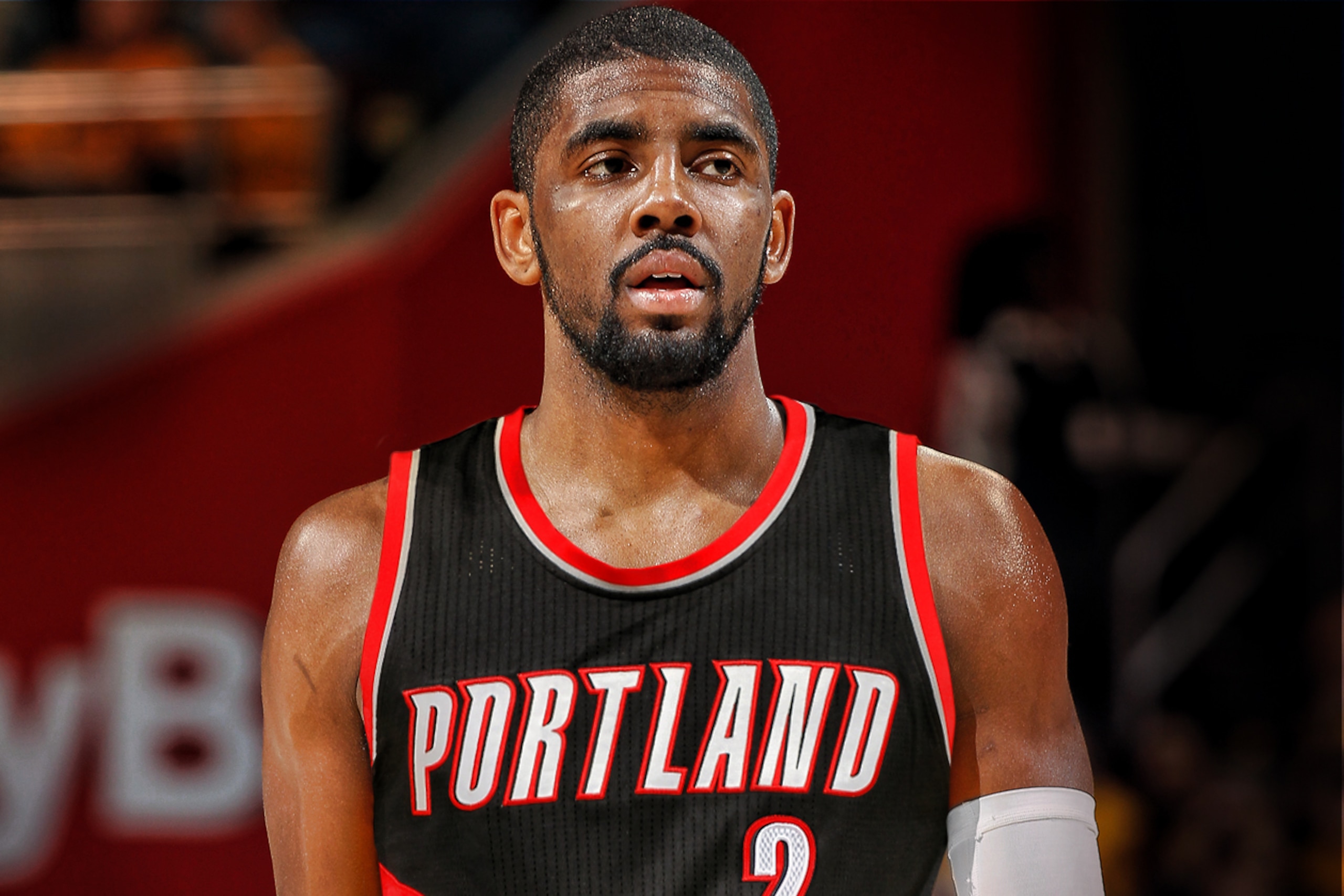
| Kyrie Irving | Tony Allen | Justin Anderson | Josh Smith | Nikola Vucevic |
| Ray McCallum | Jerryd Bayless | Gerald Green | Kris Humphries | Ed Davis |
| Dion Waiters | Solomon Hill |
Head Coach: Doc Rivers
Best Pick?
The Portland Trail Blazers' roster is begging for a seasoned, disciplined leader to make sense of it. It'll take expert strategy to build a functional offense with a starting five that features just two floor spacers (Kyrie Irving and Justin Anderson). The demand will be the same for constructing a powerful defense without a rim-protecting center.
Doc Rivers (taken 166th) has his work cut out for him, but he's overseen both explosive offenses and shutdown defenses before. Throw in his superb motivational skills, and he'll give Portland at least a puncher's chance of pulling this off.
Worst Pick?
The Blazers took some strange turns early and often in this draft. The fourth selection, Ed Davis, isn't even atop his position at the depth chart. The seventh player drafted, Dion Waiters, is buried behind two other guys. And the roster is almost entirely composed of one-way players.
All that said, Tony Allen stands out as the biggest reach (at No. 75), even though the thought process made sense. The first two picks (Kyrie Irving and Nikola Vucevic) are offense-only players, so a defensive stopper was needed. And Tony “First-Team All-Defense” Allen is one of the league's premier immovable objects. But last year's playoffs proved that his offensive limitations are so severe, they can pull him off the floor—or force his club to play four-on-five. That's too much of a liability for someone who theoretically should be the team's third-best player.
Team Identity?
Pace will be a buzzword in Rip City, as the Blazers could struggle either way if they get bogged down in the half court. The good news is they're loaded with gazelles who can explode in the open floor. Irving is a magician with the basketball, and he'll have above-the-rim finishers all around him. When running isn't an option, Portland will utilize Irving and Vucevic as isolation scorers and pick-and-roll (or pick-and-pop) partners, with Jerryd Bayless, Justin Anderson and Gerald Green spreading the floor as spot-up snipers.
Biggest Strength?
Consistently providing highlight-reel material might not be a traditional strength, but it speaks to the creativity of this offense. Irving is incredible at creating for himself.
The bench has three quick-strike, instant-offense scorers who will battle each other for touches (Green, Dion Waiters and Bayless). And this squad should perform circus-quality aerial attacks, with Green, Josh Smith and Anderson leading the charge. The Blazers should not be any fun to defend, especially if Rivers finds a way to punish opponents for leaving Allen unattended.
Biggest Weakness?
This is going to seem like low-hanging fruit for a club whose first two picks were Irving and Vucevic, but defense is a major concern. The defense has a glaring void in the middle with Vucevic, who allowed opponents to shoot 53.7 percent at the rim last season (67th among the 83 players who faced at least five such shots per game).
The entire 12-man roster features just two players who ranked among the top 30 at their position in ESPN.com's defensive real plus-minus last year: Allen (first at shooting guard) and Smith (10th at small forward). The Blazers could spring leaks from all angles, and there's little at the back end to help plug them up.
Writeup provided by Zach Buckley.
Sacramento Kings
35 of 42
| Chris Paul | Courtney Lee | Bojan Bogdanovic | Giannis Antetokounmpo | Jahlil Okafor |
| Patty Milles | Nik Stauskas | Tayshaun Prince | Patrick Patterson | JaVale McGee |
| Trey Burke | Aron Baynes |
Head Coach: Gregg Popovich
Best Pick?
Gregg Popovich at No. 54. I love it.
You can't top the irony of Pop running the show in Sacramento, a veritable monument to dysfunction in the real world. Depending on how you feel about the value of NBA coaches, it's possible you think any non-player taken inside the top 200 picks is a mistake. But I'm not sure any single figure in the league ensures a successful culture more than Pop does. Is it crazy to think he should have gone in the first round? (He did last year.)
Worst Pick?
To be honest, I don't hate any of the picks on this team, so I'll take a dig at Trey Burke, who went at No. 294. I'm not really sure he deserved to be drafted at all after the way he performed last year.
Team Identity?
Chris Paul and Popovich have to keep the kids in line here, and I admit I'm a little concerned with how the youth mature as their primary parental figures butt heads.
Neither Paul nor Pop is likely to back down in a dispute, and even if both are coming at things from a win-at-all costs perspective, it could get tricky. If things go smoothly, I like the chances of Giannis Antetokounmpo and Jahlil Okafor developing quickly under such great teachers. If not, duck and cover.
Biggest Strength?
Two words: Gregg. Popovich. All right, actually, two more: Chris. Paul. Come on, it's tough to see how this team doesn't out-think every opponent.
Biggest Weakness?
Small forward is a catastrophe. Bojan Bogdanovic is on the cusp of losing his real job to Wayne Ellington in Brooklyn, and Tayshaun Prince is the husk of a shadow of a ghost of what he used to be. This is bad.
Writeup provided by Grant Hughes.
San Antonio Spurs
36 of 42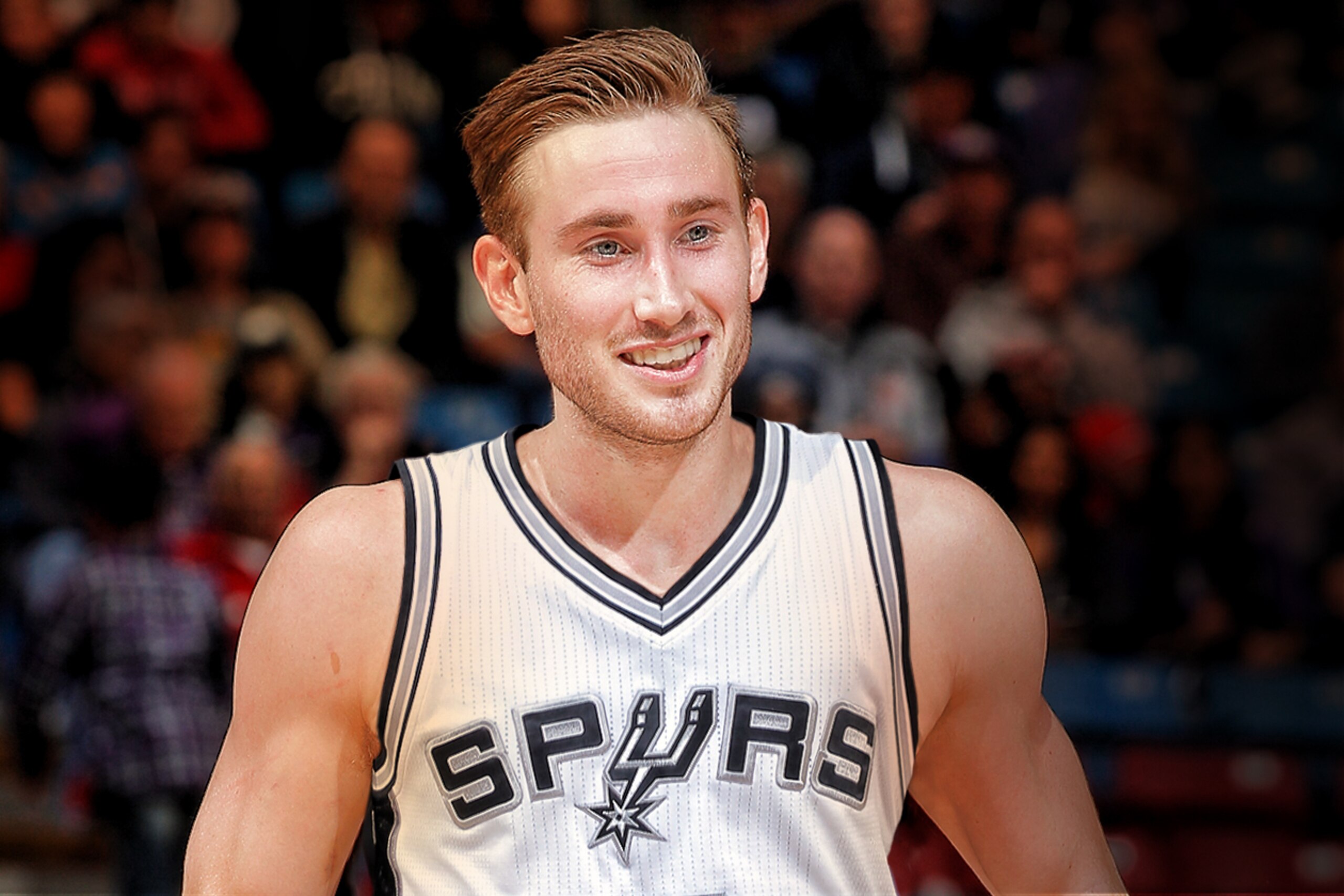
| Ricky Rubio | Dwyane Wade | Gordon Hayward | Ersan Ilyasova | Roy Hibbert |
| Jerian Grant | Justin Holiday | Martell Webster | Terrence Jones | Jusuf Nurkic |
| Seth Curry | Ryan Kelly |
Head Coach: Stan Van Gundy
Best Pick?
Jusuf Nurkic is a beast. This free-fall to 214 isn't inexplicable, to be sure. Nurkic has less than 1,200 minutes of NBA experience to his resume, so it's understandable that he went overlooked for most of the draft. Still, the numbers don't lie. Nurkic is now one of four qualified rookies to average at least 19 points, 17 rebounds and three blocks per 100 possessions. The other three: Shaquille O'Neal, Robert Parish and Andre Drummond.
Worst Pick?
Drafted at 87, Ricky Rubio is not the point guard you want playing alongside Dwyane Wade, the Spurs' top pick.
Wade has shown he can thrive alongside other ball-dominant playmakers, most notably LeBron James and Goran Dragic. But both of them can work off the rock, because they can shoot. Rubio has never even hit 35 percent from long range, and he drilled just 32.4 percent of his catch-and-shoot looks last season. He just doesn't fit on this roster. Especially when you factor in the need for Gordon Hayward to get touches on the ball, too.
Team Identity?
Roy Hibbert is still an impenetrable interior presence. Hayward is a decent defender. Wade can play defense when he feels like it. Rubio is an underrated pest; he plays the passing lanes well and knows how to poke the ball free when opposing floor generals are on the move.
Ersan Ilyasova, the fifth and final projected starter, doesn't provide much defensive upside, but his backup, Terrence Jones, is a completely different story. Nurkic can at the very least spell Hibbert. Justin Holiday is long, and Jerian Grant is a certified defensive hound. Sure, this team will have trouble scoring points at times. But man, teams are going to have trouble scoring on them.
Biggest Strength?
While it's difficult to buy into the combination of overlapping, non-complementary talent on San Antonio's roster, we can't ignore the superior depth that's staring us right in the face. The Spurs stretch at least two quality players deep at each position.
From starters like Hayward and Wade to second-stringers like Martell Webster and Jones to backups-to-the-backups Seth Curry and Ryan Kelly, they have options. That will negate the iffy individual fits and render these Spurs as dangerous as almost any one of our other fake factions.
Biggest Weakness?
When your best shooters play in the frontcourt, at small forward and power forward, you have a problem.The Spurs should be able to nullify their insufficient spacing with creativity off the bounce and by capitalizing on the expert slashing of Grant, Holiday and Wade. But this team's shooting percentages outside of mid-range figure to be brutal. Curry's number should be called early and often.
Writeup provided by Dan Favale.
Toronto Raptors
37 of 42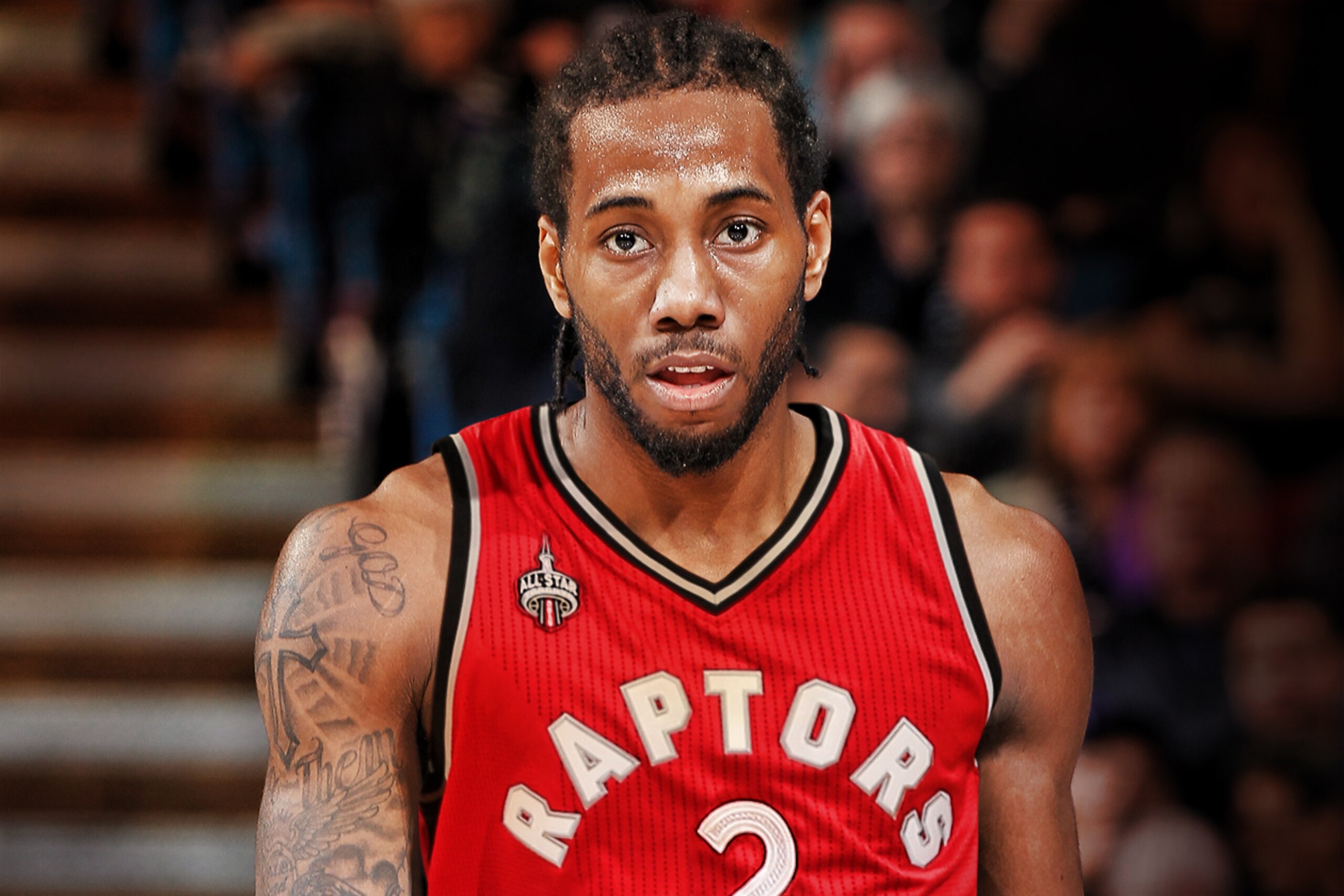
| Isaiah Thomas | Victor Oladipo | Nicolas Batum | Kawhi Leonard | Tyler Zeller |
| Delon Wright | Wayne Ellington | Rondae Hollis-Jefferson | Julius Randle | Nene |
| J.J. Barea | Omer Asik |
Head Coach: Dave Joerger
Best Pick?
It's en vogue to be down on Omer Asik these days, and there's good reason to be skeptical of his future after the way he tanked for the real-life New Orleans Pelicans last season. But he's a serious value at No. 192. It wasn't so long ago that Asik's defensive chops and solid work on the glass made him a talent who could start at center for at least a dozen teams. If he's anything close to that player, he's a steal here.
Worst Pick?
Taken at No. 49, Nic Batum's reputation as a top-tier defender is mostly without real-world support lately. And his three-point shooting took a nosedive last season. With Nowitzki, Beal and Danny Green going in the next 10 spots, there were better options available.
Team Identity?
This team is going to run, which is good because it's kind of hard to see a halfcourt offense materializing without a true playmaker on the roster. Isaiah Thomas is slated to start at the point, but I think he makes more sense off the bench as a scoring spark against second units. That means we could see some intriguing hybrid lineups with Batum as the de facto point guard alongside Victor Oladipo, Kawhi Leonard, Julius Randle and Tyler Zeller.
That's fun, right?
Biggest Strength?
Between Leonard, Randle, Zeller, Nene and Asik, there are five rotation options here. And Leonard can stretch the floor nicely, which should help alleviate one of this team's biggest shortcomings.
Biggest Weakness?
There's not a proven distributor on the roster. Batum may come closest, but he's really more of a guy who facilitates well for his position on the wing; he's not a true point guard. Neither Thomas nor J.J. Barea fit that bill either. So unless rookie Delon Wright is ready to take over some serious passing duties, the Raps might have a hard time getting into their offense.
Writeup provided by Grant Hughes.
Utah Jazz
38 of 42
| Jeff Teague | Manu Ginobili | Trevor Ariza | Tristan Thompson | Al Horford |
| Zach LaVine | Tim Hardaway | Moe Harkless | Jon Leuer | Frank Kaminsky |
| Tyus Jones | Archie Goodwin |
Head Coach: Mike Malone
Best Pick?
Age is just a number for Manu Ginobili, now two years shy of 40. Still, the crafty Argentine can still do a bit of everything and brings four championship rings to this Jazz group. Consider it a crime he went at 100 (and after Otto Porter) in this draft, health concerns notwithstanding.
Worst Pick?
Mike Malone is a fine coach, but considering who was available at No. 201, it appears Utah could have done far better. Jason Kidd, Stan Van Gundy and Frank Vogel have all accomplished much more as head coaches, yet remained waiting while Malone got his name called.
Team Identity?
This is a good Utah squad that needs much of its young talent to step up in order to become great. With Jeff Teague, the Jazz will certainly look to push the pace, but they can also operate in the halfcourt with Ginobili, Al Horford and Trevor Ariza. If youngsters Zach LaVine, Tim Hardaway Jr. and Moe Harkless can contribute, this truly becomes a run-and-gun team.
Biggest Strength?
This was an adaptable roster boasting speed, defense, shooting and athleticism. Teams need to change constantly, and the Golden State Warriors' ability to go small in the NBA Finals led them to a championship. This Jazz team could have similar qualities.
Biggest Weakness?
Too much young blood? The bench is full of potential, but given that this is a single-season experiment, some more vets would definitely have helped. If Ginobili continues to start, no reserve has yet to even celebrate his 27th birthday, with six still 23 years or younger.
Writeup provided by Greg Swartz.
Washington Wizards
39 of 42
| John Wall | Avery Bradley | Luol Deng | Donatas Motiejunas | Hassan Whiteside |
| Austin Rivers | Nick Young | Omri Casspi | David Lee | Joel Embiid |
| Rashad Vaughn | Lavoy Allen |
Head Coach: Randy Wittman
Best Pick?
Hassan Whiteside may be Washington's highest-risk, highest-reward pick, but there's no trifling with the selection of Donatas Motiejunas in Round 6. Considering Whiteside's limited shooting range, the Lithuanian big man's budding three-point stroke will help the Wizards space the floor offensively. And he's quick enough to guard opposing 4s while allowing Whiteside to do what he does best (aka, block every shot in sight).
John Wall needs a pick-and-pop partner, and Motiejunas fits the bill, having knocked down 49 of his career-high 133 three-point attempts in 2014-15. When Joel Embiid comes off the bench to play alongside Motiejunas, opposing frontcourts will be stretched too thin, as both have the ability to pop out to the wing and knock down mid-range jumpers or treys.
Worst Pick?
A guy can spend only so many seasons averaging upward of 40 minutes per game before his wheels fall off prematurely. Deng, 30, already started showing signs of slowing down during his first campaign with the Miami Heat in 2014-15.
Given the shaky long-range strokes of Wall and Avery Bradley, the Wizards would ideally trot out a true three-and-D player like Trevor Ariza at the 3; instead, they're left with a declining defender and lackluster three-point shooter in Deng. Omri Casspi may wind up being a better fit in the starting lineup, which is a damning indictment of this third-round pick.
Team Identity?
These Wizards, like their real-life counterparts, are building around a smothering defense and a Wall-orchestrated pick-and-roll assault. Wall, Bradley and Deng make for one of the league's top defensive backcourts, even with the latter in a somewhat diminished state, while Whiteside figures to continue improving as a rim protector now that his role in the NBA is secure.
Outside of Casspi and perhaps rookie Rashad Vaughn, the Wizards don't have consistent three-point shooters, so Wall will need to work his magic by repeatedly running pick-and-rolls with Whiteside and pick-and-pops with Motiejunas. If the offense stagnates, Austin Rivers and Nick Young certainly won't hesitate to fire up a shot from just about anywhere.
Biggest Strength?
If you're an opposing guard, expect to get your pocket picked at least a few times per night. Wall and Bradley are both tremendously pesky defenders, having combined to average nearly three thefts per game in 2014-15. Considering Bradley's diminutive 6'2" frame, Wittman may choose to liberally switch his two starting guards' defensive assignments, sticking the former Texas Longhorn on opposing floor generals while having Wall hang with the 2s.
Deng, meanwhile, will have to be an afterthought on offense, as Washington needs him to smother each opponent's top wing player. If an opponent somehow gets past Wall, Bradley or Deng into the paint, Whiteside's outstretched arms will be awaiting. These Wizards should rank among the league leaders in defensive efficiency.
Biggest Weakness?
Given Washington's lack of reliable three-point shooters, floor spacing could prove to be a major issue. Though Bradley knocked down a career-high 124 treys in 2014-15, he shot just 35.2 percent from beyond the arc, which hardly inspires Kyle Korver- or Stephen Curry-esque fear. Wall, meanwhile, drilled just 30 percent of his attempted triples last year and has yet to shoot better than 35.1 percent from downtown in any of his five NBA seasons.
All four of the Wizards starters aside from Whiteside can shoot from deep, but none is reliable enough to force opponents into covering him closely behind the three-point line. Until one (or more) of Washington's players develops that type of fear-inducing range, opponents will pack the paint to cut off driving lanes for Wall and Bradley, which could significantly stifle the offense.
Writeup provided by Bryan Toporek.
Final Standings
40 of 42
Upon completion of the re-draft, the 11 participants were asked to submit their power rankings of the 30 teams, ranked from No. 1 through No. 30. A first-place vote received one point, a second-place vote received two points and so on. The total points were added up, with 5,115 points given out by the entire staff combined.
Each team's percentage of those points was used to generate an 82-game record (marked "Survey Results" below). Using the rosters from this draft, we ran 40 simulated seasons on NBA 2K16. The average results of those seasons (marked as "2K16 Results" below) were then combined with the survey results to create a final season record for each team (marked "Final Record" below).
The teams are ordered below by final record, best to worst, in each conference.
Eastern Conference
| 1. | Orlando Magic | 62-20 | 40-42 | 51-31 |
| 2. | Boston Celtics | 57-25 | 43-39 | 50-32 |
| 3. | Atlanta Hawks | 56-26 | 41-41 | 48-34 |
| 4. | New York Knicks | 54-28 | 38-44 | 46-36 |
| 5. | Toronto Raptors | 44-38 | 46-36 | 45-37 |
| 6. | Brooklyn Nets | 41-41 | 46-36 | 43-49 |
| 7. | Chicago Bulls | 42-40 | 35-47 | 39-43 |
| 8. | Indiana Pacers | 39-43 | 38-44 | 38-44 |
| 9. | Washington Wizards | 33-49 | 42-40 | 37-45 |
| 10. | Milwaukee Bucks | 34-48 | 40-42 | 37-45 |
| 11. | Philadelphia 76ers | 42-40 | 32-50 | 37-45 |
| 12. | Cleveland Cavaliers | 27-55 | 43-39 | 35-47 |
| 13. | Miami Heat | 32-50 | 34-48 | 33-49 |
| 14. | Charlotte Hornets | 22-60 | 33-49 | 27-55 |
| 15. | Detroit Pistons | 10-72 | 43-39 | 27-55 |
Western Conference
| 1. | Phoenix Suns | 72-10 | 48-34 | 60-22 |
| 2. | Memphis Grizzlies | 68-14 | 49-33 | 59-23 |
| 3. | New Orleans Pelicans | 62-20 | 41-41 | 51-31 |
| 4. | Minnesota Timberwolves | 52-30 | 41-41 | 47-35 |
| 5. | Houston Rockets | 50-32 | 42-40 | 46-36 |
| 6. | Los Angeles Clippers | 39-43 | 52-30 | 46-36 |
| 7. | Los Angeles Lakers | 49-33 | 41-31 | 45-37 |
| 8. | Golden State Warriors | 40-42 | 46-36 | 43-39 |
| 9. | Oklahoma City Thunder | 39-43 | 41-41 | 40-42 |
| 10. | San Antonio Spurs | 40-42 | 39-43 | 39-43 |
| 11. | Sacramento Kings | 36-46 | 38-44 | 37-45 |
| 12. | Dallas Mavericks | 29-53 | 38-44 | 34-48 |
| 13. | Utah Jazz | 28-54 | 38-44 | 33-49 |
| 14. | Denver Nuggets | 18-64 | 41-41 | 30-52 |
| 15. | Portland Trail Blazers | 13-69 | 41-41 | 27-55 |
Post-Draft Awards
41 of 42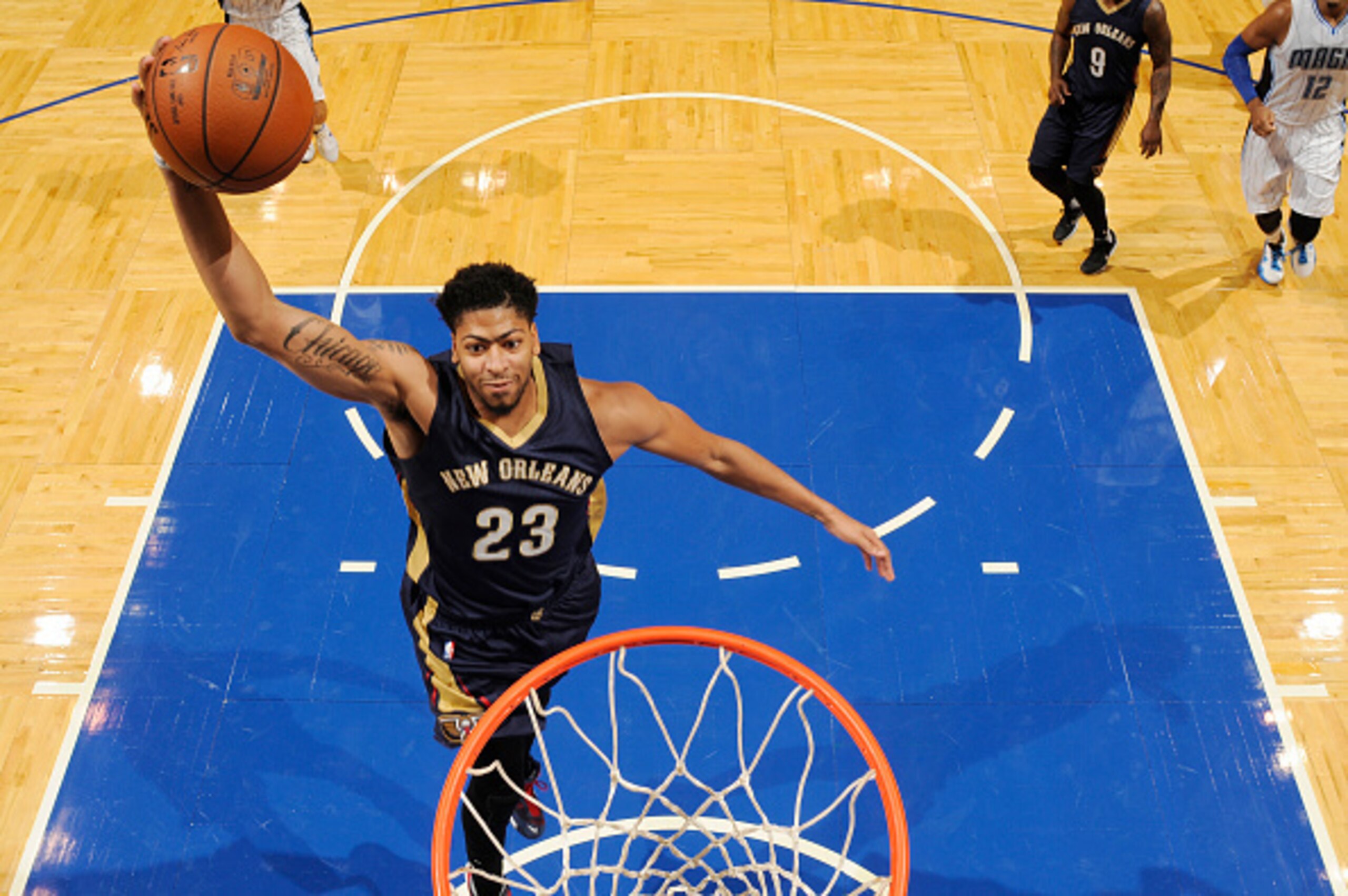
All 11 participants voted for their choices in eight different categories, and you can find the full results below:
Best Pick
- Anthony Davis, No. 1 (three votes)
- Meyers Leonard, No. 173 (two votes)
- Kevin Durant, No. 4; Russell Westbrook, No. 9; Damian Lillard, No. 31; Nikola Vucevic, No. 46; Hassan Whiteside, No. 50; Kenneth Faried, No. 136
Worst Pick
- Rudy Gobert, No. 16 (three votes)
- Andrew Wiggins, No. 26; Hassan Whiteside, No. 50 (two votes)
- Derrick Rose, No. 44; Brandon Knight, No. 45; Andrew Bogut, No. 47; Randy Wittman, No. 290
Best Team Offense
- New York Knicks (four votes)
- Orlando Magic (two votes)
- Chicago Bulls, Houston Rockets, Memphis Grizzlies, New Orleans Pelicans, Phoenix Suns
Worst Team Offense
- Detroit Pistons (seven votes)
- Brooklyn Nets, Cleveland Cavaliers, Toronto Raptors, Utah Jazz
Best Team Defense
- Boston Celtics (six votes)
- Houston Rockets (two votes)
- Detroit Pistons, Indiana Pacers, Minnesota Timberwolves
Worst Team Defense
- Charlotte Hornets (six votes)
- Atlanta Hawks, Denver Nuggets, Los Angeles Clippers, New York Knicks, Oklahoma City Thunder
Most Entertaining Team
- Orlando Magic (five votes)
- Minnesota Timberwolves (two votes)
- Los Angeles Lakers, Memphis Grizzlies, New Orleans Pelicans, Toronto Raptors
Least Entertaining Team
- Atlanta Hawks (three votes)
- Detroit Pistons (two votes)
- Milwaukee Bucks, Minnesota Timberwolves, New York Knicks, Oklahoma City Thunder, San Antonio Spurs, Utah Jazz
2K16 Simulation Results
42 of 42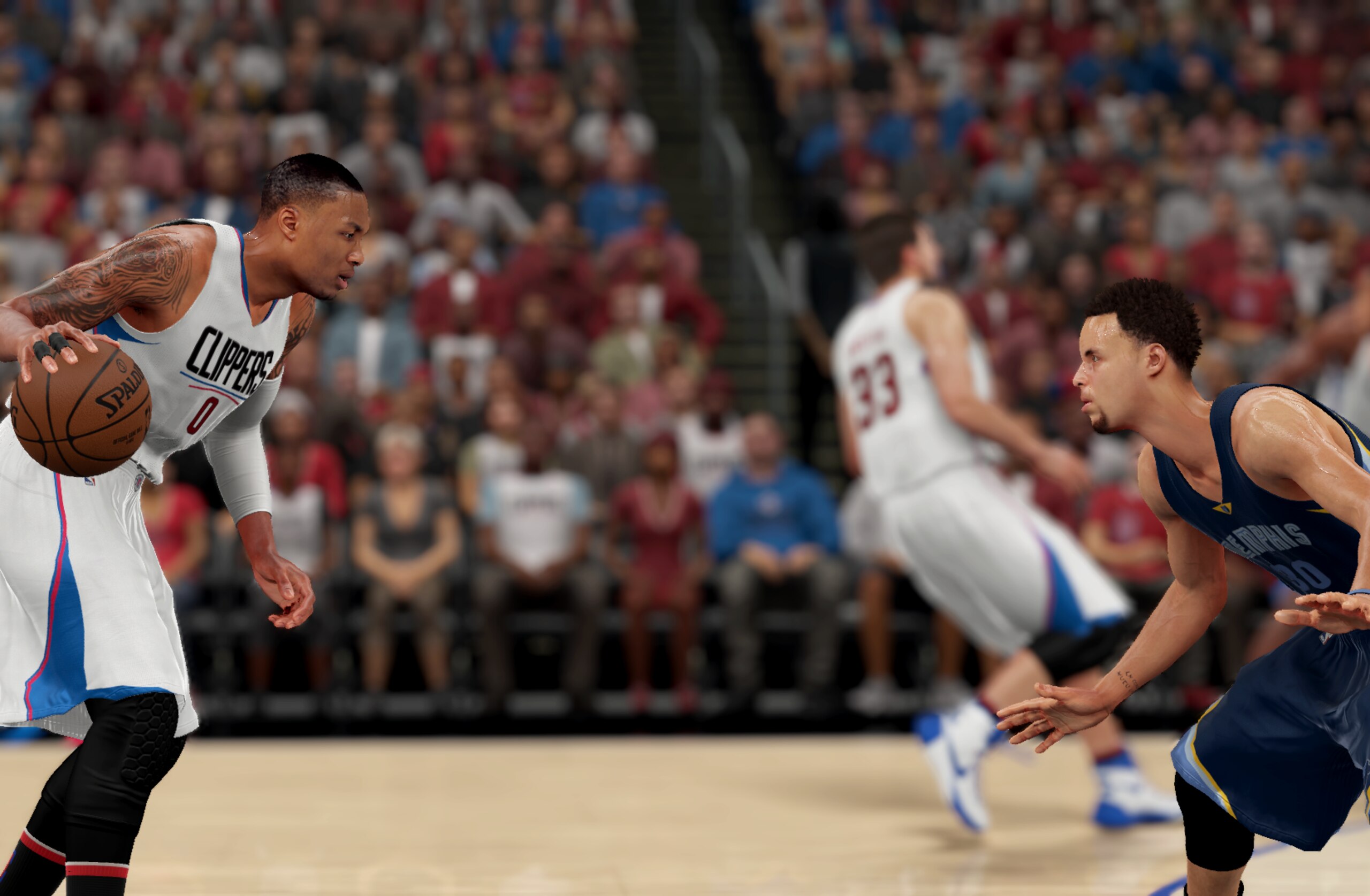
Using NBA 2K16, we created downloadable re-draft rosters and simulated the 2015-16 season 40 times to see what the virtual world would tell us. Here's what the process revealed:
Major Awards
| MVP | Damian Lillard (24 times) | Stephen Curry (5) |
| DPOY | DeAndre Jordan (22 times) | Anthony Davis (14) |
| ROY | Jahlil Okafor (31 times) | D'Angelo Russell (7) |
| MIP | Nikola Mirotic (5 times) | Spencer Hawes (5) |
All-NBA Teams (Three points for First Team finish, two for Second Team, one for Third Team)
| 1st Team | Damian Lillard (109) | John Wall (68) | LeBron James (96) | Anthony Davis (89) | DeMarcus Cousins (81) |
| 2nd Team | Stephen Curry (55) | Russell Westbrook (52) | Kevin Durant (76) | Carmelo Anthony (61) | Nikola Vucevic (61) |
| 3rd Team | James Harden (38) | Klay Thompson (36) | Paul Millsap (41) | Blake Griffin (36) | Jahlil Okafor (31) |
All-Defense Teams (Two points for First Team finish, one for Second Team)
| 1st Team | John Wall (51) | Eric Bledsoe (42) | Anthony Davis (58) | Serge Ibaka (53) | DeAndre Jordan (58) |
| 2nd Team | Klay Thompson (33) | Russell Westbrook (29) | Tim Duncan (40) | LeBron James (37) | Dwight Howard (24) |
All-Rookie Teams (Two points for First Team finish, one for Second Team)
| Karl-Anthony Towns (72) | Emmanuel Mudiay (72) | D'Angelo Russell (66) | Jahlil Okafor (64) | Frank Kaminsky (55) | |
| Kristaps Porzingis (53) | Myles Turner (46) | Stanley Johnson (39) | Justise Winslow (33) | Mario Hezonja (31) |
All-Star Teams
| Backcourt Starter | James Harden (33) | Damian Lillard (40) |
| Backcourt Starter | Ty Lawson (26) | Klay Thompson (36) |
| Frontcourt Starter | Tim Duncan (33) | LeBron James (38) |
| Frontcourt Starter | Blake Griffin (30) | Kevin Durant (36) |
| Frontcourt Starter | Dwight Howard (27) | Carmelo Anthony (35) |
| Reserve | Jimmy Butler (25) | Stephen Curry (30) |
| Reserve | Kawhi Leonard (24) | DeMarcus Cousins (27) |
| Reserve | John Wall (23) | Anthony Davis (26) |
| Reserve | Russell Westbrook (22) | Paul George (26) |
| Reserve | Pau Gasol (22) | Kyrie Irving (24) |
| Reserve | Kevin Love (21) | Paul Millsap (22) |
| Reserve | Eric Bledsoe (20) | Nikola Vucevic (21) |
Major Stat Leaders
| Points per game | Kevin Durant | 29 | 29.3 |
| Rebounds per game | DeAndre Jordan | 27 | 15.0 |
| Assists per game | John Wall | 25 | 10.6 |
| Steals per game | Damian Lillard | 22 | 2.2 |
| Blocks per game | DeAndre Jordan | 24 | 2.8 |
| Field-goal percentage | DeAndre Jordan | 23 | 65.6 |
| Three-points made | Klay Thompson | 18 | 276 |
Title Odds
| 1 | Los Angeles Clippers | 30 percent | Damian Lillard (12 times) |
| 2 | Golden State Warriors | 12.5 percent | LaMarcus Aldridge (4), Michael Carter-Williams (1) |
| 3 | Brooklyn Nets | 10 percent | Brandon Knight (2), David West (1), Chandler Parsons (1) |
| 4 | Toronto Raptors | 10 percent | Isaiah Thomas (2), Kawhi Leonard (1), Nicolas Batum (1) |
| 5 | Phoenix Suns | 7.5 percent | LeBron James (3) |
Other championship contenders: Memphis Grizzlies (5 percent), Cleveland Cavaliers (5 percent), Houston Rockets (5 percent), Dallas Mavericks (2.5 percent), Orlando Magic (2.5 percent), Denver Nuggets (2.5 percent), Washington Wizards (2.5 percent), Milwaukee Bucks (2.5 percent), Minnesota Timberwolves (2.5 percent)
For instructions on how to download the re-draft rosters, to view the full results from all 40 simulated seasons—not just the most common winners—and to see our GM grades, click here and make sure to cycle through all the tabs.
All stats, unless otherwise indicated, came from NBA.com and Basketball-Reference.com.

.jpg?w=2560 "Grading WWE Raw 🔠")

.jpg?w=2560 "Viral Rams Coach Vid 🖕")
.jpg?w=2560 "Bijan's INSANE 1st Half 🤩")
.jpg?w=2560 "Injury-stricken Seahawks signing veteran RB")
.jpg?w=2560 "2 NFL Officials Suspended")
