Winners, Losers, Takeaways from Cavs-Lakers Trade of Isaiah Thomas
The Cleveland Cavaliers needed a shake-up. The Los Angeles Lakers wanted all the cap space they could get.
And just like that, you had the recipe for the 2018 NBA trade deadline's headliner—Isaiah Thomas, Channing Frye and Cleveland's 2018 first-rounder (with top-three protection) for Jordan Clarkson and Larry Nance Jr.
It was one of multiple moves made by the Cavaliers, who got both younger and better in the short term. The Lakers stood pat after the swap, but they achieved their primary objective of clearing out non-expiring contracts and increasing their spending power.
The deal has win-win potential on paper, but it isn't as simple as it sounds. There are still multiple winners and losers coming out of this trade, which we'll examine here along with the deal's top takeaways.
Winners
1 of 5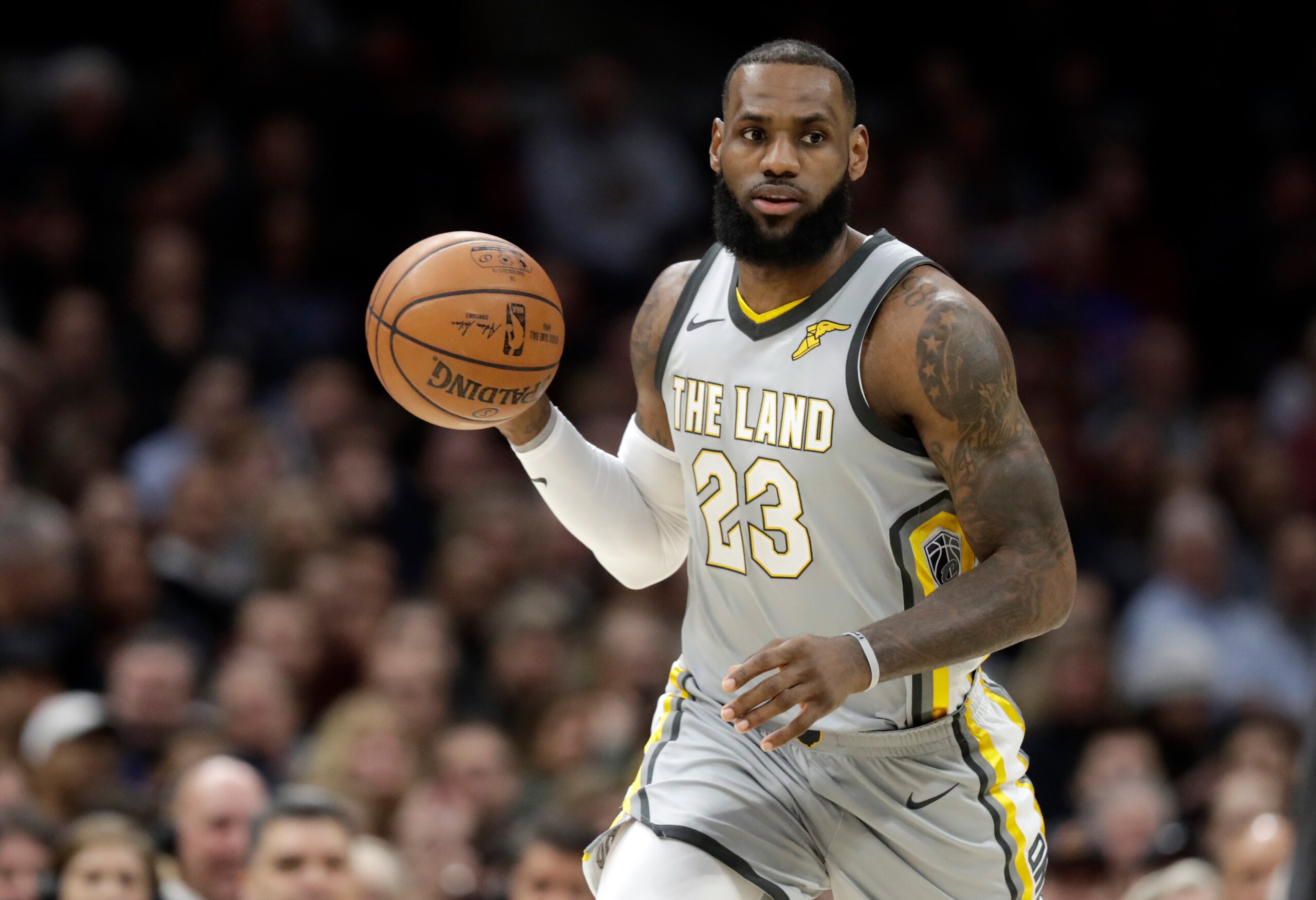
The pre-swap Cavs were a mess. Their bottom-third performance since Christmas didn't even seem like their gravest concern, as behind-the-scenes bickering suggested this club wouldn't come together.
Even worse, there were no obvious fixes. Cleveland's roster was old and expensive, a brutal combination to shop. Add in the reluctance to part with the Brooklyn Nets' 2018 first-round pick, and the Cavs had all the makings of a sinking ship.
While this trade might not change Cleveland's fate, it should put a new wind in James' sails.
"Here's all you need to know: The behind-the-scenes reaction from James' inner circle was a resounding thumbs-up," USA Today's Sam Amick wrote.
Cleveland's deadline dealing added needed youth, athleticism, shooting and defense. This specific swap helps ease James' burden. This offense has collapsed without him (dropping 6.6 points per 100 possessions when he sits), but Clarkson is an elite quick-strike scorer. And Nance is a multipositional defensive asset, whereas Frye was a liability in any deployment.
Looking further down the line, this gives James extra free-agency flexibility. The Lakers can have two max-contract slots this summer or next (we'll examine that more later), and the Cavs have brightened their future. Both destinations are more attractive now than they were 24 hours ago.
Julius Randle
With restricted free agency awaiting him, Randle has two more months to showcase his skills. He'll have a bigger platform with Nance out of the way, regardless of whether Frye and/or Brook Lopez seeks a buyout.
For all the frontcourt looks the Lakers have had, the Randle-Nance pairing almost never happened. They played just 74 minutes together, or only four more than Randle played with Andrew Bogut, who was cut loose at the start of January.
Randle's playing time was already trending up (29.3 minutes per game over his last eight outings), and this should ensure it stays that way. The Lakers need to fully grasp his worth before he hits the open market. They'll give him all the floor time necessary to do that, since there's little purpose in trotting out Frye and Lopez on a rebuilding team with no shot at the playoffs.
Koby Altman
Cleveland's first-year general manager did far more good than harm here.
Youth was an obvious need. Altman swapped out a 34-year-old (Frye) and 29-year-old (Thomas) for a pair of 25-year-olds. Bounce was another target. He found two above-the-rim finishers for a 5'9" player who hasn't found his footing after a hip injury and a ground-bound stretch big.
Altman is shouldering risk, however.
Clarkson's inconsistent shooting (career 33.2 percent from distance) limits his off-ball effectiveness, and Nance isn't the anchor this defense lacks. Even if the outgoing draft pick nets a player less talented than Nance, it still offers four years of cost control while Nance only has next season left on his rookie deal. And who knows what kind of damage could stem from increasing L.A.'s cap room.
But Altman strengthened his squad and greatly reduced its average age without sacrificing his top roster-building asset. This functions as both an all-out push to appease James and a contingency plan for his possible exit.
Losers
2 of 5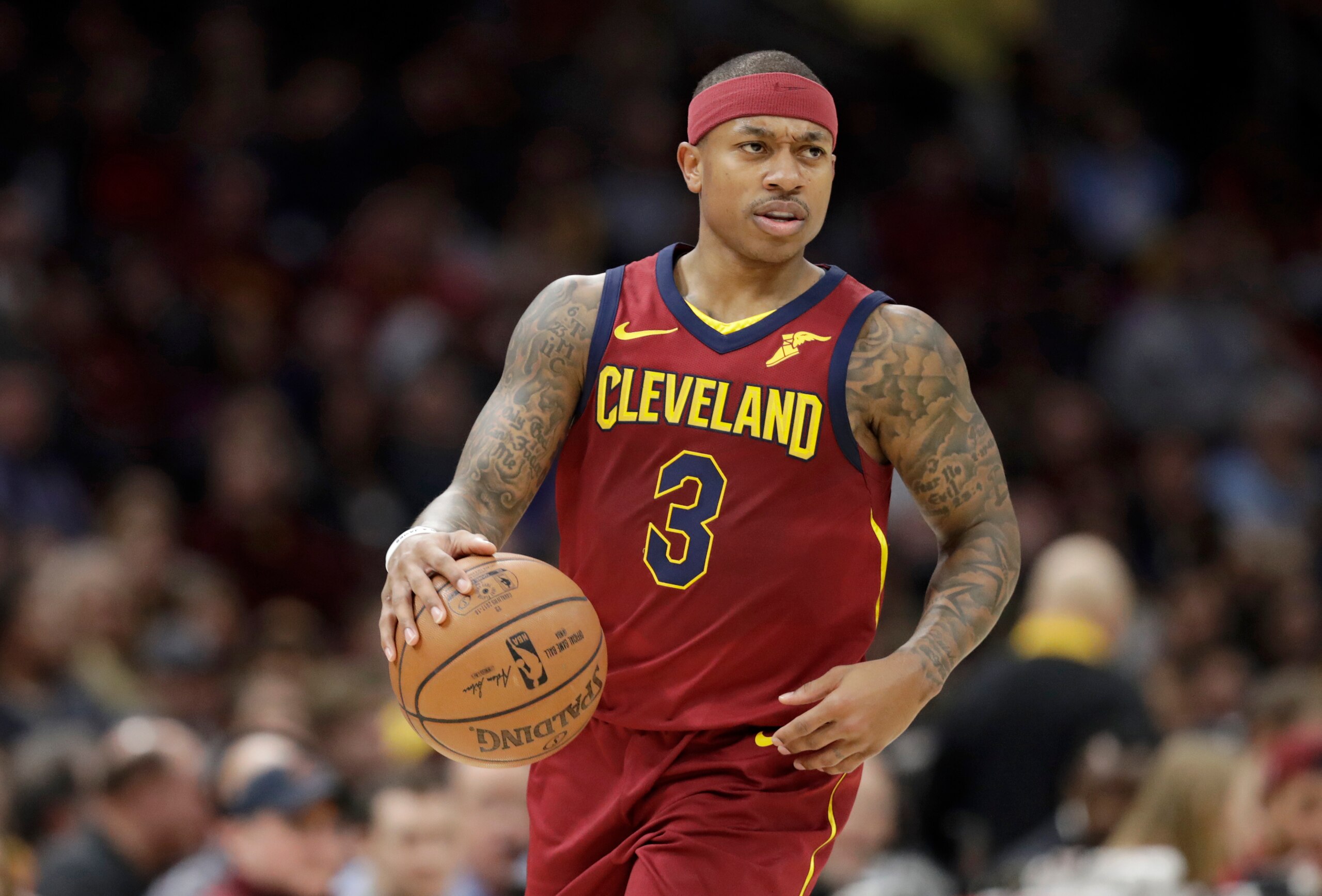
Isaiah Thomas
Traded one day after asking not to be, there at least seems to be encouraging words coming from him and his new club. He's ecstatic, the Lakers are excited, and everyone seems eager to get this relationship going.
But two sentences from Lakers president Magic Johnson put Thomas on the losers list.
"Lonzo [Ball] is our starting point guard," Johnson told reporters. "And that hasn't changed."
While we're guessing all grass looked greener than Cleveland's to Thomas, this isn't an ideal situation for the former All-Star. His value is tanking ahead of what was supposed to be a lucrative free-agency journey—he's 477th out of 482 players in ESPN.com's real plus-minus—and now a 20-year-old who was already declared L.A.'s franchise face is blocking him.
Plus, Ball's pass-first style accelerates the other prospects' development. Thomas is a ball-dominant scoring guard (career 19.0 points and 5.1 assists per game), and his points might ring hollow in Hollywood, assuming the Lakers have little desire to keep the 29-year-old beyond this season.
Tristan Thompson
Just as Thompson seemed to be figuring things out as a Cavs starter again, his rotation minutes have a new threat. While there won't be an uproar if Nance is deployed off the bench, the stats suggest he should see the lion's share of the minutes.
For starters, Nance—a Slam Dunk Contest participant—has the hops Thompson rarely displays. Nance has crushed 59 jams this season. Thompson is only at 27. And the gap widens at the other end, where Nance holds big advantages in defensive real plus-minus (2.07, 35th to minus-0.47, 323rd), defensive rating (103.5 to 111.2) and shooting percentage allowed at the rim (68.1 to 71.7).
Plus, before adding Nance, the Cavs were talking to the Los Angeles Clippers about DeAndre Jordan, per ESPN's Adrian Wojnarowski. That shows the fragility of Thompson's starting spot, which has already been taken away twice this season.
Oh, and the competition for frontcourt playing time will stiffen once Kevin Love recovers from a broken hand. If Cleveland is forced to go small-ball heavy in the postseason, there might only be room for one interior big in the rotation. Thompson would have been the choice before. Now, it's probably a coin flip.
What It Means for Cleveland's Championship Chase
3 of 5
Cleveland's championship hopes had been tailspinning. The Cavs have one set of consecutive wins since mid-December, and their defense is the NBA's second-worst. Any talks of title contention were tied to the fact they still employed James, and even then some doubted he could keep his Finals streak alive.
An active deadline—a separate three-team deal brought in Rodney Hood and George Hill—didn't solve all of Cleveland's flaws. There still isn't a shot-blocker in the middle or a second scorer close to the caliber of James' former running mate, Kyrie Irving.
But, as Cleveland.com's Chris Fedor observed, the Cavs helped themselves on multiple fronts:
"The oft-criticized old, tired roster that lacked athleticism to compete with other title contenders, one that got decimated in transition nightly, now boasts unique size, youth, athleticism, length and versatility. The Cavs can switch 1-4 again, something that wasn't possible with the diminutive Thomas.
"The Cavs also added two outside threats (Hood and Hill) shooting better than 38 percent from beyond the arc, both of whom are comfortable without the ball in their hands, able to complement James and give him the floor spacing he covets."
This will take some time for all the pieces to fall into place. Cleveland's outgoing players accounted for more than 30 percent of the team's total minutes. This is an absurd amount of change to adapt to, and there's only about two months left before the second season starts.
But it was worth a shot, both for the talent added and the distractions subtracted.
The Cavs aren't title favorites. They might not even be the popular pick to escape the Eastern Conference. But if the youngsters aren't bothered by the playoffs' bright lights, this will be one of the Association's toughest outs.
.png?w=2560)
What It Means for L.A.'s Rebuild
4 of 5
The NBA swap meet didn't reveal any unknowns about the Lakers' intentions; rather it reinforced their commitment to playing the high-roller's version of free agency.
This doesn't mean a transcendent talent—or talents—will arrive this summer. This carries no guarantees for future offseasons, either.
But it does fully align this organization with its transparent goal to chase them.
"There's so many different ways you can use that [cap space]," Lakers general manager Rob Pelinka said, per ESPN.com's Ohm Youngmisuk. "And then, of course, the obvious way is we now have in July of 2018 and July of 2019, we now have real 100 percent space to do two max players if that's what we decide to do, or one in 2018 and then following it up with another one in 2019. So the flexibility is really amazing."
If this is the game the Lakers wanted to play, they could not have handled Thursday any better. They not only shed the $25.9 million owed to Clarkson after this season, but they did so without sacrificing any draft assets and managed to snag an upcoming first by letting go of the solid-but-unspectacular Nance.
Their work, of course, is far from over. They'll need strong closing stretches by their young nucleus to enhance their attractiveness. Then, they'll need Magic to work his...well...magic on the recruiting trail.
But if James and Paul George—or any other combination of upcoming high-level free agents—are interested in changing locales, L.A. has already cleared a path for their arrivals. And there are enough rookie-scale players on the books to make sure any incoming talent won't require gutting the roster.
What It Means for 2018 Free Agency
5 of 5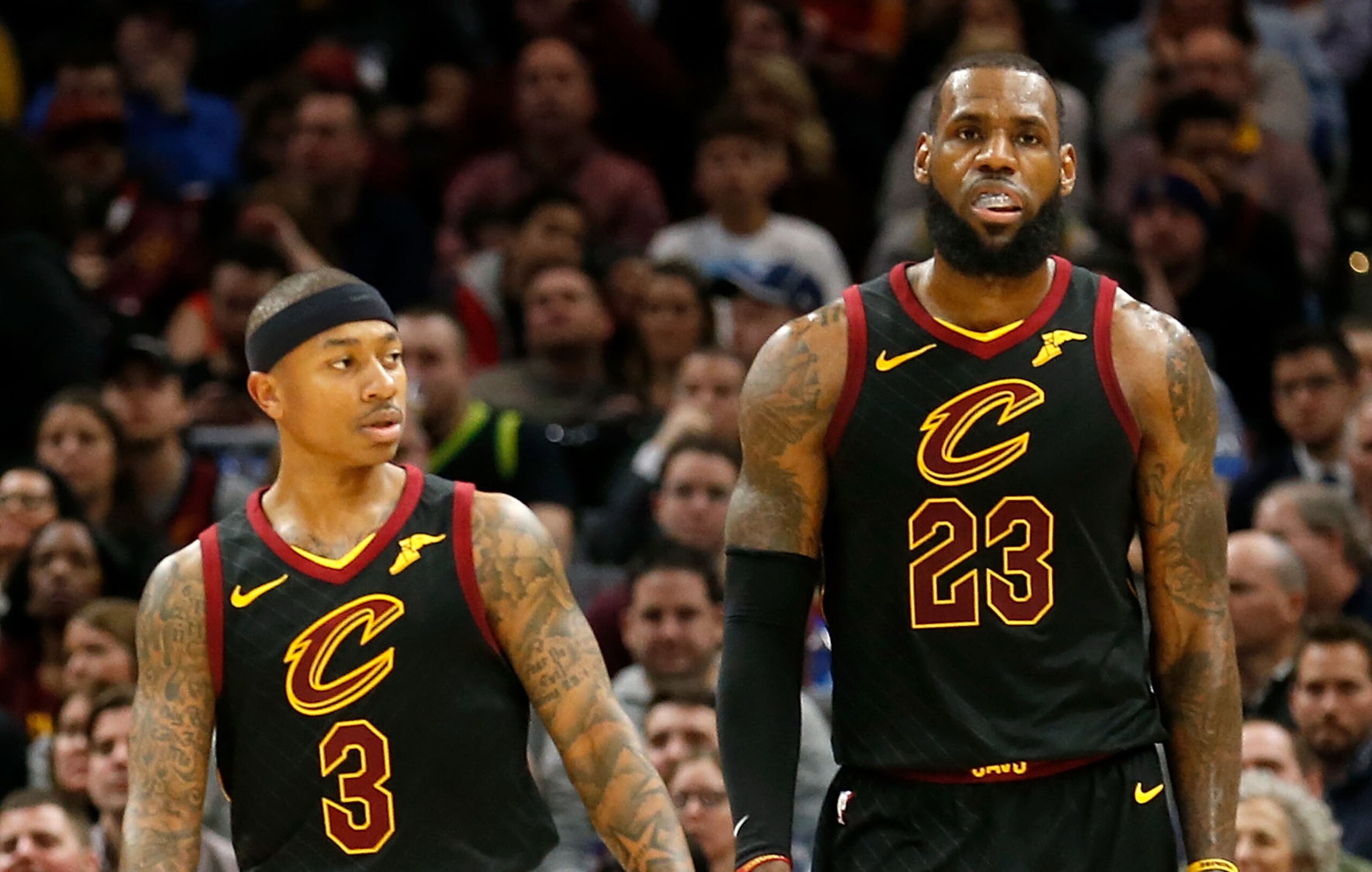
Maybe we were spoiled by last summer's hyperactive offseason, but didn't the upcoming version already feel like a snoozer? Between a nearly leaguewide cap crunch and few marquee talents available, free agency seemed destined for a dud—especially once the Lakers appeared ready to abandon the race.
"The front office is increasingly looking through a longer lens in its team-building process," ESPN's Ramona Shelburne and Adrian Wojnarowski reported days before the deadline. "... The Lakers aren't abandoning a summer pursuit of stars, but rather they are recalibrating their focus on [the] 2019 class."
It might still be another summer (or longer) before L.A. finds its splashy signing(s). But this franchise now has the funds to make this summer interesting. The Lakers could have up to $70 million in cap space, per ESPN Stats & Info, or enough to keep their two-star dreams alive. George hasn't closed the door on a homecoming, and James would find the Purple and Gold infinitely more appealing if they could acquire a star for him to pair with.
That's one option for James. Another is gearing up for another run in Northeast Ohio, provided he sees whatever he needs to over the coming months. Clarkson, Nance and Hood are all still climbing toward their primes, and there's a chance rejoining the playoff race will get Hill back closer to his.
Thomas has fallen so far from last season's fifth-placed finish in MVP voting he might need to sign a short-term, prove-it deal this summer. Maybe he runs wild while Ball is out and finds enough minutes alongside him to regain some of his value, but nothing we've seen so far suggests that's likely.
Randle should get more playing time—which will give him a chance to prove he's worth a bigger contract—and this deal could make him more of a flight risk. L.A. must put him on the back burner to go big-game hunting, so an early offer sheet could prove tough to match. Not to mention, the Lakers might be hesitant to cut into their newly created cap space for someone they've only given 23.9 minutes per game this season.
All statistics used courtesy of Basketball Reference, NBA.com and ESPN.com. Salary information obtained via Basketball Insiders.
Zach Buckley covers the NBA for Bleacher Report. Follow him on Twitter: @ZachBuckleyNBA.
.jpg?w=2560 "Win Predictions For Every Team")